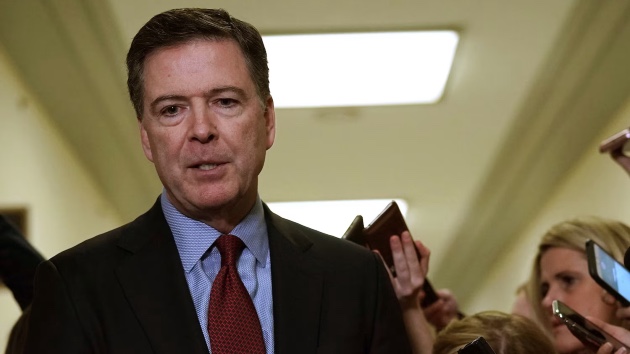
Former Federal Bureau of Investigation Director James Comey speaks to members of the media at the Rayburn House Office Building on Capitol Hill December 07, 2018 in Washington, DC. (Alex Wong/Getty Images)
(ALEXANDRIA, Va.) — Former FBI Director James Comey pleaded not guilty Wednesday to both counts in a federal indictment, and his attorneys said they will seek to have the case dismissed for vindictive and selective prosecution.
A federal grand jury indicted Comey on Sept. 25, just days after President Donald Trump publicly demanded Attorney General Pam Bondi and the Justice Department act “now” against Comey and other political opponents.
Comey is charged with one count of false statements and one count of obstruction of a congressional proceeding, related to his testimony before the Senate Judiciary Committee in 2020.
The plea was entered by his attorney Patrick Fitzgerald, who asked for a jury trial.
The judge read the charges and said they carry a penalty of up to 5 years in prison with a $250,000 fine.
He asked if Comey understood the charges, and he replied, “I do, Your Honor.”
A trial date was set for Jan. 5.
The judge asked how long the government anticipated the trial lasting, and the government said 2-3 days.
The judge said that he was prepared to move forward with a speedy trial. The government said the case was “complicated,” but didn’t appear to object to the trial date in court.
“This doesn’t appear to be a complicated case,” the judge said.
Fitzgerald agreed, saying, “We see this as a simple case.”
Comey has been a longtime target of Trump’s criticism over his investigation into Russian interference in the 2016 election. Trump on Monday, speaking to reporters in the Oval Office, called Comey a “dirty cop” and claimed it was a “simple case.”
But the Comey matter has thrown the U.S. Attorney’s Office for the Eastern District of Virginia into turmoil, according to sources. The previous U.S. attorney, Erik Siebert, resigned over pressure from the Trump administration to bring criminal charges against Comey and New York Attorney General Letitia James. Trump said he fired Siebert.
Trump then handpicked Halligan, a White House aide and his former defense attorney, to replace Siebert and lead the office. Halligan presented the Comey case to the grand jury, despite prosecutors and investigators determining there was insufficient evidence to charge him, ABC News reported at the time.
Comey attorneys told the judge Wednesday they plan to file a motion challenging the lawfulness of Halligan’s appointment, but that will be heard by a different judge appointed by the chief judge of 4th U.S. Circuit Court of Appeals.
The judge on Wednesday instructed the government to respond to those motions by Nov. 3 and directed the defense to respond by Nov. 10. The judge said he wants the case to be fully briefed by Nov. 19 and said hearings will be planned for Nov. 19 and Dec. 9.
Oral arguments will be held Dec. 9 on the defense’s motion to dismiss because of grand jury abuse, “outrageous government conduct” and other motions Comey’s attorneys did not disclose.
Both the defense and the judge expressed some confusion as to why the government said there would be a substantial amount of classified information involved in the case.
At one point Fitzgerald said that he believed the government should have figured out the issue with classified information before bringing the case. It appears the “cart has been put before the horse,” Fitzgerald said.
The judge said there should be no reason the case gets off track because of classified information.
“We will go through the fastest CIPA process you have ever seen in your life,” he joked, referring to the litigation that occurs around cases involving classified information.
The judge also said, “I will not slow this case down” over the government’s obligations to produce discovery to the defense.
Comey was in court Wednesday for the first time since he was indicted last month, where he was joined inside the Alexandria, Virginia, courtroom by Fitzgerald and attorneys David Kelley and Jessica Carmichael.
The government was being represented by Halligan and Nathaniel “Tyler” Lemons, a prosecutor from the Eastern District of North Carolina.
Comey’s wife and his daughter, Maureen Comey, were seen arriving at the Alexandria courthouse ahead of the proceeding.
Comey has denied any wrongdoing and has said he looks forward to a trial.
Ahead of Wednesday’s arraignment, the Department of Justice added two assistant U.S. attorneys from out of state to work on the case.
ABC News’ Alexandra Hutzler, Alexander Mallin, Peter Charalambous and Ely Brown contributed to this report.
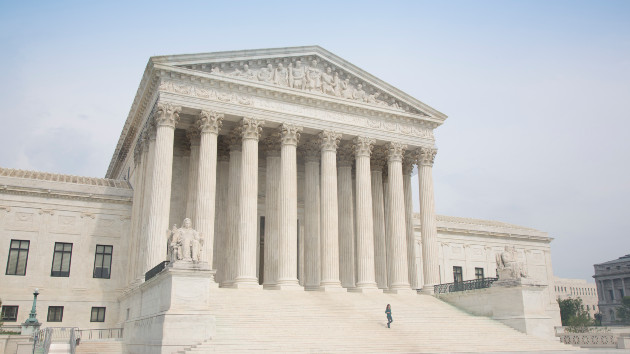
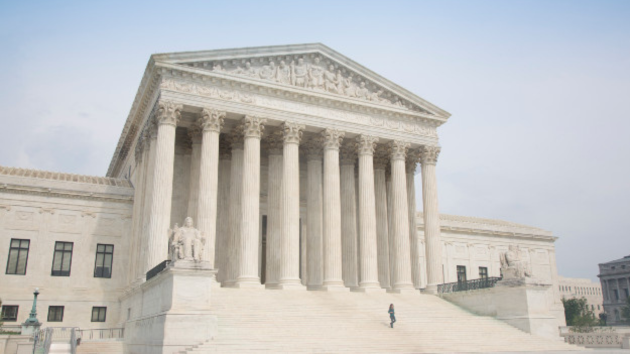
(WASHINGTON) — Following an unprecedented surge in election-related litigation, the Supreme Court on Wednesday was. considering reviving a lawsuit challenging an Illinois law that allows officials to count mail-in ballots received within two weeks of Election Day.
The Supreme Court heard arguments about the broader question of who has the right to file a federal lawsuit challenging election law, the outcome of which could not only revive the mail-in ballot case but also open the door to a wave of new legal challenges to election laws.
Republican Rep. Michael Bost and two presidential electors filed a lawsuit in 2022 to challenge the Illinois law, arguing that counting mail-in ballots beyond Election Day constitutes an illegal extension of voting beyond the timeframe set in federal law.
Two lower courts threw out the lawsuit after concluding that the congressman lacked standing — or the legal right to bring a lawsuit — because the plaintiffs could not prove the policy harmed them. The Supreme Court agreed to hear the case in June, adding to one of the high court’s most consequential terms in recent history.
President Donald Trump and his allies have long criticized the practice of mail-in voting, using it as ammunition to cast doubt on the outcome of the 2020 election. In August, Trump vowed to “lead a movement to get rid of” mail-in voting, though his campaign had encouraged voters to use mail ballots.
“It’s time that the Republicans get tough and stop it, because the Democrats want it. It’s the only way they can get elected,” Trump said then.
When a federal district judge threw out Bost’s lawsuit in 2022, the decision stemmed from the question of whether the congressman and the electors had the grounds to sue, not the merits of his legal argument about mail-in ballots. The court ruled that Bost’s claims about being harmed by the policy — including having to use campaign resources during the post-election ballot counting period — were a “generalized grievance” that did not provide him standing to sue.
To bring a lawsuit in federal court, a plaintiff generally needs to establish that a particular action injures them, that the action stemmed from the person he or she is suing, and that the court’s solution would resolve the harm.
Together with electors Laura Pollatrini and Susan Sweeney, Bost argues that the mail-in ballot policy not only harms his election prospects but also causes a “pocketbook injury,” because candidates need to continue staffing their campaigns through the ballot-counting period.
“When it comes to elections, candidates running for office plainly have the most at stake. They put their lives on hold and spend countless hours and millions of dollars organizing and running campaigns,” their lawyers wrote. “When the dust settles, the candidates either win or lose, with months of effort and untold expenditures either vindicated or forever lost.”
The Illinois State Board of Elections has pushed back by arguing that the potential impact on Bost’s “electoral prospects” is too speculative and that political candidates are under no requirement to continue staffing their campaigns after the election, effectively making the injury that Bost claims he suffers voluntary.
Illinois has also argued that allowing Bost to bring the lawsuit would open the floodgates of frivolous lawsuits “to challenge any election rule on the books for purely ideological reasons” and cause local governments to spend more time fighting lawsuits and less time administering elections.
The Trump administration has supported part of Bost’s argument about having the right to sue over the ballot policy, though Solicitor General D. John Sauer pushed back on the claim that candidates have broad claims to bring election-related lawsuits.
“This Court can …. establish a clear rule for standing to litigate disputes over election laws: candidates have standing to seek prospective relief challenging a rule governing the validity of ballots so long as there is a risk that the ballots at issue could affect the outcome of their election,” Sauer wrote in an amicus brief.
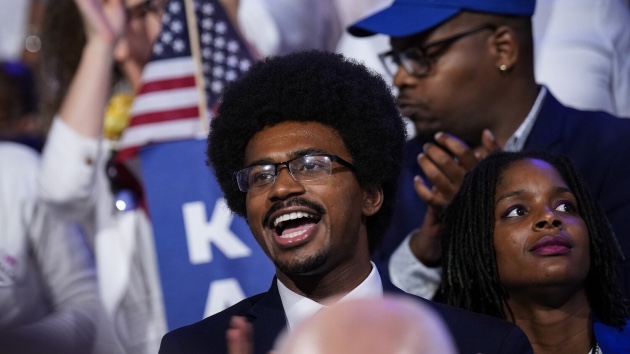
Tennessee State Rep. Justin Pearson listens as Democratic presidential candidate, Vice President Kamala Harris speaks on stage during the final day of the Democratic National Convention, August 22, 2024 in Chicago. (Andrew Harnik/Getty Images)
(WASHINGTON) — Tennessee state Rep. Justin Pearson, a 30-year-old progressive activist and lawmaker who gained national attention as one of the “Tennessee Three,” is launching a primary challenge against longtime Democratic Rep. Steve Cohen.
Pearson’s campaign, framed around the slogan “It’s About Us,” highlights Memphis’s 22.6% poverty rate — nearly double the state average — and pledges “urgent solutions to persistent crises” in Tennessee’s only Democratic congressional district.
Pearson’s bid is part of a broader wave of intraparty contests pitting younger progressives against long-establishedincumbents.
Cohen, 76, has represented Tennessee’s 9th Congressional District since 2007. Earlier this year, he told Axios he intended to seek reelection.
“My constituents need help from D.C. and I’m effective in bringing home important funding,” he said.
Pearson, expelled from the Tennessee House in 2023 after leading a gun control protest, was later reappointed and won a special election, cementing his status as a rising progressive voice.
In Pearson’s campaign launch video, released Wednesday, he told voters, “I’m proud to be one of us, a Memphian, born and raised who understands how to build bridges across race, identity, ethnicity and generations in order to build the future that we want to live into.”
Tennessee’s 9th District, based in Memphis, is the state’s only Democratic stronghold after redistricting in 2022.
“The same issues that people are facing today in this district, are the same issues that Justin faced as a child, and the same issues that Justin’s parents faced when they were kids,” Usamah Andrabi, communications director for the group, Justice Democrats, told ABC News. “At a certain point, you have to ask yourself, maybe it’s time for new leadership?”
Andrabi said the group is focused on elevating a new generation of leaders, pointing out Pearson was just 8 years old when Cohen first won the seat.The group framed Cohen as a man who has been in office for four decades, calling him an “absentee congressman.”
Cohen remains popular in his home district, winning reelection with more than 70% of the vote in a four-way primary in 2024 and more than 71% of the vote in the general election against a Republican challenger.
Pearson is Justice Democrats’ third endorsement of the cycle, following Angela Gonzales-Torres in California and Michigan state Rep. Donavan McKinney.
Founded in 2017, the group has helped elect several members of the “Squad” — including Reps. Alexandria Ocasio-Cortez in New York, Ilhan Omar in Minnesota, Ayanna Pressley in Michigan and Rashida Tlaib in Michigan — and unseat five long-serving incumbents.
Pearson’s campaign platform includes labor rights and living wages, affordable housing, Medicare for All, environmental justice, federal investment to combat poverty and gun reform.
“This campaign isn’t about one person,” Pearson said in a statement. “It’s about building a movement our community can see itself in.
Pearson’s campaign is part of a broader pattern.
In Washington, D.C., Rep. Eleanor Holmes Norton, a nonvoting member of the House, faces two challengers in next year’s primary, D.C. Council members Robert White Jr. and Brooke Pinto.
In Connecticut, Rep. John Larson is facing primary challengers, including former Hartford Mayor Luke Bronin and state Rep. Jillian Gilchrest.
Bilal Dabir Sekou, a political science professor at the University of Hartford, said the trend shows Democrats are increasingly willing to challenge longstanding members of their party.
“What’s interesting is people are stepping up and primarying people, almost like there’s an insurgency going on within the party,” Sekou said.
He added that Democrats are grappling with a generational shift, citing former House Speaker Nancy Pelosi stepping down from House leadership in 2023.
“A lot of that older leadership wants people who are like them,” he said. “If they step aside, they want to step aside for someone who looks familiar to them, in terms of policy preferences and in terms of style and approach.”
Republicans are also grappling with challenges from within their own party.
For example, in Texas, Sen. John Cornyn, 73, faces primary challenges from state Attorney General Ken Paxton, 62, and Rep. Wesley Hunt, 43.
In addition to the support Pearson has received from Justice Democrats, another group, Leaders We Deserve, a youth-driven political organization founded by gun-violence survivor David Hogg, has pledged $1 million for his race.
“In this moment of crisis, I’m calling on Representative Steve Cohen to pass the torch to Justin J. Pearson — a transformational leader who can inspire a new generation,” Hogg said in a statement. “Memphis deserves a next-generation leader like Justin — a tested fighter who will deliver opportunity, affordability, safety, and justice to his constituents.”
“From his successful work stopping the Byhalia Connection oil pipeline, which threatened the drinking water of more than one million people in the Memphis area, to his fearless stand in the state capitol for stronger gun safety laws after the 2023 Covenant school shooting, Justin J. Pearson has repeatedly shown the kind of backbone needed to confront powerful special interests, from big oil to the gun lobby,” Hogg added.
Charlotte Bergmann is a Republican running for the 9th Congressional District seat.
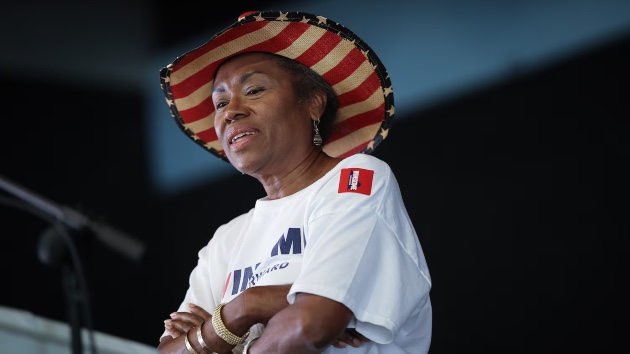
Virginia Republican gubernatorial candidate, Lt. Gov. Winsome Earle-Sears, attends the 54th Annual Buena Vista Labor Day Festival on September 01, 2025 in Buena Vista, Virginia. (Photo by Win McNamee/Getty Images)
(WASHINGTON) — Winsome Earle-Sears faces strong headwinds in her campaign to be Virginia’s next Republican governor.
She’s been outpaced in fundraising and lags in polling behind her Democratic rival, Rep. Abigail Spanberger. And the support from one voice that could narrow this race is largely absent.
President Donald Trump has yet to endorse Earle-Sears, Virginia’s current lieutenant governor. While slamming Spanberger during an event in Virginia for the U.S. Navy’s 250th anniversary over the weekend, Trump did not mention Earle-Sears, a Marine Corps veteran, at all.
Earle-Sears and Trump’s relationship turned tepid in 2022 after the lieutenant governor suggested it was time for the Republican Party to “move on” past him and declined to support his third White House bid.
“A true leader understands when they have become a liability. A true leader understands that it’s time to step off the stage. And the voters have given us that very clear message,” Earle-Sears said at the time.
Trump then undercut Earle-Sears on Truth Social, writing that he “never felt good” about her, and that she was a “phony.”
ABC News has reached out to The White House, Earle-Sears’ campaign and the Virginia GOP for comment.
Attorney general’s race
And now, as Republicans are at high risk of losing control of Virginia’s governor’s mansion, their chief executive and others in the administration are nowhere to be found on the campaign trail for Earle-Sears.
Yet they’re not completely withdrawn from Virginia politics.
Both Trump and Vice President JD Vance have joined the chorus of Republican voices calling for the resignation of Democratic attorney general candidate and former Virginia delegate Jay Jones after text messages to then-fellow Virginia delegate Carrie Coyner surfaced detailing a hypothetical situation about then-Speaker of the House Todd Gilbert getting “two bullets to the head.”
The National Review reported Jones also wished for Gilbert’s wife to “watch her own child die in her arms so that Gilbert might reconsider his political views.”
Coyner, a Republican, claimed in a note sent to her constituents this week and obtained by ABC that Jones meant to text someone else initially, but was OK with chatting when he realized it was her. She says once she expressed “alarm” about the messages, Jones “continued to try to justify his initial statements by phone and by text.”
Jones has apologized for the messages, telling WRIC that he “sincerely and from the bottom of my heart, want to express my remorse and my regret for what happened and what I said that language has no place in our discourse, and I am so remorseful for what happened.”
In a statement to ABC News, Coyner also alleged that in a separate phone call in 2020 during a conversation about police qualified immunity, Jones suggested that the death of a few officers might result in fewer police-inflicted killings.
“During the debate on repealing qualified immunity for law enforcement in Virginia, legislation Jay Jones supported, I stated that I believed that removing qualified immunity would make officers hesitate when making split second decisions, which would lead people and police officers to get killed. Jay stated that if a few police officers died maybe they would move on and stop killing people. His statements were and still are disqualifying, people should not have to die to prove Jay Jones’ talking points,” Coyner said to ABC.
Jones denied those remarks in a statement to ABC: “I have never believed and do not believe that any harm should come to law enforcement, period.”
Vance, on X, claimed Jones was “fantasizing about murdering his political opponents” and Trump labeled Jones as a “radial left lunatic” while offering his endorsement of Jason Miyares, Jones’ Republican opponent.
On this issue, the White House and Earle-Sears align — she’s also called for Jones to drop out, and has even cut an ad featuring screenshots of the aforementioned texts. Earle-Sears and Virginia Republicans are attempting to link this scandal to Spanberger, who say her recent advice on the campaign trail to “let your rage fuel you” as motivation to resist against Republicans is incendiary.
Spanberger has not called for Jones to step aside, yet said in a statement that she feels “disgust” for his language and condemned violent language in politics.
Still, Earle-Sears has less than a month to use this scandal as momentum and inch closer to Spanberger — with or without White House aid.
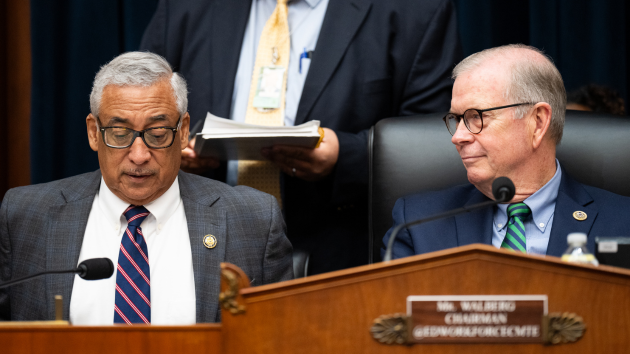
(WASHINGTON) — The top Democrat on the House Education and Workforce Committee is urging Republicans to hold a hearing on whether the Trump administration committed ethics violations at the beginning of the government shutdown by providing politically charged out-of-office email replies for government employees.
Ranking Member Bobby Scott, D-Va., said multiple federal agencies violated the Hatch Act, which prohibits federal employees from engaging in political activities during their official duties, when they used government messaging that disparaged and blamed Democrats for the shutdown.
“Multiple Executive Departments under the jurisdiction of our Committee have taken political actions in apparent violation of the Hatch Act and other statutes,” Scott wrote in a letter first obtained by ABC News. “I write to ask you to hold hearings on these acts as soon as possible,” Scott said.
The federal agencies under the jurisdiction of the House committee — including at the departments of Health and Human Services and Agriculture — are using public statements on their websites that label the lapse in appropriations a “Democrat-led” shutdown while blaming the “radical left.”
The Office of Management and Budget (OMB) also encouraged federal employees across the government — including at the departments of Labor, Justice and Education — to create out-of-office email messages denouncing “Democrat Senators” for causing the government shutdown, multiple sources confirmed to ABC News.
The approach appears to differ with each agency. Some federal departments did not send out any out-of-office email guidance.
However, multiple furloughed employees at the Department of Education report their out-of-office replies were automatically reset without their permission to say: “Thank you for contacting me. On September 19, 2025, the House of Representatives passed H.R. 5371, a clean continuing resolution. Unfortunately, Democrat Senators are blocking passage of H.R. 5371 in the Senate which has led to a lapse in appropriations. Due to the lapse in appropriations I am currently in furlough status. I will respond to emails once government functions resume.”
One Department of Education staffer told ABC News, “They [the agency] did it after everyone left.” “[I’m] so p—ed,” they said.
The employee added, “We as career government employees need to be neutral when carrying out our jobs. This is such bull—-.”
Several federal workers, including the Education Department staffer, expressed concern to ABC News that adding the messages to their email accounts would violate the Hatch Act. The Education employee, furious about the message, stressed that federal workers are supposed to “serve all people of this country.”
The employee continued, “That [automatic reply] message is what anyone seeking assistance from a government worker is going to see.”
In his letter to Education Committee Chairman Tim Walberg, R-Mich., Scott condemned the out-of-office reply practice.
“The act of altering the messages of non-partisan employees to literally put political speech in their mouths is incredibly egregious, and may be a violation of additional federal criminal statutes,” he wrote.
The letter comes as negotiations to fund the government are at a standstill as the shutdown stretches past a week.
Meanwhile, the American Federation of Government Employees (AFGE) — a union representing federal government employees whose automatic reply messages were replaced last week — sued the Department of Education for allegedly replacing the emails with messaging that parroted the Trump administration’s talking points.
“Forcing civil servants to speak on behalf of the political leadership’s partisan agenda is a blatant violation of federal employees’ First Amendment rights,” the AFGE said in its suit.
AFGE represents approximately 800,000 federal workers across the government, including most of the remaining staff at the Department of Education.
In a statement to ABC News, Madi Biedermann, the Department of Education deputy assistant secretary for communications, said, “The email reminds those who reach out to Department of Education employees that we cannot respond because Senate Democrats are refusing to vote for a clean CR and fund the government.”
“Where’s the lie?” Biedermann added.
Democracy Forward, the public education advocacy nonprofit representing the plaintiffs in the case, accused the Trump administration of engaging in partisan political rhetoric.
In a statement to ABC News, Democracy Forward President and CEO Skye Perryman said: “This is beyond outrageous.”
(NEW YORK) — Following an unprecedented surge in election-related litigation, the Supreme Court on Wednesday will consider reviving a lawsuit challenging an Illinois law that allows officials to count mail-in ballots received within two weeks of election day.
The Supreme Court will hear arguments about the broader question of who has the right to file a federal lawsuit challenging election law, the outcome of which could not only revive the mail-in ballot case but also open the door to a wave of new legal challenges to election laws.
Republican Rep. Michael Bost and two presidential electors filed a lawsuit in 2022 to challenge the Illinois law, arguing that counting mail-in ballots beyond Election Day constitutes an illegal extension of voting beyond the timeframe set in federal law.
Two lower courts threw out the lawsuit after concluding that the congressman lacked standing — or the legal right to bring a lawsuit — because the plaintiffs could not prove the policy harmed them. The Supreme Court agreed to hear the case in June, adding to one of the high court’s most consequential terms in recent history.
President Donald Trump and his allies have long criticized the practice of mail-in voting, using it as ammunition to cast doubt on the outcome of the 2020 election. In August, Trump vowed to “lead a movement to get rid of” mail-in voting, though his campaign had encouraged voters to use mail ballots.
“It’s time that the Republicans get tough and stop it, because the Democrats want it. It’s the only way they can get elected,” Trump said then.
When a federal district judge threw out Bost’s lawsuit in 2022, the decision stemmed from the question of whether the congressman and the electors had the grounds to sue, not the merits of his legal argument about mail-in ballots. The court ruled that Bost’s claims about being harmed by the policy — including having to use campaign resources during the post-election ballot counting period — were a “generalized grievance” that did not provide him standing to sue.
To bring a lawsuit in federal court, a plaintiff generally needs to establish that a particular action injures them, that the action stemmed from the person he or she is suing, and that the court’s solution would resolve the harm.
Together with electors Laura Pollatrini and Susan Sweeney, Bost argues that the mail-in ballot policy not only harms his election prospects but also causes a “pocketbook injury,” because candidates need to continue staffing their campaigns through the ballot-counting period.
“When it comes to elections, candidates running for office plainly have the most at stake. They put their lives on hold and spend countless hours and millions of dollars organizing and running campaigns,” their lawyers wrote. “When the dust settles, the candidates either win or lose, with months of effort and untold expenditures either vindicated or forever lost.”
The Illinois State Board of Elections has pushed back by arguing that the potential impact on Bost’s “electoral prospects” is too speculative and that political candidates are under no requirement to continue staffing their campaigns after the election, effectively making the injury that Bost claims he suffers voluntary.
Illinois has also argued that allowing Bost to bring the lawsuit would open the floodgates of frivolous lawsuits “to challenge any election rule on the books for purely ideological reasons” and cause local governments to spend more time fighting lawsuits and less time administering elections.
The Trump administration has supported part of Bost’s argument about having the right to sue over the ballot policy, though Solicitor General D. John Sauer pushed back on the claim that candidates have broad claims to bring election-related lawsuits.
“This Court can …. establish a clear rule for standing to litigate disputes over election laws: candidates have standing to seek prospective relief challenging a rule governing the validity of ballots so long as there is a risk that the ballots at issue could affect the outcome of their election,” Sauer wrote in an amicus brief.
President Donald Trump speaks in the Oval Office at the White House on October 06, 2025 in Washington, DC. Trump and other cabinet secretaries spoke on an executive order that will increase the development and production of Alaska’s natural resources. (Photo by Anna Moneymaker/Getty Images) President Trump Speaks In The Oval Office
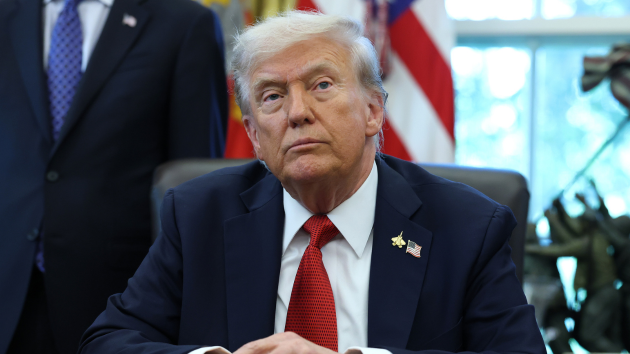
(WASHINGTON) — President Donald Trump says he’d consider declaring an “insurrection” inside the United States, accusing Democratic governors and mayors of preventing the federal government from enforcing immigration laws and turning their cities in “war zones.”
“Chicago’s a great city where there’s a lot of crime,” Trump told reporters on Tuesday. “And if the governor can’t do the job, we’ll do the job. It’s all very simple.”
Invoking the Insurrection Act would unfurl extraordinary presidential powers to use military force in American cities in a manner not used since the Civil Rights Movement.
It also would potentially pit troops from a southern Republican-run state against northern Democratic-run cities and states.
Some 200 National Guard troops from Texas were preparing to deploy to Chicago this week, administration officials told a federal judge this week who agreed not to block the deployments for now.
“That escalates the situation quite a bit,” Katherine Kuzminski, director of studies at the Center for a New American Security, said of the deployment of Texas troops to Chicago.
“It creates a tinderbox,” she said.
Under the law, the president can use military troops to protect federal buildings and federal employees. But they can only conduct domestic law enforcement if they remain under control of the state’s governors.
A major exception to those constraints is the Insurrection Act, which Trump said he’d be open to invoking if people were getting killed and if Democrats running states like Illinois and Oregon “were holding us up.”
Signed into law in 1807 by President Thomas Jefferson, that law allows the president to deploy military troops inside the U.S. to act as law enforcement and quell an “insurrection” that threatens a state or its residents.
“If I had to enact it, I do,” Trump said. “If people were being killed, and courts were holding us up, or governors or mayors were holding us up, sure I’d do that.”
In an interview on Newsmax, Trump said he wouldn’t invoke the law if he didn’t have to. At the same time, he told the outlet what is happening is “pure insurrection.”
Illinois Democratic Gov. JB Pritzker has called allegations of civil unrest in his state “complete bs” and pushed back on the arrival of Texan troops as an “unconstitutional invasion of Illinois by the federal government.”
If Trump declares an insurrection in Illinois, it would mark the first time a president has invoked the law without a governor’s consent since Lyndon Johnson did so to protect civil rights activists in 1965 in Alabama.
Since then, the law has been invoked at a governor’s behest, including in 1992 during riots in California following the acquittal of police officers accused of beating motorist Rodney King.
On Monday, both Texas GOP Gov. Greg Abbott and senior Trump aide Stephen Miller echoed Trump’s accusations that Chicago was a “war zone” and blamed Democratic politicians as refusing to enforce federal laws.
“We have local states refusing to enforce the law, and we have chaos,” Abbott said in an interview on Fox News with host Sean Hannity.
Miller, who has led Trump’s push for mass deportations inside the United States, directly accused local officials of trying to undermine the federal government.
“There is an effort to delegitimize the core function of the federal government of enforcing our immigration laws and our sovereignty,” he said in an interview on CNN on Monday.
“It is domestic terrorism. It is insurrection,” Miller added.
Kuzminski with the Center for a New American Security said the president has broad authority to invoke the Insurrection Act. But after Democratic-led states inevitably sue in court, a judge would likely press Trump to provide evidence that an insurrection has occurred.
In the case of Illinois, it’s possible the Trump administration would point to the “rebellion” as coming from Pritzker and other Democratic politicians themselves.
Pritzker said at a news conference on Monday that he believes invoking the Insurrection Act is part of Trump’s plan.
“The Trump administration is following a playbook — cause chaos, create fear and confusion, make it seem like peaceful protesters are a mob by firing gas pellets and tear gas canisters at night,” Pritzker told reporters.
“Why? To create the pretext for invoking the Insurrection Act so that he can send military troops to our city,” he added.
Kuzminski said there’s a reason why a federal government should move cautiously when thinking about unleashing military might in American cities.
“We are proud of the fact that we train the world’s most lethal fighting force,” Kuzminski said. “And that’s why we have such firm boundaries on their use in law enforcement.”
ABC News’ Katherine Faulders and Peter Charalambous contributed to this report.
U.S. President Donald Trump participates in a bilateral meeting with Prime Minister of Canada Mark Carney at The White House on May 6, 2025 in Washington, D.C. (Photo by Ricky Carioti/The Washington Post via Getty Images)
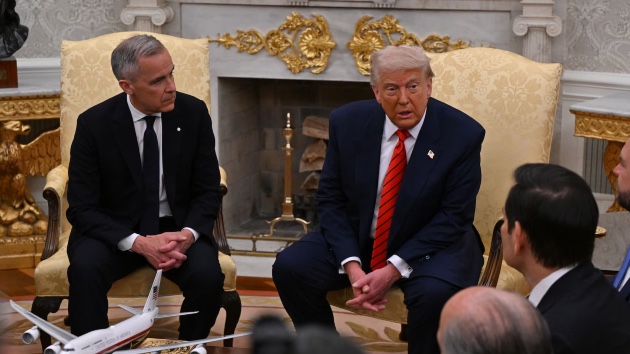
(WASHINGTON) — President Donald Trump on Tuesday signaled optimism about a potential U.S.-Canada trade deal, saying the two sides had “come a long way” in negotiations.
Speaking in the Oval Office alongside Canadian Prime Minister Mark Carney, Trump appeared to dial back trade tensions, striking a friendly tone toward one of the largest U.S. trading partners.
“I love Canada and the people of Canada, and Mark feels the same way,” Trump said.
Trump acknowledged that competition between U.S. and Canadian firms would make any potential accord a “complicated agreement.”
“It’s a natural business conflict,” Trump added. “There’s nothing wrong with it.”
In July, Trump issued a 35% tariff on most goods and raw materials from Canada.
Canada originally issued retaliatory tariffs. However, in August, Carney announced exemptions for goods covered under the United States-Mexico-Canada trade pact.
During their last meeting in May, Carney pushed back against Trump’s controversial proposal to make Canada the 51st state.
“As you know from real estate, there are some places that are not for sale. And Canada is not for sale, it will never be for sale,” Carney told Trump.
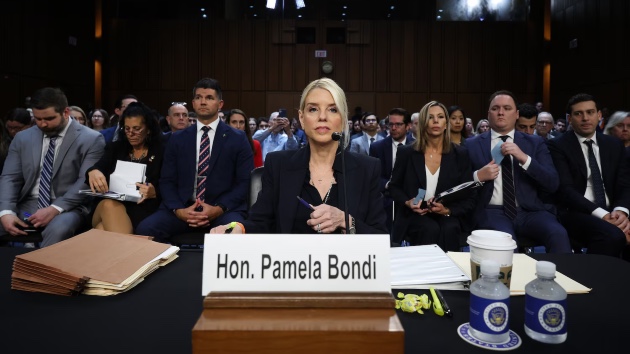
Attorney General Pam Bondi arrives to testify before the Senate Judiciary Committee on Capitol Hill, October 7, 2025 in Washington. (Win McNamee/Getty Images)
(WASHINGTON) — President Donald Trump’s tightening grip over the Justice Department to target his political opponents and lawmakers’ increasing calls for the release of more files from federal investigations into deceased sex offender Jeffrey Epstein took center stage at a contentious Senate hearing Tuesday for Attorney General Pam Bondi.
The hearing before the Senate Judiciary Committee is the first time since July that Bondi has faced questions from lawmakers and follows a tumultuous summer for the department that included deployments of federal law enforcement to Democratic-run cities, a growing number of investigations announced into Trump’s political foes and the controversial indictment of former FBI Director James Comey.
Democratic, Republican leaders differ on hearing focus
Senate Judiciary Chairman Chuck Grassley kicked off the hearing with extensive remarks seeking to highlight instances of what Republicans have labeled “weaponization” of the Justice Department under the Biden Administration, citing selective disclosures by FBI Director Kash Patel of the investigation into President Trump’s attempt to overturn his 2020 election loss.
“These are indefensible acts,” Grassley said. “This was a political phishing expedition to get Trump at all costs.”
Specifically, Grassley singled out a timely disclosure by the FBI on Monday that showed former Special Counsel Jack Smith’s investigators at one point sought limited phone toll records of several Republican senators around the time of the Jan. 6 attack on the U.S. Capitol.
As part of his investigation, Smith extensively investigated Trump and his allies’ pressure campaign on lawmakers to block the certification of former President Joe Biden’s election win — including calls that were made to senators after the Capitol was breached by the pro-Trump mob.
There’s no indication that Republican senators were a target of Smith’s investigation, and the toll records sought by investigators would not include any information about the content of conversations they may have had.
“We’re pointing this all out because we can’t have this repeated in the United States,” Grassley said. “We want to end it right now, whether we have Republican or Democrat administrations.”
Grassley made no mention of recent directives from Trump to have the Justice Department act “now” to carry out prosecutions of his political foes, or other instances of alleged politicization during Bondi’s tenure that have led to scores of departures of longtime career officials who have sounded alarm about the department being used as a tool to enact political retribution.
Ranking Democratic member Dick Durbin said in his opening statement assailed the Trump administration for the conduct in Chicago, a city in which Durbin represents.
“As President Trump turns the full force of the federal government on Chicago and other American cities, the assault on the city I am proud to represent is just one example of how President Trump and Attorney General Bondi shut down justice at the Department of Justice, even before the president’s party controlling the white House, Senate and House of Representatives shut down the government,” Durbin said.
“The attorney general has systematically weaponized our nation’s leading law enforcement agency to protect President Trump and his allies and attack his opponents. And sadly, the American people. You have purged hundreds of senior career officials since you first appeared before us,” he added.
Durbin listed off the greatest hits for critics of Bondi’s Justice Department, the closed investigation into Border Czar Tom Homan, the Eric Adams case being dropped, the hiring of a Jan. 6 defendant who attacked MPD officers, the handling of the Jeffrey Epstein files, and the case against James Comey.
“What has taken place since Jan. 20, 2025, would make even President Nixon recoil. This is your legacy,” Durbin said.
Senators grill Bondi on closed Homan investigation
Sen. Mazie Hirono, D-Hawaii, also pressed Bondi on Tuesday over whether Bondi personally approved closing the investigation into Trump’s border czar Tom Homan.
“Miss Bondi, did you approve closing the Homan investigation? Bribery investigation?” Hirono said.
“Senator Hirono, as I stated earlier, the Department of Justice and the FBI conducted a thorough review, and they found no credible evidence of any wrongdoing,” Bondi responded.
Hirono then pressed Bondi over the department’s removal of dozens of prosecutors who worked on investigations involving President Trump and the Jan. 6 attack on the Capitol.
Bondi shot back, “I’m not going to discuss personnel matters with you.”
Hirono concluded her questioning by accusing Bondi of deliberately politicizing the department, turning it from the Department of Justice into the “Department of revenge and corruption.”
In another heated exchanges at the hearing, Bondi reacted with outrage as she accused Sen. Peter Welch, D-Vt., of suggesting she was lying as she evaded questions about the investigation into Homan.
“First of all, is there a tape that has audio and video of the transfer the $50,000?” Welch asked.
“You would have to talk to Director Patel about that,” Bondi replied.
“No, I’m talking to you,” Welch said.
“I don’t know the answer –” Bondi said before Welch interjected, “You do know the answer.”
“Don’t call me a liar!” Bondi shot back. “I didn’t call you a liar,” Welch responded.
Bondi pushes back against Democrats
Bondi pushed back against her critics and Democrats during the hearing. In her opening statement, she framed her tenure as the “end” of weaponization of law enforcement, while reinforcing her extensive efforts to enact President Trump’s agenda.
“We will work to earn that back every single day. We are returning to our core mission of fighting real crime. While there is more work to do, I believe in eight short months we have made tremendous progress towards those ends,” she said.
She also railed against judges who have ruled against the administration in the months since Trump took office, while highlighting the Justice Department’s string of victories at the Supreme Court.
“My attorneys have done incredible work advancing President Trump’s agenda and protecting the Executive Branch from judicial overreach,” she said.
Bondi continued to hit back at Durbin, who questioned her about the federal deployment to Illinois.
The attorney general taunted the senator about Chicago’s crime rate. Bondi said that Patel and Deputy Attorney General Todd Blanche were on their way to the city.
“Chairman, as you shut down the government, you voted to shut down the government and you’re sitting here as law enforcement officers aren’t being paid. They’re out there working to protect you. I wish you love Chicago as much as you hate President Trump,” she said.
Durbin was taken aback by Bondi’s responses.
“Madam attorney general, it’s my job to grill you. Investigation of your agency is part of my responsibility. And this – this committee, you mean. I’d like the experience, but others have weathered the storm and answered questions in a respectful manner,” he said.
Bondi in the hot seat over Epstein files
Bondi faced heavy scrutiny over conflicting statements out of the administration on the Epstein files, after the Justice Department and FBI said in a July letter that no further releases were warranted and that there was no evidence suggesting others participated or enabled Epstein’s abuse of minor girls.
Democrats have accused the administration of seeking to cover up any mentions of Trump or high-profile appointees who had past associations with Epstein, which the administration has denied.
Trump and Epstein, who died by suicide in 2019 while awaiting trial on charges of trafficking young girls and women, were friends in the 1990s but the president said the relationship soured after Epstein poached some employees from Trump’s Florida club after he explicitly warned him not to do so.
When asked on Fox News about the alleged Epstein client list, the attorney general told Fox News in February, “It’s sitting on my desk right now to review.”
She refused to elaborate about those past comments or the growing calls for the Epstein files while testifying.
Bondi responded to individual Democrats who sought more details by surfacing donations they allegedly may have received from Reid Hoffman — an entrepreneur and founder of LinkedIn who is known to have past associations with Epstein.
She again surfaced Hoffman’s alleged donations in an exchange with Sen. Sheldon Whitehouse, in which she again refused to answer his direct questions about the Epstein files.
Political targeting questioned
Trump has recently ordered the department to ramp up investigations into so-called “radical left” organizations that he and other senior White House officials have alleged, without providing evidence, as helping to fund perpetrators who have attacked federal law enforcement officials dispatched around the country.
Just days after Trump’s comments, a senior official in the Justice Department ordered several U.S. Attorney’s offices around the country to prepare to open sweeping criminal investigations in to the Open Society Foundations founded by billionaire George Soros, naming criminal statutes ranging from robbery, material support for terrorism and racketeering, ABC News previously confirmed.
In a statement, the Open Society Foundations called the accusations “politically motivated attacks on civil society, meant to silence speech the administration disagrees with and undermine the First Amendment right to free speech.”
Bondi sought to brush off pointed questions from Democrats by repeatedly deflecting to crimes committed by undocumented immigrants in their states and districts that were among the briefing materials she brought with her to the hearings.
She has also dismissed any characterization of the Justice Department appearing to work in lockstep with the White House as “politicization” of law enforcement. Bondi and other senior DOJ officials have instead argued that the two federal cases brought against Trump by a special counsel under the Biden Administration represented a far more egregious example of weaponization, echoing grievances leveled at the department by Trump.
DOJ under scrutiny amid growing controversies
As ABC News first reported, the move to seek Comey’s indictment came over the objections of career prosecutors and followed Trump’s removal of his appointee to lead the U.S. Attorney’s Office for the Eastern District of Virginia, Erik Siebert, who expressed reservations about pursuing charges against Comey and New York Attorney General Letitia James, sources told ABC News.
Trump eventually installed a White House aide and former personal attorney Lindsey Halligan to lead the office and move forward with the case against Comey, and a grand jury narrowly voted to indict him on two counts of making false statements to Congress and obstructing a congressional investigation — while declining to indict on a third false statements charge. Comey has denied wrongdoing and is set to appear Thursday in federal court for his arraignment.
While sources told ABC News that leadership at the DOJ expressed reservations about pursuing the case, Bondi and FBI Director Kash Patel went on to publicly cheer news of Comey’s indictment in news interviews and social media posts.
The next week, the administration moved to fire a top national security prosecutor in the office, Michael Ben’Ary, over a misleading social media post that falsely suggested he was among the prosecutors who resisted charging Comey.
Ben’Ary was leading a major case against one of the alleged plotters of the Abbey Gate bombing during the U.S. withdrawal from Afghanistan. In a scathing departure letter, Ben’Ary set his sights squarely on the Justice Department’s leadership and labeled his removal as just one in a series of recent moves taken to root out career officials for political reasons at the expense of the nation’s security.
“This example highlights the most troubling aspect of the current operations of the Department of Justice: the leadership is more concerned with punishing the President’s perceived enemies than they are with protecting our national security,” Ben’Ary wrote. “Justice for Americans killed and injured by our enemies should not be contingent on what someone in the Department of Justice sees in their social media feed that day.”
The DOJ declined to comment when asked about Ben’Ary’s letter.
Sen. Richard Blumenthal pressed Bondi repeatedly on Tuesday over instances of pressure on the department by Trump and what conversations she may have had with him in the days leading up to the indictment of Comey.
“I’d like to know from you what conversations you had with President Trump about the indictment of James Comey,” Blumenthal said.
“Senator, I am not going to discuss any conversations I have or have not had with the President of the United States. You’re an attorney, you have a law degree, and you know that I’m not going to do that,” Bondi said on Tuesday.
Those actions have caused unprecedented turmoil at the Eastern District, which oversees some of the nation’s most sensitive national security, terrorism and espionage investigations.
Current and former officials say that turmoil has reverberated further across the Justice Department’s workforce around the country, with attorneys concerned they’ll face professional repercussions if they resist taking part in politicized investigations or prosecutions.
On Monday, nearly 300 DOJ employees who left the department since Trump’s inauguration released a letter on the eve of Bondi’s hearing describing her leadership as “appalling” in its treatment of the career workforce and the elimination of longstanding norms of independence from the White House.
“We call on Congress to exercise its oversight responsibilities far more vigorously,” the former employees said. “Members in both chambers and on both sides of the aisle must provide a meaningful check on the abuses we’re witnessing. And we call on all Americans — whose safety, prosperity, and rights depend on a strong DOJ — to speak out against its destruction.”
Attorney General Pam Bondi arrives to testify before the Senate Judiciary Committee on Capitol Hill, October 7, 2025 in Washington. (Win McNamee/Getty Images)
(WASHINGTON) — President Donald Trump’s tightening grip over the Justice Department to target his political opponents and lawmakers’ increasing calls for the release of more files from federal investigations into deceased sex offender Jeffrey Epstein took center stage at a contentious Senate hearing Tuesday for Attorney General Pam Bondi.
The hearing before the Senate Judiciary Committee is the first time since July that Bondi has faced questions from lawmakers and follows a tumultuous summer for the department that included deployments of federal law enforcement to Democratic-run cities, a growing number of investigations announced into Trump’s political foes and the controversial indictment of former FBI Director James Comey.
Democratic, Republican leaders differ on hearing focus
Senate Judiciary Chairman Chuck Grassley kicked off the hearing with extensive remarks seeking to highlight instances of what Republicans have labeled “weaponization” of the Justice Department under the Biden Administration, citing selective disclosures by FBI Director Kash Patel of the investigation into President Trump’s attempt to overturn his 2020 election loss.
“These are indefensible acts,” Grassley said. “This was a political phishing expedition to get Trump at all costs.”
Specifically, Grassley singled out a timely disclosure by the FBI on Monday that showed former Special Counsel Jack Smith’s investigators at one point sought limited phone toll records of several Republican senators around the time of the Jan. 6 attack on the U.S. Capitol.
As part of his investigation, Smith extensively investigated Trump and his allies’ pressure campaign on lawmakers to block the certification of former President Joe Biden’s election win — including calls that were made to senators after the Capitol was breached by the pro-Trump mob.
There’s no indication that Republican senators were a target of Smith’s investigation, and the toll records sought by investigators would not include any information about the content of conversations they may have had.
“We’re pointing this all out because we can’t have this repeated in the United States,” Grassley said. “We want to end it right now, whether we have Republican or Democrat administrations.”
Grassley made no mention of recent directives from Trump to have the Justice Department act “now” to carry out prosecutions of his political foes, or other instances of alleged politicization during Bondi’s tenure that have led to scores of departures of longtime career officials who have sounded alarm about the department being used as a tool to enact political retribution.
Ranking Democratic member Dick Durbin said in his opening statement assailed the Trump administration for the conduct in Chicago, a city in which Durbin represents.
“As President Trump turns the full force of the federal government on Chicago and other American cities, the assault on the city I am proud to represent is just one example of how President Trump and Attorney General Bondi shut down justice at the Department of Justice, even before the president’s party controlling the white House, Senate and House of Representatives shut down the government,” Durbin said.
“The attorney general has systematically weaponized our nation’s leading law enforcement agency to protect President Trump and his allies and attack his opponents. And sadly, the American people. You have purged hundreds of senior career officials since you first appeared before us,” he added.
Durbin listed off the greatest hits for critics of Bondi’s Justice Department, the closed investigation into Border Czar Tom Homan, the Eric Adams case being dropped, the hiring of a Jan. 6 defendant who attacked MPD officers, the handling of the Jeffrey Epstein files, and the case against James Comey.
“What has taken place since Jan. 20, 2025, would make even President Nixon recoil. This is your legacy,” Durbin said.
Sen. Mazie Hirono, D-Hawaii, also pressed Bondi on Tuesday over whether Bondi personally approved closing the investigation into Trump’s border czar Tom Homan.
“Miss Bondi, did you approve closing the Homan investigation? Bribery investigation?” Hirono said.
“Senator Hirono, as I stated earlier, the Department of Justice and the FBI conducted a thorough review, and they found no credible evidence of any wrongdoing,” Bondi responded.
Hirono then pressed Bondi over the department’s removal of dozens of prosecutors who worked on investigations involving President Trump and the Jan. 6 attack on the Capitol.
Bondi shot back, “I’m not going to discuss personnel matters with you.”
Hirono concluded her questioning by accusing Bondi of deliberately politicizing the department, turning it from the Department of Justice into the “Department of revenge and corruption.”
Bondi pushes back against Democrats
Bondi pushed back against her critics and Democrats during the hearing. In her opening statement, she framed her tenure as the “end” of weaponization of law enforcement, while reinforcing her extensive efforts to enact President Trump’s agenda.
“We will work to earn that back every single day. We are returning to our core mission of fighting real crime. While there is more work to do, I believe in eight short months we have made tremendous progress towards those ends,” she said.
She also railed against judges who have ruled against the administration in the months since Trump took office, while highlighting the Justice Department’s string of victories at the Supreme Court.
“My attorneys have done incredible work advancing President Trump’s agenda and protecting the Executive Branch from judicial overreach,” she said.
Bondi continued to hit back at Durbin, who questioned her about the federal deployment to Illinois.
The attorney general taunted the senator about Chicago’s crime rate. Bondi said that Patel and Deputy Attorney General Todd Blanche were on their way to the city.
“Chairman, as you shut down the government, you voted to shut down the government and you’re sitting here as law enforcement officers aren’t being paid. They’re out there working to protect you. I wish you love Chicago as much as you hate President Trump,” she said.
Durbin was taken aback by Bondi’s responses.
“Madam attorney general, it’s my job to grill you. Investigation of your agency is part of my responsibility. And this – this committee, you mean. I’d like the experience, but others have weathered the storm and answered questions in a respectful manner,” he said.
Bondi in the hot seat over Epstein files
Bondi faced heavy scrutiny over conflicting statements out of the administration on the Epstein files, after the Justice Department and FBI said in a July letter that no further releases were warranted and that there was no evidence suggesting others participated or enabled Epstein’s abuse of minor girls.
Democrats have accused the administration of seeking to cover up any mentions of Trump or high-profile appointees who had past associations with Epstein, which the administration has denied.
Trump and Epstein, who died by suicide in 2019 while awaiting trial on charges of trafficking young girls and women, were friends in the 1990s but the president said the relationship soured after Epstein poached some employees from Trump’s Florida club after he explicitly warned him not to do so.
When asked on Fox News about the alleged Epstein client list, the attorney general told Fox News in February, “It’s sitting on my desk right now to review.”
She refused to elaborate about those past comments or the growing calls for the Epstein files while testifying.
Bondi responded to individual Democrats who sought more details by surfacing donations they allegedly may have received from Reid Hoffman — an entrepreneur and founder of LinkedIn who is known to have past associations with Epstein.
She again surfaced Hoffman’s alleged donations in an exchange with Sen. Sheldon Whitehouse, in which she again refused to answer his direct questions about the Epstein files.
Political targeting questioned
Trump has recently ordered the department to ramp up investigations into so-called “radical left” organizations that he and other senior White House officials have alleged, without providing evidence, as helping to fund perpetrators who have attacked federal law enforcement officials dispatched around the country.
Just days after Trump’s comments, a senior official in the Justice Department ordered several U.S. Attorney’s offices around the country to prepare to open sweeping criminal investigations in to the Open Society Foundations founded by billionaire George Soros, naming criminal statutes ranging from robbery, material support for terrorism and racketeering, ABC News previously confirmed.
In a statement, the Open Society Foundations called the accusations “politically motivated attacks on civil society, meant to silence speech the administration disagrees with and undermine the First Amendment right to free speech.”
Bondi sought to brush off pointed questions from Democrats by repeatedly deflecting to crimes committed by undocumented immigrants in their states and districts that were among the briefing materials she brought with her to the hearings.
She has also dismissed any characterization of the Justice Department appearing to work in lockstep with the White House as “politicization” of law enforcement. Bondi and other senior DOJ officials have instead argued that the two federal cases brought against Trump by a special counsel under the Biden Administration represented a far more egregious example of weaponization, echoing grievances leveled at the department by Trump.
DOJ under scrutiny amid growing controversies
As ABC News first reported, the move to seek Comey’s indictment came over the objections of career prosecutors and followed Trump’s removal of his appointee to lead the U.S. Attorney’s Office for the Eastern District of Virginia, Erik Siebert, who expressed reservations about pursuing charges against Comey and New York Attorney General Letitia James, sources told ABC News.
Trump eventually installed a White House aide and former personal attorney Lindsey Halligan to lead the office and move forward with the case against Comey, and a grand jury narrowly voted to indict him on two counts of making false statements to Congress and obstructing a congressional investigation — while declining to indict on a third false statements charge. Comey has denied wrongdoing and is set to appear Thursday in federal court for his arraignment.
While sources told ABC News that leadership at the DOJ expressed reservations about pursuing the case, Bondi and FBI Director Kash Patel went on to publicly cheer news of Comey’s indictment in news interviews and social media posts.
The next week, the administration moved to fire a top national security prosecutor in the office, Michael Ben’Ary, over a misleading social media post that falsely suggested he was among the prosecutors who resisted charging Comey.
Ben’Ary was leading a major case against one of the alleged plotters of the Abbey Gate bombing during the U.S. withdrawal from Afghanistan. In a scathing departure letter, Ben’Ary set his sights squarely on the Justice Department’s leadership and labeled his removal as just one in a series of recent moves taken to root out career officials for political reasons at the expense of the nation’s security.
“This example highlights the most troubling aspect of the current operations of the Department of Justice: the leadership is more concerned with punishing the President’s perceived enemies than they are with protecting our national security,” Ben’Ary wrote. “Justice for Americans killed and injured by our enemies should not be contingent on what someone in the Department of Justice sees in their social media feed that day.”
The DOJ declined to comment when asked about Ben’Ary’s letter.
Sen. Richard Blumenthal pressed Bondi repeatedly on Tuesday over instances of pressure on the department by Trump and what conversations she may have had with him in the days leading up to the indictment of Comey.
“I’d like to know from you what conversations you had with President Trump about the indictment of James Comey,” Blumenthal said.
“Senator, I am not going to discuss any conversations I have or have not had with the President of the United States. You’re an attorney, you have a law degree, and you know that I’m not going to do that,” Bondi said on Tuesday.
Those actions have caused unprecedented turmoil at the Eastern District, which oversees some of the nation’s most sensitive national security, terrorism and espionage investigations.
Current and former officials say that turmoil has reverberated further across the Justice Department’s workforce around the country, with attorneys concerned they’ll face professional repercussions if they resist taking part in politicized investigations or prosecutions.
On Monday, nearly 300 DOJ employees who left the department since Trump’s inauguration released a letter on the eve of Bondi’s hearing describing her leadership as “appalling” in its treatment of the career workforce and the elimination of longstanding norms of independence from the White House.
“We call on Congress to exercise its oversight responsibilities far more vigorously,” the former employees said. “Members in both chambers and on both sides of the aisle must provide a meaningful check on the abuses we’re witnessing. And we call on all Americans — whose safety, prosperity, and rights depend on a strong DOJ — to speak out against its destruction.”