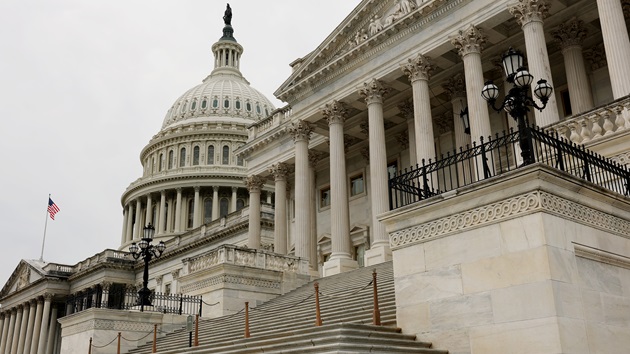
A view of the U.S. Capitol on September 29, 2025 in Washington, DC. Anna Moneymaker/Getty Images
(WASHINGTON) — Dozens of employees at the Substance Abuse and Mental Health Services Administration were laid off in the wave of government shutdown firings last week, multiple sources told ABC News.
Best known for overseeing the rollout of the 988 suicide prevention hotline, SAMHSA works with state and local governments on mental health and addiction initiatives and gives out billions in grants.
The firings, which began Friday, include widespread layoffs of staff that oversee child, adolescent and family mental health services, sources told ABC News.
Roughly one in 10 of SAMHSA’s 900 staff were fired in the spring Department of Government Efficiency cuts. Other staff were recently transferred to other programs in the Department of Health and Human Services, which oversees SAMHSA.
A HHS spokesperson told ABC News that employees who received a Reduction in Force notice “were deemed non-essential by their respective division.”
While the impacts of these latest firings are still being determined, a source tells ABC the agency was “hard hit.”
ABC News’ Will McDuffie contributed to this report.
If you or someone you know is struggling with thoughts of suicide — free, confidential help is available 24 hours a day, 7 days a week. Call or text the national lifeline at 988.
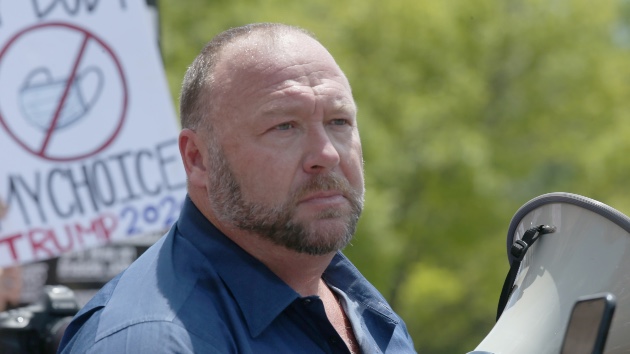
Alex Jones speaks to protestors gathered outside the Texas State Capitol during a rally calling for the reopening of Austin and Texas on April 25, 2020 in Austin, Texas (Photo by Gary Miller/Getty Images)
(WASHINGTON) — The Supreme Court on Tuesday rejected the appeal from conservative commentator and conspiracy theorist Alex Jones, who has been ordered to pay $1.4 billion in damages to the families of victims of the 2012 shooting at Sandy Hook Elementary School.
The court did not explain the denial.
A Connecticut jury in 2022 awarded $965 million in damages to 15 plaintiffs defamed by Jones when the Infowars host called the 2012 mass shooting, in which 20 young children and six adults were killed, a hoax. Later, a judge added an additional $473 million in punitive damages.
Attorneys for Jones contended the sum is an “amount that can never be paid.”
“The result is a financial death penalty by fiat imposed on a media defendant whose broadcasts reach millions,” their petition to the court read.
The Supreme Court also rejected several other hot-button cases in its order list released Tuesday.
The justices declined to hear an appeal from a group of Colorado parents seeking to sue their public school district over a policy that allegedly allows children to pursue gender transitions, and be supported by school staff, without any parental notification.
In a statement, Justice Samuel Alito concurred with the decision, saying the case was an imperfect “vehicle” for examining the core legal question; but he urged the court to look for other opportunities to take up the “troubling — and tragic — allegations in the case.”
In another case, the court rejected an appeal from a group of unnamed minors and their families who had sued the app Grindr for marketing to children, recommending them to nearby adults for sex and allegedly facilitating trafficking.
Plus, it declined to take up a closely-watched California case challenging Food and Drug Administration regulations governing the use of stem cells to promote healing through new forms of treatment as well as a conservative group’s challenge to Department of Homeland Security’s authority to issue temporary work permits to immigrants who entered the country unlawfully without express consent from Congress.
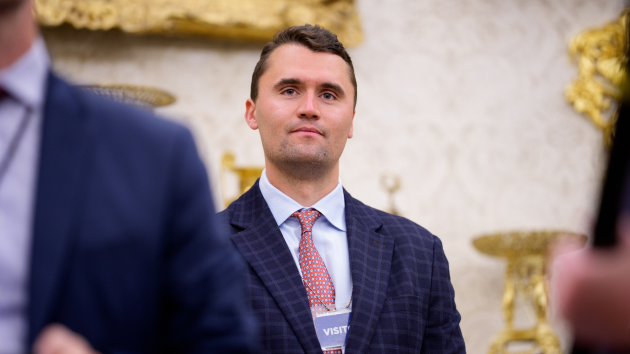
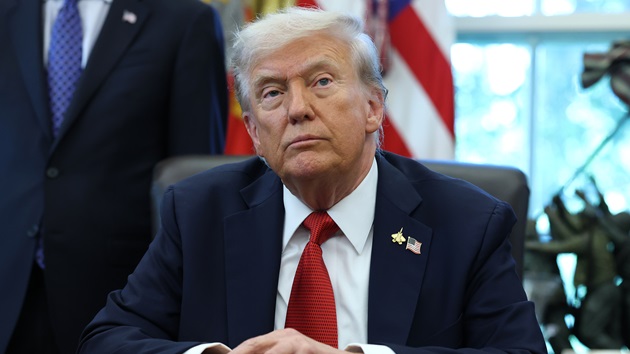
(WASHINGTON) — President Donald Trump on Tuesday is expected to posthumously award conservative activist Charlie Kirk the nation’s highest civilian honor, the Presidential Medal of Freedom.
Kirk was fatally shot on Sept. 10 while speaking at Utah Valley University on the first stop of his The American Comeback Tour, which invited college students to debate hot-button issues.
Trump was the first to announce later that day that Kirk had died, and the next day said he would be be awarding Kirk the Presidential Medal of Freedom as he hailed the Turning Point USA founder “a giant of his generation.”
The ceremony comes after Trump returned back to Washington in the early hours of Tuesday morning from a trip to the Middle East to celebrate a ceasefire agreement between Israel and Hamas that he helped broker.
Oct. 14 is Kirk’s birthday. He would have turned 32. The House and Senate previously approved a resolution to mark the date as a “National Day of Remembrance.”
Trump said last Friday that he was coming back from overseas for Kirk, who called “a friend of mine, a friend of all of us.”
“It’s the greatest honor,” Trump said of the award. “And Erika, his beautiful wife, is going to be here, and a lot of people are gonna be here.”
The president and Erika Kirk shared a heartfelt moment on stage at Kirk’s memorial service in Arizona, where tens of thousands of people gathered to pay tribute to Kirk, a key ally to Trump and a friend to many inside his administration.
The two hugged after Trump’s closing remarks and after Erika Kirk said she’d forgiven her husband’s killer.
Kirk was influential in building Trump’s movement and was particularly influential among young conservatives. But some of his comments on gun violence, LGBTQ issues, race and more drew criticism from liberals and others.
At his memorial service, Trump and other leading conservative figures embraced Kirk as a “martyr.”
“I know I speak for everyone here today when I say that none of us will ever forget Charlie Kirk, and neither now will history,” Trump said at the time. “Because while Charlie has been reunited with his creator in heaven, his voice on earth will let go through the generations, and his name will live forever in the eternal chronicle of America’s greatest patriots.”
In a speech to Israel’s parliament on a day when the country’s living 20 hostages were released as part of a ceasefire agreement he helped broker, President Donald Trump told the Knesset, “This is the historic dawn of a new Middle East.”
“This will be remembered as the moment that everything began to change, and change very much for the better,” Trump said.
In a sign of the warm welcome he was receiving, many in the audience were wearing MAGA-style hats that read “Trump The Peace President.”
“We gather on a day of profound joy, of soaring hope, of renewed faith — and above all, a day to give our deepest thanks to the Almighty God of Abraham, Isaac, and Jacob,” he said.
“After so many years of unceasing war and endless danger, today, the skies are calm, the guns are silent, the sirens are still, and the sun rises on a Holy Land that is finally at peace,” Trump said. “A land and a region that will live. God willing, in peace for all eternity.”
There was a disruption during Trump’s speech when it appeared at least one person in the audience shouted out and was quickly removed from the room. “That was very efficient,” Trump said after the interruption.
Trump received several standing ovations at the Knesset, where he was introduced by the speaker of Israel’s parliament as the “best friend Israel has ever had” in the White House — a sentiment echoed by Israeli Prime Minister Benjamin Netanyahu.
“No American president has ever done more for Israel, and as I said in Washington, it ain’t even close. It’s not really a match,” Netanyahu said.
The Israeli prime minister said when Trump was elected, “overnight everything changed.”
“Mr. President, today, we welcome you here to thank you for your pivotal leadership and putting forward a proposal that got the backing of almost the entire world, a proposal that brings all our hostages home, a proposal that ends the war by achieving all our objectives, a proposal that opens the door to an historic expansion of peace in our region and beyond our region,” Netanyahu said. “Mr. President, you are committed to this peace. I am committed to this peace. And together, Mr. President, we will achieve this peace.”
With Trump looking on smiling, Netanyahu announced he submitted Trump’s nomination to be the first non-Israeli recipient of the Israel Prize, Israel’s highest award. Earlier, the speaker of Israel’s parliament said he will be nominating Trump for next year’s Nobel Peace Prize.
“As to that other prize, just a question time, you’ll get it,” Netanyahu said.
At the Knesset for Trump’s speech was his daughter Ivanka Trump and his son-in-law Jared Kushner, the latter having been involved in negotiations, as well as White House special envoy to the Middle East Steve Witkoff and U.S. Ambassador to Israel Mike Huckabee.
The White House posted a short video of Trump and Netanyahu meeting with the families of hostages before his address.
After the speech, Trump was headed to an international “peace summit” in Sharm El-Sheikh in Egypt where he was to sign an agreement with more than 20 others leaders from around the world.
Netanyahu will not attend the summit, despite being invited by Trump.
“The Prime Minister thanked President Trump for his invitation, but said that he would not be able to participate due to the proximity of the holiday,” the prime minister’s office said in a statement. “The Prime Minister thanked President Trump for his efforts to expand the circle of peace — peace through strength.”
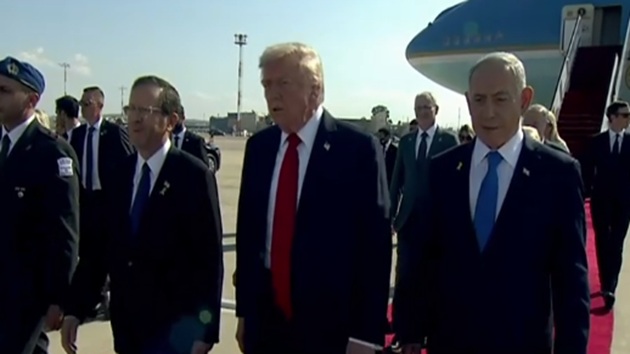
Trump arrived earlier Monday at Ben Gurion Airport in Tel Aviv, where he was met by Netanyahu and Israel’s President Isaac Herzog.
The final 20 living hostages taken by Hamas on Oct. 7, 2023, were returned to Israel on Monday, Israeli officials said, the first phase of an agreement that also called for Israel to release Palestinian prisoners.
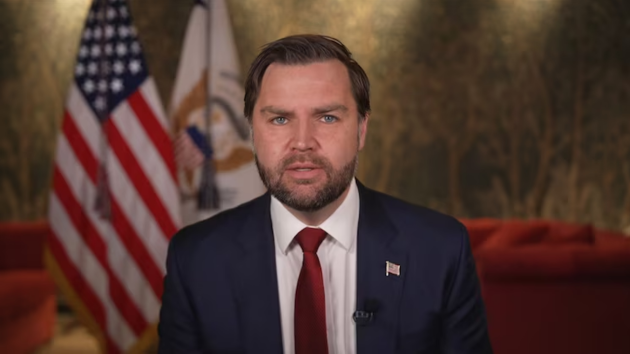
JD Vance speaks with ABC News on This Week. (ABC News)
(WASHINGTON) — Vice President JD Vance confirmed to ABC “This Week” co-anchor George Stephanopoulos that Hamas has said they are holding 20 living hostages, and that those hostages are expected to be released in the next 24 hours as President Donald Trump was headed to the region later Sunday to mark the occasion.
“Well, they’ve been confirmed, George. Of course you don’t know until you see these people alive. But thank God we expect to see them alive here in the next 24 hours, probably early tomorrow morning, U.S. time, which will be later in the day, of course, in Israel,” Vance said.
“We are on the cusp of true peace in the Middle East. Really, for the first time in my lifetime, certainly these 20 hostages are going to come home to their families, George. I think this is a great moment for our country. Our country should be proud of our diplomats who made this happen. It’s really a great moment for the world, too, which is why the president’s going to go over there and celebrate with these hostages. But it’s a great thing, and I’m very excited about it,” he said.
Trump is scheduled to leave for his visit to Israel and Egypt on Sunday afternoon and will meet with hostage families at the Israeli Knesset on Monday.
The Wall Street Journal was the first to report Hamas’ confirmation of the 20 living hostages.
With the U.S. Central Command establishing a coordination center in Israel to support and monitor the ceasefire agreement between Hamas and Israel, Vance said it was “misreported” that additional members of the U.S. military were being sent to the region — claiming that “We already have troops at Central Command.”
A U.S. official told ABC News that 200 troops are being sent to Israel, however, to specialize in transportation, planning, logistics, security and engineering. Vance also repeated claims from top officials that no U.S. troops are intended to go into Gaza.
“So, that story is actually misreported. We already have troops at Central Command. We’ve had them for decades in this country. They’re going to monitor the terms of the ceasefire. That’s everything from ensuring that the Israeli troops are at the agreed upon line, ensuring that Hamas is not attacking innocent Israelis, doing everything that they can to ensure the peace that we’ve created, actually sustains and endures,” Vance said.
“But the idea that we’re going to have troops on the ground in Gaza, in Israel, that that is not our intention, that is not our plan. There was a bit of a misreporting there, but we are going to monitor this peace to ensure that it endures,” he added.
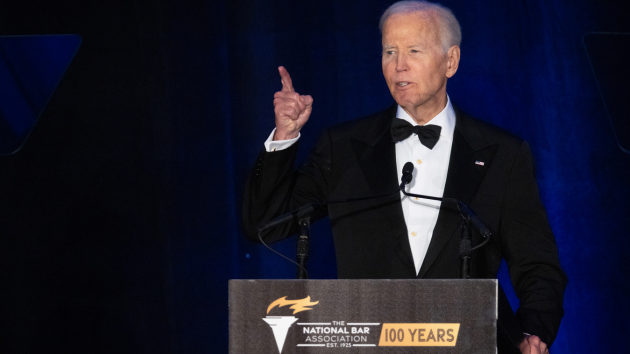
(NEW YORK) — Former President Joe Biden is now receiving radiation therapy for his prostate cancer, a spokesperson for the former president confirmed to ABC News.
“As part of a treatment plan for prostate cancer, President Biden is currently undergoing radiation therapy and hormone treatment,” the spokesperson said in a statement.
The former president’s office announced his prostate cancer diagnosis in May, noting that while it was an aggressive form, “the cancer appears to be hormone-sensitive which allows for effective management.”
“It’s all a matter of taking a pill, one particular pill, for the next six weeks and then another one,” the 82-year-old said in May.
“Well, the prognosis is good. You know, we’re working on everything. It’s moving along. So I feel good,” he added.
Back in May, the former president’s office said his diagnosis was “characterized by a Gleason score of 9 (Grade Group 5) with metastasis to the bone.”
A Gleason score of 9 indicates a high-grade, aggressive form of prostate cancer. It further indicates that the cancer cells look very different from normal prostate cells and are likely to grow and spread rapidly.
This places the cancer in the Grade Group 5, the highest-risk category, which is associated with a greater likelihood of metastasis and a more challenging prognosis. Yet despite the cancer’s aggressiveness, its hormone-sensitive nature offers a viable treatment pathway, according to the National Cancer Institute.
Prostate cancer is the most common cancer and the second-leading cause of cancer death among men in the U.S., according to the National Institutes of Health.
An estimated 313,780 new cases of prostate cancer will be diagnosed this year, representing 15.4% of all new cancer cases, according to the NIH. The five-year survival rate from prostate cancer is roughly 98%, the NIH says.
Prostate cancer usually grows very slowly. While finding and treating it before symptoms occur may not improve men’s health or help them live longer, it is generally a more treatable type of cancer, even when it has spread.
The news of Biden’s radiation therapy comes after he had Mohs surgery — a common procedure to treat skin cancer — in September, a Biden spokesperson said.
Biden’s health had been under scrutiny since before he dropped out of the presidential race in 2024, giving way to then-Vice President Kamala Harris to top the Democratic presidential ticket.
Prior to the announcement of his prostate cancer diagnosis, Biden and former first lady Dr. Jill Biden appeared on ABC’s “The View,” where they both pushed back against the slate of new books from reporters claiming that Biden was dealing with cognitive decline at the end of his presidency.
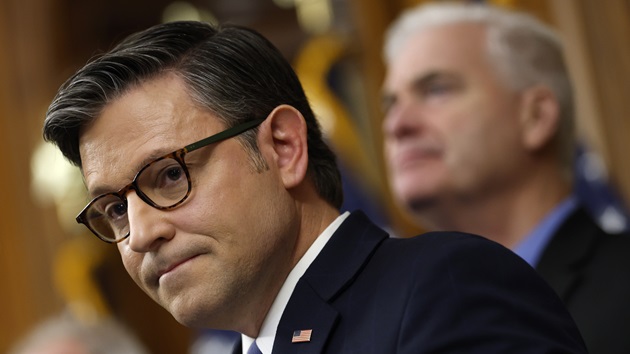
U.S. Speaker of the House Mike Johnson (R-LA) speaks during a news conference on the government shutdown at the U.S. Capitol on October 09, 2025 in Washington, DC. Kevin Dietsch/Getty Images
(WASHINGTON) — As the government shutdown plows forward with no end in sight, many civilian federal workers are feeling the impact as they receive only a partial paycheck on Friday, the 10th day of the impasse.
For many federal workers, the partial paycheck is the last payment they will receive until the shutdown ends.
“You’ve got millions of American families who will now have to figure out how to make their mortgage, how to cover their rent, pay the car note and keep food on the table — because Democrats, Chuck Schumer, his colleagues in the Senate are here playing games,” House Speaker Mike Johnson said during a Friday morning press conference.
House Minority Leader Hakeem Jeffries fired back in his own Friday morning press conference saying Republicans are “not serious about reopening the government” and that Democrats are open to having meetings to discuss off-ramps. He urged Republicans to work with Democrats to “pay our federal employees and at the same time address the Republican health care crisis.”
On Thursday night, the Senate again failed to pass the clean seven-week funding bill. Following the seventh failed vote, senators left town for the weekend — ensuring the shutdown lasts for at least two weeks with the next chance to vote to fund the government on Oct. 14.
House Republican leaders on Friday canceled votes for all of next week.
The latest failed Senate vote guarantees that some 2 million military service members will miss their paycheck on Wednesday, Oct. 15 and won’t be paid until the government reopens.
The last time service members went without pay was in 2018 when the Coast Guard went without money in a shutdown under President Donald Trump’s administration. Other troops haven’t gone without pay in decades, although private financial institutions are offering zero percent loans.
Johnson said that Trump is “working on ways” to ensure the military troops get paid during the shutdown but did not provide specifics.
“The executive branch, the president is working on ways that he may have as well to ensure that troops are paid,” Johnson said Friday morning. “The Republican party stands for paying the troops; the Democrats are the ones that are demonstrating over and over and over – now eight times – that they don’t want troops to be paid. This could not be any simpler than it is – look at the record.”
Pressed by ABC News on the worsening effects of the government shutdown and the millions of federal employees and soldiers going without pay, Jeffries was firm, saying Democrats will not buckle without health care concessions from Republicans.
“Republicans have the House, the Senate, and the presidency. They decided to shut the government down. Republicans in the House have decided to remain on vacation,” Jeffries said.
The shutdown already appears to be impacting many military families, with some lined up at food pantries around the country.
On Thursday, a military mom called into Johnson’s appearance on CSPAN and begged him to bring the House back to session to pass a standalone bill to provide military troops pay during the shutdown, saying her “kids could die” if her family experiences a lapse in pay on Oct. 15.
The National Military Family Association estimates that one in five military and veteran families are experiencing some level of food insecurity. Also, 25% of military families report having less than $500 in savings, the association found in its most recent report.
The next vote on clean House-passed funding bill in the Senate will be Tuesday at 5:30 p.m. ET — which will be Day 14 of the shutdown.
(WASHINGTON) — President Donald Trump on Friday voiced frustration with what he called China’s “trade hostility,” threatening to respond with large tariffs on China and to cancel his upcoming meeting with Chinese President Xi Jinping.
The comments triggered a stock selloff. The Dow Jones Industrial Average tumbled 385 points, or 0.8%. While the S&P 500 fell 1.25% and the tech-heavy Nasdaq dropped 1.75%.
Trump’s remarks came a day after China imposed new restrictions on rare-earth minerals, key materials in the production of semiconductors used for everything from artificial intelligence to home appliances.
In a social media post, Trump said China had sent letters to countries around the world threatening to impose export controls on “each and every element of production having to do with Rare Earths.”
“There is no way that China should be allowed to hold the World ‘captive,'” but that seems to have been their plan for quite some time,” Trump said.
In retaliation, Trump threatened a “massive increase” on tariffs on Chinese products coming into the US, even though he said the move would be “potentially painful.”
Tariffs on Chinese imports into the US currently stand at 30%, down from the high point of 145% earlier this year.
Trump also threatened to cancel an upcoming meeting with Jinping.
“This was a real surprise, not only to me, but to all the Leaders of the Free World. I was to meet President Xi in two weeks, at APEC, in South Korea, but now there seems to be no reason to do so,” Trump concludes.
This comes as the trade truce between the US and China is still in effect but set to expire in less than a month.
First Lady Melania Trump. Aaron Chown-WPA Pool/Getty Images
(WASHINGTON) — First lady Melania Trump announced Friday that she and Russian President Vladimir Putin have had an “open channel of communication” regarding children impacted by the Russian-Ukraine war.
“We have agreed to cooperate with each other for the benefit of all people involved in this war,” she said in brief remarks delivered from the Grand Foyer of the White House.
“In fact, eight children have been rejoined with their families during the past 24 hours,” she added.
The first lady had written a letter to Putin stating it was time to protect the children impacted by the yearslong war, which was hand-delivered by President Donald Trump when he met with the Russian leader in Alaska in August.
“He responded in writing, signaling a willingness to engage with me directly and outlining details regarding the Ukrainian children residing in Russia,” she said on Friday.
Melania Trump said her representative has been working directly with Putin’s team on reunification of children separated from their families as the conflict continues.
“Russia has demonstrated a willingness to disclose objective and detailed information reflective for the current situation,” she said.
The first lady also said she was provided a “detailed report” about the eight children who were reunited and the U.S. government-confirmed facts contained in the documents.
“This is an important initiative for me. It is built on shared purpose and lasting impact,” she said, adding that plans are “underway” to reunify more children in the near future.
“A child’s soul knows no borders, no flags,” she said. “We must foster a future for our children which is rich with potential, security and complete with free will. A world where dreams will be realized rather than faded by war.”
This is a developing story. Please check back for updates.
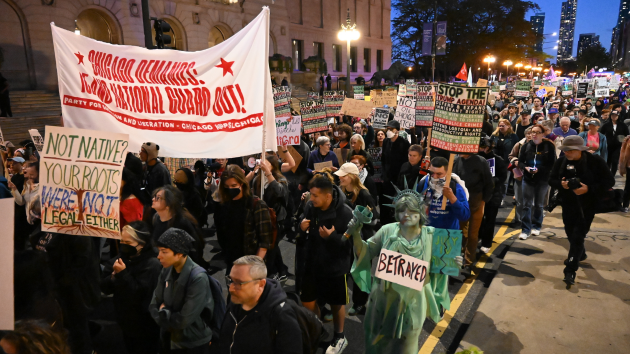
(WASHINGTON) — In two courthouses in different parts of the country, President Donald Trump’s attempt to send troops into Democratic-led cities faced a critical legal test on Thursday, with a judge in Chicago temporarily blocking deployment.
District Judge April Perry entered a TRO enjoining the deployment of National Guard troops from any U.S. state into Illinois. This ruling will be in effect for 14 days.
The U.S. Department of Justice filed a notice of appeal to Perry’s ruling late Thursday evening.
Meanwhile, the Ninth Circuit Court of Appeals helda heated, hour-long oral argument on whether to lift a lower court’s order blocking the deployment of troops into Portland.
The dueling hearings on Thursday set the stage for one of the most high-profile legal battles since Trump took office, as local governments turn to the courts to stop what some judges have described as a blurring of the line between military and civilian rule.
Chicago
In the decision, Perry determined that there is “no credible evidence that there is a danger of rebellion in Illinois” and no evidence that the president is unable with the regular forces to execute the laws of the U.S.
She said that the deployment of the national guard to Illinois “is likely to lead to civil unrest” requiring a response from local and state law enforcement.
Referencing what she called the “provocative nature of ICE enforcement activity” in Illinois, she said, “I find allowing the national guard to deploy will only add fuel to the fire that they started.”
Before Judge Perry’s decision, a lawyer for the Department of Justice, Eric Hamilton, countered that the Chicago area is experiencing “brazen hostility” to federal law enforcement officers, a “tragic lawlessness” in the city that is manifesting in hostile and violent acts against the Department of Homeland Security and ICE personnel.
Hamilton listed as examples “agitators” that had brought guns to federal facilities, and who have thrown rocks, bottles, tear gas and fireworks at federal agents, and who have blocked and impeded immigration enforcement, including by surrounding ICE agents and ramming their vehicles into law enforcement vehicles.
All of which has shown, Hamilton argued, that in Illinois there is an “unprecedented” and “blatant disregard for law and order.”
Judge Perry questioned Hamilton extensively over the scope of the Guard’s deployments and responsibilities and asked what the limits were to their authority, scope and mission. Hamilton described a limited mission to protect federal personnel and property but, under repeated questioning from Perry, Hamilton declined to rule out an expansion of the mission if events were to warrant it.
Describing a “dynamic situation” on the ground in and around Chicago, Hamilton said, “the response is going to be tailored to whatever the needs are” at the moment.
If the mission changes, Hamilton said, the plaintiffs would be able to return to court to issue a renewed challenge.
Wells, the attorney for Illinois, contended that the situation on the ground, particularly outside the ICE facility in Broadview, had calmed substantially since the local government and police force had instituted restrictions on protest hours and since the Illinois State Police began providing protection at the facility.
Portland
As the Chicago hearing took place, a three-judge panel on the Ninth Circuit Court of Appeals heard arguments about whether to lift a lower court’s order blocking the deployment of 200 federalized members of the Oregon National Guard into Portland.
On Wednesday, the Ninth Circuit issued an administrative stay of that order to preserve the status quo as the lawsuit moves through the court.
Oregon argued that the deployment of troops is “part of a nationwide campaign to assimilate the military into civilian law enforcement” and is based on “inaccurate information” about the conditions in Portland.
“Defendants’ nearly limitless conception [of the law] would give the President discretion to repeat this experiment in response to other ordinary, nonviolent acts of civil disobedience across our Nation. The public interest is served by a judicial order preserving the rule of law in the face of unprecedented and unlawful Executive action that threatens grave and irreparable damage to our State and the Nation,” lawyers for the state said in a recent filing.
A federal judge on Sunday expanded her order to bar any state’s National Guard from entering Portland after concluding that the Trump administration was attempting to work around her temporary restraining order by using troops from other states.
That second order has not been formally appealed yet, although the broader issue may arise during the hearing as the Trump administration challenges judicial limits on the president’s authority to deploy the National Guard.
“Congress did not impose these limits on the President’s authority to federalize the Guard, nor did it authorize the federal courts to second-guess the President’s judgment about when and where to call up the Guard to reinforce the regular forces in response to sustained and widespread violent resistance to federal law enforcement,” lawyers for the Trump administration wrote in a filing earlier this week.
In an amicus brief filed on Thursday, a group of former secretaries of the Army and Navy, retired four-star admirals and generals, encouraged Judge Perry to express caution about the broader use of the National Guard in domestic operations.
“Domestic deployments that fail to adhere to [the Posse Comitatus Act] threaten the Guard’s core national security and disaster relief missions; place deployed personnel in fraught situations for which they lack specific training, thus posing safety concerns for servicemembers and the public alike; and risk inappropriately politicizing the military, creating additional risks to recruitment, retention, morale, and cohesion of the force,” lawyers for the former military leaders wrote.