
Supreme Court upholds law giving Native American families priority in adoption

Supreme Court upholds law giving Native American families priority in adoption
ABC News

(WASHINGTON) — The Supreme Court on Thursday rejected a major challenge to the Indian Child Welfare Act of 1978, upholding a landmark law long hailed by tribes for giving priority to Native American families in the adoption of Native children.

The state of Texas and a group of non-Native foster parents had challenged the preferences as an infringement on state authority in child welfare policy and unlawful discrimination on the basis of race.

Justice Amy Coney Barrett, writing for the majority in the 7-2 decision, rejected the claims.

“Congress’s power to legislate with respect to Indians is well established and broad,” wrote Barrett. “When Congress enacts a valid statute pursuant to its Article I powers, state law is naturally preempted … End of story.”

Barrett said the court was not deciding, however, whether the law violates the Equal Protection clause of the 14th Amendment by disfavoring non-Native families because none of the parties in the case was directly injured by that part of the law.

“We do not reach the merits of these claims because no party before the court has standing to raise them,” wrote Barrett.

The conclusion leaves the door open to a potential future challenge to the law as discriminatory. “The equal protection issue is serious,” wrote Justice Brett Kavanaugh in a concurring opinion that agreed with Barrett’s overall judgment but also raised concern.

“A child in foster care or adoption proceedings may in some cases be denied a particular placement because of the child’s race,” he wrote, “even if the placement is otherwise determined to be in the child’s best interest.”

Justices Clarence Thomas and Samuel Alito dissented in the case. Both argued that Congress did not have the power to displace state authority to manage child placement decisions.

“The Federal Government thus lacks a general police power to regulate state family law,” Thomas wrote.

The law, known as ICWA, was passed with overwhelming bipartisan support in response to generations of government-sponsored separation of hundreds of thousands of Native children from their families through the 1960s.

Native tribes have long called it the “gold standard” in adoption, requiring state courts to give first preference to a Native child’s immediate family, then another member of the child’s tribe, then a member of an unrelated tribe, before consideration of parents who are non-native.

Tribal leaders have said the law is critical to keeping their cultures alive and protecting their sovereignty as independent nations.

“Today’s decision is a major victory for Native tribes, children, and the future of our culture and heritage,” said Cherokee Nation Principal Chief Chuck Hoskin, Jr., Morongo Band of Mission Indians Chairman Charles Martin, Oneida Nation Chairman Tehassi Hill and Quinault Indian Nation President Guy Capoeman in a statement on the ruling.

“It is also a broad affirmation of the rule of law, and of the basic constitutional principles surrounding relationships between Congress and tribal nations,” the leaders said.

A representative for Chad and Jennifer Brackeen, the Texas parents who brought a case against ICWA and are trying to adopt a Native American girl they have been fostering, told ABC News the couple is “crushed” by the court’s decision.

Ms. Brackeen, an anesthesiologist, and her husband, a civil engineer turned stay-at-home dad, are parents to two biological children and two Native American siblings — a 7-year-old boy and 4-year-old girl — whom they’ve fostered for years.

While they have successfully adopted their 7-year-old son, his sister’s fate has not yet been decided.

Both adoptions, the Brackeens say, have been hindered by ICWA.

By giving adoption priority to American Indian families over white families, they argued, the law discriminates on the basis of race.

“Cultural considerations are a challenge for every adoptive family, no matter what race they are or what race their children are,” said Jennifer Brackeen in an interview last year.

“For [our son] to just get taken away and moved to someone he’s never met before, who is not related — to me, it didn’t seem like the right thing to do as his mom,” she said of the boy, who is part Navajo. The couple won custody in 2018 after a two-year legal battle when the Navajo Nation backed down.

The nation’s 574 federally recognized tribes, backed by years of Supreme Court decisions, argued that tribes are political entities and that ICWA’s preferences are not about race, much in the same way the U.S. government sets objective requirements for citizenship.

“The Court has always held that Indian law is not race-based,” said Cherokee Nation Deputy Attorney General Chrissi Ross Nimmo in an interview law year.

Native children are four times more likely than white children to be placed in foster care in this country, according to the National Indian Child Welfare Association.

More than a decade ago, 27% of Native foster children were placed with other family members; today, it’s up to 38%, according to the 2020 Adoption and Foster Care Analysis and Reporting System. Experts attribute the improvement to ICWA.

In a statement, President Biden celebrated the high court’s decision in the case, Haaland v. Brackeen, saying it “keeps in place a vital protection for tribal sovereignty and Native children.”

“The touchstone law respects tribal sovereignty and protects Native children by helping Native families stay together and, whenever possible, keeping children with their extended families or community who already know them, love them, and can help them understand who they are as Native people and citizens of their Tribal Nations,” Biden said.

Copyright © 2023, ABC Audio. All rights reserved.

DACA turns 11: As White House calls for immigration reform, ‘Dreamers’ share their worries

DACA turns 11: As White House calls for immigration reform, ‘Dreamers’ share their worries
MANDEL NGAN/AFP via Getty Images

(WASHINGTON) — The Deferred Action for Childhood Arrivals program, known as DACA, hit a milestone on Thursday, 11 years after it first began.

As the White House touts how DACA has helped support young immigrants who they say have become valuable members of society, some of those same DACA recipients are speaking out as their fate remains in limbo, given the years of legal challenges and controversy around the program.

In written and taped statements first shared with ABC News, President Joe Biden and Vice President Kamala Harris marked the DACA anniversary by praising the contributions of the young immigrants, sometimes referred to as “Dreamers,” who were shielded from deportation.

Biden and Harris also again called on Congress to provide those people with long-term protections through immigration reform — something Congress has been unable to agree on for years, despite bipartisan interest in the issue.

Under DACA, young people without legal authorization to be in the U.S. were able to work in the country without imminent threat of removal.

“Dreamers are Americans. Many have spent the majority of their lives in the United States. They are our doctors, our teachers, and our small business owners. Dreamers strengthen our economy, enrich our workplaces, and during the COVID-19 pandemic, many served their communities on the frontlines,” Biden said in his statement.

On Thursday night, Biden plans to host a film screening for DACA recipients, lawmakers, civil rights leaders and others and will give remarks “celebrating the contributions and culture of the Latino community” while “once again call[ing] on Congress to send him a bill that creates a pathway to citizenship for Dreamers,” a White House official said.

DACA began in 2012, during the Obama administration, and has since covered more than 800,000 immigrants. According to U.S. Citizenship and Immigration Services, there are nearly 600,000 current DACA holders.

In her video released on Thursday, Harris said “the story of Dreamers is the story of America.”

“The DACA program has made it possible for hundreds of thousands of Dreamers to live, work and thrive in America. For the benefit of America. So, today, on the 11th anniversary of DACA. President Biden and I again declare: We will not rest until Congress provides all Dreamers permanent protections, including a pathway to citizenship,” Harris said in the video, which also features several DACA recipients.

Requirements for obtaining DACA include having entered the country before age 16 and having lived in the U.S. prior to 2007. Passing a background screening, fingerprint and other education and identity requirements is also necessary. Applicants must re-register for the program every two years.

Since its inception, DACA has faced a barrage of challenges and current recipients are bracing for an imminent federal court ruling out of Texas that could upend their lives.

U.S. District Judge Andrew Hanen, who previously ruled that DACA is unlawful, is expected to once again rule on the legality of the program after the Biden administration took steps to codify it into administrative law in order to better protect it from lawsuits.

A coalition of mostly Republican-led states have challenged the program, arguing in part that it imposes economic harm and that DACA being initiated by a president exceeded the White House’s power.

“Our lawsuit is about the rule of law, not the wisdom of any particular immigration policy … Left intact, DACA sets a dangerous precedent by giving the executive branch sweeping authority to ignore the laws enacted by Congress and change our nation’s immigration laws to suit a president’s own policy preferences,” the Texas attorney general has said.

Hanen sided with the states in 2021, citing “the hardship that the continued operation of DACA has inflicted on them.”

However, Hanen allowed current recipients to continue their status while the appeals process plays out but barred new applicants from joining.

Aurora Chavez, 24, was brought to the U.S. when she was 10 months old and was in the process of applying for DACA when Hanen issued his 2021 ruling. She told ABC News that without the ability to legally work without a fear of deportation, she has been unable to provide for her siblings, one of whom has leukemia.

“I am physically able to do many things, and I can’t even do it because I feel held back from many opportunities,” she said.

At a hearing in early June, lawyers representing DACA recipients argued that the states challenging the program were not accounting for the economic contributions that hundreds of thousands of “Dreamers” have made after being able to enter the workforce, become homeowners and integrate into society. The attorneys also argued the program is lawful because of executive discretion.

Attorneys for MALDEF, one of the co-litigators in the case representing DACA recipients, told reporters in late May that they expect Hanen’s ruling to be appealed and that the case may end up before the Supreme Court.

As federal authorities continue a crackdown on unauthorized immigration to deter many asylum-seekers at the southern border, the population of immigration detention centers has more than doubled since Biden took office. The number of people in immigration detention recently hit about 30,000, marking a 40% increase since the end of pandemic-era measures used to justify fast-track border protocols to remove migrants.

The state of immigration detention underscores the stakes for those who could face deportation if DACA ends.

ABC News spoke with two of the defendant-intervenors in the DACA case who say the anniversary is a bittersweet celebration: a chance to reflect on their accomplishments while facing the possibility that the program will go away.

Jung Woo Kim, co-director of the National Korean American Service & Education Consortium, arrived in the U.S. from Korea when he was 15 years old. He said he chose to get involved in the case because of his sense of obligation to himself and to other recipients whose livelihoods are now at risk.

“If someone tries to take away what you have, what are you going to do? You’re going to do your best to defend it,” he said.

Jung Woo, now 38, said the fear of losing his DACA status has prevented him from starting a family. His mother also suffers from a disability and his ability to financially provide for her is on the line if DACA ends, he said.

Karina Ruiz, also 38, is the executive director of the Arizona Dream Act Coalition. She said she’s fighting for the program that has allowed her “to take a breath in the middle of a storm.”

As a young grandmother, she said her fight is not only about her but the generations that follow.

“It shouldn’t matter where you were born,” she said. “That’s something we can’t control.”

Copyright © 2023, ABC Audio. All rights reserved.

Miami’s Mayor Francis Suarez says he’s running for president against Trump in 2024

Miami’s Mayor Francis Suarez says he’s running for president against Trump in 2024
GIORGIO VIERA/AFP via Getty Images

(NEW YORK) — Miami Mayor Francis Suarez announced on Thursday morning he is running for president, challenging Donald Trump for the Republican nomination.

Suarez told co-anchor George Stephanopoulos in an exclusive interview on ABC News’ Good Morning America he represents “generational change,” but he repeatedly avoided answering about Trump’s indictment or whether he had done anything wrong.

The 45-year-old mayor filed paperwork on Wednesday declaring his candidacy for president, making him the third candidate from Florida to jump into the race and the only Latino GOP candidate in the field.

Copyright © 2023, ABC Audio. All rights reserved.

Senators propose ‘first step’ to address US drug shortages by examining supply chains

Senators propose ‘first step’ to address US drug shortages by examining supply chains
Michael Godek/Getty Images

(WASHINGTON) — Shortages of critical medication have plagued the country, according to a recent congressional report, and a bipartisan pair of senators is now looking for answers from federal agencies about the impact the shortfall could potentially have on national security.

Michigan Democrat Gary Peters, the chairman of the Senate Homeland Security and Governmental Affairs Committee, and Iowa Republican Joni Ernst, a military veteran, are introducing legislation on Thursday that would require the Department of Homeland Security, the Department of Defense and the Department of Health and Human Services to assess vulnerabilities in supply chains and to make plans to help prevent U.S. overreliance on foreign countries for key pharmaceuticals.

Shortages of some drugs have been an ongoing problem in the U.S. for more than a decade, according to a report by the Senate Homeland Security Committee in March, which also found that COVID-19 exacerbated the issues.

The report found that there were 295 active pharmaceutical shortages in 2022 — for medications to treat everything from asthma to ADHD to cancer — in part because the U.S. depends on foreign providers in nations like China and India for some of the active pharmaceutical ingredients necessary to give medications their desire effect.

Reliance on these entities became a critical weakness for the U.S. during the pandemic when some foreign countries placed limits on exports of pharmaceuticals.

“The United States cannot continue to rely on our foreign adversaries, like China, for critically important materials to meet the medical needs of Americans,” Ernst said in a statement. “I’m sounding the alarm on our compromised medical supply chain. It’s past time to reduce our reliance on bad actors and protect the health of our citizens now and in the future.”

The Department of Defense’s inspector general found in 2021 that drug shortages were a potential threat to U.S. military operations. And the Senate Homeland Committee has said the deficits expose the U.S. to a potential security threat because reliance on foreign pharmaceuticals could be exploited by an adversary.

Sens. Ernst and Peters are proposing legislation that would require key agencies to build on existing lists of medicines and active ingredients necessary to respond to public health emergencies to note where there are supply chain vulnerabilities — and which drugs and components are sourced primarily from foreign countries.

Peters called it a “first step” in addressing possible security risks.

“Our federal government’s lack of visibility into the entire supply chain for critical medications limits our ability to address drug shortages that pose a serious national security risk and could compromise medical care for people all across the country, including service members,” Peters said in a statement.

“This bipartisan legislation will provide the federal government with a better understanding of how our overreliance on foreign nations for critical drugs threatens our military readiness and creates health risks for Americans, which will help lawmakers ensure our nation is better able to mitigate these national security threats,” the statement continued.

The legislation has bipartisan support, but it’s not yet clear whether it’ll have a path to the Senate floor this session.

Copyright © 2023, ABC Audio. All rights reserved.

Student loan payments to restart in October after 3-year COVID pause, official says

Student loan payments to restart in October after 3-year COVID pause, official says
Jemal Countess/Getty Images for People’s Rally to Cancel Student Debt

(WASHINGTON) — While the Supreme Court weighs whether to allow President Joe Biden to cancel hundreds of millions of dollars in federal student loan debt, the U.S. Department of Education has announced a broad timeline for when all borrowers should expect to restart their payments after a three-year pause for COVID-19.

People with federal student loan debt should expect interest to kick back in on Sept. 1 and payments to resume starting in October, a spokesperson from the Department of Education told ABC News.

That means that while interest will begin accumulating on Sept. 1, payments won’t be due right away, instead ramping up through the following weeks. Exactly when payments are due for borrowers could depend on how individual loan servicers handle the restart.

The Department of Education is expected to issue more concrete timing guidance in the next few months, and a spokesperson said officials are committed to making sure students are well aware of their payment deadlines.

Still, advocates for student debt relief say they’re concerned by the lack of information released so far and would like to see more specific dates for when payments must begin again, including whether different servicers will be on different timelines.

Spreading the world early and often will be particularly important for people who’ve moved addresses over the last few years or don’t have reliable internet access — borrowers who could also be more at risk of defaulting on their loans, said Aissa Canchola Bañez, a senior adviser at the Student Borrower Protection Center.

“I think there are lots of questions we have that the [Department of Education] really needs to put out guidance to their servicers on, like a firm timeline and what to expect so that borrowers can can plan accordingly,” Canchola Bañez said.

“If servicers have the chance to do whatever they want, that’s going to be even more confusing for, let’s say, a borrower who has multiple services or a married couple with two different servicers,” she said.

The Biden administration previously said the pause on student loan payments would lift either after the Supreme Court issued a ruling on the current legal battle, brought by the state of Missouri and others, or about two months after June 30. The latest dates from the Department of Education slightly revises that schedule.

The Supreme Court’s ruling is expected any day now; oral arguments were heard in February.

If the decision goes in Biden’s favor, Americans with federal student loans who make below a certain income will have between $10,000 and $20,000 of their debts canceled before payments restart. If the Supreme Court rules against Biden’s plan, Americans will restart payments for the first time since 2020 without any such changes.

“We recognize that the return to repayment would result in significant financial hardship for many borrowers. That is why this Administration also put forward a plan to provide up to $20,000 in debt relief for hard-working Americans recovering from the economic harms of the pandemic, most of whom make less than $75,000 a year, and why we continue to fight for that relief on behalf of the millions of borrowers who need it,” a Department of Education spokesperson said.

“We will also be in direct touch with borrowers and ramping up our communications with servicers well before repayment resumes to ensure borrowers and their families are receiving accurate and timely information about the return to repayment,” the spokesperson said.

Critics of Biden’s student loan cancellation plan have countered that it is beyond his authority as president and unfair to other borrowers who paid off their own loans. Some of the Supreme Court justices have likewise taken a skeptical view of forgiving the debt.

“In effect, this is a grant of $400 billion,” conservative Justice Clarence Thomas posited during February’s arguments, citing one estimate on the potential cost of the plan. “And it runs headlong into Congress’ appropriations authority.”

In the meantime, the Department of Education is also implementing a new income-driven repayment plan that would allow some Americans to pay lower monthly payments and have their debt forgiven after a certain amount of payments, a plan that administration officials have described as “the first true student loan safety net in this country.”

It’s unclear when the new payment plan will be available to borrowers, though it was announced in January.

The department also says it’s engaging borrowers with a high risk of delinquency, as well as taking steps to combat scammers and fraudsters who might pray on the confusion on payments restarting.

Copyright © 2023, ABC Audio. All rights reserved.

Vivek Ramaswamy says he wouldn’t seek to charge Biden if elected president

Vivek Ramaswamy says he wouldn’t seek to charge Biden if elected president
Anna Moneymaker/Getty Images

(WASHINGTON) — Republican presidential candidate Vivek Ramaswamy, if elected to the White House, would not pursue charges against Joe Biden over the current president’s handling of classified documents while out of office, Ramaswamy told ABC News on Wednesday.

His comments stand in stark contrast to current GOP front-runner Donald Trump, who promised in a speech after being arraigned on federal charges on Tuesday that, if he retakes the White House, he’ll “appoint a real special prosecutor to go after the most corrupt president and the history of the United States of America, Joe Biden.”

Ramaswamy, though, took another view.

“I think that as part of a broader vision of laying down arms, 360 degrees, that we’re agreeing to put the past in the past and we’re ready to move forward,” the 37-year-old entrepreneur said. “That would be my way of governing.”

Both Trump and Biden have been investigated by special counsels over their handling of government secrets while out of office. Some classified documents from Biden’s earlier time in office, before his presidency, were found in his personal possession. He has since returned the materials and said in January, “We’re fully cooperating and looking forward to getting this resolved quickly.”

While Ramaswamy is currently polling at the back of the crowded field of GOP primary candidates, he said Wednesday that he has been thinking about what his presidency would look like — in content and style.

He told ABC News that he plans to look beyond traditional party lines to lead, a perspective that he argues makes him “an outsider” among his Republican rivals.

“I’m using the Republican Party as a vehicle to advance a positive nationalist agenda,” he said. “I certainly don’t think either of the two major parties, including the Republican Party, are defined what they mean. I think it is on the table how we define them.”

Ramaswamy said he remains firm on his commitment to pardon Trump if elected — a pledge that has drawn criticism from some other Republicans in the 2024 race, with former Arkansas Gov. Asa Hutchinson calling it “offensive.”

Trump, who was arraigned in Florida on Tuesday afternoon, is charged with 37 counts including willful retention of national defense information and conspiracy to obstruct justice. He denies wrongdoing and pleaded not guilty.

Prosecutors allege he illegally retained government secrets after he left the White House and worked to avoid returning them when asked.

“If there was any evidence that he was actually selling those defense plans or nuclear secrets to our foreign enemies, my judgment is completely different. That is treason,” Ramaswamy said on Wednesday. “But my assumption is that that would have been an indictment if that were the case.”

Ramaswamy has been outspoken in his disapproval of Trump’s unprecedented federal indictment, calling Trump’s alleged actions “reflective of very poor judgment” but maintaining they are not unlawful.

“I would have made different judgments than he made, but a bad judgment is not the same thing as breaking the law,” Ramaswamy said.

Despite his vocal support of Trump, who is running to win the Republican presidential nomination over him, Ramaswamy insists he is still set on winning himself.

When asked if it would be a mistake for the party to nominate Trump, he said, “I’m running because I think this party should nominate me. I do think that we do need a leader who is … offering a vision of what we are running to. We can’t be running from something.”

Copyright © 2023, ABC Audio. All rights reserved.

Slain Home Depot worker’s mom tells Congress, amid worrying retail crime: ‘The system failed’

Slain Home Depot worker’s mom tells Congress, amid worrying retail crime: ‘The system failed’
House Committee on the Judiciary

(WASHINGTON) — As much of the nation on Tuesday watched news coverage of former President Donald Trump’s historic arraignment at a Miami courthouse, a panel of Republicans and Democrats on Capitol Hill were being riveted by something else: the testimony of a mother whose 26-year-old son, working as an asset protection officer, was fatally shot in April at a Home Depot in Pleasanton, California.

“The system failed my son,” an emotional Lorie Mohs told members of the House Judiciary Committee. “We will never have another family photo. We will never hear his laughter or feel his hugs. I will never get to say, ‘I love you.'”

According to lawmakers the “crushing,” “dastardly” and “horrific” story of how Mohs’ son, Blake, ended up being killed by an alleged thief is a jarring example of the surging threat from what authorities call organized retail crime, when groups of people steal high-dollar items from retailers to then sell those stolen goods online or elsewhere.

While this kind of theft has been around for years, retailers say it’s reached unprecedented levels and become increasingly violent. And federal law enforcement warns that brutal gangs, dangerous international crime syndicates, and even groups with suspected ties to terrorism are increasingly dabbling in it.

“These are not cases of simple shoplifting,” Rep. Andy Biggs, R-Ariz., said.

“[We must] really quash this kind of retail crime,” added Rep. Sheila Jackson Lee, D-Texas.

Home Depot, where Blake worked, has been especially hit hard. In recent weeks, ABC News has investigated the growing issue, with in-depth reports featuring exclusive videos, rare interviews and an inside look at what Home Depot is trying to do about it.

But testifying to Congress on Tuesday, Mohs put some of the blame for her son’s death on Home Depot itself.

She recounted that in regular phone calls with her son before he was shot, Blake would tell her about the many thieves who pulled knives or guns on him and “I would ask if he’s been issued any bulletproof vests, pepper spray or safety gear.”

“He would … tell me, ‘No,'” she said. “As a mom, my concerns began to grow at the lack of [protective equipment] he had been issued by Home Depot. All of my concerns and fears were realized by one phone call.”

On April 18, a woman Blake confronted at work for allegedly stealing a tool charger “pulled out her gun from her purse and shot my son — in the heart, of all places,” Mohs testified Tuesday.

The alleged shooter and an alleged getaway driver have been arrested on murder charges in the case.

In a statement to ABC News, a spokeswoman for Home Depot called the killing of Mohs’ son a “senseless tragedy,” adding, “Blake was our associate and friend, and our hearts go out to his family and everyone who knew and loved him.”

The statement said: “The safety of our associates and customers is always our number one priority. The Home Depot offers extensive training and resources to all of our associates, with additional training for Asset Protection associates, and we’re constantly assessing what tools and training will keep people safest.”

On Tuesday, Mohs testified that “so many could have prevented [her son’s] death,” including the U.S. Labor Department, which she said could mandate that retailers provide protective equipment for asset protection workers, and local justice systems, which she said “failed” to rehabilitate Blake’s alleged killer over her lengthy criminal career.

Sitting beside Mohs on Tuesday, Kansas Attorney General Kris Kobach, a Republican, agreed that many “factors” are “exacerbating this problem” of organized retail theft.

In particular, he said, a “huge number” of cases never get prosecuted “due to the lack of prosecutorial capacity at the county level,” which itself stems from “a shortage of criminal prosecuting attorneys across the country.”

“Many [district attorneys] simply have too large a stack of crimes” to focus on cases where no one is physically harmed or personally victimized. Similarly, local police departments “only have a limited number of detectives, [so] if you’ve got multiple stores getting hit multiple times each day, they don’t have the capacity to investigate all of them,” he said.

Even when local prosecutors do bring charges, there is “a lack of detention,” which allows criminals to strike retailers over and over again, Kobach added.

“In Kansas, the felony threshold is at $1,000, so you’ll typically see them stealing $900 or so in any given criminal event,” keeping them out of jail pending trial, Kobach said.

He said that — in terms of dollars stolen through organized retail crime — Kansas ranks among the top 10 states in the country, and that’s mainly because the I-70 corridor that runs from Kansas City west to Colorado “is a pipeline” for drugs, making it also a pipeline for organized retail crime.

People struggling with substance abuse issues are often targeted for recruitment by organized crime rings, which can provide them a source of money, Kobach said. People with mental illness are also frequently recruited, the head of the National District Attorneys Association, John Flynn, told lawmakers.

That’s why to effectively fight organized retail crime, it’s important to “address the issue holistically,” providing help to those who need substance abuse or mental health treatment and only using a “more law-and-order approach,” including arrest and incarceration, against those higher up in the crime rings, Flynn said.

Jackson Lee, the Texas congresswoman, noted that the true scope of organized retail theft has been hard to ascertain because there is no “consistent and comprehensive” data on it. In fact, she said, there isn’t even a “uniform definition” of what organized retail crime is, making it even harder to track and then tackle.

At times, Tuesday’s hearing was unmistakably political, with Republican lawmakers and the conservative witnesses they invited saying that “in some quarters” of the country, as Kobach put it, prosecutors with “a lack of respect for the rule of law” are unwilling to bring certain cases even when they can. He did not point to any specific inaction, but some retailers and other law enforcement officials have previously expressed similar concerns to ABC News.

On Tuesday, one Democratic lawmaker, Rep. Madeleine Dean of Pennsylvania, accused Republicans of being “very interested in retail crime, [but] not very interested in saving lives” through further gun regulations.

A Republican lawmaker on the committee, Rep. Tom Tiffany of Wisconsin, criticized “woke” companies who now want help fighting retail theft and claimed Democrats are “why we are seeing the lawlessness.”

When Tiffany then asked Mohs, still grieving over her son’s death, to comment, Mohs balked, saying that “defunding police and things like that are not my expertise.”

“I only involve myself in this … with my son’s passing, unfortunately,” she said.

“Our hope is that our story helps this committee understand the importance and the urgency for change,” she told the lawmakers.

ABC News’ Erielle Reshef and Laura Romero contributed to this report.

Copyright © 2023, ABC Audio. All rights reserved.
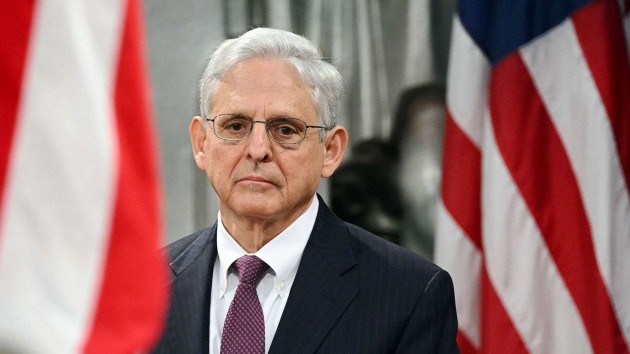
Attorney General Garland speaks on Trump case, defends special counsel

Attorney General Garland speaks on Trump case, defends special counsel
Mandel Ngan/AFP via Getty Images

(WASHINGTON) — Attorney General Merrick Garland on Wednesday made his first public remarks after the historic indictment of former President Donald Trump on federal criminal charges.

Garland, taking questions at an event on combating violent crime, said he couldn’t discuss particulars of the case but offered general praise for special counsel Jack Smith and his team after being asked about accusations made by Trump and other Republicans that the Justice Department has been “weaponized.”

“As I said when I appointed Mr. Smith, I did so because it underscores the Justice Department’s commitment to both independence and accountability,” the attorney general said. “Mr. Smith is a veteran career prosecutor. He has assembled a group of experienced and talented prosecutors and agents who share his commitment to integrity. Any questions about this matter will have to be answered by their filings in court.”

Garland has been under pressure to speak out since the Trump indictment was revealed.

When asked about his role in the indictment process, he said he followed regulations set forth for an attorney general in special counsel investigations, and that his role was “completely consistent” with those regulations.

Pressed by ABC News Senior Justice Correspondent Pierre Thomas on why an indictment was the “best and most appropriate step” and why were there were no other alternatives, Garland repeated he was not going to get into particulars of the case.

Trump was indicted over his alleged mishandling of classified documents after leaving the White House. He has been charged with 37 felony counts, including willful retention of national defense information and obstruction.

Trump surrendered to authorities Tuesday in Miami and appeared in court, where his defense attorney entered a not guilty plea on his behalf.

The former president has denied all wrongdoing, and after his arraignment unloaded on the Department of Justice and Smith in a speech at his Bedminster, New Jersey, golf club.

“Today we witnessed the most evil and heinous abuse of power in the history of our country. Very sad thing to watch,” Trump said.

He accused Smith of “doing political hit jobs” and called him a “thug.”

Smith, who gave a brief statement after the indictment was released last week, said the country has “one set of laws and they apply to everyone.”

“The men and women of the United States intelligence community and our armed forces dedicate their lives to protecting our nation and its people,” he said. “Our laws that protect national defense information are critical to the safety and security of the United States and they must be enforced. Violations of those laws put our country at risk.”

Copyright © 2023, ABC Audio. All rights reserved.

Attorney General Garland speaks on Trump case, special counsel

Attorney General Garland speaks on Trump case, defends special counsel
Mandel Ngan/AFP via Getty Images

(WASHINGTON) — Attorney General Merrick Garland on Wednesday made his first public remarks on the historic indictment of former President Donald Trump on federal criminal charges.

Garland, taking questions at an event on combatting violent crime, said he couldn’t discuss particulars of the case but offered general praise for Smith and his team.

“As I said when I appointed Mr. Smith, I did so because it underscores the Justice Department’s commitment to both independence and accountability,” the attorney general said. “Mr. Smith is a veteran career prosecutor. He has assembled a group of experienced and talented prosecutors and agents who share his commitment to integrity. Any questions about this matter will have to be answered by their filings in court.”

Garland, when asked about his role in the indictment process, said he followed regulations set forth for an attorney general in special counsel investigation.

Pressed by ABC News Senior Justice Correspondent Pierre Thomas on why an indictment was the “best and most appropriate step,” Garland repeated he was not going to get into particulars of the case.

Copyright © 2023, ABC Audio. All rights reserved.

Pence ‘cannot defend actions alleged’ in Trump indictment but calls charges political

Pence ‘cannot defend actions alleged’ in Trump indictment but calls charges political
Win McNamee/Getty Images

(WASHINGTON) — Former Vice President Mike Pence said Wednesday he “cannot defend what is alleged” in the most recent indictment against former President Donald Trump, a seemingly tougher stance than he had previously taken regarding the Justice Department’s decision to charge his former running mate.

Still, Pence, who said he read the 49-page document over the weekend, reiterated his accusation that the Justice Department deployed a “two-tiered system of justice” against Trump and said he would hold off on giving his final judgment until the former president has had his day in court.

“This indictment contains serious charges, and I cannot defend what is alleged,” he told CNBC’s Squawk Box on Wednesday, personalizing the issue both with his family’s military service and his own experiences with security clearance. “The very prospect that what is alleged here took place — creating an opportunity where highly sensitive classified material could have fallen into the wrong hands, even inadvertently — that jeopardizes our national security [and] puts at risk the men and women of our Armed Forces.”

“I can’t defend what is alleged, but the former president has a right to his day in court,” Pence repeated. “I just can’t — I can’t believe that politics didn’t play some role here.”

The comments mirrored those the former vice president gave to the Wall Street Journal’s editorial board on Tuesday afternoon, just after Trump pleaded not guilty in a Miami federal court house to 37 counts brought by Special Counsel Jack Smith related to his handling of classified materials.

“As the father and father-in-law of two men that currently serve in the Armed Forces of the United States, I will never diminish concerns over the handling of classified materials,” Pence said. “The documents that were alleged to be in the president’s possession — describing defense capabilities of our country, potential vulnerabilities of the United States and our allies — if these materials had ever inadvertently made their way in the hands of foreign interests, it would jeopardize the security of our country as well as the safety and security of our Armed Forces.”

“President Trump is entitled to his day in court, and I’m going to listen with great interest to his defense and will render any judgment about this matter after the president has had the opportunity to make his case,” he continued. “But I will tell you … I’ve lived through years of politicization at the Department of Justice, and I share the concern of millions of Americans about the way politics has played a hand.”

“I want to emphasize that when we look at an indictment, it’s only one side of the story,” Pence added Tuesday. Trump has denied all allegations of wrongdoing.

He said the indictment “argues for a fresh start in this country” and vowed in both interviews to “clean house” at the Department of Justice and FBI if elected president.

“One of the first things we’re going to do is clean house at the highest level of the Department of Justice and bring in men and women who are above reproach, who are respected on both sides of the aisle,” he told CNBC. “We’ve got to have respect for the rule of law in this country and for all those that enforce the laws.”

Asked then how he’s able to “square” his line that “no one’s above the law” with his echoing of Trump’s efforts to undermine the Justice Department, Pence said, “I don’t think there’s any circle to square.”

“I think two things are true today: Number one is no one’s above the law. This indictment includes serious charges. I can’t defend what’s alleged there. The handling of classified materials is vitally important to the country,” he said. “But look, we’ve gone through about — trying to do the math here — about out seven years where the American people have lost confidence in our Department of Justice.”

Asked on Friday while campaigning at MaryAnn’s Diner New Hampshire, as the indictment was unsealed, whether Trump should drop out of the race like some competitors say, Pence called that “premature.”

“I think the former president has a right to make his defense. And we’ll respect that right,” he said.

He also said at that time, before having had a chance to review the indictment, that he’d hoped the Department of Justice “would see its way clear to resolve these issues with the former president without moving forward with charges.”

“I would hope that the Department of Justice, however the case against the former president proceeds, will proceed on the inquiry of President Biden and also his family with equal vigor,” Pence said, referring to the ongoing investigation into Biden’s potential mishandling of classified documents.

Pence, who was cleared of all charged in his own classified materials case, testified earlier this year before a different federal grand jury investigating his former running mate on efforts to overturn the 2020 election.

The indictment against Trump came just days after Pence launched his campaign for the Republican nomination for president. Trump holds a comfortable lead in the race for the nomination, and he even gained some ground in the primary in an ABC News poll conducted after Trump’s first indictment in New York. Trump pleaded not guilty to the felony charges he faced in New York City.

Copyright © 2023, ABC Audio. All rights reserved.