DHS police and Marines guard the Federal Detention Center on Thursday, July 17, 2025 as people protest against immigration enforcement in Los Angeles, CA. (Luke Johnson / Los Angeles Times via Getty Images)
(WASHINGTON) — The Trump administration’s use of federal troops in Los Angeles to conduct law enforcement operations is unlawful, a federal judge ruled on Tuesday.
U.S. District Judge Charles Breyer issued an order prohibiting troops from engaging in security patrols, riot control, arrests, searches and crowd control. The order does not take effect until Sept. 12 to allow the Trump administration to appeal.
Breyer said the use of federal troops effectively created a “national police force with the president as its chief” and violated the Posse Comitatus Act.
“The evidence at trial established that Defendants systematically used armed soldiers (whose identity was often obscured by protective armor) and military vehicles to set up protective perimeters and traffic blockades, engage in crowd control, and otherwise demonstrate a military presence in and around Los Angeles. In short, Defendants violated the Posse Comitatus Act,” Breyer wrote.
The 1878 Posse Comitatus Act limits the military from being involved in civilian law enforcement unless Congress approves it or under circumstances “expressly authorized by the Constitution.”
One exception is the Insurrection Act, a 218-year-old law signed by President Thomas Jefferson.The Insurrection Act states, in part: “Whenever there is an insurrection in any State against its government, the President may, upon the request of its legislature or of its governor if the legislature cannot be convened, call into Federal service such of the militia of the other States, in the number requested by that State, and use such of the armed forces, as he considers necessary to suppress the insurrection.”
Another provision states it can be used “whenever the President considers that unlawful obstructions, combinations, or assemblages, or rebellion against the authority of the United States, make it impracticable to enforce the laws of the United States in any State by the ordinary course of judicial proceedings.”
Breyer issued his decision after holding a three-day trial last month featuring testimony from military leadership about the ongoing operations in the Los Angeles area.
In June, Breyer also ruled President Donald Trump lacked the authority under the Insurrection Act to federalize the National Guard, concluding that the immigration protests in the city failed to meet the criteria of a “rebellion.”
ABC News’ Alexandra Hutzler contributed to this report.
This is a developing story. Please check back for updates.
Siavosh Hosseini/SOPA Images/LightRocket via Getty Images
(NEW YORK) — Former New York Mayor Rudolph Giuliani was injured in a vehicle accident Saturday evening in New Hampshire, his security chief said in a statement on Sunday.
A source familiar with his condition told ABC News on Monday that Giuliani is now out of the hospital and in good spirits. He remains in New Hampshire, the source added.
Giuliani’s security chief, Michael Ragusa, said on Sunday that Giuliani was taken to a nearby trauma center after the accident, where he was diagnosed with “a fractured thoracic vertebrae, multiple lacerations and contusions, as well as injuries to his left arm and lower leg.”
Before the incident, Ragusa said Giuliani was flagged down by a woman who was the victim of a domestic violence incident and that he rendered assistance and contacted 911. He remained on the scene until responding officers arrived to ensure her safety, Ragusa said in a statement.
After the incident while traveling on a highway, Giuliani’s vehicle was struck from behind at high speed, Ragusa said. His business partner and medical provider were contacted and arrived at the hospital to oversee his care.
Ragusa later said in a statement on X: “He sustained injuries but is in good spirits and recovering tremendously. Thank you for the prayers & support.”
He later followed up on his post, saying, “This was not a targeted attack. We ask everyone to respect Mayor Giuliani’s privacy and recovery, and refrain from spreading unfounded conspiracy theories.”
(NEW YORK) — A federal judge on Sunday blocked the Trump administration from deporting 76 unaccompanied Guatemalan children from the United States to Guatemala.
A judge had temporarily blocked the administration from removing the minors and set an emergency hearing for 3 p.m. Sunday, but U.S. District Judge Sparkle Sooknanan moved the hearing to 12:30 p.m. after the court was notified the Guatemalan children were “in the process of being removed from the U.S.”
“The Court ORDERS that the Defendants cease any ongoing efforts to transfer, repatriate, remove, or otherwise facilitate the transport of any Plaintiff or member of the putative class from the United States,” Sookananan wrote. “The putative class includes all Guatemalan unaccompanied minors in Department of Health and Human Services Office of Refugee Resettlement custody as of 1:02 AM on August 31, 2025, the time of the filing of the Complaint, who are not subject to an executable final order of removal,” the order said.
All of the children had been deplaned and were in the process of returning to the custody of the Office of Refugee Resettlement Sunday evening, Deputy Assistant Attorney General Drew Ensign said.
The government will notify the court when the transfer of all of the children is confirmed, he said.
Attorney Efrén Olivares had asked the judge to keep the hearing going until all of the children were deplaned, saying there have been several instances where “allegations of confusion and misunderstanding have resulted in irreparable harm.”
The hearing on Sunday is reminiscent of an incident in March when several Venezuelan migrants were deported to the CECOT prison in El Salvador under the Alien Enemies Act, despite a judge issuing a temporary restraining order barring the removals.
This time, however, Ensign said that the flight he believed might have departed had returned and that he expects the children to deplane because of the judge’s order.
Sooknanan expressed skepticism during the hearing over the legality of the administration’s attempt to repatriate the children. She said she received notice of the complaint at 2 a.m. Sunday and that she personally tried to reach the U.S. attorney’s office, leaving a voice message at 3:43 a.m. saying that she wanted to hear from the government before she issued her temporary restraining order
“We are here on a holiday weekend where I have the government attempting to remove unaccompanied minors from the country in the wee hours of the morning on a holiday weekend, which is surprising, but here we are,” she said.
Ensign argued that the Trump administration was removing the children in accordance with the law and at the request of the Guatemalan government and the legal guardians of the children.
“The government of Guatemala has requested the return of these children and all of these children have their parents or guardians in Guatemala who are requesting their return, and United States government is trying to facilitate the return of these children to their parents or guardians from whom they have been separated,” Ensign said.
Olivares strongly disagreed with that argument.
“Some of the children do not have either parent, some of the children have fear of returning to Guatemala so have not requested to return, do not want to return,” he said.
The National Immigration Law Center believes more than 600 Guatemalan children could be at risk of being returned to their home country.
Sooknanan appeared to question the validity of the government’s argument.
“I have conflicting narratives from both sides here on whether what is happening here is an attempt to reunite these children with their parents or just return these children to Guatemala where they face harm,” she said.
Sooknanan read declarations from some of the children submitted in court filings, including one from one child who said their parents had received a “strange phone call” notifying them that the U.S. government was trying to deport them to Guatemala along with other minors.
“Every one of these 10 declarants who are named plaintiffs speak about being afraid of going back to Guatemala,” she said, adding that some of the children had faced abuse and neglect from some of their family members.
In earlier court filings, attorneys accuse the Trump administration of attempting to repatriate more than 600 unaccompanied Guatemalan minors in coordination with the Guatemalan government in violation of laws that prevent such moves without giving them the opportunity to challenge the removals.
Unaccompanied minors are migrants under the age of 18 who have come to the country without a legal guardian and do not have legal status. The children in question in the lawsuit are all reportedly in the custody of the Office of Refugee Resettlement.
In a statement, the National Immigration Law Center, which filed the lawsuit, said the Trump administration is denying the Guatemalan children from being able to present their case before an immigration judge.
“It is a dark and dangerous moment for this country when our government chooses to target orphaned 10-year-olds and denies them their most basic legal right to present their case before an immigration judge,” said Olivares, vice president of litigation at the NILC. “The Constitution and federal laws provide robust protections to unaccompanied minors specifically because of the unique risks they face. We are determined to use every legal tool at our disposal to force the administration to respect the law and not send any child to danger.”
In another court filing, NILC said that after it attempted to inform the government that it had filed a motion for a temporary restraining order, it learned shelters in South Texas had been “notified to prepare Guatemalan children in their custody for discharge.”
“Upon information and belief, ICE agents and their contractors have started attempting to pick up Guatemalan unaccompanied children from shelters in South Texas to transport them to the airport for potential removal from the United States as soon as the early morning of Sunday, August 31, 2025,” NILC said in the filing.
The lawsuit was filed on Sunday after legal service providers received notices from the Office of Refugee Resettlement that children in their program have been identified for reunification. In the notice, the agency said that court proceedings for children identified by the agency “may be dismissed.”
“ORR Care Providers must take proactive measures to ensure UAC are prepared for discharge within 2 hours of receiving this notification,” the notice said.
In one of the notices submitted in court filings, ORR has informed certain attorneys for unaccompanied minors that the “Government of Guatemala has requested the return of certain unaccompanied alien children in general custody” to be reunited “with suitable family members.”
In the statement, NILC said that because most Guatemalan children in U.S. custody are indigenous and many speak languages other than English or Spanish, they are more vulnerable to “being misled by officials looking to deport them.”
One of the children represented in the case is a 10-year-old indigenous girl who speaks a rare language.
“Her mother is deceased and she suffered abuse and neglect from other caregivers,” the complaint says.
(NEW YORK) — A federal judge on Sunday blocked the Trump administration from deporting hundreds of unaccompanied Guatemalan children from the U.S. to Guatemala.
A federal judge had temporarily blocked the administration from removing the minors and set an emergency hearing for 3 p.m. Sunday, but U.S. District Judge Sparkle Sooknanan moved the hearing to 12:30 p.m after the court was notified the Guatemalan children were “in the process of being removed from the U.S.”
“The Court ORDERS that the Defendants cease any ongoing efforts to transfer, repatriate, remove, or otherwise facilitate the transport of any Plaintiff or member of the putative class from the United States,” Sookananan wrote. “The putative class includes all Guatemalan unaccompanied minors in Department of Health and Human Services Office of Refugee Resettlement custody as of 1:02 AM on August 31, 2025, the time of the filing of the Complaint, who are not subject to an executable final order of removal,” the order says.,
In an ongoing hearing, Deputy Assistant Attorney General Drew Ensign said it is “possible” that one flight has taken off but has returned. However, he said all of the children covered in the lawsuit are still in the custody of the United States and that planes on the ground will not take off in light of the order.
An attorney representing the children said that he’s aware that the children have not been deplaned and are in Harlingen and El Paso, Texas.
In court filings, attorneys accuse the Trump administration of attempting to repatriate more than 600 unaccompanied Guatemalan minors in coordination with the Guatemalan government in violation of laws that prevent such moves without giving them the opportunity to challenge the removals.
Unaccompanied minors are migrants under the age of 18 who have come to the country without a legal guardian and do not have legal status. The children in question in the lawsuit are all reportedly in the custody of the Office of Refugee Resettlement.
In a statement, the National Immigration Law Center, which filed the lawsuit, said the Trump administration is denying the Guatemalan children from being able to present their case before an immigration judge.
“It is a dark and dangerous moment for this country when our government chooses to target orphaned 10-year-olds and denies them their most basic legal right to present their case before an immigration judge,” said Efrén C. Olivares, vice president of litigation at the NILC. “The Constitution and federal laws provide robust protections to unaccompanied minors specifically because of the unique risks they face. We are determined to use every legal tool at our disposal to force the administration to respect the law and not send any child to danger.”
In another court filing, NILC said that after it attempted to inform the government that it had filed a motion for a temporary restraining order, they learned shelters in South Texas had been “notified to prepare Guatemalan children in their custody for discharge.”
“Upon information and belief, ICE agents and their contractors have started attempting to pick up Guatemalan unaccompanied children from shelters in South Texas to transport them to the airport for potential removal from the United States as soon as the early morning of Sunday, August 31, 2025,” NILC said in the filing.
The lawsuit was filed on Saturday after legal service providers received notices from the Office of Refugee Resettlement that children in their program have been identified for reunification. In the notice, the agency said that court proceedings for children identified by the agency “may be dismissed.”
“ORR Care Providers must take proactive measures to ensure UAC are prepared for discharge within 2 hours of receiving this notification,” the notice said.
In one of the notices submitted in court filings, ORR has informed certain attorneys for unaccompanied minors that the “Government of Guatemala has requested the return of certain unaccompanied alien children in general custody” to be reunited “with suitable family members.”
In the statement, NILC said that because most Guatemalan children in U.S. custody are indigenous and many speak languages other than English or Spanish, they are more vulnerable to “being misled by officials looking to deport them.”
One of the children represented in the case is a 10 year old indigenous girl who speaks a rare language.
“Her mother is deceased and she suffered abuse and neglect from other caregivers,” the complaint says.
(NEW YORK) — Former Centers for Disease Control and Prevention (CDC) immunizations chief Dr. Demetre Daskalakis said Sunday that he’s concerned with the direction the agency is going and worried about public health going forward.
Daskalakis, who served as director of the National Center for Immunization and Respiratory Diseases, submitted his resignation from the CDC on Wednesday in protest following the Department of Health and Human Services (HHS) removing CDC Director Susan Monarez from her position. In his resignation letter, Daskalakis denounced HHS Secretary Robert F. Kennedy Jr.’s leadership of both the HHS and the CDC.
“From my vantage point as a doctor who’s taken the Hippocratic Oath, I only see harm coming. I may be wrong, but based on what I’m seeing, based on what I’ve heard with the new members of the Advisory Committee for Immunization Practices, or ACIP, they’re really moving in an ideological direction where they want to see the undoing of vaccination,” Daskalakis told ABC News’ “This Week” co-anchor Martha Raddatz.
Daskalakis disagreed with changes to recommendations on who should get the new COVID-19 vaccine this fall, with the new dosage has been approved only for people aged 65 and up and children and adults with underlying health conditions that put them at high risk, creating confusion and uncertainty for people who want the latest vaccination who don’t meet these parameters.
Daskalakis said there is now no separation of political ideology and science with Kennedy leading HHS.
“I didn’t think that we were going to be able to present science in a way free of ideology, that the firewall between science and ideology has completely broken down. And not having a scientific leader at CDC meant that we wouldn’t be able to have the necessary diplomacy and connection with HHS to be able to really execute on good public health,” Daskalakis said in explaining why he resigned.
Former acting CDC Director Dr. Richard Besser, now president and CEO of the Robert Wood Johnson Foundation, told Raddatz he’s heavily concerned amid the major shakeup at the CDC.
“The difference is going to be profound. The CDC is an absolutely critical piece of the protection for Americans from any public health threat. Now, with the director being removed, senior leadership leaving, I have great fears for what will happen to this country the next time we face a public health emergency, whether it’s a massive earthquake, a new infectious agent or, unfortunately, the next pandemic,” Besser said.
Besser also has concerns on how Kennedy’s opposition to vaccine mandates is going to impact public health.
“When I think about mandates, I think about children going to school. I think about young parents who are sending their children to school and want to know that their children are safe, and the way children are safe from vaccine-preventable diseases is by getting vaccinated themselves. But no vaccine is 100%. And so you count on the other children in that classroom being vaccinated. I think with this secretary, we are on a path to it being largely parental choice, and that is going to put at risk those people for whom the vaccine didn’t work and children who may have medical conditions where they can’t get vaccinated. That is a major step backwards for public health,” Besser said.
(BALTIMORE) — Maryland Gov. Wes Moore defended his rhetoric against President Donald Trump over crime in his home city of Baltimore amid an escalating feud between the two leaders.
“I have no interest in fighting with the president, but I have an interest in fighting for my communities and fighting for our people,” Moore told ABC News’ “This Week” co-anchor Martha Raddatz in an interview that aired Sunday.
Earlier this month, Trump offered to send the National Guard into other cities across the country after his law enforcement surge into Washington, D.C., calling Baltimore “so far gone.” Moore responded by formally inviting the president to join him and Baltimore officials on a public safety walk.
After the two continued to trade barbs on social media, Trump rebuked the invitation and renewed his threat to send the National Guard into Baltimore, calling the city a “hellhole” in the Oval Office on Tuesday.
“Wes Moore was telling me he wants — ‘I want to walk with the president.’ Well, I said, ‘I want to walk with you, too, someday. But first you’ve got to clean up your crime,” Trump said.
Baltimore, like most of the U.S., has seen a drop in crime and homicides in recent years, but remains one of the country’s most violent cities. It had the fifth highest rate of violent crime and fourth highest murder rate per capita in cities with at least 100,000 people last year, according to recent FBI data.
While Moore acknowledged there is still “work to do there,” he touted the progress the state has made and called out the president’s comments.
“It would just be great if we could have a president of the United States to actually understand that this is one of the great American turnaround stories that’s happening right now, and we would love the help to be able to continue to do that work instead of this — arrogant criticism and cynicism that he continues to introduce into the conversation,” Moore said.
Moore said while he “would love more federal support,” he called the National Guard deployment in Washington, D.C. “performative.”
Raddatz pressed Moore on the reduction in crime in Washington since the increased federal presence that D.C. Mayor Muriel Bowser cited this week.
“You’ve heard Mayor Bowser say [they’ve seen an] 87% reduction in carjackings, robberies cut by half. Why wouldn’t you want that here, if that is actually helping?” Raddatz asked.
“If the president of the United States were to have a serious conversation with me and say, what can we do — particularly when you look at the cost of the National Guard of well over a million dollars a day?” Moore responded. “I would tell him things like, we need to make sure we’re increasing funding for local law enforcement.”
“Asking me to deploy my National Guard, people who are not trained for municipal policing, is just not a serious approach,” Moore added.
In posts on his social media platform, Trump has also resurfaced a controversy over Moore’s military record. The New York Times reported last year that Moore falsely claimed to have been awarded a Bronze Star in a 2006 White House application. During his 2022 campaign, clips of Moore being introduced as a Bronze Star recipient and not correcting the interviewers in 2008 and 2010 surfaced.
Moore had been recommended for the medal but did not receive it until last year and has called it an “honest mistake.”
In response, Moore called Trump “President Bone Spurs” in a post on X, referencing Trump’s medical deferment from the Vietnam draft.
Moore said about his post: “When the president wants to attack my military record as someone who’s actually a decorated combat veteran, as someone who actually has served overseas, as someone who has defended the country, I just think that if the president wants to have a real debate about public service and about the sacrifice for this country, he should really sit that debate out. I’m not the one he wants to have it with.”
Asked why he put the Bronze Star on his 2006 application, Moore told Raddatz he “didn’t think about it” since his commanding officers told him to include it.
“I think it’s pretty common knowledge or common belief that when your, when your commanding officers, and your superior officers tell you, ‘Listen, we put you in, and we’ve gone through everything, so as you’re going through your application, include it.'” Moore said. “I included it, and I didn’t think about it.”
Pressed on why he didn’t correct the interviewers when they wrongly introduced him, Moore said “Even at the time of those interviews, it wasn’t something I thought about.”
“Now I’m thankful that the military, after they found out that the paperwork was lost and didn’t process [it], that they came back and awarded me the Bronze Star,” Moore said. “So I do have a Bronze Star that I earned in Afghanistan and a Combat Action Badge that I earned in Afghanistan. So I’m proud of that, but that’s not why I served.”
“But do you regret not correcting when you were introduced that way?” Raddatz asked.
“I don’t regret not going back and consistently looking over my service records. I don’t. I’m thankful for the service I did. I’m grateful for the fact that I had the opportunity to lead soldiers in combat, what a small fraction of this people of this country will ever understand,” Moore responded.
Moore’s national profile has risen from his public clash with the president and some have drawn comparisons to California Gov. Gavin Newsom’s brash style.
Asked how Democrats should approach taking on Trump, Moore said the party should “move with the kind of aggression that is necessary.”
“The Democrats don’t have a messaging problem, there’s a results problem. The Democrats have to deliver results and stop being the party of no and slow and start being the party of yes and now because the frustration that people have, it is real,” Moore said.
While speculation mounts about his future presidential ambitions, Moore said he’s focused on delivering results for Marylanders.
“You’ve got to focus on protecting your people right now and the issues that the people in our states are facing, and that’s where I know my focus is,” Moore said.
(WASHINGTON) — GOP Majority Whip Rep. Tom Emmer said Sunday that Minnesota laws should have prevented the suspect from purchasing a gun that allowed them to kill two children and wound more than a dozen other people in a shooting at Annunciation Catholic Church in Emmer’s home state.
“Look, this young man was seriously mentally disabled, deranged. Somebody had to know,” Emmer told ABC News’ “This Week” co-anchor Martha Raddatz, adding “clearly this young man was crying out for help. Why was no one hearing him?”
Emmer said the shooter “never should have had access or been able to possess a firearm based on what little we already know,” adding that somebody who knew the shooter had to have known about Minnesota’s so-called “red flag” law.
“What that’s all about is, it’s usually used by a parent or, a law enforcement officer to go to the court and get an order that this individual, because of their emotional state, the mental, challenges that they have, the mental illness, cannot, should not, possess a firearm because they be a danger to themselves and or others,” Emmer said.
Investigators found the shooter’s notebooks, written in a combination of English, Cyrillic and other languages and showing thoughts of violence and grievances. According to Minneapolis Police Chief Brian O’Hara, the notebooks filled with the shooter’s thoughts possessed “lot of hate towards a wide variety of people and groups of people.” The acting U.S. attorney for the District of Minnesota said the only group of people the shooter admired were “mass murderers.”
Emmer also cited mental health as an issue and lack of resources in school as contributing to gun violence in the U.S. However, Emmer notably voted against the 2022 Bipartisan School Safety Act that Congress passed after 21 people, including 19 children, were killed by a mass shooter at Robb Elementary School in Uvalde, Texas.
The bill was considered the most significant action the legislature had taken to tackle gun violence in decades. It allocated hundreds of millions of dollars in federal funds for school districts to enhance safety and mental health resources.
When asked why he voted against the legislation, Emmer said, “I don’t remember the reasons that I didn’t vote for that bill.” Emmer added that the “root cause” cause of violence must be identified to stop violence.
Here are more highlights from Emmer’s Interview:
On the victims of the church shooting Emmer: As you know, there were 20 that were injured. Eighteen of them are still being treated, 15 children and three adults in, according to the folks in Minneapolis, all are expected to survive. I think Chief O’Hara, the Minneapolis police chief, told us yesterday that all the victims are expected to survive. But, Martha, just because they survive, the trauma that all of these kids, the families that lost their two children, all the kids and the adults that were injured, and every one of them that was at that Mass and, frankly, in the community, is going to be dealing with this for a long time.
On law enforcement in churches and schools Raddatz: And Congressman, in the short term, or maybe the long term, should law enforcement increase its presence in schools and places of worship? I know the governor has deployed them now.
Emmer: Yes, well, thanks a lot, Governor. He — yes, the answer is, yes. The Catholic community, along with other faith-based schools in this area, just a couple of years ago, when Tim Walz and the legislature were blowing through an $18 billion surplus, they asked for some of those resources, Martha, to — for improving security in their schools. It was after the — the very sad incident in Kentucky. What did Tim Walz do? Absolutely nothing. So, it — it’s — yes, it’s going to be very important that these schools have the resources.
The other thing that you have to look at, Minneapolis, because of these crazy policies that the governor, the young mayor, the progressive, if that’s what you want to call her, county attorney, the Minneapolis school board, back in 2020, said — they voted out having a Minneapolis policeman as a resource officer on the school property. I think we’ve got to go back and rethink these things. What works? What doesn’t work? And we’ve got to start improving our game.
(WASHINGTON) — Texas Gov. Greg Abbott said on Friday that he has signed the bill redrawing Texas’ congressional map into law, a milestone for the Republican-driven mid-decade redistricting in the Lone Star state that comes as other states also prepare to consider redrawing their congressional map.
Abbott, who signed the bill around a week after the state Senate passed it, shared a video on social media Friday showing the Republican putting his signature on the legislation.
He added right afterwards, “Texas is now more red in the United States Congress.”
States usually draw their congressional map once a decade, after the census, but President Donald Trump and the White House had pushed the state to redraw its map in order to help Republicans bolster their slim majority in the U.S. House of Representatives in 2026’s midterm elections.
Experts have said the new congressional map could allow Republicans to flip up to five seats; Republicans have said the new district borders were drawn based on political performance and other considerations allowed by law.
Democrats have said the maps unfairly target and marginalize voters of color.
This is a developing story. Please check back for updates.
Former U.S. Vice President Kamala Harris delivers a keynote address during the Emerge 20th Anniversary Gala at the Palace Hotel on April 30, 2025 in San Francisco, California. (Justin Sullivan/Getty Images)
(WASHINGTON) — President Donald Trump revoked Secret Service protection for former Vice President Kamala Harris, according to a copy of the letter reviewed by ABC News.
The executive memorandum was issued Thursday afternoon by Trump, who sent it to Department of Homeland Security Secretary Kristi Noem, according to a senior official.
“You are hereby authorized to discontinue any security-related procedures previously authorized by Executive Memorandum, beyond those required by law, for the following individual effective September 1, 2025: Former Vice President Kamala D. Harris,” the White House memorandum to the Secretary of Homeland Security states.
Before leaving office, former President Joe Biden extended Harris’ protective detail an additional year — on top of the six months she is required by law to have a Secret Service detail as the former vice president, according to multiple officials.
A senior White House official confirmed to ABC News that Trump revoked Secret Service protection for Harris via the letter.
The official highlighted that vice presidents “typically only have a detail for six months.”
This is just the latest protection detail the president has canceled early. In March, he canceled former Secretary of Homeland Security Alejandro Mayorkas’ detail, along with the details of the Biden children, John Bolton and former Secretary of State Mike Pompeo.
“The Vice President is grateful to the United States Secret Service for their professionalism, dedication, and unwavering commitment to safety,” Kristen Allen, a senior advisor to Harris, said in a statement to ABC News.
ABC News’ Isabella Murray contributed to this report.
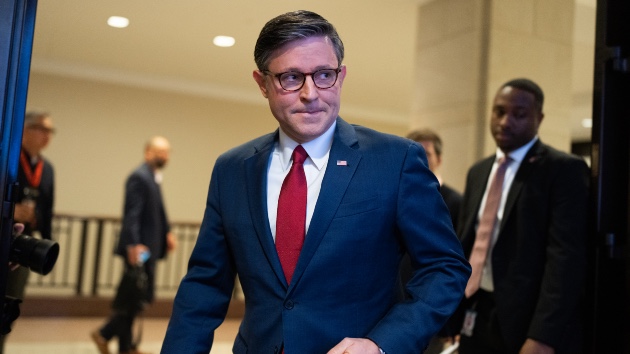
Speaker of the House Mike Johnson appears speaks with ABC News while appearing on “Good Morning America,” Aug. 29, 2025. ABC News
(NEW YORK) — House Speaker Mike Johnson, on “Good Morning America” on Friday, weighed in on turmoil at the Centers for Disease Control and Prevention, the Minneapolis school shooting and what’s next for Congress on the Jeffrey Epstein files.
Johnson defended Health and Human Services Secretary Robert F. Kennedy Jr. after a mass exodus at the CDC spurred by the administration’s termination of the agency’s director, Susan Monarez.
The speaker was also pressed on whether he would allow a floor vote to compel the Justice Department to release the Epstein files, and whether the House would take action on gun violence in the wake of the mass shooting at Annunciation Catholic School.
Congress returns next week from its monthlong August recess. Here are highlights from Johnson’s interview.
Johnson says CDC shakeup ‘needed’
“Well, I think overall, Secretary Kennedy is doing a great job,” Johnson said when asked about the tumult at the CDC.
“There’s been a shakeup that’s been needed there, and I think we’ve got to trust the secretary to do his job,” the speaker added. “They’ve had some great results there. We’re getting America healthy again — that’s well received across the country, and long overdue, in my view, so we’re going to let the Cabinet do their job, and I’m going to stay in my lane and do mine.”
Asked about vaccine availability for Americans and overall trust in the CDC following this week’s showdown, Johnson said “let’s see how all that sorts out.”
“The CDC plays an important role in the government and in our society, and we want it to be strong, and we want it to be restored to its original intent,” Johnson said. “The secretary’s made a good point that the existing leadership was not — not doing that.”
Johnson on whether House will vote on Epstein files
When lawmakers return to Washington, so will a renewed push for the complete release of the Epstein files from Justice Department.
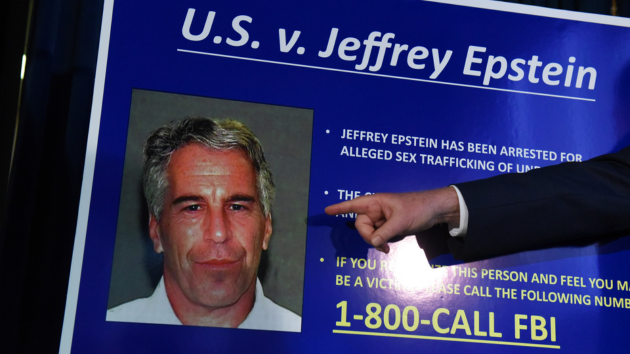
Johnson will be faced with a bipartisan effort, led by Democratic Rep. Ro Khanna and Republican Rep. Thomas Massie, to force a floor vote on their discharge petition.
“If it’s necessary, we will,” Johnson said of having a vote on the discharge petition on the floor, despite previously calling their bill “reckless” and ending the legislative session early in July over the Epstein controversy.
But Johnson said he believed it wouldn’t be needed after the Justice Department handed over thousands of Epstein documents to the House Oversight Committee last week.
“I think what’s happened over August, over the last few weeks, has probably mooted that — the necessity of legislation,” Johnson said.
Khanna has criticized the Justice Department’s release to the committee, saying much of it was information that was already public and that lawmakers still need to pass his bill.
Johnson addresses Minneapolis shooting
Following the deadly school shooting in Minnesota, which left two children dead and 18 people injured, Johnson did not point to any new legislation that would address gun violence or mental health that could be brought up in Congress, but said he is “always open for that” discussion.
“Listen, it’s important that politicians on either side of the aisle do not politicize a moment like this,” Johnson said. “There are many commonsense measures that can and should be taken to protect children at schools and churches that do not involve taking away the constitutional rights of law-abiding American citizens.”
“At the end of the day, the problems in these situations is not the guns, it’s the human heart, and we can put more resources towards treatment of mental health,” Johnson said.
The speaker said that he is open to “any bipartisan solution that can address these kinds of issues that actually go to the heart of the matter.”
Johnson talks ‘Big Beautiful Bill’
Many Republican lawmakers spent August recess hearing from constituents after the passage of President Donald Trump’s sweeping tax and spending bill, with some town halls turning heated over the matter.
This week, Trump suggested the legislation needed a rebranding, saying the phrase “big beautiful bill” was “not good for explaining to people what it’s all about.”
A Pew Research Center poll released earlier this month found just three in 10 Americans approve of Trump’s signature tax and budget bill.
Johnson, on “Good Morning America,” pushed back against the poll numbers and claimed individual provisions in the bill are more popular than surveys show once they are explained to the public.
“What we did over the August district work period is all the Republican members of Congress, Senate and House, went out, fanned out across the country in their districts, and talked with the American people about the extraordinary provisions that are in this bill,” the speaker said.
“It is aptly named. It is big and it is beautiful, and every single American is going to benefit from it,” Johnson said.