
Group of Democratic senators pen letter to Navy secretary condemning Sen. Mark Kelly review

Group of Democratic senators pen letter to Navy secretary condemning Sen. Mark Kelly review
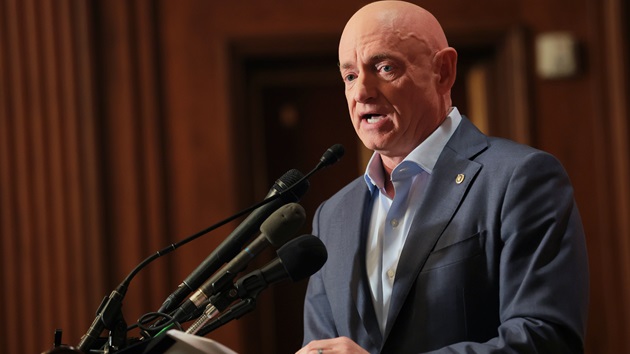
U.S. Sen. Mark Kelly (D-AZ) speaks at a news conference in the U.S. Capitol on December 1, 2025, in Washington, DC. Anna Moneymaker/Getty Images

(WASHINGTON) — Democrats on the Senate Armed Services Committee wrote a letter to Secretary of the Navy John Phelan on Tuesday expressing concern about the Navy’s review of Sen. Mark Kelly, a retired U.S. Navy Captain who serves on the committee.

The letter, which was shared with ABC News, comes after Defense Secretary Pete Hegseth asked Phelan to review Kelly for “potentially unlawful conduct” after the Arizona senator was featured in a video with five other Democrats who have served in the military and U.S. intelligence telling service members they could refuse illegal orders, according to a memo posted on social media by the Pentagon.

In the memo, Hegseth requests that he be briefed on the outcome of the review by no later than Dec. 10.

The Democrats on the committee, except for Kelly, condemned the review in the letter.

“We believe this ‘review’ along with the Department of Defense’s social media post announcing a ‘thorough review’ of Senator Kelly’s actions, ‘which may include recall to active duty for court-martial proceedings’ is inappropriate, threaten the separation of powers established by our Founding Fathers, amount to a purely political exercise seeking to threaten legitimate and lawful actions by a duly elected Senator, and politicize our military justice system,” the senators wrote.

Kelly has criticized the Trump administration for threatening him with legal action. He has continued to post on social media slamming President Donald Trump and his officials over their policies.

“When Pete Hegseth tweeted he was investigating me, Gabby laughed and laughed,” Kelly said during an event last week, referring to his wife, former Rep. Gabby Giffords. “She realized two things. One, that guy’s a joke, and two, I’m not backing down.”

In the letter, these Democratic senators wrote to Phelan that “the theory that a sitting Member of Congress should be subject to disciplinary action entirely unrelated to their service, particularly for simply restating the law as articulated in the UCMJ and the Manual for Courts-Martial, sets an incredibly dangerous precedent.” 

The letter dismissed the review as a “baseless and patently political undertaking” and argued that it violates the separation of powers.

“Senator Kelly has been elected twice by the people of Arizona as their representative and voice in the Senate. The idea that the Department would try to undo or undermine the will of Arizona’s citizens is a direct affront to our democratic system of government,” the senators wrote.

The senators also challenged the idea that the review could be conducted impartially, citing social media posts from Trump and Hegseth that they say have made “fair proceedings impossible.”

Following the video’s posting in November, Trump wrote on social media that the video demonstrated “SEDITIOUS BEHAVIOR, punishable by DEATH!” Trump and the White House subsequently denied that he was threatening the lawmakers with execution.

The senators said that statements like this, coupled with a directive from Hegseth to Phelan that he brief Hegseth on the review by Dec. 10, “demonstrate an outright, brazen abuse of power intended to influence the military justice process and intimidate and silence a U.S. Senator for purely political purposes.” 

Kelly responded to the call for a review during a press conference earlier this month.

“I will not be intimidated by this president. I am not going to be silenced by this president or the people around because I’ve given too much in service to this country to back down to this guy,” Kelly said at the time.

In their letter, the Democratic senators said that a review of Kelly raises “significant legal concerns” about Kelly’s constitutional protections under a number of statutes.

“The impartiality of our military and the military justice system to fairly uphold the Constitution and the law are paramount to our nation,” the senators wrote.

ABC News has reached out to Phelan for comment.

ABC News’ Ivan Pereira contributed to this report.

Copyright © 2025, ABC Audio. All rights reserved.
Trump administration moves to end major student loan forgiveness plan: ‘We won’t tolerate it’

Trump administration moves to end major student loan forgiveness plan: ‘We won’t tolerate it’
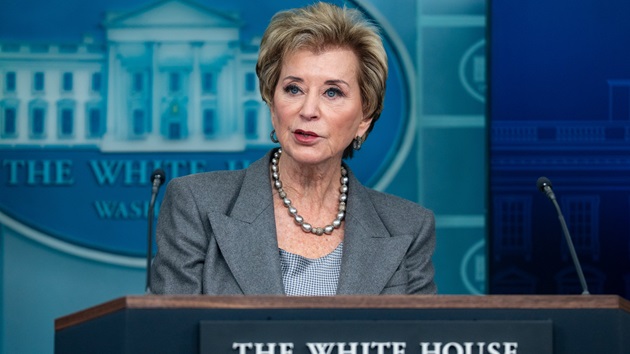
Linda McMahon, US education secretary, during a news conference in the James S. Brady Press Briefing Room of the White House in Washington, DC, US, on Thursday, Nov. 20, 2025. Bonnie Cash/UPI/Bloomberg via Getty Images

(WASHINGTON) — The Department of Education has moved to terminate one of former President Joe Biden’s most popular student loan forgiveness plans — impacting millions of Americans — through a proposed joint settlement with the state of Missouri on Tuesday.

The pending agreement ends the Saving on a Valuable Education or “SAVE” plan, which is home to over 7 million student loan borrowers. It marks a major victory for the Trump administration’s efforts to claw back Biden-era policies, including Biden’s numerous efforts to implement student loan debt cancellation.

Officials in the Trump administration’s Education Department, who’ve decried those policies for months, suggested that the administration is righting a wrong by ending the “deceptive scheme” of student loan forgiveness.

The Biden administration touted the plan for including $0 payments for anyone making $16 an hour or less, lowering monthly payments for millions of borrowers, and protecting borrowers from runaway interest if they are making their monthly payments.

“The law is clear: if you take out a loan, you must pay it back,” Under Secretary of Education Nicholas Kent said in a release from Secretary of Education Linda McMahon’s department on Tuesday. “Thanks to the State of Missouri and other states fighting against this egregious federal overreach, American taxpayers can now rest assured they will no longer be forced to serve as collateral for illegal and irresponsible student loan policies.” 

The Biden administration launched the SAVE Plan, which it dubbed the most affordable payment plan ever, after the Supreme Court struck down Biden’s previous signature debt relief program in 2023. 

SAVE was one of several income driven repayment (IDR) plans, which calculate payment size based on income and family size, aimed at easing the repayment process as a pandemic-era pause ended.  

Several Republican-led states, including Missouri, sued the Biden administration over the plan, and a federal appeals court blocked the program in 2024. 

The announcement on Tuesday would mark an end to those lawsuits.

McMahon, a vocal critic of student loan forgiveness, has said the administration will no longer allow American taxpayers to take on debts that are not their own.

“The Biden Administration’s illegal SAVE Plan would have cost taxpayers, many of whom did not attend college or already repaid their student loans, more than $342 billion over ten years,” McMahon wrote in a post on X. “We will not tolerate it.”.

Her agency’s already saddled Federal Student Aid (FSA) Office will provide support to borrowers currently enrolled in selecting a new, “legal repayment plan,” the department said. 

The department said borrowers will have a limited time to find a new payment plan. However, FSA’s Loan Simulator tool will estimate monthly payments, determine repayment eligibility and select a new plan that best fits those borrowers’ needs and goals, the department said.

Some student loan advocates worry the proposed agreement unleashes chaos on borrowers.

“The 7+ million borrowers enrolled in SAVE will face higher monthly loan payments — and may lose out on months of progress toward loan forgiveness,” Michele Zampini, associate vice president of federal policy & advocacy at The Institute for College Access & Success (TICAS) wrote in a statement.

Protect Borrowers Deputy Executive Director and Managing Counsel Persis Yu said the move strips borrowers of the most affordable repayment plan that would help millions to stay on track with their loans while keeping a roof over their head. 

“This settlement is pure capitulation–it goes much further than the suit or the 8th Circuit order requires,” Yu wrote in a statement to ABC News. “The real story here is the unrelenting, right-wing push to jack up costs on working people with student debt.”

The news of the settlement comes as Trump’s signature domestic policy agenda, the One Big Beautiful Bill Act, included a provision to terminate all current student loan repayment plans — such as SAVE and other income-driven repayment plans — for loans disbursed on or after July 1, 2026. 

Under that bill, the plans will be replaced with two separate repayment plans: a standard repayment plan and the Repayment Assistance Plan (RAP), a new income-based repayment plan coming July 1, 2026.

Copyright © 2025, ABC Audio. All rights reserved.
Supreme Court weighs role of IQ scores in debate over execution of disabled people

Supreme Court weighs role of IQ scores in debate over execution of disabled people
joe daniel price/Getty Images

(WASHINGTON) — More than 20 years ago, the Supreme Court outlawed the execution of intellectually disabled people convicted of capital crimes as “cruel and unusual” punishment forbidden by the Eighth Amendment.

In a major case from Alabama before the Supreme Court on Wednesday, the justices are asked to clarify who qualifies as “intellectually disabled” and what role intelligence quotient — also known as IQ — test scores play in making the determination.

Joseph Clifton Smith, an Alabama man who brought the case, confessed to a 1997 murder during a robbery, but challenged his death sentence on grounds he has had “substantially subaverage intellectual functioning” since a young age.

Smith has taken five separate IQ tests over nearly 40 years, scoring 75 in 1979, 74 in 1982, 72 in 1998, 78 in 2014 and 74 in 2017.

People below 70 are generally considered to have an intellectual disability, but major American medical groups urge a holistic assessment that also looks at social and practical skills.

The groups note that standardized test scores alone should not be conclusive. Smith’s score of 72, for example, could be 69 when factoring the 3-point margin of error.

“Intellectual disability diagnoses based solely on IQ test scores are faulty and invalid,” attorneys for the American Psychological Association and American Psychiatric Association told the court in a legal brief. “But IQ test scores remain relevant; IQ tests are a scientifically valid means to ascertain estimates of an individual’s intellectual ability. The key is to understand both the value of IQ tests and their limits.”

Smith, who allegedly suffered physical and verbal abuse as a child, consistently functioned two grade-levels below his placement in school, according to court documents. Smith’s school classified him as “Educable Mentally Retarded” in 7th grade before he eventually dropped out.

Two lower federal courts ruled that a holistic analysis of Smith’s IQ scores and other evidence, including his behavioral history and school records, proved he is intellectually disabled and should spend life behind bars rather than face execution.

Alabama wants the justices to toss out that assessment.

“Joseph Smith is not intellectually disabled, and the Eighth Amendment does not override the death sentence he earned for murdering Durk Van Dam,” the state argued in its brief to the court. “Whether and how to weigh multiple IQ scores is left to state discretion.”

The state says intellectual disability can only be proven by an IQ score of 70 or less by a preponderance of the evidence.

The Supreme Court’s decision in the case will determine whether Smith lives or dies.

More broadly, the ruling could determine how many other borderline intellectually disabled people on death row could be able to convert their death sentences into life behind bars.

By one estimate, as many as 20% of the 2,100 people on death row in the U.S. may have some degree of intellectual disability, according to the Death Penalty Information Center.

A ruling in the case — Hamm v. Smith — is expected by the end of June 2026.

Copyright © 2025, ABC Audio. All rights reserved.
County GOP leader Bruce Blakeman announces run for New York governor, taking on fellow Trump ally Elise Stefanik

County GOP leader Bruce Blakeman announces run for New York governor, taking on fellow Trump ally Elise Stefanik
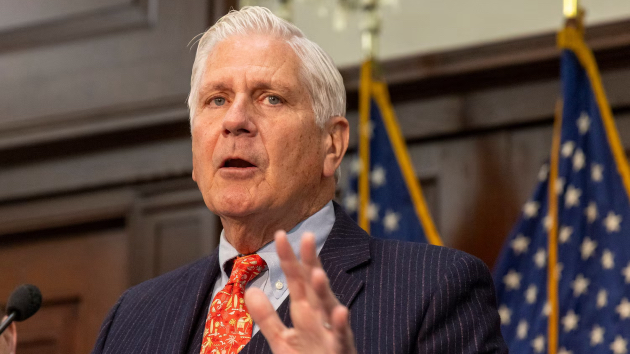
Nassau County Executive Bruce Blakeman announces the formation of a Long Island Coalition of Business and Political Leaders against proposals to increase New York’s corporate tax rate in Mineola, New York, on Nov. 17, 2025. Howard Schnapp/Newsday RM via Getty Images, FILE

(NEW YORK) — Bruce Blakeman, the Republican county executive of Nassau County in New York, announced Tuesday that he will run for governor of the Empire State.

His announcement sets up a potentially contentious primary against U.S. Rep. Elise Stefanik, in a primary that now pits two major allies of President Donald Trump against each other in what was already a challenging race for Republicans.

“We want to put New York first. We want to make it more affordable. We want to make New York safer, and we want to make people in New York happy again,” Blakeman said in an appearance on Fox News on Tuesday morning announcing his campaign.

Blakeman was first elected as Nassau County Executive in 2021 after previously serving on the Hempstead Town Council and as a commissioner of the Port Authority of New York and New Jersey.

He received some attention in recent years for signing a county law in 2024 banning using masks to hide one’s identity, and a separate one that banned transgender people from participating in women’s sports at places owned by the county.

Any Republican candidate could face a steep challenge winning statewide in New York, which voted for Democratic candidate Vice President Kamala Harris for president in 2024 by around 13 percentage points – although that marked a rightward shift from 2020, when then-Vice President Joe Biden won the state by around 20 percentage points.

Blakeman, asked on Fox News if a Republican in New York has a chance to become governor, pointed to his success in winning in a county where Democrats outnumber Republicans as a sign of his appeal among “crossover” Democrats and among different groups. According to data from the New York State Board of Elections, Nassau County had around 70,000 more active registered Democratic voters than Republican voters as of Nov. 1.

His entrance into the race comes around a month after Stefanik, a close ally of Trump, announced her own run for governor and collected several endorsements, including from local county Republican groups and the chairman of the New York Republican Party.

The winner of the Republican primary could end up taking on incumbent Democratic Gov. Kathy Hochul, who is running for reelection and has made combatting Trump a major focus in recent months. Hochul faces her current lieutenant governor, Antonio Delgado, in the Democratic gubernatorial primary.

Bernadette Breslin, a spokesperson for Elise Stefanik’s campaign, called Blakeman “an early Christmas present” for Hochul and said Blakeman is getting in the way of “Republicans’ best chance to win.”

“Elise is the strongest candidate against Kathy Hochul by a long shot. Elise has outrun President Trump on the ballot by more than any Republican in New York State including Bruce,” Breslin wrote. “Elise has led the most effective attacks on the Worst Governor in America Kathy Hochul as Bruce Blakeman has worked overtime to torpedo fellow Republicans.”

Trump has a strong relationship with Stefanik but has not made an endorsement in the governor’s race.

Asked if he’d make an endorsement on Monday as reports about Blakeman’s bid circulated, he told reporters, “I’ll think about it. But he’s great. And she’s great. They’re both great people. We have a lot of great people in the Republican Party.”

Blakeman, asked about Trump’s comments, downplayed any equivocation — saying the president does not need to endorse for now — while praising the president for his work on the economy.

“Well, I don’t think the president has to make a decision now — let’s see how it plays out,” he said.

“But let me tell you something, he’s done more for America in the last 11 months than any president in my lifetime. He’s done a great job with the economy. He’s going out now — he’s going to be in Pennsylvania today, talking about economic development, creating prosperity,” Blakeman said. “Those are the same things that I want to do in New York State. So I cherish his friendship and I appreciate his leadership.”

Hochul, meanwhile, wasted no time in tying Blakeman to Trump.

“Bruce Blakeman is another MAGA cheerleader running to do Donald Trump’s bidding in New York — and raise your costs. Not on my watch,” she wrote on X on Tuesday.

At an event on Monday, she called out both Blakeman and Stefanik, telling reporters, “Let’s see how they out-MAGA each other in a primary.”

Copyright © 2025, ABC Audio. All rights reserved.
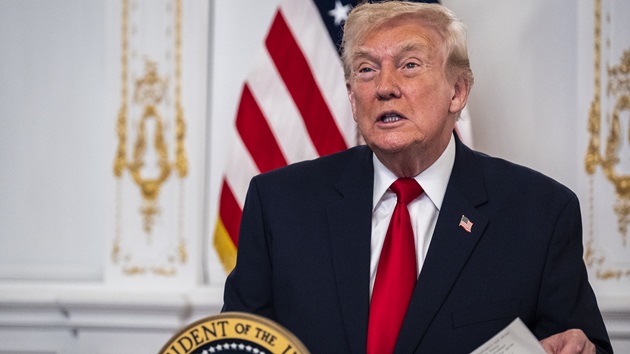
Trump backtracks on releasing boat strike video, distances himself from controversy

Trump backtracks on releasing boat strike video, distances himself from controversy
Pete Marovich/Getty Images

(WASHINGTON) — President Donald Trump, after initially saying he had “no problem” with releasing the video of the Sept. 2 strike on an alleged drug boat in the Caribbean Sea that killed two survivors, is now reversing course and deferring to Defense Secretary Pete Hegseth.

“I didn’t say that,” Trump claimed when pressed on Monday by ABC News Senior Political Correspondent Rachel Scott about his Dec. 3 comments.

“Whatever Hegseth wants to do is OK with me,” Trump said on Monday.

In an interview with Politico published on Tuesday morning, Trump further distanced himself from the controversy when asked if he believed the second strike on the survivors was necessary.

“Well, it looked like they were trying to turn back over the boat. But I don’t get involved in that. That’s up to them,” Trump said.

Though last week, Pentagon press secretary Kingsley Wilson spoke about Trump and Hegseth’s responsibility for the strike.

“At the end of the day, the president and the secretary are the ones directing these strikes, and any follow-up strikes that were directed by Adm. Bradley, the secretary 100% agrees with,” Wilson told reporters at a briefing at the Pentagon on Dec. 2.

ABC Senior White House Correspondent Selina Wang asked the president in the Oval Office on Dec. 3, “Will you release video of that strike — so that the American people can see for themselves?”

Trump responded, “I don’t know what they have, but whatever they have, we’d certainly release no problem.”

Officials have confirmed there were four military strikes against the alleged drug boat on Sept. 2, the first strike killing nine of the 11 people aboard. About 40 minutes later, a second strike was ordered to kill the two survivors. Two additional strikes were ordered to sink the boat, officials said.

Some Democrats and legal experts have suggested that the killing of survivors could constitute a war crime.

Hegseth, who was heading to Capitol Hill on Tuesday with Secretary of State Marco Rubio and Joint Chiefs Chairman Dan Caine to brief the “Gang of Eight” on national security matters, has not committed to releasing the video of the strike. The defense secretary cited concerns that releasing the video could expose sources or methods that would need to be protected.

Hegseth also has suggested the survivors killed posed an imminent threat.

Rep. Adam Smith, the top Democrat on the House Armed Services Committee who has seen the video of the strike, pushed back on the description provided by Hegseth and other Republicans.

Smith, during an appearance on ABC’s “This Week” on Sunday, called the video “deeply disturbing” and said “it did not appear that these two survivors were in any position to continue the fight.”

Members of Congress are attempting to pass new legislation to force Hegseth to provide lawmakers the unedited footage of the strike.

Trump was asked in the interview with Politico if Hegseth should testify under oath about the Sept. 2 strike.

“I don’t care if he does. He can if he wants. I don’t care,” Trump said. He added that he believes Hegseth is “doing a great job.”

The Sept. 2 boat strike is part of what the administration has called its “war” on drug cartels. There have been more than 20 military strikes against vessels in the Caribbean Sea and the eastern Pacific, killing more than 80 people.

ABC News’ Rachel Scott and Mary Bruce contributed to this report.

Copyright © 2025, ABC Audio. All rights reserved.
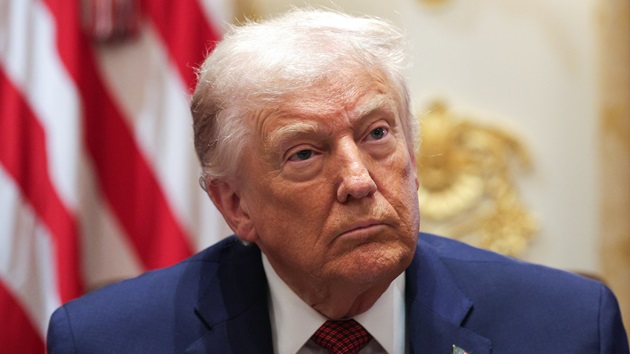
Trump to speak in Pennsylvania to start selling his economic agenda ahead of midterm elections

Trump to speak in Pennsylvania to start selling his economic agenda ahead of midterm elections
Alex Wong/Getty Images

(WASHINGTON) — Amid criticism that he’s been focused heavily on foreign policy rather than an “America First” agenda, President Donald Trump will kick off what will be a year focused on domestic travel and touting his economic agenda with a speech in the battleground state of Pennsylvania on Tuesday, a White House official confirmed to ABC News.

Trump will push back against criticism of the economy and preview his upcoming economic plans.

“The president will be traveling to Pennsylvania to discuss how he and the Administration continue to focus on delivering on his Day 1 priority of ending Joe Biden’s inflation crisis,” the White House official said in an email to ABC News.

Trump may also hold another event similar to what is planned for Pennsylvania later this month and additional events are expected after New Year’s Day, the White House official said.

Trump has faced pushback, including from Republican Rep. Marjorie Taylor Greene, a former top ally, for not doing more to address the high cost of living. In response, Trump has claimed that affordability is being used as a “buzzword” by Democrats ahead of next year’s midterm elections. Last week, Trump called the issue of affordability the “greatest con job.”

“It’s a con job. I think affordability is the greatest con job. They look at you and they say, ‘affordability.’ They don’t say anything else. Everyone says, ‘Oh, their prices were so low.’ No, they had the worst inflation,” Trump said, referring to Democratic critiques of his economy.

Trump defended his economic agenda in an interview with Politico published on Tuesday morning, touting the revenue his global tariffs have generated while saying he would consider more carve-outs for goods impacted by the levies that Americans find too expensive.

Trump also pushed back on critics, including Greene, who said he’s been too focused on foreign affairs.

“Most of my time is spent here. But when I do go outside, it’s only going outside for here. For instance, settling and solving the problem with China, that has a huge effect in the United States. Making deals with Japan, South Korea, Indonesia, all of these countries, you’re talking about trillions and trillions of dollars. So I could … I guess I could say let’s not deal with anybody. We wouldn’t have much of a country,” Trump told Politico.

Although Trump has extolled his economic plans, a recent Gallup poll found that only 36% of Americans approve of his handling of the economy, while 62% disapprove and 2% have no opinion.

And it’s clear that the Trump administration is feeling pressure to address concerns about the cost of living following November’s elections, which saw voters across New Jersey, Virginia and New York City push back against the president’s agenda.

In the weeks that followed, the Trump administration made shifts in its economic plans, including rolling back tariffs on some food imports in an attempt to lower grocery prices, and floating the idea of a 50-year mortgage.

White House press secretary Karoline Leavitt told Fox News on Tuesday morning that Trump is “going to give a positive, economic-focused speech” in Pennsylvania and called on Republicans to “be more vocal about touting the accomplishments of this administration.”

White House chief of staff Susie Wiles said Trump will campaign for Republican candidates in the midterms “like it’s 2024 again.”

“The president started raising money for the midterms the day after the election, and he’s sitting on a huge war chest to help these people. And he’ll use it, and he’ll use himself, and he’ll use his money that he’s raised, probably his money too, and, and, and nobody can outwork him, so there’s every reason to be confident, but we have to actually get it done,” Wiles said on “The Mom View” podcast on Monday.

Copyright © 2025, ABC Audio. All rights reserved.
Supreme Court hears major challenge to campaign spending limits

Supreme Court hears major challenge to campaign spending limits
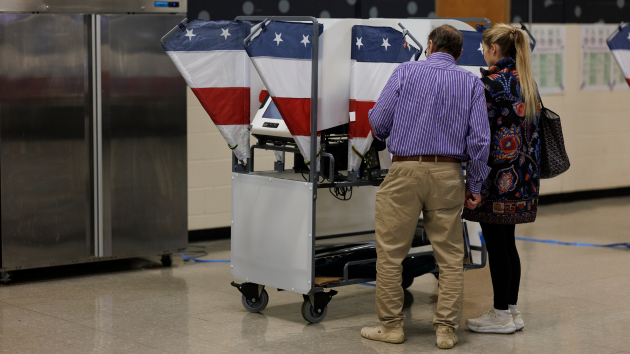
A poll worker helps a voter cast their ballot for Tennessee’s 7th district election at Charlotte Park Elementary School on December 2, 2025 in Nashville, Tennessee. (Brett Carlsen/Getty Images)

(WASHINGTON) — As candidates and political parties gear up for the 2026 midterm election campaign, the Supreme Court on Tuesday will consider whether long-standing legal limits on coordinated spending — enacted to prevent corruption — violate the First Amendment.

The case was brought by Republican senatorial and congressional campaign committees along with then-Sen. JD Vance and former Rep. Steve Chabot, both Ohio Republicans, against the Federal Election Commission, which is tasked with enforcing the rules.

The coalition seeks to eliminate limits on the ability of parties, which often have a fundraising advantage over individual candidates, to more freely and directly finance TV ads and organizing efforts of candidates they favor. The practice is known as coordinated spending.

Oral arguments will take place before a Supreme Court that has been consistently skeptical of campaign finance regulations on free speech grounds, narrowing the scope of contribution limits and in 2014 famously rolling back caps on corporate campaign spending with the Citizens United decision.

The Trump administration, which controls the FEC, is declining to enforce or defend coordinated spending limits. In its place, the Democratic National Committee and a Supreme Court-appointed attorney will argue for why they should be preserved.

“This has been held constitutional at least twice before by the Supreme Court and more times by lower courts,” said Marc Elias, the Democratic attorney defending the law. “The entire campaign finance system is built upon these limits.”

Congress in 1974 set limits on the amount of money American individuals, organizations and political parties can give directly to candidates, and the Supreme Court has upheld them as permissible protections against bribery in the electoral process.

In 2025, the political contribution limits are $3,500 per person to an individual candidate and $44,300 per person to a national party committee per year, according to the FEC.

At issue in this case are added limits set by Congress on the amount of money a political party can spend in direct coordination with a candidate.

The FEC’s coordinated spending limits are computed based on each state’s voting-age population and the number of members of Congress. For Senate nominees, the cap is between $127,200 and $3.9 million in 2025; for House nominees, the limit is $63,300 in most states, according to the FEC.

Advocates say the spending limits prevent quid pro quo corruption between a candidate and party, and prevent individuals from attempting to circumvent contribution rules by essentially funneling donations to a candidate through the party, which is subject to the higher caps.

“If those contributions, which dwarf the base limits on [individual] contributions to candidates, are effectively placed at a candidate’s disposal through coordinated spending, they become potent sources of actual or apparent corruption,” argue attorneys for Public Citizen, a nonprofit voter advocacy group, in a brief to the high court.

More than a dozen states and independent election watchdog groups have also urged the court to leave campaign-finance rules to legislators, arguing they are better positioned to establish policies for elections than judges are.

The defenders of the limits also contend that the Republican plaintiffs lack legal standing to bring the case. They say that because the Trump FEC is not going to enforce the rules, there is no injury to the parties involved and that Vance and Chabot are not even active candidates for office who would be affected by the coordinated spending limits.

Republicans insist coordinated spending limits are unconstitutional suppression of free speech and that they are ineffective in the purported goal of curbing corruption.

“One of the key functions of a political party is to make sure that its candidates will vote for the party’s platform once in office,” the Republican committees tell the Supreme Court.

The case — National Republican Senatorial Committee, et al. v. Federal Election Commission — is expected to be decided by the end of June 2026 when the Supreme Court’s term concludes.

Copyright © 2025, ABC Audio. All rights reserved.
Supreme Court likely to allow Trump FTC firing, expanding presidential power

Supreme Court likely to allow Trump FTC firing, expanding presidential power
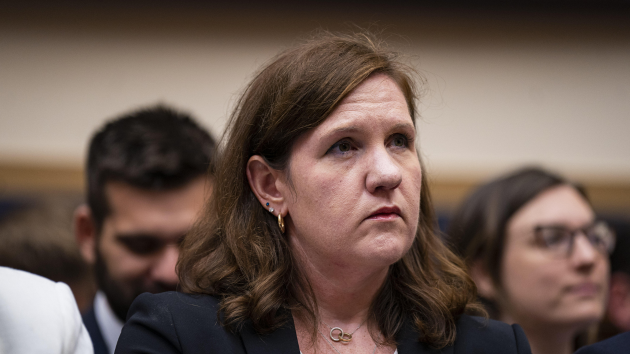
Rebecca Slaughter, commissioner at the Federal Trade Commission (FTC), during a House Judiciary Committee hearing in Washington, DC, July 13, 2023. (Al Drago/Bloomberg via Getty Images)

(WASHINTON) — The Supreme Court on Monday appeared likely to allow President Donald Trump to remove a Democratic member of the Federal Trade Commission purely for policy reasons, likely rolling back 90 years of legal precedent that had prevented at-will removal of independent agency officials in a decision that would expand presidential power.

The case could transform the federal government and effectively end the independence of some two dozen bipartisan agencies that Congress had designed to be insulated from political interference and direct White House supervision. 

All six of the Supreme Court’s conservative justices indicated during oral arguments in the case, Trump v. Slaughter, that a president should have absolute control over the leadership of any government body carrying out executive functions, such as rulemaking and law enforcement. 

They pointed to Article II of the Constitution which says, “the executive power shall be vested in a President” and that he alone “shall take Care that the Laws be faithfully executed.”

Such a ruling would overrule or substantially limit a unanimous 1935 Supreme Court decision involving the FTC — Humphrey’s Executor v. U.S. — which had affirmed limits on a president’s ability to fire members of the commission only for cause. 

“Humphrey’s Executor is just a dried husk of whatever people used to think it was,” Chief Justice John Roberts said bluntly. 

Justice Samuel Alito suggested that the earlier Supreme Court had egregiously erred, opening the door for Congress to circumvent the president altogether if it wanted to. 

Could every Cabinet office “be headed by a multi-member commission whose members are not subject to at-will removal by the president?” he asked Amit Agarwal, the attorney representing the terminated FTC Commissioner Rebecca Slaughter. 

The Supreme Court’s three liberal members vigorously defended the agencies as they were designed by Congress — and signed into law by prior presidents — as legitimate sentinels of the public interest and regulatory continuity across administrations. 

“You’re asking us to destroy the structure of government,” Justice Sonia Sotomayor told Trump administration Solicitor General John Sauer. 

Justice Elena Kagan said she worried about a slippery slope. 

“The result of what you want is that the president is going to have massive unchecked, uncontrolled power not only to do traditional execution [of the laws] but to make law,” Kagan said, referring to the agencies’ regulatory authority. 

Justice Ketanji Brown Jackson warned of the “danger” in allowing a president to replace members of independent commissions with “loyalists and people who don’t know anything” about the agency’s expertise.

Independent agencies have regulated American monetary policy and stock trades, transportation systems and election campaigns, consumer product safety and broadcast licenses historically overseen by subject-matter experts from both parties. 

“If the petitioners get their way,” said Agarwal, “everyone is on the chopping block.”

Few of the conservatives seemed concerned about the consequences. 

“It’s been suggested if we rule for you, the entire government will fall,” Alito told Sauer. 

“The sky will not fall. In fact, the entire government will live with accountability,” Sauer replied. 

Justice Brett Kavanaugh, one of the justices most often in the majority camp on the Supreme Court’s decisions, made a point of downplaying the impact of potential fallout.

“Overruling or narrowing Humphrey’s won’t affect the existence of these agencies,” he pointed out. Sauer agreed. 

Kavanaugh also suggested the Supreme Court is likely to carve out two exceptions to a ruling that would give a president greater control: the Federal Reserve Bank, which is also an independent agency, and administrative courts, such as the tax court, which are operated out of the executive branch.

Next month, the Supreme Court will hear arguments in a case involving Trump’s unprecedented attempt to fire a Democratically-appointed member of the Federal Reserve, Lisa Cook. She currently remains on the job after the justices declined Trump’s request to stay a lower court decision.

The outcome in the Slaughter case will determine whether or not there will be any Democrats left on the FTC or other regulatory bodies, and whether any of the other independent agencies will be truly “independent” any longer. 

A decision in the case is expected by the end of June 2026. 

Copyright © 2025, ABC Audio. All rights reserved.
Mother of White House press secretary Karoline Leavitt’s nephew ordered released from immigration detention

Mother of White House press secretary Karoline Leavitt’s nephew ordered released from immigration detention
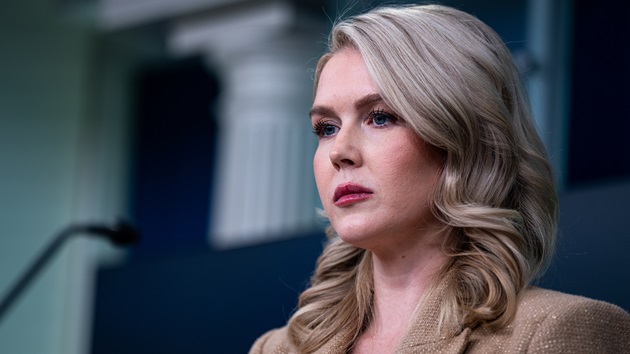
Karoline Leavitt, White House press secretary, during a news conference in the James S. Brady Press Briefing Room of the White House in Washington, DC, US, on Monday, Dec. 1, 2025. Al Drago/Bloomberg via Getty Images

(WASHINGTON) — The mother of White House press secretary Karoline Leavitt’s nephew was ordered released from immigration detention on Monday, according to her attorney.

Bruna Caroline Ferreira, who is in the process of obtaining a green card and previously held DACA status, was ordered released by an immigration judge on a minimum bond of $1,500.

Ferreira’s attorney, Todd Pomerleau, told ABC News that he argued at a hearing that his client is not a “criminal illegal alien,” as described by the Department of Homeland Security (DHS), nor that she is a flight risk.

Ferreira is expected to be released Monday or Tuesday, according to Pomerleau.

The White House did not immediately respond to an ABC News request for comment.

DHS confirmed two weeks ago that Ferreira had been detained. A reporter with ABC New Hampshire station WMUR spoke with Leavitt’s brother, Michael Leavitt, who also confirmed the arrest and said Ferreira had been detained a few weeks previously.

A DHS spokesperson then described Ferreira, a Brazilian national, as a “criminal illegal alien” who had a previous arrest for battery and had overstayed a visa that expired in 1999.

“ICE arrested Bruna Caroline Ferreria, a criminal illegal alien from Brazil. She has a previous arrest for battery. She entered the U.S. on a B2 tourist visa that required her to depart the U.S. by June 6, 1999,” the DHS spokesperson said. “She is currently at the South Louisiana ICE Processing Center and is in removal proceedings. Under President Trump and Secretary Noem, all individuals unlawfully present in the United States are subject to deportation,” the spokesperson said.

“Bruna has no criminal record whatsoever, I don’t know where that is coming from. Show us the proof,” Pomerleau told Boston ABC station WCVB after Ferreria’s arrest was announced. 

Pomerleau also said then that Ferreira entered the country lawfully, previously held DACA status and was in the process of obtaining a green card. He further said that his client was arrested in her car in Massachusetts after being stopped with no warrant, adding that he now has to litigate her case in Louisiana, thousands of miles away from her home.

Pomerleau also told WCVB that he did not believe that his client’s connection to Karoline Leavitt could affect the case, adding that he believes it’s just “happenstance.”

ABC News’ Armando Garcia, Jason Volack and Hannah Demissie contributed to this story.

Copyright © 2025, ABC Audio. All rights reserved.
Lawmakers move to compel Hegseth to release military video of Sept. 2 boat strike

Lawmakers move to compel Hegseth to release military video of Sept. 2 boat strike
Caylo Seals/Getty Images

(WASHINGTON) — Members of Congress are tracking to pass new legislation that would compel Defense Secretary Pete Hegseth to provide lawmakers the unedited military video of 11 people being killed in the Caribbean Sea on Sept. 2 after an initial strike on a suspected drug boat left two passengers alive in the water.

A provision tucked into the annual, must-pass Pentagon spending and policy bill says the Defense Department should hand over unedited copies of video to the House and Senate Armed Services committees. If the department does not comply, Hegseth’s travel budget would be slashed by 25% until the relevant videos are turned over, according to the legislation.

The provision could be amended before the bill is voted on in either chamber.

The House is expected to hold a floor vote on the bill this week. The Senate must take it up for a floor vote by the end of the month.

At issue is whether the Sept. 2 military strike on the alleged drug boat amounted to a war crime. Officials have confirmed there were four military strikes against the boat — the first strike killing nine of the 11 people aboard. Some 40 minutes later, a second strike was ordered to kill the remaining two survivors. Two more strikes were ordered to sink the boat, officials say.

Lawmakers who have seen portions of the video of the strikes in a classified briefing last week have described the state of the survivors before being killed by the U.S. military in starkly different terms. Democrats insisted the survivors were helpless and should have been rescued to comply with international laws that call for either sides in a conflict to help combatants who fall overboard or are shipwrecked. Republican Sen. Tom Cotton, however, said the survivors were trying to “flip” the boat “so they could stay in the fight.”

President Donald Trump last week said he is open to releasing the video.

“I don’t know what they have, but whatever they have, we’d certainly release, no problem,” he told reporters in the Oval Office last Wednesday.

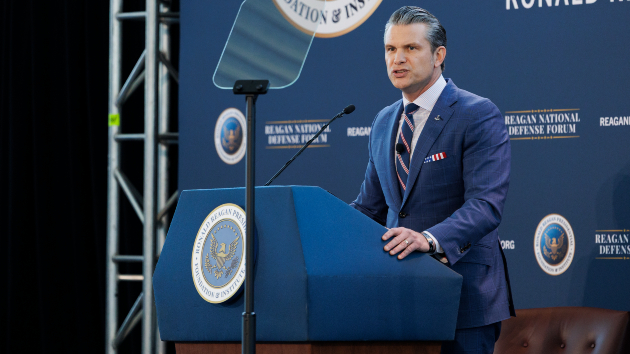
Hegseth, however, has not committed to doing so. Speaking at the Reagan National Defense Forum on Saturday, Hegseth said he was concerned that releasing the video could expose sources and methods tied to an ongoing operation. He said the military uses “bespoke capabilities, techniques, procedures” that would have to be protected.

“I’m way more interested in protecting that than anything else. So, we’re viewing the process, and we’ll see,” he said.

Hegseth also has suggested that the people killed in the strike were an imminent threat.

“I was told, ‘Hey, there had to be a reattack, because there were a couple folks who could still be in the fight [with] access to radios.’ There was a link-up point of another potential boat, drugs were still there … I said, ‘Roger, sounds good,'” Hegseth said.

Rep. Adam Smith, the top Democrat on the House Armed Services Committee who was briefed on the video, said there were no radios and called Hegseth’s description “ridiculous.”

“They ought to release the video. If they release the video, then everything that the Republicans are saying will clearly be portrayed to be completely false and people will get a look at it and they will see,” Smith said.

ABC News’ Lauren Peller and Allison Pecorin contributed to this report.

Copyright © 2025, ABC Audio. All rights reserved.