
Senate leadership race heats up as Trump issues demands

Senate leadership race heats up as Trump issues demands
Sen. John Thune; Bill Clark/CQ-Roll Call, Inc via Getty Images

(WASHINGTON) — Senate Republicans are poised to make a historic decision on Wednesday when they’ll gather behind closed doors to select their new party leader — and President-elect Donald Trump’s influence in undeniable as he insists that whoever be selected support his ability to install recess appointments to his Cabinet.

With Trump’s victory and Senate Republican’s majority secured, the lead up to the race has intensified the jockeying between the three major contenders for the position: Sen. John Thune, Sen. John Cornyn and Sen. Rick Scott.

The leadership election, slated to occur just one day after the Senate returns from its monthlong election recess, will see Senate Republicans selecting their first new leader since 2007, when current Republican Leader Mitch McConnell first won the job. McConnell is the longest-serving party leader in United States history, but announced earlier this year he’d be stepping aside after the election.

Thune, a South Dakota Republican who currently serves as the No. 2 Republican, is somewhat of a front-runner in the race. He has served as the party whip for the last six years and in that time has notched a number of policy wins for the party, and has been working behind closed doors to whip support for the role for months. Thune said he keeps in regular contact with Trump and his team, but the two have at times had an icy relationship.

Running against Thune is Cornyn, a Texas Republican and another established GOP leader who served as the party’s whip for the six years prior to Thune before being term-limited out of the role. Though Cornyn has a slightly more conservative track record than Thune, he also faced ire from Trump for his support of the bipartisan gun safety bill that passed in the wake of the shooting in Uvalde, Texas.

Also vying for the role is Sen. Rick Scott, a Florida Republican who just won reelection. Scott has attempted to brand himself as the most Trump-aligned of the contenders, but is less popular among some of his Senate colleagues after a stint atop the Senate GOP’s campaign arm in 2022 led to a less-than-successful night for Senate Republicans.

Trump won’t get a vote in this secret-ballot race, but his influence over it is palpable.

Many Republicans see Trump’s comfortable victory in Tuesday’s elections coupled with Senate Republicans’ new majority as a sweeping mandate to implement Trump’s policies, and as such, potential party leaders seem to be cozying up to Trump ahead of the vote.

Trump has not yet endorsed a specific candidate for the race, and it’s unclear whether he ultimately will. Instead, Trump has attempted to exert influence over the race by arguing that whoever is slated to fill the role supports a modification to what has become the Senate’s normal operating procedure to allow him to temporarily install appointments to federal vacancies without Senate approval during the Senate recesses.

“Any Republican Senator seeking the coveted LEADERSHIP position in the United States Senate must agree to Recess Appointments (in the Senate!), without which we will not be able to get people confirmed in a timely manner. Sometimes the votes can take two years, or more. This is what they did four years ago, and we cannot let it happen again. We need positions filled IMMEDIATELY!” Trump wrote on his social media platform on Sunday.

Recess appointments are permitted by the constitution, and allow presidents to fill federal vacancies during Senate recesses. Though once a regular occurrence, the Senate has operated in such a way as to block all recess appointments since former President Barack Obama’s first term. Allowing recess appointments for Trump’s second term could allow controversial nominees who may otherwise fail to get the support they need from the GOP-controlled Senate to serve for nearly two years without Senate approval.

None of the top contenders have ruled out supporting the use of these recess appointments, and their responses to Trump’s post show how far each is willing to go to show that they’re on Trump’s side.

Though Thune said in an interview on Thursday that his “preference” would be for Trump to stay out of the Senate leadership race, he issued a statement Sunday night following Trump’s post affirming his commitment to installing Trump’s Cabinet, and not ruling out the appointments Trump is seeking.

“One thing is clear: We must act quickly and decisively to get the president’s cabinet and other nominees in place as soon as possible to start delivering on the mandate we’ve been sent to execute, and all options are on the table to make that happen, including recess appointments,” Thune said in a statement. “We cannot let Chuck Schumer and Senate Democrats block the will of the American people.”

Cornyn meanwhile discussed the use of recess appointments with Trump prior to his post, per a source familiar. In a post on X Sunday afternoon, Cornyn affirmed his support, noting that if he is elected leader, he will keep the Senate in session continuously until nominees are confirmed.

“It is unacceptable for Senate Ds to blockade President @realDonaldTrump’s cabinet appointments. If they do, we will stay in session, including weekends, until they relent. Additionally, the Constitution expressly confers the power on the President to make recess appointments,” Cornyn wrote.

Almost immediately after Trump posted on Sunday, Scott posted on X that he was in lockstep with Trump on this policy.

“100% agree. I will do whatever it takes to get your nominations through as quickly as possible,” Scott wrote, reposting Trump’s post.

A small handful of senators have come out publicly to endorse their chosen candidate.

Scott, for his part, has picked up endorsements from some of Trump’s most out-and-proud supporters in the Senate as well as a number of Trump-aligned outside voices, including Robert F. Kennedy and Elon Musk.

But this critical race has a very small constituency: only Republican senators serving in the incoming Senate get a vote. ABC News has not yet reported a projection in the Pennsylvania Senate race, but that means only about 52 people will get to cast ballots.

Senators are also shielded behind closed doors and by secret ballot in this race. In order to win the election, a candidate must amass a simple majority of the vote. If all candidates fail to get a simple majority, the lowest vote earner is eliminated from the process, and senators vote again.

Because of the secret nature of the vote, it’s unclear how much of an influence any outside factor, including Trump, will ultimately wield.

Newly elected incoming senators including Bernie Moreno of Ohio, West Virginia Gov. Jim Justice, Reps. Jim Banks of Indiana and John Curtis of Utah and Tim Sheehy of Montana will all be in attendance to cast votes.

Sen. JD Vance, who is now the vice president-elect, is also eligible to cast a vote in the election if he so chooses, but his team has not yet said whether he ultimately will attend Wednesday’s vote.

In addition to the closely-watched race for party leader, a number of other positions will also be selected during Wednesday’s vote. Sen. John Barrasso, a Wyoming Republican, is running unopposed to becoming the No. 2 Senate Republican. Sen. Joni Ernst, an Iowa Republican, and Sen. Tom Cotton, the Republican from Arkansas, are in a race to become the conference chair. Additional down-ballot races will also be voted on Wednesday.

Copyright © 2024, ABC Audio. All rights reserved.
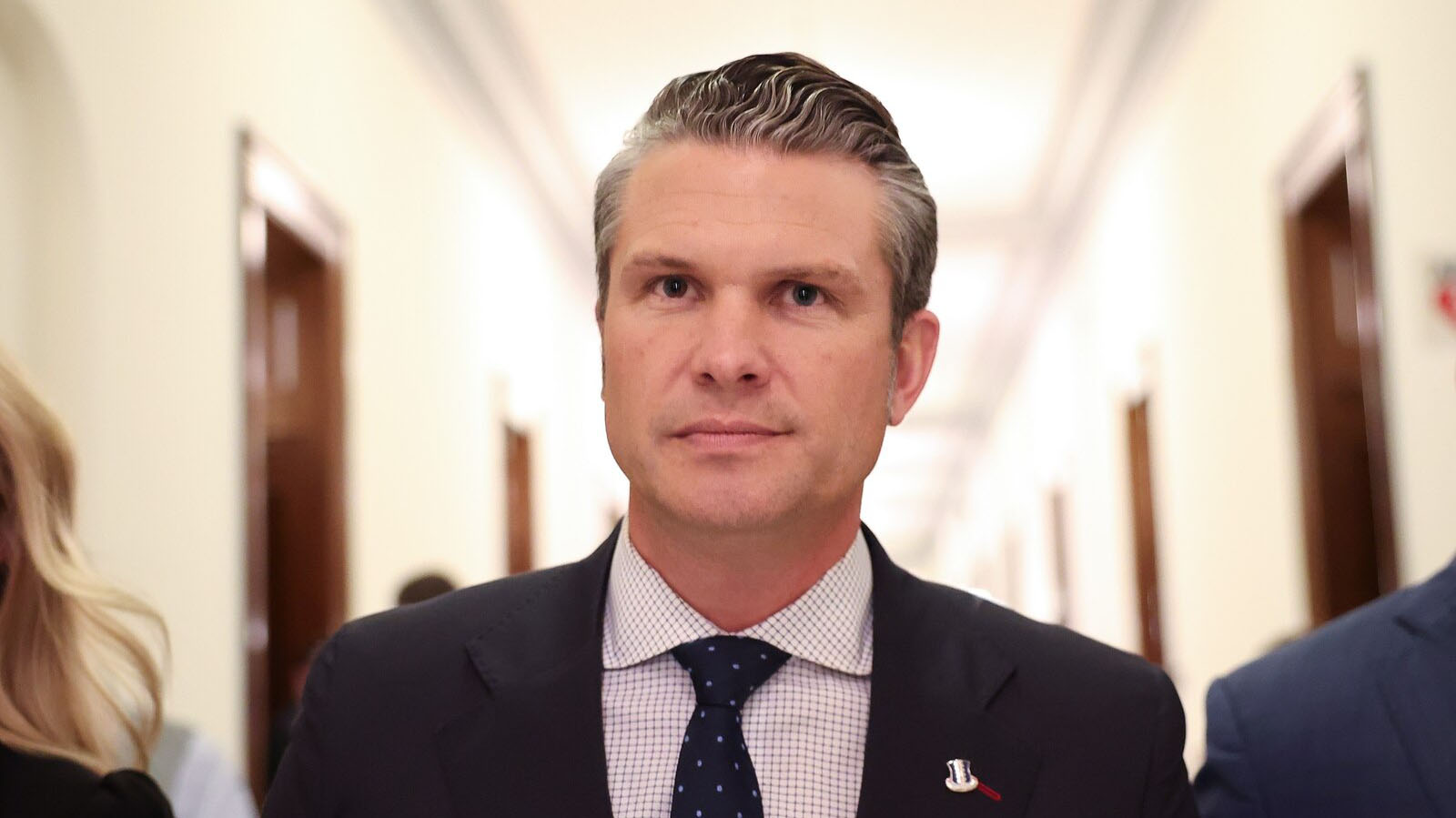
Trump selects Rep. Elise Stefanik to be UN ambassador

Trump selects Rep. Elise Stefanik to be UN ambassador
Chip Somodevilla/Getty Images

(WASHINGTON) — President-elect Donald Trump selected Rep. Elise Stefanik to be his U.S. ambassador to the United Nations, multiple Trump officials told ABC News.

“I am honored to nominate Chairwoman Elise Stefanik to serve in my Cabinet as U.S. Ambassador to the United Nations. Elise is an incredibly strong, tough, and smart America First fighter,” Trump said in a statement to ABC News.

Stefanik, a Republican congresswoman from New York’s 21st District, was elected last week to her sixth term in the House. Born in 1984, she was at time of her 2014 election the youngest woman to ever win a seat in Congress.

She joined House leadership in May 2021, when she was elected as chair of the House Republican Conference. She replaced former Rep. Liz Cheney in the role after Cheney was denounced by her party for her criticism of Trump in the wake of Jan. 6.

Stefanik came to Congress as a relatively moderate Republican and skipped the 2016 Republican National Convention when Trump first became the party’s presidential nominee.

But she became one of Trump’s most vocal allies, denouncing his first impeachment in 2019 and later challenging the 2020 election results.

In the past year, she played a leading role in House Republicans’ response to antisemitism on college campuses. She grilled university presidents on their handling of campus protests over the Israel-Hamas war, several of whom later stepped down from their roles.

Stefanik, a staunch supporter of Israel, has also repeatedly accused the United Nations of antisemitism. She has called for defunding the United Nations Relief and Works Agency for Palestine Refugees, the chief distributer of aid in Gaza, amid Israel’s allegations that Hamas infiltrated the group.

Stefanik told the New York Post, which first reported developments of Trump’s decision, that she was “truly honored to earn President Trump’s nomination to serve in his Cabinet as U.S. Ambassador to the United Nations.”

Stefanik said that when speaking with Trump, she “shared how deeply humbled I am to accept his nomination and that I look forward to earning the support of my colleagues in the United States Senate.”

Control of the House remains in the balance as several key races have yet to be called, though Republicans are closing in on the number of seats they need to secure the majority.

Stefanik will have to vacate her seat to become ambassador, though she would not be confirmed for her new role until after the presidential inauguration at the earliest.

New York law mandates that Gov. Kathy Hochul set a special election date via proclamation for within 10 days of the seat’s vacancy — and the election date itself must occur no sooner than 70 but no more than 80 days from the date of proclamation.

Stefanik handedly won reelection last week, beating her Democratic challenger by 24 points. While the New York State Republican Party told ABC News they have “no comment on candidates at this stage,” chairman Ed Cox said he was sure the seat would remain Republican.

“On behalf of the New York Republican Party, I congratulate Elise Stefanik and her team on this well-deserved honor and commend President Trump for making such a wise and thoughtful selection,” Cox said, in part, in a statement.

ABC News’ Alexandra Hutzler, Brittany Shepherd, Lauren Peller and Oren Oppenheim contributed to this report.

Copyright © 2024, ABC Audio. All rights reserved.

Chalamagne Tha God: ‘Dinner table issues’ were at the top of voters’ minds

Chalamagne Tha God: ‘Dinner table issues’ were at the top of voters’ minds
ABC News

In the aftermath of Kamala Harris’ failed bid for president, Charlamagne Tha God called for unity and pointed to voters’ economic frustrations and concerns over safety as decisive in Donald Trump’s victory.

“I know it feels like the divided states of America over the last several years, but it is still the United States of America,” said the influential radio host who supported Harris. “We’ve got to unify in some way, shape or form.”

Charlamagne (né Lenard McKelvey) co-hosts the popular iHeart Radio program “The Breakfast Club,” which is heard by millions of monthly listeners, and is the author of the new book “Be Honest or Die Lying.”

Harris joined Charlamagne for an audio town hall in October, where she discussed how her economic plan would boost Black communities and cast a Donald Trump presidency in dark terms.

In an interview with ABC News’ Jonathan Karl on “This Week,” Charlamagne said he’s “optimistic” about America regardless of Harris’ loss.

“I do believe in the future of this country because I have no choice but to,” he said.

Following President Joe Biden’s decision to drop out of the race and endorse Harris in August, Charlamagne applauded the vice president’s candidacy for energizing the Democratic Party.

Charlamagne said there was “no life whatsoever” with the Biden campaign and had previously called for him to not run for reelection.

“The vice president made a lot of people sit up on the couch and pay attention and at least be curious,” he said. “She has nothing to be ashamed of, she ran a great campaign”

In a stark demographic shift from 2020, Trump won one in three voters of color, notably gaining among Black and Latino voters. Charlamagne attributed part of this shift as “a backlash to race and gender and identity politics.”

Trump improved his 2016 and 2020 numbers in traditional Democratic strongholds, like New Jersey and New Mexico. Charlamagne said that “dinner table issues” were top of mind for voters.

“Every day people wake up and all they want to do is have more money in their pocket and they want to feel safe,” he said. “I don’t care if you’re black, white, gay, straight, whatever religion you are, those are the two things that you’re thinking about every day.”

He also said that Democrats “didn’t know how to message” their stance on immigration, including the bipartisan border bill that Trump and his allies effectively killed.

“It’s not like the Democrats didn’t want border security. They just didn’t know how to message it right,” Charlamagne said. “‘Build the wall’ may sound elementary, but you know what that signals to people? Border security.”

When asked if Harris should have done more to separate herself from Biden, Charlamagne said, “I think that if she wanted to go in a different direction, she should have expressed that.”

He also pointed to Harris’ appearances on “The View” and her interview with Fox’s Brett Baier, where she gave mixed answers on how she would be a different leader than the current president.

Even as an outspoken critic of Trump, Charlamagne said he’s choosing to have a positive outlook on the next four years.

“We just got to hope for the best,” said Charlamagne. “Like, I’m not wishing for America to fail. Why would I want that?”

Copyright © 2024, ABC Audio. All rights reserved.

Ramaswamy calls for unity, defends Trump’s immigration plan

Ramaswamy calls for unity, defends Trump’s immigration plan
ABC News

Vivek Ramaswamy, a former presidential candidate and ally of Donald Trump, said the president-elect would bring the country together while also defending Trump’s immigration plan for mass deportations.

Speaking to “This Week” co-anchor Jonathan Karl, Ramaswamy urged Democrats to give Trump a chance in office and called on them to resist efforts to cast him as a threat to democracy.

“What you’re hearing from Donald Trump is he is going to be a president for all Americans. He is a guy who, in that first term, he had crowds chanting ‘lock her up’ for Hillary Clinton. He didn’t prosecute her. I think Donald Trump is focused on what makes people’s lives better. And actually, my message to Democrats out there, even those who didn’t vote for Donald Trump, is to give him a chance to actually make your life better,” Ramaswamy said.

“I think it’s time to turn the page on a lot of these histrionics, or Hitler comparisons,” he added, before later saying that “success is unifying. Nothing’s going to unite this country more than economic growth.”

Ramaswamy ran against the former and now president-elect in the 2024 GOP primary as a culture warrior in Trump’s image, though he ended his campaign the night of the Iowa caucuses and endorsed the former president.

On Sunday, he also defended Trump’s vow for a mass deportation force, predicting that the tougher enforcement measures will also lead to undocumented immigrants leaving the country on their own.

“Donald Trump’s campaign promise was the largest mass deportation in American history, and he’s going to keep that promise,” Ramaswamy said. “Not an iota, not a cent of government spending should go to subsidize this, not to sanctuary cities, not to federal aid to people who are in this country illegally, and we’re going to see a large number, by the millions, of self-deportations as well.”

Pressed by Karl on the fate of the so-called “Dreamers” — people who were brought to the United States as children without valid documentation — Ramaswamy declined to explicitly say how the incoming administration would approach this group of undocumented immigrants, which includes many adults who have spent most of their life in the U.S. During his first term, the Trump administration attempted to rescind the Obama-era program that allowed such migrants to stay and work in the country.

“I say this as the kid of legal immigrants to this country, as the proud child of legal immigrants to the United States of America. If your first act of entering this country broke the law, that doesn’t allow you to remain in this country,” Ramaswamy said. “One is, no migration without consent. Think about your nation like a body. Number two is that consent should only be granted, and should be granted to migrants who benefit the United States of America. But those who enter without consent must be removed.”

As a vocal Trump ally, Ramaswamy is thought of as a potential future member of the Trump administration, though he did not specify what role would interest him.

“There’s a couple great options on the table. I want to have the biggest possible impact on this country. We’re not going to sort that out in the press… we’re having some high-impact discussions.”

Copyright © 2024, ABC Audio. All rights reserved.

What could abortion access look like under Trump?

What could abortion access look like under Trump?
ABC News

Despite celebrating the passing of abortion-related ballot initiatives in seven states, abortion rights advocates warn that a second Donald Trump presidency puts nationwide access to abortion care in danger.

“An already harmful abortion access crisis will likely get worse,” Kelly Baden, the vice president of policy at the Guttmacher Institute, told ABC News.

“The 13 states that currently ban abortion — there are real consequences to that including death. Women are dying from these abortion bans,” Baden said.

Trump may have persuaded voters that there won’t be a federal abortion ban, but experts warn nationwide access could be at risk.

“I don’t think that people know that a federal abortion ban would preempt state constitutional protection. There could also be this sense that, ‘I’m voting yes on this amendment, and that means my state is fine,'” Elisabeth Smith, the director of state policy at the Center for Reproductive Rights, told ABC News.

“A federal abortion ban — if the U.S. Supreme Court allowed it to take effect — would preempt the policy of a state where abortion is legal and accessible,” Smith said. “We don’t yet know which party controls the House [of Representatives], but that is a possibility.”

The regulation of federal agencies could also impact access to abortion care. Medication abortion could come under fire if the Food and Drug Administration — under a Trump presidency — limits access to mifepristone, one of the pills used in the regimen to terminate pregnancy, or rolls back its approval, as anti-abortion groups have tried to do.

The Trump administration could also attempt to misuse the Comstock Act to try to prevent access to medication abortion, Smith warned.

The 150-year-old law is an anti-obscenity law “makes it a crime to mail anything that’s ‘indecent, filthy, or vile’ or ‘intended for producing abortion,'” according to the ACLU.

Ballot initiatives

Missouri became the first state with a near-total abortion ban in effect to approve a pro-abortion rights initiative since the U.S. Supreme Court overturned Roe v. Wade, ending federal protections for abortion rights.

If the ban is repealed as expected, Missouri could facilitate closer access to abortion care for women in the South. The state borders four states that have ceased nearly all abortion services — Kentucky, Tennessee, Arkansas and Oklahoma.

But, there is not currently a single brick-and-mortar abortion clinic in Missouri which means that even when the law is repealed, it would still take time for access to care to resume, according to Baden.

“So, we’ll continue to see people having to leave the state for clinician-provided abortion care or to find another way to get care in the meantime,” Baden said.

The legal proceeding to overturn the state’s ban under the new constitutional amendment could also take months to years, according to Baden.

The battlegrounds of Arizona and Nevada were also among 10 states with abortion on the ballot Tuesday. Some strategists hypothesized that this would boost turnout among the majority of voters who support legal abortion, aiding Democratic candidates in the process.

But, exit polling showed that some supporters of abortion still elected Trump in battleground states.

Advocates warn that while ballot initiatives have proved effective, they are not a universal solution.

“They are just one tool in the toolbox. They are clearly not our silver bullet, both, because structurally they can’t be. Not every state even allows for ballot measures like that, they’re expensive and they also are not an immediate solution … a series of litigation has to happen,”

Advocates for abortion-care-related protections said they will continue to work to restore and protect access to abortion care under the incoming administration.

“It is our task to hold this incoming administration to its word that it will not work to further restrict or ban abortion and we will hold them to their insistence that they will invest in caregiving,” Fatima Goss Graves, president of the National Women’s Law Center Action Fund, told reporters during a press conference Wednesday.

Copyright © 2024, ABC Audio. All rights reserved.

Abortion ballot initiatives could have helped Harris win, instead Trump overperformed

Abortion ballot initiatives could have helped Harris win, instead Trump overperformed
The Good Brigade/Getty Images

(WASHINGTON) — Despite Kamala Harris’ loss, pro-abortion rights activists are celebrating the results of the 2024 election, arguing that abortion rights won.

“When we look at the election results from this week, we saw voters in states that are really different from each other, in large majorities support abortion rights,” Elisabeth Smith, the director of state policy at the Center for Reproductive Rights, told ABC News in an interview.

Abortion was a central issue in Harris’s campaign as she sought to draw a stark difference between her vision for the country and President-elect Donald Trump’s. But, exit polling shows some supporters of abortion rights still voted for Trump, despite Roe v. Wade being overturned as a result of his U.S. Supreme Court appointments.

The battlegrounds of Arizona and Nevada were among 10 states with abortion on the ballot Tuesday. Some strategists hypothesized that this would boost turnout among the majority of voters who support legal abortion, aiding Democratic candidates in the process.

Trump’s approach, focusing on states’ rights, appeared to resonate with voters who didn’t view abortion access as incompatible with a Trump presidency. In Arizona, 23% who voted “yes” on the state’s initiative enshrining abortion rights in the state constitution also voted for Trump. In Nevada, where another abortion rights measure was approved, 27% of “yes” voters elected Trump.

This followed at the national level. Among the two-thirds of voters who said abortion should be legal in all or most cases, 28% voted for Trump; that included 30% in Arizona, 33% in Nevada and 36% in Florida.

Supporters of legal abortion still broke strongly for Harris, but partisan elasticity on the issue did not cut both ways. As Harris made abortion access a central focus of her campaign, she won only 9% of voters who said abortion should be illegal in all or most cases. In Arizona, anti-abortion voters made up 31% of the electorate and backed Trump by 95%.

“In thinking about what seems like a contradiction, research has shown that Americans — when there is an abortion ballot or abortion-protecting constitutional amendment or initiative on the ballot — they don’t see abortion as a partisan issue,” Smith said. “Americans see abortion as an issue of liberty and of freedom.”

“In 2022, 10% of voters in the state of Kentucky voted against the restrictive constitutional amendment that was on their ballot and for Rand Paul — a senator who has made his opposition to abortion rights known,” Smith said.

Trump has also told voters that there won’t be a federal abortion ban and it could be that voters were persuaded by him, Smith said.

“I don’t think that people know that a federal abortion ban would preempt state constitutional protection. So I think there could also be this sense ‘I’m voting yes on this amendment, and that means my state is fine,'” Smith said.

At least 14 states have ceased nearly all abortion services since Roe v. Wade was overturned. In total, 21 states have restrictions on abortion in effect.

Seven of the 10 states with abortion on the ballot are projected to vote in favor of abortion rights while three states are projected to uphold abortion restrictions — marking a first since the U.S. Supreme Court overturned Roe v. Wade. Six states previously voted in favor of abortion rights in the 2022 midterm elections.

In Florida, 57% of voters voted in favor of enshrining protections for abortion rights in the state’s constitution, but the measure failed to reach the 60% threshold it needed to pass. Still, abortion rights groups dubbed this measure a success, saying a majority of voters sided with abortion.

“Abortion won big,” said Gretchen Borchelt, the vice president for reproductive rights and health at the National Women’s Law Center, at a press conference Wednesday. “If not for the rigged rules and for the very intentional and purposeful efforts to confuse and mislead voters and change the goal post and change the rules, abortion access would have won, certainly in Florida but in Nebraska and South Dakota too.”

In Nebraska, two contradicting abortion-related amendments on the ballot confused voters, likely contributing to the failure of the initiative, Smith argued.

“There is research, outside of the abortion context, but about ballot initiatives that show that when voters are confronted with two choices on the same question, that creates a lot of confusion about what people are voting for. And in Nebraska, when signatures were being collected, there were voters who alleged that they were told they were signing the abortion rights petition and later found out they had signed the petition against abortion rights,” Smith said.

Despite the success of ballot initiatives, advocates need to make it more understandable to people that their elected officials greatly determine their ability to access reproductive healthcare like abortion, Kelly Baden, the Guttmacher Institute’s vice president of policy told ABC News in an interview.

“Women are dying from these abortion bans. And so unfortunately, to to see that that reality wasn’t sufficient for people to fully prioritize abortion rates up and down the ballot in every way possible is it’s a tough pill to swallow,” Baden said.

“Seven states did soundly declare their support for abortion, active rights via ballot measures and I think there’s a bigger conversation of how and why people are able to make that make sense in their own voting patterns. That is a problem that predates Trump,” Baden said.

ABC News’ Gary Langer contributed to this report.

Copyright © 2024, ABC Audio. All rights reserved.
Pelosi blames Harris’ loss on Biden’s late exit and no open Democratic primary

Pelosi blames Harris’ loss on Biden’s late exit and no open Democratic primary
Kevin Dietsch/Getty Images

(WASHINGTON, D.C) — Former House Speaker Nancy Pelosi, in portions of a New York Times podcast interview published Friday, blamed Vice President Kamala Harris’ election loss on President Joe Biden’s late exit from the presidential race and the lack of Democratic primary.

Pelosi told Lulu Garcia-Navarro, a host of “The Interview,” that “had the president [Biden] gotten out sooner, there may have been other candidates in the race,” the paper said in a story about the Thursday interview. The exchange won’t be posted in full until Saturday.

“The anticipation was that, if the president were to step aside, that there would be an open primary,” Pelosi said.

“And as I say, Kamala may have, I think she would have done well in that and been stronger going forward. But we don’t know that. That didn’t happen. We live with what happened. And because the president endorsed Kamala Harris immediately, that really made it almost impossible to have a primary at that time. If it had been much earlier, it would have been different,” she added.

As ABC News has reported, Pelosi worked behind the scenes to urge Biden to drop out of the presidential race following his performance at CNN’s debate.

The Times reported Pelosi also took issue with Independent Sen. Bernie Sanders saying, after Harris’ loss, that “It should come as no great surprise that a Democratic Party which has abandoned working class people would find that the working class has abandoned them.”

“Bernie Sanders has not won,” she said. “With all due respect, and I have a great deal of respect for him, for what he stands for, but I don’t respect him saying that the Democratic Party has abandoned the working-class families.”

The paper reported she suggested that cultural issues were more to blame for Democrats’ losses among working-class voters.

“Guns, God and gays — that’s the way they say it,” she reportedly said. “Guns, that’s an issue; gays, that’s an issue, and now they’re making the trans issue such an important issue in their priorities; and in certain communities, what they call God, what we call a woman’s right to choose.”

Copyright © 2024, ABC Audio. All rights reserved.

3 charged in Iran-linked plot to assassinate Donald Trump as revenge for killing Qassem Soleimani: DOJ

3 charged in Iran-linked plot to assassinate Donald Trump as revenge for killing Qassem Soleimani: DOJ
ABC/Michael Le Brecht II

(WASHINGTON) — Three people have been charged in an alleged Iran-linked plot to assassinate President-elect Donald Trump, an Iranian-American activist and two Jewish Americans living in New York, according to a criminal complaint unsealed Friday in New York.

Farhad Shakeri, Carlisle Rivera and Jonathan Loadholt are charged with murder-for-hire, according to the U.S. Department of Justice. Rivera and Loadholt have been arrested, while Shakeri, who the FBI described as an “asset” of Iran’s Islamic Revolutionary Guard Corps, is believed to be in Tehran.

The IRGC tasked Shakeri with surveilling and killing Trump to avenge the death of Qassem Soleimani, the leader of Iran’s elite Quds Force, in a U.S. drone strike in Baghdad in January 2020, according to the complaint.

“There are few actors in the world that pose as grave a threat to the national security of the United States as does Iran. The Justice Department has charged an asset of the Iranian regime who was tasked by the regime to direct a network of criminal associates to further Iran’s assassination plots against its targets, including President-elect Donald J. Trump,” Attorney General Merrick Garland said in a statement announcing the charges.

Shakeri emigrated to the United States but was deported in 2008 after serving prison time for robbery, according to the Justice Department. While in prison, he met Rivera and Loadholt and hired them to target an Iranian American activist living in Brooklyn, according to the complaint.

The IRGC also tasked Shakeri with carrying out other assassinations against U.S. and Israeli citizens located in the United States, including Trump, the complaint alleges.

Shakeri informed law enforcement officials that he was tasked a month before the election with providing a plan to kill Trump, according to prosecutors. During the interview, Shakeri allegedly claimed he did not intend to propose a plan to kill Trump within the timeframe set by the IRGC.

He also stated he was tasked with surveilling two Jewish-American citizens residing in New York City and was offered $500,000 by an IRGC official for the murder of either victim, according to the complaint. He was also tasked with targeting Israeli tourists in Sri Lanka, the complaint said.

“Actors directed by the Government of Iran continue to target our citizens, including President-elect Trump, on U.S. soil and abroad. This has to stop,” U.S. Attorney Damian Williams said in a statement. “Today’s charges are another message to those who continue in their efforts — we will remain unrelenting in our pursuit of bad actors, no matter where they reside, and will stop at nothing to bring to justice those who harm our safety and security.”

This is a developing story. Please check back for updates.

Copyright © 2024, ABC Audio. All rights reserved.
Elon Musk joined Trump’s call with Zelenskyy: Sources

Elon Musk joined Trump’s call with Zelenskyy: Sources
Justin Merriman/Bloomberg via Getty Images

(WASHINGTON) — Billionaire Elon Musk joined President-elect Donald Trump’s phone call with Ukrainian President Volodymyr Zelenskyy on Wednesday, multiple sources with direct knowledge of the call told ABC News.

Musk was at Mar-a-Lago with Trump on election night as well as the day after, as previously reported by ABC News. Musk’s involvement in the call further highlights his influence in the upcoming administration.

Musk, the world’s richest person, had a profound impact on Trump’s campaign including a multi-billion dollar door-knocking operation, a social media megaphone and a $1 million sweepstakes for battleground voters.

Zelenskyy wrote on social media that he had an “excellent” call with Trump, but made no mention of Musk.

“I had an excellent call with President Trump and congratulated him on his historic landslide victory — his tremendous campaign made this result possible,” Zelenskyy wrote on X.

The call happened as Zelenskyy seeks to shore up long-term American military and financial support in its war with Russia.

On the campaign trail, Trump has often boasted that he would be able to stop the war in Ukraine, though he has yet to provide specifics as to how, often showing a willingness to work with both sides.

As of now, Musk is expected to return to Mar-a-Lago next week, but plans remain in flux, per sources familiar with the plans.


Copyright © 2024, ABC Audio. All rights reserved.

Harris campaign leadership urges staffers not to speak with reporters: Sources

Harris campaign leadership urges staffers not to speak with reporters: Sources
Andrew Harnik/Getty Images

(WASHINGTON, D.C.) — During an all-staff call earlier this week, Vice President Kamala Harris’ campaign leadership urged staffers not to speak with reporters and addressed concerns about the future after her loss to Donald Trump in the election, two people on the call told ABC News.

Campaign Chair Jennifer O’Malley Dillon and Deputy Campaign Manager Quentin Fulks implored staffers not to speak with reporters, with Fulks saying they still needed staffers “staying in this fight.”

One source noted that the call gave the same “gaslighty” feeling they received after President Joe Biden left the race in July. In an all-staff call following Biden’s departure from the race, staffers were caught off guard and were only given a one-minute heads up that he was exiting the race before he made it public.

ABC News has reached out to the Harris campaign for comment on the matter.

The call, which was shared more widely on Thursday, was a recording from an initial call that the campaign held on Wednesday following Harris’ concession speech at Howard University.

During the call, O’Malley Dillon told staffers that they ran a “very close” race. She said that state teams knocked on more than 50 million doors in the final days before Election Day and their field operation helped the Senate races in those states. O’Malley Dillon teared up toward the end of the call, a source confirmed.

Harris spoke on that call, noting that this moment “sucks,” a source told ABC News.

“We all just speak truth, why don’t we, right? There’s also so much good that has come of this campaign,” Harris said, according to the source.

Harris had a hopeful tone in her message to supporters at Howard on Wednesday, too, saying “sometimes the fight takes a while. … The important thing is don’t ever give up.”

During the call, leadership spoke about the next general steps for staffers and connecting with people for their next jobs.

Both sources noted how shocked they still felt about the loss, particularly with how wide the margins were in the battleground states.

Both sources said the moment on “The View” when the vice president wasn’t able to differentiate herself from Biden as a moment the entire campaign felt was a big mistake.

Last month on the show, when asked what she would have done differently than Biden over the last four years, Harris said, “there is not a thing that comes to mind,” before citing, much later in the interview, her pledge to put a Republican in her Cabinet.

Copyright © 2024, ABC Audio. All rights reserved.