2 US Navy ships collide in Caribbean, minor injuries reported

2 US Navy ships collide in Caribbean, minor injuries reported
The Arleigh Burke-class guided missile destroyer USS Truxtun departs Naval Station Norfolk, Feb. 3, 2026. (Petty Officer 2nd Class Derek Co/US Navy)

(NEW YORK) — A rare collision at sea between two U.S. Navy ships occurred in the Caribbean on Wednesday, leaving two personnel with minor injuries, according to U.S. Southern Command.

“Yesterday afternoon, the Arleigh Burke-class guided missile destroyer USS Truxtun (DDG103) and the Supply-class fast combat support ship USNS Supply (T-AOE-6) collided during a replenishment-at-sea,” Col. Emmanuel Ortiz, a U.S. Southern Command spokesman, said in a statement.

He added that “two personnel reported minor injuries and are in stable condition.”

“Both ships have reported sailing safely. The incident is currently under investigation,” Ortiz said.

It is unclear if the two injured were aboard the destroyer, the supply ship or both ships.

During a replenishment at sea, two ships sail side-by-side at a close distance and supplies are transferred to the receiving ships via a cable fired from one ship to the other.

The Wall Street Journal was first to report that a collision had occurred between the two ships.

Collisions at sea are very rare for U.S. Navy ships with the most recent one before Wednesday’s incident taking place on Feb. 12, 2025, in the Mediterranean Sea when the aircraft carrier USS Harry S. Truman collided with a merchant ship off of Port Said, Egypt. The collision caused enough damage to the carrier that it had to make a port of call to receive repairs.

While no injuries occurred in that collision, a subsequent Navy investigation determined that a slight adjustment in the course of either ship could have led to a mass-casualty event.

A damage assessment for the Wednesday collision is being made that will help determine whether the ships will proceed with their deployments or will return to port, according to a U.S. official.

The Truxtun had just left its homeport of Norfolk, Virginia, on Feb. 6 to begin its deployment to the Caribbean as part of the large U.S. Naval presence built up over the last couple of months and that has remained in place following the seizure of Venezuelan President Nicolas Maduro.

There are currently 11 U.S. Navy ships operating in the Caribbean including the aircraft carrier USS Gerald R. Ford.

Copyright © 2026, ABC Audio. All rights reserved.
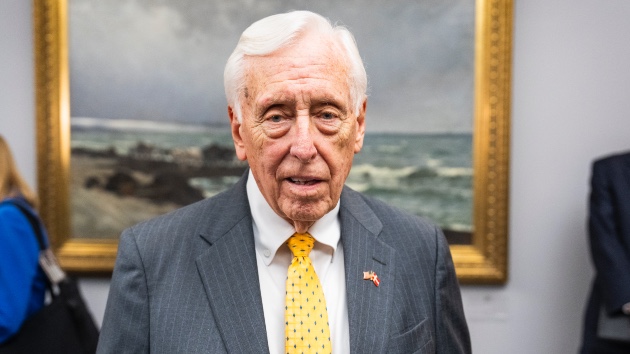
Democratic Rep. Pramila Jayapal accuses DOJ of ‘spying’ on her search history from unredacted Epstein files review

Democratic Rep. Pramila Jayapal accuses DOJ of ‘spying’ on her search history from unredacted Epstein files review
U.S. Rep. Pramila Jayapal (D-WA) questions U.S. Attorney General Pam Bondi before the House Judiciary Committee in the Rayburn House Office Building on February 11, 2026 in Washington, DC. Bondi is expected to face questions on her department’s handling of the files related to the convicted sex offender Jeffrey Epstein, President Trump’s investigations into political foes and the handing of the two fatal ICE shootings of U.S. citizens. (Alex Wong/Getty Images)

(WASHINGTON) — House Democratic Rep. Pramila Jayapal accused Attorney General Pam Bondi of “spying” on her search history when the congresswoman visited the Department of Justice earlier this week to view unredacted Jeffrey Epstein files.

“It is totally inappropriate and against the separations of powers for the DOJ to surveil us as we search the Epstein files,” Jayapal said in a post on X. “Bondi showed up today with a burn book that held a printed search history of exactly what emails I searched. That is outrageous and I intend to pursue this and stop this spying on members.”

Photos from a House Judiciary Committee hearing at which Bondi appeared on Wednesday show printouts she referenced were titled: “Jayapal Pramila Search History.” 

A diagram on the page shows several documents from the DOJ’s Epstein files that Jayapal searched. File numbers and brief descriptions of the contents are shown, according to photos taken of Bondi’s document.

Rep. Jamie Raskin, the ranking Democrat on the committee, said in a statement that he plans to ask the DOJ’s inspector general to launch an inquiry into whether the DOJ monitored lawmakers’ search history while reviewing the Epstein files. 

“It is an outrage that DOJ is tracking Members’ investigative steps undertaken to ensure that DOJ is complying with the Epstein File Transparency Act and using this information for the Attorney General’s embarrassing polemical purposes. DOJ must immediately cease tracking any Members’ searches,” Raskin said.  

At the outset of Wednesday’s hearing, Raskin used his opening statement to condemn Bondi’s use of a so-called “burn book” to prepare attacks against Democratic members.

“We saw your performance in the Senate and we are not going to accept that,” Raskin warned. “This isn’t a game. In the Senate you brought something with you called a burn book, a binder of smears to attack members personally for doing the people’s work of oversight. Please, set the burn book aside and answer questions.”

Those comments came as Raskin opened Wednesday’s combative hearing, where Bondi sparred with lawmakers, traded insults with them and at times refused to answer their questions.

The Department of Justice did not immediately respond to ABC’s request for comment. 

Since Monday, lawmakers have been allowed to visit the DOJ to view unredacted Epstein files — which has prompted fierce backlash from lawmakers critical of redactions that were maintained by the Department in defiance of the Epstein Transparency Act, which only allowed redactions to protect victims and their personally identifiable data and information.

Another lawmaker who visited the secure facility at the Department of Justice to view the unredacted documents, Republican Rep. Nancy Mace, of South Carolina, said she believed the department was tracking her as she conducted her review on Wednesday.

“Yes. I will confirm. DOJ is tracking the Epstein documents Members of Congress search for, open, and review,” Mace posted on X. “I was able to navigate the system today and I won’t disclose how or the nature of how; but confirmed the DOJ is TAGGING ALL DOCUMENTS Members of Congress search, open and review. Based on how I confirmed this, there are timestamps associated with this tracking.”

Copyright © 2026, ABC Audio. All rights reserved.
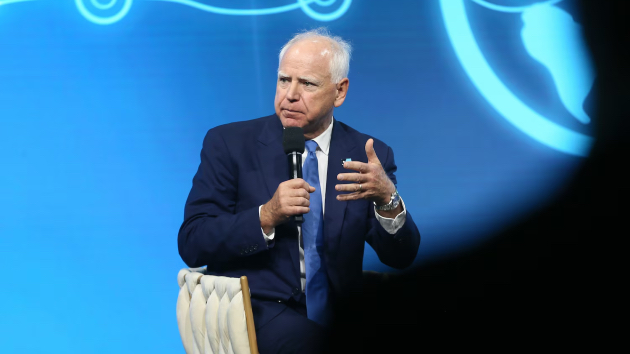
Bondi says Ghislaine Maxwell ‘will hopefully die in prison’

Bondi says Ghislaine Maxwell ‘will hopefully die in prison’
Attorney General Pam Bondi testifies before the House Committee on the Judiciary during an oversight hearing, at the Rayburn House Office Building in Washington, DC on February 11, 2026. (Nathan Posner/Anadolu via Getty Images)

(WASHINGTON) — Attorney General Pam Bondi told members of Congress on Tuesday that Ghislaine Maxwell “will hopefully die in prison,” after she was pressed on the allegations that Jeffrey Epstein’s co-conspirator was getting special treatment from the administration, including a controversial transfer to a minimum security prison.

Maxwell, who is 64, has been incarcerated since her arrest in July 2020 and would be in her mid-to-late 70s when her sentence ends.

Bondi, who clashed with Democratic members of the House Judiciary Committee when asked questions related to the Epstein investigation, however, said she could not say who ordered Maxwell’s transfer to a lower security prison and tried to change the subject.

Rep. Deborah Ross, D-N.C., brought up the transfer during the heated hearing and sought out answers, specifically who signed off on the move.

Maxwell was moved from FCI Tallahassee in Florida, a “low security” prison for men and women, to FPC Bryan in Texas, a “minimum security” camp just for women, two weeks after she had a private meeting with Deputy Attorney General Todd Blanche.

Trump has been asked about possibly pardoning Maxwell, but the president has said no one had approached him, though he reiterated his power to grant one.

Blanche, Trump’s former personal attorney, has not responded to letters from Democrats in Congress seeking more details about the move.

“She should not be in that prison,” Ross said. “She needs to be moved back to a maximum security prison as soon as possible.”

The congresswoman noted that Maxwell, who is challenging her 2021 conviction and 20-year sentence for child sex trafficking and other offenses, told another congressional committee she won’t cooperate unless she gets clemency from the president.

Ross asked Bondi if Blanche or one of her other subordinates approved the transfer, but the attorney general didn’t directly answer.

“I learned after the fact,” Bondi said of the transfer. “That is a question for the Bureau of Prisons. I was not involved at that at all,” she added.

Bondi then scolded Ross and changed the subject, bringing up a September homicide of a woman in Charlotte, North Carolina, in the congresswoman’s home state.

“You know instead of talking about Ghislaine Maxwell, who will hopefully die in prison, hopefully will die in prison, you should be talking about Iryna Zarutska,” she said.

Ross asked again if the president should pardon or commute Maxwell’s sentence.

“Should she be released from prison, yes or no? You said she should die in prison, so I’m hoping the answer is no,” the congresswoman said.

“I already answered the question,” Bondi responded, before scolding Ross again for not discussing Zarutska’s murder.

Bondi delivered several angry retorts at the members of the committee over the Epstein investigation.

Early on in the hearing, she did not look at Epstein survivors and their families when they were introduced by committee ranking member Jamie Raskin and Democratic Rep. Pramila Jayapal.

Survivors were seen shaking their heads several times during the hearing as Bondi attacked the congress members.

Copyright © 2026, ABC Audio. All rights reserved.

GOP-led House set to vote on rescinding Trump’s Canada tariffs

GOP-led House set to vote on rescinding Trump’s Canada tariffs
President Donald Trump speaks with reporters while aboard Air Force One, February 6, 2026 en route to Palm Beach, Florida. (Samuel Corum/Getty Images)

(WASHINGTON) — After Tuesday night’s embarrassing defeat for Speaker Mike Johnson at the hands of rebellious Republicans, the House is set to vote Wednesday evening on a Democratic-led resolution to rescind President Donald Trump’s tariffs imposed on Canada — which could result in a major rebuke of the president’s trade policies.

The legislation, led by the top Democrat on the House Foreign Affairs Committee, Rep. Gregory Meeks, would force House lawmakers to go on the record for the first time on Trump’s tariffs and trade policy.

The measure seeks to end the emergency declaration Trump used to justify his Canada tariffs.

Even if the tariff vote clears the GOP-led House, Trump is likely to veto the measure. It’s unclear how the largely symbolic vote will fall given Speaker Johnson’s razor-thin majority.

Johnson argued on Fox Business Wednesday morning that Congress should not be getting in the way of Trump’s tariffs.

“I think it’s a big mistake. I don’t think we need to go down the road of trying to limit the president’s power while he is in the midst of negotiating America first trade agreements,” Johnson said, adding that tariffs have “done great for the economy.”

He pointed to the tariff case pending before the U.S. Supreme Court — arguing that Congress should allow that process to play out.

House Republican leaders have fought for a year to block such a tariff vote from hitting the House floor, but the failed rule vote Tuesday night opened the door to full House votes on overturning the president’s tariffs.

Three Republicans — Reps. Kevin Kiley, Don Bacon and Thomas Massie — bucked their own party to defeat the procedural effort that failed by a vote of 214-217.

Bacon posted on X Wednesday, “Congress has Article One Constitutional responsibilities on tariffs. We cannot & should not outsource our responsibilities. As an old fashioned Conservative I know tariffs are a tax on American consumers. I know some disagree. But this debate and vote should occur in the House.”

Even if the House passes the resolution the matter would need to go back to the Senate.

Last October, the Senate voted on similar resolutions to cancel some of Trump’s tariffs.

At the time, some Senate Republicans joined Democrats to rebuke the president’s trade policy.

Copyright © 2026, ABC Audio. All rights reserved.
What is the SAVE America Act requiring voter ID, proof of citizenship to register?

What is the SAVE America Act requiring voter ID, proof of citizenship to register?
Poll workers place a sign outside a polling station for the New Jersey Primary at a firehouse in Hoboken, N.J., June 4, 2024. (Gary Hershorn/ABC News)

(WASHINGTON) — Amid President Donald Trump’s repeated unsubstantiated accusations of rigged voting and calls to nationalize elections, an updated version of the GOP’s signature piece of election reform — now called the SAVE America Act — is set to reach the House floor for a showdown vote later Wednesday.

The original, called the SAVE Act, was sponsored by Texas Republican Rep. Chip Roy, passed out of the House in April, but has stalled in the Senate since — attracting intense pushback from Democrats, who say the bill would damage voting accessibility and discriminate against low-income voters who are unable to get government ID.

Trump and top Republicans have argued the revised bill is necessary to protect the country’s election process before the 2026 midterm elections in November.

“America’s Elections are Rigged, Stolen, and a Laughingstock all over the World,” Trump wrote on social media. “We are either going to fix them, or we won’t have a Country any longer. I am asking all Republicans to fight for the following: SAVE AMERICA ACT!”

There has been no credible evidence of widespread fraud or substantiated claims of U.S. elections being rigged.

What is the SAVE America Act?

Republican lawmakers tout the SAVE America Act as the next step in securing what they call “election integrity.” The bill would restrict mail-in ballots, require photo ID at polling places and mandate states obtain proof of citizenship before registering a person to vote in a federal election.

Citizenship documents include:

  • A valid United States passport
  • A Real ID
  • A birth certificate
  • United States military ID card, together with a record of service showing that the applicant’s place of birth was in the United States
  • Federal, state or tribal government ID card showing the applicants place of birth
  • A driver’s license without a Real ID stamp would not be accepted as proof of citizenship.

This process would include mail voter registration applications, requiring people to provide documented proof to an appropriate election official before being approved.

The bill would also require states to scrub noncitizens from their current voter records and create programs to identify individuals who are not U.S. citizens by using data from various state agencies, the Social Security Administration and the Department of Homeland Security.

On Election Day, voters would be expected to bring a valid photo ID which they would be required to present before getting access to the ballot box. If an ID does not have a photo, a voter would have to prove U.S. citizenship or provide the last four digits of the voter’s Social Security number.

Along with ID requirements, Trump has called for restrictions on voting by mail, disallowing mail-in voting except for instances of illness, disability, military or travel.

Several high-ranking Republican leaders allege the bill would stop instances of noncitizens voting in elections, an issue they argue has damaged the credibility of election results.

Noncitizens are already prohibited from voting in federal and state elections, though some cities allow noncitizens to vote on some local elections.

“A number of states deliberately don’t want to check whether or not somebody’s here legally when they register, and then they mandate in some states that they can’t show picture ID. That’s a recipe for voter fraud,” House Majority Leader Steve Scalise said during an interview on Fox News. “…one person, one vote only matters if you’re having these protections like the SAVE America Act.”

Experts have long insisted that noncitizen voting is a rare problem. Voter roll audits before the 2024 elections in Georgia found only 20 registered noncitizens out of 8.2 million registered voters statewide. Nine of those actually cast a ballot.

The president has suggested noncitizen voting has allowed Democrats to win elections when they otherwise shouldn’t have, including unfounded claims that Joe Biden did not win the 2020 election.

“We need fair elections. We need elections where people aren’t able to cheat. And we’re going to do that, I’m going to do that, I’m going to get it done,” Trump said.

Why the controversy?

Implementing voter ID is not a novel idea in the United States. The National Conference of State Legislatures tracks 36 states that require voters to show some sort of identification at the polls.

Sentiment over voter ID is also recorded as mostly positive, with a Pew Research Center poll citing 83% of the 3,554 Americans surveyed as in favor of requiring all voters to show government issued photo IDs before voting.

In that same survey, 58% of respondents said they were in favor of maintaining mail-in voting.

Still, key Democrats on Capitol Hill have been strongly opposed to the bill, arguing it makes voting more difficult and less accessible.

“Our elections are key to our democracy. The SAVE Act would make it harder for registered, legal voters to vote,” California Democrat Rep. Mike Thomson said. “At a time when the president is talking about nationalizing elections, we must protect our democracy and every voter’s choice.”

Though the bill made it through the House with a 220-208 vote, Senate Minority Leader Chuck Schumer said that the bill would be “dead on arrival” in the Senate.

“The Republicans’ SAVE Act reads more like a how-to guide for voter suppression. It goes against the very foundations of our democracy,” Schumer said. “Mark my words: This will not pass the Senate.”

Others, such as Democrat Sen. Alex Padilla (D-CA), argue Republicans are deliberately timing the change in voter rules before consequential midterm elections.

“Republicans will stop at nothing to interfere with the 2026 midterms — including leveraging ICE to gain access to sensitive voter information or pass their anti-democratic SAVE Act,” Padilla said. “We’re not going to let them get away with their attempts to suppress the right to vote.”

In the Senate, the bill would need to garner support from some Democrats in order to overcome a 60-vote threshold to advance over an expected Democratic filibuster.

Copyright © 2026, ABC Audio. All rights reserved.
Combative Bondi grilled over Epstein files, targeting of Trump’s political foes

Combative Bondi grilled over Epstein files, targeting of Trump’s political foes
U.S. Attorney General Pam Bondi delivers remarks on an arrest connected to the 2012 U.S. Embassy attack in Benghazi, at the Department of Justice on February 6, 2026 in Washington, DC. (Photo by Kevin Dietsch/Getty Images)

(WASHINGTON) — Lawmakers grilled a combative Attorney General Pam Bondi as she testified before the House Judiciary Committee on Wednesday amid multiple controversies, including her handling of the files on convicted sex offender Jeffrey Epstein and the Justice Department’s targeting of President Donald Trump’s political foes.

In a fiery exchange at the beginning of the hearing, Democratic Rep. Pramila Jayapal pushed Bondi to turn around and apologize to a group of Epstein survivors who attended the hearing.

Bondi, who didn’t turn around, told Jayapal she wouldn’t “get in the gutter for her theatrics.”

In her opening statement, Bondi expressed support for the victims.

“I have spent my entire career fighting for victims, and I will continue to do so. I am deeply sorry for what any victim — any victim — has been through, especially as a result of that monster,” Bondi said to the Epstein survivors.

Bondi said several Democrats were engaging in “theatrics” throughout the hearing, and when Rep. Jamie Raskin, the top Democrat on the committee, pushed her to answer questions instead of engaging in heated interactions, Bondi called Raskin a “washed up loser lawyer.”

Both Democratic and Republican lawmakers have been sharply critical of the Justice Department’s incomplete release of the Epstein files and extensive DOJ redactions after some viewed unredacted files at the agency beginning Monday.

Raskin, said he was outraged by Bondi’s handling of the Epstein files.

You redacted the names of abusers, enablers, accomplices and co-conspirators, apparently to spare them embarrassment and disgrace, which is the exact opposite of what the law ordered you to do. Even worse, you shockingly failed to redact many of the victims’ names, which is what you were ordered to do by Congress,” he said.

“Some of the victims had come forward publicly, but many had not. Many had kept their torment private, even from family and friends. But you published their names, their identity, their images on thousands of pages for the world to see. So you ignored the law,” he added.

Earlier this month, the Justice Department — in response to concerns raised by victims’ and their lawyers — removed from its website “several thousand” documents and media that may have “inadvertently included victim-identifying information.”

Tensions were high as a group of Epstein survivors were seated behind Bondi. The group spoke out about the federal investigation into the convicted sex offender earlier Wednesday and have been critical of the federal government for not doing enough to prosecute Epstein over the years or look into the people who allegedly enabled him.

Several victims and their families said they feel the federal government has not done enough outreach to them.

Pam, I have a clear and simple message for you. The way this administration and you specifically have handled survivors has been nothing short of a failure,” Sky Roberts, the brother of Virginia Giuffre, Epstein’s most high-profile accuser said prior to the hearing.

Sky Roberts’ wife, Amanda Roberts, said Bondi’s treatment of the Epstein survivors has been disappointing.

“To Ms. Bondi, we are deeply disappointed by the way you and your leadership in this department have treated survivors. And today, while you’re being questioned, we ask you to look in the eyes of every single one of us and remember Virginia Roberts Giuffre, who paid the ultimate sacrifice for the trauma that she had endured,“ Amanda Roberts said.

Raskin also blasted Bondi in his opening statement, calling her handling of investigations a “vendetta factory.”

“You’ve turned the people’s Department of Justice into Trump’s instrument of revenge,” Raskin said. “Trump orders up prosecutions like pizza, and you deliver every time.”

In her opening statement, Bondi highlighted the cooperation between Democratic mayors to drive down crime in Memphis and Washington, D.C.

In the same opening statement, Bondi said that the clashes between federal agents have been avoidable and were so due to the “reckless rhetoric” by certain politicians.

Bondi also went after judges who rule against the administration, and called it “judicial activism.”

“We fought through a nonstop flood of bad faith, temporary restraining orders from liberal activist judges across this country. America has never seen this level of coordinated judicial opposition towards a presidential administration. It is not only an unlawful attack on the executive branches authority, but a serious attack on the democratic process,” she said.

Bondi is expected to face questions about the failure to secure indictments against six Democratic members of Congress who made a video last fall telling service members they could refuse illegal orders, according to multiple sources familiar with the matter.

She will likely be grilled about her efforts to revive cases against former FBI Director James Comey and New York’s Democratic Attorney General Letitia James after indictments against them were tossed.

Bondi is also expected to be questioned about the raid to capture Venezuelan President Nicolas Maduro — something administration officials have said was a law enforcement operation.

Given that, questions have been raised about why the attorney general was not present to discuss the matter at Trump’s Mar-a-Lago news conference announcing the raid.

The attorney general has testified on Capitol Hill only a handful of times.

In her most recent testimony before the Senate Judiciary Committee, she appeared to use prepared lines of attack against Democratic lawmakers who demanded she answer their tough questions.

Copyright © 2026, ABC Audio. All rights reserved.
Bondi faces lawmaker grilling over Epstein files, targeting of Trump foes

Combative Bondi grilled over Epstein files, targeting of Trump’s political foes
U.S. Attorney General Pam Bondi delivers remarks on an arrest connected to the 2012 U.S. Embassy attack in Benghazi, at the Department of Justice on February 6, 2026 in Washington, DC. (Photo by Kevin Dietsch/Getty Images)

(WASHINGTON) — Attorney General Pam Bondi is set to face a grilling Wednesday when she testifies before the House Judiciary Committee amid multiple controversies.

She will likely be questioned about her handling of the Epstein files, the Justice Department’s targeting of President Donald Trump’s political foes, and the FBI raid seizing 2020 ballots in Georgia amid the president’s baseless claims of election fraud.

Both Democratic and Republican lawmakers have been sharply critical of the Department’s incomplete release of the Epstein files and extensive DOJ redactions after some viewed unredacted files at the agency beginning Monday.

Other questions could involve her department’s failure to secure indictments against six Democratic members of Congress who made a video last fall telling service members they could refuse illegal orders, according to multiple sources familiar with the matter.

She could also be grilled about her efforts to revive cases against former FBI Director James Comey and New York’s Democratic Attorney General Tish James after indictments against them were tossed.

Bondi is also set to face questions about the raid to capture Venezuelan President Nicolas Maduro — something administration officials have said was a law enforcement operation. Given that, questions have been raised about why the attorney general was not present to discuss the matter at Trump’s Mar-a-Lago news conference announcing the raid..

The attorney general has testified on Capitol Hill only a handful of times.

In her most recent testimony before the Senate Judiciary Committee, she appeared to use prepared lines of attack against Democratic lawmakers who demanded she answer their tough questions.

Copyright © 2026, ABC Audio. All rights reserved.

Who controls the Kennedy Center — Trump or Congress?

Who controls the Kennedy Center — Trump or Congress?
A view of the John F. Kennedy Center for the Performing Arts which was recently renamed The Donald J. Trump and John F. Kennedy Memorial Center for the performing arts in Washington, DC on December 29, 2025. (Celal Gunes/Anadolu via Getty Images)

(WASHINGTON) — President Donald Trump’s plan for a “Complete Rebuilding” of the Kennedy Center in Washington has sparked a legal debate over whether he — or Congress — has the power to control the high-profile cultural institution.

The battle began in December, when Trump’s name was added to the building’s facade — above the existing signage that reads “The John F. Kennedy Memorial Center for the Performing Arts” — following a unanimous vote by Trump’s hand-picked board of center trustees.

It escalated recently, when Trump announced it would close in July for two years — to make major renovations he said were necessary.

Some members of Congress are pushing back, including in court, alleging Trump’s actions are unlawful and should be reversed.

What does the law say?
Here’s a closer look at what the law and history say on the question:

Since Congress created the cultural institution in a federal statute, designating it as a living memorial in 1964 shortly after President John F. Kennedy’s death and then through its expansion in the 2010s, it has been operated by both the executive and legislative branches — contributing to the legal debate.

While the executive branch oversees the appointments of the center’s board of trustees, Congress has the ultimate say on what money gets appropriated and what projects get approved.

The House Appropriations subcommittee overseeing the Interior, Environment, and Related Agencies grants the center’s board the power to act on any proposed and approved changes.

According to the top Democrat on the subcommittee, Rep. Chellie Pingree, the panel has historically controlled all funding, project management and security, separate from the executive branch or what is voted on by the center’s trustees.

Congress has proposed and authorized expansive construction projects, such as the REACH expansion adjacent to the Kennedy Center, designed for artist collaboration, to smaller standard year-to-year maintenance costs.

When Trump’s signature legislation passed in July, known as the “One Big Beautiful Bill,” it circumvented the subcommittee, instead directly appropriating $256,657,000 for “necessary expenses for capital repair, restoration, maintenance backlog, and security structures of the building.”

In a statement, the Kennedy Center’s new president, Richard Grenell, a Trump appointee, said, “I am grateful for President Trump’s visionary leadership. I am also grateful to Congress for appropriating an historic $257M to finally address decades of deferred maintenance and repairs at the Trump Kennedy Center.”

The Trump administration has suggested these already appropriated funds will cover any costs of his proposed major renovation.

“It desperately needs this renovation and temporarily closing the center just makes sense — it will enable us to better invest our resources, think bigger and make the historic renovations more comprehensive,” Grenell said. “It also means we will be finished faster.”

Limits on the president’s power?
Georgetown University law professor David Super told ABC News that even though the money for those changes is already appropriated by Congress, Trump and his administration do not have total freedom to make decisions.

“The Constitution says that no money shall be drawn for the Treasury except in accordance with an appropriation passed by Congress,” Super said. “He can spend that money for any of the purposes Congress provided it for, and that includes deferred maintenance, repair, restoration, renovation. It does not allow him to rebuild it.”

While Trump has suggested major renovations, no plans have been officially released or shared with the congressional subcommittee overseeing the center. During an Oval Office photo, Trump said the steel would be “fully exposed” but not removed.

“I’m not ripping it down. I’ll be using the steel,” he said. “So, we’re using the structure. We’re using some of the marble and some of the marble comes down, but when it’s opened, it’ll be brand new and really beautiful. It’ll be at the highest level.”

Super said if those renovations align with the language of the law Congress has passed, it is within Trump’s legal right both as president — and chair of the Kennedy Center’s board — to go forward. If the renovations go beyond what the law spells out and allows, Super said, his moves would be unconstitutional.

“Some of his remarks about ‘maybe, they will use the marble, maybe they won’t’, imply that he’s planning something much more than renovation or repair,” Super said. “If so, then he would be violating the language of the appropriation, and therefore the Constitution.”

When asked whether the president would keep his plan within the constraints laid out by Congress, White House spokeswoman Liz Hudston told ABC News: “While the Democrats neglected the Trump-Kennedy Center for years, President Trump immediately stepped up to rescue and revitalize the institution.”

Hudston also included some intended uses of the funds for maintenance, including “repairing and, where necessary, replacing elements on the exterior of the building,” and “work to bring the Trump-Kennedy Center into compliance with current life safety codes and security standard.”

So far, there are no lawsuits alleging Trump’s proposed renovations to the center are illegal.

The renaming
The center’s controversial renaming presents another legal question.

When the building was designated a living memorial in 1964, Congress wrote in explicit language on how the center should be named and operated.

U.S. Public Law 88-260 dictates the U.S. must “be held to designate or refer to such Center as the John F. Kennedy Center for the Performing Arts.”

“They really left very little to the imagination, and detailed what they wanted the Kennedy Center to be,” Super said, adding, “there are many things Congress creates that it doesn’t name, and that’s left to the president to name, but here is a law saying it shall be known as the John F Kennedy Center for the Performing Arts.”

Super said that regardless of what the board of trustees decides, the name will legally remain as written in the statute.

“And as a duly passed law of Congress, this binds you, it binds me, and it binds the president,” Super said. “The money that the president says he wants to spend on renovating the Kennedy Center is money that was appropriated for the John F. Kennedy Center for the Performing Arts, not for the Trump-Kennedy Center. So, if he in fact uses that money, he is acknowledging that its name did not change.”

A former Kennedy Center trustee, Democratic Rep. Joyce Beatty, has filed a lawsuit to stop Trump and the board of trustees from changing the Kennedy Center’s name and wants Trump’s name removed.

U.S. Code § 76j states that “the Board shall assure that after December 2, 1983, no additional memorials or plaques in the nature of memorials shall be designated or installed in the public areas of the John F. Kennedy Center for the Performing Arts.”

“Because Congress named the center by statute, changing the Kennedy Center’s name requires an act of Congress,” Beatty’s lawsuit said. “But on December 18 and 19, 2025 — in scenes more reminiscent of authoritarian regimes than the American republic — the sitting President and his handpicked loyalists renamed this storied center after President Trump.”

Pingree said her subcommittee has been told little about Trump’s plans and that she had instead learned about his proposed changes through social media.

“What’s going to happen now?” Pingree told ABC News, adding,” he tore down the East Wing. Does this mean he thinks he’s going to tear down the Kennedy Center and just rebuild it as a monument to himself?”

With lawmakers beginning discussions on funding for 2027, Pingree said she is working with her Republican counterpart to demand information.

“We will certainly say to them, we’re not going to allocate any money in this cycle until you give us more information about what you’re doing,” Pingree said.

“If that money is currently being used just to keep the place afloat because ticket sales are off and performers won’t perform, then it’s not going to go to the desperately needed. I believe there are some really important things that need to be done to that building,” she said.

Copyright © 2026, ABC Audio. All rights reserved.
Trump says his ‘Great Ballroom’ will be used for ‘future Presidential Inaugurations’

Trump says his ‘Great Ballroom’ will be used for ‘future Presidential Inaugurations’
President Donald Trump posted new renderings of the ballroom that is currently under construction, Feb. 10, 2026. (The White House)

(WASHINGTON) — President Donald Trump on Tuesday posted new renderings of his “Great Ballroom” and said it “will also be used for future Presidential Inaugurations.”

“Two views of the Great Ballroom being built on the site of our wonderful White House — It is on budget, and ahead of schedule!” Trump said of the construction on the former site of the demolished East Wing.

In the social media post, Trump claimed that the new ballroom “will also be used for future Presidential Inaugurations,” because of the ballroom’s expected “unprecedented structural, safety, and security features.”

According to the Library of Congress, the Constitution lays out the language of the inaugural oath but does not dictate where the ceremony must take place. 

The Library of Congress adds that in the 21st century, “inaugurations usually take place on the west front of the U.S. Capitol,” but adds that “there have been many other inauguration sites in the nation’s history.”

Trump initially said in July that the $300 million ballroom project would not interfere with the existing White House structure. Later, when crews began tearing down the East Wing, an official said the “entirety of the East Wing will be modernized” as the massive 90,000 square foot ballroom is built.

The National Trust for Historic Preservation has sued to stop the project.

In January, a federal judge presiding over the challenge signaled doubts about the Trump administration’s argument that the president has the legal authority to undertake the renovations and to fund them with private donations.

That judge said the decision on whether to block Trump’s renovation plans will “hopefully” come this month.

ABC News’ Steven Portnoy and Nathan Lee contributed to this report.

Copyright © 2026, ABC Audio. All rights reserved.