(WASHINGTON) — As top Trump administration officials press for more deportations, U.S. Immigration and Customs Enforcement (ICE) announced it had deported 142 migrants in the Houston, Texas, area illegally in the United States and convicted of crimes to Mexico, over a two week period.
From May 19 to 30, ICE says the agency removed eight gang members from the United States, 11 convicted individuals who committed crimes against children and a man who entered the U.S. illegally 21 times.
In total, the migrants were convicted of 473 criminal offenses and entered the United States 480 times, according to ICE.
ICE says there were also 30 who were convicted of robbery and grand larceny, 43 who were convicted of aggravated assault and 48 who were convicted of drug crimes they removed.
Unfortunately, this is not an anomaly,” said ICE Enforcement and Removal Operations Houston Field Office Director Bret Bradford. “For the past few years, there was virtually no deterrent to illegally entering the country. As a result, millions of illegal aliens poured into the country including violent criminal aliens, child predators, transnational gang members and foreign fugitives.”
Bradford said that “many of these dangerous criminal aliens went on to prey on law-abiding residents in local communities right here in Southeast Texas and we’re laser focused on identifying them and removing them from the country before they harm anyone else. This is just a small snapshot of those efforts as it only focuses on deportations to one country over the course of a two-week period, but it gives you an idea of how big this problem really is.”
It comes as in mid-May, Stephen Miller, the deputy chief of staff at the White House, was at ICE headquarters alongside DHS Secretary Kristi Noem and urged senior leaders at ICE and Homeland Security Investigations to step up their deportation efforts, according to sources familiar with the meeting.
The meeting was attended by senior ICE leaders and the special agents in charge of Homeland Security Investigations. Border czar Tom Homan was absent from the meeting.
Miller told senior ICE leaders that the Trump administration wants to triple the daily number of arrests agents were making up to 3,000 per day, according to sources.
Viktor Kovalchuk/Global Images Ukraine via Getty Images
(WASHINGTON) — Senators are escalating calls for a severe Russia sanctions bill to advance, with Republican Sen. Lindsey Graham claiming — after talks with Ukrainian President Volodymyr Zelenskyy — that the chamber will move ahead with legislation this week that would impose strict tariffs on Moscow.
Graham took a trip to Kyiv over the weekend with Democratic Sen. Richard Blumenthal, who cosponsored the Senate sanctions measure that would slap 500% tariffs on any country that buys Moscow’s energy products.
“I would expect next week that the Senate will start moving the sanctions bill,” Graham said during a press conference in Ukraine on Friday. “There are House members that are ready to move in the House and you will see congressional action.”
President Donald Trump has yet to endorse the sanctions bill. ABC News’ Chief Global Affairs Correspondent Martha Raddatz asked Zelenskyy if he were satisfied with the administration’s involvement in the conflict, and the Ukrainian leader called on Trump’s support for the sanctions and a ceasefire.
“We are looking for very for strong steps on the part of President Trump to support the sanctions and to force President Putin to stop this war, or at least proceed with the first stage of putting an end to this war — that is the ceasefire,” Zelenskyy said.
Graham and Blumenthal’s visit came just before Ukrainian officials on Sunday claimed that their country’s drones struck and damaged more than 40 warplanes in attacks on four military airports inside Russia.
Graham, a Putin critic, applauded Ukraine’s drone warfare tactics and urged action against Russia in a post on X following the reports.
“Russia indiscriminately kills men, women and children. It’s time for the world to act decisively against Russia’s aggression by holding China and others accountable for buying cheap Russian oil that props up Putin’s war machine,” Graham wrote.
Blumenthal also responded on X, urging a crackdown on Russia through the sanctions.
“When I visited President Zelenskyy & his team only a few days ago with @LindseyGrahamSC these extraordinary qualities of courage & capability were clearly evident. Russians have spread misinformation that they’re winning. Time to pass our sanctions bill.”
Graham wrote a letter last week in the Wall Street Journal, saying the Senate was “prepared” to place proposed sanctions on Russia depending on how the country responded to Trump’s recent request for Putin to “provide a term sheet outlining the requirements” for a ceasefire.
“Depending on how Russia responds, we will know which course to take,” Graham wrote in the letter.
Graham said he has coordinated with the White House on the Russia sanctions bill — the “Sanctioning Russia Act of 2025” — which has around 80 co-sponsors and bipartisan support.
“The bill would put Russia on a trade island,” Graham said. “The consequences of its barbaric invasion must be made real to those that prop it up. If China or India stopped buying cheap oil, Mr. Putin’s war machine would grind to a halt.”
Graham also highlighted recent comments from Majority Leader John Thune that also suggest the upper chamber would act against Russia if “Putin continues to play games.”
“As Thune said last week, if Mr. Putin continues to play games, the Senate will act. I’m hoping for the best, but when it comes to the thug in Moscow, we should all prepare for more of the same,” Graham wrote.
Thune, speaking to reporters at the Capitol on Monday, said that there’s a “high level” of interest in the bill, and that the Senate might be able to work on it before the end of the month.
“We are in conversations with the White House, obviously, about that subject and that issue … there’s a high level of interest here in the Senate, on both sides of the aisle and moving on it, and it’s very well could be something that we would take up in this work period,” Thune said. “Obviously we’re working with the White House to try and ensure that what we do and when we do it works well with the negotiations that they’ve got underway.”
Other Republican senators, too, are going on offense when it comes to sanctions on Moscow.
Republican Sen. Chuck Grassley called for sanctions in a post on X last week — advocating that they are strong enough so Putin knows it “game over.”
In May, Senate Majority Whip John Barasso spoke on the Senate floor, calling for an end to Russia’s war in Ukraine and threatening Russia with sanctions through the Senate bill.
“Russia faces a stark choice: peace or crippling sanctions. President Trump has spoken forcefully of swift, severe consequences if Russia fails to honor a ceasefire. A bipartisan group of senators agrees,” Barasso said.
“Energy is the cash cow of Putin’s war machine. Cut it off, and Russia cannot continue to fight. Russia’s biggest customer is Communist China. The next is India. They will be hit hard,” Barasso continued.
Democratic Sen. John Fetterman called for sanctions on Russia during a discussion in Boston on Monday with Republican Sen. Dave McCormick.
“Russia continues to kill innocent civilians in Ukraine and so here we are — and we have to sanction them and hold Russia accountable,” Fetterman said.
McCormick said he’d back the sanctions package because it continues to pressure Putin to engage in negotiations about ending the conflict.
“The only way to keep the pressure on is for things to happen like what happened today with Ukraine having a very successful military capability and operation, but in addition to that, the kinds of sanctions that are proposed in this legislation, and that is meant to help President Trump deliver on the vision and the deal he’s talked about,” McCormick said.
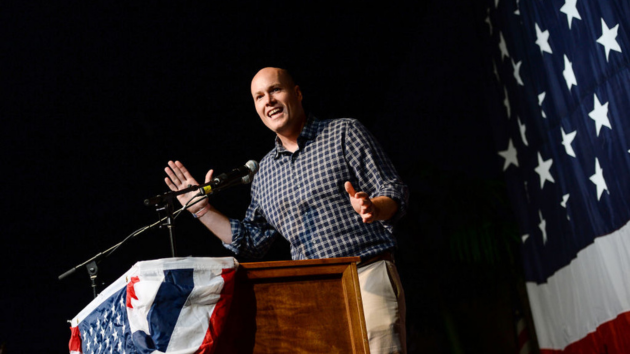
(DES MOINES, IOWA) — J.D. Scholten, a Democratic Iowa state representative and professional baseball player, has entered the race to take on Republican Sen. Joni Ernst in 2026 — prompted in part by her comments to constituents last week about potential cuts to Medicaid.
Ernst faced a number of agitated constituents at a town hall on Friday who expressed concerns that Republican cuts to Medicaid in the bill that would fund Trump’s legislative agenda. After one person in the audience shouted. “People are going to die!” Ernst responded, “Well, we’re all going to die.”
The incident “really hit home with me,” Scholten told ABC News in a brief interview. “We need better leadership than that.”
On Saturday, Ernst posted a sarcastic “apology” for her comments in what appeared to be a cemetery, saying, “I made an incorrect assumption that everyone in the auditorium understood that, yes, we are all going to perish from this earth. So I apologize, and I’m really, really glad that I did not have to bring up the subject of the tooth fairy as well.”
Scholten has run for higher office before, coming within a few points of unseating far-right Rep. Steve King in 2018. He lost the 2020 race for King’s old seat to Rep. Randy Feenstra by a wider margin and currently serves in the state house representing the Sioux City area.
He is currently a pitcher for the Sioux City Explorers of the American Association of Baseball, an independent Major League Baseball partner league.
Should he win the Democratic primary, Scholten said he also plans to make the race a referendum on President Donald Trump’s trade policy, noting that Iowa soybean farmers have been caught up in the trade war with China.
While some of Iowa’s House seats are considered competitive in 2026, Democrats have not won a Senate race in the state since 2008.
-ABC News’ Allison Pecorin contributed to this report.
(WASHINGTON) — No one elected her and you don’t hear much about her, but she’s about to be one of the most important people on Capitol Hill.
Senate Parliamentarian Elizabeth MacDonough can usually be seen perched atop the Senate dais, helping to make sure the Senate floor runs according to the rules. But she’s about to step into the role as arbiter of the Senate’s reconciliation package, where she’ll have the final say in whether a number of key provisions in the House-passed One Big Beautiful Bill Act are in keeping with the Senate’s rules.
Senate Republicans want to make changes to the bill the House passed by a single vote and sent to them. But Senate rules could force a number of changes they find less desirable, too. A veto of any provision by MacDonough could mean major parts of the package are thrown to the wayside, so her rulings will be watched closely by Democrats and Republicans alike in the coming weeks.
MacDonough is responsible for making calls on whether the provisions in the bill are in keeping with the Byrd Rule, named after the late Sen. Robert Byrd, who helped institute the rules governing budget reconciliation packages like President Donald Trump’s “one big, beautiful bill.”
MacDonough has been parliamentarian since 2012 after serving as senior assistant parliamentarian for 10 years. She is the first woman to fill the job since it was created in 1935.
She was called to make several rulings when Democrats used reconciliation to get then-President Joe Biden’s Inflation Reduction Act passed in 2022 as well as the COVID relief package the year before. She also advised Chief Justice John Roberts during Trump’s impeachment trials.
The Byrd Rule
In order for the Senate to use the reconciliation process, which allows it to pass budget packages like this with a simple majority of votes instead of the usual 60 necessary to overcome the Senate’s filibuster, everything in the bill must follow the Byrd Rule.
In the Senate, the process of the Budget Committee reviewing the bill and the parliamentarian to make sure it’s up to snuff is sometimes referred to cheekily as the “Byrd Bath.”
So what are the rules?
The Byrd Rule bars the Senate from including any “extraneous provisions” in budget bills. Anything in the bill, according to the rule, should be necessary to implement the underlying budget resolution that Congress already passed.
Simply stated: If a policy provision doesn’t have an effect on the budget, it can’t be included. Even budget changes that are “merely incidental” to policy provisions are considered out of order.
Now, things are always a bit more complicated in the Senate. The Byrd rule also prohibits Congress from touching Social Security in a reconciliation bill, from increasing the deficit for a fiscal year beyond the period included in the bill, and more. But its basic form is this: everything in the bill must be related to the budget.
It may seem in the weeds, but this review process can have meaningful impacts on reconciliation bills. In the Democrat-backed “Build Back Better” package in 2022, for example, the parliamentarian struck a number of provisions Democrats wanted focused on immigration reform. Democrats ended up having to give up those provisions to pass their package under then-President Joe Biden.
Big policy agenda items that are critical to some Republicans in the One Big Beautiful Bill Act could in theory be slashed out by the parliamentarian, so the process matters.
What does it mean for Trump’s megabill?
There are a number of provisions facing a tenuous path in the Senate because of the Byrd Rule.
Democrats are already vowing to fight policies they say are out of order.
“In the Senate, our committees have been working overtime to prepare for the Byrd Bath, targeting the litany of policies included in the Republican plan that are in clear violation of the reconciliation rules and in some cases, an assault on our very democracy,” Senate Minority Leader Chuck Schumer wrote in a letter to his colleagues Sunday night.
We’ll ultimately have to wait for MacDonough to rule, but if it sounds like policy and not budget, it might be at risk.
Here are a few provisions in the House-passed bill that appear to be potentially at risk of being struck out by the parliamentarian. This is not an exhaustive list and doesn’t account for things that Senate Republicans might want to change or remove from the bill:
AI regulations: The House bill includes language that prohibits state and local governments from enforcing “any law or regulation regulating artificial intelligence models, artificial intelligence systems, or automated decision systems” over a 10-year period.
Federal court provisions: The bill creates a new requirement that could restrict how parties suing the federal government get relief in court. Sen. Joni Ernst, R-Iowa, as recently as Friday suggested at a town hall, when pressed by a constituent about the provision, that it likely wouldn’t pass muster in the Byrd Bath. “I don’t see any argument that could ever be made that this affects mandatory spending or revenues, so I just don’t see that I don’t see that getting into the Senate bills,” Ernst said then.
Planned Parenthood funding ban: The House bill includes a provision that would ban Medicaid funding to Planned Parenthood if it provides abortion services. The parliamentarian stripped a similar provision from a 2017 reconciliation package. It stands to reason she could rule similarly this go-round.
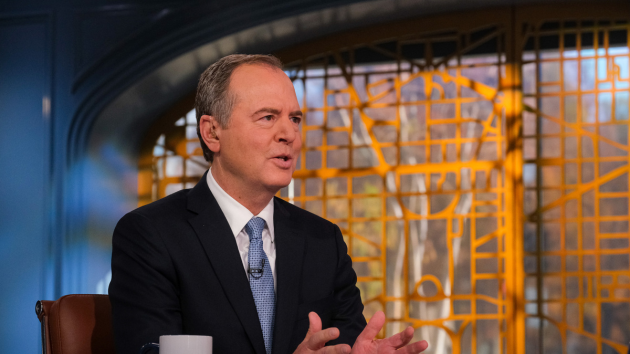
(WASHINGTON) — Democratic Sen. Adam Schiff in a letter to White House chief of staff Susie Wiles sent Monday, repeated his calls for the White House to issue a full disclosure of financial transactions from senior officials.
The new ask comes after the California senator — along with 25 other Democratic members of Congress — sent a separate letter to Wiles in April that outlined his concern surrounding potential ethics violations, asking for a commitment from all senior White House and executive branch employees to “expeditiously” transmit all reports related to their securities transactions since the start of Trump’s term to the Office of Government Ethics, and that the reports be made public.
That April letter was sent in the wake of President Donald Trump’s sudden pause that month of his sweeping set of tariffs, which triggered widespread concern from Schiff and other Democrats that those close to the president might have engaged in insider trading as markets rose following the pause.
In his Monday letter, addressed to Wiles like the first but also including White House Counsel David Warrington, Schiff notes that senior executive White House officials are “now beyond the maximum allowable filing period for individuals who began their service at the outset of the Administration” under federal ethics laws, which mandate that they file public annual financial disclosure documents, including a new entrant report, within 30 days of assuming their duties.
“The White House has yet to disclose any financial disclosure or transaction reports, even after widespread concern of potential insider trading following President Trump’s sudden pause of sweeping tariffs in early April,” Schiff writes in the letter, first shared first with ABC News.
“According to OGE’s disclosure database to date, no new entrant reports for any senior White House officials have been made available for public disclosure, despite legal requirements under the Ethics in Government Act and the clear public interest in the financial disclosures of senior executive branch leaders, raising questions as to whether the required public reports have yet to be submitted to OGE for certification,” he added.
Asked by ABC News for comment on the letter, White House spokesman Kush Desai said on Monday, “The American people remain highly concerned about Nancy Pelosi’s long, documented history of insider trading and eagerly await Adam Schiff refocusing his political stunt on serious issues, like Pelosi’s portfolio.”
Pelosi has faced allegations of trading on inside information during her time in Congress but has denied any impropriety.
Copied on Schiff’s letter is also Jamieson Greer, the acting director of the U.S. Office of Government Ethics, and Scott Gast, the ethics attorney in the White House counsel’s office.
In their April letter, the Democrats requested a response from Wiles no later than May 9, 2025, and for a “detailed plan” for how the administration plans to address any officials and employees who might have failed to file required disclosures from the start of the administration.
A spokesperson for Schiff said that they received from the White House an acknowledgement that they had received the letter, but provided no answers to their demands.
In the newest letter, Schiff asked for Wiles and Warrington to send, no later than on June 10, a list of all White House officials required to file new entrant reports; an explanation for the failure to transmit any new entrant reports to OGE for second-level review and certification; the current status and anticipated timeline for the submission and public posting of all overdue disclosures; a list of any filing extensions requested and granted by designated White House ethics officials and the duration of those extensions; and whether any late filing fees have been imposed for delinquent filings, as required by law.
“Transparency and compliance with ethics laws are essential. The American public deserves to know that those serving at the highest levels of government are free from financial conflicts of interest and have complied with the laws designed to safeguard the integrity of public service. I look forward to reviewing your responses,” the senator concluded.
Trump’s tariffs have faced a number of court challenges. An appeals court reinstated Trump’s tariffs this week after a Wednesday court order blocked them. The appeals court decision stands for the time being.
The block on the tariffs came after the Court of International Trade decided that the administration’s evocation of the International Emergency Economic Powers Act does not give the president the right to set “unlimited” tariffs. The Trump administration argued that the court order may harm their progress in negotiations.
Schiff has been a critic and target of Trump since his days in the House. Former President Joe Biden, during his last hours in office, issued a preemptive pardon for Schiff in connection with his work on the House’s Jan. 6 select committee. Schiff has called that pardon “unnecessary” and “unwise.”
(WASHINGTON) — The Supreme Court on Monday turned away an appeal by a group of gun-rights advocates seeking to overturn Maryland‘s ban on assault-style rifles and high-capacity magazines under the Second Amendment.
The decision, a major win for gun-safety advocates, leaves in place a ruling by the Fourth Circuit U.S. Court of Appeals which ruled that the state may constitutionally prohibit sale and possession of the weapons.
The state legislation, enacted in 2013 after the Sandy Hook elementary school shooting, specifically targets the AR-15 — the most popular rifle in America with 20-30 million in circulation. They are legal in 41 of the 50 states.
Justices Samuel Alito, Neil Gorsuch and Clarence Thomas dissented from the decision, saying they would have taken up the case to decide the issue nationwide. Legal challenges to other state bans remain pending in lower courts.
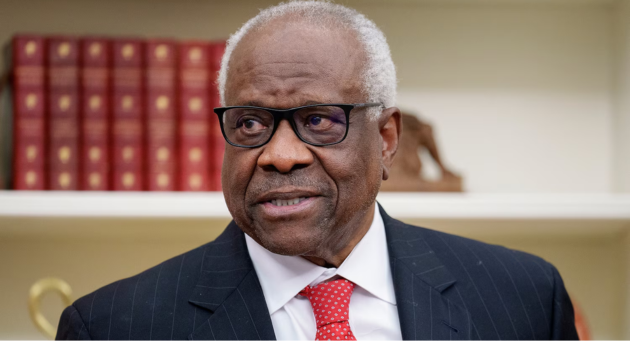
“I would not wait to decide whether the government can ban the most popular rifle in America,” Justice Thomas wrote. “The question is of critical importance to tens of millions of law-abiding AR-15 owners throughout the country.”
Justice Brett Kavanaugh agreed with the court’s decision to let the Maryland law stand, for now, but wrote separately to call the appeals court ruling “questionable.” Kavanaugh said that he expects the high court to weigh in formally on the legality of the AR-15 in the “next term or two.”
Maryland has seen a decline in gun violence since the enactment of a series of laws aimed at curbing access to dangerous weapons.
Officials particularly credit a series of federal, state and local restrictions imposed on gun kits in 2022 and 2023 with slowing online sales of untraceable firearms, requiring background and age checks of buyers and banning some kit sales in Maryland altogether.
While the Supreme Court’s conservative majority has issued rulings expanding the rights of gun owners, recent decisions have underscored support for some longstanding restrictions. In June 2024, the high court upheld a ban on firearm purchases and possession by Americans under domestic violence restraining orders. Earlier this year the Court also upheld federal regulations targeting ghost guns.
“Yesterday’s horrific attack in Boulder, Colorado, WILL NOT BE TOLERATED in the United States of America,” Trump wrote on his conservative social media platform.
“Acts of Terrorism will be prosecuted to the fullest extent of the Law. This is yet another example of why we must keep our Borders SECURE, and deport Illegal, Anti-American Radicals from our Homeland. My heart goes out to the victims of this terrible tragedy, and the Great People of Boulder, Colorado!” the president added.
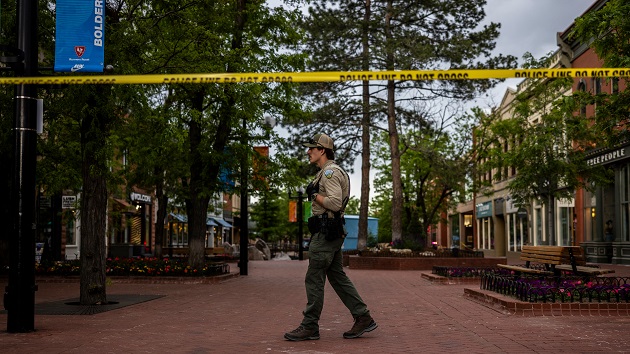
Eight people were injured on Sunday in what the FBI is calling an “act of terror.” Boulder police said the motive for the attack still has not been established.
The suspect, Mohamed Sabry Soliman, was allegedly heard yelling “Free Palestine” while throwing a “makeshift flamethrower” at a demonstration to raise awareness about the remaining hostages in Gaza, according to authorities.
Soliman has been charged with a federal hate crime, according to court documents. He allegedly told police “he wanted to kill all Zionist people and wished they were all dead.”
The Department of Homeland Security on Monday said Soliman is in the U.S. illegally. He entered the country on a B2 visa, which is typically a tourism visa, in August 2022 and in September 2022 applied for asylum. The B2 visa expired in February 2023.
Soliman was granted a work permit after his B2 visa expired, a senior official told ABC News. That work permit expired on March 28, so he has been in the country illegally since then, the official said.
Trump sought to cast blame over Soliman’s immigration status on former President Joe Biden, criticizing his predecessor’s policies and saying “he must go out under ‘TRUMP’ Policy.”
White House press secretary Karoline Leavitt made a similar argument on Monday as she took some questions from reporters outside the White House.
Leavitt said the suspect was “foolishly given a tourism visa” by the previous administration.
“These individuals are going to be deported, and we’re not going to tolerate such violence in our country,” Leavitt said.
While Trump seized on the fact that the alleged attacker was in the country illegally, the president did not mention antisemitism in his statement.
Though a White House senior official said Trump was briefed on Sunday, his first public comments came nearly 24 hours after the attack.
Leavitt, in her gaggle with reporters, was asked for the administration message to the Jewish community.
“We have seen two horrific cases of anti-semitic violence in our country in the last two weeks, and it is unacceptable to this president and this White House,” she said. “And rest assured to all Jewish Americans across our great country, this president has your back and he’s not going to allow anyone to take part in violent terrorism, acts of terrorism, in our country.”
Attorney General Pam Bondi also released a statement Monday in which she condemned “vile anti-Semitic violence.”
“The Department of Justice has swiftly charged the illegal alien perpetrator of this heinous attack with a federal hate crime and will hold him accountable to the fullest extent of the law. Our prayers are with the victims and our Jewish community across the world,” Bondi said.
(BOULDER, Colo.) — President Donald Trump on Monday responded for the first time to the attack against a crowd of pro-Israel demonstrators in Boulder, Colorado, seizing on the that the suspect was in the United States illegally, according to the Department of Homeland Security.
“Yesterday’s horrific attack in Boulder, Colorado, WILL NOT BE TOLERATED in the United States of America,” Trump wrote on his conservative social media platform.
“Acts of Terrorism will be prosecuted to the fullest extent of the Law. This is yet another example of why we must keep our Borders SECURE, and deport Illegal, Anti-American Radicals from our Homeland. My heart goes out to the victims of this terrible tragedy, and the Great People of Boulder, Colorado!” the president added.
Eight people were injured on Sunday in what the FBI is calling an “act of terror.” Boulder police said the motive for the attack still has not been established.
The suspect, Mohamed Sabry Soliman, was allegedly heard yelling “Free Palestine” while throwing a “makeshift flamethrower” at a demonstration to raise awareness about the remaining hostages in Gaza, according to authorities.
Soliman has been charged with a federal hate crime, according to court documents. He allegedly told police “he wanted to kill all Zionist people and wished they were all dead.”
The Department of Homeland Security on Monday said Soliman is in the U.S. illegally. He entered the country on a B2 visa, which is typically a tourism visa, in August 2022 and in September 2022 applied for asylum. The B2 visa expired in February 2023.
Soliman was granted a work permit after his B2 visa expired, a senior official told ABC News. That work permit expired on March 28, so he has been in the country illegally since then, the official said.
Trump sought to cast blame over Soliman’s immigration status on former President Joe Biden, criticizing his predecessor’s policies and saying “he must go out under ‘TRUMP’ Policy.”
While Trump seized on the fact that the alleged attacker was in the country illegally, the president did not mention antisemitism in his statement.
Though a White House senior official said Trump was briefed on Sunday, his first public comments came nearly 24 hours after the attack.
Attorney General Pam Bondi also released a statement Monday in which she condemned “vile anti-Semitic violence.”
“The Department of Justice has swiftly charged the illegal alien perpetrator of this heinous attack with a federal hate crime and will hold him accountable to the fullest extent of the law. Our prayers are with the victims and our Jewish community across the world,” Bondi said.
“Yesterday’s horrific attack in Boulder, Colorado, WILL NOT BE TOLERATED in the United States of America,” Trump wrote on his conservative social media platform.
“Acts of Terrorism will be prosecuted to the fullest extent of the Law. This is yet another example of why we must keep our Borders SECURE, and deport Illegal, Anti-American Radicals from our Homeland. My heart goes out to the victims of this terrible tragedy, and the Great People of Boulder, Colorado!” the president added.
Eight people were injured on Sunday in what the FBI is calling an “act of terror.”
The suspect, Mohamed Sabry Soliman, was allegedly heard yelling “Free Palestine” while throwing a “makeshift flamethrower” at a demonstration to raise awareness about the remaining hostages in Gaza, according to authorities.
Boulder police said the motive for the attack still has not been established.
The Department of Homeland Security on Monday said Soliman is in the U.S. illegally as his B2 visa — which is typically a tourism visa — expired in February 2023. Soliman had also applied for asylum in 2022.
Soliman was granted a work permit after his B2 visa expired, a senior official told ABC News. That work permit expired on March 28, so he has been in the country illegally since then, the official said.
While Trump seized on the fact that the alleged attacker was in the country illegally, the president did not mention antisemitism in his statement.
While the administration said Trump was briefed on Sunday, his first public comments came nearly 24 hours after the attack.
This is a developing story. Please check back for updates.
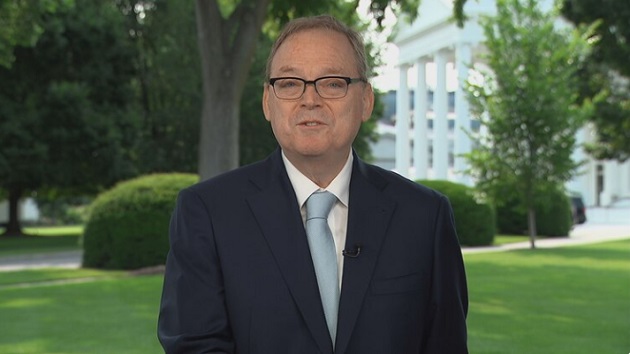
White House National Economic Council Director Kevin Hassett said Sunday that he expects President Donald Trump to speak with Chinese President Xi Jinping this week on tariffs.
“President Trump, we expect, is going to have a wonderful conversation about the trade negotiations this week with President Xi. That’s our expectation,” Hassett told anchor George Stephanopoulos on ABC News’ “This Week” on Sunday.
Currently, China has a 30% tariff level for goods coming into the U.S., which is reduced from the original 145% Trump levied. A 90-day reprieve from the 145% tariffs was given with the intent that the two countries would negotiate a wider trade deal.
Hassett said he was unsure of the exact date the two leaders would plan to speak to each other.
“I’m not sure, George, because you never know in international relations, but my expectation is that both sides have expressed a willingness to talk. And I’d like to also add that people are talking every day, so [U.S. Trade Representative] Jamieson Greer, his team and President Xi’s team in China, they’re talking every day trying to move the ball forward on this matter.”
Trump’s tariffs have faced a number of court challenges. An appeals court reinstated Trump’s tariffs this week after a Wednesday court order blocked them. The appeals court decision stands for the time being.
The block on the tariffs came after the Court of International Trade decided that the administration’s evocation of the International Emergency Economic Powers Act does not give the president the right to set “unlimited” tariffs. The Trump administration argued that the court order may harm their progress in negotiations.
Here are more highlights from Hassett’s interview:
Hassett on the legal challenges to tariffs
Stephanopoulos: Are you confident the Supreme Court is going to uphold these tariffs? What happens if they don’t?
Hassett: Right. Well, one of the things we’ve been doing all the way back until 2017, when I used to speak with you on the show last time, George, is that we’ve studied every possible way that President Trump’s tariff agenda could be pursued. And Jamieson Greer, the best trade lawyer in the business, came down and said the IEPA pursuit that we’re pursuing is the fastest, and it’s the way that’s the most legally sound.
And so we’re very thrilled. We are very confident that the judges will uphold this law. And so I think that’s Plan A. And we’re very, very confident that Plan A is all we’re ever going to need. But if, for some reason, some judge were to say that it’s not a national emergency when more Americans die from fentanyl than have ever died in all American wars combined, that’s not an emergency that the president has authority over, if that ludicrous statement is made by a judge somewhere, then we’ll have other alternatives that we can pursue as well to make sure that we make America trade fair again.
On possible deals this week
Stephanopoulos: Where are we exactly? When will we see an actual agreement? Will we see any this week?
Hassett: I expected that we were going to probably see one perhaps as early as last week. And I think that one of the things that’s happened is that the trade team has been focused 100 percent like a laser beam on the China matter, to make sure that there are no supply disruptions because these licenses are coming a little slower than we would like. And so, we’ve been focused like a laser beam on that last week, and the presidents, we expect, will discuss the matter this week. Once that thing’s resolved, then we’re going to take deals into the Oval that Jamieson Greer and Howard Lutnick have negotiated.
Hassett on Trump’s ‘big, beautiful bill’
Stephanopoulos: Facing numerous challenges to the bill in the Senate right now from both the right and the left, are you confident that the president’s deadline is going to be met?
Hassett: Deadlines are deadlines, right? So, the one thing I could say is that we’re 100 percent confident that this bill is going to pass because in the end, the senators who are worried about the bill understand that you’re going to cast the economy into recession and vote for the biggest tax hike in history if you vote against the bill.