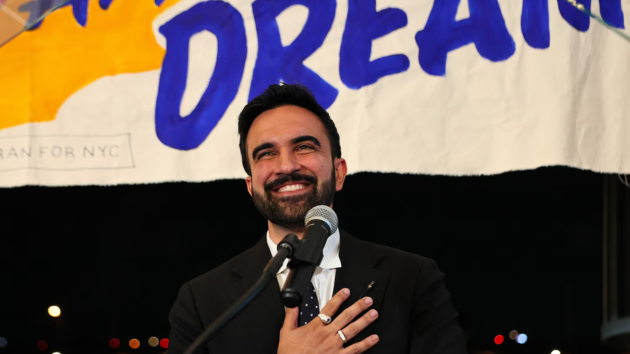
(WASHINGTON) — President Donald Trump threatened New York state lawmaker Zohran Mamdani with arrest if the presumptive Democratic nominee for New York City mayor defies Immigration and Customs Enforcement operations.
The president also continued to allege the 33-year-old Democratic socialist is a “communist” while talking to reporters Tuesday at the new so-called “Alligator Alcatraz” migrant detention center in Florida’s Everglades.
When asked by a reporter what his message is to Mamdani — after he said in a victory speech following the New York City Democratic mayoral primary that he would “stop masked ICE agents from deporting our neighbors” — Trump responded, “Well then, we’ll have to arrest him.”
“Look, we don’t need a communist in this country, but if we have one, I’m going to be watching over him very carefully on behalf of the nation,” Trump continued.
Trump also referenced false claims that Mamdani is in the country illegally.
“A lot of people are saying he’s here illegally,” Trump said. “We’re going to look at everything. Ideally, he’s going to turn out to be much less than a communist. But right now he’s a communist. That’s not a socialist.”
Born in Uganda, Mamdani has lived in the United States since he was 7 years old and became a naturalized citizen in 2018.
As he departed the White House earlier Tuesday, Trump continued his attack on Mamdani in the wake of the primary, calling him a “total nut job” and “bad news” and reiterating his false claim the politician is a communist.
“I think I’m gonna have a lot of fun with him, watching him, because he has to come right through this building to get his money,” Trump said after threatening to withhold funding from New York if Mamdani doesn’t “do the right thing.”
Mamdani responded to Trump in a statement on Tuesday, calling his remarks “intimidation.”
“His statements don’t just represent an attack on our democracy but an attempt to send a message to every New Yorker who refuses to hide in the shadows: if you speak up, they will come for you. We will not accept this intimidation,” Mamdani said.
When asked about comments from Trump on social media calling him a “Communist Lunatic” in an interview with ABC News last week, Mamdani shrugged off the epithet, saying he’d encourage Trump to learn about his policies, and that he’d work with Trump on affordability but would resist the president’s deportation plans.
“The next mayor of New York City will have to work with the Trump administration. Are you willing to do that? Will you do that?” ABC News Senior Political Correspondent Rachel Scott asked.
“I will work with the Trump administration when it is to the benefit of New Yorkers,” Mamdani said. “My approach will never be reflexive, whether in agreement or opposition, but if it comes at the expense of the New Yorkers that I’m running to serve, then, no, I will not be working with the administration on harming the people that I look to represent.”
Mamdani also responded to Trump’s attacks during an interview on NBC’s “Meet the Press” on Sunday. Asked how he responds to being called a communist, Mamdani said, “I am not.”
“I have already had to start to get used to the fact that the president will talk about how I look, how I sound, where I’m from, who I am. Ultimately because he wants to distract from what I’m fighting for,” Mamdani said. “And I’m fighting for the very working people that he ran a campaign to empower that he has since then betrayed.”
The New York City Board of Elections released the results of the ranked-choice voting tabulation on Tuesday, one week after initial results that only reflected voters’ first choice candidates showed Mamdani with around 44% of the vote and Cuomo with around 36%.
Mamdani now leads former Gov. Andrew Cuomo by 12 points, 56% to 44%, in the Democratic primary, according to the updated results.
These may not be the final margins, as cured ballots come in before the Board of Elections certifies the election on July 15, though subsequent updates are not expected to change who is on top. Current Mayor Eric Adams will run as an independent, while Cuomo will also run as an independent on the “Fight and Deliver” ballot line, a source close to the campaign confirmed to ABC News. Curtis Sliwa, who also ran for mayor against Adams four years ago, will be the Republican candidate.
The New York City mayoral election is scheduled to occur on Nov. 4.
ABC News’ Oren Oppenheim, Brittany Shepherd and Lalee Ibssa contributed to this report.
(WASHINGTON) — Gathered on the Senate floor after a 26-hour, record-breaking vote-a-rama series, senators voted hastily on two final Republican-led amendments before getting to the main event: final passage of President Donald Trump’s “big, beautiful bill.”
Vice President JD Vance was presiding over the chamber after breaking a tie on a previously considered wraparound amendment to the bill. It was assumed that he would soon break another tie on the bill’s final passage, with a number of Republican holdouts remaining to make the vote math still uncertain.
It was just a matter of who would be the third “no” vote Republicans could afford to lose and still pass the bill. Sens. Thom Tillis and Rand Paul had already committed to voting it down.
Sen. Lisa Murkowski was widely thought to be the last opponent, with a temporary SNAP carveout for her state of Alaska hanging in the balance down until the last minute.
When the final vote started, Murkowski was seated in the second row near the middle of the chamber. Next to her was Mississippi GOP Sen. Roger Wicker and next to him was another moderate Republican Sen. Susan Collins of Maine, who eventually proved to be the third and final GOP “no” vote.
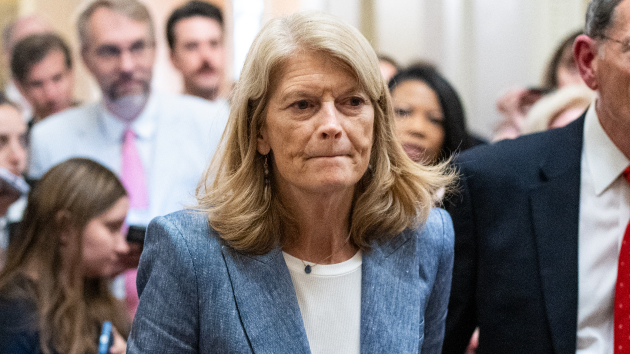
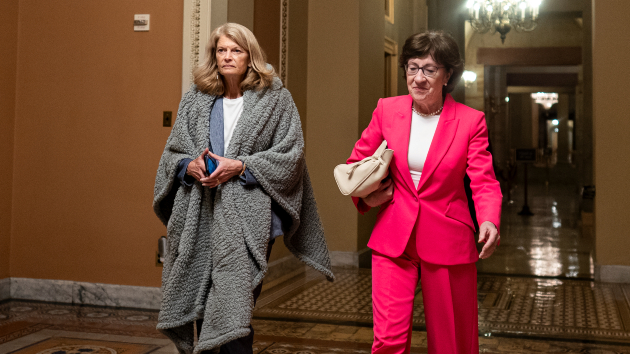
Collins, dressed in a hot-pink pantsuit, votes near the top of the alphabet. But she left near the beginning of the vote’s final passage to go to the cloakroom. She missed her chance to vote when her name was called, coming out shortly after and walking directly to Murkowski. Collins put her arm around Murkowski, and then went up to the clerk and put her thumb down: no. She then left the chamber.
Focus was then squarely on Murkowski, whose vote could have tanked the entire bill. But former Senate Majority Leader Mitch McConnell came up to sit next to her. The two talked quietly and then shook hands. When her name was called, Murkowski quietly said “Aye.”
Senators had added additional sweeteners for her state, including a provision aimed at insulating Alaska from some of the bill’s harshest impacts on SNAP.
She then started to leave the chamber, shaking hands with GOP Sens. Jerry Moran of Kansas and Bill Cassidy of Louisiana before exiting.
Afterward, Murkowski told ABC News’ she “struggled mightily with the [bill’s] impact on the most vulnerable in this country.”
“I needed help, and I worked to get that every single day. And did I get everything that I wanted? Absolutely not,” she added.
Senate Majority Leader John Thune didn’t speak to either woman after their votes. He was seated in his chair in the front of the chamber.
Collins later explained her vote in a statement: “My vote against this bill stems primarily from the harmful impact it will have on Medicaid, affecting low-income families and rural health care providers like our hospitals and nursing homes.”
She also said she had problems with cuts to energy tax credits and that the rural hospital relief fund that was created to try to get Republican holdouts to vote for the bill was insufficient.
ABC News’ John Parkinson and Lauren Peller contributed to this report.
(WASHINGTON) — Gathered on the Senate floor after a 26-hour, record-breaking vote-a-rama series, senators voted hastily on two final Republican-led amendments before getting to the main event: final passage of President Donald Trump’s “big, beautiful bill.”
Vice President JD Vance was presiding over the chamber after breaking a tie on a previously considered wraparound amendment to the bill. It was assumed that he would soon break another tie on the bill’s final passage, with a number of Republican holdouts remaining to make the vote math still uncertain.
It was just a matter of who would be the third “no” vote Republicans could afford to lose and still pass the bill. Sens. Thom Tillis and Rand Paul had already committed to voting it down.
Sen. Lisa Murkowski was widely thought to be the last opponent, with a temporary SNAP carveout for her state of Alaska hanging in the balance down until the last minute.
When the final vote started, Murkowski was seated in the second row near the middle of the chamber. Next to her was Mississippi GOP Sen. Roger Wicker and next to him was another moderate Republican Sen. Susan Collins of Maine, who eventually proved to be the third and final GOP “no” vote.
Collins, dressed in a hot-pink pantsuit, votes near the top of the alphabet. But she left near the beginning of the vote’s final passage to go to the cloakroom. She missed her chance to vote when her name was called, coming out shortly after and walking directly to Murkowski. Collins put her arm around Murkowski, and then went up to the clerk and put her thumb down: no. She then left the chamber.
Focus was then squarely on Murkowski, whose vote could have tanked the entire bill. But former Senate Majority Leader Mitch McConnell came up to sit next to her. The two talked quietly and then shook hands. When her name was called, Murkowski quietly said “Aye.”
Senators had added additional sweeteners for her state, including a provision aimed at insulating Alaska from some of the bill’s harshest impacts on SNAP.
She then started to leave the chamber, shaking hands with GOP Sens. Jerry Moran of Kansas and Bill Cassidy of Louisiana before exiting.
Senate Majority Leader John Thune didn’t speak to either woman after their votes. He was seated in his chair in the front of the chamber.
Collins later explained her vote in a statement: “My vote against this bill stems primarily from the harmful impact it will have on Medicaid, affecting low-income families and rural health care providers like our hospitals and nursing homes.”
She also said she had problems with cuts to energy tax credits and that the rural hospital relief fund that was created to try to get Republican holdouts to vote for the bill was insufficient.
(WASHINGTON) — President Donald Trump’s tax cut and spending bill came down to the wire as Senate Republican leaders scrambled to get all GOP members on board before the final vote Tuesday.
In the end, three long-serving GOP members, Susan Collins of Maine, Rand Paul of Kentucky and Thom Tillis of North Carolina voted against, forcing Vice President JD Vance to break a 50-50 tie.
Each of the three has explained their reasons for bucking the president.
Susan Collins
One of the mostly closely watched as the vote neared was Collins, who had been on the fence due to the bill’s proposed Medicaid cuts.
“Approximately 400,000 Mainers – nearly a third of the state’s population – depend on this program,” she said in a statement after voting no. “A dramatic reduction in future Medicaid funding, an estimated $5.9 billion in Maine over the next 10 years, could threaten not only Mainers’ access to health care, but also the very existence of several of our state’s rural hospitals.”
Collins added that the bill had “additional problems.”
“The tax credits that energy entrepreneurs have relied on should have been gradually phased out so as not to waste the work that has already been put into these innovative new projects and prevent them from being completed,” she said.
Thom Tillis
Tillis has been extremely vocal in his opposition sine the weekend, drawing attention for a passionate floor speech citing Medicaid provisions he claimed would hurt his North Carolina constituents.
During a closed-door GOP conference meeting two weeks ago, Tillis is reported to have made the point that Medicaid coverage for more than 600,000 North Carolinians would be at risk under the Senate’s proposal and asked his colleagues to consider how the policy would affect their own states — even providing state-specific data on a handout.
“I just encouraged other members to go to their states and just measure how … take a look at the proposed cuts and tell me whether or not you can absorb it in the normal course of business, and in many cases, you’re gonna find that you can’t,” Tillis told reporters at the Capitol last week.
Trump lashed out against Tillis on his social media platform and to the press and threatened to field primary challengers. Tillis announced on Saturday that he would not seek reelection.
Rand Paul
Paul, a staunch advocate for keeping spending and the debt ceiling in check, posted on X that he wanted the bill to include a 90% reduction in the ceiling.
“No earmarks. No handouts. Just real fiscal reform. I wasn’t looking for favors. I wasn’t horse-trading. I was fighting for the American people and against our out-of-control debt,” he said.
“Bottom line: I offered my vote for fiscal sanity. Congress chose to sell out taxpayers instead. Only once the bill is released, we will know what the true price was,” Paul added.
(WASHINGTON) — President Donald Trump said Tuesday he would like to see facilities like the new so-called “Alligator Alcatraz” migrant detention center in Florida‘s Everglades in other states.
“Well, I think would like to see them in many states. Really, many states,” the president said. “And, you know, at some point, they might morph into a system.”
The Trump administration is turning the remote Dade-Collier Training and Transition Airport into a facility that officials say will eventually hold up to 5,000 people. Officials say operations will start on Tuesday. The facility is part of Trump’s efforts to ramp up deportations by expanding detention capacity. The president has already sent migrants to Guantánamo Bay and the mega-prison in El Salvador.
Asked by ABC News’ Mary Bruce if the new center could be a new standard for immigration facilities in the U.S. despite criticism for its harsh conditions, Trump said, “It can be.”
“I mean, you don’t always have land so beautiful and so secure. They have a lot of bodyguards and a lot of cops that are in the form of alligators. You don’t have to pay them so much but I wouldn’t want to run through the Everglades for long. It will keep people where they’re supposed to be. This is a very important thing,” he said.
White House press secretary Karoline Leavitt said Trump’s visit would be a chance for the president to tout the funding for more detention facilities and efforts to enact Trump’s mass deportation policy that are in his megabill that the Senate could vote on Tuesday before sending to the House before Trump’s Fourth of July deadline.
“I think his trip to this detention facility actually underscores the need to pass the One Big, Beautiful Bill because we need more detention facilities across the country,” Leavitt said.
A source familiar with the planning tells ABC it will cost Florida $450 million a year, and officials say some of that money will be reimbursed from FEMA’s Shelter and Services Program.
Leavitt described the facility’s remote location in her briefing on Monday.
“There’s only one road leading in, and the only way out is a one-way flight,” she said. “It is isolated and surrounded by dangerous wildlife and unforgiving terrain. The facility will have up to 5,000 beds to house, process and deport criminal illegal aliens.”
“This is an efficient and low-cost way to help carry out the largest mass deportation campaign in American history,” Leavitt added.
When asked about the remote and dangerous location, Leavitt said that it was a feature of the facility to help prevent detainees from escaping.
“Well look, when you have illegal murderers and rapists and heinous criminals in a detention facility surrounded by alligators, yes, I do think that’s a deterrent for them to try to escape,” she said. “We do know that some of these illegal criminals have escaped from other detention facilities, like one in New Jersey, which I know was recently reported on. So, of course, we want to keep the American people safe, and we want to remove these public safety threats from our streets, and we want to effectively detain them as best as we can.”
Florida Attorney General James Uthmeier posted on X that the facility is a “one stop shop” to carry out Trump’s mass deportation agenda, claiming the location saves money on security since it’s surrounded by dangerous animals.
“You don’t need to invest that much in the perimeter. People get out, there’s not much waiting for them other than alligators and pythons. Nowhere to go, nowhere to hide,” Uthmeier posted.
Among officials who will join Trump at the facility are Department of Homeland Security Secretary Kristi Noem, Florida Gov. Ron DeSantis and Florida Congressman Byron Donalds.
In a statement released Monday, Noem said, “Alligator Alcatraz, and other facilities like it, will give us the capability to lock up some of the worst scumbags who entered our country under the previous administration. We will expand facilities and bed space in just days, thanks to our partnership with Florida. Make America safe again.”
DeSantis touted the facility last week as “as safe and secure as you can be.”
Environmental groups are suing to stop construction, alleging the government violated the Endangered Species Act by building on protected land.
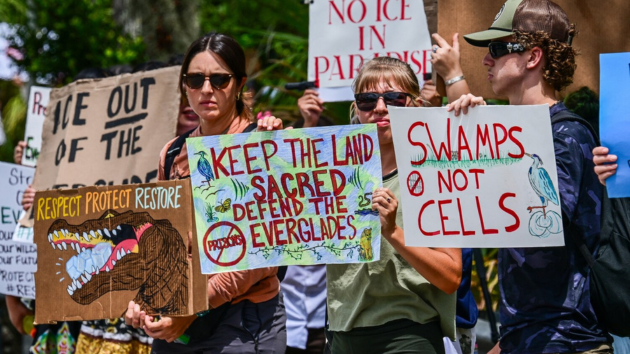
Protesters gathered along the highway that cuts through the Everglades to demonstrate on Saturday. They included environmental activists and Native Americans advocating for their ancestral homelands. Others demonstrated against the treatment of migrants.
(WASHINGTON) — The Senate voted 50-50 on Trump’s megabill. Vice President JD Vance cast the tie-breaking vote to pass the massive tax and immigration bill.
(WASHINGTON) — President Donald Trump touring the new “Alligator Alcatraz” migrant detention center in Florida‘s Everglades on Tuesday.
The Trump administration is turning the remote Dade-Collier Training and Transition Airport into a facility that officials say will eventually hold up to 5,000 people. Officials say operations will start on Tuesday. The facility is part of Trump’s efforts to ramp up deportations by expanding detention capacity. The president has already sent migrants to Guantánamo Bay and the mega-prison in El Salvador.
Asked by ABC News’ Mary Bruce if the center could be a new standard for immigration facilities in the U.S. despite criticism for its harsh conditions, Trump said, “It can be.”
“I mean, you don’t always have land so beautiful and so secure. They have a lot of bodyguards and a lot of cops that are in the form of alligators. You don’t have to pay them so much but I wouldn’t want to run through the Everglades for long. It will keep people where they’re supposed to be. This is a very important thing,” he said.
White House press secretary Karoline Leavitt said Trump’s visit would be a chance for the president to tout the funding for more detention facilities and efforts to enact Trump’s mass deportation policy that are in his megabill that the Senate could vote on Tuesday before sending to the House before Trump’s Fourth of July deadline.
“I think his trip to this detention facility actually underscores the need to pass the One Big, Beautiful Bill because we need more detention facilities across the country,” Leavitt said.
A source familiar with the planning tells ABC it will cost Florida $450 million a year, and officials say some of that money will be reimbursed from FEMA’s Shelter and Services Program.
Leavitt described the facility’s remote location in her briefing on Monday.
“There’s only one road leading in, and the only way out is a one-way flight,” she said. “It is isolated and surrounded by dangerous wildlife and unforgiving terrain. The facility will have up to 5,000 beds to house, process and deport criminal illegal aliens.”
“This is an efficient and low-cost way to help carry out the largest mass deportation campaign in American history,” Leavitt added.
When asked about the remote and dangerous location, Leavitt said that it was a feature of the facility to help prevent detainees from escaping.
“Well look, when you have illegal murderers and rapists and heinous criminals in a detention facility surrounded by alligators, yes, I do think that’s a deterrent for them to try to escape,” she said. “We do know that some of these illegal criminals have escaped from other detention facilities, like one in New Jersey, which I know was recently reported on. So, of course, we want to keep the American people safe, and we want to remove these public safety threats from our streets, and we want to effectively detain them as best as we can.”
Florida Attorney General James Uthmeier posted on X that the facility is a “one stop shop” to carry out Trump’s mass deportation agenda, claiming the location saves money on security since it’s surrounded by dangerous animals.
“You don’t need to invest that much in the perimeter. People get out, there’s not much waiting for them other than alligators and pythons. Nowhere to go, nowhere to hide,” Uthmeier posted.
Among officials who will join Trump at the facility are Department of Homeland Security Secretary Kristi Noem, Florida Gov. Ron DeSantis and Florida Congressman Byron Donalds.
In a statement released Monday, Noem said, “Alligator Alcatraz, and other facilities like it, will give us the capability to lock up some of the worst scumbags who entered our country under the previous administration. We will expand facilities and bed space in just days, thanks to our partnership with Florida. Make America safe again.”
DeSantis touted the facility last week as “as safe and secure as you can be.”
Environmental groups are suing to stop construction, alleging the government violated the Endangered Species Act by building on protected land.
Protesters gathered along the highway that cuts through the Everglades to demonstrate on Saturday. They included environmental activists and Native Americans advocating for their ancestral homelands. Others demonstrated against the treatment of migrants.
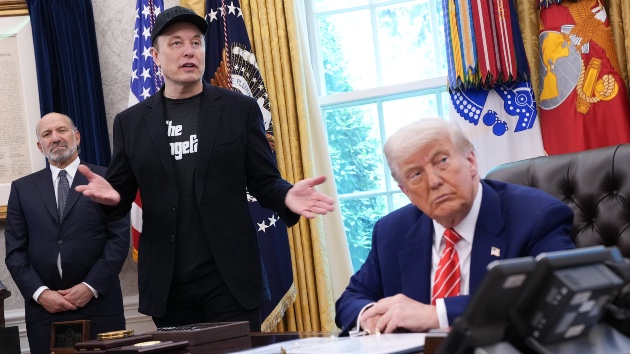
(WASHINGTON) — President Donald Trump told reporters Tuesday his administration will “have to take a look” at deporting Elon Musk after the billionaire reignited the feud with the president over his spending bill.
Musk, a South African national and a naturalized U.S. citizen, made several weekend X posts slamming Republicans over the “Big Beautiful Bill,” arguing that it was adding more debt.
“It is obvious with the insane spending of this bill, which increases the debt ceiling by a record FIVE TRILLION DOLLARS that we live in a one-party country – the PORKY PIG PARTY!!,” Musk posted Monday afternoon.
Trump pushed back with a Truth Social post early Tuesday claiming Musk was upset about the bill eliminating the electric vehicle mandate and that “Elon would have to close up shop and head back home to South Africa.”
When asked by reporters later in the morning if he would deport Musk, Trump said, “We’ll have to take a look.”
“We might have to put DOGE on Elon,” he said.
Musk posted his response to Trump’s Tuesday morning comments on X.
“So tempting to escalate this. So, so tempting. But I will refrain for now,” Musk wrote.
This is a developing story. Please check back for updates.
(WASHINGTON) — President Donald Trump is traveling to the new “Alligator Alcatraz” migrant detention center in Florida’s Everglades on Tuesday.
“We’re going out to Alligator Alcatraz. It’s the East Coast version, and it should be very exciting, very good,” Trump said as he left the White House on Tuesday morning. “Worked very hard on it with Ron [DeSantis] and everybody, and I think it’s going to be great.”
The Trump administration is turning the remote Dade-Collier Training and Transition Airport into a facility that officials say will eventually hold up to 5,000 people. Officials say operations will start on Tuesday. The facility is part of Trump’s efforts to ramp up deportations by expanding detention capacity. The president has already sent migrants to Guantánamo Bay and the mega-prison in El Salvador.
Leavitt said Trump’s visit will be a chance for the president to tout the funding for more detention facilities and efforts to enact Trump’s mass deportation policy that are in his megabill that the Senate could vote on Tuesday before sending to the House before Trump’s Fourth of July deadline.
“I think his trip to this detention facility actually underscores the need to pass the One Big, Beautiful Bill because we need more detention facilities across the country,” Leavitt said.
A source familiar with the planning tells ABC it will cost Florida $450 million a year, and officials say some of that money will be reimbursed from FEMA’s Shelter and Services Program.
Leavitt described the facility’s remote location in her briefing on Monday.
“There’s only one road leading in, and the only way out is a one-way flight,” she said. “It is isolated and surrounded by dangerous wildlife and unforgiving terrain. The facility will have up to 5,000 beds to house, process and deport criminal illegal aliens.”
“This is an efficient and low-cost way to help carry out the largest mass deportation campaign in American history,” Leavitt added.
When asked about the remote and dangerous location, Leavitt said that it was a feature of the facility to help prevent detainees from escaping.
“Well look, when you have illegal murderers and rapists and heinous criminals in a detention facility surrounded by alligators, yes, I do think that’s a deterrent for them to try to escape,” she said. “We do know that some of these illegal criminals have escaped from other detention facilities, like one in New Jersey, which I know was recently reported on. So, of course, we want to keep the American people safe, and we want to remove these public safety threats from our streets, and we want to effectively detain them as best as we can.”
Florida Attorney General James Uthmeier posted on X that the facility is a “one stop shop” to carry out Trump’s mass deportation agenda, claiming the location saves money on security since it’s surrounded by dangerous animals.
“You don’t need to invest that much in the perimeter. People get out, there’s not much waiting for them other than alligators and pythons. Nowhere to go, nowhere to hide,” Uthmeier posted.
Among officials who will join Trump at the facility are Department of Homeland Security Secretary Kristi Noem, Florida Gov. Ron DeSantis and Florida Congressman Byron Donalds.
In a statement released Monday, Noem said, “Alligator Alcatraz, and other facilities like it, will give us the capability to lock up some of the worst scumbags who entered our country under the previous administration. We will expand facilities and bed space in just days, thanks to our partnership with Florida. Make America safe again.”
DeSantis touted the facility last week as “as safe and secure as you can be.”
Environmental groups are suing to stop construction, alleging the government violated the Endangered Species Act by building on protected land.
Protesters gathered along the highway that cuts through the Everglades to demonstrate on Saturday. They included environmental activists and Native Americans advocating for their ancestral homelands. Others demonstrated against the treatment of migrants.
(WASHINGTON) — Republican Sen. Ron Johnson of Wisconsin — a staunch deficit hawk has been critical of President Donald Trump’s sweeping tax and immigration bill — signaled Monday that he would back the bill when it comes to a vote.
On Saturday Johnson flipped his vote to support a motion to move the One Big Beautiful Bill Act to the Senate floor only after huddling with Republican leaders about further reductions to the federal debt.
CNN’s Jake Tapper prompted Johnson to say he was a yes vote on the bill, to which the senator corrected him, saying he was “a yes on the motion to proceed” and “hopefully” add a provision that would prevent new enrollees in Medicaid expansion states from receiving Federal Medical Assistance Percentage (FMAP) if they are are not disabled and don’t have dependent children.
Johnson then pivoted to signal his support for the final bill, which will come to a floor vote when an ongoing vote-a-rama wraps up.
“This is about as good as we can get. I don’t like it. I would like to get a lot more. But at some point in time you have to recognize reality. And if we don’t pass this bill, we have a massive $4 trillion tax increase,” Johnson said.
The FMAP amendment, led by fellow conservative holdout Sen. Rick Scott of Florida, had not yet been considered Monday evening.
The Senate plowed ahead toward a final vote on the bill as Republicans rush to get it across the finish line by July 4, with lawmakers voting on amendments through the night into Tuesday morning.
The self-imposed deadline by Trump meant a rare weekend session for lawmakers, one filled with partisan drama and some GOP infighting.
On Monday morning, senators began the “vote-a-rama” — a series of votes on proposed amendments to the megabill.
There is no limit to the number of amendments lawmakers can seek. Senate Minority Leader Chuck Schumer, the chamber’s top Democrat, promised his party would bring amendment after amendment during the marathon session. Democrats forced a reading of the 940-page bill over the weekend, which took nearly 16 hours. “Every senator will soon have an opportunity to reject this nonsense and vote for common-sense budgeting. Americans will be watching,” Schumer said on Monday as he slammed Trump’s bill as a break for billionaires that will hurt working-class families.
Democrats used the early hours of the vote-a-rama to force votes highlighting cuts the megabill makes to Medicaid, SNAP and rural hospitals and to hammer Republicans on the tax cuts they say the measure gives to the wealthiest Americans.
The Senate voted down, 47-53, an amendment led by Schumer that he said would have undone “the travesty that is at the core of the Republican bill.”
“Their bill the so-called big beautiful bill, which is really a big, ugly betrayal, cuts taxes for billionaires by taking away health care for millions of people. So what my amendment simply says, if people’s health care costs go up, the billionaire tax cuts vanish,” Schumer said.
Democratic Sen. Ed Markey’s effort to strip provisions that would negatively impact rural hospitals due to cuts to Medicaid also failed, but did receive the support of two Republicans: Sens. Lisa Murkowski of Alaska and Susan Collins of Maine.
The two moderate Republicans, who both have a history of voting across party lines, have raised concerns about how cuts to Medicaid and SNAP would hit their constituents. In total, Murkowski supported five Democratic-led measures in the ongoing vote-a-rama and Collins supported four.
Collins proposed her own amendment that aimed to increase the amount of money in the rural hospital relief fund. It failed by a vote of 22-78, with Collins subsequently criticizing what she called the “hypocritical approach” of the Democrats that voted against it.
Sen. Amy Klobuchar, the top Democrat on the Senate Agriculture committee, argued that the SNAP provisions in the bill creates “chaos for state budgets and hardship for families” and violate budget rules. Her motion related to SNAP was waived by Republicans.
Senate Majority Leader John Thune defended the bill as delivering Trump’s campaign promises to eliminate tax on tips and overtime pay while boosting spending for defense and border security.
“It’s been a long debate,” Thune said in his own floor remarks ahead of the votes on amendments. “I know people are weary. But at the end of the day, we want to get this done so that this country is safer and stronger and more prosperous, not only for today but for future generations of Americans.”
So far, Republicans have defeated all Democratic efforts to modify or reconsider the bill — but the session ran into Tuesday morning.
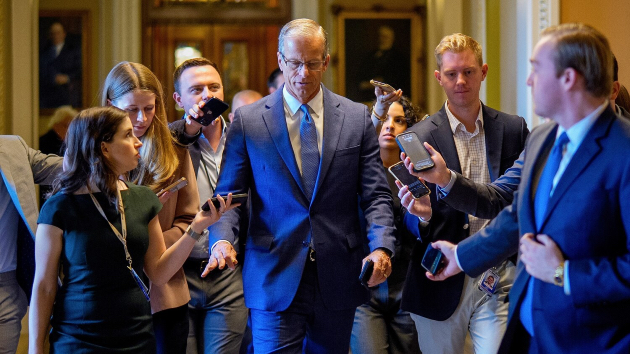
As he walked off the floor in the early hours of Tuesday, Thune was asked if he could pull the bill back or if he may be forced to hold a final passage vote on the bill, even if he knows it will fail.
“Those are options I don’t want to have to worry about,” Thune replied.
Senate Finance Committee chairman Mike Crapo, a Republican, argued against several of the Democratic amendments.
“The reality is, the reforms we are putting into place are to try to reign in control of wasteful and fraudulent and abusive spending that actually diverts resources away from the people who these programs really deserve to receive,” Crapo said of Schumer’s amendment on Medicaid.
The vote-a-rama is the last hurdle before a vote on final passage of the bill in the Senate.
There is little room for error in the Republican-controlled chamber. A procedural vote on Saturday night to open debate on the bill narrowly passed in a 51-49 vote after two Republican defections.
GOP Sens. Rand Paul of Kentucky and Thom Tillis of North Carolina voted against advancing the bill. Tillis railed against the changes to Medicaid in the bill, saying it would hurt his constituents and would represent a betrayal of Trump’s promise not to touch the entitlement program upon which millions of people rely for health care coverage. Tillis’ opposition drew Trump’s ire, with the president threatening to support a primary challenger to the two-term senator. Tillis then suddenly announced he would not seek reelection, saying later he texted Trump on Saturday night suggesting he “probably needed to start looking for a replacement.”
“I respect President Trump. I support the majority of his agenda, but I don’t bow to anybody. When the people of North Carolina are at risk. And this bill puts them at risk,” Tillis said.
As of early Tuesday morning, the GOP leadership were still pushing for sufficient support.
One of the main targets was Murkowski, whose indecision came after reports that the Senate parliamentarian may have ruled some carve out provisions meant for her home state of Alaska’s Medicaid recipients out of order.
Also under pressure were Scott and Sen. Mike Lee, who were yet to receive a vote on their amendment that strips back additional funding for Medicaid. Collins had also not yet said which way she would vote.
Paul, meanwhile, offered an amendment that would significantly reduce the amount of money attributed to raise to the federal debt limit. The current bill raises the debt limit by $5 trillion dollars. Paul’s amendment would raise it by only $500 billion.
What’s next for OBBB in the House?
If the “One Big Beautiful Bill Act” passes in the Senate, it will have to go back to the House for members to consider the changes made to the bill.
House Republican leaders say Wednesday is the earliest chance for a megabill vote.
“Members are advised that votes are now expected in the House as early as 9 a.m. Wednesday, July 2. Please stay tuned to future updates for additional information regarding this week’s schedule,” a notice from Majority Whip Tom Emmer’s office said.
Speaker Mike Johnson expressed optimism that the Senate’s version of the One Big Beautiful Bill will pass in the GOP-led House despite opposition from moderates and conservatives.
“We’re going to pass this bill one way or the other,” Johnson said leaving the Capitol Monday evening. “And I have prevailed upon my Senate colleagues to please, please, please, put it as close to the House product as possible. I have been very consistent from the very beginning.
Johnson did not rule out passing the Senate version as is and said, “there’s still a lot of amendments, and a lot of game to play.”
Asked if GOP House leaders would make changes to what the Senate sends over, Johnson said, “We’ll see what the final product is. I am very hopeful as always. We will get this job done. We’ll see what happens.”
The speaker did not respond to a question about passing the bill by the Fourth of July deadline.
Republican leaders have told members they will receive 48 hours notice before a vote is called and will have 72 hours to review the bill text.
The House passed the Trump megabill by just one vote back in May. The Senate version of the bill will face an uphill battle in the House, given the GOP’s razor-thin majority.
California moderate Republican Rep. David Valadao said he will vote no given the Medicaid changes in the Senate bill. Several conservatives, including Reps. Chip Roy of Texas, Josh Breechen of Oklahoma and Eric Burlison of Missouri have also expressed opposition to the Senate’s version of the bill.
Johnson and other Republican leaders worked through the weekend to lock down the votes even as several lawmakers have expressed opposition to the Senate’s version, which is still not finalized. Johnson can only afford to lose three defections if all members are voting and present.
White House press secretary Karoline Leavitt said President Trump was working “hand in hand” with Johnson and Thune, and that the two leaders had met with him at the White House earlier Monday.
“Republicans need to stay tough and unified during the home stretch, and we are counting on them to get the job done,” Leavitt said during the White House briefing.
But sources familiar with the matter told ABC News Thune and Johnson have not met with President Trump at the White House, and as of now the two leaders have no current plans to meet with the president on Monday as the “One Big Beautiful Bill Act” progresses in the Senate.
A spokesman for Thune said he is preoccupied as the Senate moves through amendments to the megabill.
“Teams are obviously in close contact/coordination, as always, but we’re continuing to move through vote-a-rama in the Senate as we work to move this bill one step closer to the president’s desk,” the spokesman said in a post on X.
Speaker Johnson is in Washington working through House members’ concerns as the Senate works through the bill, including several provisions that could spell problems later in the week if the bill is sent back to the House.
ABC News’ John Parkinson contributed to this report.