
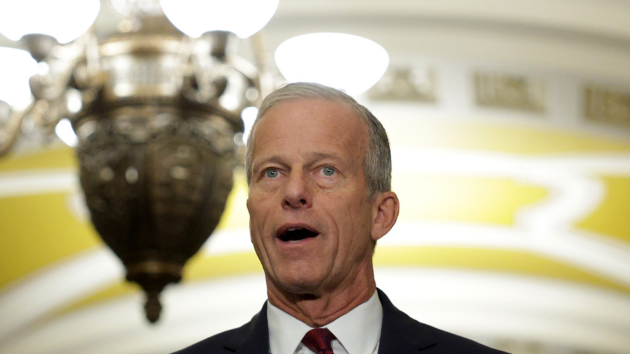
Congress faces uphill battle to challenge Trump on war powers

Congress faces uphill battle to challenge Trump on war powers
Daniel Torok/The White House via Getty Images

(WASHINGTON) — President Donald Trump’s strike against Iran will be met with pushback on Capitol Hill this week as some lawmakers argue the military action was unconstitutional.

There are several bipartisan resolutions that could receive a vote in coming days that may put some lawmakers in uncomfortable positions as they consider whether Trump ignored the role of Congress in striking Tehran.

It’s unlikely though, at this stage, that Trump’s rank-and-file Republican base will abandon him by supporting these bills. If any were to make it to Trump’s desk, there likely wouldn’t be enough votes to override his veto.

Trump’s decision to hit Iran in the stated aim of wiping out its nuclear capabilities follows a decades-long pattern of presidents taking military action and not waiting for Congress to sign off. Other examples include Joe Biden’s airstrikes in Syria in 2021, Barack Obama’s military campaign against ISIS in Syria and Iraq as well as George H.W. Bush’s invasion of Panama.

House and Senate lawmakers are expected to receive briefings on the Iran strike on Tuesday.

Trump faces bipartisan blowback
Republican Rep. Thomas Massie and Democratic Rep. Ro Khanna introduced a War Powers Resolution last week to prohibit “United States Armed Forces from unauthorized hostilities in the Islamic Republic of Iran.”

Democratic Sen. Tim Kaine is leading a similar Senate resolution, which could come up sometime this week as the chamber tries to move forward with a megabill to fund much of Trump’s domestic policy agenda.

All three appeared on “Face the Nation” on CBS News on Sunday to make their case.

Massie contended there was “no imminent threat to the United States” that would authorize the president to strike Iran without congressional approval.

Kaine similarly said: “This is the U.S. jumping into a war of choice at Donald Trump’s urging without any compelling national security interests for the United States to act in this way, particularly without a debate and vote in Congress. We should not be sending troops and risking troops’ lives in an offensive war without a debate in Congress.”

Kaine added that he hopes Republicans push back.

“I know many Republicans will fall in line and say a president can do whatever he wants. But I hope members of the Senate and the House will take their Article I responsibilities seriously,” the Virginia Democrat said.

Khanna warned there is a possibility the strike is not a one-time occurrence.

“There are people who want regime change in Iran. And they are egging this president on to bomb. I hope cooler heads will prevail,” Khanna said on CBS. “We need to pass Thomas Massie and my War Powers Resolution to make it clear that we’re not going to get further entrenched into the Middle East.”

Trump lashed out at Massie in a lengthy social media post on Sunday, writing the Republican congressman is “not MAGA” and that “MAGA doesn’t want him” and “doesn’t respect him.” Trump said he’ll campaign for Massie’s Republican primary opponent in the next election.

Congress has twice before called out Trump on his use of military force without congressional approval.

In 2019, Congress approved a bill to end U.S. support for the war in Yemen, which Trump vetoed. In 2020, Trump ordered the drone strike that killed top Iranian general Qassem Soleimani. In response, Congress passed legislation seeking to limit a president’s ability to wage war against Iran, which was again quickly rejected by Trump.

What is the 1973 War Powers Resolution?
The legislation introduced by Massie and Khanna seeking to limit Trump’s ability to take U.S. military action against Iran cites the 1973 War Powers Resolution, which states that the president “in every possible instance shall consult with Congress before introducing United States Armed Forces into hostilities or into situation where imminent involvement in hostilities is clearly indicated by the circumstances.”

It also states that in the absence of a declaration of war but when armed forces are introduced, the president must report to Congress within 48 hours the circumstances necessitating their introduction and must terminate the use of U.S. armed forces within 60 days unless Congress permits otherwise. If approval is not granted and the president deems it an emergency, then an additional 30 days are granted for ending operations.

Trump admin says strike was legally justified

Top officials defended the military action over the weekend. Defense Secretary Pete Hegseth said the administration “complied with the notification requirements” of the War Powers Resolution, saying members of Congress were notified “after the planes were safely out.”

Vice President JD Vance and Secretary of State Marco Rubio also sought to emphasize the U.S. is not at war with Iran.

Trump, though, warned that more strikes could come if Iran doesn’t negotiate a deal.

“If peace does not come quickly, we will go after those other targets with precision, speed and skill,” he said in his address to the nation on Saturday night.

Republican Sen. Lindsey Graham, a vocal supporter of military action against Iran leading up to Trump’s decision, argued on NBC News that Trump has all the authority he needs under Article II of the Constitution.

“Congress can declare war or cut off funding,” Graham said. “We can’t be the commander in chief. You can’t have 535 commanders-in-chief.”

The administration could also cite an existing military authorization as grounds for legal justification for striking against Iran.

The 2001 Authorization for Use of Military Force (AUMF) is a joint resolution passed by Congress that authorized counterterrorism operations by U.S. military forces against those responsible for the 9/11 attacks. Congress passed another AUMF targeting Iraq in 2002. Both have since been cited to authorize military force in more than 20 countries, including Afghanistan, Iraq, Syria and Somalia due to the broad language in the resolutions.

Critics have often said the 2001 and 2002 AUMFs grant the president powers to unilaterally wage “perpetual worldwide wars” and some lawmakers have been keen to repeal it — but those efforts have all been unsuccessful.

Copyright © 2025, ABC Audio. All rights reserved.
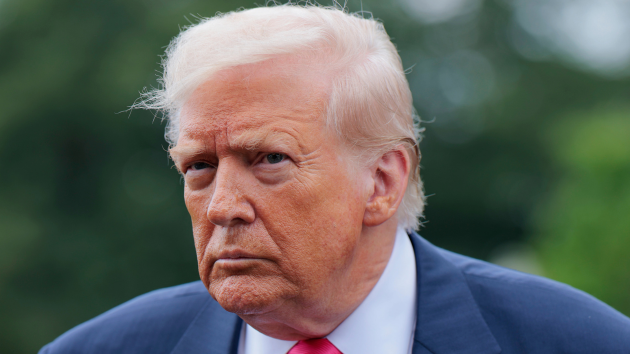
Trump says US hits 3 Iranian nuclear sites, plunging America into conflict

Trump says US hits 3 Iranian nuclear sites, plunging America into conflict
ABC News

The United States struck three nuclear sites in Iran on Saturday, plunging the U.S. into a pitched battle that has been waged over the past several days between Israel and Iran.

The full ramifications of the U.S. action, announced by President Donald Trump as “very successful” were not clear. Trump and his closest advisers had been weighing for days how to proceed, debating the costs of involvement and inaction. Democrats and some Republicans had already criticized the strike just minutes after it was announced.

Defense Secretary Pete Hegseth told reporters at the Pentagon on Sunday morning that the attack “devastated” and “obliterated” the Iranian nuclear program, describing the operation — named “Midnight Hammer” — as “bold and brilliant.” He added of Trump, “When this president speaks, the world should listen.”

Chairman of the Joint Chiefs of Staff Air Force Gen. Dan Caine also took part in the briefing, telling reporters that the seven B-2 bombers involved conducted the longest flight involving the B-2 fleet since 2001, refueling multiple times in-flight and linking up with escort fighter aircraft on their way east.

The bombers took off from Whiteman Air Force Base in Missouri, crossing the Atlantic Ocean and the Mediterranean Sea to reach the Middle East.

A total of 14 “bunker-buster” bombs known as MOPs — Massive Ordnance Penetrators — were dropped on the three sites at Fordo, Natanz and Isfahan, with the first two munitions dropped at 2 a.m., Caine said.

The attack also involved a U.S. submarine that launched more than two dozen Tomahawk land attack cruise missiles at what Caine called “key surface infrastructure targets” at Isfahan.

Iran did not deploy fighters or surface-to-air missiles during the mission, Caine said. “Throughout the mission, we maintained the element of surprise,” Caine said. “We are currently unaware of any shots fired at the U.S. strike package on the way in,” he added.

The chairman said the operation included deception and suppression tactics to ensure the safety of the U.S. aircraft. This included the use of decoys, “high speed suppression weapons” and “preemptive suppressing fires,” he said. More than 125 aircraft participated in the mission.

Caine said of extent of the damage caused by the U.S. strike, “I know that battle damage is of great interest. Final battle damage will take some time, but initial battle damage assessments indicate that all three sites sustained extremely severe damage and destruction.”

The 30,000-pound MOPs had never before been used in combat, but were expected to be able to tunnel 200 feet into the ground before exploding, a U.S. official said. The MOPs had been tested and were believed necessary to access underground nuclear sites like those at Fordo.

Hours earlier, sources told ABC News that B-2 stealth bombers, the only planes capable of carrying the MOP “bunker-buster” bombs, were headed to Guam. Caine said Sunday that those aircraft flew west to Guam as part of the Pentagon’s deception effort.

According to an Israeli official, the U.S. notified Israel ahead of the strike. Sources said House Speaker Mike Johnson was also briefed ahead of time. But other sources said that the full “Gang of Eight,”, including key Democrats, was not briefed until after the strikes. Some Democrats reacted harshly to the precarious military action in the volatile region, with New York Rep. Alexandria Ocasio-Cortez calling it “ground for impeachment” and that Trump was in in “grave violation of the Constitution” by not seeking congressional authorization.

‘Tremendous success,’ Trump says

Trump first announced the strikes on Truth Social, a move that surprised many given his statement on Friday that there was a “substantial chance” of negotiations.

“A full payload of BOMBS was dropped on the primary site, Fordow,” Trump posted on Truth Social. “All planes are safely on their way home.”

“There is not another military in the World that could have done this,” he added. “NOW IS THE TIME FOR PEACE! Thank you for your attention to this matter.”

Trump, who spoke to Israeli Prime Minister Benjamin Netanyahu, according a senior administration official, briefly addressed the nation.

“Our objective was the destruction of Iran’s nuclear enrichment capacity, and a stop to the nuclear threat posed by the world’s number one state sponsor of terror. Tonight, I can report to the world that the strikes were a spectacular military success,” Trump said in his address.

The president said that Iran’s key uranium enrichment sites were “completely and totally obliterated.”

And he warned Iran that it must now “make peace.”

“If they do not, future attacks will be far greater and a lot easier,” Trump said. Many targets inside Iran remain, Trump said. “But if peace does not come quickly, we will go after those other targets with precision, speed and skill.”

The Iranian Atomic Energy Organization condemned the strikes as “a heinous act in contradiction with the international law, especially the NPT.”

“This invasion occurred in violation of the international law, unfortunately amid indifference, and even companionship, of the IAEA,” the organization added.

Iran’s Foreign Minister Abbas Araghchi said in a post to X in the early hours of Sunday that the U.S. strikes on Iranian nuclear sites were “outrageous and will have everlasting consequences.”

“In accordance with the UN Charter and its provisions allowing a legitimate response in self-defense, Iran reserves all options to defend its sovereignty, interest and people,” he added.

Days of missile barrages

Israel and Iran have been exchanging missile barrages since Israel launched a preemptive strike against Iran’s nuclear program. Israeli officials said they felt Iran was getting too close to being able to produce a nuclear weapon.

Israel’s operation, “Rising Lion,” came after Israeli officials felt that Iran had enough nuclear material for several bombs, according to the Israel Defense Forces and an Israeli official familiar with the operation. In the initial preemptive attack, Israel hit the same three sites targeted by the U.S.

Several top Iranian nuclear scientists and the top general in the Islamic Revolutionary Guard Corps were killed in the operation, according to Iran.

In the wake of the Israeli strike on June 13, the two countries exchanged strikes daily, and Trump weighed whether or not to get involved. The U.S. was the only country with the plane — the B-2 — capable of carrying the MOP that could penetrate the mountain under which the Fordo centrifuge operation was hidden.

On Friday, Trump, who has long criticized U.S. involvement in overseas wars, said in a statement read by press secretary Karoline Leavitt that there was a “substantial chance” of negotiations. Trump gave the two-week time frame hoping Iran would “come to their senses.”

The White House said last week they felt that Iran had all of the materials it needed for a nuclear weapon and could produce one in a “couple of weeks.”

In March, Director of National Intelligence Tulsi Gabbard testified before Congress that Iran was not “building” a nuclear bomb.

The move, which many feared would draw the U.S. into a widening conflict, came just days after Trump said that he would make a decision about hitting Iran within two weeks.

Reactions pour in

The strikes sparked a range of reaction from American leaders.

House Speaker Mike Johnson lauded the move.

“The military operations in Iran should serve as a clear reminder to our adversaries and allies that President Trump means what he says,” Johnson wrote on X.

“The President gave Iran’s leader every opportunity to make a deal, but Iran refused to commit to a nuclear disarmament agreement,” he continued.

Similarly, Senate Majority Leader John Thune said in a statement that Iran “has rejected all diplomatic pathways to peace.”

“The mullahs’ misguided pursuit of nuclear weapons must be stopped,” said Thune. “As we take action tonight to ensure a nuclear weapon remains out of reach for Iran, I stand with President Trump and pray for the American troops and personnel in harm’s way.”

Sen. John Cornyn, R-Texas, said, “Trump made the courageous and correct decision to eliminate the Iranian nuclear threat.”

But Republican Thomas Massie wrote on X, “This is not Constitutional.” Democrats, including Sen. Bernie Sanders, joined the chorus.

“Not only is this news that I’ve heard this second alarming — all of you have just heard — but it is so grossly unconstitutional,” Sanders said at an event in Oklahoma. “All of you know that the only entity that can take this country to war is the U.S. Congress. The president does not have the right,” Sanders told the crowd at an event in Tulsa, Oklahoma.

Many within Trump’s own party were opposed to striking Iran and feared the consequences, including prominent MAGA podcaster and former Trump adviser Steve Bannon.

House Minority Leader Hakeem Jeffries said that Trump “misled” the country.

“President Trump misled the country about his intentions, failed to seek congressional authorization for the use of military force and risks American entanglement in a potentially disastrous war in the Middle East,” Jeffries said in a statement.

Fears at home and abroad

In the wake of the action, the NYPD deployed officers to sensitive locations and Israel tightened rules for public gatherings.

The Center for Internet Security, a nonpartisan think tank, in an assessment to law enforcement Friday, said, “Tehran is likely to leverage a combination of direct, proxy, and irregular/inspired forces to conduct physical, cyber, or terrorist attacks against U.S. interests both at home and abroad.”

The assessment said that in the wake of Israeli strikes, Iran would rely on “crude or escalatory tactics” and that the likelihood would increase with U.S. involvement.

ABC News’ Josh Margolin contributed to this report.

This is a developing story. Please check back for updates.

Copyright © 2025, ABC Audio. All rights reserved.

Congressional leaders react to Trump ordering attack on Iran

Congressional leaders react to Trump ordering attack on Iran
ABC News

Congressional leaders expressed surprise Saturday night about President Donald Trump’s announcement he had ordered a U.S. attacked on three Iranian nuclear sites, with some Republicans praising the move and some Democrats questioning the president’s authority.

South Carolina Republican Sen. Lindsey Graham, an Iran hawk, said in an X post moments after Trump announced the attack that it was “the right call.”

“The regime deserves it. Well done, President @realDonaldTrump,” he said. “To my fellow citizens: We have the best Air Force in the world. It makes me so proud.”

But the top Democrat in the House, Minority Leader Hakeem Jeffries, said Trump had “misled the country.”

“Donald Trump promised to bring peace to the Middle East. He has failed to deliver on that promise. The risk of war has now dramatically increased, and I pray for the safety of our troops in the region who have been put in harm’s way,” he said in a statement.

“President Trump misled the country about his intentions, failed to seek congressional authorization for the use of military force and risks American entanglement in a potentially disastrous war in the Middle East,” he continued.

“First, the Trump administration bears the heavy burden of explaining to the American people why this military action was undertaken. Second, Congress must be fully and immediately briefed in a classified setting. Third, Donald Trump shoulders complete and total responsibility for any adverse consequences that flow from his unilateral military action,” he added.

Independent Sen. Bernie Sanders of Vermont was on stage at one of his “Fight Oligarchy” events in Tulsa, Oklahoma, when he read a portion of President Trump’s post about the strikes to an audience that immediately began booing.

“Not only is this news this that I’ve heard this second alarming — all of you have just heard. But it is so grossly unconstitutional. All of you know that the only entity that can take this country to war is the U.S. Congress. the president does not have the right,” he added.

Rep. Rick Crawford, an Arkansas Republican and chair of the House Intelligence Committee, said in a statement that he was in touch with the White House before the attack and still monitoring the situation.

“As I have said multiple times recently, I regret that Iran has brought the world to this point. That said, I am thankful President Trump understood that the red line — articulated by Presidents of both parties for decades — was real,” he said.

At least one Republican in the House, however, questioned the president’s action without congressional authorization.

“This is not Constitutional,” GOP Rep. Tom Massie of Kentucky posted.

Rep. Jim Himes of Connecticut, the top Democrat on the House Intelligence Committee, posted on X, “According to the Constitution we are both sworn to defend, my attention to this matter comes BEFORE bombs fall. Full stop.”

“We need to immediately return to DC and vote on @RepThomasMassie and my War Powers Resolution to prevent America from being dragged into another endless Middle East war,” Rep. Ro Khanna, D-Calif., said in an X post.

House Speaker Mike Johnson was briefed ahead of the U.S. strikes on Iran’s nuclear sites, according to a source familiar with the matter.

Johnson was supposed to be in Israel Sunday to address the Knesset, but the trip was scrapped because of the ongoing conflict.

The speaker also put out a statement endorsing the strikes, calling it a “decisive” action that prevents terrorism.

Senate Majority Leader John Thune was also briefed ahead of the U.S. strikes on Iran, according to two sources familiar with the conversation.

GOP Sen. John Barrasso of Wyoming posted, “President @realDonaldTrump’s decision to strike Iran’s nuclear program is the right one. The greatest threat to the safety of the United States and the world is Iran with a nuclear weapon. God Bless our troops”

Texas Republican Sen. John Cornyn posted, “President Trump made the courageous and correct decision to eliminate the Iranian nuclear threat. God Bless the USA. Thank you to our extraordinary military and our indomitable @POTUS This is what leadership on the world stage looks like.”

Pennsylvania Democratic Sen. John Fetterman said on X, “As I’ve long maintained, this was the correct move by @POTUS. Iran is the world’s leading sponsor of terrorism and cannot have nuclear capabilities. I’m grateful for and salute the finest military in the world. 🇺🇸”

Democratic Rep. Alexandria Ocasio-Cortez of New York posted that President Trump’s strike on Iran constitutes “ground for impeachment,” saying he was “in grave violation of the Constitution” without first receiving congressional authorization.

“The President’s disastrous decision to bomb Iran without authorization is a grave violation of the Constitution and Congressional War Powers. He has impulsively risked launching a war that may ensnare us for generations. It is absolutely and clearly grounds for impeachment,” she posted.

Editor’s note: This article has been updated to note that Rep. Rick Crawford is from Arkansas and said he was in touch with the White House, not the president, before the attack.

Copyright © 2025, ABC Audio. All rights reserved.

MAGA star Steve Bannon plays outsized role in Trump’s Iran decision: Sources

MAGA star Steve Bannon plays outsized role in Trump’s Iran decision: Sources
Anna Moneymaker/Getty Images

(WASHINGTON) — By the time President Donald Trump and MAGA podcaster Steve Bannon sat down for lunch on Thursday, the president had already approved a plan on how the U.S. might attack an Iranian nuclear facility.

American diplomats and their family members were being offered military evacuations from Israel, while the military began moving aircraft and ships to the region.

The USS Nimitz – an aircraft carrier that can carry some 60 fighter jets – was set to arrive in the Middle East by the weekend with several smaller ships by its side.

Officials said the extraordinary show of force would be needed if Trump pulled the trigger on the military option – both to strike Iran’s deeply buried nuclear facility and to protect the some 40,000 U.S. troops who Iran and proxy militant groups could target for retaliation.

Trump had just emerged from a meeting with advisers in the Oval Office, where sources say he was warned: A U.S. attack on a key Iranian nuclear facility could be risky, even with a massive “bunker-buster” bomb believed to be able to penetrate some 200 feet through hardened earth.

The bomb, known as the Massive Ordnance Penetrator, had only been tested, but never used in a real-life tactical situation, experts say. And the exact nature of the concrete and metal protecting the Iranian nuclear site known as Fordo isn’t known, introducing the chance that a US strike would poke a hornet’s nest without destroying it.

Bannon, who had already spoken with the president by phone ahead of their lunch, thought all of it was a bad idea, according to several people close to him.

Sources say he arrived at the White House for his previously scheduled lunch with Trump armed with specific talking points: Israeli intelligence can’t be trusted, he planned to say, and the bunker-buster bomb might not work as planned. The precise risk to the U.S. troops in the Middle East, particularly the 2,500 in Iraq, also wasn’t clear if Iran retaliated, he would add.

A White House official insists that by the time Trump sat down with Bannon for lunch the president had already made a decision to hold off on a strike against Iran. That decision was relayed to White House Press Secretary Karoline Leavitt who then went to the podium, telling reporters the president would decide “whether or not to go” within two weeks.

Another senior administration official dismissed the idea that the “bunker-buster” bomb might not work.

“This Administration is supremely confident in its abilities to dismantle Iran’s nuclear program. No one should doubt what the U.S. military is capable of doing,” the official said.

Still, Bannon’s extraordinary access to Trump this week to discuss a major foreign policy decision like Iran is notable considering Bannon holds no official role in the military or at the State Department. Bannon declined to comment on his lunch with Trump, saying only Israeli Prime Minister Benjamin Netanyahu “needs to finish what they started.”

“Bannon in a lot of ways has been – day in and day out – delivering a very, very tough and clear message” against military action, said Curt Mills, executive director of The American Conservative, who also opposes military action in Iran.

That strategy, Mills said, has been key to countering other Trump loyalists who favor teaming up with Israel for a strike.

“You can call it infantile. You can call it democratic, or both,” Mills told ABC News. “This is a White House that is responding in real time to its coalition [which is] revolting to show it’s disgusted with the potential of war with Iran.”

At odds with Bannon’s viewpoint on Iran are other influential conservatives.

“Be all in, President Trump, in helping Israel eliminate the nuclear threat,” Sen. Lindsey Graham, R-South Carolina, told Fox News host Sean Hannity this week. “If we need to provide bombs to Israel, provide bombs. If we need to fly planes with Israel, do joint operations.”

According to one U.S. official, Defense Secretary Pete Hegseth mostly ceded the discussion to military commanders, including Gen. Erik Kurilla, commander of military forces in the Mideast, and Gen. Dan Caine, chairman of the Joint Chiefs of Staff, who have spent considerable time talking with Trump by phone and in person in recent weeks about his options with Iran and the risks involved, which can be extraordinarily complicated.

“Anybody will tell you the biggest threat to the region is a nuclear-armed Iran,” the official said. “No one wants Iran to have a nuke.”

Sean Parnell, chief Pentagon spokesperson, pushed back on the suggestion Hegseth hasn’t taken a lead role in the talks, calling it “completely false.” He said Hegseth speaks with Trump “multiple times a day each day,” and attended meetings with the president in the Situation Room.

“Secretary Hegseth is providing the leadership the Department of Defense and our Armed Forces need, and he will continue to work diligently in support of President Trump’s peace through strength agenda,” Parnell said.

Sources say Secretary of State Marco Rubio, who is also the president’s interim national security adviser, has been another constant presence at the president’s side during the discussions along with Trump’s Mideast adviser Steve Witkoff.

Once seen as one of Trump’s most hawkish cabinet members, Rubio espoused a hardline stance on Iran for years and warned last month that the country was now “a threshold nuclear weapons state.”

But since then, sources say, Rubio has become much more closely aligned with MAGA’s “America First,” noninterventionist stance, adding that he is acutely aware of the political repercussions that a direct attack on Iran could bring about.

U.S. and Israeli intelligence agree that Iran has been enriching uranium to a dangerously high concentration and could quickly amass enough of it to build several nuclear weapons.

But U.S. intelligence also cautions that its supreme leader, Ayatollah Ali Khamenei, hasn’t given the order to build those devices. The question now is how soon Iran could declare itself a nuclear power after that decision was made.

The uncertainty has drawn comparisons in MAGA circles to faulty intelligence in Iraq, which supporters of the movement blame for the lengthy war.

Tulsi Gabbard, Trump’s director of national intelligence, who has warned on social media of “warmongers,” told Congress this spring that “Iran is not building a nuclear weapon.” When asked Friday about that assessment, Trump responded that the intelligence community “is wrong” and “she’s wrong.” Gabbard later said her testimony was being taken out of context.

“America has intelligence that Iran is at the point that it can produce a nuclear weapon within weeks to months, if they decide to finalize the assembly. President Trump has been clear that can’t happen, and I agree,” she wrote in a post on Friday.

Sources say another factor could have played a role in Trump’s decision to hold off on striking Iran for now despite his insistence that Iran was close to a nuclear bomb. A third aircraft carrier, the USS Gerald R. Ford and its guided-missile destroyers are set to deploy early next week to head toward Europe, according to the Navy.

The carrier strike group needs time to travel before it could be in a position to help protect troops in theater should Trump opt to move ahead with the strike two weeks from now.

Officials caution that any success Bannon might have in pulling the president back from the brink of war could be brief. When asked on Friday by reporters if he would ask Israel to stop bombing Iran to enable diplomatic negotiations, Trump said probably not.

“If someone is winning, it’s a little bit harder to do than if someone is losing,” Trump said of the Israelis.

“But we’re ready, willing and able and have been speaking to Iran and we’ll see what happens. We’ll see what happens.”

ABC News’ Beatrice Peterson contributed to this report.

Editor’s note: This story has been corrected to reflect that Thursday’s meeting took place in the Oval Office, not the Situation Room.

Copyright © 2025, ABC Audio. All rights reserved.

Vance travels to LA amid immigration protests

Vance travels to LA amid immigration protests
Kayla Bartkowski/Getty Images

(WASHINGTON) — Vice President JD Vance is traveling to Los Angeles on Friday as protests against the Trump administration’s immigration crackdown continue to grip the city.

Vance, a Marine veteran, will tour a multi-agency Federal Joint Operations Center as well as a Federal Mobile Command Center. He will also meet with leadership and Marines before giving remarks, according to his office.

His visit comes as protests and law enforcement clash in Los Angeles over Immigration and Customs Enforcement’s raids and deportations — a key part of President Donald Trump’s agenda.

Another conflict in the city stems from Trump’s decision to deploy thousands of National Guardsmen and hundreds of Marines to LA against Democratic Gov. Gavin Newsom’s wishes.

A federal appeals court ruled on Thursday that Trump can keep the National Guard in Los Angeles for now — allowing the president to continue to use the military to quell protests against his deportation plans. Trump called the decision a “BIG WIN” in a social media post.

Earlier this month, Vance attacked the protests and used the events unfolding in LA to push for passage of the megabill that would advance Trump’s legislative agenda.

“Insurrectionists carrying foreign flags are attacking immigration enforcement officers, while one half of America’s political leadership has decided that border enforcement is evil,” Vance wrote in an X post. “Time to pass President Trump’s beautiful bill and further secure the border.”

Many Democrats have spoken out against the Trump administration’s immigration practices. Last week, California Sen. Alex Padilla, a Democrat, was forcibly removed from a Homeland Security Secretary Kristi Noem’s news conference on the topic after he said he was trying to ask a question.

Copyright © 2025, ABC Audio. All rights reserved.
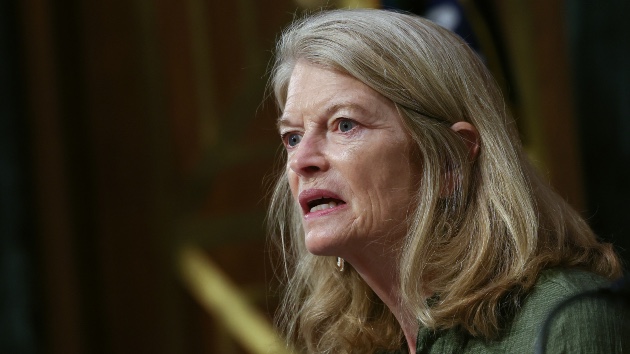
Trump faces mounting pressure at home and abroad as he weighs options on Iran

Trump faces mounting pressure at home and abroad as he weighs options on Iran
Win McNamee/Getty Images

(WASHINGTON) — The world is waiting for President Donald Trump’s decision on whether the U.S. will join Israel in military action to wipe out Tehran’s nuclear facilities.

As he weighs his options, Trump is being squeezed by different pressures from forces at home and abroad.

The president huddled with advisers in the Situation Room twice already this week, and was set to do so again on Thursday. He approved attack plans presented to him but was waiting to see if Iran would be willing to negotiate and hasn’t made a final decision, sources familiar with the matter told ABC News.

Moving ahead with military action would be a departure from Trump’s “America First” campaign pledge to keep the U.S. out of foreign entanglements. The possibility he may do so has prompted a sharp rift in his Republican base of supporters.

Hawkish members of the GOP are pushing for Trump to take aggressive action rather than pursue diplomacy. Republican Sen. Lindsey Graham, during an interview on Fox News earlier this week, said the U.S. needs to “finish the job” with Iran.

Meanwhile, hugely popular MAGA media figures like Tucker Carlson and Steve Bannon who helped propel Trump’s movement in 2016 and in 2024 are calling for restraint.

A poll out on Wednesday from Fox News found voters split on the issues Trump is facing. A majority of registered voters surveyed believe Israel’s strikes on Iran’s nuclear program would result in more danger. But a majority also believes Iran poses a national security threat to the U.S.

Trump, in response to the disagreement among his base, says his supporters are “more in love” with him than ever.

Democrats in Congress are raising their own concerns over Trump’s war power authority. Sen Tim Kaine, a Virginia Democrat, moved to limit Trump’s powers by introducing a floor resolution that would require approval from Congress before the U.S. could get involved in a military conflict with Iran.

On the world stage, Israeli Prime Minister Benjamin Netanyahu is trying to press Trump to join the fray, arguing it’s in America’s interest.

“Today, it’s Tel Aviv. Tomorrow, it’s New York. Look, I understand ‘America First’. I don’t understand ‘America Dead.’ That’s what these people want,” Netanyahu told ABC News Chief Washington Correspondent Jonathan Karl last week.

Netanyahu pointedly added, “We’re not just fighting our enemy. We’re fighting your enemy. For God’s sake, they chant, “death to Israel, death to America.” We’re simply on their way. And this could reach America soon.”

Iran, however, and its allies (Russia and China) are pushing against U.S. involvement. Tehran has warned any action would be met with retaliation.

Iran’s supreme leader, Ayatollah Ali Khamenei said on Wednesday: “The Americans should know, the Iranian nation will not surrender, and any intervention by the U.S. will be met with a forceful response and irreparable damage.”

“War will be met with war, bombing with bombing, and strike with strike. Iran will not submit to any demands or dictates,” Khamenei said.

Defense Secretary Pete Hegseth, testifying before a Senate subcommittee on Wednesday, said the U.S. military was “ready and prepared” to carry out any decision Trump will make.

Hegseth told lawmakers that Trump “has options and is informed of what those options might be, and what the ramifications of those options might be.” He also said that “maximum force protection at all times is being maintained” for American troops in the region.

Trump offered a clue into his decision-making process as he took reporter questions in the Oval Office on Wednesday afternoon.

“I like to make the final decision one second before it’s due, because things change, especially with war,” the president said.

Copyright © 2025, ABC Audio. All rights reserved.
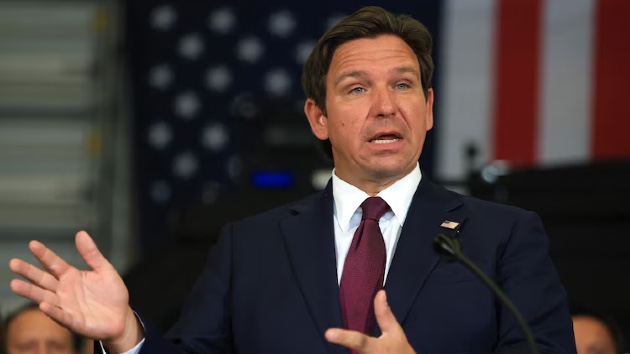
Republican senators line up behind Trump on Israel-Iran conflict

Republican senators line up behind Trump on Israel-Iran conflict
U.S. Senator Lindsay Graham/ Viktor Kovalchuk/Global Images Ukraine via Getty Images

(WASHINGTON) — Senate Republicans largely lined up behind President Donald Trump’s handling of the conflict between Iran and Israel and said they trusted Trump’s judgment on whether the United States ought to involve itself.

Sen. Lindsey Graham, a defense hawk who said he spoke to Trump last night, endorsed the use of force if diplomatic efforts fail.

“Either you want them to have a nuclear weapon, or you don’t,” Graham said. “And if you don’t, if diplomacy fails, you use force.”

Most Republicans said that they agreed with Trump that Iran cannot have a nuclear weapon.

“I think this is something on which the entire world can agree: Iran cannot have a nuclear weapon, or the ability to deliver a nuclear warhead, period,” Sen. John Kennedy said.

“American foreign policy is always a balance between … between values and interests. The value here is obvious to everyone. Iran cannot have a bomb. It’s just unthinkable, and I support the president unconditionally on that,” Kennedy said.

Sen. Mike Rounds said there is evidence that Iran was getting closer to building a nuclear weapon.

“If Israel has a plan which is appropriate to take care of the problem, then we don’t need to be there, but we should never take or eliminate options that are available to the president in exercising his authority as the commander-in-chief,” Rounds said.
Sen. Kevin Cramer said he would support Trump’s decision if he decided to enter the conflict, but would also support a decision to instead “assist Israel in getting the job done.”

“Iran’s made that really crystal clear. They pledged to wipe out the United States of America. I prefer not to let them get here,” Cramer said. “I prefer preemptive prevention of war rather than having to end one after it gets to our soil, right?”

Cramer said Trump has been handling the crisis “brilliantly”and applauded Trump’s suggestion that he may or may not get involved.

“I think that’s pretty honest, right? I may or I may not. I think that that the element of of surprise, if you will, is maintained by an answer that doesn’t tell you what he’s going to do,” he said. “It’d be crazy for the president to give a warning, if you will, of what he may do.”

Both Republicans and Democrats said they would like Congress to have a role in determining whether the U.S. gets involved in the conflict, but Republicans were much less forceful.

“I would love to see Congress have a role, but we certainly don’t have time in the midst of what we all see going on for Congress to sit and cogitate for six or eight months,” Kennedy said.

Democrats, on the other hand, said Trump should get Congress’ approval before taking any military action.

“At some point, the president must come to Congress if there is to be active, kinetic military involvement that constitutes war. That’s the Constitution, Sen. Richard Blumenthal said. “And I believe that the president has to face accountability at some point, for the use of military force in combat, in a war. And the question is, when that point is.”

Other Democrats said the U.S. should be trying to de-escalate the conflict rather than inflame it.

“We don’t need to escalate in Iran. That doesn’t make anyone in the Middle East safer, and it certainly doesn’t make the United States any safer right now, Sen. Elizabeth Warren said. “The role of the United States should be to help de-escalate, to push for negotiations, not to try to set more things afire.”

Copyright © 2025, ABC Audio. All rights reserved.
Hegseth spars with Democratic senators during Congressional hearing

Hegseth spars with Democratic senators during Congressional hearing
ABC News

(WASHINGTON) — Defense Secretary Pete Hegseth sparred with some Democratic senators as he was grilled at a congressional hearing Wednesday about the Trump administration’s latest military actions.

The former Fox News host, who faced a contentious confirmation hearing, got into a heated exchange before the Senate Armed Services Committee with Sen. Elissa Slotkin, D-Mich., who questioned him over the military’s authority to arrest and detain protesters.

“It’s sort of amusing the extent to which the speculation is out there,” Hegseth said.

“So what is the order? Then list it out for us. List it out for us. Be a man. Did you authorize them to detain or arrest?” Slotkin, a former CIA analyst who served in Iraq, said.

The senator questioned Hegseth about the possibility of an order given for the military to use lethal force against protesters.

“I’m just asking the question. Don’t laugh,” Slotkin said after Hegseth brushed off the question.

“What is that based on?” Hegseth responded. “What evidence do you have that that order has ever been given?”

Slotkin responded that his predecessor, Mark Esper, didn’t accept such an order during the first administration.

“He had more guts and balls than you because he said, I’m not going to send in a uniformed military to do something that I know in my gut isn’t right … You’re pooh-poohing this,” the senator said.

Hegseth testified that there was “zero indication that an order was given to shoot protesters and that has not happened.”

But when she asked whether troops could use force against unarmed civilians, Hegseth wouldn’t say.

“I’d be careful what you read in books and believing it. Except for the Bible,” he said.

Hegseth responded similarly when questioned by Sen. Jacky Rosen, D-Ariz, earlier in the hearing.

Rosen asked about the firings of several top national security officials, including the director of the National Security Agency, Gen. Timothy Haugh, that were allegedly done at the request of far-right social media influencer Laura Loomer.

“She’s been denounced even by Republicans, and the idea is that any leaders within our agency responsible for our nation’s security, somebody would be dismissed based on the advice of a social media influencer,” Rosen said.

“I don’t discuss who I talk about anything with, but ultimately, this is my decision and he serves at the pleasure of the president and that’s why he’s no longer there,” he said.

“Do you believe it’s appropriate for social media to influence personnel decisions in your department, yes or no?” Rosen asked. Time then expired. The chairman left a moment for Hegseth to answer the question, as witnesses often do after a lawmaker has asked their final question.

Hegseth took a beat, and said, “I believe your time is up.”

Rosen pushed back.

“Oh, it is not up to you to tell me when my time is up. I am going to say, Mr. Secretary, you’re either feckless or complicit. You’re not in control of your department,” she replied. “You [are] unserious. … I yield back and I don’t appreciate the smirk, sir. You are the secretary of defense.”

Copyright © 2025, ABC Audio. All rights reserved.
Trump on his ‘unconditional surrender’ demand to Iran: ‘I’ve had it’

Trump on his ‘unconditional surrender’ demand to Iran: ‘I’ve had it’
Tasos Katopodis/Getty Images

(WASHINGTON) — President Donald Trump on Wednesday was not revealing what action he might take related to Iran after multiple sources said he’s been presented with a range of options by his national security team.

Asked by reporters on the South Lawn Wednesday morning, Trump said he wasn’t ruling out using U.S. military assets to strike Iran’s nuclear facilities.

“I may do it. I may not do it. I mean, nobody knows what I’m going to do,” he said.

Trump met with his advisers in the Situation Room on Tuesday afternoon after departing the Group of Seven summit in Canada early, citing tensions in the Middle East.

On Tuesday, Trump had demanded Iran’s “unconditional surrender” in a social media post. Asked on Wednesday to elaborate what that means, Trump said: “That means I’ve had it, okay. I’ve had it. I give up.”

“No more. Then we go blow up all the, you know, all the nuclear stuff that’s all over the place there,” Trump said.

The president said his patience has “already run out” with Iran, and that Iran wants to negotiate but be said it may be too late.

His message for the regime’s Supreme Leader Ali Khamenei? “I say good luck,” Trump said.

The president also sought to push back on prominent MAGA voices who’ve been outspoken about the U.S. not getting involved in the war between Israel and Iran.

“My supporters are more in love with me today, and I’m in love with them more than they were even at election time,” Trump said.

This is a developing story. Please check back for updates.

Copyright © 2025, ABC Audio. All rights reserved.

Supreme Court upholds a state law banning some gender-affirming care for trans kids

Supreme Court upholds a state law banning some gender-affirming care for trans kids
Grant Faint/Getty Images

(WASHINGTON) — The Supreme Court on Wednesday upheld a Tennessee law banning certain gender-affirming care treatment for minors.

The court ruled 6-3, with Chief Justice John Roberts authoring the opinion. The court’s three liberal justices dissented.

The decision in the case, U.S. v. Skrmetti, is one of the most significant LGBTQ rulings to come from the Supreme Court and marks the first time the justices have weighed in on an anti-trans state law.

“This case carries with it the weight of fierce scientific and policy debates about the safety, efficacy, and propriety of medical treatments in an evolving field,” Roberts wrote. “The voices in these debates raise sincere concerns; the implications for all are profound.”

The chief justice wrote that the court’s majority found the Tennessee law did not violate the equal protection guarantee of the Fourteenth Amendment, and it was leaving “questions regarding its policy to the people, their elected representatives, and the democratic process.”

“The Equal Protection Clause does not resolve these disagreements. Nor does it afford us license to decide them as we see best. Our role is not “to judge the wisdom, fairness, or logic” of the law before us … but only to ensure that it does not violate the equal protection guarantee of the Fourteenth Amendment,” he wrote.

Tennessee is one of 24 states with laws in effect banning all gender-affirming care for transgender minors.

There are 1.6 million Americans over 13 who identify as transgender, including an estimated 300,000 ages 13-17. A third of those people live in states that ban gender-affirming care, according to the Williams Institute at UCLA.

Roberts rejected arguments by a group of transgender teenagers and their parents that denying the kids access to puberty blockers and hormone therapy amounts to sex discrimination.

He said the playing field is level for all under Tennessee’s law, SB1: “No minor may be administered puberty blockers or hormone therapy to treat gender dysphoria,” he wrote.

Justice Sonia Sotomayor read her dissent from the bench, sharply disagreeing with the majority’s ruling.

The decision “invites legislatures to engage in discrimination,” she wrote. It will “authorize untold harm to transgender children and parents and families who love them.”

“By retreating from meaningful judicial review exactly where it matters most, the Court abandons transgender children and their families to political whims. In sadness, I dissent,” she wrote.

ACLU attorney Chase Strangio was the first openly transgender person to argue a case before the Supreme Court in Skrmetti. He called the decision a “devastating loss.”

“Though this is a painful setback, it does not mean that transgender people and our allies are left with no options to defend our freedom, our health care, or our lives,” Strangio said. “The Court left undisturbed Supreme Court and lower court precedent that other examples of discrimination against transgender people are unlawful. We are as determined as ever to fight for the dignity and equality of every transgender person and we will continue to do so with defiant strength, a restless resolve, and a lasting commitment to our families, our communities, and the freedom we all deserve.”

This is a developing story. Please check back for updates.

Copyright © 2025, ABC Audio. All rights reserved.