(NEW YORK) — The top federal prosecutor in Manhattan has agreed to step aside, clearing the way for President Donald Trump on Tuesday to install his nominee as interim United States attorney for the Southern District of New York, yet another shake-up for the nation’s most prominent federal prosecutor’s office
Matthew Podolsky, who has agreed to step down, took over for Danielle Sassoon, who in February resigned in protest of the Justice Department’s order to drop corruption charges against New York Mayor Eric Adams.
Sassoon had been named interim U.S. attorney by Trump when the president fired Edward Kim, who assumed the role during the change in administrations.
Trump’s nominee, Jay Clayton, will serve in an interim capacity for up to four months until confirmed by the Senate or appointed by federal judges in Manhattan. Clayton was the head of the Securities and Exchange Commission during Trump’s first term in office.
Before leading the SEC, Clayton was a partner at New York law firm Sullivan & Cromwell and worked with Wall Street firms and other corporations to navigate federal regulations.
Trump tried to install Clayton during his first term but then-U.S. Attorney Geoffrey Berman refused to resign until then-Attorney General Bill Barr agreed to replace him with a trusted deputy.
Senate Democratic leader Chuck Schumer recently signaled his intent to block Clayton’s nomination over frustration with Trump, who he said “has no fidelity to the law.”
“Donald Trump has made clear he has no fidelity to the law and intends to use the Justice Department, the U.S. Attorney offices and law enforcement as weapons to go after his perceived enemies,” Schumer said in a statement last week. “Such blatant and depraved political motivations are deeply corrosive to the rule of law and leaves me deeply skeptical of the Donald Trump’s intentions for these important positions. For that reason, I will not return the blue slip for the U.S. Attorney nominees for the Southern and Eastern Districts of New York.”
By naming Clayton as his interim choice, Trump is likely able to get his way without putting Clayton through a confirmation process.
After 120 days, judges in the Southern District of New York can vote to appoint Clayton to the job until there’s a confirmed nominee, and Trump could simply name no one else.
(WASHINGTON) — The Trump administration’s ban on transgender service members faces its next legal test Tuesday when a federal appeals court considers the legality of the policy.
A group of 32 transgender service members and recruits sued the Trump administration over the policy in January, and at least three different federal judges have since blocked the ban from taking effect.
“The Court’s opinion is long, but its premise is simple. In the self-evident truth that ‘all people are created equal, all means all. Nothing more. And certainly nothing less,” Judge Ana Reyes wrote in a ruling last month blocking the policy.
The Trump administration has asked the DC Circuit Court of Appeals to overrule Judge Reyes’ decision, arguing that gender dysphoria “limits deployability and imposes additional costs on the military” and is “not compatible with military readiness and lethality.”
Lawyers with the Department of Justice have argued that the courts should defer to military leadership about the best way to run the armed services.
“Plaintiffs offer no sound basis for concluding that the line the military has once again drawn falls outside constitutional bounds,” DOJ lawyers wrote.
But lawyers representing the transgender service members have pushed back on the Pentagon’s claim, arguing the Trump administration has provided no evidence of the harm stemming from the policy.
They argued that allowing the policy to take effect would “trigger an explosive and harmful trip wire, causing reputational, professional, and constitutional harm that can never be fully undone.”
The appeal will be considered by a federal judiciary reshaped by the Trump administration, with two of the three judges hearing Tuesday’s appeal not only nominated by Trump but also previously served in his first administration.
(WASHINGTON) — Do parents of public school children have a constitutional right to opt-out their kids from classroom lessons involving storybooks that feature LGBTQ themes or characters?
The Supreme Court will tackle that question Tuesday in a closely watched First Amendment case that comes as the Trump administration moves to empower parents and root out diversity and inclusion initiatives across the U.S. education system.
A group of parents, including Muslims, Orthodox Ukrainians, Christians and Jews from Montgomery County, Maryland, claim constitutional protections for religious exercise mean they must have an opportunity to exempt their children from any instruction on gender or sexuality that may be counter to teachings of faith.
“We’re under no illusion, they’ll learn about these things, but in the formative years, what ultimately we could not agree with [Montgomery County Public Schools], is where inclusion stopped and indoctrination started,” said Wael Elkoshairi, who is homeschooling his fourth-grade daughter because he says the books infringe on his Muslim faith.
The school board, made up of locally elected representatives, says the purpose of education is to expose children to a broad mix of people and ideas — and that the Constitution does not guarantee students the right to skip lessons inconsistent with their beliefs.
Lower courts sided with the board. The justices will now take a closer look at whether the county’s refusal to grant an opt-out to parents illegally burdens their religious rights.
“The case is a good illustration of the fact that public schools are at ground zero in the culture wars,” said Jim Walsh, a Texas lawyer who represents school boards and is a member of the National School Attorneys Association.
“We all want the school to reflect our values, but we don’t agree on our values. And certainly issues about same-sex marriage, the rights of lesbians and gays, are right at the center of that,” he said.
Starting in 2022, Montgomery County — one of the most diverse counties in the country — introduced a series of LGBTQ-themed storybooks for reading in elementary school classrooms under a statewide mandate to be more inclusive of the diversity of families and children attending the schools.
The local school board, which closely consulted with educators in approving the curriculum, maintains that the books do not take a side on issues of gender or sexuality and that teachers are instructed not to teach or enforce any particular view.
Among the illustrated titles is “Uncle Bobby’s Wedding” by Sarah Brannen, about a young girl who worries her close relationship with a beloved uncle will change after he marries his male fiance. “Prince & Knight” by Daniel Haack presents a fairy-tale narrative about a blossoming romance between the main characters after a dramatic rescue from a dragon.
“Nothing in my book is any different than most fairy tales that have some sort of romance at the center of it,” said Haack. “Nothing different than “Sleeping Beauty” or “Cinderella” or any of those.”
In the book “Intersection Allies,” a group of three sociologist authors set out to simplify complex ideas about identity, including what it means to be nonbinary.
“We wrote this to affirm kids who are left out of the stories that we often tell,” said LaToya Council, one of the authors. “This book is not saying that, you know, your child has to choose to be transgender. It’s saying respect someone who is trans and their ability to seek spaces that are comfortable for them.”
Chelsea Johnson, another of the book’s authors, insisted nothing in the text asks anyone to change their beliefs. “Schools and parents and communities are partners with each other and helping kids make sense of the world and we don’t have to opt our kids out to do that.”
Montgomery County guidelines advise educators to make the storybooks available for students to read on their own, to read aloud, or share in reading groups. Teachers are instructed not to advance a particular viewpoint about sexuality or gender with respect to the characters.
At first, during the 2022-2023 school year, the board allowed parents to opt-out their kids from any lessons involving the books, but it later changed course, denying any opt-outs.
“When I was in school, I was opted-out of sex ed because I wasn’t ready, and my parents didn’t feel it was appropriate for the teachers to talk about it, and it didn’t hurt anyone,” said Billy Moges, a mother of three and devout Christian, who pulled her kids from Montgomery County schools because of the books.
“The problem with some of these books, though, as well, is they were love stories, so it was not just exposure to LGBTQ characters. These were love stories,” said Elkoshairi.
School officials explained in court documents that administering an opt-out program became too cumbersome to manage, led to higher rates of student absenteeism, and was ultimately inconsistent with an educational mission of supporting all types of families.
“These books are representing the community that is surrounding these children,” said Emily McGowan, who mothers second- and sixth-graders with her wife Sharon in Montgomery County. “You cannot deny that we exist. We live here, our kids go to school here.”
The McGowans say opt-outs over LGBTQ stories harm the children whose family lives are represented in the books.
“The idea that 10 of their classmates get to get up and walk out because there’s two mommies in this book — What is the message that’s sent to our kid who has two mommies?” said Sharon McGowan. “That something is so offensive about this that they get to walk out and maybe they even get to go to the playground and have extra play time?”
Nearly every state gives parents the ability to opt-out their children from sex education classes but opt-outs for LGBTQ issues vary widely by community and are often decided by board members elected by local parents, Walsh said.
“We can all understand parents having strong feelings about when and how is my child going to be taught about sexual issues. So, there are more opt-outs about this than anything else. But if the Supreme Court rules in favor of the plaintiffs in this case, it’s not gonna stop with just sex and gender issues. It will cover a wide variety of things that parents may have objections to,” he said.
The case comes as the Trump administration has vowed to give more control over education to local leaders and communities. But even in places where school boards are choosing to prioritize diversity, equity and inclusion in their curriculum — like Montgomery County — some conservatives are still pushing to override policies.
“The school board has decided to disrupt the thinking of their children on an area that has long been understood as going to the core of parental authority for their children, on sex and gender,” said Will Haun, a senior attorney at Becket Fund for Religious Liberty, which is representing the plaintiffs before the Supreme Court. “In that area, the First Amendment absolutely protects the parents.”
“The democratic process is important, and that’s where we debate curriculum,” Haun added, “but here we’re talking about restoring an opt-out right, which is not a challenge to the curriculum.”
Wael Elkoshairi insists he harbors no ill will toward LGBTQ families and says he isn’t calling for a ban on any books. But he hopes the high court — as a matter of faith — will give parents greater control.
“When people have differences of opinion on certain things, accommodations work well to relieve everybody, and we move on,” Elkosairi said.
As for the McGowans, they are hoping the court’s conservative majority holds the line.
“The fact that the Court took the case at all — I don’t have reason to believe that they took the case to affirm the importance of inclusion in the public schools,” said Sharon McGowan. “If harm is done by their decision, we will figure out what we need to do at a personal and a community level to mitigate that harm.”
A decision in the case is expected by the end of June.
(WASHINGTON) — Department of Homeland Security Seceretary Kristi Noem’s purse was stolen at a Washington restaurant over the weekend, according to a DHS official.
Noem had $3,000 in cash in her purse, along with her passport, makeup bag, DHS access card, apartment key and other items.
A DHS official said the secretary had the cash because her family was in town and she was treating them to Easter festivities.
A man wearing a mask walked by the secretary’s table and snatched the purse. The Secret Service is investigating, according to the DHS official.
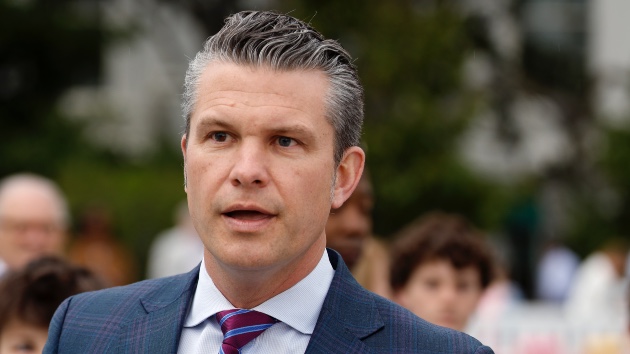
(WASHINGTON) — Defense Secretary Pete Hegseth on Monday reacted to the revelation he discussed details about an imminent attack on Houthis in Yemen in March in a second Signal group chat — one that included his wife and brother.
Speaking to reporters at the White House Easter Egg Roll, which he attended with his family, Hegseth attacked those he said were “disgruntled” former employees and the media for what he said was “anonymous smears.”
“I have spoken with the president and we are going to continue fighting. On the same page all the way,” Hegseth said.
President Donald Trump defended Hegseth and said he still has “great confidence” in him as he took reporter questions at the White House celebration.
“Here we go again. Just a waste of time. He is doing a great job,” Trump said of Hegseth.
“Ask the Houthis how he’s doing,” the president added.
Sources told ABC News that Hegseth shared information about a forthcoming attack on Houthi rebels in Yemen in a Signal message chat that included his wife Jennifer, who does not work for the Defense Department, as well as his brother and his personal lawyer.
Hegseth did not explicitly deny the report as he was asked to respond to the reports on Monday.
“They take anonymous sources from disgruntled former employees, and then they try to slash and burn people and ruin their reputations. Not going to work with me, because we’re changing the Defense Department, putting the Pentagon back in the hands of war fighters and anonymous smears from disgruntled former employees on old news doesn’t matter,” he said.
The second Signal chat reportedly occurred around the same time that top Trump officials, including Hegseth, discussed a strike on Houthis over the commercially-available app. That text chain came to light because inadvertently added to the chat was The Atlantic’s Editor-in-Chief Jeffrey Goldberg. The Pentagon’s independent inspector general is currently reviewing Hegseth’s use of Signal to discuss military actions.
White House press secretary Karoline Leavitt, pressed on the latest revelation on “Fox & Friends” on Monday, said “the president stands strongly behind Secretary Hegseth” and said Hegseth “is doing a phenomenal job leading the Pentagon.”
The use of Signal to discuss sensitive military operations may complicate ongoing investigations into potential leaks involving the first known group chat, which included top aides and other members of Hegseth’s team — at least three of whom have been since fired in relation to the inquiry.
Those officials — Dan Caldwell, Colin Carroll and Darin Selnick — have since spoken out against what they say are baseless accusations against them.
“At this time, we still have not been told what exactly we were investigated for, if there is still an active investigation, or if there was even a real investigation of ‘leaks’ to begin with,” they said in a joint statement on X on April 19.
Leavitt, when responding to the Hegseth news on Monday, also sought to blame former employees as she defended the defense secretary.
“The administration and the president have taken a very strong stance against anyone who leaks, especially sensitive and classified information that can put our troops and our war fighters at risk,” Leavitt said on Fox. “And you’ve seen the secretary has taken very strong action to rein in the leakers at the Pentagon and he will continue to do so I’m sure.”
ABC News’ Luis Martinez and Kelsey Walsh contributed to this report.
(WASHINGTON) — Defense Secretary Pete Hegseth on Monday reacted to the revelation he discussed details about an imminent attack on Houthis in Yemen in March in a second Signal group chat — one that included his wife and brother.
Speaking to reporters at the White House Easter Egg Roll, which he attended with his family, Hegseth attacked those he said were “disgruntled” former employees and the media for what he said was “anonymous smears.”
“I have spoken with the president and we are going to continue fighting. On the same page all the way,” Hegseth said.
Sources told ABC News that Hegseth shared information about a forthcoming attack on Houthi rebels in Yemen in a Signal message chat that included his wife Jennifer, who does not work for the Defense Department, as well as his brother and his personal lawyer.
The chat reportedly occurred around the same time that top Trump officials, including Hegseth, discussed a strike on Houthis over the commercially-available app. That text chain came to light because inadvertently added to the chat was The Atlantic’s editor-in-chief Jeffrey Goldberg. The Pentagon’s independent inspector general is currently reviewing Hegseth’s use of Signal to discuss military actions.
White House press secretary Karoline Leavitt, pressed on the latest revelation on “Fox & Friends” on Monday, said “the president stands strongly behind Secretary Hegseth” and said Hegseth “is doing a phenomenal job leading the Pentagon.”
The use of Signal to discuss sensitive military operations may complicate ongoing investigations into potential leaks involving the first known group chat, which included top aides and other members of Hegseth’s team — at least three of whom have been since fired in relation to the inquiry.
Those officials — Dan Caldwell, Colin Carroll and Darin Selnick — have since spoken out against what they say are baseless accusations against them.
“At this time, we still have not been told what exactly we were investigated for, if there is still an active investigation, or if there was even a real investigation of ‘leaks’ to begin with,” they said in a joint statement on X on April 19.
This is a developing story. Please check back for updates.
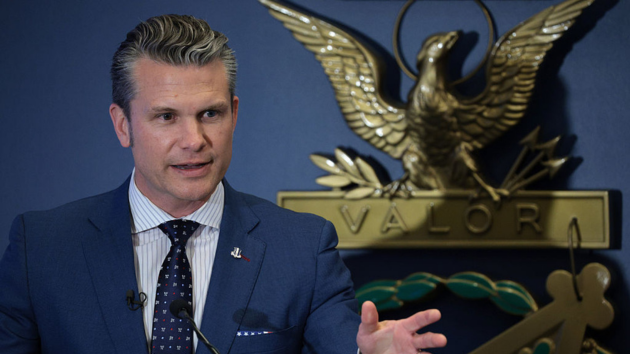
(WASHINGTON) — Department of Defense Secretary Pete Hegseth shared details about an imminent attack on Houthis in Yemen in March in a second group chat using the messaging app Signal that included his wife, his brother and his personal lawyer, two sources familiar with the contents of the chat told ABC News.
Those details shared in the second chat included the flight schedules for the F/A-18 Hornets involved in the pending attack on Houthi positions, according to the officials. The New York Times was first to report Hegseth’s sharing of the details in a second Signal group.
The sharing of the details reportedly occurred around the same time in mid-March when key members of President Donald Trump’s National Security Council, including Hegseth, inadvertently shared details about the March 15 missile strike in Yemen with the editor-in-chief of The Atlantic.
Much of the same content was shared in the second encrypted chat with family members and others — a chat group that Hegseth had created on his personal phone during his confirmation process, the two officials told ABC News.
Hegseth’s wife, Jennifer Hegseth, does not work for the Defense Department.
His brother, Phil Hegseth, works as a senior adviser at the Department of Homeland Security and is detailed to the Defense Department. Tim Parlatore, Hegseth’s personal attorney, works at the Pentagon as a Navy reservist assigned to Hegseth’s office.
Sean Parnell, chief spokesperson for the Pentagon, responded to reports of the second chat in a statement on X on Sunday night saying in part, “Another day, another old story—back from the dead. The Trump-hating media continues to be obsessed with destroying anyone committed to President Trump’s agenda.”
The statement continued, “There was no classified information in any Signal chat, no matter how many ways they try to write the story. What is true is that the Office of the Secretary of Defense is continuing to become stronger and more efficient in executing President Trump’s agenda.”
Sources confirmed with ABC News that the second known Signal chat was originally created to discuss scheduling and administrative information.
The Pentagon’s independent inspector general is evaluating Hegseth’s use of the Signal app “to determine the extent to which the Secretary of Defense and other DoD personnel complied with DoD policies and procedures” to conduct official business, the acting inspector general, Steven Stebbins, said in a notification letter to Hegseth.
The Trump administration has repeatedly refuted the idea that any classified information was shared in the first known chat thread; however, several former U.S. officials have contended that the sharing of such information over unapproved channels could at a minimum put troops overseas at risk.
Its use to divulge sensitive military operations may complicate ongoing investigations into potential leaks involving the first known group chat, which included top aides and other members of Pete Hegseth’s team — at least three of whom have been since fired in relation to the inquiry.
Those officials — Dan Caldwell, Colin Carroll and Darin Selnick — have since spoken out against what they say are baseless accusations against them.
“At this time, we still have not been told what exactly we were investigated for, if there is still an active investigation, or if there was even a real investigation of ‘leaks’ to begin with,” they said in a joint statement on X on April 19.
John Ullyot, the Pentagon’s former top spokesman, on Sunday published an opinion piece in Politico where he described “a month of total chaos at the Pentagon.”
“From leaks of sensitive operational plans to mass firings, the dysfunction is now a major distraction for the president — who deserves better from his senior leadership,” he wrote.
“Hegseth is now presiding over a strange and baffling purge that has left him without his two closest advisers of over a decade — Caldwell and Selnick — and without chiefs of staff for him and his deputy,” Ullyot wrote.
“Even strong backers of the secretary like me must admit: The last month has been a full-blown meltdown at the Pentagon — and it’s becoming a real problem for the administration,” he added.
“President Donald Trump has a strong record of holding his top officials to account,” wrote Ullyot. “Given that, it’s hard to see Defense Secretary Pete Hegseth remaining in his role for much longer.”
Ullyot left the Pentagon late last week after having been sidelined after he controversially defended the removal of Jackie Robinson information from a DOD website.
He said earlier this week that he had left the Pentagon on his own accord, while a senior defense official told ABC News that Ullyot was asked to resign.
The American Civil Liberties Union’s lead attorney described to ABC News the rapid pace of legal action that led to the extraordinary ruling from the Supreme Court early Saturday morning that blocks the Trump administration from deporting Venezuelans to a prison in El Salvador.
Lee Gelernt said the ACLU began to learn Thursday night that the migrants could be moved from a detention center in Texas as early as that night, so they filed in the middle of the night.
“We just kept pushing and ended up filing in multiple courts, and ultimately the Supreme Court, at 1 a.m. on Friday night, early Saturday morning, stopped the removals,” Gelernt said in an interview with ABC News. “But it was touch and go for a long time.”
The ACLU says migrants held in the Texas detention center received a notice and were told they’d be removed in 12 to 24 hours.
“Under the Alien Enemies Act, you have been determined to be an alien enemy subject to apprehension, restraint and removal from the United States,” the notice reads, which was filed in court by the ACLU.
The document is written in English and says migrants can make a phone call, although it does say the notice will be read to the individual in a language they understand. It did not include any method to contest the order.
“The government is providing only 12 to 24 hours with a notice that was served in English that does not explain that people have the right to contest, nor tell them how to do it or how much time they have to do it,” Gelernt said. “There is no argument whatsoever that these notice procedures comply with the Supreme Court’s directive.”
The girlfriend of one of the migrants held in the detention center told ABC News he received a document that appeared to be the same one that the ACLU filed in court. She says he told her it was hard to understand.
She added that he said he and a group of detainees were taken to an airport near the facility on Friday and they were about to be deported. Then, he told her, once they arrived, an officer informed the group they were being sent back to the center and would not board the plane.
Gelernt said the stakes couldn’t be any higher and that Kilmar Abrego Garcia — the Salvadoran native living Maryland who was deported in March to a mega-prison in his home country — isn’t the only person who was “erroneously” sent to the notorious CECOT mega-prison in El Salvador.
“They’re unilaterally claiming that people are members of a gang, but not giving them the opportunity to go into court and show they’re not. And we know that multiple, multiple people have been erroneously tagged as members of this gang, but once they get to the El Salvadoran prison, they may never get out for the rest of their life,” Gelernt said.
“It’s critical that we give them hearings before we take such an extraordinary action,” he added.
The American Civil Liberties Union’s lead attorney described to ABC News the rapid pace of legal action that led to the extraordinary ruling from the Supreme Court early Saturday morning that blocks the Trump administration from deporting Venezuelans to a prison in El Salvador.
Lee Gelernt said the ACLU began to learn Thursday night that the migrants could be moved from a detention center in Texas as early as that night, so they filed in the middle of the night.
“We just kept pushing and ended up filing in multiple courts, and ultimately the Supreme Court, at 1 a.m. on Friday night, early Saturday morning, stopped the removals,” Gelernt said in an interview with ABC News. “But it was touch and go for a long time.”
The ACLU says migrants held in the Texas detention center received a notice and were told they’d be removed in 12 to 24 hours.
“Under the Alien Enemies Act, you have been determined to be an alien enemy subject to apprehension, restraint and removal from the United States,” the notice reads, which was filed in court by the ACLU.
The document is written in English and says migrants can make a phone call, although it does say the notice will be read to the individual in a language they understand. It did not include any method to contest the order.
“The government is providing only 12 to 24 hours with a notice that was served in English that does not explain that people have the right to contest, nor tell them how to do it or how much time they have to do it,” Gelernt said. “There is no argument whatsoever that these notice procedures comply with the Supreme Court’s directive.”
The girlfriend of one of the migrants held in the detention center told ABC News he received a document that appeared to be the same one that the ACLU filed in court. She says he told her it was hard to understand.
She added that he said he and a group of detainees were taken to an airport near the facility on Friday and they were about to be deported. Then, he told her, once they arrived, an officer informed the group they were being sent back to the center and would not board the plane.
Gelernt said the stakes couldn’t be any higher and that Kilmar Abrego Garcia — the Salvadoran native living Maryland who was deported in March to a mega-prison in his home country — isn’t the only person who was “erroneously” sent to the notorious CECOT mega-prison in El Salvador.
“They’re unilaterally claiming that people are members of a gang, but not giving them the opportunity to go into court and show they’re not. And we know that multiple, multiple people have been erroneously tagged as members of this gang, but once they get to the El Salvadoran prison, they may never get out for the rest of their life,” Gelernt said.
“It’s critical that we give them hearings before we take such an extraordinary action,” he added.
The American Civil Liberties Union’s lead attorney described to ABC News the rapid pace of legal action that led to the extraordinary ruling from the Supreme Court early Saturday morning that blocks the Trump administration from deporting Venezuelans to a prison in El Salvador.
Lee Gelernt said the ACLU began to learn Thursday night that the migrants could be moved from a detention center in Texas as early as that night, so they filed in the middle of the night.
“We just kept pushing and ended up filing in multiple courts, and ultimately the Supreme Court, at 1 a.m. on Friday night, early Saturday morning, stopped the removals,” Gelernt said in an interview with ABC News. “But it was touch and go for a long time.”
The ACLU says migrants held in the Texas detention center received a notice and were told they’d be removed in 12 to 24 hours.
“Under the Alien Enemies Act, you have been determined to be an alien enemy subject to apprehension, restraint and removal from the United States,” the notice reads, which was filed in court by the ACLU.
The document is written in English and says migrants can make a phone call, although it does say the notice will be read to the individual in a language they understand. It did not include any method to contest the order.
“The government is providing only 12 to 24 hours with a notice that was served in English that does not explain that people have the right to contest, nor tell them how to do it or how much time they have to do it,” Gelernt said. “There is no argument whatsoever that these notice procedures comply with the Supreme Court’s directive.”
The girlfriend of one of the migrants held in the detention center told ABC News he received a document that appeared to be the same one that the ACLU filed in court. She says he told her it was hard to understand.
She added that he said he and a group of detainees were taken to an airport near the facility on Friday and they were about to be deported. Then, he told her, once they arrived, an officer informed the group they were being sent back to the center and would not board the plane.
Gelernt said the stakes couldn’t be any higher and that Kilmar Abrego Garcia — the Salvadoran native living Maryland who was deported in March to a mega-prison in his home country — isn’t the only person who was “erroneously” sent to the notorious CECOT mega-prison in El Salvador.
“They’re unilaterally claiming that people are members of a gang, but not giving them the opportunity to go into court and show they’re not. And we know that multiple, multiple people have been erroneously tagged as members of this gang, but once they get to the El Salvadoran prison, they may never get out for the rest of their life,” Gelernt said.
“It’s critical that we give them hearings before we take such an extraordinary action,” he added.