(WASHINGTON) — There is the potential for more news out of the U.S. Supreme Court on Thursday when the justices release a list of orders and dispositions from the “cleanup conference,” the last in-person gathering before summer recess.
The timing of the release is somewhat unusual — the conference was held last week, and typically the results of that session are released the day after the final opinion comes down, which would have been Monday.
Veteran court watchers suspect that there could be a lot of writing from the justices, such as dissents or concurrences, on matters that they will address without oral argument.
There are five outstanding emergency petitions involving President Donald Trump.
Mass federal layoffs: Trump v. American Federation of Government Employees. Whether the Court should stay a nationwide injunction barring the executive branch from developing plans to initiate large-scale reductions of the federal workforce
Dismantling the Department of Education: McMahon v. NY. Whether the court should stay a district court order requiring the government to reinstate Department of Education employees fired as part of a reduction in force.
Florida immigration law: Uthmeier v Florida Immigrant Coalition. Whether the court should stay a preliminary injunction preventing Florida from enforcing SB4c, a law that criminalizes entry into and presence within Florida of those who have illegally entered the U.S.
Jan. 6 police officers: Doe v Seattle Police Department. Whether to stay Washington state court mandates requiring four anonymous former and current Seattle police officers who attended the Jan. 6, 2021, rally at the Capitol to refile their lawsuit regarding public record requests under their true names.
Deportation: Gomez v U.S. Whether the court should stay a lower court mandate certifying petitioner’s extradition to Ecuador to stand trial for a charge of sexual abuse.
The court also address other cases implicated by the ruling in the birthright citizenship case, the transgender health care case and others.
(WASHINGTON) — The B-2 bomber pilots and crews who helped to strike Iranian nuclear sites earlier this month are being told to keep a low profile this weekend if they take up President Donald Trump on his offer to come to the White House on Friday on the July Fourth holiday.
Trump insists the pilots “obliterated” Iran’s nuclear program entirely during a June 21 bombing mission and that the B-2 pilots were “devastated” by news reports that questioned his assessment.
Insisting the pilots should be feted as heroes, Trump invited them and their crews to celebrate the July 4 holiday in Washington, which the White House said would include flyovers with B-2 bombers, as well as F-22 and F-35 fighter jets, which were also part of the recent bombing operation.
Officials say though that as of Wednesday no public ceremony is planned and the pilots’ identities are not being disclosed for security reasons.
“Our adversaries are skilled at exploiting the digital realm, collecting and analyzing open-source information, and leveraging advanced technologies to target U.S. military personnel, operations and activities,” according to an Air Force statement.
“Airmen involved in sensitive missions are briefed on the risks and vulnerabilities posed by the changing information environment to assist in managing the public release of information in a manner that protects the safety and security of personnel and assets,” the statement added.
According to the Pentagon, the 14 pilots aboard seven B-2 Spirit bombers flew more than 36 hours straight from Whiteman Air Force Base in Missouri as part of “Operation Midnight Hammer.”
The pilots dropped 14 bunker-buster bombs on the Fordo and Natanz nuclear sites in Iran. A third site, Isfahan, was struck by Tomahawk missiles.
In the immediate hours following the attack, the Defense Intelligence Agency produced an early assessment estimating that the sites endured significant damage but estimated that Iran’s nuclear program was set back by “months.”
According to the two people familiar with the classified report, the bombing sealed off the entrances to two of the three nuclear sites targeted in the attack but that most of the damage was done to structures above ground, leaving the lower structures intact.
Defense Secretary Pete Hegseth and CIA Director John Ratcliffe later said “new intelligence” found the bombing campaign set the program back by years.
The disclosure of the DIA findings, first reported by CNN, enraged Trump who said the pilots were “devastated.”
“You know, I got a call from Missouri — great state that I won three times by a lot,” Trump said. “And I got a call that the pilots and the people on the plane were devastated because they [the press] were trying to minimize the attack … I spoke to one of them [who] said, ‘sir, we hit the site. It was perfect. It was dead on.”
“Because they don’t understand fake news, because they have a normal life except they have to fly very big, very fast planes. But it’s a shame. You should be making them heroes,” Trump said.
(WASHINGTON) — President Donald Trump is ramping up pressure on Republicans to get his tax and spending bill across the finish line.
Several House Republicans arrived White House on Wednesday morning for meetings as the president presses his party to pass the sweeping legislation — a centerpiece of Trump’s second term agenda.
Vice President JD Vance, who cast the tie-breaking vote to get the bill passed in the Senate, was spotted at the White House as well.
An administration official said the White House is hosting multiple meetings on Wednesday with Republicans on the White House complex. The president is expected to engage directly with members throughout the day.
Some of the lawmakers seen entering were GOP eps. Jeff Van Drew, Rob Bresnahan, Dusty Johnson, Dan Newhouse, Mike Lawler and Andrew Garbarino.
Those lawmakers are part of the Main Street Caucus, a group of lawmakers who bill themselves as “pragmatic” conservatives focused on getting things done.
President Trump notably has no public events on his schedule Wednesday.
Trump previously told ABC News Chief White House Correspondent Mary Bruce he believed things would be “easier” in the House than the Senate with regards to the megabill, but several changes made by the Senate have angered some Republican hardliners in the House.
House Majority Leader Steve Scalise, talking to reporters on Capitol Hill, questioned whether the House would be able to pass the megabill on Wednesday — but said Trump was helping on that front.
Asked by ABC News whether he feels like Republicans are short of the votes needed for passage, Scalise acknowledged the bumpy road both in the past and ahead.
“We’ve still had a lot of members that had questions about the changes that the Senate made. That’s to be expected,” Scalise said.
The majority leader added, “When you talk to members, there’s some that still are holding out for something different, but at the end of the day, they know this is probably as good as we’re going to get.”
Scalise said that Republican leadership is meeting with small groups of members who haven’t locked in their support, and the president is also helping on that today as their “best closer.”
“He’s talking to individual members,” Scalise said of President Trump. “Even when the bill was in the Senate, you had some individual members that wanted some changes in the Senate calling the president to help his support for those changes, and some of those changes were implemented. So you know, the President, from day one, has been our best closer, and he’s going to continue to be through today.”
Trump also continued an online pressure campaign, posting to his conservative social media site multiple times on Wednesday.
“Republicans, don’t let the Radical Left Democrats push you around,” Trump wrote this morning. “We’ve got all the cards, and we are going to use them. Last year America was a ‘DEAD’ Nation, with no hope for the future, and now it’s the ‘HOTTEST NATION IN THE WORLD!’ MAKE AMERICA GREAT AGAIN!”
(WASHINGTON) — All eyes are now on the House after the Senate narrowly passed a major tax cut and spending bill that is the centerpiece of President Donald Trump’s agenda.
A key test vote is expected in the House on Wednesday, but it’s unclear if it will pass given divisions within the GOP. Several House Republicans were spotted at the White House to meet with President Trump, who is ramping up pressure on lawmakers to get the bill to his desk.
But several changes made by the Senate to the bill passed by the House back in May could become sticking points.
Medicaid provisions
The Senate made even deeper cuts and other changes to Medicaid, with the nonpartisan Congressional Budget Office (CBO) estimating 11.8 million Americans could lose their health insurance over the next decade as a result. That’s roughly three million more people than the CBO estimate for the House bill.
The Senate kept many of the new work requirements for Medicaid that the House approved, but significantly altered the Medicaid provider tax that states use to secure more federal funding for the health program.
That became a point of contention among some Senate Republicans, including North Carolina’s Thom Tillis and Maine’s Susan Collins, who both voted against the Senate bill.
Already, some House Republicans have voiced similar concern.
Rep. David Valadao, a moderate California Republican, said he would vote no on the Trump bill unless the Senate stuck to the exact Medicaid provisions in the House-passed bill.
“I support the reasonable provisions in H.R. 1 that protect Medicaid’s long-term viability and ensure the program continues to serve our most vulnerable, but I will not support a final bill that eliminates vital funding streams our hospitals rely on, including provider taxes and state directed payments, or any provisions that punish expansion states,” Valadao said in a statement.
Deficit and debt limit
The CBO estimated the Senate bill would add roughly $3.4 trillion to the national debt over the next 10 years — about $1 trillion more than the version passed by the House.
The Senate version also includes a $5 trillion increase in the debt ceiling, significantly higher than the $4 trillion hike approved by the lower chamber.
Rep. Chip Roy, a Texas Republican, on Tuesday said the “overall deficit number is not good” and that he was not “inclined” to support the Senate bill.
Rep. Andy Harris, the chair of the House Freedom Caucus, said the House should take more time to work through the Senate bill and find a compromise.
“The Senate bill moved way far away from the House bill, added $750 billion to an already large deficit and debt,” Harris said on CNBC on Wednesday morning, adding more the deficit is “probably not a good idea.”
Other changes
Other Republican hardliners are taking issue with various portions of the House bill that were taken out by the Senate parliamentarian, who is responsible for ensuring provisions abide by the Byrd Rule and reconciliation process.
Some of the items taken out of the House bill include language that would have repealed some Biden-era rules on clean energy and electric vehicles.
The Senate version of the bill also phases out solar energy tax credits that were part of President Joe Biden’s Inflation Reduction Act at a slower rate than the House version.
“Many Senators thought they were voting for a bill that would end the Green New Scam,” Rep. Keith Self, a Texas Republican, wrote on X. “Turns out, a last-minute paragraph inserted by lobbyists and agreed to by leadership does the exact opposite. What else is lurking in this bill? And why is the House being pressured to vote on it with less than 24 hours to review?”
Rep. Andy Ogles, a Tennessee Republican, said he wanted to push an amendment to replace the Senate text with the House bill.
“I don’t work for the Senate parliamentarian. I work for the PEOPLE. That’s why I just filed an amendment to delete their dud and replace it with the strong House bill we passed weeks ago,” Ogles wrote on X. “The Senate’s version of the Big Beautiful Bill guts key Trump provisions — all at the behest of an unelected parliamentarian.”
A big hurdle for House Republicans when they first took up Trump’s domestic policy bill was SALT, the State and Local Tax deduction.
The House ultimately decided on a $40,000 cap and $500,000 income limit would increase by 1 percent through 2033. The Senate version, however, would keep the cap on state and local tax deductions at $40,000 for married couple who make less than $500,000 per year, but the cap drops down to $10,000 after five years in 2029.
“I think SALT got worse,” Rep. Roy told reporters after the Senate passed the bill.
ABC News’ Mariam Khan, Lauren Peller, Joh Parkinson, Allison Pecorin and Isabella Murray contributed to this report.
(WASHINGTON) — The House is debating ahead of a key test vote for President Donald Trump’s tax and immigration megabill to send it to the floor for a final vote but it was unclear Wednesday morning if Speaker Mike Johnson has the votes to get it passed.
Johnson faces opposition from factions within his caucus, particularly among fiscal hawks, that puts passage in question. In addition to that, storms Tuesday snarled travel to Washington. In an earlier procedural vote Wednesday, eight Republicans were absent.
With a razor-thin majority, Johnson can afford only three defections if all members are voting and present.
House Majority Leader Steve Scalise cast some doubt that Republicans will succeed today, questioning aloud whether the House will pass the president’s bill on Wednesday.
“We’ll see some time later today if we can get that done,” Scalise told reporters. “So we still have some more conversations with members. Obviously, members have gone through the changes that the Senate made, and you know, some of them take us a little bit backwards. Some of them are a little bit better.”
The House must first pass a rule, which is a procedural motion to advance legislation, to consider final passage of the bill. It is unclear if that will pass.
The House took up the bill Tuesday night after a nail-biter vote in the Senate with Vice President JD Vance casting the tiebreaker vote after it split 50-50. GOP Sens. Thom Tillis, Rand Paul and Susan Collins voted against the measure, along with every Democrat.
The legislation passed the House Rules Committee early on Wednesday with a 7-6 vote.
Republican backers of the Senate bill have touted its roughly $4 trillion in tax cuts and new funding for border security, plus the inclusion of key Trump campaign pledges such as no taxes on tips and overtime.
The legislation also guts Biden-era clean energy initiatives; slashes entitlement health programs like Medicaid and SNAP, which are intended to help the nation’s most vulnerable Americans; and includes a plan to lift the cap on the state and local tax deduction, currently set at $10,000, to $40,000.
The Senate version is projected to add roughly $1 trillion more — and $3.3 trillion in total — to the deficit over the next decade when compared with the version passed by the House in May, according to an estimate from the nonpartisan Congressional Budget Office.
The CBO also found that 11.8 million people could go uninsured over the next decade due to cuts in Medicaid, which emerged as a critical issue among several of the Senate Republican holdouts.
Johnson said Tuesday evening that some members were facing problems getting back to Washington, D.C., after more than 1,200 flights were canceled or delayed across the country because of storms in the eastern U.S.
Nonetheless, Johnson told Fox News’ Sean Hannity on Tuesday night that he expects a vote in the House on Wednesday or Thursday.
“Assuming we have a full House, we’ll get it through the Rules Committee in the morning,” he said. “We’ll move that forward to the floor, and hopefully we’re voting on this by tomorrow or Thursday at latest, depending on the weather and delays and travel and all the rest.”
Johnson and top Republican leaders said in a statement that the House will consider the bill “immediately for final passage” — with renewed intent to put the measure on Trump’s desk by July 4.
“The American people gave us a clear mandate, and after four years of Democrat failure, we intend to deliver without delay,” the leaders said.
“This bill is President Trump’s agenda, and we are making it law. House Republicans are ready to finish the job,” they added.
Trump told ABC News’ Chief White House Correspondent Mary Bruce on Tuesday that he expects the bill “to go very nicely” in the House.
Asked about the House Republicans who were unhappy with the Senate’s version of the legislation, the president said, “Well, I just heard that about the Senate, and the bill just passed, and it tells you there’s something for everyone.”
“I mean, we have — it’s a great bill,” he continued. “There is something for everyone, and I think it’s going to go very nicely in the House. Actually, I think it will be easier in the House than it was in the Senate.”
Trump disputed the CBO’s projection that the bill would cause 11.8 million Americans to lose their insurance.
“I’m saying it’s going to be a very much smaller number than that and that number will be waste, fraud and abuse,” he said, though did not say where he was getting such data or analysis from.
Several House Republicans were at the White House Wednesday morning for meetings as Trump ramped up pressure on his party to pass the bill. Vance arriving as well.
An administration official said the White House is holding multiple meetings on the White House complex with Republicans. The president is expected to engage directly with members throughout the day.
Some of the lawmakers spotted entering the White House included Reps. Jeff Van Drew, Rob Bresnahan, Dusty Johnson, Dan Newhouse, Mike Lawler, Andrew Garbarino. Those lawmakers are part of the Main Street Caucus — a group of lawmakers who bill themselves as “pragmatic” conservatives focused on getting things done.
Vance was also spotted arriving at the White House.
The House process began Tuesday with a meeting of the Rules Committee, which approved the bill by 7-6 after almost 12 hours of discussion. GOP Reps. Ralph Norman and Chip Roy sided with Democrats in voting against the measure in committee.
Roy was among the early critics of the bill, saying he was “not inclined to vote” for the legislation as amended. Roy has previously threatened to withhold support on critical votes, only to ultimately side with the president.
Roy said “the overall deficit number is not good” in the bill the Senate passed, suggesting it violates the House’s budget framework. “It’s front-loaded versus back-loaded, as we all know. I think it got worse. I think SALT got worse. It got more expensive,” he added.
After Tuesday’s Senate vote, Majority Leader John Thune said he and his colleagues had delivered a “strong product” to the House, but also acknowledged there may be more hurdles before the legislation reaches Trump’s desk.
“Well, we’ll see,” Thune said when asked about the bill’s chances. “I mean, you know how hard it was to pass it — I think the House, I appreciate the narrow margins they have over there.”
“I think we took what they sent us and strengthened and improved upon it,” he added. “And so I’m hopeful that now, when it gets sent over there, as they deliberate about how they want to handle it, they’ll find the goals that are necessary to pass it.”
ABC News’ John Helton, Isabella Murray, Mary Bruce and Alex Ederson contributed to this report.
(WASHINGTON) — After a nail-biter vote in the Senate, the House took up President Donald Trump’s tax and immigration megabill on Tuesday, with House Speaker Mike Johnson suggesting a vote could be held as early as Wednesday.
Trump’s “One Big Beautiful Bill” was approved by the Senate on Tuesday, with Vice President JD Vance casting a tie-breaking vote to get the legislation across the line and send it to the House for consideration.
GOP Sens. Thom Tillis, Rand Paul and Susan Collins voted against the measure, along with every Democrat, putting the vote at 50-50 before Vance’s intervention.
The legislation passed the House Rules Committee early on Wednesday with a 7-6 vote and will be debated on the floor after legislative business begins at 9 a.m.
Trump’s bill is expected to face some opposition in the House, particularly among fiscal hawks.
Republican backers of the Senate bill have touted its roughly $4 trillion in tax cuts and new funding for border security, plus the inclusion of key Trump campaign pledges such as no taxes on tips and overtime.
The legislation also guts Biden-era clean energy initiatives; slashes entitlement health programs like Medicaid and SNAP, which are intended to help the nation’s most vulnerable Americans; and includes a plan to lift the cap on the state and local tax deduction, currently set at $10,000, to $40,000.
The Senate version is projected to add roughly $1 trillion more — and $3.3 trillion in total — to the deficit over the next decade when compared with the version passed by the House in May, according to an estimate from the nonpartisan Congressional Budget Office.
The CBO also found that 11.8 million people could go uninsured over the next decade due to cuts in Medicaid, which emerged as a critical issue among several of the Senate Republican holdouts.
With a razor-thin majority, Johnson can afford only three defections if all members are voting and present.
Johnson also said Tuesday evening that some members were facing problems getting back to Washington, D.C., after more than 1,200 flights were canceled or delayed across the country because of storms in the eastern U.S.
Nonetheless, Johnson told Fox News’ Sean Hannity on Tuesday night that he expects a vote in the House on Wednesday or Thursday.
“Assuming we have a full House, we’ll get it through the Rules Committee in the morning,” he said. “We’ll move that forward to the floor, and hopefully we’re voting on this by tomorrow or Thursday at latest, depending on the weather and delays and travel and all the rest.”
Having passed the House Rules Committee, the legislation will be subject to a debate and a vote on the rule, which could occur as early as Wednesday morning.
The House will then move to a vote on final passage, after which the bill will be sent to Trump’s desk.
Johnson and top Republican leaders said in a statement that the House will consider the bill “immediately for final passage” — with renewed intent to put the measure on Trump’s desk by July 4.
“The American people gave us a clear mandate, and after four years of Democrat failure, we intend to deliver without delay,” the leaders said.
“This bill is President Trump’s agenda, and we are making it law. House Republicans are ready to finish the job,” they added.
Trump told ABC News’ Chief White House Correspondent Mary Bruce on Tuesday that he expects the bill “to go very nicely” in the House.
Asked about the House Republicans who were unhappy with the Senate’s version of the legislation, the president said, “Well, I just heard that about the Senate, and the bill just passed, and it tells you there’s something for everyone.”
“I mean, we have — it’s a great bill,” he continued. “There is something for everyone, and I think it’s going to go very nicely in the House. Actually, I think it will be easier in the House than it was in the Senate.”
Trump disputed the CBO’s projection that the bill would cause 11.8 million Americans to lose their insurance.
“I’m saying it’s going to be a very much smaller number than that and that number will be waste, fraud and abuse,” he said, though did not say where he was getting such data or analysis from.
The House process began Tuesday with a meeting of the Rules Committee, which approved the bill by 7-6 after almost 12 hours of discussion. GOP Reps. Ralph Norman and Chip Roy sided with Democrats in voting against the measure in committee.
Roy was among the early critics of the bill, saying he was “not inclined to vote” for the legislation as amended. Roy has previously threatened to withhold support on critical votes, only to ultimately side with the president.
Roy said “the overall deficit number is not good” in the bill the Senate passed, suggesting it violates the House’s budget framework. “It’s front-loaded versus back-loaded, as we all know. I think it got worse. I think SALT got worse. It got more expensive,” he added.
After Tuesday’s Senate vote, Majority Leader John Thune said he and his colleagues had delivered a “strong product” to the House, but also acknowledged there may be more hurdles before the legislation reaches Trump’s desk.
“Well, we’ll see,” Thune said when asked about the bill’s chances. “I mean, you know how hard it was to pass it — I think the House, I appreciate the narrow margins they have over there.”
“I think we took what they sent us and strengthened and improved upon it,” he added. “And so I’m hopeful that now, when it gets sent over there, as they deliberate about how they want to handle it, they’ll find the goals that are necessary to pass it.”
ABC News’ John Helton, Isabella Murray, Mary Bruce and Alex Ederson contributed to this report.
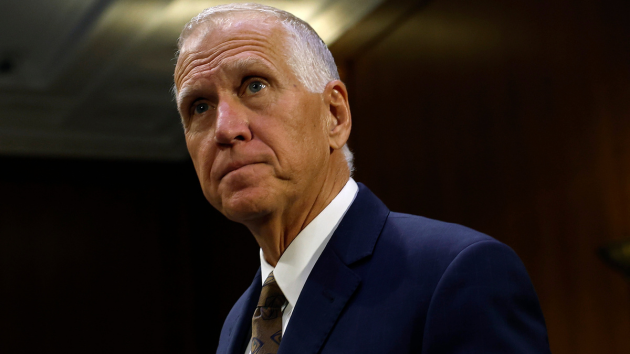
(WASHINGTON) — Republican Sen. Thom Tillis’ decision not to seek reelection is jolting what was already expected to be a fierce battle in North Carolina to either challenge him or flip his seat, which will now be wide open in 2026.
Without Tillis on the ballot, Republicans have been floating their ideal candidate to hold onto their slim majority in the Senate, many of whom are less critical of President Donald Trump than Tillis, including allies Michael Whatley, chairman of the GOP, and the president’s daughter-in-law, Lara Trump.
A Republican National Committee official waved ABC News off the notion that Whatley, who used to lead the North Carolina GOP, was leaving his post, saying that Whatley currently has no plans to look at another office for the time being.
“Chairman Whatley is focused on serving the president and working with his team to protect and expand our Republican majorities in the midterms,” the official, who was granted anonymity to discuss deliberations, said.
Lara Trump, who also faces mounting external pressure to run in her native North Carolina, told Fox News Radio on Monday that she would certainly consider the possibility.
“North Carolina is my home state. It’s where I was born and raised. It made me the person I am today…if it works out and the timing works, and it works out for my family, it is absolutely something that I would consider doing,” she explained.
President Trump told reporters on Tuesday that he’d be excited for his daughter-in-law to run: “Somebody that would really be great is Lara. She grew up there … Lara Trump, I mean, that would always be my first choice.”
But he added later that he hasn’t talked to her directly about the potential bid, and that other Republicans could be successful, too.
“I don’t know who the candidates are going to be. I think you can have one of the congressmen step up,” he said.
Lara Trump, who ruled out a Senate run in Florida earlier in the year, would likely be the frontrunner if she entered. Other potential contenders, like Rep. Pat Harrigan said Tuesday in a post on X that he would back Lara Trump if she chose to run.
“There’s lots of excitement around the 2026 Senate race, but let me be crystal clear about something: if @LaraLeaTrump enters this race, I’ll be the first to endorse her and the first to fight for her victory,” Harrigan wrote.
In addition to Trump, other North Carolina Republicans who could be considering Senate bids including Reps. Greg Murphy and Addison McDowell, sources familiar with the situation told ABC News. North Carolina Rep. Richard Hudson, who chairs the campaign arm of House Republicans, said on Tuesday he would not run.
Regardless of the candidate, the North Carolina GOP said in a statement it feels confident that another Republican will take Tillis’ place.
“Senator Tillis has announced his decision to not seek re-election to the U.S. Senate and we wish him well in his retirement from public service. As we move forward into the midterm elections, we will hold this seat for Republicans in 2026 and continue to deliver on President Trump’s America First priorities,” North Carolina GOP Chairman Jason Simmons said.
Democrats disagree and find Tillis’ retirement an opportunity to make up for ground the lost in 2024. Former U.S. Rep. Wiley Nickel has already announced a run, and wrote on X on Sunday, “Thom Tillis is out. No matter which MAGA loyalist Trump picks, I’m the only Democrat in this race and I’m ready to win.”
Yet the candidate atop North Carolina Democrats’ wish list is their former governor, Roy Cooper. A spokesperson for Cooper told ABC News he’s strongly considering a run and will announce his decision “in the coming weeks.
Anderson Clayton, the chair of the North Carolina Democratic Party, told ABC News in an interview Monday that as she has been “going around the state and going around all my different counties, what I’ve heard the most from folks is that they would love to see Governor Cooper get in this race.”
But Clayton, even as she praised Cooper’s strong approval ratings and the desire among many for him to run, pointed to a “bench” of others she said were strong candidates, including Nickel and Lt. Gov. Rachel Hunt. A spokesperson for Hunt’s lieutenant governor campaign told ABC News that Hunt believes Cooper will run but that “if the field shifts, she’ll give it thoughtful consideration.”
Clayton said she believes Democrats will handily flip the seat no matter who is on the ticket.
“I think that the Republican Party is running away from Thom Tillis, which is what we saw from the announcement [Sunday] … We immediately saw the president deciding that he was going to find a primary challenger for Tillis. And I think it shows that North Carolina Democrats are in a prime position to be able to take this seat, especially now that it’s an open seat,” she said.
She said the party had also seen an influx in donations and volunteers since Tillis announced his retirement.
Cooper would be “a real powerhouse” if he decided to enter the race, Davidson College political science professor Susan Roberts told ABC News. She contrasted Cooper with the progressive New York Assembly member Zohran Mamdani, the presumptive Democratic primary nominee for mayor of New York City.
“[Cooper] may not be the shiniest object [or] have the campaign that helped Mamdani in the New York mayor’s primary, he may not have that shiny social media presence, but I think he has the gravitas to be a good candidate, and I think he would know how to govern,” Roberts said.
Mac McCorkle, a professor at Duke University’s Sanford School of Public Policy, said Lara Trump’s powerful name recognition could clear the Republican primary field.
“The other Republicans who were thinking about it are kind of no-names,” McCorkle said. “I think it’s Lara Trump’s to refuse.”
He said while less-known candidates might need to take positions heavily to the right to win over “the MAGA base” in the primary, Lara Trump’s connection to President Trump could help her gain support without having to do so, making her more appealing to moderate voters later on in the general election.
On the other hand, Jason Roberts, a political science professor at the University of North Carolina at Chapel Hill, saw Lara Trump’s family connection to the president as a potential disadvantage.
“Midterm elections typically don’t go well for the president’s party, because the out-party is fired up. The in-party typically doesn’t have as high a turnout,” Roberts said. “What successful presidential party candidates do in a midterm is they try to distinguish themselves from that president. And if you’re running a candidate whose last name is Trump, that’s going to be really, really difficult to do.”
ABC News’ Hannah Demissie and Benjamin Siegel contributed to this report.
(WASHINGTON) — President Donald Trump continued on Tuesday to float his idea, which some legal experts say is unconstitutional, to deport U.S. citizens who commit crimes.
Speaking to the press during a tour of a migrant detention center in the Florida Everglades, the president repeated claims that there are many immigrants who are now citizens and have been committing serious crimes.
“They’re not new to our country. They’re old to our country. Many of them were born in our country. I think we ought to get them the hell out of here, too, if you want to know the truth,” he said. “So maybe that will be the next job.”
The proposal came weeks after the Assistant Attorney General Brett Shumate — a Trump appointee — released a memo giving U.S. attorneys wide discretion to decide when to pursue the denaturalization process to “advance the Administration’s policy objectives.”
Some of the cases U.S. attorneys should pursue are those against individuals who have engaged in torture, war crimes, human trafficking and human rights violations, the memo says.
Legal experts have warned that Trump’s proposals are unconstitutional claiming they violate the Eighth Amendment, which prohibits cruel and unusual punishment. The issue has not come before the courts yet.
Amanda Frost, a professor at the University of Virginia School of Law, told ABC News in April that the administration could try to target naturalized U.S. citizens, who can lose their immigration status if they’ve committed treason or falsified information during their naturalization process. However, she said those instances are rare.
“If someone’s a naturalized citizen, there could be an effort to denaturalize that person and deport them,” Frost said. “But then it would have to be that they committed some sort of fraud or error in their naturalization process. An unrelated crime could not be the basis for denaturalizing and deporting somebody.”
Trump acknowledged that he didn’t know if deporting U.S. citizens who are convicted of crimes is legal.
“We’ll have to find that out legally. I’m just saying if we had the legal right to do it, I would do it in a heartbeat,” he added. “I don’t know if we do or not, we’re looking at that right now.”
ABC News’ Alexandra Hutzler contributed to this report.
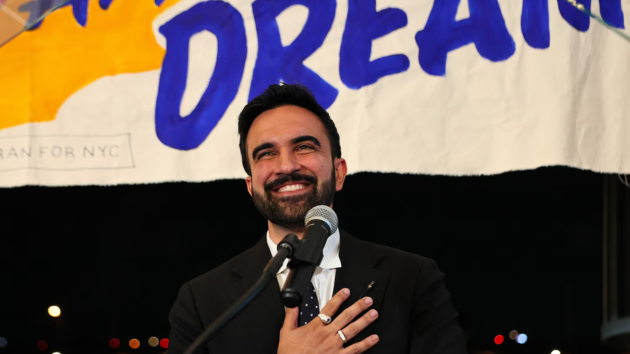
(WASHINGTON) — President Donald Trump threatened New York state lawmaker Zohran Mamdani with arrest if the presumptive Democratic nominee for New York City mayor defies Immigration and Customs Enforcement operations.
The president also continued to allege the 33-year-old Democratic socialist is a “communist” while talking to reporters Tuesday at the new so-called “Alligator Alcatraz” migrant detention center in Florida’s Everglades.
When asked by a reporter what his message is to Mamdani — after he said in a victory speech following the New York City Democratic mayoral primary that he would “stop masked ICE agents from deporting our neighbors” — Trump responded, “Well then, we’ll have to arrest him.”
“Look, we don’t need a communist in this country, but if we have one, I’m going to be watching over him very carefully on behalf of the nation,” Trump continued.
Trump also referenced false claims that Mamdani is in the country illegally.
“A lot of people are saying he’s here illegally,” Trump said. “We’re going to look at everything. Ideally, he’s going to turn out to be much less than a communist. But right now he’s a communist. That’s not a socialist.”
Born in Uganda, Mamdani has lived in the United States since he was 7 years old and became a naturalized citizen in 2018.
As he departed the White House earlier Tuesday, Trump continued his attack on Mamdani in the wake of the primary, calling him a “total nut job” and “bad news” and reiterating his false claim the politician is a communist.
“I think I’m gonna have a lot of fun with him, watching him, because he has to come right through this building to get his money,” Trump said after threatening to withhold funding from New York if Mamdani doesn’t “do the right thing.”
Mamdani responded to Trump in a statement on Tuesday, calling his remarks “intimidation.”
“His statements don’t just represent an attack on our democracy but an attempt to send a message to every New Yorker who refuses to hide in the shadows: if you speak up, they will come for you. We will not accept this intimidation,” Mamdani said.
When asked about comments from Trump on social media calling him a “Communist Lunatic” in an interview with ABC News last week, Mamdani shrugged off the epithet, saying he’d encourage Trump to learn about his policies, and that he’d work with Trump on affordability but would resist the president’s deportation plans.
“The next mayor of New York City will have to work with the Trump administration. Are you willing to do that? Will you do that?” ABC News Senior Political Correspondent Rachel Scott asked.
“I will work with the Trump administration when it is to the benefit of New Yorkers,” Mamdani said. “My approach will never be reflexive, whether in agreement or opposition, but if it comes at the expense of the New Yorkers that I’m running to serve, then, no, I will not be working with the administration on harming the people that I look to represent.”
Mamdani also responded to Trump’s attacks during an interview on NBC’s “Meet the Press” on Sunday. Asked how he responds to being called a communist, Mamdani said, “I am not.”
“I have already had to start to get used to the fact that the president will talk about how I look, how I sound, where I’m from, who I am. Ultimately because he wants to distract from what I’m fighting for,” Mamdani said. “And I’m fighting for the very working people that he ran a campaign to empower that he has since then betrayed.”
The New York City Board of Elections released the results of the ranked-choice voting tabulation on Tuesday, one week after initial results that only reflected voters’ first choice candidates showed Mamdani with around 44% of the vote and Cuomo with around 36%.
Mamdani now leads former Gov. Andrew Cuomo by 12 points, 56% to 44%, in the Democratic primary, according to the updated results.
These may not be the final margins, as cured ballots come in before the Board of Elections certifies the election on July 15, though subsequent updates are not expected to change who is on top. Current Mayor Eric Adams will run as an independent, while Cuomo will also run as an independent on the “Fight and Deliver” ballot line, a source close to the campaign confirmed to ABC News. Curtis Sliwa, who also ran for mayor against Adams four years ago, will be the Republican candidate.
The New York City mayoral election is scheduled to occur on Nov. 4.
ABC News’ Oren Oppenheim, Brittany Shepherd and Lalee Ibssa contributed to this report.
(WASHINGTON) — Gathered on the Senate floor after a 26-hour, record-breaking vote-a-rama series, senators voted hastily on two final Republican-led amendments before getting to the main event: final passage of President Donald Trump’s “big, beautiful bill.”
Vice President JD Vance was presiding over the chamber after breaking a tie on a previously considered wraparound amendment to the bill. It was assumed that he would soon break another tie on the bill’s final passage, with a number of Republican holdouts remaining to make the vote math still uncertain.
It was just a matter of who would be the third “no” vote Republicans could afford to lose and still pass the bill. Sens. Thom Tillis and Rand Paul had already committed to voting it down.
Sen. Lisa Murkowski was widely thought to be the last opponent, with a temporary SNAP carveout for her state of Alaska hanging in the balance down until the last minute.
When the final vote started, Murkowski was seated in the second row near the middle of the chamber. Next to her was Mississippi GOP Sen. Roger Wicker and next to him was another moderate Republican Sen. Susan Collins of Maine, who eventually proved to be the third and final GOP “no” vote.
Collins, dressed in a hot-pink pantsuit, votes near the top of the alphabet. But she left near the beginning of the vote’s final passage to go to the cloakroom. She missed her chance to vote when her name was called, coming out shortly after and walking directly to Murkowski. Collins put her arm around Murkowski, and then went up to the clerk and put her thumb down: no. She then left the chamber.
Focus was then squarely on Murkowski, whose vote could have tanked the entire bill. But former Senate Majority Leader Mitch McConnell came up to sit next to her. The two talked quietly and then shook hands. When her name was called, Murkowski quietly said “Aye.”
Senators had added additional sweeteners for her state, including a provision aimed at insulating Alaska from some of the bill’s harshest impacts on SNAP.
She then started to leave the chamber, shaking hands with GOP Sens. Jerry Moran of Kansas and Bill Cassidy of Louisiana before exiting.
Afterward, Murkowski told ABC News’ she “struggled mightily with the [bill’s] impact on the most vulnerable in this country.”
“I needed help, and I worked to get that every single day. And did I get everything that I wanted? Absolutely not,” she added.
Senate Majority Leader John Thune didn’t speak to either woman after their votes. He was seated in his chair in the front of the chamber.
Collins later explained her vote in a statement: “My vote against this bill stems primarily from the harmful impact it will have on Medicaid, affecting low-income families and rural health care providers like our hospitals and nursing homes.”
She also said she had problems with cuts to energy tax credits and that the rural hospital relief fund that was created to try to get Republican holdouts to vote for the bill was insufficient.
ABC News’ John Parkinson and Lauren Peller contributed to this report.