A sign is displayed outside of the U.S. Department of Health and Human Services (HHS) headquarters at the Hubert H. Humphrey Building on June 2, 2025 in Washington, DC. Kevin Carter/Getty Images
(WASHINGTON) — The Department of Health and Human Services is freezing $10 billion in federal funds in five Democrat-run states over allegations of fraudulent child care programming, an HHS official confirmed to ABC News.
The HHS official confirmed that the five states are California, Colorado, Illinois, Minnesota and New York.
This is a developing story. Please check back for updates.
Rep. Doug LaMalfa, R-Calif., leaves a meeting of the House Republican Conference at the Capitol Hill Club on Wednesday, January 22, 2025. (Tom Williams/CQ-Roll Call, Inc via Getty Images)
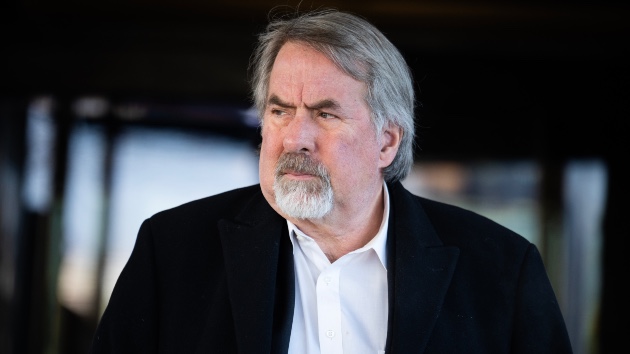
(WASHINGTON) — California Republican Rep. Doug LaMalfa has died at the age of 65, according to House Republican leaders.
This is a developing story. Please check back for updates.
Columbus police released video footage of a person of interest walking in an alley near the the Tepes’ house in the early hours of Dec. 30, 2025. (Columbus Police Department)
Spencer and Monique Tepe were found shot to death in their Columbus home on Dec. 30, Columbus police said. Two small children were found safe inside, police said.
Authorities said they believe the couple was killed between 2 a.m. and 5 a.m. on their home’s second floor.
Detectives on Monday shared what they called “recovered video footage” of a person walking in an alley near the victims’ house during that 2 a.m. to 5 a.m. timeframe. The grainy video shows the person of interest in jeans and a black hooded jacket, apparently with their hands in their pockets.
“We know there are questions and concerns,” police said. The department said tips are coming in, and they are “working diligently to solve this case.”
Meanwhile, the relatives of Spencer and Monique Tepe are mourning and waiting for answers.
“Makes no sense as to how somebody could do this,” Monique Tepe’s brother, Rob Misleh, told ABC News’ “Good Morning America.” “What kind of person can take two parents away from such young children, and just two beautiful people away from this earth?”
The police ask that anyone who could help identify the person of interest call 614-645-2228. Anonymous tips can be submitted to Central Ohio Crime Stoppers at 614-461-8477.
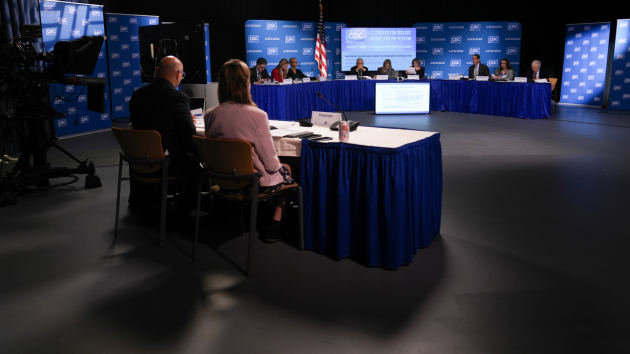
Members of the CDC’s Advisory Committee On Immunization Practices at the Center for Disease Control (CDC) headquarters in Atlanta, Georgia, US, on Friday, Dec. 5, 2025. (Megan Varner/Bloomberg via Getty Images)
(NEW YORK) — The Centers for Disease Control and Prevention (CDC) announced on Monday it is changing the childhood immunization schedule.
The federal health agency is removing the universal recommendation for multiple shots, in what it calls an attempt to mirror the schedules of peer countries.
Instead of being universally recommended for almost all children at certain age cut offs, vaccines are now split into three categories: vaccines for all children, vaccines for certain high-risk groups and vaccines based on shared clinical decision making.
Shared clinical decision making is the term used by CDC to imply that patients, and parents, should talk to their provider about whether they should be vaccinated.
Some of the vaccines and immunizations that are no longer universally recommended include RSV, flu and COVID, as well as the hepatitis and meningococcal vaccines.
For children not in certain high-risk groups, no vaccine is recommended before the age of two months.
The change comes after President Donald Trump signed a memo in early December last year directing Health and Human Services (HHS) Secretary Robert F. Kennedy Jr. to examine how other nations structure their childhood vaccine schedules.
HHS officials say the change will not affect health insurance coverage of vaccines.
“President Trump directed us to examine how other developed nations protect their children and to take action if they are doing better,” Kennedy said in a statement. “After an exhaustive review of the evidence, we are aligning the U.S. childhood vaccine schedule with international consensus while strengthening transparency and informed consent. This decision protects children, respects families, and rebuilds trust in public health.”
The changes drew rebuke from doctors, who expressed concern that such a change did not undergo further debate before being implemented.
The CDC’s vaccine advisory committee met last month to discuss the childhood vaccine schedule, but only voted to remove the universal recommendation for the hepatitis B vaccine at birth.
“I thought there might be proposals that were debated amongst experts in a public meeting, and then maybe something like this resulting from that, but not in the way this has been done, where a new schedule is released, which has already been signed on to by all the health advisors for the president,” Dr. Dave Margolius, an internal medicine physician and director of public for the city of Cleveland, told ABC News.
Dr. Demetre Daskalakis, former director of the CDC’s National Center for Immunization and Respiratory Diseases, said altering the schedule without consulting U.S. experts in pediatrics, infectious diseases and public health “undermines both scientific rigor and transparency.”
He told ABC News that the American health care system is unique, which makes it difficult to align the U.S. vaccine schedule to those of peer nations.
“Vaccine schedules should be crafted to reflect the specific patterns of disease and access to healthcare in the United States; unfortunately, these vital factors were not adequately considered in the development of the new schedule,” Daskalakis said.
In a press briefing representing the American Academy of Pediatrics (AAP), Dr. Sean O’Leary, an infectious disease physician and chair of the AAP Committee on Infectious Diseases, said the federal government can no longer be trusted in its role to protect American children from vaccine-preventable diseases.
“Tragically, our federal government can no longer be trusted in this role,” O’Leary said. “Unfortunately, our government is making it much harder for pediatricians to do our jobs, and they’re making it much harder for parents to know what to do.”
O’Leary confirmed the AAP was not consulted by HHS ahead of this decision to change the vaccine schedule.
Additionally, Sen. Bill Cassidy (R-La.), a physician and chair of the Senate’s health committee, distanced himself from the CDC’s decision to change the childhood vaccine schedule.
“Changing the pediatric vaccine schedule based on no scientific input on safety risks and little transparency will cause unnecessary fear for patients and doctors, and will make America sicker,” Cassidy wrote in a post on X, rejecting the recent changes.
Cassidy added that the schedule is “not a mandate,” but rather a recommendation that gives parents the “power” to choose which vaccines their children receive.
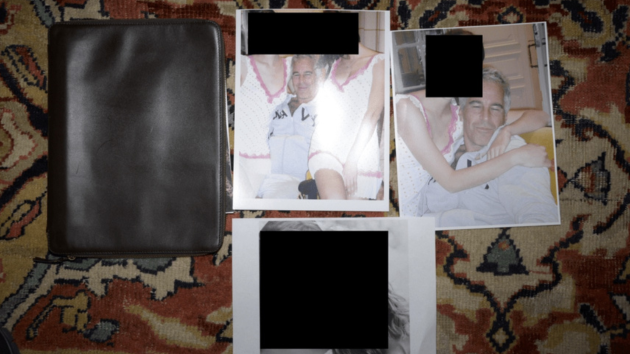
Jeffrey Epstein is seen on the images released on December 19, 2025 by the US Department of State. (US Justice Department/Anadolu via Getty Images)
(CHICAGO) — The Department of Justice said in a new court filing Monday night that there are more than 2 million documents “potentially responsive” to the Epstein Files Transparency Act that are presently in various phases of review.
Federal prosecutors said that “in the next few weeks ahead” about 400 department attorneys in Washington, D.C., New York and Florida “will dedicate all or a substantial portion of their workday to the Department’s efforts to comply with the Act.”
The effort will tap DOJ lawyers from the Criminal and National Security Divisions and will also include assistance from more than 100 FBI analysts experienced with handling sensitive victim materials, according to the letter from Jay Clayton, the U.S. Attorney for the Southern District of New York, to U.S. District Judge Paul Engelmayer.
“Many of the attorneys dedicated to this review from the Department have experience in victim-privacy related matters, which is necessary given the nature of the materials and the types of documents that require careful redaction,” Clayton wrote. “While the commitment of Department personnel to this effort has been substantial in breadth and impressive in effort, substantial work remains to be done.”
The letter does not indicate a total page count for the millions of records under review and provides no specific time frame for when the DOJ expects to complete the work or when to expect its next public disclosure. The deadline set by Congress for the release of all the Epstein-related investigative files was Dec. 19.
Thus far, the DOJ says it has posted to its “DOJ Epstein Library” 12,285 documents totaling about 125,000 pages.
The filing from the DOJ follows ABC News’ reporting last week that the DOJ had recently identified over 5 million records that may be subject to disclosure under the law.
In a footnote to the court filing Monday, the DOJ indicates that it expects that a “meaningful portion” of about 1 million newly identified FBI records may be duplicative of others already collected by the DOJ for review, but those documents “nonetheless still need to undergo a process of processing and deduplication.”
Clayton’s Monday letter also notes that the DOJ has received “dozens” of inquiries from alleged victims and their representatives requesting that materials already posted to the DOJ’s website be further redacted to protect the privacy interests of the victims.
The DOJ will be modifying its procedures going forward “to better ensure the protection of victim identifying information,” according to the court filing.
“The Department remains committed to providing as much protection to the privacy interests of victims and their relatives as is practicable,” the letter states.
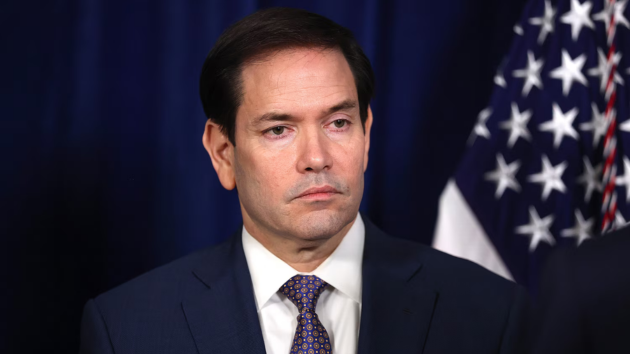
Secretary of State Marco Rubio listens as President Donald Trump addresses the media during a news conference at his Mar-a-Lago club on Jan. 3, 2026, in Palm Beach, Fla. Joe Raedle/Getty Images
(WASHINGTON) — Who is running Venezuela and how?
Confusion continued Monday amid seemingly contradictory messages from President Donald Trump and Secretary of State Marco Rubio about how the U.S. is dealing with the country after American forces captured dictator Nicolas Maduro over the weekend.
Trump on Sunday night doubled down on his assertion that the U.S. was “in charge” of the South American nation, after first proclaiming on Saturday the U.S. would “run the country until such time as we can do a safe, proper, and judicious transition.”
“We’re dealing with the people. We’re dealing with the people that just got sworn in. And don’t ask me who’s in charge, because I’ll give you an answer, and it’ll be very controversial,” Trump told reporters on Sunday as he flew back to Washington from Florida.
“What does that mean?” a reporter asked him.
“It means we’re in charge,” said Trump, who talked about extracting oil riches and potentially putting boots on the ground.
The president’s comments appear to be at odds with the less definitive characterization Secretary of State Marco Rubio made earlier Sunday during an interview on ABC’s “This Week.” Rubio is one of the Cabinet officials Trump said would “run” the country.
While Trump stated plainly that his administration was in charge and running things in Venezuela, Rubio was more circumspect, suggesting the U.S. would use economic leverage to impose its will.
“What we are running is the direction that this is going to move moving forward. And that is, we have leverage. This leverage we are using. And we intend to use. We started using already,” Rubio told ABC’s George Stephanopoulos, referring to the U.S. quarantine on sanctioned oil tankers.
Rubio, on NBC’s “Meet the Press” on Sunday, said the Trump administration control plan relates to policy changes.
“But it is running this policy. And the goal of the policy is to see changes in Venezuela that are beneficial to the United States first and foremost, because that’s who we work for, but also we believe beneficial for the people of Venezuela who have suffered tremendously. We want a better future for Venezuela,” Rubio said.
U.S. Ambassador to the United Nations Mike Waltz echoed Rubio on Monday, telling the United Nations Security Council that the U.S. is “not occupying a country.”
“As Secretary Rubio has said, there is no war against Venezuela or its people. We are not occupying a country. This was a law enforcement operation in furtherance of lawful indictments that have existed for decades. The United States arrested a narco-trafficker who is now going to stand trial in the United States in accordance with the rule of law for the crimes he’s committed against our people for 15 years,” Waltz said.
Waltz and other administration officials have described the capture of Maduro as a law enforcement operation that was facilitated by the U.S. military.
Maduro and his wife, Cilia Flores, were captured by U.S. forces early Saturday in the capital of Caracas.
Trump, speaking in-depth on the operation from his Mar-a-Lago club that morning, said the U.S. would “make Venezuela great again.” American companies would soon start selling the country’s vast oil reserves, he said.
But when pressed about who exactly would be running Venezuela, Trump said that it was some of the people “behind” him, which also included Defense Secretary Pete Hegseth.
On Saturday, a U.S. official gave more details about what the U.S.-run Venezuela would look like, saying that top administration officials would “continue to diplomatically engage with those remaining in the Venezuelan government” and also engage with oil executives as they begin to expand industry there.
Maduro and his wife made their initial appearance in Manhattan federal court on Monday to face federal charges, including narco-terrorism conspiracy and conspiracy to import cocaine. They pleaded not guilty. Maduro declared he is “innocent” and “still president.”
Meanwhile in Venezuela, the country’s vice president, Delcy Rodriguez, was sworn in as the interim president on Monday.
Trump on Saturday said Venezuelan opposition leader Maria Corina Machado, who won the 2025 Nobel Peace Prize, didn’t have the “respect” to govern the country.
He also had said that Rodriguez was cooperating with the U.S., a claim she appeared to dispute in an address to Venezuelans when she called for Maduro’s immediate release.
Asked on Sunday night to clarify where he stands with Rodriguez, Trump said: “I don’t have to tell you. I just say that she will face a situation probably worse than Maduro, because, you know, Maduro gave up immediately.”
In a more conciliatory message on Sunday night, Rodriguez said she would “prioritise moving towards balanced and respectful international relations between the United States and Venezuela, and between Venezuela and other countries in the region, premised on sovereign equality and non-interference.”
“President Donald Trump, our peoples and our region deserve peace and dialogue, not war. This has always been President Nicolas Maduro’s message, and it is the message of all of Venezuela right now. This is the Venezuela I believe in and have dedicated my life to,” Rodriguez wrote in a social media post.
ABC News’ Mike Pappano and Brianna Sanchez contributed to this report.
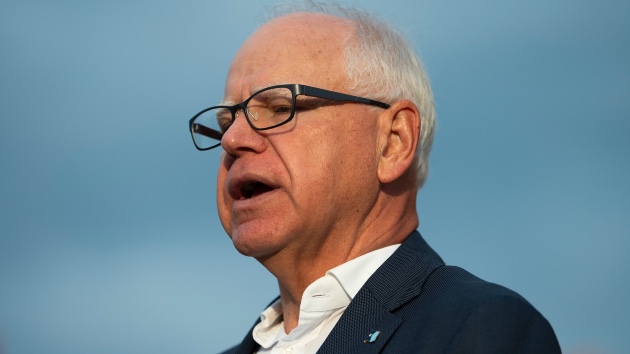
: Minnesota Gov. Tim Walz speaks to media gathered on the first day of school at Deerwood Elementary on September 2, 2025 in Eagan, Minnesota. (Photo by Stephen Maturen/Getty Images)
(NEW YORK) — Minnesota Gov. Tim Walz, a Democrat, announced Monday that he would drop his bid for reelection as governor, saying that he would not be able to give a campaign all of his attention as he works to defend Minnesota against allegations of fraud and right-wing attacks — including from President Donald Trump.
“In September, I announced that I would run for a historic third term as Minnesota’s Governor. And I have every confidence that, if I gave it my all, I would succeed in that effort,” Walz wrote in a statement Monday.
“But as I reflected on this moment with my family and my team over the holidays, I came to the conclusion that I can’t give a political campaign my all. Every minute I spend defending my own political interests would be a minute I can’t spend defending the people of Minnesota against the criminals who prey on our generosity and the cynics who prey on our differences.”
Walz, who served as Vice President Kamala Harris’ running mate in 2024, had come under fire in recent weeks amid allegations of fraud in child-care centers in Minnesota. Walz had said the state was investigating alleged fraud and slammed how rhetoric targeting the state’s Somali community about the allegations could put people at risk.
Democratic Sen. Amy Klobuchar met with Walz over the weekend about a possible bid for governor, according to two sources familiar with the meeting.
This comes as a source close to Klobuchar tells ABC News that she’s been getting a lot of outreach encouraging her to run. She is considering the bid, according to two sources, but hasn’t made a final decision.
Representatives for Klobuchar, who won reelection to the Senate in 2024, did not immediately respond to ABC News’ requests for comment.
Walz was the subject of Trump’s frequent criticism — with the president claiming he was “a Crooked Governor” in a recent social media post.
The president commented on Walz’s decision in a social media post on Monday, saying Walz “destroyed the State of Minnesota.”
Walz would have made history if he won the governorship in 2026, as previously no Minnesota governor has won a third consecutive four-year term.
The Democratic Governors Association, the arm of the Democratic Party focused on electing Democratic governors, released a statement on Monday praising Walz for his work without endorsing any other potential candidates.
“No matter who decides to run or how much national Republicans want to spend, the DGA remains very confident Minnesotans will elect another strong Democratic governor this November,” DGA chair and Kentucky Gov. Andy Beshear wrote in a statement.
On the Republican side, longtime Trump loyalist and CEO of MyPillow Mike Lindell announced in December that he is running for governor of Minnesota. Lindell has already been endorsed by Trump.
Walz also has been viewed as a potential 2028 presidential hopeful, and visited a few key presidential battleground states in 2025, although he has previously downplayed the prospect of running for the Democratic presidential nomination.
Walz, in his statement announcing he would not seek reelection, had harsh words for Trump and Republicans who have excoriated the state for alleged child-care fraud and said that it occurred on Walz’s watch.
“I won’t mince words here,” Walz wrote. “Donald Trump and his allies — in Washington, in St. Paul, and online — want to make our state a colder, meaner place.”
Saying that the state government had taken steps to investigate fraud, and continues to work on combating it, Walz said Minnesota “will win the fight against the fraudsters. But the political gamesmanship we’re seeing from Republicans is only making that fight harder to win.”
Republicans celebrated Walz’s announcement on Monday. House Majority Whip Tom Emmer, a Republican representing Minnesota, wrote in a short statement reacting to Walz’s announcement, “Good riddance.”
“It’s been failure after failure for Tim Walz, so it’s no surprise he chickened out of running for re-election,” Republican National Committee Regional Communications Director Delanie Bomar wrote in a separate statement on Monday.
Minnesota has been under scrutiny in recent weeks over yearslong investigations and controversies about alleged fraud in child-care centers.
According to federal charges filed over the past couple of years, at least 70 people were part of a wide-ranging criminal conspiracy that exploited two federally funded nutrition programs to fraudulently obtain more than $250 million in one of the largest COVID-era fraud schemes anywhere in the nation.
The defendants allegedly used a Minnesota-based nonprofit organization called Feeding Our Future to avoid tough scrutiny from the Minnesota Department of Education, which was supposed to be conducting oversight of the programs.
More scrutiny came recently after an unverified online video from conservative influencer Nick Shirley alleging fraud in child care in Somali communities in Minneapolis. Minnesota officials have disputed the allegations. During more recent site checks, officials said locations highlighted by the video were operating as expected.
Last week, an official with the Department of Health and Human Services said that the Trump administration is pausing child-care funding to all states after the Minnesota allegations emerged. The official said the funds will be released “only when states prove they are being spent legitimately.”
“Republicans are playing politics with the future of our state,” Walz said in his statement on Monday. “And it’s shameful.”
ABC News’ Laura Romero and Mike Levine contributed to this report.
: Minnesota Gov. Tim Walz speaks to media gathered on the first day of school at Deerwood Elementary on September 2, 2025 in Eagan, Minnesota. (Photo by Stephen Maturen/Getty Images)
(NEW YORK) — Minnesota Gov. Tim Walz, a Democrat, announced Monday that he would drop his bid for reelection as governor, saying that he would not be able to give a campaign all of his attention as he works to defend Minnesota against allegations of fraud and right-wing attacks — including from President Donald Trump.
“In September, I announced that I would run for a historic third term as Minnesota’s Governor. And I have every confidence that, if I gave it my all, I would succeed in that effort,” Walz wrote in a statement Monday.
“But as I reflected on this moment with my family and my team over the holidays, I came to the conclusion that I can’t give a political campaign my all. Every minute I spend defending my own political interests would be a minute I can’t spend defending the people of Minnesota against the criminals who prey on our generosity and the cynics who prey on our differences.”
Walz, who served as Vice President Kamala Harris’ running mate in 2024, had come under fire in recent weeks amid allegations of fraud in child-care centers in Minnesota. Walz had said the state was investigating alleged fraud and slammed how rhetoric targeting the state’s Somali community about the allegations could put people at risk.
“I know this news may come as a surprise. But I’m passing on the race with zero sadness and zero regret. After all, I didn’t run for this job so I could have this job. I ran for this job so I could do this job. Minnesota faces an enormous challenge this year. And I refuse to spend even one minute of 2026 doing anything other than rising to meet the moment. Minnesota has to come first — always,” Walz wrote.
Walz was the subject of Trump’s frequent criticism — with the president claiming he was “a Crooked Governor” in a recent social media post.
Walz would have made history if he won the governorship in 2026, as previously no Minnesota governor has won a third consecutive four-year term.
His exit from the race currently leaves Democrats without a major candidate in the race, although other major names may be set to jump in soon.
Democratic Sen. Amy Klobuchar met with Walz over the weekend about a possible bid for governor, according to two sources familiar with the meeting.
This comes as a source close to Klobuchar tells ABC News that she’s been getting a lot of outreach encouraging her to run. She is considering the bid, according to the source, but hasn’t made a final decision.
Representatives for Klobuchar, who won reelection to the Senate in 2024, did not immediately respond to ABC News’ requests for comment.
The Democratic Governors Association, the arm of the Democratic Party focused on electing Democratic governors, released a statement on Monday praising Walz for his work without endorsing any other potential candidates.
“No matter who decides to run or how much national Republicans want to spend, the DGA remains very confident Minnesotans will elect another strong Democratic governor this November,” DGA chair and Kentucky Gov. Andy Beshear wrote in a statement.
On the Republican side, longtime Trump loyalist and CEO of MyPillow Mike Lindell announced in December that he is running for governor of Minnesota. Lindell has already been endorsed by Trump.
Walz also has been viewed as a potential 2028 presidential hopeful, and visited a few key presidential battleground states in 2025, although he has previously downplayed the prospect of running for the Democratic presidential nomination.
Walz, in his statement announcing he would not seek reelection, had harsh words for Trump and Republicans who have excoriated the state for alleged child-care fraud and said that it occurred on Walz’s watch.
“I won’t mince words here,” Walz wrote. “Donald Trump and his allies — in Washington, in St. Paul, and online — want to make our state a colder, meaner place.”
Saying that the state government had taken steps to investigate fraud, and continues to work on combating it, Walz said Minnesota “will win the fight against the fraudsters. But the political gamesmanship we’re seeing from Republicans is only making that fight harder to win.”
Republicans celebrated Walz’s announcement on Monday. House Majority Whip Tom Emmer, a Republican representing Minnesota, wrote in a short statement reacting to Walz’s announcement, “Good riddance.”
“It’s been failure after failure for Tim Walz, so it’s no surprise he chickened out of running for re-election,” Republican National Committee Regional Communications Director Delanie Bomar wrote in a separate statement on Monday.
Minnesota has been under scrutiny in recent weeks over yearslong investigations and controversies about alleged fraud in child-care centers.
According to federal charges filed over the past couple of years, at least 70 people were part of a wide-ranging criminal conspiracy that exploited two federally funded nutrition programs to fraudulently obtain more than $250 million in one of the largest COVID-era fraud schemes anywhere in the nation.
The defendants allegedly used a Minnesota-based nonprofit organization called Feeding Our Future to avoid tough scrutiny from the Minnesota Department of Education, which was supposed to be conducting oversight of the programs.
More scrutiny came recently after an unverified online video from conservative influencer Nick Shirley alleging fraud in child care in Somali communities in Minneapolis. Minnesota officials have disputed the allegations. During more recent site checks, officials said locations highlighted by the video were operating as expected.
Last week, an official with the Department of Health and Human Services said that the Trump administration is pausing child-care funding to all states after the Minnesota allegations emerged. The official said the funds will be released “only when states prove they are being spent legitimately.”
“Republicans are playing politics with the future of our state,” Walz said in his statement on Monday. “And it’s shameful.”
ABC News’ Benjamin Siegel, Isabella Murray, Laura Romero and Mike Levine contributed to this report.
: Minnesota Gov. Tim Walz speaks to media gathered on the first day of school at Deerwood Elementary on September 2, 2025 in Eagan, Minnesota. (Photo by Stephen Maturen/Getty Images)
(NEW YORK) — Minnesota Gov. Tim Walz, a Democrat, announced Monday that he would drop his bid for reelection as governor, saying that he would not be able to give a campaign all of his attention as he works to defend Minnesota against allegations of fraud and right-wing attacks — including from President Donald Trump.
“In September, I announced that I would run for a historic third term as Minnesota’s Governor. And I have every confidence that, if I gave it my all, I would succeed in that effort,” Walz wrote in a statement Monday.
“But as I reflected on this moment with my family and my team over the holidays, I came to the conclusion that I can’t give a political campaign my all. Every minute I spend defending my own political interests would be a minute I can’t spend defending the people of Minnesota against the criminals who prey on our generosity and the cynics who prey on our differences.”
Walz, who served as Vice President Kamala Harris’ running mate in 2024, had come under fire in recent weeks amid allegations of fraud in child-care centers in Minnesota. Walz had said the state was investigating alleged fraud and slammed how rhetoric targeting the state’s Somali community about the allegations could put people at risk.
“I know this news may come as a surprise. But I’m passing on the race with zero sadness and zero regret. After all, I didn’t run for this job so I could have this job. I ran for this job so I could do this job. Minnesota faces an enormous challenge this year. And I refuse to spend even one minute of 2026 doing anything other than rising to meet the moment. Minnesota has to come first — always,” Walz wrote.
Walz was the subject of Trump’s frequent criticism — with the president claiming he was “a Crooked Governor” in a recent social media post.
Walz would have made history if he won the governorship in 2026, as previously no Minnesota governor has won a third consecutive four-year term.
His exit from the race currently leaves Democrats without a major candidate in the race, although other major names may be set to jump in soon.
Democratic Sen. Amy Klobuchar met with Walz over the weekend about a possible bid for governor, according to two sources familiar with the meeting.
This comes as a source close to Klobuchar tells ABC News that she’s been getting a lot of outreach encouraging her to run. She is considering the bid, according to the source, but hasn’t made a final decision.
Representatives for Klobuchar, who won reelection to the Senate in 2024, did not immediately respond to ABC News’ requests for comment.
The Democratic Governors Association, the arm of the Democratic Party focused on electing Democratic governors, released a statement on Monday praising Walz for his work without endorsing any other potential candidates.
“No matter who decides to run or how much national Republicans want to spend, the DGA remains very confident Minnesotans will elect another strong Democratic governor this November,” DGA chair and Kentucky Gov. Andy Beshear wrote in a statement.
On the Republican side, longtime Trump loyalist and CEO of MyPillow Mike Lindell announced in December that he is running for governor of Minnesota. Lindell has already been endorsed by Trump.
Walz also has been viewed as a potential 2028 presidential hopeful, and visited a few key presidential battleground states in 2025, although he has previously downplayed the prospect of running for the Democratic presidential nomination.
Walz, in his statement announcing he would not seek reelection, had harsh words for Trump and Republicans who have excoriated the state for alleged child-care fraud and said that it occurred on Walz’s watch.
“I won’t mince words here,” Walz wrote. “Donald Trump and his allies — in Washington, in St. Paul, and online — want to make our state a colder, meaner place.”
Saying that the state government had taken steps to investigate fraud, and continues to work on combating it, Walz said Minnesota “will win the fight against the fraudsters. But the political gamesmanship we’re seeing from Republicans is only making that fight harder to win.”
Republicans celebrated Walz’s announcement on Monday. House Majority Whip Tom Emmer, a Republican representing Minnesota, wrote in a short statement reacting to Walz’s announcement, “Good riddance.”
“It’s been failure after failure for Tim Walz, so it’s no surprise he chickened out of running for re-election,” Republican National Committee Regional Communications Director Delanie Bomar wrote in a separate statement on Monday.
Minnesota has been under scrutiny in recent weeks over yearslong investigations and controversies about alleged fraud in child-care centers.
According to federal charges filed over the past couple of years, at least 70 people were part of a wide-ranging criminal conspiracy that exploited two federally funded nutrition programs to fraudulently obtain more than $250 million in one of the largest COVID-era fraud schemes anywhere in the nation.
The defendants allegedly used a Minnesota-based nonprofit organization called Feeding Our Future to avoid tough scrutiny from the Minnesota Department of Education, which was supposed to be conducting oversight of the programs.
More scrutiny came recently after an unverified online video from conservative influencer Nick Shirley alleging fraud in child care in Somali communities in Minneapolis. Minnesota officials have disputed the allegations. During more recent site checks, officials said locations highlighted by the video were operating as expected.
Last week, an official with the Department of Health and Human Services said that the Trump administration is pausing child-care funding to all states after the Minnesota allegations emerged. The official said the funds will be released “only when states prove they are being spent legitimately.”
“Republicans are playing politics with the future of our state,” Walz said in his statement on Monday. “And it’s shameful.”
ABC News’ Benjamin Siegel, Isabella Murray, Laura Romero and Mike Levine contributed to this report.
Stock photo of a sick woman. Guido Mieth/STOCK PHOTO/Getty Images
(NEW YORK) — Flu activity is continuing to climb across the U.S. as hospitalizations rise, according to newly released data from the Centers for Disease Control and Prevention.
The percent of outpatient visits for respiratory illnesses are now at the highest rate on record.
About 8% of visits to a health care provider were labeled as flu-like illness, surpassing any levels seen since 1997, the earliest for which data is available. Flu-like illness accounts for patients that have a fever as well as a cough and/or sore throat.
These visits are largely among children and young adults. About 35% of outpatient visits for a respiratory illness were among people unde. 24 years old and children under age 5 made up about 20% of those.
The CDC estimates there have been 120,000 hospitalizations so far this season, a 48.1% increase from the prior week.
Additionally, the CDC says there have been at least 11 million illnesses and 5,000 deaths due to flu so far this season, including at least nine pediatric deaths.
In New York, health officials recently reported the highest number of flu hospitalizations recorded in a single week.
“This is really quite a severe flu season right now,” Dr. James McDonald, health commissioner for New York state, told “Good Morning America” on Saturday.
Recently, New York also reported a record-breaking number of flu cases in a single week with 72,133 infections for the week ending Dec. 20, according to health department.
Data shows that the majority of this season’s cases are linked to a new flu strain called subclade K — a variant of the H3N2 virus, which is itself a subtype of influenza A.
Subclade K has been circulating since the summer in other countries and was a main driver of a spike in flu cases in Canada, Japan and the U.K.
Of the 994 flu samples tested since Sept. 30, nearly all were influenza A. Of those samples that underwent further testing roughly 90% were H3N2, CDC data shows.
Experts expect flu-like illnesses to continue to climb in the coming weeks and warn that this season’s peak has likely not been reached yet.
In addition to influenza, COVID-19 and respiratory syncytial virus (RSV) are also circulating this time of year and are contributing to respiratory illness activity.
Currently, the CDC recommends that everyone ages 6 months and older, with rare exceptions, get an annual flu vaccine.
The federal health agency states on its website that getting an annual flu shot prevents millions of illnesses and flu-related doctors’ visits every year and is especially important for those at higher risk of serious complications.
Amid surging cases and hospitalizations, the number of adults and kids who have received a flu shot remains relatively unchanged. As of Dec. 13, around 42.2% of adults and 42.3% of kids have received the flu vaccine despite the flu shot being widely available across the country.
Last season, 289 children died from flu and nearly all were unvaccinated. This was the highest number of deaths ever recorded since tracking pediatric deaths became mandatory in 2004. One additional pediatric death was reported this week from the 2024-2025 flu season to reach the record.