(WASHINGTON) — Key U.S. trading partners are better equipped now to deal with President-elect Donald Trump’s tariff threats than they were during his first administration, according to experts.
China has spent the last several years trying to “Trump-proof” its economy, reducing its reliance on U.S. trade. Exports from China to the U.S. fell 20% to $427 billion in 2023.
“China’s been trying to Trump-proof its economy for the last few years,” said Neil Thomas, a fellow for Chinese politics at the Asia Society Policy Institute’s Center for China Analysis. “We know from Trump’s first term that tariff threats are often used as an opening salvo for diplomatic negotiations, so I expect there’s going to be a lot of behind-the-scenes diplomacy.”
Trump on Monday announced he plans to impose a 10% additional tariff on Chinese imports, as well as 25% tariff on products coming from Canada and Mexico.
American markets, so far, are mostly shrugging off Trump’s latest tariff threat with stock indexes mixed.
But the Canadian dollar and Mexican peso fell against the U.S. dollar and socks of global carmakers also fell — suggesting investors are waiting to see if Trump makes good on his proposals.
China has shifted and diversified exports to other regions, including Europe and Latin America. It has also increased investments in manufacturing in Southeast Asia, Europe, and Latin America, according to Scott Kennedy, Chinese business and economics specialist at the Center for Strategic and International Studies in Washington.
The bigger concern for China is Trump’s campaign vow to slap 60% tariffs on Chinese imports. That tariff threat could still come.
Trump’s latest reason for imposing tariffs on China is the flow of fentanyl into the United States.
Beijing’s Ministry of Foreign Affairs pushed back on Trump’s claim that China hasn’t done enough to stop the flow of illicit drugs.
“China is willing to continue to carry out anti-drug cooperation with the United States on the basis of equality, mutual benefit and mutual respect,” it said. “The United States should cherish China’s goodwill and maintain the hard-won good situation of Sino-US anti-drug cooperation.”
Cooperation on fentanyl is one of the big wins from President Joe Biden’s diplomacy with Chinese leader Xi Jinping. According to one senior administration official, China has been “helpful” on curbing the flow of precursor chemicals and they’ve been abiding by their commitments.
“Trump wants to take credit for that win [on fentanyl cooperation], and he wants to get even more out of Beijing than Biden to show that his approach to diplomacy is superior,” Thomas said.
Thomas said given the fact that China is still struggling to revive its economy post-pandemic, it’s possible China could take further steps on fentanyl and impose the death penalty on a few major exporters.
Experts say Beijing will likely try to use Elon Musk and other American businesses with operations in China to try to persuade the Trump administration to moderate his policies on China.
In retaliation to the tariffs, Beijing could also revoke some of the preferential treatment that it gives Tesla.
(LONDON) — Israeli Prime Minister Benjamin Netanyahu is recommending the country’s security cabinet agree to a ceasefire deal between Israel and Hezbollah that was brokered by the U.S., he said in a taped video message Tuesday evening local time.
Netanyahu said he was submitting the plan to the cabinet for approval Tuesday night.
“The duration of the ceasefire depends on what happens in Lebanon,” Netanyahu said in a statement. “We will enforce the agreement and respond forcefully to any violation. We will continue together until victory.”
The prime minister hailed “great achievements” on all fronts of the war, including killing Hezbollah leader Hassan Nasrallah and destroying their weapons across the country.
“With full understanding with the United States, we maintain complete military freedom of action,” Netanyahu said in the address, translated from Hebrew. “If Hezbollah violates the agreement and tries to arm itself — we will attack. If it tries to renew terrorist infrastructure near the border — we will attack. If it launches a rocket, if it digs a tunnel, if it brings in a truck with missiles — we will attack.”
Netanyahu attended a meeting with security officials on Sunday night regarding a ceasefire with Israel’s Hezbollah adversaries in Lebanon, an Israeli official told ABC News.
This was part of ongoing talks, including Netanyahu’s meeting last week in Israel with U.S. special envoy Amos Hochstein. Hochstein also traveled to Beirut to discuss a potential way forward.
Netanyahu then held a security cabinet meeting on Tuesday morning to discuss the deal and hold a cabinet vote, Israeli officials said.
In October, Israel invaded southern Lebanon in an escalation of the ongoing conflict between Israel and the Hezbollah militant group.
Tensions heightened last weekend as the countries’ leaders worked to negotiate a ceasefire deal. On Sunday, Hezbollah fired about 250 rockets and other projectiles into Israel in one of the group’s heaviest retaliations in months.
This is a developing story. Please check back for updates.
(WASHINGTON) — Democrats suffered a knockout punch in this month’s elections. New Jersey’s and Virginia’s off-year gubernatorial elections in 2025 offer them their first chances to get off the mat.
Both states have become reliably blue in federal races, but President-elect Donald Trump narrowed his margins in each state, and Democrats are unable to take anything for granted as they undergo a postelection reckoning over their national brand. New Jerseyans haven’t granted one party more than eight straight years in the governor’s mansion in over five decades, and Republican Glenn Youngkin rode into Richmond just three years ago.
That makes the contests to replace term-limited Gov. Phil Murphy, a Democrat, in New Jersey and Youngkin, who can’t run for two consecutive terms, in Virginia key barometers for Democrats’ ability to find their way out of the political wilderness ahead of the midterm elections in 2026.
“I think both these are going to be competitive races. Democrats know to take nothing for granted right now,” said Jared Leopold, a former Democratic Governors Association staffer based in Virginia. “Gubernatorial races have always been the path back for a party out of power, and 2025 is no different. So, this is going to be a huge opportunity for the Democratic Party.”
Both races are in the early stages, with candidates still throwing their hats into the ring.
New Jersey Reps. Josh Gottheimer and Mikie Sherrill, Newark Mayor Ras Baraka, Jersey City Mayor Steven Fulop, former state Senate President Stephen Sweeney and New Jersey Education Association President Sean Spiller are among the Democrats running to replace Murphy. Rep. Abigail Spanberger is the top Democrat running in Virginia and is widely considered a party powerhouse in the state.
Republicans are also sifting through their own candidates. Former GOP gubernatorial nominee Jack Ciattarelli, who fell short of unseating Murphy by about 3 points in 2021, is running again in New Jersey, as are other candidates who are casting themselves as more aligned with and antagonistic toward Trump’s brand. And Virginia Lt. Gov. Winsome Earle-Sears is running for the governor’s mansion with Youngkin’s endorsement.
But it’s Democrats who are on the outside looking in these days, having lost the White House and Senate this month, and eager to bounce back.
Vice President Kamala Harris’ loss to Trump has set off recriminations among Democrats that the party has lost touch with working-class voters and instead reinforced an elitist, out-of-touch brand that was so unpalatable that voters instead opted for a twice-impeached former president who had been convicted of 34 felonies in New York.
Warning signs loomed this month specifically in New Jersey and Virginia. Trump stunned when he became the first Republican presidential candidate in over 30 years to win racially diverse Passaic County in New Jersey. And he made inroads in northern Virginia, the suburban machine of Democrats’ statewide advantage.
Many of the leading Democrats in New Jersey and Virginia have sought to create distance with the party’s left-flank and prioritized affordability over social issues, a possibly effective strategy after voters prioritized economic issues and Trump blanketed the airwaves with ads attacking Harris over her position on transgender issues.
Now, they just have to convince voters that they’re not like the national Democratic bogeymen they’ve heard so much about.
“I think they will be talking the talk. The question is, how can they convince voters that they are walking the walk, and how can they convince voters that this is the centerpiece of their campaign?” said Micah Rasmussen, who served as press secretary for former New Jersey Gov. Jim McGreevey, a Democrat.
“If you can convince voters that you’ve gotten the message and that you need to focus not so much what you want to focus on but you want to focus on what the voters want you to focus on, that’s what it’s going to take,” he added. “I certainly think, at this point, the candidates have gotten the message.”
Democrats in both states have gotten something of a head start over their national counterparts.
Murphy’s narrower-than-expected win over Ciattarelli in 2021 alarmed Democrats who had expected to coast in New Jersey but were instead rebuffed by voters’ complaints about affordability in the high-tax state. And Youngkin’s win in a state that President Joe Biden won by 10 points just a year earlier jolted Democrats there, too.
In hindsight, both results may have foreshadowed the post-COVID-19 economic frustrations that sunk Democrats this year.
Now, candidates are putting the economy first. “Let’s make life more affordable for hardworking New Jerseyans, from health care to groceries to child care,” Sherrill said in her announcement video. Spanberger touts efforts aimed at “lowering prescription drug prices” and “lowering costs and easing inflation.”
Republicans, for their part, are feeling their oats.
While Trump won each swing state by narrow margins, he did sweep them, and he made notable gains among Democratic-friendly demographic groups and in blue states. And almost nothing is as unifying as winning.
“There’s an opportunity for sure, and being unified, that’s step one,” Virginia-based GOP strategist Zack Roday said. “If your party sweeps the House, Senate and the White House, you want to try to just hold your serve downballot and compete, and I think we can actually compete to win at the top. Democrats have the advantage, but there’s a lot around the coalition that could be united in both states that is really appealing to where the GOP is.”
It’s not all doom and gloom for Democrats, though.
Democrats performed well in off-year elections in 2017 after Trump’s first win and in the 2018 midterm elections, and New Jerseyans in particular have traditionally been reluctant to elevate Republicans the year after a Republican wins the White House. And while Trump was able to juice the base and cut into his opponent’s advantages, he still fell short in two states where Democrats retain voter registration edges.
“I don’t think that anyone’s sitting around panicking right now about where the election is. There’s certainly work to do, but there’s no panic,” one senior New Jersey Democratic strategist said.
Trump could also supercharge Democrats’ push to coalesce after their losses this month. His policy proposals, including banning travel from several Muslim-majority countries in 2017, infuriated the Democratic base, leading to Democratic successes in 2017 and 2018.
“It really started when Trump started doing really controversial, unpopular things, like the Muslim ban, and that’s when you saw governors and people come together to fight back against him. My suspicion is that same trend will happen here, where the reality of Trump’s policies will galvanize Democrats,” Leopold said.
However, he added, for a party that’s still smarting after its shortcomings this month, no race is considered safe, and Democrats will have their work cut out for them despite the friendly terrain.
Leopold noted that “2025 is a huge step on the path back for Democrats. We can lick our wounds for the rest of 2024, but come 2025, we got to get focused.”
(WASHINGTON) — President-elect Donald Trump’s threat to impose tariffs on Canada, China and Mexico on the first day of his administration could dramatically raise prices for Americans on everything from cars to clothes to oil.
It could also blow up a trade deal between the United States, Canada and Mexico (USMCA) that went into effect in 2020 after extensive and intense negotiations by Trump’s own administration.
Trump late Monday said he would charge Mexico and Canada with a 25% tariff on all products coming into the United States until action is taken by those country to stem illegal immigration and overflow of drugs across the border.
For China, Trump said that he’d impose an additional 10% tariff on products coming to the U.S.
Mexico, Canada and China are America’s top three trading partners, meaning Trump’s tariff plan would impact nearly every aspect of the U.S. economy.
While it could very well be a negotiating tactic, similar to how Trump threatened tariffs in his first administration, experts say it won’t be as effective this time around because countries know what’s coming.
“This is more likely a play designed to put pressure on our closest trading partners,” said Raymond Robertson, professor for trade, economics and public policy at Texas A&M University. “But this is the same playbook done the second time around. If you’re on the football field and you call the same play twice, it’s not going to be as effective the second time.
Robertson added that countries know this would be “disruptive” and a “disaster” but they’ve “seen how this game works.”
Trading partners could seek closer ties to Europe and other countries and rely less on the United States, “which means higher prices for us,” Robertson said. He added the plan would also likely push Mexico and China closer together.
“Trump ran on this whole campaign that inflation is too high, but now he’s going to put a tax on everything you buy,” Robertson said.
Most economists agree that tariffs are inflationary, by passing the higher cost of inputs to consumers. The Peterson Institute for International Economics estimates that Trump’s proposed tariffs from the campaign trail would cost US households more than $2,600 a year.
What is the current trade agreement between the U.S., Canada and Mexico?
The USMCA was signed by Trump as an update to North American Free Trade Agreement, or NAFTA.
It allowed for mostly duty-free trade between the three countries. Trump’s threat of tariffs would seem to violate the terms.
Trump said on the campaign trail this year he wanted to renegotiate the USMCA by taking advantage of a window that allows for a review six years after signing. But that opportunity to renegotiate wouldn’t come until 2026.
Canadian Prime Minister Justin Trudeau said he spoke with Trump on Monday night and “it was a good call.”
“We obviously talked about laying out the facts, talking about how the intense and effective connections between our two countries flow back and forth,” Trudeau said. “We talked about some of the challenges that we can work on together.”
Mexico’s president, meanwhile, fired back at Trump and warned him not to start a trade war.
“President Trump, it is not with threats nor with tariffs that migration and drug consumption in the U.S. will be dealt with. These great challenges require cooperation and mutual understanding,” President Claudia Sheinbaum said at her daily press conference as she read aloud a letter her administration is sending Trump later Tuesday.
The USMCA was a big deal for Trump — a 2016 campaign promise he delivered and a major bipartisan achievement for his administration.
During his first run for the White House he pledged to negotiate a better NAFTA, calling it one of the worst trade deals ever made.
It took most of his term but he got a deal with the United States’ neighbors to the north and south. And he signed it with great fanfare at the White House on Jan. 29, 2020, surrounded by Americans in uniforms, hard hats and cowboy hats.
“Everybody said this was a deal that could not be done — too complicated, too big, couldn’t be done. We got it done,” Trump said that day.
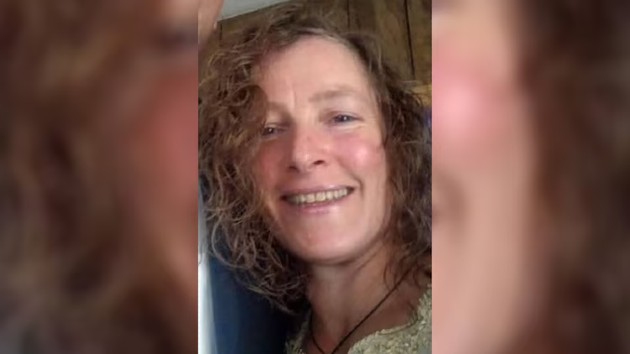
(WELCHES, Ore.) — A search continued Tuesday for a missing hiker and her two large Malinois-mix dogs believed to be in the Green Canyon Way Trail area of Welches in Oregon, according to officials.
Susan Lane-Fournier, 61, was reported missing after failing to show up at work, according to the Clackamas County Sheriff’s Office.
Searchers looked for Lane-Fournier on Monday in the Salmon-Huckleberry Wilderness, covering over 100 miles of trail.
Deputies did not find Lane-Fournier at her residence after she was reported missing by her employer. A community member saw her white 1992 Ford F-250 parked along a road near the trail a day later.
Lane-Fournier, who also goes by the name “Phoenix,” is 5-foot-2-inch, weighs 150 pounds, and has reddish-brown hair.
“Although she is familiar with the area, it is not known if Ms. Lane-Fournier was prepared to stay out overnight. Temperatures in the area have dropped into the 30s with light rain,” the sheriff’s office said in a statement.
Anyone who has seen Lane-Fournier or her dogs is asked to contact the sheriff’s office.
(NEW YORK) — In a letter to shareholders, Warren Buffett revealed that he would be donating more than $1.1 billion of Berkshire Hathaway stock to four of his family’s foundations. In addition, he detailed plans for distributing his wealth after his death.
Buffett, the CEO and Chairman of Berkshire Hathaway, reflected in the letter released Monday on his life and how long he has lived.
“Father time always wins. But he can be fickle – indeed unfair and even cruel – sometimes ending life at birth or soon thereafter while, at other times, waiting a century or so before paying a visit,” Buffett said. “To date, I’ve been very lucky, but, before long, he will get around to me.”
Buffet, 94, said he and his late wife, Susan Buffett, always expected she would outlive him and be the one to distribute his fortune.
But when Susan died in 2004, with a fortune of $3 billion and 96% of that going to the foundation, she left $10 million to each of their three children.
That was the largest gift they had given them, Buffet said.
Buffett believes that parents should support their children but do so in a meaningful way.
“Our belief that hugely wealthy parents should leave their children enough so they can do anything but not enough that they can do nothing,” Buffett wrote in his letter to shareholders.
Buffett explains that he “never wished to create a dynasty or pursue any plan that extended beyond the children.” He also admits that while he and Susan encouraged the children to get involved in philanthropy, that the children weren’t ready to handle the wealth Berkshire stocks had generated in light of their mother’s death.
Since the 2006 lifetime pledge Buffett made and later expanded, the children have dramatically increased their philanthropic activities, Buffet said. And now Buffett is entrusting them fully.
“The children have now more than justified our hopes and, upon my death, will have full responsibility for gradually distributing all of my Berkshire holdings,” Buffet said. “These now account for 99 1⁄2% of my wealth.”
Buffett has described his wealth and age as “lucky” but he also sees a downside to it, he said.
“There is, however, a downside to my good fortune in avoiding his notice. The expected life span of my children has materially diminished since the 2006 pledge. They are now 71, 69 and 66.”
With his children getting older, the family has also designated three potential successors, Buffett said.
“Each is well known to my children and makes sense to all of us. They are also somewhat younger than my children,” Buffett said.
Buffett also reflects on his “lucky streak” dating back to 1930 when he was born as white male in the United States. He mentions his two sisters being promised by the 19th Amendment to be treated equally with males. And he admits to growing in a country that has not yet fulfilled its promises elsewhere.
“In 1930, however, I emerged in a country that hadn’t yet gotten around to fulfilling its earlier aspirations,” Buffett said. “Aided by Billie Jean King, Sandra Day O’Connor, Ruth Bader Ginsberg, and countless others, things began changing in the 1970s.”
Favored by male status, Buffet said he had confidence he would become rich one day. But he never expected it to be the way it is, he said.
“But in no way did I, or anyone else, dream of the fortunes that have become attainable in America during the last few decades,” Buffett said. “Billions became the new millions.”
(NEW YORK) — Tech billionaire Elon Musk, who has vowed to dismantle thousands of federal regulations as the co-head of a new Department of Government Efficiency, or DOGE, says the nation’s financial security depends on it.
The U.S. risks “strangulation by regulation” as it hurtles toward “bankruptcy super fast,” Musk said in a pair of posts on X this month.
Musk’s general concern about the nation’s multi-trillion dollar debt reflects worry among many economists, and his slash-and-burn rhetoric mirrors that of close ally President-elect Donald Trump.
The ambitious cuts championed by Musk, however, could imperil an array of federal protections that safeguard against harm in just about every corner of American life, regulatory experts told ABC News.
Regulations ensure air and water remain free of toxic pollution, workers receive safety gear and overtime pay, drugs undergo rigorous testing and corporations steer clear of ripping off customers.
“Revoking regulations or refusing to endorse them will endanger people’s lives,” Michael Gerrard, a law professor at Columbia University who specializes in environmental regulation, told ABC News. “I’m very worried.”
In response to ABC News’ request for comment, the Trump transition team touted the involvement of Musk and his plans for streamlining U.S. government.
“Elon Musk and President Trump are great friends and brilliant leaders working together to Make America Great Again. Elon Musk is a once in a generation business leader and our federal bureaucracy will certainly benefit from his ideas and efficiency,” Brian Hughes, a transition spokesperson, told ABC News.
DOGE, the commission co-led by Musk and entrepreneur Vivek Ramaswamy, plans to recommend a “vast reduction” of federal regulations, the two leaders said in a joint op-ed in The Wall Street Journal last week.
Such regulatory cuts would diminish the workload of government agencies, allowing for a significant reduction of federal workers and department budgets, the DOGE leaders said. They recommended a mandate that all federal workers come to the office five days a week, which they claimed would trigger a wave of resignations.
“Now is the moment for decisive action,” Musk and Ramaswamy said, but the pair did not identify specific regulations that they would like to cut.
Musk did not immediately respond to ABC News’ request for comment. Neither did Ramaswamy.
The promise of regulatory cuts may prove more compelling as a declaration of war against the status quo than a nitty-gritty elimination of individual rules, experts said. They pointed to significant legal hurdles faced in unwinding government regulations, as well as the lack of direct authority available to DOGE, a non-governmental entity.
Plus, the experts added, many government regulations involve direct protections of importance to a swath of Americans.
Some experts pointed for instance to an air-quality standard put in place by the Biden administration in February. The regulation lowered the amount of particulate matter air pollution — commonly known as soot — allowable in the nation’s air.
The rule would prevent as many as 4,500 premature deaths and 800,000 cases of asthma symptoms, an Environmental Protection Agency study found. Those health benefits could translate into as much as $46 billion in savings by 2032, the agency said.
The Trump administration may seek to undo the rule as part of wider regulatory cuts, Gerrard said. On the campaign trail, Trump vowed to cut environmental regulations in an effort to ease the burden on businesses, but he did not mention this specific rule. Trump rolled back nearly 100 environmental regulations during his first term, including rules governing clean air, a New York Times analysis found.
Darren Riley, co-founder of an air-quality data startup called JustAir, who was diagnosed with asthma six years ago, said air safety should transcend party politics.
“We should take whatever precautions and procedures necessary to protect the air we breathe and the water we drink as a right to life,” Riley told ABC News.
Workplace safety marks another focus of federal regulation that could draw scrutiny from the Trump administration.
In July, the Biden administration formally proposed a heat-safety rule that would require workplaces with elevated heat risks to provide adequate water, rest breaks and control of indoor temperature.
Shae Parker suffered from dizziness and nausea during bouts of heat exhaustion while working this summer at a Speedway gas station in Columbia, South Carolina, she told ABC News. One year prior, record heat in the area caused similar symptoms during Parker’s shifts at Waffle House, but management failed to provide adequate air conditioning, she said.
Parker has traveled to Washington, D.C., to advocate for the heat safety rule, and she worries that the Trump administration may set aside the regulation.
“Trump really needs to set the heat standard, and if he doesn’t, it’s like he doesn’t care about the country,” Parker said. “He needs to take our lives seriously.”
Waffle House did not immediately respond to ABC News’ request for comment. Neither did 7-11, the parent company of Speedway.
Over three decades ending in the early 2020s, nearly 1,000 workers in the U.S. died from excessive heat exposure, amounting to about 34 deaths per year, an EPA study in June found.
The proposed regulation is in the midst of a public comment period as part of the rule-making process. That phase ends in December, leaving little time for finalization and implementation of the measure before Trump takes office. The Trump administration may very well abandon the rule, experts told ABC News.
“Workers will be on their own when it comes to heat,” Debbie Berkowitz, a former official in the U.S. Occupational Safety and Health Administration under then-President Barack Obama, told ABC News.
For his part, Musk previously said DOGE would incorporate feedback from everyday people about which regulations it would recommend cutting. “Anytime the public thinks we are cutting something important or not cutting something wasteful, just let us know!” Musk said in a post on X earlier this month.
Musk has also said that the nation’s worsening debt will force an increased portion of U.S. tax payments to go to interest payments on such borrowing, rather than to government services.
William Buzbee, a professor of administrative law at Georgetown University who focuses on environmental regulation, said the outcome of Musk’s efforts remains highly unclear. But he will likely face legal pushback as well as backlash from people who would be impacted by the potential rollback of a given regulation.
“The bottom line is, yes, the Trump administration is quite clearly planning to go in a deregulatory direction,” Buzbee said. “It won’t be easy.”
(NEW YORK) — When the weather turns cold, meteorologists and climate scientists almost always get a variation of the same question, “If we had global warming, I don’t think I’d have a jacket on.”
That’s because climate and weather are two terms that go hand in hand but are not the same thing.
ABC News Chief Meteorologist and Chief Climate Correspondent Managing Editor of the ABC News Climate Unit Ginger Zee has heard questions like this for years.
“How can we have sweatshirt weather, or even the first snow, when the whole globe is getting warmer and warmer?”
It’s the same for Marshall Shepherd, director of the Atmospheric Sciences Program at the University of Georgia and former president of the American Meteorological Society, who will get questions like, “What are you all talking about — that the climate is changing? It’s snowing right now!”
Weather is the temperature and conditions on one particular day, Zee said — the short-term state of the atmosphere and what it brings.
“If you walk outside and almost every day it’s hot, or almost every day it’s dry, that’s called climate,” Zee said.
People also often refer to climate as “average weather,” which is another misnomer, Shepherd said.
“That’s actually not correct,” he said. “Climate is really more the full statistics of weather, not just average. It’s the highs and lows. It’s frequency. It’s max and min. It’s a lot of things.”
The seasons are governed by the Earth’s tilted axis and its path of orbit around the sun, Shepherd said. The tilted axis means there are times when some parts of the planet are getting less energy from the sun — the main distinction between summer and winter.
Just because the climate is warming overall doesn’t mean there won’t be big swings in either direction, including cold fronts and snow storms in typically warm places or drought conditions in typically wet places and torrential downpours in normally dry climates, the experts said.
“As the globe warms, we are going to have cold and, of course, snow,” Zee said. “Because if that all abruptly stopped, it would be really scary.”
Scientists love their metaphors, especially when it comes to comparing the two terms.
Weather is your mood, and climate is your personality, according to Shepherd and Zee.
Weather and climate can be looked at as the dog and the dog walker, Yarrow Axford, a professor in geological sciences at Northwestern University, told ABC News. The dog can sniff around and tug at its leash, but the dog walker is the one setting the pace and direction.
But that old adage often no longer applies because the climate is changing so quickly, Axford said.
On a long-term scale, the number of overall cold events is declining. The likelihood of extremely cold days has decreased due to human-caused global warming, a 2016 paper published in The National Academies of Sciences, Engineering, and Medicine authored by Shepherd found. The same paper also found an increase in the number of extremely hot days.
The lack of cold events could cause people to pay more attention when they happen, the experts said.
Geography also makes a difference, Zee said. When scientists say the climate is warming, they mean for the entire planet — not in a particular city, state or county, Zee said.
“The point is that climate — all weather days all over the world — on average, is getting warmer,” Zee said.
Shepherd continued, “We’ve got to really expand the average person’s understanding of what climate actually is.”
(DENVER) — Incoming border czar Tom Homan says he’s willing to throw Denver Mayor Mike Johnston in jail over his protests about mass deportation.
“But look, me and the Denver mayor, we agree on one thing — he’s willing to go to jail, I’m willing to put him in jail because there there’s a statute. It’s Title 8 United States Code 1324 (iii). And what it says is it’s a felony if you knowingly harbor and conceal an illegal alien from immigration authorities. It’s also a felony to impede a federal law enforcement officer,” Homan told Hannity during an interview on Fox News last night.
Homan’s comments come after Mayor Johnston said he was willing to go to jail to stop possible mass deportation efforts under the incoming Trump administration.
“I’m not afraid of that and I’m also not seeking that,” he said during an interview with a local NBC affiliate.
Johnston did walk back comments he made about stationing police officers at the county line to stop federal forces from coming in to deport undocumented immigrants. In an interview with local news outlet Denverite he likened those efforts to the 1989 Tiananmen Square protests in China.
Homan and Texas Gov. Greg Abbott, who were both interviewed by Hannity on Monday night, said they plan to make two stops along the border to feed National Guard troops and DPS troopers who have been vital to Texas’ mission to stop immigrants from coming to the border.
(NEW YORK) — Snow and rain are in the forecast for some parts of the U.S. as travelers hit the road and head to the airport for Thanksgiving.
Here’s your weather forecast for the holiday week:
Tuesday
Rain is sweeping across the East Coast from New York to Alabama on Tuesday morning.
There’s a slight chance for freezing rain in southern Vermont and the southern Adirondack Mountains in upstate New York before it warms enough to change to rain mid-day.
The rain will end in New York City and the Mid-Atlantic by mid-afternoon. Boston will be dry by 7 p.m.
In the West, 3 to 6 inches of rain is possible for the foothills of the southern Sierra Nevada mountain range through Tuesday morning.
Heavy rain is also hitting California’s San Joaquin Valley.
Snow is falling at higher elevations from California to Colorado, with winter storm warnings in effect.
California’s snow will end Tuesday night; totals could reach 3 to 5 feet in the southern Sierra Nevada mountains.
Treacherous travel is expected in Colorado’s Rocky Mountains as snowfall there continues through Wednesday. Up to 3 feet of snow is possible and avalanche warnings are in place.
Wednesday
The East Coast and West Coast will be dry on Wednesday, setting up a good holiday travel day for both coasts.
Interstate 70 will be the hardest-hit by rough weather, with snow in the Colorado Rockies and rain in Kansas, Missouri, Illinois, Indiana, Tennessee, Kentucky and Ohio.
In the South, temperatures will be well above average, with highs in the 70s and 80s. Houston may reach a record high for the second time this week.
Thanksgiving
Spectators heading to the Macy’s Thanksgiving Day parade in New York City should bring umbrellas and raincoats, as the parade will be rainy with temperatures in the 40s. The breeze could reach 10 to 15 mph.
Rain will be falling across most of the East Coast Thursday morning, while snow hits northern Pennsylvania and upstate New York.
Much of the Interstate 95 corridor will be soggy throughout the day, especially north of Philadelphia where the rain will continue through the afternoon.
Meanwhile, temperatures will reach the 70s in Arizona and the 80s in Florida. But highs will only be in the 30s and 40s in the Midwest.
Friday
On Friday, snow will be falling from West Virginia to Pennsylvania to western New York.
Rain will move through north and central Florida, but it won’t reach Miami until Saturday morning.
Low temperatures may plunge to the single digits in Minneapolis for the first time this season Friday or Saturday morning.
High temperatures will only reach near freezing in Cincinnati, Ohio, and Omaha, Nebraska. The highs will only be in the 20s in Chicago.