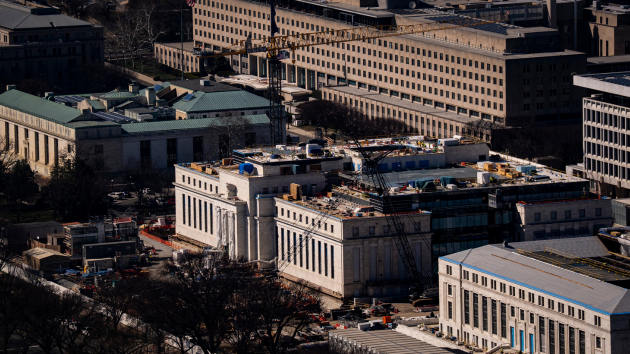
Construction on the Marriner S. Eccles Federal Reserve building on March 10, 2026 in Washington, DC. (Photo by Al Drago/Getty Images)
(WASHINGTON) — The Federal Reserve will unveil on Wednesday its latest decision on interest rates, marking the first such move since the U.S.-Israeli war with Iran drove up gasoline prices and risked a wider bout of inflation.
The elevated price increases coincide with a slowdown of economic growth, threatening to intensify an economic double-whammy known as “stagflation,” which poses difficulty for the Fed.
If the Fed opts to lower borrowing costs, it could spur growth but risk higher inflation. On the other hand, the choice to raise interest rates may slow price increases but raises the likelihood of a cooldown in economic performance.
Markets are expecting the Fed to hold interest rates steady. Investors peg the chances of interest rates being left unchanged at about 99%, according to the CME FedWatch Tool, a measure of market sentiment.
The central bank maintained the current level of interest rates at its most recent meeting in January, ending a string of three consecutive quarter-point rate cuts.
The benchmark rate stands at a level between 3.5% and 3.75%. That figure marks a significant drop from a recent peak attained in 2023, but borrowing costs remain well above a 0% rate established at the outset of the COVID-19 pandemic.
A lackluster jobs report last week showed the U.S. economy lost 92,000 jobs in February, which marked a reversal of fortunes for the labor market and erased most of the job gains recorded in 2026.
The unemployment rate ticked up from 4.3% in January to 4.4% in February, the BLS said. Unemployment remains low by historical standards.
A revised government report last week on gross domestic product (GDP) showed the economy grew at a sluggish annualized pace of 0.7% over the final three months of 2025.
Those economic headwinds helped set the conditions before the outbreak of war with Iran, which spiked oil prices and risked price increases for a host of diesel-fuel transported goods.
U.S. crude oil prices hovered at about $96 per barrel on Tuesday, soaring more than 50% since a month earlier.
Since the military conflict began, U.S. gas prices had gone up 81 cents to an average of $3.79 per gallon as of Tuesday, according to AAA.
The rate decision on Wednesday will also mark the first such move since a federal judge blocked Justice Department subpoenas to the Federal Reserve’s Board of Governors after determining the government “produced essentially zero evidence” to support a criminal investigation of Fed Chair Jerome Powell, according to an unsealed court opinion.
“A mountain of evidence suggests that the Government served these subpoenas on the Board to pressure its Chair into voting for lower interest rates or resigning,” U.S. District Judge James Boasberg said in his opinion on Friday.
Acting U.S. Attorney Jeanine Pirro blasted Boasberg as an “activist” judge and pledged to appeal his ruling.
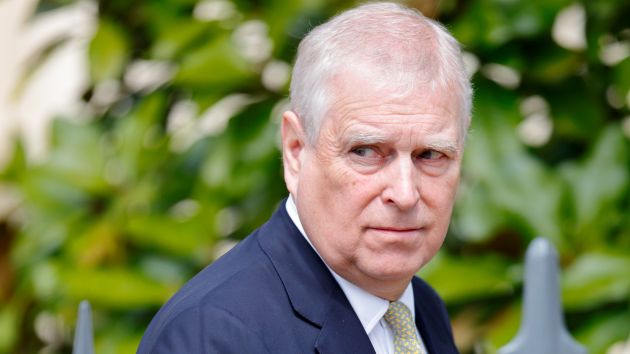
Prince Andrew, Duke of York attends the traditional Easter Sunday Mattins Service at St George’s Chapel, Windsor Castle on April 20, 2025 in Windsor, England. (Photo by Max Mumby/Indigo/Getty Images)
(NEW YORK) — One month after the arrest of former Prince Andrew, the head of London’s Metropolitan Police is pushing U.S. officials for unredacted material from the Epstein files.
In an interview with ABC News’ chief investigative correspondent Aaron Katersky, Metropolitan Police Commissioner Sir Mark Rowley said his office is in communication with the Department of Justice to access the original documents related to ongoing investigations of both Andrew Mountbatten-Windsor and former British ambassador to the U.S. Peter Mandelson.
“Of course, there’s a big body of that evidence … in the United States in all those files and at some stage we’re going to need the unredacted evidence,” Rowley said. “We need the original copy and where did it come from and that’s going to be necessary if we get to the stage of court cases.”
While Department of Justice officials have repeatedly insisted that there is nothing more to investigate stateside about the convicted sex offender and his co-conspirator Ghislaine Maxwell, officials in the United Kingdom are carrying out unprecedented investigations into both Mountbatten-Windsor and Mandelson on suspicion of misconduct in public office.
Emails released earlier this year by the Department of Justice suggested that both Mountbatten-Windsor and Mandelson appeared to share sensitive information with Epstein stemming from their roles as the U.K. trade envoy and business secretary, respectively.
In one email released by the Department of Justice and referenced by Rowley, Mandelson appeared to confirm the timing of an impending bailout with Epstein during the European Union’s sovereign debt crisis.
“It looks like it was shared with Epstein so we’re looking at that as to whether that’s a criminal offense and then colleagues in Thames Valley are looking at other documents that Andrew Mountbatten-Winsor potentially shared,” Rowley said.
According to Rowley, his department is also assessing “a whole range of suggested sexual allegations” to determine if any “merit a criminal investigation.”
Suspicion about Mountbatten-Windsor began years ago following the publication of a photograph showing the former prince with his arm around the waist of Virginia Guiffre, who said she was 17 years old at the time of the photograph. Before she died by suicide last year, Guiffre alleged that Epstein trafficked her in 2001 to have sex with the former prince. Mountbatten-Windsor has long denied wrongdoing and told the BBC in 2019 that the allegations are not credible.
When asked about the allegations made by Guiffre, Rowley claimed that the information they received from Guiffre during four recorded interviews could not support an investigation.
“With Virginia Guiffre, we did four of those interviews with her … .and those interviews didn’t give us any evidence or any allegations of sexual offending or trafficking that we could investigate in the UK,” he said. “That’s why that investigation didn’t go forward.”
However, Rowley said he hopes the renewed look at the allegations against Mountbatten-Windsor helps improve the public’s trust that law enforcement is willing to scrutinize anyone regardless of their title or status.
“Those investigations all go wherever the evidence takes them — quite comfortable with investigating sort of famous or powerful people. I think it’s really important for policing to do that, that sense of operating without fear or favor. The law applies equally to everyone, and those cases will go, say, wherever the evidence leads us to,” he said.
Rowley said the investigation into Mountbatten-Windsor comes as the Metropolitan Police is increasingly targeting sexual and domestic violence.
“We’ve developed tactics to be much more proactive and targeting the most dangerous men who pose a threat to women and children just like we do terrorists and organized crime. So, a combination of factors has seen the rates steadily coming down,” he said. “We’re making big progress and most of all — at the center of all this that matters to me and matters to policing — is trust in the police’s building in London.”
Rowley also touted some of the technology used by the Metropolitan Police to lower crime rates such as facial recognition, which he said has allowed officers to identify violent offenders while minimizing intrusion to the broader public.
While he acknowledged that the technology has raised privacy concerns, Rowley argued that the focus on targeting violent offenders using the technology can help improve the public trust — something he says is foundational to the Metropolitan Police’s 200-year history.
“[Policing] should start from the idea of having the consent of people in a democracy and use the minimum force necessary and be focused on the prevention of crime, and those ideas still guide us today,” he said.
Rowley said he hopes being upfront with the public about the work of the Metropolitan Police — from low-level street crimes to allegations against some of the most prominent people in British society — can renew the public’s trust in law enforcement.
“Policing in the UK will operate without fear or favor, that’s the fundamental principle. I think if you don’t have that, you’re never going to have the trust and confidence of the public in policing, so that’s really important to me,” he said.
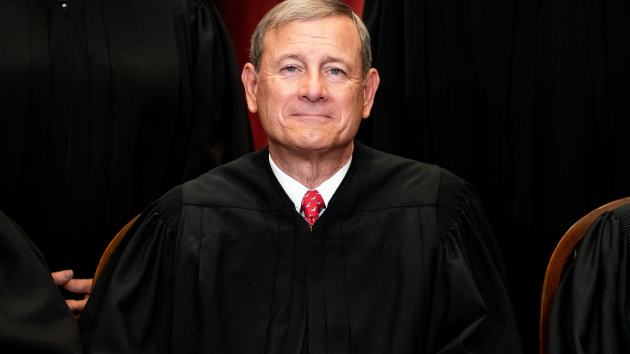
John Roberts, chief justice of the U.S. Supreme Court, during the formal group photograph at the Supreme Court in Washington, D.C., U.S., on Friday, April 23, 2021. Amy Coney Barrett’s confirmation by the Senate last year was a touchstone accomplishment for Donald Trump and congressional Republicans that solidified a 6-3 conservative majority on the court just eight days before the U.S. held its presidential election. (Photographer: Erin Schaff/The New York Times/Bloomberg via Getty Images)
(WASHINGTON) — In a rare public appearance, Chief Justice John Roberts on Tuesday addressed criticism of the Supreme Court, the federal judiciary and individual judges, saying “personally directed hostility is dangerous, and it’s got to stop.”
He did not address any specific criticism or controversy, though the comments come at a time of heightened scrutiny of the court’s recent landmark decisions on presidential power.
“It does come with the territory,” Roberts said of criticism. “It can very much be healthy. We don’t believe that we’re flawless in any way. It is important that — important that our decisions are subjected to scrutiny, and they are. The problem sometimes is that the criticism can move from a focus on legal analysis to personalities.”
Violent threats against individual judges and justices have spiked, according to law enforcement officials. Four years ago, a man was arrested outside the home of Justice Brett Kavanaugh with the intention of assassinating him. He was later convicted and sentenced to eight years in prison.
Roberts was careful to say that no “one political perspective” is responsible for the threats, but that as they become more “personal” they “can be actually quite dangerous.”
“Judges around the country work very hard to get it right,” he said, “and if they don’t, their opinions are subject to criticism. But personally directed hostility is dangerous, and it’s got to stop.”
The remarks came on the heels of a fresh wave of criticism of the Supreme Court from President Donald Trump, who has accused Roberts and several of his peers — some of whom Trump appointed to the court — of being “disloyal” and “unpatriotic” after they ruled against his sweeping global tariffs program. Trump alleged on Monday that the court is a “weaponized and unjust political organization” that is “hurting our country.”
Trump has also singled out U.S. District Judge James Boasberg for intense criticism after Boasberg on Friday blocked the Justice Department’s subpoenas of Fed Chair Jerome Powell as part of a criminal investigation into his handling of a multibillion-dollar renovation of the Federal Reserve Building.
Last year, Trump called for Boasberg’s impeachment after the judge temporarily blocked the administration’s fast-tracked deportations to Venezuela. The comments prompted a rare public response at the time from Roberts, who said in a statement that impeachment was not an appropriate recourse for a losing party in a case.
Overall, Trump has had a favorable track record at the high court during the first year of his second term, winning nearly every emergency request of permission to move forward with controversial policies being litigated in lower courts. He has also benefitted from a 2025 landmark ruling that limited the ability of judges to issue nationwide injunctions and a sweeping 2024 decision granting presidential immunity from criminal prosecution.
“I actually try not to read outside criticism too much,” Roberts told Rosenthal. “And it’s, you know, just because you’re on to something else, and you don’t want to worry too much about — you’ve done your best and that’s all you can do.”
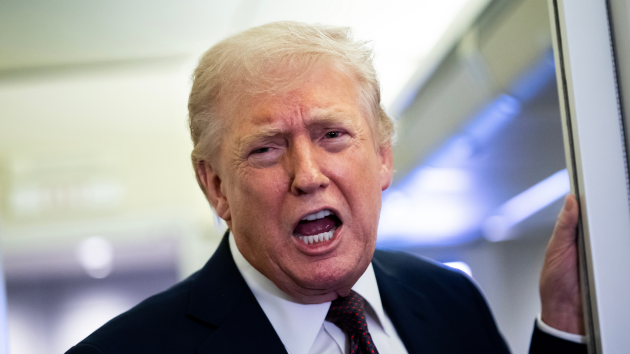
U.S. President Donald Trump speaks to members of the media onboard Air Force One on March 15, 2026 while en route to Joint Base Andrews, Maryland from West Palm Beach Florida. President Trump returned to Washington D.C. on Sunday following a weekend trip to Florida. (Photo by Nathan Howard/Getty Images)
(WASHINGTON) — After NATO allies rebuffed his call to assist the U.S. in securing the critical Strait of Hormuz, President Donald Trump said on Tuesday the U.S. doesn’t need their help after all.
“I think NATO’s making a very foolish mistake,” Trump said, airing out his grievances with the transatlantic alliance during an Oval Office meeting with Ireland’s Taoiseach Micheál Martin.
“This was a great test because we don’t need them, but they should have been there,” the president added.
Trump over the weekend requested U.S. partners in Europe and Asia send warships to help police the strait, where roughly one-fifth of the world’s oil supply is caught in the crosshairs of the U.S. and Israeli war with Iran.
No country has publicly announced plans to send ships or other kinds of assistance to unblock the strait.
“This is not our war; we did not start it,” German Defense Minister BorisPistorius said on Monday.
“We will not be drawn into the wider war,” British Prime Minister Keir Starmer similarly said.
Despite the cold shoulder from several allies, President Trump on Monday said that “numerous countries” had told him “they’re on the way.” Trump did not identify which countries, and said that Secretary of State Marco Rubio would soon provide a list.
As of Tuesday afternoon, no list had been released.
When asked what countries would join in a coalition to secure the strait, Trump said he’s had “great support from the Middle East” including Qatar, the United Arab Emirates, Saudi Arabia, Bahrain and “of course Israel” — but did not explicitly say what those countries would be doing.
In a social media post on Tuesday, Trump wrote the U.S. military had been “informed by most of our NATO ‘Allies’ that they don’t want to get involved with our Military Operation against the Terrorist Regime of Iran, in the Middle East, this, despite the fact that almost every Country strongly agreed with what we are doing, and that Iran cannot, in any way, shape, or form, be allowed to have a Nuclear Weapon.”
Trump said the U.S. didn’t need the assistance from those countries, or from “Japan, Australia and South Korea.”
“Well, we don’t need too much help, and we don’t need any help, actually,” Trump later said in the Oval Office.
When asked if he would retaliate against NATO countries for not heeding his call or if he was rethinking the alliance, Trump said no.
“I have nothing currently in mind. But I will say that I’m not exactly thrilled,” Trump said.
Trump pointed to the assistance the U.S. provided to help Ukraine fight Russia’s invasion under the Biden administration as he criticized NATO for not stepping in to help with reopening the Strait of Hormuz.
“You would have thought they would have said, ‘We’d love to send a couple of minesweepers,'” Trump said. “It’s not a big deal. It doesn’t cost very much money. But they didn’t do that. So, you know, it’s — I think it’s very unfair to the United States, not to me, but to the United States.”
Meanwhile, the impact of Iran’s stranglehold is being felt abroad and at home. The price of oil has hovered around $100 a barrel this week. In the U.S., the national average for a gallon of gas is $3.79 — up about 88 cents from a month ago.
President Trump had also called on China, which Iran is still allowing to transit the Gulf, to assist in the Strait of Hormuz. The response from China’s foreign ministry was a call for all parties to immediately stop military operations.
President Trump announced Tuesday that his previously planned trip to China is now postponed for five to six weeks. Trump didn’t provide details on why, only that he was “resetting the meeting” originally scheduled for early April.
“I look forward to seeing President Xi. He looks forward to seeing me, I think,” Trump said.
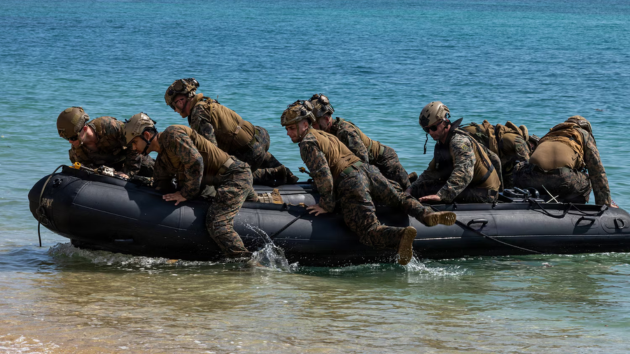
U.S. Marines land at the objective point during a simulated bilateral small boat raid at Kin Blue Training Area, Okinawa, Japan, Feb. 26, 2026. (U.S. Marine Corps)
(WASHINGTON) — The Pentagon’s decision to send the 31st Marine Expeditionary Unit, a 2,200-troop force, to the Middle East is fueling new speculation about whether the conflict with Iran couldinvolve U.S. ground troops, a step that would mark a dramatic escalation and potentially push the already unpopular war into a far more dangerous phase.
It could take up to two weeks, or the end of March, before the unit is in place and its presence unlikely to significantly shift the dynamics of the war on its own, experts say. A Marine Expeditionary Unit (MEU) can deliver an initial surge of troops quickly, but seizing and holding key terrain, or sustaining a prolonged fight, would almost certainly require a far larger ground force.
Experts say the MEU would likely be used to conduct raids across the Iranian shoreline to gain a foothold in areas across the crucial oil shipping waterway, the Strait of Hormuz, which has emerged as a contested point of the conflict.
A Quinnipiac University poll from earlier this month showed 74% of registered voters opposed sending U.S. ground troops into Iran while 20% supported it.
Asked Tuesday if he was afraid of the Iranian regime’s assertion that U.S. boots on the ground “will be another Vietnam,” President Donald Trump replied, “No, I’m not afraid. I’m really not afraid of anything.”
Sailing from the Pacific, it will likely take up to two weeks for Marines to be in place in the Middle East, and it is not yet clear what those troops would be used for. The unit operates as a self-contained, sea-based force — essentially a floating hub capable of launching troops, aircraft and equipment without relying on nearby bases or infrastructure.
Reopening the Strait of Hormuz would unlock a waterway through which 20% of the globe’s oil supply transits each day. Its closure has seen gas prices soar and markets roiled. Trump has referenced shorelines from which the Iranians can attack vessels transiting the waterway.
“Now we are pounding that area, that coast, as you know, left side,” Trump said Monday. “We’re pounding it like really pounding it hard.”
According to Michael Eisenstadt, a senior fellow at the Washington Institute, the MEU could take part in land-based “raids” on targets along that coast.
“There’s a number of missions where you can conceivably see a MEU playing a role, either unilaterally or kind of in conjunction with maybe the deployment of larger Army units,” said Eisenstadt, who believes the deployment of the MEU was likely related to the strait.
Iranian fortifications along the coast that could “interfere with convoy operations,” Eisenstadt said, could be U.S. targets. Top military leaders have said they’ve explored the potential uses of convoys, or warship escorts, to facilitate the safe passage of commercial shipping through the strait.
Raiding parties could target missile storage bunkers that are hardened and difficult for U.S. warplanes to destroy from the air.
The idea would be to “clear out the shore and then use air power to prevent them from returning once you’ve cleared out those areas,” Eisenstadt said.
Such an operation would not by itself create conditions for smooth sailing in the strait, experts told ABC News.
“My concern is that it takes so little to disrupt the shipping industry, Eisenstadt said. “If there’s a small, you know, kind of a small residual [Iranian] capability, it could still potentially be very disruptive.”
The 2,200 Marines in the MEU would limit any operation longer than a raid, which have pre-planned withdrawals. To get on land, these types of Marine units primarily seize footholds by riding small watercraft onto beaches or by helicopter insertion.
“Normally in an amphibious assault, you have all sorts of Navy landing craft behind you to sustain the force ashore. There’s none of that. There’s none of that logistical tail that would allow them to remain ashore,” said retired Marine Col. Steve Ganyard, an ABC News contributor.
Leaving strategic waters in the Pacific
The 31st Marine Expeditionary Unit is primarily based in Japan, where it routinely trains with the Japanese Self-Defense Forces on skills in high demand across the Pacific, including rapidly seizing small islands. Earlier this month, it took part in a major annual exercise that featured amphibious assault drills, marksmanship training and operations focused on capturing hostile terrain, according to the Defense Department.
Their removal from the region removes one of the primary ground combat elements in the Pacific, which could respond to a crisis with China or North Korea. Other significant combat elements in the region include the Army’s 2nd Infantry Division, stationed to bolster South Korea’s frontline against Pyongyang, as well as the Army’s 25th Infantry Division in Hawaii and the 11th Airborne Division in Alaska.
“That leaves a ground combat and amphibious capability gap in the region,” Carlton Haelig, an expert in military operations and fellow at the Center for New American Security, said.
The 11th Marine Expeditionary Unit, based out of Camp Pendleton, California, is preparing to deploy to the Pacific, according to Pentagon imagery.
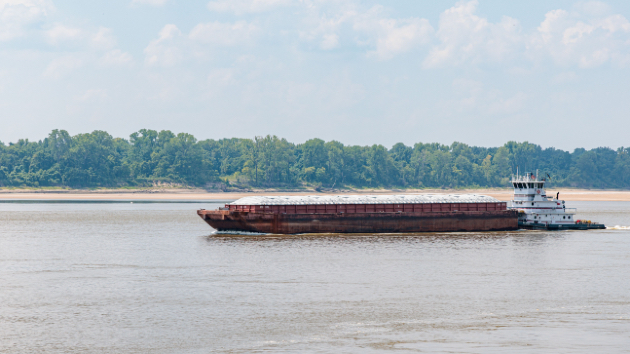
Tugboat pushing a barge upstream on the Mississippi River at West Memphis, Arkansas. (Ron Buskirk/UCG/Universal Images Group via Getty Images)
(WASHINGTON) — Mayors from Minnesota to Louisiana traveled to Washington earlier this month with a bipartisan message that protecting the Mississippi River is not just an environmental issue, it is a matter of national security.
The mayors met with lawmakers and federal officials, including the Environmental Protection Agency and the Department of Homeland Security, as part of their annual Mississippi River Cities & Towns Initiative fly-in, and later spoke with ABC News about growing pressures facing the river corridor.
Stretching more than 2,300 miles through 10 states, the Mississippi River forms the backbone of one of the most important economic corridors in America. According to data shared by the mayors’ coalition, the river system generates nearly $500 billion in annual revenue and directly supports about 1.5 million jobs.
Its waters also carry a massive share of the nation’s agricultural exports, making the river central to U.S. and global food supply chains. According to the National Park Service, the Mississippi River Basin accounts for 92% of America’s agricultural exports, including 78% of the world’s exports of grains and soybeans.
Founded in 2012, the Mississippi River Cities & Towns Initiative (MRCTI) brings together local governments along the river corridor to coordinate priorities including clean water, economic stability, disaster resilience and food security.
However, this year’s trip to Washington came with new urgency.
Several mayors said the rise of artificial intelligence, declining infrastructure, growing demand for water and energy, geopolitical tensions in the Middle East affecting fuel prices and increasingly severe weather events are placing unprecedented pressures on the region.
One concern raised during the discussions was growing interest from water-scarce regions in the western U.S.
“The Colorado River Basin is looking at the Mississippi River Basin to move water into areas of Phoenix, Vegas — the places that are most water insecure on the continent,” Colin Wellenkamp, executive director of MRCTI and a Missouri state representative, told ABC News.
He added they “are looking into the Mississippi River basin for their water supply for the future.”
Coalition co-chair Mayor Melisa Logan of Blytheville, Arkansas, said the river system has become a national security concern as water demands grow.
“This water is absolutely essential for the security of the country, and you move it to another basin irresponsibly, right? That puts the nation at risk,” Logan told ABC News.
Several major U.S. water systems are already governed by interstate compacts, including the Great Lakes Water Compact and the Delaware River Basin Compact. These legally binding agreements, often approved by Congress, help to establish rules for managing and protecting shared water resources.
Supporters of a Mississippi River Compact say a similar framework could help coordinate policy across the 10 states that rely on a basin that supports national and international trade and food supply chains.
“That’s why these mayors are pursuing a Mississippi River Compact to protect the Mississippi,” Wellenkamp said.
He noted that his state passed a law for such an agreement.
“The other nine states aren’t far behind, because this is a real risk in the future,” Wellenkamp added.
Beyond water access, many mayors said the rising cost of disasters has become another urgent concern for communities along the river.
Logan, Blytheville’s mayor, said protecting the river requires key coordination across state lines, as communities along the river often struggle to secure federal funding for projects that cross state boundaries.
“Typically, they do it state by state by state,” Logan said, referring to federal funding programs. “But these impacts are multi-state by watershed.”
According to MRCTI materials, natural disasters along the Mississippi River corridor have caused more than $250 billion in losses since 2005.
Mayor Buz Craft of Vidalia, Louisiana, said local leaders often face delays when seeking federal disaster assistance.
“We need Congress to quit changing the goal post, for example, when we have an issue, whether it’s a tornado or hurricane,” he said.
Changing White House administrations can also put them back to square one, Craft noted.
“Just when you are about to get that funding for that past disaster they say ‘Oh, now you got to go through this,’ start all over and apply to this program, and it’s really a rat race,” he said.
Global instability is also beginning to show up in everyday costs for residents along the river. Several of the mayors said fuel prices along the Mississippi River recently jumped about 20 cents overnight. Those increases can quickly ripple through food prices, the mayors said, because much of the nation’s food supply moves by truck, rail or barge along the Mississippi River system.
Meanwhile, some communities are also preparing for a different kind of pressure, the rapid expansion of artificial intelligence infrastructure. The data centers that power AI systems require massive amounts of electricity and water for cooling, placing new increased demands on local power grids and water systems.
Mayor David Goins of Alton, Illinois, said companies have already begun exploring potential sites in his city.
“I think it’s important to get in front of it and get ahead of it,” he said. “This meeting right here is timely to get the resources that we can, that we can have at our disposal through different companies, organizations, to start preparing ordinances and start getting some type of framework or groundwork, because it’s coming.”
For the mayors gathered in Washington, the message they hoped policymakers would hear was simple: the Mississippi River’s importance stretches far beyond the cities along its banks.
“If you don’t live on the Mississippi River, you don’t necessarily understand the importance of the Mississippi River Basin to our entire continent,” Quincy, Illinois, Mayor Linda Moore said. “One in 12 people in the world is fed by food that flows up and down the Mississippi on a barge or from the river itself.”
For the mayors who traveled to Washington this week, the Mississippi River is more than a waterway — it is an economic lifeline whose currents shape American agriculture, trade and communities across the country.
Mayor Hollies Winston of Brooklyn Park, Minnesota, said the river’s influence reaches far beyond the 10 states it touches, and may stretch long into the future.
“If that water is not protected, we don’t know the impact that that has on the economy 15, 20, 30 years from now,” Winston said.
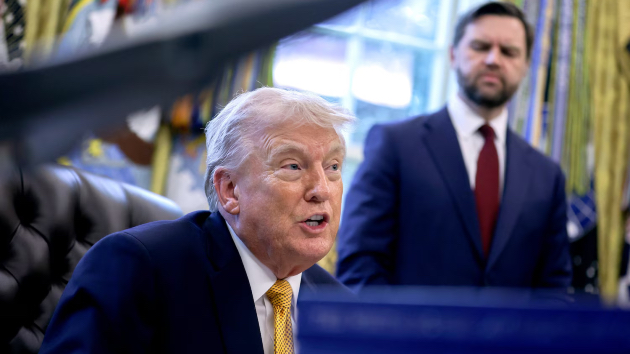
President Donald Trump speaks as Vice President JD Vance listens in the Oval Office of the White House, March 16, 2026, in Washington. (Alex Wong/Getty Images)
(WASHINGTON) — The Senate is expected to take up the SAVE America Act this week after President Donald Trump earlier this month thrust the bill into focus with a threat to withhold his signature on all other legislation until the GOP voting reform bill hits his desk.
Debate on the bill could kick off in the Senate as soon as Tuesday, but on Monday the president seemed doubtful that it would get to his desk.
“I think it’s imperative that it gets done. I’m not sure it is,” Trump said when asked about the bill’s outlook.
“I hope [Senate Majority Leader] John Thune can get it across the line. He’s trying. I mean, he told me this morning. I spoke to him, he’s trying,” Trump said. “I think it’ll be a very, very bad thing for our country if they don’t. We’re just asking for basic things,” Trump said.
Things could get quite heated on the floor, but ultimately the legislation, despite having a passionate base of GOP supporters, will almost certainly fail.
Here’s a look at what to know about this bill as it takes center stage this week:
What is the SAVE America Act?
The SAVE America Act is a Republican-led election reform bill that would require photo ID at polling places and mandate that states obtain proof of citizenship before registering a person to vote in a federal election.
Trump has said that passing the SAVE America Act is a top priority. The president has also tacked additional provisions onto the list of things he would like to see in the law: restricting mail-in ballots, banning transgender women from playing in women’s sports and gender-affirming surgeries for minors.
Will the bill the Senate is considering include Trump’s additional demands?
The Senate is expected to consider amendments to the SAVE America Act aimed at adding Trump’s demands. But those amendments would need 60 votes to pass, and are not expected to get enough support to ultimately be tacked onto the bill.
What do Democrats think of the bill?
Senate Democrats have been clear they intend to oppose this legislation, which they say would make it more difficult for millions of Americans to vote.
During a press call on Sunday, Democratic Leader Chuck Schumer called the bill “one of the most despicable pieces of legislation I’ve come across in the many years I’ve been a legislator.”
Democrats have been quick to underscore that the bill does more than require voters to show ID at the polling place. They say it amounts to an effort to nationalize elections and could lead to many people being turned away at their polling place.
What can be expected on the Senate floor this week?
The Senate is expected to hold a potentially lengthy debate on the floor this week as they consider the bill.
It will be a contentious couple of days during which the floor will be open for nearly unlimited debate on the bill. This debate could stretch into this weekend, but the result is already baked. When lawmakers run out of steam to keep debating, there will be a vote to move forward with the bill that requires 60 votes to advance. Democrats will almost certainly block it, and the bill will fail.
Will the SAVE America Act pass?
It is highly unlikely that the SAVE America Act will pass the Senate.
Though there’s going to be a lot of debate on the bill, the Senate rules that require 60 votes to pass most legislative matters will remain intact. That means that even if every Senate Republican were to cast a vote in favor of this legislation, at least seven Democrats would need to support it for it to pass.
Democrats have vowed to block the bill. Without their support, it will fail.
Could senators change the rules?
Yes, they could. But they won’t.
The Senate filibuster rule requires 60 votes to pass most legislative matters into law. Senators have the ability to change their rules with a simple majority of votes, and they’ve faced considerable pressure from Trump and others to do so.
But Thune has been consistent throughout his time as party leader about the lack of support within the Republican conference to change the Senate’s rules. Thune is a supporter of the Senate filibuster, and he has been clear there are not the votes to change the filibuster rule.
Senators are not expected to make modifications to the threshold of votes necessary to pass this bill. Without those changes, its hard to see how this would pass.
If the Senate fails to pass it, what happens?
Then it’s back to the drawing board.
This week’s actions amount to a good-faith effort by Senate Republicans to demonstrate that they are trying to make good on Trump’s priority. But this is largely a messaging vote unlikely to get the support it needs.
The House could take further action to try to revive the bill. But Democratic opposition in the Senate makes it unlikely that any renewed efforts will see a different outcome.
What’s less clear is whether this will be enough to back Trump off of his threat to withhold his signature on all other bills.
Editor’s note: This story has been updated to reflect the elements of the House-passed bill.
.S. President Donald Trump speaks during a lunch with the Trump Kennedy Center Board Members in the East Room of the White House on March 16, 2026 in Washington, DC. (Alex Wong/Getty Images)
(WASHINGTON) — President Donald Trump said on Monday during a signing event in the Oval Office that he thinks he’ll have the “honor” of taking Cuba.
“It’s a failed nation,” Trump said. “They have no money, they have no oil, they have no nothing. They have nice land. They have nice landscape. You know, it’s a beautiful island.”
“All my life I’ve been hearing about the United States and Cuba,” Trump continued. “You know, when will the United States do it? I do believe I’ll [have the] honor of taking Cuba. That’d be good. That’s a big honor.”
The president’s comments came as Cuba was struggling with an energy crisis and a near-total blackout, according to local officials. The Cuban Ministry of Energy and Mines said Monday there was a “total disconnection” of the National Electroenergetic System, which is known as SEN. Cubans are facing limited water supplies, a loss of basic services in hospitals as well as access to medicine, sanitation and food, according to reports.
The United States this year put in place a blockade, cutting off Havana’s access to foreign oil shipments, including those from Venezuela.
The Cuban ministry said on Tuesday that it was working to restore the system after earlier saying the “causes are being investigated and protocols for restoration are beginning to be activated.”
When pressed during the Oval Office event about what “taking” the country could mean, Trump responded: “I think I can do anything I want with it.”
Trump announced additional tariffs in January on countries that provide oil to Cuba. He acknowledged while speaking to Politico that the United States’ intervention in Venezuela has contributed to Cuba’s struggle.
“Well, it’s because of my intervention, intervention that is happening,” Trump told Politico. “Obviously, otherwise they wouldn’t have this problem. We cut off all oil, all money … everything coming in from Venezuela, which was the sole source.”
Trump told reporters on Air Force One on Sunday that he believes Cuba will soon “make a deal” with the U.S.
“I am holding Cuba — Cuba is a failed nation — Cuba also wants to make a deal, and I think we will pretty soon either make a deal or do whatever we have to do,” Trump said on Sunday. “The president added that he thinks “something will happen with Cuba pretty quickly,” but that “we’re going to do Iran before Cuba.”
Trump has previously floated a “friendly takeover” of Cuba but hasn’t yet provided any specifics on what a possible “takeover” could look like.
In a rare move on Friday, Cuba’s president publicly acknowledged that his government was holding secretive talks with the U.S. as Trump intensifies his pressure campaign against the regime.
“Cuban officials have recently held talks with representatives of the United States government,” President Miquel Díaz-Canel said during a televised address on Friday.
“We want to avoid manipulation and speculation,” Díaz-Canel later added, explaining that the talks were still “in their first phase” and that negotiators from both countries were working “to establish an agenda.”
“As the president stated, we are talking to Cuba, whose leaders should make a deal, which he believes ‘would be very easily made,'” a Trump administration official told ABC News when asked about the Cuban leader’s statements.
“Cuba is a failing nation whose rulers have had a major setback with the loss of support from Venezuela and with Mexico ceasing to send them oil,” the official continued.
Little is known about the contours of any potential deal, but both the president and seasoned diplomats who have worked closely with Cuba for years have signaled they expect to see the regime collapse.
Joe Kent, director of the National Counterterrorism Center, testifies during the House Homeland Security Committee hearing titled “Worldwide Threats to the Homeland,” in Cannon building on Wednesday, December 11, 2025. (Tom Williams/CQ-Roll Call, Inc via Getty Images)
(WASHINGTON) — The Trump administration’s top counterterrorism official Joe Kent announced his resignation Tuesday over opposition to the Iran war, becoming the highest-profile administration official to step down publicly over the conflict.
In a resignation letter posted publicly on social media, Kent said he could not “in good conscience” support the war, which is now in its third week.
“Iran posed no imminent threat to our nation, and it is clear that we started this war due to pressure from Israel and its powerful American lobby,” Kent, who served as the director of the National Counterterrorism Center, wrote in his resignation letter.
The National Counterterrorism Center is housed within the Office of the Director of National Intelligence. ABC News has reached out to ODNI for comment.
ODNI says Kent oversaw the U.S. counterterrorism and counternarcotics enterprise and, according to his biography, he served as the principal counterterrorism adviser to the president.
ABC News has reached out to the White House for comment.
Kent is a combat veteran who served more than 20 years in the U.S. Army and completed 11 combat deployments in the Middle East.
Kent also invoked a deeply personal loss in explaining his decision to step down: he is a Gold Star husband whose late wife, Navy Senior Chief Petty Officer Shannon Kent, was killed in action during a suicide bombing while serving in Syria in 2019.
In his resignation letter, Kent wrote, “As a veteran who deployed to combat 11 times and as a Gold Star husband who lost my beloved wife Shannon in a war manufactured by Israel, I cannot support sending the next generation off to fight and die in a war that serves no benefit to the American people nor justifies the cost of American lives.”