
Europe must ‘play the power game’ with Trump over Greenland, former Danish FM says

Europe must ‘play the power game’ with Trump over Greenland, former Danish FM says
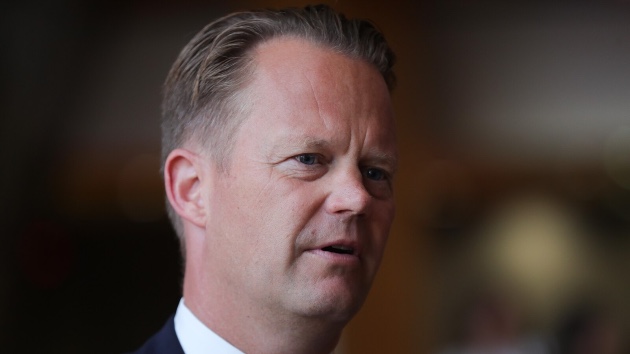
Denmark’s then-Foreign Minister Jeppe Kofod speaks to the press in Brussels, Belgium, on July 18, 2022. (Xinhua News Agency via Getty Images_

(LONDON )– Denmark’s new government was less than two months old when U.S. President Donald Trump’s campaign to acquire Greenland broke into public view in the summer of 2019.

“We thought it was unprecedented,” recalled former Danish Foreign Minister Jeppe Kofod, who then was in post and suddenly tasked with a transcontinental fire drill. 

Trump’s desire for what he at the time called “essentially a large real estate deal” threw a wrench in the works of a planned state visit by the president to Denmark. The president ultimately cancelled the trip, saying Danish Prime Minister Mette Frederiksen had shown “no interest in discussing the purchase of Greenland.”

Frederiksen at the time rejected Trump’s proposal as “absurd.”

Kofod, who has since left Danish politics, told ABC News in an interview on Tuesday that the 2019 saga was “a really bad situation for the bilateral relationship.” 

“We also saw it as offending a close ally,” Kofod recalled. “We were very surprised that the first major comments he had were, ‘Why can’t I just buy Greenland?'”

Copenhagen, he said, never considered formulating a price for Greenland’s potential sale.

At the time, though, Danish leaders did not believe Trump was “determined” to force a U.S. acquisition of the world’s largest island, Kofod said. Rather, the Danish government saw the proposal as a means to foster more U.S. engagement in and influence over Greenland.

Nearly seven years later, Kofod’s successors — again under the leadership of Frederiksen — have faced a more protracted and aggressive campaign from Washington. Trump has repeatedly said the U.S. will acquire Greenland — “one way or another,” he said earlier this month.

Greenland is a self-governing territory of the Kingdom of Denmark. Trump’s second term has seen the president double down on his ambition to acquire the minerals-rich island — despite Danish and Greenlandic politicians repeatedly rebuffing him.

Trump has suggested that U.S. sovereignty over Greenland is necessary to ensure American security and blunt Chinese and Russian influence in the Arctic region. A 1951 defense agreement already grants the U.S. military access to Greenland, but Trump has suggested the accord is inadequate and has demanded “ownership.”

The issue dominated this week’s World Economic Forum in Davos, Switzerland, where Trump said in a Wednesday address that he would not use military force to seize control of the Arctic landmass.

On Wednesday, Trump said during the event that a “framework” of a deal had been reached on Greenland after talks with NATO Secretary-General Mark Rutte. Details of the purported agreement are yet to be revealed.

Frederikson said in a Thursday morning statement that Copenhagen “cannot negotiate on our sovereignty.”

Greenland’s Prime Minister Jens-Frederik Nielsen said at a Thursday press conference that Nuuk is “willing to do more in a NATO frame,” but also said they have some “red lines” including territorial integrity, international law and sovereignty.

In Davos on Wednesday, Trump said that Greenland’s mineral deposits are “not the reason we need it,” though also said the professed deal “puts everybody in a really good position, especially as it pertains to security and to minerals.”

Trump’s professed security concerns have prompted Danish efforts to increase military spending in the Arctic and the deployment of small contingents of NATO troops to Greenland. 

But the deployments — which the eight European nations involved said were for military exercises to enhance the defense of the region — prompted Trump at the time to threaten new tariffs against the American allies starting on Feb. 1 unless the U.S. was able to acquire Greenland.

That raised the prospect of a new transatlantic trade war, though Trump said Wednesday that he would drop the tariffs citing the purported deal.

European and allied leaders have said they are open to deeper and broader cooperation with the U.S. in Greenland, to address American security concerns and to develop shared commercial opportunities across the mammoth, resources-rich territory.

For Kofod — who said his time in office saw Copenhagen and Washington forge a “path forward” despite tensions over Greenland — any deal should be twinned with a European show of force.

“The first step is power,” Kofod said. Trump may soften his attacks “if he sees that he will have all of Europe — including the U.K., France, Germany — against him, and they are ready to defend Greenland,” Kofod said, plus if he sees that European “retaliation is so massive that it will hurt the U.S. economy and interests.”

“Trump plays with all the instruments he has. Europe has to learn to play the power game,” Kofod said, and “move him to a narrower path if this is going to stop.”

The Danish and Greenlandic experience in 2019 bears striking similarities to 2026. Then, as now, Trump set off a diplomatic storm by repeatedly declaring his ambitions to take control of Greenland. 

In both instances, Copenhagen and the Greenlandic government in its capital Nuuk responded by expressing openness to further collaboration, stressing the importance of sovereignty and dispatching a high-level delegation for talks in Washington.

Kofod said the de-escalation of tensions in 2019 was achieved through closer cooperation and modernization in the security sphere. “We took the security concerns of Trump very seriously,” he said.

The period spanning Trump’s first term and that of his successor, President Joe Biden, saw the U.S. reopen its consulate in Nuuk, modernize the Thule Air Base — since renamed to the Pituffik Space Base — and agree a new economic cooperation strategy in Greenland.

Copenhagen and Nuuk, Kofod said, encouraged “constructive engagement” with the U.S. in investment, education programs, tourism and other areas.

Similar measures might help ease the current round of pressure in the High North, Kofod said.

But he added that the future of the Arctic — which was long considered an area of scientific work largely free of geopolitical tensions — will be inextricably tied to security considerations.

Climate change, the subsequent melting of pack ice and the opening of new sea lanes is making the Arctic more navigable and — potentially — more lucrative. Russia’s 15,000 miles of Arctic coastline puts Moscow at the forefront in the region, while China’s declaration of itself as a “near-Arctic state” indicates Beijing’s long-term interest there.

“That’s why Trump is right on the concern about security in the future of the Arctic,” Kofod said. “Any U.S. president will find Greenland key to defending North America and the United States.”

Trump’s efforts “fit his ideology,” Kofod said, saying his bid to acquire Greenland despite broad opposition aligns with the “Donroe Doctrine” — a play on the 1823 Monroe Doctrine by which the U.S. said it would block European interference in the Western Hemisphere — which has in recent weeks been professed by members of Trump’s administration and noted by the president himself.

“There is something to that, that I think Europe hasn’t taken seriously enough,” Kofod said. “But now they are taking it seriously.”

The turbulence will undermine European, American and collective NATO security, Kofod warned. 

“For the U.S. it’s also a big self-inflicted problem,” he said. “But I don’t think Trump looks at the world like that. He  thinks that NATO is there, it’s important, but it’s not something you cannot live without, because you just can form another alliance.”

Copyright © 2026, ABC Audio. All rights reserved.
Ex-husband charged in Ohio couple’s double murder to appear in court

Ex-husband charged in Ohio couple’s double murder to appear in court
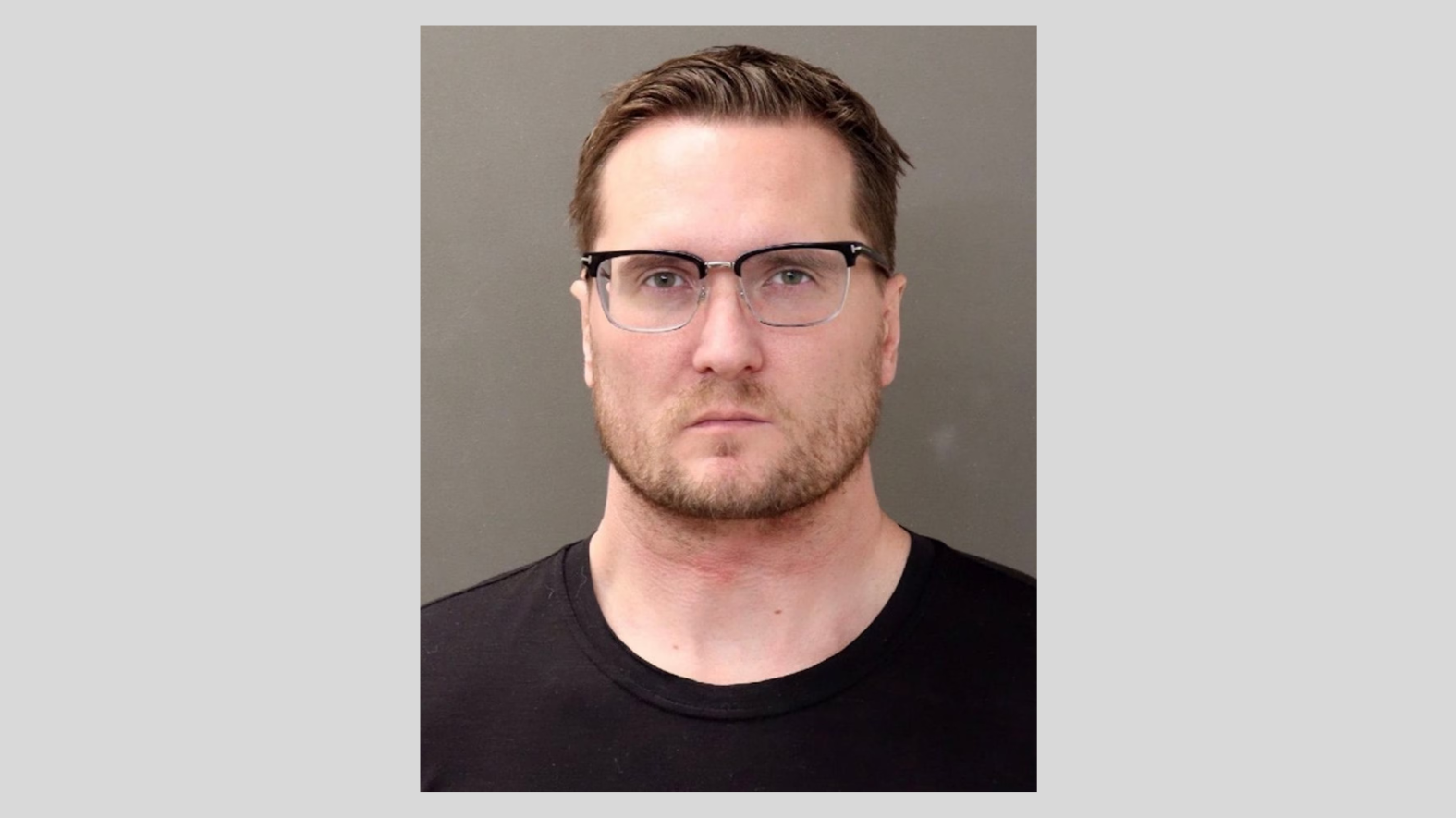
In this booking photo released by the Franklin County Sheriff’s Office, Michael McKee is shown. (Franklin County Sheriff’s Office)

(COLUMBUS, Ohio) — The surgeon accused of gunning down his ex-wife and her husband in their Ohio home is due to appear at an arraignment on Friday.

Michael McKee is charged with premeditated aggravated murder for allegedly shooting and killing his ex-wife, Monique Tepe, and her husband, dentist Spencer Tepe, at their Columbus home on Dec. 30, according to police.

McKee, who was taken into custody in Illinois, was booked into the James A. Karnes Corrections Center in Franklin County, Ohio, on Tuesday.

At his arraignment on Friday, the court is expected to hear arguments on whether McKee can be released on bond or must be held until trial. He has not entered a plea.

McKee and Monique Tepe were married in 2015 and divorced in 2017, according to divorce records obtained by ABC Columbus affiliate WSYX. They did not have any children together, according to the records.

Spencer and Monique Tepe married in December 2020, according to their obituary. The Tepes are survived by their two young children who were found safe inside their home after the Dec. 30 killings.

“We just want justice,” the Tepes’ brother-in-law, Rob Misleh, told ABC News.

“We want this person that took so much from, not just us as a family, but so many more people. And obviously the kids, especially. We want this person to pay for what they did,” he said.

ABC News’ Josh Margolin and Jason Volack contributed to this report.

Copyright © 2026, ABC Audio. All rights reserved.
White House ballroom: Judge signals skepticism of Trump administration arguments

White House ballroom: Judge signals skepticism of Trump administration arguments
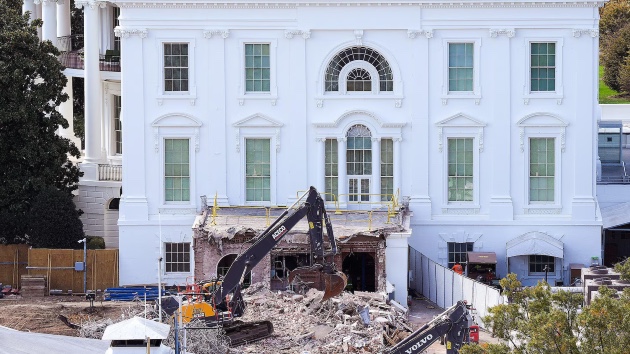
An excavator works to clear rubble after the East Wing of the White House was demolished, Oct. 23, 2025. (Eric Lee/Getty Images)

(WASHINGTON) — The federal judge presiding over a challenge to the White House ballroom project signaled deep skepticism of the Trump administration’s argument that the president has the legal authority to undertake the East Wing renovations and to fund them with private donations.

In a hearing on Thursday, U.S. District Court Judge Richard Leon pressed an administration lawyer on both of those issues — as he questioned whether the president has the power to tear down part of what he called “an icon that’s a national institution,” and described the intent to fund it with private gifts as a “Rube Goldberg contraption” that would evade congressional oversight. 

The National Trust for Historic Preservation filed a lawsuit last month seeking to stop the ballroom construction until the project completes the federal review process standard for federal building projects and the administration seeks public comment on the proposed changes.

The National Trust, the privately funded nonprofit designated by Congress to protect historic sites, was seeking a preliminary injunction.

At the end of the hour-long hearing Thursday, Judge Leon said he will likely not issue a decision this month, but “hopefully” in February.  He said he expects the losing side to appeal.

In a statement provided to ABC News, White House spokesman Davis Ingle said: “President Trump is working 24/7 to Make America Great Again, including his historic beautification of the White House, at no taxpayer expense. These long-needed upgrades will benefit generations of future presidents and American visitors to the People’s House.”

The White House announced the construction of a 90,000-square foot ballroom in late July, and demolition began suddenly on the East Wing in late October, when workers were spotted tearing down the wing of the White House that contained the first lady’s offices.

The size and cost of the project have increased since first being unveiled. In November, Trump said the project would cost $400 million, after an initial estimate of $200 million. The White House has said the project will be funded by private donations. 

Judge Leon, a George W. Bush appointee, said the Trump administration appears to be making an “end run” around congressional oversight with the president’s plan to privately raise $400 million for the ballroom project, and he admonished the Justice Department’s lawyer to “be serious” in justifying a legal rationale for it.

While the case presents a series of complicated and overlapping legal issues, the judge spent much of the hearing focused on just two federal statutes — one, which says that no “building or structure” can be built on any federal public grounds in the District of Columbia “without express authority of Congress,” and another that calls for yearly appropriations for the “maintenance, repair, alteration, refurnishing [and] improvement” of the White House.

Leon noted that Republicans control both houses of Congress, and that the president could have gone to lawmakers to seek approval for the demolition and rebuild.  He also suggested the $2.5 million Congress recently appropriated for White House maintenance was for “very small-size projects,” not a ballroom.

Justice Department lawyer Yaakov Roth responded that Trump didn’t want $400 million in taxpayer money to be used for the project, when he could solicit gifts to the National Park Service to fund it instead.  Roth also noted that Congress was never asked in Gerald Ford’s era to approve the building of a swimming pool, or a tennis pavilion during Trump’s first term.

“[Your argument for using NPS’s gift authority] on an icon that’s a national treasure is, what?  The ’77 Gerald Ford swimming pool?” Leon asked.  “You compare that to ripping down the East Wing?  C’mon!  Be serious.”

Leon said he saw “no basis” in the legislative history of the park service’s gift authority that would allow Trump to use it to raise $400 million to build a new White House ballroom.  “None,” Leon said. “Zero.”

Arguing for the National Trust, attorney Tad Heuer described the president as a “temporary tenant of the White House, not the landlord.”  Leon suggested “steward” might be a more fitting term.

“He is not the owner,” Heuer said. 

As Roth took the podium to begin his argument on behalf of the administration, he attempted to convince the judge that the National Trust has no standing to sue.  Leon abruptly cut him off.  

“I’m very comfortable with standing in this case,” Leon said. “Sorry to disappoint you. You’ll get your chance at the Court of Appeals.”

Roth warned the judge that an order halting construction at this stage could expose the existing White House structure to damage and potentially lead to security concerns, since it’s widely believed that a replacement for a previously-existing underground bunker is part of the project.  The National Trust has said it would not object to continued construction on the security portion of the work.

“It can’t be divided out that way,” Roth said of the security-related construction, “unless we want the court to be the project manager on site.”

Leon declined to issue an order from the bench. He said the coming winter storm made it unlikely he would issue a ruling on the National Trust’s motion for a preliminary injunction before the end of this month.

ABC News’ Michelle Stoddard contributed to this report.

Editor’s Note: An earlier version of this story misidentified an attorney for the National Trust for Historic Preservation. The story has been corrected and updated.

Copyright © 2026, ABC Audio. All rights reserved.
Democratic Sen. Amy Klobuchar files paperwork to run for Minnesota governor, inching closer to announcement

Democratic Sen. Amy Klobuchar files paperwork to run for Minnesota governor, inching closer to announcement
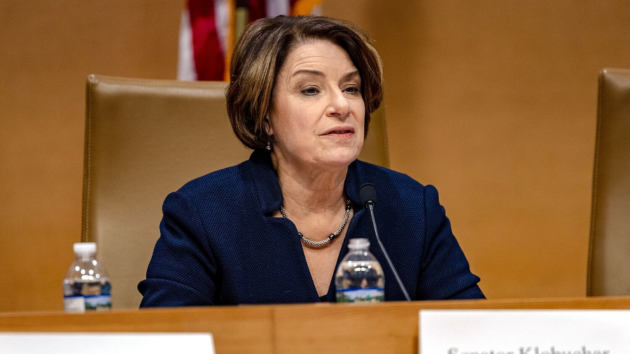
Senator Amy Klobuchar attends a field hearing at the Minnesota Senate Building on Jan. 16, 2026, in St Paul, Minnesota. (Jim Vondruska/Getty Images)

(WASHINGTON) — Democratic Minnesota Sen. Amy Klobuchar filed paperwork on Thursday to create a campaign committee to run for governor in the state — the latest step indicating that she is nearing an official announcement to enter the race.

A source close to the senator said that her filing “is a preliminary step necessary for any candidate considering a run. The senator will make an announcement of her plans in the coming days.”

Klobuchar is widely seen as the most popular Democrat in the state, and could help the party avoid a pitched primary fight to succeed Gov. Tim Walz, who dropped his bid for reelection as governor earlier this month.

Walz decided to suspend his run for a third term amid intensifying federal pressure on his state following a welfare fraud investigation. Walz said he would not run for reelection because he would not be able to give a campaign all of his attention as he works to defend Minnesota against those allegations of fraud.

The state has been at the center of the Trump’s administration immigration crackdown, drawing large protests following a federal agent’s fatal shooting of Renee Good, and threats from President Donald Trump to invoke the Insurrection Act, a law that authorizes the use of the military on U.S. soil for certain purposes.

The Justice Department has also opened investigations into Walz and Minneapolis Mayor Jacob Frey over whether they have been obstructing federal law enforcement activities in the state.

Frey defended himself and Walz on ABC News’ “This Week” on Sunday, calling the investigation “deeply concerning,” and saying he intends to comply with it.

“Look, we have done nothing wrong, so of course we will comply in it, but at the same time, we need to be understanding how wild this is,” Frey said.

In a statement posted on X, Walz called the investigation “political theater.”

“This Justice Department investigation, sparked by calls for accountability in the face of violence, chaos, and the killing of Renee Good, does not seek justice,” Walz said the statement. “It is a partisan distraction.”

Klobuchar, who is also seen as a possible 2028 presidential candidate after running in 2020, won reelection to the Senate in 2024.

One Democratic Party county chair in Minnesota, speaking with ABC News after Walz dropped out of the race, said that Klobuchar likely would have a lock on the party’s nomination if she runs.

Another county party chair told ABC News at the time that to some in the party, a bid by Klobuchar didn’t seem to make sense because she could be a candidate for Senate Majority Leader if Democrats flip the chamber. Klobuchar is currently a member of Democratic Senate leadership.

Earlier this week, Minnesota Attorney General Keith Ellison said he would not run for governor.

Copyright © 2026, ABC Audio. All rights reserved.
Jared Kushner lays out Trump-backed ‘master plan’ for post-war Gaza

Jared Kushner lays out Trump-backed ‘master plan’ for post-war Gaza
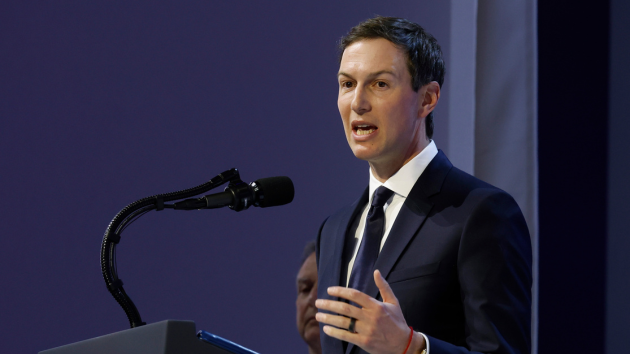
U.S. President Donald Trump’s son-in-law Jared Kushner speaks after the President held a signing ceremony for the “Board of Peace” at the World Economic Forum (WEF) on January 22, 2026, in Davos, Switzerland. The US-backed “Board of Peace” is intended to administer the fragile ceasefire in the Gaza Strip after the war between Israel and Hamas. The final makeup of the board has not been confirmed. (Photo by Chip Somodevilla/Getty Images)

(WASHINGTON) — Jared Kushner, the president’s son-in-law and a real estate developer, on Thursday unveiled some of the Trump administration’s “master plan” for rebuilding war-torn Gaza that includes waterfront developments and other luxury buildings.

Kushner, whop spoke alongside President Donald Trump at his Board of Peace signing in Davos, Switzerland, said the plans for Gaza will emulate what other newly redeveloped Middle Eastern cities will look like.

Kushner, who has been part of the Gaza peace negotiations, suggested the construction would be done in just two or three years. The Board of Peace estimates that the plan would require more than $25 billion to develop modern utilities and public services.

“We’ve developed ways to redevelop Gaza. Gaza, as President Trump’s been saying, has amazing potential, and this is for the people of Gaza,” he said.

Kushner, who showed slideshows with concept art of his “master plan” said that the plan includes development done in zones.

“In the beginning, we were toying with the idea of saying, Let’s build a free zone, and then we have a Hamas zone. And then we said, You know what? Let’s just plan for catastrophic success. We have mass signed a deal, demilitarized. That is what we are going to enforce,” he said.

Kushner displayed a “master Plan” that depicts four phases: Rafah, or “city 1”; Khan Younis or “city 2”; Center Camps or “city 3”; and Gaza City or “city 4.”

In “New Rafah,” Kushner put up a slide that claims there will be over 100,000 permanent housing units, 200 education centers, 180 cultural, religious and vocational centers and 75 medical facilities.

A section shows “coastal tourism” with 170 towers with areas for residential areas and industrial complex data centers and advanced manufacturing behind it, split up by parks, agriculture and sports facilities.

The “coastal tourism” renderings show flashy high-rises, hotels and luxury villas on shimmering waters.

Kushner said the next 100 days will be focused on sending humanitarian aid into the Gaza Strip, with quantities consistent with what was included in the January 19, 2025, agreement regarding humanitarian aid, including rehabilitation of infrastructure (water, electricity, sewage), rehabilitation of hospitals and bakeries, and entry of necessary equipment to remove the estimated  68 million tons of rubble and to open roads.

“We continue to be focused on humanitarian aid, a humanitarian shelter, but then creating the conditions to move forward,” he said.

Increasing the amount of humanitarian aid entering the Gaza Strip is a key element of the overall ceasefire deal. While international aid organizations have reported being able to operate more freely in parts of Gaza where Israeli troops have withdrawn, it is hard to quantify how much aid has entered the strip since Oct. 10, when the first phase of the ceasefire deal went into effect.

International aid organizations still report more aid is needed across the Strip – from food to medical supplies to shelter.

Winter storms have made the situation on the ground in Gaza even more difficult, as heavy rains have caused flooding in displacement camps and lower temperatures have made living conditions even more difficult. About 1 million Palestinians currently need shelter assistance, according to the UN. Ten children have died of the cold, the Hamas-run Gaza Ministry of Health has said.

The 100 Day plan also accounts for reconstruction, suggesting improved temporary housing in transition until permanent housing is ready, a Trump economic development plan to rebuild and energize Gaza will be created, synthesize the security and governance frameworks to attract and facilitate these investments that will “create jobs, opportunity, and hope for future Gaza,” according to Kushner.

A special economic zone would be established, with preferred tariff and access rates to be negotiated with participating countries, he added.

Kushner said that many of the funds for this project will come from the private sector, touting “amazing investment opportunities.”

Trump, who also spoke at the conference, contended the war in Gaza “was really coming to an end” and praised the redevelopment plan.

“I’m a real estate person at heart, and it’s all about location, and I said, look at this location on the sea, look at this beautiful piece of property, what it could be for so many people,” he said.

“People that are living so poorly are going to be living so well,” he added.

Over 90% of residential buildings in Gaza have been destroyed or damaged since the Oct. 7, 2023, attacks and subsequent war that followed, according to the UN.

While the ceasefire has largely held, there have been intermittent incidents of violations from both sides. At least 483 people have been killed since the first phase of the ceasefire went into effect, the Hamas-run Gaza Government Media Office said.

Last year, Trump boasted that the U.S. would “take over” the Gaza Strip, “level the site” and rebuild it.

When asked by a reporter during the Feb. 4, 2025, during a White House news conference with Israel Prime Minister Benjamin Netanyahu if Palestinians relocated would have the right to return, Trump responded, “Why would they want to return?”

When another reporter asked who would live in Gaza, Trump responded, “the world’s people,” saying, “the potential in the Gaza Strip is unbelievable.”

“History, as you know, just can’t let it keep repeating itself. We have an opportunity to do something that could be phenomenal. And I don’t want to be cute. I don’t want to be a wise guy. But the Riviera of the Middle East, this could be something that could be so … magnificent,” the president said during the news conference.

The president was criticized later that month over a AI generated video that he shared on social media that depicted him and Netanyahu sunbathing in a location dubbed “Trump Gaza,” which showed a luxury resort.

Copyright © 2026, ABC Audio. All rights reserved.
Trump sues Jamie Dimon, JPMorgan Chase for alleged ‘political’ account closures

Trump sues Jamie Dimon, JPMorgan Chase for alleged ‘political’ account closures
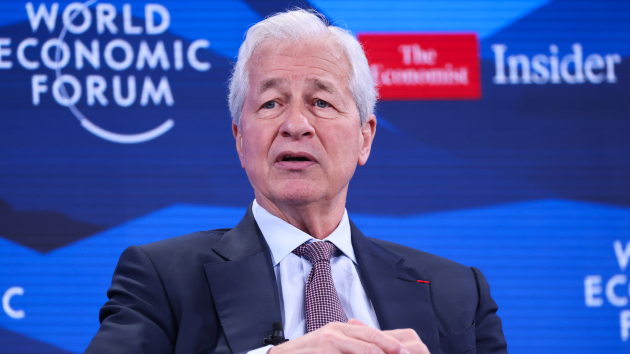
Jamie Dimon, chief executive officer of JPMorgan Chase & Co., during the World Economic Forum (WEF) in Davos, Switzerland, on Wednesday, Jan. 21, 2026. (Krisztian Bocsi/Bloomberg via Getty Images)

(NEW YORK) — President Donald Trump on Thursday sued JPMorgan Chase and its CEO Jamie Dimon for $5 billion, alleging the bank closed his accounts for “political and social motivations,” according to a court filing.

The lawsuit says in early 2021 the bank notified Trump and his businesses that several of his accounts would close after decades at the bank. That came in the wake of the Jan. 6 attack on the Capitol.

In a statement to ABC News, JPMorgan said the suit has “no merit” and they will fight it in court.

This is a developing story. Please check back for updates

Copyright © 2026, ABC Audio. All rights reserved.
‘Donald Trump is the person who caused Jan. 6,’ former special counsel Jack Smith testifies

‘Donald Trump is the person who caused Jan. 6,’ former special counsel Jack Smith testifies
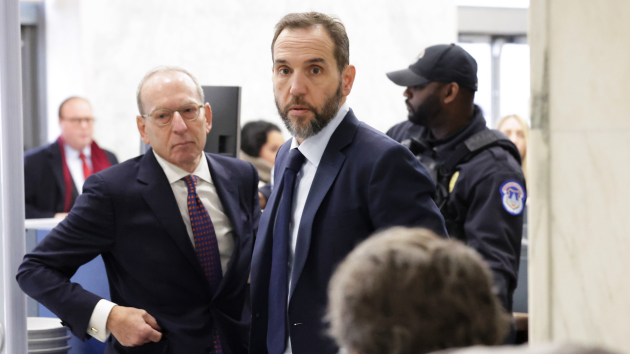
Former Special Counsel Jack Smith (C) arrives to testify during a closed-door deposition before the House Judiciary Committee in the Rayburn House Office Building on Capitol Hill on December 17, 2025 in Washington, DC. (Alex Wong/Getty Images)

(WASHINGTON) — Former special counsel Jack Smith, testifying Thursday before the GOP-led House Judiciary Committee, was unequivocal about who caused the Jan. 6, 2021, attack on the U.S. Capitol.

“Our investigation revealed that Donald Trump is the person who caused Jan. 6, that it was foreseeable to him and that he sought to exploit the violence,” Smith testified. “We followed the facts and we followed the law — where that led us was to an indictment of an unprecedented criminal scheme to block the peaceful transfer of power.”

Smith, who led investigations into Trump’s alleged interference in the 2020 election and alleged mishandling of classified documents, is testifying publicly for first time about his probes.

Trump pleaded not guilty to all charges in both cases, before both cases were dropped following Trump’s reelection due to the Justice Department’s long-standing policy barring the prosecution of a sitting president.

The former special counsel said that partisan politics did not play a role in his decision to charge Trump in his two investigations.

“Some of the most powerful witnesses were witnesses who, in fact, were fellow Republicans who had voted for Donald Trump, who had campaigned for him and, who wanted him to win the election. These included state officials, people who worked on his campaign and advisors,” Smith said of his election interference probe.

In seeking to challenge the results of the 2020 election, Trump was “looking for ways to stay in power,” Smith testified.

Trump was not “was not looking for honest answers about whether there was fraud in the election. He was looking for ways to stay in power. And when people told him, things that conflicted with him staying power, he rejected them or he chose not even to contact people like that,” Smith told committee members.

Under questioning from Democratic Rep. Zoe Lofgren, Smith discussed the witnesses his team had interviewed in his election interference probe.

“There were witnesses who I felt would be very strong witnesses, including, for example, the secretary of state in Georgia who told Donald Trump the truth, told him things that he did not want to hear and put him on notice that what he was saying was false,” Smith said. “And I believe that witnesses of that nature, witnesses who are willing to tell the truth, even if it’s going to impose a cost on them in their lives — my experience as a prosecutor over 30 years is that witnesses like that are very credible, and that jurors tend to believe witnesses like that, because they pay a cost for telling the truth.”

Smith said that he got the phone toll records for some members of Congress because his office was investigating the conspiracy to stop the peaceful transfer of power.

“We wanted to conduct a thorough investigation of the matters, that were assigned to me, including attempts to interfere with the lawful transfer of power. The conspiracy that we were investigating, it was relevant to get toll records, to understand the scope of that conspiracy, who they were seeking to coerce, who they were seeking to influence, who was seeking to help them,” Smith said, arguing that it was a normal piece of an investigation.

In a back-and-forth with Republican Rep. Darryl Issa, Smith said he didn’t target then-President Joe Biden’s political enemies.

“Maybe they’re not your political enemies, but they sure as hell were Joe Biden’s political enemies, weren’t they? They were Harris’ political enemies. They were the enemies of the president and you were their arm, weren’t you?” Issa asked.

“No,” Smith said. “My office didn’t spy on anyone.”

He said that the decision to bring charges against Trump was solely his decision and that he was not pressured by any Biden official.

“President Trump was charged because the evidence established that he willfully broke the law, the very laws he took an oath to uphold,” Smith said. “Grand juries in two separate districts reached this conclusion based on his actions as alleged in the indictments they returned.”

In his introductory remarks, Smith also said the president illegally kept classified documents at his Mar-a-Lago estate.

“After leaving office in January of ’21, President Trump illegally kept classified documents at his Mar-a-Lago Social Club and repeatedly tried to obstruct justice to conceal his continued retention of those documents. Highly sensitive national security information withheld in a ballroom and a bathroom,” Smith said.

Smith said that the facts and the law supported a prosecution, and that he made decisions not based on politics, but the facts and the law.

“Our investigation developed proof beyond a reasonable doubt that President Trump engaged in criminal activity. If asked whether to prosecute a former president based on the same facts today, I would do so regardless of whether that president was a Democrat or a Republican,” he said.

“No one, no one should be above the law in this country, and the law required that he be held to account. So that is what I did,” Smith said. “To have done otherwise on the facts of these cases, would have been to shirk my duties as a prosecutor and as a public servant, of which I had no intention of doing.”

He also criticized what he said was the retribution carried out by the president and his allies against agents and prosecutors who investigated the cases.

“My fear is that we have seen the rule of law function in our country for so long that many of us have come to take it for granted,” he said. “The rule of law is not self-executing. It depends on our collective commitment to apply it. It requires dedicated service on behalf of others, especially when that service is difficult and comes with costs. Our willingness to pay those costs is what test and defines our commitment to the rule of law and to this wonderful country.”

In his opening statement, Committee Chairman Jim Jordan blasted Smith for what he called a partisan investigation into President Trump and other Republicans.

“Democrats have been going after President Trump for ten years, for a decade, and the country should never, ever forget what they did,” Jordan said.

Jamie Raskin, the committee’s ranking Democrat, said that Smith proved that Trump “engaged in a criminal scheme to overturn the results of the 2020 election and to prevent the lawful transfer of power.”

“Special counsel Smith, you pursued the facts. You followed every applicable law, ethics rule and DOJ regulation. Your decisions were reviewed by the Public Integrity section. You acted based solely on the facts — the opposite of Donald Trump,” Raskin said.

Democratic Rep. Eric Swalwell said that Republicans on the dais “are a joke.”

“They’re wrong. History will harshly judge them,” he said.  

Trump’s Thursday appearance marks Smith’s second time before the committee, after he appeared behind closed doors last month. It is customary for former special counsels to appear before Congress publicly to discuss their findings.

In his closed-door testimony, Smith defended his decision to twice bring charges against Trump — telling lawmakers his team “had proof beyond reasonable doubt in both cases” that Trump was guilty of the charges in the 2020 election interference and classified documents cases, according to a transcript of the hearing.

And Smith fervently denied that there was any political influence behind his decision — contrary to allegations of Republicans on the Judiciary Committee, who requested the testimony — such as pressure from then-President Joe Biden or then-Attorney General Merrick Garland, the transcripts shows.

“No,” Smith responded continuously to those allegations, according to the transcript.

Just over an hour before his testimony on Dec. 17, the Department of Justice sent an email to Smith’s lawyers preventing him from discussing the classified documents case, according to the 255-page transcript of the deposition, released last year by the Judiciary Committee along with a video of the hearing.

This meant Smith was unable to answer most questions on that case and the deposition — intended to ask questions about the alleged weaponization of the DOJ against Trump and his allies — mainly focused on the 2020 election case instead.

His team also said Smith will comply with U.S. District Judge Aileen Cannon’s order that blocked the release of the second volume of his report dealing with the classified documents case.

Smith’s counsel said the DOJ also refused to send a lawyer to advise Smith on whether his statements were in line with their determination of what he could or could not say regarding the cases, according to the deposition. Smith did say, however, that Trump “tried to obstruct justice” in the classified documents investigation “to conceal his continued retention of those documents.

Copyright © 2026, ABC Audio. All rights reserved.
5-year-old asylum seeker detained as ICE expands enforcement in Minnesota

5-year-old asylum seeker detained as ICE expands enforcement in Minnesota
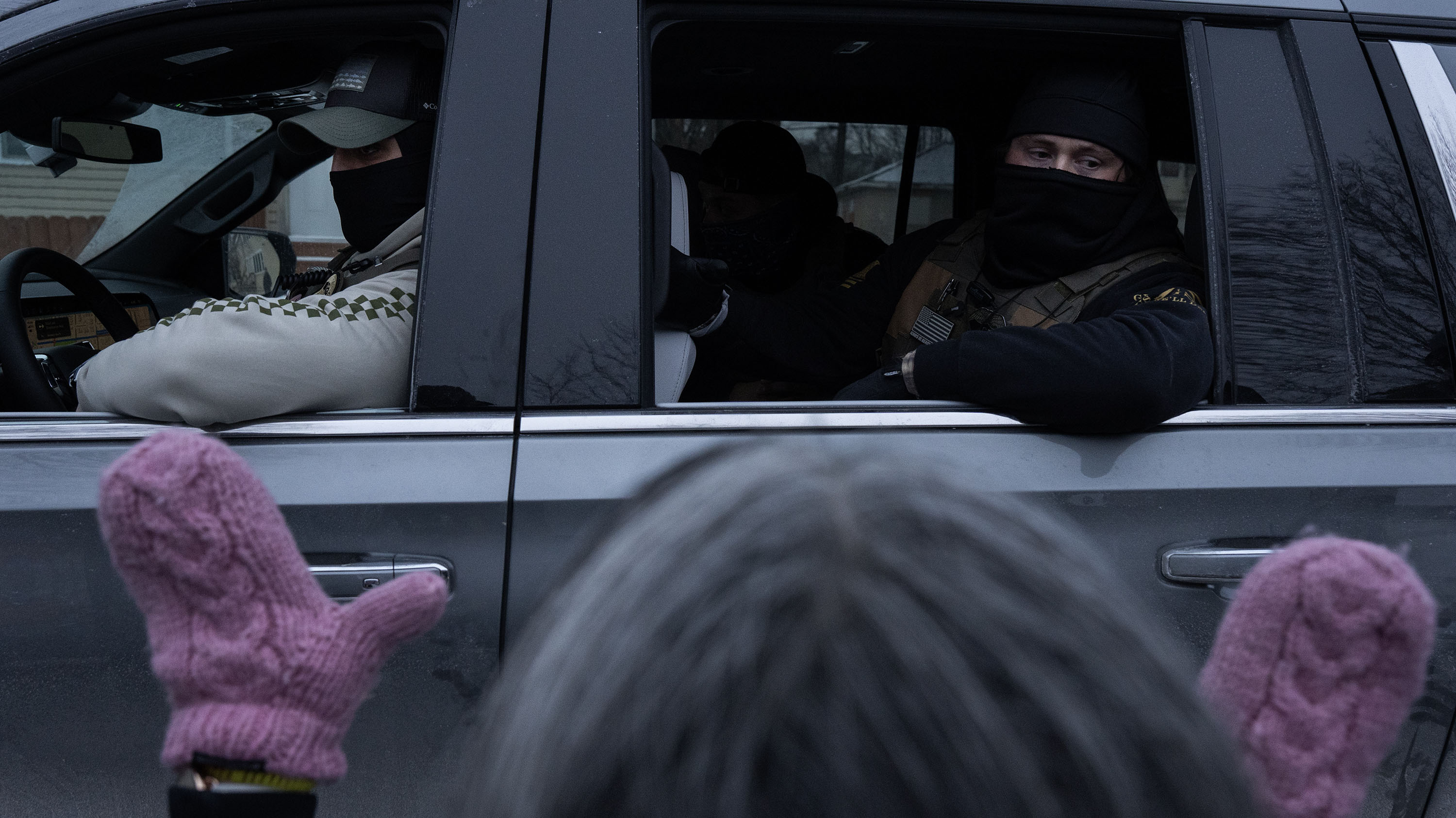
A woman confronts ICE agents casing a neighborhood on Sherburne Avenue in St. Paul, Minn., on Tuesday, Jan. 20. (Photo by Richard Tsong-Taatarii/The Minnesota Star Tribune via Getty Images)

(COLUMBIA HEIGHTS, Minn.) — A 5-year-old boy was taken into custody with his father by ICE agents in Minnesota on Tuesday in what some local officials say is the latest instance of heightened federal immigration enforcement in the state.

The family of 5-year-old Liam Conejo Ramos, who was detained on Tuesday as part of the federal government’s ongoing immigration crackdown, has a pending asylum case but no order of deportation directing that they be removed from the United States, officials at Conejo Ramos’ school said in a statement.

The 5-year-old was apprehended by immigration officials shortly after arriving home from preschool while his father was in their driveway, officials said. 

“Another adult living in the home was outside and begged the agents to let them take care of the small child, but was refused,” officials from Conejo Ramos’ school said. “Instead, the agent took the child out of the still-running vehicle, led him to the door, and directed him to knock — asking to be let in to see if anyone else was home — essentially using a 5-year-old as bait.”

The father and child are both government custody, school officials said.

In a statement, a spokesperson for the Department of Homeland Security said, “ICE did NOT target a child. The child was ABANDONED.”

“On January 20, ICE conducted a targeted operation to arrest Adrian Alexander Conejo Arias, an illegal alien from Ecuador who was RELEASED into the U.S. by the Biden administration,” the statement said. “As agents approached the driver, Adrian Alexander Conejo Arias, fled on foot — abandoning his child. For the child’s safety, one of our ICE officers remained with the child while the other officers apprehended Conejo Arias.” 

“Parents are asked if they want to be removed with their children, or ICE will place the children with a safe person the parent designates. This is consistent with past administration’s immigration enforcement,” the DHS statement said.

School officials said that three other students from their district have been recently detained by immigration authorities.

According to the officials, two weeks ago, a 10-year-old fourth grader was detained by ICE agents on her way to elementary school with her mother.  During the arrest, officials said, the child called her father to tell him the ICE agents were bringing her to school. 

“The father immediately came to the school to find that both his daughter and wife had been taken,” officials said. “By the end of the school day, they were already in a detention center in Texas, and they are still there.” 

On Wednesday, a 17-year-old high school student was detained by “armed and masked agents,” school officials said. 

“Our children should not be afraid to come to school or wait at the bus stop,” Board Chair Mary Granlund said in a statement. “Their families should not be afraid to drop off or pick up their children from school.”

Copyright © 2026, ABC Audio. All rights reserved.
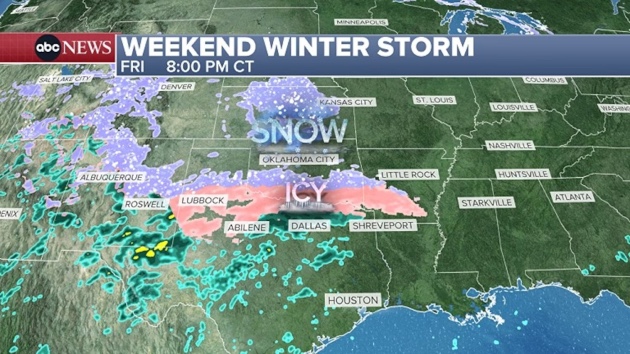
Tracking the winter storm: Dangerous ice to paralyze the South, snow heading to Northeast

Tracking the winter storm: Dangerous ice to paralyze the South, snow heading to Northeast
Weekend Winter Storm – Friday 8:00PM CT Map (ABC News)

(NEW YORK) — More than 120 million people are on alert for a brutal storm that’s going to bring dangerous ice and snow to the South, bitter cold to the Midwest, and a massive snowfall to the Northeast.

South

The storm moves into the South on Friday afternoon. By the evening, Dallas will see a wintry mix and Oklahoma and Kansas will get some snow.

On Saturday morning, the temperature is forecast to fall to 27 degrees in Dallas; 8 degrees in Oklahoma City; 14 degrees in Little Rock, Arkansas; and 19 degrees in Nashville, Tennessee.

As temperatures drop on Saturday, extremely dangerous snow and ice will move in from Dallas to Little Rock to Memphis, Tennessee.

Residents should be prepared for dangerous travel conditions and widespread power outages, which could leave people without electricity or heat.

The lack of heat will be very dangerous in several major cities — including Dallas, Little Rock and Memphis — where the bitter cold is expected to continue well after the storm passes.

Texas Gov. Greg Abbott said he was activating state emergency response resources, saying the freezing rain, sleet and snow “could create hazardous travel conditions into the weekend and cause impacts to infrastructure.”

By Saturday afternoon, the snow and ice could stretch as far east as Georgia and the Carolinas.

The governors of Georgia, North Carolina and South Carolina have declared states of emergency.

Midwest

This unforgiving arctic blast will strike the Midwest late Thursday into Friday, bringing extremely dangerous temperatures.

On Friday morning, the wind chill — what temperature it feels like — is forecast to plunge to minus 39 degrees in Minneapolis, minus 32 in Chicago and minus 39 in Madison and Green Bay, Wisconsin. In these conditions, frostbite can develop in just 10 minutes.

Northeast

The brutal cold will strike the Northeast on Friday night, with below-freezing temperatures expected for New York City and Philadelphia.

Then on Sunday, the storm will hit the Northeast, bringing likely plowable snow from Washington, D.C., to New York City to Boston. 

The snow totals are not yet clear, but by the Monday morning commute, 6 to 12 inches is possible in some areas.

Airline travel alerts

Many airlines are issuing travel alerts and waiving rebooking fees ahead of the storm.

American Airlines and Delta Air Lines have waived rebooking fees, allowing passengers to rebook their flights at no additional cost. 

United has issued travel waivers for cities expected to be affected, allowing those who bought tickets on or before Tuesday to rebook without a fee if their travel is affected.

Southwest said it’s monitoring the weather and will issue any advisories or make any changes as needed. 

ABC News’ Ayesha Ali contributed to this report.

Copyright © 2026, ABC Audio. All rights reserved.

President Trump ‘broke the law,’ former special counsel Jack Smith tells House Judiciary Committee

‘Donald Trump is the person who caused Jan. 6,’ former special counsel Jack Smith testifies
Former Special Counsel Jack Smith (C) arrives to testify during a closed-door deposition before the House Judiciary Committee in the Rayburn House Office Building on Capitol Hill on December 17, 2025 in Washington, DC. (Alex Wong/Getty Images)

(WASHINGTON) —President Donald Trump broke the law, former counsel Jack Smith told committee members Thursday at an appearance before the GOP-led House Judiciary Committee.

Smith, who led investigations into Trump’s alleged interference in the 2020 election and alleged mishandling of classified documents, is testifying publicly for first time about his probes.

“President Trump was charged because the evidence established that he willfully broke the law, the very laws he took an oath to uphold,” Smith said. “Grand juries in two separate districts reached this conclusion based on his actions as alleged in the indictments they returned.”

Regarding the 2020 election, Smith said that Trump “engaged in a criminal scheme to overturn the results and prevent the lawful transfer of power.”

 He also said the president illegally kept classified documents at his Mar-a-Lago estate.

“After leaving office in January of ’21, President Trump illegally kept classified documents at his Merrill Lago Social Club and repeatedly tried to obstruct justice to conceal his continued retention of those documents. Highly sensitive national security information withheld in a ballroom and a bathroom,” Smith said.

Smith also said that the facts and the law supported a prosecution, and that he made decisions not based on politics, but the facts and the law.

“Our investigation developed proof beyond a reasonable doubt that President Trump engaged in criminal activity. If asked whether to prosecute a former president based on the same facts today, I would do so regardless of whether that president was a Democrat or a Republican,” he said.

“No one, no one should be above the law in this country, and the law required that he be held to account. So that is what I did,” Smith said. “To have done otherwise on the facts of these cases, would have been to shirk my duties as a prosecutor and as a public servant, of which I had no intention of doing.”

He also criticized what he said was the retribution carried out by the president and his allies against agents and prosecutors who investigated the cases.

“My fear is that we have seen the rule of law function in our country for so long that many of us have come to take it for granted,” he said. “The rule of law is not self-executing. It depends on our collective commitment to apply it. It requires dedicated service on behalf of others, especially when that service is difficult and comes with costs. Our willingness to pay those costs is what test and defines our commitment to the rule of law and to this wonderful country.”

In his opening statement, Committee Chairman Jim Jordan blasted Smith for what he called a partisan investigation into President Donald Trump and other Republicans. 

“Democrats have been going after President Trump for ten years, for a decade, and the country should never, ever forget what they did,” Jordan said. 

Jamie Raskin, the committee’s ranking Democrat, said that Smith proved that Trump “engaged in a criminal scheme to overturn the results of the 2020 election and to prevent the lawful transfer of power.”

“Special Counsel Smith, you pursued the facts. You followed every applicable law, ethics rule and DOJ regulation. Your decisions were reviewed by the public Integrity section. You acted based solely on the facts. The opposite of Donald Trump, who now is purporting to take over,” Raskin said. 

Trump pleaded not guilty to all charges in both cases, before both cases were dropped following Trump’s reelection due to the Justice Department’s long-standing policy barring the prosecution of a sitting president.

His Thursday appearance marks Smith’s second time before the committee, after he appeared behind closed doors last month. It is customary for former special counsels to appear before Congress publicly to discuss their findings.

In his closed-door testimony, Smith defended his decision to twice bring charges against Trump — telling lawmakers his team “had proof beyond reasonable doubt in both cases” that Trump was guilty of the charges in the 2020 election interference and classified documents cases, according to a transcript of the hearing.

And Smith fervently denied that there was any political influence behind his decision — contrary to allegations of Republicans on the Judiciary Committee, who requested the testimony — such as pressure from then-President Joe Biden or then-Attorney General Merrick Garland, the transcripts shows.

“No,” Smith responded continuously to those allegations, according to the transcript.

Just over an hour before his testimony on Dec. 17, the Department of Justice sent an email to Smith’s lawyers preventing him from discussing the classified documents case, according to the 255-page transcript of the deposition, released last year by the Judiciary Committee along with a video of the hearing.

This meant Smith was unable to answer most questions on that case and the deposition — intended to ask questions about the alleged weaponization of the DOJ against Trump and his allies — mainly focused on the 2020 election case instead.

His team also said Smith will comply with Judge Aileen Cannon’s order that blocked the release of the second volume of his report.

Smith’s counsel said the DOJ also refused to send a lawyer to advise Smith on whether his statements were in line with their determination of what he could or could not say regarding the cases, according to the deposition. Smith did say, however, that Trump “tried to obstruct justice” in the classified documents investigation “to conceal his continued retention of those documents.

Copyright © 2026, ABC Audio. All rights reserved.