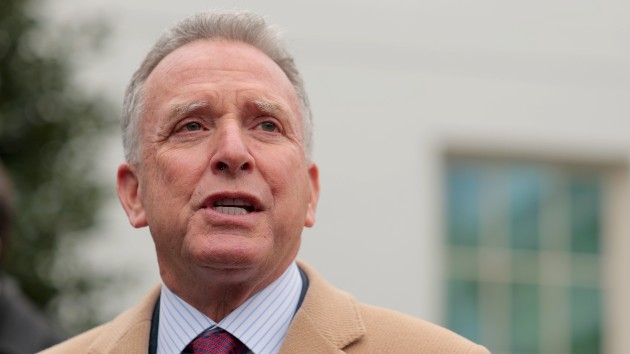
(MADISON, N.J.) — The FBI is now involved in the investigation into a suspected arson earlier this month at the New Jersey home of a Bayer pharmaceutical executive, law enforcement sources told ABC News.
At approximately 7:30 a.m. on March 4, a fire was reported at an occupied, private residence in Madison, New Jersey, according to the Morris County Prosecutor’s Office.
The Madison Fire Department was able to quickly extinguish the flames and the structure “sustained no significant damage and there were no reported injuries,” according to the Morris County Prosecutor’s Office.
“The safety and security of our employees are of utmost importance to Bayer. The incident is under active investigation. We appreciate the quick response of local law enforcement,” Bayer said in a statement.
There have been no arrests related to the incident, officials said.
Bayer’s headquarters is located in nearby Hanover Township, New Jersey. The pharmaceutical company is known for products like Aleve and Alka-Seltzer.
The New York Police Department, Metropolitan Transportation Authority Police and New Jersey Transit Police are also part of the investigation.
The FBI’s Newark office declined to comment about its role in investigating the fire.
This suspected arson comes at a time of heightened concern in the health care industry following the December murder of United Healthcare CEO Brian Thompson.
Individuals mobilized by economic grievances are taking Thompson’s murder as inspiration for threats and attack plotting, expanding their target set to include government and public safety officials, according to a Homeland Security report obtained by ABC News.
“Within days of the late December murder of a health insurance CEO, we observed online threats targeting high-profile executives. In the past several weeks, some threats citing similar grievances and referencing the CEO’s murder as inspiration are now targeting federal, state and local government officials,” the document said.
A growing amount of Americans feel hostility toward prominent chief executives, with a 2023 Ipsos survey finding that more than two-thirds of Americans think the nation’s economy is rigged to the advantage of the rich and powerful.
Similarly, a 2022 Pew survey found that only 1 in 4 adults believed large businesses have a positive effect on the way things are going in the country.
Traders work on the floor of the New York Stock Exchange (NYSE) in New York City.
(NEW YORK) — U.S. stocks dropped slightly lower early Thursday, after a reprieve for the S&P and Nasdaq a day earlier amid President Donald Trump’s trade war.
The Dow Jones Industrial Average fell 150 points in early trading, or 0.4%, while the S&P 500 ticked down 0.25%. The tech-heavy Nasdaq declined 0.35%.
Trading opened minutes after Trump threatened a 200% tariff on champagne and other alcohol products from the European Union, escalating a global trade war that has roiled markets.
A continued back-and-forth over international tariffs is hanging over the U.S. economy, along with a looming government shutdown with a deadline on Friday.
Federal officials said Wednesday that consumer prices climbed 2.8% in February over the same year-earlier month, meaning inflation cooled more than economists expected.
After initially modest gains, the Dow Jones Industrial Average closed on Wednesday down about 0.2%, while the S&P 500 climbed 0.5%. The tech-heavy Nasdaq increased 1.2%.
This is a developing story. Please check back for updates.
Illustration by Thomas Fuller/SOPA Images/LightRocket via Getty Images
(WASHINGTON) — The White House on Thursday pulled President Donald Trump’s nomination of Dr. David Weldon to lead the Centers for Disease Control and Prevention, multiple sources told ABC News.
The withdrawal came just before Weldon was to appear for his confirmation hearing Thursday morning before the Senate Health, Education, Labor and Pensions (HELP) Committee, where he was expected to be grilled on his past views questioning vaccine safety.
The development was first reported by Axios.
This is a developing story. Please check back for updates.
(WASHINGTON) — President Donald Trump on Thursday threatened a 200% tariff on champagne and other alcohol products from the European Union, escalating a global trade war that has roiled markets and stoked recession fears.
The move came a day after the EU announced plans to slap tariffs on $28 billion worth of U.S. goods, including a 50% tariff on whiskey. Those tariffs marked a response to U.S. duties on steel and aluminum imports.
Trump called on the EU to drop its tariff on whiskey, saying the U.S would otherwise “shortly place” a tariff on alcohol products from the EU.
Trump sharply criticized the EU, describing the organization as “one of the most hostile and abusive taxing and tariffing authorities in the World.”
In a statement a day earlier, Ursula von der Leyen, president of the European Commission, said that the EU “must act to protect consumers and business.”
Stock futures turned lower early Thursday morning, erasing some gains in the S&P 500 and tech-heavy Nasdaq a day earlier. The Dow Jones Industrial Average futures showed a continuation of losses incurred on Wednesday.
Markets have plunged since Trump last week announced 25% tariffs on imports from Mexico and Canada, some of which he soon delayed.
The tariff threats on Thursday mark the latest skirmish in a global trade war. In response to U.S. duties on steel and aluminum, Canada announced retaliatory tariffs applied to $20.7 billion in U.S. goods, government officials said. The U.S. imports more steel and aluminum from Canada than from any other country.
The Trump administration last week slapped a 10% tariff on China, doubling taxes on Chinese imports to 20%. In response, China imposed retaliatory duties on U.S. agricultural goods, deepening a trade war between the world’s two largest economies.
The trade tensions triggered recession fears on Wall Street. Goldman Sachs last week hiked its odds of a recession from 15% to 20%. Moody’s Analytics raised its gauge of the probability of a recession to 35%.
This is a developing story. Please check back for updates.
(WASHINGTON) — A former Tennessee lawmaker who was once represented by White House Counsel David Warrington said he received a pardon from President Donald Trump after pleading guilty to an illegal campaign finance scheme in 2022.
The White House has not said anything publicly about former Sen. Brian Kelsey’s pardon, but sources familiar with the matter told ABC News that Trump signed the pardon paperwork on Tuesday.
The White House counsel’s office normally reviews presidential pardons, and it was not immediately clear if Warrington recused himself from his former client’s pardon.
Warrington was recused from the Kelsey matter and was not involved in any way, a White House official told ABC News.
Kelsey was two weeks into his 21-month prison sentence when he received the pardon. Bureau of Prisons records reflected that Kelsey was no longer in custody at FCI Ashland as of Tuesday.
According to federal prosecutors, Kelsey illegally funneled tens of thousands of dollars from his state campaign committee to a federal committee to fund his failed 2016 congressional campaign. He originally pleaded guilty to one felony before later withdrawing his plea while he was represented by Warrington.
“Defendant Brian Kelsey entered his plea agreement hastily with an unsure heart and confused mind,” Warrington wrote in a court filing, arguing Kelsey was confused when he decided to plead guilty after his father died and his wife gave birth to twins.
“The fog and sleep deprivation of taking care of his newborns while dealing with everything else in his life led to his confused mind. Once his mind began clearing, Mr. Kelsey acted quickly to seek to withdraw his plea,” he wrote.
But U.S. District Judge Waverly Crenshaw denied the request, finding that Kelsey – who attended law school and practiced law – understood his actions when he initially pleaded guilty. The Supreme Court denied his request to hear his case on in the summer of 2024. He was eventually sentenced to 21 months in prison, though he was allowed to delay serving his sentence while his appeal played out.
Kelsey reported to his minimum-security prison on Feb. 24, spending about two weeks behind bars before Trump issued his pardon. “Praise the Lord most high! May God bless America, despite the prosecutorial sins it committed against me, President Trump, and others the past four years. And God bless Donald J. Trump for Making America Great Again!” Kelsey wrote on social media.
Traders work on the floor of the New York Stock Exchange (NYSE) in New York City.
(NEW YORK) — Stocks futures were again showing jitters early Thursday, after a reprieve for the S&P and NASDAQ on Wednesday amid President Donald Trump’s trade war.
A back-and-forth over international tariffs is hanging over the U.S. economy, along with a looming government shutdown with a deadline on Friday.
Dow futures evened out ahead of Thursday’s open, after earlier trading down about 0.3%.
Federal officials said Wednesday that consumer prices climbed 2.8% in February over the same year-earlier month, meaning inflation cooled more than economists expected.
After initially modest gains, the Dow Jones Industrial Average closed on Wednesday down about 0.2%, while the S&P 500 climbed 0.5%. The tech-heavy Nasdaq ticked increased 1.2%.
Markets may look on Thursday to a smaller inflation report called the Produce Price Index, which is expected at 8:30 a.m. ET, along with weekly jobless claims, for an indication of the health of the larger economy.
Still, its news out of Washington that is likely to have the biggest impact on the direction of stocks.
This is a developing story. Please check back for updates.
Steve Witkoff, special envoy to the Middle East. (Photo by Anna Moneymaker/Getty Images)
(LONDON) — President Donald Trump’s Middle East envoy Steve Witkoff landed in Moscow on Thursday morning for discussions on a proposed 30-day ceasefire in Ukraine — a step leaders in Kyiv and Washington, D.C., hope will facilitate a larger peace deal to end Russia’s 3-year-old invasion of its neighbor.
Witkoff’s trip is “part of our continued efforts to press Russia to agree to a ceasefire and stop its brutal war against Ukraine,” White House press secretary Karoline Leavitt told reporters at a Wednesday briefing.
Kremlin spokesperson Dmitry Peskov confirmed that American negotiators were traveling to Moscow on Thursday. “Contacts are planned,” Peskov told a press briefing, adding of the potential outcomes, “We will not prejudge, we will tell you later.” Peskov did not say whether Witkoff would meet with Russian President Vladimir Putin.
U.S. and Ukrainian officials agreed to a total 30-day ceasefire during talks in Jeddah, Saudi Arabia, earlier this week. The ball is now “truly in their court,” Secretary of State Marco Rubio said of Russia following the talks in Jeddah.
Ukrainian President Volodymyr Zelenskyy wrote on Telegram of the ceasefire plan, “Ukraine accepts this proposal, we consider it positive, we are ready to take this step. The United States of America needs to convince Russia to do so.”
“We agree, and if the Russians agree, the silence will take effect at that very moment,” he added. “An important element in today’s discussions is America’s readiness to restore defense assistance to Ukraine and intelligence support.”
“Ukraine is ready for peace,” Zelenskyy wrote. “Russia must also show whether it is ready to end the war — or continue it. The time has come for the whole truth. I thank everyone who helps Ukraine.”
Speaking in Kyiv on Wednesday, Zelenskyy said he is “very serious” about a ceasefire. “For me it is important to end the war,” he added.
“I want the president of the United States to see it, I want Americans to see and feel it,” Zelenskyy said. “I want Europe and all to be in alliance in order to do everything to force Russia to end this war.”
The Kremlin has so far been non-committal on the U.S.-Ukrainian proposal. Officials were “scrutinizing” the publicly released statements, Kremlin spokesperson Dmitry Peskov said on Wednesday. Russia, he added, “doesn’t want to get ahead of itself” on the potential ceasefire.
This is a developing story. Please check back for updates.
ABC News’ Tanya Stukalova and Joe Simonetti contributed to this report.
(LONDON) — Russian President Vladimir Putin visited a command center in Kursk on Wednesday, ordering troops there to “destroy” all Ukrainian formations remaining in the contested border region.
“Your task is to completely destroy the enemy, which has entrenched itself in the Kursk region and is still conducting warfare here, and fully liberate the Kursk region’s territory within the shortest possible time,” Putin said while clad in military fatigues.
“The previous status along the borderline must be restored,” the president said. “I do expect that all combat objectives facing your combat units will be attained unconditionally and the Kursk region’s territory will be fully cleared of the enemy in the near future.”
Ukrainian forces pushed into Kursk in August in a surprise offensive, seizing the town of Sudzha and surrounding villages. Kyiv’s troops have repelled months of Russian counteroffensives, but recent weeks have seen their salient crumble and Russian forces retake significant ground.
On Wednesday, Russian troops raised their flags over central Sudzha as Ukrainian forces hurriedly retreated back toward the shared border.
Russia’s battlefield successes in Kursk come as the U.S. pushes both Moscow and Kyiv to return to peace negotiations. This week, Ukraine and the U.S. agreed to a potential 30-day ceasefire, with American representatives also putting the proposal to a non-committal Kremlin.
Russian officials have indicated that they will not engage in peace negotiations while any of Kursk remains under Ukrainian control. Kyiv had hoped to use its occupation of the territory as leverage in talks, though its footprint there is now rapidly shrinking.
On Wednesday, Putin said he will give “special thought in the future to creating a security zone along the state border” to prevent repeat Ukrainian incursions. Prisoners taken on Russian territory would be treated “as terrorists,” Putin said, adding that “foreign mercenaries” are not protected under the Geneva Conventions.
President Donald Trump’s Middle East envoy Steve Witkoff is expected in Moscow this week as the administration pushes for a ceasefire and broader peace deal. The ball is now “truly in their court,” Secretary of State Marco Rubio said of Russia following the U.S.-Ukrainian agreement to a 30-day ceasefire proposal.
The Kremlin was non-committal. Officials were “scrutinizing” the publicly released statements, Kremlin spokesperson Dmitry Peskov said on Wednesday. Russia, he added, “doesn’t want to get ahead of itself” on the potential ceasefire.
On Thursday, Peskov confirmed that American negotiators are traveling to Moscow. “Contacts are planned,” Peskov told a press briefing, adding of the potential outcomes, “We will not prejudge, we will tell you later.” Peskov did not say whether Witkoff would meet with Putin.
Trump’s push for peace — which has been twinned with fierce public criticism of Ukraine and President Volodymyr Zelenskyy — has been welcomed by America’s allies, though leaders have been perturbed by the president’s apparent alignment with Russia’s false narratives about the conflict.
Rubio will meet with G7 foreign ministers in Quebec, Canada, on Thursday. His presence at the meeting will also be overshadowed by Trump’s spiralling trade war with America’s northern neighbor, plus the president’s repeated suggestion that Canada be absorbed by the U.S. and become its 51st state.
The G7 event “is not a meeting about how we’re going to take over Canada,” Rubio said Wednesday, as quoted by the Associated Press.
Canadian Foreign Minister Melanie Joly, though, said that “in every single meeting, I will raise the issue of tariffs to coordinate a response with the Europeans and to put pressure on the Americans.”
“The only constant in this unjustifiable trade war seems to be President Trump’s talk of annexing our country through economic coercion,” Joly said. “Yesterday, he called our border a fictional line and repeated his disrespectful 51st state rhetoric.”
ABC News’ Tanya Stukalova, Patrick Reevell and Will Gretsky contributed to this report.
A woman was charged for allegedly holding her “severely emaciated” stepson in captivity for over 20 years, since he was 11 years old, and forcing him to endure “prolonged abuse, starvation, severe neglect, and inhumane treatment,” police said. Facebook / Waterbury Police Department
(WATERBURY, Conn.) — A woman was charged for allegedly holding her “severely emaciated” stepson in captivity for over 20 years, since he was 11 years old, and forcing him to endure “prolonged abuse, starvation, severe neglect, and inhumane treatment,” police said.
The discovery of the now 32-year-old man happened on Feb. 17, when Waterbury Police Department officers in Connecticut, along with personnel from the Waterbury Fire Department, responded to a report of an active fire at a residence on Blake Street at approximately 8:42 p.m.
The fire was quickly extinguished by authorities and two occupants were found inside the home at the time. The first person was identified as 56-year-old Kimberly Sullivan, the owner of the property who called authorities for help, and the second person was identified as a 32-year-old man who was later determined to be Sullivan’s stepson.
Sullivan was evacuated to safety following the fire but the male occupant, who had suffered smoke inhalation and exposure to the fire, had to be assisted from the home by Waterbury Fire Department personnel and was placed in the care of emergency medical services.
However, the case immediately took a turn when police began to speak with the man.
“While receiving medical care, the male victim disclosed to first responders that he had intentionally set the fire in his upstairs room, stating, ‘I wanted my freedom,’” officials said in their statement regarding the case. “He further alleged that he had been held captive by Sullivan since he was approximately 11 years old.”
“Following these alarming statements, the Waterbury Police Department Major Crimes Unit, in collaboration with the Waterbury State’s Attorney’s Office, launched an extensive investigation,” authorities continued. “Detectives determined that the victim had been held in captivity for over 20 years, enduring prolonged abuse, starvation, severe neglect, and inhumane treatment.”
The 32-year-old was also found in a “severely emaciated condition and had not received medical or dental care” during his time in captivity inside the home over the past two decades, according to police.
“Investigators further discovered that he had been provided with only minimal amounts of food and water which led to his extremely malnourished condition,” police continued.
As a result of the investigation, Sullivan was identified as a suspect, and an arrest warrant was issued on Tuesday.
Sullivan was located by police on Wednesday and taken into police custody by the Waterbury Police Department on charges of assault in the first degree, kidnapping in the second degree, unlawful restraint in the first degree, cruelty to persons and reckless endangerment in the first degree, police said.
“The suffering this victim endured for over 20 years is both heartbreaking and unimaginable,” said Waterbury Police Chief Fernando Spagnolo. “This case required relentless investigative effort, and I commend the dedication of our officers and the Waterbury State’s Attorney’s Office. Their unwavering commitment ensured that justice is served, and the perpetrator is held fully accountable for these horrific crimes.”
Sullivan was subsequently arraigned in court and her bond was set at $300,000. She is now expected to be placed in the custody of the Connecticut Department of Corrections while she awaits trial.
(WASHINGTON) — Calling it the “biggest deregulatory action in U.S. history,” the Environmental Protection Agency rolled out sweeping moves Wednesday aimed at walking back environmental protections and eliminating a host of climate change regulations, some decades in the making.
Taken together, the agency’s actions indicate a wholesale reorientation of the agency away from government support of renewable energy, carbon reduction programs and air, water and soil regulations while threatening to gut the government’s past scientific findings at the core of most climate regulations.
EPA Administrator Lee Zeldin rolled out over two dozen policy announcements, through a series of press releases and public statements. The list of proposed changes includes rolling back emission regulations on coal, oil and gas production and a promise to work across the federal agencies to reevaluate the government finding that determined that greenhouse gas emissions, such as carbon dioxide and methane, not only heat the planet but are a threat to public health.
“We are driving a dagger straight into the heart of the climate change religion to drive down cost of living for American families, unleash American energy, bring auto jobs back to the U.S. and more,” Zeldin wrote in a statement on EPA’s website.
The backlash from the environmental community was swift.
“If they get their way, they will wreck our air, our water, burn down our homes, and hand future generations an unlivable climate. From moms in the 1970s who wanted their kids to be able to play outside without getting asthma to young people in the 2020s who went on hunger strike to force Congress to pass a climate bill, generations of Americans have fought and sacrificed for these regulations,” the youth-led climate advocacy group Sunrise Movement wrote in response.
“Corporate polluters are celebrating today because Trump’s EPA just handed them a free pass to spew unlimited climate pollution, consequences be damned. The Biden administration put the first-ever carbon limits on dirty coal and gas plants, cutting toxic air pollution, saving lives, and avoiding $270 billion in climate damages. Rolling back these protections is a direct attack on the communities that have been forced to breathe toxic air from polluting plants for decades,” climate advocacy organization Evergreen Action Senior Power Sector Policy Lead Charles Harper wrote in a statement.
Changes to the rules and regulations announced Wednesday will still have to go through the federal regulatory process and will likely have to stand up to numerous court challenges from environmental groups. However, today’s flurry of actions makes good on the president’s campaign promises to gut many of the long-established rules and regulations initially created to protect our water, air, soil and human health.
Endangerment finding
One of the most significant announcements was that the EPA would engage in the”formal reconsideration” of the agency’s endangerment finding.
In 2009, the EPA issued an “endangerment finding” determining that greenhouse gases, including carbon dioxide, methane, and others, pose a danger to public health and the environment. This ruling, prompted by the 2007 Supreme Court decision in Massachusetts v. EPA, gave the EPA the legal authority to regulate these emissions under the Clean Air Act (CAA).
This finding represents the legal underpinning for many regulations concerning greenhouse gas emissions, including emissions standards for vehicles, power plants and oil and gas production — all of which Zeldin said the agency would also reevaluate as it reconsiders the finding.
If the Trump Administration decides the endangerment finding is no longer applicable and that determination survives court challenges, 16 years’ worth of emissions regulations, including those enacted under President Biden, could be jeopardized.
Vehicle emissions standards
Zeldin also took aim at Biden-era vehicle standards, saying the EPA would terminate the tailpipe emissions regulations announced by the previous administration last year.
While the Trump Administration has repeatedly referred to these standards as an EV “mandate”, there was no such mandate put in place by the Biden administration.
The Biden Environmental Protection Agency implemented tailpipe emissions standards last March that established an average of allowed emissions across a vehicle manufacturer’s entire fleet of offered vehicles. The standards would have only impacted cars from model years 2027 to 2032 and allowed for a range of usable technologies, including fully electric cars, hybrids and improved internal combustion engines. These standards applied to light and medium-duty vehicles. A separate set of standards were released for heavy-duty vehicles.
As Zeldin’s EPA announced reconsideration of these standards, it released a statement saying, the regulations imposed, “$700 billion in regulatory and compliance costs,” alleging they took away, “Americans’ ability to choose a safe and affordable car for their family and increases the cost of living on all products that trucks deliver.”
Impacts on coal
Another of the policies being reconsidered is the “Clean Power Plan 2.0,” which targets emissions from coal and natural gas power plants.
At the time, the agency claimed the new regulations would represent a massive reduction in pollution and save hundreds of billions of dollars in climate and public health costs as it would force power plants to control 90% of their carbon pollution through methods like carbon capture and tightened the emissions standards for toxic metals like mercury that are released from coal-fired plants.
In one of many press releases sent on Wednesday, the EPA called the rules “overreaching” and “an attempt to shut down affordable and reliable electricity generation in the United States, raising prices for American families, and increasing the country’s reliance on foreign forms of energy.”
Social cost of carbon
Also among the 31 actions announced by the agency is a revisiting of the “social cost of carbon,” with Zeldin saying the previous administration used the metric to “advance their climate agenda in a way that imposed major costs.”
In 2010, the EPA under then-President Barack Obama released its first estimate for what it called the “social cost of carbon,” or SC-CO2. This metric meant to capture in dollars the long-term damage created by carbon dioxide emissions each year.
It estimated, in effect, the cost of damages related to climate change, including changes in agricultural productivity, human health, property damages from added flood risk, changes in energy costs and other considerations.
The Biden Administration later updated the estimate process to include consideration of additional factors, leading to an increase in the national SC-CO2. In December 2023, the Biden EPA updated the metric at a dramatically higher rate — $190 per ton of carbon, compared to the administration’s earlier estimate of $51 per ton.
“To Power the Great American Comeback, we are fully committed to removing regulations holding back the U.S.,” Zeldin said in the announcement.