
JFK files key takeaways: What we learned and didn’t

JFK files key takeaways: What we learned and didn’t
Robert Alexander/Getty Images

(WASHINGTON) — The National Archives on Tuesday released thousands of pages of declassified records related to the assassination of President John F. Kennedy in 1963.

The records were posted to the National Archives’ website, joining recently released records posted in 2023, 2022, 2021 and 2017-2018.

Most of what the government released tonight is not new — in fact, much of what has attracted attention on social media and in news reports has long been in the public domain, except for minor redactions, such as the blacking out of personally-identifiable information of CIA sources or employees, including names and addresses, which have now been disclosed.

But the newly-declassified versions of these documents also shed light on granular details of mid-20th century espionage that the CIA had fiercely fought to keep secret. President Biden and President Trump had accepted those arguments, until now.

Tuesday’s initial release contained 1,123 records comprising 32,000 pages. A subsequent release on Tuesday night contained 1,059 records comprising 31,400 additional pages and key takeaways from the newly released tranche of previously classified records.

Surveillance

Several of the newly-released pages detail how the CIA went about tapping telephones in Mexico City between in December 1962 and January 1963 to monitor the communications of the Soviets and Cubans at their diplomatic facilities, which Kennedy assassin Lee Harvey Oswald visited in the months before the assassination.

The previously-redacted pages spell out specific instructions for CIA operatives on how to wiretap, including the use of certain chemicals to create markings on telephone devices that could only be seen by other spies under UV light.

For decades, the CIA has urged the continued secrecy of these details out of fear that they would reveal the methods of the agency’s spy craft.

Another newly-disclosed portion details CIA surveillance of Soviet embassies in Mexico City and efforts to recruit double agents from Soviet agency personnel — and reveal the names and positions of those who were recruited.

The CIA officials writing these memos tout the efficacy of their efforts, with one trumpeting, “I cannot help but feel that we are buying a great deal for our money in this project.”

The memo also details the CIA’s surveillance of an American man described as a Communist living in Mexico. The bulk of the memo is a listing of phone numbers that were tapped by the U.S. government. This file has long been sought by researchers due to Oswald’s visits to the Soviet and Cuban embassies in Mexico City, but the document includes no mention of Oswald by name.

Cuba and Castro

The material shed new light on U.S. covert activities in Cuba targeting revolutionary leader Fidel Castro.

Unredacted text of a June 1961 memo on the CIA — sent to Kennedy by aide Arthur Schlesinger Jr. — contained harsh criticism of the spy agency just months after its backing of the ill-fated Bay of Pigs invasion.

Some of the other documents also detailed operations to potentially overthrow Castro. One 1964 document showed that two intelligence assets discussed potentially assassinating Castro under the administration of President Lyndon Johnson.

The document said the CIA was allegedly “formerly in favor of such a plan,” but it was “shelved” due to the opposition of Attorney General Robert F. Kennedy.

Another previously released document detailed RFK being briefed on potential plans to kill Castro. “RFK asks to be told before the CIA works with the Mafia again,” a footnote of the document read.

CIA foreign footprint

Schlesinger had also argued to Kennedy that the CIA’s reliance on “controlled American sources” had been encroaching on the traditional functions of the State Department, and that the CIA may have been seeking to infiltrate the politics of America’s allies.

At the U.S. embassy in Paris, for example, Schlesinger wrote that the “CIA has even sought to monopolize contact with certain French political personalities, among them the President of the National Assembly,”

Newly declassified portions of Schlesinger’s notes also revealed the number of CIA sources in Austria and Chile.

RFK killing

The release included 77 documents regarding RFK, with most of the documents relating to his activities as attorney general and senator, totaling about 2,500 pages.

Of those, only two directly mentioned his assassination in 1968. An intelligence document from 1968 — previously released in 2018 — discusses how RFK’s assassination stoked interest in his brother’s assassination and New Orleans District Attorney Jim Garrison’s investigation into the matter.

“The forthcoming trial of Sirhan, accused of the murder of Senator Kennedy, can be expected to cause a new wave of criticism and suspicion against the United States, claiming once more the existence of a sinister ‘political murder conspiracy,'” the dispatch said.

Copyright © 2025, ABC Audio. All rights reserved.

Russian drone hits Ukraine hospital after Putin, Trump discuss possible ceasefire

Russian drone hits Ukraine hospital after Putin, Trump discuss possible ceasefire

(LONDON) — President Volodymyr Zelenskyy said overnight missile and drone attacks launched by Russia showed that Moscow’s claimed support for a ceasefire in Ukraine is not “real.”

Ukrainian authorities reported airstrikes in several regions of the country, including a drone attack on a hospital in the northeastern city of Sumy. The barrage came hours after Presidents Donald Trump and Vladimir Putin agreed to a halt in attacks on energy infrastructure as part of the White House’s peace efforts.

“Now in many regions you can literally hear what Russia really needs,” Zelenskyy wrote on Telegram. “About 40 Shaheds in our sky, air defense is working,” the president added, referring to the Iranian-designed strike drone used by Russia.

“Unfortunately, there are hits, and precisely in civilian infrastructure,” Zelenskyy continued. “It is precisely such night attacks by Russia that destroy our energy, our infrastructure, the normal life of Ukrainians. And the fact that this night was no exception shows that we must continue to put pressure on Russia for the sake of peace.”

Ukraine’s air force reported a total of six missiles and 145 drones fired into the country overnight. Seventy-two drones were shot down, the air force said, with another 56 lost in flight without causing damage. The Sumy, Odesa, Poltava, Dnipropetrovsk, Kyiv and Chernihiv regions were affected by the attack, the air force wrote on Telegram.

“Today, Putin actually rejected the proposal for a complete ceasefire,” Zelenskyy said. “It would be right for the world to reject any attempts by Putin to drag out the war in response.”

“Sanctions against Russia. Aid to Ukraine. Strengthening allies in the free world and working towards security guarantees,” the president added. “And only a real cessation by Russia of attacks on civilian infrastructure as evidence of a desire to end this war can bring peace closer.”

Russia’s military claimed to have neutralized seven of its own drones after receiving Putin’s partial ceasefire order. The Defense Ministry said the drones were destroyed while in the air having been aimed at “Ukrainian energy infrastructure facilities related to the military-industrial complex” in the Mykolaiv region.

The Kremlin said Tuesday that the call between Trump and Putin was a “detailed and frank exchange of views.” Putin did not agree to the full 30-day ceasefire proposed by the U.S. and Ukraine, the Kremlin statement said, with the Russian leader again framing any pause in the fighting as beneficial to Ukraine’s armed forces.

The two sides did agree to a ceasefire on energy infrastructure attacks, the Kremlin said, after which Putin “immediately gave the relevant order to the Russian troops.”

Hours later, Russian authorities reported a drone attack on an oil depot facility in the southern Krasnodar Krai region’s Kavkazsky district.

“Due to falling debris there was a fire at the oil depot,” the local administration said in a statement posted to Telegram. “The pipeline between the tanks was damaged.”

Local authorities reported no casualties, though added that 30 workers were evacuated from the area and operations suspended.

The region’s Operational Headquarters Telegram channel said the fire at the depot spread to more than 18,000 square feet in size via a leak in a tank. “Emergency services are keeping the situation under control,” it said, noting that “179 people and 54 units of equipment are involved in extinguishing the fire.”

The Russian Defense Ministry said its forces shot down 57 Ukrainian drones overnight. The ministry said the attack in Krasnodar Krai represented “another provocation specially prepared by the Kyiv regime aimed at disrupting the peace initiatives of the U.S. president.”

The Russian federal air transport agency Rosaviatsia said operations were temporarily suspended at airports in the cities of Kazan, Nizhny Novgorod and Nizhnekamsk, though did not specify the reason. Flights at Russian airports are regularly disrupted during drone attacks.

The White House said on Tuesday after the call between Trump and Putin that the two leaders “agreed that the movement to peace will begin with an energy and infrastructure ceasefire, as well as technical negotiations on implementation of a maritime ceasefire in the Black Sea, full ceasefire and permanent peace. These negotiations will begin immediately in the Middle East.”

Trump, in his own social media post later Tuesday, called the hourslong conversation “very good and productive.”

“We agreed to an immediate Ceasefire on all Energy and Infrastructure, with an understanding that we will be working quickly to have a Complete Ceasefire and, ultimately, an END to this very horrible War between Russia and Ukraine,” Trump wrote.

Trump also said securing the 30-day ceasefire sought by Ukraine “would have been tough,” in a released clip of a pre-taped interview on Fox News.

ABC News’ Alexandra Hutzler, Oleksiy Pshemyskiy, Tanya Stukalova and Morgan Winsor contributed to this report.

Copyright © 2025, ABC Audio. All rights reserved.

Will Trump’s tariffs threaten the Fed’s soft landing? Experts weigh in.

Will Trump’s tariffs threaten the Fed’s soft landing? Experts weigh in.
Spencer Platt/Getty Images

(WASHINGTON) — Federal Reserve Chair Jerome Powell stepped to the podium in August with a sunny forecast that defied the snow-capped mountains inscribed on curtains behind him.

The central bank planned to begin cutting rates, Powell announced, reversing a yearslong battle against pandemic-era inflation. “The time has come,” Powell told the audience at a conference in Jackson Hole, Wyoming, touting a steady cooldown of price increases.

Months later, economic uncertainty looms large, complicating the Fed’s approach while clouding the outlook for inflation and interest rates, some experts told ABC News.

President Donald Trump’s tariffs have roiled markets, stoked recession concerns and heightened worries about inflation. In short order, Trump has paused or reversed some tariffs, casting doubt over his plans and adding to the uncertainty, the experts added.

Policymakers, business leaders and everyday borrowers will turn their attention to the Fed on Wednesday for its latest interest rate decision, the first such move since days after Trump took office.

“The Fed is in a tough position,” Wendy Edelberg, director of the Hamilton Project and senior fellow in economic studies at the left-leaning Brookings Institution, told ABC News.

“We have all of the potential negative effects of tariffs, but we also have extraordinary uncertainty,” Edelberg added.

The Trump administration earlier this month slapped 25% tariffs on goods from Mexico and Canada, though the White House soon imposed a one-month delay for some tariffs. A fresh round of duties on Chinese goods doubled an initial set of tariffs placed on China a month prior.

Tariffs imposed on steel and aluminum last week triggered retaliatory tariffs from Canada and the European Union, adding to countermeasures already initiated by China.

By some key measures, the economy remains in solid shape. A recent jobs report showed solid hiring last month and a historically low unemployment rate. Inflation stands well below a peak attained in 2022, though price increases register nearly a percentage point higher than the Fed’s goal of 2%.

However, experts said, tariffs may threaten both parts of the Fed’s mission: controlling inflation and maximizing employment.

Economists widely expect tariffs to increase inflation, since exporters typically pass along a share of the tax to consumers in the form of price hikes.

Consumers expect the inflation rate to rise from 2.8% to 4.9% over the next year, according to University of Michigan survey results released last week. The measure marked a significant jump in year-ahead inflation expectations compared to findings in February.

“There will be a price impact,” Yeva Nersisyan, a professor of economics at Franklin & Marshall College, told ABC News.

Tariffs could also threaten economic growth and employment since duties slapped on imports risk increasing input costs for domestic businesses that rely on raw materials from abroad, some experts told ABC News. Retaliatory tariffs may crimp exporting businesses since the taxes make U.S.-made products less competitive in foreign markets, they added.

Goldman Sachs earlier this month hiked its odds of a recession over the next year from 15% to 20%. Moody’s Analytics pegged the chances of a recession at 35%.

“There’s a risk that the economy does roll over and fall into a recession,” William English, a professor of finance and former economist at the Federal Reserve, told ABC News.

“The Fed probably sees an upside risk to inflation and a downside risk to employment,” English added. “They’ll have to balance those as they consider the path of policy.”

For its part, the Trump administration has largely declined to rule out the possibility of a recession. Speaking at the White House last week, Trump said a “little disturbance” may prove necessary to rejuvenate domestic production and reestablish well-paying manufacturing jobs.

The thorny economic outlook presents potential difficulty for the Fed, experts said.

If the central raises rates as a means of protecting against possible tariff-induced inflation, the Fed risks stifling borrowing and slowing the economy. On the other hand, if the Fed lowers rates to stimulate the economy in the face of a potential recession, it threatens to boost spending and drive up inflation.

“If we were in an environment where inflation were to rise and rise consistently at the same time growth is slowing and unemployment is rising, that’s a real challenge for the Fed,” Claudia Sahm, chief economist at New Century Advisors and a former Fed official, told ABC News.

For now, the main quandary before the Fed stems from the wide range of possible outcomes, the experts said. Uncertainty, they said, will likely prompt the central bank to await further clarity.

Investors overwhelmingly expect the central bank to leave rates unchanged on Wednesday, according to the CME FedWatch Tool, a measure of market sentiment.

“For now, the Fed probably sees waiting as the best approach,” Nersisyan said.

Copyright © 2025, ABC Audio. All rights reserved.
Trump again assails federal judge at center of deportation flight controversy

Trump again assails federal judge at center of deportation flight controversy
Chip Somodevilla/Getty Images

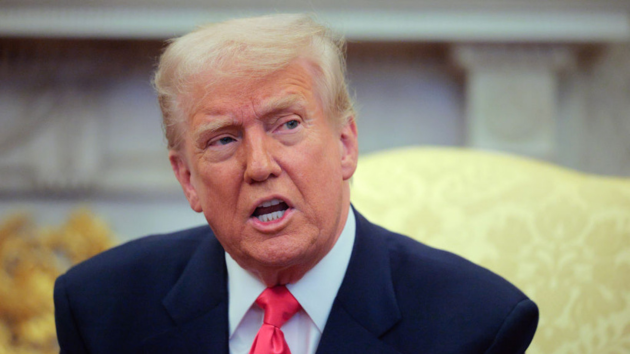
(WASHINGTON) — President Donald Trump is lashing out again against the top federal judge of the Washington, D.C. circuit, who issued an order stopping deportation flights of alleged gang members under the Alien Enemies Act.

“If a President doesn’t have the right to throw murderers, and other criminals, out of our Country because a Radical Left Lunatic Judge wants to assume the role of President, then our Country is in very big trouble, and destined to fail!” Trump wrote early Wednesday morning in a post on Truth Social, reacting to U.S. District Judge James Boasberg’s order on Saturday to stop deportation flights that were already in the air.

It also comes after Trump called for Boasberg’s impeachment.

“Many people have called for his impeachment, the impeachment of this judge. I don’t know who the judge is, but he’s radical left,” Trump told Fox News’ Laura Ingraham in a Fox News interview on Tuesday.

“He was Obama-appointed, and he actually said we shouldn’t be able to take criminals, killers, murderers, horrible, the worst people, gang members, gang leaders, that we shouldn’t be allowed to take them out of our country,” Trump said. “That’s not for a local judge to be making that determination.”

In the wake of Trump’s call for impeachment, Supreme Court Chief Justice Roberts issued an unusual statement rebuking the move.”For more than two centuries, it has been established that impeachment is not an appropriate response to disagreement concerning a judicial decision,” Roberts said in the statement. “The normal appellate review process exists for that purpose.”

Congress can impeach a judge if a simple majority is reached in the House. If the articles were taken up and ultimately clear the House, the Senate would need to hold a trial. It would require a two-thirds majority vote in the upper chamber to convict a judge.

It’s rare, but not unprecedented, for members of Congress to file articles of impeachment against a judge.

Trump, meanwhile, brushed off Roberts’ criticism, saying, “He didn’t mention my name in the statement. I just saw it quickly. He didn’t mention my name.”

Copyright © 2025, ABC Audio. All rights reserved.

Fed set to make first interest rate decision since outbreak of trade war

Fed set to make first interest rate decision since outbreak of trade war
Spencer Platt/Getty Images

(NEW YORK) — The Federal Reserve is set to announce its first interest rate decision since a global trade war touched off by President Donald Trump’s tariffs sent stocks reeling and triggered concern about a possible recession.

The move arrives less than two weeks after Fed Chair Jerome Powell said tariffs would likely raise prices, while voicing patience as Trump’s economic policies take shape.

“We are focused on parsing the signal from the noise as the situation evolves,” Powell told an economic forum in New York City. “We are not in a hurry.”

Investors expect the central bank to leave rates unchanged on Wednesday, according to the CME FedWatch Tool, a measure of market sentiment.

The Trump administration earlier this month slapped 25% tariffs on goods from Mexico and Canada, though the White House soon imposed a one-month delay for some of the tariffs. A fresh round of duties on Chinese goods doubled an initial set of tariffs placed on China a month prior.

Tariffs imposed on steel and aluminum last week triggered retaliatory tariffs from Canada and the European Union, adding to countermeasures already initiated by China.

Last week, the S&P 500 closed down more than 10% since a peak attained last month, meaning the decline officially qualified as a market correction. It marked the index’s first correction since October 2023. The Dow Jones Industrial Average suffered its worst one-week drop since March 2023.

By some key measures, the economy remains in solid shape, however. A recent jobs report showed steady hiring last month and a historically low unemployment rate. Inflation stands well below a peak attained in 2022, though price increases register nearly a percentage point higher than the Fed’s goal of 2%.

The Fed retreated in its fight against inflation over the final months of last year, lowering interest rates by a percentage point. Still, the Fed’s interest rate remains at a historically high level of between 4.25% and 4.5%.

Stretching back to his first term in office, Trump has repeatedly urged the Fed to lower interest rates.

During a virtual address to the World Economic Forum in Davos, Switzerland, in January, Trump called on the central bank to cut rates days before it was set to announce an interest rate decision.

At the ensuing meeting that month, the Fed decided to hold interest rates steady. Speaking at a press conference in Washington, D.C., after the announcement, Powell declined to comment about Trump’s call for lower interest rates, saying it would be “inappropriate” to respond.

“The public should be confident that we’ll continue to do our work as we always have,” Powell said, adding that the Fed would continue to “use our tools to achieve our goals.”

Copyright © 2025, ABC Audio. All rights reserved.
Concerns about the FAA’s air traffic control system date back decades

Concerns about the FAA’s air traffic control system date back decades
J. David Ake/Getty Images

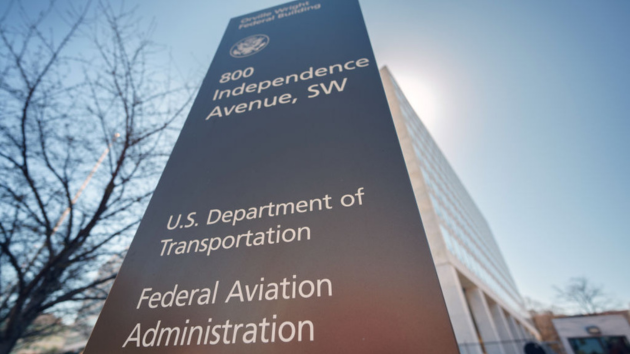
(WASHINGTON) — Federal watchdogs have raised concerns about the Federal Aviation Administration’s air traffic control system for decades, an ABC News analysis of government reports found.

In the weeks since the fatal plane crash over the Potomac River near Ronald Reagan Washington National Airport, DOT Secretary Sean Duffy said the FAA is hoping to deploy a “brand-new air traffic control system” within the next four years.

“This should have happened four years ago, 10 years ago, 15 years ago,” Duffy said. “Right now, we’re at a point where we can actually do it, and we can do it really fast again.”

Red flags regarding the FAA’s handling of air traffic control matters have spanned Republican and Democratic administrations for more than 30 years.

In 1990, Government Accountability Office Transportation Issues Director Kenneth Mead told a congressional subcommittee that although the FAA had made progress, the agency had “inexperience in developing large-scale, highly automated systems” and was “still experiencing problems in modernizing the ATC system.”

“In light of the tremendous levels of F&E [facilities and equipment] funding projected for the next few years, it is crucial that FAA show[s] the Congress, the aviation community, and the flying public that ongoing and future activities will result in demonstrable improvements,” Mead added at the time.

The modifications may have been easier said than done.

“Planned improvements in safety and capacity have been delayed, and the costs, both of maintaining existing technologies and of replacing outdated ATC systems and infrastructure, have grown,” a 2005 GAO panel found, noting that cultural, technical and budgetary factors constrained or impeded ATC modernization.

“FAA no longer sees its modernization program as a multiyear initiative with a defined end; rather, it now sees the program as an ongoing investment in technological advances designed to improve aviation safety and capacity,” the panel explained.

The Office of Inspector General at the U.S. Department of Transportation, which conducts investigations at DOT divisions such as the FAA, the Federal Railroad Administration and the Federal Transit Administration, took a deep dive into the FAA’s handling of ATC matters multiple times.

Inspector general reports in 2008 and 2012 found that the physical conditions of many ATC facilities were deteriorating, with issues ranging from “poor facility design” to water leaks and ventilation problems.

The 2008 IG report mentioned that the FAA was expected to finish implementing its Next Generation Air Transportation System, or NextGen, by 2025. The GAO posted on its website earlier this month that there was “mixed progress” with NextGen’s implementation.

As the years went on, the investigations into the FAA continued.

In 2015, the IG included the tower at Ronald Reagan Washington National Airport on its list of “frequently least efficient” large hub airport towers.

Less than two years later, the IG recognized some improvements made by the FAA to its contingency plans, but found that their ATC facilities “are not yet fully prepared to respond effectively to major system disruptions, in part because of a lack of necessary controller training for these types of emergency events.”

By 2023, concerns over staffing at FAA ATC centers were making headlines.

“FAA has made limited efforts to ensure adequate controller staffing at critical air traffic control facilities,” the IG found at the time, pointing out that the FAA’s Washington Center was authorized to have 21 traffic management coordinators but instead had 13, while the facility was authorized to have 36 operational supervisors but instead had 25.

One of the final federal investigative reports prior to the fatal collision over the Potomac came in September 2024. The GAO made seven recommendations to the FAA, including calling on the agency to report to Congress on how it was handling risks involving “unsustainable and critical systems.”

The FAA “has been slow to modernize the most critical and at-risk systems,” the GAO said at the time. “About one third of FAA ATC systems are considered unsustainable.”

ABC News’ Josh Margolin, Sam Sweeney and Ayesha Ali contributed to this report.

Copyright © 2025, ABC Audio. All rights reserved.

Hamas will be ‘hammered’ until hostages released, Israeli official says

Hamas will be ‘hammered’ until hostages released, Israeli official says
Martin Pope/SOPA Images/LightRocket via Getty Images

(LONDON) —  Israel’s renewed campaign of strikes against Hamas in the Gaza Strip will continue until all remaining hostages are released, an Israeli official told ABC News.

Palestinian health officials said that at least 420 people were killed — including more than 130 children, according to UNICEF figures — when Israel renewed its bombardment of the coastal territory overnight Tuesday, marking the collapse of a ceasefire with Hamas that began in January.

On Tuesday, an Israeli official told ABC News of Hamas, “They got hammered last night and they’re going to continue to be hammered until we get the hostages out.”

The official described the Israel Defense Forces’ renewed attacks against Hamas in Gaza as a “different form of negotiating”, and said Israel had “not closed the door” to talks resuming via mediators if Hamas is willing to accept further hostage-prisoner swaps.

The official did not say whether Israel is planning a renewed ground incursion into Gaza.

An Israeli official told ABC News on Tuesday that the offensive will continue “as long as necessary,” and will “expand beyond air strikes.”

Wednesday brought fresh strikes in Gaza. The IDF said it attacked what it called “a Hamas military site in northern Gaza where preparations were being made to fire projectiles at Israeli territory.”

The Israeli navy also “struck several vessels in the coastal area of the Gaza Strip,” which the IDF said were slated for use by Hamas and Palestinian Islamic Jihad.

The Ministry of Health in Gaza said Wednesday that five foreign staffers working for the United Nations were “injured” after a strike in central Gaza. The wounded were taken to Al-Aqsa Martyrs Hospital, the ministry said.

Israel’s renewed campaign in Gaza marked the end of nearly two months of relative quiet in the region, which has been devastated by intense fighting since October 2023. The ceasefire saw 33 Israeli hostages released from Gaza in return for the release of nearly 1,800 Palestinian prisoners from Israeli prisons.

Fifty-nine hostages are believed to remain in Gaza — 24 of whom are presumed to be alive. Edan Alexander is the last American-Israeli hostage still thought to be alive.

Several members of Hamas’ administrative and civil wings were killed in the renewed strikes. They included Deputy Minister of the Interior Maj. Gen. Mahmoud Abu Tuffah and Deputy Minister of Justice Omar al-Hatta.

Israeli Prime Minister Benjamin Netanyahu said Tuesday that his country would act against Hamas “with increasing intensity.”

“From now on, negotiations will only take place under fire,” he said in a statement. “Hamas has already felt the presence of our force in the last 24 hours and I want to assure you: This is just the beginning.”

“The military strike on Hamas and the release of our hostages are not contradictory goals — they are goals that are intertwined,” Netanyahu said.

The renewed offensive prompted major protests in Israel, including from the families of those still being held hostage in Gaza.

“The greatest fear of the families, the kidnapped and the citizens of Israel has come true,” the Hostage Families’ Forum said in a statement issued on Tuesday. “The Israeli government has chosen to give up on the kidnapped.”

ABC News’ Guy Davies, Jordana Miller, Diaa Ostaz, Samy Zyara and Dana Savir contributed to this report.

Copyright © 2025, ABC Audio. All rights reserved.

Toddler found wandering streets alone with soiled diaper leads police back to shocking scene at home

Toddler found wandering streets alone with soiled diaper leads police back to shocking scene at home
Facebook / Flagler County Sheriff’s Department

(PALM COAST, FL) — A toddler found wandering in the middle of a Florida street with a heavily soiled diaper ended up leading police to a home with extremely hazardous living conditions with the father passed out intoxicated in his bed, police say.

The incident occurred on Sunday when the Flagler County Sheriff’s Department in Florida responded to multiple emergency reports concerning a 2-year-old child “walking in the middle of the street in pajamas with a heavily soiled diaper,” according to a statement from the Flagler County Sheriff’s Department on Tuesday.

Prior to the incident, witnesses say that they observed a child in the front yard of a nearby home and that they took the child to the residence where they found the child’s father, 44-year-old Ross Judy of Palm Coast, “passed out in his bed intoxicated,” police said.

The Flagler County Sheriff’s Department responded to the home and, during their investigation, they found “dangerous tools and garbage in the interior and exterior of the home along with animal feces, filth, and an emaciated dog with an ear that was almost rotted off and fur missing from its body,” authorities said.

“The residence was in deplorable living conditions with several alcoholic beverage containers, bugs swimming in toilet water, and a sink piled high with several inches of cigarette ash to the point the sink was no longer visible,” according to the Flagler County Sheriff’s Department. “Pill bottles were scattered throughout a spare room and on top of living room shelves along with exposed razors and hypodermic needles, which were all accessible to the child.”

“No child should be living in deplorable conditions with an adult who obviously doesn’t care about their wellbeing,” said Flagler County Sheriff Rick Staly in a written statement following the incident. “The Flagler County Sheriff’s Office has no tolerance for anyone endangering children or animals. I am thankful to our residents who ‘saw something and said something’ so that our deputies could intervene.”

Judy was arrested and charged with child neglect without great bodily harm and abandon animal to die, sick, diseased or Infirm.

The suspect was taken to the Sheriff Perry Hall Inmate Detention Facility and is currently being held on a $4,000 bond, authorities said.

The Florida Department of Children and Families and Palm Coast Animal Control are also investigating this incident, and their investigation is currently ongoing.

Copyright © 2025, ABC Audio. All rights reserved.
Pentagon aims to cut 50,000 to 60,000 civilians

Pentagon aims to cut 50,000 to 60,000 civilians
J. David Ake/Getty Images

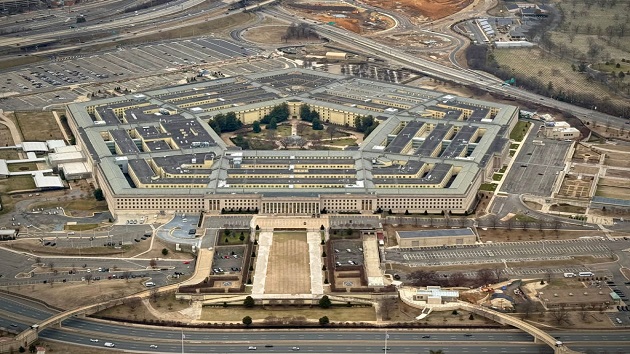
(WASHINGTON) — The Pentagon is attempting to reduce the size of its civilian workforce by between 50,000 to 60,000 employees through voluntary workforce reductions, though it remains unclear if it will be able to meet that goal without possibly having to carry out forced reductions in the civilian workforce.

The Defense Department is currently carrying out a voluntary process to reach its goal of a 5% to 8% reduction of its 878,000 civilian employees — a number that equates to 50,000 to 60,000 employees, a senior defense official told reporters on Tuesday.

“The number sounds high, but I would focus on the percentage, a 5% to 8% reduction is not a drastic one,” said the official, who added that the percentage is one that Defense Secretary Pete Hegseth “is confident can be done without negatively impacting readiness in order to make sure that our resources are allocated in the right direction.”

The voluntary process includes employees who have chosen to resign through what is known as the “Fork in the Road,” a freeze on hiring new employees to replace those who are departing and the dismissal of 5,400 probationary employees who have less than one or two years’ experience in their current jobs.

About 21,000 civilian employees have had their voluntary resignation requests approved under what the Pentagon calls the Deferred Resignation Program (DRP), which allows employees to resign but continue to be paid through the end of the fiscal year, which ends Sept. 30.

The senior defense official declined to disclose how many civilian employees in total had sought to opt into the Deferred Resignation Program.

ABC News has previously reported that 31,000 civilian employees had offered to resign under the Trump administration initiative with some of the requests being denied.

The hiring freeze means that the average 6,000 employees who join the Pentagon every month are also not coming into the workforce as other employees leave.

The Defense Department had also begun the termination of 5,400 probationary civilian employees — which has now been paused by a temporary restraining order imposed by a federal judge.

The official stressed that the 5,400 probationary employees had not been selected for termination “blindly based on the time they had been hired.” The Department has 54,000 total probationary employees, a term that refers to employees who have less than one or two years’ experience in their current jobs.

Instead, the official said the 5,400 were employees who “were documented as significantly underperforming in their job functions and or had misconduct on the record.” It is unclear if all of the 5,400 probationary employees targeted for termination fell into those categories.

“The fact that someone was a probationary employee did not directly mean that they were going to be subject to removal,” said the official.

The official declined to offer what “reduction in force” steps the Pentagon might undertake should the voluntary efforts not reach the goal of reducing the workforce by 50,000 to 60,000 employees.

“I won’t get ahead of the Secretary,” the official said. “It’ll be the Secretary’s prerogative to designate how and when he might use any of the other tools that would be available to him to achieve the stated reduction targets.”

There has been speculation that military service members may be asked to fill in for some of the civilian jobs that are being vacated or will not be filled by the hiring freeze, but the official said the goal is not to affect military readiness.

“We are confident we could absorb those removals without detriment to our ability to continue the mission, and so that’s how we can be confident that we don’t need to worry about any resulting impact on the uniformed force,” the official said.

The official acknowledged that some military veterans would be among the civilians who would be leaving the department, but did not provide an estimate of how many.

“Some of those people will be veterans that served in uniform previously, we’re certainly again looking at case by case as we plan workforce reduction,” said the official. “There are so many critical skills and experience that veterans have to offer, and that’s part of the analysis when we consider who is contributing to the core mission functions and who should be retained.”

Copyright © 2025, ABC Audio. All rights reserved.

Government releases thousands of declassified records related to JFK assassination

Government releases thousands of declassified records related to JFK assassination
Bettmann Archive/Getty Images

(WASHINGTON) — The National Archives on Tuesday released thousands of pages of declassified records related to the assassination of President John F. Kennedy in 1963.

President Donald Trump signed an executive order on Jan. 23 directing the release of the remaining records, saying it was in the “public interest” to do so.

On Monday Trump announced to reporters that the administration would begin releasing the records on Tuesday, prompting a scramble inside the Justice Department to free up attorneys to assist with the declassification process.

Congress voted in 1992 to require the government to release and declassify all assassination-related records by 2017, but that deadline was repeatedly pushed back by Trump and President Joe Biden due to national security concerns.

Tuesday’s release represents a small, outstanding tranche of the more than six million pages of records collected by the National Archives — the majority of which have already been declassified and are available online or in person for review, according to the agency.

This is a developing story. Please check back for updates.

Copyright © 2025, ABC Audio. All rights reserved.