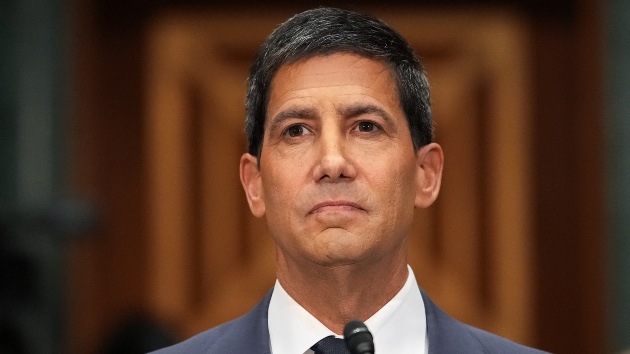
Republican US Senate candidate Ken Paxton speaks to supporters at a campaign stop on May 15, 2026 in Little Elm, Texas. (Ron Jenkins/Getty Images)
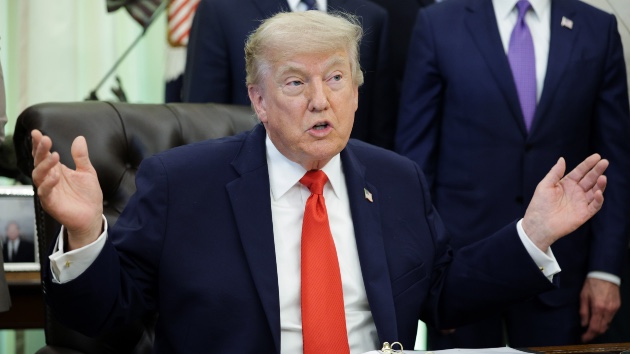
(WASHINGTON) — President Donald Trump on Tuesday issued an endorsement in the Texas Senate primary, backing Texas Attorney General Ken Paxton over Republican incumbent John Cornyn.
This is a developing story. Please check back for updates.
Russian President Vladimir Putin. (Contributor/Getty Images)
(LONDON) — Russian President Vladimir Putin arrived in Beijing on Tuesday ahead of talks with Chinese President Xi Jinping.
Putin was welcomed by Chinese officials, including Foreign Minister Wang Yi, upon landing late Tuesday local time at an airport in Beijing.
On Wednesday, talks between Putin and Xi are set to occur at the Grand Hall of the People, followed by a formal reception, according to the Kremlin.
The two leaders “will discuss China-Russia relations, cooperation in various fields and international and regional issues of mutual interest,” the spokesperson for the Chinese Ministry of Foreign Affairs said.
The state visit marks Putin’s 25th trip to China, according to the spokesperson.
The two discussed the U.S. war in Iran and the Strait of Hormuz, fentanyl and increasing Chinese purchases of American farm products, according to a White House official.
Xi also warned that if the issue of Taiwan is handled “improperly,” the two nations could “come into conflict,” according to China’s official state broadcaster Xinhua.
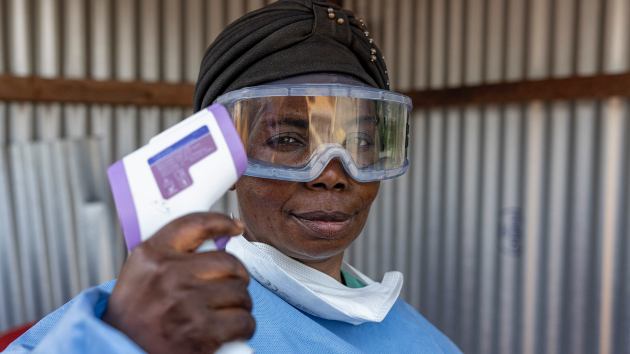
Health supplies are seen as healthcare workers receive training on administering the Ebola vaccine in a study carried out with the support of the World Health Organization as part of the fight against the Ebola virus in Kampala, Uganda on February 14, 2025. (Nicholas Kajoba/Anadolu via Getty Images)
(NEW YORK) — A deadly Ebola outbreak is continuing to spread in the Democratic Republic of Congo and Uganda, with officials on Tuesday saying there were more than 600 confirmed and suspected cases and more than 100 suspected deaths.
The World Health Organization (WHO) declared the outbreak a public health emergency of international concern, and at least one American in the DRC has tested positive, according to the Centers for Disease Control and Prevention (CDC).
Several public health experts told ABC News that while they agree with the CDC that the risk to the U.S. public is currently low, the outbreak is still concerning. They also expressed unease that the U.S. may not be prepared to adequately respond due to cuts to federal health agencies and its withdrawal from the WHO.
The experts noted cases have been found in remote regions of the DRC and Uganda, as well as urban areas, and the outbreak is growing rapidly. They added that although Ebola is a rare disease, it can be highly contagious and can lead to deadly consequences.
“We’re worried that if this outbreak is not contained, that it could spread elsewhere on the continent, which could increase the risk of the virus spreading outside of the African continent,” Dr. Jennifer Nuzzo, professor of epidemiology and director of the Pandemic Center at Brown University School of Public Health, told ABC News.
“Ebola is not as transmissible a virus as, say, a coronavirus … and that’s why I don’t think that this will ever become a pandemic scenario, but it doesn’t have to be a pandemic to be a worrisome situation,” she added.
Americans affected by outbreak
On Monday, the CDC confirmed that least one American in the DRC contracted Ebola while working in the country.
Dr. Satish K. Pillai, incident manager for the CDC’s Ebola response, told reporters that the individual developed symptoms over the weekend and tested positive late Sunday, adding that the patient and six other high-risk contacts were being moved to Germany for care and monitoring.
Serge, an international Christian missions organization, confirmed the patient is American medical missionary Dr. Peter Stafford, a board-certified general surgeon with a specialization in burn care, who was serving patients in the eastern DRC.
Pillai did not say if or when the Americans would be returning to the U.S., but experts say, even if the patient and contacts do, the risk level to the public does not change.
“We safely and effectively have [returned affected Americans home] many times before,” Emily Smith, interim chair of the department of global health at the Milken Institute School of Public Health at George Washington University, told ABC News. “It’s something we have good experience in and have always safely and effectively done. So, to me, no concerns about doing that.”
Dr. Jesse Goodman, a professor of medicine and infectious disease at Georgetown University and former chief scientist at the Food and Drug Administration, said it is encouraging that when countries such as the DRC have experienced outbreaks in the past, they have not progressed to pandemic status.
“I think the most [the U.S.] would see is the kind of limited transmission that we’ve seen in the past because this virus almost always appears that transmission is from people who have symptoms,” he told ABC News. “I think if there are cases that come to this country, I would expect limited transmission and think we have the capability to contain it.”
During the 2014 Ebola outbreak, there were two cases of suspected transmission from a patient with Ebola to nurses caring for him. The CDC has established detailed infection prevention and control procedures for health facilities that suspect they have cases of Ebola.
U.S. may not be as connected to the global health community
Even with possible U.S. capability to contain Ebola domestically, the experts who spoke to ABC News said the U.S. is likely at a disadvantage when it comes to responding to several health crises both at home and abroad due to public health capacity cuts.
Last year, the State Department announced it would be taking over programs previously run by the U.S. Agency for International Development (USAID). Secretary of State Marco Rubio said the agency — which oversaw foreign aid, disaster relief and international development programs — would no longer be providing assistance to other countries.
In previous Ebola outbreaks, USAID provided millions of dollars and operational support in response, in addition to helping with preparedness activities in neighboring countries.
Additionally, earlier this year, the U.S. officially completed its withdrawal from the WHO, with federal officials saying at the time there are “plans” in place to work with organizations on surveillance, diagnostics and outbreak response to fill in gaps left by exiting the WHO.
Brown University’s Nuzzo said the Ebola outbreak is the kind of situation public health experts warned about as USAID was gutted and the U.S. withdrew from the WHO.
“We warned that the United States would be flying blind, and it would be learning about deadly outbreaks late, and then it would be very difficult for the U.S. to respond because we would have fewer tools to do that,'” Nuzzo said. “The big worry here is that the outbreak wasn’t declared until there were more than 200 suspected cases of the virus and that is very unusual. Usually, we get signals of an outbreak much earlier.”
George Washington University’s Smith concurred, “When we are talking about public health infrastructure and global health infrastructure, we’re in a worse place today than we were two years ago.”
Nuzzo also noted that the National Institute of Allergy and Infectious Diseases, an agency within the National Institutes of Health, ended research at its high containment lab in Fort Detrick, Maryland, due to “a safety stand-down” last year.
The lab was one of the few federal facilities studying Ebola and other deadly pathogens, which Nuzzo said could have been useful in understanding the virus and developing therapies for the recent outbreak.
“So now that we have Americans potentially exposed to a virus that’s deadly, for which we have no vaccines or treatments, you can imagine how beneficial it would be to have a laboratory that can conduct world-class research to make sure we develop cures for this,” Nuzzo said. “But we don’t have it. So, we’re basically behind the curve in being ready for this.”
Goodman also said that the U.S. may not be as prepared because Health and Human Services Secretary Robert F. Kennedy Jr. has been actively shifting the department’s focus away from infectious disease management and towards chronic illnesses.
During his confirmation hearings last year, Kennedy argued that too much federal funding has been “devoted” to “infectious disease and to drug development and very little to chronic diseases.”
Goodman argued that there needs to be a focus on infectious diseases because of the threats they may pose to public health.
“I think the message here is these infectious disease, we may be done with them, but they’re not done with us,” he said. “There’s a reason that so many of us work for so many years to be prepared for whatever the next thing is because we don’t know what it is and we just need to be ready.”
Kennedy told ABC News on Monday that his agency is addressing the recent hantavirus and Ebola outbreaks.
“Yeah, we’re working on it,” Kennedy replied when asked if he was worried about the outbreaks. Kennedy did not respond when asked what his message might be to Americans who are concerned about the diseases potentially spreading in the U.S.
On Sunday, the State Department issued “Level 4 — Do not travel” advisories for Uganda and the DRC due to the outbreak.
Nuzzo said she’s worried that the U.S. hasn’t built a public health system that acknowledges viral outbreaks as recurring threats, saying the U.S. has been caught off guard with previous incidents such as COVID-19.
“We don’t do that with other recurring hazards you know; we don’t try to build FEMA in the midst of a hurricane,” Nuzzo said.
Town cars and taxis are viewed in the Financial District in the early hours of the morning on June 4, 2015 in New York City. (Spencer Platt/Getty Images)
(NEW YORK) — A 56-year-old Westchester County woman plunged to her death after stepping out of her car into an open manhole in Midtown Manhattan on Monday, sources told ABC News.
The woman, from Briarcliff Manor, New York, parked her car at West 52 Street and Fifth Avenue just before 11:20 p.m. Monday, the sources said.
She stepped out of her Mercedes-Benz SUV and into an uncovered manhole, falling about 10 feet, sources said.
The woman was rushed to New York Presbyterian Hospital, where she was pronounced dead, sources said.
No construction was ongoing, and the manhole cover was discovered about 15 feet away from the opening, according to sources.
Con Edison said it is “actively investigating” the incident.
“We are deeply saddened to confirm that a member of the public has died after falling into an open manhole. We are actively investigating how this occurred. Our thoughts are with the individual’s family, and safety remains our top priority,” Con Edison said in a statement Tuesday.
Town cars and taxis are viewed in the Financial District in the early hours of the morning on June 4, 2015 in New York City. (Spencer Platt/Getty Images)
(NEW YORK) — A 56-year-old Westchester County woman plunged to her death after stepping out of her car into an open manhole in Midtown Manhattan on Monday, sources told ABC News.
The woman, from Briarcliff Manor, New York, parked her car at West 52 Street and Fifth Avenue just before 11:20 p.m. Monday, the sources said.
She stepped out of her Mercedes-Benz SUV and into an uncovered manhole, falling about 10 feet, sources said.
The woman was rushed to New York Presbyterian Hospital, where she was pronounced dead, sources said.
No construction was ongoing, and the manhole cover was discovered about 15 feet away from the opening, according to sources.
Con Edison said it is “actively investigating” the incident.
“We are deeply saddened to confirm that a member of the public has died after falling into an open manhole. We are actively investigating how this occurred. Our thoughts are with the individual’s family, and safety remains our top priority,” Con Edison said in a statement Tuesday.
cting U.S. Attorney General Todd Blanche testifies during a Senate Committee on Appropriations, Subcommittee on Commerce, Justice, Science, and Related Agencies hearing in the Dirksen Senate Office Building on Capitol Hill on May 19, 2026 in Washington, DC. (Anna Moneymaker/Getty Images)
(WASHINGTON) — Acting Attorney General Todd Blanche is facing questions Tuesday on the $1.776 billion “Anti-Weaponization Fund” to compensate those who allege they were wrongly targeted under the Biden administration.
Blanche, testifying on the Justice Department’s 2027 budget request, is making his first appearance before lawmakers since he was tapped by President Donald Trump to serve as acting attorney general in early April after Pam Bondi was removed from the position.
The fund, which was first reported last week by ABC News, has already drawn condemnation from lawmakers on both sides of the aisle amid growing questions over how the funds will be distributed and whether they could be awarded to political backers of the president and even potentially the rioters who stormed the U.S. Capitol on Jan. 6, 2021.
Blanche, in defense of the fund, sought to compare it to an Obama-era initiative that set up ways to settle claims brought by Native Americans who had alleged they had been subject to widespread mistreatment by the government.
He also argued that the fund won’t solely be used to compensate supporters of the administration.
“It’s not limited to — to Republicans, … it’s not limited to Biden weaponization, it’s not limited to in any way, scope or form to Jan. 6 or to Jack Smith,” Blanche said. “There’s no limitation on the — on the claims.”
Democratic Sen. Chris Van Hollen lambasted Blanche for seeking to compare the $1.776 billion fund to the Obama-era initiative for Native Americans.
Van Hollen noted that specific fund received sign off from a federal judge, whereas Monday’s announcement had no judicial involvement or approval.
Blanche won’t rule out payouts for individuals who assaulted law enforcement
Pressed whether individuals who assaulted Capitol Police officers would be eligible for payments, Blanche said, “Anybody in this country is eligible to apply if they believe they’re a victim of weaponization.”
Blanche wouldn’t commit to setting a policy that bans funds being distributed to anyone who assaulted police, saying the commissioners overseeing the fund will be tasked with deciding who is eligible.
Blanche claims there will be ‘full transparency’ on fund, but with caveats
In an exchange with Democratic Sen. Chris Coons, was questioned over whether disbursements from the $1.776 billion will be subject to public disclosure.
Blanche said he wanted to be “careful” in his answer given privacy laws that might restrict the Justice Department from disclosing certain information, but otherwise said there would be “full transparency” via regularly quarterly reports that will be released by the department regarding the commission’s actions.
“The reason why I want to be careful of my answer is because there’s obviously laws that exist around privacy that would — may prevent some of the information that commission takes in from being fully public,” Blanche said. “Beyond that, there will be full transparency, and I commit to you that beyond the … laws that exist around privacy and privileges and whatnot.”
his photo taken on May 17, 2026 shows an exterior view of a hospital that has been designated as an Ebola treatment center in Goma, the Democratic Republic of the Congo DRC. TO GO WITH “Update: DR Congo Ebola outbreak spreads to rebel-held city, Rwanda closing down border” (Photo by Str/Xinhua via Getty Images)
(LONDON) — At least 513 suspected cases and 131 suspected deaths have been recorded in the ongoing Ebola outbreak in the eastern Democratic Republic of the Congo, officials said Tuesday.
Congolese Minister of Public Health Samuel Roger Kamba said during a press briefing in French that authorities will determine which of these deaths “are actually linked to the disease.”
World Health Organization Director-General Tedros Adhanom Ghebreyesus, during the United Nation agency’s annual World Health Assembly in Geneva on Tuesday, recalled how he declared Congo’s current Ebola outbreak a public health emergency of international concern on Sunday, saying it was the first time a WHO chief had done so before convening an emergency committee.
“I did not do this lightly,” Tedros said. “I did it in accordance with Article 12 of the International Health Regulations, after consulting the ministers of health of both countries, and because I am deeply concerned about the scale and speed of the epidemic. We will convene the Emergency Committee today to advise us on temporary recommendations.”
At least 30 cases of Ebola virus disease have been confirmed in the ongoing outbreak in Congo, from the northeastern province of Ituri. In addition, there are more than 500 suspected cases and over 130 suspected deaths, according to Tedros.
Cases have been reported in urban areas, including one of Congo’s largest cities, Goma, the rebel-held capital of the eastern province of North Kivu, Tedros said.
Uganda has also confirmed two cases in its capital Kampala, including one death, among two individuals who traveled from neighboring Congo, according to Tedros.
This outbreak is caused by the Bundibugyo virus, a rare variant of Ebola for which there are no approved vaccines or therapeutics, Tedros said.
On Tuesday, Dr. Anne Ancia, WHO’s representative in the DRC, said more than 40 experts were deployed to the field on Sunday and the WHO has sent 12 tons of supplies, with six more tons coming.
Supplies include personal protective equipment for front line healthcare workers, laboratory samples, tents, drugs and other treatments.
“What I see here in the field is extremely vulnerable people, a [fragile] population,” Ancia said. “But I see also people working together while facing great uncertainty as to the [scale] or the extent of this outbreak.”
She said the surveillance capacity is limited in the affected region, which could be why the outbreak is spreading rapidly.
“We really need to go fast to really try to stop the spread of the disease further,” she said. “We don’t understand yet the extent of the spread of the disease.”
According to The Associated Press, more than 20 Ebola outbreaks have occurred in Congo and Uganda, but this is only the third time that the Bundibugyo virus has been detected.
An American doctor working in the DRC is among those who has tested positive for Ebola amid the outbreak, according to an international Christian missions organization.
Dr. Peter Stafford, a medical missionary with the missions organization Serge, was exposed while treating patients at Nyankunde Hospital, the group said Monday.
He sought testing “after presenting symptoms consistent with the virus,” Serge said in a statement.
Dr. Satish K. Pillai, incident manager for the Centers for Disease Control and Prevention’s Ebola response, said the agency had activated its Emergency Operations Center through its country offices in the DRC and in Uganda, and is deploying technical experts that have been requested from Atlanta headquarters.
Pillai added that the risk to the U.S. general public remains low.
The CDC said earlier Monday that it is preparing to restrict entry for travelers arriving from parts of central Africa where an Ebola outbreak has been declared, in coordination with the Department of Homeland Security.
On Sunday, the CDC said in a statement that a “small number of Americans” were directly affected by the Ebola outbreak.
Health Secretary Robert F. Kennedy Jr. told ABC News on Monday that his agency is “working on” the Ebola outbreak.
ABC News’ Youri Benadjaoud, Eric M. Strauss and Mary Kekatos contributed to this report.
Robert F. Kennedy Jr., US secretary of Health and Human Services (HHS), during a healthcare affordability event in the South Court Auditorium of the Eisenhower Executive Office Building at the White House in Washington, DC, US, on Monday, May 18, 2026. (Photographer: Jim Lo Scalzo/EPA/Bloomberg via Getty Images)
(WASHINGTON) — Health and Human Services Secretary Robert F. Kennedy Jr. told ABC News on Monday that his agency is working to address the recent hantavirus and Ebola outbreaks, marking the first time he’s commented publicly on the Ebola outbreak since the Centers for Disease Control and Prevention (CDC) confirmed than an American had been infected with the virus in the Democratic Republic of the Congo (DRC).
“Yeah, we’re working on it,” Kennedy told ABC News when asked if he was worried about the outbreaks. The secretary’s comments come after the CDC said a “small number of Americans” are directly affected by the current Ebola outbreak in the DRC.
Kennedy did not respond when asked what his message might be to Americans who are concerned about the diseases potentially spreading in America. He told reporters in the Oval Office last week that the U.S. had the hantavirus outbreak “under control.”
“We have this under control and we’re not worried about it,” he said at the White House’s maternal healthcare event on May 11th. Kennedy also noted that the CDC has been working on the outbreak since day one.
The CDC said there have been no confirmed hantavirus cases in the U.S. linked to the MV Hondius cruise ship and 18 passengers remain under observation at the University of Nebraska.
Meanwhile, Kennedy’s brief comments about the outbreaks came following a roundtable event announcing nearly $1 billion in new funding to states to address PFAS in drinking water at the Environmental Protection Agency (EPA) on Monday.
The secretary has been on a midterm blitz recently, touting the administration’s Make America Healthy Again (MAHA) movement during stops including Ohio and California.
At a subsequent event featuring Kennedy and other health leaders at the White House, Deputy Assistant to the President for Domestic Policy Heidi Overton stressed that “there are no cases of Ebola in America.”
Deputy Assistant to the President for Domestic Policy Heidi Overton stressed during the event that “there are no cases of Ebola in America.”
“We want to keep it that way and we are doing everything we can to support Americans in the region,” Overton added.
Brian Kemp, governor of Georgia, left, and Marty Kemp, Georgia’s first lady, second left, watch as Derek Dooley, Republican U.S. Senate candidate for Georgia, second right, speaks during a campaign event at Whitetail Coffee Shop in Milton, Georgia, on Friday, May 15, 2026. (Photographer: Elijah Nouvelage/Bloomberg via Getty Images
(WASHINGTON) — Donald Trump might not have been in attendance at the Atlanta Press Club Republican primary debate for U.S. Senate last month, but his presence filled the room.
“I am running for the United States Senate so that I can go to the Senate and be a warrior for Donald Trump and his ‘America First’ policies,” said U.S. Rep. Buddy Carter in his opening statement.
When Carter’s House colleague and opponent in the Senate primary, U.S. Rep. Mike Collins, was asked about the direction in which the Republican Party should go once President Trump is no longer in office, Collins told the moderator “we need to continue Donald Trump’s ‘America First’ agenda,” adding, “it’s one of the reasons that I ran.”
In a midterm cycle where Trump’s endorsement power has taken down incumbents, plucked winners out of crowded special elections, and fueled intra-party spending wars, the president has not yet backed a candidate in the Republican primary for U.S. Senate in Georgia.
The absence of a Trump endorsement in the race has led both Carter and Collins to focus their campaigns around winning over Trump’s base – and maybe even Trump himself – as they both vie for the president’s backing in what is expected to be one of the most competitive states on the map this year, one that could decide the balance of power in Congress.
Incumbent Democratic Sen. Jon Ossoff is one of the most vulnerable Senate Democrats up for re-election in 2026, and Tuesday’s primary could decide who goes head-to-head with the rising star in the Democratic Party in November.
Brian Kemp, the two-term Republican governor of Georgia who turned down calls to run for the Senate seat himself this year, is supporting neither congressman. Kemp has instead thrown his political weight behind former college football coach Derek Dooley, the son of legendary University of Georgia football coach Vince Dooley.
Kemp has made calls to donors to rally support for Dooley, a Kemp advisor told ABC News. Kemp’s PAC, Hardworking Americans Inc., has also poured millions in the race to help support Dooley, who calls himself a “political outsider.”
Kemp has had a rocky relationship with the president himself, after contesting Trump’s claims of election fraud in the 2020 election. However, Kemp remains popular among Georgians, winning reelection against a Trump-endorsed primary challenger in 2022.
Tuesday’s primary races in Georgia will be a test of Kemp’s own political power in the state; the outgoing Georgia governor has not ruled out a potential 2028 presidential run.
The real test of Trump’s influence in Georgia will come in the Republican primary to replace term-limited Kemp as governor, where the president’s early endorsement of current Lt. Governor Burt Jones failed to clear the field and instead set the stage for a competitive primary battle against billionaire businessman Rick Jackson, who is neck and neck with Jones in the polls.
But unlike Georgia Secretary of State Brad Raffensperger and Georgia Attorney General Chris Carr – who are also running in the Republican primary for governor but are making appeals to more traditional GOP voters – Jackson is not shying away from running in the “Make America Great Again” lane, even without Trump’s backing.
“I’m a conservative outsider and a businessman that wants to bring business solutions to Georgia, just like President Trump did,” Jackson said at the primary debate for governor.
Trump hosted a tele-rally for Jones earlier this month, where he reiterated his endorsement for the longtime Trump loyalist.
“There’s a lot of confusion. Everyone’s saying I endorsed them. I didn’t. I endorsed a man named Burt Jones,” Trump told supporters on the call.
On the other side of the aisle, the Democratic candidates for governor are also talking about Trump – in how best to fight his policies.
“Unlike some people, I’m not running for governor to be Donald Trump; I’m running to stand up to him,” said former Atlanta Mayor Keisha Lance Bottoms in the latest ad from her campaign, which calls out Jackson and Jones over their courting of Trump’s favor.
Bottoms is endorsed by former President Joe Biden and is widely considered the frontrunner in the Democratic primary race, but it is unclear whether she will meet the vote threshold to avoid a runoff. Democratic opponents that Bottoms could face in a potential runoff include former DeKalb County CEO Michael Thurmond, former Republican Lt. Gov. Geoff Duncan, and former Georgia state Sen. Jason Esteves.
In Georgia, if one candidate does not receive 50% of the vote, the top two finishers will advance to a runoff election on June 16. And with so many well-known contenders for office this year, runoffs may be more likely on both sides of the aisle, up and down the ballot.
The Islamic Center of San Diego is seen after a shooting on May 18, 2026 in San Diego, CA. (Photo by K.C. Alfred / The San Diego Union-Tribune via Getty Images)
(SAN DIEGO) — Amin Abdullah, the security guard who was killed along with two others in a shooting at the Islamic Center of San Diego on Monday, is being hailed as a hero as police say “his actions were heroic and undoubtedly saved lives.”
The shooting at the Islamic Center of San Diego, the largest mosque in San Diego County, was reported shortly before noon local time, police said.
While officers were responding to the mosque, the police department “began to receive calls from just a couple blocks away that we had more active gunfire,” officials said at a news conference Monday.
The security guard appeared to play a “pivotal role” in keeping the shooting from “being much worse,” police said, noting that the victims were all found in front of the Islamic Center.
“His actions were heroic and undoubtedly saved lives today,” San Diego Police Chief Scott Wahl said of Abdullah.
“We do believe the security guard was able to help at least minimize the situation to the front area of the mosque,” Wahl continued.
Sam Hamideh, whose son attends the school next to the Islamic Center, told ABC News’ San Diego affiliate KGTV that Abdullah would have done anything to help the people inside.
“Even when the day was going wrong you could just smile … he just had that kind of heart and he always really cared,” Hamideh said.
Both suspects, ages 17 and 18, are dead from apparent self-inflicted gunshot wounds, police said.
Authorities are investigating a potential motive but said the shooting is currently being considered a hate crime.
“There was definitely hate rhetoric that was involved,” Wahl said.
Anti-Islamic writings were found in the vehicle with the two teens, sources told ABC News.
“We have never experienced a tragedy like this before,” Taha Hassan, director of the Islamic Center of San Diego, said at a news conference.
Hassan said he’s sending “prayers and standing in solidarity with all the families in our community here, and also the other mosques, and all the places of worship in our beautiful city.”
Tazheen Nizam, the executive director of the San Diego chapter of the Council on American-Islamic Relations, said in a statement, “We strongly condemn this horrifying act of violence. Our thoughts are with everyone impacted by this attack. No one should ever fear for their safety while attending prayers or studying at an elementary school.”
-ABC News’ Emily Shapiro and Meredith Deliso contributed to this report.