Liam Conejo Ramos, as he is detained, January 20, 2026 in Minneapolis, Minnesota. (Columbia Heights Public Schools)
(MINNEAPOLIS) — An immigration judge has denied Liam Conejo Ramos and his family’s asylum claim, their attorney confirmed.
The 5-year-old boy and his father, Adrian Conejo Arias, were detained on Jan. 20 by immigration agents in Minneapolis and held in a Texas detention facility. A judge ordered them to be released and they flew back to Minnesota on Feb. 1.
Attorney Danielle Molliver told ABC News on Thursday the family was unable to present any evidence in the case before the government filed a motion to terminate the case which a judge granted. Molliver said she has filed an appeal with the Board of Immigration Appeals.
“We understand that this decision will be appealed and remain hopeful for a positive outcome,” a spokesperson for Columbia Heights Public School District said earlier in confirming the asylum claim denial. “The detention in January of Liam and his father shed light on the harm caused by Operation Metro Surge, during which many children and families have been detained.”
The boy and his father were detained in January shortly after arriving home from the child’s preschool, school officials had said.
Both were taken to a federal detention facility in Dilley, Texas. They had a pending asylum case but no order of deportation.
The five-year-old’s father told ABC News last month that he wants to remain in the United States with his family, saying they fled Ecuador out of fear.
“I asked for asylum to be here for my family, for my children,” Conejo Arias said. “I’m here because I’m scared of returning to my country.”
In a statement after a judge ordered them to be released, Department of Homeland Security spokesperson Tricia McLaughlin said, “The facts in this case have NOT changed: ICE did NOT target or arrest a child.”
“On January 20, ICE conducted a targeted operation to arrest Adrian Alexander Conejo Arias an illegal alien from Ecuador who was RELEASED into the U.S. by the Biden administration,” McLaughlin said. “As agents approached, Adrian Alexander Conejo Arias fled on foot — abandoning his child.”
McLaughlin said ICE officers remained with Liam while other officers apprehended his father. Officers, according to McLaughlin, attempted to place Liam with his “alleged mother” who was inside the house, but she allegedly refused to accept custody of the child.
McLaughlin said Conejo Arias told officers he wanted his son to remain with him.
The DHS account differs from what the Conejo Arias, his family’s attorney and schools officials said occurred.
Conejo Arias said when he was detained, he was walking a few feet ahead of his son, trying to alert people who “would come out who could help” them.
“I love my son too much. I would never abandon him,” Conejo Arias said.
Officials from Liam’s school said another adult living in the home was outside begging the agents to allow them to take care of the child, but the request was denied.
Stock image of gavel. (Witthaya Prasongsin/Getty Images)
(HONOLULU) — Opening statements are expected to begin Thursday in the trial of a doctor accused of trying to kill his wife on a Hawaii hiking trail last year.
Gerhardt Konig has been charged with second-degree attempted murder. He has pleaded not guilty.
The trial is set to get underway at 9 a.m. local time in Honolulu.
The anesthesiologist is accused of beating his wife, Arielle Konig, with a rock on the Pali Puka Trail on Oahu on March 24, 2025.
He allegedly pushed her and hit her in the head with a rock approximately 10 times while grabbing the back of her head and smashing her face into the ground, according to the probable cause statement for his arrest. He also allegedly attempted to use two syringes on her, according to the document.
Arielle Konig suffered injuries, including large lacerations to her face and head and was hospitalized in serious condition following the alleged attack, according to the probable cause document.
Gerhardt Konig has been in jail since his arrest. A judge denied his motion to dismiss the indictment last month.
Arielle Konig’s attorney has previously told reporters that she intends to testify during the trial. She filed for divorce in May 2025, online court records show.
In a petition for a restraining order filed shortly after the arrest, she said Gerhardt Konig had previously accused her of having an affair, “which led to extreme jealousy on his part” and led him to try to “control and monitor all of my communications.”
Konig worked as an anesthesiologist on Maui. Following his arrest, Maui Health said his medical staff privileges at Maui Memorial Medical Center have been suspended pending investigation.
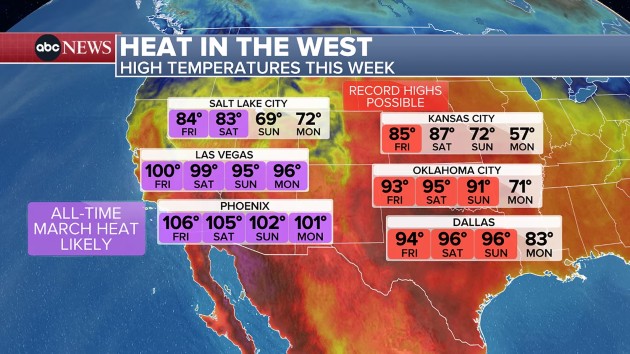
(NEW YORK) — A dangerous and unprecedented heat wave is hitting the West, with temperatures reaching 25-to-40 degrees above normal across the region.
A dozen cities recorded all-time record March temperatures on Wednesday, including 105 degrees in Palm Springs, California; 102 degrees in Phoenix, Arizona; and 94 degrees in Las Vegas.
Heat alerts are in place for 40 million Americans in the West through the weekend.
With temperatures expected to reach between 96 and 109 degrees for a widespread area over multiple days — and during a time of high tourism to the Desert Southwest — the heat may turn deadly.
The heat will spread east through the week. By Friday, the record highs may reach Texas, Nebraska and Oklahoma, and by Sunday, daily record highs could stretch from Los Angeles to Memphis, Tennessee.
The heat and dry weather could also increase the risk of wildfires. Red flag warnings are in place for parts of Wyoming, South Dakota and Nebraska, where wind gusts could reach 30 to 45 mph.
Extreme heat is considered the deadliest weather-related hazard in the U.S., according to the Fifth National Climate Assessment. About 2,000 Americans die each year on average from extreme heat, according to the Centers for Disease Control and Prevention.
Click here for what to know about staying safe in the heat.
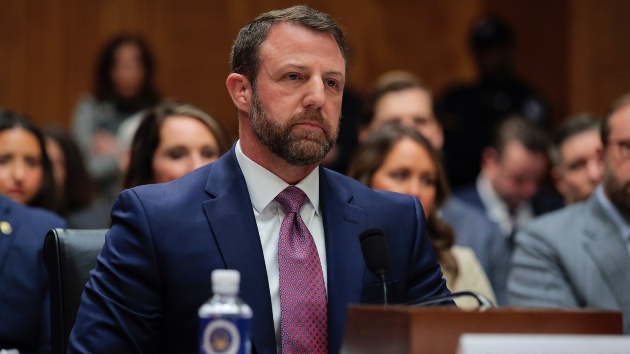
U.S. Sen. Markwayne Mullin (R-OK) arrives to testify during a confirmation hearing to be the next Secretary of the Department of Homeland Security in the Dirksen Senate Office Building on March 18, 2026 in Washington, DC.(Photo by Chip Somodevilla/Getty Images)
(WASHINGTON) — Sen. Markwayne Mullin’s nomination to be the secretary of Homeland Security narrowly cleared a committee vote Thursday morning with the help of Democratic Sen. John Fetterman, teeing up the Oklahoma Republican’s nomination for a final vote on the Senate floor as soon as next week.
Mullin’s nomination advanced out of Senate Homeland Security Committee by a vote of 8-7. He needed a simple majority of votes to clear the committee.
After a series of contentious exchanges during Wednesday’s confirmation hearing, Sen. Rand Paul, the committee’s chairman, ultimately cast a vote against Mullin in committee on Thursday. Fetterman was the only Democrat to cast a vote in his favor.
Fetterman’s vote proved to be critical for Mullin as Republicans only hold a one seat majority on the committee. Paul’s objection meant that at least one Democrat would be necessary to push Mullin over the line.
After the vote, Fetterman said he approached the Mullin vote with an “open mind.”
“We need a leader at DHS. We must reopen DHS. My AYE is rooted in a strong committed, constructive working relationship with Senator Mullin for our nation’s security,” Fetterman wrote in a post on X.
Mullin’s hearing came weeks after President Donald Trump fired DHS Secretary Kristi Noem, following her handling of the Minneapolis immigration enforcement and criticism that she used $220 million in taxpayer money for an ad campaign.
Mullin’s nomination will head to the Senate floor where he’ll need a simple majority of votes to be confirmed. He is expected to be approved by the chamber when he comes up for a final vote.
-ABC News’ Ivan Pereira contributed to this report.
U.S. Sen. Markwayne Mullin (R-OK) arrives to testify during a confirmation hearing to be the next Secretary of the Department of Homeland Security in the Dirksen Senate Office Building on March 18, 2026 in Washington, DC.(Photo by Chip Somodevilla/Getty Images)
(WASHINGTON) — Sen. Markwayne Mullin’s nomination to be the secretary of Homeland Security narrowly cleared a committee vote Thursday morning with the help of Democratic Sen. John Fetterman, teeing the Oklahoma Republican’s nomination up for a final vote on the Senate floor as soon as next week.
Mullin’s nomination advanced out of committee by a vote of 8-7. He needed a simple majority of votes to clear the committee.
This is a developing story. Please check back for updates.
A picture of Qatar Energy’s operating facilities on March 3, 2026 in Ras Laffan Industrial City, Qatar. Qatar Energy announced a complete halt to liquefied natural gas (LNG) production at its Ras Laffan and Mesaieed facilities on March 2, 2026, after Iranian attacks targeted energy facilities. (Photo by Getty Images)
(NEW YORK) — Iranian attacks on significant energy infrastructure and refineries in several Gulf countries pushed oil and gas prices higher in volatile trading on Thursday.
Brent crude oil prices, a benchmark for global trading, climbed by about 6%, hitting $116 per barrel for contracts to purchase oil in May.
The benchmark for European gas also surged by about 15% after Iran on Wednesday released retaliatory strikes targeting energy sites in several Gulf countries.
An Iranian drone struck a Saudi Aramco refinery in Yanbu, on the Red Sea, on Thursday, according to the Saudi Ministry of Defense, which said the extent of the damage was being assessed. That refinery is a joint venture between Aramco and the U.S.-based Exxon Mobil Corp.
Kuwait also on Thursday said its Mina Al-Ahmadi Refinery, which is run by the state-owned National Petroleum Company, had been struck by a drone. There was a “limited” fire at the facility, according to the official Kuwait News Agency.
Qatari authorities said on Wednesday that Iranian ballistic missile attacks caused fires and “extensive damage” at the Ras Laffan terminal, which carries about one-fifth of the global supply of liquid natural gas. Qatar Energy, which runs the terminal, has said on March 2 that it would bring liquefied natural gas production at Ras Laffan to a halt.
Iran’s Islamic Revolutionary Guard Corps had issued warnings for several Gulf energy production sites, including the refinery in Yanbu, after Wednesday’s Israeli strikes on the South Pars Gas Field, the largest in Iran.
Those attacks added uncertainty to a market already on edge, as the overall conflict and the near-closure of the vital Strait of Hormuz by Iran has sent key energy prices higher.
The Dutch Title Transfer Facility, which is widely seen as the European benchmark for natural gas, saw forward-looking contracts for next month climb about 15% in midmorning trading on Thursday. Trading was volatile, and those contracts had registered intraday gains as high as about 30% in morning trading.
Since the conflict began on Feb. 28, with U.S. and Israeli strikes on Tehran, the TTF benchmark’s rate has about doubled. Intraday prices on Thursday hovered above about 60 euro per MWh, while those LNG contracts had traded below 30 euro per MWh between mid-November and mid-January.
Brent crude had been trading prior to the conflict near $70 a barrel. Prices has previously peaked at about $120 a barrel on March 9.
The healthcare.gov website on a laptop arranged in Norfolk, Virginia, US, on Saturday, Nov. 1, 2025. (Stefani Reynolds/Bloomberg via Getty Images)
(NEW YORK) — When Jessica Chamberlain went to sign up for health insurance coverage under the Affordable Care Act (ACA) for 2026, she not prepared for the sticker shock.
Last year, Chamberlain was paying $59.67 in monthly premiums. This year, she would be paying nearly $100.
The 43-year-old mother of two from Illinois said she was floored to see her monthly premiums were nearly doubling.
“I can’t afford that as a single mom with two kids,” she told ABC News.
After carefully weighing her options, Chamberlain decide to forego health insurance and is currently uninsured.
“What do I sacrifice [to pay for health insurance]? I’m diabetic,” she said. “What do I have to sacrifice to keep my medications and my health afloat?
Chamberlain is not alone. Nearly one in 10 people enrolled in the ACA Marketplace last year dropped their coverage in 2026, according to a new KFF survey published Thursday.
The findings come amid rising health care costs and the end of the enhanced premium tax credits. The tax credits helped lower the cost of monthly premiums for about 22 million Americans covered under the ACA and expired at the end of 2025, with no plans by Congress to extend them.
The survey built upon a previous KFF poll conducted in 2025 among Marketplace enrollees. Surveyors re-interviewed more than 1,100 adults between Feb. 2 and March 2, 2026.
Of the respondents, 69% said they re-enrolled in Marketplace coverage with 39% selecting the same plan and 29% switching plans.
More than half, or 51%, of returning ACA enrollees said their health care costs are “a lot higher” this year compared to last year. Of this group, four in 10 specifically said their premiums are “a lot higher.” Additionally, 80% said all health care costs — including premiums, deductibles, co-pays or coinsurance — are higher.
Meanwhile, 9% of Marketplace enrollees dropped their ACA coverage and are currently uninsured.
When asked why they decided to drop or change their coverage, most respondents said costs were the driving factor.
One of the respondents, Holly Weir, a 26-year-old from Ohio, told ABC News she was paying $30 in monthly premiums last year under a plan run by UnitedHealthcare. This year, her plan went to $177 in monthly premiums.
“I didn’t do anything to pick a new health care plan. I got the bill in the mail and I was like, ‘[Expletive]!'” Weir said. “I didn’t pay too much attention until I got the bill the next month and I was like ‘Oh my God, this isn’t from me going to see a medical provider.'”
Weir decided to cancel her insurance and has applied for Medicaid coverage. She is currently waiting to see if she will be approved.
Weir said she is a thyroid cancer survivor, and she has to see an oncologist every two months or so, in addition to taking regular medication.
“Once that runs out, I’ll get a lot more scared,” she said. “Of course, I’m not going to be stupid and leave it so long. If it does come to it, I’ll pay [for the insurance]. The idea that I would have to spend that each month is frustrating. I’m already not doing amazingly financially.”
The survey found that even those who re-enrolled in the ACA Marketplace may need to rework their household budgets.
More than half, or 55%, said they need to cut spending on food or other basic household expenses to afford their health care costs.
Among those with chronic health conditions, 62% of those who reenrolled in the ACA Marketplace said they will be cutting back on food and other basics.
The survey found that 22% of respondents did not re-enroll in the ACA Marketplace and got coverage through an employer, Medicare, Medicaid or another health plan outside the Marketplace.
Chamberlain, who also responded to the survey, said her kids qualify to be on state-run Medicaid. However, she said she doesn’t qualify because she makes too much in her current role working in probation.
She is hoping she can find another insurance plan to help cover health care costs.
“This is destroying people who have pre-existing conditions,” she said. “It is affecting people, especially single moms. We’re just trying to live.”
The healthcare.gov website on a laptop arranged in Norfolk, Virginia, US, on Saturday, Nov. 1, 2025. (Stefani Reynolds/Bloomberg via Getty Images)
(NEW YORK) — When Jessica Chamberlain went to sign up for health insurance coverage under the Affordable Care Act (ACA) for 2026, she not prepared for the sticker shock.
Last year, Chamberlain was paying $59.67 in monthly premiums. This year, she would be paying nearly $100.
The 43-year-old mother of two from Illinois said she was floored to see her monthly premiums were nearly doubling.
“I can’t afford that as a single mom with two kids,” she told ABC News.
After carefully weighing her options, Chamberlain decide to forego health insurance and is currently uninsured.
“What do I sacrifice [to pay for health insurance]? I’m diabetic,” she said. “What do I have to sacrifice to keep my medications and my health afloat?
Chamberlain is not alone. Nearly one in 10 people enrolled in the ACA Marketplace last year dropped their coverage in 2026, according to a new KFF survey published Thursday.
The findings come amid rising health care costs and the end of the enhanced premium tax credits. The tax credits helped lower the cost of monthly premiums for about 22 million Americans covered under the ACA and expired at the end of 2025, with no plans by Congress to extend them.
The survey built upon a previous KFF poll conducted in 2025 among Marketplace enrollees. Surveyors re-interviewed more than 1,100 adults between Feb. 2 and March 2, 2026.
Of the respondents, 69% said they re-enrolled in Marketplace coverage with 39% selecting the same plan and 29% switching plans.
More than half, or 51%, of returning ACA enrollees said their health care costs are “a lot higher” this year compared to last year. Of this group, four in 10 specifically said their premiums are “a lot higher.” Additionally, 80% said all health care costs — including premiums, deductibles, co-pays or coinsurance — are higher.
Meanwhile, 9% of Marketplace enrollees dropped their ACA coverage and are currently uninsured.
When asked why they decided to drop or change their coverage, most respondents said costs were the driving factor.
One of the respondents, Holly Weir, a 26-year-old from Ohio, told ABC News she was paying $30 in monthly premiums last year under a plan run by UnitedHealthcare. This year, her plan went to $177 in monthly premiums.
“I didn’t do anything to pick a new health care plan. I got the bill in the mail and I was like, ‘[Expletive]!'” Weir said. “I didn’t pay too much attention until I got the bill the next month and I was like ‘Oh my God, this isn’t from me going to see a medical provider.'”
Weir decided to cancel her insurance and has applied for Medicaid coverage. She is currently waiting to see if she will be approved.
Weir said she is a thyroid cancer survivor, and she has to see an oncologist every two months or so, in addition to taking regular medication.
“Once that runs out, I’ll get a lot more scared,” she said. “Of course, I’m not going to be stupid and leave it so long. If it does come to it, I’ll pay [for the insurance]. The idea that I would have to spend that each month is frustrating. I’m already not doing amazingly financially.”
The survey found that even those who re-enrolled in the ACA Marketplace may need to rework their household budgets.
More than half, or 55%, said they need to cut spending on food or other basic household expenses to afford their health care costs.
Among those with chronic health conditions, 62% of those who reenrolled in the ACA Marketplace said they will be cutting back on food and other basics.
The survey found that 22% of respondents did not re-enroll in the ACA Marketplace and got coverage through an employer, Medicare, Medicaid or another health plan outside the Marketplace.
Chamberlain, who also responded to the survey, said her kids qualify to be on state-run Medicaid. However, she said she doesn’t qualify because she makes too much in her current role working in probation.
She is hoping she can find another insurance plan to help cover health care costs.
“This is destroying people who have pre-existing conditions,” she said. “It is affecting people, especially single moms. We’re just trying to live.”
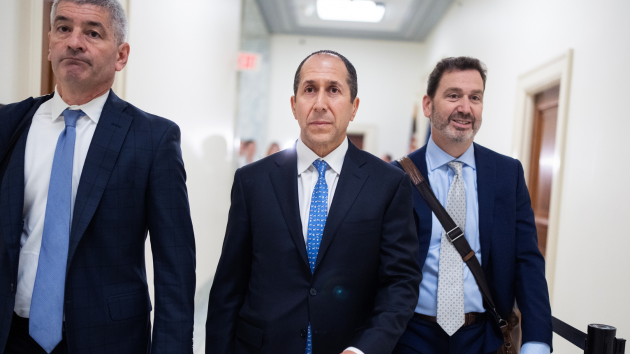
Richard Kahn, an accountant for convicted sex offender Jeffrey Epstein, arrives for a House Oversight Committee deposition about Epstein, in Rayburn building on Wednesday, March 11, 2026. (Tom Williams/CQ-Roll Call, Inc via Getty Images)
(WASHINGTON) — Members of the House Oversight Committee are set to depose a key member of Jeffrey Epstein’s inner circle who for more than two decades had a critical role managing his personal, financial and legal affairs.
Darren Indyke served as Epstein’s longtime attorney since the mid-1990s.
As Epstein for years attempted to avoid scrutiny while orchestrating a notorious sex trafficking operation, Indyke — together with accountant Richard Kahn — allegedly helped him navigate legal issues and formed part of the financier’s inner circle. Indyke allegedly helped facilitate at least three sham marriages between Epstein’s victims and withdrew hundreds of thousands of dollars in cash for Epstein, according to one lawsuit, and attested to Epstein’s character when he faced legal scrutiny.
“Knowing that they would earn millions of dollars in exchange for facilitating Epstein’s sex abuse and trafficking, Indyke and Kahn chose money and power over following the law,” alleged one lawsuit that Indyke and Kahn agreed to settle with no admission of wrongdoing.
Neither man has been charged with any crimes. They both deny any wrongdoing and say they were unaware of Epstein’s crimes while working for him.
The deposition Thursday comes as the House Oversight Committee attempts to zero in on members of Epstein’s inner circle to better understand how the disgraced financier was able to commit decades of crime with seeming impunity.
Following higher profile depositions of people like billionaire Leslie Wexner as well as Bill and Hillary Clinton, the questioning of both Indyke and Kahn arguably presents the committee with their strongest opportunity to learn more about Epstein’s life and crimes.
“I was not aware of the nature or extent of Epstein’s abuse of so many women until after Epstein’s death,” Kahn told lawmakers last week, according to his prepared remarks. “However, it pains me to think, and I deeply regret, that I may have unknowingly assisted Epstein in any way.”
Executor of Epstein’s Trust In a will signed two days before he was found dead in a Manhattan jail cell, Epstein named Kahn and Indyke as the co-executors of his estate and bequeathed them $25 million and $50 million, respectively. At the time of his death, Epstein’s estate was valued as much as $650 million. It was last valued at approximately $127 million, according to an October 2025 court filing, after paying out multiple settlements to Epstein’s victims.
As co-executors of Epstein’s estate, Indyke and Kahn recently agreed to settle a proposed class-action lawsuit brought by Epstein’s victims that accused them of “facilitation, participation, and concealment of Epstein’s illegal conduct” for their own financial gain.
According to the lawsuit, both men helped “structure Epstein’s bank accounts and cash withdrawals to give Epstein and his associates access to large amounts of cash in furtherance of sex trafficking.”
“The Epstein Enterprise would not have existed for the duration it did and at its scope and scale, without the collaboration and support of others. No one, except perhaps Ghislaine Maxwell, was as essential and central to Epstein’s operation as these Defendants,” the lawsuit alleged.
The settlement did not include an admission of wrongdoing and still needs to be approved by a judge. Though the lawsuit was brought against them personally, the $25-35 million settlement would be paid by Epstein’s estate, according to the settlement terms.
“Neither Mr. Indyke nor Mr. Kahn socialized with Mr. Epstein, and both men reject as categorically false any suggestion that they knowingly facilitated or assisted Mr. Epstein in his sexual abuse or trafficking of women, or that they were aware of his actions while they provided professional services to him,” an attorney for the men told ABC News in December.
Allegedly arranged sham marriages In a lawsuit filed by government of the U.S. Virgin Islands, Indyke and Kahn were alleged to have helped facilitate at least three sham marriages created to secure immigration status for some of Epstein’s victims, further securing control of the women and ensuring they could remain in the United States.
“The victims were coerced into participating in these arranged marriages, and understood that there would be consequences, including serious reputational and bodily harm, if they refused to enter a marriage or attempted to end it,” the complaint alleged.
According to a civil lawsuit filed in 2019 by an anonymous accuser, one woman alleged that Epstein’s longtime attorney — not explicitly named as Indyke in the lawsuit — helped prepare the legal paperwork for the marriage, going as far as arranging photographs “to give the appearance that the marriage was legitimate.”
“When the victim inquired about getting divorced … Indyke tried to talk her out of a divorce and threatened that she would lose Epstein’s protection,” a 2024 lawsuit alleged.
Files released earlier this year by the Department of Justice appeared to reference some of the marriages allegedly arranged by Indyke and Kahn.
“Good morning Jeffrey! We are going now to get marriage license,” an unidentified individual wrote Epstein in 2013. “She is asking if it’s possible to meet with you? Because she has some questions.”
Withdrawing thousands in cash Court filings as well as documents released by the Department of Justice suggested that both Indyke and Kahn played integral roles in managing Epstein’s wealth and overseeing his regular expenses, including alleged payments to women.
According to the Virgin Islands lawsuit — which was settled by the Epstein estate with no admission of wrongdoing — Indyke and Kahn allegedly arranged payments from Epstein’s personal, corporate and nonprofits bank accounts to victims. That lawsuit alleged that Epstein — together with Kahn and Indyke — managed more than 140 different bank accounts.
According to documents released by the DOJ, Indyke served as an officer for many of the holding and shell companies related to Epstein’s real estate and financial holdings.
A 2020 settlement between Deutsche Bank and the New York state financial regulator also suggested that an attorney for Epstein — who sources told ABC News is Indyke — methodically withdrew cash for Epstein in a manner they said intentionally avoided scrutiny.
Limiting the withdrawals to $7,500 in cash — the maximum amount permitted and below the threshold to trigger concerns — Indyke allegedly withdrew hundreds of thousands of dollars for Epstein over four years. While the transactions were below the $10,000 limit to trigger an alert to the Treasury Department, a report by New York State’s Department of Financial Services faulted Deutsche Bank for ignoring red flags about Epstein’s bank accounts.
Jail visits and a character reference After securing a plea deal in Florida, Jeffrey Epstein was visited in jail frequently by Indyke, according to visitor logs maintained by the Palm Beach Sheriff. Indyke also helped secure a lenient work-release program for Epstein by vouching for his employment, allowing Epstein to leave the jail for up to 16 hours a day, ABC News reported in 2021.
Prior to Epstein’s plea deal, Indyke also attested to Epstein’s character. According to a letter sent from defense lawyers to prosecutors in Florida, Indyke vouched for Epstein’s character and claimed that Epstein provided financial and emotional support to his family.
“Although Jeffrey was adamant that we owed him nothing, Jeffery honored us by agreeing to be the godfather of our children,” the letter quoted Indyke.
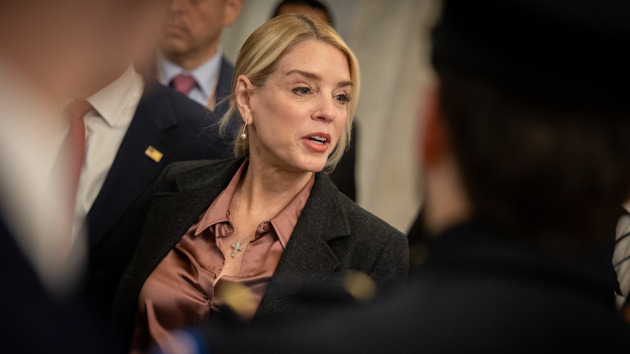
Attorney General Pam Bondi arrives ahead of a closed briefing before the House Oversight Committee at the U.S. Capitol in Washington, DC on March 18, 2026. (Photo by Nathan Posner/Anadolu via Getty Images)
(WASHINGTON) — House Oversight Committee Democrats said Wednesday that Attorney General Pam Bondi refused to commit to complying with a subpoena that compels her to testify at a closed-door deposition over the Jeffrey Epstein files on April 14.
Frustrations boiled over Wednesday evening as Democrats stormed out in protest of a closed-door briefing on the files — characterizing it as a “fake hearing.” Republicans chided Democrats for a “premeditated” stunt.
Rep. Robert Garcia, the top Democrat on the committee, told reporters, “She refused on multiple occasions to commit to following the subpoena that Chairman [James] Comer actually just put out. I asked her repeatedly that question. Other members asked her that question, and she would not commit to it. It is outrageous. It’s infuriating, and it’s continuous — this White House cover up of the Epstein files.”
Republicans, however, contended that Bondi actually stated that she would “follow the law” regarding her subpoena.
“She said she’s going to stick to the law, whatever the law is, that’s what it is. So, I’m not the attorney but that was a legal answer, and that’s what she’s required to do as the attorney general,” Rep. Tim Burchett, R-Tenn., said. “It was all staged, you could tell it, because it just built up to it.”
Asked after the briefing if she would comply with the subpoena, Bondi replied, “I made it crystal clear. I will follow the law.”
Congressional subpoenas carry the weight of law behind them — defying one could result in a charge of contempt of Congress. But Democrats would need a handful of Republicans to vote with them to hold Bondi in contempt and the Department of Justice typically does not prosecute its own attorney general.
The attorney general admonished Democrats, who she said did not ask any substantive questions.
“We were there to answer questions. It’s the evening. We came at their convenience. We gave them as, really, as much time as they wanted,” Bondi said. “We sat there saying, ‘anything you want to ask us, ask us, anything you want to ask us.'”
After the briefing, Comer told reporters that he does not believe Bondi should sit for a deposition — even though the committee approved the subpoena.
“I personally don’t see any reason for her to do a deposition. She’s the sitting attorney general. She’s turning over documents. I think the Democrats want to do this to embarrass her,” he said.
Comer stressed that he did not vote for the subpoena to bring her in for a deposition.
“I want to bring in the bad guys for the deposition,” Comer emphasized. “I want to bring in the men who have abused women. I want to bring in anyone who is involved in the prosecution and or lack of prosecution, of Epstein Maxwell and and some of these other guys. So that’s where I think our time and energy should be spent.”
Comer and Rep. Summer Lee, D-Pa., told reporters that they had a heated exchange, with the chairman acknowledging he scolded Lee to stop “bitching.”
“She was just complaining about the format,” Comer said. “The attorney general and [Deputy Attorney General Todd] Blanche and all the top brass at the DOJ in here to answer questions, and yet they don’t ask a single question.”