
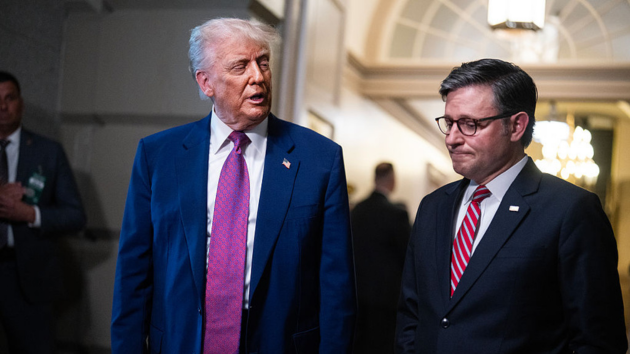
What’s in Trump’s ‘big’ tax and immigration bill House Republicans are struggling to pass

What’s in Trump’s ‘big’ tax and immigration bill House Republicans are struggling to pass
Tom Williams/CQ-Roll Call, Inc via Getty Images

(WASHINTON) — Officially titled the “One Big, Beautiful Bill Act,” this megabill fulfills a laundry list of President Donald Trump’s campaign promises from taxes to border security.

As House Republicans continue to negotiate the final details of the legislation, here’s a look at some possible ways the bill could affect everyday Americans, according to recent estimates.

Keep in mind, the Senate is likely to significantly change this bill and the nonpartisan Congressional Budget Office (CBO) continues to review the legislation.

Some potential impacts:

  • More than an estimated 8 million recipients could lose Medicaid coverage, according to a CBO analysis requested by House Democrats. Republicans say they’re targeting able-bodied adults and undocumented immigrants, but other beneficiaries could also be impacted.
  • Cuts SNAP food assistance by roughly $230 billion over 10 years, narrowing participation in the program servicing roughly one-in-eight Americans each month
  • Extends the 2017 Trump tax cuts
  • Fulfils Trump’s campaign promises of no taxes on tips and no taxes on overtime work
  • Provides $50 billion wall to renew construction of Trump’s border wall
  • Commits roughly $150 billion in defense spending for shipbuilding and ‘Golden Dome’ missile defense system
  • It’s important to note, the impacts of the bill are estimates based on early analysis by the nonpartisan Congressional Budget Office. The estimates – and legislative text – have not been finalized.

Changes in Medicaid work requirements

Republicans say their main goal is reducing “waste, fraud, and abuse” within Medicaid, the health care program for lower income Americans and those with disabilities, in order to achieve hundreds of billions in savings over the next decade.

Early estimates requested by House Democrats put the number of people who could lose coverage at more than 8 million, but that number continues to fluctuate and the Congressional Budget Office has not yet released its final score of the GOP bill, which is not yet even finalized itself.

The bill imposes new work requirements on able-bodied Medicaid recipients aged 19-64 who don’t have dependents, which includes working at least 80 hours per month. The bill also requires states to conduct eligibility redeterminations at least every 6 months for all recipients.

The legislation also removes undocumented migrants from Medicaid eligibility (per the White House, this accounts for approximately 1.4 million undocumented migrants losing coverage provided through state Medicaid programs).

Under the bill’s current text, these work requirements don’t kick in until 2029, as President Trump leaves office. But House Republican hardliners are looking at moving that date up to 2026 or 2027 in their negotiations with leadership.

The bill also increases copays for Medicaid recipients who make more than the federal poverty limit, for single beneficiaries that’s just over $15,500. They would be required to pay an extra $35 dollar copay in some visits.

It also increases the required Medicaid paperwork for income and residency verification as lawmakers look to crack down on people who are “double-dipping” in multiple jurisdictions. These additional steps are expected to especially impact seniors and others who can’t promptly respond.

SNAP cuts

The bill tightens eligibility requirements for the Supplemental Nutrition Assistance Program (SNAP), what used to be called “food stamps” program, which helped roughly 42 million low-income people per month buy groceries in 2024.

Adults aged 55-64 and children would face additional work requirements to qualify for SNAP benefits.

The bill also shifts some SNAP costs to the states. The program is currently 100% federally funded. This bill requires states to share in at least 5 percent of SNAP benefit costs starting in 2028.

The SNAP cuts total an estimated $230 billion over 10 years.

The changes could have an indirect impact on school lunch programs, requiring some previously eligible families to apply for access and impact federal reimbursement payments for some school districts.

No tax on tips and overtime pay

This addition to the bill helps Trump fulfill one of his major campaign promises — exempting workers who receive tips from paying federal income taxes on them, as long as they make less than $160,000 a year. The tax break would expire at the end of 2028, after the next presidential election, according to the proposal.

Expanding Trump tax cuts

Makes tax cuts from the 2017 Tax Cuts and Jobs Act permanent that fiscal hawks complain adds trillions of dollars to the deficit over the next decade; does not include a tax increase on the wealthiest earners. Trump posted last week that the proposal shouldn’t raise taxes on high-earners, “but I’m OK if they do!!!”

Creation of MAGA savings account for children

The bill would create so-called MAGA savings accounts for parents to open for their children. The contribution limit for any taxable year is $5,000. It includes a pilot program to start the accounts with $1,000.

Raising the SALT cap

The current bill raises the deduction limit of state and local taxes from your federal income tax filing from $10,000 to $30,000 for joint filers making less than $400,000 per year.

Republicans from states such as New York and California are pushing House Republican leadership to further increase that cap to help their constituents. Hardliners warn increasing that limit would worsen the deficit.

On the campaign trail, Trump promised to eliminate the SALT cap first imposed by the 2017 tax law he signed during his first term.

More money for border security enforcement

The legislation provides almost $50 billion to revive construction of Trump’s wall along the U.S.-Mexico border and it makes changes to immigration policy.

The bill includes $4 billion to hire an additional 3,000 new Border Patrol agents as well as 5,000 new customs officers, and $2.1 billion for signing and retention bonuses.

There’s also funds for 10,000 more Immigration and Customs Enforcement officers and investigators.

It includes major changes to immigration policy, imposing a $1,000 fee on migrants seeking asylum, which has never been done before in the United States.

The bill includes a $4 trillion increase to the statutory debt limit as Treasury Secretary Scott Bessent calls on Congress to act by the end of July.

Copyright © 2025, ABC Audio. All rights reserved.

Kristi Noem fumbles habeas corpus, denies DHS will host citizenship TV show

Kristi Noem fumbles habeas corpus, denies DHS will host citizenship TV show
Anna Moneymaker/Getty Images

(WASHINGTON) — Homeland Security Secretary Kristi Noem incorrectly responded to a lawmaker’s question on the definition of habeas corpus during a Senate Homeland Security and Governmental Affairs Committee hearing on the Department of Homeland Security budget for the upcoming year on Tuesday.

Sen. Maggie Hassan, D-N.H., asked Noem, “What is habeas corpus?”

The secretary responded, saying, “Habeas corpus is a constitutional right that the president has to be able to remove people from this country.”

“Excuse me, that’s — that’s incorrect,” Hassan interjected.

“Habeas corpus is the legal principle that requires, requires that the government provide a public reason for detaining and imprisoning people. If not for that protection, the government could simply arrest people, including American citizens, and hold them indefinitely for no reason,” she said.

“Habeas corpus is the foundational right that separates free societies like America from police states like North Korea,” Hassan added. “As a senator from the ‘Live Free or Die’ state, this matters a lot to me and my constituents and to all Americans.”

Hassan then asked, “Secretary Noem, do you support the core protection that habeas corpus provides that the government must provide a public reason in order to detain and imprison someone?”

“I support habeas corpus,” Noem responded. “I also recognize that the president of the United States has the authority under the Constitution to decide if it should be suspended or not.”

Hassan interrupted Noem, saying, “It has never been done. It has never been done without approval of Congress. Even Abraham Lincoln got retroactive approval from Congress.”

Later in the hearing, Noem denied any involvement in a reported reality television show featuring the Department of Homeland Security in which immigrants would compete for U.S. citizenship.

“We have no knowledge of a reality show,” Noem said. “There may have been something submitted to the department, but I did not know anything about this reality show until the reporter reached out.”

Noem then took aim at The Wall Street Journal’s reporting, saying, “That article — in fact, they had to change it later because they lied so bad, and they had us on the record saying I had no knowledge of a reality show. The department didn’t — there may have been something submitted somewhere along the line because there are proposals pitched to the department, but me and my executive team have no knowledge of a reality show and it’s not under consideration.”

“That article was completely inaccurate, completely inaccurate and false, and the fact that they printed it when they knew it was false was a dereliction of their work,” she added.

Copyright © 2025, ABC Audio. All rights reserved.

Gaza ceasefire talks have not led anywhere, Qatari PM says

Gaza ceasefire talks have not led anywhere, Qatari PM says
Khames Alrefi/Anadolu via Getty Images

(DOHA, QATAR) — The recent Gaza ceasefire talks in Qatar have not led anywhere yet, the Qatari prime minister said Tuesday, citing a “fundamental gap” between the two parties, Israel and Hamas.

“One party is looking for a partial deal that might or have the possibility to lead to a comprehensive deal and the other party is looking just for a one-off deal and to end the war and to get all the hostages out,” Qatari Prime Minister and Minister of Foreign Affairs Sheikh Mohammed bin Abdulrahman Al Thani said during a press briefing Tuesday. “And we couldn’t bridge this fundamental gap with whatever proposals we have provided.”

Rounds of negotiations have been ongoing in Doha over the past couple of weeks, he said.

Hamas claimed Tuesday that Israel has not been serious about the negotiations, saying in a statement that Israeli Prime Minister Benjamin Netanyahu “is extending his delegation’s stay in Doha on a day-to-day basis without engaging in any serious negotiations, and no real talks have taken place since last Saturday.”

The Israeli Prime Minister’s Office claimed Tuesday that Hamas is refusing the American proposal for the return of the hostages.

“After approximately one week of intensive contacts in Doha, the senior members of the negotiating team will return to Israel for consultations; the working echelon will — at present — remain in Doha,” the office said.

The Israeli Prime Minister’s Office said in a statement on Sunday that the Israeli negotiation team is working to “exhaust every chance of a deal,” including one that would include “the release of all hostages, the expulsion of Hamas terrorists [from Gaza], and the disarmament of the Strip.”

Amid the ceasefire talks, the Israel Defense Forces announced on Sunday the start of a new “extensive ground operation” throughout northern and southern Gaza.

The escalation has been met with condemnation from the leaders of the United Kingdom, France and Canada, who called on Israel in a joint statement on Monday to stop its military operations and immediately allow humanitarian aid to enter Gaza, otherwise they “will take further concrete actions in response.”

U.K. Foreign Secretary David Lammy subsequently announced Tuesday that the U.K. has suspended negotiations with Israel on a new free trade agreement and will impose sanctions on West Bank settlers, saying, “Despite our efforts, this Israeli government’s egregious actions and rhetoric have continued.”

Netanyahu had pushed back against the joint statement in a statement on X on Monday, saying that by “asking Israel to end a defensive war for our survival before Hamas terrorists on our border are destroyed,” the leaders in London, Ottawa and Paris are “offering a huge prize for the genocidal attack on Israel on October 7 while inviting more such atrocities.”

“The war can end tomorrow if the remaining hostages are released, Hamas lays down its arms, its murderous leaders are exiled and Gaza is demilitarized. No nation can be expected to accept anything less and Israel certainly won’t,” Netanyahu said.

The Israeli Foreign Ministry also brushed off the U.K.’s announcements on the free trade talks and sanctions on Tuesday, saying, “External pressure will not divert Israel from its path in defending its existence and security against enemies who seek its destruction.”

Copyright © 2025, ABC Audio. All rights reserved.

Rap rivalries, sex performances and assault weapons come into focus at trial of Sean ‘Diddy’ Combs

Rap rivalries, sex performances and assault weapons come into focus at trial of Sean ‘Diddy’ Combs
John Lamparski/Getty Images)

(NEW YORK) — A run-in with a rival record executive at Mel’s Drive-in, assault weapons with illegally defaced serial numbers and a sex performance at Trump International Hotel & Tower on Central Park West were some of the topics that jurors in Sean Combs’ criminal trial heard about Tuesday, as prosecutors tried to build their racketeering and sex trafficking case against the rap mogul.

Across nearly six hours of testimony on the trial’s 11th day, federal prosecutors called to the stand Combs’ former personal assistant, a federal agent, the mother of the government’s star witness and a sex worker nicknamed “The Punisher.”

They argued that the wide-reaching testimony helps prove the lengths to which Combs was willing to go to benefit from and protect what they alleged is a criminal enterprise.

Combs has pleaded not guilty, and his lawyers argued that his private conduct in the bedroom does not amount of sex trafficking. His lawyers have argued any violence alleged by witnesses was driven by love, jealousy and drug use — not a desire to coerce anyone into sex.

Prosecutors plan to continue their case Wednesday by calling Dawn Hughes, a psychologist who specializes in sex trauma, George Kaplan, a former assistant to Combs and Scott Mescudi, the rapper known as Kid Cudi and who briefly dated Combs’ former girlfriend, Cassie Ventura.

Combs’ former assistant testifies about Suge Knight encounter

Combs’ one-time personal assistant David James told jurors about the wide range of tasks he completed for the rap mogul: from stocking hotel rooms and allegedly buying drugs to being the driver when Combs – allegedly armed with multiple guns – wanted to confront rival record executive Marion “Suge” Knight.

Jurors first heard about the alleged interaction between Combs and Knight during the testimony of Combs’ ex-girlfriend, Cassie Ventura. It allegedly occurred in approximately 2008 or 2009 and was a moment that threatened to dredge up the violent history between the titans of 1990s rap music and the long-standing rivalries between the East and West Coasts.

Ventura testified that, after a so-called “freak off,” a security guard named D-Roc informed him that Knight, the former CEO of Death Row Records and a longtime rival of Combs, was spotted at Mel’s. Despite her pleas to stop, Ventura said Combs packed up his weapons and headed to the restaurant to confront Knight.

“I was crying. I was screaming, like, please don’t do anything stupid,” Ventura testified last week.

James told jurors the other side of the story, describing D-Roc confronting Knight when they were at Mel’s to pick up cheeseburgers for Combs.

“We pulled into the parking lot and D-Roc looks over and says, ‘That’s motherf——- Suge Knight,'” James said, describing how he drove back to Combs’ house to find Combs and Ventura arguing. “Cassie looked very distressed. She was telling him not to go,” James testified.

James testified that Combs, allegedly with three guns on his lap, ordered him to drive back to the diner. It was that moment, he said, that eventually prompted him to stop working for Combs.

“I was really struck by it. I realized for the first time being Mr. Combs’ assistant that my life was in danger,” James testified.

Prosecutors have charged that Combs and his alleged associates used “violence, use of firearms, threats of violence, coercion” to protect and promote the “power of the Combs’ enterprise.”

James also testified about buying and supplying drugs for Combs and stocking the moguls’ hotel rooms with baby oil, Astroglide lubricant, condoms and prophylactics. He told the jury he once accidentally walked in on a freak-off, featuring Ventura and a male sex worker.

When questioned by defense lawyers, James testified that he once had sex with a prostitute and that he declined to pay for her services, and that he got into a physical altercation with another one of Combs’ employees. James said he spoke with prosecutors under a proffer agreement, meaning he had immunity from being prosecuted for anything he said on the stand.

“Have they given you some type of immunity?” defense attorney Marc Agnifilo asked.

“I’d have to ask my lawyer that question,” he said. “My lawyer said I have no legal visibility.”

Cassie Ventura’s mother testifies about Combs blackmailing her daughter

Regina Ventura, the mother of star witness Cassie Ventura, took the stand on Tuesday to testify about taking a home equity loan to pay Combs in order to prevent him from following through on an alleged threat to release a sex tape of her daughter.

“The threats that have been made towards me by Sean ‘Puffy’ Combs are that … he is going to release 2 explicit sex tapes of me,” Ventura wrote in an email to her mother and Combs’ assistant Capricorn Clark on Dec. 23, 2011. Jurors saw the email when Cassie Ventura testified last week.

“I was physically sick. I did not understand a lot of it. The sex tapes threw me,” Regina Ventura testified about the threat.

Regina Ventura testified that she and her husband decided to take out a loan so they could send Combs the $20,000 he demanded, though he ultimately returned the money.

“We decided that’s the only way we could get the money,” she said. “I was scared for my daughter’s safety.”

Regina Ventura also told jurors she decided to photograph the injuries her daughter allegedly suffered from Combs so that they would have a record of the alleged abuse.

Approximately 15 years after she documented the injuries, prosecutors last week showed the photos to the jury to underscore Cassie Ventura’s testimony about the violence she suffered at Combs’ hands.

‘The Punisher’ testifies about a dozen alleged freak-offs

Known professionally as The Punisher, male escort Sharay Hayes told the jury that he first met Combs and Cassie Ventura in 2012, when he was hired to help create a “sexy erotic scene” for what, Ventura said, was Combs’ birthday. He testified that he got his nickname when he was a teenager based on the way he played basketball.

He testified that Ventura, who used the name Janet when booking sex workers, instructed him to come to Trump International Hotel & Tower on Central Park West in Manhattan to perform a strip act. When he arrived, Ventura asked him to cover her baby oil while Combs watched, Hayes said.

“I was specifically told to not acknowledge her husband. Try not to look at him. No communication between me and him,” Hayes testified. “The room was dimly lit, maybe electronic candles. All of the furniture was covered in sheets and there was an area pretty much for me to sit and for her to sit across from me. There were bowls of water and bottles of baby oil.”

Hayes told jurors that Combs was nude for the encounter and wore a veil, occasionally masturbating during the interaction and offering “subtle directions” to Ventura.

After their first interaction, Hayes said he worked for the couple another eight to 12 times, receiving $1,200 to $2,000 on each occasion.

During their last encounter, Hayes testified Combs instructed him to have sex with Ventura but declined because he could not sexually perform under “a lot of pressure.”

Cross-examined by Combs’ lawyers, Hayes testified that he believed Ventura was comfortable during the exchanges, potentially undercutting the argument she was coerced to participate.

“I didn’t get any cues there was any discomfort there,” Hayes said when asked if Ventura seemed uncomfortable with the encounters.

The question of whether Ventura was forced or participated voluntarily is one of the most critical issues in the prosecution of the onetime cultural icon Combs.

Jurors see evidence of weapons with defaced serial numbers

For the final witness of the day, jurors heard from a federal agent who testified about recovering multiple assault-style weapons from Combs’ Miami Beach residence when it was raided in March 2024. The agent, Gerard Gannon, said the serial numbers of the weapons had been defaced – a violation of federal firearms laws.

Holding parts of the weapons in court for the jury to see, Gannon testified that investigators recovered a 30-round magazine containing 19 rounds and a full 10-round magazine in Combs’ home, with the ammunition on the same shelf as 7-inch platform heels and lingerie.

Prosecutors have alleged Combs and his associates relied on “violence, use of firearms, [and] threats of violence” to operate their criminal enterprise.

Copyright © 2025, ABC Audio. All rights reserved.
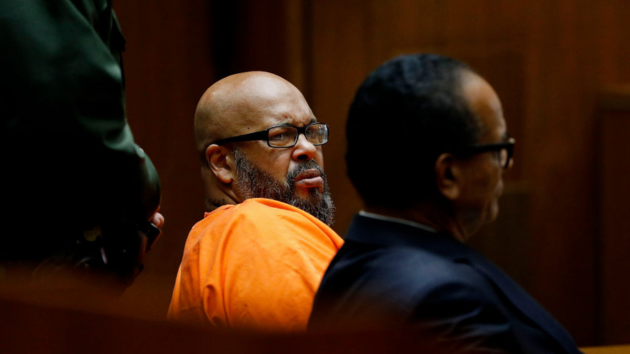
Sean ‘Diddy’ Combs and Suge Knight: A rap rivalry

Sean ‘Diddy’ Combs and Suge Knight: A rap rivalry
Gary Coronado-Pool/Getty Images

(NEW YORK) — It’s the rivalry that has defined hip-hop for a generation. And, according to many in law enforcement, it has claimed the lives of at least two of rap’s brightest stars.

Sean “Diddy” Combs vs. Marion “Suge” Knight.

Their names are synonymous with the explosion of hip-hop, and the bad blood between the two moguls emerged as a central pop culture plotline of the 1990s. Inside the music industry, their respective record labels – Combs’ Bad Boy Records and Knight’s Death Row — vied for market share. On the streets of cities like Los Angeles and New York, their personas clashed and their allies fought as part of what came to be known as the battle between the East and West Coast rap scenes.

In the East, Combs stood tall. Bad Boy Records boasted the top talent of the Notorious B.I.G. – aka Biggie Smalls – and, authorities said, often hired members of the Crips street gang for security. In the West, it was the domain of Knight and Death Row Records, which, police said, had long-standing connections with the Crips’ rivals, the Bloods. Atop the Death Row roster was Tupac Shakur.

The grudge between Combs and Knight was a key focus of testimony Tuesday at Combs’ ongoing sex-trafficking and racketeering trial in Manhattan, in which Combs has pleaded not guilty to all of the charges. On the stand, Combs’ former personal assistant, David James, said one night in 2008, he spotted Knight and his entourage eating at Mel’s Diner in Hollywood. He testified that Combs, upon hearing that, wanted to confront the rival group.

“I was really struck by it. I realized for the first time, being Mr. Combs’ assistant, that my life was in danger,” James testified. A short time later, he gave his notice and left the company.

The enmity between Knight and Combs was fueled by insults – perceived, real and even put to lyrics – and in the era of hip-hop getting hot in the mainstream, the two groups feuded on stage, and in the streets.

Taking the stage at the August 1995 Source Awards in New York City, Knight hurled a thinly-veiled insult at Combs, publicly taunting Combs for allegedly stealing the spotlight from the artists whose music he produced.

In June 1996, Shakur released “Hit ‘Em Up,” which called out Biggie, Combs and Bad Boy by name, and bragged about sleeping with Biggie’s wife. The song further inflamed the feud.

“The East Coast, West Coast rivalry led to a lot of bad blood between Suge, Death Row, and Puffy and Bad Boy. Both were big at the time,” said retired NYPD Det. Derrick Parker, the first cop assigned to investigate crime in the hip-hop world. Parker was known on the streets as the “Hip-Hop Cop.”

“As soon as these guys started to become big in the industry, they started aligning themselves with certain people – they started bringing in the gangs, people affiliated with the gangs, and then came the diss records,” Parker said.

“The beef between them started to go on wax, on records, on tapes, on music. And it just got worse,” Parker said. “And the beef got louder and louder, it got more problematic, more violent.”

The rivalry turned deadly in the fall of 1996. On Sept. 7, Shakur was riding around Vegas in a BMW driven by Knight when a fusillade of gunfire rained down on them. Six days later, Shakur was dead.

The only man ever arrested in connection with the killing has previously alleged that Combs requested the murder: Duane “Keffe D” Davis told police Combs put a bounty on the lives of his rivals, Knight and Shakur.

Combs has repeatedly denied any involvement in the killing and has never been named as a suspect or a person of interest by authorities in connection with the homicide.

Davis, in police interviews, the pages of his own co-authored memoir and in media appearances, has previously told a different story – one he now denies.

“I’ll give anything for those dude’s heads,” Davis said Combs told him months before Shakur’s death, according to a police report on their interview with Davis in 2008. His accounts of alleged conversations with Combs came during interviews with police in 2008 and 2009, obtained by ABC News, and later in on-camera interviews and the 2019 memoir with his name on it, “Compton Street Legend.”

Amid mushrooming violence and tensions between the two groups, Combs worried about “retaliation” and “began to solicit Davis to kill Knight and Shakur,” according to the police report on Davis’ 2008 interview.

More than once, Combs repeated the offer, Davis alleged: summoning him at a Hollywood eatery, Combs “again told Davis he [Combs] needed to get rid of Knight and Shakur. Combs offered Davis $1,000,000 to handle the problem. Davis remembers Combs being very afraid of Knight,” the report said.

Tensions had already begun boiling over months before Shakur’s killing when a fight broke out between a number of Bloods and Crips over a coveted Death Row medallion. Among the scuffling group was Davis’ nephew, Orlando Anderson, according to police interviews and grand jury testimony. It was an act of “war” between the two groups that would warrant “retaliation,” a Crip affiliate testified before Davis’ indicting grand jury.

On Sept. 7, 1996, gang members and glitterati alike convened in Las Vegas for a Mike Tyson fight. In the crowds, Shakur and Knight caught sight of Davis’ nephew and identified him as the would-be medallion snatcher, according to prosecutors. A brawl ensued. That beatdown gave Davis and his crew “the ultimate green light” to take revenge, his memoir said – and which prosecutors have quoted. Paired with the request he said Combs had made, vengeance for his nephew was a “double whammy,” motivating him to seek out Shakur and Knight, according to the memoir.

Davis, behind bars and awaiting trial for orchestrating Shakur’s killing, now insists he is “innocent.” In his first interview since being arrested in September 2023, Davis told ABC News in March that he’s “never read” the memoir ascribed to him, and only confessed to his purported role in the crime because he was getting paid to lie.

His trial for Shakur’s murder is set for February 2026. He has pleaded not guilty.

Six months after Shakur was killed, Biggie Smalls was gunned down in Los Angeles, in what detectives have theorized was orchestrated revenge for Shakur’s murder. Smalls was killed after leaving through a rear entrance of an overcrowded awards afterparty that was also attended by Combs. The rapper and the mogul were in separate cars.

The hip-hop icons’ back-to-back deaths would punctuate years of escalating hostility and traded barbs between the groups.

“The rivalry between the gangs was all part and parcel of that East Coast-West Coast war,” Parker said. “This was how the rap world was. It was very violent, very turbulent at that time. That beef between them marked the hip-hop scene for more than a generation.”

Knight is currently in prison, serving a 28-year sentence for voluntary manslaughter stemming from a 2015 fatal hit-and-run. That case is not connected to Combs, Shakur or Smalls. He did not respond Tuesday to questions about the Combs trial.

Referring to the fact that he, Knight and Combs were all locked up at the time, Davis told ABC News in March: “All three of us are f—ed up now. All three of us are in jail. Me, Suge, and him.”

Copyright © 2025, ABC Audio. All rights reserved.

What to know about Empire Wind, the wind farm now allowed to resume construction

What to know about Empire Wind, the wind farm now allowed to resume construction
Steve Pfost/Newsday RM via Getty Images

(NEW YORK) — The Trump administration has reversed a pause on construction of a massive offshore wind project off the coasts of New York and New Jersey.

Work on Empire Wind, the wind farm being built 15 to 30 miles south of the coast of Long Island, can resume now that the Federal Bureau of Ocean Energy Management has lifted a stop-work order, according to Equinor, the Norweigian energy company developing the site.

On April 16, Department of the Interior Secretary Doug Burgum directed the Bureau of Ocean Energy Management to halt construction on the wind project. In a post to X, Burgum claimed that further review was needed and that the Biden administration “rushed through its approval without sufficient analysis.”

Construction was about 30% complete, and the project was fully permitted at the time the stop order was issued, according to the energy company.

The stop-work order was lifted “following dialogue with regulators and federal, state, and city officials,” according to Equinor.

New York Gov. Kathy Hochul said in a statement Monday that it took “countless conversations with Equinor and White House officials” to emphasize the importance of the project, while Burgum posted to X that he was “encouraged by Governor Hochul’s comments about her willingness to move forward on critical pipeline capacity,” although Hochul did not mention natural gas in her statement.

“New York’s economic future is going to be powered by abundant, clean energy that helps our homes and businesses thrive. I fought to save clean energy jobs in New York — and we got it done,” Hochul said.

The continuation of the project will allow Equinor to deliver energy while supporting local economies and creating jobs, Anders Opeda, president and CEO of Equinor ASA, said in a statement.

“I would like to thank President Trump for finding a solution that saves thousands of American jobs and provides for continued investments in energy infrastructure in the U.S.,” Opeda said. “I am grateful to Governor Hochul for her constructive collaboration with the Trump Administration, without which we would not have been able to advance this project and secure energy for 500,000 homes in New York.”

Wind is the largest source of renewable energy in the U.S., accounting for about 10% of electricity generated in the country, according to the U.S. Department of Energy.

What to know about Empire Wind

Norwegian energy company Equinor spent seven years obtaining permits to build Empire Wind, a project slated to power more than 500,000 homes in New York by 2026.

The site will encompass 80,000 acres with up to 130 or more wind turbines, according to the company.

The federal lease for Empire Wind was finalized during Trump’s first term, in March 2017, AP reported. In February 2024, the Bureau of Ocean Energy Management approved Equinor’s operations and construction plan, and construction began later in the year.

The project is expected to deliver “abundant, reliable and affordable” domestic power to the Northeast as it capitalizes on billions of dollars invested and years of preparation to date and load continues to grow, Eric Hines, director of Tufts University’s Offshore Wind Graduate Program, told ABC News.

“Moving forward on Empire Wind, New York and the United States are setting the stage for a new era of American manufacturing,” Hines said.

The decision to resume construction on Empire Wind “is incredibly important for New York State,” especially since energy needs in the state are expected to double within the next 15 years, Lara Skinner, executive director of the Climate Jobs Institute at Cornell University’s ILR School, told ABC News.

“Offshore wind is particularly well-suited to New York because most of NY’s electricity is consumed in NYC and it’s difficult to get power into the city from upstate,” Skinner said. “There is not sufficient transmission infrastructure. Offshore wind helps alleviate the problem by generating power near the point of consumption.”

The project has already created 1,500 jobs at the South Brooklyn Marine Terminal and was on track to provide another 1,000 good union jobs in the construction of the project, Skinner said.

“Offshore wind is responsible for creating thousands of jobs across the U.S., powering homes with clean energy, and bolstering our nation’s energy independence,” Nancy Pyne, senior advisor for offshore wind at the Sierra Club, and environmental nonprofit, said in a statement.

A rapid buildout of renewable energy sources, “especially offshore wind,” will be required to achieve the greenhouse gas reductions required by New York’s climate law, Rachel Spector, deputy managing attorney at environmental nonprofit Earthjustice, told ABC News.

“The Empire Wind project will allow retirement of fossil fuel power plants that pollute the air, and in partnership with labor and community leaders it is supporting development of a staging and port facility that will further support the wind industry and create thousands of local jobs,” Spector said.

Trump’s past criticism of wind turbines

The reversal contradicts the critical stance Trump has been taking on wind power since his first term.

In May 2024, Trump claimed during a rally in New Jersey that wind turbines “kill” whales, vowing to write an executive order on “Day 1” to end offshore wind projects.

Trump kept that promise on Inauguration Day, when he signed an executive order that effectively paused the development of new offshore wind projects in the Outer Continental Shelf, withdrawing areas in the region from consideration for new and renewed leases.

The White House cited “alleged legal deficiencies” in the leasing and permitting of onshore and offshore wind projects that could lead to “grave harm” such as negative impacts on navigational safety interests, transportation interests, national security interests, commercial interests and marine mammals.

The National Oceanic and Atmospheric Administration has refuted claims that the noise from offshore wind turbines causes whale deaths.

Earlier this month, attorneys general from 17 states and Washington, D.C., sued the Trump administration over an executive order signed on Inauguration Day that halted permits for wind projects.

“This arbitrary and unnecessary directive threatens the loss of thousands of good-paying jobs and billions in investments, and it is delaying our transition away from the fossil fuels that harm our health and our planet,” New York Attorney General Letitia James, lead of the coalition, said in a statement.

In the lawsuit, the coalition of states argued that the blockade on all wind energy projects was unlawful and sought a preliminary injunction to immediately stop the administration from enforcing the freeze.

“The attorneys general argue this unilateral halt on wind energy development is harming states’ ability to provide reliable, affordable electricity to their residents,” the statement read.

In a statement to AP, the White House accused Democrats of “using lawfare to stop the president’s popular energy agenda.

Copyright © 2025, ABC Audio. All rights reserved.
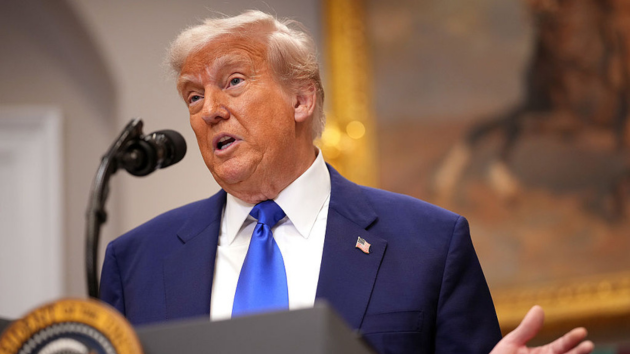
Trump’s impact on European politics: Rise of the right and liberals pushing back

Trump’s impact on European politics: Rise of the right and liberals pushing back
Andrew Harnik/Getty Images

(WASHINGTON) — If this past weekend in European politics is an indicator of anything, it’s that the “Trump effect” is real, and its reverberations are unpredictable.

Three European Union countries held elections on Sunday — Romania, Poland and Portugal — with the results failing to show any clear trend for the future of European politics. The elections did, however, indicate the American president’s growing influence on the continent.

The disparate responses from voters in all three countries — and the lack of any decisive victory for any one party or candidate in Portugal or Poland — hint that the political polarization that has roiled the U.S. over the past decade is a global trend, not merely an American one.

As to whether President Donald Trump and the “Make America Great Again” movement swirling around him can establish European avatars, the question remains an open one.

“I don’t know if I have a firm answer,” Celia Belin, a senior policy fellow at the European Council on Foreign Relations and head of its Paris office, told ABC News. “At the moment, we are all monitoring what is happening and how this influence can establish itself.”

“It’s very early,” Belin added. “This is an ongoing phenomenon.”

While it’s unclear what the extent of Trump’s impact on European politics will ultimately be, Belin said the impact is “stronger” than it was two years ago.

Trump’s influence — indirect and direct — has given populist movements like Germany’s Alternative for Germany party, Poland’s nationalist Law and Justice (PiS) party and Portugal’s far-right Chega party a clear boost, evident in recent elections in each country.

“If I am to compare with two years ago, for example, it is stronger, it is more united, it gives inspiration to a ton of populist nationalist leaders in Europe,” Belin said. “It’s getting stronger. That’s the direction it’s going in right now.”

The groundswell of grievances that carried Trump to the Oval Office twice is not merely an American phenomenon and manifests differently in individual nations. Concerns over globalization, immigration, inequality, the cost of living, low rates of economic growth, progressivism and national identity are near-universal in the Western democratic world.

Trump seized upon those conditions in the U.S. and right-wing leaders in Europe are seeking to do the same.

Election week in Europe

This week’s election results in Romania, Poland and Portugal, however, suggest the translation of Trumpism into European political languages remains incomplete.

In Romania, voters opted for Bucharest Mayor Nicusor Dan’s pro-Europe, pro-NATO, pro-Ukraine platform. Dan won with around 54% of the vote.

Dan’s opponent — Trump supporter George Simion, who courted the MAGA movement and even visited the U.S. during his campaign — came up short, though he vowed to continue “our fight for freedom and our great values along with other patriots, sovereignists and conservatives all over the world.”

In Poland, the presidential election saw liberal Warsaw Mayor Rafal Trzaskowski secure an unexpectedly tight victory in the first round of voting with around 31% of the vote, beating out right-wing rival Karol Nawrocki — who was personally endorsed by Trump — who had 29.5% of the vote.

The two men will go into the second round of voting on June 1, hoping to draw voters from other minor candidates, among them a significant bloc which voted for far-right firebrand Slawomir Mentzen, who came third with 14.8%.

Piotr Buras, a senior policy fellow at ECFR at the head of its Warsaw office, told ABC News that Trump has loomed large over the election.

Nawrocki framed himself as the Trump-friendly candidate, along with his backers in the Law and Justice party, criticizing Trzaskowski’s Civic Platform party and Prime Minister Donald Tusk for allegedly undermining Polish-American relations.

“We used to have a nationwide consensus on America,” Buras said, with voters generally warm to the idea of close ties with Washington, D.C. “Now, because of this ideological divide in Poland, because of the U.S. and because of Trump’s approach to Europe, Poland is suddenly divided on how to go about America,” he added.

In Portugal, meanwhile, the far-right Chega party gained a record 22.6% share of the vote, blowing open the long-standing two-party domination of the country’s political scene even though it was unable to overhaul the ruling center-right Democratic Alliance.

“I am not going to stop until I become the prime minister of Portugal,” Chega leader Andre Ventura — who was among the foreign politicians invited to Trump’s second inauguration — said.

Making Europe great again?

Such confidence in defeat may be buoyed by the strong foundations populist parties and candidates are putting down in Europe. Across the continent, far-right groups are winning historically large chunks of the electorate and dominating political debates, even without securing the reins of power.

In the U.K., the right-wing Reform party recorded a stunning performance in the May local elections, winning hundreds of council seats and leaving leader Nigel Farage — well-known for his cozy relationship with Trump and the MAGA movement — to declare an end to the traditional dominance of Britain’s two major parties.

In Germany’s February parliamentary election, the far-right Alternative for Germany (AfD) party converted years of growing popularity to win around 21% of the vote and become the second-largest party in the Bundestag.

U.S. Vice President JD Vance conducted his first foreign trip in his new position to Germany in February, shortly before the election, speaking at the Munich Security Conference on February 14.

In his speech addressing the annual security conference, Vance criticized Europe for hindering free speech, suggesting the conference’s decision to ban AfD members from attending was a form of censorship.

“In Britain, and across Europe, free speech, I fear, is in retreat,” Vance said. “I believe that dismissing people, dismissing their concerns, or, worse yet, shutting down media, shutting down elections, or shutting people out of the political process protects nothing. In fact, it is the most surefire way to destroy democracy.” Many political analysts considered Vance’s remarks to be a tacit endorsement of AfD from the Trump administration.

And in France, President Emmanuel Macron has thus far held off the persistent challenge for the presidency from far-right leader Marine Le Pen and the National Rally, but he was unable to stop the party from becoming the largest in the National Assembly in 2024. Only a shaky minority government has kept the party out of the prime minister’s office.

The insurgent parties are coordinating. Leaders have increasingly been drawn to American conservative events, such as the Conservative Political Action Conference — the first-ever European installment of which was held in Budapest, Hungary, in 2022.

And this year, right-wingers gathered for the Make Europe Great Again conference in Madrid in February, organized by Spain’s far-right VOX party.

Buras noted rumors that Vice President JD Vance may even attend a planned CPAC event in Poland in late May, in what could only be interpreted as a show of support for Nawrocki. The event raises the prospect of American “interference almost, or at least influence, from the U.S.,” Buras said.

MAGA blowback

Trump is just as divisive abroad as he is at home. Indeed, polls consistently indicate that many European voters are skeptical of, unsettled by or outright hostile to the American president.

There is, then, no guarantee that a MAGA association will put foreign populists in power. Recent elections in Canada and Australia, for example, saw center-left establishment parties secure victory against conservative opponents they sought to smear as Trumpian.

Trump’s return to the White House “has woken up the anti-populist or anti-nationalist movements,” Belin said. “It gives them a foil. … You want to mobilize your electorate and use the U.S. of Donald Trump as a sort of scarecrow — the mobilization effect goes in two directions.”

“It fuels the extremist base and so it excites a lot of people, but it also fuels the other side and it also frightens the middle,” Belin said.

Copyright © 2025, ABC Audio. All rights reserved.
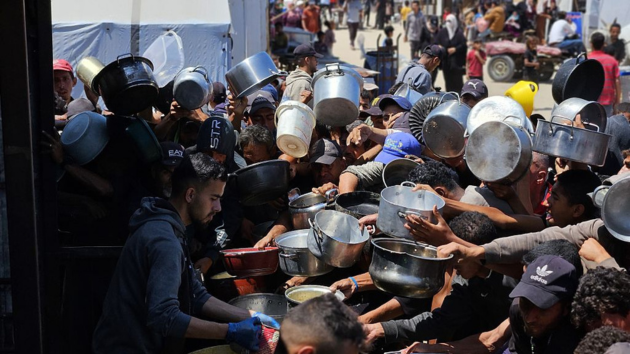
Doctor details Gaza famine: ‘We’re not asking for miracles. We’re asking for food’

Doctor details Gaza famine: ‘We’re not asking for miracles. We’re asking for food’
Hani Alshaer/Anadolu via Getty Images

(GAZA STRIP) — After almost three months of a total aid blockade in Gaza and intensified attacks from Israel, children are suffering the most severe consequences, a local doctor says, from death and injuries to starvation.

A senior Palestinian pediatric doctor described the humanitarian crisis in Gaza as “unbelievable,” witnessing children dying from hunger and preventable injuries, scenes he said he had studied in textbooks, but never imagined seeing in real life.

In an interview with ABC News this week, Dr. Ahmmed Al-Farra, head of pediatrics and maternity in Gaza’s Nasser Medical Complex, said hospitals are collapsing across the region.

No public hospitals are operating in the north of the strip and Nasser Hospital in Khan Younis, once the largest hospital in southern Gaza, has repeatedly been targeted by Israeli airstrikes.

Al-Farra said that many patients have died on the operating table due to a lack of essential equipment and medication. “If a patient in North Gaza has chest pain or is injured, he will lose his life,” said Al-Farra. “All the hospitals there are gone: Shifa, Kamal Adwan, the Indonesian Hospital. Destroyed or inoperable.”

He paints a devastating picture of life in Gaza, over 19 months into the war. “We’re seeing children with marasmus — skin and bone,” he said. “Some are just 40% of their expected weight. Severe malnutrition, no protein, no vitamins.”

Marasmus is a form of severe malnutrition characterized by protein-energy deficiency, caused by insufficient calorie intake leading to severe fat and muscle loss, according to the National Institutes of Health. While it can occur in anyone with severe malnutrition, it usually occurs in children.

Siwar Ashour, a child in Gaza, was born small, but was a relatively healthy baby six months ago, according to Al-Farra.

But today, she is acutely malnourished and fighting for her life in the Nasser Hospital, the doctor said. The facility has been repeatedly bombed by Israel, including attacks on Monday. Israel Defense Forces officials say they are targeting terrorists hiding there.

Siwar is bound in plastic, according to Al-Farra. The doctor says her weight loss is so severe that she can no longer regulate her own body temperature. And at 6 months old, she weighs just over 7 pounds. That is less than half the weight of an average American baby girl, according to the Centers for Disease Control.

“If she does not take the suitable formula of milk, unfortunately, she will not survive,” Al-Farra said.

Nearly 500,000 people in Gaza are facing catastrophic hunger, according to a report released by 17 UN agencies and NGOs. Israeli officials have disputed the agency’s figures and say their warnings have been wrong in the past.

Detailing the only option that his colleagues have in hospitals to fight the severe malnutrition in children, Al-Farra said that Médecins Sans Frontières (MSF), or Doctors Without Borders, has managed to provide small amounts of emergency baby formula, known as F-75 and F-100, to treat acute malnutrition in babies.

The doctor, however, said children’s conditions often deteriorate again after being discharged from the hospital. “We give the children a bit of formula — F-75, F-100 — from MSF, just in the hospital,” he explained. “They get a little better, and then we have to send them home, because we need the bed for the next child. But outside, there’s no food, no milk, no protein. They come back a week later, worse than before.”

Al-Farra also highlighted the widespread hunger afflicting Palestinians of all ages and all walks of life in Gaza, now 11 weeks into Israel’s ban on humanitarian aid entering the strip. Even as a doctor with a relatively stable income, he said he has gone without fresh meat, chicken and fish for over three months. “I haven’t had any chicken or meat protein in the past three months. … If this is my reality, imagine what it’s like for the people in the streets,” he said.

Following repeated international warnings on the catastrophic humanitarian situation in Gaza, Israel allowed five trucks of aid to enter the territory on Monday, according to COGAT, the Israeli Coordinator of Government Activities in the Territories. A top Israeli official from the Ministry of Foreign Affairs said the aid trucks contained flour, baby food, medical supplies and staples for central kitchens in Gaza.

Israel says they imposed the humanitarian aid blockade on March 2 to put pressure on Hamas to release the remaining hostages. The temporary ceasefire deal between Israel and Hamas ended on March 1. The ceasefire fully collapsed on March 18 when Israel resumed military operations in Gaza.

Israel on Sunday agreed to allow a “basic” amount of food into Gaza, saying it didn’t want a “starvation crisis.”

Israel allowed 100 aid trucks to enter Gaza on Tuesday, UN OCHA Deputy Spokesperson Jens Laerke said. But no aid has been distributed in Gaza yet, UN spokesperson Stephane Dujarric said during his daily briefing from UN Headquarters in New York Tuesday.

The amount of aid was described as “a drop in the ocean” by the United Nations Under-Secretary-General for Humanitarian Affairs and Emergency Relief Coordinator, UNOCHA.

Israeli Prime Minister Benjamin Netanyahu said that the decision to allow in aid came after pressure from U.S. lawmakers.

The war between Israel and Hamas broke out on October 7, 2023, when Hamas terrorist fighters entered Israel and killed 1,200 people and kidnapped 251 hostages. There are still 58 hostages held captive by Hamas, 20 of whom are presumed to be alive. Hamas is believed to be holding the bodies of four Americans.

The war has taken a large toll on Palestinians, with over 53,000 killed since October 7, 2023, according to the Hamas-run Gaza Ministry of Health. While statistics do not distinguish between military and non-military casualties, women and children make up tens of thousands of this number, according to the Gaza Ministry of Health.

Highlighting the dire situation of the survivors of the war in Gaza, especially children, Al-Farra pleaded for immediate aid coming into the strip. “We’re not asking for miracles. We’re asking for food, for medicine,” he said. “They are not numbers on paper — they are human beings created by God. They have the right to survive.”

ABC News’ Lama Hasan, Samy Zyara, Diaa Ostaz and Jordana Miller contributed to this report

Copyright © 2025, ABC Audio. All rights reserved.

Trump to host South Africa’s president amid tensions over US resettlement of white Afrikaners

Trump to host South Africa’s president amid tensions over US resettlement of white Afrikaners
Chris McGrath/Getty Images

(WASHINGTON) — President Donald Trump is hosting South Africa President Cyril Ramaphosa at the White House on Wednesday amid tensions between the two nations over the U.S. resettlement of white South Africans.

Trump and other top officials have claimed that a race-based “genocide” is unfolding against white farmers in the country. South African officials, including Ramaphosa, have vehemently pushed back, arguing that is not the case.

“It’s a genocide that’s taking place,” President Trump said last week. “Farmers are being killed. They happen to be white. But whether they are white or Black makes no difference to me. But white farmers are being brutally killed, and their land is being confiscated in South Africa.”

That same day, the first flight of Afrikaners arrived at Washington Dulles International Airport.

Ramaphosa responded that the individuals who went to the U.S. “do not fit the definition of a refugee” — someone who is leaving their country out of fear of persecution due to race, religion, political opinion or nationality.

“And I had a conversation with President Trump on the phone, and I — he asked, he said, ‘What’s happening down there?'” Ramaphosa said. “And I said, ‘President, what you’ve been told by those people who are opposed to transformation back home in South Africa is not true.'”

The South African government, in a statement last week, said its police statistics on farm-related crimes “do not support allegations of violent crime targeted at farmers generally or any particular race.”

The dozens of Afrikaners who arrived in the U.S. last week had their applications fast-tracked under an executive order issued by Trump in February titled, “Addressing Egregious Actions of the Republic of South Africa.”

The order contends the South African government passed a law allowing it to “seize ethnic minority Afrikaners’ agricultural property without compensation” in a “shocking disregard of its’ citizen rights.” It instructs that the U.S. will not provide aid or assistance to the nation, and that the U.S. “promote the resettlement of Afrikaner refugees.”

The law passed by South Africa cited by the administration aims to address land injustices established during apartheid. It states land can be expropriated in the public interest and in most cases must be subject to compensation, the amount of which must have been agreed to by the owners or approved by court. Experts say the law is comparable to similar legislation around the world regarding eminent domain.

In addition to Trump’s executive order, his administration expelled South Africa’s Ambassador Ebrahim Rasool from the U.S. earlier this year.

Trump has been scrutinized for prioritizing Afrikaners while moving to restrict immigration from elsehwere, including from Afghanistan, Venezuela and Haiti.

Secretary of State Marco Rubio was asked to defend the administration’s position while testifying before a Senate panel on Tuesday.

“I think those 49 people that came strongly felt they were persecuted, and they passed every sort of check mark that needed to be checked off,” Rubio said. “The president identified it as a problem and wanted to use it as an example.”

Democratic Sen. Tim Kaine of Virginia said he believed the claim there is persecution of Afrikaner farmers was “completely specious” and noted the U.S. hadn’t let in Black South Africans during apartheid.

“I think that the United States has a right to allow into this country and prioritize the allowance of who they want to allow it come in,” Rubio responded.

Elon Musk, a South African native and a top adviser to the president during his second term, has also been vocal about the plight of South African landowners, amplifying claims of “white genocide.”

Ramaphosa on Tuesday projected optimism about the upcoming talks with Trump.

“We’re always ready and we hope to have really good discussions with President Trump and his fellow government colleagues. Looking forward to a really good and positive meeting, and we’re looking forward to a really good outcome for our country, for our people, for the jobs in our country and good trade relations,” Ramaphosa told reporters as he arrived at the South African Embassy in Washington.

He said trade is the “the most important, that is what has brought us here” and that they want to strengthen economic ties between the two nations in a video posted to X. Ramaphosa also said he and Trump will discuss Israel as well as Russia and Ukraine.

Ramaphosa didn’t mention the United States’ prioritization of the resettlement of white South African refugees in the videos posted to social media, though he vowed to protect South Africa’s sovereignty.

“We will always do what is best for South Africans,” he said.

ABC News’ Shannon Kingston contributed to this report.

Copyright © 2025, ABC Audio. All rights reserved.

Heavy storms reach East Coast as a Nor’easter heads toward New England

Heavy storms reach East Coast as a Nor’easter heads toward New England
Carson Swick/The Baltimore Sun/Tribune News Service via Getty Images

(BOSTON) — Heavy storms are now reaching the East Coast as a Nor’easter heads toward New England ahead of the holiday travel period for Memorial Day weekend.

As a low-pressure system from the Mid-Atlantic moves out to sea, it will become a Nor’easter and move up the New England coast.

This late season Nor’easter will bring cold windswept heavy rain to New England, including Boston, on Thursday — with wind gusts up to 50 mph and the potential for minor coastal flooding.

The soaking rain will likely come to an end for Boston on Friday morning, but pockets of showers remain possible Friday afternoon into Saturday as the system continues north.

With scattered showers remaining in New England on Saturday, it won’t be completely dry again until Sunday as rainfall totals of 1 to 3 inches are expected through much of the Northeast Wednesday through Saturday.

Storms have also now reached the East Coast and even though most are not expected to be severe, a few scattered severe storms have been reported early Wednesday morning in the Southeast.

Washington, D.C. will have rain showers by 8 a.m. while thunderstorms are expected further south of Richmond and Norfolk in Virginia.

Elsewhere, Philadelphia is expecting a rainy morning and New York City will have occasional showers through the afternoon, but a washout is not expected today.

Pittsburgh and southwestern Pennsylvania are under a flood watch through Wednesday night because 1 to 3 inches of rain is possible which may create river, stream flooding and other low-lying flood-prone areas to become saturated as urban areas may also experience flooding from excessive rainfall.

On Wednesday afternoon, a few strong storms are also possible in eastern North Carolina and, overnight, strong storms are possible in southern Missouri and northern Arkansas.

Meanwhile, in the last 48 hours alone, at least 31 tornadoes have been reported across nine states from Oklahoma to Alabama, with 11 tornadoes striking Alabama, Illinois, Tennessee and Arkansas alone on Tuesday.

Baseball-sized hail was reported in Tennessee and Alabama on Tuesday night as wind gusts stronger than 70 mph were recorded in Tennessee overnight.

Copyright © 2025, ABC Audio. All rights reserved.