
Supreme Court says Exxon can sue Cuba over $1B in seized property — potentially boosting US financial pressure on the country

Supreme Court says Exxon can sue Cuba over B in seized property — potentially boosting US financial pressure on the country
Supreme Court says Exxon can sue Cuba over $1B in seized property — potentially boosting US financial pressure on the country
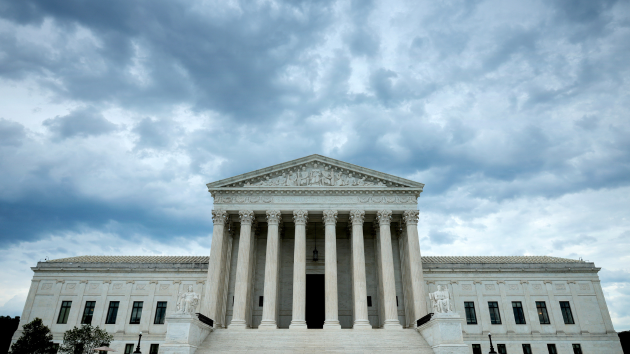
Rain clouds roll over the United States Supreme Court building on June 18, 2026 in Washington, DC. The high court handed down three decisions Thursday, including United States v Hemani where the court ruled 9-0 to limit a federal ban on drug users’ Second Amendment right to own firearms. (Photo by Chip Somodevilla/Getty Images)

(WASHINGTON) — The Supreme Court on Tuesday ruled that oil giant Exxon Mobil can sue the Cuban government over more than $1 billion in seized property, potentially giving the United States greater financial leverage over the cash-strapped country.

In a 6-3 decision split along ideological lines, Justice Brett Kavanaugh said that state-owned companies can’t argue they are protected by sovereign immunity to fight litigation over assets seized by Cuba’s communist government.

The decision — as well as a similar case last month when the Supreme Court ruled companies can be held liable for using seized property — comes as the Trump administration ratchets pressure on the struggling island nation through embargoes and a criminal indictment of former leader Raul Castro. The decision could open the door to more litigation over assets seized by the Cuban government, adding pressure to the economically distressed country.

The case revolved around the interpretation of the Cuban Liberty and Democratic Solidarity Act of 1996, also known as the Helms-Burton Act, which was passed by Congress after Cuba shot down two unarmed planes flown by humanitarian organization Brothers to the Rescue. The law established the right of U.S. nationals to sue over property seized by the Cuban government, though every president until President Donald Trump waived that provision.

The day Trump allowed lawsuits against Cuba in 2019, Exxon Mobil sued over their property in the country — including hundreds of gas stations, an oil refinery, depots and packaging plants — valued at more than $1 billion. In court, the Cuban government argued that the companies were protected by the Foreign Sovereign Immunities Act (FSIA) and that Exxon would need to show they were exempted from that law for the case to proceed. Both the district and circuit courts sided with Cuba — eventually leading the case to the Supreme Court, which reversed those rulings in the opinion on Tuesday.
“It would make little sense for Congress to construct an elaborate statute authorizing suits against the Cuban government agencies and instrumentalities if, because of the FSIA, almost no suits could ever get through the courthouse door,” Justice Kavanaugh wrote.

Justice Kavanaugh wrote that “the entire architecture of the Helms-Burton Act” establishes that sovereign immunity does not apply and that ruling otherwise would “badly undermine Congress’s design and thwart the President’s statutorily authorized assessment of current developments in Cuba.”

“After the President has allowed suits under the Act to go forward, there is no additional FSIA hurdle that a plaintiff must clear in order to sue Cuban agencies or instrumentalities,” wrote Kavanaugh. “The Helms-Burton Act authorizes private suits against Cuban agencies and instrumentalities — suits that would largely be nonstarters if subjected to the FSIA’s requirements.”

The court’s three liberal justices dissented from the majority, writing that the Helms-Burton Act falls short of the high legal bar to show that it eliminates claims of sovereign immunity.

“Nothing in the text or ‘architecture’ of the Helms-Burton Act suggests that Congress abrogated the sovereign immunity of these defendants — much less that it did so with the requisite unmistakable clarity,” Justice Elena Kagan wrote.

Last month, the Supreme Court delivered a similar defeat for Cuba, ruling that cruise lines Royal Caribbean, Carnival, Norwegian and MSC can be held liable for using a port confiscated by the Cuban government.

Copyright © 2026, ABC Audio. All rights reserved.

2 dead in Northern California library shooting

2 dead in Northern California library shooting

(LOS ANGELES) — Police arrested an 18-year-old suspect in a shooting Monday evening at a Northern California library, which left two dead and one injured, according to the Chico Police Department.

Shots were fired soon after 5 p.m. at the Chico branch of the Butte County Library in Chico, California. Law enforcement took the suspect into custody as he fled the library out the back, Chico Police Chief Billy Aldridge said in a news conference on Monday.

The suspect, identified as Bradley Scott Sayer, was arrested and is currently being held in the Butte County Jail on two counts of murder, according to Chico police.

Officers said the suspect wanted a Columbine massacre-style shooting and did not know the victims.

On April 20, 1999, two students opened fire at Columbine High School in Littleton, Colorado, gunning down 12 of their fellow students and a teacher before killing themselves.

According to law enforcement officials, Sayer was wearing clothing like that of Columbine killer Eric Harris. And Sayer, the officials tentatively believe, is associated with an online fandom group of mass killers that has been linked to previous shootings. The officials believe he acted alone over his Columbine obsession.

“The incident this evening was obviously very sad, traumatic for a lot of people,” Aldridge said in the news conference. “Very traumatic for our community.”

Police are waiting to notify the victims’ families before releasing their names. In addition to the two dead, a child was taken to the hospital with minor injuries, Aldridge said.

All branches of the Butte County Library are closed on Tuesday.

Law enforcement said they are continuing to investigate the shooting, and there is no current danger to the public. They believe the shooter acted alone. The Chico Police Department is collaborating with the Butte County Sheriff’s Office and the FBI in the investigation, which remains ongoing.

ABC News’ Megan Fahrney contributed to this report.

Copyright © 2026, ABC Audio. All rights reserved.

3 women dead in Philadelphia double murder-suicide

3 women dead in Philadelphia double murder-suicide

(PHILADELPHIA) — Three women are dead in a double murder-suicide in a South Philadelphia home, police said.

Janice Picano, 67, is believed to have shot Angelina Picano, 18, and Denise Grottini, 55, before turning the gun on herself on Monday, according to a preliminary investigation by the Philadelphia Police Department.

Officers responded to a report of a person with a gun at around 5:30 p.m. on Monday. When officers arrived on the scene, they found three women shot, police said.

All three women were pronounced dead shortly after 5:30 p.m., police said.

The investigation into the incident remains active and ongoing. 

Copyright © 2026, ABC Audio. All rights reserved.
Senate passes housing legislative package in overwhelming bipartisan fashion

Senate passes housing legislative package in overwhelming bipartisan fashion
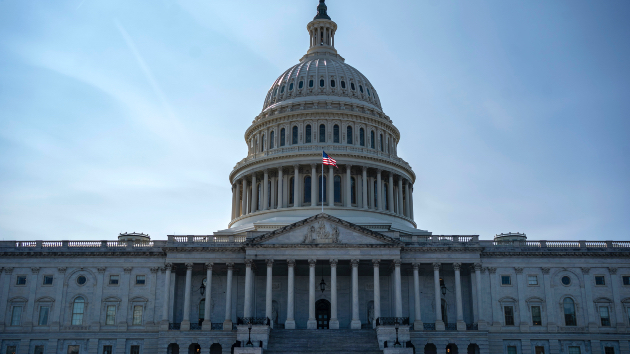
An exterior view of the U.S. Capitol on September 9, 2024 in Washington, DC. (Bonnie Cash/Getty Images)

(WASHINGTON) — Congress is one step closer to passing its most far-reaching housing reform legislation in decades.

The Senate voted 85-5 on the final passage of the 21st Century Road to Housing Act on Monday.

With midterm elections months away, Congress is taking noteworthy and rare bipartisan action to tackle one element of affordability, a talking point in races across the country this year.

The bill comes as a recent Zillow analysis found the cost of buying a starter home is $1 million or more in a record 242 cities across the country.

The legislation aims to address the nation’s housing shortage by increasing the supply of homes and overall homeownership. This is achieved through loosening regulations to encourage housing construction and limiting Wall Street investors’ ability to buy homes that could go to families instead.

A 2024 study from the government-sponsored housing enterprise Freddie Mac estimated that U.S. faces a shortfall of 3.7 million units contributing to its housing crisis.

The bill also provides grants to turn vacant buildings into affordable housing.

By increasing the supply of homes for sale, the legislation is intended to lower home costs for Americans.

With the Senate passing the bill 85-5, the legislation now moves to the House of Representatives, where it is also expected to pass with overwhelming bipartisanship as early as Tuesday night when they return from their recess break.

Once through Congress, the bill will head to the desk of President Donald Trump to become law.

“Today’s vote proves that it is possible to find bipartisan common ground on legislation that actually helps the American people, and importantly, it proves that bipartisan legislation doesn’t have to be the weakest, most milquetoast agreement that doesn’t offend anyone or do too much to help anyone,” Sen. Elizabeth Warren, the top Democrat on the Senate Banking Committee, said on the Senate floor ahead of Monday’s vote.

“I don’t say this a lot, but today I’m proud to be a member of the United States Senate,” Warren said.

Senate Banking Committee Chairman Sen. Tim Scott, a Republican from South Carolina, discussed how the bill can give Americans more options on Monday.

“When you put more housing supply on the market, more people have a chance to become first-time homebuyers,” he said. “Today, the average first-time homebuyer is 40 years old. That is just too old.”

Republican Sens. Ron Johnson (Wisc.), Mike Lee (Utah), Rand Paul (Ky.), Rick Scott (Fla.) and Tommy Tuberville (Ala.) voted against the legislation. Over the weekend, Sen. Rick Scott explained his objection to the legislation, arguing that the federal government cannot successfully impact housing regulation.

“Well, I don’t see how it’s going to drive down the cost of housing. What’s going to drive down the U.S. cost of housing, two things, if you balance a budget, interest rates are going to come down, one of the biggest with lousing,” Scott said on Fox News’ Saturday in America. “Number two, most of regulation with respect to housing is not the federal level. It’s at the local level, what cities and counties are doing. The federal government cannot drive the cost of housing down.”

Copyright © 2026, ABC Audio. All rights reserved.

ICE fining immigration attorney for alleged false asylum claims, a first for the agency

ICE fining immigration attorney for alleged false asylum claims, a first for the agency
The entrance to a U.S. Immigration and Customs (ICE) detention facility is seen following a shooting, on September 25, 2025 in Dallas, Texas. (Brandon Bell/Getty Images)

(WASHINGTON) — Immigration and Customs Enforcement on Tuesday announced is seeking to fine an immigration attorney who allegedly filed false asylum claims — the first time the agency has filed such a claim.

Homeland Security Investigations, the investigative arm of the Department of Homeland Security, announced five notices of intent to fine attorney Vinod Doddamani, who they say filed 32 immigration cases in which he filed 64 fraudulent documents.

Doddamani faces a $250,000 fine for what DHS says is a pattern of filing allegedly false asylum claims. He allegedly filed the “identical or nearly identical in language and substance, containing the same or nearly the same factual narrative and supporting details regarding the alleged persecution,” according to DHS.

The action against Doddamani comes after DHS’s top lawyer last month directed ICE to go after lawyers who filed fraudulent asylum claims in immigration court. DHS has never sough to punish lawyers who have allegedly file fraudulent claims before.

Filing a false immigration claim violates anti-fraud statues, according to DHS General Counsel James Percival, and those who file them should be held accountable, according to a memo from Percival and reviewed by ABC News.

“Fraudulent asylum claims threaten the safety of Americans by overwhelming our burdened immigration system and delaying the removal of dangerous criminal aliens,” said Percival. “By holding [Doddamani] accountable, we are sending a message to other immigration attorneys who engage in fraud across the country: your days of abusing and defrauding our immigration system are over.”

ABC News has reached out to Doddamani’s attorney for comment.

Copyright © 2026, ABC Audio. All rights reserved.
LA warehouse fire continues to burn as officials warn residents of air quality issues

LA warehouse fire continues to burn as officials warn residents of air quality issues
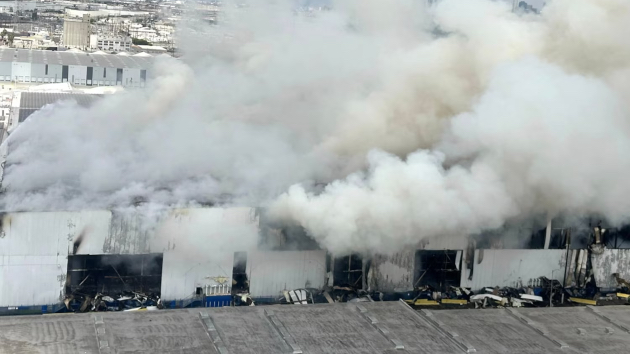
This photo released by the Los Angeles Fire Department, shows the Boylan Heights storage facility fire in Los Angeles, on June 21, 2026. (Los Angeles Fire Department)

(LOS ANGELES) — Firefighters continue to battle a massive blaze at a Los Angeles warehouse that has been burning for nearly a week, which has spread heavy smoke for miles.

As of Tuesday morning, the fire at the Boyle Heights Storage Facility, which stores frozen food, is still ongoing, according to the Los Angeles Fire Department.

Due to the facility’s architecture and cold storage shelving, crews have to battle the blaze from the outside as they cannot ventilate the insulated roof, Los Angeles Fire Department Chief Jaime Moore told reporters Monday.

“The entire roof has been compromised, and it is sitting on top of those 65-foot towers,” he said. “Imagine going to Costco, or any other large convenience store, [like] Home Depot, any of those that have the large racks. Imagine the ceiling sitting down on top of those racks. It’s extremely dangerous, and I don’t foresee ever putting our firefighters in that type of danger.”

The fire at the facility, which Moore said contains about 85 million pounds of frozen food, began June 17, and a shelter-in-place order was temporarily in place.

Lineage Logistics, which operates the warehouse, said in a statement Monday that the fire began “while testing was being conducted by contractors of the third-party owner of the solar array located on the facility’s roof.”

Lineage said that no hazardous materials are stored in the facility and that it pumped out the ammonia inside and transported it.

California Gov. Gavin Newsom declared a state of emergency on Saturday, and additional resources were sent to assist, including specialized aircraft with high-capacity water cannons.

While the fire has not spread to other buildings, residents and businesses near the area have been feeling the effects from miles away.

Heavy smoke from the blaze raised the Air Quality Index to unhealthy levels in East Los Angeles, Boyle Heights, and the San Gabriel Valley since last Wednesday, officials said.

In Boyle Heights, the air quality was at “very unhealthy” levels Sunday evening with an AQI of 298, prompting warnings for people to stay indoors, according to the South Coast Air Quality Management District.

AQI values at or below 100 are generally thought of as satisfactory, according to federal air regulators.

By Monday morning, many of the affected neighborhoods saw lower levels, with Boyle Heights recording an AQI of 79, but they were still high enough to affect some residents with respiratory issues, according to officials.

Although a shelter-in-place order was not issued, LA Mayor Karen Bass and other city officials offered over 1,000 air purifiers and face masks to residents who needed them.

Lines for those purifiers stretched outside locations on Monday.

The South Coast Air Quality Management District’s Particle Pollution Advisory remained until Tuesday afternoon.

-ABC News’ Jenna Harrison and Matthew Claiborne contributed to this report.

Copyright © 2026, ABC Audio. All rights reserved.

1st-of-its-kind mission will attempt to save aging space telescope using robot spacecraft

1st-of-its-kind mission will attempt to save aging space telescope using robot spacecraft
Startup Katalyst Space is teaming up with NASA to try and rescue the Swift telescope using the company’s newly developed robotic spacecraft. (NASA)

(LONDON) — Satellites don’t always stay in orbit. As they get closer to Earth, atmospheric drag can pull them lower and lower until they burn up, with solar activity speeding up the process.

NASA’s Swift Space Observatory is facing that fate — its orbit is decaying, and if left alone, it will be destroyed in a matter of months. 

But in a first-of-its-kind mission, Katalyst Space, a startup, is teaming up with NASA to try and rescue Swift using the company’s newly developed robotic spacecraft, LINK.

“This is a historic mission, you know, some would call it the first of its kind, a robotic spacecraft that can go and capture an unprepared satellite,” said Robert Lamontagne, vice president of strategic partnerships at Katalyst Space.

Swift’s original orbit was around 370 miles above the Earth’s surface. But over the years, it’s fallen to less than 250 miles, according to NASA. Now it’s a race against the clock to keep Swift from falling even further and burning up in Earth’s atmosphere.

To save the satellite before time runs out, the Arizona-based company built its 935-pound rescue spacecraft in just 250 days. LINK was designed to physically interact with Swift despite the observatory not being designed for this kind of operation.

“Over the last nine months, we have gone from a clean sheet to a spacecraft that is currently integrated on a rocket, on an airplane ready to go to college for launch,” added Kieran Wilson, the principal investigator for LINK at Katalyst Space. “This is an absolutely unprecedented development timeline for this program.”

If all goes as planned, LINK will be launched into space on Saturday aboard a Northrop Grumman Pegasus XL rocket, which will be launched from a Lockheed L-1011 TriStar carrier aircraft taking off from Kwajalein Atoll in the South Pacific.

Once in orbit, it will take about three weeks for LINK to rendezvous with and capture the 22-year-old observatory. Over two to three months, the spacecraft will use its thrusters to raise Swift into a more stable orbit. The two will then separate as LINK lowers itself back into Earth’s atmosphere, where it will burn up, keeping it from adding to the rest of the space debris in our orbit.

The hope is that the maneuver will add 10 years to the mission and allow NASA to resume its scientific operations. The space agency had to stop most of the observatory’s scientific operations to reduce drag and slow its descent from orbit.

“No one thought it was going to be possible,” said Shawn Domagal-Goldman, NASA’s division director for astrophysics. “No one thought we would get as far as we’ve already gotten today.” 

The clock is ticking for the $30 million mission to be completed. According to NASA, Swift is currently falling at roughly eight kilometers per month, and the space agency estimates it will drop below 300 kilometers sometime around October. 

According to Wilson, at that point, the satellite will be “too low” for the rescue mission to be executed.

A potential blueprint for saving satellites

Earth’s orbit is littered with lots of aging satellites. If the mission is successful, NASA and Katalyst hope it could help establish a blueprint for future satellite rescues so fewer spacecraft are abandoned. Katalyst envisions having a fleet of spacecraft that can repair, refuel and upgrade satellites in need of help.

“Katalyst is here really to kind of mark the end of that throwaway model and the start of a new model where we think the spacecraft operators should no longer be constrained by the silly decisions that were made before launch,” Lamontagne said.

There’s no guarantee the rescue will be successful. Swift wasn’t designed to be grabbed by another spacecraft, and its age could make it vulnerable to damage during the capture.

“We still have to get spacecraft on orbit. We have to operate the spacecraft there successfully. And as we’ve all seen before, that’s a very challenging thing to do,” said Wilson.

“Rendezvous is going to be a challenge. It’s always a technical challenge, but we think we’re ready to handle that,” he added.

NASA says space weather and how the Earth’s atmosphere interacts with the spacecraft could also impact the outcome.

“If my confidence proves true and this team pulls off everything perfectly, the darn sun puffing up the darn atmosphere, at the wrong time,” Domagal-Goldman said. “There are still unknowns, both in terms of the dynamic nature of this part of Earth’s atmosphere, and its response to solar activity that is beyond all of our control.”

The Swift Space Observatory is a NASA satellite built to study gamma-ray bursts, the brightest and most powerful explosions in the universe. Swift uses multiple instruments, including three multiwavelength telescopes that can collect data in visible, ultraviolet, X-ray and gamma-ray light. NASA has used it to study black holes, stars, comets and other celestial objects.

“Swift can routinely conduct follow-up with things that go bump in the night within minutes. It really is NASA’s first responder,” said Brad Cenko, Swift’s principal investigator at NASA’s Goddard Space Flight Center.

Launched in 2004, the observatory was supposed to last only two years. But it’s been operating for more than two decades.

“Last year, Swift received five requests from the community to follow up newly discovered sources each and every day. That’s more annual community requests than any other NASA facility,” Cenko added.

Copyright © 2026, ABC Audio. All rights reserved.
New Utah wildfire triples in size, prompting evacuations and closing a highway The Cottonwood Fire is one of 342 active wildfires burning across Utah

New Utah wildfire triples in size, prompting evacuations and closing a highway The Cottonwood Fire is one of 342 active wildfires burning across Utah
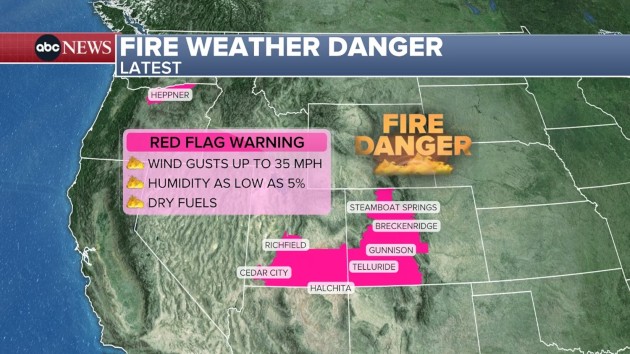
Fire weather danger. (ABC News)

(NEW YORK) — A wildfire burning in Utah tripled in size overnight, prompting mandatory evacuations of homes and campgrounds and completely closing a highway in the mountainous area.

Fueled by drought conditions and wind gusts up to 50 mph, the Cottonwood Fire in Beaver County started Monday afternoon and spread rapidly overnight, according to Utah Fire Info.

As of Tuesday morning, the blaze has burned more than 10,000 acres and was 0% contained, officials said.

The Cottonwood Fire ignited around 3:36 p.m. on Monday, threatening populated areas in Beaver County, according to officials.

Just after 9 p.m. local time on Monday, residents in the Eagle Point and Merchant Valley areas of Beaver County were ordered to evacuate immediately as flames bore down on the area, authorities said.

The cause of the blaze is under investigation.

The Cottonwood Fire is one of 342 wildfires currently burning across Utah, consuming more than 64,000 acres combined, according to Utah Fire Info.

The biggest active fire is the Iron Fire burning in Juab County, about 28 miles southwest of Provo. As of Tuesday morning, the Iron Fire had burned 31,304 acres and was 9% contained, said Al Nash, public information officer for the Great Basin Team 3, a federal agency in charge of the incident.

Nash told ABC News that firefighters battling the Iron Fire are bracing for another day of hot, dry and windy conditions.

The fire has prompted numerous evacuations in the area, including the complete evacuation of the town of Eureka, which has a population of just over 600.

“Our firefighters are expecting to have another challenging day,” said Nash, adding that humidity is expected to drop into the single digits.

Kelly Wicken, a spokesperson for the Utah Division of Forestry, said the blaze started on private land and has now spread across Juab and two other counties, crossing onto federal land and shutting down a highway.

Before the fire, the National Weather Service had issued red flag fire danger warnings for a large part of the state.

Red flag warnings for fire weather danger are in place across southern Utah and through much of western and central Colorado. Strong winds and low humidity are expected to fuel the existing fires and enable new fires to spark and spread rapidly. 

Copyright © 2026, ABC Audio. All rights reserved.
New Utah wildfire triples in size, prompting evacuations and closing a highway

New Utah wildfire triples in size, prompting evacuations and closing a highway The Cottonwood Fire is one of 342 active wildfires burning across Utah
Fire weather danger. (ABC News)

(NEW YORK) — A wildfire burning in Utah tripled in size overnight, prompting mandatory evacuations of homes and campgrounds and completely closing a highway in the mountainous area.

Fueled by drought conditions and wind gusts up to 50 mph, the Cottonwood Fire in Beaver County started Monday afternoon and spread rapidly overnight, according to Utah Fire Info.

As of Tuesday morning, the blaze has burned more than 10,000 acres and was 0% contained, officials said.

The Cottonwood Fire ignited around 3:36 p.m. on Monday, threatening populated areas in Beaver County, according to officials.

Just after 9 p.m. local time on Monday, residents in the Eagle Point and Merchant Valley areas of Beaver County were ordered to evacuate immediately as flames bore down on the area, authorities said.

The cause of the blaze is under investigation.

The Cottonwood Fire is one of 342 wildfires currently burning across Utah, consuming more than 64,000 acres combined, according to Utah Fire Info.

The biggest active fire is the Iron Fire burning in Juab County, about 28 miles southwest of Provo. As of Tuesday morning, the Iron Fire had burned 31,304 acres and was 9% contained, said Al Nash, public information officer for the Great Basin Team 3, a federal agency in charge of the incident.

Nash told ABC News that firefighters battling the Iron Fire are bracing for another day of hot, dry and windy conditions.

The fire has prompted numerous evacuations in the area, including the complete evacuation of the town of Eureka, which has a population of just over 600.

“Our firefighters are expecting to have another challenging day,” said Nash, adding that humidity is expected to drop into the single digits.

Kelly Wicken, a spokesperson for the Utah Division of Forestry, said the blaze started on private land and has now spread across Juab and two other counties, crossing onto federal land and shutting down a highway.

Before the fire, the National Weather Service had issued red flag fire danger warnings for a large part of the state.

Red flag warnings for fire weather danger are in place across southern Utah and through much of western and central Colorado. Strong winds and low humidity are expected to fuel the existing fires and enable new fires to spark and spread rapidly. 

Copyright © 2026, ABC Audio. All rights reserved.

3-year-old boy dies after being left in hot car in Florida: Sheriff

3-year-old boy dies after being left in hot car in Florida: Sheriff
Stock image of car air conditioning ventilation grille. (aire images/Getty Images)

(RIVERVIEW, Fla.) — A 3-year-old boy died after being left in a hot car in Florida, according to authorities.

Deputies responded to a home in Riverview, just outside of Tampa, at about 10:40 p.m. Saturday after the boy’s father found him unresponsive in a parked car, the Hillsborough County Sheriff’s Office said.

The boy was taken to a hospital where he was pronounced dead, the sheriff’s office said.

The temperature hit a scorching 95 degrees in Riverview on Saturday, and with humidity, it felt hotter than 100 degrees.

It’s not clear how long the boy was in the car.

Hillsborough County Sheriff Chad Chronister called the death a “tragedy” and warned, “A vehicle can reach lethal temperatures within minutes.”

“We urge every parent and caregiver in our community to make hot vehicle safety a priority,” the sheriff said in a statement. “Never leave a child unattended in a vehicle, even for a moment.”

No charges have been filed at this time and the investigation is ongoing, according to the sheriff’s office.

At least eight children have died in hot cars so far this year in the U.S., according to national nonprofit KidsAndCars.org. Last year, at least 37 children died in hot cars across the country, KidsAndCars.org said.

Click here for what to know to keep your children safe.

ABC News’ Kenton Gewecke contributed to this report.

Copyright © 2026, ABC Audio. All rights reserved.