A magnitude 7.2 earthquake struck Venezuela and other regions in the Caribbean on June 24, 2026, in Caracas, Venezuela. (Photo by Edilzon Gamez/Getty Images)
(CARACAS, Venezuela) — Two powerful earthquakes — a 7.2 magnitude quake followed just seconds later by a 7.5 — rocked the coast of Venezuela on Wednesday evening, killing dozens of people, knocking down buildings in the capital and sending residents racing into the street.
In an address the nation Wednesday night, Venezuela’s acting President Delcy Rodriguez said her office received reports of at least 32 deaths and more than 700 injuries. She declared a nationwide state of emergency and said there was severe damage in the capital Caracas and other areas in the aftermath of the quakes.
She said Metro and rail services are suspended in the city and the Maiquetía International Airport, which was earlier reported to have sustained damage, is closed.
At least 20 aftershocks have been reported following the initial tremor, she said.
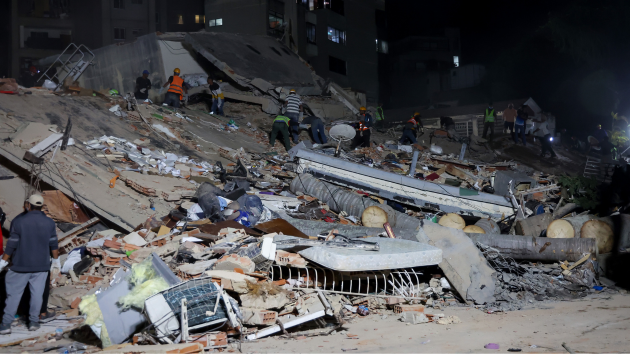
Photos and videos from Caracas showed some crumbled buildings, rescue crews searching through rubble and people being cared for on the street.
Crews responded to collapsed buildings in the areas of Alta Mira and Palos Grandes, according to authorities.
The U.S was preparing to send search-and-rescue teams, according to the State Department.
In a post on social media, Deputy Secretary of State Chris Landau said the U.S. was “mobilizing assistance” for Venezuela.
“The US stands with the Venezuelan people in the aftermath of this evening’s devastating earthquakes. We’re in touch with the authorities and mobilizing assistance,” he said.
Jeremy Lewin, the State Department’s under secretary for foreign assistance, said the department has “mobilized a disaster assistance team and task force to deliver and coordinate critical assistance to the Venezuelan people.”
He added: “Working with our partners in the interim Venezuelan government, the U.S. will be sending search and rescue teams, medical and humanitarian supplies and other resources in the crucial first days after this tragic natural disaster.”
Another State Department official confirmed that all staff at the U.S. embassy in Caracas are accounted for.
The first earthquake — a magnitude 7.2 — was what the U.S. Geological Survey calls a “foreshock,” recorded near San Felipe, Venezuela. Just 39 seconds later, a more powerful 7.5 “mainshock” was recorded in Yumare, according to the USGS.
The USGS estimated a “red alert” for potential fatalities from the quake, saying: “High casualties and extensive damage are probable and the disaster is likely widespread.”
Past red alerts have required a national or international response, according to the USGS.
Following the quake, a tsunami advisory was issued, with the potential for hazardous tsunami waves possible for coasts within 300 kilometers of the earthquake epicenter. However, the tsunami advisory later expired.
A magnitude 7.2 earthquake struck Venezuela and other regions in the Caribbean on June 24, 2026, in Caracas, Venezuela. (Photo by Edilzon Gamez/Getty Images)
(CARACAS, Venezuela) — Two powerful earthquakes — a 7.2 magnitude quake followed just seconds later by a 7.5 — rocked the coast of Venezuela on Wednesday evening, killing dozens of people, knocking down buildings in the capital and sending residents racing into the street.
In an address the nation Wednesday night, Venezuela’s acting President Delcy Rodriguez said her office received reports of at least 32 deaths and more than 700 injuries. She declared a nationwide state of emergency and said there was severe damage in the capital Caracas and other areas in the aftermath of the quakes.
She said Metro and rail services are suspended in the city and the Maiquetía International Airport, which was earlier reported to have sustained damage, is closed.
At least 20 aftershocks have been reported following the initial tremor, she said.
Photos and videos from Caracas showed some crumbled buildings, rescue crews searching through rubble and people being cared for on the street.
Crews responded to collapsed buildings in the areas of Alta Mira and Palos Grandes, according to authorities.
The U.S was preparing to send search-and-rescue teams, according to the State Department.
In a post on social media, Deputy Secretary of State Chris Landau said the U.S. was “mobilizing assistance” for Venezuela.
“The US stands with the Venezuelan people in the aftermath of this evening’s devastating earthquakes. We’re in touch with the authorities and mobilizing assistance,” he said.
Jeremy Lewin, the State Department’s under secretary for foreign assistance, said the department has “mobilized a disaster assistance team and task force to deliver and coordinate critical assistance to the Venezuelan people.”
He added: “Working with our partners in the interim Venezuelan government, the U.S. will be sending search and rescue teams, medical and humanitarian supplies and other resources in the crucial first days after this tragic natural disaster.”
Another State Department official confirmed that all staff at the U.S. embassy in Caracas are accounted for.
The first earthquake — a magnitude 7.2 — was what the U.S. Geological Survey calls a “foreshock,” recorded near San Felipe, Venezuela. Just 39 seconds later, a more powerful 7.5 “mainshock” was recorded in Yumare, according to the USGS.
The USGS estimated a “red alert” for potential fatalities from the quake, saying: “High casualties and extensive damage are probable and the disaster is likely widespread.”
Past red alerts have required a national or international response, according to the USGS.
Following the quake, a tsunami advisory was issued, with the potential for hazardous tsunami waves possible for coasts within 300 kilometers of the earthquake epicenter. However, the tsunami advisory later expired.
A magnitude 7.2 earthquake struck Venezuela and other regions in the Caribbean on June 24, 2026, in Caracas, Venezuela. (Photo by Edilzon Gamez/Getty Images)
(CARACAS, Venezuela) — Two powerful earthquakes — a 7.2 magnitude quake followed just seconds later by a 7.5 — rocked the coast of Venezuela on Wednesday evening, killing dozens of people, knocking down buildings in the capital and sending residents racing into the street.
In an address the nation Wednesday night, Venezuela’s acting President Delcy Rodriguez said her office received reports of at least 32 deaths and more than 700 injuries. She declared a nationwide state of emergency and said there was severe damage in the capital Caracas and other areas in the aftermath of the quakes.
She said Metro and rail services are suspended in the city and the Maiquetía International Airport, which was earlier reported to have sustained damage, is closed.
At least 20 aftershocks have been reported following the initial tremor, she said.
Photos and videos from Caracas showed some crumbled buildings, rescue crews searching through rubble and people being cared for on the street.
Crews responded to collapsed buildings in the areas of Alta Mira and Palos Grandes, according to authorities.
The U.S was preparing to send search-and-rescue teams, according to the State Department.
In a post on social media, Deputy Secretary of State Chris Landau said the U.S. was “mobilizing assistance” for Venezuela.
“The US stands with the Venezuelan people in the aftermath of this evening’s devastating earthquakes. We’re in touch with the authorities and mobilizing assistance,” he said.
Jeremy Lewin, the State Department’s under secretary for foreign assistance, said the department has “mobilized a disaster assistance team and task force to deliver and coordinate critical assistance to the Venezuelan people.”
He added: “Working with our partners in the interim Venezuelan government, the U.S. will be sending search and rescue teams, medical and humanitarian supplies and other resources in the crucial first days after this tragic natural disaster.”
Another State Department official confirmed that all staff at the U.S. embassy in Caracas are accounted for.
The first earthquake — a magnitude 7.2 — was what the U.S. Geological Survey calls a “foreshock,” recorded near San Felipe, Venezuela. Just 39 seconds later, a more powerful 7.5 “mainshock” was recorded in Yumare, according to the USGS.
The USGS estimated a “red alert” for potential fatalities from the quake, saying: “High casualties and extensive damage are probable and the disaster is likely widespread.”
Past red alerts have required a national or international response, according to the USGS.
Following the quake, a tsunami advisory was issued, with the potential for hazardous tsunami waves possible for coasts within 300 kilometers of the earthquake epicenter. However, the tsunami advisory later expired.
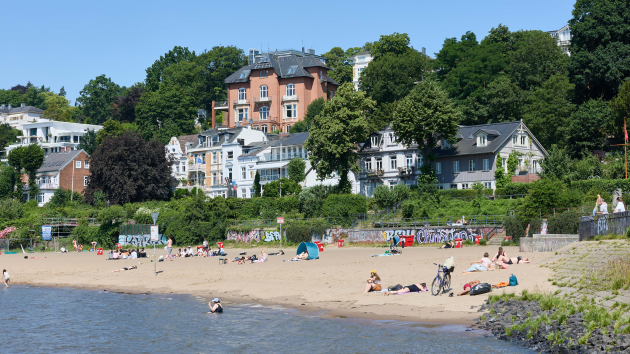
Beachgoers in Hamburg, Germany. (Photo by Georg Wendt/picture alliance via Getty Images)
(LONDON) — Countries across Europe were on Thursday in the middle of one of the most brutal heat waves within the last 50 years, with temperatures breaking June records in the United Kingdom and France.
Weather officials in the United Kingdom said temperatures on Wednesday rose in some areas to 35.7 degrees Celsius, or about 96.2 degrees Fahrenheit, topping a June 1976 record of 35.6 C.
The Met Office updated its Red Extreme Heat Warning, spreading the warning along most of the southern and western areas of the United Kingdom.
“This is exceptional heat for June with temperature records expected to be broken this week,” Met Office Chief Forecaster Matthew Lehnert said in a statement. “Red warnings are reserved for the most severe events and we’re expecting significant impacts from this heatwave, with health issues likely, even beyond those who are more vulnerable to the heat.”
The Met also set Amber Heat Warnings for Friday and Saturday.
Warnings were still under review and constantly being updated, with the Met Office predicting that Friday could be the peak of the heat wave here in the United Kingdom, with temperatures soaring up as high as 100.4 F.
In France the north, west, and half of the southern areas of the country were on Thursday under red heat warnings, under which residents were being told to stay “Absolutely vigilant.”
French authorities said on Thursday they expected that the heat to stay in the red for many hours ahead.
The country on Wednesday notched its highest-ever temperature, according to weather officials at Meteo-France, the national weather service. They said the country’s national heat index — a daily average including regions around the country — hit 30 C, or about 86 F.
“Another exceptional day is expected in terms of temperatures, with the peak of this historic heatwave anticipated,” Meteo-France said in a bulletin on Thursday.
The Louvre and the Eiffel Tower were closing early for a third day in a row.
To stay safe in the heat everyone is being encouraged to stay hydrated, avoid the sun during peak hours, around midday, and staying home to keep cool.
They have recommended keeping curtains, blinds and windows closed during the day and opening windows at night to keep your house as cool as possible.
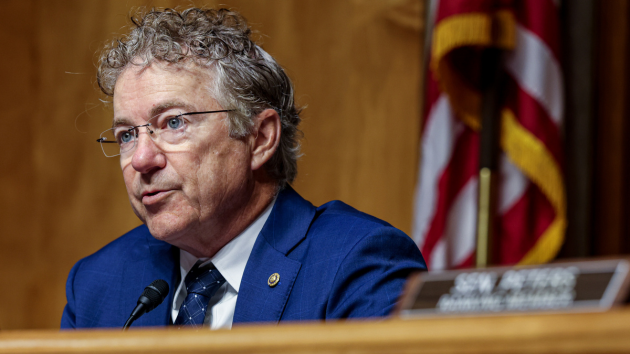
Senator Rand Paul, a Republican from Kentucky and chairman of the Senate Homeland Security and Governmental Affairs Committee, during a hearing in Washington, DC, US, on Wednesday, June 24, 2026. (Photographer: Valerie Plesch/Bloomberg via Getty Images)
(WASHINGTON) — Under a newly proposed rule, the U.S. Postal Service will refuse to deliver mail-in ballots in states that do not hand over a list of approved voters to the Trump administration, Postmaster General David Steiner told the Senate Homeland Security and Governmental Affairs Committee on Wednesday.
Democrats lambasted the proposed policy during the hearing, arguing the rule was unconstitutional and “another backdoor way of trying to influence this election.”
“Yes or no — if a state refuses to turn their absentee voter list over to the federal government, will the Postal Service still mail their ballots under this proposed rule?” asked Sen. Gary Peters, D-Mich.
“Under our proposed regulation, no. We would tell the state that we need the manifest,” Steiner said.
The proposed rule puts the Postal Service at the center of President Donald Trump’s push to increase federal oversight of elections, though Steiner argued the policy is routine and an attempt to make sure ballots are delivered “securely, efficiently, and accurately.”
According to the proposal, states would need to provide to the Postal Service the names, addresses and ballot barcode numbers for individuals to receive a mail-in ballot.
That list of information is less than what’s included on a state’s voter roll — which often include voter registration data and other sensitive data — but in line with an executive order Trump signed in March to increase federal oversight of elections.
At least five lawsuits have challenged that executive order, but some of those cases have stalled because the policy has not yet been enacted. The comment period for that proposed rule is open for the next week.
“It really is trying to help the state make sure that the ballots that they send to the voters actually get there and get to those voters, and so it’s strictly a manifest for us to make sure that the right ballots are going to the right people,” said Steiner, an attorney who previously served as the CEO of Waste Management.
However, Senate Democrats argued the policy is a veiled attempt to increase federal control over the election.
“Just because President Trump wants to do this does not make it law, doesn’t make it right, doesn’t make it constitutional. There is certainly a massive difference between general mail requirements and regulating elections,” Peters said.
“The U.S. Postal Service is now part of this bigger story of this president desperate to federalize our elections. He has tried every which way to say that if he and his party don’t win in these November elections, they were rigged,” said Sen. Elissa Slotkin, D-Mich.
When pressed on whether the Postal Service would refuse to send ballots to states that refuse to turn over that information, Steiner repeatedly deflected but acknowledged that under the proposed rule, the Postal Service would withhold the ballots.
“If you don’t get Michigan’s voter rolls for the general election in November, will you move those ballots in your mailboxes?” asked Slotkin.
“Remember, right now we only have a proposed rule, so there are no new rules,” Steiner answered. “We will move those ballots in accordance with whatever rule is in effect at that point in time.”
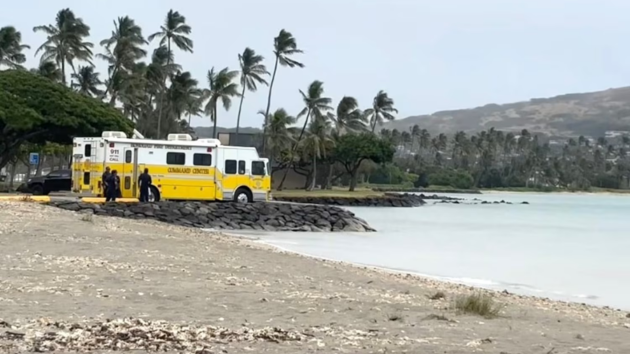
In this screen grab from a video released by the Honolulu Fire Department, HFD responded to a report of a missing swimmer reported at Hanauma Bay Ridge Trail, on June 24, 2026. (Honolulu Fire Department)
(OAHU, Hawaii) — The United States Coast Guardand local officials are conducting a search for a 49-year-old man and his 16-year-old son who went missing Tuesday morning after leaving for a hike on the eastern coast of Oahu, a Coast Guard press release said.
Family members said the pair left their hotel at around 7 a.m. Tuesday to hike the Hanauma Bay Rock Bridge Trail, according to officials. Passersby found a backpack containing the man’s belongings near the trail at 8:45 a.m. and notified the Honolulu Police Department, the release said.
Police, theHonolulu Fire Department, Honolulu Ocean Safety Department and the Coast Guard launched a joint search operation late Tuesday morning after confirmation that the father and son were missing, ABC News Honoluluaffiliate KITV reported.
The names of the father and son have not been released.
The agencies searched along the trail and surrounding areas, and deployed fire department helicopters and rescue boat, safety department jet skis and Coast Guard resources, the fire department said.
The mission wassuspended at 5:30 p.m. local time Tuesday due to adverse weather conditions and was scheduled to resume Wednesday morning, fire officials said.
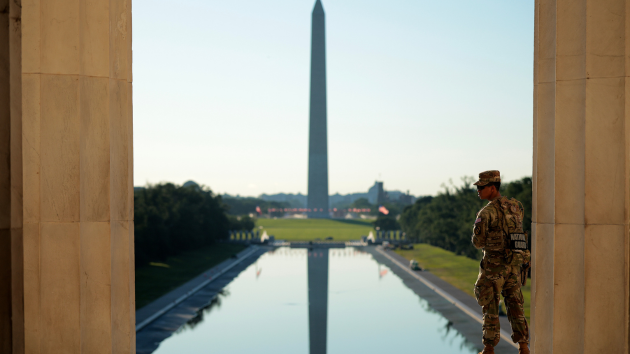
A U.S. Army National Guard troop stands watch at the Lincoln Memorial on June 08, 2026, in Washington, DC. Lincoln Memorial Reflecting Pool has been partially re-filled after the bottom of it was repainted as part of President Donald Trump’s effort to repair Washington landmarks in for preparation the country’s 250th birthday this summer. (Photo by Chip Somodevilla/Getty Images)
(WASHINGTON) — The top Democrat on the House Oversight Committee sent letters Wednesday to the contractors overseeing the renovation at the Lincoln Memorial Reflecting Pool on the National Mall, requesting information such as contracts and water quality records.
The Reflecting Pool has been plagued with algae and peeling paint in the days since the Trump administration completed its renovation, which cost taxpayers more than $16 million.
Rep. Robert Garcia, D-Calif., sent separate letters to the company hired to paint the reflecting pool and the company hired to remove the algae that later appeared in the pool.
“Donald Trump’s disastrous renovation of our national reflecting pool is his latest failed vanity project,” Garcia said in a statement. “The President should be focused on making life more affordable for the American people, not rewarding his loyalists with government contracts and wasting taxpayer money on failing projects. We’re demanding answers straight from the contractors about the project’s failures.”
The ranking member requested information by July 8, 2026, including the scope of the work, contract performance standards, communications with the National Park Service and amounts invoiced or paid.
Democrats, who are in the minority, do not have subpoena power to compel these contractors to hand over information or even respond.
Trump said this week the Reflecting Pool will be drained again for “permanent repair” around the Fourth of July and said that six people have now been arrested for alleged damage to the site. No charges had been filed in the alleged arrests.
The Interior Department and the U.S. Park Police have not responded to multiple outreaches for evidence of the alleged vandalism.
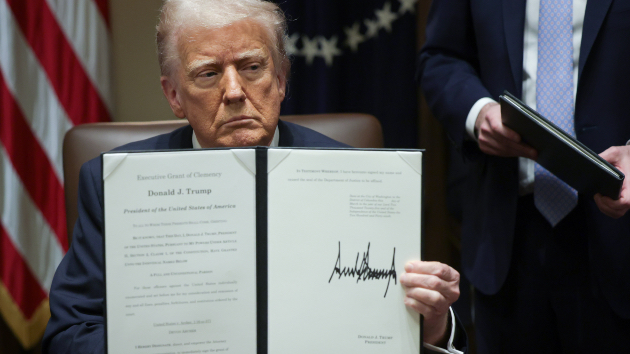
President Donald Trump holds an executive order he signed during an Ambassador Meeting in the Cabinet Room of the White House on March 25, 2025.(Win McNamee/Getty Images)
(WASHINGTON) — A federal judge on Wednesday permanently blocked the Trump administration from enforcing an executive order signed last year that required proof of citizenship to register to vote and demanded mail-in ballots be received by Election Day.
This is a developing story. Please check back for updates.
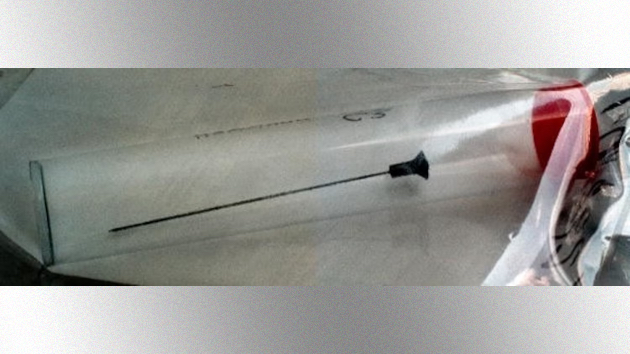
Police in Cleveland, Ohio, are investigating back-to-back attacks, June 22, 2026, in which victims were shot with blowgun darts similar to one in this photo. (The Washington Post via Getty Images)
(CLEVELAND) — A man suspected of shooting two people with blowgun darts in back-to-back broad daylight attacks this week in the same Cleveland, Ohio, neighborhood, has been arrested, police said on Wednesday.
The 42-year-old suspect, whose name was not immediately released, was arrested on Tuesday on suspicion of felony assault following a two-day manhunt, according to the Cleveland Police Department.
One of the victims was shot multiple times with blow darts and had to undergo surgery, according to police.
The bizarre attacks unfolded around 4 p.m. local time on Monday in the Clark-Fulton neighborhood of west Cleveland, police said in a statement to ABC News on Wednesday morning.
A woman targeted in the first incident alleged the suspect, whom she recognized from the neighborhood, verbally insulted her and struck her in the face with his hand in an unprovoked attack, according to the police statement.
The victim alleged that a short time later, the suspect confronted her again in the parking lot of a Family Dollar store, according to the police report. The man allegedly pulled out a blow-dart gun and fired it repeatedly at the woman, striking her with needle-like darts at least five times, according to police.
“Upon arrival, officers located a 56-year-old woman who had been struck with several long-needle darts,” police said.
She was taken to MetroHealth Medical Center in Cleveland, where she underwent surgery to remove one of the darts that pierced her liver, according to police.
While at the hospital with the first victim, police received a report that a second person had been shot with a blowdart gun in the same Clark-Fulton neighborhood near the busy intersection of West 25th Street and Clark Ave., according to police.
Officers who responded to the scene in the Clark-Fulton neighborhood discovered a 40-year-old man suffering from wounds in the blowgun dart attack, police said.
“The victim stated that he was in the area of West 25th Street when an unknown male shot him with a blow dart. He reported running from the area and calling 911,” according to the police report.
The victim was treated at a hospital for his injuries, police said.
A search was immediately launched, according to police. On Wednesday, officers arrested the suspect after spotting him in the Clark-Fulton neighborhood, according to the police statement.
During the arrest, officers recovered a blowgun as evidence, police said.
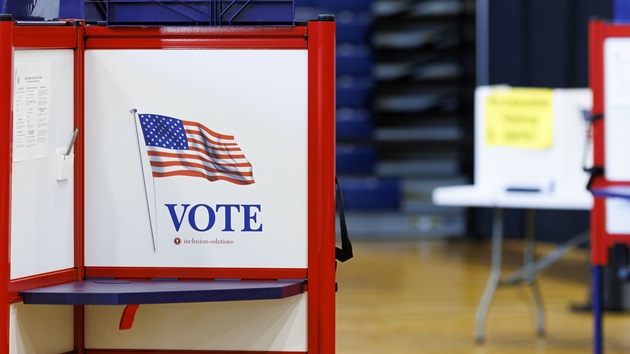
Booths await Maine residents to cast their ballots at a polling station inside the Portland Exposition Building on June 9, 2026 in Bangor, Maine. (CJ Gunther/Getty Images)
(NEW YORK) — On prediction markets like Kalshi and Polymarket, bettors can put money on dozens of election-related bets in Maryland, from the winner of the upcoming gubernatorial race to the margin of victory in the state’s 6th Congressional District.
For most Americans, the Maryland elections are fair game — races in the state are already generating hundreds of thousands of dollars in trading volume on the major prediction markets. But not for residents of Maryland, which is one of a handful of states that ban election betting. And Jared DeMaranis, the state’s election administrator, plans to enforce it.
“If we have credible information about illegalities and it’s not within our civil citation authorities, we will of course refer those matters to the office of the state prosecutor for enforcement,” DeMaranis told ABC News. “This is going to be a growing issue and something that we need to stop in its infancy.”
Federal regulators and the courts have given Americans the green light to wager on elections, prompting a frenzy of wagering on the outcomes of races, the likelihood of candidates dropping out, the amount of voter turnout, and more. But more than half of U.S. states have existing laws on the books that limit or restrict the practice, according to research from the Pew Research Center — and now state leaders are sorting out how exactly to enforce those rules.
Maryland, Texas and Arizona are among those states with laws explicitly banning election betting. And in Wisconsin, residents cannot cast ballots in elections in which they have placed a “bet or wager depending upon the result of the election,” according to state law.
Ann Jacobs, the chair of the Wisconsin Election Commission, said Wisconsinites who bet on an election and then vote in it could have their vote challenged or face voter fraud charges. Jacobs acknowledged that it would be a difficult rule to enforce, but stood by the spirit of the law.
“The policy behind saying, ‘You can bet or you can vote, but you can’t do both,’ is 100% a sound policy,” Jacobs said. “We want people to vote based on their belief that the person they are voting for is going to be the best for their community … it just makes sense.”
Arizona officials have focused their efforts on the platforms themselves. The state’s attorney general filed criminal charges against Kalshi earlier this year claiming the platform operated an illegal, unlicensed gambling business and accepted unlawful wagers from Arizona residents.
In April, a federal judge blocked Arizona from continuing its criminal case. The injunction followed a lawsuit against the state by the Commodity Futures Trading Commission — the federal regulator overseeing prediction markets — which argued that prediction markets fall under federal oversight rather than state gambling regulations.
The Arizona attorney general’s office declined to comment on the active case or how it will address potential election betting this season.
Officials in Texas, another state with a law banning election betting, did not respond to inquiries from ABC News. But Christopher McGinn, the executive director of the Texas Association of County Election Officials, said he and other administrators are engaged in early discussions about how to handle prediction markets, particularly the likelihood that individuals with a financial stake in the outcome of an election may have “more incentive to attempt to manipulate [elections], or spread misinformation.”
Prediction market advocates believe election-related event contracts strengthen political forecasting and can predict outcomes with greater accuracy than traditional polls. But many election experts warn that election wagering could threaten to compromise the integrity of elections or incentivize offenders to profit from insider information.
“I can’t think of all of the ways that people might try to make money off of election outcomes, but I’m sure there are enterprising people who will come up with all kinds of things,” said Rick Hasen, an expert in election law at the University of California-Los Angeles. “We don’t want to start thinking of elections as a financial incentive. The potential for manipulation is too great.”
Legalized election betting in the U.S. is a new phenomenon. In 2024, Kalshi prevailed in a lawsuit that allowed it to offer event contracts for politics and elections. More recently, the Commodity Futures Trading Commission proposed new rules that classified elections “as contests, not gaming,” further clearing the way for platforms to offer election-related wagers.
Those developments present state officials with a challenge: How can they enforce state-level bans on election betting without support from federal regulators or the platforms themselves? The answer for some, including Maryland, is to pursue the individuals.
“Right now, it’s on the person. The person that places the wager on the platform is doing the illegality,” said DeMaranis, the Maryland elections chief, adding that lawmakers will eventually “need to clarify the role of those platforms to make sure they’re liable for offering monetary incentives on elections.”
Matthew Wein, a former Homeland Security official, said a similar dynamic emerged with social media giants over the past decade. In the absence of a crackdown on platforms, authorities were left to pursue users “for doing things they shouldn’t have been doing on the platforms, but not against the platforms themselves.”
“And this seems to be heading in the same direction with prediction markets,” said Wein, who now authors a gambling newsletter called “Secure Stakes.”
A Polymarket spokesperson said states with election betting bans “run counter to the established framework for regulating prediction markets.”
“We look forward to addressing these claims through the appropriate legal process,” the spokesperson said.
A Kalshi spokesperson said the company’s services are “federally regulated and have stock-market-grade systems for identifying and addressing market manipulation.”
Meanwhile, in Washington, D.C., lawmakers continue to scrutinize prediction market platforms. Rep. Jamie Raskin, D-Md., and Sen. Jeff Merkley, D-Ore., have introduced legislation that would prohibit event contracts on election outcomes, which they said “spreads civic cynicism and distrust in our democratic institutions.”
DeMaranis said he has struggled to instill a sense of urgency among the nation’s election officials, many of whom he said have never heard of prediction markets.
The effort, he said, has left him feeling like the “canary in the coal mine.”
“It’s about the integrity and public trust of the electoral process,” DeMaranis said. “When you have people that are engaging in election-related wagering, the integrity of the entire process now comes into question.”