

‘No one is exempt’: How tariffs could impact sales of new vehicles

‘No one is exempt’: How tariffs could impact sales of new vehicles
Hyundai vehicles on display at the New York International Auto Show on April 16, 2025 in New York City. (Photo by Adam Gray/Getty Images)

(NEW YORK) — This weekend, consumers and auto enthusiasts will poke, prod and pepper brand specialists with questions about the latest vehicles on display at the Javits Center.

The annual New York International Auto Show, which officially opened to the public on Friday, is smaller and more condensed than previous years. There are still plenty of vehicles to check out up close, such as the 2026 Hyundai Palisade, Kia K4 Hatchback and EV4, plus Genesis, Toyota, Subaru and Volkswagen introduced new vehicles and concepts.

Of course, one overarching theme looms large: Will these new vehicles be subject to the Trump’s administration’s 25% industry tariff? Consumers went out in force last month to scoop up available cars, trucks and SUVs before prices inched higher, helping the industry report record sales. In fact, nearly 1.6 million vehicle units were purchased, marking a month-over-month increase of 29.6% and a year-over-year increase of 10.3%, according to Cox Automotive data.

What will happen to new vehicle prices this summer, when temporary pricing pauses announced by automakers disappear? And as uncertainty dominates, how will automakers — from mainstream to ultra luxe — respond?

ABC News spoke to various auto executives and industry watchers about the future of the industry. The conversations below have been edited for clarity and space.

Sean Gilpin, chief marketing officer, Hyundai Motor America

Hyundai is a very customer-centric brand, a people-centric brand. We just launched a campaign reminding customers that we’re not increasing MSRPs for the next 60 days (ending June 2). What we saw in the some of data and surveys is that customers don’t know how a tariff works but they know things will get more expensive potentially, so we wanted to get the message out there.

The June 2 date could be extended. The best medicine for our business is to keep selling cars. We think this message is resonating with customers. We’ve seen a big uptick in our shopping activity, in customers who are new to the brand and visiting the site for the first time. Dealer traffic is up.

We have a plant in Alabama. The Tucson, our best-selling vehicle, is built there. The Santa Fe is also built in the Alabama plant. We had a grand opening of our Metaplant near Savannah, Georgia, two weeks ago, and 300,000 vehicles will come off the line in phase one. Phase two will bring capacity to 500,000 vehicles. We’re continuing to invest here and grow in terms of our footprint. The U.S. is the No. 1 market for Hyundai. We also recently announced a commitment to build a steel plant in Louisiana.

Tony Quiroga, editor-in-chief, Car and Driver

The tariffs make everything a sort of unknown. I’ve been telling anyone who’s in the market in the next year to start shopping now. Inexpensive cars are going to get more expensive because so many are built outside of the U.S. Nissan builds the Kicks, Versa and Sentra in Mexico. Chevy builds the Trax in South Korea, which would be subject to be a big tariff. A lot people could be priced out of the market. If you’re in that market, you should definitely be considering buying a car now.

The tariff situation is unsettling and weird and everybody is just sort of wondering what’s going to happen and hoping for the best I think.

Vinay Shahani, senior vice president of U.S. marketing and sales, Nissan Americas

The market is healthy right now. There’s a lot of shopping, and a lot of cross-shopping, that’s happening. We feel really good about the activity out there.

We have plenty of on-ground inventory that’s protected from tariffs today. We’re very fortunate as a company that we have a very strong industrial footprint here in the U.S. Between Tennessee and Mississippi we produce a lot of vehicles that we sell here in the U.S. There are six models built in the U.S. between Nissan and Infiniti.

The Rogue is currently built at the Smyrna Assembly Plant in Tennessee as well as in Japan. Now we’re saying we’re going to increase the production of the Rogue in the U.S because it makes sense to do that and we can dial up production to deliver more U.S.-built Rogues. We’re also looking at subsequent new vehicles that we’re going to launch and saying, how can we optimize our footprint and bring as much as we can to the U.S.? It’s already happening — we’re moving production of the Rogue from Japan. The supply and manufacturing teams are already all over it.

Starting at the end of March, we started to see increased activity and it’s carried through for the month of April. We have basically said we’re holding our pricing between April and May. Then we will evaluate the situation after June 2. In this dynamic environment, where things are changing constantly, you can’t plan too far out.

Steven Center, chief operating officer, Kia America

Tariffs are a whole different kettle of fish as they say. Product cycles are long — they’re five, six, seven years or longer. Automakers have long planning horizons and you always want to have a shorter supply line as possible. We learned that during the pandemic. And you always want to build things closer to where you’re selling them.

To build a factory takes years of planning and execution. It’s very difficult to find a location for an auto plant. You need a lot of space, you need suppliers nearby, you need rail heads to bring in the materials. Most importantly you need a labor pool. And this country is in a state of zero unemployment. So where are you going to find people?

Erin Keating, executive analyst, Cox Automotive

Automakers have been fairly mute on tariffs — there haven’t been any big reveals on how they’re going to manage the cost. My advice: if you are in the market, and have been looking to buy a car, go to the dealer and buy one. If you’re just worried cars will get more expensive, wait it out. I wouldn’t rush ahead to make a decision — things could change.

There will be a grand redistribution of market share over the next few months. Whoever can capitalize on the frenzy of the consumer will win the day, at least in the second quarter. We’ve seen increased marketing from automakers and increased shopping behavior on Autotrader and Kelley Blue Book. The lending environment is looser now than in the past. There is still pent-up demand in the market.

We saw a big sales jump in March and will see another in April. Sales though could peter out in May. Automakers are trying to hold pricing right now … though prices will increase to some degree across the board. At the dealer level, floor planning is not cheap. You don’t want to keep inventory on the lot for a long time. If inventory goes quickly, you will have to replenish.

Ford and Honda have relatively low exposure to the tariffs. Toyota also has a lot of strength in the U.S. market in terms of manufacturing.

Vehicle parts are the bigger component of the tariff challenge. It’s so difficult to move production to the U.S. Brands are impacted separately; it really comes down to specific models. Vehicles built in the U.S. will get hit with tariffs because of the componentry. The 25% steel and aluminum tariffs are also hitting automakers.

I stress to consumers that it’s good to be informed of what’s happening. There are things you can do, like vote with your wallet.

Mike Rocco, president and CEO, Bentley Americas

The U.S. is the largest market in the world for Bentley. In the luxury space your world revolves around building an order bank — making sure you have customers in the system. We’ve told our retailers to communicate to their clients that we will price protect all retail orders that are in the system. If you have a car coming — don’t worry about it, you’re protected. We also announced that in the month of April, any new orders that went into the system would be protected, not just the ones prior to the tariff.

We’re looking at pricing on a month-to-month basis. There’s a lot of fluidity and things are changing. We haven’t had any [vehicle order] cancellations. Our No. 1 priority is to protect our clients and to protect our retailers.

I was recently in Palm Beach and Naples, Florida, talking to 70-80 clients. The feeling I got from customers I spoke to was that they’d have to pay whatever the tariff is … everyone recognized that the tariff would eventually be passed on to the customer.

Andrea Soria, general manager, Maserati North America

We live day by day. We keep monitoring. We are currently not shipping cars from Italy. It’s a very fluid situation. Every day you have different news. If nothing changes we will need to make some decision. We cannot absorb the tariffs entirely. We hope there will be some negotiation coming, some solution, something that will be a little bit more reasonable.

I think everyone in the industry is trying to adjust the sales. My colleagues in Italy ask me every day [about the tariffs]. I say, I wish I had a better answer. Everyone is waiting right now. We protected all the orders that were in the system until April 4. We haven’t seen anyone walking away [from an order] so far.

Tyson Jominy, vice president of data & analytics, J.D. Power

The auto industry is probably uniquely positioned to absorb the tariffs because sourcing time frames in the industry are so long. It takes so long to pivot to new ideas.

It’s a completely global industry. Even companies that assemble the majority of their vehicles in the U.S. have parts coming in from overseas. Therefore, no one really is exempt from tariffs. We’ll likely see some vehicles go away and automakers could cut back on marketing and reduce R&D costs to reserve cash. There’s really little they can do in the short term … and they’re holding cards close to their chest. Everyone is super tight-lipped about their plans.

We saw the industry really take off at the end of March, when the tariffs kicked in the last week. March was one of the strongest months we’ve seen in four or five years. Some automakers may even set sales records in the first half of the year. We expect a very strong Q2 but could see volume losses in Q4 — we know we can’t continue at this pace.

The automakers locking in prices have higher inventory levels. An automaker would normally be skewered for having 100 days of supply on the ground, but that’s a huge asset right now and buys you time. The tariffs may go away and you can see what your competitors are doing.

Our analysis says vehicles will have an 11% additional cost on average, or just shy of $5,000 per unit. But only 5% of the cost will be passed on to the consumer on average, or $2,300 per unit. You can’t raise the price of a Hyundai Sonata by $7,000 for example — that would be the equivalent of pulling out of the segment. Automakers may see negative margins on certain vehicles.

Models like the Porsche 911, Mercedes-Benz G-Class and Range Rover have true pricing power — customers won’t care [about a price increase].

I tell consumers not to rush out and buy a car. Ultimately making the right decision at a slightly more expensive purchase price would be the better decision for the long term.

Copyright © 2025, ABC Audio. All rights reserved.
Grad student shot at FSU recounts harrowing moment gunman reloaded as she played dead

Grad student shot at FSU recounts harrowing moment gunman reloaded as she played dead
ABC News

(TALLAHASSEE, Fla.) — A Florida State University graduate student shared with ABC News the harrowing moments she was shot on campus and forced to play dead as the gunman reloaded.

Madison Askins, 23, one of seven people shot near FSU’s student union on Thursday, said she was walking with a friend when she heard gunshots.

Askins and her friend “took off running,” but “unfortunately, I fell,” she said.

Her friend tried to help her up, but Askins said she was then shot in her buttocks. Her friend ran to safety, which she said was “valid.”

As Askins lay wounded, she said she remained calm and thought about what her parents told her to do during active shooter drills: play dead.

“I released all the muscles in my body, closed my eyes and held my breath,” she said. “And I would take short breaths in between when I needed to.”

“At one point I did think [the gunman] had walked away, so I was going to shift over to grab my phone to share my last ‘I love you’s’ with my family,” she said.

“I wanted to call my dad, tell him I loved him,” she said, wiping away tears.

But she said she then heard the gunman approach and reload his weapon. She said she heard him calmly say, “Keep running.”

“I know for certain if I was moving he would’ve shot me again,” she said.

Askins said she “didn’t want to entertain” the thought of dying, adding, “I knew I just needed to stay calm.”

Eventually the gunman left and Askins said she stayed where she was until an officer came to her rescue.

“She packed my wound for me and she kept an eye on the surrounding area,” Askins said. “I knew everything was over when we had multiple officers come over and they tell me they got him. I was able to breathe.”

Two people were killed and six others were wounded in the shooting. All six injured are expected to survive, officials said.

Askins said she’ll likely remain in the hospital for several more days. She still has the bullet lodged in her vertebrae and will have it removed in a later surgery, she said.

But Askins said this won’t slow her down in finishing her studies and pursuing her dreams.

“I’m glad to be with my family, glad to keep moving forward. I’ve got an internship lined up. I’m so ready to go for it,” she said.

“I’m not gonna let it tear me down,” she added. “No, he doesn’t get that.”

The suspected gunman, 20-year-old FSU student Phoenix Ikner, was shot by officers and is also expected to survive, authorities said. A motive is not known.

Copyright © 2025, ABC Audio. All rights reserved.
NASA astronaut Don Pettit to return from ISS on 70th birthday

NASA astronaut Don Pettit to return from ISS on 70th birthday
Bill Ingalls/NASA/Getty Images

(NEW YORK) — In a remarkable coincidence, NASA astronaut Don Pettit will mark his 70th birthday with a fiery reentry through Earth’s atmosphere on Saturday, capping off his fourth mission to space, the agency said in a release.

Pettit, along with Russian cosmonauts Alexey Ovchinin and Ivan Vagner, will bid farewell to their orbital home of more than seven months when they undock from the International Space Station (ISS) aboard the Soyuz MS-26 spacecraft at 5:57 p.m. ET Saturday.

The trio’s journey back to Earth is scheduled to end at 9:20 p.m. ET, NASA noted. It will culminate in a parachute-assisted landing on the remote steppes of Kazakhstan, where recovery teams will be waiting to extract them from their capsule.

During their 220-day mission, the crew circled the Earth an astounding 3,520 times, traveling approximately 93.3 million miles.

The departure marks another milestone for the crew members: Ovchinin concludes his fourth spaceflight with 595 days in orbit. Vagner adds to his impressive record with 416 cumulative days across two missions.

Before their departure, a change of command ceremony will take place on Friday, with Ovchinin transferring leadership of the space station to Japanese astronaut Takuya Onishi, who will command Expedition 73.

After touchdown, NASA noted that the crew will be transported by helicopter to Karaganda, Kazakhstan. From there, they’ll part ways — Pettit heading back to Houston while his Russian crewmates return to their training base in Star City, near Moscow.

The mission highlights the continuing international cooperation aboard the ISS, which has maintained continuous human presence for over two decades.

NASA’s release also stated that the ISS remains a crucial platform for scientific research and testing technologies for deep space exploration as the agency shifts its focus toward ambitious Moon and Mars missions under the Artemis program.

NASA will provide live coverage of the crew’s return journey on NASA+, starting with Friday’s change of command ceremony and continuing through Saturday’s landing.

Copyright © 2025, ABC Audio. All rights reserved.
FSU shooting latest: Police search for motive in campus attack that killed 2, injured 6

FSU shooting latest: Police search for motive in campus attack that killed 2, injured 6
Miguel J. Rodriguez Carrillo/Getty Images

(TALLAHASSEE, Fla.) — The Florida State University community is reeling and police are searching for a motive after a gunman opened fire on the Tallahassee campus on Thursday, killing two and injuring six.

Tallahassee police on Friday laid out how the shooting unfolded.

The suspect, 20-year-old FSU student Phoenix Ikner, arrived at a campus parking garage at about 11 a.m. and stayed in the area for around an hour, moving in and out of his car, police said.

Ikner left the garage at 11:51 a.m., police said, and then between 11:56 and 11:57 a.m. he started firing a handgun, police said. The shooting was reported to 911 by 11:58 a.m., police said.

At noon, Ikner was shot by officers and taken into custody, police said. He’s expected to survive.

Police have not identified the two people killed but said they were not students.

Food services company Aramark said one of its employees was killed in the shooting.

“We are absolutely shaken by the news and our deepest sympathies are with the family and our entire Aramark community,” the company said.

Tallahassee Memorial HealthCare officials said the hospital received six patients, all in stable condition.

All six are expected to make full recoveries and two of them may be released on Friday, officials said.

McKenzie Heeter, a 20-year-old junior, told ABC News she was just feet away from the gunman when he shot a woman wearing scrubs by the student union.

The shooter was “waving around a bigger rifle … and then he pulled out the handgun and shot that woman,” Heeter said.

“Her back was to him, she was just walking. I don’t even think she registered what happened,” she said. “That’s what I just keep thinking about.”

Heeter described sprinting across campus in sheer panic.

“I did a four-minute mile in sandals. I’ve never run that fast in my life,” she said. “I felt like I have got to leave, or else it could be me next.”

Officials revealed that the suspect’s stepmother, Jessica Ikner, is a current deputy with the local Leon County Sheriff’s Office. While authorities identified Jessica Ikner as the suspect’s mother, court documents indicate she is his stepmother.

Phoenix Ikner had access to one of his stepmother’s personal weapons, which was one of the weapons found at the scene, Sheriff Walter McNeil said.

The suspect was also a “long-standing member” of the Leon County Sheriff’s Office’s Youth Advisory Council, McNeil said.

He was “engaged in a number of training programs that we have,” the sheriff said, adding, “Not a surprise to us that he had access to weapons.”

In a statement to the Florida State University community, President Richard McCullough called the shooting a “tragic and senseless act of violence.”

FSU has canceled classes and sporting events through the weekend. A vigil is set for Friday at 5 p.m.

President Donald Trump said Thursday he has an “obligation to protect” the Second Amendment when asked by a reporter in the Oval Office if he sees anything “broken” with America’s current gun laws.

“Look, I’m a big advocate of the Second Amendment. I have been from the beginning. I protected it, and these things are terrible, but the gun doesn’t do the shooting. The people do. It’s a phrase that’s used probably too often,” Trump said.

“I will tell you that it’s a shame,” he said of the shooting.

ABC News’ Alex Faul, Faith Abubey and Fritz Farrow contributed to this report.

Copyright © 2025, ABC Audio. All rights reserved.

Severe weather continues through Easter weekend across Central US

Severe weather continues through Easter weekend across Central US
ABC News

(NEW YORK) — More than 50 million Americans are on alert for severe weather this Easter weekend, as several states in the Heartland have already been slammed with tornadoes, hail and damaging winds.

On Thursday, 15 tornadoes, 86-mph wind gusts and softball and baseball-sized hail were reported across Nebraska and Iowa.

Damage to farm buildings, downed trees and power lines have also been reported across Nebraska, Iowa and Minnesota.

The severe weather will persist this weekend as this storm system will begin to stall across the Central and Eastern parts of the country.

On Friday, areas stretching from central Texas up to southern Wisconsin and western Indiana will be hit with large hail, damaging winds, along with threats of possible tornadoes, especially in parts of Oklahoma and Texas.

The main window for severe weather will begin on Friday afternoon and continue until Saturday morning local time.

The wet and windy conditions will shift southwest on Saturday, hitting areas of central Texas, Oklahoma, Arkansas and Missouri.

The National Weather Service said flash flooding is likely in these areas on Saturday.

On Easter Sunday, the weather will finally break out of its stall across the Central U.S. and move further east, hovering over parts of northwestern Texas, northwestern Louisiana, most of Arkansas and south-central Missouri.

The slow-moving nature of this storm system will also bring an increasing flash flood threat in the coming days as rounds of heavy rain and thunderstorms sweep across many of the same areas of the South and Midwest through the holiday weekend.

Flood watches have been posted across portions of six states, from north Texas to southern Illinois. A widespread 2 to 4 inches of rain is expected through Sunday with locally up to 6 inches where the heaviest rain falls.

Thankfully, the brunt of the heavy rain will fall just west of the areas that were recently hit with extreme rainfall and major flooding. However, much of this rain will eventually still drain down across the lower Mississippi River Valley, keeping the Mississippi and other nearby rivers in the region elevated for at least the next several days.

This system also brings heavy snow to the higher elevations of northern Arizona and New Mexico, extending up across the central Rocky Mountains through Friday evening. Winter storm warnings have been posted for portions of northern New Mexico and southern Colorado through Saturday afternoon. These areas could see 6 to 12 inches of snowfall with locally up to 20 inches at the highest elevations.

Copyright © 2025, ABC Audio. All rights reserved.
Gabbard says newly released RFK assassination files raise ‘more questions than answers’

Gabbard says newly released RFK assassination files raise ‘more questions than answers’
Bettmann Archive/Getty Images

(WASHINGTON) — Director of National Intelligence Tulsi Gabbard suggested Friday that a newly released batch of documents related to the assassination of Robert F. Kennedy raise “more questions than answers.”

Her comment comes after doubts and conspiracy theories advanced by the late senator’s son and current secretary of Health and Human Services, Robert F. Kennedy Jr.

On Friday, Gabbard and Kennedy Jr. announced the release of more than 10,000 “previously classified” records related to the 1968 assassination of then-Sen. Kennedy, who was shot moments after delivering a speech at the Ambassador Hotel in Los Angeles as part of his campaign for Democratic presidential nomination.

His confessed killer, Sirhan Sirhan, was convicted of first-degree murder and is serving a life sentence. But Kennedy Jr. has in the past cast doubt on Sirhan’s role in his father’s death and vocally supported his release from prison.

On Friday, Gabbard suggested in an interview with the Daily Wire that the new records, which include previously undisclosed FBI records about Sirhan’s contacts prior to the killing, raise fresh questions about the long-accepted narrative of Kennedy’s assassination.

“There’s no ‘smoking gun,'” Gabbard said. “But there are a lot of interesting things that have not been previously known that really call into question what really happened and who was behind it.”

“There are more questions than answers,” she continued.

Among the newly released documents are several frantic cables distributed in the hours after Kennedy’s assassination by federal investigators, who gave their investigation the code-name “KENSALT.”

Records show that FBI field offices from Birmingham to Boston scrambled to gather information on Sirhan’s background, contacts, and other leads. The records also include interviews with witnesses and responding police officers.

One file includes a hand-written note purportedly penned by Sirhan calling for Kennedy to be “disposed of like his brother was,” referring to President John F. Kennedy, who was killed five years earlier.

Robert Kennedy Jr. said in a statement on Friday that “lifting the veil on the RFK papers is a necessary step toward restoring trust in American government.”

“I commend President Trump for his courage and his commitment to transparency,” he continued. “I’m grateful also to Tulsi Gabbard for her dogged efforts to root out and declassify these documents.”

Attorneys for Sirhan have for years attempted to have him released from prison. In 2011, his lawyer told ABC News Sirhan was “set up” and “hypno-programmed.” Those assertions have gone unheeded. Parole boards have repeatedly denied his release.

President Donald Trump commissioned the release of records related to Kennedy’s assassination in an executive order signed in January. Gabbard subsequently launched a task force to facilitate “maximum transparency” in the release of records about the assassinations of Kennedy, his older brother, John F. Kennedy, and Martin Luther King Jr.

Gabbard said Friday that an additional 50,000 records pertinent to the investigation of Kennedy’s death would be processed and made public in short order.

Copyright © 2025, ABC Audio. All rights reserved.

Judge orders halt to mass firings at Consumer Financial Protection Bureau

Judge orders halt to mass firings at Consumer Financial Protection Bureau
J. David Ake/Getty Images

(WASHINGTON) — A federal judge in Washington, D.C., has ordered an immediate halt to the planned firings of nearly 1,500 employees at the Consumer Financial Protection Bureau, and is ordering the Trump administration to hand over communications and make top officials available for testimony to determine whether they deliberately violated one of her court orders.

District Judge Amy Berman Jackson told attorneys for the government she was “deeply concerned” about the apparently rushed efforts to implement a Reduction In Force, or RIF, of approximately 1483 employees at the CFPB which was set to take effect at 6 pm tonight.

Jackson said the moves by CFPB leadership, including Office of Management and Budget Director Russell Vought and general counsel of the OMB Mark Paoletta, in apparent coordination with a staffer from Elon Musk’s DOGE operation, Gavin Kliger, may be in direct violation of a preliminary injunction she had put in place — which the D.C. Circuit upheld in part. That injunction required terminations at the agency to be carried out only after “particularized assessments” of individual employees’ performance.

She told attorneys from the Justice Department the reductions in force were “not going to happen in the meantime” and ordered them to advise the agency leadership to make that clear to employees who had been informed they would be ousted. Many of those employees sat in her courtroom Friday, and several broke into tears following the hearing.

Jackson further ordered a hearing for April 28 where she said Paoletta should be prepared to testify under oath, and Kliger should also plan to be in attendance to potentially provide testimony. She also said the government should retain and be prepared to provide any communications between Paoletta, Vought and Kliger in advance of the hearing to help her determine whether her preliminary injunction was deliberately violated.

The Trump administration had begun the process this week of firing 1,474 employees at the Consumer Finance Protection Bureau, according to a sworn declaration from Paoletta, the agency’s chief legal officer.

The administration plans to run the agency with a 206-person staff, according to court filings Friday morning, a steep decrease from the 1,680 employees who previously worked for the consumer-protection agency. Some departments within the CFPB were cut entirely or reduced to a single employee, according to Paoletta.

“An approximately 200-person agency allows the Bureau to fulfill its statutory duties and better aligns with the new leadership’s priorities and management philosophy,” Paoletta wrote.

According to Paoletta, agency leadership conducted a “particularized assessment” of each department to determine how to run the CFPB with the “smaller, more efficient operation.”

“Leadership has discovered many instances in which the Bureau’s activities have pushed well beyond the limits of the law,” he wrote.

The CFPB, created by Congress to safeguard Americans against unfair business practices in the wake of the 2008 financial crisis, has been targeted for elimination by President Donald Trump as part of his efforts to slash the federal government.

Trump has said the CFPB is “very important to get rid of” and that the organization was “set up to destroy some very good people.”

Its oversight applies to everything from mortgages to credit cards to bank fees to student loans to data collection. By law, the CFPB has the rare ability to issue new rules and to impose fines against companies who break them.

Since its establishment in 2011 through last June, the CFPB said it has clawed back $20.7 billion for American consumers.

Copyright © 2025, ABC Audio. All rights reserved.
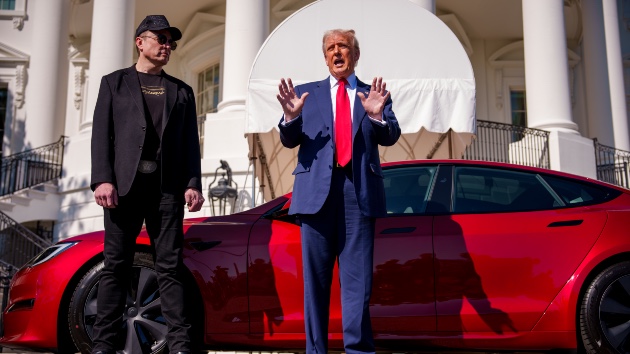
Judge blocks administration from deporting noncitizens to 3rd countries without due process

Judge blocks administration from deporting noncitizens to 3rd countries without due process
Win McNamee/Getty Images

(WASHINGTON) — A federal judge on Friday blocked the Trump administration from deporting noncitizens to countries other than their place of origin without due process.

U.S. District Judge Brian Murphy issued an injunction that bars the Trump administration from deporting any noncitizen to a country not explicitly mentioned in their order or removal without first allowing them to raise concerns about their safety.

“Defendants argue that the United States may send a deportable alien to a country not of their origin, not where an immigration judge has ordered, where they may be immediately tortured and killed, without providing that person any opportunity to tell the deporting authorities that they face grave danger or death because of such a deportation,” Judge Murphy wrote.

“All nine sitting justices of the Supreme Court of the United States, the Assistant Solicitor General of the United States, Congress, common sense, basic decency, and this Court all disagree.”

The ruling throws a roadblock in the Trump administration’s policy of removing noncitizens to countries like El Salvador, Honduras, or Panama, even if the noncitizens lack an order of removal to those countries.

The Trump administration last month invoked the Alien Enemies Act to deport two planeloads of alleged Venezuelan gang members to the CECOT mega-prison in El Salvador with little-to-no due process.

Judge Murphy noted that the Trump administration officials “have applied and will continue to apply the alleged policy of removing aliens to third countries without notice and an opportunity to be heard on fear-based claims — in other words, without due process.”

He said his order prevents the irreparable harm of noncitizens being sent to countries where they might face persecution, torture, or death without having the chance to challenge their removal in court.

“The irreparable harm factor likewise weighs in Plaintiffs’ favor. Here, the threatened harm is clear and simple: persecution, torture, and death. It is hard to imagine harm more irreparable,” he wrote.

Judge Murphy’s order requires that the Trump administration provide noncitizens written notice before they are removed to a third country, as well as a “meaningful opportunity” to raise concerns about their safety, including providing at least 15 days to reopen their immigration proceedings.

He also certified a class — meaning the order applies not only to the plaintiffs in the case, but also any noncitizen with a final order of removal.

Separately, Judge Murphy is considering whether the Trump administration violated his temporary order when it removed at least three men to El Salvador without allowing them to raise concerns about their safety. He is still considering that issue.

Copyright © 2025, ABC Audio. All rights reserved.
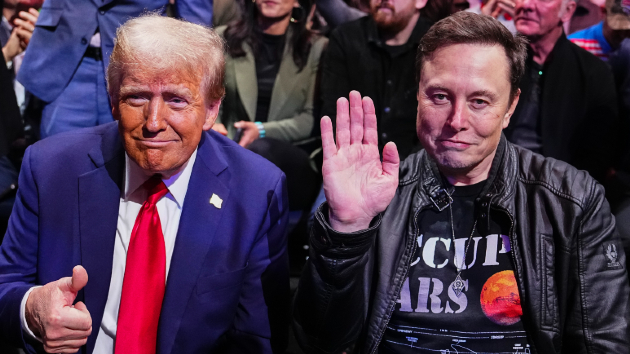
FSU student survives shooting after losing sister in Parkland: ‘Something has to change’

FSU student survives shooting after losing sister in Parkland: ‘Something has to change’
Miguel J. Rodriguez Carrillo/Getty Images

(TALLAHASSEE, Fla.) — When a gunman opened fire near the student union at Florida State University on Thursday, killing two and wounding six, for student Robbie Alhadeff, the tragedy on his Tallahassee campus brought him back to another school shooting.

Alhadeff’s sister, 14-year-old Alyssa, was one of the 17 people killed in the 2018 Parkland high school massacre in South Florida.

Alhadeff told ABC News Live he was really close to Alyssa, who was a freshman on track to play college soccer when she was gunned down on Valentine’s Day.

On Thursday, Alhadeff said he was walking to his apartment when friends started to text him about the gunfire.

“I ran right back into my apartment because I was scared about the whole situation,” he said.

Alhadeff said he took off at least two weeks of school after his sister was killed. In the wake of Thursday’s shooting, he said his friends are “terrified” to return to class.

“A lot of the people I’m friends with are from Parkland and a lot them go to FSU,” he said. “This is the second time it’s happened — and no one I know wants to go back to school.”

“You could end up being killed just going to learn,” he added.

“I thought this would never happen again,” Alhadeff said, “but it continuously keeps happening — and something has to change.”

Manuel Oliver, whose 17-year-old son, Joaquin, was killed in Parkland, told ABC News Live, “I don’t understand how anyone could be surprised” by another school shooting “if we haven’t done anything to stop it.”

“We will continue to fight — these kinds of events empower us to do more, different things, because whatever we’ve been trying is not enough,” said Oliver, who has become an advocate for gun control.

“You don’t want to be me … so you better get involved,” he said. “You better choose better leaders and ask and demand the safety of your kids.”

Fred Guttenberg, whose 14-year-old daughter, Jaime, was killed in Parkland, said some of Jaime’s former classmates were at the FSU student union when the gunfire broke out.

“As a father, all I ever wanted after the Parkland shooting was to help our children be safe,” Guttenberg, who has become a gun reform supporter, wrote on social media. “Sadly, because of the many people who refuse to do the right things about reducing gun violence, I am not surprised by what happened today.”

The suspect in Thursday’s shooting, 20-year-old FSU student Phoenix Ikner, was shot by officers and is expected to survive, authorities said.

A motive is not known.

The six injured victims are all expected to survive, hospital officials said.

Police have not identified the two people killed but said they were not students.

FSU has canceled classes and sporting events through the weekend. A vigil is set for Friday at 5 p.m.

Copyright © 2025, ABC Audio. All rights reserved.
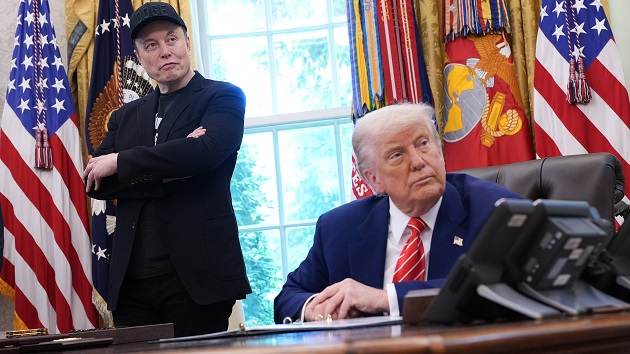
Escaped California inmate wanted for killing Mexican police commander caught, officials say

Escaped California inmate wanted for killing Mexican police commander caught, officials say
Abigail Esparza Reyes was killed in a shootout while trying to arrest an escaped inmate from California on Wednesday, officials said. ABC News

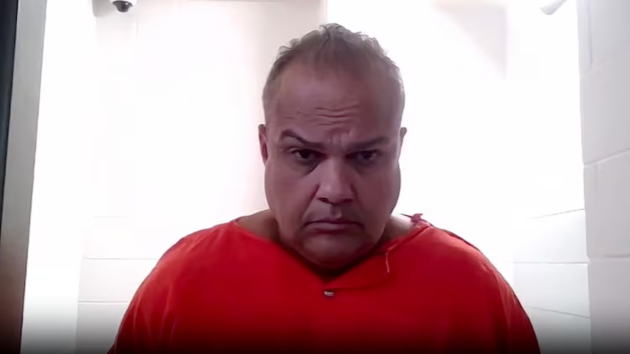
(TIJUANA, Mexico) — An escaped U.S. inmate, who was wanted for killing a Mexican police commander — or a “Gringo Hunter” — during a shootout last week, has been caught in Tijuana, officials said.

Cesar Hernandez, who had been convicted and sentenced for murder in California, allegedly killed Abigail Esparza Reyes, who was part of a specialized Mexican state police unit responsible for locating foreign fugitives who cross the border, during a shootout on April 9, officials said.

Surveillance footage reviewed by ABC News showed an individual, who authorities identified as Hernandez, changing into bright yellow worker’s clothing, seeming to blend in after the shooting in Mexico.

In a statement released on Friday, the Baja California State Prosecutor General’s Office confirmed Hernandez was arrested on Thursday evening.

“These actions reflect the outstanding intelligence and investigative work carried out by personnel from the State Attorney General’s Office, whose coordinated efforts, tactical analysis strategies and data collection made it possible to accurately locate the person arrested today,” the Baja California prosecutor’s office said.

Officials in Mexico said Hernandez is currently facing criminal proceedings and “his legal situation will be determined in accordance with the law.”

Hernandez escaped from custody on Dec. 2, shortly after arriving for a court appearance in Delano, California, according to the state Department of Corrections and Rehabilitation. Upon arrival, Hernandez “evaded staff custody, jumped out of the van and is currently at large,” officials said at the time.

He had been arrested in 2019 for murder in Los Angeles County and sentenced to 80 years to life in prison with the possibility of parole, officials said. He received 25 years for first-degree murder, a sentence “doubled because it was a second strike,” and discharging a firearm during the crime, officials said. Hernandez also received five years for a prior offense, officials said.

Reyes and the team of “Gringo Hunters” were featured in a “Nightline x Impact” episode in 2024 that highlighted their work to catch fugitives who evade law enforcement by fleeing to Mexico.

In the episode, Reyes is seen leading a mission to arrest a fugitive charged with murder who was found in Tijuana.

The California Department of Corrections and Rehabilitation did not immediately respond to ABC News’ request for comment regarding Hernandez’s arrest.

ABC News’ Sara Sandrick, Ellie Kaufman, Jen Watts and Alondra De La Cruz contributed to this report.

Copyright © 2025, ABC Audio. All rights reserved.