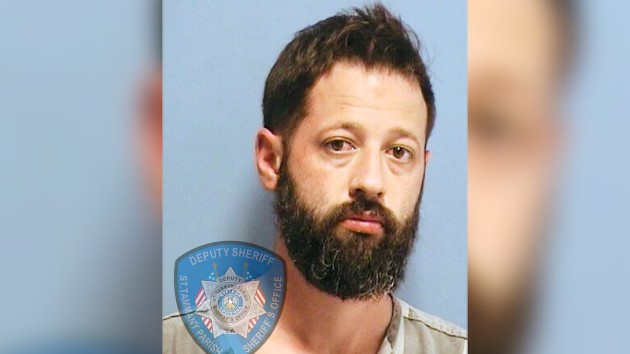
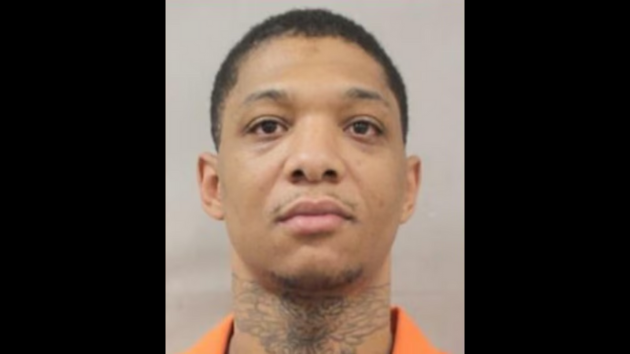
(MADISONVILLVE, La.) — A Louisiana dad has been arrested for second-degree murder after he allegedly left his 1-year-old daughter in a hot car for over nine hours, authorities said.
The incident unfolded after Joseph Boatman “consumed multiple alcoholic beverages” and then went to pick up his 21-month-old daughter from a relative’s house shortly after 2:30 a.m. Sunday, the St. Tammany Parish Sheriff’s Office said.
Boatman, 32, allegedly strapped his daughter into her car seat, went inside the Madisonville home and didn’t return to the car, the sheriff’s office said.
More than nine hours later, deputies were sent to the house after a family member found the toddler unresponsive in the car, authorities said.
The temperature in Madisonville climbed to 95 degrees on Sunday; the heat index — what temperature it feels like — reached 105 degrees.
“This is a devastating loss that no family ever wants to face,” Sheriff Randy Smith said in a statement. “When a child is left in a vehicle, especially on a day when the heat index climbs over 100 degrees, the outcome can turn deadly in a matter of minutes. This case involved compromised judgment, and the result was heartbreaking.”
The girl is the fifth child to die in a hot car in the U.S. this year, according to national nonprofit KidsAndCars.org.
On average, 38 children die in hot cars every year in the U.S. About 88% of them are 3 years old or younger, KidsAndCars.org said.
Click here for hot car safety tips to keep in mind this summer.
(NEW YORK) — Voters head to the polls on Tuesday for New Jersey’s primary elections, which will set up the state’s 2025 gubernatorial election — the results of which could be a potential harbinger for the mood of the country ahead of 2026’s critical midterm elections.
The Democratic candidates are sparring over how to best respond to President Donald Trump’s agenda in the Garden State and each hopes to keep the state’s governorship in Democratic hands. The state’s current governor, Democrat Phil Murphy, can’t run again after serving two terms.
There are six candidates in the Democratic primary. Polling has shown that Rep. Mikie Sherrill, a former Navy helicopter pilot who represents the state’s 11th Congressional District, leads the crowded Democratic field, but the race could still be anyone’s to win.
The other Democratic candidates are Rep. Josh Gottheimer, who represents the state’s 5th District; Newark Mayor Ras Baraka; Jersey City Mayor Steve Fulop; New Jersey Education Association President Sean Spiller; and former state Senate president Steve Sweeney.
Republicans, meanwhile, hope to flip New Jersey’s governorship red in November and also have a crowded primary field. President Donald Trump has endorsed former state assemblyman Jack Ciattarelli, who ran for governor in 2021, narrowly losing to Murphy.
“This year’s election for governor is critical for New Jersey’s future. You’ll decide whether New Jersey is a high tax, high crime, sanctuary state,” Trump said during a rally held by telephone last week. “New Jersey is ready to pop out of that blue horror show.”
Ciattarelli faces conservative radio personality Bill Spadea, state Sen. Jon Bramnick, former Englewood Cliffs Mayor Mario Kranjac, and contractor Justin Barbera.
The contest is on track to become the priciest election in New Jersey history, with over $85 million spent on advertising as of last Wednesday, according to a report from media tracking agency AdImpact.
Among Democrats, Gottheimer has the most ad spending supporting him ($22.8 million), followed by Fulop ($17.8 million).
Ciattarelli leads among Republicans with $5.9 million in ad spending or reservations supporting him, dwarfing Spadea’s $2.2 million and Bramnick’s $1.2 million.
About 70% of broadcast ad airings have mentioned Trump, according to AdImpact.
-ABC News’ Emily Chang and Halle Troadec contributed to this report.
(LONDON, PARIS and BELGRADE) — At least nine people are dead after a shooting on Tuesday at a high school in Graz, Austria, the city’s mayor said, adding that the alleged shooter is also dead.
Austrian state police confirmed the death toll, after earlier saying on social media that there had been several fatalities at the school, the BORG Dreierschützengasse.
Several others were seriously injured, police said in an update. The suspect was a former student at the high school, where he attended about three years ago, the mayor’s office said.
“The school shooting in Graz is a national tragedy that has deeply shocked our entire country,” Austrian Chancellor Christian Stocker said in a statement posted on social media.
He added, “Young people suddenly ripped from the lives they had ahead of them. There are no words for the pain and grief that all of us — all of Austria — are feeling right now.”
Officers responded after gunshots were heard at the school, the Styria State Police said in a message posted on social media, later adding, “The school was evacuated and all persons were brought to a safe meeting point.”
Emergency vehicles, including Cobra tactical vehicles, had been deployed to the site, police said. Video shot near the scene showed a street lined with ambulances and other emergency vehicles.
The city of Graz sits in southern Austria, in the Styria province. It’s the second-largest Austrian city by population, with about 300,000 residents.
This is a developing story. Please check back for updates.
ABC News’ Ellie Kaufman contributed to this report.
(WASHINGTON) — NASA is planning on decommissioning the International Space Station (ISS) by the end of 2030. But before that happens, Axiom Space, a privately funded space infrastructure company based in Houston, wants to build a replacement. The company has begun construction of the world’s first commercial space station, Axiom Station.
But Axiom isn’t waiting for their station to be completed before transporting people into space. The company has been launching teams of private astronauts to the ISS since 2022, allowing them to conduct research, train, and participate in scientific activities. And on Wednesday at 8 a.m., Axiom Space will attempt to send its fourth crew to the ISS as part of its AX-4 mission.
“The AX-4 crew represents the very best of international collaboration, dedication, and human potential. Over the past 10 months, these astronauts have trained with focus and determination, each of them exceeding the required thresholds to ensure mission safety, scientific rigor and operational excellence,” said Allen Flynt, Axiom Space’s chief of mission services, during a pre-launch press conference on Monday.
The four-person crew will lift off from Launch Complex 39A at NASA’s Kennedy Space Center in Florida and travel to the ISS aboard a SpaceX Dragon spacecraft launched into orbit by a Falcon 9 rocket. It will be the maiden mission for an updated Dragon capsule.
“This is the first flight for this Dragon capsule, and it’s carrying an international crew—a perfect debut. We’ve upgraded storage, propulsion components and the seat lash design for improved reliability and reuse,” said William Gerstenmaier, SpaceX’s vice president of build and flight reliability.
The mission will be led by Peggy Whitson, a former NASA astronaut and the director of human spaceflight at Axiom. During her career at NASA, Whitson completed three long-duration space flights, spending a total of 665 days in orbit. She also commanded Axiom’s AX-2 mission, adding another 10 days in space to her already impressive total. Whitson now holds the record for the most time spent in space by a woman.
“We’re thrilled to welcome Peggy Whitson back. This will be her fifth trip to space—three with NASA and now two with Axiom,” Dana Weigel, NASA’s manager of the International Space Station Program, said. “She’s made substantial contributions to ISS and now helps lay the foundation for future commercial missions.”
Joining Whitson on the AX-4 mission are astronauts from India, Poland and Hungary. This will be the first time that nationally sponsored astronauts from those countries have visited the ISS. It has also been more than 40 years since those three countries sent someone into space.
Indian Air Force pilot and astronaut Shubhanshu Shukla, the mission’s pilot, will be the second person from India to go to space and the first since 1984. Polish engineer Sławosz Uznański, a mission specialist and a European Space Agency project astronaut, will be the second person from his country to head to space and the first since 1978. And Tibor Kapu, a mechanical engineer and mission specialist, will be the second Hungarian astronaut to rocket into space. That country’s last space mission was 45 years ago.
“For India, Poland, and Hungary, this mission marks a return to human spaceflight after more than 40 years, and their first missions to the ISS. It’s a powerful reminder of what we can achieve when we work together across borders, disciplines, and cultures,” Flynt said.
The AX-4 mission will last up to 14 days, during which the crew will conduct about 60 scientific studies and experiments. The company said 31 countries have contributed to the research plan and that the projects will focus on biological, life and material sciences, as well as Earth observation. Axiom said that the work done at the station will help the company advance its goal of building Axiom Station, which would be the world’s first commercial space station.
To lay the foundation for its space station, Axiom plans to attach several of its commercial modules to the ISS while it’s still operational. When the ISS is decommissioned, those modules will detach from the station and become part of the privately run Axiom Station.
Unlike space tourism, which is operated independently of NASA and government support, the Axiom mission is part of NASA’s private astronaut mission program. This private-public partnership provides selected commercial space companies with access to the ISS and technical and logistical support from NASA.
“NASA’s framework for private astronaut missions gives industry responsibility for launch, free flight, and landing,” Weigel said.
“It’s an incredible time for spaceflight. These missions help train teams, build partnerships and shape the future of low Earth orbit,” she added.
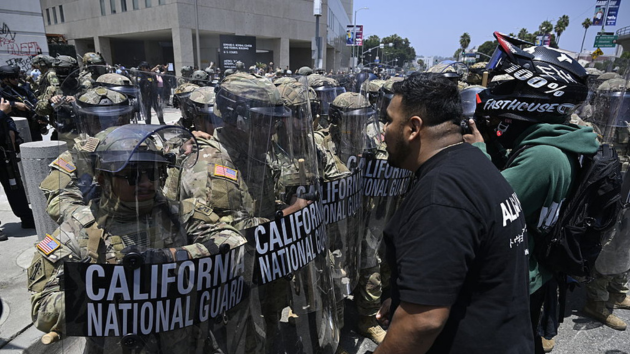
(LOS ANGELES) — The Marines and the National Guard personnel deployed amid the protests in to Los Angeles will operate under the same rules of force and will not be engaging crowds unless necessary, according to two U.S. officials.
That means they are tasked with protecting federal buildings and federal personnel only — they will not patrol U.S. streets or try to detain protesters to assist police, the officials said.
While all the troops are carrying weapons, their guns will not have ammunition loaded in the chamber, officials said, but will carry ammunition as part of their regular uniforms that can be used in the rare case of needed self-defense.
They will not use rubber bullets or pepper spray, either, they said.
The officials noted these rules would change if President Donald Trump invokes the Insurrection Act, which he has not done.
The rules of force the personnel are operating under call for them to de-escalate the situation as much as possible.
“The arrival of federal military forces in Los Angeles — absent clear coordination — presents a significant logistical and operational challenge for those of us charged with safeguarding this city,” Los Angeles Police Department Chief Jim McDonnell said in a statement.
“The Los Angeles Police Department, alongside our mutual aid partners, has decades of experience managing large-scale public demonstrations, and we remain confident in our ability to do so professionally and effectively,” he continued. “That said, our top priority is the safety of both the public and the officers on the ground. We are urging open and continuous lines of communication between all agencies to prevent confusion, avoid escalation, and ensure a coordinated, lawful, and orderly response during this critical time.”
Retired Air Force Brig. Gen. Thomas Edmonds, a former vice commander of the Michigan Air National Guard, told ABC News, “If I were an on-scene commander in my previous life as a [National] Guard officer, I would immediately demand clarification, for my people’s sake. I would be saying, so what, when do we use deadly force?”
Edmonds said it appears the military is “defining the mission as non-law enforcement.”
“But they’re putting them with law enforcement personnel as their ‘protection.’ And I don’t see the distinction there between if I’m engaged in protecting a federal officer [or] federal building, [and if] I’m engaged in enforcing the law.”
The Marines and Guard troops being sent to Los Angeles are being led by Army Maj. Gen. Scott Sherman, who is deputy commander of U.S. Army North, officials said.
In total, there are 4,800 troops operating under Title 10 status: 4100 of them National Guard soldiers and 700 active-duty Marines.
Title 10 of the U.S. Code contains a provision that allows the president to call on federal service members when there “is a rebellion or danger of rebellion against the authority of the Government of the United States” or when “the President is unable with the regular forces to execute the laws of the United States.”
The deployment of the 700 Marines was to ensure “adequate numbers of forces to provide continuous coverage” of the area, according to U.S. Northern Command.
The deployed force is known as “Task Force 51” and officials insist the troops have been trained in de-escalation, crowd control, and standing rules for the use of force.
(LOS ANGELES) — President Donald Trump and California’s Democratic Gov. Gavin Newsom escalated their confrontation on Monday over the handling of protests in Los Angeles triggered by Trump’s immigration crackdown.
After Newsom had objected to Trump sending in the National Guard without his consent, Trump on Monday afternoon ordered hundreds of Marines into the city as well.
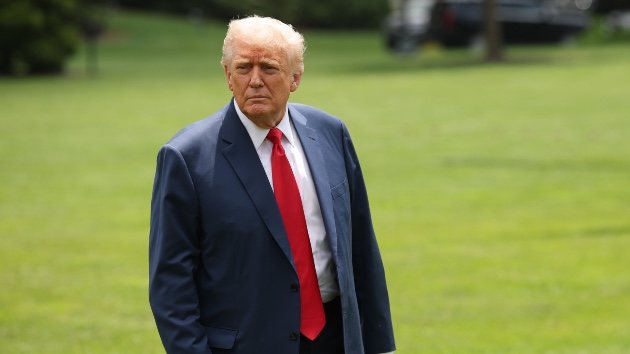
Earlier Monday, arriving back at the White House after spending the weekend at Camp David, Trump had told reporters he would arrest Newsom if he were “border czar” Tom Homan — hours after Homan said there had been “no discussion” about arresting Newsom.
“I would do it if I were Tom. I think it’s great,” Trump told reporters on the South Lawn.
Newsom quickly fired back.
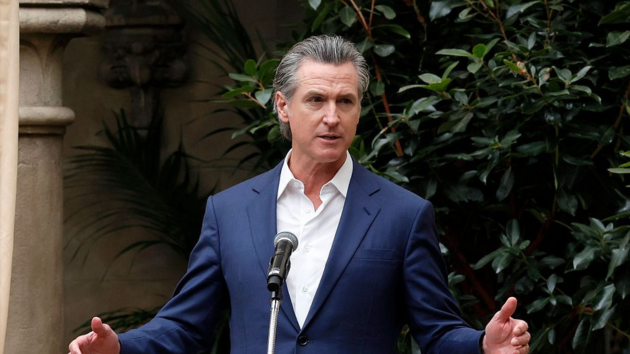
“The President of the United States just called for the arrest of a sitting Governor,” Newsom posted on Instagram along with a video of Trump’s comments. “This is a day I hoped I would never see in America. I don’t care if you’re a Democrat or a Republican this is a line we cannot cross as a nation — this is an unmistakable step toward authoritarianism.”
“These are the acts of a dictator, not a President,” Newsom posted on X.
At a White House event Monday afternoon, Trump was asked by ABC News White House Correspondent Karen Travers what crime Newsom had committed that would warrant his arrest.
“I think his primary crime is running for governor because he’s done such a bad job,” Trump responded.
Homan himself earlier Monday pushed back on the idea he was going to arrest Newsom and Los Angeles Mayor Karen Bass, both Democrats.
In an interview with NBC News over the weekend, Homan had not ruled out the possibility — prompting Newsom to respond: “He knows where to find me.”
Homan on Monday morning, during an interview on Fox, commented further on his remarks to NBC.
“The reporter asked about, ‘Could Governor, Governor Newsom, or Mayor Bass, be arrested? I said, ‘Well, no one’s above the law, if they cross the line and commit a crime. Absolutely they can.’ So, there was no discussion about arresting Newsom,” he said.
“I’ve said it many times, You can protest, you got your First Amendment rights, but when you cross that line, you put hands on an ICE officer, or you destroy property, or ICE says that you’re impeding law enforcement … That’s a crime, and that the Trump administration is not going to tolerate. You cross that line we’re gonna see prosecution in the Department of Justice,” Homan said.
House Speaker Mike Johnson expressed solidarity with the president after the president suggested Newsom should be arrested.
“I heard that for the first time sitting next to the president when they asked him that question at the White House. I don’t know what all that involves, but he gave comment there, and I’ll stick by what he said,” Johnson said, adding that he also agrees with the Trump’s decision to send in the National Guard, predicting it will have a “deterrent effect.”
“We have to maintain the rule of law, and if the state and local leaders are unable or unwilling to do so, it is the job of the federal government to step in,” Johnson told reporters outside the White House.
Trump on Monday also doubled down on his decision over the weekend to deploy the National Guard to California, over Newsom’s objections.
Trump said in 2020 that a request from a governor was needed to send in the National Guard. On Monday, ABC News asked Trump what changed between his statement then and now.
“Well, the biggest change from that statement is we have an incompetent governor,” Trump said. Trump contended his administration was “straightening out his problems.”
“I mean, I think we have it very well under control. I think it would have been a very bad situation. It was heading in the wrong direction. It’s now heading in the right direction,” Trump said.
Trump has long expressed a desire to quash protests he considered dangerous by using the military, though the use of federal troops on U.S. soil is mostly prohibited by the 1878 Posse Comitatus Act. Trump deployed the National Guard in this situation under Title 10 of the U.S. Code.
Asked if he would deploy Marines to Los Angeles on Monday, Trump had said “we’ll see what happens.”
Shortly after the president’s comments, a U.S. official confirmed to ABC News 700 Marines from Twentynine Palms, California, had been ordered to assist on the streets of Los Angeles, although it was unclear exactly what role they would play.
Newsom said the state is suing the administration over Trump deploying the National Guard.
“He flamed the fires and illegally acted to federalize the National Guard,” Newsom wrote on social media. “The order he signed doesn’t just apply to CA. It will allow him to go into ANY STATE and do the same thing. We’re suing him.”
ABC News’ John Parkinson contributed to this report.
(WASHINGTON) — President Donald Trump and California Democratic Gov. Gavin Newsom are engaged in a bitter fight over the handling of protests against Immigration and Customs Enforcement continue in Los Angeles — and both also are framing their confrontation in familiar, sharp political terms.
On Monday, the president said it would be a “great thing” if border czar Tom Homan arrested Newsom; in response, the California governor fired back that the comment is an “unmistakable step toward authoritarianism.”
In a sign of how much politics is driving the confrontation, Trump, when asked on Monday afternoon by ABC News what crime Newsom has committed to warrant his arrest, Trump said the governor’s “primary crime is running for governor because he’s done such a bad job.” Newsom responded on X, “Donald Trump admits he will arrest a sitting governor simply because he ran for office.”
With the protests, Trump, who has characterized them as “violent, insurrectionist mobs” and “Gavin Newscum inspired Riots,” has deployed National Guard members to Los Angeles. Newsom has asked the administration to rescind the deployment and said Monday that he is suing the Trump administration, claiming Trump illegally federalized the National Guard.
But Trump is not only criticizing the protesters — he is blasting the Democrats leading the state and the city, calling them failures.
“The very incompetent ‘Governor,’ Gavin Newscum, and ‘Mayor,’ Karen Bass, should be saying, ‘THANK YOU, PRESIDENT TRUMP, YOU ARE SO WONDERFUL. WE WOULD BE NOTHING WITHOUT YOU, SIR,'” Trump wrote on his social media platform on Monday. “Instead, they choose to lie to the People of California and America by saying that we weren’t needed, and that these are ‘peaceful protests.'”
Trump has long been critical of the leadership in most Democratic-run states, often focusing his ire on California.
The situation, separately, gives Trump the chance to take high-profile action on immigration enforcement — a key issue for the president during his 2024 campaign and one that has remained a priority during the first few months of his administration. A recent poll from Marquette Law School taken in early to mid-May found that Trump had positive or around even job approval on border security and immigration.
Newsom, for his part, has explicitly accused the White House of exacerbating the situation for political gain.
“They want a spectacle. They want the violence,” he said in an email to supporters sent through his political action committee on Sunday night. “They think this is good for them politically.” Since then, he’s posted a blizzard of attacks on Trump via social media.
The White House responded to an ABC News request for comment late Monday afternoon.
“Gavin Newsom’s feckless leadership is directly responsible for the lawless riots and violent attacks on law enforcement in Los Angeles. Instead of writing fundraising emails meant to score political points with his left-wing base, Newsom should focus on protecting Americans by restoring law and order to his state,” Abigail Jackson, a White House spokeswoman, said.
Newsom and Trump have long been at odds, although the two had a brief detente in their relationship in the past few months.
In the aftermath of wildfires in January that devastated the Los Angeles region, Trump visited the city toward the end of the month and was greeted on the tarmac by Newsom with several handshakes and an embrace; Newsom also met with Trump in Washington in early February, and told CNN afterwards, “I have just all the confidence in the world that it’s going to be a strong partnership moving forward.”
But Newsom, around that time, also approved $50 million for funds that could be used in legal battles against the federal government.
And Newsom grew more critical of Trump in the months afterward — attacking the president’s tariff policy in an ad that aired on Fox News where he said the “tariffs punish families.”
The Trump administration has appeared to direct punishment at California as well. Earlier this month, Trump vowed to impose “large scale fines” on California after a transgender teen competed in a California state final competition in track and field. Last week, the Trump administration signaled that it would cut federal funding for a high-speed rail project in the state.
Newsom, separately, has begun to build a national profile amid speculation that he could run for president in 2028, which included stoking more speculation through a buzzy podcast launch in March. Newsom is term-limited and cannot run for governor in 2026.
While the Los Angeles situation is tied to Newsom’s current work as governor and not to any current or future campaign, it puts him back in the national spotlight and at the center of one of the nation’s highest-profile political issues, standing up to Trump.
Newsom referenced what he framed as the national stakes in his response to Trump’s comments on his potential arrest: “This is a day I hoped I would never see in America… this is a line we cannot cross as a nation.”
ABC News’ Molly Nagle and Michelle Stoddart contributed to this report.
(LOS ANGELES) — Protests in Los Angeles are entering their fourth day over the Trump administration’s immigration crackdown.
President Donald Trump, over the weekend, called protesters “violent, insurrectionist mobs” after he deployed the National Guard despite objections from California’s Democratic Gov. Gavin Newsom.
The escalatory step is prompting a host of legal questions, including how far Trump is willing to go to use his authority to curb protests over his administration’s immigration raids.
On Sunday, Trump was asked by ABC News Senior Political Correspondent Rachel Scott if he is prepared to invoke the 1807 Insurrection Act. The last time the act was used was in 1992 during the Los Angeles riots.
“Depends on whether or not there is an insurrection,” Trump replied.
When asked by Scott if he thought an insurrection was taking place in Los Angeles, Trump replied, “No, no. But you have violent people, and we are not going to let them get away with it,” Trump said at the time. But by Sunday night, he was referring to the protesters on his Truth Social platform as “violent, insurrectionist mobs” and “paid insurrectionists.”
Asked to define insurrection, Trump said, “You actually really just have to look at the site to see what’s happening.”
Trump notably did not rule out sending active-duty Marines to California after Defense Secretary Pete Hegseth said they were standing by. A U.S. official confirmed on Monday afternoon that 700 Marines from Twentynine Palms, California, have been ordered to assist in Los Angeles.
The bar for sending active-duty Marines? “The bar is what I think is,” Trump had said on Sunday.
What to know about the Insurrection Act
Generally, the use of federal troops on U.S. soil is mostly prohibited. The 1878 Posse Comitatus Act limits the military from being involved in civilian law enforcement unless Congress approves it or under circumstances “expressly authorized by the Constitution.”
One exception is the Insurrection Act, a 218-year-old law signed by President Thomas Jefferson.
The Insurrection Act states, in part: “Whenever there is an insurrection in any State against its government, the President may, upon the request of its legislature or of its governor if the legislature cannot be convened, call into Federal service such of the militia of the other States, in the number requested by that State, and use such of the armed forces, as he considers necessary to suppress the insurrection.”
Another provision states it can be used “whenever the President considers that unlawful obstructions, combinations, or assemblages, or rebellion against the authority of the United States, make it impracticable to enforce the laws of the United States in any State by the ordinary course of judicial proceedings.”
Some legal experts have warned the law is overly broad and vague, and there have been various calls for it to be reformed to provide greater checks on presidential power.
The Insurrection Act has been invoked in response to 30 crises over its history, according to the Brennan Center for Justice, including presidents Dwight D. Eisenhower and John F. Kennedy to desegregate schools after the Supreme Court’s landmark ruling in Brown v. Board of Education.
Most of its uses involved federal troops being deployed, though a few situations were resolved after troops were ordered to respond but before they arrived on the scene, the Brennan Center noted.
When it was last used in 1992 by President George H.W. Bush to send the National Guard to Los Angeles, it was at the request of then-Gov. Pete Wilson as riots exploded in the city after the acquittal of four white police officers charged in the beating of Rodney King.
If Trump were to invoke the act, he would likely be doing so against Newsom’s wishes — something that hasn’t been done since President Lyndon B. Johnson in the 1960s to deal with civil unrest.
How Trump mobilized the National Guard
Trump did not invoke the Insurrection Act when he activated and deployed the National Guard to Los Angeles.
Instead, he cited Title 10 of the U.S. Code — which contains a provision that allows the president to call on federal service members when there “is a rebellion or danger of rebellion against the authority of the Government of the United States” or when “the President is unable with the regular forces to execute the laws of the United States.”
According to a presidential memorandum, Trump said he was sending National Guard to “temporarily protect ICE and other United States Government personnel who are performing Federal functions, including the enforcement of Federal law, and to protect Federal property, at locations where protests against these functions are occurring or are likely to occur based on current threat assessments and planned operations.”
The memo stated that 2,000 National Guard troops could be deployed for 60 days or “at the discretion” of Hegseth.
Troops called up under Title 10 fall generally are prevented from direct involvement in law enforcement duties under the Posse Comitatus Act, unless Trump invokes the Insurrection Act or other limited exceptions apply.
Gov. Newsom said on Monday the state is suing the administration over Trump deploying the National Guard.
“He flamed the fires and illegally acted to federalize the National Guard,” Newsom wrote on social media. “The order he signed doesn’t just apply to CA. It will allow him to go into ANY STATE and do the same thing. We’re suing him.”
(NEW YORK) — The walls were closing in on Sean “Diddy” Combs, his former girlfriend testified Monday, and the rap mogul turned fashion tastemaker was allegedly lashing out.
“I remember we were sleeping and one of the sons knocked on the door and said that something happened, and then I was just by myself,” the former girlfriend told a hushed Manhattan courtroom. “I went downstairs and could see everyone speaking amongst each other.”
Combs was huddling with his team and his family. They needed a response — urgently. A hotel security video obtained by CNN was being played repeatedly on national television, and it showed Combs kicking and beating another of his former romantic partners, the singer Cassie Ventura.
“They were trying to come up with some kind of sincere apology post or something regarding the video,” she said.
Testifying under the pseudonym “Jane,” the woman offered jurors a window into the last two years of Combs’s life, as legal troubles and bad publicity threatened to unravel his music empire and fiercely protected reputation.
Until that point, she said that Combs had not resorted to the type of violence Ventura said she suffered at Combs’ hands. But she told the jury she was subjected to the same coerced and degrading sex on demand with male prostitutes to satisfy Combs’ urges — just as Ventura has testified in her own account.
“I just couldn’t sleep. I was just reading these pages and going through a nightmare,” Jane testified, explaining her first reaction after reading Ventura’s 2023 lawsuit in which Ventura narrated a story that Jane said was painfully similar to the life she had been forced to lead. “I can’t believe I am reading my own story.”
Ventura’s lawsuit, settled only hours after it was filed for $20 million, was the first domino to fall, as Combs faced a wave of public criticism, a federal investigation, and criminal indictment. He is accused of sex trafficking, racketeering conspiracy and transportation to engage in prostitution. He could spend the rest of his life in prison if convicted on all counts. He denies all charges.
The emotional and graphic testimony from Jane comes as jurors are entering the fifth week of testimony in Combs’ sex trafficking and racketeering conspiracy trial. His lawyers have told jurors that Combs is a flawed and violent man who has abused drugs and his romantic partners, but they insist he did not commit the crimes he is being tried for.
“Jane” testified that Ventura’s lawsuit was like “reading my own sexual trauma.”
Jane testified that she reached her breaking point with Combs by October 2023, after three years of what she believed was unrequited love. She told jurors how nearly every one of their dates or romantic getaways would become an opportunity for Combs to push her to have sex with male escorts during marathon sex parties she called “hotel nights” that could last days and were often fueled by drugs and booze.
“I’m not a porn star. I’m not an animal. I need a break. I don’t want to do anything. I’ve hit a wall,” Ventura texted Combs after he asked her to arrange a marathon evening of sex with a male prostitute while Combs watched and masturbated. “It’s been three years of me having f— strangers. I’m tired.”
Her testimony grew more emotional as she read aloud texts she sent Combs in 2023 in which she tried to salvage a relationship with the rapper without having to participate in the alleged prolonged orgies.
“My spirit and my soul is tired. I need a break,” she wrote in one message. “I can’t be used like this anymore. I wanted to make you happy but it’s creating a war inside me.”
As their relationship deteriorated, Jane told jurors that learning of Ventura’s lawsuit in November 2023 prompted her to look at her own relationship with Combs in a new light. She testified she nearly fainted when she recognized her own relationship with Combs in the pages of Ventura’s retelling.
“I can’t believe I am reading my own story,” Jane told jurors about learning about Ventura’s allegations.
In one of her messages to Combs, Jane wrote, “I feel like I’m reading my own sexual trauma.”
Jurors hear recording of Combs allegedly pressuring her into silence about sexual encounters
Three days after the lawsuit was filed, Combs and Jane spoke on the phone about the allegations. The jury heard a recording of the phone call taken from the phone of Combs’ top assistant after it was seized at the airport in Miami. Jane testified she did not know she was being recorded.
“This is when I need you to be there for me,” Combs is heard saying, as the recording echoed through the hushed courtroom. “You know we did all that s— together.”
“You know, I have been feeling so manipulated. What am I to do with that feeling? Who is there for me?” Jane is heard saying back.
Prosecutors then played for the jury a second recording of a call Combs made to Jane 22 minutes later.
“I need your friendship right now,” Combs is heard saying. “I can’t even talk on the phone. Please don’t send no texts.”
“I just needed to tell you that I need your friendship,” Combs is heard saying. “You know you ain’t got to worry about nothing else, you feel me?”
Jane testified she believed Combs was offering to continue paying her $10,000 monthly rent. Prosecutors have argued the recording is proof that Combs tried to tamper with Jane’s testimony by attempting to pressure her into saying their sexual interactions were consensual.
“Jane” said Combs threatened to release her sex tapes
As her relationship with Combs deteriorated in the days after Ventura’s lawsuit was filed, Jane testified that Combs escalated his threats. For the first time, she told jurors that Combs threatened to release videos he recorded of her having sex with male prostitutes.
She told the jury that Combs’ first threatened to release the tapes after he offered her money to end their relationship quietly.
“I remember he said, ‘Charge me, charge me, charge me for your resentment. I don’t want any loose ends,'” she alleged Combs said over a video call.
But after Jane requested hundreds of thousands of dollars to end the relationship — saying she deserved compensation for the three years she lost during their relationship — she testified that Combs erupted.
“F—- you. I am blocking you,” Combs texted Jane. “Leave me alone. Con artist.”
“You keep describing yourself. You conned me into…having strangers run trains on me,” she wrote back.
As their fight escalated — and Jane texted Combs that she would kill herself — Jane testified that Combs began to threaten to release the recordings of her having sex with other men.
“At the height of this anger, he said I am just going to show your child’s father these tapes. I have nothing to lose,” Jane testified.
She told the jury that she tried to contact Combs’ chief of staff, Kristina Khorram, to defuse the situation and stop Combs from releasing any of the tapes.
“Why did you reach out to [Khorram] after Sean threatened to release your tapes?” prosecutor Maureen Comey asked.
“Because [Khorram] is like his right brain – she is one of the people he listens to,” Jane testified.
Despite the threats to release her sex tapes and her concerns about the allegations in Ventura’s civil lawsuit, Jane told jurors that she reconciled with Combs by February 2024. She testified that she resumed participating in hotel nights — now hosted in private residences instead of hotel rooms — and spending time with Combs, even as negative publicity stemming from Ventura’s lawsuit was growing.
On the day in 2024 that federal agents raided Combs’ residences, she said an agent from Homeland Security Investigations left a card at her home. Jane testified she contacted Combs, who got her a lawyer, and that the rap mogul continues to pay for her legal expenses, even as her testimony is being used by prosecutors trying to lock Combs up for life.
“Jane” testified Combs attacked her, forced her to participate in sex with male escort
After the hotel video was broadcast, Jane testified she watched Sean Combs pledge in an Instagram post to become a “better man,” and next saw Combs in person on June 18, 2024.
“It was a very terrible day,” Jane testified.
She told the jury she had been “bottling up a lot of resentment and anger towards him” and confronted him about a younger woman who had accompanied him on a recent trip.
“I said, ‘You’re a pedophile,'” Jane testified. The woman he had been with was over 18, but “I felt like he was 25 or 27 years her senior,” Jane explained.
Jane told jurors that she initiated the fight, pushing Combs’ head into a counter and throwing candles at him. She said she retreated to her bedroom, shouting “just leave, just leave,” when he kicked open the door. She went into the bathroom, where, she said, Combs then kicked the bathroom door “literally off the hinges.”
Jane testified that Combs “kicked me on the back of my thigh,” causing her to fall. “He put me in a chokehold on the ground, and I couldn’t breathe,” she said.
Jane testified she managed to escape, hide for about two hours and return, thinking he would be gone. But, she testified, Combs once again found her and chased her to the backyard of the residence, where she balled herself up to protect her face from Combs’ attack.
Jane testified that Combs punched and kicked her while she was on the ground, grabbed her by the hair and arm and dragged her toward the house. Inside the house, Jane said she noticed Combs’ phone and tried to call the woman she believed Combs had travelled with.
“I took his phone, and I ended up calling the girl I assumed he was with,” Jane testified. “Sean was holding me down and making me listen to her insults.”
In the bathroom later, Jane testified she noticed two welts on her forehead and a black eye forming. She went to take a shower, where she testified that Combs slapped her face three times, causing her to lose balance.
“Sean said just put some ice on it and put an outfit on,” Jane testified, saying that she covered her bruises with makeup before a male escort, Anton, arrived.
In the bathroom preparing for the evening, Jane said she remembered Combs telling her, “Take this f—— pill. You’re not going to ruin my f—— night. Get out there and suck his d—.. F— him. I don’t care.”
“I don’t want to, I don’t want to, I don’t want to,” Jane said she responded. She told the jury that Combs got right in her face and asked, “Is this coercion?” before forcing her to take ecstasy and perform oral sex on Anton.
“For how long?” Comey asked.
“It just felt like forever,” Jane answered.
She said she received about $12,000 in cash from Combs’ bodyguard the next day to cover the damage to her home and the cost of the male escort. The jury saw multiple photos of the doors damaged by what she testified was “Sean’s kick,” which Jane said she sent to a repair company.
Jane testified she saw Combs a few days later at his home. The jury saw a video she took that captured her alleged injuries through the foundation and concealer she told the jury she had put on. The jury saw a second selfie video that also briefly captured the injuries she testified Combs inflicted.
“Jane” tells jury about her final interactions with Combs before his arrest
At the end of July 2024, Jane testified she visited Combs in Miami where she said he gave her the drug “liquid molly” and she had “high octane” sex with a male escort named Paul.
She said the final trip to see Combs in Miami occurred in August 2024, when she testified she had sex with a male escort named Don.
She told the jury that she originally planned to visit Combs in New York in September 2024, as Combs was staying at a hotel, on the verge of being arrested by federal authorities.
Their plans were cut short by agents who took him into custody.
“I guess he got arrested,” she told the jury.
She said she hasn’t seen Combs since August 2024 but has met with his defense attorneys as recently as April of this year. She testified that his lawyers were the first people she told about the violent incident in June 2024.
Jane said she has been in therapy for about three months and hired her own lawyer, though Combs still pays her legal bills and rent.
To conclude the direct questioning, a prosecutor asked Jane the pointed question: “Sitting here today, how do you feel about Sean now?”
“I just pray,” Jane testified, “for his continued healing and I pray for peace for him.”
(NEW ORLEANS) — The girlfriend of one of the two remaining inmates who broke out of a New Orleans jail last month has been arrested for allegedly helping in his escape, officials said Monday.
Derrick Groves is among 10 inmates who escaped from the Orleans Justice Center on May 16, according to Louisiana State Police. Eight of the inmates have since been captured, but Groves and another inmate — Antoine Massey — remain on the run, police said.
Over a dozen people have been arrested on suspicion of helping the escapees, including another inmate in the jail and a jail maintenance worker who is accused of shutting off water to the toilet, allowing escapees to remove it.
Most recently, Darriana Burton, 28, of New Orleans, was arrested on Monday for allegedly helping Groves escape, the Louisiana Attorney General’s Office announced.
Burton is a former Orleans Parish Sheriff’s Office correctional employee, according to the office, which described her and Groves as having an on-again, off-again relationship for three years.
She allegedly had an “active involvement in the planning phase of the escape,” according to the affidavit for her arrest warrant, including relaying “escape-related information” and coordinating communications between Groves and people outside the jail.
Two days before the escape, Groves and Burton had a FaceTime video call via the facility’s iPads during which Burton “was observed holding a secondary device in front of the camera” that displayed an unknown man in a separate FaceTime call, according to the affidavit.
“This conversation remained intentionally vague, as Groves, Burton and the unknown male appeared to recognize the call was being recorded,” the affidavit stated, noting that it was implied that Burton and the unknown man would have a separate, unmonitored call to allegedly discuss details of the escape.”
Shortly after the initial video call, the three were present on another call during which the unknown man “advised against the escape, calling it a ‘bad move’ and warning that it would trigger a ‘manhunt,'” the affidavit stated.
“This exchange confirmed that Burton had already disclosed the escape plan to the outside contact, actively soliciting his involvement,” the affidavit stated. “It further demonstrates her direct role in facilitating communication and supporting the coordination of Groves’ escape.
Burton has been transported to the Plaquemines Parish Jail and faces a felony charge of conspiracy to commit simple escape, officials said.
“We will continue to pursue anyone and everyone who has aided and abetted these criminals. We will find you, arrest you, and prosecute you to the full extent of the law,” Louisiana Attorney General Liz Murrill said in a statement. “We will arrest all aiders and abettors, and we will eventually get Antoine Massey and Derrick Groves back to prison where they belong.”
Burton was employed at the Orleans Parish Sheriff’s Office from August 2022 until her termination in March 2023, the Louisiana Attorney General’s Office said. She was arrested and charged for allegedly bringing contraband into the jail and “malfeasance in office,” though the Orleans Parish District Attorney’s Office refused the charges, according to the state attorney general’s office.
The reward for the arrest of Groves and Massey increased to $50,000, authorities announced late last month, as police said they believe they are closing in on the “dangerous” fugitives.
Groves was convicted last year of two counts of second-degree murder in a 2018 Mardi Gras Day shooting and faces a sentence of life in prison without the possibility of parole, prosecutors said. Unrelated to that case, he also subsequently pleaded guilty to two counts of manslaughter, online court records show.