

Malnourished children, hospital supplies running low: Impact of 2 months of no aid in Gaza

Malnourished children, hospital supplies running low: Impact of 2 months of no aid in Gaza
(pawel.gaul/Getty Images)

(LONDON) — Israel’s decision to halt all humanitarian aid from crossing into Gaza is entering its third month.

The Israeli government said the blockade is to pressure Hamas to release the remaining 59 hostages, including the remains of those who have died, and to accept a new proposal to extend phase one of the ceasefire deal, which ended on March 18.

Israel’s Coordination of Government Activities in the Territories (COGAT) wrote in a post on X in late April that humanitarian personnel have been allowed to enter and exit Gaza to support humanitarian efforts in the strip.

But multiple doctors and international aid workers told ABC News that water, food, medicine and medical supplies are running low, and in some cases running out completely.

Children are becoming malnourished, diseases are at risk of spreading and those who are injured cannot be treated properly, the workers said.

“If nothing is done, if food is not brought in, if water is not brought in, if vaccines are not brought in at scale — we’re already in a catastrophe, and we’re going to have way more children dying [from] preventable causes,” Jonathan Crickx, chief of communication for UNICEF Palestine, told ABC News.

A Trump administration official told ABC News there is a no-yet-finalized plan to administer the delivery of humanitarian aid in Gaza, starting with fewer than half a dozen distribution sites set up throughout the enclave.

The Israel Defense Forces did not immediately return ABC News’ request for comment.

Children becoming malnourished

The lack of food entering Gaza is one of the most severe problems the strip is facing, according to aid workers.

Osama As, the lead for quality, evidence and learning with the Mercy Corps Gaza Emergency Response Program, said the situation “is getting worse day after day, especially in relation to food” because most people in Gaza depend on humanitarian aid and community kitchens for food.

He said most families survive on one meal a day, and that most food available is canned food and bread.

“I never imagined that we would reach this point. Most people cannot afford the remaining items, which are either like canned foods and few quantities of vegetables which are produced locally here in Gaza,” As, who is based in Gaza, said. “The prices are very high, so I think most people cannot afford these kinds of items to buy from the local market.”

Dr. Ahmed Alfar, head of the pediatrics department at Nasser Hospital in Khan Younis, in southern Gaza, said he has seen many examples of malnourished children over the past two months.

One example he gave is a baby girl named Siwar, who was born four months ago. At birth, she weighed 2.5 kilograms, or 5.5 pounds.

Four months later, she should be weighing about 5 kilograms, or 11 pounds. Instead, she is only about 6 pounds, according to Alfar.

Alfar said the mother is unable to lactate and the family does not have much money, so they have been unable to feed Siwar milk, just sweetened water.

“That means in four months she gained just 200 grams, and this is unbelievable,” he told ABC News in Arabic. “She was a full-term baby. She was delivered vaginally. Her health was completely normal. … We called it one of the most severe [cases of] malnutrition. Now Siwar is facing a severe, critical situation.”

Similarly, Crickx, from UNICEF Palestine, who is currently in Al Mawasi, in southern Gaza, said he visited Nasser Hospital this week and met a 4-year-old boy named Osama.

Crickx said Osama should weigh 15 to 16 kilograms, about 33 to 35 pounds. Instead, he weighs 8 kilograms, or 17.5 pounds, Crickx said.

He said UNICEF and its partners have a small number of ready-to-use therapeutic foods to treat malnutrition, but they are running out. UNICEF has already run out of food meant to address the first signs of malnutrition.

“[Osama] has, really, the skin on the bones, and he was healthy before the beginning of this terrible war,” Crickx said. “So, we are now in a situation where children are hungry, they are little by little being affected more and more by acute malnutrition, acute severe malnutrition. And if nothing is done, we fear that the worst will happen to them.”

Community kitchen workers told ABC News if the border crossings remain closed, markets will close, and ingredients will run out. Some food relief organizations have already closed.

In late April, the United Nations’ World Food Programme said it had delivered its last remaining food stocks to hot meal kitchens in Gaza, and it expected to fully run out of food in the coming days. Additionally, the nonprofit group World Central Kitchen (WCK) announced on Wednesday that it had run out of supplies and ingredients needed to cook meals or bake bread in Gaza.

WCK said it has trucks loaded with food and cooking fuel that have been ready to enter Gaza since early March as well as additional food and equipment ready to be shipped from Jordan and Egypt.

“In recent weeks, our teams stretched every remaining ingredient and fuel source using creativity and determination. We turned to alternative fuels like wood pallets and olive husk pellets and pivoted away from rice recipes that require more fuel in favor of stews with bread,” WCK said. “But we have now reached the limits of what is possible.”

Risk of spreading disease

The blockade has also had an impact on the spread of disease in Gaza, aid workers said.

Overcrowding in tent camps — along with a lack of clean water, hygiene products and poor sanitation — puts Gazans at risk of contracting infectious diseases, they said.

Limited supplies of soap and hygienic products “will continue to lead to escalation in skin manifestations of diseases like scabies,” Dr. Aqsa Durrani, a pediatrician who was recently on assignment in Gaza with Médecins Sans Frontières (MSF), or Doctors Without Borders, told ABC News.

It’s unclear how many infections have been diagnosed over the past two months but a study from April 2024 estimated 55,400 cases of scabies and lice outbreaks among children under age five who were displaced.

Limited clean drinking water and overcrowded camps has also led to a rise in diarrheal diseases. A report from the Institute for Palestine Studies estimates at least half of cases recorded as of Jan. 2024 have been among children under 5 years old.

Crickx said a majority of children are affected by chronic watery diarrhea, which can lead to serious complications for babies and toddlers.

There has also been a rise in vaccine-preventable diseases in Gaza including hepatitis A, chickenpox, measles and polio.

Aid workers say the blockade imposed by Israel has halted the delivery of vaccines, such as the oral polio vaccine to Gaza, leaving residents vulnerable to diseases.

“Even in these terrible conditions, we have pregnant women and babies still being born in this community and population of 2 million people,” Durrani said. “And so, we need more vaccinations as well vaccines.”

Hospitals running out of supplies to treat injured

Since Hamas launched its surprise terrorist attack in Israel on Oct. 7, 2023, and Israel responded by declaring war, thousands have reportedly been killed or injured. Israel has said its goal is to destroy Hamas and that it attempts to minimize civilian casualties as often as possible.

More than 15 months into the conflict, Hamas and Israel reached a ceasefire deal. The ceasefire saw the withdrawal of some Israeli forces to allow more aid to get in and the release of some of the hostages.

However, resumption of hostilities in mid-March led to an increase in injuries, Crickx said. UNICEF estimates that more than 500 children have been killed since March 18 and more than 1.250 children have been injured.

Durrani — who worked as medical activity manager for MSF at a field hospital in Deir al Balah in central Gaza from the end of February until the end of April — said she saw injuries caused by air strikes, fires after air strikes and from large cooking fires.

“Because there’s no cooking gas, people are burning household items and trying to cook over large open flames,’ she said. “So, we also saw children with burns due to those flames, as well as scald burns from children who had been waiting in food distribution lines, and the jostling of the food items would then lead to them being injured from hot food.”

What’s more, burn victims or those who are injured can take longer to heal due to malnourishment. They can also be at risk of infections or skin graft failure.

Durrani explained that poor wound healing can be associated with poor nutrition, which resulted in some pediatric burn patients developing infections.

“Not only was our staff hungry, but we also had no food for our patients, including our pediatric patients,” Durrani said. “Other than just being harrowing from a human perspective, it’s also, from a medical perspective, really impacts the way that people can heal from these injuries, and these types of burns.”

“Not even being clear that we will have enough antibiotics to treat the infection if the patients develop infections,” she continued. “In the face of also not having enough surgical materials or concern that we may run critically low on anesthesia supplies if they need to go back to the [operating room].”

In conversations with doctors this week, Crickx said hospitals are experiencing shortages of anesthetics and anticoagulants. There is also a lack of medical supplies to fix bones when they suffer fractures, he said.

Durrani said her team was forced to ration medications, including painkillers, antibiotics and critical surgery supplies. They often had to perform painful procedures and wound dressing changes without any pain control.

She said she didn’t want to cause pain by removing dressings without proper pain control, but if the dressings aren’t removed, then it could lead to infections for patients.

“We’re being forced to make impossible decisions like that, which is unconscionable, given that just miles away there are trucks and trucks full of food and supplies and medications and nutritional sources,” she said. “For me personally, this is the first time that I had to look patients in the eye and say I didn’t have something that I know is just miles away.”

ABC News’ Shannon Kingston and Diaa Ostaz contributed to this report.

Copyright © 2025, ABC Audio. All rights reserved.
Ukraine and allies ready for ‘full unconditional’ 30-day ceasefire starting Monday, foreign minister says

Ukraine and allies ready for ‘full unconditional’ 30-day ceasefire starting Monday, foreign minister says
(Valentyn Semenov / EyeEm/Getty Images)

(LONDON) — Ukraine and its allies “are ready for a full unconditional ceasefire” with Russia “for at least 30 days” beginning on Monday, the Ukrainian foreign minister said Saturday.

“Ukraine and all allies are ready for a full unconditional ceasefire on land, air, and at sea for at least 30 days starting already on Monday. If Russia agrees and effective monitoring is ensured, a durable ceasefire and confidence-building measures can pave the way to peace negotiations,” Ukrainian Foreign Minister Andrii Sybiha said in a post on X.

The European Union supports “the proposal for a full and unconditional 30-day ceasefire” between Russia and Ukraine, the head of the EU’s main executive body said Saturday, adding that the “ball is now in Russia’s court.”

“It must be implemented without preconditions to pave the way for meaningful peace negotiations,” European Commission President Ursula von der Leyen said in a post on X. “We stand ready to maintain strong pressure on Russia and impose further biting sanctions in the event of a breach of a ceasefire.”

The United Kingdom, France and Germany are saying they — with U.S-backing — are demanding Russia’s Vladimir Putin accept a 30-day ceasefire or they will all together increase sanctions on Moscow and increase military support to Ukraine.

UK Prime Minister Keir Starmer said “all of us here, together with US, are calling Putin out.” If he is “serious” about peace then “he has a chance to show it now by extending the VE Day pause into a full, unconditional 30-day ceasefire,” Starmer said.

Copyright © 2025, ABC Audio. All rights reserved.

Who is Dr. Casey Means? A look at Trump’s pick for US surgeon general

Who is Dr. Casey Means? A look at Trump’s pick for US surgeon general
( Nathan Posner/Anadolu via Getty Images)

(WASHINGTON) — Earlier this week, President Donald Trump announced he will be nominating Dr. Casey Means for U.S. surgeon general, replacing his former pick, Dr. Janette Nesheiwat, after questions emerged about her credentials.

Means has been prominent in the “Make America Healthy Again” movement championed by Health and Human Services Secretary Robert F. Kennedy Jr.

In a post on social media, Trump said Means would work closely with Kennedy “to ensure a successful implementation of our Agenda in order to reverse the Chronic Disease Epidemic, and ensure Great Health, in the future, for ALL Americans.”

Means describes herself online as a “former surgeon turned metabolic health evangelist” who is “striving to create a happier and healthier world and planet.”

Here is what we know about Means’ background and what her views are on various health topics.

Medical background

Means graduated from Stanford University in 2009 with a bachelor’s degree in human biology and a doctor of medicine degree from Stanford School of Medicine in 2014, according to her LinkedIn profile.

She was a resident physician at Oregon Health and Science University with the goal of becoming an otolaryngology surgeon, also known as a head and neck surgeon, but she dropped out in her fifth year.

“During my training as a surgeon, I saw how broken and exploitative the healthcare system is and left to focus on how to keep people out of the operating room,” she wrote on her website.

Means went on to study functional medicine, which looks to prevent disease and illness. She is not board-certified in a medical specialty.

The Oregon Medical Board currently lists her medical license as inactive.

Following her exit from the residency, she was a guest lecturer at Stanford for less than a year and an associate editor at the International Journal of Disease Reversal and Prevention for two and a half years, according to LinkedIn.

Over the course of her career, she co-founded Levels, an app that allows people to track their food. along with biometric data like sleep and glucose monitoring, to see how their diet is impacting their health.

Rise to prominence

Means wrote a book with her brother, Calley Means, titled “Good Energy,” which was published in May 2024 and allegedly takes a look at why Americans are sick and how to fix it.

The Means siblings appeared on podcasts, including The Tucker Carlson Show in August 2024 and The Joe Rogan Experience in October 2024.

On Tucker Carlson’s show, Casey Means said birth control is being “prescribed like candy” and that Ozempic has a “stranglehold on the U.S. population.”

The siblings rose to prominence within the Trump campaign and among Trump allies, including Kennedy. They appeared at a September 2024 roundtable discussion on health with Kennedy hosted by Sen. Ron Johnson, R-Wisc.

“The message I’m here to share and reiterate is that American health is getting destroyed,” Casey Means said during her opening remarks. “It’s being destroyed because of chronic illness.”

Meanwhile, Calley Means currently serves as White House senior adviser and special government employee. He has worked closely with Kennedy and has touted many of his health proposals.

Controversial views

Casey Means’ views mirror those of Kennedy’s with a focus on tackling the chronic disease epidemic, creating a healthier food supply and expressing vaccine skepticism.

She has called for the removal of ultra-processed foods in school lunches and has advocated for organic, regenerative foods in school meals.

In 2021, she wrote in a post on X that glucose “as a molecule has caused more destruction of the human mind and body than any other substance in human history.”

Glucose is a naturally occurring molecule that our body depends on for energy.

Casey Means has expressed skepticism about the safety of childhood vaccines and has called for more research on the “safety of the cumulative effects” of vaccines when following the Centers for Disease Control and Prevention (CDC) vaccine schedule, she wrote in her Good Energy newsletter.

“There is growing evidence that the total burden of the current extreme and growing vaccine schedule is causing health declines in vulnerable children. This needs to be investigated,” she continued.

She has also criticized the administration of hepatitis B vaccine among infants, which is recommended by the CDC.

There is currently no evidence to suggest that childhood vaccines or the current CDC vaccine schedule are unsafe.

ABC News’ Katherine Faulders and Kelsey Walsh contributed to this report.

Copyright © 2025, ABC Audio. All rights reserved.
Democrats grapple with Biden’s reemergence

Democrats grapple with Biden’s reemergence
Former President Joe Biden appears on ABC News’ The View, May 8, 2025. Via ABC News.

(WASHINGTON) — Former President Joe Biden has reemerged into the public eye with two back-to-back sit-down interviews, sharing his diagnosis of the Democrats’ stinging election losses, defending his mental acuity, which was fiercely questioned at the end of his term, and all the while defining his version of his more than three-decades-long political legacy.

And while some Democrats say there is “a place for Joe Biden at the table,” others say it’s better for him to be out of the spotlight and that relitigating his campaign is stagnating the party.

Speaking to ABC’s “The View” on Thursday, Biden took responsibility for President Donald Trump’s historic return to the White House and pushed back on claims of cognitive decline in his final year in office. He also addressed his next steps, saying he was “getting squared away trying to figure out what the most significant and consequential role I can play, consistent with what I’ve done in the past.”

Part of that reflection will come in the form of a book that he said he is beginning to write now. But some Democrats are torn as to whether the book and a few media appearances are where they’d like his contributions to end.

Long-time allies of the former president told ABC News that they welcome Biden’s return and advocate for him to staunchly defend and define his reputation and accomplishments publicly.

“He has a responsibility and certainly the right to defend his record. Biden would be beyond crazy just to quietly let his record get misrepresented as it has been done all last week,” Democratic Rep. Jim Clyburn told ABC News. Clyburn said he was unable to watch Biden on “The View,” but was “glad” to see Biden out there.

Former Democratic National Committee Chair Jamie Harrison also said he was heartened by Biden’s recent appearances — another of which was with the BBC earlier this week.

“Seeing Joe Biden reminds me that our president can be a good, decent and honest leader. Reminds me that we have had presidents with slight majorities that have legislated to protect the environment, stabilized and grown the economy, created new jobs, reduced the cost of health care, invested in our infrastructure and respected our nation’s history. I will always be grateful to President Biden for his commitment to saving America in one of our darkest times,” said Harrison.

Veteran Democratic strategist Donna Brazile, former interim DNC chair, said she welcomed Biden back into the public square and pointed to Trump’s frequent invocation of the former president as a principal reason why Biden ought to respond.

Brazile, a current ABC News contributor, added that Biden stayed relatively quiet during Trump’s first 100 days in office this term, honoring an unwritten presidential tradition, and stressed that Biden deserves a platform.

“There’s a place for Joe Biden at the table, and we should acknowledge that,” Brazile said. “Just because you’re a former president doesn’t mean that you have to somehow or another disappear. Former presidents have every right to speak up.”

Brazile did have one concern: that the party would look to only one voice to take cues from in this period of rebuilding — a habit she said she finds unwise. Instead, Brazile said she hopes this becomes a time when a “new group of leaders” emerge.

Ken Martin, the current chair of the DNC, expressed gratitude for Biden in a statement to ABC: “No Democratic president has invested more in the Party’s infrastructure than Joe Biden, and I’m deeply grateful for the President’s service not only to our nation but his ongoing service to the Party.”

Jamie Selzler, a DNC member from North Dakota and former executive director of the state’s Democratic party, disagreed with some points Biden raised in his interview on “The View,” particularly that he could have prevailed over Trump.

Still Selzer along with other Democrats say that despite their breaks from Biden’s view of campaigns past, feel that he should be some part of the party’s future.

“We need more voices in this fight, not fewer, and President Biden’s voice is a welcome one,” Selzer said.

Other blocs of the party are far more critical, with some Democrats telling ABC News that they find the former president’s foray defensive and a misguided distraction.

One Democratic strategist said they believe Biden is mishandling his role and stagnating the party.

As long as the conversations revolve around Biden, the strategist, who has experience in Congress and presidential campaigns, said, “we cannot move forward as a country or a party.”

“He’s not really telling his own story. He’s just fighting with everyone else about their telling of his story,” the strategist said.

This strategist said they believe that Biden should follow in the less vocal post-White House footsteps of former presidents such as Barack Obama, George W. Bush and Bill Clinton. This person said Biden should focus his attention on his eventual presidential library and foundation.

“These first 100 days, these first six months, like this first calendar year, it’s all going to be political questions. You don’t have to answer those anymore. You actually shouldn’t be answering those anymore,” the strategist said of Biden. “Democrats talk a lot about how Donald Trump has ruined norms. Joe Biden is kind of ruining a lot of norms with how to be an ex-president right now.”

Senior Democratic strategist Sawyer Hackett told ABC News that while Biden is entitled to defend his legacy, relitigating campaign losses, or in his estimation, “rewriting political history,” is wholly unhelpful and stressed the party is in desperate need to move forward.

“The Democratic Party is working to claw itself out of the political wilderness we were left in under the stewardship of Joe Biden. It’s utterly delusional and extremely unhelpful for Biden to wax poetic about how he could have beaten Trump, given the dire straits he left our coalition in,” said Hackett.

To Hackett, Biden will best serve fellow Democrats from the wings.

“The most consequential role Biden can play is one off stage, far from the spotlight of domestic politics,” he said.

Copyright © 2025, ABC Audio. All rights reserved.
Pope Leo XIV’s family tree shows Black roots in New Orleans

Pope Leo XIV’s family tree shows Black roots in New Orleans
(Photo by Francesco Sforza Vatican Media via Vatican Pool/Getty Images)

(NEW YORK) — Robert Francis Prevost, the Chicago-born man who became Pope Leo XIV on Thursday, has Black family roots in New Orleans, Louisiana, records show.

ABC News has obtained several records, including U.S. Census records from the early 1900s, demonstrating that the first American pope’s family tree reflects the complex racial history of this country.

Both of Leo XIV’s maternal grandparents, Joseph Martinez and Louise Baquié, are described as Black or mulatto in several census documents.

On their 1887 marriage license, Martinez listed his birthplace as Haiti, and birth records show that he was born in Santo Domingo, Dominican Republic. Chris Smothers, professional genealogist for 15 years and historian studying at Simmons University, told ABC News that these were the same territories at the time. Baquié’s birth records show she was born in New Orleans.

Despite Martinez being born abroad, his father — the pope’s great-grandfather — was found to be from Louisiana, Smothers said, emphasizing the pope’s ancestry in the American South.

“It’s clear that the Pope has centuries-long ties to free people of color in Louisiana,” Smothers told ABC News.

On the 1900 census, while his family lived in New Orleans, both Leo XIV’s maternal grandparents and his aunts — Irma and Margaret — were identified as Black. However, in 1920, after the family migrated to Chicago and had the pope’s mother Mildred, that decade’s census reflected their race as white.

Like so many families fleeing the South at that time, they could have shifted their racial identity. Smothers called this a common “survival strategy” at the time.

“In that intervening period, they not only migrated from New Orleans to Chicago in the period between 1910 and 1912 but they also changed their racial identifiers, which is very common,” Jari Honora, a genealogist and family historian at the Historic New Orleans Collection, told ABC News. “Many families did this as a question of their livelihoods as an economic decision, they passed for white.”

ABC News also obtained photos of those grandparents from the local genealogists working on uncovering this lineage. The pope’s brother, John Prevost, recognized the photos and confirmed to ABC News that they depict their grandparents.

While John Prevost knew about his grandparents’ connection to Haiti and the family’s time in New Orleans, he told ABC News that their family never discussed racial matters.

Creoles in New Orleans have been a part of Louisiana history for almost as long as it has been a state and have contributed enormously to the culture of Louisiana. The word Creole commonly describes mixed-race people of color.

“To be, you know, Creole in Louisiana, to be a free person of color in New Orleans in that time really indicates that there was at some point an enslaved person that had to fight for their freedom,” Smothers said, though genealogists have yet to find direct evidence linking the pope’s ancestry to any enslaved individual.

In a statement released Thursday night, New Orleans Mayor Latoya Cantrell said “the City of New Orleans is a melting pot of different religions and beliefs. We are thrilled to welcome Pope Leo XIV, who embodies morality, unity, and inclusivity.”

Genealogists continue to dig into the pope’s records to find out more information about his ancestry. For now, it seems that Pope Leo is not only the first American pope, but he also represents the melting pot of backgrounds in the U.S.

“They were a Creole of color family — Creole indicating their cultural background that they are rooted in this place in Louisiana, which, of course, has its origins of the French and Spanish colony with a significant West African population. And of color indicating that they were a racial mix. They were a combination of all of those ethnic backgrounds,” Honora said.

Honora also pointed to the symbolic nature of the pope’s ancestry.

“The story, the trajectory does not surprise me. But the fact that a descendant of that family … is the pope, you know, really adds the element of surprise,” he said.

Copyright © 2025, ABC Audio. All rights reserved.

India, Pakistan agree to full and immediate ceasefire

India, Pakistan agree to full and immediate ceasefire
Soldiers take security measures near the damaged mosque situated at health and education complex which was hit by Indian strike in Muridke, near Lahore, Pakistan, on May 07, 2025 (Photo by Muhammed Ali/Anadolu via Getty Images).

(LONDON) — India and Pakistan have agreed to a full and immediate ceasefire, ending tensions that had been rising since an April attack on Indian-controlled Kashmir, according to Pakistan’s Foreign Minister Ishaq Dar.

Officials from India also confirmed that the country agreed to a full and immediate ceasefire.

President Donald Trump first announced the ceasefire in a post on social media.

“After a long night of talks mediated by the United States, I am pleased to announce that India and Pakistan have agreed to a FULL AND IMMEDIATE CEASEFIRE. Congratulations to both Countries on using Common Sense and Great Intelligence. Thank you for your attention to this matter!” Trump said in a post on his platform Truth Social.

Secretary of State Marco Rubio confirmed in a statement that over the past two days, Vice President JD Vance and he conversed with Indian and Pakistani officials to broker an immediate ceasefire.

“We commend Prime Ministers Modi and Sharif on their wisdom, prudence, and statesmanship in choosing the path of peace,” Rubio said in a statement.

Earlier Saturday, Indian officials said during a press briefing that Pakistan had attacked 26 locations across India and the Pakistani military had begun moving its troops “into forward areas.”

“I have said on numerous earlier occasions, it is Pakistani actions that have constituted provocations and escalations,” Indian Foreign Secretary Vikram Misri said. “In response, India has defended and reacted in a responsible and measured fashion to these provocations and escalations by the Pakistani side. Earlier this morning, we saw a repeat of this escalatory and provocative pattern.”

Indian Army Col. Sofiya Qureshi said the forward movements of Pakistani troops indicate “offensive intent to further escalate the situation.”

“Indian armed forces remain in a high state of operational readiness,” Qureshi said. “All hostile actions have been effectively countered and responded appropriately. Indian armed forces reiterate their commitment to non-escalation, provided it is reciprocated by the Pakistan military.”

Indian Air Force Wing Commander Vyomika Singh denied that Pakistani strikes have caused any damage to India’s military infrastructure.

“Pakistan has also attempted to execute a continued malicious misinformation campaign, with claims of destruction of the Indian S-400 system at Adampur, destruction of airfields at Surat and Sirsa, Brahmos space at Nagrota, artillery gun positions in Derangyari and Chandigarh ammunitions depot, with heavy damage to other military stations being propagated on social media,” Singh said. “India unequivocally rejects these false claims being spread by Pakistan.”

India and Pakistan have exchanged cross-border fire and strikes for the past several days, with civilian casualties reported on both sides.

Tensions have been rising between the nuclear-armed neighbors since the April 22 attack on Hindu tourists in Indian-controlled Kashmir, which India blamed on Pakistani-backed militants. In response, India on Wednesday launched strikes on both Pakistan and Pakistan-administered Kashmir targeting what it called “terrorist infrastructure.”

Pakistan has denied any involvement in last month’s attack and said it is conducting retaliatory strikes on India and Indian-controlled Kashmir.


Copyright © 2025, ABC Audio. All rights reserved.

Cardinal suggests Pope Leo XIV wasn’t elected as ‘counterweight’ to Trump

Cardinal suggests Pope Leo XIV wasn’t elected as ‘counterweight’ to Trump
(Photo by Tiziana FABI / AFP) (Photo by TIZIANA FABI/AFP via Getty Images

(VATICAN CITY) — One day after the election of Pope Leo XIV, the first pontiff from the U.S., seven American cardinals sat down with reporters on Friday to discuss the Chicago native who now leads the Roman Catholic Church and how he will follow the footsteps of Pope Francis, but not as a “photocopy.”

The cardinals that gathered — Daniel DiNardo, Timothy Dolan, Joseph Tobin, Blase Cupich, Wilton Gregory, Robert McElroy and Christophe Pierre — agreed that all members of the clergy worked effectively together to elect a pontiff that would follow Pope Francis, who died on April 21.

“It was an amazing opportunity to see such a diverse assembly of humanity coming from many different perspectives, facing many different challenges, but coming together for a common purpose to find Peter’s successor, and I think we did well,” Gregory, the archbishop emeritus of Washington, said during the press conference at the Pontifical North American College in Rome.

Several of the cardinals admitted they were surprised an American was selected, including Robert McElroy — archbishop of Washington — who “always thought it would be impossible.”

But Dolan, the archbishop of New York, said he did not think the fact that Leo was from the U.S. “carried much weight” in the decision to elect him as the 267th leader of the church.

He also suggested that Leo’s election wasn’t a reaction to President Donald Trump.

“I don’t think at all my brother cardinals would have thought of him as a counterweight to any one person,” he said.

Regarding remarks made earlier by Cardinal Maung Bo — who said Leo will “build a bridge” with Trump — Dolan said the new pontiff will instead “build bridges with leaders of every nation.”

Dolan said Leo’s potential meeting with Trump would “not be of more heft” than conversations with other world leaders.

Overall, Gregory — who agreed with Dolan’s suggestion that American politics had nothing to do with the decision to elect Leo — told reporters the cardinals were attempting to elect someone who could lead the Catholic Church and could answer these questions: “Who among us can bring us together? Who among us can strengthen the faith and bring the faith to places it has grown weak?”

During the conclave itself, Gregory said Leo engaged in conversations with members of the clergy in “smaller groups,” specifically during meal times and coffee breaks.

“It wasn’t like he got up and made an overwhelmingly convincing speech that wowed the body,” Gregory said.

Cardinal Robert McElroy, archbishop of Washington, said it was not the substance of what Leo said during the conclave, but the “manner in which he said it” that resonated with the cardinals.

Tobin, archbishop of Newark, described a moment during the conclave, when he saw Leo, formerly Cardinal Robert Prevost, with “his head in his hands” after realizing he could possibly become pope.

“I was praying for him, because I couldn’t imagine what happens to a human being when you’re facing something like that, and then when he accepted it, it was like he was made for it,” Tobin said. “All of whatever anguish was resolved by the feeling that, I think, that this wasn’t simply his saying yes to a proposal, but God would make something clear.”

The clergy also noticed that Leo had the mind of Pope Benedict and the “missionary zeal” of Francis, Dolan said. Similarly, McElroy said Leo has the “same type of freedom that is in his heart and soul that was in Francis,” but the new pontiff may not express that freedom in the same manner.

“We are looking for someone following the pathway, but we are not looking for a photocopy,” McElroy said.

Gregory, who said he spoke to Leo during the conclave about how they are both from Chicago, advised the world to give the new pope patience as he grows into this role, joking that he has only been in this position for a day.

“He’s never been pope before,” Gregory said. “Pope Leo will surprise us as he brings his gifts, confronts the challenges and responds in grace to the needs of the church.”

Copyright © 2025, ABC Audio. All rights reserved.
Trump supports higher taxes for the rich, but says GOP ‘should probably not do it’ in bill

Trump supports higher taxes for the rich, but says GOP ‘should probably not do it’ in bill
Photo by Anna Moneymaker/Getty Images

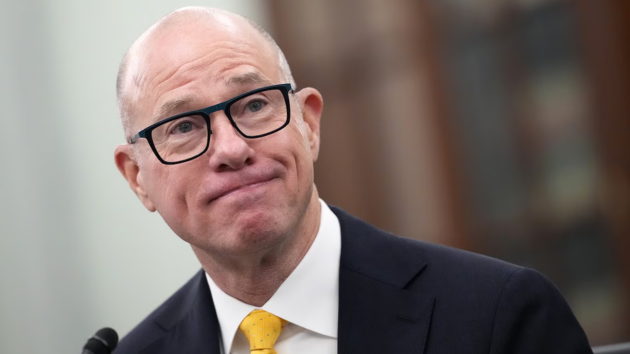
(WASHINGTON) — President Donald Trump offered some mixed messaging as Republicans put the final touches on their tax proposal, saying Friday that he would support raising taxes on the wealthiest Americans to help pay for his sweeping legislative agenda while adding in the same breath his belief that Republicans “should probably not do it.”

“The problem with even a ‘TINY’ tax increase for the RICH, which I and all others would graciously accept in order to help the lower and middle income workers, is that the Radical Left Democrat Lunatics would go around screaming, ‘Read my lips,’ the fabled Quote by George Bush the Elder that is said to have cost him the Election. NO, Ross Perot cost him the Election! In any event, Republicans should probably not do it, but I’m OK if they do!!!” Trump wrote in a post on his social media platform.

White House Press Secretary Karoline Leavitt called Trump’s position on raising taxes for the rich “very honorable” during Friday’s White House press briefing.

“The president himself has said he wouldn’t mind paying a little bit more to help the poor and the middle class and the working class in this country,” Leavitt said. “These negotiations are ongoing on Capitol Hill and the president will weigh in when he feels necessary.”

The ambiguous presidential declaration has thrown negotiators into a frantic scramble — with the House Ways and Means committee expected to mark up their legislation next week.

The inclusion of a tax hike in the “big, beautiful bill” would be a major reversal for House GOP leaders, who have argued that allowing the current tax rates to expire would amount to a tax increase.

“I’m not in favor of raising the tax rates because that’s — our party is the group that stands against that, traditionally,” Speaker Mike Johnson said in an interview on Fox News in late April.

During his acceptance speech at the Republican National Convention in 1992, incumbent President George H.W. Bush uttered the infamous line, “read my lips: no new taxes.” Voters ultimately rejected Bush at the ballot box after he broke his vow and signed legislation crafted by congressional Democrats that increased tax revenues to address the growing budget deficit.

Copyright © 2025, ABC Audio. All rights reserved.
Menendez brothers’ resentencing hearing will be next week; risk assessment says they pose moderate risk if released

Menendez brothers’ resentencing hearing will be next week; risk assessment says they pose moderate risk if released
Photo by Ted Soqui/Sygma via Getty Images

(LOS ANGELES) — Erik and Lyle Menendez‘s much-anticipated resentencing hearing will move forward on May 13 and 14, a judge ruled on Friday, as new details about the brothers’ alleged behavior behind bars were revealed in court.

A hearing was held Friday to determine whether the brothers’ resentencing case should include information from the California Board of Parole’s newly completed risk assessment, which was conducted as a part of a separate clemency path. The risk assessment came at the request of Gov. Gavin Newsom as a part of the brothers’ clemency bid; the brothers are pursuing multiple avenues to freedom, and the clemency path is separate from the resentencing path.

Judge Michael Jesic indicated he will take some of the risk assessment into account, but that the information in it is preliminary and attorneys can’t question the forensic psychologists who performed the examinations.

The risk assessment said Erik and Lyle Menendez pose a moderate risk to the community if they’re released.

The assessment revealed the brothers possessed illegal cellphones in prison, among numerous other violations. Erik Menendez had a phone as recently as January of this year, which Los Angeles County District Attorney Nathan Hochman stressed was during the resentencing effort when he should have been on his best behavior.

Erik Menendez allegedly bought and traded drugs and allegedly helped inmates commit tax fraud years ago, according to the assessment. The psychologists found Lyle Menendez to be narcissistic.

The assessment said the brothers had a likelihood to not follow the law out of prison if they ignored rules in prison.

Jesic appeared to dismiss many of the findings.

The assessment likely includes the positive work the brothers have done in prison, too. Hochman’s predecessor, George Gascón, has praised them for furthering their education, rehabilitating themselves and starting programs to help other inmates.

Also at Friday’s hearing, defense attorney Mark Geragos withdrew his attempt to get Hochman kicked off the case after making allegations against his background and alleging the DA hired a crisis public relations firm to go after the brothers. Hochman denied that, saying the PR firm was not for the brothers but for his campaign, and that the PR firm ended its work after he was elected in November.

Friday’s hearing followed a dramatic court appearance on April 17, which was initially set to be the brothers’ resentencing hearing. However, on April 16, the district attorney’s office in a filing urged Jesic to delay the resentencing hearing if he couldn’t obtain a copy of the risk assessment report in time for court.

Hochman, who wants to keep the brothers behind bars, argued the risk assessment is relevant to the resentencing case, while Geragos noted a strong desire for the assessment to be used only for the June 13 parole hearing.

For next week’s resentencing hearing, Geragos said he will have seven witnesses rather than his previously planned 20 witnesses. Two experts are expected to testify.

Erik and Lyle Menendez — who are serving life in prison without the possibility of parole for the 1989 murders of their parents, Jose and Kitty Menendez — have the support of over 20 family members in their efforts to be freed after 35 years behind bars.

Their resentencing case gained momentum in October when Gascón announced he was in support of resentencing.

Gascón recommended the brothers’ sentences of life without the possibility of parole be removed, and said they should instead be sentenced for murder, which would be a sentence of 50 years to life. Because both brothers were under 26 at the time of the crimes, they would be eligible for parole immediately with the new sentence.

Gascón’s office said its resentencing recommendations take into account many factors, including rehabilitation in prison and abuse or trauma that contributed to the crime.

In November, Gascón lost his reelection bid to Hochman, who in March filed a motion to withdraw the resentencing petition, calling the brothers’ claims of self-defense part of a litany of “lies.” The judge denied the request by Hochman.

Copyright © 2025, ABC Audio. All rights reserved.

Ohio high school student dies following injury in lacrosse match

Ohio high school student dies following injury in lacrosse match
Photo by Grant Halverson/NCAA Photos via Getty Images

(BAY VILLAGE, Ohio) — A sophomore at a high school in Ohio has died after sustaining an injury during a lacrosse match, according to Bay High School, where he played.

Dylan Veselic was playing in a game for the school, located in Bay Village, against Olmsted Falls on Tuesday when he was injured.

The school did not release what injuries Veselic suffered during the game, but Veselic was taken into surgery Tuesday evening and he died on Thursday morning, a district official confirmed to ABC News.

“With heavy hearts, the Veselic Family shares the news that Dylan has passed away from injuries suffered during a lacrosse game,” the school said in a statement on its website.

“Dylan was a well-liked and respected young man who touched the lives of many with his kindness, character and spirit. We extend our deepest condolences to his family during this unimaginably difficult time. Our thoughts and prayers are with them, and we hope they find comfort in the love and support of our community,” Bay High School Principal Jason Martin said in a statement on Thursday.

“We are also deeply grateful to our neighboring communities for their outpouring of compassion and support. The response and comments throughout the day from his teachers, coaches, teammates and classmates have been a powerful reminder of the positive impact he had on those around him and the enduring mark he has left on all of us,” Martin said.

Matt Spellman, the athletic director of Bay Village Schools, said the team and coaches are grateful for the support they have been shown by surrounding teams and communities.

“Dylan was an amazing student, always wearing a smile on his face while supporting his fellow teammates. He was kind, hardworking, and dedicated, consistently showing leadership, empathy, and a positive attitude both on the field and in the classroom. Dylan’s enthusiasm, determination, and willingness to help others made him a role model for his peers,” Spellman said.

The school district posted photos of tributes that had popped up around campus for Veselic, including a rock painted with his number and signs created by younger students.

Copyright © 2025, ABC Audio. All rights reserved.