
Menendez brothers’ post-resentencing parole hearing delayed by 2 months

Menendez brothers’ post-resentencing parole hearing delayed by 2 months
Los Angeles Times / Contributor

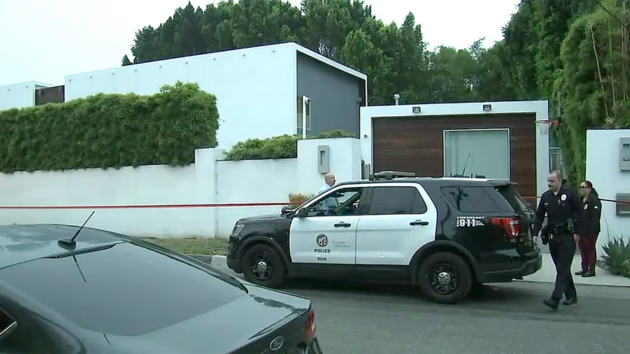
(LOS ANGELES) — Erik and Lyle Menendez were resentenced last week to 50 years to life in prison, which makes them eligible for parole — a topic that would likely have been broached at their next hearing, originally scheduled for June 13.

However, the parole hearing dates were pushed back to Aug. 21 and Aug. 22, the California Department of Corrections and Rehabilitation announced on Monday.

Erik and Lyle Menendez were initially sentenced to life without the possibility of parole for the 1989 murders of their parents, Jose and Kitty Menendez.

Prior to the announcement from CDCR, it seemed that next month’s parole board hearing was just for the governor’s clemency path — to give the governor insight for a decision whether to grant clemency or not.

Following the resentencing decision on May 13, future parole considerations would have taken place at separate hearings, likely months after the hearing that was already scheduled for June.

California Gov. Gavin Newsom has already requested information, such as a risk assessment, while considering the brothers’ clemency bid. The brothers are pursuing multiple avenues to freedom, and the clemency path was separate from the resentencing path.

Newsom can grant clemency at any time.

But it could still be months or years before the brothers would get parole — if ever. That will be up to the parole board.

Copyright © 2025, ABC Audio. All rights reserved.
Appeals court sides with Venezuelan man seeking return to US from El Salvador

Appeals court sides with Venezuelan man seeking return to US from El Salvador
Handout/Presidencia El Salvador via Getty Images

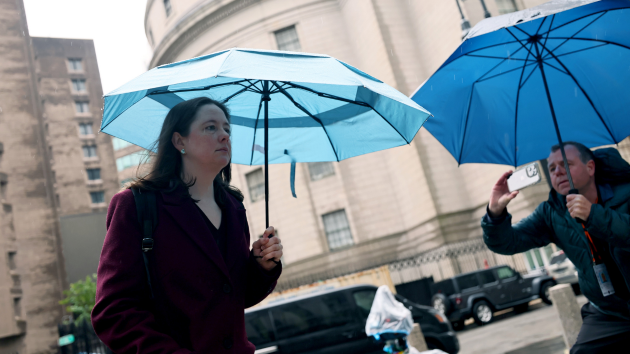
(WASHINGTON) — A 20-year-old Venezuelan man seeking a return to the United States after being sent to El Salvador won a legal victory over President Donald Trump’s administration on Monday.

A divided panel of the 4th Circuit Court of Appeals voted 2-1 to leave in place an order directing the Trump administration to facilitate the man’s return after a federal judge in Maryland determined that his deportation breached an existing legal settlement.

The man, identified in court records by the pseudonym “Cristian,” challenged his removal after he was sent in mid-March on a flight to El Salvador following President Trump’s invocation of the Alien Enemies Act.

U.S. District Judge Stephanie Gallagher, a Trump appointee, found in April that Cristian’s removal violated a class action settlement on behalf of individuals who entered the U.S. as unaccompanied minors and later sought asylum.

The administration then asked the appellate court to reverse Gallagher’s order, arguing that the directive to return Cristian to the U.S. “would impose serious foreign-policy harms on the Government and threaten the public interest, while doing nothing for Cristian,” according to the government’s court filings.

Circuit Judges DeAndrea Gist Benjamin and Roger Gregory, writing for the panel’s majority, rejected the administration’s reasoning.

“The argument that the Government would be ‘irreparably harmed’ by facilitating Cristian’s return rings hollow,” Benjamin wrote. “Cristian’s injury arises from the fact that instead of having his asylum application adjudicated on the merits—as the Settlement Agreement guaranteed—he was summarily removed,” added Benjamin, a Biden appointee to the circuit court.

The government argued in its motion to stay that removing Cristian under the Alien Enemies Act was not a breach of the settlement agreement, which was finalized in 2024.

The government also challenged Gallagher’s order on the grounds that an “Indicative Asylum Decision,” issued by US Citizenship and Immigration Services (USCIS) weeks after Cristian’s deportation, determined he would be denied asylum because he is an admitted Tren de Aragua gang member, which he denies.

The government also notes Cristian has a felony drug possession conviction in Harris County, Texas.

ABC News has reached out to the Department of Homeland Security and Cristian’s lawyers for a comment.

The appellate panel majority, however, determined that the “indicative” asylum decision, reached without an opportunity for Cristian to contest its findings, “was not an authentic change in factual circumstances.”

In a concurring opinion, Gregory, a Clinton appointee, criticized the Trump administration for its attempt to invoke the Alien Enemies Act to excuse its alleged breach of the settlement agreement in this case.

“The government’s argument in this case is that this plainly invalid invocation of the Act can be used to void any and all contractual obligations of the federal government. That cannot be — and is not — the rule of law,” Gregory wrote.

In his dissent, Circuit Judge Julius Richardson — a Trump appointee — argued that the district court’s order exceeded its authority; and that returning Cristian to the United States would be futile, given the near-certainty that his application for asylum would be denied.

“Still, it is in this case that the district court has directed the Executive to engage in specific diplomatic negotiations with a foreign power. Despite serious merits problems and little reason to think its order would help Cristian, the district court entered a more potent injunction than any other court has in the numerous Alien Enemies cases pending across the country.” Richardson wrote.

The Trump administration could now ask the full 4th Circuit Court of Appeals to review the case or petition for review by the U.S. Supreme Court.

Copyright © 2025, ABC Audio. All rights reserved.
Palm Springs bombing suspect appears to have posted bomb tests on YouTube

Palm Springs bombing suspect appears to have posted bomb tests on YouTube
KABC

(PALM SPRINGS, CA) — Guy Bartkus — the lone suspect in a fatal car bombing that took place outside of a fertility center in Palm Springs, California, on May 17 — appears to have operated multiple social media accounts where he posted videos of homemade explosive devices and messages pointing to his plans.

Law enforcement officers are reviewing the accounts, which are believed to have been operated by Bartkus, a source familiar with the investigation told ABC News.

A snapshot of a YouTube channel, titled “Indict Evolution,” was saved to an online archive before the channel was taken off the platform.

The archive contains videos dating back at least six years and pointing to an interest in experimenting with homemade explosives and chemicals.

Several videos show what appear to be tests of homemade explosive devices.

Other videos suggested an interest in radioactive materials, with titles like “Uranium ore next to Geiger counter” and “Thorite from thorium mine.”

A spokesperson for YouTube, when asked about the account “Indict Evolution,” said, “We terminated channels associated with the suspect.”

The channel was no longer available as of Sunday.

The spokesperson added that the accounts had been removed for violating the platform’s policy on violent extremism.

One of the videos from the YouTube account was shared on May 12 to a controversial message board dedicated to suicide. The account that shared the YouTube video there went by the same username that law enforcement believes belonged to Bartkus, according to a source familiar with the investigation.

On May 5, a post on that account mentioned a failed suicide attempt involving drugs and a homemade explosive device.

On Thursday, that account posted again, detailing disturbing plans for a death by carbon monoxide poisoning. In a follow-up post, the user referred to “some extra drama that I probably shouldn’t say haha.”

The suspect was identified on Sunday afternoon as 25-year-old Guy Edward Bartkus of Twentynine Palms, which is located about 50 miles from Palm Springs, according to Akil Davis, assistant director in charge of the FBI’s Los Angeles Field Office.

Bartkus is believed to be the person found dead next to the detonated vehicle, Davis said.

The fertility clinic near the blast, the American Reproductive Centers of Palm Springs, said in a statement that its staff members, as well as eggs, embryos and reproductive materials, were unharmed in the blast.

ABC News’ Alex Stone contributed to this report.

Copyright © 2025, ABC Audio. All rights reserved.
Why Biden may not have known about his ‘aggressive’ prostate cancer until recently

Why Biden may not have known about his ‘aggressive’ prostate cancer until recently
Brandon Bell/Getty Images

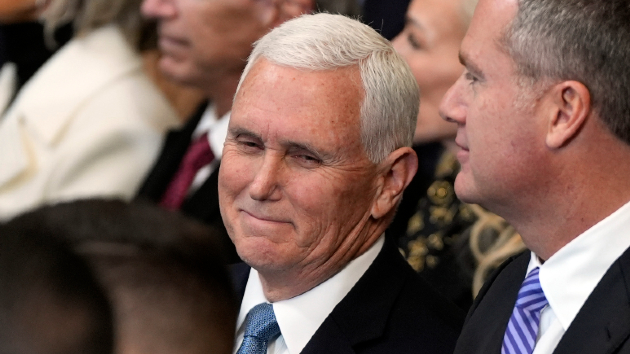
(WASHINGTON) — Former President Joe Biden’s office announced on Sunday that he was diagnosed with an “aggressive” form of prostate cancer.

Biden’s office also said the cancer had metastasized, spreading to his bones.

Although some people were left wondering why the cancer was caught only after reaching a Gleason score of 9, oncology experts told ABC News that it’s not uncommon for older prostate cancer patients to receive a diagnosis after the disease has advanced or spread.

“Prostate cancer is something that we always hope screening will identify early, when the cancer is all still inside the prostate,” Dr. Alicia Morgans, a genitourinary medical oncologist at Dana-Farber Cancer Institute in Boston and a member of the board of directors of the no-profit Zero Prostate Cancer, told ABC News.

“Even if we screen everybody perfectly, there will never be 100% detection of prostate cancer because, in truth, cancer does not follow a rule book,” Morgans continued. “And just because we are trying to catch it early doesn’t mean it necessarily is present when we screen.”

PSA levels may not have been checked

One screening test for prostate cancer involves a blood test that measures the level of prostate-specific antigens, which are proteins made by cells in the prostate gland.

Although there is no cutoff level that clearly indicates the presence of cancer, many doctors use a cutoff of 4 nanograms per milliliter to recommend further tests with a urologist, according to the American Cancer Society.

For an advanced form of cancer like Biden’s, a recent PSA test would have likely shown elevated levels.

However, the U.S. Preventive Services Task Force recommends against PSA-based screening for men age 70 and older due to harms such as false positives leading to more tests or a diagnosis of problems that would not have caused symptoms or death.

Morgans said it’s unclear what the former president and his doctor discussed regarding screening, but it’s plausible that he did not undergo PSA screening.

“It is absolutely possible that President Biden, like so many men over that age, have decided to stop doing PSA screening because they’ve decided that it is not consistent with their overall health goals and wishes, and that is completely reasonable,” Morgans said.

Cancer could have grown rapidly

Morgans said some men in their 70s and 80s do still undergo PSA screening for prostate cancer based on conversations with their primary care physicians and what’s right for them.

Even so, it’s possible that the results were normal — either due to a false negative or because their cancer was not present at the time, she said.

“Prostate cancer can develop between screening tests,” Morgans said. “It doesn’t necessarily grow super slowly. It can develop between screenings, and it can be aggressive when it does develop; that doesn’t mean it’s not treatable.”

Screening results could have been borderline

Dr. Alan Bryce, chief clinical officer for City of Hope Cancer Center Phoenix, said there may be some patients who receive PSA screening results showing borderline-high results who decide not to pursue further testing.

“There are absolutely scenarios where that conversation happens with a patient or their family member,” Bryce told ABC News. “All of them might say, ‘You know what? Given where we’re at in life, we’re not that worried about this. Let’s go ahead and wait another year.'”

Bryce, a medical oncologist specializing in prostate and testicular cancers, added that shared decision-making is important when it comes to deciding if a patient wants to pursue prostate cancer screening — and if they want to test further following test results that are abnormal.

“As physicians, we present patients with options and recommendations but, at the end of the day, it’s still the patient’s decision,” he said. “So, it’s entirely possible that a conversation happens and the patient decides they don’t want to proceed with further workup. Maybe they don’t want to do a scan, maybe they don’t want to do a biopsy.”

No symptoms present

Advanced prostate cancer can present symptoms such as a weak urination stream; needing to urinate more often; erectile dysfunction; fatigue; weight loss; loss of bladder or bowel control; and pain in the ribs, hips and spine when the cancer had spread to the bones, according to the ACS.

Morgans said just because a patient has advanced prostate cancer, it doesn’t necessarily mean that they will exhibit symptoms.

“I would say that it’s more common than not that people sit in my office and tell me, ‘You know, I don’t have any symptoms. I don’t understand how I have this cancer. I certainly don’t understand how it could have spread outside of my prostate,'” Morgans said. “It is very common for people to be completely asymptomatic.”

Bryce added that some symptoms, such as difficulty urinating or a weak urination stream, may be due to an enlarged prostate, which is common in older men.

“It is entirely normal that in older men, there is a degree of urinary obstruction that just happens with age,” he said. “It’s entirely possible that a man just has normal symptoms associated with aging and nothing about it stands out as being related to a cancerous process.”

Copyright © 2025, ABC Audio. All rights reserved.

Trump calls for ‘major investigation’ into Kamala Harris’ celebrity endorsements

Trump calls for ‘major investigation’ into Kamala Harris’ celebrity endorsements
Kent Nishimura/Getty Images

(WASHINGTON) — President Donald Trump has called for a “major investigation” into several celebrity endorsements former Vice President Kamala Harris received during the 2024 presidential campaign, suggesting without evidence that some of the celebrities were illegally paid for their endorsements.

Some of the celebrities have publicly denied denying being paid any fee at all, and experts say there’s no FEC law barring campaign payments for endorsements.

Among the celebrities the president suggests were illegally paid for their endorsements are Oprah Winfrey, Bruce Springsteen and Beyonce, each of whom appeared at Harris campaign events last year.

“Candidates aren’t allowed to pay for ENDORSEMENTS, which is what Kamala did, under the guise of paying for entertainment,” Trump wrote in a pair of social media posts Monday.

The Harris campaign paid production companies founded by Winfrey, Springsteen and Beyonce for services provided during and after the 2024 election — but Winfrey and Beyonce’s mother, who runs her production company, both said the payments were for production costs associated with the events they participated in.

Campaign law experts told ABC News that the Federal Election Commission has no regulations against federal campaigns paying celebrities or influencers for endorsements, nor would they be considered illegal contributions as Trump suggested — as long as those payments are properly disclosed. The Federal Trade Commission oversees disclosure obligations for paid endorsement, the experts said.

Campaign finance disclosures show the Harris campaign paid Winfrey’s company, Harpo Productions, a total of $1 million for “event production” on Oct. 15, 2024, roughly a month after Winfrey interviewed Harris at a “Unite for America” campaign event in Detroit in September.

“I did not take any personal fee. However, the people who worked on that production needed to be paid and were. End of story,” Winfrey said in a social media video in response to Trump’s accusation.

The Harris campaign paid Beyonce’s company, Parkwood Production Media LLC, $165,000 on Nov. 19, 2024, weeks after Beyonce took the stage at a Harris campaign rally in Houston and publicly endorsed Harris, according to campaign records.

Beyonce’s mother Tina Knowles, in a social media video, said the accusation that her daughter was paid for her endorsement is a “lie,” adding that Beyonce also paid for the flights for herself and her team to and from the event.

The Harris campaign paid Springsteen’s production company, Thrill Hill Productions, Inc., roughly $75,000 for “travel and event production” on Nov. 19, 2024, roughly a month after he performed at a Harris campaign rally in Georgia, records show. Springsteen has not publicly addressed the campaign’s payment to his company.

Last year as unfounded claims about the Harris campaign’s payments for celebrity endorsements spread, senior campaign adviser Adrienne Elrod told Deadline, “We do not pay. We have never paid any artist and performer. We have never paid a fee to that person.”

Noting that FEC rules require campaigns to pay fair market value for the ancillary costs of holding events, Elrod told Deadline the campaign has paid “for any ancillary costs for that performance” and that “there are laws that have to be followed that we have followed religiously on this campaign.”

Among the celebrities who have appeared and performed at Trump’s campaign events over the years, ABC News has found no records of the Trump campaign or Trump’s other entities paying them or their companies.

Country singer Lee Greenwood, whose song “God Bless the USA” is frequently featured at Trump rallies and who has performed at Trump campaign events himself, stated on social media in November that he had not been compensated in “any form” by the Trump campaign or the Trump Organization for his campaign appearances, saying he’s “happy to have stood by” Trump.

Copyright © 2025, ABC Audio. All rights reserved.

Evidence of 30-foot ancient sea monster found in Mississippi

Evidence of 30-foot ancient sea monster found in Mississippi
James Starnes

(STARKVILLE, MS) — Geologists working in Mississippi recently stumbled upon an incredible find: the fossil of an ancient marine apex predator.

They uncovered a piece of vertebra they said likely belonged to a mosasaur, a lizard ancestor that lived in the Late Cretaceous period, according to James Starnes, research director for the surface geology and surface mapping divisions for the Mississippi Department of Environmental Quality.

On April 15, researchers were collecting rock, sediment and fossil samples just south of Starkville, Mississippi, Starnes said. Poking out from the sediment of a creek bed was the end an “unusually large” lumbar vertebra.

After Starnes pointed it out, Jonathan Leard, the lead author of the MDEQ’s geological map, pulled the vertebra out of the clay.

“Both of us are standing there looking at each other with our jaws wide open because of the size,” Starnes said.

Starnes “immediately” knew they had found a mosasaur based on the shape of the vertebra, he said. The researchers estimated the specimen, determined to be Mosasaurus hoffmannii, was between 30 and 40 feet long when it died, but mosasaurs typically grew to be about 50 feet and weighed 20,000 pounds.

“These animals, like other lizards, are indeterminate,” Starnes said. “That means they just keep growing, with age, until they die.”

Due to its geological formations, the Mississippi region is known for its fossils, but this was especially rare, Starnes said.

Shell fossils are common, as are much younger Ice Age fossils from land animals, such as mastodons and sloths. But mosasaurs have a “very different” vertebra shape than other animals.

“This was distinctly not a mammal,” Starnes said. “This was definitely a sea lizard.”

Mosasaurs, a diverse group of marine lizards, conquered the seas in the Late Cretaceous period, a time when dinosaurs inhabited various ocean environments.

The Mississippi River occupies an ancient geologic structure called the Mississippi Embayment, which was inundated by the Western Interior Sea Way during the Cretaceous period.

Mosasaur fossils have been found in the area before, but only in much smaller fragments, Starnes noted. This was the largest mosasaur fossil the researchers had ever encountered.

Mosasaurs were fast and agile swimmers with jaws that contained 60 dagger-like teeth that helped them capture large prey, researchers said.

Scientists believe mosasaurs became extinct at the end of the Cretaceous period, according to Mississippi Department of Environmental Quality researchers.

Copyright © 2025, ABC Audio. All rights reserved.
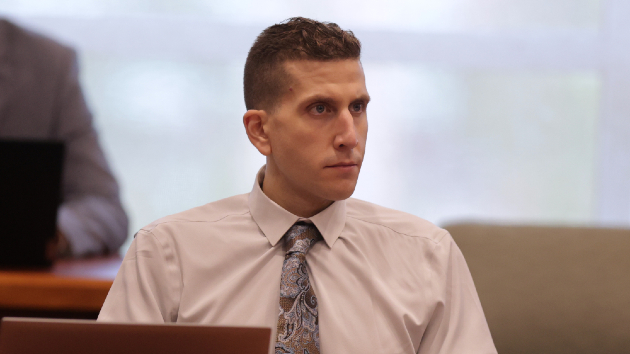
Trump headed to Capitol Hill to help Johnson sway hard-liners to support his agenda

Trump headed to Capitol Hill to help Johnson sway hard-liners to support his agenda
Kevin Dietsch/Getty Images

(WASHINGTON) — It’s crunch time in the House, where the next 48 hours will test Speaker Mike Johnson’s leadership like never before as he scrambles to secure the needed votes to pass a megabill aimed at advancing President Donald Trump’s legislative agenda.

And now the president is set to attend the House GOP conference on Capitol Hill Tuesday morning, multiple White House officials confirmed to ABC News — an effort to sway the holdouts.

After Sunday night’s successful vote to send the “One Big Beautiful Bill Act” to the House Rules Committee, there are now two full intervening days for Johnson to put the final touches on the reconciliation bill and rally Republican support. And the pressure is on.

Johnson doesn’t have the votes at this time, given public concerns from conservatives and moderates alike. He can only lose three Republican members, so changes to the bill text are a certainty.

The speaker on Monday expressed confidence in the House’s consensus-building operation as lawmakers make modifications to the bill.

“It’s been a bottom-up process — that was what everybody wanted so we have delivered — and we’re almost there,” he said. “I’m very optimistic that we will find the right equilibrium point to get this bill delivered.”

Johnson’s effort to unify the conference behind the bill is a major test of his speakership, and his ability to deliver for Trump, who has also encouraged Republicans to support it.

Johnson worked over the weekend to sway Republican holdouts on the House Rules Committee to prevent blocking the legislation from moving out of the committee as they had on Friday. The hard-liners voted present on Sunday night to allow the bill to advance, but still haven’t offered full-throated support for the bill.

Earlier Monday, White House press secretary Karoline Leavitt said Trump was “willing to pick up the phone” to encourage Republicans to fall in line on the bill — but his Tuesday morning meeting with the entire Republican conference is a stronger message to those on the fence.

Now, the Rules Committee is preparing for its hearing at 1 a.m. Wednesday morning — and that meeting will set the parameters for floor debate. Meanwhile, negotiations inside the speaker’s office will reach a fever pitch Monday and Tuesday as Republicans grapple over the sticking points — primarily regarding Medicaid work requirements and a cap on state and local tax deductions.

“Nothing is final until it’s final,” a senior House Republican leadership aide told reporters at a briefing Monday morning. “It’s a fragile process.”

Johnson on Monday downplayed perceived concerns that the GOP was dropping in last-minute changes to the legislation at this late stage in the process.

“We have a few issues to resolve — and we are working with all parties to do that — and I’m confident that we will,” Johnson explained.

Why meet at 1 a.m. on Wednesday? House Rules Chair Virginia Foxx let out a gentle laugh as she walked through the Capitol early Monday morning — telling ABC News the timing must adhere to the House rules after the House Budget Committee voted late Sunday night to advance the bill.

So what is the rule?

“Under the rules, Budget Dems get two calendar days to file minority views after [Sunday] night’s markup,” a Democratic aide explained. “Rules then has a one-hour notice requirement, hence [the hearing] starting at 1 a.m.”

If the Rules Committee reports the reconciliation package favorably to the floor, that would keep Johnson’s plans on schedule to hold a vote on passage on Thursday — though he has threatened to hold the House in session this weekend if there are any hiccups along the way.

Johnson is setting his sights on sending the package to Trump for his signature by the Fourth of July given a mid-July “deadline” to address the debt limit to avoid a default.

As negotiations continue behind closed doors, Republican aides stress that “95% of the bill is done” while they scramble to lock down support. A round of changes are anticipated to address technical modifications at the urging of the Senate parliamentarian, who is scrubbing the bill text and signaled some legislative language may be fatal to reconciliation privileges in the Senate.

“Everything is on the table,” a senior GOP aide said, stressing the fluidity of the overall discussions.

House Republicans are still weighing potential changes to implementation dates for Medicaid work requirements, balancing what is “feasible” for states to implement against the angst of Republicans whose patience does not extend to 2029, beyond the Trump presidency, as it’s currently written in the bill.

“We want to make sure that what we’re intending to do is actually matching an ability to implement,” a senior Republican aide said. “And so an exact date is hard to say at this stage because I think we’re still working through that.”

On SALT, aides said a resolution is “not decided yet” — explaining that members are just returning to town after a three-day weekend and the speaker continues to work through it.

Leavitt on Monday addressed a concern some of Republican holdouts expressed about the bill adding to the bloated national deficit, saying flatly that “this bill does not add to the deficit.”

Republicans insist they’re going to hit at least $1.5 trillion of savings with the bill while also reflecting Trump’s agenda — pointing at Congressional Budget Office’s letter confirming that all 11 committees met their reconciliation instruction targets.

“This has been a year’s worth of work to kind of figure out what are the priorities you want to instill. We started this a long time ago and worked towards it,” an aide emphasized. “We’ll work through all the changes that we need to make here, and then we’ll see where the final exact numbers shake out. But the bottom line is we had a framework set in the budget and we’re going to get that.”

And as the clock ticks down, Johnson has rejected questions about the crunch time giving him “heartburn.”

“No, I don’t have heartburn, because I know we are going to get this job done,” Johnson said.

ABC News’ Arthur Jones II, Rachel Scott, Katherine Faulders, Lauren Peller and Michelle Stoddart contributed to this report.

Copyright © 2025, ABC Audio. All rights reserved.

Judge rules DOGE takeover of US Institute of Peace was unlawful and ‘gross usurpation of power’

Judge rules DOGE takeover of US Institute of Peace was unlawful and ‘gross usurpation of power’
Anna Moneymaker/Getty Images

(WASHINGTON) — A federal judge on Monday ruled that the Trump administration’s takeover of the U.S. Institute of Peace was unlawful, and efforts by the Department of Government Efficiency to dismantle the agency are “null and void,” according to court filings.

D.C. federal judge Beryl Howell’s ruling says that President Donald Trump’s unilateral effort to disband the agency, which primarily functions as a think tank supporting both the executive and legislative branches, exceeded his constitutional authorities and violated the statute that established the USIP.

“The President’s efforts here to take over an organization outside of those bounds, contrary to statute established by Congress and by acts of force and threat using local and federal law enforcement officers, represented a gross usurpation of power and a way of conducting government affairs that unnecessarily traumatized the committed leadership and employees of USIP, who deserved better,” Howell wrote of efforts to disband the agency as part of Trump’s plan to slash the federal government.

In a hearing in March, officials who were ousted from USIP described in dramatic detail what was essentially a forced takeover of the agency by officials with DOGE, assisted by armed agents with the FBI, members of the D.C. Police Department and officials with the D.C. U.S. Attorney’s Office.

“This conduct of using law enforcement, threatening criminal investigation, using armed law enforcement from three different agencies … to carry out the executive order … with all that targeting probably terrorizing employees and staff at the institute when there are so many other lawful ways to accomplish the goals … why?” Howell asked. “Just because DOGE is in a rush?”

But at the time, Judge Howell turned down an emergency request from the plaintiffs in the lawsuit to reinstate USIP’s board, saying they failed to meet the high legal burden that would warrant a temporary restraining order.

“I’m very offended by how DOGE has operated at the Institute and treated American citizens trying to do a job that they were statutorily tasked to do at the Institute,” Howell wrote in March. “But that concern … is not one that I have that can sway me in my consideration of the factors for a TRO.”

In her ruling Monday, Howell noted that USIP is unique in its status as seemingly a mix between an executive branch agency and a private nonprofit corporation — and that Trump’s aggressive approach to oust its board members and replace them with DOGE officials seemed to violate a statute that required approval by Congress.

“The actions that have occurred … at the direction of the President to reduce USIP to its ‘statutory minimums’ — including the removal of USIP’s president, his replacement by officials affiliated with DOGE, the termination of nearly all of USIP’s staff, and the transfer of USIP property to the General Services Administration (‘GSA’), were thus effectuated by illegitimately-installed leaders who lacked legal authority to take these actions, which must therefore be declared null and void,” Howell wrote.

The administration is likely to appeal the ruling, making it one of a number of ongoing legal fights on appeal regarding President Trump’s removal authorities.

Copyright © 2025, ABC Audio. All rights reserved.
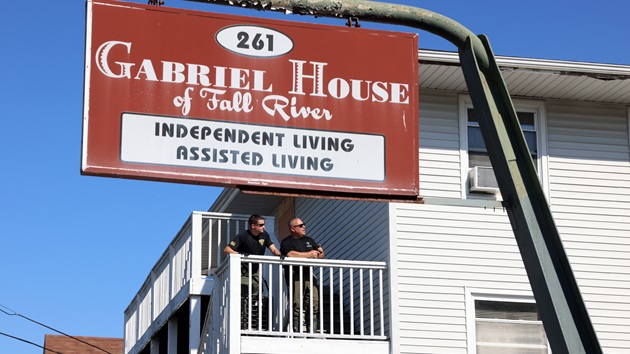
Ashli Babbitt’s family to receive $5 million in settlement with Trump administration: Sources

Ashli Babbitt’s family to receive  million in settlement with Trump administration: Sources
Ashli Babbitt’s family to receive $5 million in settlement with Trump administration: Sources
Tom Williams/CQ-Roll Call, Inc via Getty Images

(WASHINGTON) — The Trump administration is set to pay out nearly $5 million to settle a lawsuit brought by the family of Ashli Babbitt, a rioter fatally shot during the Jan. 6 attack on the U.S. Capitol, sources familiar with the matter confirmed to ABC News on Monday.

The settlement will resolve a $30 million suit brought by Babbitt’s estate and the conservative group Judicial Watch alleging the Capitol Police officer who shot her as she attempted to breach a broken window of the House speaker’s lobby was negligent in his duties.

The Washington Post first reported news on the settlement amount.

The Justice Department in April 2021 announced it had cleared U.S. Capitol Police Lt. Michael Byrd of any criminal wrongdoing in the shooting, after an investigation revealed no evidence he “did not reasonably believe that it was necessary to do so in self-defense or in defense of the Members of Congress and others evacuating the House Chamber.”

This is a developing story. Please check back for updates.

Copyright © 2025, ABC Audio. All rights reserved.
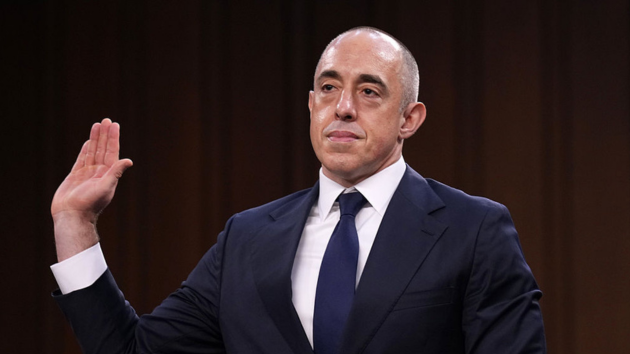
Greer Fire expands to 20,000 acres, over 700 personnel battling flames

Greer Fire expands to 20,000 acres, over 700 personnel battling flames
ABC

(GREER, Ariz.) — A wildfire in eastern Arizona continues to burn, expanding to over 20,000 acres, with more red flag warnings in effect on Monday.

The Greer Fire, named after the small community in Arizona’s White Mountains where the blaze sparked on May 13, has grown to 20,425 acres and is 38% contained, officials said on Monday.

A red flag warning in northeastern Arizona — including the area of the flames — is in effect on Monday, with officials urging residents to avoid burning or using tools that spark.

“One spark into the dry veg under red flag conditions can start a rapid spreading wildfire,” the Arizona Department of Forestry and Fire Management said Monday in a post on X.

Over 700 personnel have been assigned to battle the blaze, with high winds — reaching around 40 mph — posing “another test for firefighters holding the firelines,” the forestry service said.

On Saturday, Arizona Gov. Katie Hobbs declared a state of emergency in Apache County due to the growing flames.

“My heart is with everybody who has been impacted by this devastating wildfire,” Hobbs said in a statement on Saturday.

Evacuations have been issued for Greer, South Fork, residents west of Highway 261, Eager, south of Highway 260 and west of River Road, officials said. An interactive map has also been established to highlight the current evacuation orders.

The cause of the fire remains under investigation, officials said.

Greer is a small mountain town near the state’s border with New Mexico with a population of less than 60 residents, as of 2020 census data.

More information on the growth of the fire and evacuations will be provided to the public on Monday evening, the forestry service said.

ABC News’ Leah Sarnoff contributed to this report.

Copyright © 2025, ABC Audio. All rights reserved.