(WASHINGTON) — The Federal Communications Commission announced on Thursday the approval of a massive, $8 billion acquisition of Paramount Global by Skydance Media.
The deal includes the CBS broadcast network, Paramount Pictures and Nickelodeon.
Brendan Carr, the chairman of the Federal Communications Commission, said in a statement after the announcement that he welcomed “Skydance’s commitment to make significant changes at the once storied CBS broadcast network.”
“Americans no longer trust the legacy national news media to report fully, accurately, and fairly,” Carr said, adding, “It is time for a change.”
Carr added that the merger was a “step forward” in eliminating what he called “invidious forms” of diversity, equity and inclusion measures.
The FCC said in a press release about the acquisition that Skydance had made written commitments to ensure future programming from the company would have a diversity of viewpoints across the political and ideological spectrum. Skydance also said it would hire an independent adviser to evaluate complaints of bias.
The FCC voted 2-1 to approve the acquisition, with Commissioner Anna Gomez casting the opposing vote.
Gomez released a dissent on the merger, saying it would “further erode press freedom.”
“After months of cowardly capitulation to this Administration, Paramount finally got what it wanted. Unfortunately, it is the American public who will ultimately pay the price for its actions,” she added.
(JERUSALEM) — France will officially recognize the state of Palestine, “true to its historic commitment to a just and lasting peace in the Middle East,” French President Emmanuel Macron announced on Thursday.
“I will make the solemn announcement at the United Nations General Assembly” in September, Macron said in a statement.
“There must be an immediate ceasefire, the release of all hostages, and massive humanitarian aid to the people of Gaza. It is also necessary to ensure the demilitarization of Hamas, secure and rebuild Gaza,” Macron continued. “Finally, it is essential to build the State of Palestine, ensure its viability, and enable it, by accepting its demilitarization and fully recognizing Israel, to contribute to the security of all in the Middle East.”
In a statement posted on social media, U.S. Secretary of State Marco Rubio said the U.S. “strongly rejects” Macron’s plan.
“This reckless decision only serves Hamas propaganda and sets back peace,” Rubio said in the statement. “It is a slap in the face to the victims of October 7th.”
Earlier, Israel condemned Macron’s decision “in the wake of the October 7 massacre.”
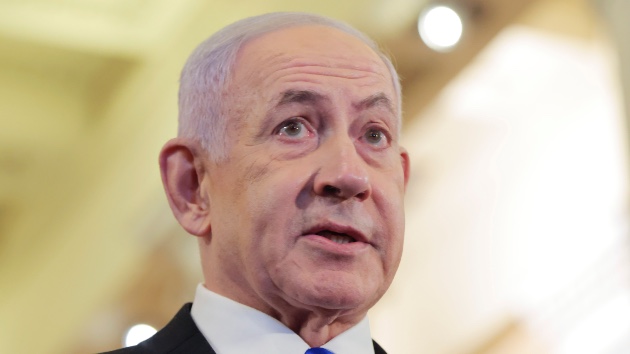
“Such a move rewards terror and risks creating another Iranian proxy, just as Gaza became. A Palestinian state in these conditions would be a launch pad to annihilate Israel — not to live in peace beside it,” Israel Prime Minister Benjamin Netanyahu said in a statement Thursday.
“Let’s be clear: the Palestinians do not seek a state alongside Israel; they seek a state instead of Israel,” Netanyahu said.
Israel Defense Minister Israel Katz accused France of “working to weaken” Israel instead of standing by it.
“Macron’s announcement of his intention to recognize a Palestinian state is a disgrace and a capitulation to terrorism, and a reward and a back-up for the Hamas murderers and abettors, who committed the worst massacre of the Jewish people since the Holocaust,” Katz said.
“We will not allow the establishment of a Palestinian entity that will harm our security and endanger our existence and harm our historical right to the Land of Israel,” Katz said.
Ceasefire talks stand on brink
Israel said ceasefire talks with Hamas have not collapsed, even after the U.S. announced it is departing Qatar, where negotiations were taking place.
Israel said Thursday that it will return to Qatar to continue negotiations, but said it is unwilling to budge on what Hamas has said must be in a final deal, including an end to the war and a mechanism to get aid into Gaza.
The U.S. is bringing home its team from Doha, Qatar, “after the latest response from Hamas, which clearly shows a lack of desire to reach a ceasefire in Gaza,” U.S. special envoy Steve Witkoff announced on social media.
“While the mediators have made a great effort, Hamas does not appear to be coordinated or acting in good faith. We will now consider alternative options to bring the hostages home and try to create a more stable environment for the people of Gaza,” Witkoff said.
“It is a shame that Hamas has acted in this selfish way. We are resolute in seeking an end to this conflict and a permanent peace in Gaza,” he added.
The talks had seemed more positive earlier in the day Thursday.
The Israeli Prime Minister’s Office announced that, “in light of the response that Hamas gave this morning, it was decided to return the negotiating team” from Doha “for further consultations in Israel.”
Hamas’ latest response to a U.S.-brokered Gaza ceasefire proposal is “currently being reviewed” by Israel, Prime Minister Benjamin Netanyahu’s office said at the time.
Hamas announced Wednesday night it had submitted to mediators a response to the ceasefire deal currently on the table. The details of Hamas’ response were not immediately made public.
A trilateral meeting in Italy between top Israeli, Qatari and American officials was slated to discuss Hamas’ response as early as Thursday, sources familiar with the matter told ABC News. Witkoff himself, President Donald Trump’s Mideast envoy, was traveling to Italy to meet with top officials regarding a Gaza ceasefire, the U.S. State Department said Wednesday.
Representatives from Israel and the militant group have been in Doha, Qatar, for more than two weeks working on a ceasefire proposal for the 21-month-old conflict in Gaza.
Those negotiations continue as more than 100 aid groups warned Wednesday that the enclave was on the verge of “mass starvation.”
(GAZA) — Doctors and aid workers inside Gaza are reporting grim and heartbreaking details of widespread malnutrition, particularly in children, as the hunger crisis reportedly continues to worsen amid the Israel-Hamas war.
The Hamas-run Gaza Ministry of Health said on Thursday that 27 people have died of hunger over the last three days, bringing the total to 113 since the war began on Oct. 7, 2023. Of the total deaths due to hunger, 81 have been children, according to the Health Ministry.
MercyCorps, an aid organization that provides humanitarian services as well as a hotline for psychosocial support in Gaza, said it has received testimony from parents struggling to provide food for their children.
“This is one: ‘Last night, I was thinking about killing my children because I can’t take proper care of them or raise them in a good way,'” the group relayed to ABC News. “‘I can’t even provide food. I had to send them to neighboring tents to beg for bread to feed. I truly don’t know what to do anymore.'”
Abdulwhhab Abu Alamrain — a volunteer at Al-Aqsa Martyrs Hospital in central Gaza and a worker with the medical data department at Médecins Sans Frontières (MSF), or Doctors Without Borders — said there are only four stabilization centers for malnutrition in Gaza and the admission capacity is severely limited due to the overcrowding of facilities.
He said the emergency departments of hospitals in Gaza have been overwhelmed with injuries since the war began. However, over the last two weeks, they have been overwhelmed with people reportedly injured while trying to get aid, along with people collapsing from hunger.
“A kid came to our house like two days ago begging for something to eat, a piece of bread,” Alamrain told ABC News. “We don’t have any. We gave him from our lunch, [a] cup of chickpeas. … Life feels dystopian recently.”
On Thursday, MSF said 25% of children and pregnant or breastfeeding women screened at clinics in Gaza are malnourished, and cases of severe malnutrition in children under the age of 5 have tripled in just two weeks.
Caroline Willemen, MSF project coordinator in Gaza City, said that on July 19 and 20 at Al-Helou Hospital in northern Gaza, MSF medical teams could not provide food to women and children in the pediatric and maternity wards and there wasn’t enough baby formula for the 23 babies in the neonatal intensive care unit.
On July 20 and July 21 at Nasser Hospital in central Gaza, 168 patients admitted to the pediatric and maternity wards could not access food, she said.
Additionally, Edouard Beigbede, the UNICEF regional director for the Middle East and North Africa, said on Thursday that over two weeks in July, 5,000 children were admitted to their clinics with acute malnutrition and, in Gaza City alone, the number of children screened and detected with acute malnutrition is four times higher than what it was in February.
Dr. Zaher Sahloul, president of MedGlobal, told ABC News that 19 children have recently been admitted to the non-profit’s clinics in Gaza suffering from severe acute malnutrition, which is a number the organization has never seen.
Five of those children, between three months and 4.5 years old, died over the last 72 hours, as of Wednesday, Sahloul said.
“This is an emergency because up to 50% of children with severe acute malnutrition can die,” Sahloul told ABC News. “Without a dramatic increase in the amount of aid entering, more children will die.”
Kate Phillips-Barasso, vice president of global policy and advocacy at MercyCorps, said her team on the ground in Gaza is reporting many people going days at a time without eating at all.
“Everyone is spending their day in pursuit of how they’re going to feed themselves,” she told ABC News. “They’re losing hope. They’re wondering if they or their families will come on the other side alive.”
MercyCorps was one of more than 100 aid groups that put out a joint statement this week warning of “mass starvation” in Gaza.
“We feel like we’re tipping over that precipice where more people are going to die,” Phillips-Barasso continued. “We’re already starting to hear reports of more children dying. That is coming, and when it tips over, it is really hard to put that in reverse. It’s getting to a point where they need therapeutic feeding and treatment, not just more food supplies. This is going to start to snowball and be very hard to walk that back.”
Aid organizations said their workers and medical staff are also struggling to get food.
MSF said its staff is treating patients for hunger while struggling to feed themselves and their families as they enroll 25 new malnutrition cases every day in Gaza City alone.
Alamrain told ABC News he has lost 27 kilograms (59.5 pounds) since the war began in October 2023, and eight kilograms (17.6 pounds) in the last two months.
Recently, his family baked its last 0.5 kilograms (1 pound) of flour to make seven pieces of bread, he said. Although his family does have money to spend, the markets have run out of food.
Over the last week, Alamrain said he has consumed between 700 and 1,400 calories per day, even though his recommended number of calories per day sits at 2,500.
Alamrain told ABC News he has lost 27 kilograms (59.5 pounds) since the war began in October 2023, and eight kilograms (17.6 pounds) in the last two months.
Recently, his family baked its last 0.5 kilograms (1 pound) of flour to make seven pieces of bread, he said. Although his family does have money to spend, the markets have run out of food.
Over the last week, Alamrain said he has consumed between 700 and 1,400 calories per day, even though his recommended number of calories per day sits at 2,500.
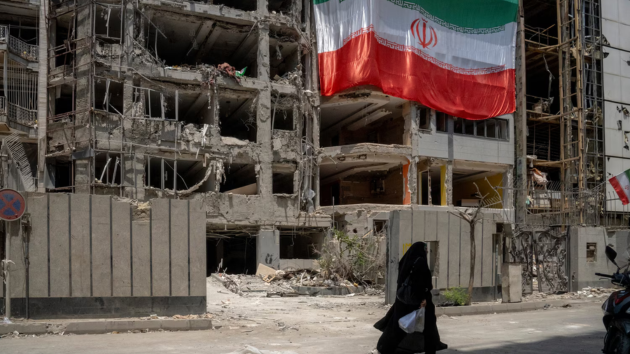
(LONDON) — Iranian and European delegations are expected to gather in Istanbul, Turkey, on Friday for fresh talks on Tehran’s nuclear program, with European nations warning that a failure of negotiations may prompt punishing “snapback” sanctions on Iran.
Representatives from the U.K., France and Germany — known as the E3 — will attend the negotiations in Istanbul, hoping to forestall further direct conflict over Tehran’s nuclear program following an intense 12-day Israeli-U.S. military campaign last month.
The last meeting between the parties took place on May 16, also in Istanbul. Friday’s instalment will be held one month after the end of fighting in the 12-day conflict between Iran and Israel, which saw the U.S. strike several targets in Iran.
The three European nations — along with the U.S., Russia and China — were signatories to the 2015 Joint Comprehensive Plan of Action nuclear deal, which restricted Tehran’s nuclear program. President Donald Trump withdrew from the accord in 2018.
The U.S. wants Iran to end all uranium enrichment. The European nations have yet to make clear their position. The JCPOA limited Iran to enriching uranium up to 3.67% purity — sufficient for civilian nuclear power purposes but below the 90% purity needed for use in a weapon.
If a deal is not reached by Aug. 29, European nations have threatened to implement a so-called “snapback” mechanism that automatically reimposes all United Nations Security Council sanctions that were lifted as part of the JCPOA.
Ellie Geranmayeh of the European Council on Foreign Relations think tank told ABC News that the past month was needed “for the dust to settle in Tehran after the attacks, but also to allow the E3 to have a better understanding of where the U.S. position is on the Iranian nuclear program, post-strikes.”
“I think they now have a better assessment,” she said. “I still don’t think it’s as strong of a picture as they would hope.”
The U.S. will not take part in Friday’s talks. “We have no plans at the current situation for talks with the United States,” Iran’s Ministry of Foreign Affairs spokesperson, Esmaeil Baghaei, said during a Monday press conference.
President Donald Trump is continuing to claim that June’s strikes “obliterated” Iran’s key nuclear facilities, dismissing leaked intelligence reports suggesting that the damage done to the sites was not as extensive as the White House claimed.
“We will do it again, if necessary!” Trump wrote on social media late Monday.
Friday’s meeting, Geranmayeh said, will likely be focused on the snapback sanctions timeline. The snapback mechanism expires in October. The E3 may push to extend its provision for “six months to a year,” Geranmayeh added, if such a proposal wins support at the UNSC.
This would give more “breathing room” for Tehran and Washington to resume diplomacy” while maintaining Western leverage over Tehran, she said.
Whether the U.S.-Iran negotiating track can be revived remains to be seen.
There are “big question marks” as to Trump’s intentions, Geranmayeh said, and “whether he sees a need to expend the political cost domestically necessary to get a deal done with the Iranians, or if he’s happy to just kick the can down the road.”
In that case, the president could sporadically “give a green light to the Israelis to go in and strike to set back Iran’s nuclear activity,” she said.
There is “a real worry for both the Europeans and the Iranians, that the president, the U.S., is no longer actually invested or interested in a deal,” Geranmayeh added. “And I think this meeting will help the Iranians assess what at least the E3 understanding of that position is, and if the president is interested in a deal.”
Any revival of U.S.-Iran talks would likely mean discussions on broader security matters beyond Tehran’s nuclear program. Trump and his top officials have repeatedly framed the JCPOA as unfit for purpose because it did not put limits on Iran’s ballistic missile research program or its use of regional proxy forces.
“I think Istanbul will also scope out whether, in addition to a focused nuclear deal, the U.S. and Iran can also engage in a security package on the regional front,” Geranmayeh said.
Tehran maintains it cannot surrender its ability to enrich uranium. Iran has long said its stockpile of enriched uranium is intended purely for use in civilian nuclear power.
Tehran maintains it cannot surrender its ability to enrich uranium. Iran has long said its stockpile of enriched uranium is intended purely for use in civilian nuclear power.
(HERSHEY, Pa.) — A 9-year-old child has died after an incident at The Boardwalk inside Hersheypark in Pennsylvania, Hersheypark’s CEO has confirmed.
The incident occurred on Thursday evening at the amusement park in Hershey, Pennsylvania, when a 9-year-old child “was tragically lost at The Boardwalk at Hersheypark,” said John Lawn, Hersheypark’s CEO.
“From the moment that our lifeguard team recognized that a child was in distress, they performed an immediate rescue, followed by continuous, coordinated life-saving efforts by our lifeguards, on-site first responders and medical personnel,” Lawn said.
The child was immediately taken to Milton S. Hershey Medical Center where, in spite of the life-saving efforts, the child was pronounced dead.
“Our hearts break for this child and the child’s family,” Lawn said in a statement on social media. “We extend our deepest condolences for their loss. Out of respect for their privacy, we will not release any personal details at this time.”
Lawn did not reveal specific details regarding the incident or the circumstances that led up to it but, according to the company’s website, The Boardwalk features 16 different water attractions including the world’s longest mat racing slides, “Whitecap Racer,” and is home to a 378,000-gallon wave pool called “The Shore,” which goes to a depth of six feet.
“The safety of our guests has always been our highest priority,” Lawn said. “In the coming days, we will conduct a thorough internal review and cooperate fully with authorities.”
“As we grieve alongside our community, we ask for privacy for the family and for our team members who are deeply affected by this loss. We will provide updates as appropriate, and we will continue to work to support everyone involved,” Lawn continued.
The investigation into the child’s death is currently open and ongoing.
“To every family that visits Hersheypark, please know this: your safety and well-being drive every decision we make,” Lawn said. “We will thoroughly investigate this tragedy and honor the memory of this young guest by continuing our focus on ensuring the safety of our guests at Hersheypark.”
(NEW YORK) — A new species of ancient shark has been discovered at Mammoth Cave National Park in Kentucky, officials said.
Named Macadens olsoni, the fossils were found in the Ste. Genevieve Formation, dating back approximately 340 to 335 million years to when Mammoth Cave was submerged in a warm, shallow sea teeming with life including crinoids and corals, according to the National Park Service.
“This discovery is a remarkable addition to our understanding of ancient marine life and underscores the importance of preserving and studying our natural history,” said Superintendent Barclay Trimble.
Growing to less than a foot in length and most likely feasting on mollusks and worms, the new shark species is notable for its unique curved row of teeth designed for crushing small sea creatures.
“The name Macadens olsoni pays tribute to both Mammoth Cave and Rickard Olson, a retired park scientist who played a crucial role in documenting shark fossils in the park as part of a recent Paleontological Resource Inventory (PRI),” officials said. “The research was conducted by a team of scientists from the National Park Service Paleontology Program, Mammoth Cave National Park, and the Smithsonian Paleobiology Department. In addition to Macadens olsoni, researchers studied another ancient shark, Helodus coxanus, now renamed Rotuladens, meaning “Wheel Tooth.” This species shares similarities with Macadens olsoni and highlights the diversity of ancient marine life.”
More than 40 different species of fossil sharks and relatives have been identified from Mammoth Cave specimens in the past 10 months, officials said.
“This finding not only enhances our knowledge of ancient marine ecosystems but also emphasizes the critical role of paleontological research in our national parks,” Trimble added. “Every discovery connects the past with the present and offers invaluable educational opportunities for students and the public.”
(NEW YORK) — The Justice Department filed suit Thursday against New York City, Mayor Eric Adams and other city officials challenging the city’s sanctuary laws for undocumented immigrants.
The suit was filed in the Eastern District of New York.
The department argued the city’s sanctuary policies amount to an “intentional effort” to obstruct federal immigration enforcement and should be declared unlawful under the Constitution’s Supremacy Clause.
“New York City has released thousands of criminals on the streets to commit violent crimes against law-abiding citizens due to sanctuary city policies,” Attorney General Pam Bondi said in a statement announcing the suit. “If New York City won’t stand up for the safety of its citizens, we will.”
In addition to the mayor, the suit names the speaker of the New York City Council and the heads of a host of city agencies, including the Department of Correction, the Department of Probation and the New York City Police Department.
The suit cites a number of provisions of New York City code and other policies, including a 2011 provision that bars the Department of Correction from honoring civil immigration detainers from U.S. Immigration and Customs Enforcement and rules governing the NYPD that limit police officers’ ability to cooperate with federal immigration authorities.
A spokesperson for Mayor Adams told ABC New York station WABC that the city is reviewing the lawsuit and said the the mayor believes the city council should “reexamine” its policies.
“Keeping New Yorkers safe also means making sure they feel safe, and Mayor Adams has been clear: no one should be afraid to dial 911, send their kids to school, or go to the hospital, and no New Yorker should feel forced to hide in the shadows,” the statement to WABC said. “That’s why the mayor supports the essence of the local laws put in place by the City Council – but he has also been clear they go too far when it comes to dealing with those violent criminals on our streets and has urged the Council to reexamine them to ensure we can effectively work with the federal government to make our city safer,” the statement went on to say. “So far, the Council has refused.”
DOJ has filed several other similar legal challenges in L.A., Colorado, Illinois, New Jersey, as well as one targeting the state of New York, challenging state policies that that blocked immigration officials from arresting people at or near courthouses without a warrant signed by a judge.
(NEW YORK) — It may be the best time of year for stargazers to witness meteors blazing through the night sky.
Late July will offer the chance to witness three separate meteor shower events happening at the same time, according to the American Meteor Society (AMS).
Adding to the sky show, the moon will be in the evening sky and set before meteor activity is strongest, meaning its brightness won’t diminish the visibility of the meteors, according to AMS.
For best viewing, NASA advises spectators to lie flat on their backs in a region away from light pollution. Meteors should be visible after about 30 minutes, when eyes adjust to the darkness.
The Alpha Capricornids
The Alpha Capricornids are one of the two meteor showers peaking in late July.
The minor shower began on July 7 and will last through Aug. 13, but is expected to peak on July 30, according to AMS.
The Alpha Capricornids are known to produce fireballs — typically three to five an hour, at maximum, astronomers say. Most of the shower members are faint, but some can appear brighter than any of the surrounding stars, according to AMS. The meteors appear slow-moving.
In late July, the meteors radiate near the area of Alpha Capricorni, a double star visible to the naked eye. This area of the sky rises in the east at about 8 p.m. Local Daylight Time, but very little activity can be seen at this time because many of the meteors are blocked by the horizon.
Astronomers recommend waiting to view the Alpha Capricornids until later at night, when the radiant — where the meteor appears to originate from — has gained more altitude and the moon has set, according to AMS.
The radiant lies highest in the sky between midnight and 1 a.m. LDT. To find them at this time, look south.
The Southern Delta Aquariids
Night owls will benefit when searching for the Southern Delta Aquariids, according to AMS.
To see them, look toward the radiant near southwestern Aquarius, just west of the star known as Delta Aquarii, about 40 degrees east of the Alpha Capricornids.
They rise at about 10 p.m. LDT and are highest in the sky around 3 a.m. LDT.
They will reach maximum activity on July 30 — the same night as the Alpha Capricornids, according to AMS. But they are easier to differentiate from the Alpha Capricornids because they are much faster — typically less than a second.
Hourly rates around 3 a.m. on the morning of July 30 should be about five to 10 meteors, according to AMS. However, in the southern hemisphere, where the radiant lies overhead, rates can reach between 10 and 20 meteors per hour.
The Southern Delta Aquariids began on July 19 and will run through Aug. 13.
The Perseids
The Perseids, considered by astronomers to be the best meteor shower of the year, began on July 17 and are expected to last until Aug. 23, according to AMS. They typically peak in mid-August.
They are known for their fireballs — large explosions of light and color that persist longer than an average meteor streak, according to NASA. Fireballs are brighter and originate from larger particles of cometary material.
The Perseids’ “swift and bright” meteors often leave streaks of light and color behind as they track through the sky, according to AMS.
They originate from the debris left behind by the comet Swift-Tuttle as it orbits the sun every 133 years.
The Perseids can be viewed all over the night sky but are best seen from the Northern Hemisphere during the pre-dawn hours, according to NASA.
To find them, look toward the constellation Perseus, where the radiant of the Perseids appears to originate.
This year, the Perseids are expected to peak around Aug. 12, according to EarthSky.org.
(TEL AVIV, Israel) — The U.S. is bringing home its team from Doha, Qatar, “after the latest response from Hamas, which clearly shows a lack of desire to reach a ceasefire in Gaza,” U.S. special envoy Steve Witkoff announced on social media.
“While the mediators have made a great effort, Hamas does not appear to be coordinated or acting in good faith. We will now consider alternative options to bring the hostages home and try to create a more stable environment for the people of Gaza,” Witkoff said.
“It is a shame that Hamas has acted in this selfish way. We are resolute in seeking an end to this conflict and a permanent peace in Gaza,” he added.
The talks had seemed more positive earlier in the day Thursday.
The Israeli Prime Minister’s Office announced that, “in light of the response that Hamas gave this morning, it was decided to return the negotiating team” from Doha “for further consultations in Israel.”
Hamas’ latest response to a U.S.-brokered Gaza ceasefire proposal is “currently being reviewed” by Israel, Prime Minister Benjamin Netanyahu’s office said at the time.
Hamas announced Wednesday night it had submitted to mediators a response to the ceasefire deal currently on the table. The details of Hamas’ response were not immediately made public.
A trilateral meeting in Italy between top Israeli, Qatari and American officials was slated to discuss Hamas’ response as early as Thursday, sources familiar with the matter told ABC News. Witkoff himself, President Donald Trump’s Mideast envoy, was traveling to Italy to meet with top officials regarding a Gaza ceasefire, the U.S. State Department said Wednesday.
Representatives from Israel and the militant group have been in Doha, Qatar, for more than two weeks working on a ceasefire proposal for the 21-month-old conflict in Gaza.
Those negotiations continue as more than 100 aid groups warned Wednesday that the enclave was on the verge of “mass starvation.”
(NORTH PORT, Fla.) — Three men were arrested after posing as Amazon delivery drivers in order to gain entry and ransack a home in Florida, according to the North Port Police Department.
The three suspects — Robert St. Germain, Anton Bradley Brown and Adlet Javon Francis — are now in custody after being involved in a “targeted armed home invasion” that occurred in May, police announced on Wednesday.
Back on May 23 at approximately 1:30 p.m., officers responded to a report of an armed robbery at a residence in North Port, Florida, police said. The investigation revealed that three males “posed as Amazon delivery drivers to lure a young female resident to the door,” officials said.
When the female opened the door, the men — who were all armed — “forced their way inside,” stole cash and “ransacked the residence in search of additional valuables,” police said.
The suspects also “held the daughter and mother inside the home while waiting for the father to return,” police said.
Once the father returned home at approximately 5 p.m., he “noticed the front door was locked and attempted to enter through the back,” officials said.
The father was confronted by one of the suspects and a “brief struggle ensued,” police said.
The suspects eventually fled the scene, police said.
One of the suspects later found an unoccupied Ford F-150 with the keys inside, stole the truck and “fled the area,” police said. The vehicle was recovered later that weekend in a shopping center, police said.
After the robbery at the home, crime scene technicians “processed the primary scene and surrounding areas” and recovered evidence like items “believed to have been left by the suspects,” police said.
Officials believe the robbery was a targeted incident and not a “random act of violence,” since the suspects were known to one of the victims.
Francis was arrested on July 12 on “unrelated charges” and Germain and Brown were arrested on Tuesday, police told ABC News. Their charges include conspiracy to commit home invasion, home invasion, robbery, kidnapping and use of a two-way device to commit a felony, police said. Brown also faces a charge of grand theft auto, police said.
Germain is currently being held at the the Indian River County Jail, Brown is held at the Broward County Jail and Francis remains at the Orange County Jail, police told ABC News.
North Port Police Chief Todd Garrison said the case “demonstrates the relentless commitment of our detectives.”
“Their tireless work has been instrumental in advancing this investigation and brining those responsible to justice,” Garrison said in a statement.
It remains unclear whether the suspects have attorneys who can speak on their behalf.