(KERR COUNTY, Texas) — For the first time since catastrophic flooding killed more than 100 people in Kerr County, Texas, the county emergency management director conceded that he was sick and asleep as the water rose to historic levels on the Guadalupe River.
William “Dub” Thomas, the Kerr County Emergency Management Director since 2015, detailed his whereabouts during the crisis to a panel of 18 state lawmakers that hosted the hearing on Thursday in Kerrville, Texas.
Thomas said that after working a full day on July 2, he went home sick. He said at the time, no concerns had been raised about an elevated weather condition, “beyond what is typical for the region during the summer.”
Thomas said he stayed home sick on July 3 and did not participate in two meetings dealing with the Texas emergency management coordination center.
Thomas said his supervisors, including the Kerr County sheriff, were aware he was out sick.
He said he briefly woke up about 2 p.m. on July 3, but there was no rainfall at the time and no indication of the pending change in the river. He said he went back to sleep.
“I was awakened around 5:30 a.m., on July the Fourth by my wife following a call from the city of Kerrville EMC (Emergency Management Coordinator) Jeremy Hughes requesting that I mobilize,” Thomas said.
He said the call was the first time he realized that an emergency was unfolding.
“By approximately 6 a.m., I was coordinating our county’s response in close contact with the sheriff, the emergency operation center and Mr. Hughes, working together under rapidly changing and difficult conditions,” said Thomas.
But other Kerr County officials said by that time, summer camps along the overflowing Guadalupe River were already underwater.
This is a developing story. Please check back for updates.
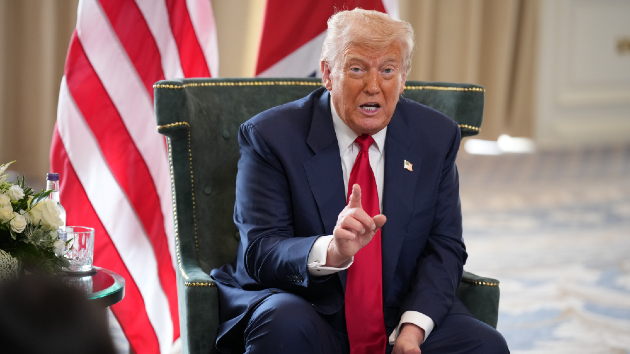
(WASHINGTON) — Kids in America’s public schools will soon be lacing up their sneakers for the Presidential Fitness Test as President Donald Trump is set to announce its return more than a decade after it was discontinued.
Trump will sign an executive order on Thursday that will expand the President’s Council on Sports, Fitness & Nutrition and bring back the Presidential Fitness Test in public schools, White House Officials confirmed to ABC News.
The fitness test, which began under former President Dwight Eisenhower in 1956, will return after it was discontinued in 2012 during former President Barack Obama’s presidency. Obama replaced it with the Presidential Youth Fitness Program, a comprehensive school-based program that promoted living an active and healthy lifestyle.
While there have been different versions of the Presidential Fitness Test, the one most are familiar with includes a one-mile run, pull-ups or push-ups, sit-ups, shuttle run and sit-and-reach, according to Harvard Health. It’s not yet clear what will be included in the Trump administration’s Presidential Fitness Test.
“President Trump wants to ensure America’s future generations are strong, healthy, and successful. President Trump wants every young American to have the opportunity to emphasize healthy, active lifestyles — creating a culture of strength and excellence for years to come,” White House press secretary Karoline Leavitt told ABC News in a statement on Thursday.
It’s all part of the administration’s goal to develop “bold and innovative fitness goals” for young Americans — a move that aims to foster a new generation of healthy, active individuals, the White House official said.
Trump will sign the executive order Thursday afternoon where he will be surrounded by several athletes, including Kansas City Chiefs’ kicker Harrison Butker; professional golfer Bryson DeChambeau; Chief Content Officer of the WWE and son-in-law of Education Secretary Linda McMahon, Paul “Triple H” Levesque; and former New York Giants linebacker Lawrence Taylor, a registered sex offender.
The order comes as the Trump administration weighs in on sports — including a ban on transgender athletes participating in women’s sports. Also, the United States is set to host several major sports events over the course of Trump’s second term, including the Ryder Cup, the FIFA World Cup in 2026 and the summer Olympics in 2028.
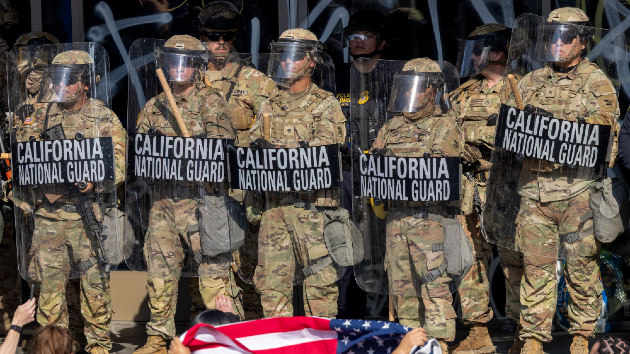
(LOS ANGELES) — The Pentagon has announced that 1,350 more federalized members of the California National Guard will be withdrawn from the security mission in Los Angeles that started in early June following protests against immigration raids carried out by Immigrations and Customs Enforcement (ICE). A remaining force of 250 National Guardsmen will remain in place to continue protecting federal government buildings and personnel in Los Angeles.
Close to 5,000 National Guard members and Marines were deployed to Los Angeles on June 7 for a mission that could potentially last up to 60 days, a time limit that ends next week.
“On Wednesday, Secretary Hegseth ordered the release of approximately 1,350 California National Guardsmen from the federal protection mission,” Sean Parnell, the Pentagon’s chief spokesman, said in a statement provided to ABC News.
“Approximately 250 California National Guardsmen remain in Los Angeles to protect federal personnel and property,” Parnell said. “We greatly appreciate the support of the more than 5,000 Guardsmen and Marines who mobilized to Los Angeles to defend Federal functions against the rampant lawlessness occurring in the city.”
In recent weeks the Pentagon had announced the withdrawals of 2,000 Guard members and 700 Marines, along with the reassignment of 150 Guard members to firefighting duty.
The initial mobilization came in the wake of protests following ICE raids in Los Angeles and was unusual in that they were ordered by the Trump administration instead of by Gov. Gavin Newsom. City officials labeled the deployment of the Guard and Marines as unnecessary and said that Los Angeles Police Department was more than capable of responding to the initial protests.
Because they were federalized National Guard and Marines, they were not able to carry out law enforcement duties, which is prohibited by law. However, during their mission to protect federal buildings and personnel, the mobilized military personnel had the authority to temporarily detain individuals before quickly transferring them to law enforcement personnel.
As the mission continued, some of the forces received training to accompany ICE personnel on immigration raids, though their role was specifically limited to providing force protection.
Michael A. McCoy/For The Washington Post via Getty Images
(WASHINGTON) — The federal government is paying more than 154,000 federal employees not to work as part of the deferred resignation program, an administration official confirmed to ABC News.
The updated figure, first reported by the Washington Post, includes thousands of government workers across dozens of agencies who took the buyout offers through June to maintain benefits and pay until the end of the fiscal year on Sept. 30.
It represents just over 6% of the 2.3 million federal civilian workforce.
To critics, the program has been administered haphazardly, throwing government offices into chaos and disrupting federal workers and programs indiscriminately, and prompting a number of legal fights between federal unions and the government — all of it at taxpayers’ expense.
“The American taxpayer ultimately is not only watching federal employees who are deeply interested in serving the public be sidelined, they’re having to pay for them too. It makes no sense at all,” Max Steier, the president and CEO of the Partnership for Public Service, told ABC News. “They’ve done ‘ready, fire, aim,’ instead of ‘ready, aim, fire.’ It’s detrimental to the capability of our government to meet our needs.”
To its proponents, the program has been an innovative way to streamline the federal government to focus on set priorities and recoup long-term cost savings after this fiscal year.
“Ultimately, the deferred resignation program was not only legal, it provided over 150,000 civil servants a dignified and generous departure from the federal government,” Office of Personnel Management spokeswoman McLaurine Pinover told ABC News. “It also delivered incredible relief to the American taxpayer. No previous administration has gotten even close to saving American taxpayers this amount of money in such a short amount of time.”
Former President Bill Clinton led an effort to reduce the federal workforce by more than 300,000 jobs, an initiative that took several years with congressional support.
The Office of Personnel Management could not tell ABC News how much the government is spending on salaries and benefits for workers who have not been working and are resigning — and how much the government has spent defending the “buyouts” in court.
In a report released Thursday, Senate Democrats estimated that the government has spent billions on workers who are on leave by choice or involuntarily due to litigation — and that the entire Department of Government Efficiency cost-saving campaign led by Elon Musk has cost the government $21.7 billion because of mistakes and waste.
The $21.7 billion figure provided by Democrats is an estimate that might include figures disputed by the administration. It also includes an estimate for 200,000 employees in the “buyout” program, when the actual figure is 154,000.
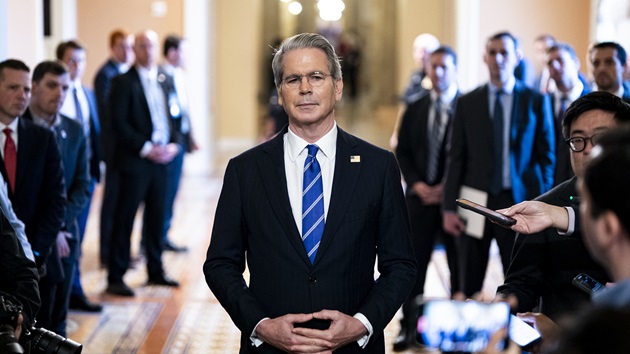
(WASHINGTON) — Treasury Secretary Scott Bessent is trying to walk back his suggestion that the so-called Trump savings accounts for newborns could be a “back door” to start privatizing Social Security.
Bessent made the comments in an interview with Breitbart while he was speaking at length about the importance of financial literacy.
“But in a way, it is a back door for privatizing Social Security,” Bessent said.
In a social media post on Wednesday evening, Bessent sought to clarify his remarks.
“Trump Baby Accounts are an additive benefit for future generations, which will supplement the sanctity of Social Security’s guaranteed payments,” Bessent wrote on X. “This is not an either-or question: our Administration is committed to protecting Social Security and to making sure seniors have more money.”
The “Trump Savings Accounts” were part of his megabill agenda narrowly passed by congressional Republicans earlier this month. The policy will deposit $1,000 into a tax-deferred, low-cost index fund account that will track the overall stock market for each newborn.
Additional contributions can go up to $5,000 annually. When the children reach adulthood, they can access funds to cover expenses such as college or a down payment on a home.
If a child is born after December 31, children under the age of 18 will have one thousand dollars put in their accounts for investment purposes.
The program is a new initiative to promote financial literacy among Americans.
“And, you know, people can put in up to certain amounts every year for their child, and they can invest that stuff in the market, and they can learn how to do this,” Bessent said in his interview with Breitbart.
When asked if companies matching would be a good thing, Bessent responded positively, saying it would be a “great thing.”
“At the end of the day, I’m not sure when the distribution level date should be. Whether should it be 30 and you can buy a house? Should it be 60? But in a way, it is a back door for privatizing Social Security,” Bessent said. “Social Security is a defined benefit plan paid out to the extent that if all of a sudden, these accounts grow and you have hundreds of thousands of dollars for your retirement, then that’s a game changer, too.”
Several Democrats quickly criticized Bessent’s comments.
Senate Minority Leader Chuck Schumer, a New York Democrat, slammed the treasury secretary in floor remarks on Thursday.
“Now, of course, Secretary Bessent had rushed to Twitter later to do a little cleanup, but the truth came out, the real truth,” Schumer said. “Actions speak louder than words, and the actions Donald Trump and his gang are taking against Social Security speaks volumes.”
“Well, Republicans said the quiet part out loud: They want to ‘privatize Social Security.’ Your money. Your benefits. Sold to the highest bidder. So much for standing with seniors,” Rep. Katherine Clark, the Democratic whip, wrote on X on Wednesday.
“Today the Treasury Secretary said the quiet part out loud: Republicans’ ultimate goal is to privatize Social Security, and there isn’t a backdoor they won’t try to make Wall Street’s dream a reality,” Rep. Richard Neal, the top Democrat the House Ways and Means Committee, said in a statement on Wednesday. “For everyone else though, it’s yet another warning sign that they cannot be trusted to safeguard the program millions rely on and have paid into over a lifetime of work.”
AARP, an interest group that focusing on issues affecting those 50 and older in the U.S., also pushed back on Bessent.
“AARP condemns Treasury Secretary Scott Bessent’s endorsement of a “backdoor” to Social Security privatization. We have fought any and all efforts to privatize Social Security, and we will continue to,” said AARP Senior Vice President of Campaigns John Hishta. “President Trump has emphasized many times that Social Security ‘won’t be touched,’ and that he is ‘not going to touch Social Security.’ This must include any and all forms of ‘privatization.'”
ABC News’ Alexandra Hutzler contributed to this report.
Photo by NYPD News X Account / Handout/Anadolu via Getty Images
(NEW YORK) — Politicians, relatives and members of the New York City Police Department are gathered at the funeral for the “hero” officer who was one of four people killed in the Midtown Manhattan mass shooting.
Islam, a Bangladeshi immigrant who joined the NYPD four years ago, is survived by his wife, who is eight months pregnant, and two young sons. Islam was assigned to a precinct in the Bronx and previously worked as a school safety officer.
“The pain is searing,” New York Gov. Kathy Hochul said at Thursday’s funeral at Parkchester Jame Masjid, a mosque in the Bronx.
“There’s a family that expected to see their beloved, son, husband, father for many more dinners, birthdays and life celebrations,” she said. “But because of a madman, who traveled a thousand miles with such evil in his heart, to come and destroy all that is good about New York and New York City, with intent to cause unspeakable pain in a savage way — we are here.”
“The Quran says, ‘Whoever saves a life, is it as if they saved all of humanity,'” she said. “This officer saved lives. He was out front. Others may be alive today because he was the barrier.”
New York City Mayor Eric Adams, who met with Islam’s family on Wednesday, said at the funeral, “I’m angry that a dad has lost his son, that a mother has lost her child. I’m angry that two boys are not going to grow up and be with their father.”
But he added, “I’m filled with hope and optimism today because of the life of officer Islam. And I commend the mother and father of our officer — they instilled something special in him.”
“Our hearts lift him up in prayer,” he said. “Our city is with you. As one parent to another, I will continue to pray for you and your family.”
“He was doing the job that we asked him to do,” New York Police Commissioner Jessica Tisch said earlier this week. “He put himself in harm’s way. He made the ultimate sacrifice, shot in cold blood, wearing a uniform that stood for the promise that he made to this city. He died as he lived — a hero.”
The other three victims killed on Monday were: Aland Etienne, a security guard for the building; Wesley LePatner, a Blackstone executive who was a wife and mom; and Julia Hyman, a young employee at Rudin Management.
Schumer said Tuesday in a message to the families, “You are not alone. All of New York grieves with you. … The city will carry their memories forward.”
(WASHINGTON) — President Donald Trump on Thursday sharply criticized India over its trade policy, escalating a series of attacks as the White House readies to ratchet up tariffs on the country.
The Trump administration plans to slap 25% tariffs on Indian products and impose additional penalties starting on Friday, the president said on social media. The incendiary rhetoric toward India comes as Trump also prepares to impose new levies on dozens of other countries.
The White House has faulted India for high tariffs that Trump views as an effort to shut out U.S. producers. In recent days, Trump has also condemned India over its decision to continue purchasing Russian oil throughout the Russia-Ukraine war.
India’s tariffs are “far too high, among the highest in the World,” Trump said on social media.
In a statement on Wednesday, the Indian government said it had “taken note” of Trump’s comment and would “study its implications.”
Here’s what to know about the U.S.-India trade feud and why it matters:
Where does Trump’s trade feud with India stand?
Trump is set to hike tariffs on India to 25% on Friday, putting them one percentage point below the level of levies threatened in a Rose Garden ceremony on April 2.
A 25% tariff would set levies with India at a higher rate than the 15% tariffs placed on the European Union and Japan as part of recent trade agreements. The threatened tariff on India would come in slightly below 30% tariffs slapped on China in May.
The proposed levies may complicate ongoing trade negotiations between the U.S. and India, which have sought to reach an agreement over multiple rounds of discussions spanning months.
India, the 12th-largest U.S. trade partner, has become a destination for some manufacturers that shifted production away from China in recent years. In May, Apple CEO Tim Cook said the company had moved production of iPhones sold in the U.S. to India as a means of avoiding high tariffs.
Overall trade in goods between India and the U.S. last year amounted to about $129 billion, the Office of the U.S. Trade Representative, or OTR, found. Top imports from India include apparel, chemicals, machinery and agricultural products.
Why is Trump targeting India?
In recent months, Trump has repeatedly criticized India for elevated tariffs on a range of products, including agricultural and dairy goods.
“We have, over the years, done relatively little business with them because their Tariffs are far too high,” Trump said in a social media post on Wednesday.
India has sought to protect its domestic industries with elevated tariffs on some goods, including levies exceeding 100%.
The U.S. ran a trade deficit in goods of about $45 billion in 2024, which marked a 5.4% increase over the previous year, according to the OTR. By comparison, the U.S. notched a far larger trade deficit with China of $295 billion last year.
More recently, Trump has taken issue with India’s decision to continue buying Russian oil over the course of the Russia-Ukraine war.
India is “Russia’s largest buyer of ENERGY, along with China, at a time when everyone wants Russia to STOP THE KILLING IN UKRAINE,” Trump said on social media on Wednesday.
How has India responded to Trump’s threats?
In a statement this week, the Indian government struck a measured but firm tone in response to Trump.
“India and the US have been engaged in negotiations on concluding a fair, balanced and mutually beneficial bilateral trade agreement over the last few months,” the Indian government said on Wednesday. “We remain committed to that objective.”
“The Government will take all steps necessary to secure our national interest,” the statement added.
The two sides are expected to meet for another round of trade discussions in late August.
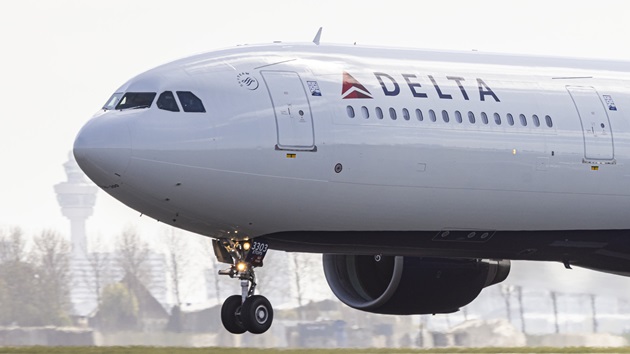
(MINNEAPOLIS) — Twenty-five people aboard a Delta Air Lines flight from Salt Lake City to Amsterdam were hospitalized after the flight encountered “significant” turbulence and was diverted to Minneapolis-St. Paul, the airline said.
Delta Air Lines Flight 56 landed safely at the Minneapolis-St. Paul International Airport shortly before 8 p.m. local time Wednesday, the airline said. The flight was operating on an Airbus A33-900 with 275 passengers and 13 crew members on board.
The Minneapolis-St. Paul Fire Department and paramedics responded to the gate to provide initial medical attention, the Metropolitan Airports Commission said.
The airline said 25 of those on board were taken to the hospital “for evaluation and care.” All have since been released, the airline said Thursday.
Leeann Nash, who was on the flight with her husband, told Minneapolis ABC affiliate KSTP that dinner service had just started on the flight when the turbulence came out of nowhere.
“There was actually no warning. It was a very abrupt, hard hit,” Nash said. “If you didn’t have your seat belt on — everyone that didn’t — they hit the ceiling, and then they fell to the ground, and the carts also hit the ceiling and fell to the ground, and people were injured, and it happened several times, so it was really scary.”
Nash said there were “glass bottles flying around.”
“And you know, those carts are very heavy, so we were fortunate that we had seat belts on at the time, but we still saw cellphones flying around quite a bit,” Nash added. “But I will hand it to the flight attendants, they were incredibly calm, very well trained and very responsive.”
The Federal Aviation Administration said it is investigating.
(WASHINGTON) — A panel of appeals court judges on Thursday voiced deep skepticism with the Trump administration’s attempt to justify sweeping tariffs based on a national emergency.
As the clock ticks down to President Donald Trump’s Aug. 1 deadline for the resumption of reciprocal tariffs, the U.S. Court of Appeals for the Federal Circuit is hearing arguments Thursday over whether Trump’s sweeping tariffs are lawful.
A group of small businesses and a coalition of states are asking the appeals court to invalidate the bulk of Trump’s tariffs, arguing that Trump overstepped his power when he used a decades-old economic emergency statute to enact a flurry of tariffs in April.
“The President’s chaotic assertion of that purported authority, which changed by the day and wreaked havoc on capital markets and the economy, illustrates both the breadth of powers that the President claims and the danger of unlimited authority in this domain,” the coalition of states argued in their brief to the court.
At the start of Thursday’s hearing, judges on the appeals court panel questioned why Trump is relying on a law that has never been used to justify tariffs, saying that the law itself never mentions the word “tariffs” and voicing concern that the president justifying the unilateral action based on an emergency could amount to “the death knell of the Constitution.”
The hearing comes at a critical time for Trump, as he rushes to complete trade deals ahead of a self-imposed Friday deadline for dozens of reciprocal tariffs to restart. Lawyers for the Trump administration have argued that a court invalidating the tariffs would create a “foreign policy disaster scenario” as trade negotiations remain ongoing.
“To all of my great lawyers who have fought so hard to save our Country, good luck in America’s big case today,” Trump wrote on his social media platform Thursday morning. “If our Country was not able to protect itself by using TARIFFS AGAINST TARIFFS, WE WOULD BE ‘DEAD,’ WITH NO CHANCE OF SURVIVAL OR SUCCESS.”
The legal authority for Trump’s tariffs was thrown into uncertainty in May when the New York-based Court of International Trade ruled that the president did not have the power to unilaterally impose his global “Liberation Day” tariffs, as well as the tariffs on China, Mexico, and Mexico that Trump imposed to combat fentanyl trafficking.
A federal appeals court quickly stayed the Court of International Trade’s decision before it could take effect, while the Trump administration’s appeal worked its way through the courts.
At issue is whether Trump had the authority to enact tariffs without authorization from Congress through the International Emergency Economic Powers Act, which gives the president the power to impose tariffs under an “unusual and extraordinary threat.”
While the Trump administration has argued that the tariffs combat fentanyl trafficking and seek to settle the country’s trade imbalances, the Court of International Trade was unconvinced that the Trump administration demonstrated an “unusual and extraordinary threat” and that those tariffs “deal with the threats.”
In court filings, the Trump administration has argued that court’s decision is “riddled with legal errors” and “would significantly harm the United States if it were to take effect.” They have justified the tariffs by citing the country’s fentanyl crisis and the “grave threats to the United States’ national security and economy” stemming from trade imbalances.
“President Trump has found that America’s exploding trade deficit, the implications of that deficit for our economy and national security, and a fentanyl importation crisis that has claimed thousands of American lives constitute national emergencies,” lawyers with the Department of Justice have argued.
The Trump administration has also argued that invalidating the tariffs would “deprive the United States of a powerful tool for combating systemic distortions in the global trading system, thus allowing other nations to continue to hold American exporters hostage to their unreasonable, discriminatory, and sometimes retaliatory trade policies.”
The group of small businesses and state attorneys general have pushed back against those claims, arguing that the International Emergency Economic Powers Act does not give Trump “unlimited tariff authority” and that he has failed to prove “an unusual and extraordinary threat.”
“The President’s chaotic assertion of that purported authority, which changed by the day and wreaked havoc on capital markets and the economy, illustrates both the breadth of powers that the President claims and the danger of unlimited authority in this domain,” they wrote.
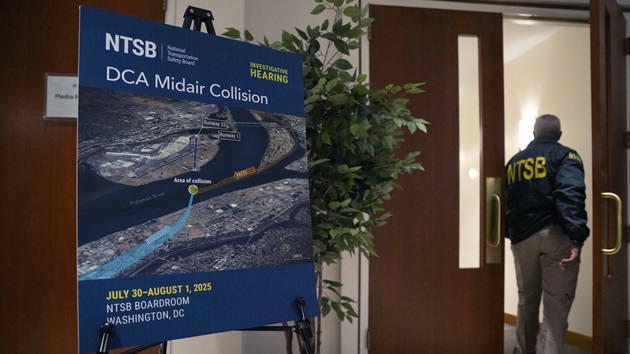
(WASHINGTON) — The National Transportation Safety Board on Thursday continued to grill officials from the Army, air traffic controllers and members from the Federal Aviation Administration over protocols following the January deadly air collision between a Black Hawk helicopter and a passenger jet approaching Ronald Reagan Washington National Airport (DCA.)
The hearing, the second of three days, is focused on the training guidance of the parties involved in the Jan. 29 incident that resulted in the deaths of 67 people. NTSB started the daylong hearing examining the responsibilities and readiness of DCA’s air traffic controllers.
Clark Allen, the former operations manager of the control tower at DCA, was asked Thursday about the training for the air traffic controllers. Allen said they have been trained to flag a supervisor and ask for additional help if they are being overwhelmed, but said there is no training for supervisors to proactively look out for that pile up of duties.
On Wednesday, the NTSB revealed that the pilots of a Black Hawk helicopter likely didn’t know how high they were flying or how close they were to an airliner before the deadly crash — potentially because of faulty altimeters inside the series of Black Hawk helicopters like the one they were flying.
Nick Fuller, the FAA’s acting deputy chief operating officer of operations, testified Thursday that it is up to the pilot to maintain visual separation while in the air.
“It is the pilot’s responsibility, but air traffic controllers will go the extra mile to make sure we are providing extra information as necessary,” he said.
Later asked if DCA was safe for flights, Fuller said it was.
“The controllers at DCA are responsible, well trained and I would have no problem leaving on a flight in or out of that airport,” he said.
NTSB Chair Jennifer Homendy alleged on Wednesday that some FAA tower employees knew there “was a problem” with U.S. Army helicopters flying in close proximity to passenger aircraft near the airport.
The agency also revealed that the warnings to the helicopter from air traffic control were “stepped on” as a microphone button was being pushed at the same time as the controller.
Homendy, however, said it’s possible that the midair collision was not due to pilot error.
“So it’s always easy for people to focus on there was a pilot error here. We don’t know. We’re going to look but it’s possible there was zero pilot error here,” she told reporters Wednesday.