
In battleground Wisconsin, voters could grow liberal majority on state Supreme Court

In battleground Wisconsin, voters could grow liberal majority on state Supreme Court
A view of the Wisconsin State Capitol at sunset on February 3, 2026 in Madison, Wisconsin. (Photo by Joe Timmerman/Catchlight/Wisconsin Watch via Getty Images)

(MADISON, Wis) — Wisconsinites will vote for a new state Supreme Court justice on Tuesday in a race that could maintain or widen the court’s liberal majority for years.

In a state home to some of the country’s tightest races, Democrats have won four of the last five Supreme Court elections by large margins. President Donald Trump carried Wisconsin by less than a percentage point in 2024.  

Wisconsin Court of Appeals Judges Chris Taylor and Maria Lazar are competing for an open seat to replace retiring conservative-aligned Justice Rebecca Bradley. Unlike last year’s race, the ideological balance of the court is not in play. Yet the seven-member body has resolved disputes between the GOP-controlled state legislature and the Democratic governor.

In 2020, the court narrowly rejected a Trump lawsuit that would have tossed out more than 220,000 absentee ballots. And with the governor’s seat and control of the statehouse up for grabs, this year could prove no different. Justices are elected to 10-year terms and could potentially hear election or redistricting-related litigation in the future.

Taylor is a former Dane County Circuit Court judge and former Democratic lawmaker representing deep-blue Madison in the state assembly. Lazar is a former Waukesha County Circuit Court judge and assistant attorney general during former Republican Gov. Scott Walker’s tenure.

Though the race is nominally nonpartisan, the candidates have received endorsements from political figures. Former President Barack Obama endorsed Taylor, while Republican congressmen, including GOP gubernatorial candidate Rep. Tom Tiffany, endorsed Lazar.

In 2023, liberals flipped the majority to 4-3 for the first time in 15 years. In 2025, another liberal victory preserved their control of the court until at least 2028.

Lazar is a self-described constitutional conservative who has focused her messaging on restoring impartiality to the court. She called Taylor “a radical, extreme legislator” while her opponent labeled Lazar as an extremist with a “right-wing political agenda” in a debate aired Thursday by ABC affiliate WISN.

The shadow of Wisconsin’s 1849 abortion ban, struck down by the court in 2025, also loomed large this year.

Asked how she would have ruled on that case, Lazar declined to answer. But she reiterated that she will honor the ruling, which reinstated what she called the “20-week compromise” in place before the reversal of Roe v. Wade.

Though this race is attracting less national attention than in years prior, Taylor campaigned on similar issues that have worked in Democrats’ favor. A former policy director for Planned Parenthood of Wisconsin, her messaging has focused on protecting abortion and democracy.

She also hasn’t shied away from addressing bread-and-butter issues. In one ad, she warned of rising costs and “extremists” stripping Wisconsinites of food assistance.

Taylor entered the race in May 2025. She significantly outraised and outspent Lazar, who launched her campaign five months later. Taylor raised nearly $2.1 million between Feb. 3 and March 23, while Lazar raised about $474,000 in the same period.

Compared to the record-setting levels of spending in the 2025 race, it’s a drop in the bucket. That race saw total spending surpass $100 million, according to the Brennan Center for Justice.

Tesla CEO and billionaire Elon Musk barnstormed Wisconsin that year, handing out controversial million-dollar checks and warning “Western civilization” was at stake.

There are roughly 3.6 million active registered voters in the state as of this month, according to the Wisconsin Elections Commission. The latest tally shows that 324,396 people voted early.

Polls are open from 7 a.m. to 8 p.m. Central time. The new term will take effect on Aug. 1.

Copyright © 2026, ABC Audio. All rights reserved.

Closing arguments expected Tuesday in Hawaii trial of doctor accused of trying to kill wife during hike

Closing arguments expected Tuesday in Hawaii trial of doctor accused of trying to kill wife during hike
Gerhardt Konig testifies during his attempted murder trial in Honolulu, April 2, 2026. (Pool via ABC News)

(OAHU, Hawaii) — Closing arguments are expected to be delivered and jury deliberations to begin on Tuesday in the trial of a Hawaii doctor accused of trying to kill his wife on a hiking trail.

Dr. Gerhardt Konig, 47, has pleaded not guilty to second-degree attempted murder. Prosecutors allege the anesthesiologist attacked his wife, Arielle Konig, near a cliff while on the Pali Puka Trail on Oahu on March 24, 2025, by pushing her near the edge and then beating her multiple times with a rock.

The defense, meanwhile, has alleged that Arielle Konig attacked her husband first, and that he hit her with the rock in self-defense.

Both Gerhardt Konig and his wife, who have two young sons together, took the stand during the three-week trial in Honolulu, presenting widely differing accounts of what happened on the hike.

Arielle Konig testified that the two had traveled to Oahu from their home in Maui to celebrate her birthday. She said they had been working on repairing their marriage after her husband found what she characterized as “flirty” WhatsApp messages between her and a colleague in December 2024 in what she said was an “emotional affair.”

Arielle Konig testified that during the hike, her husband pushed her toward the edge of the cliff. As they wrestled on the ground with him on top, pinning her down, he produced a syringe and vial, she said.

Arielle Konig further testified that her husband proceeded to beat her with a rock as many as 10 times, and that she believed he was trying to knock her unconscious in order to drag her over the edge of the cliff.

Arielle Konig testified that she fought back by biting her husband’s forearm and pleaded with him, saying, “You can’t do it,” and that “our kids will be orphans — you’ll go to jail and I’ll be dead.”

“He’s saying, ‘You’re done. We’re done with you. We don’t need you anymore. You’re done. You’re done,'” she told the court.

Arielle Konig testified that she yelled, “He’s trying to kill me,” and screamed for help, and two female hikers happened upon them. One of the hikers told a 911 operator, “Someone’s currently being attacked on the top of Pali Puka. There’s a man trying to kill her,” according to audio of the call played in court.

Prosecutors showed photos of Arielle Konig’s bloodied face following the incident. She testified that she crawled away from her husband and was helped down the rest of the trail by the two women. She said she was treated at a hospital for “severe complex scalp lacerations” and showed the court scarring on her scalp.

Gerhardt Konig testified in his own defense over two days, maintaining that he never intended to hurt his wife and acted in self-defense when he struck her with the rock.

He told the court that his wife pushed him near the edge after they got into an argument about her affair, and that she hit him with a rock first while they struggled on the ground. He admitted to hitting her with the rock while on top of her, saying he struck her twice, though he denied having any syringes or trying to pull her toward the cliff’s edge.

Gerhardt Konig testified that he felt suicidal after the incident.

“I just felt hopeless at that point in terms of everything,” he said. “I felt horrified about what I did to her, that I had caused this to her, that I had resorted to violence against my wife, the person who I love the most in the world. And I just kind of felt hopeless in terms of our relationship, too.”

Shortly after the incident, Gerhardt Konig testified, he made a FaceTime call to his 20-year-old son from his prior marriage, Emile Konig, to say goodbye.

His son testified about the FaceTime call during the trial. Asked by the prosecutor to recount what his father said during the call, Emile Konig responded, “That he would not be making it back to Maui and to take good care of the younger kids, and that Ari, my stepmom, had been cheating on him, and that he tried to kill her.”

“During that call, the next plan that he said was to jump off the cliff,” Emile Konig testified, adding that his father said he was “at the end of his rope.”

Gerhardt Konig pushed back against his son’s testimony and denied making any confession. He told the court that what he said during the call was, “She said I tried to kill her.”

Gerhardt Konig was arrested following an hourslong manhunt, prosecutors said.

Arielle Konig filed for divorce in May 2025, seeking full custody of the couple’s two children.  

Gerhardt Konig, who worked as an anesthesiologist on Maui, has been in jail since his arrest. Following his arrest, Maui Health said his medical staff privileges at Maui Memorial Medical Center have been suspended pending investigation. 

Copyright © 2026, ABC Audio. All rights reserved.

In Georgia runoff election to replace Marjorie Taylor Greene, 2 veterans pitch opposing views on Iran war

In Georgia runoff election to replace Marjorie Taylor Greene, 2 veterans pitch opposing views on Iran war
Former Rep. Marjorie Taylor Greene (R-GA) speaks during a hearing with the House Committee on Homeland Security in the Cannon House Office Building on December 11, 2025 in Washington, DC. (Photo by Anna Moneymaker/Getty Images)

(WASHINGTON) — In Georgia runoff election to replace Marjorie Taylor Greene, 2 veterans pitch opposing views on Iran war

In the special election runoff in Georgia’s deep-red 14th Congressional District, the two military veterans who are running to replace former GOP Rep. Marjorie Taylor Greene find themselves with differing views on the ongoing Iran war.

The two candidates, Democrat Shawn Harris and Republican Clay Fuller, will go head-to-head at the ballot box on Tuesday, in a special election runoff that will serve as one of the fist glimpses into the role the war in Iran  — something Greene and other members of the Make America Great Again movement have criticized — might play in this year’s midterms.

Harris, a retired Army brigadier general, told moderators at an Atlanta Press Club debate last month that the Iran war is “not a war we should be in.”

“I spent 40 years in the military. The reality of it is, this war that we’re in right now is a war of choice,” Harris said.

Harris’ Trump-backed opponent holds a different view on the war.

Fuller, who served overseas with the Air National Guard, said on the debate stage that “our country is safer because of what President Trump has done regarding Iran.”

Greene has been outspoken about her opposition to the war, saying as recently as Sunday in a statement on X that Trump “has gone insane.”

“This NOT what we promised the American people when they overwhelmingly voted in 2024,” Greene wrote.

In an interview with ABC News, Harris slammed the Trump administration for failing to communicate their reasoning for military action to the public, and for the oil high prices caused by the war.

“The United States is suffering right now from these high oil prices, from these higher fuel prices, and this very high diesel. And because I live in a rural area, we are also suffering from the high inflation on fertilizer,” Harris, who runs a cattle farm, told ABC News.

“I 100% support our military. They are doing an outstanding job,” Harris added. “We will win this war militarily. However, we can lose this war politically.”

Fuller, the district attorney for the Lookout Mountain Judicial Circuit, declined to be interviewed by ABC News for this story.

Carl Cavalli, a political science professor at the University of North Georgia, told ABC News that dissatisfaction with the war in Iran among Republicans might serve in Harris’ favor.

A recent CNN poll found that 28% of Republicans disapprove of the Iran war.

“I don’t know whether it’s nearly enough to overcome the heavy Republican majority in the district, but as the war drags on, it could become more of an issue in the general election in November,” said Cavalli.

Greene’s surprise resignation from the House earlier this year led to a jam-packed March 10 special election where no one candidate won 50% of the vote. Harris and Fuller finished in the top two, advancing to Tuesday’s runoff.

But the runoff is only to fill the remainder of Greene’s term, meaning whoever wins will have to run again in a separate election for a full two-year term that begins with next month’s party primaries, meaning Georgians could see a Fuller-Harris rematch come November.

In a district Trump won by 39 points in 2024, Fuller remains the strong favorite to win on Tuesday.

“The 14th District is united behind President Trump and his candidate Clay Fuller because they understand we can’t afford to give any ground to the radical left or their candidates,” Fuller campaign spokesperson Will Hampson told ABC News in a statement.

But the coalition of Democrats, independents and Republicans that Harris has built has caught the attention of moderate national Democrats such as Pete Buttigieg, another military veteran, who traveled to the northwest Georgia district to stump for Harris last month.

Harris drew comparisons between himself and the former mayor of South Bend, Indiana, telling ABC News that both politicians are “stand-alone leaders.”

“I’m a Democrat, but I am not tied to the party. And that simply means I don’t care if you’re Democrat, independent or Republican. If you live in Northwest Georgia … I work directly for you, nobody else,” Harris said. 

Copyright © 2026, ABC Audio. All rights reserved.

After sweeping SCOTUS presidential immunity ruling, Trump wields it broadly in push for power

After sweeping SCOTUS presidential immunity ruling, Trump wields it broadly in push for power
Justices of the US Supreme Court during a formal group photograph at the Supreme Court in Washington, DC, US, on Friday, Oct. 7, 2022. (Eric Lee/Bloomberg via Getty Images)

(WASHINGTON) — Nearly two years after the Supreme Court’s monumental 2024 decision granting President Donald Trump sweeping immunity from prosecution, the ruling’s broader impact on American government is beginning to come into focus as Trump and his lawyers repeatedly invoke the case in an effort to get the justices to endorse expansive presidential power.

“That’s not a coincidence, it’s a strategy,” said James Sample, a constitutional scholar at Hofstra Law and ABC News legal contributor. “They’re not just invoking a precedent, they’re building an architecture.”

An ABC News review of the unprecedented 29 Trump emergency applications to the Supreme Court in his second term found that nearly a third directly cited Chief Justice John Roberts’ majority opinion in the immunity case, Trump v. U.S.

Trump attorneys reference portions of the court’s immunity decision at least 21 times to argue for “unrestricted” presidential power to fire executive branch employees; unreviewable control over “matters related to terrorism, trade and immigration;” and absolute authority as commander-in-chief to deploy troops to aid domestic law enforcement.

The Constitution “creates an ‘energetic, independent executive,’ not a subservient executive,” Solicitor General John Sauer wrote the court, quoting Roberts, in a September request to allow Trump to remove Federal Reserve Board Governor Lisa Cook.

“These aren’t random citations,” Sample said. “The White House Counsel’s Office has read that opinion very carefully, and they are using it methodically.”

The court is still crafting a decision in the Cook case but has generally embraced the administration’s broad view of presidential authority to remove federal employees and supervise agencies.

Since January 2025, however, the justices have not referenced Trump v. U.S. to justify any of its decisions in favor of the Trump administration, leading some court analysts to question why the conservative majority has avoided explicitly invoking its own precedent.

“We just don’t know yet what this case means, and it will be up to a future Supreme Court to define it,” said Sarah Isgur, SCOTUS blog editor and ABC News legal contributor.

On several occasions, Trump appeals relying on the immunity decision have been rejected.

The court declined to embrace Trump administration claims in April 2025 that the deportation of Kilmar Abrego Garcia was interwoven with the president’s “important foreign relations responsibilities,” which Roberts had indicated in the immunity decision were off limits for judicial review.

A majority of justices also rejected Trump’s argument that a lower court block on his National Guard deployment in Chicago infringed on core constitutional powers as commander-in-chief, which were detailed in Roberts’ opinion in the immunity case.

“They have been making a more powerful president — with more complete control over the executive branch and its employees,” said Isgur of the high court’s conservative majority, “but also a weaker presidency that has to go back to Congress if it wants to move the law in any meaningful way.”

Some legal scholars note the Trump v. U.S. decision also broke new ground by putting in writing the idea that the president has exclusive authority to enforce federal law and unchecked prosecutorial discretion — an endorsement that some say has had at the very least a psychological impact on the president and his team.

Roberts’ opinion enshrines the idea that “investigation and prosecution of crimes is a quintessentially executive function” and that the president has “exclusive authority and absolute discretion to decide which crimes to investigate and prosecute.”

“The Justice Department will likely use [the ruling’s] discussion of the exclusive power over prosecution and investigation to push the bounds of this discretion,” wrote Harvard Law professor and former assistant attorney general during the George W. Bush administration Jack Goldsmith in a recent law review article.

Trump has asserted himself as the nation’s top law enforcer in his second term, personally directing the attorney general and other top officials on whom to investigate and whom to prosecute.

Trump has pushed indictments of many of his perceived opponents, including former FBI Director James Comey, New York Attorney General Letitia James, Federal Reserve Chairman Jerome Powell, California Sen. Adam Schiff, and former special counsel Jack Smith.

When six Democratic members of Congress posted a video telling military service members that they had the right not to carry out unlawful orders, Trump said the “traitors” should be “arrested and put on trial.” Efforts to secure an indictment subsequently failed.

The Supreme Court’s opinion in the Trump immunity case explicitly enshrines the president’s right to active involvement in the cases and others like them.

“The president may discuss potential investigations and prosecutions with the Attorney General and other Justice Department officials to carry out his constitutional duty to ‘take care that the laws be faithfully executed,'” Roberts wrote, quoting Article II of the Constitution. Later, Roberts adds on behalf of the court, a president has “exclusive authority over the investigative and prosecutorial functions of the Justice Department and its officials, and the president cannot be prosecuted for conduct within his exclusive constitutional authority.”

“Those quotes are also just true as a matter of the Constitution,” Isgur said. “That’s what a president is supposed to do. What’s new is using criminal prosecutors for partisan purposes — and there’s no quotes about that in the case.”

A majority of Americans, 55%, believe Trump is using the Justice Department to file unjustified criminal charges against his opponents, according to a November 2025 Marquette Law School poll; 45% think the charges have been justified.

At the same time, most Americans — 56% — disapprove of the way the Supreme Court is handling its job, compared with 44% who approve, the Marquette poll found.

“The Court has traditionally proceeded cautiously and carefully when marking out exclusive presidential power because the president is known to run hard when the Court recognizes such power. But it did the opposite in Trump v U.S.,” Goldsmith argues.

“The Court issued an incautious and overly broad ruling on exclusive presidential powers that presidents will use to their advantage against the other branches,” Goldsmith wrote, “until the Court, in more considered reflection, acknowledges its imprudence and alters course.”

Copyright © 2026, ABC Audio. All rights reserved.
Vance visits Hungary ahead of election that threatens Orbán’s authoritarian hold on power

Vance visits Hungary ahead of election that threatens Orbán’s authoritarian hold on power
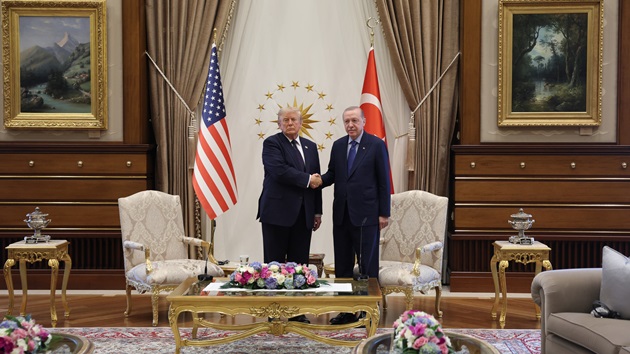
U.S. Vice President JD Vance meets with Hungarian Prime Minister Viktor Orban on April 7, 2026 in Budapest, Hungary. (Photo by Jonathan Ernst – Pool/Getty Images)

(WASHINGTON) — Vice President JD Vance is in Hungary on Tuesday, meeting with Prime Minister Viktor Orbán, an ally of President Donald Trump, ahead of the country’s April 12 election which could threaten Orbán’s long hold on power.

Orban faces criticism over the decline of democracy in the country as he and his allies have destroyed checks and balances and taken control of the country’s media.

He faces a strong challenge from opposition leader Peter Magyar, who was once part of the prime minister’s party but launched his own in 2024 and began attacking Orbán’s Fidesz party over alleged corruption.

The authoritarian leader has long been a close ally of Trump and was among the first European leaders to endorse him in the 2016 presidential election. Orbán’s nationalist party has become a model for MAGA populists, particularly for its aggressive stance on immigration.

Orban met with Trump three times in 2024, one of those visits coming after Trump won the 2024 election. Orbán has spoken several times at the Conservative Political Action Conference, known as CPAC.

Most recently, Orbán, also an ally of Russian President Vladimir Putin, visited Trump at the White House in November, where he received a special exemption from sanctions imposed on Russian oil because of its invasion of Ukraine. Hungary is a major importer of Russian energy and the sanctions would have impacted the country’s already weakening economy.

While Hungary is a member of the European Union, Orbán has repeatedly attacked it and clashed with his European counterparts on several issues, including Russia’s war in Ukraine, using his veto power to try to block the EU’s efforts to support Ukraine.

Trump has already endorsed Orban in his reelection bid and has praised him, calling him “strong and powerful.”

During his visit, Vance will hold bilateral meetings with Orbán and publicly deliver remarks on the U.S.-Hungary partnership.

In a statement to ABC News, a spokesperson for Vance said that the vice president is looking forward to his visit and building “on the progress President Trump and Prime Minister Orbán have made on many key issues, including energy, technology, and defense.”

Vance’s trip to Hungary follows Secretary of State Marco Rubio’s visit in February, during which he reinforced the Trump administration’s support of the embattled Orbán.

“I can say to you with confidence that President Trump is deeply committed to your success because your success is our success, because this relationship we have here in Central Europe through you is so essential and vital for our national interests in the years to come,” Rubio said then.

In early 2025, Vance delivered blistering remarks at the Munich Security Conference, where he made the argument to European lawmakers to pay attention to the interests of conservative voters, take stronger actions on immigration and that Europe was moving towards censorship and away from Democracy.

Vance’s remarks were not well received by many European allies, with German Defense Minister Boris Pistorius saying at the time that it appeared that Vance was comparing parts of Europe to “authoritarian regimes,” calling it “unacceptable.”


Copyright © 2026, ABC Audio. All rights reserved.

Trump shares dramatic new details about aviator’s rescue in Iran

Trump shares dramatic new details about aviator’s rescue in Iran
US President Donald Trump takes a question from a reporter after signing an executive order in the Oval Office of the White House in Washington, DC, on March 31, 2026. (Photo by Brendan SMIALOWSKI / AFP via Getty Images)

(WASHINGTON) —  President Donald Trump on Monday shared new details about the harrowing lengths a U.S. aviator shot down in Iran went through to keep himself alive and the scope of the mission to rescue him.

“Despite the peril, the officer followed his training and climbed into the treacherous mountain terrain and started climbing toward a higher altitude, something they were trained to do in order to evade capture,” Trump recounted in a briefing on the operation to the media. “He scaled cliff faces, bleeding rather profusely, treated his own wounds, and contacted American forces to transmit his location.”

Trump said the weapons system officer, who ejected along with the pilot from an F-15 fighter jet, was “injured quite badly” and stranded in an area “teeming” with members of the Iranian Revolutionary Guard Corps, militia and local authorities.

The pilot was rescued in a separate and challenging broad daylight mission on Friday.

But finding the second aviator, who landed miles away, was “comparable to hunting for a single sand of grain of sand in the middle of a desert,” CIA Director John Ratcliffe said.

Trump said the U.S. has taken out Iran’s radar and air defense capabilities but the F-15 was shot down by a shoulder-launched, heat-seeking missile.

“They had probably a little luck because you got to get lucky,” the president said.

Trump said the second rescue mission involved involved “hundreds” of service members and 155 aircraft, including four bombers, 64 fighters, 48 refueling tankers, 13 rescue aircraft and others, as well as efforts to deceive the Iranians about where U.S. forces were searching.

“We had seven different locations where they thought, and they were very confused,” Trump said of the Iranians.

Secretary of Defense Pete Hegseth described Iran’s military as “embarrassed and humiliated” by the rescue.

Trump said the Central Intelligence Agency was responsible for finding “this little speck” in the mountainous area in which he was hiding.

Ratcliffe, the CIA director, said the U.S. deployed both human assets and “exquisite technologies that no other intelligence service in the world possesses” to locate the weapons system officer on Saturday, who was “concealed in a mountain crevice, still invisible to the enemy, but not to the CIA.”

Ratcliffe said some of the unique capabilities the CIA used are ones that only the president can deploy and that he would not publicly divulge what they were.

“As an agency, the CIA possesses unique capabilities that only the president can deploy. Some of these capabilities fall under covert action authorities. And because covert means exactly that, I’m not going to be able to tell you everything that you want to know,” Ratcliffe said.

Ratcliffe said finding the downed aviator was “comparable to hunting for a single sand of grain of sand in the middle of a desert.”

“This was also a race against the clock, as it was critical that we locate the downed aviator as quickly as possible, while at the same time keeping our enemies misdirected,” he added.

Hegseth said once the airman turned on his transponder, his first message was “God is Good.”

“In that moment of isolation and danger, his faith and fighting spirit shown through,” Hegseth said. 

Trump said once it was determined that the two airplanes used to ferry in troops and equipment could not take off from the soft, wet sand in the makeshift landing area, “we blew them up to smithereens” so that the technology they carried couldn’t be captured by the Iranians.

“And we had a contingency plan, which was unbelievable, where lighter, faster aircraft came in and they took them out. We blew up the old planes. We blew them up to smithereens, because we had equipment on the planes that, frankly, we’d like to take, but I don’t think it was worthwhile spending another four hours there taking it off,” he said.

ABC News’ Mariam Khan contributed to this report.

Copyright © 2026, ABC Audio. All rights reserved.
Woman stabbed to death while walking dog in Florida in random, ‘violent’ attack: Sheriff

Woman stabbed to death while walking dog in Florida in random, ‘violent’ attack: Sheriff
Kersten Francilus is seen in a photo released by the Martin County Sheriff’s Office. (Martin County Sheriff’s Office)

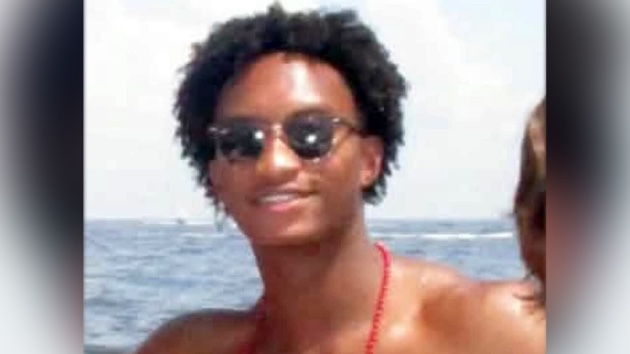
(MARTIN COUNTY, Fla.) — The suspect in the deadly, apparently random stabbing of an elderly woman who was walking her dog in Florida allegedly told authorities that he “went around” the neighborhood and “found a lady and then I killed her,” according to a probable cause affidavit.

The shocking, “extremely violent” attack occurred Thursday afternoon in Stuart, in the “quiet” community of Southwood, Martin County Sheriff John Budensiek said.

Several people had called 911 to report a “suspicious” man who was going door-to-door asking “where the new bank was,” Budensiek said at a press briefing Thursday, noting that there isn’t a bank in the area. The suspect — later identified as 25-year-old Kersten Francilus — reportedly appeared “out of it,” according to the affidavit.

At one house, the suspect asked for the bank and allegedly “attempted to step inside,” at which point the resident shut the door, according to the affidavit.

Shortly after those calls, people called 911 to report the stabbing, according to Budensiek. The victim was walking a small dog when she was “brutally attacked,” he said.

A good Samaritan tried to intervene but couldn’t get the assailant off the woman, the sheriff said.

A deputy who was already en route for the suspicious person arrived at the scene and saw the victim on the ground, according to Budensiek.

“Our suspect was on top of her, actually actively stabbing her,” Budensiek said.

The deputy got out of his vehicle and pulled out his gun, at which time the suspect threw the knife down, “giving up,” the sheriff said.

The deputy immediately took Francilus into custody, the sheriff said.

An off-duty deputy who had also responded rendered aid to the victim, Budensiek said. She was transported to an area hospital, where she died from “significant injuries,” the sheriff said. She had been stabbed multiple times in her upper torso, he said, calling it a “violent, violent homicide.”

The victim appeared to have 16 or 17 stab wounds, according to the affidavit, which identified her as Joyce Ellen Thompson Adams.

Francilus has been charged with first-degree premeditated murder. He refused a public defender and is being held on no bond, online court records show. ABC News’ attempts to reach members of his family for comment were unsuccessful.

After being read his Miranda Rights, Francilus allegedly admitted to the stabbing, according to the affidavit.

“He initially stated he left his residence and ‘did what I did,'” the affidavit stated. “He stated he ‘went around’ the neighborhood, and he said ‘I found a lady and then I killed her.'”

The suspect is believed to live in a nearby neighborhood with his mother, wife and child, Budensiek said. A steak knife used in the attack came from their home, according to the sheriff.

The suspect’s mother reportedly told detectives that Francilus “has not taken his medications since February,” according to the affidavit, which did not go into further detail. His mother also said she “usually stored the knives above the microwave, essentially hiding them from the suspect,” the affidavit stated.

A motive remains under investigation, according to the sheriff.

Francilus has no known criminal history or connection to the victim, Budensiek said. There was previously one call for service at his home, during which he was reported to have been “acting strange,” the sheriff said.

“We don’t know of any motive at this point. We don’t know of any nexus between the victim and the suspect,” Budensiek said. “We just simply know that we’ve had a horrendous crime that’s taken place in this neighborhood.”

Copyright © 2026, ABC Audio. All rights reserved.

What we know about the 45-day ceasefire proposal for war with Iran

What we know about the 45-day ceasefire proposal for war with Iran
President Donald Trump speaks as U.S. Secretary of War Pete Hegseth (C) and Chairman of the Joint Chiefs of Staff General Dan Caine look on. (Andrew Harnik/Getty Images)

(WASHINGTON) — President Donald Trump on Monday called a proposal to end the war with Iran a “significant step” but “not good enough” to persuade him to end his military campaign.

“They are negotiating now, and they have made a very significant step,” Trump said to reporters as he attended the annual White House Easter Egg Roll. “We’ll see what happens.”

It was not immediately clear which proposal Trump was referring to. The president had touted ongoing negotiations with more “moderate” parties but tensions ramped up over the weekend after the downing of a U.S. fighter plane.

According to a U.S. official and another person close to the ongoing talks, mediators are attempting broker a 45-day ceasefire between the U.S. and Iran ahead of Trump’s latest deadline, which calls for Iran to fully open the Strait of Hormuz by 8 p.m. ET on Tuesday or face attacks on bridges and energy infrastructure.

Iran signaled it would not accept the mediators’ proposal on Monday, responding instead with its own 10-point plan, which a U.S. official described as maximalist.

In the past, Iran has said it wants a permanent commitment from the U.S. to end the attacks rather than a shorter-term ceasefire.

Trump has moved the deadline several times citing progress in ongoing negotiations only to renew the threat of military destruction once again.

Both sources downplayed expectations that a deal could be reached in time, saying that so far Iran has refused to cede what it views as its main leverage in the negotiations: control over the Strait of Hormuz and its stockpile of highly enriched uranium.

“We are obliterating their country. And I hate to do it, but we’re obliterating and they just don’t want to say ‘uncle.’ They don’t want to cry, as the expression goes, ‘uncle.’ But they will,” Trump said. “And if they don’t, they’ll have no bridges, they’ll have no power plants, they’ll have no anything.”

But the president also seemed to acknowledge that the conflict was unpopular domestically.

“Unfortunately, the American people would like to see us come home,” he said.

Earlier on Monday, a White House official said the proposal was just “one of many ideas” and indicated that the president had not signed off on it.

Mediators are floating confidence-building measures aimed at bringing both sides closer to an agreement, sources say, and stressing to the Iranian regime that even though Trump has previously moved back deadlines he has set, Tehran would likely need to signal a willingness to make major concessions in order to buy more time for negotiations to play out.  

In their public messaging, Iranian leaders have signaled little room for compromise, issuing demands the U.S. views as maximalist.

Mediators have floated the idea that perhaps access to the Strait of Hormuz and the elimination of Iran’s uranium stockpile could be fully resolved after a ceasefire is reached. However, a U.S. official said it appeared highly unlikely the Trump administration could be convinced to accept those terms–particularly on the Strait of Hormuz. 

Copyright © 2026, ABC Audio. All rights reserved.

Why the US is pushing for the end of Cuban medical missions

Why the US is pushing for the end of Cuban medical missions
U.S. President Donald Trump talks with U.S. Secretary of State Marco Rubio as he departs the White House on March 20, 2026 in Washington, DC. (Chip Somodevilla/Getty Images)

(NEW YORK) — For more than 60 years, hundreds of thousands of Cuban health care workers have been deployed across the globe.

Under the government’s medical missions program, doctors, nurses, technicians and other staff are sent to countries around the world to provide care to underserved communities, in many cases for a fee.

The Cuban government has said the missions, or “medical brigades,” have entered countries at war, hit by natural disasters and ravaged by outbreaks of disease, saving thousands of lives.

Critics, including the Trump administration, have held a different view, claiming that the health professionals are coerced into volunteering, partly as a way to bring in much-needed currency, and that their movements are restricted. The U.S. State Department has referred to the missions as “forced labor” and has pressured countries to stop accepting Cuban medical workers.

“The Trump administration, Biden administration and U.N. have all understood that these medical mission programs are a forced labor scheme that exploit Cuban workers,” White House principal deputy press secretary Anna Kelly said in a statement to ABC News. “These labor export programs abuse the participants, enrich the corrupt Cuban regime and deprive everyday Cubans of essential medical care that they desperately need in their homeland.

Kelly noted President Donald Trump believes “Cuba is a disaster that’s in its last moments of life, and these programs are one of many ways that they repress their own people.”

Cuba’s Ministry of Foreign Affairs did not return multiple requests for comment from ABC News.

A White House official told ABC News there is vast opposition to the Cuban medical missions program across political parties, in both chambers of Congress and from international organizations.

The humans rights organization Prisoners Defenders said in 2020 that it submitted a report to the United Nations and the International Criminal Court claiming it has evidence of “a pattern of slavery” on the medical missions.

Countries including the Bahamas, Guatemala, Guyana, Honduras, St. Vincent and the Grenadines and Paraguay have begun phasing out the missions, reviewing medical cooperation agreements or canceling contracts with the Cuban government.

Some international relations experts told ABC News that there is some truth to the allegations that Cuban medical workers are often closely monitored by Cuba’s government, but that the medics are also providing care to communities that would otherwise not receive it.

History of the program

After the Cuban Revolution began in 1959, many doctors left Cuba for the U.S. Newly installed leader Fidel Castro saw an opportunity to set up programs to train doctors not just for Cuba but to be sent overseas as a type of medical diplomacy, according to John Kirk, a professor emeritus of Latin American Studies at Dalhousie University In Halifax, Nova Scotia, who has written several books on Cuba.

The first medical mission was a small team of doctors sent to Chile, which experienced the strongest earthquake ever recorded in 1960. The first medical brigade was sent to Algeria in May 1963. In the 1970s, medical missions expanded greatly to Latin America and Africa.

Some countries, like Gambia or Haiti — which are poorer — pay Cuba nothing for medical care, according to Kirk. However, richer countries such as Qatar pay the Cuban government a monthly fee, about 25% of which is given to the Cuban medical workers themselves, he noted. Qatar pays Cuba about $9,000 to $10,000 a month for these services, Kirk said.

Cuba’s Ministry of Foreign Affairs did not immediately reply to ABC News’ request for comment on how much countries pay Cuba for the service of medical workers.

Between 1960 and 2023, 600,000 doctors, nurses and technicians participated in this program in 165 different countries, according to the Cuban government.

As of 2024, Cuba had 54 brigades with more than 22,600 medical workers, according to Granma, the official newspaper of Cuba’s communist party.

Philip Brenner, a professor emeritus in the School of International Service at American University, with expertise in U.S.-Cuba relations, said one example of Cuba’s program was Operación Milagro in Venezuela, launched in 2004, to provide ophthalmology services.

“More than 1 million people regained eyesight, and it wasn’t a major operation,” Brenner told ABC News. “These were like cataracts that people had, but they had no access to medical care until the Cuban doctors came in. They served an enormous number of people around the world.”

Criticism of the program

The U.S. government has long been critical of the Cuban medical missions program, claiming health care professionals are forced into it and sending workers overseas deprives Cubans of the medical care they need at home.

In August, the State Department revoked visas and imposed visa restrictions on several Brazilian government officials, former Pan American Health Organization officials and their family members due to “complicity” with the Cuba’s “labor export scheme.”

“These officials were responsible for or involved in abetting the Cuban regime’s coercive labor export scheme, which exploits Cuban medical workers through forced labor,” Secretary of State Marco Rubio said in a statement.

Brazil’s government did not respond to the allegations but Brazilian President Luiz Inácio Lula da Silva revoked the visa of a U.S diplomat who sought to visit former President Jair Bolsonaro. Lula said the measure was reciprocal for the U.S. revoking visas in August, according to the Associated Press.

The Cuban government did not reply to ABC News’ requests for comment on these claims.

Kirk, the Dalhousie professor emeritus, said of the 270 Cuban medical professionals that he interviewed, most said they volunteered and were not forced to partake in these missions, but he acknowledged it doesn’t mean they weren’t forced.

Sebastián Arcos, interim director of the Cuban Research Institute at Florida International University, said no one is physically forced to participate in these missions, but the conditions in Cuba push many to work in the program to try and earn some money to support their families.

“The other [thing] is, once you participate, once you volunteer for one of these missions, you earn credits with the Cuban regime,” he told ABC News. “Any kind of acknowledgement or respect that you can get from the Cuban government will help your career.”

Arcos said he is familiar with the experiences of those on missions because his wife’s sister, Karem Montiel, was part of a Cuban medical brigade in Eritrea, Africa.

Montiel told ABC News she used to teach embryology at the University of Medical Sciences in Havana and was selected to join a medical brigade in 2010 to teach at Eritrea’s Orotta School of Medicine.

She said she had a good relationship with her students, but criticized the Cuban government’s involvment in the program .

“That is nothing else but slavery, 21st century slavery,” she said. “I was the one doing the work but [the Cuban government is] the one who gets the money. … They own all the Cuban doctors. They make the money, they get paid for those doctors being there, working, and they pay the doctors the bare minimum.”

Montiel said that working as a doctor in Cuba, she was paid the equivalent of $23 per month. She said she was paid more to go on a medical mission but the salary is deposited in a bank account in Cuba, which doctors cannot access until they return to the country.

According to Montiel, the chief of the medical brigade holds on to everybody’s passports. She added that the chief of her mission also accompanied all staff to any immigration appointments they had.

According to Montiel, there are two reasons doctors go on the medical missions: either to get more money and buy things they are unable to buy in Cuba — like computers or TVs — or to attempt to escape Cuba.

Montiel did the latter and left her medical mission early, defecting to the U.S. in December 2010.

“Nobody goes [on medical missions] for the humanitarian reasons to help out the people in need, or the poor people who do not have access to health care,” she said.

She now works as a nurse practitioner in Miami, and her husband and two children have since joined her.

Arcos is also skeptical that the Cuban government is performing the medical missions for purely humanitarian purposes.

“The Cuban government is not really trying to help other people who are less fortunate,” he said. “This is a business for them. They are making money. They are gathering intelligence. They are influencing other governments, and all of this is done on the backs of hardworking people.”

Why is the US ramping up pressure?

For the last several months, the Trump administration has been increasing pressure on governments that receive Cuban medical personnel.

The federal government warned that it could impose sanctions against governments that accept the health workers. The administration said that the program is “exploitative,” with workers forcibly separated from their families, subjected to surveillance, given little pay and under threat if they don’t return to Cuba.

Several countries have recently pulled out of agreements and some that haven’t said the U.S. is pushing them to do so.

During the Second World Congress on Racial and Ethnic Health Disparities in January, Prime Minister Philip Pierre of Saint Lucia said he’s faced pressure from the U.S. government over not having the Caribbean island’s medical students be trained in Cuba.

“We also have Cubans who come over to work. So, the American government has said we can’t even train them in Cuba. So, I have a major issue on my hand,” Pierre said, according to local reports.

In a statement on Facebook last month, the U.S. Embassy to Barbados, the Eastern Caribbean and the inter-governmental Organisation of Eastern Caribbean States denied speaking with Saint Lucia’s government about international education.

“The United States continues to call for an end to exploitation and forced labor in the illegitimate Cuban regime’s overseas medical missions program,” the embassy wrote.

Kirk and Brenner say the U.S. has signaled in the past that it is looking for a regime change in Cuba and placing a stranglehold on the economy may help achieve that objective.

Both said they believe that stranglehold can be maintained through the energy blockade, which has been in place since January, and by cutting a major source of income for Cuba: the medical missions program.

“Because Cuba does earn hard currency from some of the doctors being sent abroad, one of the ways in which the United States has tried to strangle the Cuban economy is by getting countries to end their medical programs with Cuba,” Brenner said. “Even though those medical programs have benefited the people in those countries, the goal has been very narrow: one of trying to hurt Cuba. And it’s been very effective; it’s one of the ways in which Cuba has lost hard currency.”

What will happen to counties that pull out?

For countries that pulled out of Cuba’s program, the experts said they expect to see worsening health conditions.

“We’d have to expect to see more chronic disease and more people dying from disease that otherwise they wouldn’t die from because of the lack of help from Cuba,” Brenner, from American University’s School of International Service, said.

He added that it doesn’t seem like the U.S. has the means to replace the hole that may be left behind by Cuba, especially with the dismantling of the U.S. Agency for International Development (USAID).

“The United States had previously provided some assistance to these countries through USAID but, under [the Department of Government Efficiency], USAID was essentially destroyed, and the medical programs that the United States had haven’t been resumed,” Brenner said.

Not all counties are pulling out of agreements, however. Mexican President Claudia Sheinbaum said on Wednesday that she will keep an agreement with Cuba’s government and continue to have Cuban doctors working in Mexico.

Kirk noted that Mexico currently has about 3,000 Cuban medics in the county. He added that if Mexico does pull out of its agreement with Cuba, it will be “a major blow, symbolically, politically and financially.”

Copyright © 2026, ABC Audio. All rights reserved.

Trump to hold news conference on airman rescue as his deadline for Iran looms

Trump to hold news conference on airman rescue as his deadline for Iran looms
U.S. President Donald Trump speaks from the Cross Hall of the White House on April 1, 2026 in Washington, DC. (Alex Brandon-Pool/Getty Images)

(WASHINGTON) — President Donald Trump will hold a news conference Monday in the White House briefing room, where he’s expected to give more details on the “daring” weekend rescue of a U.S. airman whose fighter jet was shot down over Iran.

Trump teased the upcoming briefing at the White House Easter Egg Roll.

“Those two pilots were incredible, brave, and we thank them,” Trump said.

Looming large over the president’s upcoming comments, however, is his latest deadline for Iran to make a peace deal or reopen the Strait of Hormuz — by 8 p.m. ET Tuesday — or face massive U.S. attacks on critical infrastructure, including energy and water facilities.

“Right now they’re not too strong at all, in my opinion,” Trump said of Iran at the Easter event. “But we’re soon going to find out, aren’t we?”

Trump told ABC News Senior Political Correspondent Rachel Scott on Sunday that if no peace deal is reached with Iran in the next 48 hours, “we’re blowing up the entire country.”

Trump has previously pushed his deadlines for Iran to comply with his demands.

But in a profanity-laced post on his social media platform early on Sunday, Trump told the Iranian regime, “you’ll be living in Hell” if it did not open the critical maritime shipping channel for oil and trade.

“Tuesday will be Power Plant Day, and Bridge Day, all wrapped up in one, in Iran. There will be nothing like it!!!” Trump wrote in the post.

Experts have warned that possible attacks on civilian infrastructure could constitute war crimes and violate international law, a claim Iran makes as well. White House press secretary Karoline Leavitt, when pressed on the issue last week, told reporters: “Of course, this administration and the United States Armed Forces will always act within the confines of the law.”

Iran’s deputy foreign minister, Kazem Gharibabadi, said in a post on X that if the U.S. attacks power plants, then Iran would deliver “a decisive, immediate, and regret-inducing response.”

Amid the threats of escalation, questions remain about the status of talks between the U.S. and Tehran, after President Trump said last week that the U.S. was carrying out negotiations with “much more reasonable” leadership.

Asked about reports of a new draft proposal that includes a 45-day ceasefire and reopening of the Strait of Hormuz, a White House official told ABC News on Monday: “This is one of many ideas, and POTUS has not signed off on it. Operation Epic Fury continues. President Trump will speak more at 1 p.m.”

When asked about the ceasefire proposal, Trump said at the Easter event that he’s seen “every proposal.”

“It’s a significant step, it’s not good enough but it’s a very significant step,” Trump said.

Iran said it will not accept a ceasefire without “suitable guarantees,” a Pakistani security official told ABC News.

Copyright © 2026, ABC Audio. All rights reserved.