

Trump admin restores Philadelphia slavery exhibit after judge set Friday deadline

Trump admin restores Philadelphia slavery exhibit after judge set Friday deadline
Signage about slavery is displayed on an outdoor exhibit at Independence National Historical Park in Philadelphia, Pennsylvania, on Oct. 24, 2025. (Photo by Michael Yanow/NurPhoto via Getty Images)

(WASHINGTON) — The National Park Service (NPS) on Thursday began restoring the panels that were removed from the slavery exhibit at the President’s House in Philadelphia.

The restoration comes after U.S. District Judge Cynthia Rufe ordered the Trump administration to do so by 5 p.m. on Friday. The outdoor exhibit is a memorial to the nine enslaved Africans who were held at the site by President George Washington.

NPS workers began restoring the panels ahead of the deadline, according to ABC station in Philadelphia, WPVI.

The deadline was set in an order filed on Wednesday by Rufe, who is overseeing Philadelphia’s federal lawsuit against the Trump administration over the removal of the slavery exhibit. The exhibit was taken down by the NPS on Jan. 23.

Rufe granted a preliminary injunction requested by the city of Philadelphia in a Monday ruling, ordering the Department of Interior, which oversees NPS, to restore the exhibit as the lawsuit moves forward.

In setting the deadline, Rufe cited the federal government’s “failure to comply” with her order to restore the exhibit.

The Interior Department appealed Rufe’s ruling to the U.S. Court of Appeals for the Third Circuit on Wednesday.

On Wednesday evening, the department also filed an emergency motion for an immediate stay that would block the preliminary injunction granted to Philadelphia pending the federal government’s appeal.

“The Court should stay its preliminary injunction pending appeal because the Government is likely to prevail on the merits, will face irreparable injury absent a stay, and the remaining factors also support a stay,” the motion states.

Rufe ordered the city of Philadelphia to respond to the Trump administration’s motion for an emergency stay by 4 p.m. local time on Thursday.

ABC News reached out to representatives of the city of Philadelphia, NPS and to the U.S. Interior Dept. for further comment.

In granting the preliminary injunction and ordering the government to restore the exhibit, Rufe cited George Orwell’s dystopian novel “1984, comparing their actions to those of Big Brother in the book.

“As if the Ministry of Truth in George Orwell’s 1984 now existed, with its motto ‘Ignorance is Strength,’ this Court is now asked to determine whether the federal government has the power it claims — to dissemble and disassemble historical truths when it has some domain over historical facts. It does not,” she wrote.

“An agency, whether the Department of the Interior, NPS, or any other agency, cannot arbitrarily decide what is true, based on its own whims or the whims of the new leadership, regardless of the evidence before it,” she added in the ruling.

She also concluded that NPS should have consulted with the city before amending the exhibit.

Philadelphia Mayor Cherelle Parker called the judge’s decision a “huge win for the people of this city and our country.”

“We will not allow anyone to erase our history today,” Parker said on Tuesday.

The boards and panels that were removed told the stories of Austin, Christopher Sheels, Giles, Hercules, Joe Richardson, Moll, Oney Judge, Paris and Richmond — the nine enslaved Africans held by Washington as his home in Philadelphia.

They were removed to comply with President Donald Trump’s March 27, 2025, executive order, “Restoring Truth and Sanity to American History,” which directed the Interior Department to remove what they called “divisive, race-centered ideology” and narratives from federal cultural institutions, a department spokesperson told ABC News in a statement last month.

ABC News’ Peter Charalambous and Sabina Ghebremedhin contributed to this report.

Copyright © 2026, ABC Audio. All rights reserved.

2nd US carrier group heads toward Middle East amid Iran tensions

2nd US carrier group heads toward Middle East amid Iran tensions
In this handout provided by the U.S. Navy, USS Gerald R. Ford (CVN 78), F/A-18E/F Super Hornets assigned to Strike Fighter Squadrons 31, 37, 87, and 213 from embarked Carrier Air Wing Eight, and a U.S. Air Force B-52 Stratofortress operate as a joint, multi-domain force, November 13, 2025. (Photo by Paige Brown/US Navy via Getty Images)

(NEW YORK) — A second American aircraft carrier — the USS Gerald R. Ford — is heading toward the Middle East amid rising tensions with Iran, accompanied by destroyers and aircraft being redeployed from missions in the Caribbean region, a U.S. official told ABC News.

As negotiations between the U.S. and Iran over Tehran’s nuclear program continue, American aircraft carriers are at the forefront of a major U.S. military buildup in the Middle East. The Ford is expected to join the USS Abraham Lincoln in the region, the latter having arrived there late last month.

The Ford briefly transmitted its location off the coast of Morocco on Wednesday as it approached the Mediterranean Sea, according to data from the MarineTraffic website. The carrier’s location was visible for around two hours. 

Also visible on the FlightRadar24 website on Wednesday were two C-2A Greyhound aircraft, which in recent months have been operating off the carrier. The aircraft transmitted their locations off the coast of Portugal, around 230 miles from the Ford’s position.

The Ford is being accompanied by four destroyers as it sails east toward the Middle East.

Three of the destroyers are part of the Ford’s carrier strike group that have accompanied the carrier since it first deployed in June, the fourth destroyer had previously been a part of President Donald Trump’s administration’s surge of military forces in the Caribbean, a U.S. official confirmed to ABC News.

Each of the destroyers is armed with air defense systems that can shoot down incoming missiles and drones, plus Tomahawk cruise missiles that can be used to strike targets up to 1,000 miles away.

F-35 stealth fighter jets are among the U.S. assets heading toward the Middle East, including some that had been deployed to Puerto Rico ahead of the U.S. operation to depose Venezuelan President Nicolas Maduro.

A spokesman for the Vermont National Guard confirmed to ABC News that the 158th Fighter Wing received a change in mission from U.S. Southern Command — which oversees operations in the Caribbean, Central and South America — but did not disclose their new deployment area.

In late January, online flight trackers noted a dozen F-35 fighters taking off from Roosevelt Roads Naval Station in Puerto Rico and landing on the Azores islands in the mid-Atlantic, on their way to the Middle East.

Key Iranian nuclear personnel and facilities were targeted by Israeli and American forces during an intense 12-day conflict in June. But the strikes failed to resolve long-standing U.S. and Israeli grievances related to Tehran’s nuclear program, its ballistic missile arsenal and its support for regional proxy groups.

U.S. and Iranian representatives met in Geneva, Switzerland, this week for talks regarding a possible deal related to Tehran’s nuclear program and its enrichment of uranium. Trump has demanded that Iran commit to “zero enrichment,” a proposal rejected by Iranian officials.

U.S. officials briefed on the negotiations said Iran indicated a willingness to suspend its nuclear enrichment for a certain amount of time, anywhere from one to five years. 

The U.S. is also weighing lifting financial and banking sanctions and the embargo on its oil sales, according to a U.S. official. 

Following the talks in Geneva, Iran is expected to submit a written proposal aimed at resolving the tensions, a senior U.S. official confirmed to ABC News on Wednesday. It is unclear when the written proposal will be submitted to the U.S. 

On Tuesday, a White House official said Iran would provide detailed proposals to address “some of the open gaps in our positions” in the next two weeks.

ABC News’ Shannon Kingston and Mariam Khan contributed to this report.

Copyright © 2026, ABC Audio. All rights reserved.
British police arrest Andrew Mountbatten-Windsor on suspicion of misconduct

British police arrest Andrew Mountbatten-Windsor on suspicion of misconduct
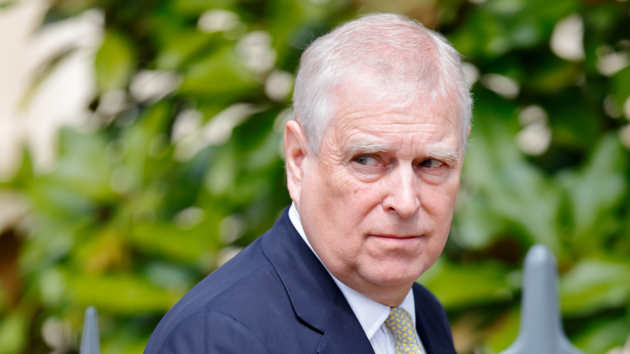
Prince Andrew, Duke of York attends the traditional Easter Sunday Mattins Service at St George’s Chapel, Windsor Castle on April 20, 2025 in Windsor, England. (Max Mumby/Indigo/Getty Images)

(LONDON) — Andrew Mountbatten-Windsor — formerly known as Prince Andrew and the younger brother of King Charles III — was arrested on Thursday on suspicion of misconduct in public office.

In a statement, Thames Valley Police said they had “arrested a man in his sixties from Norfolk on suspicion of misconduct in public office and are carrying out searches at addresses in Berkshire and Norfolk.”

“The man remains in police custody at this time. We will not be naming the arrested man, as per national guidance,” the statement said.

Photos from Wood Farm on the Sandringham estate in eastern England showed what appeared to be police officers arriving in several unmarked vehicles. Thursday marks Andrew’s 66th birthday.

In a statement issued on Thursday, Charles said, “I have learned with the deepest concern the news about Andrew Mountbatten-Windsor and suspicion of misconduct in public office.”

“What now follows is the full, fair and proper process by which this issue is investigated in the appropriate manner and by the appropriate authorities. In this, as I have said before, they have our full and wholehearted support and co-operation,” Charles added.

“Let me state clearly: the law must take its course. As this process continues, it would not be right for me to comment further on this matter. Meanwhile, my family and I will continue in our duty and service to you all.”

Andrew’s arrest on Thursday follows the emergence of documents detailing communication between Andrew and the late convicted sex offender Jeffrey Epstein.

Several emails released by the U.S. Justice Department showed Epstein’s correspondence with a Andrew’s aide David Stern and suggest the royal may have planned to use his role as a special U.K. representative for trade and investment to further his own business interests.

The emails in question date back to 2010. Andrew served as a British trade envoy from 2001 until 2011, when Buckingham Palace announced that he would give up the role following criticism over his friendship with controversial figures, including Epstein.

Andrew has previously denied wrongdoing with respect to Epstein.

Thames Valley Police told ABC News last week that they were assessing reports of Andrew’s alleged misconduct in office as trade envoy.

“We can confirm receipt of this report and are assessing the information in line with our established procedures,” a Thames Valley Police spokesperson said in a statement on Feb. 9.

Copyright © 2026, ABC Audio. All rights reserved.
South Korean court sentences former president to life in prison

South Korean court sentences former president to life in prison
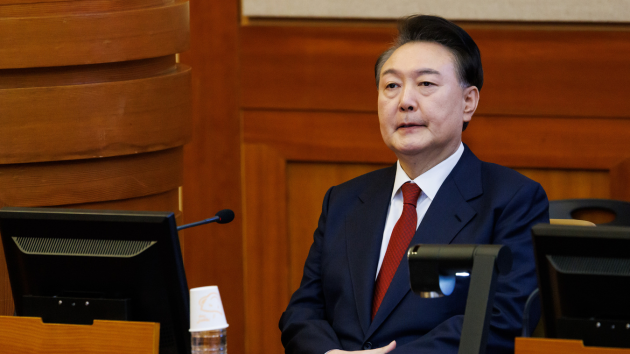
Yoon Suk Yeol, South Korea’s president, attends a hearing for his impeachment trial at the Constitutional Court in Seoul, South Korea, on Thursday, Feb. 13, 2025. (SeongJoon Cho/Bloomberg via Getty Images)

(SEOUL)– The Seoul Central District Court sentenced former South Korean President Yoon Suk Yeol to life in prison Thursday.

The court found him guilty of leading an insurrection linked to his declaration of martial law on Dec. 3, 2024.

The court ruled that Yoon’s central offense was mobilizing military and police forces to seize control of the National Assembly and detain key political figures.

“The deployment of martial law troops to the National Assembly during the state of emergency constitutes ‘rioting,’ a key legal element required to establish the crime of insurrection,” presiding judge Ji Gui-yeon said Thursday. Ji said declaring martial law can constitute insurrection if intended to obstruct or paralyze constitutional institutions.

The court acknowledged political tensions between Yoon’s administration and the opposition-controlled legislature. However, it said those circumstances did not justify declaring martial law under the constitution.

Judges also said Yoon showed no remorse or acknowledgment of wrongdoing during the proceedings, which they considered in determining his sentence.

Yoon’s attorneys criticized the ruling as “a mere formality for a predetermined conclusion.”

“Watching the rule of law collapse in reality, I question whether I should even pursue an appeal or continue participating in these criminal proceedings,” Yoon’s attorney, Yoon Gab-geun, told reporters after the ruling. “The truth will be revealed in the court of history.”

Yoon was taken into custody immediately after the ruling and transferred to the Seoul Detention Center. He will remain there unless the court grants release pending appeal.

If Yoon appeals, the case will move to the Seoul High Court, which can review legal interpretations and factual findings. A final appeal could be filed with the Supreme Court.

Prosecutors had sought the death penalty, arguing Yoon’s actions posed a grave threat to the constitutional order.

Thursday’s ruling addressed only the insurrection charge. Other criminal cases tied to the December 2024 martial law declaration, including abuse of power and obstruction of official duty, remain pending.

In a separate case last month, Yoon was sentenced to five years in prison for obstructing his arrest, the first criminal conviction tied to the crisis.

“Yoon’s sentencing does not represent a national catharsis since most Koreans have already emotionally moved on from the former president,” Leif-Eric Easley, a professor at Ewha University in Seoul, told ABC News. “Nor does this televised verdict mark closure because many cases and appeals related to Yoon’s martial law debacle have yet to be fully adjudicated.”

Copyright © 2026, ABC Audio. All rights reserved.
Texas court to hear appeal in case of midwife accused of violating state abortion ban

Texas court to hear appeal in case of midwife accused of violating state abortion ban
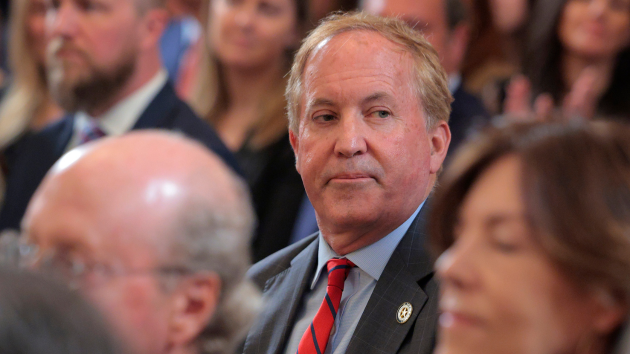
Texas Attorney General Ken Paxton attends the executive order signing ceremony to reduce the size and scope of the Education Department in the East Room of the White House on March 20, 2025 in Washington, DC. (Chip Somodevilla/Getty Images)

(NEW YORK) — A Texas appeals court will hear arguments on Thursday in a civil lawsuit brought against a woman accused by the state of illegally providing abortions in the Houston area.

Maria Margarita Rojas allegedly provided abortions in violation of the state’s abortion ban and was practicing medicine without a license at a network of clinics in northwestern Houston, according to Texas Attorney General Ken Paxton.

Last year, a lower court in Waller County issued an injunction against Rojas and the three clinics at which she worked, causing them to shut down.

The Center for Reproductive Rights is currently asking the appellate court to reverse that decision.

Meanwhile, prosecutors have also accused Rojas of violating the state’s abortion ban and charged her with a first-degree felony that carries a potential sentence of up to life in prison.

“[Paxton] is accusing our client of basically operating abortion clinics, which the problem is that the allegations just aren’t true and we think that the state completely failed to prove or show that any abortions were happening or that any unlawful practice was happening at the clinics,” Marc Herron, interim associate director of litigation with the CRR, who is representing Rojas in the civil case, told ABC News.

ABC News has also reached out to the attorney representing Rojas in the criminal case.

Herron said the case against Rojas is significant because it marks the first time a provider has been criminally charged in Texas for violating the state’s abortion ban.

He accused Paxton’s office of conducting a “shoddy” investigation and said Rojas was using the abortion drug misoprostol to provide miscarriage care.

In January 2025, an anonymous complaint was filed with the Texas Health and Human Services Commission, alleging that two abortions were performed at one of Rojas’ clinics, according to the appellate brief.

The Medicaid Fraud Division within Paxton’s office began investigating, with one investigator claiming to find a pill bottle of the drug misoprostol, according to the complaint. While misoprostol can be used as part of a two-drug combination to induce an abortion, it is also used to treat first-trimester miscarriages.

In filing an appeal, Rojas’ attorneys argued that mifepristone, the drug given with misoprostol to induce an abortion, was never found by investigators, nor were tools found that would be used in a surgical abortion.

They also alleged the state investigators had no “medical training or expertise” to know what misoprostol could be used for and did not consult with a medical expert during the investigation.

Herron said the effects of the investigation and of the charges have been devastating on Rojas.

“I think this is a politically motivated case and the effect has been to completely upend my client’s life,” Herron said. “She was arrested twice. She was held in jail for 10 days and had to post this exorbitant $1.4 million bond. She’s now out, but she’s got to wear an ankle monitor. There are extreme restrictions on her travel. Her midwifery license has been temporarily suspended pending the outcome of the criminal proceedings, which could take years.”

He added that the proceedings have also affected the predominantly Spanish-speaking, low-income, uninsured patients who relied on care from Rojas and her clinics.

“People who relied on Mrs. Rojas for midwifery care — she delivered babies,” Herron said. “She was a caring, devoted midwife who delivered babies and provided care to her patients, and now her patients can’t turn to her. So this has been devastating.”

According to a press release last year from Paxton, Rojas is a midwife known as “Dr. Maria.” She allegedly owned and operated multiple clinics, including Clinica Waller Latinoamericana in Waller, Clinica Latinoamericana Telge in Cypress and Latinoamericana Medical Clinic in Spring — all in the northwest Houston area.

Rojas is accused of performing “illegal abortion procedures” in her clinics, which allegedly violated the Texas Human Life Protection Act, the attorney general’s office said.

Abortions are banned in Texas except in limited, exception cases if the woman has a life-threatening condition or is at risk of “substantial impairment of a major bodily function.”

In the limited exceptions when abortion is allowed, patients are required to make two trips, one for an in-person counseling session and then 24 hours later for the abortion, according to the Guttmacher Institute, a research group that focuses on sexual and reproductive health

Paxton’s office did not immediately return ABC News’ request for comment

Copyright © 2026, ABC Audio. All rights reserved.

How DNA and genetic genealogy might help solve the Nancy Guthrie case

How DNA and genetic genealogy might help solve the Nancy Guthrie case
In an aerial view, Nancy Guthrie’s residence is seen on February 17, 2026 in Tucson, Arizona. (Brandon Bell/Getty Images)

(NEW YORK) — Authorities said they’re looking into using genetic genealogy in the investigation into Nancy Guthrie’s mysterious abduction, and an expert says the cutting-edge technique could be the key.

While authorities may find Guthrie’s kidnapper through other avenues of investigation, “if they don’t, investigative genetic genealogy definitely will,” genetic genealogist CeCe Moore told ABC News.

Nancy Guthrie, the 84-year-old mother of “Today” show host Savannah Guthrie, was kidnapped from her Tucson, Arizona, home in the early hours of Feb. 1 by an unknown suspect.

The FBI ran DNA from a glove found during a roadside search through the national criminal database known as CODIS, but did not get a match to any of the roughly 22 million samples in the database, the Pima County Sheriff’s Department said.

That glove — which was found about 2 miles from Nancy Guthrie’s house — also did not match DNA found at her property, law enforcement sources told ABC News.

Moore, a former ABC News contributor, said, “I think we have to exercise a lot of caution in putting too much emphasis on” the glove.

“If it had had Nancy’s DNA, or had matched the DNA at the crime scene, obviously that would be different. But with it being found at such a distance, I always was a little hesitant to get too hopeful about that,” she said. “I think the DNA found at the home is far more compelling.”

While the DNA found at Nancy Guthrie’s property is still being analyzed, the sheriff’s department said on Tuesday that investigators are “looking into additional investigative genetic genealogy options for DNA evidence to check for matches.”

Genetic genealogy takes the DNA of an unknown suspect left behind and identifies the suspect by tracing the family tree through his or her family members, who voluntarily submit their DNA to a genealogy database. Genetic genealogy has been used to solve hundreds of cases since it was first implemented in the 2018 arrest of the “Golden State Killer,” a cold case that had stumped California law enforcement for decades.

“Just like in the hundreds of cases where we’ve been able to identify a violent criminal that couldn’t be found any other way, genetic genealogy has the power to do so through reverse engineering this individual’s family tree based on his DNA alone,” Moore said. “When you have this person’s DNA, you have so much information about their family tree at your fingertips. And so you can piece that tree back together … you just have to spend the time to look at all that information and sort through it.”

“So genetic genealogy often steps in and is successful when all the other leads have been exhausted,” she said.

In the Guthrie case, investigators “were very smart to start [pursuing genetic genealogy] early, and not wait for all those other leads to be exhausted,” Moore said. “Because if he’s not identified any other way, investigative genetic genealogy will definitely be the key — it’s really just a matter of time.”

And when it comes to that timeframe, Moore said, there are two factors: “the population group from which the person of interest descends — and luck.”

“Sometimes you just get lucky and somebody has a close relative in these very small databases,” Moore said.

“If the population group is one that’s not well represented, then that can make it extremely difficult. If the person has deep roots in the United States and primarily Northwest European ancestry, they may be identified in a matter of minutes or hours, because that’s the population group that’s best represented, and it’s also the one that we have the most information about being here in the United States,” she said. “If someone’s born in another country, or even as far back as their great-grandparents were immigrants, there’s far less representation in the databases that we’re able to use, and it’s also more difficult to work with records outside of the U.S.”

In the Guthrie case, law enforcement sources told ABC News on Wednesday that the FBI has reached out to Mexican authorities. There’s no evidence Nancy Guthrie was taken to Mexico, but it’s an avenue investigators are exploring given Tucson’s proximity to the border, the sources said.

If the Guthrie suspect’s parents, grandparents or even great-grandparents were born in Mexico, Moore said, “it will likely take longer.”

Moore said she predicts the genetic genealogy process in the Guthrie case “won’t take more than weeks, maybe months.”

“I have worked on cases for years. However, I don’t think this case will take that long because of the large amount of resources being dedicated to it. I would suspect the FBI genetic genealogy team would be brought in if it takes too long, and they have 200 agents,” she said.

Moore also noted that investigative genetic genealogy can be slowed due to law enforcement’s limited access to DNA profiles.

“There are over 50 million people who have taken direct-to-consumer DNA tests, but most of them are in the three largest databases, and those companies have barred law enforcement from using their databases for these purposes,” Moore said. Currently, law enforcement is limited to accessing three smaller databases, which combined have about 2 million DNA profiles, she said.

“I do expect that if [the Guthrie suspect] is not identified soon, then law enforcement very likely will serve a warrant on those bigger databases” to try to request access, she said.

Copyright © 2026, ABC Audio. All rights reserved.
Parents of students at ski academy among California avalanche victims

Parents of students at ski academy among California avalanche victims
Andrew Holt/Getty Images

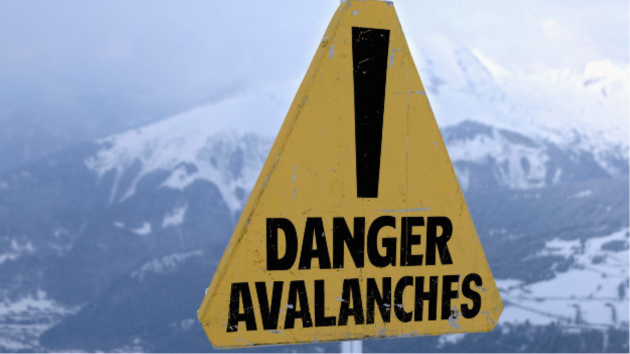
(TRUCKEE, Calif.) — The group of skiers involved in the deadly avalanche in California’s Sierra Nevada Mountains on Tuesday includes parents, mostly mothers, of students at a local school and ski academy, according to a source involved in the search and rescue effort and a statement from the school.

“Multiple members of the Sugar Bowl Academy community and others with strong connections to Sugar Bowl, Donner Summit, and the backcountry community died in an avalanche on Tuesday, February 17, 2026,” a statement from the school said.

Sugar Bowl Academy is a private independent school boarding and day school designed for competitive skiers. 

A source involved in the search and rescue effort on the scene told ABC News that most of both the deceased and surviving victims of the avalanche are parents connected to the school.

The parents’ kids are on a winter break from school, according to sources familiar. 

Authorities have not publicly identified any of the victims.

Emergency responders “are still working to recover all of the victims and are not at this time sharing the personal details of the victims and the survivors out of respect for the families affected,” the school said in the statement. “Sugar Bowl Academy is similarly not sharing the names of the victims and survivors out of respect for the families affected.”

The statement went on to say, “Sugar Bowl Academy is focused on supporting its athletes, students, staff, and families through this tragedy. Most importantly, the Sugar Bowl Academy community will continue to be there in the months and years ahead for the families that have lost loved ones.”

The Nevada County Sheriff’s Office said earlier Wednesday that 15 people were part of the group of skiers who were caught in the avalanche on Tuesday at the end of a three-day guided trip.

Eight people are confirmed dead and one other person is still missing, but presumed dead, the sheriff’s office said. Of the dead and missing, seven are women and two are men. 

Six people survived the avalanche — four men and two women — and were rescued by crews after sheltering under a tarp for hours amid “highly dangerous” conditions, authorities said.  

The tragedy is the deadliest U.S. avalanche in 45 years, second only to an avalanche that killed 11 people on Washington’s Mt. Rainer in 1981.

A spokesperson for Nevada County Sheriff’s Office did not immediately respond to a request for comment.

Copyright © 2026, ABC Audio. All rights reserved.
Democrats, White House still far from DHS funding deal amid standoff over ICE

Democrats, White House still far from DHS funding deal amid standoff over ICE
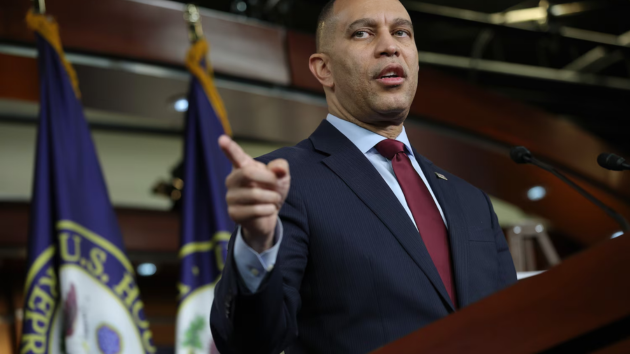
House Minority Leader Hakeem Jeffries speaks at a news conference at the U.S. Capitol on February 18, 2026, in Washington. (Kevin Dietsch/Getty Images)

(WASHINGTON) — The standoff between Democrats and the White House over Department of Homeland Security funding and immigration enforcement continued on Wednesday, with both sides digging in as the partial government shutdown hit its fifth day.

White House press secretary Karoline Leavitt called the counteroffer made by Democrats “very unserious,” while House Minority Leader Hakeem Jeffries remained firm that Democrats would not back away from their demands for reform.

President Donald Trump, who had said he would be personally involved in negotiations, hasn’t yet spoken with Democrats, according to Leavitt.

“He hasn’t had any direct conversation or correspondence with Democrat lawmakers recently. It doesn’t mean he’s not willing to. I’m just not aware of any conversations that have taken place,” she told reporters at Wednesday’s press briefing.

Funding for DHS lapsed on Saturday, affecting agencies like the Transportation Security Administration, the Federal Emergency Management Agency, U.S. Coast Guard and the U.S. Secret Service.

A majority of DHS employees are expected to work during the shutdown, though they could miss a paycheck.

FEMA has paused almost all travel related to the agency’s work, according to multiple sources familiar with the decision, though travel related to disaster relief will continue.

“These limitations are not a choice but are necessary to comply with federal law. FEMA continues to coordinate closely with DHS to ensure effective disaster response under these circumstances,” a FEMA spokesperson said.

U.S. Immigration and Customs Enforcement, which is at the center of the funding fight after two fatal shootings of American citizens by federal agents in Minneapolis, and U.S. Customs and Border Protection remain operational due to billion-dollar infusions from Trump’s massive spending and tax-cut bill passed by Republicans in Congress last summer.

Democrats have asked for a range of new restrictions on immigration enforcement, including a mandate for body cameras, judicial warrants before agents can enter private property — rather than administrative warrants — and a ban on ICE agents wearing face masks. They also want stricter use-of-force policy and new training standards for agents.

The White House and Democrats have traded offers over the past week, though the details haven’t been released publicly. Both sides have called the other’s proposals “unserious.”

“We’ve been engaged in good faith negotiations with the Democrats … They sent over a counterproposal that, frankly, was very unserious. And we hope they get serious very soon because Americans are going to be impacted by this,” Leavitt said on Wednesday.

Jeffries said Wednesday the ball was in the White House’s court.

“We’ve reiterated our perspective on the types of things that are absolutely necessary in order for a DHS funding bill to move forward, all anchored in this principle that ICE needs to conduct itself like every other law-enforcement agency in the country, and stop using taxpayer dollars to brutalize the American people,” he said. 

Trump said on Sunday he didn’t like some of what Democrats are asking for, and emphasized his administration is “going to protect ICE.”

In the wake of the killings of Alex Pretti and Renee Good in Minneapolis during the administration’s immigration crackdown and resulting protests, an ABC News review found multiple examples of public statements appearing to be in inaccurate that the agency initially made after using force. 

One example occurred last month in Minneapolis when Julio Sosa-Celis, a Venezuelan migrant, was shot in the leg by an ICE agent.

At the time, DHS said its agents were “violently assaulted … with a shovel and broom handle.” ABC News obtained a frantic 911 call made by apparent relatives saying agents fired the shot as Sosa-Celis ran away. Todd Lyons, the acting director of ICE, later said two of his agents appear to have made “untruthful statements” about the moments before the shooting. Both officers were placed on administrative leave and Lyons said they may face federal charges.

Another case unfolded in Chicago last October when Marimar Martinez, an American citizen and teacher’s assistant, was shot five times by federal agents.

DHS initially said that the agents were “forced to deploy their weapons and fire defensive shots at an armed US citizen” after their SUV was “rammed by vehicles and boxed in by 10 cars.” But an ABC News analysis of video footage shows that agents were being followed by two, not 10 vehicles, and that at no time was their vehicle blocked from the front. A CBP spokesperson said in a statement that the officer who shot Martinez was placed on administrative leave following the incident and the Department of Justice dropped the charges against Martinez.

ABC News’ Luke Barr contributed to this report.

Copyright © 2026, ABC Audio. All rights reserved.
FBI election probe lacks ‘faintest possibility of probable cause,’ Fulton County says in court filing

FBI election probe lacks ‘faintest possibility of probable cause,’ Fulton County says in court filing
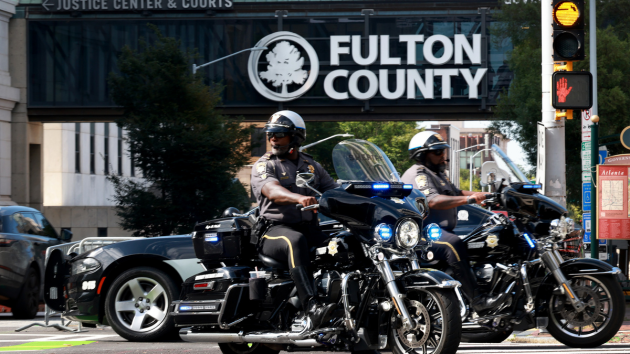
Fulton County Sheriff officers in front of the Fulton County Courthouse on September 06, 2023 in Atlanta, Georgia. Former U.S. President Donald Trump has entered a not-guilty plea and waived his right to appear at an arraignment hearing. Trump and his 18 co-defendants are charged in a 41-count indictment accusing them of scheming to overturn Georgia’s 2020 presidential election results. (Photo by Joe Raedle/Getty Images)

(FULTON COUNTY, Ga.) — Officials in Fulton County, Georgia, are renewing their effort to have the 2020 election files seized from their election office last month returned, arguing that a recently unsealed search warrant application falls “woefully short” of establishing probable cause of a crime. 

In a court filing Tuesday, attorneys for Fulton County argued that the FBI agent behind the search warrant application “intentionally or recklessly omitted material facts” about purported discrepancies in the 2020 election in Georgia, after the Justice Department last week released the sworn affidavit that was the basis for the search warrant.

“Despite years of investigations of the 2020 election, the Affidavit does not identify facts that establish probable cause that anyone committed a crime,” Tuesday’s filing from Fulton County said. 

FBI agents on Jan. 28 seized 700 boxes containing ballots and other materials associated with the 2020 election from Fulton County’s Elections Hub and Operations Center after obtaining a search warrant. President Donald Trump has repeatedly made baseless claims that there was voter fraud in the 2020 election, specifically in Georgia, despite Georgia officials auditing and certifying the results and courts rejecting numerous lawsuits challenging the election’s outcome.

FBI Special Agent Hugh Raymond Evans said in the sworn affidavit that following the 2020 election “there were many allegations of electoral impropriety relating to the voting process and ballot counting in Fulton County, Georgia” and that “Some of those allegations have been disproven while some of those allegations have been substantiated, including through admissions by Fulton County.”

Fulton County filed a motion earlier this month seeking the return of the records, and revised its request in light of the recently unsealed affidavit. They argue that the FBI’s investigation focuses on “human errors that its own sources confirm occur in almost every election … without any intentional wrongdoing whatsoever.”

“The Affidavit omits numerous material facts — including from the very reports and publicly-disclosed investigations that the Affiant cites — that confirm the alleged conduct was previously investigated and found to be unintentional,” the filing said. 

Attorneys also argued that the FBI’s witnesses are unreliable and that the FBI failed to disclose information that would discredit its own witnesses. 

“The Affiant failed to include facts — including from the very sources he cited — that shut the door on even the faintest possibility of probable cause,” the filing said. 

Copyright © 2026, ABC Audio. All rights reserved.

FBI election probe lacks ‘faintest possibility of probable cause,’ Fulton County says in court filing

FBI election probe lacks ‘faintest possibility of probable cause,’ Fulton County says in court filing
Fulton County Sheriff officers in front of the Fulton County Courthouse on September 06, 2023 in Atlanta, Georgia. Former U.S. President Donald Trump has entered a not-guilty plea and waived his right to appear at an arraignment hearing. Trump and his 18 co-defendants are charged in a 41-count indictment accusing them of scheming to overturn Georgia’s 2020 presidential election results. (Photo by Joe Raedle/Getty Images)

(FULTON COUNTY, Ga.) — Officials in Fulton County, Georgia, are renewing their effort to have the 2020 election files seized from their election office last month returned, arguing that a recently unsealed search warrant application falls “woefully short” of establishing probable cause of a crime. 

In a court filing Tuesday, attorneys for Fulton County argued that the FBI agent behind the search warrant application “intentionally or recklessly omitted material facts” about purported discrepancies in the 2020 election in Georgia, after the Justice Department last week released the sworn affidavit that was the basis for the search warrant.

“Despite years of investigations of the 2020 election, the Affidavit does not identify facts that establish probable cause that anyone committed a crime,” Tuesday’s filing from Fulton County said. 

FBI agents on Jan. 28 seized 700 boxes containing ballots and other materials associated with the 2020 election from Fulton County’s Elections Hub and Operations Center after obtaining a search warrant. President Donald Trump has repeatedly made baseless claims that there was voter fraud in the 2020 election, specifically in Georgia, despite Georgia officials auditing and certifying the results and courts rejecting numerous lawsuits challenging the election’s outcome.

FBI Special Agent Hugh Raymond Evans said in the sworn affidavit that following the 2020 election “there were many allegations of electoral impropriety relating to the voting process and ballot counting in Fulton County, Georgia” and that “Some of those allegations have been disproven while some of those allegations have been substantiated, including through admissions by Fulton County.”

Fulton County filed a motion earlier this month seeking the return of the records, and revised its request in light of the recently unsealed affidavit. They argue that the FBI’s investigation focuses on “human errors that its own sources confirm occur in almost every election … without any intentional wrongdoing whatsoever.”

“The Affidavit omits numerous material facts — including from the very reports and publicly-disclosed investigations that the Affiant cites — that confirm the alleged conduct was previously investigated and found to be unintentional,” the filing said. 

Attorneys also argued that the FBI’s witnesses are unreliable and that the FBI failed to disclose information that would discredit its own witnesses. 

“The Affiant failed to include facts — including from the very sources he cited — that shut the door on even the faintest possibility of probable cause,” the filing said. 

Copyright © 2026, ABC Audio. All rights reserved.