
Trump-appointed judge dismisses DOJ lawsuit against Maryland federal judiciary over deportations

Trump-appointed judge dismisses DOJ lawsuit against Maryland federal judiciary over deportations
Chip Somodevilla/Getty Images

(WASHINGTON) — A Donald Trump-appointed federal judge has dismissed the case brought by the Department of Justice against the entire Maryland judiciary over a standing order that bars the government from deporting undocumented immigrants for at least one day after they file a legal challenge to their detention.

U.S. District Judge Thomas Cullen called the Trump administration’s attacks on district judges across the country a “smear” and “unprecedented and unfortunate.”

“Indeed, over the past several months, principal officers of the Executive (and their spokespersons) have described federal district judges across the country as ‘left-wing,’ ‘liberal,’ ‘activists,’ ‘radical,’ ‘politically minded,’ ‘rogue,’ ‘unhinged,’ ‘outrageous, overzealous, [and] unconstitutional,’ ‘[c]rooked,’ and worse,” Cullen wrote in a footnote. “Although some tension between the coordinate branches of government is a hallmark of our constitutional system, this concerted effort by the Executive to smear and impugn individual judges who rule against it is both unprecedented and unfortunate.”

Cullen argued the administration must find a proper way to raise their concerns with the judges in the District Court of Maryland, and wrote he doesn’t believe that should be done by suing the entire Maryland judiciary.

“Much as the Executive fights the characterization, a lawsuit by the executive branch of government against the judicial branch for the exercise of judicial power is not ordinary. The Executive’s lawsuit will be dismissed, and its motion for preliminary injunction denied as moot. Whatever the merits of its grievance with the judges of the United States District Court for the District of Maryland, the Executive must find a proper way to raise those concerns,” he wrote in the decision.

In late June, the Justice Department made the unusual move to sue the entire Maryland federal judiciary over the order barring the government from deporting undocumented immigrants for at least one day after they file a challenge.

“This lawsuit involves yet another regrettable example of the unlawful use of equitable powers to restrain the Executive,” the lawsuit read. “Specifically, Defendants have instituted an avowedly automatic injunction against the federal government, issued outside the context of any particular case or controversy … by promulgating a standing order and amended standing order that require the court clerk to automatically enter an injunction against removing, or changing the legal status of, any alien detained in Maryland who files a habeas petition.”

The standing order was implemented in May as courts across the country were seeking to manage a wave of emergency lawsuits challenging the Trump administration’s aggressive moves to deport undocumented immigrants.

The federal court in Maryland is currently home to arguably the most high-profile of these deportation cases: the one involving Kilmar Abrego Garcia.

Abrego Garcia, who was wrongly deported in March before being brought back to the U.S. to face new criminal charges, was taken into immigration custody upon checking in with Immigration and Customs Enforcement at its office in Baltimore on Monday morning and is currently being held at a detention center in Virginia, where he is again facing deportation.

ABC News’ Laura Romero and Ely Brown contributed to this report.

Copyright © 2025, ABC Audio. All rights reserved.
Fall 2025 forecast: What to know as most of US set for a warmer fall

Fall 2025 forecast: What to know as most of US set for a warmer fall
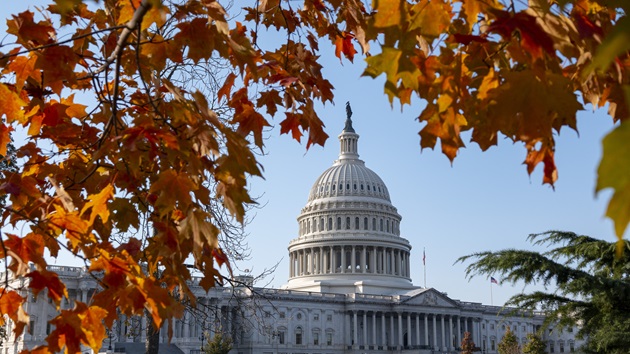
The U.S. Capitol is surrounded by colorful leaves on trees during a warm, fall day on November 7, 2023 in Washington DC. Kevin Carter/Getty Images

(NEW YORK) — The latest fall season outlook by the National Oceanic and Atmospheric Administration (NOAA) is out, and it’s calling for balmy and possibly hot conditions for much of the country in the fall.

The seasonal outlook from NOAA’s Climate Prediction Center forecasts whether parts of the country will be above, below or near average for parts of the country for the meteorological fall — September through November.

NOAA’s outlook puts much of the country with a higher chance of a warmer fall than normal, with the highest chance of warmer-than-average temperatures in the Southwest and New England. This means that most of the country will likely be milder than what is usually expected from September to November.

However, this outlook doesn’t forecast variations that happen over days, weeks, or over one month but rather what the overall average would likely look like.

September in a particular region could feature typical fall conditions, but October and November could end up well above normal, swaying the three-month average to above normal for the entire season. What the outlook means for a specific local area depends on the typical climate around it.

For example, average high temperatures for Phoenix, one of the hottest cities in the country, range from 104 degrees at the beginning of fall to 70 degrees towards the end of fall. New York City ranges from 76 degrees at the start of fall to 54 degrees through November.

While the seasonal outlook highlights what is likely for the fall and where abnormal warmth is likely, it doesn’t tell where any extreme heat would be or for how long it would be. It also doesn’t tell where any drastic cooldowns would be or for how long, if there are any.

What previous falls have taught us

According to the Environmental Protection Agency and NOAA, falls in the Contiguous United States have been getting warmer since the early 1900s, with the last few falls being warmer than the 30-year average.

NOAA also reported that fall 2024 was the warmest on average for the country in 130 years, with more than half of all U.S. states ranking among the top-three warmest falls.

What does a warmer fall mean for you?

A warmer fall has more impacts than just keeping the warmer weather and holding off on the winter jackets. According to Climate Central, warmer falls can prolong potentially dangerous summer-like heat and increase the demand and cost of cooling during warmer fall days.

Climate Central also found that warmer falls extend the growing and allergy seasons, as well as the wildfire season for the West.

The extended warmth affects the fall foliage — a natural spectacle that dazzles the country every fall and boosts local tourism. According to Columbia University, warmer falls can delay the start of changing leaves, shorten the fall foliage season overall, and reduce the vibrancy and color quality of fall foliage.

Why so warm?

A big part of what forecasters look for when predicting the temperature, and even their seasonal precipitation outlook, are climate patterns in the Pacific Ocean. The most influential one that forecasters look at is the El Nino-Southern Oscillation (ENSO). The ENSO is a natural variation of warmer, neutral and cooler waters along the equatorial waters of the eastern Pacific.

This natural variation is one of the biggest driving forces of large-scale weather patterns over the Pacific Ocean, and eventually over North America.

Forecasters at the Climate Prediction Center are expecting the ENSO to shift from a neutral pattern to a cooler pattern, or La Nina, by November. This would likely put the U.S. in a dominant weather pattern for much of the fall that sees the southern half of the country experience drier and warmer weather, while the Pacific Northwest and Ohio Valley will get wetter-than-normal conditions.

Copyright © 2025, ABC Audio. All rights reserved.

Consumer confidence worsened slightly in August

Consumer confidence worsened slightly in August
Vegetables on display in a grocery store on August 15, 2025 in Delray Beach, Florida. Joe Raedle/Getty Images

(NEW YORK) — Consumer confidence worsened slightly in August, erasing some gains from the previous month and resuming a downward trend suffered at the outset of 2025, the Conference Board said on Tuesday.

The souring of shopper attitudes followed a weak jobs report and a set of sweeping new tariffs issued by President Donald Trump. A lower-than-expected inflation report this month eased some concerns about significant tariff-induced price increases, though a measure of underlying inflation ticked up.

The consumer confidence index declined 1.3 points to 97.4 in August, the Conference Board said. The figure came in higher than economists expected. The index has hovered around the same level over the past three months.

Consumer spending, which accounts for about two-thirds of U.S. economic activity, is a key bellwether for the outlook of the nation’s economy.

The measure of consumer confidence arrived hours after Trump moved to fire Federal Reserve Governor Lisa Cook, alleging that she had committed mortgage fraud.

In a statement to ABC News, Cook said Trump “has no authority” to fire her. Cook said she would not resign, instead vowing to “continue to carry out my duties to help the American economy.”

The Fed is an independent agency established by Congress. Federal law allows the president to remove a member of the Fed board for “cause” — though no precedent exists for such an ouster.

Some recent indicators have suggested the onset of an economic slowdown. A report on gross domestic product late last month indicated average annualized growth of 1.2% over the first half of 2025, well below 2.5% growth last year.

A jobs report released by the U.S. Bureau of Labor Statistics on Aug. 1 revealed a sharp cooldown of the labor market.

Still, some facets of the economy have proven resilient. The overall inflation rate stands at 2.7%, below the 3% rate in January, before Trump took office.

The U.S. has largely averted the type of widespread job losses that often accompany a recession. Consumer spending ticked higher over the three months ending in June. Corporate earnings have remained robust.

Federal Reserve Chair Jerome Powell last week said the central bank faces a “challenging situation” as a hiring slowdown coincides with tariff-driven price increases, putting pressure on both sides of the Fed’s dual mission to maximize employment and control inflation.

Powell said the Fed would “proceed carefully” but he hinted at the possibility of an interest rate cut, saying “the shifting balance of risks may warrant adjusting our policy stance.”

Copyright © 2025, ABC Audio. All rights reserved.
Firefighter dies battling 1 of multiple wildfires in the West

Firefighter dies battling 1 of multiple wildfires in the West
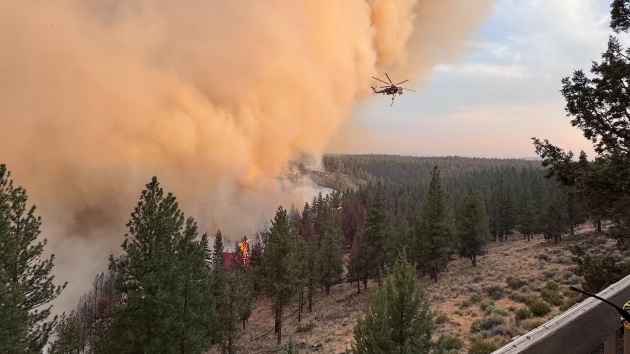
A firefighting helicopter crew drops water on the Flat Fire, Aug. 24, 2023, in Central Oregon. /Oregon Department of Forestry

(NEW YORK) — A veteran firefighter has died while battling one of multiple major wildfires burning in the West, authorities said on Monday.

The firefighter died on Sunday afternoon when he suffered a cardiac emergency while helping to fight the Bivens Creek Fire in southwest Montana, authorities, including Montana Gov. Greg Gianforte, confirmed.

“Rapid medical assistance was rendered from a line paramedic; however, resuscitation attempts were unsuccessful,” the U.S. Forest Service said in a statement.

The firefighter, later identified as Ruben Gonzales Romero of Keizer, Oregon, was one of more than 740 firefighters battling the Bivens Creek Fire, which was burning out of control about 15 miles northwest of Virginia City, Mont., officials said.

The fire, which started on Aug. 13, was 0% contained on Monday after burning 2,242 acres.

In a statement, Gianforte described Romero as a “fallen hero” and expressed his condolences to his family and colleagues.

Romero, a firefighter for over 20 years, “brought significant experience and wisdom to the fire line and the people whom he worked,” according to a statement from the Northern Rockies Complex Incident Management Team 6.

“We rest a little more comfortably knowing that he died doing what he loved,” the statement said.

Elsewhere in the West, a fast-spreading wildfire in Northern California’s wine country and a monstrous blaze in Central Oregon continued to threaten homes on Monday as firefighters battling the flames coped with extremely dry conditions and rugged terrain, authorities said.

Despite some growth overnight, the fire crews battling the Flat Fire in Central Oregon managed to increase containment of the fire overnight from 0% to 5%, according to the Oregon Department of Forestry. Firefighters fighting the Pickett Fire in Northern California’s wine country managed to increase containment overnight to 13%, up from 11% on Sunday, according to fire officials.

The Flat Fire, which started on Thursday near Sisters, Oregon, about 100 miles northeast of Eugene, has burned nearly 22,000 acres, according to the Deschutes County Sheriff’s Office. The fire has destroyed at least 10 structures, including four homes, according to the sheriff’s office. No injuries have been reported.

Nearly 3,000 homes remained threatened by Flat Fire, including some located within or near the perimeter of the blaze, according to the sheriff’s office. Mandatory evacuations have been ordered for about 1,000 homes in the area.

The cause of the fire remains under investigation.

“We’re starting to get a handle on this fire,” Eric Perkins, an operations section chief on the fire, said in a video statement on Monday morning.

Despite minor growth on the north and west ends of the fire on Sunday night, Perkins said fire crews battling hot spots managed to keep the spread of the fire “relatively small.”

More than 800 firefighters are battling the blaze amid Red Flag warnings and heat advisories, according to fire officials. Temperatures across Central Oregon are expected to climb to the mid-90s on Monday, and winds are expected to be 5 to 10 mph on Monday afternoon, according to the National Weather Service.

The Pickett Fire

Meanwhile, the Pickett Fire in Napa County, California, has prompted mandatory evacuation orders as firefighters continued to battle the blaze from the ground and air into Monday.

The Pickett Fire has burned 6,803 acres as of Monday morning, according to the latest update from the California Department of Forestry and Fire Protection (Cal Fire).

As of Monday morning, more than 600 structures remain threatened by the fire, but there were no reports of structures being destroyed or damaged, CalFire said.

More than 2,000 firefighters, including 10 helicopter crews, are fighting the fire, according to Cal Fire.

The Pickett Fire broke out around 3 p.m. local time on Thursday near the town of Calistoga, officials said. The cause of the blaze remains under investigation.

“Fire crews worked overnight to strengthen control lines, mop up hot spots and protect nearby structures,” Cal Fire said in a statement on Monday. “Fire continues to be fueled by brush, grasses and dead timber, contributing to an increase inOre fire intensity. Firefighters are working in steep, challenging terrain as they continue to strengthen containment lines.”

The fire is in the same region as the massive Glass Fire that scorched more than 11,000 acres in 2020.

“Leadership with prior experience in this rugged terrain, specifically from the 2020 Glass Fire, has been instrumental in guiding effective suppression efforts,” CalFire said.

The fire comes as parts of the West Coast swelter under a heat wave.

In Southern California, the extreme heat also led to elevated fire concerns, with red flag warnings in place for the mountains north of Los Angeles and Santa Barbara.

ABC News’ Tristan Maglunog contributed to this report.

Copyright © 2025, ABC Audio. All rights reserved.

Trump says cities should be asking for National Guard troops as he mulls more deployments

Trump says cities should be asking for National Guard troops as he mulls more deployments
Tasos Katopodis/Getty Images

(WASHINGTON) — President Donald Trump on Monday said he is still prepared to order National Guard troops to American cities besides the nation’s capital, but that he wanted local officials to request his help.

The comments come after Trump threatened Chicago as the next city he would target after his administration’s federal takeover of Washington, prompting pushback from Democratic Gov. JB Pritzker, who on Monday afternoon called the proposed actions “un-American.”

“They should be saying, ‘Please come in,'” Trump told ABC News Correspondent Jay O’Brien as he took questions from reporters the Oval Office after signing executive orders.

Trump still railed against Chicago, which he called a “disaster,” and Pritzker, who he said was a “slob.”

“I made the statement that next should be Chicago, because, as you all know, Chicago is a killing field right now, and they don’t acknowledge it. And they say, ‘We don’t need him. Freedom. Freedom. He’s a dictator. He’s a dictator.’ A lot of people are saying ‘maybe we like a dictator.’ I don’t like a dictator. I’m not a dictator. I’m a man with great common sense and a smart person,” the president said.

“But I’m really saying, and I say this to all of you, in a certain way, we should wait to be asked,” Trump continued.

Trump went back and forth repeatedly on Monday over whether the government should wrest control or wait to be asked.

“We may wait. We may or may not. We may just go in and do it, which is probably what we should do,” Trump said. “The problem is, it’s not nice when you go in and do it and somebody else is standing there saying, as we give great results, say, ‘Well, we don’t want the military.'”

Meanwhile, Pritzker and Chicago officials are speaking out against Trump’s threat to deploy the National Guard.

“Earlier today, in the Oval Office, Donald Trump looked at the assembled cameras and asked for me personally to say, ‘Mr. President, can you do us the honor of protecting our city?’ Instead, I say, ‘Mr. President, do not come to Chicago,'” Pritzker said at a news conference in Chicago on Monday afternoon.

“What President Trump is doing is unprecedented and unwarranted. It is illegal. It is unconstitutional. It is un-American,” the governor added.

Crime statistics from Chicago’s Police Department show murders year to date and robberies are down 31% and 33% respectively compared to the same period in 2024. Overall, the statistics show crime in the city is down 13% year to date compared to 2024.

“There is no emergency in Chicago that calls for armed military intervention,” Pritzker said on Monday. “There is no insurrection. Like every major American city in both blue and red states, we deal with crime in Chicago. Indeed, the violent crime rate is worse in red states and red cities.”

ABC News Senior Political Correspondent Rachel Scott pressed Trump on whether he would send troops to Republican-led states and cities experiencing high crime. Trump said yes but appeared to brush off that it would ever be necessary.

“Sure,” Trump responded. “But there aren’t that many of them.”

Trump continued to focus on Democrat-led areas and railed against cashless bail policies, though a report from Axios that analyzed FBI crime data showed 13 of the 20 U.S. cities with the highest murder rates were in Republican-run states.

The president on Monday defended the first 11 days of his administration’s takeover of Washington, which includes more than a thousand National Guardsmen deployed to the nation’s capital, some permitted to carry weapons for personal protection.

As part of his crime crackdown, Trump signed an executive order aimed at ending cashless bail in Washington and threatening to revoke federal funds for other areas around the country that have similar policies.

The president also signed an order directing the Justice Department to investigate instances of flag burning for possible charges, despite a 1989 Supreme Court ruling that the government cannot criminalize destruction of an American flag when done as an act of expression.

Copyright © 2025, ABC Audio. All rights reserved.

Elon Musk’s xAI sues Apple, OpenAI over alleged scheme to dominate AI

Elon Musk’s xAI sues Apple, OpenAI over alleged scheme to dominate AI
Justin Sullivan/Getty Images

(NEW YORK) — Elon Musk-owned xAI on Monday sued tech giants Apple and OpenAI over an alleged scheme to illegally dominate the artificial intelligence industry through a collaboration that equipped iPhones with AI tools.

The exclusive agreement between the world’s largest smartphone producer and a top AI firm effectively shut other AI companies out of an opportunity to reach tens of millions of customers, according to the lawsuit filed in a Texas federal court.

“This is a tale of two monopolists joining forces to ensure their continued dominance in a world rapidly driven by the most powerful technology humanity has ever created: artificial intelligence,” the lawsuit says.

The lawsuit aims to “stop Defendants from perpetrating their anticompetitive scheme and to recover billions in damages,” according to the filing.

Last year, Apple unveiled a set of customizable tools that rely on generative AI, including a language feature that summarizes messages as well as an image generator. The product rollout marked the culmination of an agreement between Apple and OpenAI, the companies said.

The AI capability, called Apple Intelligence, amounted to the “next big step for Apple,” CEO Tim Cook said in June of 2024.

According to the lawsuit, the integration of OpenAI technology into the operating system of the iPhone left users without the ability to access AI products from other firms, such as xAI. In turn, the flood of user activity enjoyed by OpenAI gave the company valuable data with which to improve its products, the lawsuit says.

“More users beget more prompts, and more prompts offer more opportunities to train the model, whose better features then attract even more users,” the lawsuit says.

In a separate lawsuit, Musk is suing OpenAI over an alleged betrayal of the company’s founding mission in a sprint toward profits. Musk, the world’s richest person, co-founded OpenAI but left the company in 2018.

In a blog post last year, OpenAI rebutted Musk’s claims, saying the firm had realized that a for-profit entity would be necessary to acquire the resources to develop high-powered AI in accordance with its mission.

In a statement to ABC News on Monday, OpenAI rebuked Musk’s new lawsuit.

“This latest filing is consistent with Mr. Musk’s ongoing pattern of harassment,” the company said.

Apple did not immediately respond to ABC News’ request for comment.

In 2023, Musk launched xAI, vowing to develop a competitor with established offerings like ChatGPT. Within months, the company launched a chatbot called Grok, which can respond to prompts from users of Musk-owned social media platform X.

Copyright © 2025, ABC Audio. All rights reserved.
Trump says he’s firing Fed Reserve Board Governor Lisa Cook

Trump says he’s firing Fed Reserve Board Governor Lisa Cook
Drew Angerer/Getty Images

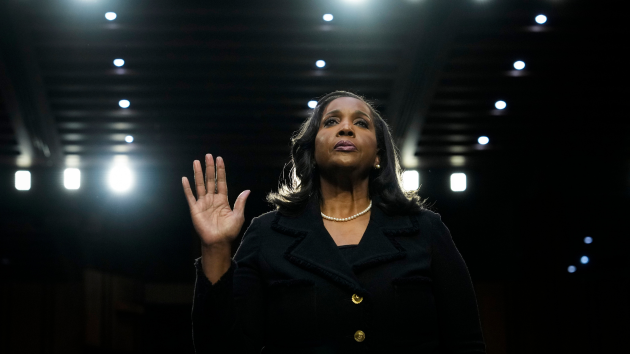
(WASHINGTON) — President Donald Trump announced that he is removing Lisa Cook, a Federal Reserve Board Governor, from her position.

In the letter addressed to Cook that was posted on social media Monday night, Trump said there was “sufficient evidence” that Cook made false statements in mortgage agreements in a referral made by Trump’s Federal Housing Finance Agency to the Department of Justice to remove her from her role.

“At a minimum, the conduct at issue exhibits the sort of gross negligence in financial transactions that calls into question your competence and trustworthiness as a financial regulator,” the letter said.

“I have determined that faithfully executing the law requires your immediate removal from office,” Trump closed the letter.

In response, Cook released a statement saying Trump “has no authority” to fire her and that she will “continue to carry out my duties.”

“I will not resign,” she said.

Cook’s attorney, Abbe Lowell, also indicated legal action is coming, saying they will take “whatever actions are necessary” in order to block what they describe as Trump’s “attempted illegal action.”

ABC News has reached out to the Federal Reserve for comment.

Last week, Trump called on Cook to resign on the same day that Bill Pulte, the director of the Federal Housing Finance Agency, posted on X part of an Aug. 15 letter sent to U.S. Attorney General Pam Bondi accusing Cook of falsifying bank documents and property records to acquire more favorable loan terms, “potentially committing mortgage fraud,” the letter stated.

In a statement provided to ABC News last week, Cook said she learned from the media about Pulte’s letter seeking a criminal referral over the mortgage application, which predated her time with the Federal Reserve.

“I have no intention of being bullied to step down from my position because of some questions raised in a tweet,” Cook said in the statement last week. “I do intend to take any questions about my financial history seriously as a member of the Federal Reserve and so I am gathering the accurate information to answer any legitimate questions and provide the facts.”

Cook was nominated to serve on the board of governors in 2022 by former President Joe Biden. Her term runs until January 2038. Cook is the first Black woman in history to serve on the Federal Reserve Board of Governors.

Copyright © 2025, ABC Audio. All rights reserved.

Australia accuses Iran of directing antisemitic attacks, says Iran’s ambassador will be expelled

Australia accuses Iran of directing antisemitic attacks, says Iran’s ambassador will be expelled
Hagen Hopkins/Getty Images

(LONDON) — Australian officials on Tuesday said they would expel Iran’s ambassador after accusing Tehran of directing antisemitic attacks in Sydney and Melbourne last year.

Australia’s intelligence agency, ASIO, said it determined Iran was behind attacks on Lewis’ Continental Kitchen in Sydney on Oct. 20 and the Adass Israel Synagogue in Melbourne on Dec. 6, according to government officials.

“These were extraordinary and dangerous acts of aggression orchestrated by a foreign nation on Australian soil,” Prime Minister Anthony Albanese told reporters during a press conference in Canberra on Tuesday, according to an official transcript.

ASIO in a statement said intelligence officers had “uncovered and unpicked” links between the attacks and commanders in Iran’s Islamic Revolutionary Guard Corps, accusing the Iranian military of using a “complex web of proxies” to hide its involvement in the attacks in Australia.

Australia’s legislators will seek to list the IRGC as a terrorist organization, Albanese said. Iranian diplomatic staff in Australia weren’t involved in directing the attacks, Director-General of Security Mike Burgess said.

“ASIO now assesses the Iranian Government directed at least two and likely more attacks on Jewish interests in Australia,” Burgess said in a statement.

Operations at the Australian embassy in Tehran were suspended, Albanese said, adding that Australian diplomats left the country.

Australian Foreign Minister Peggy Wong said the alleged acts of aggression by Iran “have crossed a line.”

“This is the first time in the post-war period that Australia has expelled an ambassador,” Wong said. “And we have made this decision because Iran’s actions are completely unacceptable.”

Copyright © 2025, ABC Audio. All rights reserved.

Trump ‘very angry’ with Putin as Russia’s strikes on Ukraine continue despite peace push

Trump ‘very angry’ with Putin as Russia’s strikes on Ukraine continue despite peace push
Pierre Crom/Getty Images

(LONDON) — President Donald Trump again on Monday expressed frustration with Russian counterpart Vladimir Putin as Russian strikes on Ukraine continued despite White House efforts to broker a peace deal between the warring neighbors.

“Every conversation I have with him is a good conversation,” the president told reporters of Putin during an Oval Office executive order signing event. “And then unfortunately, a bomb is loaded up into Kyiv or someplace, and then I get very angry about it.”

Trump has repeatedly admonished Putin for Russia’s nightly strikes on Ukrainian cities. Nonetheless, the president told reporters he was still hopeful of progress towards a peace deal.

“I think we’re going to get the war done,” Trump said, though added, “You never know what’s going to happen in a war. Strange things happen in war. The fact that [Putin] went to Alaska, our country, I think, was a big statement that he wants to get it done.”

Both Russia and Ukraine continued long-range strikes through the weekend and into Monday. On Tuesday, Ukraine’s air force said Russia launched 59 drones into the country overnight, of which 47 were shot down or suppressed.

The air force reported impacts of 12 drones across nine locations.

Russia’s Defense Ministry, meanwhile, said its forces downed at least 51 Ukrainian drones overnight into Tuesday morning, two which were en route to Moscow.

Following in-person meetings with Putin in Alaska and Ukrainian President Volodymyr Zelenskyy — plus a host of European leaders — in Washington, D.C., earlier this month, Trump raised the hope of an imminent bilateral meeting between the Russian and Ukrainian presidents.

Zelenskyy has repeatedly expressed willingness to attend such a meeting. But Putin and his officials have consistently dodged the proposal.

“Maybe they will, maybe they won’t,” the president told ABC News Monday of the potential for the two men to meet. Trump said he had spoken to Putin since Zelenskyy’s visit to Washington, but declined to discuss the specifics of the call.

Asked if he would act if the bilateral meeting does not materialize, Trump refused to detail possible consequences but said he may act “over the next week or two.”

U.S. peace efforts continued on Monday, with Secretary of State Marco Rubio speaking with European counterparts and Trump’s Ukraine envoy Keith Kellogg traveling to Kyiv to meet with Zelenskyy.

For both U.S. officials, the question of future security guarantees for Ukraine to prevent future Russian aggression was a key topic of discussion.

Ukrainian Foreign Minister Andrii Sybiha took part in the call with Rubio. “I reiterated Ukraine’s position that security guarantees must be concrete, legally binding and effective,” he wrote on X after. “They should be multidimensional, including military, diplomatic, legal and other levels.”

Zelenskyy said his meeting with Kellogg was “productive,” again expressing his thanks to Trump’s efforts to broker a deal and his willingness to lend U.S. backing to security guarantees.

Kellogg, meanwhile, said the U.S. side is “working very, very hard” to get “to a position where, in the near term, we have, with a lack of a better term, security guarantees. That’s a work in progress.”

Copyright © 2025, ABC Audio. All rights reserved.
Senate Republicans push back against Trump’s calls to end ‘blue slips’

Senate Republicans push back against Trump’s calls to end ‘blue slips’
Chip Somodevilla/Getty Images

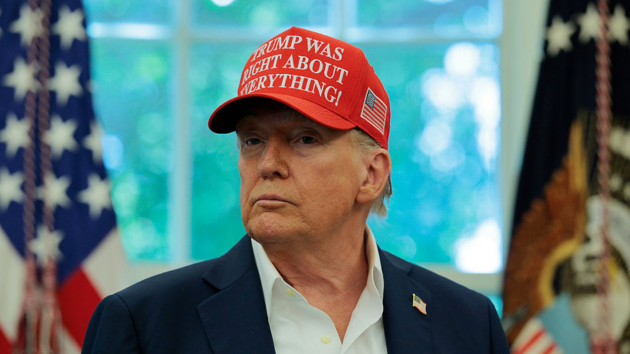
(WASHINGTON) — President Donald Trump is once again upping the pressure on Senate Judiciary Committee Chairman Chuck Grassley to do away with a century-old Senate tradition that places some constraints on the president’s authority to appoint judicial nominees.

Trump is targeting the Senate’s “blue slip” tradition, a time-honored Senate process that gives senators the right to approve or object to nominees nominated to serve as federal judges or U.S. attorneys in their home states.

Senators approve of a nominee by returning their blue slip to the Judiciary Committee Chairman. If a senator does not return their blue slip or returns it with objections, the nominee does not advance. In blue states like New York, some of Trump’s judicial nominees have stalled out because Democratic senators have not returned blue slips.

In a post on his social media platform on Sunday evening, Trump made his continued displeasure with this Senate tradition known.

I have a Constitutional Right to appoint Judges and U.S. Attorneys, but that RIGHT has been completely taken away from me in States that have just one Democrat United States Senator,” Trump said. “This is because of an old and outdated “custom” known as a BLUE SLIP, that Senator Chuck Grassley, of the Great State of Iowa, refuses to overturn, even though the Democrats, including Crooked Joe Biden (Twice!), have done so on numerous occasions.”

This isn’t the first time that Trump has gone after blue slips and Grassley. But Grassley has consistently committed to maintaining the Senate tradition.

In a post on X on Monday, Grassley once again defended the Senate process.

“A U.S. Atty/district judge nominee without a blue slip does not hv the votes to get confirmed on the Senate floor & they don’t hv the votes to get out of cmte,” Grassley posted. “As chairman I set Pres Trump noms up for SUCCESS NOT FAILUREThe 100 yr old “blue slip” allows home state senators 2 hv input on US attys & district court judges In Biden admin Republicans kept 30 LIBERALS OFF BENCH THAT PRES TRUMP CAN NOW FILL W CONSERVATIVES.”

But Grassley’s pushback has not dissuaded Trump from trying to force modifications to the process.

While speaking with reporters in the Oval Office on Monday, Trump doubled down, saying he would file a lawsuit to challenge the use of blue slips, though he did not say who he intended to file suit against. He then blamed Grassley for a lag in the advancement of his appointees to be judges and U.S. attorneys.

“It’s a gentlemen’s agreement that’s about 100 years old, where if you have a president like a Republican, and if you have a Democrat senator, that senator can stop you from appointing a judge or or U.S. attorney in particular,” Trump said. “And this is based on an old custom. It’s not based on a law … And I think it’s unconstitutional. And I’ll probably be filing a suit on that pretty soon.”

The Senate has the authority to govern itself and typically retains authority to make its own rules and traditions. Blue slips are not codified in the Senate rules, but are rather a courtesy observed by the committee chairman.

The blue slip process goes back to at least 1917, according to the Congressional Research Service. Since the use of blue slips is not codified or in the committee’s rules, the chair has the discretion to determine whether a home state senator’s negative or withheld blue slip stops a judicial nomination from receiving consideration by the committee and whether it reaches the Senate floor.

Trump explicitly expressed his desire to advance nominees like Jay Clayton, who was appointed to serve as U.S. attorney for the Southern District of New York by Manhattan federal judges earlier this month despite his nomination being stalled in the Senate by Minority Leader Chuck Schumer’s refusal to return a blue slip on the nominee.

“That’s the only way you get by. But generally speaking, you can’t do that because you’ll have judges from the other party. So, so Jay Clayton just got approved and he’s in, but he didn’t get approved by the senators, Trump said.

Trump said the blue slip process was a barrier for him to get any Republican judges through — that he can now “only get a Democrat U.S. attorney.”

“The only person that I can get approved are Democrats or maybe weak Republicans. But we don’t want that. But the only person I will be able to get approved in any of those states where you have a Democrat will I can’t get a U.S. attorney. I can only get a Democrat U.S. attorney,” Trump said.

Still, Senate Republicans are generally opposed to modifying the tradition.

Sen. Thom Tillis, R-N.C., who serves on the Judiciary Committee and announced earlier this year he wouldn’t seek re-election next year, said in a post on X Monday that getting rid of the blue slip is “short-sighted.”

“Chairman Grassley is a principled conservative who wants to keep radical liberals off the bench. Getting rid of the blue slip is a terrible, short-sighted ploy that paves the path for Democrats to ram through extremist liberal judges in red states over the long-term,” Tillis posted. “It’s why radical liberal groups have been pushing to get rid of the blue slip for years — Republicans shouldn’t fall for it.”

A number of Senate Republicans spoke out when Trump last called for changes to the Senate process in July.

At the time, Majority Leader John Thune expressed little interest in making modifications.

“I think that the blue slip process is something that’s been used for a long time by both sides, and neither side has violated its usage in the past,” Thune said in July. “So my view on it is and I’m happy to hear what Sen. Grassley and some of my colleagues say, “but no, I don’t think there’s any strong interest in changing that up here.”

Copyright © 2025, ABC Audio. All rights reserved.