Powerball lottery ticket forms are displayed at the Downtown Miami Souvenirs store on August 26, 2025 in Miami, Florida. (Photo by Joe Raedle/Getty Images)
(NEW YORK) — After there was no billion-dollar Labor Day Powerball winner on Monday, jackpot dreams are still alive as the prize money swells to a staggering $1.40 billion, per the latest update Wednesday morning.
The next drawing will be on Wednesday night, with the jackpot having an estimated cash value of $634.3 million before taxes.
The winning numbers in Monday’s drawing were 8, 23, 25, 40 and 53 with a red Powerball of 5. Nationwide, ten tickets matched all five white balls to win $1 million prizes. The $1 million-winning tickets were sold in California, Florida, Kentucky, Massachusetts, Michigan, New Jersey (2), New York, Pennsylvania and Virginia, according to Powerball.
Wednesday’s jackpot now ranks as the fourth largest in the Powerball game and the sixth largest among U.S. lottery jackpot games.
“Tonight could be the night this billion-dollar Powerball jackpot is won!” Powerball Product Group Chair and Iowa Lottery CEO Matt Strawn said in a press release Wednesday.
While the jackpot remained elusive, nine tickets in Monday’s drawing matched all five white balls to win $1 million each, with four winners in California and one each in Connecticut, Florida, Illinois, Massachusetts and Pennsylvania. Three additional tickets in Colorado, Indiana and New Hampshire doubled their prizes to $2 million by including the Power Play option.
Monday’s drawing marked the 40th attempt to find a jackpot winner since May 31, 2025. The current streak approaches the record of 42 consecutive drawings, which ended with a $1.326 billion winner in Oregon on April 6, 2024.
Winners can choose between annual payments over 30 years, with a 5% increase each year, or the immediate cash option.
Powerball’s history includes record-breaking prizes, with the largest being a $2.04 billion jackpot won in California in November 2022, followed by a $1.765 billion prize claimed in California in October 2023, and a $1.586 billion jackpot split among winners in California, Florida and Tennessee in January 2016.
Other notable wins include the $1.326 billion Oregon prize, the $1.08 billion California win in July 2023, and prizes ranging from $842.4 million to $754.6 million won across Michigan, Wisconsin, Massachusetts and Washington.
Tickets cost $2 and are available in 45 states, the District of Columbia, Puerto Rico and the U.S. Virgin Islands. The odds of winning the jackpot are 1 in 292.2 million, while the overall odds of winning any prize are 1 in 24.9.
Drawings are broadcast live from Tallahassee, Florida, every Monday, Wednesday and Saturday at 10:59 p.m. ET and streamed on Powerball.com.
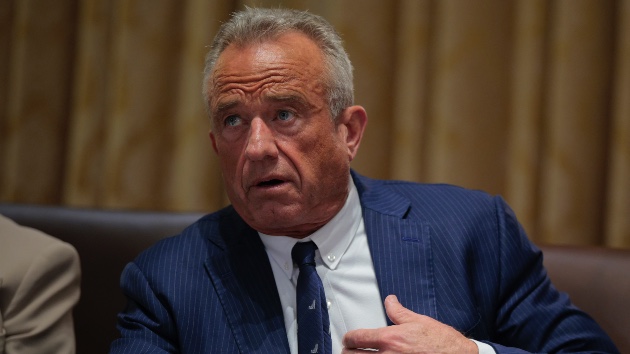
Health and Human Services Secretary Robert F. Kennedy Jr. speaks during a cabinet meeting with U.S. President Donald Trump in the Cabinet Room of the White House on August 26, 2025 in Washington, DC. (Photo by Chip Somodevilla/Getty Images)
(WASHINGTON) — More than 1,000 current and former employees across the Department of Health and Human Services (HHS) signed a letter on Wednesday morning calling for Health Secretary Robert F. Kennedy Jr.’s resignation.
Addressed to Kennedy and members of Congress, the signatories accused the secretary of endangering the health of Americans. Save HHS, the group behind the letter, told ABC News it’s been sent to the Senate Committee on Health, Education, Labor and Pensions; Senate Committee on Finance and the House Committee on Energy and Commerce as well as Majority and Minority leadership.
“We swore an oath to support and defend the United States Constitution and to serve the American people. Our oath requires us to speak out when the Constitution is violated and the American people are put at risk,” the letter reads, in part.
It continues, “Thus, we warn the President, Congress, and the Public that Secretary Kennedy’s actions are compromising the health of this nation, and we demand Secretary Kennedy’s resignation.”
In a statement to ABC News, HHS communications director Andrew Nixon said the CDC “has been broken for a long time” and it will take “sustained reform and more personnel changes” to restore trust in the institution.
“From his first day in office, [Kennedy] pledged to check his assumptions at the door — and he asked every HHS colleague to do the same,” the statement read, in part. “That commitment to evidence-based science is why, in just seven months, he and the HHS team have accomplished more than any health secretary in history in the fight to end the chronic disease epidemic and Make America Healthy Again.”
Employees from almost every agency signed the letter, including the Centers for Disease Control and Prevention, the Food and Drug Administration and the National Institutes of Health. The letter states the employees did so in their personal capacity, on their personal time and without the use of government equipment.
In the letter, HHS employees said Kennedy continues “to endanger the nation’s health” with examples such as the ousting of newly-installed CDC director Susan Monarez, followed by the resignations of four top CDC leaders.
The letter also referenced an interview Kennedy gave to Scripps News last month in which he said trusting experts “is not a feature of either a science or democracy,” which staffers referred to as “ongoing verbal attacks” of the HHS workforce.
Employees also expressed dismay over Kennedy’s June move to remove all 17 members of the CDC’s vaccine advisory panel, the Advisory Committee for Immunization Practices (ACIP) — which makes recommendations on the safety, efficacy and clinical need of vaccines — and replaced them with eight of his own hand-selected members, many of whom have expressed vaccine-skeptic views.
The letter calls out two new members by name, Dr. Robert Malone and Retsef Levi.
Malone — who made some early contributions to mRNA vaccine technology — discussed an unfounded theory, disputed by experts, on a podcast during the COVID-19 pandemic, claiming people were “hypnotized” into believing mainstream ideas about COVID-19, such as vaccination.
Meanwhile, Levi previously said in a post on X that there was “indisputable evidence” that mRNA vaccines cause “serious harm including death, especially among young people,” a claim that has not held up in dozens of research studies.
The letter calls on Trump and Congress to appoint a new health secretary if Kennedy refuses to resign.
“We expect those in leadership to act when the health of Americans is at stake,” the letter states. “We ask other partner organizations to join us in our call for Secretary Kennedy’s resignation and stand in solidarity with those who have already.”
The employees said the petition is in response to a letter sent last month to Kennedy — signed by more than 750 current and former staffers — beseeching him to “stop spreading inaccurate health information.”
Staffers stated the deadly shooting that occurred at the Atlanta headquarters of the CDC on Aug. 8 was “not random” and was driven by “politicized rhetoric.”
The earlier letter called on Kennedy to take a number of actions by Tuesday, Sept. 2, including not spreading inaccurate health information, affirming the scientific integrity of the CDC and guaranteeing the safety of the HHS workforce.
The new letter comes just two days after nine former directors and acting directors of CDC published an op-ed in The New York Times, also accusing Kennedy of endangering the health of Americans.
Additionally, on Tuesday, Kennedy published an op-ed in The Wall Street Journal, saying the CDC has “squandered public trust” and that Trump has asked him to “restore that trust and return the CDC to its core mission.”
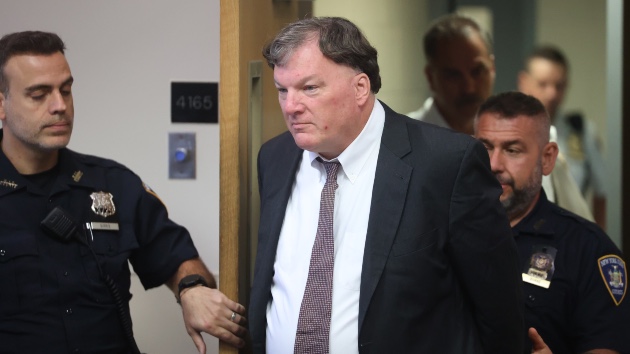
Alleged serial killer Rex A. Heuermann is escorted into Judge Tim Mazzei’s courtroom at Suffolk County Court in Riverhead for a frye hearing on July 17, 2025 in Riverhead, New York. (Photo by James Carbone-Pool/Getty Images)
(NEW YORK) — A New York judge on Wednesday admitted DNA evidence that Suffolk County prosecutors say links alleged Gilgo Beach serial killer Rex Heuermann to the murders of at least seven victims.
The defense had challenged the evidence since it was obtained using new DNA technology that had never been used in a New York court.
Prosecutors successfully argued the technology was derived from accepted scientific methods.
This is a developing story. Please check back for updates.
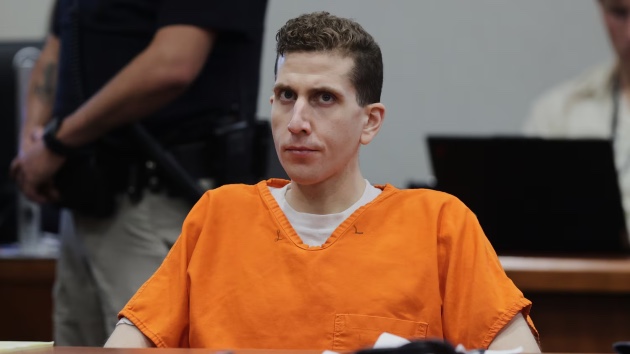
Bryan Kohberger appears at the Ada County Courthouse for his sentencing hearing, July 23, 2025, in Boise, Idaho. (Kyle Green/Pool/Getty Images)
(NEW YORK) — As part of his studies in the fall of 2022, then-criminology Washington State University Ph.D. student Bryan Kohberger proposed researching criminals’ emotions and how they made decisions. In November, the scholar of crime would go on to stab four college students to death.
Buried in nearly 700 pages of evidence photos, the Idaho State Police released a trove of Kohberger’s homework assignments from his Pullman, Washington, apartment. The pictures were released in response to public records requests, including from ABC News.
They are among the thousands of pages of records now being released in the wake of Kohberger’s decision to plead guilty to killing Kaylee Goncalves, Madison Mogen, Ethan Chapin and Xana Kernodle in the early morning hours of Nov. 13, 2022. He was sentenced to life in prison without the possibility of parole in July.
“Not all criminal actions reflect a rational, instrumental process,” Kohberger wrote for one of his classes. “Crimes of passion involve reactive violence, which manifests due to intense emotional arousal, confounding notions of an exclusively cold, criminal calculus.”
He said he wanted to understand “how emotions, both positively and negatively valanced, influence the decision-making involved in burglary before, during and after crime-commission.” He suggested conducting “in-person, semi-structured” jailhouse interviews.
Investigators pored over everything they found among Kohberger’s possessions in order to help piece together a portrait of their suspect. Kohberger’s writings indicated that he had not only steeped himself in studying crime — he had shown desire to get inside criminals’ heads, according to investigators.
“That, in and of itself, would not make him a criminal. There’s others out there that are deeply fascinated in studying people that would never probably even consider committing the crime,” said Ed Jacobson, who was the FBI’s Acting Supervisor for the Couer d’Alene and Lewiston offices during the Moscow investigation.
“Once we arrested him, the [Behavioral Analysis Unit] is out there. They are going through the phones. They’re going through every bit of information we’ve gathered on this guy,” Jacobson said. “We’re looking for evidence we can show in court. They’re looking at it as the broader spectrum. They’re trying to get into this guy’s thinking patterns. It goes to knowledge, and potentially motive. Doesn’t make him guilty — but a lot of other stuff did.”
Prosecutors had planned to use Kohberger’s homework against him at trial. They would have used some of his assignments to show he had intently “studied crime” — and knew exactly how to cover his tracks after committing murder. “He had that knowledge and skill,” lead prosecutor Bill Thompson said at the July 2 plea hearing.
The now-admitted killer also wrote at length about how “procedural injustice” in the American system “has produced many false confessions.”
“False guilty pleas manifest due to a lack of judicial oversight and plea deals that seem to compel defendants to enter them,” Kohberger wrote. “If defendants fail to accept a plea bargain, prosecutors will pursue the strictest charges.”
“Some people simply plead guilty to crimes they did not commit as to choose the lesser of two evils,” he said. Kohberger also pointed to “eyewitness misidentification” as an issue and noted a potential remedy: “increasing video surveillance in public places.”
In another paper, Kohberger described how “imprudent application of prosecutorial power” fostered mass incarceration. He wrote about a 2005 murder case involving a woman who was convicted of her mother’s murder, and who later won her release. Kohberger wrote how the prosecutor “behaved highly unethically” and the woman was “forced” to “accept the evidence against her.”
“If she failed to comply, this would leave [the accused woman] with no future, and in an attempt to salvage what was left of her life, she acquiesced,” Kohberger wrote. “Though one cannot ascertain [her] actual guilt, her case is reminiscent of the rushed process that precipitates false imprisonment.”
Another seven-page paper explored what Kohberger called a “gruesome” stabbing murder case. “Blood pooled around him and was spattered on the walls and television near his body,” Kohberger said, describing how the victim was found. He noted grisly details from the scene “would be a reminder of the seriousness” of the crime to jurors. Kohberger added that the alleged killer’s DNA evidence was found at the scene which belied his “initial account.”
In an essay quiz dated Oct. 19, 2022, Kohberger discussed whether the death penalty is a “valid public policy, especially in the context of history and morality.” He argued that in fact, capital punishment is not effective.
“There is no evidence of deterrent effects, and there remains an even better argument that, rather than preventing anarchy and disorder, the divisive policy may increase it in due time,” Kohberger wrote. In his papers on the death penalty, he cited some of the same court decisions his lawyers would later use in an unsuccessful attempt to take the death penalty off the table in his own case.
By the end of the fall 2022 semester, Kohberger’s status at the university was in jeopardy, according to police records.
Just 11 days before he would carry out the quadruple killing, Kohberger was sent a letter from his graduate program how to adjust his behavior — or face further discipline.
The “improvement plan,” dated Nov. 2, 2022 and issued by WSU Department of Criminal Justice and Criminology, directed Kohberger to establish goals and meet with a supervisor weekly. Among the steps he was directed to take was to “make sure weekly goals are progressively harder to ensure progress throughout the rest of the semester.”
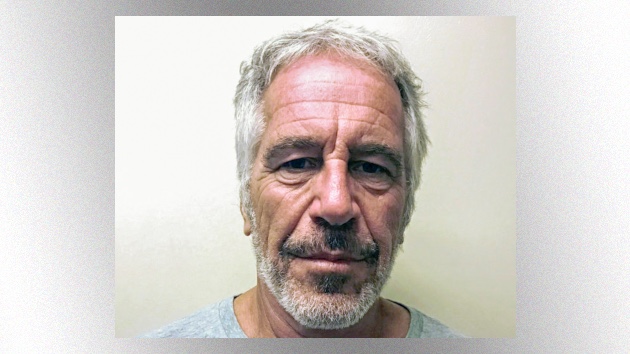
In this handout, the mug shot of Jeffrey Epstein, 2019. (Photo by Kypros/Getty Images)
(NEW YORK) — A group of Jeffrey Epstein survivors are set to speak at the Capitol on Wednesday morning.
The 10:30 a.m. ET news conference comes as a bipartisan pair of lawmakers push to force a vote on the House floor on releasing the Epstein files.
Kentucky Republican Rep. Thomas Massie defended the effort he and Democratic Rep. Ro Khanna’s are making, emphasizing late Tuesday that all eyes will be on hearing the survivors of Epstein’s sexual abuse and alleged trafficking speak out.
“I think what’s going to change everything is tomorrow at 10:30, when we have the survivors testifying in public, some of whom have never spoken publicly, and they’ve already met with the Oversight Committee, and it was allegedly a very emotional meeting, and that’s all behind closed doors. But it’s going to be open to the public tomorrow,” he said Tuesday.
Massie accused the White House of not wanting to release the files.
“Look, if my legislation were redundant, why would the White House be trying to stop it? It’s not redundant. There are things that the White House doesn’t want out there that my legislation would cause to be released.”
Asked to respond to President Donald Trump calling the Epstein investigation “a hoax,” Massie said, “I hope he doesn’t say that after tomorrow when 10 of the survivors testify, that would be very disrespectful.”
So far, four Republicans have signed the discharge petition — a procedural tool to bypass GOP leadership and force a vote on a measure to compel the Justice Department to publicly release the Epstein files. Those signers include Massie, Reps. Nancy Mace, Marjorie Taylor Greene and Lauren Boebert. If all 212 Democrats sign the petition, only two Republicans are needed to reach the 218 needed force a vote on the House floor.
House Speaker Mike Johnson, after an hourslong meeting with Epstein survivors on Tuesday, said Republicans were committed to transparency on Epstein, but reiterated his opposition to Massie and Khanna’s petition.
“It does not adequately protect the innocent victims, and that is a critical component,” Johnson said.
Massie also weighed in on the Epstein document release on Tuesday from the House Oversight Committee, which included tens of thousands of pages, saying he still plans to move forward with his discharge petition.
“I haven’t had time to look at all the documents that have been released by the Oversight Committee, but I think the scope of their investigation is such that the things they requested aren’t even going to include all the things that we need, and the few documents that we have been able to view are heavily redacted to the degree that they wouldn’t show us anything new,” he said.
Massie added, “Somebody needs to show us what’s new in those documents, to know whether it’s moot or not.”
Rep. Robert Garcia, the top Democrat on the House Oversight Committee, said the pages released by the panel on Tuesday were “already mostly public information.”
“To the American people — don’t let this fool you,” Garcia said. “After careful review, Oversight Democrats have found that 97% of the documents received from the Department of Justice were already public. There is no mention of any client list or anything that improves transparency or justice for victims.”
Epstein was arrested in July 2019 and charged in a federal indictment with conspiracy and child sex trafficking. He died in custody a month later, while awaiting trial. His death was ruled a suicide by hanging.
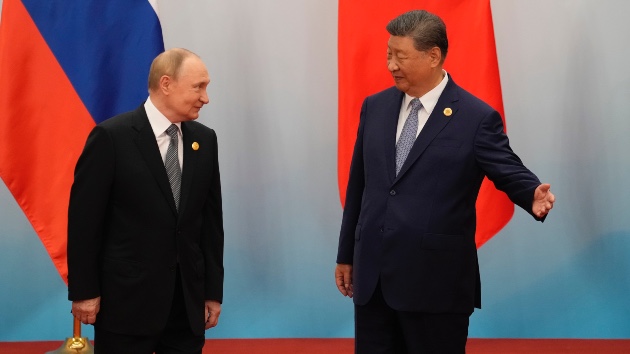
Chinese President Xi jinping (R) shows the way to Russian President Vladimir Putin during the Shanghai Cooperation Organization (SCO) Summit 2025 at the Meijiang Convention and Exhibition Centre on September 1, 2025 in Tianjin, China. (Photo by Suo Takekuma – Pool/Getty Images)
(WASHINGTON) — President Donald Trump took to his social media platform as Chinese President Xi Jinping, North Korean leader Kim Jong Un and Russian President Vladimir Putin appeared together in Beijing for China’s largest-ever military parade on Wednesday.
Trump accused Xi of “conspiring against” the United States as they attended the parade, which marked the 80th anniversary of Japan’s surrender in World War II.
“May President Xi and the wonderful people of China have a great and lasting day of celebration. Please give my warmest regards to Vladimir Putin, and Kim Jong Un, as you conspire against The United States of America,” Trump wrote on social media as the parade was underway.
Trump referenced America’s involvement in World War II in his post on, saying, “The big question to be answered is whether or not President Xi of China will mention the massive amount of support and ‘blood’ that The United States of America gave to China in order to help it to secure its FREEDOM from a very unfriendly foreign invader.”
“Many Americans died in China’s quest for Victory and Glory. I hope that they are rightfully Honored and Remembered for their Bravery and Sacrifice!” the president wrote.
In his remarks at the parade, held in front of the Tiananmen Gate, Xi hailed the Chinese People’s Liberation Army as a “heroic force” and spoke of nations and treating each other as equals.
“The Chinese nation is a great nation that does not fear violence, and that stands independent and strong,” Xi said. “In the past, when confronted with a life-or-death struggle between justice and evil, light and darkness, progress and reaction, the Chinese people stood united, rose up in resistance, and fought for the survival of the country, the rejuvenation of the nation and the cause of human justice.”
Yuri Ushakov, a top aide to Putin, dismissed Trump’s conspiracy allegations.
“I want to say that no one organized any conspiracies, no one was weaving anything, no conspiracies,” Ushakov told Russian journalist Pavel Zarubin, who is close to the Kremlin and has previously interviewed Putin. “Moreover, no one even had that in their minds, none of these three leaders had that,” Ushakov said.
“Everyone understands the role that the United States, the current administration of President Trump and President Trump personally play in the current international arrangements,” Ushakov said in a video posted by Zarubin to his Telegram channel.
Kim, Xi and Putin gathered for the military parade amid Ukrainian and Western concerns over the collaboration of the three nations in bolstering Moscow’s full-scale invasion of Ukraine, ongoing since February 2022.
Putin sent an invitation to meet with Kim on the sidelines of the military parade, according to Putin’s top foreign policy aide. The two leaders met after the event, according to a Kremlin readout published Wednesday.
Putin thanked Kim for sending North Korean troops to fight Ukraine’s incursion in Russia’s western Kursk region last year. “I would like to emphasize that your soldiers fought valiantly and heroically,” the president said, according to the Kremlin’s readout. “We will never forget the sacrifices made by your armed forces and the families of your military personnel.”
In response, Kim said, “As I said during our previous meeting, if there is anything we can do to help Russia, we will certainly do that, and we will regard this as our fraternal duty. We will do everything in our power to assist Russia.”
After the meeting, Putin and Kim hugged in front of reporters, with the Russian leader inviting Kim to visit Russia. “Come back again,” Putin said.
The North Korean Foreign Ministry said in a Wednesday statement that Kim was “enveloped in an atmosphere of the warmest friendship and enthusiastic welcome” on his arrival in Beijing.
Ukrainian and Western governments have accused North Korea of supplying significant amounts of ammunition and troops to support Russia’s war, while Kyiv and its NATO backers have identified China as Moscow’s prime source of materiel and a vital economic lifeline.
ABC News’ Tanya Stukalova, Somayeh Malekian and Kevin Shalvey contributed to this report.
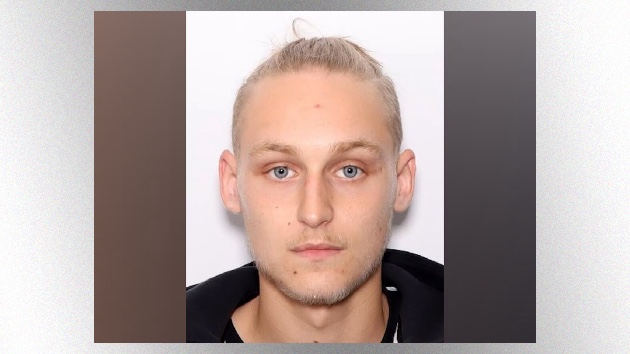
Jason Allen Glidewell II, 19, is wanted in a shooting, August 28, 2025, on Interstate 85 in Mecklenburg County, Virginia, that left a 20-year-old driver dead and his female passenger injured./ (Virginia State Police)
(NEW YORK) — A manhunt for the suspect in a Virginia freeway shooting that left a 20-year-old driver dead and his passenger injured intensified on Tuesday when state police asked for the public’s help and released photos of the alleged gunman and his vehicle.
The suspect was identified as 19-year-old Jason Allen Glidewell, who the Virginia State Police said should be considered armed and dangerous.
The shooting unfolded Thursday afternoon on Interstate 85 in Mecklenburg County, about five miles from the Virginia-North Carolina border, according to a statement from the state police. A motive for the shooting remains under investigation.
The victim killed in the freeway shooting was identified by state police as 20-year-old Hunter A. Bates, of Colonial Heights, Virginia.
Bates was driving northbound on Interstate 85 when he was shot around 3:47 p.m., according to the state police. Bates’ car swerved off the freeway and came to a rest in a culvert, police said.
Bates was pronounced dead at the scene, according to police. His passenger, a woman whose name was not released, was taken to a local hospital, treated and released, police said.
“State Police are asking anyone with information regarding this incident to please contact the Virginia State Police Division 3,” according to the state police statement.
Authorities on Tuesday released a photo of Glidewell, who is believed to have ties to the Richmond and Henrico, Virginia, area.
“On August 28, 2025, Hunter’s life was cut short by a senseless act of violence that has left our hearts broken. As we come to terms with this unimaginable loss, we are reminded of how precious and fragile life is,” Bates’ family said of Hunter Bates in an obituary published by the Owen Funeral Home in Jarratt, Virginia.
ABC News’ Benjamin Stein contributed to this report.
Views from the Drift Hotel March 25, 2019 Overseas Highway, Key Largo Florida (Photo by Paul Harris/Getty Images)
(KEY LARGO, Fla.) — An 8-year-old boy was bitten by a shark while snorkeling off the coast of Key Largo, Florida, on Labor Day, officials said.
The incident occurred around 3:24 p.m. on Monday, Monroe County Sheriff’s Office said in a Facebook post. The child was airlifted by Trauma Star to Jackson Memorial Hospital in Miami.
A good Samaritan, identified as Richard Hayden, heard calls for help over the radio and helped guide the boy’s boat to shore, according to an incident report. Hayden assisted the child’s father in applying tourniquets to the boy’s right leg to control bleeding before emergency responders arrived, the report stated.
Officials notified the U.S. Coast Guard and the Florida Fish and Wildlife Conservation Commission about the incident. The Key Largo Fire Department said they believed the attacking shark was a reef shark of unknown length.
The boy’s current condition has not yet been released.
This attack marks the latest in a series of shark encounters in the Florida Keys region. Last July, a 37-year-old man survived multiple bites from a bull shark while spearfishing near a reef off Key West.
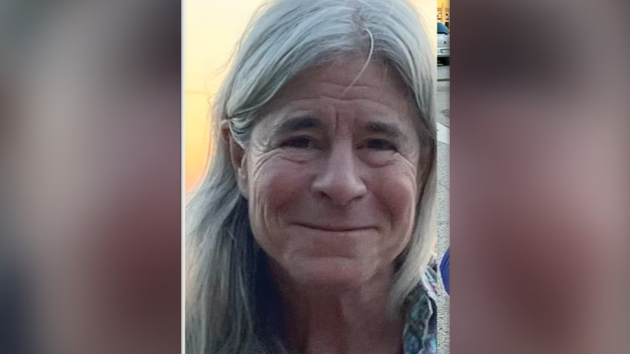
(EVANSTON, Ill.) — Officials in Illinois are searching for a Northwestern University professor who was reported missing after leaving home to go on a walk, according to the Evanston Police Department.
Nina Kraus, a 72-year-old professor at the university’s school of communication, was last seen on Monday after she left her Evanston home to go on a walk at approximately 9 a.m. local time, officials said. Her family reported her missing the same day, officials said.
“The University is hopeful that with the community’s help, we can find Professor Kraus and assure her safety,” Northwestern said in a press release on Monday.
She was last seen wearing long pants and a windbreaker, and was believed to be carrying a dark backpack, officials said.
Kraus is 5 feet, 4 inches tall, weighs approximately 140 pounds and has long silver hair, police said.
On Tuesday, police said they would be flying drones along the waterfront of Lake Michigan as part of the investigation.
According to her faculty bio, Kraus’ is a “scientist, inventor and amateur musician who studies the biology of auditory learning.”
“My research on sound and the brain aims to understand how our life in sound, for better or worse, alters the processing of sound in the brain, makes us us, and affects the world we live in,” Kraus wrote in her bio.
Officials said anyone with information on Kraus’ whereabouts should contact police at 847-866-5000.
(LONDON) — Israel has begun its ground operation in Gaza City, Israel Defense Forces Chief of the General Staff Lt. Gen. Eyal Zamir said Tuesday.
“We are going to increase and enhance the strikes of our operation, and that is why we called you,” Zamir said in Hebrew, addressing reservists who have been called up to serve in recent weeks. “We have already begun the ground operation in Gaza [City].”
Israel Prime Minister Benjamin Netanyahu also released a message addressing Israeli Defense Force reservists Tuesday.
“I want to strengthen and express my deep appreciation to you, IDF soldiers and reserve soldiers and your families,” Netanyahu said in the video message in Hebrew. “Now we are facing the decisive stage. I believe in you, I trust you and the entire nation embraces you.”
This is a developing story. Please check back for updates.