(NEW YORK) — People who use their smartphones while sitting on the toilet face are at higher risk for painful, itchy hemorrhoids, according to new research published in the journal PLOS One.
Researchers investigated the bathroom habits of 125 adults undergoing screening colonoscopies at Beth Israel Deaconess Medical Center in Boston. About two-thirds of participants reported scrolling through their smartphones while sitting on the toilet.
Those who were glued to their phone while using the bathroom were 46% more likely to have hemorrhoids compared to those who left their device in another room.
“The likely explanation is that prolonged sitting increases pressure in the veins around the rectum, which can contribute to hemorrhoids,” Dr. Ernesto Gonzaga, a gastroenterologist from the Hospital of the University of Pennsylvania and who did not contribute to the study, told ABC News.
Scrollers spent a longer time on the toilet, the researchers found — about five times as many smartphone users logged over five minutes of toilet time per visit. When researchers asked what they were doing on their phones while doing their business, people confessed to catching up on the news, cruising through their social media feeds, or sending emails and texts.
Gonzaga pointed out that phone users also reported getting less exercise than non-users, suggesting that their broader lifestyle patterns could also contribute to their risk of hemorrhoids.
Hemorrhoids are swollen blood vessels around the anus and rectum, according to the National Institutes of Health. They can cause itching, pain and discomfort, and in many cases, they can also lead to rectal bleeding. Studies show that they are common in both men and women and affect about 1 in 20 Americans and about half of adults over 50 years old have hemorrhoids.
They are mainly treated with more fiber and fluids, soothing creams or sitz baths, and in tougher cases, they may require surgery.
“In clinical practice, we still recognize the more classical risk factors for hemorrhoids, including constipation, straining, low fiber intake, prolonged toilet sitting, pregnancy, obesity, and sedentary lifestyle. Constipation and abnormal bowel habits are particularly strong risk factors, while high fiber intake is protective,” Gonzaga said.
Gonzaga noted that the study does have some limitations. It looked at a small number of subjects and relied on self-reporting, so it doesn’t necessarily prove that phone use on the toilet is a direct cause of hemorrhoids, he said. He called for more research to get to the bottom of it.
“Given that hemorrhoids already account for millions of outpatient visits and substantial healthcare costs, these findings raise a broader public health concern about a growing burden of disease, potentially extending into younger populations as smartphone use,” he added.
Noor Shaik, MD, PhD, is a neurology resident physician and a member of the ABC News Medical Unit.
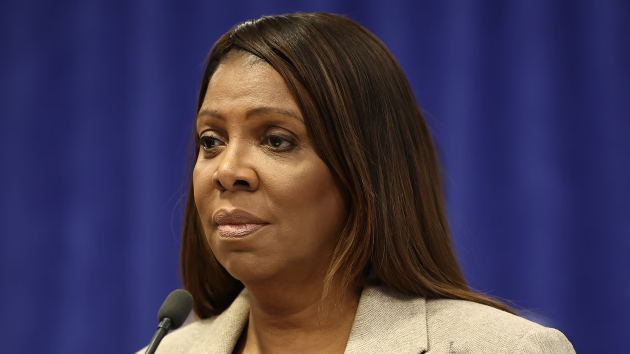
(NEW YORK) — New York Attorney General Letitia James sent formal notice Thursday that her office will appeal a decision last month that threw out the half billion-dollar civil fraud penalty imposed on President Donald Trump in his civil fraud case.
The attorney general’s office filed a notice of appeal, signaling it will ask the state’s highest court, the Court of Appeals, to reinstate the penalty and the finding that Trump, his eldest sons and his business were liable for a decade’s worth of business fraud.
The single-page notice contained no argument and did not say on what grounds the state would base its appeal of the decision by the intermediate appellate court.
Last month’s decision was expected to end up before the Court of Appeals since the five judges of the Appellate Division’s First Department were split over whether Trump was properly found liable, whether James had the authority to bring the case, and whether it should be retried.
After a three-month civil trial last year, New York Judge Arthur Engoron found Trump liable for committing a decade of business fraud by inflating his net worth to secure better business deals.
In his written decision, Engoron said that Trump and his co-defendants engaged in frauds that “leap off the page and shock the conscience” including wrongly claiming that Trump’s penthouse was three times its actual size and valuing his Mar-a-Lago estate as a personal residence, rather than a social club.
(LOWELL, Mass.) — An individual seen wielding what appeared to be a firearm near a Massachusetts university dormitory, prompting a shelter-in-place order and large law enforcement response, has been identified as a juvenile holding an airsoft replica firearm, police said Thursday.
The Lowell Police Department said it received a report of a person possibly armed with a gun on the University of Massachusetts Lowell’s campus just before 2:30 p.m. on Wednesday, which marked the first day of classes for undergraduate students.
A video widely circulated online showed an individual walking with what appeared to be a firearm near a UMass Lowell dormitory on Wednesday.
The university issued a campus-wide shelter-in-place order and canceled classes and events for the rest of the day.
Multiple agencies responded, including local and state police, with the FBI and Bureau of Alcohol, Tobacco, Firearms and Explosives also providing assistance. Officers searched the grounds and a drone, K9s and a police air unit were deployed.
The shelter-in-place was ultimately lifted shortly after 5:15 p.m. Wednesday when authorities “determined the suspect was no longer in the vicinity,” UMass Lowell said in a statement.
There were no shots fired or any injuries, Lowell Police Chief Ron Dickerson said Wednesday.
Lowell police said Thursday they recovered the weapon, which was confirmed to be an airsoft replica firearm. The individual was identified as a juvenile male, police said.
“While the reported firearm in this case was ultimately determined to be an airsoft gun, our community can be certain that, as in this case, the Lowell Police Department will always utilize all available resources until the safety of all involved is assured,” Lowell Police Superintendent Greg Hudon said in a statement.
Police did not release any more details on the juvenile, including his age, how they identified him, what he was doing on campus or if any charges are possible. ABC News has reached out for more information.
ABC News’ Victoria Arancio contributed to this report.
Lindsey Nicholson/UCG/Universal Images Group via Getty Images
(NEW YORK) — Parents faced steeper prices for back-to-school shopping this year, with costs rising 7.3% amid tariffs, according to a new Century Foundation report.
The price hikes affected everything from basic supplies to electronics, with some items seeing dramatic increases. Index cards jumped 42%, while three-ring binders cost nearly 13% more than last year, ABC News business correspondent Alexis Christoforous reported.
“Parents are facing price increases across a number of categories when it comes to school supplies,” Dr. Sarah Dickerson, a research economist at UNC Chapel Hill Kenan-Flagler Business School, told ABC11. “If we look at pencils, for instance, we know the wooden pencils are imported from Brazil. We are anticipating price hikes there.”
According to Capital One Shopping research, Americans spent $125.4 billion on back-to-school and college shopping in 2024, with the average household budgeting $874.68 for school supplies. For one K-12 student, parents spent an average of $586 on supplies.
However, experts say there are ways to manage these rising costs. Christoforous recommended buying in bulk during sales to save money throughout the year, especially for basic supplies like pencils and pens.
She also suggested choosing generic brands over name brands, noting that some generic pencils cost as little as a dollar compared to $5 for well-known brands.
For parents looking to stretch their budgets further, Christoforous highlighted the benefits of thrift shopping for school supplies, where shoppers can often find unexpected deals.
When it comes to expensive electronics, she advised looking for refurbished laptops and tablets that come with warranties from major retailers. Additionally, she urged parents to take advantage of tax-free shopping periods, which many states offer during the back-to-school season.
As of 2025, 18 states offered tax-free shopping periods, according to the Federation of Tax Administrators. Some states, like Florida, extended these savings throughout August, while others limited them to specific weekends.
“A lot of the big retailers sell refurbished electronics with warranties,” Christoforous said, noting that electronics were particularly affected by tariffs due to overseas manufacturing and imported components.
For budget-conscious parents, Christoforous also suggested meal planning as a cost-saving measure.
“When you make dinner, make extra,” she advised. “That way you have leftovers and you’re not scrambling every day, going ‘What’s going to be for lunch?'”
Despite these challenges, Capital One Shopping research showed that household back-to-school budgets decreased by $15.39 or 1.73% compared to the previous year, suggesting that many families found ways to adapt to the higher prices.
Lisa DeNell Cook, nominee to be a member of the Board of Governors of the Federal Reserve System, testifies during a Senate Banking nominations hearing on June 21, 2023 in Washington, DC. (Photo by Drew Angerer/Getty Images)
(WASHINGTON) — The Department of Justice has opened a criminal investigation into Federal Reserve Governor Lisa Cook, sources familiar with the matter said Thursday.
Bill Pulte, the Director of the Federal Housing Finance Agency, sent the Department of Justice two criminal referral letters last month about Cook last month regarding Cook’s properties in Georgia and Michigan.
Federal investigators have begun issuing subpoenas and are utilizing grand juries in both states as part of their investigation, the sources said.
The Wall Street Journal first reported the existence of the criminal investigation.
As President Donald Trump seeks to reshape the balance of the Federal Reserve central banking system, Pulte’s allegations have become the basis of Trump’s effort to terminate Cook “for cause” — a controversial and legally fraught move that is actively being challenged in court.
In an Aug. 15 letter to Attorney General Pam Bondi and Special Attorney for Mortgage Fraud Ed Martin, Pulte alleged that Cook “falsified bank documents and property records to acquire more favorable loan terms, potentially committing mortgage fraud under the criminal statute.” Pulte has claimed that the referral was based on publicly available information but has declined to comment about the tip that prompted his investigation. The first referral focused on Cook’s properties in Georgia and Michigan.
Reached for comment regarding the DOJ probe, attorneys for Cook said in a statement, “Predictably and recognizing the flaws in challenging their illegal firing of Governor Cook, the administration is scrambling to invent new justifications for its overreach.”
“This Justice Department — perhaps the most politicized in American history — will do whatever President Trump demands. He wants cover, and they are providing it,” said attorney Abbe Lowell. “The questions over how Governor Cook described her properties from time to time, which we have started to address in the pending case and will continue to do so, are not fraud, but it takes nothing for this DOJ to undertake a new politicized investigation, and they appear to have just done it again.”
Following the Aug. 15 referral, Martin sent a letter to Federal Reserve Chairman Jermone Powell encouraging him to fire Cook because of the ongoing investigation.
“At this time, I encourage you to remove Ms. Cook from your Board. Do it today before it is too late! After all, no American thinks it is appropriate that she serve during this time with a cloud hanging over her,” Martin wrote.
Days later, Trump attempted to fire Cook based on the allegations that she designated both her homes in Georgia and Michigan as her primary residence. Cook has denied wrongdoing, said she would continue to serve in her role, and sued to challenge Trump’s attempt to remove her.
“President Trump has no authority to remove Federal Reserve Governor Lisa Cook. His attempt to fire her, based solely on a referral letter, lacks any factual or legal basis. We will be filing a lawsuit challenging this illegal action,” said Lowell.
Later that month, on Aug. 28, Pulte sent a second referral letter to the Department of Justice, alleging that Cook had made “multiple false representations” while serving as a Federal Reserve governor, including listing an apartment in Massachusetts as both an investment property and a second home.
In the following days, Pulte has made multiple comments on social media accusing Cook of crimes and calling for her prosecution, unusual steps during an ongoing investigation before any formal determinations of wrongdoing.
“The damage currently being done to the integrity of the Federal Reserve, by Lisa Cook and Jerome Powell, cannot be overstated,” he wrote in one post.
On Thursday, Pulte originally planned to hold a press conference in front of the Elijah Barrett Prettyman U.S. Courthouse in Washington, D.C. where he said he would share new information about Cook.
He later canceled the press conference, writing on social media, “Out of respect for the process, I will be delaying this press conference.”
Rescuers and firefighters operate at the scene after the Gloria funicular cable railway derailed in Lisbon, Portugal, 03 September 2025. (Zed Jameson/Anadolu via Getty Images)
(LONDON) — At least 16 people are dead and another 21 injured after a streetcar derailed in Portugal’s capital on Wednesday, officials said.
At least five people remain in life-threatening condition Thursday following the crash in Lisbon, according to Portugal’s presidency office.
One 3-year-old child is included in the injured, according to an official.
It appears the safety cable on the electric streetcar broke, causing the car to derail, Lisbon’s communications department said, based on preliminary information. The investigation into the cause is ongoing.
Its operator, Carris, said it complied with all maintenance protocols, including daily inspections.
The famed funicular, known as the Elevador da Gloria, travels up and down a steep hill using two streetcars.
The incident happened around 6:15 p.m. local time, when one of the funicular’s cars derailed and crashed, officials said.
The rescue mission lasted around two hours, a Public Ministry official told ABC News.
The tram cabin that derailed can hold up to 40 people. It is unclear how many total people were on board.
Carris said it immediately opened an investigation along with the authorities to determine the cause of the accident.
All the other funiculars of the city have been suspended for now, according to an official.
Swiss tourist Rasha Abdo told ABC News she was traveling on the funicular’s other streetcar with her husband and 3-year-old son when the crash occurred. She said they were near the bottom of the hill, traveling uphill, when they suddenly reversed direction.
She said they heard the other streetcar barreling down the hill toward them, so her husband jumped out the window and she passed their son to him to ensure his safety, before realizing the car had crashed farther uphill.
Her husband, who is a doctor, went to the streetcar to try and assist, but “it was too late,” she said. “I’m really grateful that we are still alive, but on the other side, I’m very sad for the people that lost their lives,” she said.
The mayor of Lisbon declared a three-day period of mourning.
“I offer my sincere condolences to all the families and friends of the victims. Lisbon is in mourning,” Mayor Carlos Moedas said in a statement.
Portugal’s Prime Minister’s Office also declared a national day of mourning for Thursday, expressing its “deep dismay” over the accident, and said it is in contact with local officials.
European Commission President Ursula von der Leyen also expressed her condolences.
“It is with sadness that I learned of the derailment of the famous ‘Elevador da Glória,'” she said in a statement. “My condolences to the families of the victims.”
ABC News’ Tom Soufi Burridge and Hugo Leengardt contributed to this report.
A helicopter drops water as Cal Fire firefighters battle the 6-5 Fire in the TCU September Lightning Complex on September 03, 2025 near Chinese Camp, California. (Photo by Justin Sullivan/Getty Images)
(CHINESE CAMP, Calif) — The historic gold rush town of Chinese Camp, California, has been devastated by one of multiple lightning-sparked wildfires in three Northern California counties that have burned more than 13,000 acres combined, authorities said.
More than 20 wildfires in Calaveras County and neighboring Stanislaus and Tuolumne counties, where Chinese Camp is located, began on Tuesday night, when more than 17,000 dry lightning strikes hit the area, according to the California Department of Forestry and Fire Protection (Cal Fire). The blazes are part of what Cal Fire has named the TCU Lightning Complex Fire.
As of Wednesday night, the fires combined had burned 13,371 acres, destroyed multiple structures and prompted evacuations in Calaveras, Tuolumne and Stanislaus counties, according to Cal Fire. The fire was 15% contained on Wednesday night, but there were individual fires within the TCU Lighting Complex Fire that remain 0% contained.
“Armageddon” is how Randall Hoffman, a resident of Chinese Camp, described the devastation to his small foothills town, about 60 miles west of Yosemite National Park.
“I think we lost 95% of the town,” Hoffman, whose home was spared by the fire, told ABC station KFSN in Fresno on Wednesday.
The wildfire that swept through Chinese Camp, dubbed the 6-5 Fire, had grown to 6,473 acres as of Wednesday night and was 0% contained, according to Cal Fire.
Structures throughout the tiny community of Chinese Camp, a town founded in by Chinese gold miners in the 1850s, were burned to the ground or damaged by the 6-5 Fire.
“To watch it come over the ridge the way it did and as fast as it did, that’s absolute fear,” Chinese Camp resident Pete Tomaino told KFSN after he evacuated from his home.
At least 11 areas threatened by the 6-5 Fire remained under mandatory evacuation on Wednesday night, including the entire town of Chinese Camp, which has a population of less than 100 people.
Meanwhile, the 2-8 Fire in Calaveras County, another blaze that was started by lightning strikes on Tuesday night and is part of the TUC Lightning Complex Fire, had burned 1,326 acres as of Wednesday night, according to Cal Fire. Multiple air tankers and helicopters, as well as fire crews on the ground, made progress fighting the fire on Wednesday, increasing containment to 15%, according to Cal Fire.
Further north, the Blue Fire, which was also started by lightning on Aug. 26 in the Klamath National Forest in Siskiyou County, near the Oregon border, has burned 1,631 acres, according to Cal Fire. As of Wednesday night, the Blue Fire was 0% contained and mandatory evacuation orders were in place, Cal Fire said.
Entrance to the U.S. Citizenship and Immigration Services (USCIS) offices at 26 Federal Plaza in Manhattan. (Erik McGregor/LightRocket via Getty Images)
(WASHINGTON) — The federal agency responsible for administering the nation’s immigration and naturalization system will now have enforcement agents for the first time.
United States Citizenship and Immigration Services (USCIS) is adding law enforcement agents to its workforce, according to a press release issued Thursday by the agency.
The agents will be tasked with “making arrests, carrying firearms, executing search and arrest warrants, and other powers standard for federal law enforcement,” according to the release.
Traditionally, the agency has not been a law enforcement agency.
A new rule published on the federal register grants the authority under a little-known department at USCIS: the fraud detection agency.
The rule technically expands their authority to give them law enforcement powers.
“By upholding the integrity of our immigration system, we enforce the laws of this nation. As Secretary Noem delegated lawful authorities to expand the agency’s law enforcement capabilities, this rule allows us to fulfill our critical mission,” USCIS Director Joseph Edlow said in the announcement, referring to Department of Homeland Security Secretary Kristi Noem.
“This historic moment will better address immigration crimes, hold those that perpetrate immigration fraud accountable, and act as a force multiplier for DHS and our federal law enforcement partners, including the Joint Terrorism Task Force,” Edlow said.
Members of the National Guard patrol the National Mall in Washington, DC, on September 3, 2025. (Austin DeSisto/NurPhoto via Getty Images)
(WASHINGTON) — Washington, D.C., Attorney General Brian L. Schwalb filed a lawsuit on Thursday to end the Trump administration’s deployment of National Guard troops to the city, calling it an unlawful “military occupation.”
Nearly 2,300 troops from seven states have been stationed in the district since Aug. 11, a move Schwalb says goes beyond the president’s authority and violates local autonomy under the Home Rule Act.
The lawsuit argues the troops were placed under Defense Department command and later deputized by the U.S. Marshals Service to perform law enforcement, which Schwalb’s office says is “in violation of the foundational prohibition on military involvement in local law.”
By law, the president’s emergency deployment can last only 30 days unless extended by Congress, meaning the surge is set to expire Sept. 10.
Schwalb also alleges the federal government is unlawfully asserting command over state militias without formally bringing them into federal service, which he says is a violation of the Constitution and federal law.
The complaint says the deployments threaten to erode trust between residents and police, inflame tensions and damage the city’s economy — particularly in the restaurant and hospitality industries as, just last month, the Restaurant Association Metropolitan Washington extended summer restaurant week in an effort to draw customers during the surge.
The attorney general’s office further argues that the deployments violate the Home Rule Act by overriding local autonomy and undermining public safety “by inflaming tensions and eroding trust between District residents and law enforcement.”
Still, Gregg Pemberton, the D.C. union chairman said the long-term goal is for the Metropolitan Police Department to resume full responsibility.
This is a developing story. Please check back for updates.
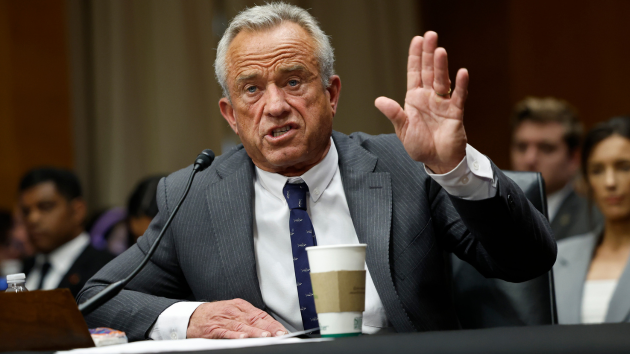
(WASHINGTON) — After a week of fast-moving shakeups at the nation’s health agency, Health and Human Services Secretary Robert F. Kennedy Jr. is testifying before the Senate Finance Committee, which has oversight over his department, on Thursday for hours of questioning sure to center on his vaccine policy.
The new FDA approval for COVID shots allows for people who are aged 65 and older to get the vaccine, or younger Americans who have an underlying condition that puts them at a higher risk of severe illness from the virus.
Public health officials and pharmacist groups have said the change will make it harder for young and healthy people to get the vaccine — should they still choose to — and raises questions about where they can get it or whether insurance will cover it.
Kennedy is expected to tout the overhauls at HHS so far, which he has said are aimed at eliminating bloated bureaucracy and conflicts of interest at public health agencies that get in the way of “gold-standard science.”
In a statement, HHS spokesperson Andrew Nixon said Kennedy will use the hearing to “reaffirm his commitment to Make America Healthy Again: restoring gold-standard science at HHS, empowering patients with more transparency, choices and access to care, and reestablishing trust in public health.”
While Republicans like Finance Committee Chairman Mike Crapo will attempt to keep the focus on chronic disease and Kennedy’s “Make America Healthy Again” agenda, Democrats and even some Republicans are expected to push Kennedy for answers on the FDA’s latest change as well as an upcoming CDC meeting on vaccines, which could lead to more changes to the nation’s vaccine policy.
The CDC’s Advisory Committee on Immunization Practices (ACIP), which discusses vaccine data and makes recommendations for which vaccines Americans should get and when, is going to weigh in on the FDA’s latest change, further informing insurance companies and pharmacies of how to carry out the policy.
But ACIP is also going to discuss a slate of different vaccines, including the COVID vaccine; hepatitis B vaccines; the measles, mumps, rubella, varicella (MMRV) vaccine; and the Respiratory Syncytial Virus (RSV) vaccine.
Speaking to reporters on Tuesday, Republican Sen. Bill Cassidy of Louisiana, who sits on the Senate Finance Committee, said he had spoken to other members of his caucus who agreed that they needed to investigate what potential changes Kennedy and the CDC committee were weighing to the childhood vaccine recommendations.
“The issue is about children’s health, and there are rumors, allegations, that children’s health, which is at issue here, might be endangered by some of the decisions that are purported to be made. I don’t know what’s true,” Cassidy said. “I know that we need to get there. And I’ve talked to members of my Republican Caucus, several of them. They’ve agreed with me that we need to get at it.”
Cassidy, who pushed Kennedy during his confirmation hearings to issue support for vaccines and publicly struggled over his vote for him, has tasked the committee he chairs, the Senate Committee on Health, Education, Labor and Pensions (HELP), to do “oversight” of Monarez’ ousting, he wrote on X last week.
Cassidy maintained that he isn’t “presupposing someone is right or wrong.” “I just know we’ve got to figure it out,” Cassidy said.
Cassidy has also called for the CDC meeting to be postponed until “significant oversight has been conducted,” citing “serious allegations” about the “meeting agenda, membership and lack of scientific process.”
Republican Sen. Susan Collins of Maine, who is on the HELP committee with Cassidy, told reporters on Wednesday that she is “concerned” and “alarmed” by Monarez’s firing.
“I know that the president has the right to fire whomever he wishes when it comes to that kind of appointment, but I don’t see any justification for it,” Collins said.
Monarez, who was in the job for only a month, was pushed out after she declined to fire top officials and support Kennedy’s vaccine policy changes in a meeting with the secretary early last week, a source familiar with her conversations with the secretary told ABC News.
“When CDC Director Susan Monarez refused to rubber-stamp unscientific, reckless directives and fire dedicated health experts, she chose protecting the public over serving a political agenda. For that, she has been targeted,” Monarez’s attorneys Mark Zaid and Abbe Lowell said in a statement late last week.
White House press secretary Karoline Leavitt told reporters President Donald Trump had fired Monarez because she “was not aligned with the president’s mission to make America healthy again.”
“It was President Trump who was overwhelmingly reelected on November 5,” Leavitt said. “This woman has never received a vote in her life, and the president has the authority to fire those who are not aligned with his mission.”
Other CDC officials who followed Monarez out the door included:
Deb Houry, Chief Medical Officer and Deputy Director for Program and Science
Dr. Dan Jernigan, Director of the National Center for Emerging and Zoonotic Infectious Diseases
Dr. Demetre Daskalakis, Director of the National Center for Immunization and Respiratory Diseases
Dr. Jennifer Layden, Director for the Office of Public Health Data, Surveillance, and Technology.
The officials cited the political climate and a refusal to accept science that didn’t align with Kennedy’s beliefs.
In addition to the recent FDA changes for the COVID vaccine, Kennedy has also canceled up to $500 million in research and development for mRNA vaccines and changed the COVID vaccine recommendations for children and pregnant women.
“I mean, from my vantage point as a doctor who’s taken the Hippocratic oath, I only see harm coming. I may be wrong. But based on what I’m seeing, based on what I’ve heard with the new members of the Advisory Committee for Immunization Practices, or ACIP, they’re really moving in an ideological direction where they want to see the undoing of vaccination,” Daskalakis said.
Kennedy, when he testified in his confirmation hearings to be health secretary in January, denied that he was anti-vaccine and said he supports “the childhood schedule” for vaccinations.
“I am pro-vaccine. I am going to support the vaccine program. I want kids to be healthy, and I’m coming in here to get rid of the conflicts of interest within the agency, make sure that we have gold standard, evidence-based science,” Kennedy said.
When pressed by Democratic Sen. Ron Wyden of Oregon, Kennedy committed to supporting the measles and polio vaccines.
“Senator, I support the measles vaccine, I support the polio vaccine. I will do nothing as HHS secretary that makes it difficult or discourages people from taking either of those vaccines,” Kennedy said.