(EAST ORANGE, N.J.) — As the search for 14-year-old Jashyah Moore continues, investigators are offering an increased reward of $15,000 after an anonymous local business owner’s donation.
The Moore family planned to hold a search party at 5 p.m. Tuesday on the corner of Amherst Street and Central Avenue, East Orange, New Jersey, Mayor Ted Green said at a Tuesday press conference. There will also be an interfaith prayer vigil at 5:30 p.m. on Friday in front of City Hall.
“Jashyah is one of our own,” Green said. “We’re asking this community, as we have been asking from day one, to help us in locating this young lady.”
Jashyah has been missing since Oct. 14 and her family is pleading with the community to help bring her daughter home.
She was last seen around 10 a.m. at Poppie’s Deli Store in East Orange after her mother asked her to go to the store for groceries. According to police, surveillance footage shows Jashyah entering the store with an older male who paid for her items. However, the footage does not appear to show them leaving the store together, police say.
When she returned home to her mother, Moore said Jashyah had lost the card the family uses for groceries, and Moore told her daughter to retrace her steps to find it.
Moore said that was the last time she saw her daughter.
Jashyah is 5-foot 5-inches tall and weighs about 135 pounds. She was last seen wearing khaki pants, a black jacket and black boots, according to an East Orange City Hall press release.
“I cannot imagine what she might be going through just being away from us this long, being away from her family who loves her very much,” her mother, Jamie Moore, said through tears at a press conference Friday morning. “If anybody knows anything, please, please come forward.”
East Orange Police, the FBI, and the New Jersey State Police are working in collaboration to help find Jashyah. They say if anyone sees her or knows of her whereabouts, to call the East Orange Police at 973-266-5041.
(NEW YORK) — Tongass National Forest stretches across nearly 17 million acres of land in southeast Alaska and is home to a lush vibrant ecosystem. It is now also at the center of a bitter battle between those trying to save the old growth forests and those who say access more of it is critical for the local economy.
Tongass covers more than 80% of southeast Alaska and, according to the United States Department of Agriculture, is responsible for sequestering nearly 8% of all U.S. carbon emissions.
Global leaders have pledged for decades to end deforestation by 2030, but some Alaskan corporations are asking for the opposite and want more access to the forest to support the local economy.
“Where’s your Amazon boxes going to come from? American consumers still want this stuff. We’re producing it here. It’s a good job for us people, good jobs for Alaskans,” said Eric Nichols, the owner of Alcan Alaska Timber Corporation.
Southeast Alaska relies heavily on tourism, and took a major economic blow during the COVID-19 pandemic. Nichols, who said he’s had to downsize his company by half because of logging restrictions, said the timber industry is a way to bring consistent jobs back to the area.
“How do you raise a family on $15 an hour for a five-month job?” said Nichols. “How do I do that? I can’t do that. My kids can’t do that.”
Wanda Culp, a Tlingit native, is also worried about the future of this land and her family, but said that the natural forest is critical to their lifestyle. Her tribe has deep ties to the land.
“We depend on this wilderness as Indigenous people,” said Culp.
She noted that her people have used the forest as a natural resource for generations, but that the commercial “clearcutting” method of deforestation is disrespectful and unsustainable.
“We don’t just cut it down and let it land; we create a spot for it to land so it doesn’t split. So it’s worthwhile. That isn’t what happens with clear cuts. It’s total disrespect,” said Culp, who flew to Washington, D.C., in 2019 to protest large-scale deforestation in southeast Alaska.
In the late 1900s, the timber industry and forest clearcutting was prominent in southeast Alaska with nearly a million acres of the Tongass forest chopped down.
Bryce Dahlstrom of Viking Lumber supports clearcutting trees and likened it to any type of farming done across the country.
“It’s a crop that grows back,” said Dahlstrom. “If you don’t want a farmer to cut his corn down, don’t eat corn.”
In January 2001, just days before leaving office, President Bill Clinton enacted the Roadless Rule, which aims to preserve roadless areas by preventing road construction, as well as timber harvesting, on more than 9 million acres in the Tongass National Forest.
Since then, presidential administrations have gone back and forth on whether to keep or dismiss the rule, citing a variety of political reasons. For now, the rule remains in place.
Alaska Republican Gov. Mike Dunleavy has said between wood and minerals, there is untapped natural wealth in Alaska inhibited by the restriction.
“We’re the largest state in the country by far. This forest is larger than most states. There’s incredible opportunity to provide lumber and lumber products for the United States and possibly other parts of the world. This is an opportunity for us to do it here again and provide jobs, revenue and wealth,” said Dunleavy.
Many scientists say the health of the planet cannot be sacrificed for economic growth anymore, especially in places like Tongass, which are “carbon sinks” that help combat rising carbon emissions.
In 2020, 111 scientists from across the country wrote a letter to Biden asking him to permanently install protections in Tongass and create a strategic carbon reserve system.
Despite the restrictions from the Roadless Rule, Tongass is the last national forest that allows large-scale clearcut logging of ancient old-growth trees. Some argue it’s not an issue because trees can be replanted.
“[Trees] are a renewable resource. We cut trees down because there’s a demand for that product,” said Nichols.
But conservationist Meredith Trainor disagrees. She said the older the trees, the more effective they are at removing carbon dioxide and that an entire forest cannot be replaced so easily.
“There is no one tree scenario where we’re going to solve climate change, right? This is about managing a whole forest or a certain way,” said Trainor. “It’s the whole system that works together to sequester carbon and old growth is much more effective at doing that than young growth.”
The timber industry in southeast Alaska is only allowed to work in 2% of Tongass. Loggers like Nichols argue that’s not enough.
He wants to expand access even further, potentially giving loggers access to an additional half a million acres.
“I want enough to have an industry. We need about 5, maybe 6%, to continue to have a continuous industry up here,” said Nichols.
Scientists argue that the whole Alaskan ecosystem is connected. They believe that expanding the logging industry may have a negative effect on the region’s other largest employment sector: commercial fishing.
In Sitka, Alaska, an island town of about 8,000, they rely heavily on salmon fisheries. Fisherman Marsh Skeele said that the expansion of logging puts fishermen’s livelihoods at risk.
“[Logging] damages streams and lakes — freshwater ecosystems that salmon rely on, that fishermen rely on, that this community relies on,” said Skeele. “They’re kind of ignoring all the jobs that are tied to what exists already.”
Dunleavy said that it’s imperative to look at Alaska for all its potential and that doesn’t necessarily mean change is bad for the future of the state.
“There’s this narrative that’s trying to be pushed that if you touch Alaska, you will damage it permanently and ruin it. That’s not the case. It’s not the case at all,” said Dunleavy.
While some believe expanding access to Tongass National Forest could help more people than it could harm, a tug-of-war continues in southeast Alaska between the environment and the economy.
As for Culp, she said that the climate crisis is an issue that cannot be ignored any longer.
“We are in a serious, serious climate crisis. Why can’t we start repairing our habitat?” said Culp. “Why can’t we protect what we have? I want my great-granddaughter to be able to walk this land and breathe this fresh air, touch these trees, know who they are. It’s not much to ask.”
(WASHINGTON) — The House select committee investigating the Jan. 6 Capitol riot issued 10 subpoenas on Tuesday to former members of the Trump administration — including West Wing aides and senior officials who were in or around the Oval Office and former President Donald Trump when the riot unfolded on Capitol Hill.
They include senior adviser Stephen Miller, press secretary Kayleigh McEnany, personnel director John McEntee, deputy chief of staff Chris Liddell, and Keith Kellogg, who served as former Vice President Mike Pence’s national security adviser and was with Trump watching coverage of the riot on television, according to Bob Woodward and Robert Costa’s book Peril.
With this latest tranche, the committee has now issued at least 35 subpoenas as part of its investigation.
The panel has asked for documents to be produced by Nov. 23, and for the recipients to appear for closed-door depositions in late November to mid-December.
On Monday, the committee issued six subpoenas to senior Trump campaign officials and advisers, including campaign manager Bill Stepien and spokesman Jason Miller.
Separately, a federal judge on Tuesday evening rejected Trump’s efforts to block the Jan. 6 select committee from obtaining records out of the National Archives that the panel has sought in its investigation of Trump’s attempts to overturn the 2020 election.
D.C. district judge Tanya Chutkan made it clear in her opinion that President Joe Biden’s decision to not assert executive privilege over the documents outweighs Trump’s own assertions.
“At bottom, this is a dispute between a former and incumbent President,” Chutkan writes. “And the Supreme Court has already made clear that in such circumstances, the incumbent’s view is accorded greater weight.”
The Trump team immediately filed an appeal of the decision to the D.C. Circuit Court of Appeals.
(WASHINGTON) — New Hampshire GOP Gov. Chris Sununu announced Tuesday that he will not run for Senate in the 2022 midterms, likely hurting Republicans chances to gain a seat in Washington.
Instead, Sununu plans on running for his fourth term as governor.
While many anticipated he would announce a Senate run, Sununu, speaking at a news conference at the governor’s mansion, said his “responsibility is not to the gridlock of and politics of Washington.”
The 2022 midterms are key for Republicans to gain back majorities in Congress — needing to scoop only one seat in the Senate and nine seats in the House.
Sununu acknowledged the importance of the race in gaining back the party’s Senate majority, but said the office is not his “style.”
The race “is clearly seen as one of the best opportunities America has to have a 51st vote to stop Chuck Schumer from implementing what we all see as a losing agenda for America,” he said.
Sununu was seen as a formidable challenger to Democratic Sen. Maggie Hassan, who is running for reelection.
Two Republicans have filed for candidacy to challenge her, and her campaign recognizes the race will be hard-fought no matter who emerges as the Republican candidate, Hassan’s campaign manager Aaron Jacobs said in a statement.
While Sununu ruled out running for Senate next year, he didn’t completely close the door on heading to Washington.
Short of saying he is considering a run for president in 2024, Sununu said he might be open to a Cabinet position later in the future.
Sununu admitted that at one point he was leaning towards running for Senate. But after speaking with other senators, he said he realized he could have more of an impact as governor.
“I’d rather push myself 120 miles an hour delivering wins for New Hampshire, than to slow down and end up on Capitol Hill debating partisan politics without results,” he said.
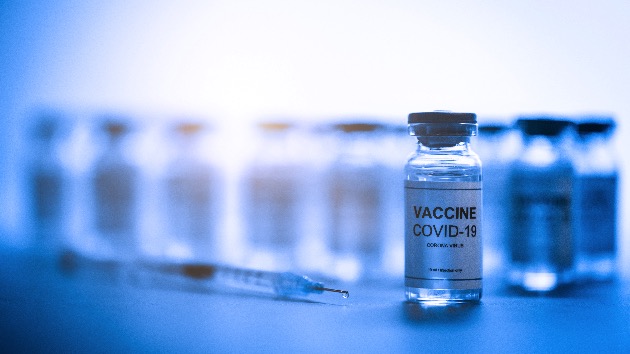
(WASHINGTON) — Pfizer on Tuesday requested the Food and Drug Administration allow all Americans over 18 to be eligible for booster shots, submitting data from a 10,000-person trial that found its third shots to be safe and effective for adults of all ages.
The request from Pfizer comes six weeks after independent panels of experts at the FDA and Centers for Disease Control and Prevention reviewed the company’s initial request for booster shots and ultimately determined that only Americans over 65 years old or who are frequently exposed to the virus should get a third dose.
That decision, in part, was because experts at the FDA and CDC said they wanted more data on how the third shot might affect young people, and whether they even needed one given the enduring protection from the vaccine against hospitalization and death among that group.
Pfizer’s submission on Tuesday could satisfy that request, providing data on its trial of 10,000 people during the delta variant wave.
People who received a third dose of Pfizer had 95% efficacy against the virus compared to people who received two shots, Pfizer said in a press release on Tuesday. Compared to unvaccinated people, Pfizer projected that efficacy was 98%.
The FDA and CDC have both left the door open to widening booster recommendations out to everyone as more data comes out, and as immunity wanes.
And last week, chief medical advisor to the White House Dr. Anthony Fauci told reporters that he thought boosters for all adults were imminent.
“It will be very likely that everyone will be able to get a booster within a reasonable amount of time,” Fauci said at the White House COVID briefing.
“People who have a primary vaccination are still really quite protected against severe disease and hospitalization,” he said, but said he supported boosters as a way to “stay ahead of the virus.”
Still, there will be a debate among experts over whether boosters are needed for all, which largely centers on whether the U.S. should be boosting to prevent breakthrough infections.
Dr. Paul Offit, an FDA advisory panel member and director of the Vaccine Education Center at Children’s Hospital of Philadelphia, doesn’t think there’s a strong need for boosters as long as the initial two shots protect against hospitalizations and death, which they still do for most young people.
“I think those who benefit the most from a third dose are those who are over 65 years of age. I think those who are over 50, who have a high risk medical condition, will likely benefit from a third dose. And for all others, I think you should consider yourself fully vaccinated with two doses,” Offit told ABC News in an interview on Tuesday.
“But the advantage of a third dose is that you’re less likely to have an asymptotic or mildly symptomatic infection. Where you could still, for example, be contagious,” Offit said.
(NEW YORK) — Prosecutors rested their case on Tuesday against Kyle Rittenhouse by playing for the jury a new drone video of the teenager allegedly shooting the first of three men — two of whom died — during a 2020 protest in Kenosha, Wisconsin.
The prosecution wrapped up its case after six days of presenting evidence that they contend proves Rittenhouse is guilty of first-degree reckless homicide, first-degree intentional homicide and attempted first-degree intentional homicide.
“The state formally rests its case,” prosecutor Thomas Binger told the court Tuesday afternoon.
Prior to resting their case, prosecutors showed the jury a drone video, which they obtained on Friday, of Rittenhouse apparently shooting Joseph Rosenbaum, 36, multiple times, in a used car lot in downtown Kenosha the night of Aug. 25, 2020. Rosenbaum died from his wounds.
The defense began presenting its case that Rittenhouse acted in self-defense by calling its first witness, Nick Smith, 23, a former employee of Car Source, the car dealership Rittenhouse and other armed men said they were protecting the night Rittenhouse allegedly shot three people. Smith testified that the owner of Car Source called him and asked if he could put out fires in a car lot and to get a group together to protect his businesses, including two other car lots, during protests that had turned violent.
Smith testified that he spoke to Rittenhouse soon after the teenager allegedly shot the three men and that Rittenhouse repeatedly told him, “I just shot someone. I had to shoot someone.” Smith said Rittenhouse had earlier in the evening loaned him his body armor and helped protect the Car Source businesses.
After obtaining the drone video, the prosecution sent it the to the Wisconsin State Crime lab to be enhanced. The footage is the latest introduced in the case that shows Rosenbaum apparently chasing Rittenhouse into the car lot as the then-17-year-old carried an AR-style semi-automatic rifle and a fire extinguisher. The video showed Rittenhouse wheeling around and firing his weapon at Rosenbaum from close range.
In the drone video, Rittenhouse also is seen running from the car lot. Other video introduced during the trial by the prosecution showed people chasing Rittenhouse down a street after he allegedly shot Rosenbaum.
The shootings occurred during a protest over the police shooting in Kenosha of Jacob Blake, a 29-year-old Black man who was paralyzed from the waist down from his injuries, that had devolved into looting and destruction of businesses in the two days prior to the night of the deadly confrontations involving Rittenhouse.
After the first shooting, footage showed Rittenhouse falling to the ground, apparently being kicked in the face by an unidentified man and hit with a skateboard by Anthony Huber, 25, before he allegedly opened fire again, killing Huber and wounding Gaige Grosskreutz, 27, who testified on Monday that he had a loaded handgun in his right hand when he was shot in the right bicep.
The last witness the prosecution called in its case was Deputy Milwaukee County Medical Examiner Dr. Douglas Kelley, who performed the autopsies on both Rosenbaum and Huber.
Kelley testified that Huber died of a single gunshot wound to the chest that created a lethal injury to his heart and lungs. Rosenbaum, Kelley testified, was shot multiple times in the hand, thigh and groin area, head and back — the shot that killed him was the one that entered his back as he fell forward.
As graphic autopsy photos were shown, pool reporters in court described Rittenhouse as appearing to intentionally look away from the monitors.
Defense attorneys have yet to announce whether Rittenhouse will testify in his own defense.
ABC News’ Whitney Lloyd contributed to this report.
(NEW YORK) — After more than a year of working remotely through the COVID-19 pandemic, staffers at Hearst’s magazines are fighting back against a mandatory return to office.
Workers at the magazine-publishing division of Hearst — which runs outlets including Cosmopolitan, Good Housekeeping and Men’s Health — have filed an unfair labor practices charge against their employer with the National Labor Relations Board via their union, the Writer’s Guild of America East.
The document filed with the NLRB and shared with ABC News by the union alleges unfair labor practices because the management failed to negotiate with workers in good faith over return-to-office protocols.
The labor action from the magazine journalists comes as a slew of companies across the country are now seeking to bring employees back into the office and face new resistance after some 20 months of remote work during the health crisis.
Record-high levels of people quitting their jobs as the pandemic wanes and other unique labor market conditions have also been linked to workers being emboldened to negotiate for what they want in the workplace recently, especially as major companies have reported struggling to find staff.
Over 300 employees (out of a bargaining unit of some 450 people) from Hearst’s magazines division also signed a petition that was delivered to management demanding workplace location flexibility.
“We, the undersigned, trust in our colleagues to perform all their work responsibilities from the location that is most suitable to their needs. We have seen our colleagues adapt to unprecedented changes in our work lives without a drop in productivity,” the petition, shared with ABC News by the union, states. “We do not believe that a return to office is the same as a return to work, because for all Hearst employees, we have never stopped working, regardless of our location.”
The petition adds that while some employees require access to the office to do their work, they are simply seeking a “continuation of the functional norm that we have reached as a result of our extraordinary circumstances, with employees and teams able to make decisions that are appropriate for their work needs.”
In a Twitter thread posted by the Hearst Magazines Media Union, the group says that they have been seeking to negotiate with management “for months” over return-to-office plans but still feel in the dark. The thread adds that it was only four business days before the scheduled return that some New York-based employees learned of the COVID exposure policy, and that many health and safety questions remain unanswered.
“It’s our position that by barreling ahead with these last-minute plans, management is making a unilateral change to our work circumstances without adequately bargaining over the change as required by federal law,” the union tweeted. “We are ready to cooperate with any investigation the NLRB deems necessary and are hopeful this process will reinforce to the company how serious we are about workplace safety.”
Some journalists working at Hearst have weighed in on the debate on Twitter, arguing flexible work arrangement offers more time to spend with family and more.
A Hearst magazine’s spokesperson did not immediately respond to ABC News’ request for comment on Tuesday.
“We recognize that returning to the office is a big step and that some people are apprehensive about it,” Debi Chirichella, Hearst’s president, said in an email to staff last month, according to the New York Times, which reported that Hearst is seeking employees to be in the office at least three days a week. Chirichella continued: “Adjusting to this new way of working will require the same flexibility, patience and collaboration that we all demonstrated when we began working from home.”
Data from the Department of Labor indicates that many companies are in the process of recalling workers back to their offices. The DOL said that 11.6% of employed person’s teleworked because of the pandemic last month, down from 13.2% in September.
(NEW YORK) — As the COVID-19 pandemic has swept the globe, more than 5 million people have died from the disease worldwide, including over 756,000 Americans, according to real-time data compiled by Johns Hopkins University’s Center for Systems Science and Engineering.
Just 68.4% of Americans ages 12 and up are fully vaccinated against COVID-19, according to data from the U.S. Centers for Disease Control and Prevention.
Latest headlines:
-US surgeon general releases guide to combating COVID-19 vaccine misinformation
-Pfizer to request OK for boosters to all adults: Source
-US reopens borders to vaccinated travelers
Here’s how the news is developing. All times Eastern.
Nov 09, 2:42 pm
Aaron Rodgers: ‘To anybody who felt misled … I take full responsibility’
Green Bay Packers quarterback Aaron Rodgers says he takes full responsibility for anyone who felt mislead by his comments about his vaccination status.
“I do realize I am a role model,” Rodgers said on “The Pat McAfee Show” Tuesday. “I made some comments that people might have felt were misleading. And to anybody who felt misled by those comments, I take full responsibility for those comments.”
Rodgers, who tested positive for COVID-19 last week and is not vaccinated, said Friday that he wasn’t hiding his vaccination status, even though he told reporters in August, “I’ve been immunized.”
Rodgers also said Friday that he’s allergic to an ingredient in mRNA vaccines.
He added, “I believe strongly in bodily autonomy and the ability to make choices for your body.”
Dr. David Dowdy, an epidemiologist at the Johns Hopkins Bloomberg School of Public Health, told ABC News in September that severe allergies to the vaccines are extremely uncommon and are experienced by less than one in 1 million people, according to health data.
The CDC said: “If you have had a severe allergic reaction or an immediate allergic reaction — even if it was not severe — to any ingredient in an mRNA COVID-19 vaccine, you should not get either of the currently available mRNA COVID-19 vaccines. … If you aren’t able to get one type of COVID-19 vaccine because you are allergic to an ingredient in that vaccine, ask your doctor if you should get a different type of COVID-19 vaccine.”
Dr. Jeff Linder, chief of general internal medicine and geriatrics at Northwestern University Feinberg School of Medicine, told ABC News in September that research so far shows that severe allergic reactions are likely triggered by polyethylene glycol, or PEG, a component of the vaccines.
“An allergy to that is pretty rare,” Linder added. “It would have to be documented, as a moderate or severe allergy, before I would consider giving a medical exemption.”
Nov 09, 9:08 am
Unvaccinated Texans about 20 times more likely to die: Study
Unvaccinated Texans were about 20 times more likely to die from COVID-19 and 13 times more likely to test positive in September than those fully vaccinated, according to a study released by the Texas Department of State Health Services.
The risk of death was 55 times higher for unvaccinated people in their 40s and 23 times higher for Texans in their 30s compared with vaccinated people in the same age groups, according to the Department of State Health Services.
Nov 09, 7:26 am
Singapore to begin charging COVID-19 patients who are ‘unvaccinated by choice’
Singapore announced Monday that, beginning next month, it will no longer pay for COVID-19 treatment for people who are “unvaccinated by choice,” as the island nation faces a surge in cases.
“The Government is currently footing the full COVID-19 medical bills of all Singaporeans, Permanent Residents and Long-Term Pass Holders … other than for those who tested positive soon after returning from overseas travel,” Singapore’s Ministry of Health said in a statement. “For the majority who are vaccinated, this special approach for COVID-19 bills will continue until the COVID-19 situation is more stable.”
“Currently, unvaccinated persons make up a sizeable majority of those who require intensive inpatient care, and disproportionately contribute to the strain on our healthcare resources,” the ministry noted.
The new policy will apply to all unvaccinated COVID-19 patients who are admitted to Singaporean hospitals or COVID-19 treatment facilities on or after Dec. 8, according to the ministry.
Singapore has one of the highest COVID-19 vaccination rates in the world, with 85% of its 5.5 million people fully inoculated. But the country’s health care system is under strain as it grapples with its worst wave of COVID-19 infections since the start of the pandemic.
Nov 09, 7:02 am
US surgeon general releases guide to combating COVID-19 vaccine misinformation
The U.S. government’s top doctor released a step-by-step toolkit on Tuesday morning to help people combat misinformation about COVID-19 vaccines in their own close circles.
“We need people in communities all across our country to have these conversations,” Surgeon General Vivek Murthy told ABC News. “This is not just the government that needs to be engaged in these conversations. If anything, it’s individuals who have people they trust in their lives who have great power when it comes to helping them move our vaccination rates in the right direction.”
The guide provides a road map for vaccinated people to talk to unvaccinated people who have bought into conspiracy theories or lies that spread on the internet about the COVID-19 vaccines.
Over the summer, the surgeon general issued an advisory that called misinformation an urgent public health threat.
The toolkit, which Murthy hopes will be used by health professionals, faith leaders, teachers or parents with children newly eligible for the shot, is the next step in addressing the ongoing problem. November polling from the Kaiser Family Foundation showed that nearly eight in 10 adults have come across false statements about COVID-19 and have either believed them or been unsure if they were true.
“During the COVID 19 pandemic, misinformation has in fact cost people their lives. So we don’t have an option to give up,” Murthy said.
The information released Tuesday encourages people to talk in person instead of online. One section is even entitled “If you’re not sure, don’t share!”
It includes discussion questions and illustrations explaining why people share misinformation or what a hypothetical conversation around misinformation could look like. The recommended approach relies heavily on listening, providing empathy and avoiding shame.
“When talking with a friend or family members, emphasize the fact that you understand that there are often reasons why people find it difficult to trust certain sources of information,” the guide states.
(GLASGOW, Scotland) — Leaders from nearly every country in the world have converged upon Glasgow, Scotland, for COP26, the United Nations Climate Change Conference that experts are touting as the most important environmental summit in history.
The conference, delayed by a year due to the COVID-19 pandemic, was designed as the check-in for the progress countries are making after entering the Paris Agreement, which aims to limit global warming to well below 2 degrees Celsius, a value that would be disastrous to exceed, according to climate scientists. More ambitious efforts aim to limit warming to 1.5 degrees Celsius.
Not one country is going into COP26 on track to meeting the goals of the Paris Agreement, according to experts. They will need to work together to find collective solutions that will drastically cut down on greenhouse gas emissions.
“We need to move from commitments into action,” Jim Harmon, chairman of the World Resources Institute, told ABC News. “The path to a better future is still possible, but time is running out.”
All eyes will be on the biggest emitters: China, the U.S. and India. While China is responsible for about 26% of the world’s greenhouse gas emissions, more than all other developed countries combined, the cumulative emissions from the U.S. over the past century are likely twice that of China’s, David Sandalow, a senior research scholar at Columbia University’s Center on Global Energy Policy, told ABC News.
Latest Headlines:
-‘Already to take on the challenge,’ Pelosi says
-Obama addresses COP26, endorses Biden’s ‘Build Back Better’ bill
-American agriculture is ready to tackle climate change, agriculture secretary says
-End of coal in sight, UN says
-US needs to ‘get in the game’ on clean energy transitions, energy secretary say
-Dozens of countries promise to phase out coal
-New climate targets announced for sports worldwide
-‘America showed up,’ Biden says of time at summit
-Biden, world leaders push to conserve global forests
-‘It’ll take trillions,’ Jeff Bezos says of his $10 billion climate pledge
-US submits long-term strategy to UN
-Biden apologizes for Trump administration pulling out of the Paris Agreement
Here’s how the conference is developing. All times Eastern.
Nov 09, 1:39 pm
America ‘ready to take on the challenge,’ Pelosi says
House Speaker Nancy Pelosi focused on the domestic political success of the Build Back Better plan and its investment in climate change while speaking to reporters at COP26, continuing the message that America is back on the international climate stage.
“We come here equipped, ready to take on the challenge to meet the moment,” Pelosi said.
Pelosi said she still plans to pass the reconciliation bill the week of Nov. 15 and backed up remarks made by former President Barack Obama on Monday — that both he and President Biden could take more aggressive action on climate change if it wasn’t for near Republican control on Capitol Hill.
“Let me just say that when President Obama was president and we had majority in the first term … we did pass in the House a very strong climate bill,” she said.
“Sixty votes in the Senate is an obstacle that is very hard to overcome and is another subject for another day.”
Rep. Alexandria Ocasio-Cortez also declared that “America is back” but was more critical, saying that leaders will need to “actually deliver.”
“We’re here to say that we’re not just back, we’re different … and we are more open, I think, to questioning prior assumptions about what is politically possible and that is what is exciting about this time,” she said.
ABC News’ Stephanie Ebbs
Nov 08, 5:23 pm
Obama addresses COP26, endorses Biden’s ‘Build Back Better’ bill
During his speech at Monday’s COP26 events, former President Barack Obama shined a spotlight on the upcoming midterm elections and called upon young Americans to consider climate when deciding how to vote.
“Saving the planet isn’t a partisan issue,” Obama said, frustrated over the divided government.
Obama endorsed President Joe Biden’s “Build Back Better” bill and drew a comparison to when “one of our two major parties” made climate change a partisan issue back during his tenure.
On climate change, Obama harkened back to the Paris Agreement, saying, “We have not done nearly enough to address the crisis.”
He called for countries to push for ambitious action and acknowledged that while older generations have failed the young, they “can’t afford hopelessness.”
Addressing the youth participating in protests outside COP26 in Glasgow, Scotland, the former president encouraged them to get more involved to deal with their anxiety over climate change.
“Protests are necessary to raise awareness. Hashtag campaigns can spread awareness,” Obama said. “But to build the broad-based coalitions necessary for bold action, we have to persuade people who either currently don’t agree with us or are indifferent to the issue.”
Nov 05, 1:23 pm
Greta Thunberg leads youth activist march
Swedish activist Greta Thunberg, 18, was among thousands of young people demonstrating outside of COP26.
Thunberg spoke at the Fridays for Future march, the group she founded in 2018, criticizing politicians and labeling the conference as a “failure.”
“It should be obvious that we cannot solve a crisis with the same methods that got us into it in the first place,” Thunberg said.
Many of the demonstrators who spoke to ABC News said they attended the rally to see Thunberg speak.
Some demonstrators said they did not trust their leaders to create real change but were encouraged to see how many other young people were fighting for climate action.
Ugandan activist Vanessa Nakate, 24, also spoke at the protest, where she said Africa was experiencing some of the harshest effects from climate change.
Nakate said she envisions a future when “the world is green again.”
ABC News’ Maggie Rulli
Nov 05, 11:00 am
Despite positive momentum, ‘job is not done,’ John Kerry says
The sense of urgency at COP26 is at an all-time high but it’s too soon to declare victory, the U.S. special presidential envoy for climate, John Kerry, said on Friday.
“Let me emphasize as strongly as I can: Job not done,” Kerry told reporters at a news conference. “Job not done the day this ends.”
The summit is “just the beginning” of a decade-long race to drastically cut emissions, Kerry said.
Countries cannot leave the conference and continue on as “business as usual,” he noted, adding, “I hope that will continue and translate into a goodwill that brings out a very strong decision at the end of next week.”
(KANSAS CITY, Kan.) — A “suspected serial killer” has been taken into custody with the semi-automatic pistol he allegedly used in multiple slayings within weeks in the St. Louis area and in Kansas City, Kansas, according to the FBI.
In September there were six shootings from the same handgun (according to the shell casings) in St. Louis County and in St. Louis City, in which four people were killed, Richard Quinn, special agent in charge of the FBI’s St. Louis Division, said at a news conference Monday.
The St. Louis city and county crimes were within two weeks, according to a probable cause affidavit.
On Sept. 12 a victim was waiting at a bus stop when he was shot from behind without warning, the affidavit said.
The next day, a victim was fatally shot in the head and arm, according to the affidavit.
On Sept. 16, one victim was shot in the face and survived, while another victim was shot in the head and killed, the affidavit said.
The final deadly shootings were on Sept. 18 and Sept. 26, the affidavit said.
Witnesses and a victim provided a description highlighting “some unique physical characteristics” of the suspect, Quinn said, but then law enforcement ran up against “a little bit of a wall.”
Quinn credited police in Kansas City, Kansas, for sharing the identity of a suspect in two fatal shootings — 25-year-old Perez Reed — with St. Louis city police. The FBI was then able to compare the information and link the cases, Quinn said.
On Oct. 28, Reed, who lives in St. Louis, took an Amtrak train from St. Louis to Kansas City, Missouri, according to the affidavit. That night, surveillance video showed a victim holding an apartment building door open for Reed, and video showed the two going into the victim’s apartment together, according to the affidavit. That victim was found dead on Nov. 1, the affidavit said.
On Oct. 29, Reed was spotted on surveillance video entering the same apartment building, according to the affidavit. Reed also gave his driver’s license to security staff at the building, the affidavit said. A second victim was found dead in her apartment on Nov. 2, shot in the head and upper back, the affidavit said.
The FBI called Reed a “suspected serial killer.”
Reed was arrested on Friday while on a train from Kansas City, Missouri, to St. Louis. He was taken into custody without incident when he got off the train in Independence, Missouri, the FBI said.
Reed had a .40 caliber semi-automatic pistol with him when he was arrested, the FBI said, adding that the weapon matched the shell cases in St. Louis and St. Louis County. The handgun also matched casings at the scenes in Kansas City, St. Louis County Prosecuting Attorney Wesley Bell said.
The victims don’t appear to be connected, investigators said, calling the shootings “random acts.”
Reed was apprehended by an FBI task force and is being held in federal detention, Bell said. He was charged federally with interstate transportation of a firearm with intent to commit a felony.
Reed told investigators after his arrest that he found the gun in Jennings, Missouri, and took it to Kansas with him, the affidavit said. Reed admitted to knowing one of the victims but he denied hurting anyone, the affidavit said.
Reed made an initial court appearance on Monday. He waived a detention hearing and a preliminary exam has been set for Nov. 22.
Reed was charged in St. Louis County with two counts of first-degree murder, one count of assault and three counts of armed criminal action, Bell said, adding that he faces more charges in other jurisdictions.
Reed hasn’t entered a plea.
Reed’s attorney told ABC News via email Tuesday, “I am waiting on both the federal and state prosecutors to turn over all the evidence/police reports they have so that I can start preparing Mr. Reed’s legal defense.”