
A glimpse inside the jury selection for Theranos founder Elizabeth Holmes’ trial

Chris Ryan/iStock

(NEW YORK) — Jury selection for the trial of Theranos founder Elizabeth Holmes began last week and was completed over a three-day process, with the prosecution and the defense agreeing on seven men and five women.

Holmes was charged by the Department of Justice with 12 counts of fraud more than three years ago, accused of defrauding investors, patients and doctors. She potentially faces decades in prison if convicted. She has pleaded not guilty.

Three weeks ago, a panel of 240 potential jurors were summoned to complete a 28-page questionnaire that focused heavily on their media consumption and knowledge of those involved with the case, as well as their own medical history. The defense had originally submitted a more extensive questionnaire with 112 pages and 45 questions that presiding United States District Judge Edward Davila then trimmed.

Of the 240 potential jurors, Davila and attorneys from both the prosecution and defense called in 132 to the Robert F. Peckham Federal Courthouse for questioning. Holmes was present in the courtroom alongside her team of lawyers, who watched and took notes as potential jurors entered for voir dire.

One of Davila’s first questions to the potential jurors was related to whether any of them had seen the media coverage surrounding Holmes. About half raised their hands, including now-dismissed potential juror Michael Roccaforte.

Roccaforte spoke exclusively to ABC News’ Rebecca Jarvis on “The Dropout: Elizabeth Holmes on Trial” podcast, where he described his experience throughout the process. He recalled seeing Holmes standing in front of the courthouse while he and other potential jurors were walking in.

“She was kind of staring at all the jurors as they walked in … almost looking as if she was about to greet us or something,” Roccaforte told ABC News.

Once in the courtroom, he described Holmes as “confident, poised” and “a little bit intense.”

Roccaforte, who is a radio producer in San Francisco, told Davila it would be difficult for him to do his job and avoid seeing the breaking news around the trial.

“I’m looking at my computer and it’s just Theranos, Theranos, Theranos,” he told ABC News, recalling his conversation in court.

Ultimately, Roccaforte was dismissed, and the banter between him and Davila caused some in the crowd to laugh, including Holmes.

“Elizabeth Holmes looked back at me and chuckled herself and we made eye contact for a second,” Roccaforte said.

Other potential jurors were released for a range of reasons, from their own health issues to financial hardships to biases they couldn’t put aside.

“The ideal juror for Elizabeth Holmes would be someone who would … find her to be a likable kind of person … or has either personally or knows someone close to them who believes they have been wrongfully prosecuted in a case, so they just have a general mistrust of government or authority figures,” James McGarity, a partner at the jury consulting firm R&D Strategic Solutions, told Jarvis on “The Dropout: Elizabeth Holmes on Trial.”

Defense attorney Jose Baez said the defense would benefit if the jury included a small business owner or entrepreneur.

“You want people who have the audacity to take a chance, to risk their livelihood on something that’s unproven and, at the same time, they could relate to having bad people working for you or sometimes things that are outside of your control,” Baez said.

As for the prosecution’s ideal juror, defense attorney Dick DeGuerin, who is currently representing accused murderer Robert Durst, said they would like somebody “that wants to enforce the law no matter what.”

McGarity agreed, saying the prosecution would likely seek “people who are what we call ‘law and order’ types, who invest a lot of faith in the law and law enforcement, people who believe that charges against someone like Ms. Holmes would not be brought unless there is solid evidence.”

The jury now ranges in age from 19 to about 60 years old. Of the 12 jurors, six are white, four are Hispanic, and two are Asian. There are also two jurors who said that English was not their first language, with one saying that she had to use a translation device on her phone to understand some of the words in the questionnaire.

Copyright © 2021, ABC Audio. All rights reserved.

Biden to lay out new strategy against the delta variant of COVID-19

Alernon77/iStock

(WASHINGTON) — As COVID-19 case rates remain at a level not seen since before vaccines were widely available in the United States, President Joe Biden is set to deliver remarks Thursday on a new strategy to stop the spread of the contagious delta variant, White House officials confirmed Tuesday.

“On Thursday the president will speak to the American people about his robust plan to stop the spread of the delta variant and boost vaccinations,” White House press secretary Jen Psaki said.

In the remarks, “the president will lay out a six-pronged strategy,” involving both the public and private sectors, she added.

Biden has already made significant moves in requiring vaccines among public sector workers. He instituted a vaccine requirement for the nation’s 2.1 million federal employees, and the Department of Defense will require vaccination for 1.3 million active duty service members.

But realistically, Biden has limited legal authority to institute a broad vaccine mandate for most Americans.

“Yes, that’s — that’s true,” Psaki said Tuesday, confirming Biden’s hands are tied when it comes to a widespread mandate.

Psaki did seem to suggest that Biden will call on the private sector to institute more mandates. Major corporations such as Facebook, Google and Citigroup have already announced vaccination requirements.

“We don’t have any preview quite yet. I will note that we’ve seen that there are a range of ways that we have increased vaccinations across the country, or vaccinations have increased, I should say. One of them is private sector companies mandating in different capacities that their employees get vaccinated. Or certain school districts mandate,” Psaki said Tuesday.

Biden alluded to his plan to lay out his COVID-19 strategy in economic remarks Friday, focused on the disappointing August jobs report.

“There’s no question the delta variant is why today’s jobs report isn’t stronger. I know people were looking, and I was hoping, for a higher number. But next week, I’ll lay out the next steps that are going to — we’re going to need to combat the delta variant, to address some of those fears and concerns,” Biden said Friday.

Part of the strategy Biden referenced Friday is to ask states and local governments to consider using federal funding to extend unemployment benefits in hard-hit areas.

“I want to talk about how we’ll further protect our schools, our businesses, our economy, and our families from the threat of delta. As we continue to fight the delta variant, the American Rescue Plan we passed continues to support families, businesses, and communities. Even as some of the benefits that were provided are set to expire next week, states have the option to extend those benefits and the federal resources from the Rescue Plan to do so. Not more federal taxes, state taxes, but they have the federal money to be able to do that. States continue to have access to a wide array of support, like help for schools that are reopening, help for childcare centers to make them available and affordable, and other resources to help our economy get back to normal,” Biden said Friday.

But no states have indicated a plan to take Biden up on his proposal.

The remarks are scheduled for just 11 days before the administration is set to begin widely rolling out booster shots of Pfizer, a process that has been mired by confusion as some public health experts say the data doesn’t yet support the need for boosters, and as Moderna failed to meet the data reporting deadline to begin offering boosters the same day as Pfizer.

As children return to school for the fall semester, many in-person for the first time since the start of the pandemic, fears are rising that classrooms could host even more virus spread.

“We need to continue to take more steps to make sure school districts are prepared and make sure communities across the country are prepared,” Psaki said Tuesday.

The administration did announce one positive milestone Tuesday: at least 75% of adults in the U.S. have at least one dose of the COVID-19 vaccine, according to the White House COVID-19 data director.

Copyright © 2021, ABC Audio. All rights reserved.

Human Rights Campaign president fired for alleged role in Cuomo scandal

Gary Gershoff/iStock

(NEW YORK) — The president of the Human Rights Campaign, the largest LGBTQ advocacy group in the U.S., was terminated Monday night for allegedly helping former Gov. Andrew Cuomo in his response to sexual harassment allegations.

Alphonso David, a former lawyer for Cuomo, was voted out by the Human Rights Campaign and its foundation boards of directors “for cause, effective immediately, for violations of his contract.”

The Aug.3 New York Attorney General report, which alleged Cuomo sexually harassed multiple women, alleged David sent files relating to accuser Lindsey Boylan’s employment history to Cuomo staff at the request of Cuomo’s then-secretary Melissa DeRosa in December 2020. The files were later shared with several journalists after Boylan tweeted that the Governor had sexually harassed her, the report said.

David, who worked as chief counsel to the governor from April 2015 until becoming president of the HRC in August 2019, was not working for the Cuomo administration at the time he sent the files.

Further, the report stated that the governor and a group of advisors worked on a draft letter in response to Boylan’s sexual harassment allegations. David reportedly received a draft of that letter. When the governor suggested to put signatures on the letter, “Mr. David testified that he told Ms. DeRosa that he was not signing the letter but was willing to reach out to others to see if they would sign it,” the AG report stated.

HRC and its boards of directors announced an investigation into his actions related to the AG report last month.

“As outlined in the New York Attorney General report, Mr. David engaged in a number of activities in December 2020, while HRC President, to assist Governor Cuomo’s team in responding to allegations by Ms. Boylan of sexual harassment,” Morgan Cox and Jodie Patterson, Human Rights Campaign and Foundation Board Chairs, said in a statement.

“This conduct in assisting Governor Cuomo’s team, while president of HRC, was in violation of HRC’s Conflict of Interest policy and the mission of HRC,” they added.

After news of his firing, David shared a statement on social media stating, “Expect a legal challenge.”

“After I demanded truth and transparency, the HRC board co-chairs who should stand for human rights elected to hide in darkness. They unjustly provided notice of termination to me in order to end my fight for the integrity of the review process and for what is right. I asked for the report, they refused. They lied about producing the report,” he said.

“As a Black, gay man who has spent his whole life fighting for civil and human rights, they cannot shut me up,” he added.

In a statement shared on his social media Sunday he said, “I was shocked and sick to my stomach and immediately called on Governor Cuomo to resign,” adding “I was also the one who called for HRC to conduct an independent review, and I participated in it fully.”

Joni Madison, the current chief operating officer and chief staff of the HRC will serve as interim president as the board search for a replacement.

His exit is the latest fallout from the report that also led Roberta A. Kaplan, the co-founder of the Time’s Up Legal Defense Fund, which fights for sexual harassment victims, to resign after the report named Kaplan as allegedly being involved in an effort to discredit one of Cuomo’s accusers. She resigned despite contesting the claim that she counseled Cuomo in responding to an accuser.

DeRosa, one of Cuomo’s top aides, also resigned last month after state investigators alleged she was part of the “retaliation” against one of his accusers.

Cuomo resigned last month after the damning report and amid a mounting chorus of calls for him to step down. He has consistently denied all allegations of sexual harassment.

Copyright © 2021, ABC Audio. All rights reserved.

Blinken denies Taliban holding Americans ‘hostage’ as US struggles to help those left behind

Oleksii Liskonih/iStock

(WASHINGTON) — There are a “small number” of U.S. citizens in the northern Afghan city Mazar-e-Sharif who have been unable to evacuate on chartered flights, Secretary of State Antony Blinken confirmed Tuesday, but he said the Taliban had grounded the aircraft because others manifested for these flights did not have valid travel documents.

The chartered flights for approximately 600 people have been held at Mazar-e-Sharif’s airport for over a week now, according to sources who helped organize them, with at least 19 U.S. citizens waiting in the city to board and flee Afghanistan.

A top Republican lawmaker said Sunday these Americans and at-risk Afghans were essentially being held hostage by the Taliban – something that Blinken dismissed Tuesday.

The Taliban have publicly said they will allow safe passage for those who want to leave, but without international flights yet and with overland journeys dangerous, it’s been intensely difficult for those that were left behind by President Joe Biden’s evacuation operations.

Among them are at least 100 U.S. citizens, Blinken said Tuesday, adding that the State Department has been “in direct contact with virtually all of them. We have case-management teams assigned to them to make sure that those who want to leave can in fact do so.”

Four of those Americans were able to evacuate over land to a neighboring country, a senior State Department official confirmed to ABC News Monday, saying the department helped facilitate their travel.

The Taliban were aware and did not impede their transit, the official added. They declined to say which country the family of four arrived in, but said local U.S. embassy officials met them at the border and said they were in “good condition.”

Hours later, however, Rep. Ronny Jackson, R-Texas, who served as former President Donald Trump’s White House doctor, accused the State Department of “lying,” saying the agency “didn’t do a damn thing for these people for 12 days except almost get them killed repeatedly.”

“This is an attempt to save face by the administration for the Americans they left behind. This is a woman with three children from age 15 all the way down to two-years-old, and they did nothing to try to expedite this,” Curt Mills, a U.S. Army veteran and Trump appointee at the Pentagon, told Fox News. “It’s like we carried the ball to the 99-and-a-half yard line, and them taking it that last half yard and being like, ‘Look what we did.'”

The State Department declined to comment in response.

But Blinken said Tuesday the agency has been “working around the clock with NGOs, with members of Congress, and advocacy groups” and “conducting a great deal of diplomacy on this,” including with Taliban leaders.

That includes with the NGO Ascend, a Washington-based nonprofit dedicated to empowering women and girls through mountain climbing. Its CEO Marina LeGree told ABC News Sunday that its Afghan members are “among hundreds of individuals — including some American citizens — who have been blocked by the Taliban from leaving Mazar-e-Sharif by charter plane for six days” at that point — now going on eight.

Rep. Mike McCaul, R-Texas, the top Republican on the House Foreign Affairs Committee, went further, telling Fox News Sunday that the Taliban had created a “hostage situation where they’re not going to allow American citizens to leave until they get full recognition from the United States of America.”

Blinken confirmed the State Department had identified “a relatively small number of Americans” in Mazar-e-Sharif with families trying to evacuate, but he denied there was “any hostage-like situation” or anyone held on aircraft or at the airport.

“It’s my understanding that the Taliban has not denied exit to anyone holding a valid document, but they have said that those without valid documents at this point can’t leave – but because all of these people are grouped together, that’s meant that flights have not been allowed to go,” he added.

Some critics have rejected that, saying the Biden administration must do more to get these flights off the ground and help these U.S. citizens and vulnerable Afghans. But Blinken said while they’re “doing all we can to clear any roadblocks… to make sure that charter flights carrying Americans or others to whom we have a special responsibility can depart Afghanistan safely,” the U.S. has limited ability to help.

“Without personnel on the ground, we can’t verify the accuracy of manifests, the identities of passengers, flight plans, or aviation security protocols, so this is a challenge, but one we are determined to work through,” he said Tuesday in Qatar, visiting with Defense Secretary Lloyd Austin to thank the Qatari government for its help hosting tens of thousands of evacuees.

Qatari teams have flown into Kabul late last week to make repairs at the international airport and negotiate with the Taliban to reopen it securely. Speaking alongside Blinken and Austin, Qatari Foreign Minister Mohammed bin Abdulrahman Al Thani told reporters the airport had resumed chartered flights for aid groups and United Nations officials, including the top U.N. aid official Martin Griffiths who visited and met with Taliban leaders Sunday.

“We are about to get everything operational very soon,” Al Thani added, saying negotiations were ongoing with the Taliban to ensure the airport’s management and security — less than two weeks after ISIS-K, the terror group’s branch in Afghanistan, said it attacked a gate and killed at least 182 people, including 13 U.S. service members.

Copyright © 2021, ABC Audio. All rights reserved.
Texas Gov. Greg Abbott signs GOP-backed ‘election integrity’ bill into law

Sean Hannon/iStock

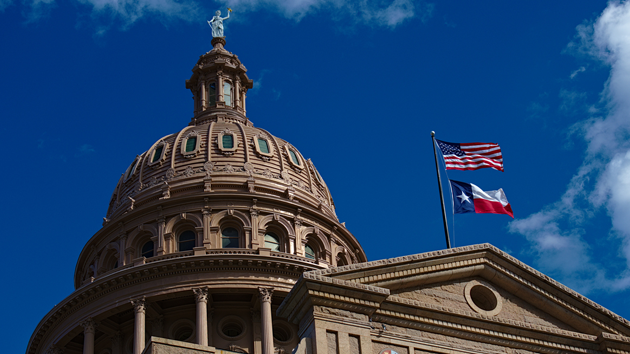
(TEXAS) — Three months and two special sessions after Texas House Democrats engaged in the first of three quorum breaks over the Republican-backed legislative priority of “election integrity,” the final version of the bill officially became law on Tuesday.

In its final form, Senate Bill 1 revises the state’s election laws to tighten ballot access and administration. Some of the provisions outlined in the legislation also appear to be responses to efforts taken by Houston-area officials in Harris County to broaden ballot access during the 2020 general election amid the coronavirus pandemic.

Although there was no evidence of widespread fraud across Texas following the 2020 election, Republican proponents of the legislation claim it seeks to restore voter confidence in the state’s election parameters.

“One thing that all Texans can agree [on], and that is that we must have trust and confidence in our elections. The bill that I’m about to sign, helps to achieve that goal,” Gov. Greg Abbott said at Tuesday’s bill signing ceremony in Tyler, Texas.

Republican supporters of the legislation — including the state’s Lt. Gov. Dan Patrick — also praised the bill as a tool for deterring “cheaters” from casting fraudulent ballots.

“Texas turns out voters because they have confidence that our elections are always going to be fair and Senate Bill 1 will give them even more confidence. We want to see more people vote, we want to see them vote fairly and we don’t want the cheaters to undermine our elections,” Patrick said during the bill signing ceremony.

The bill’s transcendence into law signals a political win for Abbott, who made “election integrity” a priority over the course of two special legislative sessions. The move also echoes Abbott’s political alignment with former President Donald Trump, who baselessly attacked the nation’s election processes after his presidential loss in November.

Meanwhile, Texas Democrats insist they will continue to push back politically.

“The signing of this harmful bill will only make us more determined,” Texas Democratic Party Chair Gilberto Hinojosa said in a statement Tuesday.

Democrats in the state legislature had been battling the legislation for months. After first engaging in a final-hour quorum break in May to prevent the first iteration of the bill from passing, House Democrats fled to Washington, D.C. ahead of a subsequent July special session in hopes of working with federal lawmakers to push for national voting rights legislation.

Their exit brought the legislature to a halt until Abbott called for a second special session in August. Faced with a reemerging COVID-19 crisis at home, enough Democrat lawmakers returned to Austin to clear a quorum and watch the Republican majority put the bill over the finish line.

The legislation goes into effect in December, three months following the end of the latest special session, at which point it will officially ban drive-through and 24-hour voting sites, both of which were widely utilized in the populous and diverse Harris County — one of the state’s few deeply blue political areas.

The new law will also make it a state jail felony for election officials to proactively send applications for mail ballot requests to voters if the voters themselves did not request the documents. During the 2020 campaign season, Harris County election officials attempted to send mail ballot applications to millions of the county’s registered voters, but the effort was halted by the Texas Supreme Court.

Under the new law, poll watchers will have “free movement” within polling places. They will also have the ability to “observe all election activities” including the closing of polling places and the transfer of election materials. Although the provision prohibits poll watchers from observing voters as they fill out ballots, the legislation makes it a criminal offense if an election official “knowingly prevents a watcher from observing an activity” or prohibits officials from refusing to accept watchers into a polling place.

Voting rights advocates consistently criticized these provisions as creating ballot access hurdles for people of color. In response, Republicans frequently touted the new law’s expansion of early voting hours, which will mandate that counties with populations of 55,000 people or more provide at least 12 hours of early voting during the second week of the early voting period.

Upon signing the bill into law, Abbott praised the new law’s expansion of in-person early voting while drawing an inaccurate comparison to the voting parameters in President Joe Biden’s home state of Delaware, which Abbott said does not have an early voting period. Although Delaware did not have early voting in the 2020 campaign cycle, it will have an early voting period implemented in 2022, which would coincide with when S.B. 1 going into effect.

Republicans also removed a highly controversial provision that was outlined in a failed version of a “voter integrity” bill during the first special session, which limited the start of Sunday early voting hours. That provision was seen as a direct response to “souls to the polls” voting mobilization traditions in Black churchgoing communities and was often cited in criticisms from Democrats throughout their second quorum break. The ensuing fallout of the now-defunct provision spurred lawmakers to add an hour to the early voting time frame on Sundays to the bill signed by Abbott.

The effects of S.B 1 would play out just as the 2022 midterm election cycle gears up across one of the nation’s emerging political battlegrounds, but at least two federal lawsuits filed in Austin and San Antonio were already contesting the law’s legitimacy before Abbott signed the bill into law.

Meanwhile, Texas Democrats — many of whom hoped to stall the legislation in July by breaking quorum and camping out in Washington, D.C. — continue to put pressure on federal lawmakers to act.

“Senate Bill 1 will go into effect on December 3rd. With the deliberate barriers to voting created by this legislation and redistricting just around the corner, we need the U.S. Senate to act immediately on the John Lewis Voting Rights Act. Our democracy depends on it,” Texas House Democratic Chair Chris Turner said in a statement.

Copyright © 2021, ABC Audio. All rights reserved.

Ida latest: 69 dead in eight states, power slowly returns after storm

Zenobillis/iStock

(LA.) — The nation is still grappling with the aftermath of Hurricane Ida, which made landfall Aug. 29 and knocked out power to more than 1 million in Louisiana.

At least 69 people have died due to the storm — which hit Louisiana as a Category 4 hurricane — as well as the devastation it left across eight states

In Louisiana, 13 have died due to the storm’s wrath. In the Northeast, at least 52 have died.

President Joe Biden will survey the damage of Ida’s remnants in New York and New Jersey on Tuesday.

“Just days after visiting Louisiana to see the damage from the storm there, President Biden will also highlight how one in three Americans live in counties that have been impacted by severe weather events in recent months,” White House press secretary Jen Psaki said. “Just over the summer, 100 million Americans have been impacted by extreme weather, obviously in the Northeast, out West with wildfires, and then in the Gulf Coast.”

Biden has touted the extreme weather as a critical reason why Congress should pass his infrastructure package.

Recovery efforts continue in the South, where 60% of the 948,000 Entergy utility customers who lost power finally had it restored, the company said Tuesday.

In Louisiana, 54% of customers who lost power have had lights return, but 322,000 remain with outages, and in New Orleans, 73% of customers who lost power had it restored and 55,000 customers remain in the dark, Entergy said.

A team of 26,000 workers are restoring downed and damaged power lines. However, some hard-hit areas including Lafourche Parish and Plaquemines Parish aren’t forecast to have power restored until Sept. 29, according to the company’s estimation.

In Louisiana and Mississippi, 30,679 poles, 36,469 spans of wire and 5,959 transformers were damaged or destroyed — that’s more than Katrina, Ike, Delta and Zeta combined.

Access to water remains a major problem in the state, with boil water advisories still in place in the parishes of Jefferson, Lafourche, St. Charles, St. Tammany, St. John the Baptist, Plaquemines and Tangipahoa.

More rain will is forecast to come down in Louisiana, further inundating the already saturated soil, with temperatures in the upper 80s, according to the National Weather Service.

Tuesday marks the last day for locals to evacuate to Ida shelters in northern Louisiana. Locals in need of shelter can go to one of eight pick-up locations for bus transportation.

About 14,000 people in Lafourche Parish were left homeless after Ida razed through and destroyed 75% of structures there.

“We are working feverishly, as hard as we can to get all people what they need to keep their lives going and to rebuild our community,” Lafourche Parish President Archie Chaisson said to CNN on Monday.

Nursing home deaths are also a mounting concern in the state.

Among those who died in Louisiana, seven were nursing home residents who were transferred to a warehouse in Independence and later died. Louisiana Attorney General Jeff Landry has opened an investigation into the deaths. The Louisiana Health Department is also investigating nursing homes that transferred patients there and ordered all of them to shut down Saturday. Only five of the seven deaths were confirmed by the state to be storm-related.

On Saturday, during wellness checks at eight New Orleans facilities, five nursing home residents were found dead, the city said in a news release. None of those have been confirmed to be storm-related. In response, the city determined all eight facilities were “unfit” and evacuated nearly 600 residents to hospitals and shelters.

Also in Louisiana, at least four people have died and 141 were treated in hospitals for carbon monoxide poisoning in the wake of Ida, according to the Louisiana Department of Health, prompting officials to urge the public for safe generator use.

Officials advise placing generators at least 20 feet away from a home and assure all air entry points near the unit and home are properly sealed.

Copyright © 2021, ABC Audio. All rights reserved.

Ida latest: 71 dead in 8 states, power slowly returns after storm

Zenobillis/iStock

(LA.) — The nation is still grappling with the aftermath of Hurricane Ida, which made landfall Aug. 29 and knocked out power to more than 1 million in Louisiana.

At least 71 people have died due to the storm — which hit Louisiana as a Category 4 hurricane — as well as the devastation it left across eight states

In Louisiana, 15 have died due to the storm’s wrath. The Louisiana Health Department confirmed two more storm-related deaths Tuesday in St. Tammany Parish: a 68-year-old man who fell off a roof while making repairs to damage caused by Ida and a 71-year-old man who died due to a lack of oxygen during an extended power outage.

In the Northeast, at least 52 have died. The Harrison Police Department in Westchester County, New York, confirmed on Monday the recovery of a woman’s body who went missing during last week’s flooding.

President Joe Biden will survey the damage of Ida’s remnants in New York and New Jersey on Tuesday.

“Just days after visiting Louisiana to see the damage from the storm there, President Biden will also highlight how one in three Americans live in counties that have been impacted by severe weather events in recent months,” White House press secretary Jen Psaki said. “Just over the summer, 100 million Americans have been impacted by extreme weather, obviously in the Northeast, out West with wildfires, and then in the Gulf Coast.”

Biden has touted the extreme weather as a critical reason why Congress should pass his infrastructure package.

Recovery efforts continue in the South, where 60% of the 948,000 Entergy utility customers who lost power finally had it restored, the company said Tuesday.

In Louisiana, 54% of customers who lost power have had lights return, but 322,000 remain with outages, and in New Orleans, 73% of customers who lost power had it restored and 55,000 customers remain in the dark, Entergy said.

A team of 26,000 workers are restoring downed and damaged power lines. However, some hard-hit areas including Lafourche Parish and Plaquemines Parish aren’t forecast to have power restored until Sept. 29, according to the company’s estimation.

In Louisiana and Mississippi, 30,679 poles, 36,469 spans of wire and 5,959 transformers were damaged or destroyed — that’s more than Katrina, Ike, Delta and Zeta combined.

Access to water remains a major problem in the state, with boil water advisories still in place in the parishes of Jefferson, Lafourche, St. Charles, St. Tammany, St. John the Baptist, Plaquemines and Tangipahoa.

More rain will is forecast to come down in Louisiana, further inundating the already saturated soil, with temperatures in the upper 80s, according to the National Weather Service.

Tuesday marks the last day for locals to evacuate to Ida shelters in northern Louisiana. Locals in need of shelter can go to one of eight pick-up locations for bus transportation.

About 14,000 people in Lafourche Parish were left homeless after Ida razed through and destroyed 75% of structures there.

“We are working feverishly, as hard as we can to get all people what they need to keep their lives going and to rebuild our community,” Lafourche Parish President Archie Chaisson said to CNN on Monday.

Nursing home deaths are also a mounting concern in the state.

Among those who died in Louisiana, seven were nursing home residents who were transferred to a warehouse in Independence and later died. Louisiana Attorney General Jeff Landry has opened an investigation into the deaths. The Louisiana Health Department is also investigating nursing homes that transferred patients there and ordered all of them to shut down Saturday. Only five of the seven deaths were confirmed by the state to be storm-related.

On Saturday, during wellness checks at eight New Orleans facilities, five nursing home residents were found dead, the city said in a news release. None of those have been confirmed to be storm-related. In response, the city determined all eight facilities were “unfit” and evacuated nearly 600 residents to hospitals and shelters.

Also in Louisiana, at least four people have died and 141 were treated in hospitals for carbon monoxide poisoning in the wake of Ida, according to the Louisiana Department of Health, prompting officials to urge the public for safe generator use.

Officials advise placing generators at least 20 feet away from a home and assure all air entry points near the unit and home are properly sealed.

Copyright © 2021, ABC Audio. All rights reserved.
Hit with ransomware attack, Howard University forced to cancel classes

anyaberkut/iStock

(WASHINGTON) — Howard University canceled classes on Tuesday after it was hit with a ransomware attack, the Washington, D.C., the school said in a statement.

The HBCU said it has been working to fully address the incident and restore operations “but please consider that remediation, after an incident of this kind, is a long haul – not an overnight solution.”

Officials said the physical campus will be open to essential staff, but campus WiFi will be down.

“This is a highly dynamic situation, and it is our priority to protect all sensitive personal, research and clinical data,” the university said. “We are in contact with the FBI and the D.C. city government, and we are installing additional safety measures to further protect the University’s and your personal data from any criminal ciphering.”

The FBI has not responded to an ABC News request for comment, and neither the university nor law enforcement has identified who is behind the attack.

Howard said there has been no evidence that personal data has been stolen – but it is continuing to work with partners to find out what exactly happened.

Last week, the FBI and the Cybersecurity Infrastructure Security Agency (CISA) warned companies to be vigilant and on alert for ransomware attacks over the Labor Day weekend.

The agencies noted that the past two major cyber attacks have occurred over a holiday weekend – noting that, leading into the Mother’s Day weekend, the Colonial Pipeline was hacked, over Memorial Day weekend meat supplier JBS was hacked and over the Fourth of July weekend IT management company Kaseya was hacked.

The FBI and CISA noted in 2020 they received 791,790 complaints about targeting which is a record, and they are seeing the trend continue in 2021.

From January to July 31, 2021, the FBI has received 2,084 ransomware complaints with over $16.8M in losses, a 62% increase in reporting and 20% increase in reported losses compared to the same time frame in 2020.

“The destructive impact of ransomware continues to evolve beyond encryption of IT assets. Cyber criminals have increasingly targeted large, lucrative organizations and providers of critical services with the expectation of higher value ransoms and increased likelihood of payments,” the notice released Aug. 31 said. “Cyber criminals have also increasingly coupled initial encryption of data with a secondary form of extortion, in which they threaten to publicly name affected victims and release sensitive or proprietary data exfiltrated 1 This number includes only those victims who have provided information to IC3 before encryption, to further encourage payment of ransom.”

Copyright © 2021, ABC Audio. All rights reserved.

Biden travels to New York, New Jersey to tour damage from Ida

Chip Somodevilla/Getty Images

(NEW YORK) — President Joe Biden on Tuesday continued his tour of damage caused by Hurricane Ida, traveling to New York and New Jersey to see first-hand the devastation the massive storm inflicted on the Northeast.

The president will reprise his role as consoler in chief, meeting with local leaders to get a briefing on the damage to the area, and touring a neighborhood in Manville, New Jersey, before heading to Queens in New York to tour the damage there, and deliver remarks.

“He will receive an update on recovery efforts and underscore the commitment to providing the federal government’s full support for communities impacted by the storm,” White House press secretary Jen Psaki previewed.

“He’ll also meet with families and first responders to hear firsthand about the devastation,” she added.

Biden will be joined by FEMA Administrator Criswell, New York Gov. Kathy Hochul, New Jersey Gov. Phil Murphy, and members of New York and New Jersey’s congressional delegations. While on the ground, the president will make the case for his $1 trillion infrastructure bill that recently passed the Senate with bipartisan support, in addition to a $3.5 trillion social spending bill that comprises his ‘build back better’ agenda — arguing that the extreme weather events affecting the country highlight the need for major investments.

“The average cost of extreme weather are getting bigger, and no one is immune from climate change. That’s what you’ll hear him talk about in his remarks today, as well as his belief, based on a lot of data and studies, that every dollar that we invest saves $6 down the road in these communities as we’re preparing for extreme weather events,” Psaki told reporters on the way to New Jersey Tuesday.

“He’ll also make the case as to why this is the reason, one of the reasons, as we’re looking at these extreme weather events around the country, that it’s so imperative we act on addressing the climate crisis and investing in — addressing those through his Build Back Better agenda, which is working its way through Congress.”

Tuesday’s trip follows the president’s trip to Louisiana’s gulf coast Friday where Hurricane Ida made landfall, where he made similar arguments for his policy proposals currently working their way through Congress.

“Things are changing so drastically in terms of the environment,” the president said Friday. “We’ve already crossed certain thresholds. We can’t build back a road, a highway, a bridge or anything to what it was before. I mean, you got to build back to what it is now, what’s needed now.”

The White House has continued to highlight the federal response to the devastating storm that has claimed the lives of at least 68 people across 8 states. Over the weekend, President Biden approved emergency declarations for New York and New Jersey to provide federal aid to the recovery efforts in impacted areas.

“This was a historic storm, deadly. Tragically the loss of 27 lives, four still missing, small businesses, and roadways, and in some cases schools. First responders were extraordinarily heroic, but there is a significant loss associated with this storm. We’ll do all that we can in the state, but we need the federal government in a big way,” New Jersey Gov. Phil Murphy said in an interview with CBS News on Sunday.

Copyright © 2021, ABC Audio. All rights reserved.

Refugee organizations scramble to settle Afghans after years of Trump-era budget cuts

AndreyPopov/iStock

(WASHINGTON) — After the Biden administration finished one of the largest airlifts in the nation’s history Aug. 30, organizations tasked with helping Afghans arriving in the U.S. are scrambling to ramp up operations following years of downsizing due to the Trump administration’s slashed refugee program.

As Afghans flow in the country, organizations are asking the Biden administration to increase funding to help them recover and expand operations to accommodate the refugees.

Most of the 40,000 refugees who have arrived from the flights out of Kabul are Afghans, and the total number is expected to surpass 50,000 in the coming days and weeks, Department of Homeland Security Secretary Alejandro Mayorkas said Friday.

The refugee resettlement agencies that help transport individuals and families from the airport, provide them with housing and aid them with finding employment are facing numbers not seen in the last four years, according to Kristyn Peck, CEO of Lutheran Social Services of the National Capital Area, a nonprofit that provides community services, including refugee and immigrant resettlement.

“The evacuation of Afghan allies was chaotic, but their settlement doesn’t need to be,” said Krish O’Mara Vignarajah, CEO of Lutheran Immigration and Refugee Service, one of the nine nonprofits partnered with the Department of State to resettle refugees.

But LSSNCA has identified a $1.8 million funding gap it needs to close to fully resettle the 500 refugees it has helped over the last month. And that number doesn’t include funding for those still arriving, Peck said.

In 2020, the Trump administration slashed refugee admissions to a historically low ceiling, capping the number allowed in the country at 15,000 — 3,000 people fewer than the prior fiscal year and roughly 55,000 fewer than the last cap set by former President Barack Obama. That also caused reductions in government funding of refugee organizations, which receive federal funding per refugee they help with resettlement. As a result of the lower cap, organizations received less funding because they were resettling fewer people, according to LIRS.

In response to smaller budgets and a lower demand for services, many organizations were forced to close offices and reduce staff.

LSSNCA, based in Washington, D.C., was resettling 500 people a year under the Trump administration, down from 1,500 in the last year of the Obama administration. The U.S. was on track to admit the lowest number of refugees in the program’s 41-year history after President Joe Biden backtracked in April on his promise to admit more refugees, leaving former President Donald Trump’s 15,000 refugee cap in place.

After pressure from Democrats on Capitol Hill, Biden reversed course in May and raised the refugee number to 62,500. But ramping up in time to meet the growing need remains an issue.

World Relief, another of the State Department’s partner agencies for resettlement, had to close a third of its U.S. offices as a result of the Trump administration’s caps, according to Senior Vice President of Advocacy and Policy Jenny Yang. Rebuilding World Relief’s capacities to meet the sudden demand for services has been a significant challenge, Yang said.

“When you have limited capacity, even in the U.S., or more strained capacities in the U.S. to receive refugees, then we’re dealing with now the work of building up programs again,” Yang said. “I think all of that is very challenging.”

Peck said the mobilization has been like going from being the local corner store to becoming a Target, saying LSSNCA’s staffing structure makes sense for 500 people a year, not 500 people a month. The organization is being forced to completely restructure the way it functions to accommodate the number of refugees arriving, Peck said.

“We are providing services in real time while we are simultaneously meeting every single morning on, ‘What policies need revising? What processes need revising? What doesn’t work at this scale? What new positions do we need to bring on?'” she said. “It is a daily process of improvement so that we can rethink our systems.”

Compounding the funding shortfall is the fact that the majority of Afghans coming to the U.S. hold humanitarian parole status because they have yet to be fully processed for their special immigrant visas or through the refugee program. The federal government provides 90 days assistance, including $2,275 per person admitted under humanitarian parole status — $1,225 in direct assistance to the refugee and $1,050 to the resettlement agency for administrative costs to provide resettlement services, according to LIRS.

But those with humanitarian parole status are not eligible for the same federal benefits — such as financial, food and health care assistance — as SIV holders or those in the refugee resettlement program, and refugee organizations must cover additional costs.

For example, Peck said a family her organization was helping to resettle needed immunizations in order to keep their parole status. But because they did not qualify for federal benefits through the Office of Refugee Resettlement, the organization had to cover the costs at about $300 per person.

Communities and businesses across the nation have stepped up to donate money or items and offer volunteer services to help support the refugee organizations as they grapple with the sudden influx of refugees. Airbnb announced on Aug. 24 it would provide free housing to 20,000 Afghan refugees worldwide, and the same day Walmart made the pledge to donate $1 million to three organizations helping to resettle refugees, veterans and their families.

LSSNCA and LIRS have both relied on the Airbnb partnership to secure temporary housing for arriving Afghans since finding housing on such short notice can pose a significant challenge, according to both of the organizations’ CEOs.

Peck said the LSSNCA had to dedicate a team of volunteers to unpack and organize private donations that cover the floor and reach to the ceiling at the group’s office.

But while the outpouring of support from private companies and individuals has helped make a difference, refugee organizations say it isn’t enough for a crisis of this size.

The organizations are calling on Congress and the Biden administration to guarantee funds for the resettlement of Afghans and to expand the same federal benefits available to refugees and SIV holders to those with humanitarian parole status.

Vignarajah said both Congress and the White House need to “adequately fund the resources for newly arrived families” in addition to being proactive about the legal status of those being admitted.

“The administration and Congress need to be forward-thinking about their legal status,” Vignarajah said. “That’s going to have a huge impact on services and benefits they may be eligible for and what peace of mind we can give them.”

On Aug. 16, Biden authorized $500 million for refugees and those at risk due to the Taliban takeover of Afghanistan. But it is not clear how much of that funding will be set aside for refugee agencies coordinating the effort to resettle Afghans in the U.S.

Mayorkas said Friday that America is “reestablishing its leadership in the world as a place of refuge,” and the president announced the same day that former Delaware Gov. Jack Markell will be his point person for resettling Afghan refugees arriving in the U.S., serving as the coordinator for what the White House is calling “Operation Allies Welcome.”

Also on Friday, Reps. Seth Moulton, D-Mass., and Don Bacon, R-Neb., introduced the WELCOMED Act which, if passed, would extend the same federal benefits as SIV holders to those admitted with humanitarian parole status.

Copyright © 2021, ABC Audio. All rights reserved.