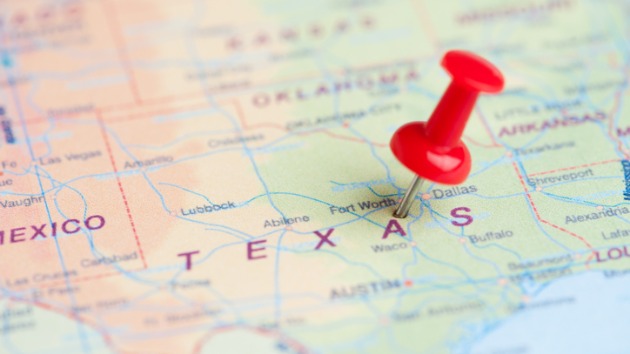
(AUSTIN, Texas) — A website seeking anonymous tips on people violating Texas’ new law restricting abortions has been inundated with spam after viral calls from social media users.
The law, which went into effect on Wednesday, bans physicians from providing abortions if a fetal heartbeat is detected (including embryonic cardiac activity). This can happen as early as six weeks into a pregnancy. While the law prohibits the state from enforcing the ban, it instead authorizes private citizens to bring civil suits against anyone who “aids or abets” an abortion.
A “whistleblower” website set up by the anti-abortion group Texas Right to Life calls on community members to anonymously report anyone they think might be violating the law — which can even include a driver taking someone to a clinic.
As the online submission form spread across the internet, scores of social media users from TikTok to Twitter reacted by calling on people to flood the tip line with anything but violators.
One TikTok user said in a video that she had submitted 742 fake reports of Texas Gov. Greg Abbott — a proponent of the law — getting an abortion.
“It would be a shame if TikTok crashed the Prolifewhistleblower.com website,” the caption stated. “Real shame.” The video garnered more than 80,000 likes and more than 480,000 views.
Another TikTok user even says he coded an iOS shortcut to let iPhone users submit false reports repeatedly. His video garnered more than 175,000 views.
The calls soon emerged on Twitter, Reddit and beyond — with users sharing images of themselves reporting fictional characters such as “Shrek” to uploading nonsensical memes online.
Diana, a New York-based social media user who asked to be identified by just her first name due to concerns speaking out could make her a target, told ABC News that she submitted an anonymous tip reporting a “Simpsons” character as an abortion physician.
Diana said she felt the law was a “huge blow to women’s rights” and a “huge step backwards.”
“It’s just a little step that I could do with my smartphone, it’s not like I did anything amazing, but there are people out there doing real work and I support them and I wish I was brave enough to do that,” she said.
“The purpose is to clog their inbox because it’s ridiculous,” she added. “You’re making your citizens turn against each other too, so it’s kind of two-fold if you ask me, you’re asking people to tattle on people that are — some of them may be trying to get life-saving services.”
“I think the main goal is to stop them from finding people that are trying to get life-saving services or personal health services,” she added, but said she would also be “happy” if her message even just angered someone on the receiving end.
This is not the first time social media users across the nation have banned together for a digital protest. Last year, TikTok users claimed responsibility for the dismal turnout at a Trump campaign rally — saying they mobilized to reserve tickets at the event they had no intention of attending.
(AUSTIN, Texas) — In the wake of a severe new abortion law in Texas, some state lawmakers have said they will attempt to mimic the near-total abortion ban.
Texas’ law makes most abortions illegal after six weeks of pregnancy and encourages anyone to sue a person they believe is providing an abortion or assisting someone in getting an abortion after six weeks.
Although the law is being challenged — and although similar laws have been ruled unconstitutional following Supreme Court precedent — the Supreme Court rejected abortion providers’ call for an emergency injunction to block the law while courts hear the case. It went into effect this week.
This prompted several lawmakers to suggest they would look into similar laws in their own states, while existing similar bills got renewed attention.
Here’s a roundup of the states where these battles are playing out beyond Texas:
Arkansas:
Arkansas Republican state Sen. Jason Rapert, who represents the state’s 35th District and is running for lieutenant governor in 2022, tweeted on Thursday morning, “As the original sponsor of the first #HeartbeatBill to pass in America in 2013, today I have ordered a bill be filed in Arkansas to update our law to mirror the Texas SB8 bill.”
Rapert was a co-sponsor of Arkansas Senate Bill 6 (SB6) that was passed earlier this year and signed into law by Gov. Asa Hutchinson. S.B. 6 would create the “Arkansas Unborn Child Protection Act” and would ban most abortions in the state except to save the mother during a medical emergency.
That bill was blocked by a federal judge in July.
Florida:
Florida’s state legislature is not in session right now, but a Republican state lawmaker currently running for Congress in Democrat Stephanie Murphy’s district (FL-07), Anthony Sabatini, confirmed to ABC News on Thursday that he’s planning to introduce a bill that is the “exact same” as Texas’.
He said the bill is in the drafting stages.
Florida’s Republican Gov. Ron DeSantis hedged a bit more when asked by a reporter about the Texas law at a COVID-19 treatment press conference on Thursday.
“What they did in Texas was interesting, and I haven’t really been able to look enough about it,” DeSantis said. “They’ve basically done this through private right-of-action, so it’s a little bit different than how a lot of these debates have gone. So we’ll have to look; I’m going to look more significantly at it.”
South Dakota:
South Dakota Gov. Kristi Noem tweeted Thursday that she’s asked someone in her office to look into Texas’ new anti-abortion law and how it compares to South Dakota’s.
“Following the Supreme Court’s decision to leave the pro-life TX law in place, I have directed the Unborn Child Advocate in my office to immediately review the new TX law and current South Dakota laws to make sure we have the strongest pro life laws on the books in SD,” she tweeted from her official Twitter account.
According to the Guttmacher Institute, a research group that supports reproductive rights, in South Dakota abortion is banned at 20 or more weeks post-fertilization (22 weeks after the last menstrual period) except in cases of “life endangerment or severely compromised health.” The state also has a law on the books, as several others do, that would ban abortion if Roe v. Wade were overturned.
Idaho:
Idaho’s Republican Gov. Brad Little signed a legislature-backed bill in April that, like Oklahoma and Texas, would ban abortions if a fetal heartbeat is detected. But the law would only go into effect 30 days after another federal appeals court allows “a restriction or ban on abortion for a preborn child because a detectable heartbeat is present on the grounds that such restriction or ban does not violate the United States constitution,” according to the bill’s text.
Indiana:
Republican legislators in Indiana expressed interest in mirroring the Texas law, but will not be broadening the upcoming special session of the legislature this fall to include discussing abortion legislation.
“We’re closely watching what’s happening in Texas in regards to their new pro-life law, including any legal challenges. Indiana is one of the most pro-life states in the country, and we’ll continue to examine ways to further protect life at all stages,” Indiana House Speaker Todd Huston said, according to a statement cited by the Associated Press.
If Indiana indeed begins debating similar legislation when the legislature meets in 2022, it will align with what reproduction rights advocates have said could be an upcoming flashpoint.
“Many state legislatures have adjourned and will resume meeting in 2022. This is when we anticipate we will see the majority of copycat legislation introduced,” Elisabeth Smith, Director of State Policy and Advocacy at the Center for Reproductive Rights, told ABC News by email Wednesday afternoon.
Oklahoma:
Oklahoma’s Republican Gov. Kevin Sitt signed various bills into law in April that would significantly limit abortions in the state, including by deeming performing most abortions to be “unprofessional conduct” that could get a physician’s license suspended, and a “heartbeat ban” similar to Texas’ new law that prohibits abortions if the fetus’ heartbeat can be detected, which can happen even only six weeks into pregnancy.
But on Thursday, in the wake of the Texas law, a group of reproduction rights groups and abortion providers, among others, sued to block the laws before they would take effect on Nov. 1. Before the Texas law, every other “heartbeat” ban was blocked by courts as unconstitutional following Supreme Court precedent.
“If allowed to take effect, these laws would end abortion access in Oklahoma, forcing patients to travel great distances and cross state lines to get essential health care,” Center for Reproductive Rights president Nancy Northrop said in a press release from the organization. “It’s unbelievable that in the midst of a global pandemic, Oklahoma’s lawmakers would have people drive hundreds of miles to access abortion services.”
(TANGIPAHOA PARISH, La.) — Louisiana officials are investigating a facility where nursing home residents were evacuated to after four residents died there ahead of Hurricane Ida.
The coroner determined three of the deaths to be storm-related, though the residents’ definitive causes of death have not been confirmed.
On Friday, Aug. 27, two days before Ida made landfall, the Louisiana Dept. of Health (LDH) learned of the four deaths at an unnamed facility in the Tangipahoa Parish.
After the hurricane hit, LDH was alerted to “deteriorating conditions” at this facility and officials “promptly visited” the site Tuesday — but were “expelled from the property and prevented from conducting a full assessment.”
Nola.com reports the facility was a warehouse “with overflowing toilets and piled up trash.” Officials and workers at the facility told Nola.com residents were trapped in “inhumane conditions.”
“We have significant concerns about conditions in this facility,” LDH said in a statement.
Unless under a mandatory evacuation order, nursing homes make the decision of when and where to evacuate, LDH said. These facilities are required to provide safe conditions for their residents.
LDH is removing 834 residents from seven nursing homes across four parishes. The most vulnerable residents are being moved first, the department said. As of Friday morning, LDH said it had moved 721 residents.
Twelve of the residents rescued required hospitalization, the department said.
“This is a serious and active investigation. We will be taking action against these nursing facilities, and will be making appropriate referrals to law enforcement,” LDH said in a statement.
Residents from the following nursing homes were evacuated to the facility under investigation: River Palms Nursing and Rehab, Orleans Parish; Maison Orleans Healthcare Center, Orleans Parish; Park Place Healthcare Nursing Home, Jefferson Parish; West Jefferson Health Care Center, Jefferson Parish; Maison DeVille Nursing Home of Harvey, Jefferson Parish; Maison DeVille Nursing Home, Terrebonne Parish; South Lafourche Nursing and Rehab, Lafourche Parish.
(ATLANTA) — The parents of Ahmaud Arbery welcomed the indictment of a former district attorney for allegedly interfering with the arrest of one of the men involved in the shooting death of their son as well as showing favor to another.
Arbery, a 25-year-old Black man, was fatally shot while jogging on Feb. 23, 2020.
“Yesterday was a very huge win. I’m speechless,” Arbery’s mother, Wanda Cooper-Jones, said during a press conference on Friday.
She thanked Attorney General Chris Carr for staying in contact with the family and assuring them that justice would be served.
Arbery’s father, Marcus Arbery, said that he is “grateful” for the indictment and that “everybody that had a hand on [Ahmaud’s] death needs to be brought to justice.”
According to the two-count indictment obtained by ABC News, former district attorney Jackie Lee Johnson was charged with violating her oath of office for allegedly “showing favor and affection to Greg McMichael during the investigation into the shooting death of Ahmaud Arbery.”
McMichael is a retired investigator with the Brunswick District Attorney’s Office who previously served as a Glynn County police officer.
She is also charged with obstructing a law enforcement officer by allegedly “directing that Travis McMichael should not be placed under arrest,” the indictment said.
An attorney representing Johnson told ABC News on Friday they will not be commenting on the matter amid ongoing litigation.
“The path to justice for Ahmaud Aubrey and his family has been a long and arduous one, but the indictment is yet another step in the right direction,” Aubrey family attorney Benjamin Crump said during the press conference. “Former DA Johnson may not have pulled the trigger on the day Ahmaud was murdered, but she played a starring role in the cover up.”
Three white men in Georgia — Greg and Travis McMichael, a father and son, and their neighbor, William “Roddie” Bryan Jr. — were charged with murder for allegedly tracking down and fatally shooting Arbery.
All three pleaded not guilty and jury selection for the state trial is set to begin on Oct. 18.
According to a police report, McMichael claimed that he assumed Arbery was a person who committed “several break-ins” in their neighborhood when he and his son chased him down in a pickup truck.
Meanwhile, prosecutors allege Bryan struck Arbery with his vehicle while assisting the McMichaels in chasing him. Bryan also recorded cellphone video that captured Travis McMichael allegedly shooting Arbery with a shotgun during a struggle.
“The way he died, it just really devastated my family,” Marcus Arbery said. “I’m still struggling with it every day as a father because it’s my job to protect my children, and God knows I do that … I’m still hurt because all I got is pictures to look at him.”
Georgia Gov. Brian Kemp signed a law in May repealing the state citizen’s arrest statute, therefore banning private citizens from arresting people they suspect committed a crime.
Arbery’s case did not gain national attention until a video of the shooting was leaked on social media, where it went viral.
An arrest was not made until more than two months after Arbery’s death. Amid national outcry, the Georgia Bureau of Investigation took over the case and arrested the McMichaels and Bryan.
Federal prosecutors filed hate crime and attempted kidnapping charges against the three men in April. They were arraigned in federal court in Brunswick, Georgia, in May and all three pleaded not guilty.
During the hearing, U.S. Magistrate Judge Benjamin Cheesbro read the federal complaint against the men, which alleges they “did willfully, by force and threat of force, injure, intimidate and interfere with Ahmaud Arbery, an African American man, because of his race and color.”
A trial is set for February 2022.
ABC News’ Bill Hutchinson and Abby Cruz contributed to this report.
(NEW YORK) — A Tennessee-based woman is easing back to school stress and boosting confidence by generously offering her hair braiding services for free.
Brittany Starks posted on Facebook: “Anyone know single parents who can’t afford to get their child’s hair done for school? I will braid it for free!”
Since posting, her inital ask has taken off like wildfire.
The single mother of two said she’s been homeless twice and in an unfortunate predicament where all of her children’s clothing was in storage and she faced the issue of trying to figure out how to make ends meet to get them what they needed before heading back to school.
Then, a family friend gave her children bookbags and clothes. “It was perfect,” she told “Good Morning America.” “So after that, I was thinking how can I give back?”
Once Starks realized how she could help other single mothers who may have been in similar situations to her own through offering free hair braiding, she thought only about seven people would reach out.
However, she’s now braided over 35 children’s hair.
Starks opened up about hearing some of the stories of the mothers of the children brought to her and mentioned how some had recently gone through a divorce and others were going through depression.
“I remember when I was depressed I wanted to die, and I know these moms probably don’t feel like doing anything as they are going through it trying to figure out ways to make themselves happy,” Starks said.
She continued: “There were also two little girls who didn’t go to school the first few days because they weren’t able to get their hair done.”
Starks also explained how some of the young girls would come in with a really quiet demeanor along with their heads down, but leave smiling and showing so much more of their personality after getting their hair styled.
Since offering her services at the beginning of August, Starks shared an updated social media post asking for help from other local braiders, due to the large number of children that have been reaching out to her.
She was able to book space at a church and other braiders such as Donna Garcia also offered their services. Together, they created a hair braiding event that Starks now looks forward to hosting monthly.
“The biggest response came after it went viral. I had other parents in other states reaching out to ask if I could braid their children’s hair,” said Starks.
While Starks said most of the hairstyles can be time-consuming, ranging from four to six hours and priced between $120 – $250 and up, seeing each parent and child smile makes every moment worth it.
“I didn’t expect all of this at all. I’ve been surprised and overwhelmed at the same time,” said Starks. “I just feel like it was such a big blessing and I feel like I’ve found my purpose in life.”
(Courtesy Ross and Angeline Eschette) Ross and Angeline Eschette pose with their newborn daughter at Nacogdoches Medical Center, in Nacogdoches, Texas.
(LOCKPORT, La.) — Ross and Angeline Eschette and their 7-year-old son evacuated their home state of Louisiana for Texas this weekend as Hurricane Ida prepared to hit.
The Eschettes will return to their home in Lockport later this week as a family of four after Angel Eschette gave birth while evacuated.
“She wanted to be part of the hurricane party,” Ross Eschette said of the couple’s newborn daughter, Adeline Grace, born on Aug. 30, just after Ida battered Louisiana as a fierce Category 4 storm.
Angeline Eschette’s original due date was Sept. 17, but her water broke overnight on Aug. 30 as they stayed with extended family members at a hotel in Nacogdoches, Texas.
The Eschettes, both natives of Lockport, a small town of about 3,000 people one hour outside of New Orleans, said they had weathered hurricanes before, but did not want to take any chances with Ida while expecting their second child.
“My No. 1 concern was to get as far away from the storm as possible, just to keep her from having the baby,” said Ross Eschette, 36. “In planning the evacuation, it wasn’t just let’s find a [hotel] room and go there, it was let’s find a hospital and then find a room nearby.”
The Eschettes said they not only had to evacuate their home and find a hospital away from home that they could be near, but also did so while Angeline Eschette, 33, dealt with a higher risk pregnancy due to gestational diabetes and was quarantining after testing positive for COVID-19.
“I was waiting to get vaccinated until after I gave birth. Even though they said there’s no harm, I still had my concerns about it,” she said. “But I was very lucky to not have a severe case.”
The Centers for Disease Control and Prevention last month strengthened its recommendation for COVID-19 vaccination during pregnancy, stating that all women who are pregnant, breastfeeding or trying to get pregnant now or might become pregnant in the future should get a COVID-19 vaccine.
The Eschettes and their family members drove an RV six hours from their home in Lockport to Nacogdoches, where Angeline Eschette gave birth at Nacogdoches Medical Center.
Ross Eschette, who did not contract COVID-19, was able to stay with his wife and daughter in the hospital room, but was not allowed to leave due to COVID restrictions.
Adeline Grace was born healthy, weighing in at 8 pounds and one ounce, according to her parents.
Both of Adeline’s great-great-grandmothers are, by chance, named Ida, according to Angeline, who said she did not consider the name for her daughter.
“When Hurricane Katrina hit our area, everybody named their babies Katrina after that, so my nephew thought it would be funny to name her Ida and then said he was going to call her Ida Lynn,” said Angeline. “I said, ‘No, that’s not going on the birth certificate.'”
Both Angeline and Ross Eschette said they have had to balance their joy at the birth of their daughter with the heartache of the devastation caused by Hurricane Ida, particularly in Lockport.
The family said the hospitals in the area, including where Angeline planned to give birth, all had to evacuate their patients during the storm for various reasons.
“In the situation that we were in, we definitely made the right choice,” said Ross Eschette. “And we’ve been treated with the utmost respect [at Nacogdoches Medical Center]. They definitely made our experience everything we needed it to be.”
“I feel lucky to be safe in a place that was out of harm’s way and that I had a safe place to deliver,” added Angeline Eschette.
The couple said they have heard from neighbors that their home’s roof was severely damaged but their house is still standing. They expect electricity in their town to be out for the next three to four weeks.
As of Wednesday, over 884,000 customers remained without power in Louisiana, according to a report from the Cybersecurity and Infrastructure Security Agency (CISA) obtained by ABC News.
“It’s hard for us to stay here for a while financially so we will try to make our way back home towards the end of the week,” said Angeline Eschette, who was discharged from the hospital on Wednesday. “We have a camper and they have a few campgrounds where we’re going to try to set up because we can’t go back home right now. Our town is just a disaster.”
Ross Eschette said he has been in touch with friends who stayed behind in Lockport to see what supplies are needed so that they can try to get them in Texas before they drive home.
“People are watching the news and seeing the devastation of what our hometown and the surrounding area are going through, but the number one thing about us is we are the most resilient people in the world,” he said. “We all come together and we’re going to rebuild better than ever. It’s definitely not going to stop us.”
Texas State Capitol in Austin, TX (Credit: dszc/iStock)
(WASHINGTON) — The Supreme Court issuing an unsigned order refusing to block a Texas abortion ban while it faces a legal challenge stunned many and marked a significant moment in the United States’ history of reproductive rights.
The playbook for years by anti-abortion legislators was to slowly chip away at the right to an abortion via mechanisms like “targeted restrictions on abortion providers” or “TRAP” laws, while outright pre-viability bans were seen as unrealistic.
“This was really bad and really unexpected,” Robin Marty, operations director at the West Alabama Women’s Center and author of “New Handbook for a Post-Roe America,” told ABC News. “We thought it would be slower and not nearly as, ‘all right, we’re done, rights are gone.'”
The Texas law bans physicians from providing abortions “if the physician detects a fetal heartbeat,” including embryonic cardiac activity, which can be as early as six weeks into a pregnancy. Before Wednesday, no law was in effect that banned abortions earlier than 20 weeks of pregnancy. Many states had tried to enact early gestational bans, but they had all been blocked by courts.
That’s because of clear precedent. In 1973, the Supreme Court declared abortion a protected right in Roe v. Wade. Twenty years later, in 1992’s Planned Parenthood v. Casey, the Supreme Court reaffirmed “the constitutionally protected liberty of the woman to decide to have an abortion before the fetus attains viability and to obtain it without undo interference from the State.”
“Viability” means a fetus can survive outside of a uterus, and that typically happens around 24 to 28 weeks. So laws that outright ban abortion before that stage have been systematically knocked down by courts.
“Every time the states have passed them, the federal courts universally blocked them,” Marc Hearron, lead attorney on the Texas case and senior counsel at the Center for Reproductive Rights, told ABC News. “This is the first time that a federal court has allowed a six-week ban to take effect.”
A six-week ban in Georgia, for instance, was struck down last year.
“A ‘heartbeat’ ban isn’t even close to viability. So there’s nothing about that that was even an attempt to be within the confines of the Constitution. That standing alone would make it unconstitutional,” Kimberly Mutcherson, co-dean and law professor at Rutgers Law School, told ABC News about the Texas law.
Before the Georgia law was struck down, it was blocked from going into effect while courts heard the challenge. That is how these cases usually go and was what the Center for Reproductive Rights was asking for from the Supreme Court.
“The thing that the federal court should do when a law is going to pose grave harm is preserve the status quo while if there are difficult issues, you can litigate those difficult issues,” Hearron said.
This was something Chief Justice John Roberts called for in his own dissent, writing: “I would grant preliminary relief to preserve the status quo ante — before the law went into effect — so that the courts may consider whether a state can avoid responsibility for its laws in such a manner.”
The Texas law is different from previous bans in that it prohibits the state from enforcing the ban, instead authorizing private citizens to bring civil suits against anyone who “aids or abets” an abortion.
With that, Mutcherson said, “they created this sort of confusion and this hook that the Supreme Court was able to use in order to say, ‘We’re not going to stay the law, we’re going to allow it to go into effect, and then we’ll see what happens.'”
Marty believes one thing that will happen is “people are going to have to decide for themselves whether this is a just law that needs to be followed or not, and what sort of risks they’re willing to take in order to essentially bring it down.”
What’s also different now is the makeup of the Supreme Court since President Donald Trump’s appointments and the death of Justice Ruth Bader Ginsburg. To Mutcherson, this was a sign of “raw politics coming out of the Supreme Court,” and many saw this as the result of years of increasingly bold state laws being proposed by lawmakers emboldened by the new conservative majority and a slate of federal appellate judges appointed by Trump.
It is important to note that the Supreme Court’s order stated it “is not based on any conclusion about the constitutionality of Texas’ law.” Rather, the order not to issue an injunction was on technical grounds, and the legal challenge against the law is ongoing.
“The law remains that these bans are unconstitutional. Unfortunately, the Supreme Court let one take effect anyway,” Hearron said.
This order also in no way overturned Roe.
“Where we stand right now is that Texas has a law on the books that is completely unconstitutional under the precedent of Roe and Casey, but that law has not yet been enjoined or officially declared unconstitutional by any court,” Mutcherson said, adding, “The right to abortion continues to exist and continues to be protected by Roe and by Casey.”
And in the meantime, Mutcherson said, “The women who are going to suffer are women of color, poor women, young women, women who are undocumented — those are the folks that these kinds of laws really strike at.”
(NEW ORLEANS) — President Joe Biden planned to travel to New Orleans Friday to survey damage caused by Hurricane Ida, meeting with local leaders and demonstrating the federal response to the storm that made landfall in Louisiana before devastating much of the Northeast United States.
Biden was scheduled to head to hard-hit LaPlace, La., just outside New Orleans, to receive a briefing from local leaders, tour a neighborhood and make remarks.
He planned to then take an aerial tour of particularly battered communities in the area, including Lafitte, Grand Isle, Port Fourchon and Lafourche Parish, according to the White House.
Later, he was scheduled to travel to meet with local leaders in Galliano, La., south of New Orleans.
The White House has sought to project a strong federal response to the storm as the president suffers from public disapproval of his handling of another recent crisis, the U.S. withdrawal from Afghanistan.
During remarks Thursday, Biden told those in the Gulf region that “we’re all in this together.”
“The nation is here to help,” he said.
Ida and its remnants have left more than at least 61 people dead in eight states, including at least 48 in the Northeast.
(NEW ORLEANS) — President Joe Biden traveled to New Orleans Friday to survey damage caused by Hurricane Ida, meet with local leaders and demonstrate the federal response to the storm that made landfall in Louisiana before devastating much of the Northeast United States.
“We came because we want to hear directly from you all, what specific problems you’ve been dealing with,” Biden told local officials in hard-hit LaPlace, Louisiana, just outside New Orleans
In LaPlace, local officials spoke with the president about the destruction in the region and the long-term impact the storm would have in the area.
Biden told the officials — including Gov. John Bel Edwards, the CEOs of local hospitals and the energy company Entergy, members of Congress and local parish presidents — that he thought it was important to rebuild damaged infrastructure in a more resilient manner, whether it meant placing power lines underground or making roofs stronger.
“This storm has been incredible, not only here but all the way up the East Coast,” Biden said.
Air Force One touched down in New Orleans early Friday afternoon, where the president was greeted by federal, state and local officials from Louisiana: Edwards, U.S. Sens. Bill Cassidy and John Kennedy, U.S. Rep. Steve Scalise, New Orleans Mayor LaToya Cantrell and Jefferson Parish President Cynthia Lee Sheng.
Biden then took a helicopter over storm-damaged homes to LaPlace, where in addition to the briefing from local leaders, he planned to tour a neighborhood and make remarks.
He was then scheduled to take an aerial tour of particularly battered communities in the area, including Lafitte, Grand Isle, Port Fourchon and Lafourche Parish, according to the White House.
Later, he was scheduled to travel to meet with local leaders in Galliano, La., south of New Orleans.
The White House has sought to project a strong federal response to the storm as the president suffers from public disapproval of his handling of another recent crisis, the U.S. withdrawal from Afghanistan.
During remarks Thursday, Biden told those in the Gulf region that “we’re all in this together.”
“The nation is here to help,” he said.
Ida and its remnants have left more than at least 61 people dead in eight states, including at least 48 in the Northeast.
(NEW YORK) — When Kat, a 23-year-old living in Central Texas, discovered they were pregnant, it was five days before a law that bans nearly all abortions after six weeks was to go into effect.
“I was stuck with this reality that I was pregnant days before one of the worst abortion bans that I’ve seen in my life gets implemented in Texas,” Kat, whose gender pronouns are they/them and who asked that their last name not be used, told Good Morning America. I was scared.”
Kat said that after estimating they were likely between four and six weeks pregnant, they feared not having access to an abortion after Sept. 1, the day the law, Senate Bill 8, went into effect. They also learned the two abortion providers in town were “completely booked” due to the pending deadline.
“I thought I can’t be pregnant right now. I don’t want to be pregnant. I don’t have the time or money to travel out of state [for an abortion],” said Kat. “I knew I had to do what was best for me and my best option was to have an abortion at home.”
Kat said they went through with a self-managed abortion at home and while medically safe, the experience felt terrifying.
A self-managed abortion is one that occurs outside of a clinical setting. It is typically done by taking medication that induces a miscarriage.
“The reality is that I was at home alone having an abortion,” they said. “I was worried about going to the hospital, worried about complications and didn’t have anyone there with me because of COVID.”
Kat’s experience is one that abortion rights advocates worry will become all too common across Texas, the nation’s second most populous state with now the most restrictive abortion law in the nation.
The law, enforced after the U.S. Supreme Court failed to intervene, does not make exceptions for pregnancies resulting from incest or rape. It allows anyone to sue a person they believe is providing an abortion or assisting someone in getting an abortion after six weeks.
When a person is six weeks pregnant, it typically means the embryo started developing about four weeks prior, based on the formula used to figure out when a person will give birth. People don’t often realize they are pregnant until after the six-week mark.
Cardiac activity is typically first detected five to six weeks into pregnancy, or three-four weeks after the embryo starts developing.
“A lot of people don’t think about abortion access until they need an abortion,” said Joan Lamunyon Sanford, executive director of the New Mexico Religious Coalition for Reproductive Choice, which provides financial and logistical support for people who travel to New Mexico for abortions. “There are likely people in Texas that don’t know they’re pregnant yet today but will find out they’re pregnant next week or the week after and will call their local clinic and find out that they can’t be seen.”
Lamunyon Sanford’s organization and others that help cover the costs of travel for people to seek abortions say they are already seeing an increase in services needed, and bracing for more.
“We anticipate it’s going to really start increasing next week or the week after, but we’re ready,” said Lamunyon Sanford. “Instead of the shame or stigma that people may have faced in Texas, we’ll make sure that they are able to follow through and get the health care that they need.”
There are currently less than two dozen abortion clinics in Texas, home to more than 6 million people of childbearing age, as of 2019. As the clinics in Texas have stopped scheduling abortion-related visits for people more than six weeks pregnant, the lengths people have to go in order to access abortions has multiplied exponentially.
The new law has increased the average miles a Texan must drive one-way to seek an abortion from 12 miles to 248, according to the Guttmacher Institute, a reproductive rights organization.
A trip from Texas to Wichita, Kansas, for someone seeking an abortion is, on average, 650 miles roundtrip. People have been making that trip with increasing frequency already this week, according to Ashley Brink, clinic director of Wichita’s Trust Women clinic.
“Yesterday I felt like our phones were constant. Multiple phone lines lit up and ringing,” said Brink. “We have already seen an increase.”
Brink said she has been preparing for the influx for weeks, making sure the clinic has enough supplies and trying to get more physicians in the clinic, a difficult task in Kansas, where she says over 90% of counties don’t have an abortion provider.
In Oklahoma City — more than 460 miles from South Texas — the Trust Women clinic there typically receives calls from three to five people from Texas per day. On Tuesday and Wednesday, as the law went into effect, the clinic scheduled 80 appointments, and of those, as many as 55 were patients from Texas.
“That’s just going to increase as people from farther away start to look to see where they can get access,” said Zack Gingrich-Gaylord, communications manager for Trust Women Clinics. “Throughout the Gulf [Coast] and the I-35 corridor, the center of the country and the Southwest, that’s all going to radiate and start to have a lot of strain put on those clinics and people are going to have to travel farther and farther.”
“If you had to travel overnight to go see a dentist, you would think that’s ludicrous,” he said. “But it’s expected of people seeking abortion care, that they are going to have to significantly disrupt their own lives.”
Adding to the difficulty of seeking abortion care outside of their home state is the fact that abortion is difficult emotionally and physically, and time sensitive, according to Dr. Iman Alsaden, an OBGYN in Missouri and Kansas and medical director for Planned Parenthood Great Plains, which provides care in Arkansas, Kansas, Oklahoma and Missouri.
“It’s absolutely devastating that people are being forced to leave their communities to seek safe, essential health care outside of the state,” said Alsaden, also a fellow with Physicians for Reproductive Health. “It’s heartbreaking to think of all of the people who may not be able to make it to a desired appointment to receive abortion care.”
Alsaden said her clinics have seen an “influx of patients” from Texas over the last few weeks, noting, “We have adjusted our schedules to ensure that we can take care of as many patients as possible, no matter where they’re coming to us from.”
Lori Williams, a nurse practitioner and the clinic director at Little Rock Family Planning Services in Little Rock, Arkansas, described the patients her clinic is seeing from Texas as “frantic.”
“Many didn’t realize that this was coming or didn’t know that they were suddenly not going to be able to obtain care,” said Williams, also chair of the National Abortion Federation Board, a membership association of abortion providers. “I had patients today driving seven hours to see us and Arkansas has a [72-hour] waiting period so that means these patients will have to travel twice.”
Williams said she worries that as many patients from Texas as the clinic expects to see over the coming weeks and months, she knows there will be just as many, or more, who cannot access care.
“We know there are patients that tell us, ‘I don’t have a car that can make it that far,’ ‘I can’t get off work that many times,’ and these are the challenges we’re trying to have our patients navigate,” she said. “It’s the time off work, the child care, the expense, all the things that go along with this, which makes this an economic crisis for women, in addition to an access to care crisis.”
The rates of unintended pregnancy in the U.S. are highest among low-income women, women aged 18 to 24 and women of color, according to the Guttmacher Institute.
Meanwhile, people denied an abortion are more likely to experience long-term economic hardship and insecurity than people who received an abortion, according to a 2018 study published in the American Journal of Public Health (AJPH).
“The women who have the means will obtain the care, but the women who were already struggling financially, who are socioeconomically disadvantaged are the ones who are going to be impacted the most,” said Williams. “There are going to be women out there who are forced to carry a pregnancy than they don’t want to.”
“This is really going to have an impact more so than the abortion providers are going to see,” she said.
Maleeha Aziz, a community organizer with the Texas Equal Access Fund, one of Texas’ nearly one dozen abortion funds that provide support to women seeking abortions, said it cost her about $1,500 to travel from Texas to Colorado for an abortion eight years ago.
Her organization and other abortion funds in the state are now working to raise additional funds and figure out the logistics needed for people in Texas to travel farther distances for care.
“While it’s a lot harder, we’re going to do whatever we can legally, even if that means flying someone out of state,” said Aziz. “We are going to need so much more money because the cost [is high].”
Adding to the financial and logistical challenges is the fact that Texas is surrounded by states that have also have laws limiting abortion access. Those laws, called targeted restrictions on abortion providers, or TRAP laws, by abortion rights advocates, have been implemented in mainly conservative states to avoid being overturned in court and still limit abortion access in a variety of ways.
In the four states with which Texas shares a border, Arkansas, Louisiana, Oklahoma and New Mexico, there were just 21 facilities providing abortions combined as of 2017, according to the Guttmacher Institute.
Robin Marty, operations director at the West Alabama Women’s Center, said the clinic is bracing for a trickle-down effect of patients from Texas making their way to Alabama because of a lack of access in other states.
“I believe that for people who are pregnant in Texas, I believe that a lot of them, if they were in early pregnancy, probably thought that they could just hold on for a while and see how everything’s sorted out,” she said. “So I expect next week to be the point at which things are really going to become clear what this does to the landscape, because people are going to start first calling Louisiana, where they’re probably going to find out that there is a very long wait, because there already is, and then they’re going to try to go next to Mississippi and will find mostly the same thing. And by that point, we’re talking, when you come to Alabama, that’s an eight-and-a-half hour drive.”
Adrienne Mansanares, chief experience officer for Planned Parenthood of the Rocky Mountains, which provides health care in Colorado, New Mexico, and Las Vegas, said that while their clinics are already seeing the immediate impact of Texas’s law, they are also planning for the long road ahead.
“That last bit of hope that there would be a solution, that there would be a backstop, that there would be protections for this procedure, that being gone has really shook a lot of us,” Mansaneres said of the Supreme Court’s 5-4 decision to not block the ban.
“With that, we are absolutely prepared for and doing the really dark, hearty work of trying to figure out what does this look like for years to come, and if it’s not just this law in Texas, what other laws can it be and what other states across the country are going to be this emboldened to continue with these really hostile bans,” she said. “Unfortunately, it’s looking very dark.”