
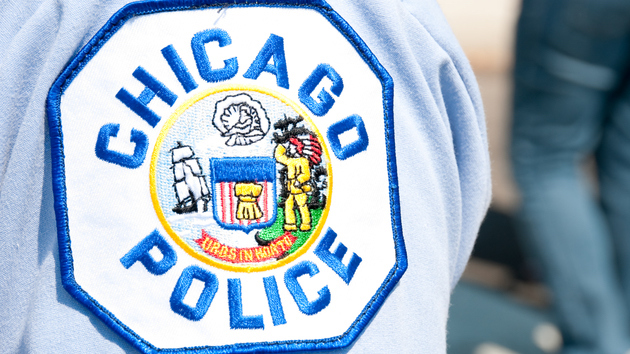
Black woman speaks out after Chicago police officer attempts to tackle her in park

iStock/400tmax

(CHICAGO) — A Black woman said she was walking out of a closed park in Chicago, adhering to police instructions, when a white police officer attempted to tackle her, allegedly unprovoked.

On Aug. 28, Nikkita Brown said the officer drove up to her as she was walking her dog in the Lincoln Park neighborhood of Chicago and told her to leave the area immediately.

Brown agreed, but the officer insisted on driving behind her as she walked out of the park, and eventually got out of his vehicle to follow her on foot, she told ABC News in an exclusive interview airing Thursday on “Good Morning America.”

Brown said she consistently told him, “I am leaving” and “I am walking away,” as she actively walked toward the exit.

The officer got out of his car and told her, “You can go to jail,” according to a video taken by Brown who recorded part of the encounter. Brown said he also allegedly told her she would never see her dog again.

Brown said she took her cell phone out to record the altercation and call for help.

“Even if somebody didn’t answer,” she said, she wanted to “at least leave a voicemail and say, ‘if you call me in the morning and you don’t reach me, I’m in jail, or worse.'”

The unmasked officer continued to approach Brown, ignoring her request to stay 6 feet away, videos show.

In one clip, the officer can be heard saying, “I don’t need a mask on, I’m outside,” shortly before attempting to tackle Brown, appearing to restrain her by kicking her legs and knocking her phone out of her hands.

After a 2-minute-long physical altercation during which Brown remained on her feet and screamed for help, Brown and the officer separated and both left the scene without the officer making an arrest.

“I knew if he got me on the floor, I would be dead,” Brown told ABC News.

According to the Civilian Office of Police Accountability (COPA), the group inquiring into the incident, the investigation is ongoing.

“We have a responsibility to investigate allegations of police misconduct and determine if they are well founded based on the facts and evidence of each case,” interim COPA chief Andrea Kersten said in a statement. “If violations did occur, COPA will hold the officer accountable.”

A Chicago Police Department spokesperson told ABC News that “the officer in question has been placed on desk duty as the COPA investigates the video.”

Brown said there were others in the area that night, and she felt profiled because of her race.

“I walked past four kids that were behind me… white males. As soon as I saw the car pull up, I looked behind me to see if he said anything to the kids. He didn’t,” Brown said.

At a press conference on Aug. 30, the CPD Superintendent David O. Brown said the investigation into the incident was opened in the Bureau of Internal Affairs and had since been transferred to the COPA.

If COPA determines that the officer violated a policy, a disciplinary recommendation will be forwarded to David O. Brown, at which point he is given the choice to agree or disagree with COPA’s recommendation, the superintendent said during the press conference. If he disagrees with COPA, the incident goes to the Chicago Police Board for adjudication.

The officer has not been identified yet due to privacy reasons, a COPA spokesperson said. Brown’s attorney, Keenan Saulter, is requesting the identity of the officer be released in order to file a formal complaint against him.

“There were other individuals in the park that night. So we still have to come back around to the question of ‘why her?'” Saulter said. “The worst scenario would have been that he writes her a ticket for being in the park after 11:00 p.m.”

The officer has allegedly been involved in previous cases of racial profiling, Saulter said, and should be fired from the force.

Now, Brown said she feels anxious leaving the house.

“If anything, I should feel even more protected by a police presence as a single woman walking at night, not be fearful that I’m going to die at the hands of an officer,” Brown said.

Copyright © 2021, ABC Audio. All rights reserved.

While some children remember fathers lost on 9/11, others only have stories

iStock/ihsanyildizli

(NEW YORK) — The last memory Scott Larsen has of his late father is eating breakfast together on the morning of Sept. 11, 2001.

He was only 4 years old when his dad, a New York City firefighter, left home for what would be the last time.

Joshua Powell, another son of a New York City firefighter who was in carnage of the 9/11 terror attacks, said he used to eat Cap’n Crunch with his father every morning.

Florence Amoako was eight months pregnant with her second child when she said goodbye to her husband as he went to work at the World Trade Center that day. Paulina Cardona, Katy Soulas and Lisa Reina were also pregnant at the time. Their husbands never made it home.

Over the past 20 years, ABC News has periodically gathered with this group of women who were pregnant when they lost their partners in the terror attacks. Their children, born after the attacks, grew up without meeting their fathers.

Our most recent gathering took place in late June of this year, where this group shared their perspectives on loss, grief and resilience.

Joshua Powell was 5 years old when his father, New York City firefighter Shawn Powell, was killed in the terror attacks.

“Although I was a kid, you realize one day, he’s not coming back, and sometimes when I was in class, I used to just look over at the door and in my head just imagine him walking through, and coming to pick me up to take me home. And nothing had happened, as if everything was OK,” Powell told ABC News.

Now at 25, Joshua Powell says he’s trying to make his father proud.

”I wanted to follow in his footsteps… I wanted to face danger fearlessly,” he said.

Powell said he didn’t become a firefighter because his mother was afraid to lose him the way she lost his dad. He has decided to pursue a career in medicine instead.

“Being a doctor, for me, or even being a surgeon, would be that same thing: running into the burning building. Running toward something that people are running away from,” he said. “Like when this pandemic happened, a lot of people were running away, but there were many people who ran toward it. I think that’s what I want to do.”

Copyright © 2021, ABC Audio. All rights reserved.

Sen. Amy Klobuchar reveals breast cancer battle

Ethan Miller/Getty Images

(NEW YORK) — Minnesota Sen. Amy Klobuchar revealed Thursday that seven months ago she was diagnosed with breast cancer and is now cancer-free after a lumpectomy and one course of radiation.

“It’s something that no one wants to hear, and no one wants to experience, but it’s really renewed my faith in the people around me and in my purpose,” Klobuchar, a Democrat, told Good Morning America co-anchor Robin Roberts, herself a breast cancer survivor, in an exclusive interview. “I feel much better now.”

In a Medium post informing the public for the first time Thursday morning, Klobuchar, 61, described receiving her Stage 1A breast cancer diagnosis.

“In February of this year, doctors at Mayo Clinic found small white spots called calcifications during a routine mammogram. After this was discovered, I had a biopsy at Piper Breast Center in Minneapolis, and then learned that I had Stage 1A breast cancer,” Klobuchar wrote. “Of course, this has been scary at times, since cancer is the word all of us fear, but at this point my doctors believe that my chances of developing cancer again are no greater than the average person.”

According to the nonprofit Breastcancer.org, early stage means the tumor measures “up to 2 centimeters and the cancer has not spread outside the breast; no lymph nodes are involved.”

Klobuchar, who was treated at the Mayo Clinic, recounted the poignant memories of her harrowing experience — her husband taking her to her radiation treatment, her daughter’s phone calls, nurses giving her a red, white and blue mask, and “the perfect stranger” who would help her at the airport with her suitcase, unaware of her condition as she shuttled between Washington and Minneapolis.

“There’s just a lot of people who helped me get through this. I learned every day is a gift,” Klobuchar told Roberts.

Klobuchar said her primary message for Americans is not to ignore routine medical exams especially during the coronavirus pandemic.

“Right now, thousands of women have undetected breast cancer. One in three Americans have put off going to any kind of routine examination or procedure [during the pandemic],” said Klobuchar. “So, the doctors over and over are telling me that they’re seeing people with much bigger problems than if they’d gone in early. So, that’s my first practical advice. Get those screenings. Go in, get a mammogram. Get whatever health checkup that you should normally be getting … and the second is, just be grateful for the people around you.”

Amid the COVID-19 pandemic, the number of people being diagnosed with breast cancer has declined by half, suggesting fewer people are visiting their health care providers, according to research released last year.

Women age 45 to 54 should get mammograms every year, according to the American Cancer Society.

Despite the serious illness and treatment, Klobuchar kept up a grueling schedule in the Senate. As chair of the Senate Rules Committee, Klobuchar was responsible for intensive hearings analyzing the Jan. 6 riot at the Capitol and its cascading security failures. She then shepherded her caucus’ effort to pass sweeping election security legislation that was eventually blocked by Republicans.

Through all of it, she quietly took inspiration from those around her, never revealing her own challenge.

“Some of my colleagues who had cancer before gave me inspiration, even though they didn’t know I had [cancer] at that time,” the senator told Roberts.

Klobuchar said she underwent radiation just two days after her father, Jim Klobuchar, a renowned sportswriter and journalist, died from Alzheimer’s.

Klobuchar’s diagnosis came not long after her husband suffered a serious medical emergency. A little more than a year ago, as Congress was toiling on a major COVID-19 economic rescue package, Klobuchar’s husband contracted COVID-19 and was seriously ill for a time.

Klobuchar had to live apart from her husband and continue work at the Capitol through the long hours of debate and final passage.

Klobuchar was first elected to the Senate in 2006 on a blue wave that saw Democrats take control of Congress. Before that, she was a prosecutor in her home state’s largest county.

In 2020, she mounted an ill-fated run for the presidency, later becoming a key surrogate for then-Vice President Joe Biden.

When asked by Roberts what she would say to people who are going through their own personal challenges right now, Klobuchar replied, “Reach out to those that you love, and people will surprise you.”

“I would say, ‘Know that people have your back.’ As much as is going on right now in our country, there are still people who want to help you,” she said. “Continue to follow your dreams and purpose, but know that people have your back.”

Copyright © 2021, ABC Audio. All rights reserved.

Afghanistan updates: Taliban allowing some Americans, other Westerners to leave: Qatari envoy

christophe_cerisier/iStock

(KABUL, Afghanistan) — With the U.S. military and diplomatic withdrawal now complete after 20 years in Afghanistan, the Taliban has taken over the country, including the Kabul airport, the site of an often-desperate evacuation effort in past weeks.

But even as the last American troops were flown out to meet President Joe Biden’s Aug. 31 deadline, other Americans who wanted to flee the country were left behind. The Biden administration is now focused on a “diplomatic mission” to help them leave but some hoping to evacuate are still stuck in the country. Meanwhile, the Taliban has announced its new “caretaker” government which includes men with U.S. bounties on their heads — and no women.

Here are the latest developments. All times Eastern:

Sep 09, 8:41 am
Americans, foreigners to leave Kabul on first flight since Taliban takeover: Qatari envoy

A Qatari Airways flight has landed at Kabul’s international airport and will be the first to fly out of Afghanistan’s capital since the Taliban seized power, with U.S. citizens and other Westerners on board, Qatar’s special envoy for Afghanistan announced on the tarmac Thursday alongside the Taliban’s spokesperson.

A State Department spokesperson told ABC News, “As we have said, our efforts to assist U.S. citizens and others to whom we have a special commitment are ongoing, but we aren’t in a position to share additional details at this time.”

Mutlaq bin Majed al Qahtani, the Qatari envoy, told reporters during the joint press conference, “Call it what you want, a charter or a commercial flight — everyone has tickets and boarding passes.”

He said the airport in Kabul will be fully up and running, telling reporters, “Hopefully life is becoming normal in Afghanistan.”

While the number and breakdown of passengers it’s unclear, this is the first large departure — the first flight out — of Americans and other foreigners since the U.S. evacuation operation ended last week, leaving hundreds of U.S. citizens and thousands of Afghan partners behind.

Sep 08, 3:00 pm
All US service members who died in Kabul attack to be awarded Purple Heart

All 13 U.S. service members who died in the Aug. 26 airport attack in Kabul will be posthumously awarded the Purple Heart.

Both the Marine Corps and the Army told ABC News their members will receive the decoration after the Navy announced on Tuesday that the one member of its service that died was posthumously promoted and would also be awarded the Purple Heart.

“The 11 Marines killed-in-action while supporting Operation Freedom’s Sentinel will be awarded the Purple Heart,” said Capt. Andrew Wood, Marine Corps spokesperson on Tuesday.

The Army’s 1st Special Forces Command said in a press release the day after the attack that its member who died, Army Staff Sgt. Ryan C. Knauss, was awarded the Purple Heart, Bronze Star medal and Combat Action Badge.

Copyright © 2021, ABC Audio. All rights reserved.

Biden to order all federal workers be vaccinated as part of new strategy to combat delta variant

Official White House Photo by Adam Schultz

(WASHINGTON) — President Joe Biden is set to speak to the nation Thursday at 5 p.m. to lay out what the White House said is a new six-part strategy to combat the delta variant, but it was unclear whether he would call for more vaccination mandates in the private sector and for the nation’s schools.

A source familiar with the president’s plans told ABC News that Biden will announce an executive order that will “require all federal executive branch workers to be vaccinated,” as well as a second order that will direct that that standard also be applied to employees of contractors working with the federal government.

As part of this effort, the Department of Defense, the Department of Veterans Affairs, the Indian Health Service, and the National Institutes of Health will complete implementation of their previously announced vaccination requirements that cover 2.5 million people, the source said.

This is an escalation of the president’s action in July calling for federal workers to attest to their vaccination status and submit to mitigation efforts if they are not vaccinated, such as mask usage and regular testing.

Speaking at her daily briefing Wednesday, White House press secretary Jen Psaki told reporters Biden would “outline the next phase in the fight against the virus and what that looks like, including measures to work with the public and private sector.”

She said he would be “building on the steps that we’ve already announced, the steps we’ve taken over the last few months, requiring more vaccinations, boosting important testing measures and more, making it safer for kids to go to school, all at a time when the American people are listening. Again, this will be six steps that we’ll work to be implementing over the months ahead.”

According to a White House official, the president’s plan will include six areas of focus: vaccinating the unvaccinated; furthering protection for the vaccinated; keeping schools safely open; increasing testing and requiring masking; protecting the economy’s recovery; and improving care for those with COVID-19.

Psaki confirmed there will be new components as part of the president’s announcement but wouldn’t go much beyond general comments about testing access, mandates and making sure kids are protected from the highly transmissible virus as they return to school and Americans return from summer vacations.

Psaki said plans were still being finalized as Biden met with with his COVID-19 response team Wednesday afternoon.

“Will any of those new steps influence the average American’s day-to-day life? Should we expect any new mitigation recommendations, as an example?” a reporter asked.

“It depends on if you’re vaccinated or not,” Psaki replied, but gave no further details.

She highlighted efforts the administration already has taken to try and get the delta variant under control.

“We’ve been at war with the delta variant over the course of the last couple of months. And just to remind you of some of the steps that we have announced, we have announced new government mandates on DOD, our military forces, NIH, other — the VA, the Veterans Affairs — Department of Veterans Affairs, folks who are serving on the front lines on the health — on health — in health roles in that department. We’ve also incentivized additional mandates, whether it is in home — in health care facilities, nursing homes, and others,” Psaki said.

“And we’ve also lifted up and — and incentivized private sector — private sector mandates, because we’ve seen that they have been effective. We’ve also deployed over 700 surge response teams across the country and work closely, again, with the private sector to institute more requirements on vaccinations,” she continued.

“We have more work to do, and we are still at war with the virus and with the delta variant,” she added. “So, we’re going to build on that work. And he’s speaking to it now, because this issue, of course, is on front of mind, top of mind to Americans across the country. People are returning to schools. Workplaces are either reopening, some brick and mortar, or some people are just returning to work after spending some time with family or loved ones over the summer.”

But besides ordering the nation’s 2.1 million federal employees and 1.3 million active duty service members get vaccinated, Biden has limited legal authority to institute a broad vaccine mandate for most Americans.

About 75% of the adult U.S. population has received at least one vaccine dose and 64.4% of the adult U.S. population is fully vaccinated as of Wednesday, according to the Centers for Disease Control and Prevention.

On Tuesday, Psaki did seem to suggest that Biden will call on the private sector to institute more vaccine mandates. Major corporations such as Facebook, Google and Citigroup have already announced vaccination requirements.

“I will note that we’ve seen that there are a range of ways that we have increased vaccinations across the country, or vaccinations have increased, I should say. One of them is private sector companies mandating in different capacities that their employees get vaccinated. Or certain school districts mandate,” Psaki said.

Biden previewed some of what he planned to say when he spoke about the August jobs numbers, which were much lower than predicted.

“There’s no question the delta variant is why today’s jobs report isn’t stronger. I know people were looking, and I was hoping, for a higher number. But next week, I’ll lay out the next steps that are going to — we’re going to need to combat the delta variant, to address some of those fears and concerns,” Biden said Friday.

A recent ABC News/Washington Post poll showed Americans in August souring on Biden’s handling of the pandemic, with his approval rating for his handling or the response dropping 10 points from June, down to 52%

Biden’s remarks are scheduled for just 11 days before the administration is set to begin widely rolling out booster shots of Pfizer on Sept. 20, a process mired by confusion as some public health experts say the data doesn’t yet support the need for boosters.

Copyright © 2021, ABC Audio. All rights reserved.
As COVID-19 cases in kids surge, a pediatrician shares tips to help parents

show999/iStock

(NEW YORK) — Levi Quartucci, an 11-year-old from Wimberley, Texas, caught COVID-19 several days after starting back to school in person.

During his battle with the virus, the sixth-grade student, who is too young to be vaccinated, was hospitalized with a high-grade fever and then found to have pneumonia in his lungs, according to his parents, Katie and Joe Quartucci.

Levi, who recovered after four days in the hospital, is part of a spike in pediatric cases of COVID-19 that is happening as millions of students return to classrooms.

In the last week alone, nearly 252,000 children in the U.S. tested positive for COVID-19, marking the largest increase of pediatric cases in a week since the pandemic began, according to a newly released weekly report from the American Academy of Pediatrics and the Children’s Hospital Association.

Describing his experience with COVID-19, Levi told Good Morning America, “I just felt horrible throughout the whole time.”

“I would say to take it seriously,” Levi’s dad, Joe Quartucci, said of COVID-19. “And to really protect yourselves from what can be a really, really dangerous and awful disease.”

In addition to the number of kids infected with COVID-19, the rate of pediatric hospital admissions per 100,000 people is also at one of its highest points of the pandemic, up by 600% since the Fourth of July, according to federal data.

Across the U.S., just under 2,400 children are hospitalized with a confirmed or suspected COVID-19 infection.

“The number of children who are hospitalized or who have severe outcomes from COVID-19 remains really small,” said Dr. Edith Bracho-Sanchez, a pediatrician at Columbia University. “However, as more and more children get COVID-19, we are going to see more children being hospitalized and more children with severe outcomes.”

The rise in kids with COVID-19 has coincided with not only with the return to in-person learning in most schools, but also the easing of lockdown restrictions across the country, as well as stalled vaccination rates among eligible people.

The rise is also happening as the more infectious delta variant spreads across the U.S., and as COVID-19 vaccines remain unavailable for children under the age of 12.

“Until we have more specific data, there is no question that the delta variant is at a minimum more infectious and going for the people who are unvaccinated, which includes children,” Bracho-Sanchez said. “The timing of it all is so unfortunate.”

As parents worry about their kids’ health, they are again facing the same questions of how to best protect both their physical health and mental well-being, weighing everything from play dates to visits with grandparents.

Here are five tips for parents from Bracho-Sanchez:

1. Make sure everyone in your household who is eligible is vaccinated.

“With the rates of infections that we are seeing, if there are unvaccinated adults or teens in your household, go ahead and get that shot,” Bracho-Sanchez said.

The Pfizer COVID-19 vaccine was granted full FDA approval for people ages 16 and older in August. It was authorized for use in children ages 12 to 15 by the FDA in May.

The two other COVID-19 vaccines available in the United States, Moderna and Johnson & Johnson, are currently available for anyone 18 years and older in the U.S. Moderna filed for emergency use authorization with the FDA for its vaccine in adolescents in June but is still awaiting a decision.

2. Keep wearing face masks and following safety guidelines.

Kids ages 2 and older should always wear face masks in indoor public settings, according to Bracho-Sanchez.

She noted that parents and siblings who are vaccinated should also continue to wear face masks indoors because of the rates of breakthrough infections in the U.S.

“We know at this point that masks are an incredibly effective tool,” Bracho-Sanchez said. “I really think children older than 2 can learn how to wear masks if we model it for them, if we normalize it for them, if we help them through.”

Both the Centers for Disease Control and Prevention and the American Academy of Pediatrics recommend that schools embrace universal mask policies.

3. Prioritize what’s important to you and your kids.

Throughout the pandemic, families have been forced to make decisions about what activities are safe, from attending family events to joining after-school activities.

Bracho-Sanchez recommends parents reexamine what is important for their family and make decisions accordingly. For example, a priority may be that a child remain in school in-person, in which case all other decisions would be based on making sure it meant the child remains in school.

“It’s sort of prioritizing and ranking, knowing that the more contacts we have and the more we are indoors, the higher the risk is,” Bracho-Sanchez said. “And try to weigh that with the true benefit that kids could have from participating in some of these activities.”

4. Use pods to socialize again.

In the early days of the pandemic, “quarantine pods” became a way for families and friends to stay social while staying as safe as possible with people who were following similar COVID-19 protocols.

Bracho-Sanchez recommends taking a similar approach now given the high rates of COVID-19 cases among kids.

“The truth is right now I would probably not get together with a family who’s been indoor dining and going to large events,” she said. “Personally, I would get together outdoors with friends and neighbors who I know have been keeping similar measures in place and some restrictions in place.”

Bracho-Sanchez said it is also OK to ask the vaccination status of people who are around your child, whether it be a caregiver, a sports coach or the parents of a friend who have invited your child for a play date.

5. Make sure to get a flu shot.

After a summer that saw an unexpected surge in RSV (respiratory syncytial virus), a respiratory virus that can be dangerous to young children, Bracho-Sanchez said parents should pay attention to the upcoming flu season and make sure their child gets a flu shot.

“I’m concerned about the unpredictability of it all,” she said. “I just want every family to take the reasonable precautions that they are able to take, and that includes a flu shot.”

Copyright © 2021, ABC Audio. All rights reserved.

COVID-19 live updates: LA schools to vote on vaccine mandate for students

Ergin Yalcin/iStock

(NEW YORK) — The United States is facing a COVID-19 surge this summer as the more contagious delta variant spreads.

More than 651,000 Americans have died from COVID-19 while over 4.5 million people have died from the disease worldwide, according to real-time data compiled by the Center for Systems Science and Engineering at Johns Hopkins University.

Just 62.4% of Americans ages 12 and up are fully vaccinated against COVID-19, according to data from the U.S. Centers for Disease Control and Prevention.

Here’s how the news is developing. All times Eastern:

Sep 09, 12:20 am
LA schools to vote on vaccine mandate for students

The Los Angeles Board of Education will hold a special meeting on Thursday where they’re expected to enact a vaccine mandate for students.

In a meeting with members, the board will propose a resolution that would require all local students at LAUSD school facilities who are eligible to receive the COVID-19 vaccine to become vaccinated and provide proof of vaccination in order to return to the classroom.

The school district — the second largest in the country, with almost 600,000 students — has recently welcomed some students back to in-person classes by following strict COVID-19 safety measures, such as constant testing, masking, sanitizing, screening and social distancing.

Schools in the area have also required all staff to be fully vaccinated.

Still, the board said in a statement Wednesday, “COVID-19 remains a material threat to the health and safety of all students within the LAUSD community, and is a further threat to continuous in-person instruction,” which is why they are hoping to mandate vaccination among students.

If the resolution is passes, all LA students who are 12 years of age or older, and are part of in-person extracurricular programs, must receive their first vaccine dose by no later than Oct. 3, and their second dose by no later than Oct. 31. Those 12 and older not participating in in-person programs must be vaccinated by November, and “all other students must receive their first vaccine dose by no later than 30 days after their 12th birthday, and their second dose by no later than 8 weeks after their 12th birthday,” the board’s statement reads.

Sep 08, 6:45 pm
Kentucky reaches record number of hospitalizations

Kentucky Gov. Andy Beshear announced new grim COVID-19 data and said the state has reached a record high positivity rate of 14.1%, and a hospitalization rate of 2,424.

There are 674 residents in ICUs, Beshear said.

In the last 24 hours, 4,468 newly coronavirus cases and 30 new deaths, including that of a young teen, were reported, according to the governor.

“No matter what age you are, this thing is deadly and it’s out there. You need to get vaccinated and you need to wear your mask,” he wrote on Twitter.

Copyright © 2021, ABC Audio. All rights reserved.

COVID-19 live updates: Biden’s six-pronged strategy to fight pandemic

Ergin Yalcin/iStock

(NEW YORK) — The United States is facing a COVID-19 surge this summer as the more contagious delta variant spreads.

More than 651,000 Americans have died from COVID-19 while over 4.5 million people have died from the disease worldwide, according to real-time data compiled by the Center for Systems Science and Engineering at Johns Hopkins University.

Just 62.4% of Americans ages 12 and up are fully vaccinated against COVID-19, according to data from the U.S. Centers for Disease Control and Prevention.

Here’s how the news is developing. All times Eastern:

Sep 09, 9:01 am
UK approves AstraZeneca, Pfizer boosters as ‘safe and effective’

The United Kingdom’s medicines regulator has declared both the Oxford/AstraZeneca vaccine and the Pfizer vaccine as “safe and effective” booster doses.

Dr. June Raine, chief executive of the Medicines and Healthcare products Regulatory Agency, said in a statement, “It will now be for the JVCI [Joint Committee of Vaccination and Immunisation] to advise on whether booster jabs will be given and if so, which vaccines should be used.”

Sep 09, 8:37 am
Biden’s 6-pronged strategy to fight COVID

At 5 p.m. ET Thursday, President Joe Biden will unveil his six-pronged strategy to stop the spread of the delta variant and boost vaccinations..

A White House official said Biden’s plan will be centered around:

  • Vaccinating the Unvaccinated
  • Furthering Protection for the Vaccinated
  • Keeping Schools Safely Open
  • Increasing Testing and Requiring Masking
  • Protecting Our Economic Recovery
  • Improving Care for Those with COVID-19

White House Press Secretary Jen Psaki told MSNBC Thursday, “He wants to lay out the steps we’re taking to build on what we did over the summer: more requirements for federal workers, for private sector employees as well. More testing to ensure we know who has COVID and who might spread it. Making sure small businesses survive. That’s what you’ll hear the president talk about today.”

Sep 09, 12:20 am
LA schools to vote on vaccine mandate for students

The Los Angeles Board of Education will hold a special meeting on Thursday where they’re expected to enact a vaccine mandate for students.

In a meeting with members, the board will propose a resolution that would require all local students at LAUSD school facilities who are eligible to receive the COVID-19 vaccine to become vaccinated and provide proof of vaccination in order to return to the classroom.

The school district — the second largest in the country, with almost 600,000 students — has recently welcomed some students back to in-person classes by following strict COVID-19 safety measures, such as constant testing, masking, sanitizing, screening and social distancing.

Schools in the area have also required all staff to be fully vaccinated.

Still, the board said in a statement Wednesday, “COVID-19 remains a material threat to the health and safety of all students within the LAUSD community, and is a further threat to continuous in-person instruction,” which is why they are hoping to mandate vaccination among students.

If the resolution is passes, all LA students who are 12 years of age or older, and are part of in-person extracurricular programs, must receive their first vaccine dose by no later than Oct. 3, and their second dose by no later than Oct. 31. Those 12 and older not participating in in-person programs must be vaccinated by November, and “all other students must receive their first vaccine dose by no later than 30 days after their 12th birthday, and their second dose by no later than 8 weeks after their 12th birthday,” the board’s statement reads.

Sep 08, 6:45 pm
Kentucky reaches record number of hospitalizations

Kentucky Gov. Andy Beshear announced new grim COVID-19 data and said the state has reached a record high positivity rate of 14.1%, and a hospitalization rate of 2,424.

There are 674 residents in ICUs, Beshear said.

In the last 24 hours, 4,468 newly coronavirus cases and 30 new deaths, including that of a young teen, were reported, according to the governor.

“No matter what age you are, this thing is deadly and it’s out there. You need to get vaccinated and you need to wear your mask,” he wrote on Twitter.

Copyright © 2021, ABC Audio. All rights reserved.

Blinken meets with unaccompanied Afghan children at Ramstein Air Base

OLIVIER DOULIERY/POOL/AFP via Getty Images

(RAMSTEIN-MIESENBACH, Germany) — The 8-year old Afghan girl, housed at Ramstein Air Base without her parents, decided to share her dreams with the U.S. staffers running the “youth pod” where she was staying.

She wanted to be a pilot, she told them.

When word got to U.S. Air Force personnel, they decided to let her know that dream could come true. They sent three female U.S. pilots to meet with her, give her a challenge coin and tell her that in the U.S., she could become anything she wanted to be.

The road to becoming one will be difficult, to say the least.

The young girl, whose name was withheld by the State Department to protect her identity, is one of 275 unaccompanied children evacuated from Afghanistan, according to UNICEF, as part of the massive U.S.-led evacuation operation.

Many of them lost their parents in the crowds and were sent on separate military aircraft or chartered flights out of Afghanistan. Others were pushed inside Kabul airport’s fortified walls by parents desperate to give their child a better life than what may come next in Afghanistan as the Taliban take control. And others still were orphaned in the final days of America’s 20-year war in Afghanistan — losing parents on the battlefield or in the crush of crowds outside the airport gates.

“They were all traumatized,” said one State Department official who served at Kabul airport as a consular officer. Children there were brought to a reunification center run by the Norwegian government, where some were able to be reunited with family. But as the clock ticked down on evacuation efforts, U.S. officials knew they couldn’t leave any children behind, per the official, taking them all out on evacuation flights to Qatar.

Some children were even separated there, according to the State Department. Safe from the chaos of Kabul airport, one 17-year old boy was told by his parents to guard his family’s luggage. But when the bags were loaded onto an aircraft to Ramstein, in Germany, he went with them — without his family. His family was later flown to Ramstein, and U.S. officials were able to reunite them.

But for the scores of other separated and unaccompanied children, finding close family members to reunify them with is now a challenge. U.S. officials from several agencies are working at military installations in Qatar, Germany and even the U.S. — with technical advice from UNICEF and the International Organization for Migration — amid concerns that some children could be trafficked or others may be claimed as child brides.

Visiting Ramstein Air Base Wednesday, Secretary of State Antony Blinken met with several of the 25 unaccompanied children currently housed there.

“Many, many, many Americans are really looking forward to welcoming you and having you come to the United States,” he told a group of them.

Already, there are at least over several dozen children that have been moved from Ramstein and other U.S. bases to the U.S., where their cases are handed off to the Department of Health and Human Services and its Office of Refugee Resettlement — the same agency that has handled cases of unaccompanied minors at the southern U.S. border.

HHS “works to find extended family or other appropriate sponsors to care for the child using established sponsor assessment procedures. Unaccompanied minors not immediately unified with an appropriate caregiver are placed in culturally and age-appropriate facilities,” State Department spokesperson Ned Price said Friday.

He declined to specify who qualifies as an “appropriate sponsor,” but said judgments are made on a “case-by-case basis.”

Blinken was briefed by one official from USAID at Ramstein, who told him before reporters that 11 minors would be departing Wednesday evening after 21 others had left in the last five days. Virtually all of them have been flown to Dulles International Airport in Virginia and onward from there to military bases across the U.S., where tens of thousands of Afghan refugees are being housed as their cases are processed.

Blinken asked the official where the 11 departing that evening, some of whom he met, would end up, but she said she did not know.

When he met with a group of them earlier that day, he engaged in small talk, asking where they were from and what sports they were playing. He toured some of their sleeping quarters in the pop-up facilities on Ramstein’s tarmac, passing sleeping bags and Spiderman pillows — each facility marked with a cartoon animal on its door to help kids remember their pod, like the giraffe outside Door #7.

Inside one tent, Blinken saw some of the kids’ artwork — drawings and paintings, including an eye, the Genie from Aladdin, boxing gloves and a couple landscapes — a beach and palm tree, a mountain valley.

“I know you all have a lot of questions. There are a lot of people who will look out for you and help you,” he told the group he met on his tour.

One young boy gifted Blinken a T-shirt — and he told them, “I will wear this in Washington and be able to tell everyone where I got it.” They laughed and applauded, according to the print pool of reporters.

Fatella, a 21-year old woman in a head scarf and black and brown checkered shirt, told reporters about how difficult it was to get to Kabul airport, with bullets “flying.” Her father died some years ago, and her mother was unable to escape — left behind in Kabul.

Fatella, along with U.S. authorities, have been in touch with her, but it’s unclear how the U.S. will reunite them with Kabul airport still not functional. Her mother would have to be evacuated from Afghanistan, as State Department officials have made clear they will not send anyone who has been evacuated back into the country.

But among the other challenges with reunification, officials are also concerned about child trafficking. There have been “multiple cases” of young girls being claimed as brides by adult Afghan men at one U.S. base in Wisconsin, according to an internal State Department situation report obtained by ABC News.

The State Department’s task force requested “urgent guidance” after staff at Fort McCoy reported “multiple cases of minor females who presented as ‘married’ to adult Afghan males, as well as polygamous families,” according to the Aug. 27 report.

Child marriage is not uncommon in Afghanistan, but it is illegal under U.S. law, and the State Department sanctions countries that don’t crack down on it and other forms of human trafficking.

U.S. officials in the United Arab Emirates reportedly sent a cable to Washington to warn that some young Afghan girls had been forced into marriages in order to escape Afghanistan and reported being sexually assaulted by these older men, according to the Associated Press, which first reported about the Aug. 27 report.

The State Department declined to confirm whether there have been any cases of forced marriages among Afghan evacuees or other forms of human trafficking, but a spokesperson told ABC News last Friday that they take allegations “seriously” and are “committed to protecting vulnerable individuals globally.”

“We are coordinating across the U.S. government and with domestic and international partners to detect potential cases of forced marriage among vulnerable Afghans at relocation sites and to protect any victims identified,” they added in a statement.

After touring the base in her home state, Sen. Tammy Baldwin, D-Wis., told reporters that an investigation had concluded there were no child brides at Fort McCoy, according to the AP.

ABC News first reported on the concerns about human trafficking, especially of unaccompanied minors, when Qatari officials raised it amid a wider warning about the conditions at U.S. facilities in the country. Qatar’s assistant foreign secretary told U.S. officials there was a “danger of human trafficking in such circumstances and highlighted the cases of unaccompanied minors coming from Kabul,” according to another internal situation report dated Aug. 23.

Copyright © 2021, ABC Audio. All rights reserved.

Biden to unveil new strategy to combat delta variant amid surging case numbers

Official White House Photo by Adam Schultz

(WASHINGTON) — President Joe Biden is set to speak to the nation Thursday afternoon to lay out what the White House said is a new six-part strategy to combat the delta variant, but it was unclear whether he would call for more vaccination mandates in the private sector and for the nation’s schools.

“He’s going to outline the next phase in the fight against the virus and what that looks like, including measures to work with the public and private sector,” White House press secretary Jen Psaki told reporters at her daily briefing Wednesday.

She said he would be “building on the steps that we’ve already announced, the steps we’ve taken over the last few months, requiring more vaccinations, boosting important testing measures and more, making it safer for kids to go to school, all at a time when the American people are listening. Again, this will be six steps that we’ll work to be implementing over the months ahead.”

According to a White House official, the president’s plan will include six areas of focus: vaccinating the unvaccinated; furthering protection for the vaccinated; keeping schools safely open; increasing testing and requiring masking; protecting the economy’s recovery; and improving care for those with COVID-19.

Psaki confirmed there will be new components as part of the president’s announcement but wouldn’t go much beyond general comments about testing access, mandates and making sure kids are protected from the highly transmissible virus as they return to school and Americans return from summer vacations.

Psaki said plans were still being finalized as Biden met with with his COVID-19 response team Wednesday afternoon.

“Will any of those new steps influence the average American’s day-to-day life? Should we expect any new mitigation recommendations, as an example?” a reporter asked.

“It depends on if you’re vaccinated or not,” Psaki replied, but gave no further details.

She highlighted efforts the administration already has taken to try and get the delta variant under control.

“We’ve been at war with the delta variant over the course of the last couple of months. And just to remind you of some of the steps that we have announced, we have announced new government mandates on DOD, our military forces, NIH, other — the VA, the Veterans Affairs — Department of Veterans Affairs, folks who are serving on the front lines on the health — on health — in health roles in that department. We’ve also incentivized additional mandates, whether it is in home — in health care facilities, nursing homes, and others,” Psaki said.

“And we’ve also lifted up and — and incentivized private sector — private sector mandates, because we’ve seen that they have been effective. We’ve also deployed over 700 surge response teams across the country and work closely, again, with the private sector to institute more requirements on vaccinations,” she continued.

“We have more work to do, and we are still at war with the virus and with the delta variant,” she added. “So, we’re going to build on that work. And he’s speaking to it now, because this issue, of course, is on front of mind, top of mind to Americans across the country. People are returning to schools. Workplaces are either reopening, some brick and mortar, or some people are just returning to work after spending some time with family or loved ones over the summer.”

But besides ordering the nation’s 2.1 million federal employees and 1.3 million active duty service members get vaccinated, Biden has limited legal authority to institute a broad vaccine mandate for most Americans.

About 75% of the adult U.S. population has received at least one vaccine dose and 64.4% of the adult U.S. population is fully vaccinated as of Wednesday, according to the Centers for Disease Control and Prevention.

On Tuesday, Psaki did seem to suggest that Biden will call on the private sector to institute more vaccine mandates. Major corporations such as Facebook, Google and Citigroup have already announced vaccination requirements.

“I will note that we’ve seen that there are a range of ways that we have increased vaccinations across the country, or vaccinations have increased, I should say. One of them is private sector companies mandating in different capacities that their employees get vaccinated. Or certain school districts mandate,” Psaki said.

Biden previewed some of what he planned to say when he spoke about the August jobs numbers, which were much lower than predicted.

“There’s no question the delta variant is why today’s jobs report isn’t stronger. I know people were looking, and I was hoping, for a higher number. But next week, I’ll lay out the next steps that are going to — we’re going to need to combat the delta variant, to address some of those fears and concerns,” Biden said Friday.

A recent ABC News/Washington Post poll showed Americans in August souring on Biden’s handling of the pandemic, with his approval rating for his handling or the response dropping 10 points from June, down to 52%

Biden’s remarks are scheduled for just 11 days before the administration is set to begin widely rolling out booster shots of Pfizer on Sept. 20, a process mired by confusion as some public health experts say the data doesn’t yet support the need for boosters.

Copyright © 2021, ABC Audio. All rights reserved.