
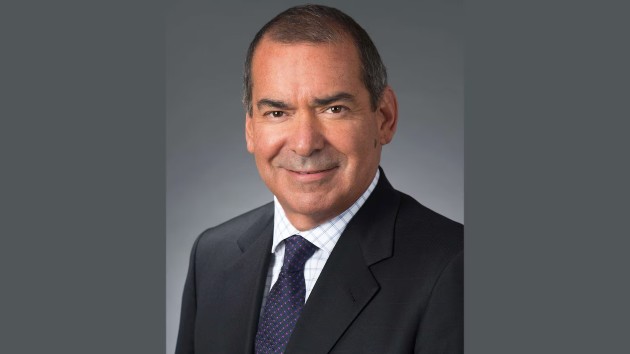
GOP Whip Rep. Emmer says church shooting suspect shouldn’t have been able to possess firearm

GOP Whip Rep. Emmer says church shooting suspect shouldn’t have been able to possess firearm
ABC News

(WASHINGTON) — GOP Majority Whip Rep. Tom Emmer said Sunday that Minnesota laws should have prevented the suspect from purchasing a gun that allowed them to kill two children and wound more than a dozen other people in a shooting at Annunciation Catholic Church in Emmer’s home state.

“Look, this young man was seriously mentally disabled, deranged. Somebody had to know,” Emmer told ABC News’ “This Week” co-anchor Martha Raddatz, adding “clearly this young man was crying out for help. Why was no one hearing him?”

Emmer said the shooter “never should have had access or been able to possess a firearm based on what little we already know,” adding that somebody who knew the shooter had to have known about Minnesota’s so-called “red flag” law.

“What that’s all about is, it’s usually used by a parent or, a law enforcement officer to go to the court and get an order that this individual, because of their emotional state, the mental, challenges that they have, the mental illness, cannot, should not, possess a firearm because they be a danger to themselves and or others,” Emmer said.

Investigators found the shooter’s notebooks, written in a combination of English, Cyrillic and other languages and showing thoughts of violence and grievances. According to Minneapolis Police Chief Brian O’Hara, the notebooks filled with the shooter’s thoughts possessed “lot of hate towards a wide variety of people and groups of people.” The acting U.S. attorney for the District of Minnesota said the only group of people the shooter admired were “mass murderers.”

Emmer also cited mental health as an issue and lack of resources in school as contributing to gun violence in the U.S. However, Emmer notably voted against the 2022 Bipartisan School Safety Act that Congress passed after 21 people, including 19 children, were killed by a mass shooter at Robb Elementary School in Uvalde, Texas.

The bill was considered the most significant action the legislature had taken to tackle gun violence in decades. It allocated hundreds of millions of dollars in federal funds for school districts to enhance safety and mental health resources.

When asked why he voted against the legislation, Emmer said, “I don’t remember the reasons that I didn’t vote for that bill.” Emmer added that the “root cause” cause of violence must be identified to stop violence.

Here are more highlights from Emmer’s Interview:

On the victims of the church shooting
Emmer: As you know, there were 20 that were injured. Eighteen of them are still being treated, 15 children and three adults in, according to the folks in Minneapolis, all are expected to survive. I think Chief O’Hara, the Minneapolis police chief, told us yesterday that all the victims are expected to survive. But, Martha, just because they survive, the trauma that all of these kids, the families that lost their two children, all the kids and the adults that were injured, and every one of them that was at that Mass and, frankly, in the community, is going to be dealing with this for a long time.

On law enforcement in churches and schools
Raddatz: And Congressman, in the short term, or maybe the long term, should law enforcement increase its presence in schools and places of worship? I know the governor has deployed them now.

Emmer: Yes, well, thanks a lot, Governor. He — yes, the answer is, yes. The Catholic community, along with other faith-based schools in this area, just a couple of years ago, when Tim Walz and the legislature were blowing through an $18 billion surplus, they asked for some of those resources, Martha, to — for improving security in their schools. It was after the — the very sad incident in Kentucky. What did Tim Walz do? Absolutely nothing. So, it — it’s — yes, it’s going to be very important that these schools have the resources.

The other thing that you have to look at, Minneapolis, because of these crazy policies that the governor, the young mayor, the progressive, if that’s what you want to call her, county attorney, the Minneapolis school board, back in 2020, said — they voted out having a Minneapolis policeman as a resource officer on the school property. I think we’ve got to go back and rethink these things. What works? What doesn’t work? And we’ve got to start improving our game.

Copyright © 2025, ABC Audio. All rights reserved.
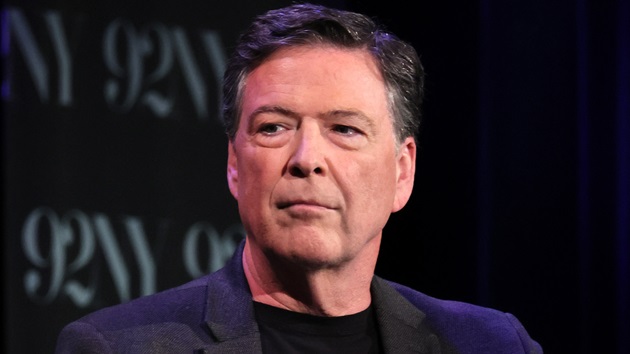
Trump’s global tariffs are unlawful, appeals court says

Trump’s global tariffs are unlawful, appeals court says
Official White House Photo by Shealah Craighead. Via Flickr

(NEW YORK) — A federal appeals court has ruled that most of President Donald Trump’s sweeping global tariffs are unlawful, potentially dealing a significant blow to the president’s effort to reshape the country’s trade policy unilaterally.

In a 7-4 decision, the U.S. Court of Appeals for the Federal Circuit rejected Trump’s authority to carry out most of his tariffs, agreeing with the lower court that Trump’s actions were “invalid as contrary to law.” However, the court delayed the impact of its decision through mid-October to allow the Trump administration to appeal to the Supreme Court, as the tariffs remain in effect.

“Because we agree that [International Emergency Economic Powers Act’s] grant of presidential authority to ‘regulate’ imports does not authorize the tariffs imposed by the Executive Orders, we affirm,” the majority wrote.

The decision in effect tees up one of the most consequential legal questions for the Supreme Court about the scope of the president’s authority on trade policy.

After Oct. 14, the court will return the case to the lower court to decide how the Supreme Court’s recent decision limiting nationwide injunctions affects the decision.

Trump reacts to decision
In a post on his social media platform Friday evening, Trump rebuked the appeals court’s decision, warning that a court order blocking the tariffs “would literally destroy the United States of America.”

Previewing the legal challenge expected in the coming weeks, Trump called on the Supreme Court to rule that he has the power to impose tariffs unilaterally.

“Now, with the help of the United States Supreme Court, we will use them to the benefit of our Nation, and Make America Rich, Strong, and Powerful Again! Thank you for your attention to this matter,” Trump wrote.

What the decision says
In its decision Friday, the appeals court determined that only Congress, not the president alone, has the authority to impose tariffs, setting up a high-profile legal question for the Supreme Court regarding the scope of the president’s power.

The decision centers on whether the authority to “regulate” imports, included in the International Emergency Economic Powers Act, means the president can issue tariffs on his own.

Seven of the 11 judges said that the rarely used law does not give Trump the power to implement either his “reciprocal” tariffs or the “trafficking” tariffs imposed on Canada, Mexico and China aimed at stopping the flow of fentanyl across U.S. borders, writing that “tariffs are a core Congressional power.”

“We discern no clear congressional authorization by IEEPA for tariffs of the magnitude of the Reciprocal Tariffs and Trafficking Tariffs,” the majority wrote. “Given these considerations, we conclude Congress, in enacting IEEPA, did not give the President wide-ranging authority to impose tariffs of the nature of the Trafficking and Reciprocal Tariffs simply by the use of the term ‘regulate . . . importation.'”

A subset of four judges from the majority took the decision even further, determining that IEEPA does not give Trump the power to issue any tariffs, not just the two types of tariffs in question.

“The Government’s interpretation of IEEPA would be a functionally limitless delegation of Congressional taxation authority,” they wrote.

In a minority opinion, four other judges disagreed, suggesting Trump’s declaration of a national emergency is enough of an “unusual and extraordinary threat” to justify the tariffs.

“IEEPA’s language, as confirmed by its history, authorizes tariffs to regulate importation,” the judges wrote.

How the case came about
A group of small businesses and a coalition of states sued to block the tariffs earlier this year, arguing that President Trump had overstepped his authority under the rarely used International Emergency Economic Powers Act (IEEPA) when he issued a flurry of tariffs in April.

The following month, the New York-based Court of International Trade declared the tariffs were unlawful and encroached on Congress’s authority to regulate trade. The Trump administration quickly appealed the decision, which was stayed as the legal process played out.

The U.S. Court of Appeals for the Federal Circuit heard oral arguments on the tariffs in July, during which time the panel of judges appeared skeptical that Trump could justify the tariffs based on a national emergency.

The judges noted that the text of the IEEPA never explicitly mentions “tariffs” and that no other president has attempted to utilize the law in the same manner as Trump has.

“One of the major concerns I have is that IEEPA doesn’t mention tariffs anywhere,” one judge remarked during the arguments in June. “Here, IEEPA doesn’t even say tariffs — doesn’t even mention it.”

Ahead of Friday’s decision, U.S. Solicitor General John Sauer preemptively asked the court to stay their decision to prevent “serious harms” to ongoing negotiations and the country’s trade policy.

Trump administration officials had previously warned that losing the ability to issue tariffs would “lead to dangerous diplomatic embarrassment,” threaten ongoing negotiations between Russia and Ukraine, and “threaten broader U.S. strategic interests at home and abroad.”

Copyright © 2025, ABC Audio. All rights reserved.
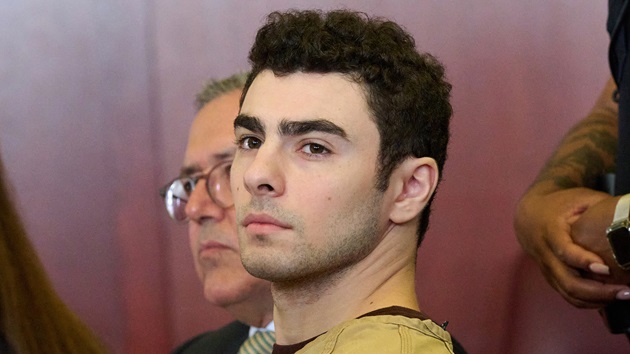
Appeals court sides with judge who blocked Trump administration from ending protections for nearly 600K Venezuelans

Appeals court sides with judge who blocked Trump administration from ending protections for nearly 600K Venezuelans
ftwitty/Getty Images

(NEW YORK) — A federal appeals court has found that the Trump administration likely acted unlawfully when it ended protections for nearly 600,000 Venezuelans to live and work in the United States, upholding a lower court’s decision to postpone the government’s termination.

The 9th Circuit Court of Appeals also upheld District Judge Edward Chen’s authority to issue a final decision in the case, which challenged the termination of Temporary Protected Status (TPS) for Venezuelans ahead of a deadline previously issued by the Biden administration.

“In enacting the TPS statute, Congress designed a system of temporary status that was predictable, dependable, and insulated from electoral politics,” the three-judge panel wrote in Friday’s ruling.

“Moreover, Plaintiffs have demonstrated that they face irreparable harm to their lives, families, and livelihood, that the balance of equities favors a grant of preliminary relief, and that nationwide relief is appropriate,” the court added.

The government argued that a district judge could not challenge Homeland Security Secretary Kristi Noem’s decision to end the protections.

Although the DHS secretary has wide discretion to extend or end protections for TPS holders, Venezuelan plaintiffs — represented by the National TPS Alliance, the National Day Labor Organizing Network and other advocacy groups — argued a secretary could not reverse a predecessor’s decision.

On Friday, the 9th Circuit Court of Appeals unanimously disagreed with the government, paving the way for Chen to make a final decision in the case.

Because of Noem’s decision to reverse former DHS Secretary Alejandro Mayorkas’ extension of protections, around 350,000 TPS holders from Venezuela lost status in April. Another estimated 250,000 are set to lose protections in September depending on the outcome of the case.

Chen had halted the administration’s efforts to end protections while the case continued, but his order was overturned by the Supreme Court in May.

ABC News has reached out to the Department of Homeland Security for comment on Friday’s ruling but has not yet received a response.

Emi Maclean, a senior staff attorney at the ACLU of Northern California, said the “severe effects” of the Trump administration’s decisions are already being felt by Venezuelans previously protected by the program.

“Individuals who have been deported, who have been separated from infant children, who are living in their car after they lost legal status… who have fled a country in crisis and sought refuge in the United States,” she said. “The government and the courts abandoned them to really devastating circumstances.”

The appeals court seemed to echo those sentiments in Friday’s ruling.

“The TPS statute is designed to constrain the Executive, creating predictable periods of safety and legal status for TPS beneficiaries. Sudden reversals of prior decisions contravene the statute’s plain language and purpose,” the court wrote. “Here, hundreds of thousands of people have been stripped of status and plunged into uncertainty. The stability of TPS has been replaced by fears of family separation, detention, and deportation. Congress did not contemplate this, and the ongoing irreparable harm to Plaintiffs warrants a remedy pending a final adjudication on the merits.”

Chen can now issue a final ruling, though it will likely get appealed to the Supreme Court if the Trump administration finds it unfavorable.

Copyright © 2025, ABC Audio. All rights reserved.

Doctors may need to rethink decades of routine beta blocker use for some patients after a heart attack, studies suggest

Doctors may need to rethink decades of routine beta blocker use for some patients after a heart attack, studies suggest
ATU Images/Getty Images

(NEW YORK) — A large new study conducted in Spain and Italy found that beta blockers, drugs often used to slow the heart rate and lower blood pressure, did not provide clear benefits for heart attack patients whose hearts were still functioning well.

The results of the study, known as REBOOT, were published in the New England Journal of Medicine on Saturday and presented during the European Society of Cardiology Congress 2025 in Madrid, Spain.

The REBOOT trial enrolled more than 8,400 patients recovering from a heart attack whose heart function was above 40% and assigned them to either take a beta blocker or no beta blocker within two weeks of leaving the hospital.

Over the course of approximately 3.7 years, there was no significant difference when it came to rates of death from any cause, repeat heart attacks or hospitalization for heart failure between the two groups, according to the study.

In a “subanalysis” of the study, published in the European Heart Journal, researchers specifically looked at outcomes involving the approximately 1,600 women from the original REBOOT trial and isolated their results.

In this case, beta blockers were associated with an increased risk of death from all causes for these women, compared to women who were not taking beta blockers. In contrast, no excess risk was associated with beta blocker use in men.

However, the authors advised that the results should be interpreted with caution as the women enrolled in REBOOT trial were generally older, sicker, and received less treatment for heart attacks than men.

Second study points to benefits of beta blockers
Results from another clinical trial called BETAMI-DANBLOCK — also published Saturday in the New England Journal of Medicine — appeared to yield yet another finding about beta-blocker use after a heart attack.

Results from this trial of more than 5,000 adults diagnosed with a heart attack and either mildly decreased or intact heart function demonstrated that those treated with beta blockers had fewer new heart attacks in the 3 and 1/2-year study period compared to those who did not take beta blockers after their initial heart attack.

Notably, there was no difference in rates of death, heart failure, stroke or other major heart issues between the two groups.

“The major driver was a reduction in non-fatal heart attack at follow-up,” said Dr. Gregg Fonarow, professor of cardiovascular medicine at the University of California, Los Angeles, in an interview with ABC News.

While it is important to acknowledge that the BETAMI-DANBLOCK study found a potential benefit in beta blocker use, it had some limitations. This was a smaller-scale study that combined two clinical trials into one because separately they were not able to enroll enough patients. Different rules for who could join each of the studies in each country may have skewed the results, as well.

“REBOOT was a cleaner study in terms of protocol and inclusion criteria,” said Dr. Steven Pfau, professor of cardiovascular medicine and interventional cardiologist at Yale School of Medicine in New Haven, Connecticut.

Notably, REBOOT challenges over 40 years of standardized practice, which calls for patients admitted to the hospital for a heart attack to be started on beta blockers before or shortly after they are discharged.

Cardiologists’ methods for treating heart attacks and opening blockages in the coronary arteries in a timely fashion have improved drastically over the past 10-20 years, experts say. That’s why, in an age of improved medical therapies and procedural interventions for heart attacks, such as better-performing coronary artery stents, it may be time to rethink the long-standing guidance on beta-blocker use, according to some experts.

“Beta blockers were developed at a time before routine reperfusion therapy for acute heart attacks and the evolution of more potent medications, and care has really evolved,” said Fonarow.

Pfau said that neither study makes a compelling case for beta blockers versus no beta blockers for this select group of patients.

“If beta blockers do have an effect, it is probably small, given the other therapies we have,” he said. “It fits the discussion for both studies that, with the way we currently practice, beta blockers potentially add very little to outcomes after a heart attack for patients with preserved heart function and no other pre-existing reason to be on a beta blocker.”

If patients can take beta blockers safely, they should keep using them for now, Fonarow advised. But he also called for more studies to understand which patients benefit the most from this type of medication.

Copyright © 2025, ABC Audio. All rights reserved.

What to know about monsoon season in the US

What to know about monsoon season in the US
Photo by David McNew/Getty Images

(NEW YORK) — Monsoon season — the weather pattern that has been creating inclement conditions in the western U.S. — is expected to last for another few weeks following a massive dust storm in the Phoenix region.

The North American Monsoon is an annual climate phenomenon that occurs in the Southwest U.S. during the warm summer months.

In the Southwest, strong heat from the sun causes a significant rise in temperatures during the summer. But, since bodies of water don’t rise in temperature as fast as on land, it causes an effect where moist air is drawn toward the hot dry air over land.

The monsoon season is a result of the moist air moving onto the hot land, which causes the atmosphere to become unstable. The monsoon is typically found in areas of large, elevated landmasses, like the Southwest, and in parts of India, near the Himalayan mountains.

Indian monsoons are associated with heavy rain lasting for months, but the North American monsoon behaves differently, according to Climate.gov. The monsoon generally involves daily patterns of mostly dry mornings with storms developing later in the day, with most of the heavy rain occurring in the afternoon and evening hours — also known as a diurnal cycle.

The Southwest experiences the monsoon when moisture from the Gulf of California and eastern Pacific is transported to California, southern Nevada and Arizona. The monsoon season typically develops around May or June but can increase substantially in July and August, especially if there are tropical systems in the eastern Pacific Ocean.

While the unstable atmosphere can produce thunderstorms, it is not one particular storm but rather an overall pattern that promotes them. A monsoon thunderstorm can be slow-moving and persistent, resulting in thunderstorms that drop very heavy rain in very dry parts of the region, which can lead to flash flooding.

Some of the thunderstorms can be strong and deliver heavy rain and frequent lighting, , according to Climate.gov. Periods of rainy days are often interspersed with drier periods during the North American Monsoon.

Much of the West has been experiencing monsoon conditions over the past week, bringing some of the wettest days of the year to the region.

The summer thunderstorms in the desert can produce very strong winds, which can kick up dust in the desert. The dust storm can have very strong winds that can do damage and reduce visibility, making travel nearly impossible. Dust storms can arrive suddenly in the form of an advancing wall of dust and have visibilities of one-fourth of a mile or less, according to the National Weather Service.

On Monday, the dust storms – also known as a haboob – engulfed the Phoenix metro area, creating low visibility and knocking out power for thousands of people. A cloud of dust hundreds of feet high could be seen moving over the region.

Flooding rains and more wind gusts followed the dust storm. The wind event — which saw gusts of up to 70 mph — was so severe that some flights out of the Phoenix Sky Harbor International Airport were grounded and air traffic controllers were forced to evacuate the tower.

Because of the sporadic nature of the thunderstorms, the severity and impact of the monsoon can vary season to season

In Tucson, Arizona, so far this monsoon season has only produced just under 2 inches of rain as of Friday, which is among the drier monsoon seasons on record. However, in 2021, the monsoon caused 12.79 inches of precipitation in Tucson.

Rainfall from the monsoon is very important for the region, according to Climate.gov. Arizona and New Mexico receive more than 50% of its average annual precipitation from July to September, during the monsoon season.

Once the summer months are over, and the land cools down, the monsoon season ends — typically in late September or early October in the Southwest. Wind patterns revert back to the westerly pattern, ending the monsoon.

Copyright © 2025, ABC Audio. All rights reserved.

Russia’s ‘massive strike’ on Ukraine overnight kills 1, injures 29, Ukrainian authorities say

Russia’s ‘massive strike’ on Ukraine overnight kills 1, injures 29, Ukrainian authorities say
Anastasia Potapenko/Suspilne Ukraine/JSC “UA:PBC”/Global Images Ukraine via Getty Images

(LONDON) — Russia carried out “a massive strike” on Ukraine overnight, launching 537 drones and 45 missiles, the Ukrainian Air Force said Saturday morning.

Ukraine’s air defense systems took out most of the projectiles, but five missiles and 24 drones still struck seven locations, while the debris of shot down projectiles fell in 21 locations, according to the air force.

The southeastern region of Zaporizhzhia was particularly hard hit, with at least one person killed and 29 others injured, including three children, according to the Zaporizhzhia Regional Military Administration. More than 40 houses and 14 apartment buildings were damaged as a result of the overnight attack, and some 25,000 households were without power Saturday morning, authorities said.

Some homes, businesses and infrastructure were also hit in the neighboring region of Dnipropetrovsk, according to the Dnipropetrovsk Regional Military Administration.

Ukrainian President Volodymyr Zelenskyy reacted to the attack in a post on X, saying the “only way to reopen a window of opportunity for diplomacy is through tough measures against all those bankrolling the Russian army and effective sanctions against Moscow itself – banking and energy sanctions.”

“It is absolutely clear that Moscow used the time meant for preparing a leaders-level meeting to organize new massive attacks, he added. “This war won’t stop with political statements alone; real steps are needed. We expect action from the U.S., Europe, and the entire world.”

Meanwhile, Ukraine said early Saturday that its forces have struck two Russian oil refineries.

The targets were the Krasnodar Refinery in southwestern Russia’s Krasnodar Krai and the Syzran Refinery in the Samara Oblast, southeast of Moscow, according to Ukraine’s drone commander, Maj. Robert “Magyar” Brovdi.

The General Staff of the Armed Forces of Ukraine also confirmed the attack, adding that the results of the strikes are still being clarified.

The Russian Ministry of Defense said its air defense systems shot down 86 Ukrainian drones late Friday into early Saturday, including 11 over Krasnodar Krai, without specifying any attacks on oil refineries. The ministry also didn’t mention the Samara Oblast, but the head of the region, Vyacheslav Fedorishchev, said drones had attacked an industrial enterprise in Syzran early Saturday.

Earlier this week, Zelenskyy called for pressure on Russia, such as sanctions and tariffs, and said Ukraine is “counting on strong steps.” He urged a response from nations like China and Hungary, which have expressed sympathy with Russia’s position. “It is definitely time for new tough sanctions against Russia for everything it is doing,” he added.

“All deadlines have already been missed, dozens of opportunities for diplomacy have been spoiled. Russia must feel its responsibility for every strike, for every day of this war,” Zelenskyy said.

The latest barrage continued the nightly tempo of Russian strikes, though the scale of the attacks through August have so far been smaller than in July and June. In August so far, Russia has launched a daily average of around 118 drones and four missiles into Ukraine, according to Ukrainian air force data analyzed by ABC News.

The daily averages for July were around 201 drones and six missiles, and in June there were 181 drones and eight missiles.

U.S. President Donald Trump expressed frustration this week with Russian President Vladimir Putin over the strikes, which continue despite White House efforts to broker a peace deal.

White House press secretary Karoline Leavitt said Trump was “not happy about this news, but he was also not surprised.”

“The president is continuing to watch this intently. And this killing, unfortunately, will continue as long as the war continues, which is why the president wants it to end,” she said.

Copyright © 2025, ABC Audio. All rights reserved.
COVID cases, hospitalizations ticking up in the US but remain lower than last year

COVID cases, hospitalizations ticking up in the US but remain lower than last year
A COVID-19 At-Home Test kit showing positive results. (Erik McGregor/LightRocket via Getty Images)

(NEW YORK) — COVID-19 cases are ticking up in the U.S. as children head back to school and the country prepares to enter the colder weather months.

For the week ending Aug. 9, the COVID hospitalization rate was 1.7 per 100,000, double the rate from two months ago, according to data from the Centers for Disease Control and Prevention.

Additionally, for the week ending Aug. 23, 11.2% of weekly tests came back positive for COVID, up from 3.3% the prior two months, CDC data shows.

Despite the increases, metrics remain much lower than in previous years.

Hospitalization rates are about three times lower than at the same time last year and the percentage of weekly tests coming pack positive is about two times lower compared to the same period last year.

Additionally, over the past two months, roughly 200 Americans have been dying from COVID every week, according to CDC data.

There has been confusion over who may be able to receive a COVID vaccine after the Food and Drug Administration approved updated versions of those shots for those over age 65 and younger Americans who are at high risk for severe disease. Federal health officials have insisted that anyone who wants the shot can receive it.

CDC data shows test positivity has increased above 10% in much of the southwest and western U.S. as kids head to class.

“When the dust settles, I expect it to not be as bad as last year … but that still means that some people are getting sick,” Dr. Peter Chin-Hong, a professor of medicine and an infectious diseases specialist at the University of California, San Francisco, told ABC News. “Fewer people are getting hospitalized, proportionately speaking, but some people are still being hospitalized.”

“The reason why we’re seeing the increase is because of the usual factors of more than six months since a lot of people got COVID [and] new variants,” he continued.

As of the week ending August 30, XFG, an offshoot of the omicron variant, is the dominant variant in the U.S., accounting for an estimated 78% of new COVID cases.

Meanwhile, NB.1.8.1 and LP.8.1, also omicron variant offshoots, make up 14% and 3% of estimated new COVID cases in the U.S., CDC data shows.

Dr. William Schaffner, a professor of preventive medicine and of medicine at Vanderbilt University School of Medicine, told ABC News that because the currently circulating variants are all members of this omicron family, there are no major mutations that make the virus more transmissible or more infectious.

“You can think of them all as cousins,” he said. “Now these cousins do share a couple of characteristics, one is that they appear to be fairly contagious and are quite capable of producing a great deal of mild disease. By mild, I mean not serious enough to get you into the hospital.”

Schaffner continued, “Fortunately, the vaccines that will become available this fall … should provide reasonable protection against serious disease caused by these variants.”

In a press release, Pfizer-BioNTech said its 2025-2026 COVID vaccine will target the LP.8.1 sublineage in line with FDA guidance to more closely match circulating strains.

It remains unclear how COVID vaccinations will be rolled out in the U.S. Recently, CVS said how it offers the shots will vary by state due to “the current regulatory environment.”

In 34 states, Americans can receive the COVID vaccine at a CVS pharmacy. In 13 states and in Washington, D.C., Americans can be vaccinated, depending on age, with a prescription. In three states – Massachusetts, Nevada and New Mexico – the COVID vaccine isn’t being offered.

Chin-Hong said he is worried about low vaccination rates as the country heads into respiratory virus season during the fall and winter months.

“As vaccination rates decline, from both people’s desire as well as structural barriers that are being put up by the federal government, it means that fewer people are going to get vaccines, even if people wanted to,” he said. “I’m worried that … it may mean that we would have some hospitalizations and deaths that we wouldn’t have seen normally if there was a simpler rule around vaccines.”

Schaffner said those who can receive the COVID vaccine should do so, along with the annual influenza vaccine, and advised those with risk factors for severe disease to be more cautious.

“You can get out your mask and put that on when you’re going indoors in crowded environments,” he said. “And if you’re really concerned, as I like to say, do some social distancing. Stream the movie rather than going to the movie.”

ABC News’ Youri Benadjaoud and Cheyenne Haslett contributed to this report.

Copyright © 2025, ABC Audio. All rights reserved.
Upcoming ‘upgrade’ to Holocaust Museum exhibit on US response to Nazi Germany sparks some staff concerns: Sources

Upcoming ‘upgrade’ to Holocaust Museum exhibit on US response to Nazi Germany sparks some staff concerns: Sources
Holocaust Museum in Washington, DC. (Education Images/Universal Images Group via Getty Images)

(WASHINGTON) — An exhibit at the United States Holocaust Memorial Museum that takes a critical look at the United States’ response to Nazi Germany is slated to temporarily close after Labor Day for upgrades, sparking concern among some staff over what potential changes could be made amid President Donald Trump’s sweeping review of museums and their programming, sources tell ABC News.

On Sept. 2, the Holocaust Memorial Museum in Washington, D.C., is scheduled to temporarily close its “Americans and the Holocaust” exhibit through Feb. 2026 to conduct an “upgrade,” according to an internal email sent to staff in June and obtained by ABC News.

The staff-wide email, sent after Trump signed an executive order in March directing federal agencies and the Smithsonian to eliminate what he called divisive and “anti-American” content from museums and national parks, informed staff that exhibit teams at the museum would work to “upgrade the gallery and the exhibition.”

“The current plan is to close the exhibition on September 2, 2025 (the day after Labor Day) and reopen on February 28, 2026 (just before the busy season),” the email read. “Once closed, Technical Services, Operations, Exhibit Experience, and Collections Services will work together to upgrade the gallery and the exhibition. Once the work is completed, ‘Americans and the Holocaust’ can remain open through 2032 with little to no additional support. Please feel free to reach out with questions and concerns.”

The email does not state specifically if or what would be upgraded or list any planned changes to the exhibit’s editorial content. It was sent to staff prior to the Trump administration’s recent letter to the Smithsonian Institution requesting a “comprehensive internal review” of eight of its museums. While the Holocaust Memorial Museum is not part of the Smithsonian Institution, it receives millions in federal funding as well as private donations.

Sources tell ABC News that news that the temporary closure of the “Americans and the Holocaust” exhibit has increased concerns among some staffers who had been worried about the museums’ direction under the new administration, after Trump in April fired and replaced five Democrats appointed to the board of the museum.

The concern also comes as other Holocaust museums are facing criticism over editorial changes, including New York City’s Museum of Jewish Heritage, which reportedly removed images of Trump from an exhibit on hate speech last September. The museum’s vice chair told Jewish Currents that the exhibit opened just “prior to the election” and that she felt the museum “should not have any political candidates in any of our exhibits.”

When asked for comment, a spokesperson for the United States Holocaust Memorial Museum confirmed the planned closure of the exhibit and told ABC News that “there are no changes to the editorial content.”

“The Americans and the Holocaust exhibition was originally scheduled to be open for five years and has now been on display for more than seven. As a result, the gallery and exhibition needed work such as HVAC systems repairs, upgrading audio visual equipment and interactive tables, renewing copyrights that expired, and other maintenance,” the spokesperson said. “Therefore in 2024 we made the decision to close it temporarily during our lower visitation season to do this work which will be completed over the next few months so that the exhibition can remain open into 2032.”

A White House official told ABC News, “There are no plans to review the Holocaust Museum” and said that the closure of the exhibit is unrelated to the administration’s review of the Smithsonian museums.

In its letter to the Smithsonian Institution earlier this month, the White House lists eight museums that will be part of its initial Smithsonian review, and does not include the Holocaust Memorial Museum. “Additional museums will be reviewed in Phase II,” the letter says.

The “Americans and the Holocaust” exhibit, introduced in 2018 to mark the museum’s 25th anniversary, presents a critical look at how the United States responded to the Holocaust and how factors like “the Depression, isolationism, xenophobia, racism, and antisemitism shaped responses to Nazism and the Holocaust in the United States,” according to the museum’s public website.

One section of the exhibit examines “Obstacles to Immigration” and details how the 1924 National Origins Act was “designed to exclude ‘undesirable’ European immigrants, especially Italians, Slavs, and Jews.”

“Jews who hoped to flee Germany and Nazi-occupied territories faced additional obstacles,” the exhibit currently reads. “The Nazi regime implemented policies intended to pressure Jews to leave, but forced them to surrender most of their assets before doing so. At the same time, those who wished to immigrate to the United States had to prove that they would not become an economic burden after they arrived, which usually required finding a U.S. sponsor.”

The exhibit states that world-renowned physicist Albert Einstein, “himself a refugee from Germany,” said in 1941 that the United States had created a “wall of bureaucratic measures” that prevented immigration.

One part of the exhibit asks, “Could the Allies have stopped the killing?” and states, “Beyond the military goal of defeating Nazism, the United States could have publicized information about Nazi atrocities, pressured the Allies and neutral nations to help endangered Jews, and supported resistance against the Nazis. These acts together might have reduced the death toll but would not have prevented the Holocaust.”

The exhibit also includes a copy of the Treasury Department’s report to then-President Roosevelt, which described the mass murder of Europe’s Jews as “one of the greatest crimes in history,” and states that “State Department staff had tried to ‘cover up their guilt’ through lies and misrepresentations.”

Since taking office, President Trump has sought to leave his mark on the museum, which sources say has heightened some staff concerns that an overhaul could be underway. His firing of Holocaust Museum board members appointed by President Joe Biden included the removal of Doug Emhoff, the former second gentleman of the United States, and led to Trump naming eight new board members.

Weeks after the new board members were put in place, staffers received the email informing them that the “Americans and the Holocaust” exhibit would be closing in September.

In recent months, some Trump-appointed members of the museum’s board, known as the United States Holocaust Memorial Council, have publicly called for an overhaul of the museum. Board member Martin Oliner, who was appointed by Trump during his first term, penned a June op-ed titled “Make the Holocaust Memorial Council great again,” in which he said that “in its current form” the museum was not fulfilling its “important role.”

“Thankfully, U.S. President Donald Trump, who has made combating antisemitism a priority of his second term, appears to understand these challenges and has begun cleaning house at the museum,” the op-ed stated.

Oliner, wrote that “the museum was designed when it was thought that antisemitism was a thing of the past, and it has moved on to combating other types of hate,” arguing that “a planned $150 million renovation of the main exhibit hall could make the museum even more woke and disconnected, a liberal monument to the dangers of immigration enforcement and conservative politics.”

The museum needs to show that “antisemitism is the world’s oldest hatred” and “teach its visitors about the story of Jewish survival,” Oliner wrote.

Copyright © 2025, ABC Audio. All rights reserved.
FDA expands warning of radioactive shrimp as 2 more brands are recalled

FDA expands warning of radioactive shrimp as 2 more brands are recalled
A sign for the Food And Drug Administration is seen outside of the headquarters on July 20, 2020 in White Oak, Maryland. (Photo by Sarah Silbiger/Getty Images)

(WASHINGTON) — The U.S. Food and Drug Administration is expanding its warning about radioactive shrimp, recalling more brands due to possible contamination.

The federal health agency said earlier this week nearly 18,000 bags of frozen Kroger Mercado Cooked Medium Peeled Tail-Off Shrimp and 26,460 packages of cocktail shrimp, both from Seattle-based Aquastar Corp, were recalled because of potential contamination with the radioactive isotope Cesium-137 (Cs-137).

Earlier alerts had warned about contamination among Walmart’s Great Value shrimp and frozen shrimp sold by California-based company Southwind Foods.

The FDA said all of the brands were processed by the Indonesian supplier PT. Bahari Makmur Sejati, operating as BMS Foods, and the company has been placed under a full import alert.

PT. Bahari Makmur Sejati was added “to a new import alert for chemical contamination to stop products from this firm from coming into the U.S. until the firm has resolved the conditions that gave rise to the appearance of the violation,” the FDA said in a press release.

The shrimp placed under recall alerts may have been prepared, packed or held in “insanitary conditions” during which they became contaminated with Cs-137, the FDA said.

No products have tested positive for Cs-137 in the U.S. marketplace at this time, and no illnesses have been reported to date, according to the FDA.

Cesium is a soft, flexible, silvery-white metal that becomes liquid near room temperature, but easily bonds with chlorides to create a crystalline powder, according to the U.S. Environmental Protection Agency.

Low-dose exposure to Cs-137, such as in water or food, over a long-term period of time can damage DNA within living cells of the body and increase the risk of cancer, the FDA says.

External exposure to large amounts of Cs-137, according to the EPA, can cause burns, acute radiation sickness and even death.

The recalled Kroger shrimp was sold between July 24 and Aug. 11 in 17 states. Impacted stores include Baker’s, Gerbes, Jay C, Kroger, Mariano’s, Metro Market, Pay Less Supermarkets and Pick ‘n Save.

The recalled shrimp weigh two pounds and are packaged in clear plastic bags with has a white label and green stripes on top of each bag. The affected codes include:

• UPC 011110626196, Lot code 10662 5139, Best Before 11/19/2027

• UPC 011110626196, Lot code 10662 5140, Best Before 11/20/2027

The recalled cocktail shrimp was sold only in Walmart stores in 27 states between July 31 and Aug. 16.

“The product was sold in refrigerated condition and has a 12-day shelf life and with various Best if Use By dates,” the FDA release read. “The affected Cocktail Shrimp 6oz is packaged in a clear plastic tray and has a red and white label.”

The recalled products contain the code UPC 19434612191 and the Lot Codes 10662 5106, 10662 5107, 10662 5124 and 10662 5125 at the bottom of the plastic tray.

The FDA warned consumers who have purchased affected shrimp not to consume the products and to dispose of them.

ABC News’ Bill Hutchinson and Sony Salzman contributed to this report.

Copyright © 2025, ABC Audio. All rights reserved.

Texas Gov. Abbott signs redrawn congressional map favoring Republicans into law after Trump push

Texas Gov. Abbott signs redrawn congressional map favoring Republicans into law after Trump push
Brandon Bell/Getty Images

(WASHINGTON) — Texas Gov. Greg Abbott said on Friday that he has signed the bill redrawing Texas’ congressional map into law, a milestone for the Republican-driven mid-decade redistricting in the Lone Star state that comes as other states also prepare to consider redrawing their congressional map.

Abbott, who signed the bill around a week after the state Senate passed it, shared a video on social media Friday showing the Republican putting his signature on the legislation.

He added right afterwards, “Texas is now more red in the United States Congress.”

States usually draw their congressional map once a decade, after the census, but President Donald Trump and the White House had pushed the state to redraw its map in order to help Republicans bolster their slim majority in the U.S. House of Representatives in 2026’s midterm elections.

Experts have said the new congressional map could allow Republicans to flip up to five seats; Republicans have said the new district borders were drawn based on political performance and other considerations allowed by law.

Democrats have said the maps unfairly target and marginalize voters of color.

This is a developing story. Please check back for updates.

Copyright © 2025, ABC Audio. All rights reserved.