Lil Baby‘s album My Turn came out in 2020, but it’s still hanging around on the Billboard chart — and setting records in the process.
My Turn has now spent 85 weeks in the top 10 of Billboard‘s Top R&B/Hip-Hop Albums chart. That’s the longest any album has stayed in that top tier of the chart since it began back in 1965.
My Turn breaks the previous record set by Post Malone‘s album Hollywood’s Bleeding, which lasted 84 weeks in the top 10 between 2019 and 2021.
Overall, My Turn has been on the chart for 106 weeks, six of them at number one, and has spun off five top-10 hits on the Hot &RB/Hip-Hop Songs chart, including “Woah,” “Heatin Up,” featuring Gunna, and “The Bigger Picture.”
Currently, My Turn is at number eight on the chart.
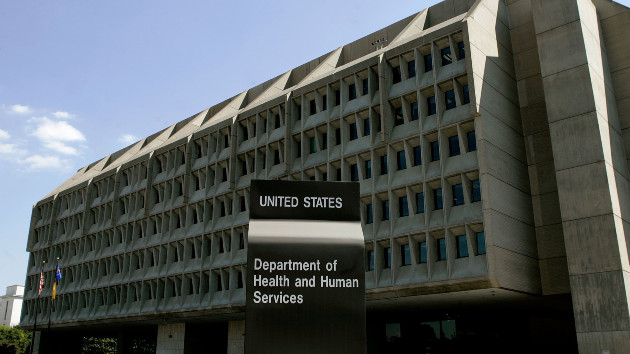
(NEW YORK) — The federal government is investing in the health and wellness of individuals at risk for or living with HIV/AIDS through mental health and substance use services from the Department of Health and Human Services (HHS).
In a release sent to ABC News, HHS announced Friday that $43.7 million from the agency’s Overdose Prevention Strategy will go towards three new grant opportunities that will be especially be targeted to underserved communities of color.
In 2020, there were almost 40 million people around the world living with HIV, according to the HHS. In the U.S., there are approximately 1.2 million people who have HIV, though about 13% don’t know it and need to be tested.
In the U.S., people of color have been majorly overrepresented in HIV diagnoses, due to a range of socioeconomic factors that increase their risk for HIV and HIV-related outcomes.
Black people represent approximately 40% of people with HIV, but make up only 13% of the U.S. population, according to HHS’ latest statistics from 2019. Hispanics and Latinos composed 25% of people with HIV, but make up 18.5% of the population.
The HHS reports that this disproportionate impact of Black and brown communities is also reflected in the demographics of newfound infections, demonstrating that prevention and treatment services are not reaching those who need it most.
“We remain committed to providing people at risk for, or living with HIV/AIDS, with the support and services they need to thrive – no matter who they are or where they live,” said Health and Human Services Secretary Xavier Becerra.
According to HHS, the funding targets areas of the country with the greatest disparities in HIV-related health outcomes and aligns with the National HIV/AIDS Strategy.
“We must increase supports and services for those who are at risk for or living with HIV/AIDS and have mental health and substance use needs,” said Miriam Delphin-Rittmon, HHS Assistant Secretary for Mental Health and Substance Use and the leader of Substance Abuse and Mental Health Services Administration.
She added, “This means connecting them to easy-to-access, culturally appropriate prevention, treatment, and recovery services.”
One grant will fund substance use disorder treatment programs for racial or ethnic minority populations at high risk for HIV/AIDs.
Another program will provide training and education around the risks of substance use and HIV/AIDS, as well as with community health workers, neighborhood navigators and peer support specialists to ensure that services are reaching those in need.
The third program, the Minority AIDS Initiative, aims to reduced the “co-occurring epidemics of HIV, Hepatitis, and mental health challenges through accessible, evidence-based, culturally appropriate treatment that is integrated with HIV primary care and prevention services.”
Anyone seeking treatment for mental health or substance use issues is urged to call SAMHSA’s National Helpline at 800-662-HELP (4357) or visit findtreatment.samhsa.gov.
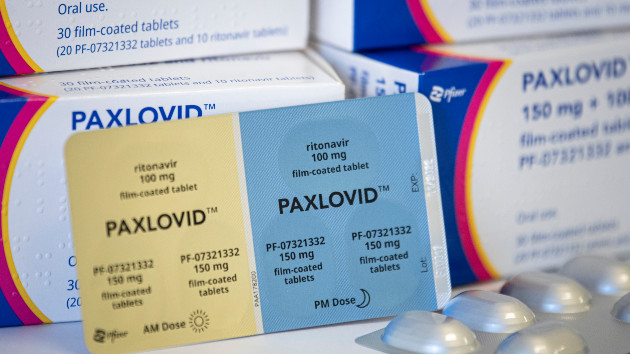
(NEW YORK) — The United Nations-backed Medicines Patent Pool announced Thursday it has signed an agreement with 35 companies around the globe to produce generic versions of Pfizer’s COVID-19 antiviral pill.
The agreement will allow the treatment to be supplied to 95 low- and middle-income countries, home to more than half of the world’s population, according to the MPP.
Clinical trial data has shown the pill, sold under the brand name Paxlovid, reduces the risk of hospitalization and death from COVID by 89% if taken within three days of the onset of symptoms.
Paxlovid is currently given as three pills twice daily over the course of five days.
The pill will be easier to distribute to hard-to-reach areas than monoclonal antibodies, which are given intravenously and require a medical professional to administer the treatment.
“We have established a comprehensive strategy in partnership with worldwide governments, international global health leaders and global manufacturers to help ensure access to our oral COVID-19 treatment for patients in need around the world,” Pfizer CEO Albert Bourla said in a statement.
The statement continued: “The MPP sublicensees and the additional capacity for COVID-19 treatment they will supply will play a critical role to help ensure that people everywhere, particularly those living in the poorest parts of the world, have equitable access to an oral treatment option against COVID-19.”
Paxlovid is made up of two medications: ritonavir, which is commonly used to treat HIV and AIDS, and nirmatrelvir, an antiviral that Pfizer developed to boost the strength of the first drug.
Together, they prevent an enzyme the virus uses to make copies of itself inside human cells and spread throughout the body.
According to the agreement, the companies will be able to take out sublicenses to produce raw ingredients of nirmatrelvir, co-package it with ritonavir or both steps.
Six of the companies will produce the raw ingredients, nine companies will co-package it and the remaining companies will do both, the MPP said.
The companies producing the drug span 12 countries including Bangladesh, Brazil, China, the Dominican Republic, Jordan, India, Israel, Mexico, Pakistan, Serbia, South Korea and Vietnam.
The MPP said a license was offered to a 36th company in Ukraine, but it was unable to sign due to the war with Russia.
Under the agreement, the 35 companies will not be required to pay Pfizer royalties as long as COVID-19 is classified as a public health emergency by the World Health Organization.
However, after the emergency ends, the manufacturers will be able to sell their pills to low-income countries without royalties but will be subject to a 5% to 10% royalty for sales to middle-income countries.
The MPP expects some of these companies could submit their drugs for regulatory review to health agencies in their home countries or to the WHO later this year.
In January, the group signed a similar agreement with Merck for two dozen companies to produce a generic version of its COVID-19 pill, molnupiravir.
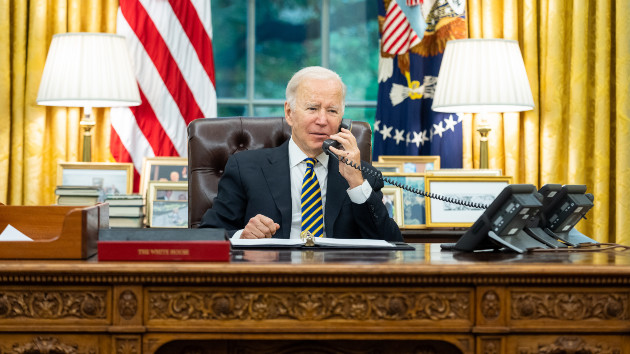
(WASHINGTON) — In a high-stakes video call, President Joe Biden and China’s President Xi Jinping spoke Friday morning for the first time since November amid concerns that China will help Russian President Vladimir Putin’s ongoing invasion of Ukraine.
The White House said the two leaders spoke for one hour and 50 minutes.
White House press secretary Jen Psaki said Biden would be candid and direct and that the call provided a chance for him to “assess where President Xi stands.” The conversation would center on “managing the competition between our two countries as well as Russia’s war against Ukraine and other issues of mutual concern,” according to the White House.
Biden was expected to warn Xi that if China directly helps Russia in its assault on Ukraine there will be consequences — but it’s unclear if he laid out specific actions the U.S. will take if China were to supply Russia with military equipment or economic assistance to offset the impact of global sanctions.
In what appeared to be a warning shot to the West, Russia’s Foreign Minister Sergei Lavrov said Friday that any foreign supplies to Ukraine containing military equipment will be considered “legitimate targets” for Russian strikes after Biden announced this week a slate of weapons the U.S. is supplying to Ukraine.
“We clearly said that any cargo moving into the Ukrainian territory which we would believe is carrying weapons would be fair game. This is clear because we are implementing the operation the goal of which is to remove any threat to the Russian Federation coming from the Ukrainian soil,” Lavrov said in an English-language interview with the RT television channel.
Ukrainians woke up Friday to the first strike on the outskirts city of Lviv, considered a safe haven until now, and not far from the Polish border. It follows a stark warning from the Pentagon that Russia was broadening its target and escalating attacks this week.
While the Biden administration has hesitated from drawing red lines of what would change its position on not supporting a no-fly zone or troops on the ground in Ukraine, Lavrov’s message raises concerns that Russia could fire at military bases in neighboring NATO ally Poland to Ukraine, triggering an Article 5 response.
Earlier this week, national security adviser Jake Sullivan had a seven-hour meeting with his Chinese counterpart in Rome, which was described as “intense.” A senior Biden administration declined to tell reporters whether China had expressed an openness to providing Russia with military or economic support or if it had already provided support to Russia since it invaded Ukraine.
“We do have deep concerns about China’s alignment with Russia at this time, and the national security adviser was direct about those concerns and the potential implications and consequences of certain actions,” the official said.
That meeting had been “long-planned” and “long-discussed” as a way to maintain communication with China, but it happened to take place at “a really timely and important moment in this crisis,” the official added.
Biden and Xi’s critical call comes on the heels of Biden labeling Putin a “war criminal,” a “murderous dictator,” and a “pure thug” in the last 48 hours. Secretary of State Antony Blinken said Thursday he “personally” agrees with Biden that Russia has committed war crimes in Ukraine.
(WASHINGTON) — Officials from the Biden administration met with Florida LGBTQ students and their families in a virtual roundtable concerning the now-dubbed “Don’t Say Gay” bill and other legislative efforts advocates deem anti-LGBTQ.
U.S. Secretary of Education Miguel Cardona and Rachel L. Levine, assistant secretary for health at the U.S. Department of Health and Human Services, listened to the students and their family members discuss concerns and fears about the impact of such bills.
The two were advised on what resources could be provided to support the Florida LGBTQ community.
“Laws around the country, including in Florida, have targeted and sought to bully some of our most vulnerable students and families, and create division in our schools,” Cardona said in a statement.
He added: “My message to you is that this Administration won’t stand for bullying or discrimination of any kind, and we will use our authorities to protect, support, and provide opportunities for LGBTQI+ students and all students.”
The Parental Rights in Education bill, dubbed the “Don’t Say Gay” bill by LGBTQ activists, would limit what classrooms can teach about sexual orientation and gender identity.
Under this legislation, these lessons “may not occur in kindergarten through grade 3 or in a manner that is not age-appropriate or developmentally appropriate for students in accordance with state standards.”
The bill would also allow parents to sue school districts that engage in these topics. The bill is awaiting a decision from Gov. Ron DeSantis.
The Biden administration has denounced the efforts as “hateful.”
“Every parent hopes that our leaders will ensure their children’s safety, protection, and freedom,” the White House said in a statement Feb. 8.
It continued: “Today, conservative politicians in Florida rejected those basic values by advancing legislation that is designed to target and attack the kids who need support the most – LGBTQI+ students, who are already vulnerable to bullying and violence just for being themselves.”
After the bill was passed by the Florida House and Senate, Cardona slammed the legislators responsible for its passage.
“The Department of Education has made clear that all schools receiving federal funding must follow federal civil rights law, including Title IX’s protections against discrimination based on sexual orientation and gender identity,” Cardona said.
Levine and Cardona also shared with students and families the mental health resources and support that are currently available for these students.
“We need to support LGBTQI+ youth, their parents and families to help them achieve the good health and quality care they deserve,” Levine said. “Our communities have a champion in President Biden. The President supports equality and works to ensure everyone is represented. And that gives people a voice, a chance to effect change, to help people understand the diverse needs of our nation.”
Legislation targeting the LGBTQ community has sent shockwaves throughout the U.S.
States continue to debate whether trans youth should receive gender-affirming health care, whether trans girls should be allowed to play girls’ sports, or whether LGBTQ content can be taught in schools.
(NEW YORK) — When the omicron wave hit the United States, it spread throughout the country like wildfire.
Different models estimate that anywhere from 50% to 75% of Americans had been infected with the variant by the end of the surge.
So, what does that mean for the rest of the U.S. population that did not contract COVID-19 during the last wave?
Because omicron has shown the ability to cause breakthrough infections despite vaccination status, this has led to fears that everyone will catch the virus at some point. However, it is important to clarify that the COVID vaccines continue to be highly effective in its primary purpose in preventing hospitalization and death.
However, public health experts said it’s not inevitable Americans who have not gotten COVID yet eventually will, and that there are several reasons people have been able to avoid infection so far, including certain behaviors such as being serious about masking and social distancing, vaccination rates and maybe even genetics.
Why some people haven’t gotten COVID yet
Doctors said there are several reasons millions of Americans have yet to contract the virus.
One of those reasons is human behaviors, meaning people take proper precautions to lower their risk of getting infected.
“Sometimes people don’t get infected because they’re extremely cautious,” Dr. Mark Siedner, an associate professor of medicine at Harvard Medical School, told ABC News. “There are people who have their own health behaviors or are concerned about their own health or their loved ones’ health.”
He continued, “Maybe they have comorbidities … they may be the kind of people who are largely homebound, or not really interacting with others or are particularly careful with things like social distancing and masking, and that certainly can stop a lion’s share of infections or certainly decrease the risk to where it’s unlikely you’d be infected.”
These people are also more likely to have been vaccinated and boosted, and the experts said it’s impossible to disregard the effect vaccination rates have had on preventing infections among Americans.
Dr. Jonathan Grein said there are also social and environmental reasons that could determine why some Americans have been infected and others haven’t, including how much time people spend with others and where they interact.
“Some people may come into more contact with people more regularly than others,” Grein, director of hospital epidemiology at Cedars-Sinai in Los Angeles, told ABC News. “There’s probably environmental reasons as well, the virus is probably transmitted more efficiently in certain circumstances like classically the indoor, poorly-ventilated space compared to outside.”
However, genetics could also be playing a role.
Dr. Stuart Ray, a professor of medicine at Johns Hopkins University, said similar circumstances have been seen in people who were at high risk for HIV but did not contract the disease.
“One of the things that was discovered was people who had mutations in [a certain] receptor … and that was associated with not getting infected with HIV and in the uncommon people who do get infected, very slow progression to AIDS,” he told ABC News.
Although there has not yet been a clearly identified gene, Ray said it’s feasible some people are genetically less susceptible to COVID.
Is infection with COVID-19 inevitable?
The experts said they don’t believe that infection with COVID-19 is inevitable or at least inevitable for everyone.
“The fact that we’re now two years in and a substantial number of people have not yet been infected is good evidence that it’s not inevitable everyone will get it,” Grein said. “One thing we’ve clearly identified is that being vaccinated is the most important variable in deciding how protected somebody may be.
However, Ray said he thinks Americans who are unvaccinated but haven’t contracted the virus yet eventually will.
“As these variants have become more and more infectious, the likelihood that those people will get infected seems significant,” he said. “I do think it’s likely that people who have not been vaccinated and not had COVID will eventually get it because we are not going to be tracking infections as closely as we have in the past and so there will be less awareness as the virus renters the community … and at some point their bubble will burst if they are not immune.”
Dr. Peter Chin-Hong, an infectious diseases specialist at the University of California, San Francisco, said the COVID situation in Hong Kong is a “horror story” of what can happen in an unvaccinated country.
Hong Kong currently has the world’s highest COVID-19 death rate with a seven-day rolling average of 37.68 per million people, according to Our World in Data.
“Many people were vaccinated in Hong Kong, but it was the reverse of the U.S.,” he said. “In the U.S, so many seniors are vaccinated and boosted, but in Hong Kong, it was the opposite. Very few seniors were vaccinated so that when they did get it, even something ‘milder’ like omicron, many people were still dying, so that is a cautionary tale.”
There is no number that determines when the U.S. has enough immunity
Early in the pandemic, Dr. Anthony Fauci and other public health experts said the U.S. needed to vaccinate 75% to 85% to achieve herd immunity.
Currently, only 65.3% of all Americans are fully vaccinated.
Then, when U.K. Prime Minister Boris Johnson announced last month he would be dropping the remaining COVID-19 restrictions in England, supporters said one of the reasons was because government figures showed more than 98% of the adult population in England has detectable COVID-19 antibodies either from previous infection or from vaccination.
But officials said there is no number in the U.S. for which officials can declare there is “enough immunity.”
“The game has been changed to some extent because the virus has been able to infect so many people and evolve,” Ray said. “It’s level of infectivity right now is so high that the levels of antibodies required to prevent infection, the level we need to achieve is hard to sustain for a long period of time.”
(WASHINGTON) — With President Joe Biden’s $15.6 billion request for COVID-19 relief stalled in Congress, the federal government plans to begin significantly cutting the number of viral treatments available to the states, according to internal planning documents obtained by ABC News, which show a decrease of some 30%.
The drawdown, which begins Monday, includes monoclonal antibodies that have been shown to work against the omicron variant. Their ability to curb hospitalization rates, particularly among unvaccinated high-risk patients, has made them a key component in Biden’s COVID plan.
Weekly allocations of the monoclonal antibody Sotrovimab from GSK and Vir Biotechnology will be cut from 52,250 to 35,000 through at least the next three weeks, according to the documents, which were verified by two people familiar with the situation.
Weekly allocations of Eli Lilly’s recently authorized monoclonal Bebtelovimab, which has so far worked against both the omicron and BA.2 subvariant, will be cut from 49,000 to 30,000 doses.
The White House has also warned that antiviral pills from Pfizer and Merck could run out by September if the government doesn’t place more orders soon.
Also starting Saturday, unordered doses in each distribution cycle will be reclaimed and reabsorbed into the federal inventory for later redistribution, according to the planned allocation schedule. The monoclonal Evusheld, which is meant for highly vulnerable groups like immunocompromised people to protect them even before exposure to the virus, will be allocated on a monthly basis, and unordered doses will be swept up at the end of each month, starting March 31.
This new supply policy comes as the COVID funding cuts threaten to force the government to ration lifesaving drugs.
The White House has warned that with funding stalled in Congress “critical COVID response efforts” will grind to a halt; absent that cash infusion, the nation will not be able to keep up with testing, supplies of antibody treatments, boosters and antiviral treatments.
A new purchase of hundreds of thousands more monoclonal courses planned for next week will also be canceled. The White House predicts the U.S. will fully exhaust the supply by May.
“The allocation projections are subject to change and should be used for planning purposes only,” the planning document advises. “Of course, the COVID-19 environment remains dynamic.”
ABC News’ Anne Flaherty, Cheyenne Haslett, Ben Gittleson, Eric M. Strauss and Sony Salzman contributed to this report.
(GRAND RAPIDS, Mich.) — A hospital in Michigan is giving birthing parents a new way to stay connected during a cesarean section delivery.
Spectrum Health Butterworth, a hospital in Grand Rapids, Michigan, allows parents to watch the birth on a monitor display next to the operating table.
That’s how Amanda Koop got the first glimpse of her son, Charlie, when she gave birth to him at Spectrum Health Butterworth on Nov. 24, 2021.
“They turned the camera toward me right when they were going to pull him out,” Koop told “Good Morning America.” So, similar to a vaginal birth, I saw him come up and out, which was great.”
Koop, 36, had an unplanned C-section with Charlie, her first child.
She said that once it was decided she would be undergoing a C-section, a nurse asked her if she wanted the option to watch the delivery, which she otherwise would have not been able to witness. As is typical with a C-section, Spectrum Health Butterworth uses a drape to separate the expectant parents from the surgical procedure.
“I wanted to use the camera, because it could be a once-in-a-lifetime opportunity, and I didn’t want to miss those moments, his first breath, that can be something that sometimes you could miss in a C-section,” said Koop, who added that the camera also made the C-section “less anxiety-provoking.”
“For me to be able to see him in those moments, OK, he’s out and he looks great, that was extremely calming and reassuring,” she said. “There’s a lot happening in those [operating rooms]. They’re loud and they’re bright, and I could kind of focus right on him, which was really nice.”
The camera and monitor system is the same one that doctors themselves use in other surgical procedures, such as laparoscopic surgeries, according to Dr. Cheryl Wolfe, a practicing, board-certified OBGYN and vice president and department chief of women’s health at Spectrum Health, a Michigan-based health system.
Wolfe said Spectrum Health Butterworth, which delivers around 7,500 babies annually, is the only hospital she knows of in the country that has applied surgical camera technology to C-sections.
“We’re using this technology that’s been around but using it in a different way, and that is not the norm across the country,” she said. “I’m hoping that there will be more hospitals and labor and delivery units that opt to put this in place. I think their patients will be asking for it.”
Nearly 32% of all births in the United States are done by C-section, according to data from the Centers for Disease Control and Prevention.
Since the majority of C-sections are not expected, it can often feel startling for expectant parents to go from the comfort of the labor and delivery room to the sterility of the operating room, according to Wolfe.
She said the goal of giving parents the option to watch the delivery is to “flip the script” and make it a more personal experience.
“Anytime you have something unplanned, especially around something as momentous as having your child, you’re going to have some trepidation about, ‘Oh, now I need a C-section. Now I need surgery. What does that mean?'” Wolfe said. “Now you’re given an option where you can actually … watch the process, something previously you were unable to do because the technology wasn’t in place.”
The medical team is able to move the monitor so that parents can watch what they want of the delivery, as was the case during Koop’s C-section.
“I did not want to see the initial incision and getting down to the baby, so I just saw those parts that I thought were important,” Koop said, adding that the monitor’s location and flexibility also gave her husband the chance to stay by her side while choosing what he wanted to see.
“I think it can be kind of scary for people, what am I going to see, but the team does an amazing job of kind of blocking things that you don’t need to see and really focusing on that little baby,” she said. “I just thought it made such a difference in my delivery. I didn’t miss a thing.”
(NEW YORK) — States nationwide are grappling with ongoing debates over critical race theory, sexual orientation and book censorship.
In many ways, some of the most contentious and deeply divisive issues in politics are anchored in the classroom and playing out in school boards across America.
Republicans across the country have been zeroing in on how social issues are covered by teachers, including lessons on race, gender identity, sexual orientation and more.
At least 35 states have introduced what is being called anti-critical race theory legislation that limits lessons about race and inequality which are perceived to be divisive by Republican bill supporters.
The country saw the power of “parental rights” and education play out in the Virginia election, where the now-governor was propelled to victory by focusing on those exact issues.
Experts say that Democrats have to pay close attention to these debates and shift the conversation away from the culture wars to avoid losses at the ballot box in 2022.
But students themselves are caught in the middle, especially those in vulnerable groups who are suffering as a result, experts say.
Parental Rights
While education has always been a key issue in America, it has gained steam in the past two years a proxy for the culture wars that were intensified during the pandemic.
Many Republicans have been pushing back against what they believe to be aspects of public education systems run amok, first with COVID-related restrictions and then with issues like race and sexuality, attempting to restrict and refocus discussions.
The Florida legislature recently passed the deeply controversial Parental Rights Education Bill, dubbed the “Don’t Say Gay” bill by LGBTQ activists, which would limit what some classrooms can teach about sexual orientation and gender identity.
Under the new legislation, these lessons “may not occur in kindergarten through grade 3 or in a manner that is not age-appropriate or developmentally appropriate for students in accordance with state standards.”
It’s an effort that gives parents and guardians more control over what their children learn in school and that opponents say is overly broad.
Similar bills from Republican legislators restricting LGBTQ education have crept up in several other states, including Tennessee, Arkansas, Montana and Georgia.
However, a new ABC News/IPSOS poll found that 62% of Americans oppose legislation that would prohibit classroom lessons about sexual orientation or gender identity in elementary school, while 37% of Americans support legislation that would.
There have also been attempts to impart issues like structural racism and comprehensive sex education into school curricula. Especially since protests sparked by the killing of George Floyd, there has been a renewed push to highlight the role of racism in American history and institutions.
Many of those efforts have been lumped under the banner of “critical race theory,” a discipline in higher education that teaches about racism in U.S legal systems. While it is not taught in K-12 classes, many legislators have been invoking critical race theory broadly in their arguments to attempt to restrict discussions of race in the classroom.
What is taught in schools has typically been a state and local issue (with relatively recent exceptions like No Child Left Behind), impacting governor races across the country, according to experts. However, many experts now predict that the importance of education may extend nationally to the midterm elections.
A recent CNN poll found that 81% of respondents said education was either extremely or very important to them heading into the 2022 elections.
Shavar Jeffries, the national president of political advocacy organization Democrats for Education Reform, said he believed that growing frustrations from parents on their involvement in education may be swaying them at the polls.
Jeffries pointed to Republican Gov. Glenn Youngkin’s win in Virginia, after making education a centerpiece of his campaign and promising to “invest more in schools, raise teacher pay, and demand better performance from our schools.” His slogan: “parents matter.”
“The 2022 midterms will hinge on Democrats’ ability to learn from these lessons and lead on education,” said Jeffries in a press release on Youngkin’s win.
Republicans steer education debate
Joanna Rodriguez, a spokesperson for the Republican Governor Association, told ABC News that Republican governors said they are hearing from parents that they want a say in their children’s education. Now, governors are channeling that energy, and believe a parent’s say “needs to be codified into law.”
Most, if not all, legislation that restricts LGBTQ content or race education in schools comes from Republican legislators.
“As we begin to see those successes — with those surface-level successes, and public opinion changing — we also begin to have these very big conversations around the nation’s history and inequality within the nation’s history,” Rigueur told ABC News.
The debate even made it into the White House, with the Trump administration issuing its 1776 Report in opposition to the 1619 project which reframes the story of America by placing “slavery and its continuing legacy at the center of the [country’s] national narrative,” according to the project website.
Rigueur said that so-called “culture warriors” are trying to channel the fears and vulnerabilities of some parents to turn back the clock on social progress.
“One of the fastest ways to get parents to rally around a cause is to [imply] that schools are teaching something that’s inappropriate … something dangerous,” Rigueur said.
“It is a relatively easy way to get parents, who often feel powerless in the education process, deeply invested in order to change both the curriculum and the subject matter that their children have access to.”
On anti-LGBTQ legislation, Cathryn Oakley, state legislative director and senior counsel at the Human Rights Campaign, said education is the key to combating fear-mongering and the demonization of LGBTQ people.
“It is about painting a picture that is just completely not true,” Oakley said of this legislation. “The American public needs to understand that they’re being lied to by the folks who are putting these bills forward.”
As the midterm elections approach, Rigueur said Democrats have to fight to combat the forces against them.
Not only does the party of the incumbent president typically have a much harder time during the midterms, but the pandemic has also piled on the pressure in several political spheres, Rigueur said.
Rigueur added that a lot of these culture wars have been tied to the pandemic. The debate about freedom regarding mask mandates and vaccines highlights the growing want for parental control amid the dramatic changes that COVID-19 has caused.
“Part of what Democrats can do is really push the issue back to these bread-and-butter issues that the vast majority of Americans signify over and over again that they care about,” she said, like the economy and health care.
However, as politicians fight these ongoing political battles, students lie in their wake according to Becky Pringle, the president of the National Education Association (NEA).
“True learning only happens when students feel supported and celebrated in the classroom,” Pringle said in response to the Florida anti-LGBTQ bill.
Battleground heads to the classroom
Some students have circumvented book bans by delivering restricted readings to other students, holding sit-ins in the state Capitol building, or walking out of their classrooms in protest of bills that are anti-race education and anti-LGBTQ.
“Students, pre-K through [12th grade] are always silenced,” CJ Walden, a youth activist in South Florida, told ABC News. “Lawmakers need to know that this is not a game that they are playing.”
Other activist organizations, including the NEA, LGBTQ suicide prevention group The Trevor Project and the Human Rights Campaign, have highlighted the impact this will have on students in the classroom.
“We will not fall for the politics of division and distraction, in Florida or anywhere — we will continue to join together to ensure all students can learn, grow, and thrive,” Pringle said.
(NEW YORK) — Over the next few weeks, the U.S. should expect an increase in cases from the BA.2 variant, Dr. Anthony Fauci told ABC News, but it may not lead to as severe a surge in hospitalizations or deaths.
“I would not be surprised if in the next few weeks we see somewhat of either a flattening of our diminution or maybe even an increase,” Fauci told ABC News’ Brad Mielke on the podcast “Start Here.”
His prediction is based on conversations with colleagues in the U.K., which is currently seeing a “blip” in cases, Fauci said. The pandemic trajectory in the U.S. has often followed the U.K. by about three weeks.
However, he added, “Their intensive care bed usage is not going up, which means they’re not seeing a blip up of severe disease.”
The BA.2 variant, a more transmissible strain of omicron, now represents around 23% of all cases in the U.S., according to the latest data from the Centers for Disease Control and Prevention.
And while Fauci predicted that the BA.2 variant will eventually overtake omicron as the most dominant variant, it’s not yet clear how much of a problem that will be.
“Whether or not that is going to lead to another surge, a mini surge or maybe even a moderate surge, is very unclear because there are a lot of other things that are going on right now,” Fauci said.
Similar to the U.K., much of the U.S. has recently relaxed mitigation efforts like mask mandates and requirements for proof of vaccination. At the same time, people who were vaccinated over six months ago and still haven’t gotten a booster shot, which is about half of vaccinated Americans, according to the CDC, are facing continuously waning immunity.
It’s also not yet clear how long immunity from prior infection will last, Fauci said.
Taken together, it’s why Fauci and other experts, including CDC Director Rochelle Walensky, have increasingly predicted that elderly people will need a second booster shot soon. The Food and Drug Administration began reviewing data from Pfizer on the safety and efficacy this week, and its advisory panel will debate if and when the additional booster shot is necessary in the coming weeks.
At the same time, Fauci urged Americans who haven’t yet gotten their first booster, which would be their third shot in a Pfizer or Moderna series, to do so.
A resurgence of cases could also mean Americans are asked to wear masks again, which Fauci predicted would be an uphill battle.
“From what I know about human nature, which I think is pretty much a lot, people are kind of done with COVID,” Fauci said.
Still, he defended the CDC decision to loosen its mask recommendations earlier this month by shifting to a strategy that focused more on severe outcomes, like hospitalizations and deaths, rather than on daily case spread.
“You can go ahead and continue to tiptoe towards normality, which is what we’re doing, but at the same time, be aware that you may have to reverse,” Fauci said.
And if the U.S. does continue to make its way back toward normal times, Fauci himself has a personal choice to consider. At 81 years old, the director of the National Institute of Allergy and Infectious Diseases is “certainly” thinking about retirement.
“I have said that I would stay in what I’m doing until we get out of the pandemic phase and I think we might be there already, if we can stay in this,” Fauci said, referring to the falling cases and hospitalizations in the U.S.
“I can’t stay at this job forever. Unless my staff is gonna find me slumped over my desk one day. I’d rather not do that,” he said, laughing.
While he doesn’t currently have retirement plans, the recent hire of Dr. Ashish Jha, dean of the Brown University School of Public Health, to be White House coronavirus coordinator, could alleviate some of his pandemic response duties and give him a window.
But Fauci, who has dedicated his career to public health, primarily studying HIV and AIDS, and worked under seven U.S. presidents, said he doesn’t have any particular hobbies waiting for him in retirement.
“I, unfortunately, am somewhat of a unidimensional physician, scientist, public health person. When I do decide I’m going to step down, whenever that is, I’m going to have to figure out what it is I’m going to do,” he said.
“I’d love to spend more time with my wife and family. That would really be good.”