(KYIV, Ukraine) — Ukraine’s lead negotiator in peace talks with Russia has said he believes the negotiations with Moscow are “absolutely real,” but has warned it may take months to reach a deal to end the war.
Mykhailo Podolyak, a senior aide to President Volodymyr Zelenskyy, spoke to ABC News inside the heavily guarded compound of the presidential office in central Kyiv. ABC News reporters were brought through several rings of security into the building’s darkened corridors, piled with sandbags to protect against shelling and empty except for Ukrainian special forces soldiers armed with assault rifles standing every few yards.
Podolyak has been leading Ukraine’s delegation at the talks that began within days after Russia’s invasion. The first rounds were held in Belarus but recently the sides have switched to sessions by video link.
Podolyak said the talks are now taking place every day by video, mostly at the level of working groups. Both sides in the last week have said the talks are making progress and that they are moving closer to a compromise, despite intense ongoing fighting. Ukrainian and American officials though have expressed doubts whether Russia is negotiating in good faith or might be using the talks just to buy time for its forces to regroup to press on with its war.
But Podolyak said he was certain Russia was now genuinely negotiating, aware that it has no choice.
“They’re absolutely real negotiations,” Podolyak said. “There’s no attempt to stall for time. That’s definitely not there.”
But he warned that reaching an agreement could still take “months.”
Heavy losses inflicted on Russia, devastating Western sanctions and its failure to take any key cities, including Kyiv, have forced the Kremlin to moderate its demands, Podolyak said, meaning the two sides’ positions are now far closer.
“Twenty-eight days of war have shown that Russia is not a country that can dictate conditions,” he said. “It seems to me they really do want to resolve some issues in negotiations, because there is the sanctions pressure, military pressure from Ukraine. We have already put them in their place.”
But he said that more pressure from Ukraine’s military, as well as international sanctions, was still needed to push Russia into negotiating positions that would allow for an agreement.
Russia’s core demand remains that Ukraine renounce its ambition to join NATO. In recent days, Zelenskyy and other Ukrainian officials have signaled they understand Ukraine will not join the alliance but have emphasized Ukraine wants security guarantees from Western countries to protect it from any future Russian aggression.
Last week, the Financial Times and The Washington Post reported Russia and Ukraine were discussing a 15-point peace plan that would see Ukraine give up its NATO ambitions and accept some limits on its military in return for security guarantees from allies like the U.S., U.K. and Turkey.
Russia is also demanding Ukraine recognize Russia’s annexation of Crimea and the independence of two Russian-occupied separatist regions in eastern Ukraine, as well as legal provisions protecting the rights for the Russian language in Ukraine.
Podolyak denied there is a 15-point plan as reported, saying it simply represented Russia’s proposals. He said both sides had “several drafts” outlining their own positions but there was no “agreed project.”
Podolyak avoided saying whether Ukraine was now ready to give up its NATO ambitions, but stressed Ukraine is now seeking separate guarantees from willing NATO countries rather than membership in the alliance.
He suggested that such guarantees from Western countries were essential to Ukraine if it is to sign any agreement.
Those security guarantees appear a significant obstacle to a deal since it is unclear how any promise from a NATO country to defend Ukraine would differ from Ukraine de facto joining the alliance.
Asked what sort of guarantees Ukraine is seeking, Podolyak suggested as an example that it could be “legally enshrined” that a no-fly zone will be imposed over Ukraine in the event of a new Russian attack. He declined to say which NATO countries Ukraine was discussing such guarantees with, since negotiations are ongoing, but he did not deny the U.S. was among them.
Ukraine wants security guarantees so “that Russia does not attack us in the future,” he said. “This requires not amorphous structures returning to the U.N., OSCE [Organization for Security and Co-operation in Europe] or NATO, but effective alliances that will make it clear to Russia that it is not necessary to attack Ukraine’s borders, as this will have very, very bad consequences.”
The U.S. and other NATO countries have already repeatedly ruled out imposing a no-fly zone over Ukraine because it would lead to a direct conflict with Russia.
The Kremlin’s spokesman said Tuesday the talks were progressing “much more slowly and less substantively than we would like” and Russia has insisted it will still achieve the goals set at the beginning of its operation against Ukraine.
Podolyak said that Russia’s positions have already become far more “appropriate,” but that it still had “illusions” that Ukraine can be made to accept ultimatums.
The danger, he said, was that the two countries were now moving into a phase of bloody stalemate that would see Russia cause heavy civilian casualties before it was finally forced into accepting a compromise.
The timing to end the war, Podolyak said, would depend on how much Western support Ukraine now received. He said Ukraine needs more air defenses and anti-tank weapons and called for Western countries to impose a full embargo on Russian oil and stricter financial sanctions. The U.S. has sent hundreds of millions of dollars in weaponry to Ukraine, including a new $800 million cache now being delivered.
“I think right now they are in a state of shock and are trying to understand how low they might lower their demands so that we will start to agree with them on something,” said Podolyak. “It’s a difficult process for them. For eight years they lived in illusions — they thought they were world champions on the level with the United States.”
He said continuing pain inflicted by Ukraine’s military and more sanctions would force Russia to come to terms with the reality of its position.
“Russia will become more and more adequate and will come to the negotiating position, which will allow for the signing of an agreement not only with Russia — for there’s no point to a peace agreement with Russia — but a multilaterally guaranteed agreement, where first of all there will be guarantor countries,” he said.
(WASHINGTON) — The Biden administration is gradually moving forward with new changes that would increase the speed at which the U.S. government evaluates requests for asylum – a frequent plea from migrants at the border — according to two government officials.
The new rule would allow asylum officers at U.S. Citizenship and Immigration Services to fully adjudicate the merits of an asylum case after the agency screens the applicant for potentially having well-founded fear of persecution or specific harm if removed to their home country.
“The current system for handling asylum claims at our borders has long needed repair,” Homeland Security Secretary Alejandro Mayorkas said in a statement Thursday. “Through this rule, we are building a more functional and sensible asylum system to ensure that individuals who are eligible will receive protection more swiftly, while those who are not eligible will be rapidly removed. We will process claims for asylum or other humanitarian protection in a timely and efficient manner while ensuring due process.”
Currently, asylum cases for those in expedited removal proceedings are handled by immigration judges under the Department of Justice Executive Office for Immigration Review. For cases that are still heard by a judge, USCIS will deliver the defendant’s filed record at the beginning of the case including, interview transcripts with screeners and the prior USCIS decision.
Cases are expected to be completed within 90 days, barring potential extension requests. Today, asylum cases can take months or often years to complete. The result leaves U.S. federal immigration court with a total case backlog in excess of 1 million, according to researchers at Syracuse University.
News of the policy shift was met with mixed reviews from immigrant advocacy organizations as concerns remain over access to legal counsel under the new expedited time frame.
“While we appreciate that the Biden administration made a number of positive changes to the regulation in response to the comments, we are gravely concerned about the timeframes proposed in the regulation,” attorney and American Immigration Counsel policy analyst Aaron Reichlin-Melnick said Thursday. “Studies have consistently showed that one of the most important factors in determining whether a person can win asylum is whether they are able to obtain a lawyer. Because these timelines will make it more difficult to obtain an attorney, the rule as written would gravely increase the risk of an unjust denial of asylum.”
Other groups have praised the move as a positive step toward administrative immigration reform since it was first announced last year.
“As it moves to make much-needed changes to the asylum process, the administration should continue working with advocates and other stakeholders to ensure a fully functional, fair, and secure asylum system for all those seeking protection,” head of the National Immigration Forum Ali Noorani said in August.
Melanie Nezer, a spokesperson for the refugee aid organization HIAS, said the announcement “is a major change and very welcome news, although we remain concerned about the longstanding use of expedited removal.”
Under the new process, if an asylum officer denies a case, the person in question can make an appeal to a judge and again to the Board of Immigration Appeals. The expedited removal and apprehension process largely remains unchanged, officials said.
The officials Wednesday could not say how broadly they plan to execute the policy, which is expected to begin some time at the end of May or beginning of June, only that it would be a careful, gradual implementation.
ABC News’ Benjamin Gittleson contributed to this report.
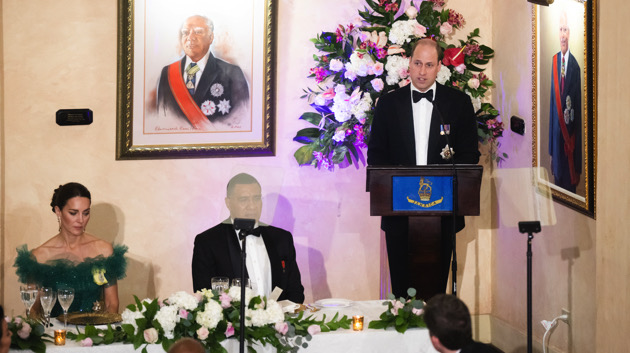
(KINGSTON, Jamaica) — Prince William delivered a speech Wednesday in Jamaica expressing his “profound sorrow” over the history of slavery, as he and his wife, Duchess Kate, have faced protests on their Caribbean tour.
“I want to express my profound sorrow. Slavery was abhorrent. And it should never have happened,” William said at a state dinner hosted by Jamaica’s governor general and attended by local dignitaries and senior politicians.
“While the pain runs deep, Jamaica continues to forge its future with determination, courage and fortitude,” William said in his remarks. “I strongly agree with my father, the prince of Wales, who said in Barbados last year that the appalling atrocity of slavery forever stains our history.”
“The strength and shared sense of purpose of the Jamaican people, represented in your flag and motto, celebrate an invincible spirit,” he continued. “It is this same spirit that spurred on the Windrush generation, who came to the United Kingdom to help rebuild after the Second World War. We are forever grateful for the immense contribution that this generation and their descendants have made to British life, which continues to enrich and improve our society.”
William’s speech came just hours after he and Kate met with Jamaican Prime Minister Andrew Holness, who told them that while he was “happy” to welcome them to Jamaica, the country is on its way to becoming a republic.
Jamaica becoming a republic would mean removing Queen Elizabeth, William’s grandmother, as its head of state.
As monarch, Queen Elizabeth is the head of the British Commonwealth, representing 54 nations, including Belize, Jamaica and the Bahamas, which William and Kate will visit next.
Another Caribbean country, Barbados, became a republic last year, no longer pledging allegiance to the queen.
William and Kate, the Duke and Duchess of Cambridge, are on a goodwill tour to Belize, Jamaica and the Bahamas to celebrate the queen’s Platinum Jubilee, marking her 70 years on the throne.
The Cambridges were forced to cancel one of their first stops in Belize over the weekend when protests led by indigenous people broke out ahead of their arrival.
On Tuesday, the day of William and Kate’s arrival in Jamaica, dozens of protesters gathered in Kingston to protest the visit.
A group known as the Advocates Network, which describes itself as a “non-partisan alliance of individuals and organizations advocating for human rights and good governance,” also published an open letter protesting the royals’ visit, saying that British rule has “perpetuated the greatest human rights tragedy in the history of humankind.”
Robert Nesta Morgan, who holds the position as minister without portfolio within Jamaica’s government — a spokesperson for Jamaica’s government — told ABC News that there is consensus within the country, and agreement between the Jamaican government and opposition leadership that the country is “moving towards becoming a republic.”
“We already have political independence. We’re an independent country,” he said. “But there is a symbolism as to who is the head of state that many persons, including inside and outside of government, wish to change.”
Prime Minister Holness appointed Marlene Malahoo Forte, the country’s former attorney general, to be the minister of constitutional affairs, which took effect in January. Her new role, in part, oversees and advises the government as it seeks to transition to republic status.
Malahoo Forte told the Jamaica Observer in December that Holness gave her instructions for the constitution to be amended for the purposes of becoming a republic.
In addition to the calls for Jamaica to become a republic, activists have also been demanding slavery reparations in many of their demonstrations around William and Kate’s visit.
William did not mention reparations in his remarks on slavery Wednesday.
In July, Jamaica announced plans to ask Britain for compensation for the Atlantic slave trade in the former British colony, according to Reuters, noting the total amount could be “billions of pounds.”
Morgan told ABC News this week that people in Jamaica are looking for “recognition of the damage” done by slavery.
“The pursuit of reparations is not dependent on the acknowledgment of the oppressor that they have oppressed someone. It is based on the experience of those who are oppressed,” he said. “There are many persons in our society who have been fighting really hard for many decades for a recognition of not just the damage that slavery has done to our society, but also a recognition of the need to do repairing of that damage through reparations.”
William and Kate have so far not commented publicly on the controversy surrounding their visit.
While in Jamaica, the couple played soccer with locals and visited a teacher’s college to talk about early childhood development, a particular focus of Kate’s work.
They also visited with medical staff at a local hospital.
William and Kate will spend the next two full days in the Bahamas before returning to the U.K. on Sunday.
Ukrainians Anatoli Boreiko, 64, and his wife, 59-year-old Natalia, recently arrived in New Jersey to stay with their daughter and son-in-law, Luda Boreiko and Yeugeniy Pakkel. – (WPVI)
(WASHINGTON) — President Joe Biden on Thursday will announce that the U.S. will accept 100,000 Ukrainian refugees, according to a senior administration official.
“To meet this commitment, we are considering the full range of legal pathways to the United States and that includes U.S. refugee admissions program, parole and immigrant and non-immigrant visas,” the official told reporters.
The official also said the commitment to take in 100,000 Ukrainian refugees was not tied to any particular time frame.
The official reiterated that the administration still believed the majority of refugees would prefer to stay in neighboring countries or elsewhere in the European Union.
Eastern European cities and countries have become overwhelmed with refugees. A senior administration official told ABC News last week that the U.S. refugee program “is not an emergency response program, so our goal would be to provide humanitarian assistance to keep people safe where they are for now.”
The process for refugees to stay in the U.S. is complex. Vetting it required as well as a referral from a United Nations agency. Secretary of State Antony Blinken said the administration is “looking at steps that we can take in the near term.”
The White House did not announce specifics on how it will process these refugees. Administration officials said specifics will be announced “in the coming weeks.”
The refugee resettlement process can also take years. In February, the U.S. admitted 427 Ukrainian refugees out of 2,133 refugees in total, according to Department of State data.
Since the beginning of the Russian invasion of Ukraine, more than 3.6 million refugees have fled the country, according to the U.N. Refugee Agency. The majority of the refugees have fled to nearby countries, with more than 2 million people crossing into Poland.
U.S. embassies and consulates in the region are processing emergency visa applications but are overwhelmed.
“We are not able to process the volume of the people who are thinking about that as an option,” a senior administration official said last week.
According to U.S. law, immigrant visas only apply to immediate family — meaning spouses, unmarried children under 21 and parents. Family not in that category can submit a petition to U.S. Citizenship and Immigration Services to approve their case.
Biden on Thursday will announce more than $1 billion in new funding for humanitarian assistance for those affected by Russia’s war. “This funding will be additional to money that we have already provided and will provide food, shelter, clean water, medical supplies and other forms of assistance,” a senior administration official told reporters. The U.S. will also provide $11 billion over the next five years to address food security threats and malnutrition across the world. This will be done through the Feed the Future initiative.
ABC News’ Conor Finnegan contributed to this report.
(NEW YORK) — Russian forces are continuing their attempted push through Ukraine from multiple directions, while Ukrainians, led by President Volodymyr Zelenskyy, are putting up “stiff resistance,” according to U.S. officials.
The attack began Feb. 24, when Russian President Vladimir Putin announced a “special military operation.”
Russian forces moving from neighboring Belarus toward Ukraine’s capital, Kyiv, have advanced closer to the city center in recent days despite the resistance. Heavy shelling and missile attacks, many on civilian buildings, continue in Kyiv, as well as major cities like Kharkiv and Mariupol. Russia also bombed western cities for the first time this week, targeting Lviv and a military base near the Poland border.
Russia has been met by sanctions from the United States, Canada and countries throughout Europe, targeting the Russian economy as well as Putin himself.
Here’s how the news is developing. All times Eastern.
Mar 24, 11:00 am
Lavrov’s stepdaughter among those targeted by latest UK sanctions on Russia
The United Kingdom imposed sanctions on another 33 people and 26 legal entities from Russia on Thursday.
Various Russian banks, including Gazprombank and Alfa-Bank, and Russian paramilitary organization the Wagner Group, were targeted, as well as Polina Kovaleva, the stepdaughter of Russian Foreign Minister Sergey Lavrov. Kovaleva reportedly owns a house in London. The assets of these persons and legal entities will be frozen under the sanctions, according to a document published by the U.K. Treasury’s Office of Financial Sanctions Implementation.
The document noted that this latest wave of sanctions were meant to target “key strategic industries and individuals,” as Russia’s invasion of Ukraine enters its second month.
Mar 24, 10:40 am
Putin has record month of international calls
Russian President Vladimir Putin made a record number of international telephone calls over the past month, according to the Kremlin.
The most calls — eight — were placed to French President Emmanuel Macron. Others on the list include leaders of Germany, Israel, India, Turkey, Luxembourg, Uzbekistan, Armenia and the European Council. There were also negotiations with the leaders of Azerbaijan, Finland, Bahrain, Senegal, Abu Dhabi, South Africa, Egypt, Belarus, Saudi Arabia, Kyrgyzstan, Kazakhstan, Venezuela, Syria, Iran and China, according to the Kremlin.
Mar 24, 10:08 am
Russia says talks with Ukraine continue virtually
Russia said Thursday that peace talks with Ukraine are continuing and are being held via video conference.
“Negotiations by the Russian and Ukrainian delegations on a draft treaty on the settlement of the situation in Ukraine, its neutrality and guarantees of its security are currently ongoing via video-conferencing. Military, political, and humanitarian aspects are being discussed,” Russian Ministry of Foreign Affairs spokesperson Maria Zakharova said during a press briefing.
“We hope that Kyiv will still come to realize the inevitability of a peaceful solution to the problem of demilitarization and denazification of Ukraine, its transformation into a neutral state,” she added. “The sooner representatives of the Kyiv regime understand this, the sooner the special military operation will be completed.”
Mar 24, 10:00 am
Ukraine accuses Russia of forcibly deporting Mariupol residents
Ukraine claimed Thursday that residents of Mariupol who have survived Russian bombardment are now being forcibly deported to Russia.
“The Russian Federation has launched a new phase of terror against the city of Mariupol,” the Ukrainian Ministry of Foreign Affairs said in a statement. “According to available information, the Russian army has forcibly deported about 6,000 Mariupol residents to Russian filtration camps in order to use them as hostages for political pressure on Ukraine.”
“At the same time, the Russian armed forces are firing on evacuation columns trying to leave Mariupol for the unoccupied territory of Ukraine,” the ministry added. “Russian troops continue to hold a humanitarian convoy of buses that arrived a few days ago from Mariupol from Zaporizhia.”
According to the ministry, some 15,000 residents of the besieged port city in southeastern Ukraine are in danger of being forcibly deported to Russia, with Russian troops confiscating peoples’ passports and other identification documents.
“Such actions by Russia are a gross violation of the laws or customs of war, the rules of international humanitarian law,” the ministry said.
The ministry called on world leaders to “take urgent action to save the lives of residents of Mariupol and other Ukrainian cities who have been in an inhumane siege by the Russian army.”
“The international community must impose new tough sanctions on Russia to stop its deadly military machine, as well as cut off all business ties with Russian companies to stop funding Russia’s war against Ukraine,” the ministry said.
-ABC News Julia Drozd
Mar 24, 9:51 am
NATO leaders discuss how to give Ukraine anti-ship missiles
The mood at NATO’s emergency summit in Brussels has been “sober” and “resolute” so far, according to senior U.S. administration officials.
“There was a very strong sense that that we are facing a significant historical moment, and very strong support from all the leaders who spoke about the need to defend our democracy,” one of the officials told reporters during a telephone briefing Thursday.
The officials said Ukrainian President Volodymyr Zelesnkyy, who addressed NATO leaders remotely, spoke “very eloquently” and “repeated his requests for continued and increased Western security assistance.”
“But notably, there was not a request for a no-fly zone,” an official added. “There was also not a request for NATO membership.”
U.S. President Joe Biden was the first NATO head of state to speak after Zelenskyy’s speech and noted that Thursday marks one month since Russia launched its invasion of Ukraine. He discussed the sanctions that have already been imposed and expressed strong support for Ukraine as well as humanitarian and military aid and reaffirmed his support for Article 5, which is the cornerstone of NATO and states that an attack on one member is an attack on all members.
China was also a topic of discussion among “many of the speakers,” officials said, as the world watches whether Beijing offers any military or economic assistance to Moscow.
“We need to continue to call on China not to support Russia in its aggression against Ukraine, and that we need China to call for a peaceful end of the conflict as a responsible member of the international community,” an official told reporters.
NATO allies are now consulting about “providing anti-ship missiles to Ukraine,” following the Ukrainian navy’s attack on a Russian ship earlier Thursday, though officials noted “there may be some technical challenges with making that happen.”
When asked whether there were discussions about NATO responding to a potential chemical attack by Russian forces in Ukraine, the officials told reporters: “Yes, there were some references to that.”
“It’s something that NATO as a military alliance is already postured to do,” one official said, “and it’s something that they’re recognized that they need to continue to do given the various scenarios that could emerge as part of this conflict.”
Mar 24, 9:09 am
Ukraine accuses Russia of using phosphorus bombs on civilians
Ukrainian President Volodymyr Zelenskyy accused Russia of using phosphorous bombs on civilians in Ukraine on Thursday.
“This morning, by the way, there were phosphorus bombs — phosphorus Russian bombs. Adults were killed again and children were killed again,” Zelenskyy told NATO leaders via video link from Kyiv, during an emergency NATO summit in Brussels. “I just want you to know that the alliance can still prevent the deaths of Ukrainians from Russian strikes, from Russian occupation, by providing us with all the weapons we need.”
Phosphorus munitions inflict excruciating burns and can lead to infection, shock and organ failure.
Mar 24, 8:30 am
Zelenskyy addresses NATO virtually: Never tell us our army doesn’t meet your standards
Ukrainian President Volodymyr Zelenskyy warned NATO leaders on Thursday that Russia’s offensive will ultimately go beyond Ukraine, unless the Western defense alliance takes stronger action.
“Ukraine never wanted this war and does not want to fight for years. We just want to save our people,” Zelenskyy said in an impassioned speech via video link from the Ukrainian capital, Kyiv. “I am sure you already understand that Russia does not intend to stop in Ukraine — does not intend and will not. It wants to go further.”
As all 30 NATO heads of state meet in Brussels for an emergency summit to discuss their response to Russia’s invasion of Ukraine, Zelenskyy lamented that “the worst thing during the war is not having clear answers to requests for help.”
“On Feb. 24, I addressed you with a perfectly clear, logical request to help close our skies — in any format. Protect our people from Russian bombs and missiles. We did not hear a clear answer,” he told NATO leaders. “And you see the consequences today — how many people were killed, how many peaceful cities were destroyed.”
“I have been repeating the same thing for a month now: To save people and our cities, Ukraine needs military assistance without restrictions, as Russia uses without restrictions its entire arsenal against us,” he continued. “Ukraine asked for your planes so that we do not lose so many people. And you have thousands of fighter jets, but we haven’t been given any yet.”
“We asked for tanks so that we can unblock our cities that are now dying,” he added. “You have at least 20,000 tanks. Ukraine asked for a percent — 1% — of all your tanks to be given or sold to us. But we do not have a clear answer yet.”
Zelenskyy criticized NATO for “worrying about how Russia will react” but said he wants “to be clear” that he does not “blame” the alliance.
“It’s not your missiles, it’s not your bombs that are destroying our cities,” he told NATO leaders. “I just want you to know that the alliance can still prevent the deaths of Ukrainians from Russian strikes, from Russian occupation, by providing us with all the weapons we need.”
While Ukraine has been refused NATO membership, “the most powerful defense alliance in the world,” Zelenskyy noted how his country has been defending “all our common values” for the last month.
“Yes, we are not in the alliance,” he said. “But Ukrainians never thought that the alliance and the allies were different.”
After a month of war, Zelenskyy said the “only thing” he demands from NATO now is: “Never, please, never tell us again that our army does not meet NATO standards.”
Mar 24, 7:44 am
Russia claims to have seized city of Izyum in eastern Ukraine
Russia claimed Thursday that its troops have seized Izyum, a city in eastern Ukraine’s Kharkiv Oblast.
The Russian Ministry of Defense said in a statement that units of the Russian Armed Forces had taken control of the city by Thursday morning.
Izyum is about 75 miles southeast of the oblast capital, Ukraine’s second-largest city of Kharkiv, which has faced relentless bombardment by Russian forces since the start of the invasion a month ago.
Ukraine did not immediately comment on the claim.
Mar 24, 7:22 am
Ukraine claims to have sunk large Russian ship at occupied port
The Ukrainian Naval Forces said Thursday that it has sunk the Russian ship Orsk in the Sea of Asov near the southeastern Ukrainian port city of Berdyansk.
The Ukrainian Naval Forces released a video, verified by ABC News, showing a large ship burning in the Russian-occupied port of Berdyansk, with flames and thick smoke billowing into the sky. The Orsk, a Russian Navy amphibious landing ship that was used to ferry Russian troops to Ukraine, was docked in the port.
Russia did not immediately comment on the claim.
Mar 24, 6:50 am
Over 3.67 million refugees have fled Ukraine: UNHCR
More than 3.67 million people have been forced to flee Ukraine since Russian forces invaded on Feb. 24, according to the latest figures from the United Nations refugee agency.
The tally from the U.N. High Commissioner for Refugees (UNHCR) amounts to just over 8% of Ukraine’s population — which the World Bank counted at 44 million at the end of 2020 — on the move across borders in 29 days.
More than half of the refugees crossed into neighboring Poland, UNHCR figures show.
Mar 24, 5:48 am
NATO leaders pose for photo ahead of emergency summit
NATO leaders, including U.S. President Joe Biden, posed for a photo at the alliance’s headquarters in Brussels on Thursday ahead of an emergency summit, as the Russian invasion of Ukraine grants into a second month.
Biden stood in the front row in between NATO Secretary-General Jens Stoltenberg and U.K. Prime Minister Boris Johnson.
Biden and Stoltenberg were the last of the leaders to arrive for the photo-op. As they walked in the room, Biden ignored a question from a reporter about what his message is to Russian President Vladimir Putin. Instead, Biden went to shake hands with Johnson and then greeted French President Emmanuel Macron and Italian Prime Minister Mario Draghi
Mar 24, 5:20 am
Biden arrives at NATO headquarters for emergency summit
U.S. President Joe Biden arrived in Brussels on Thursday morning ahead of an emergency NATO summit to discuss the Western defense alliance’s response to Russia’s invasion of Ukraine.
The European diplomatic capital is also hosting a gathering of the Group of Seven industrialized nations and a summit of the 27 members of the European Union on Thursday. Biden is scheduled to attend all three meetings and hold a press conference at the end of the day.
Upon his arrival at NATO headquarters, Biden was greeted by NATO Secretary-General Jens Stoltenberg. The two leaders stood and spoke for a few moments, though their conversation was inaudible. Biden and Stoltenberg then walked into the building and down the hallway, where they did not stop to speak to reporters who asked whether Russia’s potential use of chemical weapons in Ukraine are a red line that would trigger a response from NATO.
Biden and Stolenberg will now meet privately before taking a photo with other NATO leaders.
Earlier Thursday, U.K. Prime Minister Boris Johnson faced the same question from reporters when he arrived at NATO headquarters.
“Look, I think that the reality is that President Putin has already crossed a red line in barbarism and it’s now up to NATO to consider together the appalling crisis in Ukraine, the appalling suffering of the people of Ukraine,” Johnson replied. “And see what more we can do to help the people of Ukraine protect themselves. See what more we can do to tighten the economic vice around the Putin regime.”
Mar 24, 5:03 am
Ukraine calls Russian military ‘a gang of terrorists’
Ukrainian Defense Minister Oleksiy Reznikov on Thursday lambasted Russia’s military as “a gang of terrorists, criminals and cowards” who she claimed are committing war crimes.
In a statement posted on her official Facebook account, Reznikov marked one month since Russian forces invaded Ukraine and warned that Ukrainians “still have a very difficult period ahead.”
“The Russian military machine will not stop until it is drenched in the blood of its soldiers,” Reznikov said.
Earlier this month, Russian troops opened fire on a nursing home in the eastern Ukrainian city of Kreminna, killing 56 people, according to Reznikov.
“This is not an accidental hit,” she said. “This is the deliberate killing of defenseless people — a war crime. That’s why the Russian army is a gang of terrorists, criminals and cowards.”
Still, Reznikov remained confident that Ukrainian forces will prevail with international support.
“We will drive them out. We will rebuild everything,” she added. “We will clean our land from the effects of war. It will take a lot of effort and time.”
Mar 24, 4:36 am
Russian military leaders repeatedly decline calls from US counterparts
Top Russian defense and military leaders have repeatedly declined telephone calls from their U.S. counterparts since Russia invaded Ukraine on Feb. 24, according to Pentagon spokesman John Kirby.
Kirby said in a statement Wednesday that, over the last month, U.S. Secretary of Defense Lloyd Austin and Gen. Mark Milley, chairman of the U.S. Joint Chiefs of Staff, “have sought, and continued to seek, calls with” Russian Defense Minister Sergei Shoigu and Gen. Valery Gerasimov, chief of the General Staff of the Russian Armed Forces. But the Russians “have so far declined to engage,” he said.
“We continue to believe that engagement between U.S. and Russian defense leaders is critically important at this time,” Kirby added.
Mar 24, 3:31 am
US slams Russia’s plans to partially reopen stock market
The United States is slamming Russia’s plans to reopen its stock market for limited trading on Thursday for the first time in a month since Russian forces invaded Ukraine.
“What we’re seeing is a charade: a Potemkin market opening,” White House deputy national security adviser Daleep Singh said in a statement early Thursday. “After keeping its markets closed for nearly a month, Russia announced it will only allow 15% of listed shares to trade, foreigners are prohibited from selling their shares, and short selling in general has been banned. Meanwhile, Russia has made clear they are going to pour government resources into artificially propping up the shares of companies that are trading.”
“This is not a real market and not a sustainable model—which only underscores Russia’s isolation from the global financial system,” he added. “The United States and our allies and partners will continue taking action to further isolate Russia from the international economic order as long it continues its brutal war against Ukraine.”
Shares plunged and the Moscow Exchange was shut down following Russia’s invasion of Ukraine on Feb. 24.
Mar 23, 11:39 pm
White House team plans for worst-case scenarios, including chemical attacks
A team set up by the White House has been gaming out worst-case scenarios in Ukraine, mostly focused on the possibility Russia carries out chemical and biological attacks, according to a National Security Council official.
The so-called “Tiger Team,” set up at the request of national security adviser Jake Sullivan in late February after Russia’s invasion of Ukraine began, has analyzed the possibility of Russia using nuclear weapons, but the NSC official emphasized that is not the team’s focus. The official said the group is mostly focused on protecting supply chains, security operations of U.S. personnel and planning for chemical or biological weapon attacks.
U.S. officials have repeatedly warned that Russia may be considering using chemical weapons in Ukraine and say Russian allegations that Ukrainians were developing chemical weapons may be a pretense to use such weapons themselves.
(WASHINGTON) — The U.S. Supreme Court on Thursday, in an 8-1 decision, has endorsed a pastor’s audible prayer and laying of hands on an inmate at the moment of his execution, siding with a Texas death-row prisoner who challenged the state’s ban on the practice during lethal injection.
Chief Justice John Roberts wrote the majority opinion. Justice Clarence Thomas was the sole dissenter.
This is a developing story. Please check back for updates.
(WASHINGTON) — Judge Ketanji Brown Jackson, the first Black woman nominated to the U.S. Supreme Court, has completed two full days of questions from the Senate Judiciary Committee: 13 hours on Tuesday and 10.5 hours on Wednesday.
Thursday will mark the final day of the four-day confirmation hearing as the committee hears from outside legal experts, civil rights leaders and the American Bar Association.
Here is how the news is developing Thursday. Check back for updates:
Mar 24, 8:43 am
What to expect on the final day of hearings
Judge Jackson, the nation’s first Black woman nominated to the Supreme Court, has cleared 19 hours of grueling questioning at the Senate Judiciary Committee and appears headed toward confirmation as a justice with support from all Democrats and a small number of Republicans.
“In my capacity as a justice, I would do what I’ve done for the past decade,” Jackson told the committee on her third day of testimony, “which is to rule from a position of neutrality, to look carefully at the facts and … to render rulings that I believe and that I hope that people would have confidence in.”
The historic hearings resume at 9 a.m. and will wrap for the week after the committee hears from representatives from the American Bar Association — which has given its highest rating to Jackson — and outside witnesses called by Democrats and Republicans on the committee. Senators have five-minute rounds for questions Thursday.
Judiciary Committee Democrats have invited Rep. Joyce Beatty, D-Ohio, chair of the Congressional Black Caucus; Wade Henderson, president and CEO of the Leadership Conference on Civil Rights and Jackson’s former classmate; Risa Goluboff, the first woman to serve as dean of University of Virginia Law School; Richard Rosenthal, an appellate attorney and longtime friend to Jackson; and Capt. Frederick Thomas, president of the National Organization of Black Law Enforcement Executives.
As several Republicans on the committee have painted Jackson as “soft on crime,” the GOP has called for their panel Alabama Attorney General Steve Marshall; Jennifer Mascott, an assistant law professor at George Mason University; Eleanor McCullen, an anti-abortion rights activist; Keisha Russell of First Liberty; and Alessandro Serano, an activist against human trafficking.
(WASHINGTON) — Since 2020, legislation on race education has popped up across the country. A total of 35 states so far have signed into law or proposed legislation banning or restricting the teaching of critical race theory, the academic discipline at the center of the debate.
Critical race theory, mostly taught in universities and colleges, seeks to understand how racism has shaped U.S. laws.
Many legislators have been invoking critical race theory broadly in their attempts to restrict discussions of race in the classroom and in government agency diversity training.
These Republican-led efforts have continued to move forward in many states across the country. However, in some states, the bills have fallen short.
A total of 16 states so far have signed into law bills restricting education on race in classrooms or state agencies.
There are currently 19 states that are considering bills or policies that restrict race education in schools or state agencies.
Six states failed to pass this type of legislation.
Eight states have yet to introduce any legislation on this topic.
Officials who back these bills argue that educators are indoctrinating students with certain lessons on race that make people feel “discomfort” or “shame.”
“We won’t allow Florida tax dollars to be spent teaching kids to hate our country or to hate each other,” said Florida Gov. Ron DeSantis, who has introduced restrictions on diversity education for schools as well as private corporations.
He continued, “Finally, we must protect Florida workers against the hostile work environment that is created when large corporations force their employees to endure CRT-inspired ‘training’ and indoctrination.”
Educators and some parents argue these bills would censor teachers and students, as well as place restrictions on discussions on racial oppression.
Proponents of critical race theory say that some opponents are portraying “critical race theory” as something harmful to reverse progress made in diversity and racial equity.
“There’s long-term resentment against people of color speaking up for civil rights,” Justin Hansford, a law professor at Howard University, told ABC News. “If you don’t see race, that doesn’t really help anybody. It’s ignoring the truth.”
Lawsuits against anti-CRT laws have already popped up in two of the states that passed them, Oklahoma and New Hampshire.
(NEW YORK) — As governments scramble to seize high-profile assets owned by Russian oligarchs, a quiet effort is gaining momentum in the West to target their alleged “enablers” — the lawyers, lobbyists and money-handlers who critics say help them hide, invest and protect their vast wealth in U.S. and European institutions.
“The yachts and jets and villas get the most attention, but a lot of the oligarchs’ money is in private equity and hedge funds – places we can’t see,” said Maira Martini, a researcher with the corruption watchdog Transparency International. “That’s the money that really matters to them.”
For decades, wealthy business tycoons with close ties to Russian President Vladimir Putin have enlisted the services of reputable bankers and lawyers in the West to navigate loopholes that obscure their identity. While it’s not necessarily illegal to use obscure entities and agents to protect finances, critics say the laws need to be strengthened to create more transparency.
Organized Crime and Corruption Reporting Project, a global investigative reporting platform that focuses on corruption, organized crimes and illicit financing, claims to have uncovered over 150 assets worth $17.5 billion held by 11 Russian elites and their alleged enablers, while a Forbes report identified more than 82 properties across the world — a collective of $4.3 billion — held by 16 sanctioned Russian oligarchs.
Assets that have surfaced are likely only a fraction of these oligarchs’ actual wealth. The true extent is difficult to track because they often use a convoluted network of shell companies, obscure entities and stand-ins to keep their finances hidden, experts said.
But now, with war raging in Ukraine, lawmakers and corruption watchdogs are calling on governments to close those loopholes and crack down on the middlemen who know how to exploit them.
“Putin’s oligarchs cannot operate without their Western enablers, who give them access to our financial and political systems,” said Rep. Steve Cohen, D-Tenn. “These unscrupulous lawyers, accountants, trust and company service providers and others need to do basic due diligence on their clients to ensure that they are not accepting blood money. This isn’t rocket science – it is common sense policy to protect democracy.”
In Washington, Cohen and others have introduced the ENABLERS Act, which would require real estate brokers, hedge fund managers and other entities to “ask basic due diligence questions whenever somebody comes to them with a suitcase full of cash,” said Rep. Tom Malinowski, D-N.J., a co-sponsor of the bill.
The International Consortium of Investigative Journalists, a global network of journalists and newsrooms that have tracked the wealthy’s tax havens and financial secrecy, has identified at least a dozen networks of facilitators, offshore agents and banks across the world that have allegedly helped Russia’s elites move and hide their money based on its analyses of public records and leaked financial documents the group has obtained over the past decade.
This includes a range of actors, from global offshore law firms that create shell companies and other obscure entities to help wealthy Russians keep their finances clouded, to one-man shops in offshore tax havens that help set up “nominee” shareholders and paid stand-ins to conceal the real owners of entities.
ICIJ also points to the roles of major law firms in helping shape the modern tax avoidance system as well as the roles of big financial institutions and banks in helping wealthy Russians move their money.
Last year, The Washington Post, as part of its collaboration with ICIJ’s Pandora Papers project, reported on how South Dakota, with its limited oversight, vague regulations and trust secrecy, has become a tax haven for secretive foreign money.
Rep. Tom Malinowski, D-N.J., co-sponsor of the ENABLERS Act, stressed that the United States “has become one of the easiest places in the world for corrupt kleptocrats around the world to hide money.”
“What we’ve basically allowed is a system where people can steal their money in countries without the rule of law and then protect their money in countries like ours where they can count on property rights and courts and privacy rules to safeguard his loot for life,” Malinowski said. “We should not be complicit in the theft that supports dictatorships like Putin.”
Experts warned that sanctions and asset seizures, while effective in the short term, may be toothless over time if secrecy loopholes remain in place. On Wednesday, Transparency International published an open letter calling on Western leaders to take steps to stem rules that foster opacity.
“To disguise their wealth and keep them out of the reach of law enforcement authorities, kleptocrats will turn to lawyers, real estate agents, banks, crypto-service providers and banks in your countries,” the letter reads. “You must redouble your supervision efforts over the gatekeepers of the financial sector.”
(NEW YORK) — Even as most eligible Americans have yet to receive their first COVID-19 vaccine boosters, Pfizer and Moderna have now asked the Food and Drug Administration to authorize yet another booster dose — especially for elderly Americans, a group that tends to have weaker immune protection.
Pfizer asked the FDA to authorize fourth doses for people older than 65, while Moderna asked for authorization for everyone 18 and older (though company executives said the greatest need would be among older adults).
With the FDA advisory committee not slated to meet until April 6, and no vote scheduled, it could take the FDA weeks to decide whether or not to authorize Pfizer and Moderna’s fourth dose applications.
Meanwhile, many vaccine experts are not convinced fourth doses are needed so soon. Some are even skeptical fourth doses will be needed at all. And that is on top of the difficulty in getting millions to get their first and second shots, let alone their third and fourth.
“There are very few, if any, people who, in my opinion require a fourth dose,” said Dr. Anna Durbin, professor of international health and director of the center for immunization research at Johns Hopkins Bloomberg School of Public Health.
“In general, it’s too early to recommend a fourth dose, except for those who are immune compromised,” said Dr. Paul Goepfert, professor of medicine at the University of Alabama at Birmingham and an expert in vaccine design.
Roughly 3% of the U.S. population is immune compromised, and already eligible for fourth doses. But this group only includes people with very specific medical conditions, like cancer or organ transplant recipients — not the estimated 54 million adults over 65.
Not enough evidence yet for fourth shots: Experts
So far, many experts say there isn’t enough evidence to justify fourth doses, even for older adults, though more evidence could emerge in the future. Studies from Israel, a nation that has already implemented fourth doses, indicate that boosting again modestly enhances protection from infection.
In the study, 18% and 20% of healthcare workers who got a fourth shot of Pfizer or Moderna, respectively, developed an omicron infection. Among those with three shots — about 25% developed an omicron infection.
Although the existing COVID-19 vaccines are overwhelmingly safe, they do come with temporary side effects and the rare risk of temporary heart inflammation called myocarditis among young men.
“Unless there’s clear evidence something is of value, don’t give it,” said Dr. Paul Offit, director of the Vaccine Education Center at Children’s Hospital of Philadelphia.
With Moderna and Pfizer now submitting fourth-dose booster data to the FDA on an ongoing basis, the FDA has convened meetings of its outside vaccine advisors to discuss the future of COVID-19 booster shots, how often they might be needed and whether variant-specific versions could be more beneficial.
With the FDA advisory committee not slated to meet until April 6, and no vote scheduled, it could take the FDA weeks to decide whether or not to authorize Pfizer and Moderna’s fourth dose applications.
Emphasis on boosters misplaced
For Offit, a vocal member of the FDA’s advisory committee, the national emphasis on booster shots has been somewhat misplaced. The primary goal of vaccines should be to protect against serious illness, he says, which overall, primary vaccines are still doing.
When the vaccines were first launched in December 2020, emphasis was placed on their ability to protect against COVID-19 infection. But now, with the passage of time and emergence of new variants, many vaccine experts argue this was always an impossibly high standard to maintain, and moving forward, the emphasis should be on their ability to protect against severe disease.
Now, more than a year later, data shows that boosters may shore up the body’s defenses against mild infections — but only temporarily.
“These vaccines continue to demonstrate high protection against hospitalization and severe disease,” Durbin agreed. “Prevention of infection, in my opinion, is not the metric that we should use.”
“We’re going to have to learn to live with mild disease at some point,” said Offit. Frequent boosting “is not a reasonable thing to do, and it’s not something most people will do anyway.”
Tailored vaccine may be better
A better approach, said Durbin, would be to roll out a tweaked vaccine that is a better match against the new omicron variant. Vaccine makers agree, with Pfizer and Moderna both studying new versions of their vaccines they hope will work better and offer more durable protection against current and future variants.
“We can’t have vaccines every five, six months,” said Pfizer CEO Albert Bourla, speaking on CNBC.
But until they have new-and-improved boosters ready to go, Pfizer and Moderna executives argue fourth doses will be needed by at least some older Americans soon.
In the United States, vaccination rates have stalled. Roughly a quarter of eligible adults have yet to receive their first vaccine doses, while about half of vaccinated adults have yet to receive their first boosters.
Dr. Anthony Fauci told ABC affiliate KGTV that older Americans might need a fourth dose “sooner or later,” but not yet.
The effectiveness of three shots is “holding pretty strong at around 78% efficacy against hospitalization,” Fauci said, “but if it goes any significantly lower than that, you certainly would consider the possibility of a fourth dose boost particularly among elderly and those with underlying diseases.”
At a White House briefing Wednesday, Fauci said fourth shots for older adults might be considered soon, but for the general population won’t be considered until “the beginning of fall, end of summer.”
While many vaccine experts have predicted that COVID-19 vaccination will become an annual shot, like the flu vaccine, others are still hopeful that three shots could be the magic number for many Americans.
“I do think three doses will be enough for some individuals,” said Goepfert, “but it depends on the new variants that will come next.”