(NEW YORK) — Microsoft Corp. shareholders voted on Tuesday to force the company to more transparently address sexual harassment claims via independent investigations and public reporting.
The proposal, approved during the company’s annual shareholder meeting, was brought by Arjuna Capital, an investment firm known for its Environmental, Social, and Governance (ESG) activism. The vote may be seen by some as a win for activist investors seeking to drive change from the inside out in the private sector.
Under the proposal, Microsoft would have to prepare and release a report “assessing the effectiveness of the company’s workplace sexual harassment policies, including the results of any comprehensive independent audit/investigations, analysis of policies and practices, and commitments to create a safe, inclusive work environment,” according to a statement released by the investment firm.
Microsoft’s board urged shareholders to strike down the proposal, citing existing policies and mechanisms in place to tackle sexual harassment in the workplace.
Still, some 78% of shareholders voted for the proposal, Arjuna Capital said after the meeting. The firm said that, immediately following the vote, Microsoft committed to a third-party, independent assessment of its sexual harassment processes, in addition to public reporting on them.
“A majority of Microsoft’s investors are now calling on the company to shine a bright light on sexual harassment. The fact that executives responded so quickly following the vote is a sea change from how Microsoft has dealt with this issue in the past,” Natasha Lamb, managing partner at Arjuna Capital, said in a statement.
Microsoft confirmed the proposal had been approved in a statement following the meeting, adding that, “Microsoft already shares with employees annual data on the volume of sexual harassment concerns raised and the results of harassment investigations and has adopted plans to begin annual public reporting.”
During the question-and-answer portion of the shareholder meeting, Microsoft’s President and Vice Chair Brad Smith said the issue of sexual harassment is “of enormous importance” to Microsoft.
“There are new steps that we are going to take that we were thinking about, and I think that the resolution and the dialogue we’ve had has helped us advance our decision-making,” Smith added. “So for one, we will take new steps to be more transparent as a company. We have been sharing more data internally. We recognize that there are shareholder interest, and so we’ll share more data externally as well. You’ll see us publish more reports, just to reflect where this is going.”
Smith also pledged to bring in a third party to do an “independent assessment of all of the work that we do to investigate” sexual harassment cases.
“We’ll share what that independent report says and we will listen,” he added. “And if there’s recommendations for change, we will think hard about making them.”
(OXFORD TOWNSHIP, Mich.) — A fourth student has died following Tuesday afternoon’s shooting at a Michigan high school.
Justin Shilling, 17, died at about 10:45 a.m. Wednesday in the wake of the shooting at Oxford High School in Oxford Township, sheriff’s officials said. Three other students, ages 14 to 17, died Tuesday. Seven people, including a teacher, were injured.
The suspected gunman, 15-year-old Ethan Crumbley, was taken into custody and is being charged as an adult, Oakland County Prosecutor Karen McDonald said at a news conference Wednesday.
There’s no indication that the victims were specifically targeted, Oakland County Sheriff Michael Bouchard said Wednesday.
McDonald said she is confident prosecutors can prove the shooting was premeditated “well before the incident.”
A law enforcement official told ABC News that investigators are actively pursuing information that, Monday night, an undetermined number of students appeared to see a Snapchat video warning of a shooting on Tuesday. Some students who saw the video stayed home from school, though no calls were placed to police regarding the video, the official said.
According to the sheriff’s office, “the suspect had been involved in a meeting over behavior issues the prior day and the day of the shooting.”
“Nothing of concern was noted in his school file prior to the first meeting,” the sheriff’s office said. “There are also no documented cases of bullying of the suspect with the school.”
Crumbley has been charged with one count of terrorism causing death; four counts of first-degree murder; seven counts of assault with intent to murder; and 11 counts of possession of a firearm in commission of a felony, she said. Additional charges are possible, McDonald said.
A judge entered a not guilty plea for Crumbley in his first court appearance Wednesday afternoon. He will be moved to Oakland County Jail and held in isolation with bond, the judge said. His next court appearance is scheduled for Dec. 13.
The teen allegedly took his father’s semiautomatic handgun, a 9 mm Sig Sauer pistol, with him to school, officials said.
The teen allegedly came out of a bathroom and began shooting. He never went into a classroom and was apprehended in a hallway, Bouchard said.
Thirty spent shell casings have been recovered, the sheriff said. The suspect had 18 live rounds left, he said.
The suspect’s father purchased the weapon on Black Friday and officials are looking into how the family stored its guns and how much access the teen had to them, according to a source briefed on the investigation. The suspect had apparently used the gun prior to the school shooting, the source said.
McDonald said prosecutors are considering charges against both of the suspect’s parents.
The first three students killed in the Tuesday shooting were Madisyn Baldwin, 17, Tate Myre, 16, and Hana St. Juliana, 14.
Four of the seven injured victims remained in the hospital on Wednesday, the sheriff said. Among those in the hospital is a 17-year-old girl who is in critical condition with a gunshot wound to the chest, he said.
(BEVERLY HILLS, Calif.) — The wife of a famed music executive was killed during a possible home invasion in Beverly Hills.
Officers from the Beverly Hills Police Department responded to the 1100 block of Maytor Place just before 2:30 a.m. Wednesday, where they found a victim with a gunshot wound to the head, according to the department. The suspects were no longer on the scene, police said.
The victim was identified by a source close to the family as Jacqueline Avant, the wife of music executive and film producer Clarence Avant. Jacqueline Avant was transported to the hospital, where she later died, police said.
Jacqueline Avant, 81, may have been killed as the result of a home invasion, the source told ABC News. A back sliding glass door was shattered, Beverly Hills Police Chief Mark Stainbrook told ABC News.
It is unclear if anything was taken from the home, Stainbrook said. It is unclear who broke into the home, how the events unfolded and how long the suspects were there.
Clarence Avant, who is featured in the 2019 Netflix documentary “The Black Godfather,” was inducted into the Rock and Roll Hall of Fame in October. Clarence Avant, 90, was popular among A-list celebrities such as Oprah, Jay-Z and even former President Barack Obama.
Police read a statement from the Avant family Wednesday afternoon during a press conference, which described Jacqueline Avant as “an amazing woman, wife, mother, philanthropist, and a 55-year resident of Beverly Hills.”
Beverly Hills Police detectives will use all available investigative methods to follow up on leads, Stainbrook said.
Additional information surrounding the incident were not immediately available.
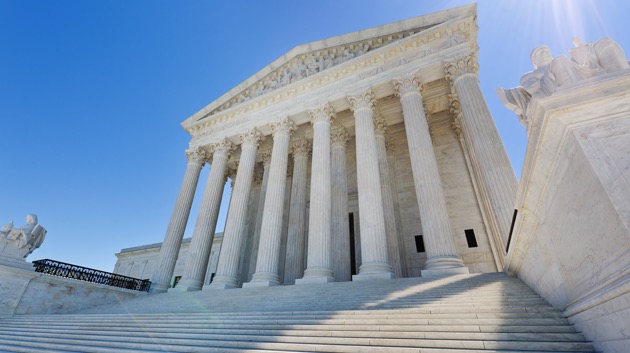
(WASHINGTON) — The Supreme Court on Wednesday began to hear historic arguments over a Mississippi law that would ban most abortions after 15 weeks of pregnancy.
The case, Dobbs v. Jackson Women’s Health, asks the justices directly to reconsider the precedent set by Roe v. Wade and Planned Parenthood v. Casey.
This means that the justices, a majority of whom are conservative, have the real opportunity to lessen the right to an abortion or possibly overturn the landmark case that made abortion a federally protected right nearly half a century ago.
Legal scholars are raising the alarm that if the court should decide to uphold the Mississippi ban, it could clear the way for new restrictions on abortion across the U.S.
ABC News legal analyst Kate Shaw, a professor at Cardozo Law School, told ABC News’ “Start Here” that as many as 30 states would restrict abortions if Roe gets overturned.
“It’s certainly possible that there will be a majority of justices on board to just overturn Roe and Casey and rule that the Constitution doesn’t protect a right to terminate a pregnancy,” Shaw said. That would leave each state to decide for itself, and “a number of states already have laws on the books that go into effect immediately.”
According to a report from The Guttmacher Institute, 21 states have these so-called trigger laws, some of which include bans on abortion after six or eight weeks of pregnancy, effectively banning all abortions. Several other states without trigger laws, according to Shaw, would likely “move very quickly” to prohibit abortion should Roe be overturned.
Shaw said she believes that the court could reach a compromise solution that still would allow Mississippi to enforce its 15-week, and even though that also “would be a dramatic change in the constitutional law of abortion, but that they do that without overturning Roe and Casey, simply suggesting that Roe and Casey undervalued the state’s interest in protecting potential life, and thus that this viability line should be reconsidered.”
Such a ruling could give states more power to restrict abortions, Shaw continued, “but it would not allow them to prohibit or criminalize all abortions.”
This report was featured in the Wednesday, Dec. 1, 2021, episode of “Start Here,” ABC News’ daily news podcast.
“Start Here” offers a straightforward look at the day’s top stories in 20 minutes. Listen for free every weekday on Apple Podcasts, Google Podcasts, Spotify, the ABC News app or wherever you get your podcasts.
(WASHINGTON) — President Joe Biden on Wednesday declined to comment on the claim former President Donald Trump’s chief of staff Mark Meadows makes in an upcoming book, according to the Guardian, that Trump had a positive COVID-19 test three days before their first presidential debate.
ABC News Senior White House Correspondent Mary Bruce asked Biden, who was 78 and, like Trump, unvaccinated when they shared the stage in the September debate, if he believes Trump put him at risk of contracting the potentially fatal virus.
Biden paused, and then responded with a smirk, “I don’t think about the former president.”
Later, White House press secretary Jen Psaki took a different tone — slamming Republicans and Trump allies she said had appeared to withhold the positive test result.
“What is not lost on us is that no one should be surprised that currently in Congress, as we’re looking at the government staying open, you have supporters of the former president, supporters of the former president who withheld information, reportedly, about testing positive and appeared apparently at a debate, also held events at the White House, reportedly, with military veterans and military families,” she said.
She said the White House did not know about Meadows’ claim prior to the story breaking in The Guardian.
The nation’s top infectious disease expert, Dr. Anthony Fauci, who notably was the target of Trump’s ire for his messaging surrounding the virus, also said he “certainly was not aware of his test positivity or negativity” when ABC News Correspondent Karen Travers asked him about the revelation at the afternoon White House briefing.
“I’m not going to specifically talk about who put who at risk, but I would say, as I’ve said, not only from an individual but for everybody, that if you test positive, you should be quarantining yourself,” he said.
The Guardian , which says it obtained a copy of Meadows’ upcoming book, reported that Trump test positive on Sept. 26, sending shockwaves through the White House, before a second COVID-19 test came back negative, according to the Meadows account.
ABC News has not independently confirmed the book’s contents.
According to the debate rules, each candidate was required “to test negative for the virus within seventy-two hours of the start time” of the Sept. 29 debate in Cleveland, Meadows recalls understanding in the book, according to The Guardian.
But Trump, then 74, was determined to go to the debate and face Biden, regardless, according to the account.
“Nothing was going to stop [Trump] from going out there,” Meadows writes, according to the excerpt in The Guardian.
Trump’s reportedly positive, then negative, in tests were taken on the same day of the now-infamous packed Rose Garden ceremony, described as a “superspreader event,” in which Trump announced he would nominate now-Justice Amy Coney Barrett to the Supreme Court.
At least 11 guests, including press secretary Kellyanne Conway, former New Jersey GOP Gov. Chris Christie, Republican Sens. Mike Lee of Utah and Thom Tillis of North Carolina, and University of Notre Dame President John Jenkins, tested positive afterward.
Meadows called Trump, who was on Air Force One at the time, with news of the positive test before calling back that he tested negative after another screening.
Trump went on to headline a rally in Middletown, Pennsylvania, that evening, and held public events at the White House in the coming days.
Meadows has dodged questions surrounding Trump and COVID-19 since the president tweeted in the early hours of Oct. 2 that he tested positive, at the time, repeatedly refused to tell reporters when he had last tested negative.
Two senior Trump officials later told ABC News Chief Washington Correspondent Jon Karl they had heard Trump tested positive before the debate but Meadows told Karl several months ago that was not true.
“Some people say you first got — you got an initial positive test even before the debate. Is that true or is that not true?” Karl asked Trump in a March 18 interview at Mar-a-Lago for his new book, “Betrayal: The Final Act of the Trump Show.”
“No,” Trump responded. “No, that’s not true.”
In a new statement on Wednesday, the former president called the reporting “fake news” — but did not flat out deny that he had tested positive before the debate.
“The story of me having COVID prior to, or during, the first debate is Fake News. In fact, a test revealed that I did not have COVID prior to the debate,” he said.
Notably, Meadows did not write explicitly, according to The Guardian excerpts, that Trump had COVID-19 before the debate but that he had an initial positive test that was followed by a more reliable negative test.
(WASHINGTON) — The House select committee investigating the Jan. 6 Capitol attack on Wednesday will recommend the full House hold former Trump Justice Department official Jeffrey Clark in contempt for refusing to cooperate with their investigation in the latest effort to ratchet up pressure on the former president’s aides and allies.
The move comes as Mark Meadows, former President Donald Trump’s fourth and final chief of staff, agreed to cooperate with the panel, turning over thousands of pages of records and agreeing to appear for a deposition in the coming days.
The full chamber could vote to hold Clark, the former acting head of the Justice Department’s civil division, in contempt as soon as Thursday, making him the second Trump associate after Steve Bannon to be reprimanded by Congress for refusing to cooperate with the investigation.
After a House vote, the Justice Department would determine whether to prosecute Clark as it has Bannon, who was charged with two counts of contempt of Congress for spurning the panel’s subpoena.
Bannon has pleaded not guilty and faces up to a year in prison and a $100,000 fine for each charge.
Unlike Bannon, Clark appeared before the committee with his attorney on Nov. 5, in response to a subpoena for records and testimony.
But he left after 90 minutes, after refusing to answer any questions, citing claims of executive privilege, which the committee has disputed, and Trump’s ongoing legal challenge to the panel’s inquiry.
Clark declined to answer direct questions about his knowledge of Georgia election law and his conversations with members of Congress, both of which committee members argued would not be covered by any claims of executive privilege.
The committee also sought to question him about Trump’s efforts to get the Justice Department to investigate baseless claims of election fraud.
Ahead of the Capitol riot, Clark played a prominent role advancing Trump’s efforts to challenge the election results inside his administration. He circulated a draft letter inside the Justice Department to urge Georgia’s governor and top Georgia officials to convene the state legislature to investigate voter fraud claims.
On Tuesday, committee members spent four hours interviewing Georgia Secretary of State Brad Raffensperger, a source familiar with the interview confirmed to ABC News.
Raffensberger was the target of a pressure campaign from then-President Trump and his aides and allies last year over the results of the presidential election in Georgia. Joe Biden was the first Democrat to carry the state in a presidential election in nearly three decades.
ABC News’ Alex Mallin, Katherine Faulders and Ben Siegel contributed to this report.
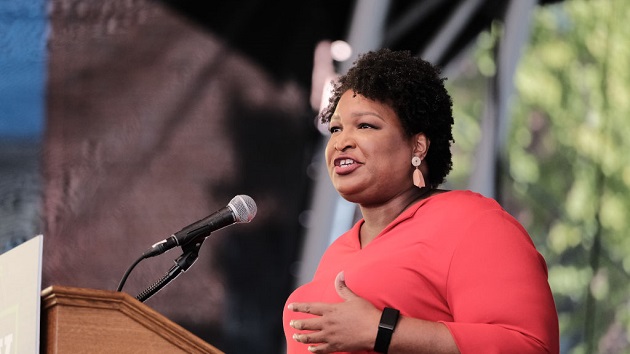
(ATLANTA) — Stacy Abrams will be back on the campaign trail in a second bid for governor of Georgia, setting the stage for a possible rematch with GOP Gov. Brian Kemp whom she lost to in 2018.
Abrams, hoping to become the nation’s first Black chief state executive, made her campaign announcement Wednesday on Twitter.
“I’m running for Governor because opportunity in our state shouldn’t be determined by zip code, background or access to power,” Abrams said in an announcement video.
I’m running for Governor because opportunity in our state shouldn’t be determined by zip code, background or access to power. #gapol
In 2018, she ran a closely-watched race for governor against Kemp, but lost by almost 2 points.
Following the loss, Abrams continued to gain notoriety as she advocated for voting rights legislation. She launched the Fair Fight voter protection organization, which is credited with helping Joe Biden win Georgia in 2020, as well as Raphael Warnock and Jon Ossoff win the state’s two Senate seats.
“We believe in this place and our folks who deserve to be seen and heard and have a voice because in the end, we are one GA.”
Abrams highlighted the work she’s accomplished since leaving the campaign trail in an announcement video that shows Abrams at community events and features various scenes of Georgians at work. I’ve worked to do my part to help families make it through paying off medical debt for 68,000 Georgians expanding access to vaccines, bringing supplies to overwhelmed food banks, lending a hand across our state, especially in rural Georgia,” she said.
Kemp may face a Republican primary challenge.
This is a developing story. Please check back for updates.
(WASHINGTON) — The Biden administration is preparing to implement new travel guidelines that would require proof of a negative COVID-19 test within one day of flying into the U.S., including for vaccinated people, a spokesperson from the Centers for Disease Control and Prevention confirmed.
The expected change comes as the country beefs up surveillance for the omicron variant, the first case of which in the U.S. has been identified in California, the California and San Francisco Departments of Public Health said Wednesday. The CDC said the person traveled from South Africa on Nov. 22.
Omicron has been deemed a “variant of concern” by the World Health Organization and had been detected in over 20 countries as of Tuesday.
“CDC is working to modify the current global testing order for travel as we learn more about the omicron variant; a revised order would shorten the timeline for required testing for all international air travelers to one day before departure to the United States,” CDC spokesperson Kristen Nordlund said Tuesday night. “This strengthens already robust protocols in place for international travel, including requirements for foreign travelers to be fully vaccinated.”
Under the current guidelines, people from other countries who are not fully vaccinated cannot travel to the U.S., while people who are fully vaccinated can as long as they provide proof of a negative COVID-19 test within three days of traveling. For unvaccinated Americans, the guidelines already required proof of a negative test within one day of traveling. The potential new rule would expand that one-day requirement to all vaccinated travelers coming into the U.S. from other countries.
For post-travel recommendations, the CDC also suggests vaccinated travelers get tested three to five days after arriving in the U.S. and that unvaccinated travelers stay home to self-quarantine for a full seven days, even if they test negative during that timeframe.
Earlier on Tuesday, the White House confirmed it was considering updates around testing requirements and said policy discussions were ongoing across the government as more is learned about the omicron variant.
More updates on the country’s response to the variant are expected Thursday.
CDC Director Rochelle Walensky outlined some of the expected changes at the White House COVID-19 briefing on Tuesday morning. She said the CDC is analyzing 80,000 COVID-positive tests per week — or about one in seven tests — looking for the omicron variant. The delta variant continues to account for 99.9% of all tests analyzed, Walensky said.
Asked if she was confident in the CDC’s surveillance system given how many other countries had detected the variant before the U.S., Walensky said the system is “robust.”
The director also said the CDC is working on expanding a surveillance program in the nation’s four busiest international airports, John F. Kennedy International Airport, San Francisco International Airport, Newark Liberty International Airport and Hartsfield-Jackson Atlanta International Airport, which would allow for more COVID-19 tests on international arrivals — though there was no indication that testing would be mandatory for arriving travelers or which arriving planes would be offered the tests.
In the meantime, experts are calling on all Americans to get vaccinated if they haven’t yet and to get boosted if they’re over 18 and were fully vaccinated over six months ago. Of those eligible for a booster, 100 million Americans haven’t gotten one yet, the White House said on Tuesday, while just about 20% of fully vaccinated Americans have, the CDC’s vaccine data shows.
Though the data on how transmissible and severe the omicron variant is will not be available for a few more weeks, as scientists around the globe work to gather it, experts believe it’s unlikely it will completely chip away at the protection from vaccines and boosters, particularly when it comes to hospitalization and death.
“Remember, as with other variants, although partial immune escape may occur, vaccines and particularly boosters give a level of antibody that even with variants like delta, give you a degree of protection, particularly against severe disease,” Dr. Anthony Fauci, chief medical adviser to the White House, said on Tuesday.
On Tuesday, Pfizer BioNTech asked the Food and Drug Administration to consider expanding the booster recommendation to include 16- and 17-year-olds. The agency is expected to review the request in the coming weeks.
Kent Nishimura / Los Angeles Times via Getty Images
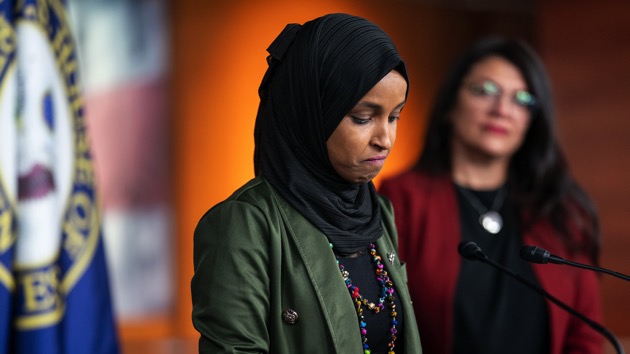
(WASHINGTON) — Democratic Reps. Ilhan Omar, Rashida Tlaib and Andre Carson on Tuesday night forcefully condemned the anti-Muslim remarks made by their colleague, Republican Rep. Lauren Boebert, last week.
Omar, Tlaib, and Carson are the only three Muslims in Congress.
“We may only be three among hundreds serving in Congress, but we are strong advocates that won’t shy away in demanding better for our communities. No one deserves to feel hate or racism solely based on one’s faith. It’s completely unacceptable,” Tlaib said.
A shaken Omar spoke of her difficult experiences as a Muslim American — from the person who told her she would never be elected to Congress for wearing a hijab, to the bigoted reception she received from some Republican members when she was first elected.
“So, when a sitting member of Congress calls a colleague a member of the “jihad squad” and falsifies a story to suggest that I will blow up the Capitol, it is not just attack on me, but on millions of American Muslims across this country,” Omar said of Boebert.
In a video posted to Twitter last week, Boebert referred to Omar as a member of the “Jihad Squad” and claimed that a Capitol Police officer thought she was a terrorist in an encounter in an elevator on Capitol Hill.
She apologized on Twitter Friday “to anyone in the Muslim community I offended,” adding that she had reached out to Omar’s office to speak with her directly, but the phone call did not go well.
Omar hung up on Boebert after the Colorado Republican refused to make a public apology to her, according to a statement from Omar and Boebert’s account of the call.
“We cannot pretend that this hate speech from leading politicians doesn’t have real consequences,” Omar said Tuesday. “The truth is that anti-Muslim hate is on the rise both here at home and around the world.”
Omar said she has received “hundreds” of death threats often triggered by Republican attacks. She held up her phone to the mics and played out a disturbingly graphic voicemail she received just hours after she got off the phone with Boebert on Monday — highlighting the types of threats she receives.
“Condemning this should not be a partisan issue,” Omar said. “This is about our basic humanity and fundamental rights of religious freedom enshrined in our Constitution. Yet, while some members of the Republican Party have condemned this, to date, the Republican Party leadership has done nothing to hold their members accountable.”
Omar said she wants “appropriate action” taken against Boebert but will leave it to leadership to decide what that means. She did not seem keen on the idea of a resolution that would condemn Islamophobia, noting that it’s been done before.
“This kind of hateful rhetoric and actions cannot go without punishment. There has to be accountability,” she said.
A senior Democratic aide confirmed to ABC News that House leadership discussed a possible resolution condemning Islamophobia but didn’t make any decisions during a meeting Tuesday night.
“Rep. Boebert has directed hateful, racist rhetoric against my colleague and friend, Rep. Omar,” Rep. Carson said. “Her verbal abuse was incendiary and hurtful to her and Muslims across the country and the world.”
“This is not about hurt feelings or mean-spirited words. This is about calling out individuals who deliberately incite violence and irresponsibly spread lies and misinformation,” Carson added.
Rep. Jamaal Bowman, who is not Muslim, also stood in solidarity with Omar, Tlaib and Carson during the press conference and called on Boebert to be removed from her committees.
“I’m urging House leadership to hold Lauren Boebert accountable by removing her from her committee assignments, advancing a resolution of condemnation, and taking all other appropriate measures to ensure our message that Islamophobia, anti-Blackness, and xenophobia will not stand is loud and clear,” he said in a statement.
ABC News’ Benjamin Siegel contributed to this report.
(WASHINGTON) — The U.S. Supreme Court on Wednesday heard historic arguments over a Mississippi law that would ban most abortions after 15 weeks of pregnancy, with conservative justices openly raising the prospect of overturning decades of legal precedent since the Roe v. Wade decision legalizing abortion nationwide.
After almost two hours, the conservative majority appeared headed toward changing 30 years of settled law protecting a woman’s right to end a pregnancy before fetal viability and upholding the Mississippi ban, which legal scholars say could clear the way for stringent new restrictions on abortion in roughly half the country.
“Viability it seems to me has nothing to do with choice,” said Chief Justice John Roberts. “Why is 15 weeks not enough time?”
“That’s not a dramatic departure from viability,” Roberts added of the state law and the line it would draw.
Since the 1973 landmark Roe ruling and the 1992 Planned Parenthood v. Casey case that affirmed the decision, the court has never allowed states to prohibit the termination of pregnancies prior to fetal viability outside the womb, roughly 24 weeks, according to medical experts.
Mississippi argues Roe was wrongly decided and that each state should be allowed to set its own policy.
Scott Stewart, the solicitor general of Mississippi and a former clerk to Justice Clarence Thomas, spoke first, saying that the precedents the Supreme Court set with Roe and Casey in 1992 “damaged the democratic process” and “poisoned the law,” adding, “they’ve choked off compromise.”
“For 50 years they’ve kept this court at the center of a political battle that it can never resolve,” he said.
Justice Sonia Sotomayor questioned whether the court should have taken up the case since the legal right to an abortion based on viability has been a long-standing precedent.
“There has been some difference of opinion with respect to undue burden, but the right of the woman to choose, the right to control her own body has been fairly set since Casey and never challenged. You want us to reject that viability line and adopt something different,” she said. “Thirty (justices) since Casey have reaffirmed the basic viability line. Four have said no to the members of this court, but 15 justices have said yes or varying political backgrounds.”
Referring to comments from a Mississippi lawmaker, she said, “The Senate sponsor said we’re doing it because we have new justices on the Supreme Court,” noting the new makeup of the court with three conservative justice appointed by former President Donald Trump.
“Will this institution survive the stench that this creates in the public perception that the Constitution and its reading are just political acts?” she asked.
Justice Stephen Breyer stressed the importance of stare decisis — the legal principle that courts generally adhere to precedent.
“To overrule under fire in the absence of the most compelling reason to reexamine a watershed decision would subvert the court’s legitimacy beyond any serious question,” Breyer said.
Jackson Women’s Health and its allies say the high court’s protection of a woman’s right to choose the procedure is clear, well-established and should be respected.
But the current court, with a 6-3 conservative majority, is widely considered more sympathetic to abortion rights opponents than any in a generation.
Conservative justices homed in on the current viability standard of roughly 24 weeks, with Justice Samuel Alito describing the line set as “arbitrary.”
As Julie Rikelman of the Center for Reproductive Rights, representing Jackson Women’s Health Organization, the only abortion clinic in Mississippi, argued the impact of pregnancy, Alito responded, “If a woman wants to be free of the burdens of pregnancy, that interest does not disappear the moment the viability line is crossed,” adding, “The fetus has an interest in having a life, and that doesn’t change from the point before viability and after viability.”
When Justice Thomas asked her to identify the constitutional right at issue — whether to abortion, privacy or autonomy, Rikelman replied, “It’s liberty.”
“It’s the textual protection in the 14th Amendment that the state can’t deny someone liberty without the due process of law,” she said.
“Allowing a state to take control of a woman’s body and force her to undergo the physical demands for risks and life-altering consequences pregnancy is a fundamental deprivation for liberty, and once the court recognizes that liberty interest deserves heightened protection, it does need to draw a workable line of viability that logically balances the interests at stake,” Rikelman added.
Justice Brett Kavanaugh asked if the court’s decisions in Roe and Casey were wrong to begin with, how that would counter the stare decisis principle.
“The Constitution is neither pro-life nor pro-choice on abortion. If we think that the prior precedents are seriously wrong, why don’t we return to neutrality? Doesn’t the history of this court’s practice with respect to those cases tells us that the right answer is actually a return to the position of neutrality, and not stick with those precedents in the same way that all those other cases did?”
Later, Kavanaugh asked Solicitor General Elizabeth Prelogar, arguing the Biden administration’s support for abortion providers, “Why should this court be the arbiter rather than Congress?”
“There’ll be different answers in Mississippi in New York, different answers and Alabama than California because they’re two different interests at stake and the people in those states might value those interests somewhat different way,” Kavanaugh said, signaling he might support handing the issue back to the states, despite saying at his confirmation hearings that Roe was “settled law.”
Prelogar replied that it’s not up to states to decide whether to honor fundamental rights.
A former clerk to the late Justice Ruth Bader Ginsburg and Justice Elena Kagan, Prelogar earlier said, “The court has never revoked a right that is so fundamental to so many Americans and so central to their ability to participate fully and equally in society. The court should not overrule the central component of women’s liberty.”
Justice Amy Coney Barrett, who’s personal views on abortion factored large during her confirmation hearing last year, raised doubts about how sweeping the impact would be if the court sides with Mississippi. “Don’t Safe Haven Laws take care of that?” she said, referring to legislation in nearly every state allowing a parent to abandon a newborn baby without fear of prosecution in the event life circumstances make them unable to parent.
Majorities of Americans support the Supreme Court upholding Roe v. Wade and oppose states making it harder for abortion clinics to operate, according to an ABC News/Washington Post poll this month. Three in four Americans, including majorities of Republicans, independents and Democrats, say the decision of whether or not to have an abortion should be left to a woman and her doctor.
But Americans appear more sharply divided on the type of ban at issue in Mississippi. A Marquette University Law School poll this month found 37% favored upholding a 15-week ban, with 32% opposed.
Overshadowing the case is the Supreme Court’s still-pending decision in a separate dispute over Texas’ unprecedented six-week abortion ban, SB8, which has been in effect for nearly three months and dominated national headlines.
The justices gave the Texas law a highly expedited hearing, during which a majority appeared skeptical of its enforcement scheme that encourages citizens to sue anyone who aids or abets an unlawful abortion for the chance at a $10,000 bounty. Many observers assumed the court would quickly move to put the law on hold, but it has not done so.
A decision in the Mississippi and Texas cases are expected by the end of the court’s term in June 2022.
The abortion rights battle at the Supreme Court comes as Republican-led states have enacted more than 100 new abortion restrictions so far this year, according to the Guttmacher Institute, a research organization that supports abortion rights.
Twenty-one states have laws in place that would quickly impose abortion bans in the event the Supreme Court overturns Roe.
Fourteen states plus Washington, D.C., have laws explicitly protecting access to abortion care, according to Guttmacher.