(NEW YORK) — An 11-month-old girl has been shot in the face in the Bronx, prompting a search for the gunman and outcry from New York City’s new mayor.
The baby is in the hospital in critical but stable condition, the New York City Police Department said.
The shooting took place at about 6:45 p.m. Wednesday while the baby was in a parked car with her mother outside a grocery store, waiting for the father who was inside the store, police said.
A man chasing another man fired two shots, hitting the baby in the face, police said.
“An 11-month-old baby shot in the Bronx. If that’s not a wake up call, I don’t know what is,” New York City Mayor Eric Adams tweeted. “It should be unimaginable that this would happen in our city. But it did.”
“Leaders at every level have abandoned city streets. I won’t,” he said. “I refuse to surrender New York City to violence.”
Police have released surveillance video of the suspect, who they said fled the scene in a gray four-door sedan. The suspect is described as a man in a dark-colored hooded sweatshirt with a white Nike logo on the front, gray sweatpants, and black and white sneakers.
Anyone with information is asked to call the NYPD’s Crime Stoppers Hotline at 1-800-577-TIPS (8477).
NICOLAS MAETERLINCK/BELGA MAG/AFP via Getty Images
(LONDON) — From flying over an active volcano to surviving in minus 31 degrees Fahrenheit, British-Belgium teen Zara Rutherford has experienced a lot in her five-month journey flying over 40 countries and five continents.
When the 19-year-old landed in Belgium on Thursday, she made history by breaking the record of the youngest woman to ever fly solo around the world. The pilot who previously held the record, Shaesta Waiz, was 30 years old when she completed the journey.
“It’s been … challenging, but so amazing at the same time,” Rutherford told ABC News. “I think there’re some experiences that I’ll just never forget and others that I would wish to forget.”
Rutherford embarked on her epic journey with her Shark Aero, a high-performance, two-seat ultralight aircraft manufactured in Europe. The small plane is especially made to withstand long journeys at the cruising speed of 186.4 mph.
Since both of her parents are certified pilots, Rutherford learned her way behind the airplane controls when she was very young.
“Zara’s first flight in a very small airplane, was when she was three or four months old. … And frequently, she’d be given the opportunity to sit in the front, to start with, of course, on about six cushions to be able to manipulate the controls and move the aircraft around,” Sam Rutherford, Zara’s father and a former army helicopter pilot, told ABC News.
But it was not until about five years ago that Rutherford truly realized her passion for flying.
“It only really crystallized into something she actually wanted to do more formally when she was 14, and at 14, she started actually taking flying lessons,” Rutherford’s father said.
Then teen ran into maintenance problems, COVID-19 complications and visa issues along her journey. She said once she reached Russia, she fully realized the risks of her mission.
“There was no humans. It’s too cold. It’s like nothing. There’s no roads, there’s no power like electricity cables. There’s nothing, there’s no animals, there’s no trees. I didn’t see a tree for over a month,” Rutherford said.
“When you’re flying alone and suddenly this challenge comes up, I can’t say, ‘I’m done. I’m out. I give up.’ You have to still land the plane. You have to make sure that you get down on the ground safely,” she said.
Still, she was often amazed by the things she saw along the way.
“That is still like the hands down the most amazing thing flying straight over Central Park … because of air space [regulations] you have to fly quite low. And it’s quite strange when… some of the buildings still are higher than you like. Wow, this is incredible,” the young solo pilot said.
Someone to look up to
Before starting her journey, Rutherford messaged Waiz — the American-Afghan pilot who previously held the flying record — on LinkedIn and asked if she would mind if she attempted to break her record.
“‘Of course, that’s OK. Records are meant to be broken,’ I told her,” Waiz, who finished her journey in 2017, told ABC News.
“‘Not only are you going to fly around the world, but I’m going to do everything I can to help you, because it is an incredible experience and I want [you] to have that,'” she said to Rutherford.
Waiz got on her first plane as an infant, when her family left Afghanistan as refugees during the Soviet–Afghan War and settled in California. She didn’t fly again until she was 17.
“I was terrified. But as soon as that plane lifted off, something ignited in me and I just thought to myself, ‘This is what I want to do for the rest of my life,'” she recalled.
Changing perspectives
Flying solo around the world, for Rutherford and Waiz, was not just about crossing geographical borders and breaking records, but also about getting to see life from a different perspective.
To Waiz, the unique thing about aviation is the way it takes away all discriminations and differences among people.
“When you’re in the airplane and you’re flying, it’s such an unbiased environment that that aircraft doesn’t care where you come from or what you look like,” she said.
Rutherford said flying has taught her that life is “fragile,” and there is “so much more to life than just getting a good career and making and having a good salary.”
She hopes her history-making journey inspires other girls and women to chase their dreams.
“Her aim is actually not to fly around the world. Her aim is to encourage young women and girls to consider and hopefully take up careers in aviation, science, technology, engineering and mathematics,” Rutherford’s father said. “There’s very little point to her flying around the world if nobody gets to hear about it. We all have our own worlds to fly around.”
(LONDON) — Two men were arrested in England on Thursday morning as part of an ongoing investigation into a hostage-taking incident at a synagogue in the United States, British authorities said.
Counterterrorism officers detained one of the men in Birmingham and the other in Manchester, about 85 miles north of Birmingham. The pair “remain in custody for questioning,” according to a statement from the Greater Manchester Police.
Assistant Chief Constable Dominic Scally of the Greater Manchester Police has said that counterterrorism officers are assisting their U.S. counterparts in the probe of Saturday’s hourslong standoff between American authorities and a hostage-taker at the Congregation Beth Israel in Colleyville, Texas, about 27 miles northwest of Dallas.
An armed man claiming to have planted bombs in the synagogue interrupted Shabbat services on Saturday just before 11 a.m. local time, taking a rabbi and three other people hostage, according to Colleyville Police Chief Michael Miller.
One hostage was released uninjured at around 5 p.m. CT on Saturday, Miller told a press conference later that night. An elite hostage rescue team from the Federal Bureau of Investigation then breached the synagogue at about 9 p.m. CT, after hearing the hostage-taker say he had guns and bombs and was “not afraid to pull the strings,” according to a joint intelligence bulletin issued Wednesday and obtained by ABC News.
“As a tactical team approached to make entry to the synagogue, the hostages escaped and were secured by tactical elements,” the bulletin said. “The assault team quickly breached the facility at a separate point of entry, and the subject was killed.”
No hostages were injured during the incident, according to Miller.
The slain suspect, identified by the FBI as 44-year-old British citizen Malik Faisal Akram, was from the Blackburn area of England’s Lancashire county, about 20 miles northwest of Manchester, according to Scally.
A motive for the siege is under investigation. The FBI said in a statement Sunday that the incident “is a terrorism-related matter, in which the Jewish community was targeted, and is being investigated by the Joint Terrorism Task Force.”
During the negotiations with authorities, Akram “spoke repeatedly about a convicted terrorist who is serving an 86-year prison sentence in the United States on terrorisms charges,” according to the FBI.
Multiple law enforcement sources told ABC News that the hostage-taker was demanding the release of Aafia Siddiqui, who is incarcerated at Carswell Air Force Base near Fort Worth, about 16 miles southwest of Colleyville. Siddiqui, who has alleged ties to al-Qaida, was sentenced to 86 years in prison after being convicted of assault as well as attempted murder of an American soldier in 2010.
Two teenagers were arrested in southern Manchester on Sunday evening in connection with the synagogue attack. They were questioned and later released without being charged, Greater Manchester Police said in a statement Tuesday. Multiple law enforcement sources told ABC News that the teens are Akram’s children.
Akram has ancestral ties to Jandeela, a village in Pakistan’s Punjab province, the local police chief told ABC News. He visited Pakistan in 2020 and stayed for five months, the police chief said, a duration that may have been necessitated by COVID-19 restrictions.
Akram has been separated from his wife for two years and has five children, according to the police chief.
After arriving in the U.S. last month via a flight from London to New York City, Akram stayed at homeless shelters at various points and may have portrayed himself as experiencing homelessness in order to gain access to the Texas synagogue during Shabbat services, multiple law enforcement sources told ABC News.
U.S. President Joe Biden, who called the hostage-taking incident “an act of terror,” told reporters Sunday that investigators suspect Akram purchased a gun on the street. While Akram is alleged to have claimed he had bombs, investigators have found no evidence that he was in possession of explosives, according to Biden.
ABC News’ Luke Barr, Aaron Katersky, Habibullah Khan, Josh Margolin and Joseph Simonetti contributed to this report.
NICOLAS MAETERLINCK/BELGA MAG/AFP via Getty Images
(LONDON) — From flying over an active volcano to surviving in minus 31 degrees Fahrenheit, British-Belgium teen Zara Rutherford has experienced a lot in her five-month journey flying over 40 countries and five continents.
When the 19-year-old lands in Belgium Thursday, she will have made history by breaking the record of the youngest woman to ever fly solo around the world. The pilot who currently holds the record, Shaesta Waiz, was 30 years old when she completed the journey.
“It’s been … challenging, but so amazing at the same time,” Rutherford told ABC News. “I think there’re some experiences that I’ll just never forget and others that I would wish to forget.”
Rutherford embarked on her epic journey with her Shark Aero, a high-performance, two-seat ultralight aircraft manufactured in Europe. The small plane is especially made to withstand long journeys at the cruising speed of 186.4 mph.
Since both of her parents are certified pilots, Rutherford learned her way behind the airplane controls when she was very young.
“Zara’s first flight in a very small airplane, was when she was three or four months old. … And frequently, she’d be given the opportunity to sit in the front, to start with, of course, on about six cushions to be able to manipulate the controls and move the aircraft around,” Sam Rutherford, Zara’s father and a former army helicopter pilot, told ABC News.
But it was not until about five years ago that Rutherford truly realized her passion for flying.
“It only really crystallized into something she actually wanted to do more formally when she was 14, and at 14, she started actually taking flying lessons,” Rutherford’s father said.
Then teen ran into maintenance problems, COVID-19 complications and visa issues along her journey. She said once she reached Russia, she fully realized the risks of her mission.
“There was no humans. It’s too cold. It’s like nothing. There’s no roads, there’s no power like electricity cables. There’s nothing, there’s no animals, there’s no trees. I didn’t see a tree for over a month,” Rutherford said.
“When you’re flying alone and suddenly this challenge comes up, I can’t say, ‘I’m done. I’m out. I give up.’ You have to still land the plane. You have to make sure that you get down on the ground safely,” she said.
Still, she was often amazed by the things she saw along the way.
“That is still like the hands down the most amazing thing flying straight over Central Park … because of air space [regulations] you have to fly quite low. And it’s quite strange when… some of the buildings still are higher than you like. Wow, this is incredible,” the young solo pilot said.
Someone to look up to
Before starting her journey, Rutherford messaged Waiz — the woman who previously held the record flying record — on LinkedIn, and asked if she would mind if she attempted to break her record.
“‘Of course, that’s OK. Records are meant to be broken,’ I told her,” The American-Afghan pilot, who finished her journey in 2017, told ABC News.
“‘Not only are you going to fly around the world, but I’m going to do everything I can to help you, because it is an incredible experience and I want [you] to have that,'” Waiz said to Rutherford.
Waiz got on her first plane as an infant, when her family left Afghanistan as refugees during the Soviet–Afghan War and settled in California. She didn’t fly again until she was 17. “I was terrified. But as soon as that plane lifted off, something ignited in me and I just thought to myself, ‘This is what I want to do for the rest of my life,'” she recalled.
Changing perspectives
Flying solo around the world, for Rutherford and Waiz, was not just about crossing geographical borders and breaking records, but also about getting to see life from a different perspective.
To Waiz, the unique thing about aviation is the way it takes away all discriminations and differences among people.
“When you’re in the airplane and you’re flying, it’s such an unbiased environment that that aircraft doesn’t care where you come from or what you look like,” she said.
Rutherford said flying has taught her that life is “fragile,” and there is “so much more to life than just getting a good career and making and having a good salary.”
She hopes her history-making journey inspires other girls and women to chase their dreams.
“Her aim is actually not to fly around the world. Her aim is to encourage young women and girls to consider and hopefully take up careers in aviation, science, technology, engineering and mathematics,” Rutherford’s father said. “There’s very little point to her flying around the world if nobody gets to hear about it. We all have our own worlds to fly around.”
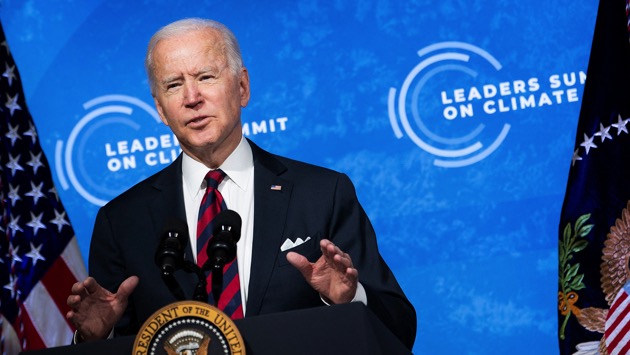
(WASHINGTON) — President Joe Biden arrived in office with lofty expectations from environmentalists who hoped that his ambitious campaign rhetoric would translate into an aggressive climate platform to match.
One year into his tenure, advocates credit Biden for setting an historically bold agenda, taking important steps to undo Trump-era rollbacks, and enacting a whole-of-government approach to combat climate change.
“President Biden is delivering,” said Margo Oge, the former director of the EPA’s Office of Transportation and Air Quality, and current chair of the International Council on Clean Transportation.
But for others, the honeymoon has ended. Inconsistencies and broken pledges have frustrated some, and the fate of Biden’s ambitious Build Back Better proposal — which would commit $550 billion toward addressing climate change — remains in congressional purgatory.
His most fervent critics say he is failing.
“While Biden started off the year strong by undoing most of Trump’s anti-climate executive orders, Biden has stopped leading and is instead feeding us empty promises without delivering on a bold climate agenda,” said Varshini Prakash, executive director of Sunrise Movement, an advocacy group that supports political action on climate change.
The mixed reviews reflect a larger dispute within the environmental community as to what constitutes success. Pragmatists see Biden’s climate change efforts as crucial momentum in what Sierra Club legislative director Melinda Pierce calls the “incredibly plodding, deliberative pace of administrative rulemaking.” But more progressive groups like the Sunrise Movement see it differently. Biden, says Prakash, is “refusing to meet the moment we’re in right now.”
Indeed, as the Biden administration embarks on its second year in power, important climate change metrics continue their dire trend. European scientists recently concluded that the past seven years have been the hottest on record “by a clear margin.” And in 2021, America’s greenhouse gas emissions rose by more than 6%, according to the Rhodium Group global research institute.
Experts warn that the political outlook for the coming year may shrink Biden’s window for a legislative victory. Congressional gridlock shows no sign of letting up, looming midterm elections may soon complicate efforts to take bold action, and Biden’s approval rating remains on a downward trend, according to a recent Quinnipiac poll.
And if Democrats lose control of Congress in November’s midterms, or the White House in 2024, advocates fear the next few months may end up being the last chance for environmentalists to see major legislative action for a decade.
On Wednesday, Biden said he remains “confident [the administration] can get pieces — big chunks — of the Build Back Better law signed into law” before the midterm elections.
“Now is the time for the Biden administration to build on and accelerate the progress made in their first year,” said Abigail Dillen, president of Earthjustice, a nonprofit environmental group.
‘Come out swinging’
For environmentalists, Biden’s very presence in the White House marked an important turning point in the climate fight. His predecessor, former President Donald Trump, sought to dismantle the federal government’s ability to address climate change and took a series of executive actions in line with that philosophy, including removing the U.S. from Paris Climate Accord — a move that Biden reversed on his first day in office.
Under Trump, the Environmental Protection Agency also took steps to loosen emissions standards put in place during the Obama administration — another measure that Biden has since reversed.
“We were super excited for President Biden — who ran on what was the most aggressive and ambitious climate agenda ever — to come out swinging,” said Pierce. “The level of ambition, scope, and breadth of what he was tackling was extraordinary.”
Before even setting foot in the Oval Office, Biden signaled his intent to prioritize climate issues. He committed to making the U.S. government carbon neutral by 2050, and placed fighting climate change in his pantheon of top priorities alongside strengthening the economy, ending the coronavirus pandemic, and battling racism.
The emphasis on climate reached the far corners of Biden’s transition process. A former member of Biden’s intelligence transition team told ABC News that their mandate was to focus resources toward combatting “the three C’s” — COVID-19, China, and climate change.
“Climate science demands this ‘whole of government’ approach that pursues every opportunity,” said Chase Huntley, the vice president of strategy at the nonprofit Wilderness Society.
Once in office, Biden took several organizational and bureaucratic steps to pivot away from Trump’s policies. He launched a White House Climate Policy Office to coordinate an administration-wide response to climate change, and established the White House’s first Environmental Justice Advisory Council to ensure that at least 40% of the benefits of climate investments go to communities that are disproportionately impacted by pollution.
Then came the executive actions, which environmentalists lauded for their sweeping reversal of Trump’s rollbacks. A Washington Post analysis found that Biden targeted half of the Trump era’s energy and environmental executive actions. A White House spokesperson highlighted Biden’s efforts to restore U.S. climate leadership abroad, jump-start electric vehicle development, and accelerate clean energy initiatives.
But since those early days of the Biden administration, his climate victories have been blunted by setbacks.
Two steps forward, one step back
While experts say the Biden administration has made meaningful progress on climate issues ranging from emissions standards to fossil fuel extraction, environmentalists also see inconsistencies — actions from the administration that seem to undermine the president’s own pledges and rhetoric.
On the use of federal lands and waters, for example, the administration garnered praise from environmentalists when the Department of Interior suspended its controversial oil and gas leasing program in the Arctic National Wildlife Refuge in the summer of 2021. And just last week, the White House announced plans to open up large swaths of New York and New Jersey coastal waters for renewable wind infrastructure, which experts say will eventually produce enough energy to power two million homes.
But those developments have been overshadowed by the Biden administration’s auctioning off of large swaths of federal waters in the Gulf of Mexico for oil drilling, a decision that will serve to “perpetuate climate pollution from public lands instead of reduce it,” according to Huntley.
Biden pledged to end new drilling on federal lands during his presidential campaign, and just days before the lease sale in November, he encouraged every nation at the Glasgow COP26 Climate Conference to “do its part” to solve the climate crisis.
“It’s hard to imagine a more dangerous, hypocritical action in the aftermath of the climate summit,” said Kristen Monsell, a lawyer for the nonprofit Center for Biological Diversity.
Administration officials justified the decision to move forward with the lease sale by citing a court order to do so, despite claims from environmentalists that they were under no such obligation. On Wednesday, environmental groups sent a legal petition calling on the administration to cease oil and gas production on public lands by 2035. The Department of Interior did not immediately respond to a request for comment.
Vehicle emissions have also emerged as a source of contention. The EPA under Biden recently proposed the most aggressive limits on pollution from cars and light trucks in history, mandating higher fuel efficiency standards for vehicles starting in 2023. Experts welcomed the measure and took stock of its significance.
“Given that transportation is the number-one greenhouse gas contributor in the U.S., that was a pretty big deal,” said Oge.
But Biden refused to sign on to a multi-country commitment to take similar steps for buses and large trucks — some of the highest-polluting vehicles on the road. After the COP26 summit in Glasgow, 15 countries signed a pledge to make all new commercial trucks electric by 2040. The U.S. was not one of them.
“I was disappointed,” Oge said. “But it does not mean the administration can’t still take steps to reduce those emissions.”
The administration also scored points with activists when it stepped in to halt the controversial Keystone XL pipeline. But Abigail Dillen of Earthjustice points out that it failed to take action against the Line 3 pipeline, which, “from a climate standpoint, [is] equally harmful,” Dillen said.
“The Biden administration has clear authority to take back the Line 3 permit,” said Dillen. “The real difference between these two pipelines appears to be a political calculus. The Biden administration encountered unsurprising blowback in some quarters for its Keystone decision.”
Several environmentalists speculate that the Biden administration has sought to use its executive authority sparingly — doing enough to strengthen major climate priorities, but not so much as to put off moderate legislators whose votes will be needed to pass Build Back Better.
Despite those apparent contradictions, Biden’s political allies remain in his corner — particularly when his environmental record is held up against Trump’s — but they say they’re looking forward to additional progress in the coming year.
“Compared to Trump, the Biden administration has done a good job,” said Rep. Raul Grijalva, D-Ariz., chairman of the House Natural Resources Committee. “But we must hold our government to a higher standard than President Trump and his cronies if we are going to be serious about taking on climate change.”
Hope and headwinds
Environmentalists and industry leaders view the next few months as crucial to Biden’s climate legacy, even as he faces political headwinds. Many seem inclined to be patient with Biden and his team, in light of their progress and pledges to date, and point to several areas where Biden can put points on the board.
Advocates say the administration can take additional executive actions, such as encouraging federal agencies, including the Pentagon, to turn toward electric vehicles for its fleets. The EPA has also signaled that it may propose tighter greenhouse gas emissions for heavy-duty vehicles starting in 2027 — which Oge said she hopes will include “strong and ambitious requirements for buses and delivery vans to be electric.”
“Looking ahead, this administration needs to be turning all the knobs under their control as far as they can go, for the sake of climate,” Huntley said.
Meanwhile, the Supreme Court is expected to hear arguments in February in a case brought by Republican-led states that could curb the EPA’s authority to regulate carbon emissions standards.
The most pressing issue, however, remains Biden’s signature Build Back Better plan — an enormous package that experts believe will make or break Biden’s environmental ambitions. The plan is universally opposed by congressional Republicans.
The plan is universally opposed by congressional Republicans, who have expressed concern over what its $1.7 trillion price tag would do to the national debt, and a pair of moderate Democrats, Joe Manchin and Kyrsten Sinema, who are advocating for a pared-down version of the bill.
But the White House indicated this week that it will press forward, even as other legislative priorities take center stage.
“Yes, there is a lot one can do under executive order — but a really large portion driving the kind of investments to tackle climate change has to come from Congress,” said the Sierra Club’s Melinda Pierce. “When you look to measure what was done in Year One, clearly the piece that has to be achieved legislatively is incomplete.”
(WASHINGTON) — The Senate on Wednesday night failed to change the filibuster rule to allow voting rights legislation to pass with a simple majority.
The rule change would have required 51 votes to pass but did not have the support of all Democrats, whose leader had pushed for it. Sens. Joe Manchin, D-W.Va., and Kyrsten Sinema, D-Ariz., joined all Republicans in opposing the change.
Minority Leader Mitch McConnell said prior to the vote that the Senate would be “saved” by the opposition.
“Tonight, for the first time in history almost an entire political party will write in permanent ink that they would shatter the soul of the Senate for short-term power,” McConnell said. “But the brave bipartisan majority of this body is about to stop them.”
President Joe Biden said in a statement following the defeat: “I am profoundly disappointed that the Senate has failed to stand up for our democracy. I am disappointed — but I am not deterred. We will continue to advance necessary legislation and push for Senate procedural changes that will protect the fundamental right to vote.”
Earlier in the evening, the Senate was unable to end debate on voting rights legislation — something that would have required 60 votes to move toward final passage.
That vote was 49-51.
“This is about the fundamental freedom to vote and what should be an unfettered access to the ballot. I am here to make a very strong statement that this is: Whatever happens tonight in terms of the outcome of this vote the president and I are not going to give up on this issue this is fundamental to our democracy and it is non-negotiable,” Vice President Kamala Harris said after the first vote.
In a rare event, the Senate convened on Wednesday morning with all Democrats instructed to be in their seats inside the chamber as they tried to move forward on voting rights legislation and on a challenge to a longstanding Senate rule.
Sen. Raphael Warnock, D-Ga., was one of the last to speak before the voting began.
“Jan. 6 happened, but here’s the thing, Jan. 5 also happened. Georgia, a state in the old confederacy, sent a Black man and a Jewish man to the Senate in one fell swoop,” he said. “Our nation has always had a complicated history, and I submit to you that here’s where we are — we’re swinging from a moral dilemma. We are caught somewhere between Jan. 5 and Jan. 6. Between our hopes and our fears. Between bigotry and beloved community. And in each moment we the people have to decide which way are we going to go, and what are we willing to sacrifice in order to get there. The question today is are we going to give in to a violent attack, whose aim is now being pursued through partisan voter suppression laws in state legislatures?”
Senate Majority Leader Chuck Schumer said Tuesday that Democrats would seek a carveout to the filibuster rule to pass voting rights legislation by replacing the current 60-vote threshold needed to break a filibuster with an old-fashioned “talking filibuster.”
“We feel very simply: On something as important as voting rights, if Senate Republicans are going to oppose it, they should not be allowed to sit in their office,” Schumer said Tuesday following an evening caucus meeting. “They’ve got to come down on the floor and defend their opposition to voting rights, the wellspring of our democracy. There’s broad, strong feeling in our caucus about that.”
“The eyes of history are upon us,” he said to open debate Wednesday, preemptively defending the effort as a moral win, if not a legislative one. “Win, lose or draw, we are going to vote, especially when the issue relates to the beating heart of democracy.”
Schumer called out McConnell directly in his speech, who has led his party to block Democrats’ election reform efforts five times in the last year, blasting him for falsely claiming that red states haven’t changed laws restricting voter access.
“Just as Donald Trump has his “big lie,” Mitch McConnell now has his: States are not engaging in trying to suppress voters whatsoever,” Schumer said.
He also addressed two Democratic senators who hold what Schumer thinks is a false view that the chamber’s filibuster brings greater bipartisanship — and he countered in his remarks: “Isn’t the protection of voting rights — the most fundamental wellspring of this democracy — more important?”
McConnell, in another blistering speech, said a rule change would “destroy the Senate” and warned of a “nuclear winter” if Democrats get their way and “blow up” the chamber’s rule to pass voting rights legislation, which he called a “partisan Frankenstein bill.”
“This is exactly the kind of toxic world view that this president pledged to disavow, but it is exactly what has consumed his party on his watch,” McConnell said, building on days of swipes at President Joe Biden.
McConnell accused Democrats of trying to “smash and grab as much short-term power as they can carry,” and said, “For both groups of senators, this vote will echo for generations.”
When Majority Whip Sen. Dick Durbin, D-Ill., tried to ask McConnell a question after his speech and get him to engage in debate on the issue, the Republican leader walked away.
“I’m sorry he did not stay for the question,” Durbin said to the chamber. “Does he really believe that there is no evidence of voter suppression in the actions of 19 states?”
Democrats’ election reform bill comes at a time when 19 states have restricted access to voting fueled by false claims in the wake of the 2020 election, according to the the nonpartisan Brennan Center for Justice. The bill at hand would make Election Day a federal holiday, expand early voting and mail-in-voting, and give the federal government greater oversight over state elections.
Schumer has proposal to reverting to a talking filibuster on the issue would allow Democrats to subvert GOP obstruction to make way for the bill’s final passage.
Under a talking filibuster, senators are required to “hold the floor” during debate, testing their stamina as they stand and speak to block bills. Once a party runs out of steam, the chamber would then pass the bill that was filibustered by a simple majority. So, in theory, Harris, as president of the Senate, would serve as a tie-breaking vote for Democrats to pass the once-filibustered bill.
But both Manchin and Sinema have repeatedly made clear their opposition to changing the filibuster rule even in order to pass voting rights, although they say they support the underlying legislation.
“I don’t know how you break a rule to make a rule,” Manchin told reporters Tuesday, shooting down the proposed talking filibuster.
Manchin defended his decision to vote against changing Senate rules in a floor speech Wednesday evening that he said aimed to “rebut what I believe is a great misleading of the American people” by Senate Democrats.
“Eliminating the filibuster would be the easy way out. It was not meant to be easy,” Manchin said. “I cannot support such a perilous course for this nation when elected leaders are sent to Washington to unite our country not to divide our country. We are called the United States, not the divided states, and putting politics and party aside is what we are supposed to do.”
Manchin made another plea for bipartisan cooperation and said he believes election reform could be achieved in a bipartisan fashion if members worked at it.
“I don’t know what happened to the good old days but I can tell you they’re not here now,” Manchin said.
The West Virginia lawmaker said he respects that many Democrats have migrated in their stance on the filibuster and asked for respect in his steadfast opposition.
Sen. Bernie Sanders, I-Vt., however, laid into Manchin and Sinema Wednesday evening.
“I do not understand why two Democrats who presumably understand the importance of the Freedom to Vote Act, and as I understand it, will vote for the Freedom to Vote Act, are not prepared to change the rules so that that bill could actually become law. That I do not understand,” he said. “If you think this bill makes sense and if you’re worried about the future of American democracy and if you are prepared to vote for the bill, then why are you wasting everybody’s time and not voting for the rule change that allows us to pass the bill? You know, it’s like inviting somebody to lunch and putting out a great spread and saying you can’t eat.”
Generally, senators rarely occupy the chamber while debate is open and only those wishing to speak deliver remarks to a largely empty room — but that was not the case for the high-stakes showdown Wednesday.
Among those who spoke was Republican Sen. John Cornyn of Texas, who warned Democrats that they’re embarking on a “slippery slope” in attempting to carve out an exception to the filibuster to pass a piece of legislation.
“They’ll soon find themselves rueing the day their party broke the Senate,” he said. “The next Republican-controlled Senate can make the 2017 tax cuts permanent, ensure that blue state millionaires are required to pay their fair share of federal taxes,” he went on, listing GOP platforms including implementing a 20-week ban on abortion and establishing concealed carry of firearms nationwide.
Both parties have supported filibuster carveouts in the past decade for judicial nominees — first under then-Senate Majority Leader Harry Reid, who lowered the threshold for judicial nominees to 51 votes to make way for then-President Barack Obama’s nominees in 2013. McConnell, as Senate majority leader in 2017, also used the so-called “nuclear option” to confirm then-President Donald Trump’s first Supreme Court nominee, Neil Gorsuch.
(JACKSONVILLE, N.C.) — Two Marines have been killed and more than a dozen injured in a rollover accident Wednesday near Camp Lejeune in Jacksonville, North Carolina, according to officials.
Seventeen Marines were injured in the accident after they were ejected from the back of the 7-ton military vehicle as it tried to make a turn onto a highway just miles from the base at about 1 p.m., according to the North Carolina Highway Patrol. Two of the injured were airlifted to Vidant Medical Center in Greenville, while the other 15 were transported on the ground.
The 19-year-old Marine who was driving the military vehicle, Louis Barrera, has been charged with exceeding a safe speed and two counts of misdemeanor death by motor vehicle, according to the highway patrol.
One Marine who was ejected from the truck was hit by another military vehicle trailing the accident, police said.
The vehicle was carrying 19 Marines total, all from the 2nd Marine Logistics Group, stationed at Camp Lejeune. The driver, Barrera, and passenger in the front of the vehicle were uninjured.
Officials will release the identifications of the victims once next of kin have been notified.
An investigation into the accident is ongoing, the North Carolina Highway Patrol said.
North Carolina Highway Patrol Sgt. Devin Rich said at a press conference he was not sure if this was part of a training mission.
The 2nd Marine Logistics Group had initially posted on Twitter, “We are aware of a vehicle rollover in Jacksonville, North Carolina, involving service members with 2nd MLG. We are working closely with @camp_lejeune and Onslow County officials to gather details regarding this incident.”
Camp Lejeune is located in southeast North Carolina along the Atlantic coast. It is home to more than 30,000 people.
ABC News’ Mark Osborne and Will Gretsky contributed to this report.
(ATLANTA) — Both vaccination and a prior infection provided protection against another infection and hospitalization due to COVID-19 during the United States’ delta wave, according to a study released Wednesday by the Centers for Disease Control and Prevention.
Between May and November 2021, researchers analyzed data from New York and California to determine the impact of vaccination and previous COVID-19 infection on cases and hospitalization rates.
The study focused on four core groups of people — those who were unvaccinated, without a previous infection; those who were unvaccinated, with a previous infection; vaccinated people, without a previous infection; and vaccinated people, with a previous infection.
The analysis found that before delta became the predominant variant in June, vaccination offered better protection against breakthrough infections than prior infection offered against reinfection. But after delta became dominant, this trend shifted, with prior infection offering slightly better protection. However, this also coincides with a time when many Americans were several months out from their shots, and before boosters were authorized.
Notably, the study was conducted prior to the emergence of the omicron variant, and before the widespread availability of booster shots, thus, researchers warned that results cannot be directly applied to the nation’s current surge. In addition, the analysis did not include data pertaining to the severity of initial infections, and hospitalization data was only pulled from California.
During the delta wave, two doses of a vaccine offered excellent protection against hospitalization, and notably, researchers stressed that getting vaccinated remains a safer option than contracting COVID-19.
Vaccine immunity does fade over time, the study found, and the further out an individual is from one’s last vaccine shot, or a prior infection, the more likely it is that they will experience a breakthrough infection.
When asked repeatedly on Wednesday during a press briefing whether the data were showing that when delta was prominent, having had an infection provided greater protection against a subsequent infection than from being vaccinated, a CDC representative insisted that vaccination is still the safest way to protect oneself.
Scientists also suggest the study reinforces the evidence that “vaccination remains the safest strategy for protecting against COVID-19.”
The CDC also cited a recent study, which demonstrates that as time increases after an infection, vaccination still provides greater protection against COVID-19 compared to prior infection alone, thus underscoring “the importance of being up to date on COVID-19 vaccination.”
Later this week, the CDC said it will publish additional data on COVID-19 vaccines and boosters while omicron has been circulating.
(FAIRFAX COUNTY, Va.) — A Virginia man convicted of murder has been charged in connection with two decades-old cold case homicides, authorities said.
Charles Helem, 52, is currently serving life in prison at a Virginia supermax state prison after he was convicted of first-degree murder for the death of a Chantilly woman who was found strangled in her townhome in 2002.
He has been now been charged in two unrelated homicides in Virginia and Maryland after allegedly confessing to both murders, authorities announced Wednesday.
“We now know even more about the dangers the killer presented to the entire national capital region,” Fairfax County Police Chief Kevin Davis said during a press briefing.
The murder of Eige Sober-Adler was among Fairfax County’s notable cold cases. The 37-year-old was found dead in a field in Herndon on Sept. 9, 1987, badly beaten.
Helem allegedly confessed to the murder during an interview with Fairfax County detectives in October, officials said.
“Detectives were able to corroborate this confession with details known only to the killer,” Fairfax County Commonwealth’s Attorney Steve Descano said during the Wednesday briefing.
On Tuesday, a grand jury indicted Helem for murder in connection to Sober-Adler’s death. Descano said his office will now pursue a “vigorous” prosecution of Helem.
Authorities in Prince George’s County, Maryland, have also charged Helem in connection with an unsolved murder in Mount Rainier. Jennifer Landry, 19, was found dead in a wooded area on Aug. 15, 2002. An autopsy determined she had died of asphyxia and cutting wounds to her neck. It took nearly three years for police to positively identify her body.
In 2010 and 2017, Helem sent letters to law enforcement claiming to have information on the Landry murder, though he refused to speak with detectives until last year, police said.
“He verbally confessed to killing Jennifer Landry,” Prince George’s County Police Chief Malik Aziz said during the briefing.
Helem initially provided information on the unsolved Fairfax County murder while talking to Prince George’s County detectives, police said.
It is unclear if Helem has an attorney. Court records for Fairfax County and Prince George’s County not have yet listed his case.
Davis and Aziz said authorities are exploring whether Helem may be connected to other unsolved cases.
The parents of both women are deceased, authorities said, though officials in both counties said they hoped the latest charges bring some closure to the victims’ surviving families and friends.
“My team and our partners in law enforcement did not waver in our dedication to seek answers and pursue justice in this cold case,” Descano said.
(WASHINGTON) — The Supreme Court has denied President Donald Trump’s request for a stay of a lower court mandate that hundreds of pages of his presidential records from Jan. 6 be turned over to the congressional committee investigating the attacks.
The vote was 8-1.
This is a developing story. Please check back for updates.