
COVID-19 live updates: New Orleans requiring vaccination for schoolchildren

COVID-19 live updates: New Orleans requiring vaccination for schoolchildren
Catherine McQueen/Getty Images

(NEW YORK) — As the COVID-19 pandemic has swept the globe, more than 5.7 million people have died from the disease worldwide, including over 894,000 Americans, according to real-time data compiled by Johns Hopkins University’s Center for Systems Science and Engineering.

About 63.9% of the population in the United States is fully vaccinated against COVID-19, according to data from the Centers for Disease Control and Prevention.

Here’s how the news is developing. All times Eastern:

Feb 03, 9:46 am
Medicare to start paying for at-home COVID-19 tests

Medicare will cover the cost of at-home COVID-19 testing kits starting this spring, the Centers for Medicare and Medicaid Services (CMS) announced Thursday.

It will be the first time that Medicare has covered an over-the-counter test at no cost to beneficiaries. The new initiative will enable payment from Medicare directly to participating pharmacies and retailers to allow beneficiaries to pick up the at-home testing kits for free, according to CMS, a federal agency within the U.S. Department of Health and Human Services that administers the Medicare health insurance program and works in partnership with state governments to administer the Medicaid assistance program.

CMS said it “anticipates that this option will be available to people with Medicare in the early spring.”

Last month, the U.S. government began requiring health insurers to pay for at-home COVID-19 tests. But that directive did not initially extend to Medicare, which provides health insurance coverage for Americans ages 65 and up, as well as some younger individuals with disabilities.

Feb 02, 4:49 pm
White House prepping to send out COVID-19 vaccines for kids under 5

Vaccines will be made available to the 18 million kids between the ages of 6 months and 5 years “in short order” if they’re authorized and recommended by FDA and CDC later this month, White House COVID-19 coordinator Jeff Zients said at Wednesday’s White House briefing.

“We’ve already secured ample doses and the necessary needles and supplies specially made for kids in this age group. Following FDA authorization, we would immediately begin packing and shipping doses to states and health care providers,” Zients said. “And in short order following CDC recommendations, parents will be able to get their kids under 5 vaccinated.”

Dr. Anthony Fauci, chief medical adviser to the White House, said parents should feel confident that the FDA would only approve the vaccine if it was effective and safe.

“We are anticipating that we will get a good efficacy signal for the use of vaccines in children under 5 years old,” he said, adding, “But let’s wait for the FDA determination and, ultimately, the CDC recommendation.”

Pfizer and BioNTech on Tuesday asked the FDA for emergency use authorization for their COVID-19 vaccine for children under 5. Pfizer and BioNTech said they’ve submitted data for two doses but expect the vaccine to be a three-dose series, and that the data for the third dose will be provided in the coming months.

The FDA’s advisory committee will meet on Feb. 15 to review the Pfizer vaccine for use in children under the age of 5. The advisory committee is an independent group whose vote is nonbinding, but the FDA takes it into consideration when making a final decision.

The vaccine would then need to be authorized by the FDA. The CDC advisory committee would then need to meet for recommendations, and it would also need to be approved by CDC director Rochelle Walensky.

-ABC News’ Cheyenne Haslett

Feb 02, 4:05 pm
More than 100,000 Americans have died from COVID since Thanksgiving

Since Thanksgiving, there have been more than 100,000 confirmed COVID-19-related deaths in the U.S., according to federal data.

The U.S. is reporting an average of nearly 2,300 new COVID-19-related deaths each day, the federal data show.

However, the nation’s death toll remains significantly lower than last winter when the U.S. peaked at about 3,400 deaths per day.

About 126,000 Americans with COVID-19 are currently in hospitals — down from 160,000 patients at the nation’s peak 13 days ago.

But 14 states are struggling with ICU capacities of 15% or less: Alabama, Arkansas, Georgia, Indiana, Kentucky, Louisiana, Mississippi, Missouri, Nevada, New Hampshire, New Mexico, North Carolina, Oklahoma and Texas.

-ABC News’ Arielle Mitropoulos

Feb 02, 3:10 pm
US Army will ‘immediately’ discharge unvaccinated soldiers

The U.S. Army “will immediately begin separating Soldiers from the service who refuse to be vaccinated,” the Army announced in a press release.

“Army readiness depends on Soldiers who are prepared to train, deploy, fight and win our nation’s wars,” Secretary of the Army Christine Wormuth said. “Unvaccinated Soldiers present risk to the force and jeopardize readiness. We will begin involuntary separation proceedings for Soldiers who refuse the vaccine order and are not pending a final decision on an exemption.”

The Army was the last of the military services to say it would remove service members who didn’t comply with the Secretary of Defense’s mandatory vaccination order. In the fall, the Army issued temporary guidance that soldiers who didn’t get vaccinated would be “flagged” so they would lose a command, not be promoted or would only remain until their contracts expired.

Under the earlier flagging policy, six commanders were removed from command, and 3,073 soldiers received reprimands. Wednesday’s announcement begins the discharge process for those 3,073 soldiers.

According to Army statistics, 96% of the Army’s approximately 475,000 soldiers are fully vaccinated, and 97% have received at least one dose.

-ABC News’ Luis Martinez

Copyright © 2022, ABC Audio. All rights reserved.

COVID-19 live updates: Medicare to start paying for at-home tests

COVID-19 live updates: New Orleans requiring vaccination for schoolchildren
Catherine McQueen/Getty Images

(WASHINGTON) — As the COVID-19 pandemic has swept the globe, more than 5.7 million people have died from the disease worldwide, including over 894,000 Americans, according to real-time data compiled by Johns Hopkins University’s Center for Systems Science and Engineering.

About 63.9% of the population in the United States is fully vaccinated against COVID-19, according to data from the Centers for Disease Control and Prevention.

Here’s how the news is developing. All times Eastern:

Feb 03, 9:46 am
Medicare to start paying for at-home COVID-19 tests

Medicare will cover the cost of at-home COVID-19 testing kits starting this spring, the Centers for Medicare and Medicaid Services (CMS) announced Thursday.

It will be the first time that Medicare has covered an over-the-counter test at no cost to beneficiaries. The new initiative will enable payment from Medicare directly to participating pharmacies and retailers to allow beneficiaries to pick up the at-home testing kits for free, according to CMS, a federal agency within the U.S. Department of Health and Human Services that administers the Medicare health insurance program and works in partnership with state governments to administer the Medicaid assistance program.

CMS said it “anticipates that this option will be available to people with Medicare in the early spring.”

Last month, the U.S. government began requiring health insurers to pay for at-home COVID-19 tests. But that directive did not initially extend to Medicare, which provides health insurance coverage for Americans ages 65 and up, as well as some younger individuals with disabilities.

Feb 02, 4:49 pm
White House prepping to send out COVID-19 vaccines for kids under 5

Vaccines will be made available to the 18 million kids between the ages of 6 months and 5 years “in short order” if they’re authorized and recommended by FDA and CDC later this month, White House COVID-19 coordinator Jeff Zients said at Wednesday’s White House briefing.

“We’ve already secured ample doses and the necessary needles and supplies specially made for kids in this age group. Following FDA authorization, we would immediately begin packing and shipping doses to states and health care providers,” Zients said. “And in short order following CDC recommendations, parents will be able to get their kids under 5 vaccinated.”

Dr. Anthony Fauci, chief medical adviser to the White House, said parents should feel confident that the FDA would only approve the vaccine if it was effective and safe.

“We are anticipating that we will get a good efficacy signal for the use of vaccines in children under 5 years old,” he said, adding, “But let’s wait for the FDA determination and, ultimately, the CDC recommendation.”

Pfizer and BioNTech on Tuesday asked the FDA for emergency use authorization for their COVID-19 vaccine for children under 5. Pfizer and BioNTech said they’ve submitted data for two doses but expect the vaccine to be a three-dose series, and that the data for the third dose will be provided in the coming months.

The FDA’s advisory committee will meet on Feb. 15 to review the Pfizer vaccine for use in children under the age of 5. The advisory committee is an independent group whose vote is nonbinding, but the FDA takes it into consideration when making a final decision.

The vaccine would then need to be authorized by the FDA. The CDC advisory committee would then need to meet for recommendations, and it would also need to be approved by CDC director Rochelle Walensky.

-ABC News’ Cheyenne Haslett

Feb 02, 4:05 pm
More than 100,000 Americans have died from COVID since Thanksgiving

Since Thanksgiving, there have been more than 100,000 confirmed COVID-19-related deaths in the U.S., according to federal data.

The U.S. is reporting an average of nearly 2,300 new COVID-19-related deaths each day, the federal data show.

However, the nation’s death toll remains significantly lower than last winter when the U.S. peaked at about 3,400 deaths per day.

About 126,000 Americans with COVID-19 are currently in hospitals — down from 160,000 patients at the nation’s peak 13 days ago.

But 14 states are struggling with ICU capacities of 15% or less: Alabama, Arkansas, Georgia, Indiana, Kentucky, Louisiana, Mississippi, Missouri, Nevada, New Hampshire, New Mexico, North Carolina, Oklahoma and Texas.

-ABC News’ Arielle Mitropoulos

Feb 02, 3:10 pm
US Army will ‘immediately’ discharge unvaccinated soldiers

The U.S. Army “will immediately begin separating Soldiers from the service who refuse to be vaccinated,” the Army announced in a press release.

“Army readiness depends on Soldiers who are prepared to train, deploy, fight and win our nation’s wars,” Secretary of the Army Christine Wormuth said. “Unvaccinated Soldiers present risk to the force and jeopardize readiness. We will begin involuntary separation proceedings for Soldiers who refuse the vaccine order and are not pending a final decision on an exemption.”

The Army was the last of the military services to say it would remove service members who didn’t comply with the Secretary of Defense’s mandatory vaccination order. In the fall, the Army issued temporary guidance that soldiers who didn’t get vaccinated would be “flagged” so they would lose a command, not be promoted or would only remain until their contracts expired.

Under the earlier flagging policy, six commanders were removed from command, and 3,073 soldiers received reprimands. Wednesday’s announcement begins the discharge process for those 3,073 soldiers.

According to Army statistics, 96% of the Army’s approximately 475,000 soldiers are fully vaccinated, and 97% have received at least one dose.

-ABC News’ Luis Martinez

Copyright © 2022, ABC Audio. All rights reserved.

When you should be using your at-home COVID tests

When you should be using your at-home COVID tests
Toby Scott/SOPA Images/LightRocket via Getty Images

(NEW YORK) — Millions of Americans have purchased rapid COVID-19 tests online or at local stores and signed up to receive test kits through a free government program.

Unlike conventional, lab-processed PCR tests, which may detect infection earlier in the course of illness but can take days to get a result, at-home rapid tests can let you know if you are likely contagious in less than 15 minutes. Many specialists see them as a crucial tool in the off-ramp to the pandemic — assuming Americans know how and when to use them.

Public health specialists say rapid tests are good for a range of scenarios, including testing after symptoms and to lower the risk of passing the virus to others, including children not yet eligible for vaccination or those at higher risk for severe illness.

“In the last two months alone, I’ve used home testing for all three of the major indications: experiencing COVID symptoms, after a known COVID exposure and prior to a gathering indoors with higher-risk individuals,” said Dr. Alok Patel, clinical assistant professor of pediatrics at Stanford University.

Test if you have symptoms

“Ultimately, if you’re noticing something has changed and are experiencing unusual symptoms, that’s a good reason to test yourself,” said Dr. Todd Ellerin, director of infectious diseases at South Shore Health in Weymouth, Massachusetts.

Symptoms of COVID-19 include fever, cough, congestion, sore throat, muscle aches, fatigue, headaches, vomiting and diarrhea. Several COVID-19 symptoms overlap with the common cold or the flu and the only way to really know the difference is through testing. So if you have symptoms, stay home and be sure to test.

Test to protect others

Even if you do not have symptoms, testing is helpful after possible or known exposures, before indoor or large gatherings, prior to travel or when seeing high-risk or immunocompromised individuals.

“I use tests before I gather unmasked with friends and family who are at high risk of hospitalization if they develop COVID-19. I am particularly cautious around people receiving cancer treatment and relatives living in assisted-living facilities,” said Dr. Alyssa Bilinski, assistant professor of health policy at Brown School of Public Health.

Some schools with children too young to be eligible for vaccinations require weekly rapid tests Monday mornings before starting the week. Other schools allow vaccinated students to return after a known exposure using rapid tests to make sure they remain negative in a program called “test to stay.”

Test if you’ve been exposed

“If you are asymptomatic but have been within 6 feet of an individual with COVID-like symptoms or a positive test for a combined total of 15 minutes or more during a 24-hour period, you should get tested,” said Dr. Jay Bhatt of Family Christian Health Center near Chicago.

The Centers for Disease Control and Prevention have an online Coronavirus Self-Checker that can help you decide when to test.

Vaccination status should not affect testing decisions or interpretation of results. “With omicron’s higher rates of breakthrough, testing broadly applies to everyone regardless of vaccination status,” said Dr. John Brownstein, epidemiologist at Harvard University.

Taking a test and interpreting results

Make sure your at-home test is authorized by the Food and Drug Administration and follow the manufacturers’ instructions exactly, from storage to sample collection to expiration. So far, FDA-authorized over-the-counter rapid tests use nasal swabs, but do not require you to go very deep into the nose. Some require mixing solution and/or dropping three, four or six drops on a card, but they are all designed for adults who are not health care workers.

Rapid tests are very reliable if they come back positive, but if they record a negative, a confirmation PCR test may be necessary at least 24 hours later. So if you test positive, especially if symptomatic, it is safe to assume you have COVID-19 and should quarantine according to CDC guidelines.

In contrast, negative results can be less accurate and should be interpreted with a tiered approach.

If you are symptomatic but test negative, a false negative is possible. Negative tests should also be interpreted with caution if you’ve had a known COVID contact or possible exposure, like travel.

In this scenario, it is critical to do serial tests at least 24 hours apart. Follow your test’s specific instructions. Rapid test results can change quickly, so a negative test is only trustworthy for eight to 12 hours. If quarantining is not feasible while you serially test, mask and distance as best as possible.

You can consider PCR testing if you need more definitive results, although if you’ve previously had COVID-19, a PCR test can be positive for up to three months afterward.

“If I have symptoms and my rapid test is negative, I will do a PCR. If I am asymptomatic and an initial rapid is negative, I will test for two more days in 24-hour intervals and continue masking and distancing as best as possible. If I have to be with someone who is high-risk or immunocompromised, I would get a PCR test before being around that individual,” said Bhatt.

The Biden administration has purchased 1 billion rapid tests and any household in America can order a set of four tests at no cost through covidtests.gov. Tests are also available at many pharmacies and online stores. Insurance companies are required to reimburse each family member for up to eight OTC rapid tests per month, but consumers must initially lay out $10 to over $30 per test.

“If we’re hoping to test as many people as possible, home testing cannot be cost-prohibitive,” said Dr. Simone Wildes, an infectious diseases specialist at South Shore Health.

While using at-home tests is a new skill we are all learning, the key is to take a thoughtful, stepwise approach based on your risk factors, exposures, symptoms and possibility of transmission.

“Do your due diligence just like you check the weather. Before we go outside, we check to see if we need a raincoat or an umbrella and grab equipment to protect ourselves from exposure,” said Dr. Darien Sutton, an emergency medicine physician and ABC News contributor.

“We should think of this virus in the same way,” he added.

Nitya Rajeshuni, M.D., M.S., a pediatrics resident at the Children’s Hospital of Philadelphia, University of Pennsylvania, is a contributor to the ABC News Medical Unit.

Copyright © 2022, ABC Audio. All rights reserved.

Activists say Olympic diplomatic boycotts ‘simply not enough,’ call for further action against China

Activists say Olympic diplomatic boycotts ‘simply not enough,’ call for further action against China
Ana Fernandez/SOPA Images/LightRocket via Getty Images

(NEW YORK) — With the open ceremony of the Beijing Olympic games Friday, the movement to boycott the event has been intensifying with a rising number of protests in recent weeks, as seen lately in Indonesia, Taiwan, Germany, Austria, and Belgium.

Citizens protested to denounce Chinese President Xi Jinping and his government’s propaganda, labor conditions, its treatment of ethnic and religious minorities, as well as its actions to squash freedom of expression and press, among a long list of issues. However, activists and human rights organizations said diplomatic boycotts can only go so far and that so much more needs to be done to improve conditions in China.

Sophie Richardson, the China director at Human Rights Watch, told ABC News that human rights-related commitments made by the Chinese government in the past have mostly fallen short despite what it’s said publicly.

“From greater latitude for journalists, to more open internet access, to at least a little bit of room for Chinese people in China to demonstrate … it really failed on all those counts,” Richard said. And “nobody really imposed any consequences and response to that failure.”

The Chinese government often dismisses or denies these claims, as its Commerce Ministry did last year about allegations of forced labor, before saying that the country will “take necessary measures to firmly safeguard Chinese companies’ legitimate rights and interests,” after the U.S. blacklisted 14 Chinese companies.

Though Human Rights Watch, one of the 243 global groups to call for action against China, is in favor of a diplomatic boycott, Richardson said that “in the grand scheme of things, it’s much more important that the governments push ahead with the idea of a U.N.-backed investigation into” possible prosecutions “for crimes against humanity for the Chinese government officials who are credibly alleged to be complicit in these crimes.”

Diplomatic boycotts are “simply not enough,” Mabel Tung, Chair of the NGO Vancouver Society in Support of Democratic Movement (VSSDM), told ABC News.

Tung’s group, along with fellow NGO, the Vancouverites Concerned About Hong Kong, united last week in front of the Canadian Olympics broadcaster, CBC, to encourage people not to watch the Olympics on TV or social media platforms.

By boycotting the Olympics, the group said it’s attacking China’s economy, which can be a more efficient tool than a diplomatic boycott.

The French government is among those who are not boycotting the Olympics and will send two representatives at the games. However, the French National Assembly recently voted to recognize the Uyghur genocide.

These decisions are a “total shame,” Centre-leftist Eurodeputy, and one of the leading voices on the Uyghur’s plight in France, Raphaël Glucksmann, told ABC News.

“If finally in the European institutions, we have been speaking of the torture of the Uyghurs and the crimes of the Chinese Communist Party, it is thanks to these young people,” Glucksmann said.

Activists, like 22-year-old Hongkongese-American and policy advisor of U.K.-based charity Hong Kong Watch Joey Siu, are further proof that the youth has been a driving force in this fight as seen in the many protests worldwide.

“When we’re talking about a genocide, there has to be a red line,” Siu told ABC News.

Siu said a diplomatic boycott is “only the most basic” first step and that “in the long term, what’s more important is that countries should really be formulating policies to tackle the genocide, to tackle China and hold China accountable for its human rights abuses.” She pointed to the U.S. and the Uyghur Forced Labor Prevention Act the country passed weeks ago as a good example of holding China accountable.

Human Rights Watch estimates that “as many as a million Uyghurs and others” have been arbitrarily detained in Xinjiang over the last several years.

Zumretay Arkin, an Uyghur-Canadian human rights advocate and program manager at the World Uyghur Congress, an international organization that represents the collective interest of the Uyghur people in East Turkistan and abroad, shared Siu’s enthusiasm for actions beyond boycotts.

Speaking of the “genocide” in East Turkistan, the 28-year-old Arkin called the situation “extremely dire.”

Her organization launched a boycott campaign a year and a half ago, and also reached out to multiple Olympic sponsors but “none of them really responded.”

Copyright © 2022, ABC Audio. All rights reserved.
Biden says US raid in Syria killed ISIS leader

Biden says US raid in Syria killed ISIS leader
Izzeddin Kasim/Anadolu Agency via Getty Images

(WASHINGTON) — President Joe Biden said Thursday that a U.S. raid in Syria killed the leader of ISIS.

“Last night at my direction, U.S. military forces in northwest Syria successfully undertook a counterterrorism operation to protect the American people and our Allies, and make the world a safer place,” he said in a statement. “Thanks to the skill and bravery of our Armed Forces, we have taken off the battlefield Abu Ibrahim al-Hashimi al-Qurayshi—the leader of ISIS. All Americans have returned safely from the operation. I will deliver remarks to the American people later this morning. May God protect our troops.”

The White House tweeted a photo it said showed Biden and Vice President Kamala Harris in the Situation Room watching as the raid took place.

Earlier, the Pentagon has confirmed U.S. special operations forces carried out a what it called a “successful” counterterrorism mission in northwest Syria Wednesday, but provided few other details.

“U.S. Special Operations forces under the control of U.S. Central Command conducted a counterterrorism mission this evening in northwest Syria. The mission was successful. There were no U.S. casualties,” said John Kirby, the Pentagon press secretary, in a statement. “More information will be provided as it becomes available.”

One of the helicopters used in the mission experienced a mechanical problem and then had to be blown up on the ground by U.S. forces, according to a U.S. official.

No details were provided on whether it involved ground troops and helicopters as was claimed in a flurry of social media reports emerging from Syria on Wednesday night.

ABC Senior White House Correspondent Mary Bruce reported that a source familiar with the situation said any reported civilian casualties resulted from the target or a family member detonating an explosive device at the beginning of the operation, not from U.S. forces.

The social media posts reported possible U.S. military activity in Idlib province, a town in far western Syria, close to the border with Turkey. Some posts included videos that seemed to show night scenes where the sounds of gunfire and low-flying helicopters could be heard near the towns of Atimah and Dar Ballout.

The approximately 1,000 U.S. military troops in Syria operate in eastern Syria supporting the mission against ISIS.

American troops do not operate in government-controlled areas in northwestern Syria, especially in Idlib province, which was an extremist safe haven for much of the last decade. But they have sporadically carried out counterterrorism missions in Idlib, targeting various Islamic extremist groups with drone strikes.

The highest profile mission was a ground raid that killed ISIS’ top leader, Abu Bakr al Baghdadi, who was hiding out in a house close to the border with Turkey, on Oct. 27, 2019.

Copyright © 2022, ABC Audio. All rights reserved.

Afghanistan’s women’s rights activists tested Taliban in Oslo, but expect few advancements

Afghanistan’s women’s rights activists tested Taliban in Oslo, but expect few advancements
STIAN LYSBERG SOLUM/NTB/AFP via Getty Images

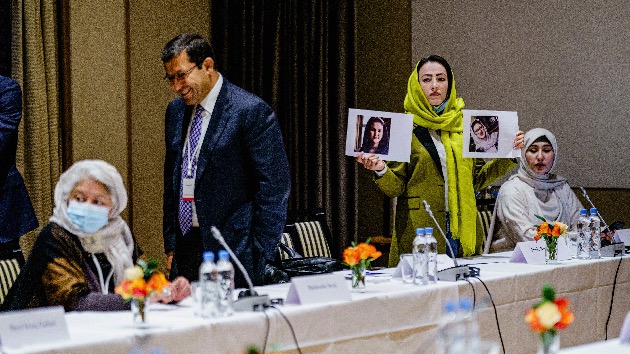
(LONDON) — “Pick up the phone right now, call Kabul and ask the girls to be released immediately,” Hoda Khamosh, an Afghanistan woman’s rights activist shouted at the Taliban’s acting foreign minister, Amir Khan Muttaqi, in Oslo, Norway, last week.

Khamosh demanded the release of Tamana Zaryabi Paryani and Parawana Ibrahimkhel, two female activists who disappeared after their houses were raided on Jan. 20. They had attended a series of protests against the Taliban over the past few months.

Khamosh was one of six Afghan women who were invited to sit with Taliban officials as they made their first invited visit to a Western country since taking control of Afghanistan in August. The talks were to discuss the humanitarian and economic situation in Afghanistan.

The invitation led to different reactions from Afghanistan’s various women’s rights activists, with some welcoming it as a chance for Afghan-to-Afghan negotiations. Others felt that Taliban rule should not be normalized by holding such meetings and casted doubts on the trustworthiness of their promises.

“It was important to us that Norway stressed the invitation did not mean recognition of the Taliban,” Khamosh told ABC News, explaining how the “horrible humanitarian situation” in Afghanistan compelled her to sit face-to-face with the Taliban, pushing for a way to get as many concessions from them as possible.

According to the United Nations Children’s Fund, around 10 million children across Afghanistan are in “urgent” need to humanitarian assistance to survive.

“Without urgent action, almost one million children could be severely malnourished in the coming weeks. That is half of all children under the age of 5,” UNICEF says.

“We were discussing how the money can come to Afghanistan and help with opening schools, opening offices, creating jobs and making the economy wheels turn,” Khamosh said.

However, the Taliban’s track record of female suppression has left many women’s rights activists with almost no reason to trust their promises.

“It is why my first request in the beginning of the meeting with the Taliban was to release our fellow activists they had arrested,” Khamosh said.

In the statement released by the governments of the U.S. and Norway about the Oslo meeting, the Taliban was “urged” to do more to stop the alarming increase of human rights violations, “including arbitrary detentions (to include recent detentions of women’s rights activists), forced disappearances, media crackdowns, extra-judicial killings, torture and prohibitions on women and girls’ education, employment and freedom to travel without a male escort.”

However, the acting foreign minister Muttaqi denied the arrests of the activists for whom Khamosh demanded freedom, saying that the Taliban had not arrested or tortured those women.

“I do not trust him,” Khamosh said, reacting to Mottaqi’s denial. She said she’d been handed documents by one of the women’s mothers that showed the women had been taken by the Taliban.

“This is why the west should not give all the money the Taliban wants in one go and not to give it directly to them,” she said. “We have to wait and see the Taliban’s next move and real intention to fulfil their promises first.”

Former Afghan parliamentarian Shinkai Karokhail, who shared the same concerns as Khamosh, said the Taliban must end its hostilities against women and take a moderate approach towards human rights, as many things have changed since the last time they had the control of the country.

Karokhail advocated for women’s rights during her term, but had to flee Afghanistan when the country fell into the Taliban’s hands.

“Two decades has passed and lots of changes happened in the life of Afghans,” she said, adding that the Taliban has no way but to end isolating women from their social an economic life of Afghanistan.

The Taliban did not respond to ABC News’ inquiry about the Oslo talks and the topics discussed.

Karokhail said she feels the West must ask the Taliban to prove themselves before entering into talks, telling ABC News: “We have to use this Oslo event like a ticket. A ticket that must not be used so much.”

ABC News’ Aleem Agha contributed to this report.

Copyright © 2022, ABC Audio. All rights reserved.

Michigan’s ‘fairer’ election maps challenged for ‘diluting’ Black vote

Michigan’s ‘fairer’ election maps challenged for ‘diluting’ Black vote
ABC News

(NEW YORK) — Michigan, one of the nation’s hottest political battlegrounds, is being hailed for a citizen-led effort to transform its famously gerrymandered election maps into some of the fairest and most competitive ahead of the fall midterm elections.

“This is just one small step to start taking power back and even the playing field for voters to be able to actually control our elections and get the results we want,” said Katie Fahey, the 32-year-old independent from Grand Rapids who sparked the grassroots redistricting reform movement with a 2016 Facebook post.

The state’s closely watched experiment in redistricting by independent commission — rather than by partisan state legislators — could provide a model for other communities gripped by political polarization, experts say. Only eight other states limit direct participation of elected officials in the drawing of state and federal districts.

“People, when they go to the polls, they want to think that their vote matters. Whereas a lot of the time, when seats are gerrymandered to favor one party or the other, basically no matter what, those elections won’t be competitive,” said Nathaniel Rakich, a FiveThirtyEight senior elections analyst.

“The [new Michigan] map just does a really good job of making sure that neither Democrats’, nor Republicans’ votes are wasted,” Rakich said.

But six months before Michigan’s voters can put the new maps to the test, a barrage of partisan legal challenges threatens to blunt an achievement praised by the likes of former Republican Gov. Arnold Schwarzenegger and former Democratic President Barack Obama.

“Are these maps better for partisan fairness? Yes. Could they be better? Absolutely,” said state Sen. Adam Hollier, a Democrat who represents historically majority Black neighborhoods in metro Detroit.

Hollier is among a group of Detroit Democrats who allege in a state lawsuit that the maps “dilute” the power of Black voters in violation of the Voting Rights Act. African American voters are “almost completely politically silenced,” the complaint claims.

Republicans, who have controlled both chambers of the state legislature for years, allege in a separate federal lawsuit that the newly drawn political districts aren’t of equal population size as legally required and unlawfully split up several cities and counties.

“I think we did a very good job of sort of putting our individual feelings on the shelf and making sure we were doing what was best for the people of Michigan,” said Rebecca Szetela, a lawyer, mother of four and political independent who chairs the state’s first 13-member Independent Citizens Redistricting Commission.

“I think that the maps should be fair and balanced moving forward, and I think that people will feel once again that their vote is their voice and that they have the ability to elect someone that represents them,” Szetela said.

Michigan’s old state and federal political districts — in place for the past decade — have been considered some of the most unfair and unbalanced in the country — drawn by Republicans, to favor Republicans. Just two of the state’s 14 congressional districts are rated as competitive by FiveThirtyEight.

“Michigan’s a super purple state. About 50% of us vote for Democrats; about 50% of us vote for Republicans,” said Fahey. “But depending on what party had gerrymandered, that party would have like a supermajority and be able to pass whatever kind of legislation they want, even though theoretically, we should have compromise on almost every single bill.”

The new maps are cleaner, fairer and more competitive for both parties, according to FiveThirtyEight’s nonpartisan Redistricting Tracker. It achieves this by unpacking the gerrymandered majority Black and heavily Democratic districts around Detroit, spreading those voters across new districts creating a blend of urban and suburban voters.

Yvette McElroy Anderson, a longtime community advocate and field director of the Fannie Lou Hamer Political Action Committee, said the disappearance of majority Black districts will make it harder for minority candidates to get on the ballot.

“It’s hurting the ability of Black candidates as well as hurting African Americans to have people that will represent the interests that needs to be represented on their behalf,” Anderson said. “Fifty-one percent or better is what the Voting Rights Act says. So if we don’t do that, then we are doing a disservice to the African American population.”

Hollier, who is challenging the commission to go back to the drawing board before the state’s August primary election, argued that it’s possible to achieve districts that are both majority Black and more competitive.

“Black candidates, particularly from urban communities, and from across our state, have typically raised less money because there’s less money in their districts,” Hollier said, “and we talk about how much money has impacted politics. It changes who can run for things, and where the elected officials come out of.”

Szetela argued that the new maps will enhance the power and influence of Black voters in more races and create more opportunities for representation. The two new congressional districts in metro Detroit would have roughly 44% African American voter representation.

“The data that we were looking at showed that even with lower percentages, that Black voters will be able to elect their candidates of choice,” she said. “And because we divided up some of those districts that were historically 80 to 90% African American into more districts, there should be better representation.”

Rakich said the debate doesn’t have an easy answer.

“On one hand, [the critics] do have a point because certainly a district that is 44% Black is less likely to elect a Black representative,” he said. “But at the same time, because of our system of elections, it’s also very likely that even a 44% Black district would elect a candidate preferred by Black voters.”

State and federal courts will likely decide the fate of Michigan’s new maps, and it’s the voters in November’s midterm elections who will put them to their first big test.

“As a lawyer, I’m never confident on what’s going to happen in a court because courts can rule any way that they want to,” said Szetela. “At the end of the day, we did our good faith effort to come up with very good maps for the people in the state of Michigan.”

Fahey, who is now counseling at least 13 other states on redistricting reform, said she’s confident that no matter where the lines are drawn, the commission’s impact will be a positive change over the old maps.

“It means that we’ll have more competitive elections; it means that we’ll probably have some more moderate candidates who are actually listening to both Democrats and Republicans,” she said.

Copyright © 2022, ABC Audio. All rights reserved.
5 persons of interest in HBCU bomb threat investigation: Source

5 persons of interest in HBCU bomb threat investigation: Source
Drew Angerer/Getty Images

(WASHINGTON) — The persons of interest were connected to spoofed calls – emanating from a fake telephone number, the FBI official said, according to the source familiar with the contents of a call between FBI and DHS officials and state and local law enforcement on Tuesday.

No bombs have been found.

During the call, the federal officials went into more detail about the nature of the bomb threats, which started in early January, and the most recent, which occurred Monday against HBCUs and other universities, according to the source.

In the past few days, the FBI reported over 20 bomb threats to HBCU’s and other institutions — from Howard University in Washington, D.C. to Jackson State University in Jackson, Mississippi.

Several of the schools canceled classes amid concerns about the threats.

The FBI on Wednesday said it is investigating the bomb threats to predominantly HBCUs as hate crimes, according to a statement released by the Bureau.

“Although at this time no explosive devices have been found at any of the locations, the FBI takes all threats with the utmost seriousness and we are committed to thoroughly and aggressively investigating these threats,” the statement says.

They FBI says investigation is being coordinated with 20 FBI field offices and is the “highest priority” for the Bureau.

The first threat against the HBCUs came against Xavier University of Louisiana on Jan. 4, and according to the FBI official briefing state and local law enforcement, it was racially motivated.

Following that threat in early January, two Black churches were also targeted with bomb threats – none came to fruition.

There were also three bomb threats against Jewish facilities on the last day in January, but officials aren’t clear if those are connected, according to a source briefed on the contents of the law enforcement call.

Copyright © 2022, ABC Audio. All rights reserved.

Suspect in deadly Bridgewater College shooting was former student: Court records

Suspect in deadly Bridgewater College shooting was former student: Court records
WCAV-TV

(BRIDGEWATER, Va.) — The suspect in a shooting on a Virginia college campus that left two officers dead was a former student at the institution, according to court documents.

Andrew Wyatt Campbell, 27, faces multiple felony charges, including two counts of capital murder, in connection with Tuesday’s shooting at Bridgewater College.

A campus police officer and a campus safety officer were fatally shot after responding to a call of a “suspicious male individual” on the grounds of the college’s Memorial Hall, Virginia State Police spokesperson Corinne Geller told reporters Tuesday.

Geller did not elaborate on any connections between the alleged shooter and the small, private liberal arts college. However, in court records obtained by Harrisonburg, Virginia, ABC affiliate WHSV, authorities noted that Campbell had dropped out of Bridgewater College.

Bridgewater College confirmed with WHSV that Campbell, of Ashland, Virginia, was once a member of the college’s track and field and cross country teams. He attended the school from 2013 to 2017, a school spokesperson told The Associated Press.

In 2017, Campbell was charged with trespassing for entering the campus’ Kline Campus Center, the school’s main dining hall, “after being banned,” an arrest warrant at the time stated.

Several college employees called 911 Tuesday after seeing the suspect in and around the college’s Memorial Hall. “He was not supposed to be in this particular location,” Geller told reporters.

Campbell was charged with two felony counts of capital murder, one felony count of first-degree murder, one felony count of use of a firearm in the commission of a felony and aggravated felony murder of more than one person within three years in connection with the shooting, court records show. He is being held without bond at the Rockingham County Jail.

The suspect made his first court appearance Wednesday via video conference for an arraignment in Harrisonburg/Rockingham General District Court. His attorney requested that Campbell undergo a mental health evaluation, WHSV reported. His next court appearance is scheduled for Feb. 16 at 1 p.m.

Police are investigating a motive in the shooting, which killed Bridgewater College Campus Police Officer John Painter, 55, and Campus Safety Officer Vashon “JJ” Jefferson, 48.

Painter joined the department in May 2019 after retiring as chief of the Grottoes Police Department in Virginia, and Jefferson joined in August 2018.

The two were close friends and known to many as the “dynamic duo,” according to Bridgewater College President David Bushman.

Virginia Gov. Glenn Youngkin ordered that flags in the state be flown at half-staff Wednesday “in respect and memory of the officers lost.”

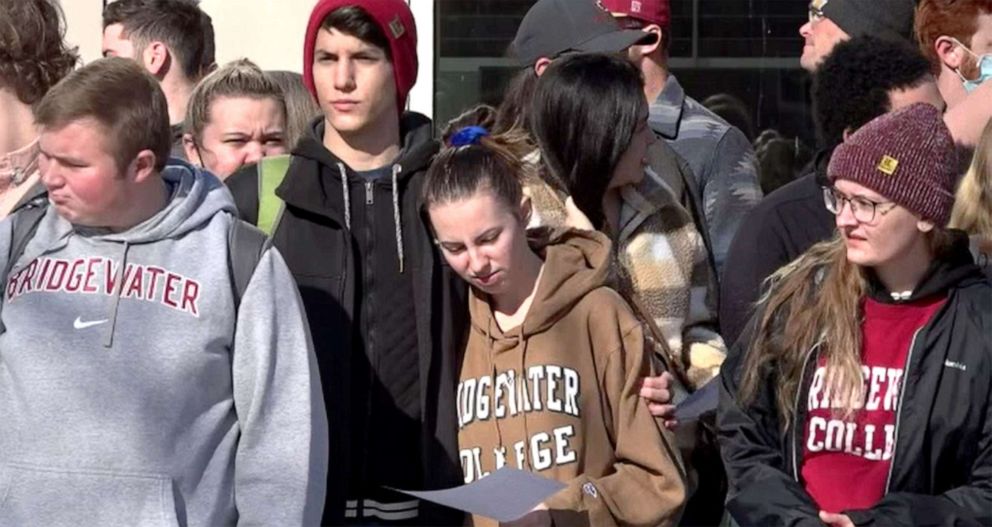
In the wake of the tragedy, Bridgewater canceled classes for the remainder of the week and gathered to sing the school’s alma mater Wednesday.

Bushman told ABC News’ Pierre Thomas in an interview Wednesday that the tight-knit campus community is suffering an “unspeakable” loss.

“We’ve navigated a pandemic together and it’s almost like you’re getting back to normal. And then it’s just, it’s unimaginable,” Bushman said.

“In so many ways this hurts so deeply because we are a tight community, but that’s also our greatest strength,” he said. “And that’s why I know we know we will grieve together and will heal.”

The officers were “always together” and on a first-name basis with students, the president said.

Bridgewater College sophomore Jack Cataneo, 20, told ABC News the incident feels “like a bad dream.”

“It really makes you think because it could happen to anybody,” he said.

ABC News’ Quinn Owen, Sarah Shales and Ben Stein contributed to this report.

Copyright © 2022, ABC Audio. All rights reserved.

Texas hospital fighting COVID-19 surge in community with high comorbidity rates

Texas hospital fighting COVID-19 surge in community with high comorbidity rates
ABC News

(MCALLEN, Texas) — When 21-year-old, first-time mother Samantha Reyna arrived in labor at DHR Health Women’s Hospital in McAllen, Texas, she was stunned to learn that she was positive for COVID-19.

“I was actually completely shocked,” Reyna, who gave birth Sunday, told ABC News. “I didn’t think I was going to be positive while going into labor.”

Although Reyna has had minor symptoms, out of precaution, she and her husband made the difficult decision to keep her 1-day-old son, Santos, in the nursery, in an effort to keep him from catching COVID-19.

“It’s been a little sad, because I don’t have him here with me. I’m not able to be there for him in case he cries or anything,” Reyna said.

Although there are encouraging declines in COVID-19 cases and hospitalizations across much of the country, many U.S. hospitals, including DHR Health, continue to struggle with significant numbers of COVID-19 patients in need of care. Many of these patients suffer from obesity and other comorbidities, such as diabetes and hypertension, which put them at increased risk from severe disease due to COVID-19, according to health care workers.

“Our population is a sick population. We have one of the worst levels of diabetes and obesity in the nation,” Dr. Federico Vallejo, a pulmonary critical care physician at DHR Health, told ABC News. “And as you know this, this can be really difficult for any population. So that’s why we saw incredible cases of sick patients, because our population has increased risk because of these comorbidities.”

A number of pregnant people, who are at increased risk for severe illness from COVID-19 because of their pregnancy, are also coming in positive, hospital officials said, with between 10% to 15% of patients who are delivering testing positive.

Over the last two years, nearly 167,000 pregnant people tested positive for COVID-19, and at least 267 pregnant people died, according to federal data.

Throughout the pandemic, the emotional toll of testing positive has had a significant impact on expectant mothers.

“You could see the fear in their eyes, thinking they and their baby were going to die. Initially there was a lot of misinformation and fear from moms about ‘What do I do now that I am positive? Is my baby going to get it now that I’m positive, because I’m pregnant?'” Dr. Flor A. Limas, an obstetrician and gynecologist at DHR Health, told ABC News.

Available intensive care units in Texas are still running low, with 8% of beds currently available across the state.

“Omicron is supposed to be mild, but it’s not mild for the health care system,” Dr. Juan Sarmiento, a critical care intensivist at DHR Health, said.

Dr. Juan Marcos Chavez Paz, a critical care physician at DHR Health, added that though virus-related hospitalization numbers are slowly beginning to abate, his team is still not out of the woods yet.

“I think that we passed the tsunami, but we’re still having waves, some big ones coming, and I’m sure there will be more coming in the future,” he told ABC News.

According to Vallejo, a small fraction of the population in need of care are immunocompromised patients who have fallen ill despite being previously vaccinated.

“We’re seeing the poor souls that are collateral damage, those that did everything right, they got their vaccinations, but unfortunately they’re immunosuppressed because of different circumstances — organ transplants, cancer with chemotherapy — and those sadly get sick, despite the vaccine, but this is more of a fraction of them,” Vallejo said.

The physicians stressed that the vaccines have been a “game-changer,” explaining that the majority of their patients who are becoming severely ill are unvaccinated.

Reyna, who is unvaccinated, has now been reunited with her baby, and said she wants to get vaccinated, and is now considering the shot for her son, too.

“Without vaccines right now, we’d be in hell,” Sarmiento said.

Copyright © 2022, ABC Audio. All rights reserved.