
‘Broken heart’ cases surge during COVID, especially among women

‘Broken heart’ cases surge during COVID, especially among women
ABC News

(NEW YORK) — Groundbreaking research by several top American medical centers has identified a COVID pandemic spike in cases of so-called “broken heart syndrome,” a potentially deadly stress-induced heart condition that doctors say is disproportionately impacting women.

“My heart felt like it was pounding out of my chest,” said Mary Kay Abramson, 63, of Brookeville, Maryland, who was diagnosed with the condition last year. “It just felt like the blood just couldn’t get through the heart fast enough.”

An otherwise healthy and active corporate travel agent, Abramson said the episode occurred without symptoms or warning signs and even surprised the doctors trying to diagnose it.

“[My cardiologist] comes up to my head and says, ‘have you been under a lot of stress, because your arteries look fine?'” Abramson said of the hospital bed conversation last year. “So, yeah, a little bit: I’ve been furloughed for three months. COVID is going on. You know, can’t get out and do things. We’re shut down. So, yeah, I have been under a lot of stress!”

It was a classic case of Takotsubo cardiomyopathy, or broken heart syndrome, her doctors say. The rare but dangerous form of heart disease is triggered by intense emotional or physical stress when a sudden flood of hormones is believed to stun the heart into pumping less efficiently.

Teams of experts at Cedars-Sinai in Los Angeles, Cleveland Clinic and Johns Hopkins have each been tracking a recent surge in cases, likely spiking substantially during the pandemic, they say. The data is still being gathered and long-term implications examined.

“I don’t know how much we can really blame COVID, or how much of this is that we’re just recognizing more of it,” said Dr. Noel Bairey Merz, director of the Barbra Streisand Heart Center at Cedars-Sinai. “But heart disease is the leading killer of women and all ages, including teenagers, midlife women and older women. This is just a component of that major killer. So it’s really something that needs to be addressed.”

Bairey Merz says cases of broken heart syndrome have risen up to 10 times faster among middle-aged and older women than among younger women and men over the last decade. The disease is most common in this group as well.

Thirty-four-year-old tech recruiter Jenna Pilja of Huntington Beach, California, thought she was mentally prepared to give birth to her first child during COVID but was suddenly overcome last year after an emergency Cesarean section, potentially triggering a broken heart episode.

“Hearing that my son might not have been OK, that certainly could have triggered me, maybe more because of past trauma,” Pilja said. “Despite being on pain medication, I was able to feel some concerning symptoms. I had really bad dizziness and I had the worst headache I’ve ever had in my life.”

Her doctor later diagnosed the episode as a probable case of Takotsubo cardiomyopathy. Pilja is still undergoing evaluation but is expected to make a full recovery.

“As cardiologists we always think the heart is the most important organ. It’s the brain and the brain controls everything,” said Bairey Merz.

The brain-heart connection is at the center of Dr. Bairey Merz’s research at the Cedars-Sinai Smidt Heart Institute. ABC News got an exclusive look inside the hospital’s high-tech simulation center where imaging data illustrates how stress can literally break a heart.

“You hear people say, ‘oh, she’s broken-hearted’ or somebody is broken-hearted because they had a breakup… but they may come in with this and it’s a real diagnosis. It was just, like, unbelievable to me,” said Zearlisha Kinchelow, 35, a single mom and nursing student in Kansas City, Missouri, who was diagnosed with a broken heart.

“They just told me I was at 10% heart function,” she said. Her heart function has since returned to normal with therapy and changes to her diet and exercise, she said.

For Elaine Kamil, 75, a pediatric nephrology specialist in Los Angeles, immense grief after the unexpected death of her 31-year-old-son physically took a toll on her heart.

“The pain was severe. I got lucky,” said Kamil, who believes she has had multiple episodes of broken heart syndrome in the past few years. “I think it’s important to make sure that whoever you’re seeing — cardiologists understand Takotsubo [cardiomyopathy] and what the best treatments there are.”

While many hearts heal quickly, Bairey Merz says one in five people who suffers a broken heart will have another attack within 10 years.

“Taking care of yourself is definitely more than, you know, just taking care of your body,’ said Pilja. “It’s really about looking after your mental health and your overall well-being and making sure that you’re taking time to engage in activities that help relax you and help you process your emotions in a useful way.”

Growing evidence suggests doing so is one key to maintaining a healthy heart.

Copyright © 2022, ABC Audio. All rights reserved.

Biden to meet with German chancellor, urge united front amid tensions with Russia

Biden to meet with German chancellor, urge united front amid tensions with Russia
Rudy Sulgan/Getty Images

(WASHINGTON) — President Joe Biden will welcome German Chancellor Olaf Scholz to the White House Monday at a critical time for the leaders as tensions with Russia persist.

While the Biden administration has warned for weeks that Russia will face “severe” consequences if it invades Ukraine, Germany has often opted for a softer response, refusing to send military equipment to Ukraine or deploy more troops to the eastern flank. Germany has also shown reluctance to shut down Nord Stream 2, a Russian gas pipeline that will carry gas directly to Germany, bypassing Ukraine.

Meanwhile, Biden has been rallying European allies to respond to Russia’s threats in lockstep with his more aggressive plan. Meeting with Scholz Monday, Biden will be looking for Scholz to express unity with the U.S. posture towards Russia.

On Nord Stream 2, in particular, a senior Biden administration official was blunt.

“We have made our position very clear, which is that if Russia invades Ukraine in one way or another, Nord Stream 2 will not move forward,” the official said on a briefing call with reporters.

While the official acknowledged “the narrative that’s been out there” that Germany’s response to Russia has been lacking, they were not outright critical of Scholz’s hesitations thus far. But they declined to say whether U.S. officials have already convinced the Germans to get on board with the plan to block Nord Stream 2 entirely if Russian President Vladimir Putin decides to move.

“We’re confident that the Germans share our concerns with Russian aggression, that they’re very involved in our ongoing efforts on both deterrence and diplomacy,” the official said. “What I can say is that we will continue to work very closely with Germany to ensure the pipeline does not move forward.”

When asked if the administration is working on ways to prevent the Nord Stream pipeline from becoming operational regardless of if Russia invades, the official underscored the U.S. opposition to the project overall.

“There is not currently any gas flowing through the pipeline. And there won’t be any gas for months, in part because of the diplomacy that the United States has been able to do on this issue with Germany,” the official noted.

ABC News has learned Putin now has 70% of the troops necessary to possibly launch a full-scale attack on Ukraine in place along the Ukrainian border. With U.S. intelligence indicating Putin is preparing for a large-scale invasion, the senior administration official said key allies like Germany are being kept aware of the situation.

“I absolutely think that our countries are unified in terms of awareness of the risk of further Russian aggression to Ukraine. We have been for a long time sharing intelligence with Germany with the rest of our allies,” the official said. “And I think there is absolutely absolute agreement, that if there is further Russian aggression, that there’s a number of things that need to be done in terms of deployment of additional troops to the eastern flank, and to the imposition of a large package of economic sanctions.”

Scholz’s visit will come almost two months to the day since he took office, highlighting the importance of the U.S.-German relationship.

Biden first met with Scholz in October at the G-2 summit, when former Chancellor Angela Merkel invited the then-finance minister to accompany her to her meeting with Biden, giving the leaders a chance to meet ahead of Scholz taking the helm.

Copyright © 2022, ABC Audio. All rights reserved.

Frontier and Spirit airlines to merge

Frontier and Spirit airlines to merge
CT757fan/Getty Images

(DENVER) — Low-cost carriers Frontier Airlines and Spirit Airlines announced plans on Monday to merge, which would create ​the fifth-largest U.S. airline by revenue passenger miles.

The deal, which is valued at more than $6 billion, leaves Frontier controlling 51.5% of the combined airline and Spirit with 48.5%.

Together the two airlines offer more than 1,000 daily flights to over 145 destinations in 19 countries with their all-Airbus fleets.

In a joint release, Spirit and Frontier said they expect the deal will allow them to add 10,000 direct jobs by 2026 without the need for layoffs.

The airlines estimate it will create $1 billion in annual savings for consumers.

“Together, Frontier and Spirit expect to change the industry for the benefit of consumers, bringing more ultra-low fares to more travelers in more destinations across the United States, Latin America and the Caribbean, including major cities as well as underserved communities,” the airlines said.

The merger is expected to close in the second half of the year with William A. Franke, chair of Frontier’s board, serving as the chairman of the combined company.

“We worked jointly with the Board of Directors and senior management team across both carriers to arrive at a combination of two complementary businesses that together will create America’s most competitive ultra-low fare airline for the benefit of consumers,” Franke said in the announcement.

Combined, the company would have annual revenues of approximately $5.3 billion based on 2021 results.

They have yet to make an announcement on specifics such as the name of the new combined airline, the CEO, or where it will be based.

Copyright © 2022, ABC Audio. All rights reserved.

Mental health is a focus for Team USA at Beijing Olympics

Mental health is a focus for Team USA at Beijing Olympics
Maja Hitij/Staff/Getty Images

(NEW YORK) — During the Summer Olympics in Tokyo last year, star gymnast Simone Biles shined a light on the mental health struggles many Olympians face when she decided to withdraw from competition.

Now, the United States’ best figure skaters, skiers and snowboarders will be vying for gold medals as they also deal with the strain of a global pandemic for the second year in a row.

“The Olympics present particularly unique challenges for elite athletes,” Dr. Joshua Norman, a sports psychiatrist at The Ohio State University Wexner Medical Center, told ABC News. “Many of them train their entire life for this one moment and a lot of them are removed from their support systems.”

He continued: “With the isolated experience of being at Olympic Village, with having such intense focus on competition … and particularly in today’s climate with COVID-19 with the athletes being tested multiple times a day and then they’re further isolated out of fear of getting COVID-19, it’s a very unique experience that can place significant physical and mental strain on the elite athletes.”

For the Winter Olympics in Beijing, Team USA has made it a priority to address and protect the mental health of its more than 200 athletes.

What Team USA plans to do

Athletes will have access to therapists and psychiatrists throughout the Olympic Village and venues, ability to attend individual or group therapy sessions and a crisis hotline they can call, Dr. Jessica Bartley, the U.S. Olympic & Paralympic Committee’s director of mental health services, said during a media summit in October 2021.

She said that most of the athletes underwent several mental health screenings.

“The majority of our winter athletes, we actually did some mental health screens around anxiety, depression, eating disorders, sleep, alcohol and drug use over the summer,” Bartley said. “And then we’re going to repeat that. And just trying to keep tabs on them a little bit too.”

Team USA has also compiled a list of counselors whom athletes can contact and will allow free access to wellness apps.

In addition to the pressure of competing, Olympians will have several strict rules in place during the Games including staying within the closed loop system that doesn’t allow outsiders, daily screening and testing, mask-wearing with few exceptions and avoiding hugs or handshakes, according to the Olympics playbook.

Norman said the athletes do what they can to be physically and mentally prepared, but that some of the stringent measures may be hard to handle.

“Certainly, once arriving there and that being such a strange experience — particularly for those who it’s their first time participating in the Olympics — it can be somewhat of an overwhelming experience at times,” he said.

Athletes putting their mental health first

Dr. Leela Magavi, a psychiatrist with several patients who are student and professional athletes, offered some tips for athletes. For example, instead of practicing all day, athletes can take mindfulness walks, write in a journal or spend time talking to family members.

She also recommended that Team USA advocate for athletes expressing their thoughts openly.

“Rather than asking a close-ended question, ‘Are you depressed or anxious?’ ask ‘How are you coping with the anxiety?'” Magavi told ABC News. “When they’re anxious and internalizing those feelings, they don’t sleep as well, they don’t eat as well, they don’t play as well.”

Norman said that it’s important not only for athletes to keep on top of any current treatments, but to have constant communication with their support staff for any new or evolving conditions that may be affecting them.

Biles is not the first athlete to speak out about mental health. Michael Phelps, the most decorated Olympian of all time, has been candid about his struggles with ADHD, depression and even suicidal thoughts.

However, Biles is perhaps the most high-profile athlete to pull out of events to focus on her mental health after she revealed she had “the twisties,” which is when a gymnast loses their sense of where they are in the air.

“​​Whenever I think about Biles’ decision, she really helped people speak up,” Magavi said. “I’ve had people say, ‘I never thought you could even do that. If you were experiencing something like twisties, that could even say that.’ I do think that her decision did bridge the gap between mental and physical health.”

And it seems like some professional athletes have followed suit.

Prior to the NHL announcing that no hockey players would be traveling to the Olympics due to Beijing’s strict COVID measures, Las Vegas Golden Knights goalie Robin Lehner said he would not be playing for the Swedish national team, citing mental health struggles.

Lehner, who has been open about his bipolar disorder diagnosis, said that after consulting with his doctors, he had made the difficult decision to stay in the U.S. instead.

“Reality is that what [has] been said about how it’s going to be is not ideal for my mental health,” he tweeted Dec. 6. “Took long time to make [a] decision with my psychiatrist and family. My well-being [has to] come first and being locked down and not knowing what happens if you test positive is [too] much of a risk for me.”

The experts commended Lehner for his decision and called it “courageous.”

“It takes an enormous amount of confidence to speak up,” she said. “Athletes are accustomed to internalizing their feelings. When athletes are unable to sleep, eat or function, it’s often tied to a poor sports performance.”

How athletes speaking up removes the stigma

Magavi said that she hopes more athletes speaking out about mental health removes some of the pressure they face.

“Athletes are human beings like you and I,” she said. “Athletes have all kinds of insecurities. They want to win the gold as much as we want them to win it for us. But they also have the right to determine whether they want to play.”

“They are more attenuated with their bodies, their emotions and, if they’re feeling the time is not right, it’s their decision,” she added.

Norman said that athletes speaking up could also remove the stigma around mental health for everyday Americans and help them realize how common mental health conditions are.

“You’re not alone. Folks who are extremely high achieving like Simone Biles, Michael Phelps, a lot of elite athletes, also struggle with mental health conditions,” he said. “I think having folks like that with those types of platforms speaking out, it really helps not only other athletes but folks within the general population that may look up to these athletes. It may help them seek treatment.”

The psychiatrists added that giving Olympians a chance to address their mental health concerns will lead to better performances and, in turn, lead to more medals for the U.S.

“If we come back with healthy, safe players, we may also bring back the gold,” Magavi said. “It’s a win-win situation.”

Copyright © 2022, ABC Audio. All rights reserved.
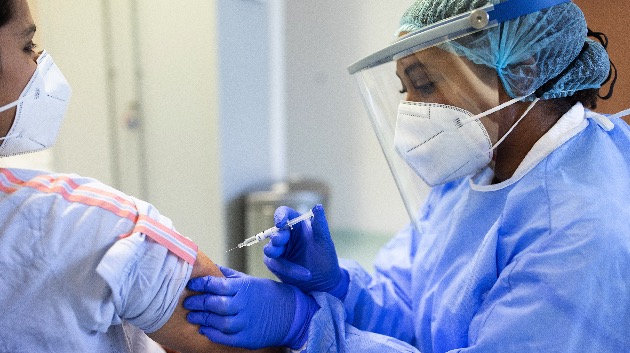
COVID-19 live updates: Ottawa declares state of emergency over trucker-led protests

COVID-19 live updates: Ottawa declares state of emergency over trucker-led protests
Luis Alvarez/Getty Images

(NEW YORK) — As the COVID-19 pandemic has swept the globe, more than 5.7 million people have died from the disease worldwide, including over 902,000 Americans, according to real-time data compiled by Johns Hopkins University’s Center for Systems Science and Engineering.

About 64.1% of the population in the United States is fully vaccinated against COVID-19, according to data from the Centers for Disease Control and Prevention.

Here’s how the news is developing. All times Eastern:

Feb 07, 5:48 am
Ottawa declares state of emergency over trucker-led protests

Canada’s capital declared a state of emergency on Sunday because of trucker-led protests against COVID-19 vaccine mandates and other pandemic-related restrictions.

The move by Ottawa Mayor Jim Watson “reflects the serious danger and threat to the safety and security of residents posed by the ongoing demonstrations and highlights the need for support from other jurisdictions and levels of government,” according to a statement from the city.

“It also provides greater flexibility within the municipal administration to enable the City of Ottawa to manage business continuity for essential services for its residents and enables a more flexible procurement process, which could help purchase equipment required by frontline workers and first responders,” the city said.

Seven people were arrested in Ottawa on Sunday due to enforcement measures around the demonstration, according to a press release from the Ottawa Police Service.

“There are over 60 criminal investigations so far related to the demonstration,” police said. “They are primarily for mischief, thefts, hate crimes and property damage.”

Sunday marked the 10th straight day of the so-called “freedom convoy” protests, which began with truckers critical of a new rule that they must be vaccinated against COVID-19 to cross the United States-Canada border. The demonstrations have since grown into broader challenges to pandemic-related public health measures and opposition to Canadian Prime Minister Justin Trudeau.

Thousands of protesters have occupied the streets of Ottawa and other cities across Canada in support of the movement, paralyzing the capital’s city center with traffic jams, nonstop noise and complaints of harassment. Protesters have said they won’t leave until all COVID-19 vaccine mandates and restrictions are lifted nationwide. They are also calling for the removal of Trudeau’s government, even though most of the public health measures were put in place by provincial governments.

Copyright © 2022, ABC Audio. All rights reserved.

Navy SEAL candidate dies after ‘Hell Week’ training

(SAN DEIGO) — A Navy SEAL candidate has died and a second is in the hospital after falling ill on Friday just hours after both had successfully completed the grueling culmination of initial SEAL training known as “Hell Week.”

Both sailors were quickly taken to local hospitals hours after they began showing symptoms of illness.

On Sunday, the Navy identified Seaman Kyle Mullen, 24, of Manalapan, New Jersey, as the SEAL candidate who died. He was assigned to the Naval Special Warfare Basic Training Command in San Diego, California.

“We extend our deepest sympathies to Seaman Mullen’s family for their loss,” Rear Adm. H.W. Howard III, commander of the Naval Special Warfare Command, said in a statement.

Mullen was pronounced dead at 5:42 p.m. Pacific Standard Time on Friday at Sharp Coronado Hospital in San Diego, officials said. His cause of his death remains under investigation.

The name of the hospitalized SEAL candidate was not released, but they are in stable condition at Naval Medical Center in San Diego, officials said.

“Two SEAL candidates, assigned to Naval Special Warfare Basic Training Command, were taken to the hospital on Feb. 4 several hours after their Basic Underwater Demolition SEAL (BUD/S) class successfully completed Hell Week, part of the first phase of the Navy SEAL assessment and selection pathway,” said a statement from the Navy’s Special Warfare Command.

Hell Week is the famous end to the first phase of BUD/S training where sailors who want to be SEALs are pushed to the limit of physical and mental exhaustion through a series of intense training. More than half of the SEAL candidates who go through Hell Week do not complete the grueling week of training that allows them to continue on through the six months of SEAL training.

“Both Sailors were not actively training when they reported symptoms and were transported to receive emergency care,” the statement from the Navy added.

The last Navy SEAL candidate to die during BUD/S training was 21-year-old Seaman James Lovelace who drowned in a pool during his first week of training in May 2016. After his drowning, the Navy instituted additional safety protocols to the swimming program.

“SEAL training takes you beyond your personal limits,” said Eric Oehlerich, a retired SEAL and ABC News contributor. “It’s designed to push you beyond your perception of what’s possible, breaking glass ceilings of what you’re capable of both mentally and physically.”

Oehlerich said he believes the difficult training for prospective SEALs is carried out within proven medical boundaries and run by highly trained professional instructors, but he acknowledged that there are risks involved in all types of military training.

“From time to time training fatalities do occur. Although tragic, adhering to the training curriculum keeps SEALs alive in combat,” he said. “It’s necessary, it can’t be diluted.”

“Condolences to the family of the trainee,” Oehlerich said. “They’ll always be a part of the community and we will always be there as able.”

Copyright © 2022, ABC Audio. All rights reserved.

Puerto Rico may be nearing the end of bankruptcy. What does this mean?

Puerto Rico may be nearing the end of bankruptcy. What does this mean?
Merrill Images/Getty

(NEW YORK) – Last month, a federal judge approved the largest debt restructuring plan ever reported in the United States, paving the way to end Puerto Rico’s long and painful bankruptcy process.

The plan — capping a years-long debate between creditors and local and federal officials — reduces the largest part of the island’s largest outstanding debt portion from $33 billion to about $7 billion. Debt originally amounted to $70 billion plus $50 billion in pension obligations.

Puerto Rico’s Electric Power Authority separately owes more than $9 billion. The financial oversight board responsible for extricating the island from bankruptcy expects to have a plan for that debt later this year.

Last week, the longtime executive director of the board, Natalie Jaresko, who helped negotiate the plan, announced her resignation effective in April. She and the board have faced criticism for the length of time it took to negotiate the plan as well as austerity measures imposed in the meantime, but they lauded the deal as a historic step for Puerto Rico’s future.

Although the plan is a step forward in moving Puerto Rico out of crushing debt, experts remain concerned about the island’s economic future.

According to the Center for the New Economy’s policy director Sergio Marxuach, the plan is “based on long term projections for the economy, which are very uncertain.”

Economists are expecting an influx of money to reach Puerto Rico in the next five years linked to the recovery efforts from both hurricanes and the earthquakes. But the rest of the economy remains uncertain.

“I want to believe that elected officials in Puerto Rico and in the U.S. are concerned that Puerto Rico needs to grow after the reconstruction ends,” economist and professor at the University of Puerto Rico, José Caraballo-Cueto told ABC News.

“The economy is not going to grow by itself, and it’s not going to grow jobs based on more fiscal stimulus either by receiving new federal funds or rather by issuing new debt,” Caraballo-Cueto added.

How Puerto Rico’s economy faltered?

Decades of mismanagement and excessive debt led Puerto Rico to file for bankruptcy in 2016 under the Puerto Rico Oversight Management Economic Stability Act (PROMESA). The law, signed by former President Barack Obama, gave the island an alternative because, as a territory, it could not file under Chapter 9, the traditional avenue for financially distressed municipalities.

The year before, the island failed to comply with payments on $70 billion in public debt and more than $50 billion in pension obligations. The pension portion of the debt will not be restructured which means every pensioner is supposed to received what they were promised.

“Puerto Rico’s debt is unpayable,” said former Gov. Alejandro García-Padilla in 2015. Under his administration and President Obama’s last term, PROMESA was imposed, including its Financial Oversight and Management Board.

The board, made up of seven members, is in charge of handling the island’s finances and has received criticism from residents, local and federal officials amid the delay in reaching a consensus that would lead Puerto Rico out of the bankruptcy.

In a statement announcing her departure, effective in April, Jaresko touted her achievements during her tenure.

“I am leaving the Oversight Board at a time of recovery and stability. I am proud of what we have achieved, and I am confident that the road that led us to this milestone will take Puerto Rico further to growth and prosperity,” Jaresko said in a statement.

The board’s chair, David Skeel, lauded her work.

“I am saddened by her personal decision to step back but I also understand her desire for a change after five years of rewarding but relentless and difficult work to help Puerto Rico recover from its fiscal and economic crisis,” Skeel said.

Jaresko acknowledged, however, “these have been complex years, and the painful natural disasters, political turmoil, and the pandemic added to the hurdles we needed to overcome,”

Months after the board started working on the island, Puerto Rico was slammed by Hurricane Irma and María causing over $90 billion in losses, according to the local government.

Three years later the island got hit again with thousands of earthquakes and the ongoing pandemic — debilitating Puerto Rico’s economy even more.

What’s next for the island?

Puerto Rico will have to start paying the debt with the hope that the island’s economy will grow independently from the federal aid that is expected to arrive.

“It’s a leap of faith,” Marxuach, from the Center for the New Economy, told ABC News.

“It’s a big concern for us, that once this money dries up, we really don’t have a, you know, strategic vision, as you know, for growing the economy. And we may go back into a recession,” Marxuach added.

Although many experts are aware the agreement is not perfect and risky, they considered it a step forward in getting Puerto Rico out of the financial crisis.

Under the approved plan, pension obligations were protected, securing many retirees that were fearful of their economic stability.

“I think the positive side of this restructuring was that pensions were protected… and I think that’s a big win for the civil society of Puerto Rico,” Caraballo-Cueto told ABC News.

Although he is in favor of fully protecting pensions, Marxuach is concerned what protecting pensions means for the ability to invest in younger generations.

“Protecting the pensions was a good thing but I think about the amount we’re going to be paying on pensions every year going forward, which is about $2 billion and think then think about the amount we’re going to be putting from the general fund into the University of Puerto Rico, which is only $500 million,” Marxuach says.

As Puerto Rico heads into a new phase of the bankruptcy process, experts are warning that this is just the beginning.

“We’re turning the corner and things are starting to look better, but we still have a lot of work to do,” Marxuach said.

Copyright © 2022, ABC Audio. All rights reserved.

Top GOP lawmaker on Biden’s Ukraine approach: ‘Deterrence has not been there’

Top GOP lawmaker on Biden’s Ukraine approach: ‘Deterrence has not been there’
Bill Clark/CQ-Roll Call, Inc via Getty Images

(WASHINGTON) – Rep. Michael McCaul, R-Texas, criticized the Biden administration’s approach toward Russia on Sunday, as the country continues to build up its military presence around Ukraine.

“The deterrence has not been there and deterrence is key,” McCaul told ABC “This Week” co-anchor Martha Raddatz.

The ranking Republican member on the House Foreign Affairs Committee moderated a classified briefing on Capitol Hill earlier this week amid escalating tensions in and around the former Soviet Republic. Secretary of State Antony Blinken and Defense Secretary Lloyd Austin led the briefing for House members on Thursday.

On Thursday, the Biden administration accused Russia of planning to film a fake Ukrainian attack to give President Vladimir Putin a reason to invade the neighboring Baltic state. The U.S. hoped to spoil the operation by making the plan public.

A bipartisan group of senators is close to reaching a deal on a bill that would impose crippling sanctions on Russia for its hostilities against Ukraine.

Copyright © 2022, ABC Audio. All rights reserved.

WH national security adviser says there’s a ‘very distinct’ possibility of Russian attack on Ukraine

WH national security adviser says there’s a ‘very distinct’ possibility of Russian attack on Ukraine
Oliver Contreras/Sipa/Bloomberg via Getty Images

(WASHINGTON) – As the standoff between Russia and the United States continues, White House National Security Adviser Jake Sullivan warned of a “very distinct” possibility Russia will attack Ukraine at “any time now.”

“We believe that there is a very distinct possibility that Vladimir Putin will order an attack on Ukraine. It could take a number of different forms. It could happen as soon as tomorrow or it could take some weeks yet,” Sullivan said in an interview with ABC “This Week” Co-Anchor Martha Raddatz on Sunday.

“[Putin] has put himself in a position with military deployments, to be able to act aggressively against Ukraine at any time now,” he added, stressing that the United State is working with allies and continues to urge a path of diplomacy.

Sullivan said the United States is ready to respond, no matter what Russia decides.

“If they choose to go down the path of escalation instead, it will come at enormous human cost to Ukrainians. But it will also, we believe, over time, come at real strategic cost to Vladimir Putin,” he said.

ABC News has learned Putin now has 70% of his troops in place to possibly launch a full-scale attack on Ukraine. The report comes as U.S. troops began arriving in Poland over the weekend after President Joe Biden ordered deployments to reassure NATO allies.

Raddatz pressed Sullivan on the message U.S. troop deployments sends to the Russians as the U.S. continues to push for a diplomatic solution: “You talk about this diplomatic path, but 1,700 US troops just arrived in Poland, part of the 3,000 going in. Three hundred more sent to Germany. … (It) sounds like you’re no longer trying to de-escalate the situation.”

“We have since the beginning for months now, as we have warned about the possibility of a Russian invasion of Ukraine, pursued a two-track approach, deterrence and diplomacy,” he argued.

“Those forces you just referred to have not been sent to fight Russian forces in Ukraine. They have been sent to defend NATO territory because we have a sacred obligation under Article 5 to defend our NATO allies and to send a clear message to Russia, that if it tries to take any military action or aggression against our NATO allies, it will be met with a stiff response, including by the U.S. forces who are on the ground there now,” Sullivan said, adding the U.S. has been “equally clear” it is ready to have “substantive discussions on matters of European security” with Russia.

Sullivan would not get into specifics on how certain an attack is, even though Sen. Marco Rubio, R-Fla., reportedly said after a briefing on the situation that a Russian invasion was a “near certainty.”

“I’m not going to make a prediction about what is going to unfold in the coming days. All I’m going to say is that we, the United States, under the direction of President Biden, are ready either way,” Sullivan said when pressed by Raddatz.

“We are ready,” he said, adding, “And we are ready to respond in a united, swift and severe way with our allies and partners should he choose to move forward with a military escalation.”

As the window for diplomacy appears to be rapidly closing, U.S. officials have repeatedly said they do not believe Putin has made up his mind on how to proceed but no longer describe the threat of a possible invasion as “imminent,” White House press secretary Jen Psaki said Wednesday.

With athletes from around the world gathering to compete in the Winter Olympics in China, Raddatz asked Sullivan if the U.S. believed Putin would hold off on an attack until the games conclude on Feb. 20 — allowing more time for the ground to freeze to facilitate tank movements.

Sullivan said it was possible but stressed that an attack could also come sooner.

“At this point, we’re in the window, meaning that we can’t just assume it’s going to be a couple of weeks off. Is that a possible scenario? Are there reasons to believe that it could happen in that timeframe? Yes. But there are also reasons to believe that Russia, under the direction of President Putin, could take steps before then.”

Sullivan appeared to brush off concerns over China’s alliance with Russia and the impact it could have on the U.S. threat of sanctions after Putin and President Xi Jinping met in Beijing Friday.

“That is an economic power powerhouse, China. Could that undermine your plans for severe sanctions?” Raddatz asked.

“Our view is that China is not in a position to compensate Russia for the economic losses that would come from our sanctions. That’s the analysis that we and the European share, and we believe the Russians and Chinese understand that as well,” Sullivan responded, adding that China would also feel the cost in the “eyes of the world” of supporting Russia.

Copyright © 2022, ABC Audio. All rights reserved.

Queen Elizabeth asks for Camilla to be named queen consort when Charles becomes king

Queen Elizabeth asks for Camilla to be named queen consort when Charles becomes king
Oli Scarff – WPA Pool / Getty Images, FILE

(LONDON) — Queen Elizabeth has marked the eve of her Platinum Jubilee with a request that her daughter-in-law Camilla, the Duchess of Cornwall, be known as queen consort when her son Charles succeeds her as king.

“And when, in the fullness of time, my son Charles becomes King, I know you will give him and his wife Camilla the same support that you have given me,” she wrote in the statement to mark her 70 years on the throne, “and it is my sincere wish that, when that time comes, Camilla will be known as Queen Consort as she continues her own loyal service.”

This is the first time the queen has publicly addressed her daughter-in-law’s role in the future monarchy.

In response to the queen’s remarks, a spokesman for Prince Charles and Camilla told ABC News they are “touched and honoured by Her Majesty’s words,” adding that the Prince of Wales will issue his own statement congratulating the queen on her milestone Sunday.

“This really is an important moment for the queen using this historic milestone of the 70th anniversary of her reign to give Camilla, her daughter-in-law, her blessing, that she wants her to be the queen consort when the moment comes,” explained ABC News Royal Contributor Robert Jobson.

“It’s the first time really she’s spoken about the succession in such detail and she’s really saying when Prince Charles becomes king he deserves to have the support and love of a consort like she did with Prince Philip,” Jobson added.

There have been indications that this was the queen’s intention, and that she is grateful to her daughter-in-law for the support she gives her son. Most recently, the queen gave the Duchess of Cornwall a significant honor, appointing her to the Order of the Garter late last year.

“The Duchess of Cornwall has been an exemplary supporter of the queen and the monarchy,” Ailsa Anderson, the queen’s former press secretary and ABC News royal contributor, said.

“She has demonstrated her commitment in so many causes, including women’s rights and literacy. As a nation we should welcome and embrace this announcement. I believe she will support the Prince of Wales in the years ahead,” Anderson added.

On Feb. 6, Queen Elizabeth will be the first British monarch to reach the milestone of a Platinum Jubilee. Traditionally, the queen spends the day quietly at Sandringham, her Norfolk estate, as she remembers her father George VI who died there 70 years ago.

The queen was on tour in Kenya when she found out her father had died and she was queen, making her the first monarch in 200 years to accede to the throne when overseas.

She left the country a princess and returned a queen, leading the nation in mourning her father. The solemn anniversary makes Feb. 6 a day of mixed emotion for Queen Elizabeth. “The queen normally marks her ascension anniversary privately. It’s obviously a moment of reflection because it’s also the anniversary of her father’s death,” said Victoria Murphy, ABC News royal contributor.

But this year, as it was such a major milestone, the queen hosted a reception at Sandringham on Saturday. Television pictures showed her cutting a cake to mark the occasion. This was her first public appearance since she was hospitalized last October.

In Saturday’s statement she also took the opportunity to thank her people for their support: “I remain eternally grateful for, and humbled by, the loyalty and affection that you continue to give me.”

“As we mark this anniversary, it gives me pleasure to renew to you the pledge I gave in 1947 that my life will always be devoted to your service,” she wrote.

She also paid tribute to her late husband, Prince Philip, who died last April.

“I was blessed that in Prince Philip I had a partner willing to carry out the role of consort and unselfishly make the sacrifices that go with it,” she wrote.

Jobson argued that the queen wants Charles to have similar support from Camilla when he becomes king, and that this announcement will make the transition to his kingship easier.

“She realizes she’s not going to live for much longer. She’s 96 in April and she wants everything sorted out, so there’s continuity and a smooth succession; and there’s no controversy over whether or not Camilla should be queen,” Jobson said.

Jobson said Camilla’s future role is purely as companion and adviser.

“The reality is she will never reign as queen; she’s there as a supporter to the Prince of Wales,” he said. “There have been enough dramas in the royal family in the last year or so, to last a lifetime. So what the queen wants is a calm and smooth succession.”

Copyright © 2022, ABC Audio. All rights reserved.