(SAN FRANCISCO) — San Francisco voters overwhelmingly cast their ballots to remove three members of the city’s school board Tuesday night, marking the first time in the city’s history members of the board have been recalled.
In an election marred by debate over the pace of school reopenings during the pandemic and the management of controversial social issues in the district, School Board President Gabriela López and board members Faauuga Moliga and Alison Collins were all ousted, with more than 70% of voters backing the effort to recall them, preliminary results from the San Francisco Board of Elections showed.
“As the first results post for the recall election, it appears we were unsuccessful at defeating my recall,” Moliga said on his Facebook page. “We fought hard and ran a great campaign. I want to thank the Pacific Islander community for standing up and taking on this challenge. There are many more fights ahead of us.”
The three members will now be replaced with appointees selected by Mayor London Breed, who endorsed the recall, until another election is held for the positions in November.
In a statement Tuesday night, Breed said that voters “delivered a clear message that the School Board must focus on the essentials of delivering a well-run school system above all else” and recognized “all the parents who tirelessly organized and advocated in the last year.”
“Elections can be difficult, but these parents were fighting for what matters most — their children,” Breed said. “It’s time we refocus our efforts on the basics of providing quality education for all students, while more broadly improving how this City delivers support for children and families.”
When reached for comment by ABC News, Autumn Looijen, campaign co-lead at Recall the SF School Board, said over text that the reaction in her house was “total celebration.”
“It’s one thing to think you’ll win,” she said. “Quite another once it’s real.”
San Francisco’s recall has drawn widespread attention amid a year in which 25 recall efforts have been launched against 66 officials nationwide, according to tracking by Ballotpedia.
“School boards are where the rubber meets the road when it comes to Americans meeting their government,” ABC News Political Director Rick Klein said of the recall. “Schools, for better or worse, are the battlefront. They’re where the major issues of 2022 are colliding for so many Americans.”
Financial documents reviewed by ABC News show the effort in San Francisco has largely been bankrolled by big donors who don’t have children in the district.
According to campaign finance records, some of the biggest backers are 95-year-old billionaire Arthur Rock and PayPal COO David Sacks, who contributed nearly $400,000 and more than $74,000, respectively.
“You’d never think that a liberal member of a school board in San Francisco would have to worry about his or her job,” Klein said. “The power of the arguments that are being put forward and on display in this recall election, I think will animate so many campaigns up and down the ballot for state and national political office in 2022.”
(WASHINGTON) — The House select committee investigating the Jan. 6 Capitol attack on Tuesday issued six subpoenas to Trump campaign staffers and Republican operatives in several key battleground states who supported efforts to send “fake electors” to Congress in an effort to challenge the 2020 election results.
The group includes Michael Roman and Michael Brown, who worked on Election Day operations for Donald Trump’s 2020 campaign, as well as Mark Finchem, Arizona GOP Party Chair Kelli Ward and former Michigan GOP Chair Laura Cox.
Finchem is now running to serve as Arizona’s top election official, while Ward has sued to stop the committee from obtaining her and her husband’s phone records.
The committee also subpoenaed Pennsylvania state Sen. Doug Mastriano, who chartered buses to Washington, D.C. on Jan. 6 and organized a post-election hearing in Gettysburg, Pennsylvania, to raise claims of widespread and unproven voter fraud. He was also involved in Trump’s White House meeting with Pennsylvania GOP lawmakers in December of 2020, as Trump worked to overturn the results in the state and in other presidential battlegrounds.
Mastriano was also a leader of the GOP’s 2020 election audit in Pennsylvania, which was based on a similar review conducted by Republicans in Arizona.
Cox, the leader of the Republican Party in Michigan during the 2020 election, also supported Trump’s efforts to challenge the results in her state. In the aftermath of the election, Trump also gathered a group of Michigan GOP lawmakers at the White House to make his case.
“The Select Committee is seeking information about efforts to send false slates of electors to Washington and change the outcome of the 2020 election,” Jan. 6 committee chairman Bennie Thompson, D-Miss., said in a statement. “We’re seeking records and testimony from former campaign officials and other individuals in various states who we believe have relevant information about the planning and implementation of those plans.”
Thompson recently told ABC News that the panel’s planned public hearings this spring would review Trump’s state-level pressure campaign and the unsuccessful lawsuits that sought to challenge election results in key swing states, and will possibly include testimony from state and local election officials.
To date, the committee has collected tens of thousands of pages of records, conducted more than 560 interviews and issued at least 81 subpoenas.
(NEW YORK) — Researchers revealed on Tuesday that an American, described as a middle-aged woman of mixed race, has likely been cured of HIV after undergoing a new transplant procedure using donated umbilical cord blood.
The patient, who needed a stem cell transplant for leukemia, reportedly developed a new HIV-resistant immune system following a breakthrough procedure in which she was genetically matched with umbilical cord stem cells that contained an HIV-resistant mutation.
She was part of a study that began in 2015 designed to monitor outcomes of 25 people with HIV in the U.S. who underwent a transplant, according to the National Institute of Allergy and Infectious Diseases.
Dr. Yvonne Bryson, an infectious disease physician at UCLA, who led the study, discussed their team’s finding along with the patient’s condition at the Conference on Retroviruses and Opportunistic Infections this week.
“Today, we reported the third known case of HIV remission and the first woman following a stem cell transplant and using HIV-resistant cells,” Bryson said in a press conference.
“This case is special for several reasons: First, our participant was a U.S. woman living with HIV of mixed race, who needed a stem cell transplant for treatment of her leukemia. And she would find a more difficult time finding both a genetic match and one with the HIV-resistant mutation to both cure her cancer and potentially her HIV. This is a natural, but rare mutation,” she said.
Bryson added that while this approach of using genetically-matched umbilical cord blood with HIV-resistant mutation opens the door to more diverse populations and studies, she confirmed there is no current routine screening in place in the U.S. for this mutation.
Previously, only two men have been cured of HIV using a bone marrow or stem cell transplant. And while this is the third known case, according to Bryson’s team, of HIV remission in an individual who received a stem cell transplant of any kind, experts in the field caution that this method is not ideal for curing the many millions of HIV-positive people around the globe today.
Bryson said there could eventually be “approximately at least 50 [people] per year that may benefit from this.”
In an interview with Community Health Center, Inc., Dr. Anthony Fauci, the leading expert in infectious disease in the U.S., whose work in HIV care and treatment innovation spans four decades, said, “I don’t want people to think that now this is something that can be applied to the 36 million people [globally] who are living with HIV.”
“This person had an underlying disease that required a stem cell transplant. … It is not practical to think that this is something that’s going to be widely available,” Fauci added. “It’s more of a proof of concept.”
While there is no practical and applicable cure for HIV on a large scale, there have been incredible strides in HIV treatment over the years that allow individuals to live a normal and healthy life.
Known as U=U, or Undetectable=Untransmittable, if an HIV-positive person begins HIV treatment and brings the virus in their body to an undetectable level, the individual cannot transmit the virus to someone as long as they remain on said treatment or medication.
Last month, the U.S. Food and Drug Administration approved the first long-acting injectable drug for HIV prevention.
Until recently, the only medications licensed and approved by the FDA for HIV prevention or pre-exposure prophylaxis, most commonly known as PrEP, were daily pills, which slow the progression of an HIV infection in the body.
PrEP is usually taken daily so that it builds up in in a person’s system, to the point that if there is an HIV infection, it prevents the virus from replicating and spreading throughout the body.
When taken as prescribed, PrEP services reduce the risk of getting HIV from sex by about 99%, according to new data from the Centers for Disease Control and Prevention. Now, individuals who feel at-risk of HIV infection have the option of taking the daily pill, or the new shot every two months, after two initiation injections administered one month apart.
On the vaccine front, Moderna recently announced that it’s launched early stage clinical trials of an HIV mRNA vaccine. ABC News previously reported that the biotechnology company teamed up with the nonprofit International AIDS Vaccine Initiative to develop the shot, which uses the same technology as Moderna’s successful COVID-19 vaccine.
Because bone marrow transplantation is a dangerous and risky procedure, it is considered unethical to perform on people with HIV, unless the person also has cancer and needs a transplant as part of their treatment.
(WASHINGTON) — A group of Republican senators sent a letter to the Justice Department on Tuesday to express “strong opposition” to creating a federal no-fly list for unruly passengers, claiming “the majority of recent infractions on airplanes has been in relation to the mask mandate.”
Sens. Mike Lee of Utah, Marco Rubio and Rick Scott of Florida and Ted Cruz of Texas were among those who signed a letter opposing Delta Airlines’ CEO Ed Bastian’s request earlier this month that the DOJ create a “no-fly” list for passengers convicted of federal offenses relating to on-board disruptions.
Last year saw a major spike in unruly passengers, with more than 5,981 reported cases, according to the Federal Aviation Administration. The agency notes, of those cases, 4,290 were mask-related.
“Creating a federal ‘no-fly’ list for unruly passengers who are skeptical of this mandate would seemingly equate them to terrorists who seek to actively take the lives of Americans and perpetrate attacks on the homeland,” the GOP senators’ letter said. “The [Transportation Security Administration] was created in the wake of 9/11 to protect Americans from future horrific attacks, not to regulate human behavior onboard flights.”
The senators argued airlines could create their own no-fly lists and refuse services to unruly passengers, but that it would be an overreach for the federal government to do so.
Many airlines have already done this, but they do not prevent an offender from boarding another carrier. Delta has previously asked other U.S. airlines to share their internal no-fly lists so that people who endangered their crew can’t do so on another airline.
“The creation of this list by DOJ would result in a severe restriction on the ability of citizens to fully exercise their constitutional right to engage in interstate transportation,” the GOP letter said. “It also raises serious concerns about future unrelated uses and potential expansions of the list based on political pressures.”
In Bastian’s request to the DOJ, he indicated that he believes banning unruly passengers from all commercial flights will send a strong signal to the flying public that not following crew member instructions comes with severe consequences.
“This action will help prevent future incidents and serve as a strong symbol of the consequences of not complying with crew member instructions on commercial aircraft,” he wrote.
Unruly passenger incidents onboard Delta planes have increased nearly 100% since 2019, according to Bastian. The airline has placed almost 2,000 people on Delta’s internal no-fly list for refusing to wear a mask and has submitted around 1,000 banned names to the TSA to pursue civil penalties.
Other people in the industry have called for support of a no-fly list for unruly passengers. Sara Nelson, president of the Association of Flight Attendants-CWA, responded in a statement to the GOP senators.
“We’ve been punched, kicked, spit on, and sexually assaulted. This puts everyone at risk and disrupts the safety of flight, which is never acceptable and every single one of the senators who signed this letter knows full well what is at stake if we leave a gap in aviation safety and security,” Nelson said. “It is irresponsible and political brinkmanship that will put our economic security at risk right along with our lives.”
Nelson pushed back against the lawmakers’ argument about mask mandates, noting many charges stem from incidents unrelated to mask-wearing.
“Our union continues to call for the creation of a centralized list of passengers who may not fly for a period of time after being fined or convicted of a serious incident. This is not about ‘masks,’ and the worst attacks have nothing to do with masks,” Nelson said. “You’re either for protecting crew and passengers from these attacks or you’re against. We need clear and consistent rules with strict consequences for those who cannot respect our collective efforts to keep everyone safe – in the air and on the ground.”
Joe DePete, the president of the Air Line Pilots Association, called for the Department of Homeland Security to create a “no-fly list” for unruly passengers.
“There should be zero tolerance for airline passengers who threaten the safety of others,” DePete said in a tweet Tuesday.
Delta responded to the Republican senators in a statement, saying unruly passengers risk the safety of airline staff and other passengers.
“Delta welcomes the interest from Congress as U.S. airlines continue to grapple with an uptick in unruly passengers, putting the safety of airline employees and the flying public at risk,” a spokesperson for Delta told ABC News on Tuesday. “At Delta, nothing is more important than ensuring a safe and secure travel experience for our customers and our people.”
(NEW YORK) — While Russia’s defense ministry said Tuesday that some forces would pull back from Ukraine’s borders after completing military exercises, the U.S. has so far not seen that, President Joe Biden said in an address to the nation.
But worrying U.S. officials, Russians troops are instead moving forward closer to the line, including with medical supplies, and being put into firing positions, sources told ABC News.
The U.S. believes that Russia now has all the necessary pieces in place, including 150,000 troops in the region, to launch a swift and brutal invasion of Ukraine, the sources added — the reason why Biden administration officials have now publicly been saying Russia could move “at any time.”
In particular, ABC News has learned that Russian leader Vladimir Putin had told his military forces to be ready to go by Wednesday, Feb. 16, but it is still unclear whether he has made a decision to attack his neighbor.
The Russian government has denied any plans to invade Ukraine and repeatedly accused the U.S. of “hysteria” with these increasingly urgent warnings about one.
“After Russian troops finish drills and return to barracks, the West will declare ‘diplomatic victory’ by having ‘secured’ Russian ‘de-escalation’ — a predictable scenario and cheap domestic political points,” Russian Foreign Minister Sergei Lavrov said Saturday, according to the country’s foreign ministry.
The U.S. believes an invasion would likely begin with electronic warfare and aerial bombardment against critical infrastructure, the sources said, followed by special operations forces entering Kyiv to decapitate the Ukrainian government and resupplying troops entering from Belarus — with plans to complete their operations in 24 to 72 hours.
During his remarks Tuesday, Biden confirmed that Russian troops “remain very much in a threatening position” — warning that an invasion remains “distinctly possible” and would inflict an “enormous” human toll.
But Biden said the U.S. would welcome Moscow pulling back its forces and engaging in diplomatic talks on U.S. and NATO proposals, on issues like arms control and transparency over military exercises.
While Lavrov said Moscow’s response to those proposals would be transmitted in the coming days, Putin said that Russia’s key demands were being ignored — that Ukraine be barred from joining NATO and that the Western military alliance pull back its forces from Eastern European member states.
The U.S. and NATO have said those are nonstarters — issues that only the alliance itself or individual countries can decide and not under Russian pressure.
“This is about more than just Russia and Ukraine. It’s about standing for what we believe in, for the future that we want for our world, for liberty — for liberty, the right of countless countries to choose their own destiny, and the right of people to determine their own futures, or the principle that a country can’t change its neighbor’s borders by force,” Biden said at the White House.
Biden and Putin spoke Saturday — their first conversation in over a month — while their top diplomats Lavrov and Secretary of State Antony Blinken have spoken twice now in recent days. While the door to continued dialogue remains open, both sides have indicated, there are concerns Russia may resort to war even as it negotiates.
Russia already seized Ukrainian territory when it annexed Crimea in 2014, and since then, it has fomented a war against Ukrainian troops by arming and financing separatists in Ukraine’s eastern provinces known as Donbas. Russian parliament passed a resolution Tuesday calling on Putin to recognize them as independent republics — something Putin indicated he would not yet do.
But sources said if Russia attacks Ukraine, it would likely not be against a small slice of territory in Donbas, but a bloody, brutal and swift campaign to topple President Volodymyr Zelenskyy’s administration and install a puppet government.
Amid the heightened U.S. fears, the U.S. has also been concerned that Zelenskyy’s government hasn’t responded quickly enough and isn’t better prepared for a potential Russian invasion, sources said, including the positioning of its forces in eastern Ukraine.
U.S. officials have been urging better preparedness for two months now, the sources added, but President Zelenskyy and his inner circle have been both intent on staving off a panic and persistent in a belief that Moscow wouldn’t invade.
While some U.S. officials doubt Putin is bluffing given the costs, financial and political, of the buildup, many analysts have been skeptical of dire U.S. assessments — with some saying Putin is achieving his ultimate objective: destabilizing an increasingly democratic Ukraine aligned with the West.
“Putin has the hard experience of humiliation in Chechnya that tells him that while Russia might eventually be able to conquer Ukraine, they can’t hold it, and with any crossing of the border they will pay a very high price in blood and treasure,” said retired Col. Stephen Ganyard, a former senior State Department official and now an ABC News contributor. “If he fails in Ukraine, it could be his rule that ends as well.”
In particular, Ganyard said, a Russian invasion is still facing warm, wet weather conditions that make tank movements and aerial bombardment difficult, while the number of massed Russian troops still pales compared to Ukraine’s forces, especially if Russian troops have to occupy a country the size of Texas.
Biden made clear the U.S. still hopes for a diplomatic off-ramp and for Putin to decide against invasion, even as they continue to make preparations for one — from increased military aid for Ukraine, to coordination with European allies and others on sanctions.
Since Russia’s buildup began, allies and partners have come together quickly to prepare a year’s worth of sanctions work in the last six weeks, sources said, including export controls that could devastate Russia’s economy.
But the U.S. is concerned that Russia could maintain its troop buildup and other ways of pressuring Ukraine short of taking military action — and that that could start to splinter the Western coalition’s unity.
Biden made reference to the economic pain that could be felt at home in the U.S., including elevated energy prices because of Russia’s major role as an oil and gas exporter.
“But the American people understand that defending democracy and liberty is never without cost,” Biden said — adding his administration was taking “active steps to alleviate the pressure on our own energy markets.”
(NEW YORK) — The United States continues to warn that Russia could invade Ukraine “any day” amid escalating tensions in the region.
More than 150,000 Russian troops are estimated to be massed near Ukraine’s borders, U.S. President Joe Biden said Tuesday, as U.S. officials have urged all Americans to immediately leave Ukraine.
Biden said Tuesday that the U.S. has “not yet verified” claims by Russian President Vladimir Putin and the Kremlin that Russia was withdrawing some troops from near Ukraine’s borders.
ABC News has learned Putin had told his military forces to be ready to invade by Wednesday, but it remains unclear whether he has made a decision to attack his neighbor. Meanwhile, Ukrainian President Volodymyr Zelenskyy has called for a national day of unity Wednesday.
Russia has denied it plans to invade and has demanded the U.S. and NATO bar Ukraine from joining the military alliance.
Here’s how the news is developing Wednesday. All times Eastern:
Feb 16, 5:36 am
Russia releases video showing more troops leaving Crimea
The Russian military released more videos on Wednesday morning purportedly showing troops pulling back from Moscow-annexed Crimea.
The footage aired on Russian state media, with one video showing a trainload of armour being carried across the Russian-built bridge that connects the Russian-controlled Crimean Peninsula to Russia’s mainland. Another video shows military trucks driving out of Crimea across the bridge, which Russian state media described as support troops leaving “exercises.”
However, officials in the West and regional analysts continue to caution that they have not yet seen significant movements of Russian troops pulling back from near Ukraine’s borders.
Meanwhile, massive military exercises continue in neighboring Belarus and are not due to finish until Sunday. Belarusian Minister of Foreign Affairs Vladimir Makei said Wednesday that “not a single” Russian soldier will remain in the country once those drills end.
Feb 16, 5:05 am
Zelenskyy wishes Ukrainians ‘a happy day of unity’
Ukrainian President Volodymyr Zelenskyy wished citizens “a happy day of unity” on Wednesday.
Zelenskyy had said on Monday evening that instead of Feb. 16 being “the day of the attack,” he would make it “the day of unity” and declared an impromptu national holiday.
ABC News has learned that Russian President Vladimir Putin had told his military forces to be ready to invade Ukraine by Wednesday, but it remains unclear whether he has made a decision to attack the neighboring country.
“We are all united by our wish to live, to live in peace, to live a happy life with our families, parents and children. We have the full right to all of this, because we’re at home here, in Ukraine,” Zelenskyy said in an address on social media Wednesday morning. “Nobody will love our home as much as we do, and nobody can defend our home as we can. I wish you a happy unity day, my blue-yellow ones, a happy day of unity of Ukraine, in the east and west, in the south and north. It works only together, and when it works, we’re strong.”
(NEW YORK) — As the COVID-19 pandemic has swept the globe, more than 5.8 million people have died from the disease worldwide, including over 923,000 Americans, according to real-time data compiled by Johns Hopkins University’s Center for Systems Science and Engineering.
About 64.4% of the population in the United States is fully vaccinated against COVID-19, according to data from the Centers for Disease Control and Prevention.
Latest headlines:
-Kids’ hospitalization rate 4x higher during omicron surge than delta surge: Study
-US hospitalizations, cases keep dropping
-Omicron and its sublineages accounting for 100% of new cases
Here’s how the news is developing. All times Eastern.
Feb 15, 7:02 pm
Canada to ease some COVID-19 border entry requirements
Canada will loosen some of its border entry requirements, the country’s Public Health Agency announced Tuesday.
Effective Feb. 28 at 12:01 a.m. ET, fully vaccinated travelers will have the option of using a rapid COVID-19 test to meet pre-entry requirements. The test must be administered by a lab or health care entity the day prior to their scheduled flight or arrival at the land border.
Currently, travelers entering Canada must show proof of a negative molecular test, such as a PCR test, taken within 72 hours of their scheduled flight or planned arrival.
Additionally, fully vaccinated travelers randomly selected to do a molecular test on arrival will no longer be required to quarantine while waiting for their results.
Unvaccinated travelers will continue to be required to test on arrival, and unvaccinated foreign nationals will not be permitted to enter Canada unless they meet an exemption.
The adjustments come as the omicron wave has “passed its peak in Canada,” the Public Health Agency said. “As provinces and territories adjust their public health measures, and as we transition away from the crisis phase, it is now time to move towards a more sustainable approach to long-term management of COVID-19.”
ABC News’ Christine Theodorou
Feb 15, 4:14 pm
Coachella, Stagecoach drop vaccination, mask, testing requirements
There will be no vaccination, testing or mask requirements for this year’s Coachella and Stagecoach music festivals in Southern California.
Coachella will be over two weekends — April 15 to 17 and April 22 to 24 — while Stagecoach is set for the weekend of April 29 to May 1.
Event organizers said the festivals will “be presented in accordance with applicable public health conditions as of the date of the event and which may change at any time as determined by federal, state or local government agencies or instrumentalities, artists or the promoter; such requirements may include, without limitation, changes to capacity, attendance procedures and entry requirements, such as proof of vaccination and/or negative COVID-19 test, and other protective measures such as requiring attendees to wear face coverings.”
Feb 15, 3:03 pm
Kids’ hospitalization rate 4x higher during omicron surge than delta surge: Study
The rate of hospitalizations for children and teenagers was four times higher during the omicron surge than the delta surge, according to a CDC report released Tuesday.
Children under 5 — who are ineligible for vaccination — showed the largest hospitalization rate increase, the report found. Hospitalization rates among kids under 5 were about five times higher during the peak week of omicron than during delta’s peak.
ABC News’ Dr. Alexis E. Carrington and Dr. Meaghan C. Costello
Feb 15, 2:08 pm
Getting vaccinated while pregnant may help prevent hospitalization in babies under 6 months: Study
Getting the Pfizer or Moderna vaccine series during pregnancy may help prevent COVID-19 hospitalizations for babies under 6 months old, according to a CDC report.
Prior studies have shown that mothers could possibly pass on antibodies during pregnancy, but this is the first study showing an association between getting vaccinated and protecting the baby.
The study looked at babies under 6 months who were admitted to the hospital for COVID-19 and compared them to babies under 6 months who were admitted to the hospital for another reason.
The study found babies with mothers who were vaccinated were 61% less likely to be hospitalized with COVID-19. Of the babies hospitalized with COVID, 84% of their mothers weren’t vaccinated, the study found.
However, this study was conducted when delta was the predominant variant, so more babies need to be studied to see if data changed with omicron. This study also did not look at how effective boosters are in pregnancy.
ABC News’ Dr. Alexis E. Carrington and Dr. Meaghan C. Costello
(NEW YORK) — A fired Minneapolis police officer charged alongside two former colleagues with violating George Floyd’s civil rights during the fatal arrest took the witness stand in his own defense on Tuesday, saying he “had a different role” than restraining the 46-year-old handcuffed Black man.
Tou Thao, 35, is the first defendant charged in the high-profile federal case to speak publicly about his actions during the 2020 episode that prompted nationwide protests and resulted in the murder conviction of his then-senior officer Derek Chauvin in state court last year.
Thao’s co-defendants, J. Alexander Kueng, 28, and Thomas Lane, 38, have also informed U.S. District Court Judge Paul Magnuson that they will testify in the trial taking place in St. Paul, Minnesota.
Thao was among the first witnesses called by the defense a day after prosecutors rested their case.
He testified that his dream of becoming a police officer was forged by a childhood experience in which Minneapolis police were called to his home to quell a domestic violence incident involving his abusive father, whom he said beat him and his siblings with an extension cord and threatened them with a gun.
Thao said he was trained to use knees to restrain suspects
He testified that as part of his training in the Minneapolis Police Department he was taught to use his knees to keep a suspect pinned to the ground.
Thao’s attorney Robert Paule, displayed for the jury a photo of Thao taken during training in 2009 at the police academy. It showed him and another cadet pinning a handcuffed actor posing as a suspect to the ground in a prone position. Thao explained that he and the other cadet were using their knees to restrain the suspect.
Thao testified that using a knee as leverage prevents a suspect from rolling around or getting up.
“Just to be clear, is this something that was typically taught at the academy when you were there?” Paule asked as he showed the jury several photos of police cadets in training sessions with their knees on the backs and necks of actors pretending to be suspects.
Thao replied, “Yes.”
Paule then asked, “Were you ever told it’s improper?”
Thao answered, “No.”
Several training supervisors from the Minneapolis Police Department testified for the prosecution that all three defendants appeared to ignore their training as the handcuffed Floyd was being held to the ground and became unconscious. Kueng was captured on police body-camera footage played for the jury saying he couldn’t detect Floyd’s pulse.
Prosecutors alleged that none of the defendants did anything to stop Chauvin’s excessive use of force or provide medical assistance to Floyd when he needed it most.
“Super-human strength”
Thao testified that he and Chauvin were partnered up on the day of the Floyd incident. He said they were eating lunch at their precinct when the call came in about Floyd’s arrest outside a Cup Foods store.
He said that as he and Chauvin were responding to back up Lane and Kueng, a dispatcher called them off. But Thao said he and Chauvin continued to drive to Cup Foods.
“From my experience, Cup Foods is hostile to police. It’s a well-known Bloods gang hangout,” Thao testified, adding that he figured Lane and Kueng would not have been aware of that because they were rookies.
He said that he and Chauvin were initially just going to act as security in case things got out of hand, but when they arrived they found Lane and Kueng struggling to get a combative Floyd into the back of a squad car.
Thao testified that in his eight years as police officer, he had “never seen this much of a struggle.” He said it appeared that Floyd was on some kind of drugs and that he had “super-human strength that more than three officers could handle.”
He testified that Floyd complained that he couldn’t breathe while the officers were trying to get him into the squad car. He noted that such a complaint “became a regular occurrence” after Eric Garner, a 43-year-old Black man, died in 2014 after a New York City police officer placed him in a banned chokehold and he repeatedly complained, “I can’t breathe.”
“I had a different role”
Thao said that he initially suggested using a hobble device to restrain Floyd, but decided against it because he suspected Floyd was experiencing “excited delirium,” a syndrome in which a subject displays wild agitation and violent behavior that can sometimes lead to death. He said the use of a hobble would have required a sergeant’s approval and could have delayed the arrival of emergency medical services.
He told the jury that as Lane, Kueng and Chauvin restrained Floyd on the ground, he radioed dispatch to step up the EMS response and made himself “a human traffic cone” by standing in the street to keep cars from hitting Floyd and the other officers.
Paule asked Thao what his response was to seeing Chauvin, a training officer, with his knee on the back of Floyd’s neck.
“It was not uncommon. We had been trained on it,” Thao said.
He said he was more focused on keeping at bay a growing crowd that had gathered.
Paule then asked why he didn’t get physically involved in dealing with Floyd. Thao responded, “I had a different role. I assumed they were caring for him.”
“I had no idea”
Thao testified that he didn’t realize the seriousness of Floyd’s condition until after paramedics took him away in an ambulance and firefighters arrived on the scene looking to assist paramedics with CPR.
“Did you have any idea up to that point of the seriousness of the medical condition of Mr. Floyd?” Paule asked.
Thao answered, “I had no idea.”
“I kind of connected the dots … OK. I guess this guy was in critical condition when they left,” Thao said.
Under cross-examination from Assistant U.S. Attorney LeeAnn Bell, Thao acknowledged he was aware of Chauvin’s knee on Floyd’s neck, that Floyd had stopped talking and appeared to be unconscious. He also agreed that police are trained to immediately start CPR if someone loses a pulse and there are no paramedics around, and have a duty to intervene when they witness another cop committing a crime.
All three defendants are charged with using the “color of the law,” or their positions as police officers, to deprive Floyd of his civil rights by allegedly showing deliberate indifference to his medical needs as Chauvin kneeled on the back of the handcuffed man’s neck for more than nine minutes, ultimately killing him.
Kueng and Thao both face an additional charge alleging they knew Chauvin was kneeling on Floyd’s neck but did nothing to stop him. Lane, who appeared to express concern for Floyd’s well-being during the encounter, does not face the additional charge.
They have all pleaded not guilty to the charges.
ABC News’ Whitney Lloyd contributed to this report.
Cloe Poisson/Tribune News Service via Getty Images via Getty Images
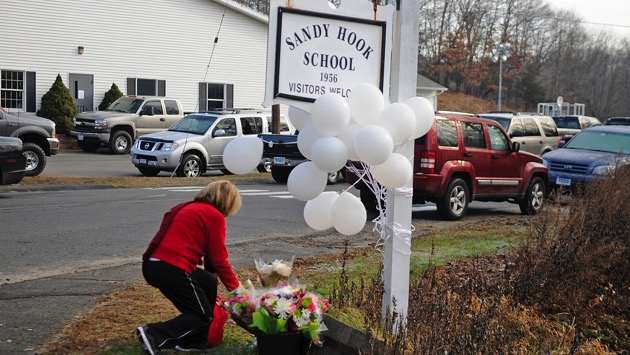
(NEW YORK) — Remington Arms agreed Tuesday to settle liability claims from the families of five adults and four children killed in the massacre at Sandy Hook Elementary School, according to a new court filing, marking the first time a gun manufacturer has been held accountable for a mass shooting in the U.S.
Remington agreed to pay the families $73 million.
The settlement comes over seven years after the families sued the maker of the Bushmaster XM15-E2S semiautomatic rifle that was used in the 2012 mass shooting in Newtown, Connecticut.
Nicole Hockley, whose son, Dylan, was killed in the shooting, said in a statement, “My beautiful butterfly, Dylan, is gone because Remington prioritized its profit over my son’s safety. Marketing weapons of war directly to young people known to have a strong fascination with firearms is reckless and, as too many families know, deadly conduct. Using marketing to convey that a person is more powerful or more masculine by using a particular type or brand of firearm is deeply irresponsible.”
“My hope is that by facing and finally being penalized for the impact of their work, gun companies, along with the insurance and banking industries that enable them, will be forced to make their business practices safer than they have ever been,” Hockley said.
On Dec. 14, 2012, Adam Lanza, 20, forced his way into Sandy Hook Elementary School, and in the course of 264 seconds, fatally shot 20 first graders and six staff members.
The rifle Lanza used was Remington’s version of the AR-15 assault rifle, which is substantially similar to the standard issue M16 military service rifle used by the U.S. Army and other nations’ armed forces, but fires only in semiautomatic mode.
The families argued Remington negligently entrusted to civilian consumers an assault-style rifle that is suitable for use only by military and law enforcement personnel and violated the Connecticut Unfair Trade Practices Act through the sale or wrongful marketing of the rifle.
Remington, which filed for bankruptcy protection in July 2020, had argued all of the plaintiffs’ legal theories were barred under Connecticut law and by a federal statute — the Protection of Lawful Commerce in Arms Act — which, with limited exceptions, immunizes firearms manufacturers, distributors and dealers from civil liability for crimes committed by third parties using their weapons.
Francine Wheeler, mother of 6-year-old victim Benjamin Wheeler, said at Tuesday’s news conference, “Today is about how and why he died. Today is about what is right and what is wrong. Today is about the last five minutes of his life. Which were tragic, traumatic and the worst thing that can happen to a child.”
“Our legal system has given us some justice today but … David [Ben’s father] and I will never have true justice,” she said. “True justice would be our 15-year-old healthy and standing next to us right now. But Ben will never be 15. He will be 6 forever.”
David Wheeler added, “We want to make sure that another father and another mother don’t have to stand here someday.”
Lenny Pozner and Veronique De La Rosa, whose son, Noah, was killed at Sandy Hook, said in a statement, “Our loss is irreversible, and in that sense this outcome is neither redemptive nor restorative. One moment we had this dazzling, energetic 6-year-old little boy, and the next all we had left were echoes of the past, photographs of a lost boy who will never grow older, calendars marking a horrifying new anniversary, a lonely grave, and pieces of Noah’s life stored in a backpack and boxes.”
“Every day is a realization that he should be there, and he is not. What is lost remains lost,” they said. “However, the resolution does provide a measure of accountability in an industry that has thus far operated with impunity. For this, we are grateful.”
President Joe Biden called the Sandy Hook settlement “historic” in a statement and noted that “while this settlement does not erase the pain of that tragic day, it does begin the necessary work of holding gun manufacturers accountable.”
He praised “the perseverance of nine families who turned tragedy into purpose,” who he said showed state and city consumer protection laws can hold gun manufacturers and dealers accountable even as they’re shielded at the federal level.
(NEW YORK) — The leading global producer of avocados is temporarily banned from sending the sought after fruit from Mexico to the U.S.
Despite the demand for imported avocados, the U.S. government announced a ban “until further notice” after a U.S. plant safety inspector in Michoacán — the only state with U.S. market access — received a threatening message to an official cellphone, Mexico’s Agriculture Department Mexico’s Agriculture Department said in a statement, according to the Associated Press.
“U.S. health authorities … made the decision after one of their officials, who was carrying out inspections in Uruapan, Michoacán, received a threatening message on his official cellphone,” the department wrote.
Michoacán has been the site of drug cartel turf battles where avocado growers have experienced extortion, the AP reported.
Despite challenges with the supply chain and harvest due to COVID-19, the Office of Agriculture Affairs for Mexico reported that production and exports from Michoacán were forecast to grow this year.
“Avocados are a significant agricultural product for Mexico, and one of the primary beneficiaries of the U.S.,” the department said in its annual report. “Mexico agricultural trade under the North American Free Trade Agreement (now United States- Mexico- Canada Agreement), with Mexican avocado trade values increasing over 455 percent since its implementation.”
The Office of Agriculture Affairs for Mexico did not immediately respond to ABC News’ request for comment.
Over the past few decades, domestic production of avocados has dropped more than 45%, according to the Avocado Institute of Mexico. The organization reported that avocado consumption in the U.S. skyrocketed from 1.5 pounds to 7.5 pounds from 1998 to 2017.