In this April 5, 2025, file photo, guests ride Stardust Racers, a new dueling roller coaster ride in Celestial Park during a preview day for Universal Epic Universe in Orlando, Fla. Patrick Connolly/Orlando Sentinel/TNS via Getty Images, FILE
(ORLANDO, Fla.) — Investigators have found no criminality in the death of a 32-year-old man who was found unresponsive after riding a roller coaster at Universal’s Epic Universe theme park in Florida in September, authorities announced on Thursday.
Kevin Rodriguez Zavala died after sustaining multiple blunt impact injuries while riding the Stardust Racers roller coaster at the Universal Orlando Resorts park on Sept. 17.
He was pronounced dead at a hospital that night, authorities said.
Following a monthslong investigation, an Orange County Sheriff’s Office report found the “case was deemed an accidental death and was closed accordingly.”
“Because it was determined that no criminal acts occurred in this case, this concludes the Orange County Sheriff’s Office role in this case,” the sheriff’s office said in a statement.
Following his death, the local medical examiner determined that Zavala died from multiple blunt impact injuries and that the manner of death was accidental.
The sheriff’s office investigation’s finding was based on sworn statements, video surveillance, the medical examiner’s findings and the “standard operating procedures provided by Epic Universe,” among other evidence, the report stated.
One person who responded to the scene said in a sworn statement that Zavala was found unresponsive with “severe facial trauma,” and he was still secured in the ride via the lap bar, according to the report.
Zavala’s girlfriend, who was with him on the ride, told authorities in a sworn statement at the hospital that on the first drop he “partially came up out of his seat and hit his head on the metal bar in front of them,” and he “continually hit his head on the bar in front of them as the ride descended.”
She said the ride operator pushed on the lap bar three times until it locked in place, and that he was in the seat correctly, “she just felt the lap bar was too low.”
In the wake of his death, Zavala’s family retained civil rights attorney Ben Crump, who said they are conducting an independent investigation to get to the “truth” and determine if anything could have prevented his death.
Zavala’s father, Carlos Rodriguez Ortiz, said in a press briefing in September that his son was born with a spinal cord atrophy. He used a wheelchair but was “not under any medical restrictions that would have prevented him” from riding the Stardust Racer, Crump said.
His mother said he “loved theme parks” and roller coasters and was excited to go to Universal’s Epic Universe with his girlfriend.
An internal review found the ride systems “functioned as intended,” the “equipment was intact” during the ride and park employees followed procedures, according to a memo sent in the wake of Zavala’s death from Universal Orlando Resort President Karen Irwin to staff.
A Florida Department of Agriculture and Consumer Services spokesperson said in a statement to ABC News following the death that the department’s current findings “align with those shared by Universal after monitoring the same tests and reviewing the same information.”
(VIRGINIA) — For a second time in recent days, a federal grand jury in Virginia has refused to indict New York Attorney General Letitia James for alleged mortgage fraud, sources said.
The grand jury rejected the Department of Justice’s attempt to refile the case after a federal judge dismissed an earlier case based on the unlawful appointment of the U.S. attorney in the Eastern District of Virginia.
Federal prosecutors on Thursday failed to convince a majority of grand jurors to approve charges that James misled a bank to obtain favorable loan terms on a home mortgage, according to sources.
The charges were presented to a grand jury in the Eastern District of Virginia’s Alexandria branch after a grand jury in Norfolk, Virginia, last week rejected the charges.
A Justice Department spokesperson did not immediately respond to a request for comment from ABC News.
“This unprecedented rejection makes even clearer that this case should never have seen the light of day,” James’ attorney, Abbe Lowell, said in a statement. “Career prosecutors who knew better refused to bring it, and now two different grand juries in two different cities have refused to allow these baseless charges to be brought. Any further attempt to revive these discredited charges would be a mockery of our system of justice.”
Prosecutors have alleged that James, who successfully brought a civil fraud case against now-President Donald Trump last year, falsely listed a home she purchased in 2020 as a second home instead of an investment property in order to save potentially $19,000 over the life of the loan with a more favorable mortgage rate.
As ABC News previously reported, prosecutors who investigated James for possible mortgage fraud found evidence that appeared to undercut some of the allegations in the indictment of James secured in September — including the degree to which James allegedly personally profited from her purchase of the property.
James has denied all wrongdoing.
This is a developing story. Please check back for updates.
Heavy rain fall (Photography by Keith Getter (all rights reserved)/Getty Images)
(NEW YORK) — Up to 100,000 people in Washington state could be ordered to evacuate amid the threat of “catastrophic” flooding, officials said.
Washington Gov. Bob Ferguson, who has declared a state of emergency, stressed Thursday that the flooding “is extremely unpredictable” and “potentially historic.”
“If you have instructions to evacuate from your local authorities, please, please, please evacuate,” the governor pleaded.
This dangerous flooding was sparked by an atmospheric river event that dumped more than 1 foot of rain in parts of western Washington state over the last three days.
Multiple rivers are at major flood stage and more are expected to grow into major flood stage later in the day on Thursday.
The Snohomish River at Snohomish has reached a record high of 34 feet, shattering the previous record of 33.5 feet. The river is cresting at this location and may stay near 34 feet until mid-day Friday.
This will put extreme pressure on levees. When the river reaches 33 feet or higher at this location, floodwaters are likely to overtop the levees, and major levee damage is possible.
Record flooding is possible at other river locations, including the Skagit River near Concrete and near Mount Vernon, the Snoqualmie River at Snoqualmie Falls, the Cedar River at Renton, and the Snohomish River near Snohomish Monroe.
Washington Sen. Maria Cantwell said on social media she was “alarmed” to hear the Skagit River could peak as high as 5 feet above its record crest level.
“This is not just another flood,” she said.
At least 30 highways have closed due to flooding, the governor said, and rescue efforts are ongoing.
Eastside Fire and Rescue, which services parts of King County just east of Seattle, started conducting water rescues on Wednesday. Three adults and a dog were rescued after their home flooded, and two adults and a child were rescued in another incident.
Eastside Fire and Rescue released video of the moment two drivers were rescued rescued by helicopter Wednesday night. After the drivers were caught in the floodwaters, they were forced to flee to higher ground, with one person climbing to the top of their car and the other seeking safety in a tree, officials said.
“Stay home and don’t travel unless necessary,” the sheriff’s office urged on Thursday.
In Pierce County, just south of Seattle, officials said teams have already responded to more than 25 rescues.
“Please respect road closure signs and don’t drive around barriers. They are there for your safety — there may be hidden hazards such as large debris, downed power/cable lines or other items that could cause entanglement issues, or the road underneath may be washed out or unstable,” Central Pierce Fire & Rescue said on social media. “Just 6 inches of fast-moving water can knock over an adult. 12 inches of water can carry away most cars.”
About 300 National Guard members are ready to assist, officials said.
Tyler Robinson, 22, the suspect in the fatal shooting of Charlie Kirk, appears before Judge Tony Graf of the 4th District Court via a video confrerence call during a hearing on September 16, 2025 at the Fouth Judicial District Courthouse in Provo, Utah. (Scott G Winterton – Pool/Getty Images)
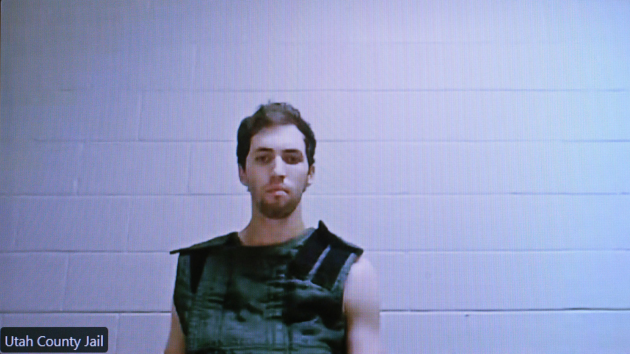
(NEW YORK) — Tyler Robinson, the 22-year-old man accused of killing conservative activist Charlie Kirk, is making his first in-person court appearance on Thursday.
Robinson wore a button-down shirt and a tie, following a judge’s ruling to allow him to wear civilian clothing during pretrial hearings.
Robinson’s parents and brother are in the courtroom for Thursday’s ongoing hearing, according to defense attorneys. The judge said he’s planning to address three issues on Thursday, the first of which is closed to the media.
Kirk was shot and killed in the middle of his outdoor event at Utah Valley University in Orem, Utah, on Sept. 10. The 31-year-old was the founder of the conservative youth activist organization Turning Point USA, and the Utah Valley event marked the first stop of his “The American Comeback Tour,” which invited students on college campuses to debate hot-button issues.
Robinson allegedly fled the scene of the shooting, prompting a massive manhunt. Robinson surrendered to authorities on the night of Sept. 11.
Robinson has been charged with aggravated murder, felony discharge of a firearm causing serious bodily injury, obstruction of justice, two counts of witness tampering and commission of a violent offense in the presence of a child.
Robinson made two previous court appearances, but the first was virtual and the second was audio-only.
He has not entered a plea. He could face the death penalty if convicted of aggravated murder.
This is a developing story. Please check back for updates.
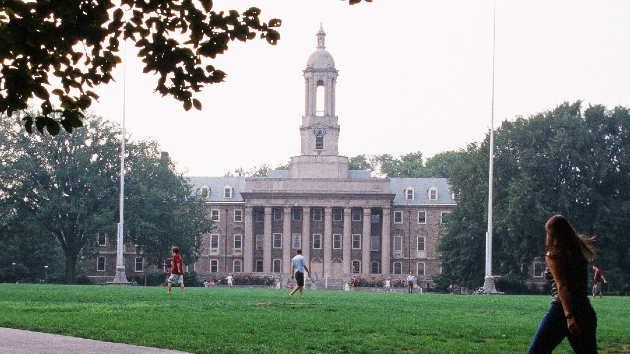
Penn State University (Sporting News via Getty Images via Getty Images)
(NEW YORK) — The Trump administration has expanded its review of colleges and universities across the country this year, threatening to withhold critical funding from some institutions if they do not comply with administration’s policies.
Many universities rely on federal funding for a sizable portion of their research funding. According to Neeli Bendapudi, the president of Penn State University, it is “important” that the federal government “continue that tradition of investing in our higher education system because it’s a huge competitive advantage.”
She, along with several university presidents, recently spoke with ABC News’ Linsey Davis in a wide-ranging discussion on the future of higher ed for ABC News’ “All Access with Linsey Davis.
Bendapudi said that if Penn State had received the administration’s “Compact for Academic Excellence” memo, which offers preferential access to federal funding for higher education institutions, the university would have rejected it.
“It’s very important for universities to have the academic freedom to discuss,” she said. “It’s hard to imagine an institution of higher education where you’re not confronted by ideas and experiences that are not just echo chambers of your own. That is part and parcel of what it means to get a degree, right? So it’s very critical for us. Whoever you are, when you come in, we embrace you, you’re part of the culture of Penn State and we want you to succeed.”
In March, the Department of Education’s office for civil rights launched dozens of investigations into private and public higher education institutions, accusing the institutions of “allegedly awarding impermissible race-based scholarships and one university for allegedly administering a program that segregates students on the basis of race.”
Amid the investigation, a hold on federal funding put millions of dollars for critical research efforts at risk and threatened the progress of scientific innovation at various institutions.
Cornell University in Ithaca, New York, was among those higher education institutions that were investigated by the Trump administration over the past year.
Cornell’s president, Michael Kotlikoff, announced on Nov. 7 that the university had reached a $60 million agreement with the government that would restore more than $250 million in funding for research grants. Cornell was fined $30 million and agreed to invest an additional $30 million for research to support America’s farmers, according to the U.S. Department of Justice. The federal investigation into the university has since been closed.
Kotlikoff reflected on the agreement during the conversation on “All Access,” saying Cornell had multiple “complaints” lodged against the university through the DOJ’s office of civil rights.
“When we started out this discussion with the federal government, we had two goals. One was to restore our relationship with the federal government and restore our funding. And the second was to do it in a way in which we did not compromise our principles,” Kotlikoff said. “We did not have the government dictate our policies or our procedures. And I think we achieved both of those goals, but as part of that, we did agree for the government to end these suits at Cornell, which would have cost us in excess of 30 million to fight, [and] it was costing many careers while our grants were suspended.”
According to the memo, which was reviewed by ABC News, the administration demanded that universities ban the use of race, sex, religion in hiring and admissions; freeze tuition rates for five years; cap the undergraduate enrollment of foreign students; require that applicants take the SAT or a similar admission test as well as change governance structures in the universities that punish conservative ideas.
A White House official confirmed to ABC News in October that letters were sent to nine universities to get feedback about the memo and try to secure agreements. Since then, the offer was extended to other higher education institutions – none of which have agreed to the compact so far.
The University of Arizona in Tucson was one of the nine institutions that received the memo on Oct. 1. In a statement, university president Suresh Garimella said he had “not agreed” to the so-called “compact.”
Garmella said that some proposed federal recommendations “deserve thoughtful consideration” and some are “already in place at the U of A,” but he added that “principles like academic freedom, merit-based research funding, and institutional independence are foundational and must be preserved.”
“As a result, the university has not agreed to the terms outlined in the draft proposal,” Garmella said, indicating that the university submitted a statement of principles to the U.S Department of Education.
Garmella reflected on the university’s decision to reject the compact during the conversation with other presidents on “All Access.”
“The University of Arizona, I believe, demonstrated a serious and a transparent and a constructive approach to this national policy discussion,” Garmella said, adding that the university’s “comprehensive” response to the draft proposal “reflected our commitment to academic excellence, to accountability, to meaningful engagement.”
ABC News’ Arthur Jones II and Hannah Demissie contributed to this report.
(NEW YORK) — Two men were fatally shot and two others were injured in a shooting Wednesday at a New Jersey recording studio used to make music videos, according to officials.
The deceased victims were identified by investigators as Namir Bynum, 20, and Osayuwamen Uyamu, 20.
Bynum was pronounced dead at the scene while Uyamu was taken to University Hospital in Newark and pronounced dead shortly after, according to the Essex County Prosecutor’s Office.
Police have not said if the suspects in the shooting have been identified.
Essex County Prosecutor Theodore N. Stephens II said the shooting was “contained within that particular establishment.”
The incident stemmed from an incident “between friends” on Wednesday, the studio, Platinum Sound NJ, wrote in a post on social media.
Referring to an unnamed victim, the studio said “keep bro in yall prayers! Dont blame him for none dat took place today,” saying the shooting was a “a very misfortunate slimy situation,” the studio said.
Those injured were taken to University Hospital with non-life threatening injuries, according to the prosecutor’s office. One of the victims was treated and released.
An investigation into the incident remains ongoing, according to police.
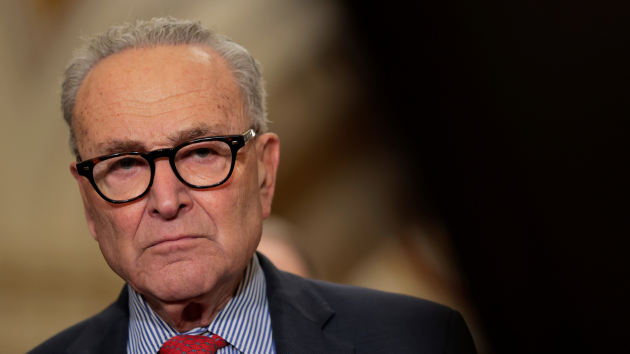
U.S. Senate Minority Leader Chuck Schumer (D-NY) looks on as senators speak to reporters following a Senate Democratic policy luncheon at the U.S. Capitol on December 09, 2025 in Washington, DC. (Photo by Heather Diehl/Getty Images)
(WASHINGTON) — The Senate on Thursday failed to advance two competing health care proposals aimed at addressing a spike in costs that are expected for tens of millions of Americans who receive enhanced Affordable Care Act tax credits.
Both plans, one put forward by Democrats and the other championed by Republicans, failed to get the 60 votes needed.
Now, lawmakers will have only a matter of days remaining to address the expiration of the enhanced tax credits, and there’s little indication that any sort of breakthrough is on the horizon.
Here’s what the plans entailed.
Democratic plan: 3-year extension of expiring enhanced tax credits
The Democratic plan proposed a three-year extension of the enhanced Affordable Care Act subsidies that are otherwise set to expire on Jan. 1. The enhanced subsidies were originally put in place during the COVID-19 pandemic.
During remarks on the floor Wednesday, Minority Leader Chuck Schumer called the Democratic plan the “only realistic path left” to address the looming premium spike.
“We have 21 days until Jan. 1. After that, people’s health care bills will start going through the roof. Double, triple, even more,” Schumer said. “There is only one way to avoid all of this. The only realistic path left is what Democrats are proposing — a clean direct extension of this urgent tax credit.”
Even though Democrats are in the minority, they got a vote on their proposal as part of a deal struck by a small group of Senate moderates to reopen the federal government after a 43-day shutdown, which centered around Democrats’ efforts to address the expiring tax credits.
“What we need to do is prevent premiums from skyrocketing and only our bill does it is the last train out of the station,” Schumer said.
But Majority Leader John Thune made clear Wednesday that Republicans would not support the Democratic plan.
Thune called the Democratic proposal a “partisan messaging exercise” and said that Democrats’ claim that their plan would lower health care costs represented a “tour of fantasy land.”
Republicans have for months been saying that the premium subsidies require reform. Without changes, Republicans say, the enhanced subsidies create opportunities for waste, fraud and abuse and have driven up the overall cost of premiums.
The nonpartisan Congressional Budget Office estimated the Senate Democrats’ proposal would add nearly $83 billion to the federal deficit over the next decade. CBO also estimates that enacting the Democrats’ legislation would increase the number of people with health insurance by 8.5 million people by 2029.
Pointing to the cost of extending the subsidies, Thune said Democrats ought to put forward a program that makes modifications to the program.
“That’s not what they did … No changes,” Thune said. “Just continue to run up the cost. Run up the cost in the individual marketplace like that — but have the American taxpayers pay for it and then go tell people that you’re trying to keep their premiums down,” Thune said. “This does nothing, nothing, to lower the cost of health insurance.”
Republican plan: Do away with the enhanced tax credits and create HSAs
Republicans offered an “alternative” plan on the Senate floor on Thursday.
The Republican proposal, championed by Senate Health Committee Chairman Bill Cassidy and Senate Finance Committee Chairman Mike Crapo, would do away with the enhanced tax credits and instead take the extra money from those tax credits and put it into health savings accounts for those who purchase bronze-level or “catastrophic” plans on the ACA exchanges. Republicans say this will help Americans pay for out-of-pocket costs.
Under the plan, individuals earning less than 700% of the federal poverty level would receive $1,000 in HSA funding for those between age 18 and 49 and $1,500 for those age 50-64. Republicans say these funds could be used to help cover the higher deductibles on lower cost plans.
Republicans said that their plan will reduce premiums through cost-sharing reductions and tout that the plan stops payments to insurance companies. Thune called it a “very different business model” than what Democrats proposed.
“The question is do you want the government deciding this, ordo you want to put this power and these resources in the hands of the American people?” Thune said on the Senate floor on Wednesday. “American taxpayers. Patients. That’ what we’re about.”
Schumer had called it “dead on arrival.”
“I want to be very clear about what this Republican bill represents, junk insurance,” Schumer said. “Let me tell my Republican colleagues: it is dead on arrival. The proposal does nothing to bring down sky-high premiums; it doesn’t extend the ACA premiums by a single day. Instead, Republicans want to send people $80 dollars and pretend that is going to fix everything.” Schumer said.
Cassidy called Schumer’s categorization of his plan as a “junk plan” “so ironic.”
“These are Obamacare plans. These are the plans they put in place, except that when they did the plans, they’ve got $6,000 deductibles, or $7,500 deductibles. We addressed that deductible. We make these plans better,” Cassidy said. “We Republicans are trying to make it better. We want money in your pocket for your out-of-pocket [costs], and they want you to front the whole thing.”
Democrats also took umbrage with provisions in the GOP bill that prevent funds from being used for abortions. Schumer, on the Senate floor, called it a “poison pill.”
Sen. Patty Murray, the top Democrat on the Senate appropriations committee, was asked if she saw any way that Democrats could support the bill.
“Not with the choice issues in it, where they have made it that women cannot get access to an abortion through their plan,” Murray said. “I don’t see any way that this helps the people that are being hurt right now by the tax credits going away.”
Heavy rain fall (Photography by Keith Getter (all rights reserved)/Getty Images)
(NEW YORK) — Up to 100,000 people in Washington state could be ordered to evacuate amid a threat of “catastrophic” flooding from an atmospheric river event, officials said.
Washington Gov. Bob Ferguson, who announced a state of emergency on Wednesday, pleaded with residents to follow evacuation orders and warned on social media, “Catastrophic flooding is likely.”
In Skagit County, north of Seattle, officials called for evacuations amid the major flooding, saying “residents within the FEMA 100-year floodplain need to evacuate to high ground immediately.”
Multiple rivers are at major flood stage and more are expected to grow into major flood stage later in the day on Thursday.
The Snohomish River at Snohomish reached a record high of 33.9 feet on Thursday morning, and it may stay near this level for 24 hours. The floodwaters are expected inundate much of the river valley and could overtop the levees.
Record flooding is possible at other river locations, including the Skagit River near Concrete and near Mount Vernon, the Snoqualmie River at Snoqualmie Falls, the Cedar River at Renton, and the Snohomish River near Snohomish Monroe.
Washington Sen. Maria Cantwell said on social media she was “alarmed” to hear the Skagit River could peak as high as 5 feet above its record crest level.
“Please please please stay alert and follow evacuation orders,” she posted. “This is not just another flood.”
Roads are flooded and closed across North Bend — a city about 30 miles east of Seattle — and mudslides have closed parts of Interstate 90.
Eastside Fire and Rescue, which services parts of King County just east of Seattle, started conducting water rescues on Wednesday. Three adults and a dog were rescued after their home flooded, and two adults and a child were rescued in another incident.
Eastside Fire and Rescue released video of the moment two drivers were rescued rescued by helicopter Wednesday night. After the drivers were caught in the floodwaters, they were forced to flee to higher ground, with one person climbing to the top of their car and the other seeking safety in a tree, officials said.
“Stay home and don’t travel unless necessary,” the sheriff’s office urged on Thursday.
The flooding was sparked by an atmospheric river event that dumped more than 1 foot of rain at higher elevations of western Washington state over the last three days. The heavy rain is continuing Thursday morning and then will weaken throughout the day.
U.S. Senate Minority Leader Chuck Schumer (D-NY) looks on as senators speak to reporters following a Senate Democratic policy luncheon at the U.S. Capitol on December 09, 2025 in Washington, DC. (Photo by Heather Diehl/Getty Images)
(WASHINGTON) — The Senate is now voting on two separate plans aimed at addressing a spike in health care costs that are expected for tens of millions of Americans who receive enhanced Affordable Care Act tax credits unless Congress acts.
Both plans, one put forward by Democrats and the other championed by Republicans, are almost certain to fail.
After they do, lawmakers will have only a matter of days remaining to address the expiration of the enhanced tax credits, and there’s little indication that any sort of breakthrough is on the horizon.
Democratic plan: 3-year extension of expiring enhanced tax credits
The Democratic plan that will receive a vote on Thursday proposes a three-year extension of the enhanced Affordable Care Act subsidies that are otherwise set to expire on Jan. 1. The enhanced subsidies were originally put in place during the COVID-19 pandemic.
During remarks on the floor Wednesday, Minority Leader Chuck Schumer called the Democratic plan the “only realistic path left” to address the looming premium spike.
“We have 21 days until Jan. 1. After that, people’s health care bills will start going through the roof. Double, triple, even more,” Schumer said. “There is only one way to avoid all of this. The only realistic path left is what Democrats are proposing — a clean direct extension of this urgent tax credit.”
Even though Democrats are in the minority, they are getting a vote on their proposal, as part of a deal struck by a small group of Senate moderates to re-open the federal government after a 43-day shutdown, which centered around Democrats’ efforts to address the expiring tax credits.
“What we need to do is prevent premiums from skyrocketing and only our bill does it is the last train out of the station,” Schumer said.
But any health care proposal in the Senate will require 60 votes to pass, which means members of both parties would need to lend votes to approve a plan.
Majority Leader John Thune made clear Wednesday that Republicans will not support the Democratic plan.
Thune called the Democratic proposal a “partisan messaging exercise” and said that Democrats’ claim that their plan would lower health care costs represented a “tour of fantasy land.”
Republicans have for months been saying that the premium subsidies require reform. Without changes, Republicans say, the enhanced subsidies create opportunities for waste, fraud and abuse and have driven up the overall cost of premiums.
The nonpartisan Congressional Budget Office estimates that the Senate Democrats’ proposal would add nearly $83 billion to the federal deficit over the next decade. CBO also estimates that enacting the Democrats’ legislation would increase the number of people with health insurance by 8.5 million people by 2029.
Pointing to the cost of extending the subsidies, Thune said, Democrats ought to put forward a program that makes modifications to the program.
“That’s not what they did …No changes,” Thune said. “Just continue to run up the cost. Run up the cost in the individual marketplace like that — but have the American taxpayers pay for it and then go tell people that you’re trying to keep their premiums down,” Thune said. “This does nothing, nothing, to lower the cost of health insurance.”
Republican plan: Do away with the enhanced tax credits and create HSAs
Republicans will offer an “alternative” plan on the Senate floor on Thursday.
The Republican proposal, championed by Senate Health Committee Chairman Bill Cassidy and Senate Finance Committee Chairman Mike Crapo, would do away with the enhanced tax credits and instead take the extra money from those tax credits and put it into health savings accounts for those who purchase bronze-level or “catastrophic” plans on the ACA exchanges. Republicans say this will help Americans pay for out-of-pocket costs.
Under the plan, individuals earning less than 700% of the federal poverty level would receive $1,000 in HSA funding for those between age 18 and 49 and $1,500 for those age 50-64. Republicans say these funds could be used to help cover the higher deductibles on lower cost plans.
Republicans say that their plan will reduce premiums through cost-sharing reductions and tout that the plan stops payments to insurance companies. Thune called it a “very different business model” than what Democrats are proposing.
“The question is do you want the government deciding this, ordo you want to put this power and these resources in the hands of the American people?” Thune said on the Senate floor on Wednesday. “American taxpayers. Patients. That’ what we’re about.“
This bill is also unlikely to pass the Senate on Thursday. Schumer called it “dead on arrival”.
“I want to be very clear about what this Republican bill represents, junk insurance,” Schumer said. “Let me tell my Republican colleagues: it is dead on arrival. The proposal does nothing to bring down sky-high premiums; it doesn’t extend the ACA premiums by a single day. Instead, Republicans want to send people $80 dollars and pretend that is going to fix everything.” Schumer said.
Cassidy this morning called Schumer’s categorization of his plan as a “junk plan” “so ironic.”
“These are Obamacare plans. These are the plans they put in place, except that when they did the plans, they’ve got $6,000 deductibles, or $7,500 deductibles. We addressed that deductible. We make these plans better,” Cassidy said. “We Republicans are trying to make it better. We want money in your pocket for your out-of-pocket [costs], and they want you to front the whole thing.”
Democrats also take umbrage with provisions in the GOP bill that prevent funds from being used for abortions. Schumer, on the Senate floor, called it a “poison pill.”
Sen. Patty Murray, the top Democrat on the Senate appropriations committee, was asked if she saw any way that Democrats could support the bill today.
“Not with the choice issues in it, where they have made it that women cannot get access to an abortion through their plan,” Murray said. “I don’t see any way that this helps the people that are being hurt right now by the tax credits going away.”
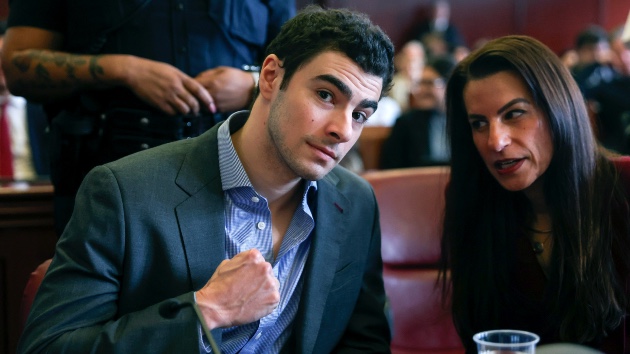
Luigi Mangione (L) appears with his lawyers for a suppression of evidence hearing in the killing of UnitedHealthcare CEO Brian Thompson in Manhattan Criminal Court on December 8, 2025 in New York City. (Photo by Sarah Yenesel – Pool/Getty Images)
(NEW YORK) — Luigi Mangione returned to court in New York City Thursday for a sixth day of a hearing to determine what evidence will, or will not, be used against him when he goes on trial on charges of gunning down UnitedHealthcare CEO Brian Thompson on a Manhattan sidewalk last December.
The day began with an argument by the defense that prosecutors were trying to “prejudice Mr. Mangione” by releasing CCTV footage that showed the killing of Thompson and the aftermath, in which the suspect is seen running across the street as bystanders point in the suspect’s direction.
The defense argued prosecutors had no reason to include the footage in the suppression hearing and accused them of using it as a “vehicle to litigate their case in the court of public opinion” and to “distract from the botched arrest” of Mangione.
Judge Gregory Carro agreed the video is not at issue in the suppression hearing, but said, “We deal with it the way we deal with all the press this case has gotten: in jury selection.”
Prosecutors with the Manhattan district attorney’s office are calling to stand supervisory police officers present at the Altoona, Pennsylvania, McDonald’s where Mangione was apprehended after customers thought they recognized the suspect wanted in New York due to his distinctive eyebrows.
Lt. William Hanelly, the highest-ranking officer present at the McDonald’s where Luigi Mangione was arrested, testified that he called 911 in New York City on his way to the scene “so we could get the ball rolling.”
“We’re acting off a tip from a local business here,” Hanelly is heard saying on a recording played in court. “We might have the shooter.”
Hanelly is then heard clarifying, “The shooter from the UHC,” referring to United Healthcare by its initials. Hanelly also says that the individual at the McDonald’s “matches the photos that your department put out.”
Mangione listened from the defense table as the previously unheard phone call played in the courtroom.
Hanelly stayed on the phone as he arrived at the McDonald’s and the call captured him asking one of his subordinates, “Did you pat him down?”
“At that point we had reasonable suspicion to believe he had been involved in a crime of violence in another jurisdiction,” Hanelly testified. “He could be armed and dangerous.”
Hanelly said he had heard the initial call over the radio dispatching patrolman Joseph Detwiler to the McDonald’s and Detwiler’s “fairly sarcastic” response. Hanelly testified that while “it seemed preposterous” to him a shooting suspect from a New York City homicide had found his way to Altoona, but texted Detwiler “a gentle reminder” to treat the possibility seriously.
The supervisors, a sergeant and two corporals, briefly were overheard on body camera footage debating whether officers needed a warrant to conduct more than a cursory search of Mangione’s backpack, from which police were seen on the footage retrieving the alleged murder weapon, writings, and a note that prosecutors said mentioned “escape routes.”
Defense attorneys say the lack of a warrant made the search and seizure illegal, and they are seeking to preclude the contents of the bag.
They also argue officers were too late reading Mangione his Miranda rights and continued to pepper him with questions after he indicated he preferred to remain silent.
The officers have testified that they lawfully searched Mangione’s backpack pursuant to his arrest for showing them a fake ID, and said they were legitimately concerned Mangione may have had a weapon or explosive.
The officers also testified their questions to Mangione’s about his fake ID and whether his bag contained anything harmful were appropriate under the circumstances.
Prosecutors are expected to rest next week. Judge Gregory Carro is expected to issue a written decision about the evidence sometime in January.