

As war with Iran stretches on, some experts raise concerns over ‘war of attrition’ with missile stockpiles

As war with Iran stretches on, some experts raise concerns over ‘war of attrition’ with missile stockpiles
In this U.S. Navy released handout, Arleigh Burke-class guided-missile destroyer USS Frank E. Petersen Jr. (DDG 121) fires a Tomahawk Land Attack Missile during operations in support of Operation Epic Fury, on February 28, 2026 at Sea. (Photo by U.S. Navy via Getty Images)

(NEW YORK) — While President Donald Trump says Operation Epic Fury could last several weeks, a question some are raising is how long U.S. and allies’ missile defense stockpiles can last in an extended conflict with Iran.

Trump has insisted that the U.S. is well equipped to fight, with a “virtually unlimited supply,” and other Gulf states have pushed back on claims that they are running missiles.

How much of the U.S. interceptor stockpile is being used up to defend against Iran’s continued heavy missile and drone attacks is classified, but it’s expected to be among questions lawmakers have for top Trump administration officials this week when they brief lawmakers on Capitol Hill.

Some experts are also raising concerns about America’s cache of the expensive air defense missiles as the Iranian military continues to target U.S. assets and other allies in retaliation.

Kelly Grieco, a senior fellow at the Stimson Center think tank and former assistant professor at the Air Command and Staff College, told ABC News that the conflict is becoming a “war of attrition.”

Watch special coverage on Nightline, “War with Iran,” each night on ABC and streaming on Disney+ and Hulu.

The U.S. and Israeli militaries are now in a race to destroy Iran’s missile capabilities, including launchers and production facilities, before the U.S. and Israel’s own stockpile of air defense interceptor missiles in the region is depleted, according to Grieco.

“The question is becoming who runs out of missiles first. Does the defender run out of interceptors,” she asked, referring to the armies of the U.S., Israel and the Gulf states. “Or does Iran run out of missiles, or their ability to launch missiles?”

“If the Iranians are able to launch with the kinds of numbers they have been launching over the past 48 hours over the next four to five weeks, that does not seem sustainable from an interceptor perspective,” she added. 

“But if those numbers drop off because the U.S. and Israel destroy the launchers themselves, or their storage facilities, and the numbers drop dramatically, then we could potentially sustain this campaign,” Greico said.

Retired Lt. Gen. Dan Karbler, former commander of the U.S. Space and Missile Defense Command, told ABC News Live Tuesday that extensive drone use by the Iranian military has prompted the use of smaller short-range missiles as interceptors.

“We don’t want to shoot Patriot missiles at the drones,” he said. “So, some of our short-range air defense, more capability of that type of nature needs to flow into countries so we’re using our short-range missiles to take out these drones not our very limited patriot missiles.”

President Trump attempted to assuage concerns about the stockpile Tuesday — but also acknowledged the number of some of the highest-grade munitions is “not where we want it to be.”

“The United States Munitions Stockpiles have, at the medium and upper medium grade, never been higher or better — As was stated to me today, we have a virtually unlimited supply of these weapons,” Trump wrote on social media early Tuesday morning. 

And even as he says the U.S. will “easily prevail” in this war and that the U.S. is prepared for the operation to go on for “whatever it takes,” Trump wrote that “Wars can be fought “forever,” and very successfully, using just these supplies.” 

The U.S. was already concerned about its stockpile before this war as the Russian-Ukraine conflict, the Israeli-Gaza conflict and last summer’s conflict with Iran have dramatically increased demand for Patriot and THAAD missiles, according to Greico.

Terminal High Altitude Area Defense missiles that are used to defend against Iran’s most powerful ballistic missiles are in particularly short supply. Grieco estimated that if the U.S. uses its THAAD missiles at same rate as the 12-day conflict with Iran last year, it likely only has enough for about two weeks now at most.

Grieco said it will take a long time, and be costly, for the U.S. and other countries to replenish their antimissile stockpiles, which are more time consuming and expensive to produce than the Iranian weapons they defend against.

Iran has not launched missiles at the same scale so far compared to the attacks during conflict with Israel last year.

Israeli officials and independent experts said they believe that may reflect a strategy by Iran to run down air defense supplies with relatively smaller but steady attacks over a longer period.

Copyright © 2026, ABC Audio. All rights reserved.
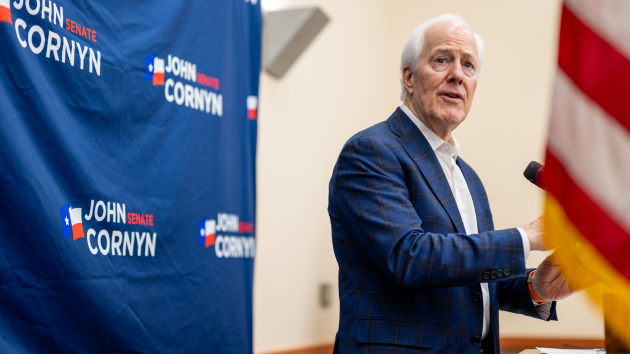
Texas 2026 live primary election results: Cornyn and Paxton headed to runoff, Talarico advances

Texas 2026 live primary election results: Cornyn and Paxton headed to runoff, Talarico advances
Sen. John Cornyn (R-TX) speaks during a Get Out The Vote campaign rally at the Schertz Civic Center Conference Hall on March 02, 2026 in Schertz, Texas. (Brandon Bell/Getty Images)

(NEW YORK) — ABC News projects Texas Sen. John Cornyn will face a runoff against state Attorney General Ken Paxton in the Replican Senate primary in Texas. The Associated Press has projected that Texas state Rep. James Talarico will win the Democratic Senate primary.

The Senate primaries are among those in the state that have national implications and will shed insight into American attitudes one year into President Donald Trump’s second term.

Trump has made it clear that he is keeping a close eye on the state, announcing endorsements in select House races but staying on the sidelines for the Senate race.

In a House race that Trump didn’t make an endorsement in, state Rep. Steve Toth will defeat incumbent four-term Rep. Dan Crenshaw, The Associated Press projects.

State significance

The race between Cornyn, who is seeking his fifth term in the Senate, and Paxton is the “most expensive Senate primary on record,” according to tracking firm AdImpact, with over $122 million dedicated to ad spending and reservations.

On the Democratic side, Talarico defeated Rep. Jasmine Crockett, according to the Associated Press, in a battle between two rising stars in the Democratic Party who both hope to flip the seat for the first time in decades.

This election also marks the moment in which redistricting will begin to play out. Following Trump’s encouragement last summer, Texas spearheaded the redistricting wars — triggering a Supreme Court case, sparking national debate over mid-decade gerrymandering, and prompting other states to follow suit.

Now, newly drawn maps are likely to deliver five GOP pickups for the House of Representatives, where Republicans currently hold a razor-thin majority.

While Texas’ 23rd Congressional District is expected to stay red, the showdown between Trump-endorsed incumbent Rep. Tony Gonzales and Brandon Herrera will be one to watch, especially after multiple Republicans have called upon Gonzales to resign following an alleged relationship with his former staffer who died by suicide.

In the gubernatorial race, ABC News projects Trump-endorsed Gov. Greg Abbott, who is running for his fourth term in a state where governors do not have term limits, will face state Rep. Gina Hinojosa, the Democratic candidate.

Meanwhile, retired MLB baseball star Mark Teixeira is projected to win the Republican primary for Texas’s 21st congressional district, the Associated Press projects.

Copyright © 2026, ABC Audio. All rights reserved.

Maternal mortality rate in the US declines to its lowest since 2018: CDC

Maternal mortality rate in the US declines to its lowest since 2018: CDC
LWA/Dann Tardif/Getty Images

(NEW YORK) — Maternal mortality rates in the United States have dropped to their lowest levels in recent years, according to new data published on Thursday.

The report, from the Centers for Disease Control and Prevention’s National Center for Health Statistics, compared maternal deaths in 2023 and 2024, with maternal deaths defined as the death of a woman during pregnancy or within 42 days of pregnancy termination.

In 2024, 649 women died of maternal causes in the U.S., with a rate of 17.9 deaths per 100,000 births, according to the report.

By comparison, 669 women died in 2023 with a rate of 18.6 deaths per 100,000 births, the report found.

This is also the lowest rate seen since 2018, which had a maternal mortality rate of 17.4 deaths per 100,000 live births.

Data showed significant racial/ethnic disparities. Black women had the highest mortality rate at 44.8 deaths per 100,000 live births.

This was three times higher than the mortality rate for white women of 14.2 deaths per 100,000 live births. Hispanic and Asian women also had lower rates of 12.1 deaths per 100,000 and 18.1 deaths per 100,000, respectively.

Research has shown that Black women are more likely to have pre-existing cardiovascular disease and are more likely to experience adverse pregnancy outcomes, both of which increase the risk of maternal mortality.

Between 2023 and 2024, rates for Black, white and Hispanic women declined while the rate for Asian women rose, but neither the decreases nor the increase was “significant,” according to the report.

There were also disparities by age. Women aged 40 and older had the highest maternal mortality rate of 62.3 deaths per 100,000 live births in 2024.

This was 4.5 times higher than the mortality rate for women younger than age 25, which sat at 13.7 per 100,000 and 3.7 times higher than the rate for women between ages 25 and 39, sitting at 16.5 per 100,000. The report describes the differences in the women aged 40 and older group with the younger groups as “significant.”

More than 80% of pregnancy-related deaths are preventable, according to the CDC. The report did not examine why the maternal mortality rate declined, but the CDC has taken steps to support efforts to prevent pregnancy-related deaths.

Among these are Hear Her, which is a national campaign that shares messages about signs and symptoms during and after pregnancy that warrant seeking urgent medical care.

Additionally, the CDC conducts national surveillance through the Pregnancy Mortality Surveillance System, which is used to better understand the risk factors for and causes of pregnancy-related deaths in the U.S.

Copyright © 2026, ABC Audio. All rights reserved.
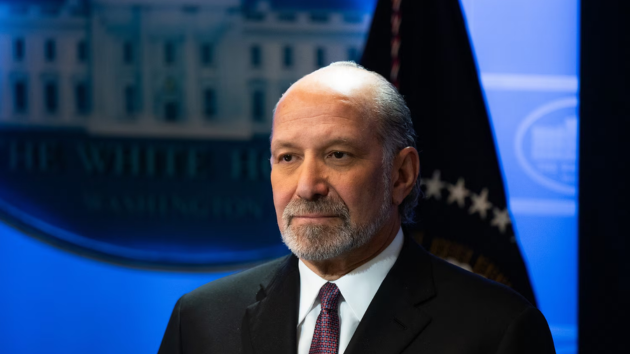
Howard Lutnick to ‘appear voluntarily’ before House panel probing Epstein, chairman says

Howard Lutnick to ‘appear voluntarily’ before House panel probing Epstein, chairman says
Howard Lutnick, commerce secretary during a news conference in the James S. Brady Press Briefing Room of the White House, Feb. 20, 2026. (Annabelle Gordon/Bloomberg via Getty Images)

(WASHINGTON) — Commerce Secretary Howard Lutnick has “agreed to appear voluntarily” before the House Oversight Committee as part of its investigation into the late sex offender Jeffrey Epstein, Committee Chairman James Comer announced Tuesday.

“I commend his demonstrated commitment to transparency and appreciate his willingness to engage with the Committee. I look forward to his testimony,” Comer said in a post on X.

Comer did not specify when the secretary’s appearance will occur.

Lutnick, who lived next door to Epstein for over a decade, previously suggested he had distanced himself from Epstein back in the mid-2000s prior to Epstein’s 2008 conviction for soliciting a minor for prostitution.

“So, I was never in the room with him socially, for business or even philanthropy. If that guy was there, I wasn’t going because he’s gross,” Lutnick said on the “Pod Force One” podcast in October.

The commerce secretary was grilled on Capitol Hill during an appearance last month before a Senate Appropriations subcommittee about his past denial following revelations that the two men remained in contact years after Lutnick suggested he had distanced himself from the convicted sex offender.

In his appearance before the appropriations subcommittee, Lutnick was asked repeatedly about his correspondence with Epstein, detailed in files recently released by the Justice Department, in which it was revealed that he visited Epstein’s Caribbean island in 2012 with his family and others.

Lutnick has denied any wrongdoing.

Tuesday’s announcement from Comer came a day after the House Oversight Committee released video of the appearances of former President Bill Clinton and former Secretary of State Hillary Clinton before the committee last week.

ABC News’ Fritz Farrow contributed to this report.

Copyright © 2026, ABC Audio. All rights reserved.
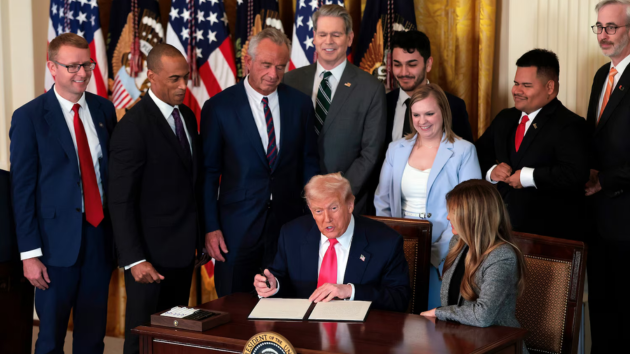
HHS warns states about removing kids from homes without parents’ approval over gender identity disputes

HHS warns states about removing kids from homes without parents’ approval over gender identity disputes
President Donald Trump, joined by first lady Melania Trump, signs the Fostering the Future executive order in the East Room of the White House, Nov. 13, 2025. (Heather Diehl/Getty Images)

(WASHINGTON) — The Trump administration is urging states to stop removing children from their homes over gender-identity disputes at the behest of child welfare agencies without their parents’ approval.

In a letter first obtained by ABC News, the Health and Human Services Department’s Administration for Children and Families (ACF) reminds state child welfare agencies that under the Child Abuse Prevention and Treatment Act (CAPTA), they are barred from removing children from their home because a parent doesn’t agree with the child’s gender identity.

“When states overstep their bounds, ACF will take action to deter inappropriate policies that drive unnecessary interactions with child welfare systems. This is one such example,” ACF Assistant Secretary Alex Adams wrote in a statement Tuesday.

The Trump administration cited multiple examples — from Illinois to California — where children who may reject the sex they were assigned at birth and perceive themselves as a different gender were removed from their homes without parental consent and placed in the child welfare system.

However, Shannon Minter, vice president of legal at the National Center for LGBTQ Rights (NCLR), told ABC News that he is not aware of any state removing children from parents based on their response to a transgender child.

Transgender is an umbrella term for people whose gender identity and/or expression is different from cultural expectations based on the sex they were assigned at birth, according to the Human Rights Campaign. 

Minter called the effort a broader push by the Trump administration to “eliminate” all protections for transgender young people.

“No one is advocating for removing children because a parent is struggling to understand,” he said, adding, “But child welfare professionals need the discretion to assess when rejection crosses the line into real harm — the same way they would for any other child.”

Morissa Ladinsky, a clinical professor in pediatrics at Stanford University in California, argued that children aren’t typically removed from their home without parental consent in this fashion.

“My experience tells me that there is likely more to the story,” Ladinsky told ABC News, adding that she has not seen removal over gender disputes fall under the domain of Child Protective Services.

As the division of HHS that promotes welfare assistance and supports the economic and social well-being of children and families, the agency has said ACF’s duty is to protect families and keep them together. ACF’s letter also stressed that parents hold the right to refuse removal according to their religious beliefs and moral convictions around gender identity.

The letter said breaking the law could violate the First Amendment and states could risk losing federal grant funding under CAPTA. 

“What we’re doing with this letter is we’re putting states on notice,” Adams told ABC News.

“When policies are either increasing the number of kids committed to the system inappropriately or they’re deterring foster families from stepping up, I do think there was a role for ACF to weigh in,” he said, adding, “It does merit federal action.”

The letter to states bolsters an initiative to protect children from the foster-care system amid a shortage of facilities nationwide with only 57 foster homes for every 100 vulnerable kids coming into the system, according to Adams.

The letter comes at the directive of President Donald Trump’s Fostering the Future for American Children and Families executive order and follows the president’s call during his State of the Union address last week for a federal ban on gender transitions for minors.

“Surely, we can all agree no state can be allowed to rip children from their parents’ arms and transition them to a new gender against the parents’ will,” Trump said during his address. “We must ban it and we must ban it immediately.”

Gender identity is described as how a child perceives and calls themself, which can be the same or different from the sex that was assigned to them at birth, according to the Human Rights Campaign. 

However, if a child sees themself as different than the sex assigned at birth, parents have the right to reject this self-identification, the ACF letter says. Under federal law, CAPTA states that a child may not be removed from the home without proof of “abuse” or “imminent risk of harm.” 

The Trump administration has stated that restoring power to parents is one of its top health, education and humanities priorities. But the letter warns that states are usurping parental rights and potentially misinterpreting the CAPTA law if they remove children from their homes without evidence of “abuse or neglect.”

Under ACF, the health department’s human services division administers the largest federal child care program and other federal services that helps millions of households nationwide.

Prior to ACF’s letter to states, lawmakers have taken several child care-related actions against the nation’s health agency under Secretary Robert F. Kennedy Jr. In a previous letter to Kennedy first reported by ABC News, Sen. Elizabeth Warren and other congressional Democrats said the agency’s alleged “disregard” for child welfare undermines the government’s core child-protection obligations amid federal immigration crackdowns.

Adams stressed Tuesday’s letter is supported by the whole organization, including Kennedy, and the secretary has demonstrated his commitment to improving child welfare outcomes across several different domains. 

Copyright © 2026, ABC Audio. All rights reserved.
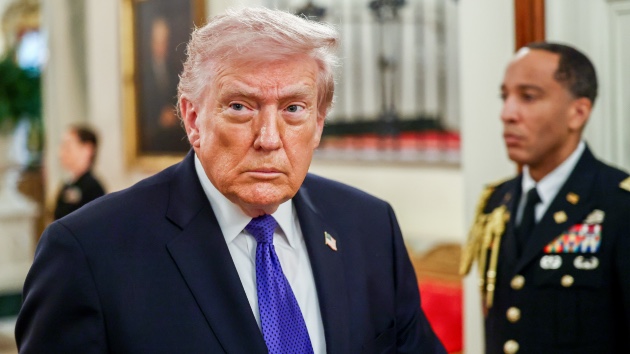
Trump says ‘if anything’ he forced Israel’s hand on Iran attack timing, says Iran was going to strike US first

Trump says ‘if anything’ he forced Israel’s hand on Iran attack timing, says Iran was going to strike US first
US President Donald Trump arrives for a medal of honor ceremony in the East Room of the White House in Washington, DC, US, on Monday, March 2, 2026. President Trump is awarding the Medal of Honor to three US Army soldiers. (Photographer: Jim Lo Scalzo/EPA/Bloomberg via Getty Images)

(WASHINGTON) — President Donald Trump on Tuesday denied that Israel forced his hand into attacking Iran, and in another new explanation, said he ordered the U.S. strike on Iran because he concluded Tehran was going to attack the U.S. first after negotiations stalled.

Trump also acknowledged most of the individuals the U.S. favored to next lead in Tehran have been killed, including some in a new strike on Tuesday.

Hosting German Chancellor Friedrich Merz in the Oval Office, Trump for the first time took questions in public on the war, now in its fourth day and expanding throughout the Middle East.

Amid scrutiny over why the U.S. military campaign against Iran was necessary, and mixed messages from the administration, Secretary of State Marco Rubio told reporters on Monday that the strikes were triggered in part because the U.S. knew Israel was going to attack Iran and Iran would retaliate.

“Did [Israeli Prime Minister Benjamin] Netanyahu pull the United States into this war?” ABC News Senior Political Correspondent Rachel Scott asked Trump on Tuesday.

“No. I might have forced their hand,” Trump replied. “You see, we were having negotiations with these lunatics, and it was my opinion that they were going to attack first. They were going to attack. If we didn’t do it, they were going to attack first. I felt strongly about that.”

“Based on the way the negotiation was going, I think they were going to attack first. And I didn’t want that to happen. So, if anything, I might have forced Israel’s hand. But Israel was ready and we were ready,” Trump continued, appearing to contradict Rubio.

Rubio also told reporters Monday that, despite his comments, Israel didn’t force Trump’s hand. House Speaker Mike Johnson, after a Gang of 8 briefing on Capitol Hill on Monday, said Israel was determined to act “with or without the U.S.”

Trump did not provide evidence for why his administration believed Iran posed an imminent threat to the U.S. Previously, American intelligence agencies had found Iran would not have had missiles capable of reaching the U.S. for another nine years, until 2035.

Trump said most of Iran’s military infrastructure, including its navy and air force, has been “knocked out.”

“We’re hitting them very hard,” Trump said, later adding: “They’re going to be in for a lot of hurt.”

On what’s next for Iran and who America would like to see take over, Trump admitted most of the individuals identified to potentially replace Supreme Leader Ayatollah Ali Khamenei have also been killed.

“Most of the people we had in mind are dead … And now we have another group, they may be dead also based on reports,” Trump said. “So, I guess you have a third wave coming in pretty soon. We’re not going to know anybody.”

“I guess the worst case would be we do this and then somebody takes over who’s as bad as the previous person,” Trump said. “That could happen.”

Trump also poured cold water on the idea of Reza Pahlavi, the exiled crown prince of Iran, being an option to lead the country.

“Some people like him, and we haven’t been thinking about too much about that. It would seem to me that somebody from within maybe would be more appropriate,” Trump said. “I’ve said that he looks like a very nice person. but it would seem to me that somebody that’s there that’s currently popular if there is such a person.”

Meanwhile, the war is widening in the Middle East as Iran seeks retaliation for the U.S. and Israeli attacks. Tehran has struck nearly a dozen countries in the region, which Trump said he was “surprised” by.

“They hit countries that had nothing to do with what’s going on,” Trump said, criticizing Iran for striking civilian infrastructure like hotels.

The State Department has warned U.S. citizens to leave the region and closed several embassies. So far, six U.S. service members have died in the war and more have been wounded, according to U.S. officials.

ABC News White House Correspondent Karen Travers pressed Trump on the Americans who are currently stranded in the Middle East and why there wasn’t an evacuation plan to get them out. The president said because it “happened all very quickly.”

“I thought we were going to have a situation where we were going to be attacked. They were getting ready to attack Israel. They were getting ready to attack others,” he said.

The State Department later said it was working on securing military aircraft and charter flights for Americans who want to evacuate.

As for further impacts on Americans, Trump said oil prices could likely rise temporarily as the conflict plays out.

“People felt that it’s something that had to be done. So, if we have a little high oil prices for a little while, but as soon as this ends, those prices are going to drop, I believe, lower than even before,” Trump said.

In the Oval Office, President Trump also notably took aim at several European allies who he said have not supported his administration’s strikes on Iran.

“This is not Winston Churchill that we’re dealing with,” Trump said as he rebuked British Prime Minister Keir Starmer for initially not letting U.S. aircraft to use the Diego Garcia base that the U.K. controls.

Trump also threatened to cut off all trade with Spain after the country said the U.S. cannot use its joint military bases for operations against Iran.

Germany’s Merz said he would speak with Trump about the “day after” in Iran.

“We are on the same page in terms of getting this terrible regime in Tehran away,” Merz said.

Earlier Tuesday, Trump posted on social media that it is “too late” for talks with Iran and warned the U.S. has enough weapons to fight “forever.”

“Wars can be fought ‘forever,’ and very successfully, using just these supplies,” Trump wrote in a social media post, despite having said on Monday that the U.S. would “easily prevail” in the conflict and campaigning in opposition to prolonged foreign entanglements.

The president has said the war with Iran could last for several weeks.

ABC News’ Karen Travers contributed to this report.

Copyright © 2026, ABC Audio. All rights reserved.

Manhattan’s congestion pricing can continue, judge rules

Manhattan’s congestion pricing can continue, judge rules
Traffic moves along midtown Manhattan on Feb. 19, 2025, in New York. (Alex Kent/Getty Images)

(NEW YORK) — A federal judge ruled that Manhattan’s congestion pricing program can continue and the Trump administration does not have the authority to kill the program, which is the first of its kind in the nation.

In a 149-page ruling, Judge Lewis Liman said the Trump administration’s attempt to revoke approval for the program was unlawful, handing a victory to the Metropolitan Transportation Authority following a monthslong legal battle.  

“It is difficult to imagine more arbitrary and capricious decision-making than that at issue here,” Liman wrote.

The congestion pricing program went into effect last year in an effort to reduce traffic congestion during peak hours and to raise funds for the city’s public transit system. Passenger vehicles are charged $9 to access Manhattan below 60th Street during peak hours.

The extra per-ride surcharge is 75 cents for taxis and black car services, and $1.50 for Ubers and Lyfts. During peak hours, small trucks and charter buses will be charged $14.40, while large trucks and tour buses must pay $21.60.

The Trump administration moved to reverse approval of the program last year. Transportation Secretary Sean Duffy said at the time that the “scope of this pilot project as approved exceeds the authority authorized by Congress” under the Federal Highway Administration’s Value Pricing Pilot Program, calling it “backwards and unfair.”

New York lawmakers pushed back against the decision and challenged the federal government in court.

The federal judge reaffirmed an order from last May upholding the program, but stopped short of completely barring the Trump administration from challenging the program again.

“[Trump] is obviously free to continue to make public statements as well as to ask the Secretary of Transportation to look into whether there are lawful means to end the [Central Business District Tolling Program]. And, as to the Secretary’s statements, he has a right to continue to fight his case and to take an appeal of this Court’s orders,” Liman said.

Overall, the program was the “product of a democratic process” and cannot be arbitrarily revoked, Liman said.

“The [Value Pricing Pilot Program] was passed by Congress. The [Traffic Mobility Act] was passed by democratically elected legislators and signed by a Governor elected by the people of New York. The [Value Pricing Pilot Program] Agreement was authorized by a Secretary nominated by a duly elected President and confirmed by the Senate. The democratic process worked,” the judge wrote.  

The program applies for Manhattan south of 60th Street, except for the FDR Drive, the West Side Highway and the Hugh L. Carey Tunnel.

Copyright © 2026, ABC Audio. All rights reserved.

American travelers in the Middle East speak out amid Iran conflict

American travelers in the Middle East speak out amid Iran conflict
American travelers in the Middle East like Shekinah Lee are speaking out. Lee spoke with ABC News via video. (ABC News)

(NEW YORK) — American travelers are sharing their stories of being stranded in the Middle East after the joint U.S.-Israel attack against Iran triggered retaliatory strikes, impacting at least 11 countries in the region.

President Donald Trump announced “major combat operations” against Iran on Saturday, with strikes targeting military and government sites. Iran has since responded with missile and drone attacks targeting Israel, regional U.S. bases in Gulf nations and American diplomatic facilities.

Shekinah Lee, who lives in Chicago, told ABC News she and her boyfriend had been traveling in the United Arab Emirates and are now trying to return home.

“I’m anxious, I’m scared, and I’m desperate to get home,” Lee said Tuesday morning.

According to Lee, she hasn’t been able to get any answers from her airline about flights back to the U.S.

“We’re not getting any support from our airline. We’ve been trying to get in contact with them but due to the volume of the situation, they’re not able to field calls, so none of our questions are getting answered,” Lee said.

In a statement Tuesday on social media, a spokesperson for the U.S. State Department said the agency is in touch with thousands of Americans abroad and working to secure flights to help.

“Yes, the State Department is actively securing military aircraft and charter flights for American citizens who wish to leave the Middle East,” Dylan Johnson, assistant secretary of state for global public affairs, wrote on X in response to a reporter’s question. “We’ve been in direct contact with nearly 3,000 Americans abroad. American citizens should call [the State Department] for assistance with departure options.”

The State Department also issued instructions for travelers abroad on its own social media account Monday, urging Americans to contact the State Department.

While Lee and her boyfriend wait for a flight out of Dubai, she said they had to stay overnight in their hotel parking garage until they could find further accommodation.

“The parking garage was packed with families from all over the world, just desperate to know what’s going on,” Lee said. “Right now, our priority is getting a flight out of here.”

American citizen Alyssa Ramos is using social media to document her struggles returning to the U.S. Ramos shared on Instagram that she and a group of friends paid $1,200 for a nearly eight-hour journey over the land border from Kuwait City to Riyadh, Saudi Arabia.

On Tuesday, Ramos said in an Instagram story that her plane from Riyadh never left the airport.

“I’ve never been more happy and also more scared to be on a plane,” Ramos wrote in part. “There were attacks here in Riyadh earlier today and they usually strike more at night … please keep sending your positive energy and protective thoughts.”

The State Department is urging Americans to exercise caution worldwide “following the launch of U.S. combat operations in Iran.”

“Americans worldwide and especially in the Middle East should follow the guidance in the latest security alerts issued by the nearest U.S. embassy or consulate. They may experience travel disruptions due to periodic airspace closures,” the department advised.

For the United Arab Emirates, the State Department has set a level 3 travel advisory, ordered the “departure of non-emergency U.S. government personnel and family members of government personnel on March 2,” and is advising Americans to reconsider travel to the country “due to the threat of armed conflict and terrorism.”

The State Department has similar warnings for Americans in at least five other Middle Eastern countries.

In Beirut, Lebanon, drone strikes have been continuing in the capital city, according to Samer Bawab, an American citizen living in the city.

“I haven’t been able to sleep very well within the last three days, only a few hours per night,” Bawab told ABC News. “That’s because we’re getting awoken in the middle of the night sometimes by loud explosions and being caught off guard.”

Former Team USA basketball player Destiny Littleton said in an interview that aired Monday on “Good Morning America” that she is in Israel where she plays professionally.

Littleton said she could “hear the interceptor missiles … blow up the missiles coming towards us and that was very scary,” adding, “We’re in survival mode.”

American Kristy Ellmer told ABC News that she and her partner Matt Carwell were in Dubai on vacation when the strikes against Iran began. She said they’re uncertain when they will be able to return home to New Hampshire.

“It was definitely very destabilizing … you could actually feel it and you could hear it,” Ellmer said of the explosions.

The State Department recommends Americans check each country’s Travel Information Page for developing details and entry requirements and enroll in the Smart Traveler Enrollment Program, or STEP, for safety updates and information on how to get help in an emergency.

Copyright © 2026, ABC Audio. All rights reserved.

Possible person-to-person swine flu case reported in Spain. Should we be concerned?

Possible person-to-person swine flu case reported in Spain. Should we be concerned?
Pigs are raised by farmers in a rural area of Linquan County, Fuyang City, Anhui Province, China, July 11, 2022. (CFOTO/Future Publishing via Getty Images)

(NEW YORK) — Over the weekend, health officials in Spain reportedly informed the World Health Organization (WHO) of a possible human case of swine flu that may have been caused by person-to-person transmission.

The WHO’s reference laboratory for influenza in Britain is conducting additional tests to confirm the diagnosis, according to Reuters. The patient in Spain did not have direct contact with pigs, according to the wire agency.

Even though health officials reported that the risk to the general public is low, public health experts noted that some people may be concerned about spread after the U.S. experienced dozens of human bird flu cases in 2024 and 2025.

They told ABC News that, while the Spain case may put those who work in public health or who live in the area where it was detected on alert, widespread concern is not necessary yet.

“When we’re in any flu season, we see these sporadic swine flu cases globally,” Dr. Meghan Davis, an associate professor in the department of environmental health and engineering at Johns Hopkins Bloomberg School of Public Health, told ABC News. “If you’re in the immediate area, certainly pay really close attention to any directives from public health authorities, local health departments, et cetera.”

Davis emphasized the importance of staying informed when it comes to potential public health dangers.

“But someone who’s living at a distance, who is not working directly with animals, just having the awareness to pay attention to any health messaging around this for further guidance, that’s what I recommend,” she said.

What is swine flu?

Swine flu is a respiratory disease commonly found in pigs, which is caused by influenza type A viruses. Just like influenza viruses found in humans, there are different subtypes and strains of swine influenza viruses.

Humans are not typically infected with swine flu viruses, but there have been reports of human infections with influenza viruses that normally circulate in swine, according to the Centers for Disease Control and Prevention (CDC).

Notably, in 2009, the H1N1 influenza virus pandemic — sometimes referred to as the swine flu pandemic and caused by bird, swine and human flu viruses — led to an estimated 60.8 million cases, 274,304 hospitalizations and 12,469 deaths in the U.S., CDC data shows.

Occasionally, these virus strains “spill over and can infect humans, but the origin is in swine, and so the majority of these non-human influenza variants are infecting humans because they are in very close contact with swine, so they’re in the pig or pork industry,” Dr. Dean Blumberg, chief of pediatric infectious diseases at University of California, Davis Health, told ABC News.

“Those are the majority of cases, and most cases are transmitted directly to humans and there’s very few cases that are human-to-human transmission,” he added.      

Should we be concerned?

Davis said she considers the Spain case to be of high concern for public health but not a major concern for the public currently.

“What that means is, those of us whose job it is to think about and worry about these always worry a bit more when there’s the potential for human-to-human transmission because that may also be a signal that the virus itself is showing characteristics of adaptation,” Davis said.

This is because the more adapted to human-to-human transmission a swine flu virus is, the greater the potential it has to go from person to person without weakening.

“But the public, there are some criteria that I think about in terms of public concern,” Davis added. “If you start hearing about something, for example, like the early days of COVID when it was clear that there were clusters that were circulating in people and that was going person to person, when you start to see a lot of that, that’s when you started to get much more concern.”

Blumberg agrees that there’s no need for major concern yet and that the Spain case points to the need for more surveillance because of the virus’ potential to mutate.  

Additionally, researchers will need to characterize the current strain to see if it is more easily transmitted from human to human, he said.

“There’s additional studies that can be done locally to see if there’s been asymptomatic infection of the population that hasn’t been detected yet,” Blumberg said. “And that will help determine whether there’s been more widespread circulation. … I think it does point to the importance of supporting public health so that they can get a handle on this to see if this is something that requires additional attention.”

Copyright © 2026, ABC Audio. All rights reserved.

Noem declines to retract ‘definition of domestic terrorism’ comments about Pretti during Senate hearing

Noem declines to retract ‘definition of domestic terrorism’ comments about Pretti during Senate hearing
Homeland Security Secretary Kristi Noem arrives for the Senate Judiciary Committee hearing titled “Oversight of the Department of Homeland Security,” in Dirksen building on Tuesday, March 3, 2026. (Tom Williams/CQ-Roll Call, Inc via Getty Images)

(WASHINGTON) — Secretary of Homeland Security Kristi Noem faced questions about immigration enforcement operations as she testified before the Senate Judiciary Committee on Tuesday — refusing to apologize or retract her statements about a U.S. citizens shot and killed by federal law enforcement in Minneapolis as “the definition of domestic terrorism.”

When pressed by Sen. Dick Durbin, the top Democrat on the Senate Judiciary Committee, about why Noem labeled Alex Pretti, who was shot and killed by federal law enforcement in Minneapolis in January, a domestic terrorist without evidence, she would not admit she was wrong.

“We are working in those situations where there’s a tragic loss of life and that there is something that our agents are involved in, that we continue to deliver information,” she said.

Durbin then asked, “Is it so hard to say you were wrong?”

“I absolutely strive to provide factual information and will continue to do that,” Noem responded, adding that when the agency fails, they admit wrongdoing. Noem has yet to admit she has been wrong about how she characterized the Pretti shooting, as some have suggested.

Noem also said her characterization of Pretti — whose conduct she called following the shooting “the definition of domestic terrorism” without evidence — was based on information relayed to her in the hours after the incident.

Shortly after the shooting of Pretti, a Minneapolis Veterans Affairs ICU nurse, Noem drew criticism for insinuating he wanted to “massacre” law enforcement before the evidence and investigation was complete. Pretti was licensed to carry a handgun. Video from multiple angles showed that Pretti did not try to draw his gun from his waistband before or during the scuffle with federal agents.

Tuesday’s hearing marks the first time Noem is appearing before Congress after tensions in Minneapolis and the killing of Pretti as well as Renee Good, who was shot and killed by federal law enforcement in Minneapolis in January.

Two Senate Republicans have said Noem should be out of a job, and Democrats have called for her impeachment. President Donald Trump has repeatedly said he stands by Noem.

Later in Tuesday’s hearing, Noem said that there are no plans to deploy agents from Immigration and Customs Enforcement at the polling places in November after President Donald Trump recently doubled down on his controversial suggestion that Republicans “nationalize” elections, saying the “federal government should get involved” in elections.

“We have no plans to have ICE officers or law enforcement at polling locations. States are responsible for running their elections, and we’re giving them tools and mitigation efforts that they can utilize in order to make sure they maintain the integrity of those elections, and that individuals can trust their systems to ensure that their vote counts,” Noem said. 

Noem’s appearance on Tuesday marks the first of two days she is set to testify on Capitol Hill. She will testify before the House Judiciary Committee on Wednesday.

Her testimony comes as some parts of Noem’s agency — from the Federal Emergency Management Agency to the Transportation Security Administration to the Coast Guard — are shut down amid a funding fight over Immigration and Customs Enforcement. Democrats have said they will fund the department only if changes are made to the agency in the wake of the shooting deaths of Good and Pretti.

Copyright © 2026, ABC Audio. All rights reserved.