
Some Black physicians say they were pushed out of hospitals due to racial discrimination in medical workforce

Some Black physicians say they were pushed out of hospitals due to racial discrimination in medical workforce
Courtesy of Dare Adewumi

(NEW YORK) — After the pandemic hit the U.S. in early 2020, Chris Pernell, MD was on TV screens across the country, emerging as a leading voice on COVID-19’s disproportionate impact on people of color.

Earlier this year, backed by more than 100 New Jersey state leaders, Pernell — University Hospital’s inaugural chief strategic integration and health equity officer — was ready to throw her hat in the ring for the Newark hospital’s CEO search.

Instead, last month, she left her job at the hospital entirely.

Tasked with advancing diversity, equity and inclusion initiatives at the hospital, Pernell said the conditions she fought to change — discrimination and racial bias in medicine — were ultimately why she chose to resign.

In interviews with ABC News, three Black physicians, ranging from a former resident to a hospital executive, shared allegations of being systematically pushed out of their workplaces. One claimed they were terminated without justification. Others said they resigned of their own volition due to an untenable work climate.

All of them cited racial discrimination as one reason for their departure, which they said was enabled and exacerbated by the medical field’s competitive culture, hierarchical structure and often exploitative nature.

They also pointed to the existing underrepresentation of Black doctors, who constitute only 5% of all practicing physicians nationwide, according to the Association of American Medical Colleges. Recent census data, meanwhile, shows that Black people make up around 12% of the U.S. population.

This shortage of Black doctors has been linked to reduced access to medical care, less effective medical care, and worse outcomes, especially among Black patients, according to the American Medical Association.

In August, the advocacy organization Black Doc Village launched a national campaign dubbed #BlackDocsBelong to bring awareness to the shortage of Black physicians and high rate of dismissals among Black medical residents.

While Black residents constitute around 5% of all residents, they accounted for nearly 20% of those dismissed in 2015, according to a report by the Accreditation Council for Graduate Medical Education.

In prestigious specialty fields, like surgery, the disparities can be even more pronounced, per ACGME’s analysis.

Vanessa Grubbs, MD, the Black Doc Village president, said the organization specifically strives to advocate and support Black physicians by “interrupting the system” that continually pushes them out.

“This is about increasing the number of Black physicians so that we can improve the health of the Black community,” she told ABC News.

Pernell, meanwhile, said she knows she’s not alone.

“My story is not unique across the larger field of healthcare and life in general,” she said.

The personal cost of calling out alleged racism in health care

Rosandra Daywalker, MD graduated from medical school at the top of her class in 2015, matching with the University of Texas Medical Branch’s otolaryngology program for her residency.

At the time, Daywalker said she was the only Black trainee there. Nevertheless, she said she excelled in the program, boasting a spotless record and receiving stellar evaluations.

But after Daywalker voiced concerns about how a Black patient was treated by a white faculty member during a morbidity and mortality conference — and that same faculty member later became her direct supervisor — she said things began to change.

“Overnight, I become someone who doesn’t like feedback,” she said. “You start to see him inject these words like I’m ‘unprofessional’ or that I’m ‘incompetent.'”

From there, Daywalker claimed she endured differential treatment from the supervisor, including him unnecessarily delaying her clinical rotations.

She said the faculty member also frequently manufactured lies about her, casting her into an “angry Black woman” stereotype by “falsely accusing her of being angry and looking like she wanted to assault him,” according to a lawsuit she filed against UTMB.

His hostility towards her came to a head when she was unexpectedly placed on a performance improvement plan, Daywalker said.

“This is what they do. If they don’t have a real reason to get rid of you to fire you, they will make things so bad that you have no choice but to leave,” Daywalker claimed.

Daywalker said the hostile work environment, which she said posed concerns for her own safety, and the toll it took on her health made leaving UTMB her only option.

While Daywalker was not fired because she said UTMB had no basis to do so, after more than three years of training, the Texas Workforce Commission determined she resigned “for good cause,” meaning for a work-related reason that would make an individual who wants to remain employed leave employment, such as unsafe working conditions.

Daywalker left her residency in 2018. She has since filed a lawsuit against UTMB alleging violations of the Civil Rights Act and the Family Leave Act.

UTMB declined to comment on Daywalker’s allegations due to ongoing litigation. In court papers, it has denied her claims and contends it “had legitimate, non-discriminatory, and non-retaliatory reasons for all employment actions affecting Daywalker that she contends were unlawful.”

Daywalker is not the only physician who said they were retaliated against for speaking out about racism in healthcare.

Pernell, the only Black woman on University Hospital’s senior executive leadership group, said her efforts to implement DEI-related reforms at the hospital were often demeaned and unfairly scrutinized.

When she began publicly criticizing the Trump administration’s pandemic response and sharing her personal story of losing her father to COVID-19, Pernell said she was told other hospital executives didn’t approve of her “mouthing off” on TV.

She said University Hospital subsequently launched an investigation into her conduct, accusing her of misusing hospital resources for her media appearances.

“[It was] as if I, a Black woman who had experienced loss and hurt and grief in this pandemic, should not speak about it — and speak about it from the auspices of also being a Black physician, leader and executive,” Pernell said.

“Organizations look for people who look differently from them, but they don’t want people to think differently from them,” she added.

Pernell said the investigation lasted through January 2021. Not long after, University Hospital commenced its search for a new CEO. At the time, more than 100 leaders from across the state signed an open letter endorsing her for the position.

But Pernell said she was never able to apply because she was under yet another investigation, this time accusing her of pressuring other staff members to support her CEO candidacy, which she denies.

Pernell said the investigations were “baseless” attempts to “inflict reputational harm” as her profile rose, making her less competitive as a CEO candidate.

In her final conversation with the hospital’s interim CEO and chief legal officer, she recalled telling them, “I want you to be able to hold space for what a Black woman experiences and the level of scrutiny around just a desire to apply.”

University Hospital did not directly address Pernell’s account. But its board of directors wrote in a statement to ABC News that the hospital is “committed to creating a diverse, equitable and inclusive environment,” has identified “specific, measurable steps in furtherance of that goal,” is “very proud” of its progress and continues “to pursue this goal in earnest.”

Some Black physicians say racial bias can intensify workplace competition

Other physicians told ABC News that they were similarly antagonized once perceived as professional threats, which they say racial bias heightened — on top of the medical field’s already cutthroat culture.

In March 2018, Dare Adewumi, MD began working at Wellstar Cobb Hospital in Austell, Georgia, where he said he was recruited to singlehandedly “restart” the neurosurgery program. Previously, the hospital had no neurosurgeons and referred patients elsewhere, including Wellstar Kennestone Hospital, where Adewumi’s supervisor worked.

However, as his practice flourished, Adewumi said he began receiving an influx of “letters of inquiry,” all but one filed by colleagues, questioning his surgical approaches and technique. He said his white colleagues did not receive similar criticism, even when they had worse patient outcomes.

He also said the complaints sent out for external review found that he did not deviate from the appropriate standard of care.

Before arriving at Wellstar, Adewumi said he had completed two fellowships on spine and brain tumors, where he learned several difficult-to-master techniques. He suspected there were “elements of jealousy” and competition at play among his Wellstar colleagues, he said, “especially [me] being a dark-skinned Nigerian who is now doing these big complex surgeries that would intimidate others.”

Adewumi said his presence at Wellstar Cobb also diverted lucrative surgeries away from his colleagues at Wellstar Kennestone.

After he raised concerns about the letters, Adewumi said a hospital system executive suggested he resign. Adewumi refused.

He said Wellstar then proposed an “action plan,” framed as a way for him to “build camaraderie” with the other hospital system neurosurgeons. Adewumi said he obliged, quickly completing many of the requirements and garnering praise from medical executive committee leaders for his progress and “good attitude.”

Despite this, two months later, in October 2019, he was fired “for no cause” because “certain relationships were not properly fostered,” Adewumi said he was told.

With Adewumi’s action plan incomplete, the hospital refused to give him a “letter of good standing,” which he needs for another hospital to credential him.

In March 2020 when hospitals were slammed at the height of the pandemic, Adewumi said he emailed Wellstar administrators offering to return temporarily as a volunteer, which would allow him to complete his action plan. But Wellstar declined his offer.

To this day, Adewumi is still unable to find full-time employment as a neurosurgeon because of the unfinished action plan. He has filed a lawsuit against Wellstar, alleging violations of the Civil Rights Act.

“Imagine going through 15 years of learning how to do something and dedicating your entire livelihood to this and then having it snatched away from you because you’re the wrong color,” Adewumi said.

In court papers, the hospital has denied the allegations. Wellstar’s attorney William Hill wrote in a statement to ABC News that Adewumi’s case is “not about race” and denied that Wellstar discriminated against him. He added, “The evidence at trial will show that Dr. Adewumi’s allegations have no merit and that Dr. Adewumi continues to ignore the legitimate business and medical professional reasons for not continuing his employment.”

Fixing a flawed system

The physicians interviewed said the trend of Black doctors leaving medicine can’t be blamed on just a handful of “bad actors.”

“There’s a hierarchical structure in medicine,” Adewumi said. “Especially in surgery, there’s militaristic approach to it as well, where you simply do your job, you shut up, you don’t complain.”

“It’s very easy to then be downtrodden and then be trained to tolerate being treated that way,” he added, “You don’t even realize that you’re being stepped on more than other colleagues are being stepped on.”

Daywalker added that employee remediation processes are inconsistent and unevenly enforced across hospitals, with minimal oversight and accountability.

Pernell noted that the loss of already underrepresented Black doctors also has detrimental consequences for access to and quality of patient care overall.

“When you have Black leaders who are being denied the use of their practice, denied the use of their professional power, it only further exacerbates the inequities in the system that lead to disparate outcomes for Black patients,” Pernell said.

In August, a group of physicians, medical students, and patients staged a protest in front of Kaiser Permanente School of Medicine in Pasadena, California, to kick off the #BlackDocsBelong national awareness campaign.

On a policy level, Grubbs said the group is calling for greater accountability and transparency measures, as well as financial incentives for hospitals to graduate Black residents. The campaign also includes a project to collect concrete data on the rate of Black physician dismissals, as well as their stories.

“Everyone tries to dismiss a story here and there,” Grubbs said. “But if we put all our stories together, that’s where the power is to make change.”

After leaving UTMB, Daywalker completed an occupational and environmental medicine residency. She is now a PhD student studying total worker health, writing her dissertation on envisioning an inclusive workplace model that precludes rather than empowers the discriminatory practices she said she faced.

“We normalize — and even glorify — poor working conditions and traumatic experiences in medicine,” Daywalker said. “Why is that? Our resources, access, and knowledge have evolved, so why hasn’t our idea of what it means to become and remain a physician?”

“How do we set up organizational culture, systems level policies, practices, procedures to ensure wellbeing and safety for everybody? That starts with listening to the most marginalized,” she added.

Copyright © 2022, ABC Audio. All rights reserved.

Ethan Crumbley pleads guilty in Michigan high school shooting

Ethan Crumbley pleads guilty in Michigan high school shooting
Oakland County Sheriff’s Office

(NEW YORK) — Ethan Crumbley, the teenager accused of gunning down four students and injuring several others at his Michigan high school, pleaded guilty to all charges against him on Monday.

The 24 charges include terrorism and murder.

The thin 16-year-old appeared in court in an orange jumpsuit, white face mask and glasses, calmly answering questions from the judge and prosecutor. Crumbley admitted to them that he asked his father to buy him a specific gun.

David Williams, chief assistant prosecutor in Oakland County, said Friday when the plea was announced that there were “no plea deals, no reductions and no agreements regarding sentencing.”

Crumbley is set to return to court on Feb. 9. A date for sentencing will follow; at the sentencing, victims will have the opportunity to read statements.

Crumbley was 15 at the time of the Nov. 30, 2021, shooting at Oxford High School. He allegedly used his father’s semi-automatic handgun to carry out the attack.

A teacher allegedly saw Crumbley researching ammunition in class days before the shooting and school officials contacted his parents but they didn’t respond, according to prosecutors. His mother, Jennifer Crumbley, texted her son, writing, “lol, I’m not mad at you, you have to learn not to get caught,” according to prosecutors.

Hours before the shooting, according to prosecutors, a teacher saw a note on Ethan Crumbley’s desk that was “a drawing of a semi-automatic handgun pointing at the words, ‘The thoughts won’t stop, help me.’ In another section of the note was a drawing of a bullet with the following words above that bullet, ‘Blood everywhere.'”

Crumbley’s parents were called to the school over the incident, saying they’d get their son counseling but did not take him home.

The teen’s parents, Jennifer and James Crumbley, were charged with four counts of involuntary manslaughter after allegedly making the gun accessible and failing to recognize warning signs about their son before the shooting. They have pleaded not guilty.

Copyright © 2022, ABC Audio. All rights reserved.

Rishi Sunak chosen to be new British prime minister

Rishi Sunak chosen to be new British prime minister
ABC News

(LONDON) — Rishi Sunak has been chosen as the new British prime minister less than a week after Liz Truss stepped down from the position after just six weeks in office.

Story developing…

Copyright © 2022, ABC Audio. All rights reserved.

Top Ukrainian general discusses war against Russia, Putin’s nuclear threat: Exclusive

Top Ukrainian general discusses war against Russia, Putin’s nuclear threat: Exclusive
ABC News

(KHARKIV, Ukraine) — The commander of the Ukrainian Ground Forces warned that Russian President Vladimir Putin’s threat to use nuclear weapons in Ukraine is real and that the West “should be worried,” but said his country is nonetheless winning the war.

Gen. Col. Oleksander Syrskiy made the comments in an exclusive interview with ABC News’ Chief Foreign Correspondent Ian Pannell in the eastern Ukrainian city of Kharkiv on Sunday. As the 57-year-old top commander of his country’s land forces, Syrskiy has played a decisive role in turning the war in Ukraine’s favor, first leading the successful defense of the capital, Kyiv, and then — most recently — masterminding the counteroffensive in the northeast that upended the monthslong conflict and threw Russian forces onto the defensive.

The rare interview, airing Monday on ABC News’ Good Morning America, is one of the few times Syrskiy has spoken publicly at length and he described Ukraine’s tactics, the importance of Western support, the threat of renewed attacks from Belarus and his determination that Ukraine will reclaim all of its territory, including the Moscow-annexed Crimean Peninsula.

Ukraine’s successes, however, have been shadowed by the recent threats from Putin that Russia might resort to nuclear weapons to reverse the course of his war in Ukraine. Syrskiy told ABC News that he takes the threats seriously.

“We are and should be worried,” Syrskiy said. “I do believe that such a threat really exists and we have to take it into account.”

The urgency of those worries was underlined on Sunday when Russian Minister of Defense Sergey Shoigu made telephone calls to his counterparts in France, Turkey, the United Kingdom and the United States, alleging that Ukraine was preparing to use a “dirty bomb” on its own territory. Shoigu’s claim sparked fears that Russia might be laying the groundwork to use a nuclear weapon and blame Ukraine for it.

Following Shoigu’s call with U.S. Secretary of Defense Lloyd J. Austin III, White House National Security Council spokesperson Adrienne Watson dismissed the allegations as “transparently false.”

“The world would see through any attempt to use this allegation as a pretext for escalation,” Watson said.

Russia’s nuclear threats have grown louder as its position in Ukraine has become increasingly desperate, and Ukrainian troops now threaten to force the Russians to retreat from the key port city of Kherson — yet another potential turning point in the war.

Syrskiy is one of the minds behind the two crucial victories so far that have enabled Ukraine’s stunning success in pushing back Russian forces.

When Russian troops advanced on Kyiv in late February, shortly after launching the invasion of neighboring Ukraine, Syrskiy directed the defense that shattered Putin’s initial objectives. Then in September, Syrskiy led the counteroffensive in northeastern Ukraine that liberated thousands of miles of Russian-occupied territory — a disaster for Moscow that forced Putin to order a military draft and, for the first time, raised the prospect that Russian forces might suffer a full defeat in Ukraine.

“Of course I think we are winning,” Syrskiy told ABC News. “Because, first and foremost, we are winning the psychological battle.”

But the commander warned against complacency, noting the heavy sacrifices that success has required of Ukrainians.

“We have success on the battleground, but war is difficult,” he added. “There hasn’t been any wars at that scale in Europe, or elsewhere in the world, since the Second World War. And we understand that this war is about survival of our people and our state, and this is why we have no other option but to win.”

Syrskiy was given the Hero of Ukraine award in April for his efforts defending the capital city. But the victory in Kharkiv, his hometown, was especially personal. Cerebral and reflective, Syrskiy is also a military leader who prefers to see the frontlines himself, regularly visiting positions to personally meet some of the soldiers he is sending into battle. He told ABC News he feels that responsibility and has a “spiritual connection” with his troops.

Although he was appointed to his current post in 2019, Syrskiy has helped lead Ukraine’s defense against Russia since 2014, when Russian troops and separatist proxies seized parts of the disputed Donbas region, the predominately Russian-speaking industrial heartland of Ukraine’s east.

Syrskiy has a deep familiarity with the tactics of his enemy, having been trained in the same Soviet school of warfare. In the 1980s, he studied at the Moscow Higher Combined Arms Command School. Now, he’s exploiting that knowledge on the battlefield.

“It’s easier to understand your enemy’s actions,” he told ABC News. “You can foresee what he might do in different situations.”

But as a commander, like the rest of Ukraine’s military leadership, Syrskiy has embraced a different mode of military thinking since even before 2014 — adopting NATO doctrines that grant greater initiative to more junior officers on the ground and moving away from the top-down Soviet approach.

“Of course there was a change in mentality,” he said. “Understanding that victory is achieved not by increasing the number of troops, but by using them smartly.”

Despite his familiarity with Russia, Syrskiy said he had not believed Moscow would go through with a full-scale invasion. Even as Russian forces massed near the border, he said he believed an attack would be limited to the east, though he still prepared for the worst.

“To be honest, I did not expect that scale and level of invasion from the enemy,” he told ABC News.

Now fighting in Donbas, Syrskiy said Ukraine’s strategy was to avoid full-frontal clashes that favored Russia’s massed artillery and instead, steadily degrade Russia’s firepower by hitting supply hubs while launching constant mobile attacks. The goal, he said, was to achieve objectives with minimal losses.

“We achieve this by reliably hitting the firepower of the enemy, their artillery, avoiding frontal assaults, emphasizing raids and manoeuvers, attacking from the flanks and from the back,” he added. “We create the conditions under which we can make the enemy nervous, start taking losses and abandon their positions.”

The successful counteroffensive in the northeast led by Syrskiy has been hailed by military experts as a masterstroke that will go down in the history of warfare, alongside other victorious operations like the D-Day landings during World War II or the Battle of Saratoga in the American Revolutionary War.

Ukraine’s success relied on patience and misdirection, declaring a counteroffensive in its south over the summer which lured Russia into pulling some of its best troops from the northeastern frontline. Once Russia had thinned its defenses in the northeast, Ukraine struck, rapidly breaking through and causing Russia’s lines to collapse.

Initially, the northeastern counteroffensive had itself been planned as a feint to tie up Russian units, according to Syrskiy. But he said he realized while planning the operation that Russian forces there were weaker than expected, opening up an opportunity to deliver a blow that would have a much wider effect.

“When we were planning it, it became obvious to me that an advance in Kharkiv as an operation will benefit us most and will have the most negative impact on the enemy,” Syrskiy told ABC News.

“I noticed it first in May during the first offensive operation around Kharkiv, when we managed to liberate 10 to 30 kilometers of areas surrounding the city,” he added, before noting that it was only in the summer that the change in the balance in forces made the counteroffensive possible.

A similar Ukrainian success now looks possible in Kherson. Russia has ordered all civilians to leave the southern city amid reports it has already pulled back some veteran troops. But there are also concerns Russia might blow up the nearby Kakhovka hydroelectric dam, which Ukrainian officials allege Russian troops have rigged with explosives, threatening to flood Kherson.

Syrskiy declined to comment on the battle for Kherson, saying only that he believes “in the success of our armed forces.” He said the threat Russia might also blow up the Kakhovka dam should also not be underestimated.

There is also renewed concern around neighboring Belarus, from where Russia launched its failed assault on Kyiv and where it has recently again begun moving in more troops and equipment. Western and Ukrainian officials have said that, for now, the new build up in Belarus is small and more likely a feint aimed at drawing Ukrainian troops away from the south.

But Syrksiy said he believes the Russian moves in Belarus do reflect preparations to try to move the fighting into new areas once again.

“Of course they are getting ready for escalation of the battle and switching the conflict to other combat zones,” he told ABC News. “They are getting ready for action aimed at weakening our groupings and, to my mind, the possible purpose of that would be to cut or degrade our lines of communication and supplies.”

But he said by doing so, Russia again risks stretching itself too thin in the north.

“They risk stepping on the same rake twice and hitting themselves in the face,” he added.

Most experts believe Putin is preparing for a long war, hoping his military mobilization and the arrival of winter weather will allow Russia to stablize its frontlines and then outlast Western determination to support Ukraine.

The possibility of Republicans taking control of the U.S. Congress in the midterm elections next month is also raising questions whether American aid will continue as strongly for Ukraine. Republicans are divided on the issue and some party leaders have suggested they might scale aid back.

When asked if he was worried that U.S. support could dry up if Republicans win more seats in Congress, Syrskiy said he doesn’t get involved in politics.

“I trust the government. I trust the people of the United States of America. I trust that our strategic partner will continue to help us overcome our enemy come what may,” he said.

Syrskiy said he was grateful to the American people for the aid, which he said played a key role in Ukraine’s victories. Without U.S. weapons and ammunition, he said he couldn’t even imagine how much harder the task would be.

When asked whether he believes Putin would stop if Ukraine succeeded in liberating all its territory, Syrskiy said it doesn’t matter and that the fastest way to end the war was for Ukraine to push Russia out as quickly as possible.

“We have no other option, we have to go forward, move straight to our state borders,” he said, adding that victory would only be when Ukrainian flags were flying over all Ukraine’s borders, “including Ukrainian Crimea.”

Syrskiy recalled seeing razed villages last week as he drove near the recently liberated city of Lyman in northeastern Ukraine’s Donetsk Oblast.

“You can’t look at these scenes without getting emotional,” he told ABC News. “You literally feel pain in my heart, in my soul, so certainly you want to deliver such a blow to the enemy that they can never get back to Ukraine.”

Copyright © 2022, ABC Audio. All rights reserved.

$610 million up for grabs in Monday night Powerball jackpot drawing

0 million up for grabs in Monday night Powerball jackpot drawing
Scott Olson/Getty Images

(NEW YORK) — The Monday night Powerball prize rose to an estimated $610 million, giving players a chance at winning the eighth largest jackpot in the game’s history. The prize has a cash value of $292.6 million.

The game has had 34 drawings in a row without a winner. Saturday night’s Powerball prize had been an estimated $580 million, with a cash value of $278.2 million.

The Powerball jackpot was last won with a ticket in Pennsylvania, which won a $206.9 million jackpot on Aug. 3.

There have been a total of five Powerball jackpot winners this year.

Three winners in Saturday night’s drawing matched all five white balls to win $1 million, Powerball said. Those tickets were sold in New York, South Carolina and Texas.

The top winners from Wednesday night’s drawing include two tickets sold in Michigan and New Jersey that won $1 million each and a third ticket sold in New Jersey that won $2 million.

The overall odds of winning a prize are 1 in 24.9 million and the odds of winning the jackpot are 1 in 292.2 million, according to a statement from Powerball.

The largest Powerball jackpot in the game’s history was $1.586 billion, won on Jan. 13, 2016. The winning tickets were sold in California, Florida and Tennessee.

Powerball tickets are sold in 45 states, the District of Columbia, Puerto Rico and the U.S. Virgin Islands, according to a Powerball website.

Copyright © 2022, ABC Audio. All rights reserved.

Parolee charged in fatal shooting of two Dallas hospital workers: Officials

Parolee charged in fatal shooting of two Dallas hospital workers: Officials
Jack Berman/Getty Images

(DALLAS) — A man who was recently paroled after serving a sentence for robbery is now facing capital murder charges stemming from Saturday’s shooting at a Dallas hospital that left two employees dead, including a nurse, officials said.

The suspect in the double homicide at Methodist Dallas Medical Center was identified as 30-year-old Nestor Hernandez, law enforcement officials told Dallas ABC affiliate WFAA-TV.

Hernandez was paroled on Oct. 20, 2021, after serving a prison sentence for aggravated robbery, according to a spokesperson for the Texas Department of Criminal Justice.

“He was on parole with a special condition of electronic monitoring,” the spokesperson told ABC News.

Hernandez was granted permission to be at the hospital to join his significant other during the delivery of their baby, the spokesperson said, adding that the state Office of Inspector General is working with the Dallas Police Department as they investigate.

According to the arrest affidavit obtained by WFAA, Hernandez accused his girlfriend of cheating on him after she gave birth at the hospital. He allegedly pulled out a handgun and hit her multiple times in the head with it while saying, “we are both going to die today” and “whoever comes in this room is going to die with us.” Then Hernandez allegedly made “ominous phone calls and text messages to his family,” the affidavit states.

According to the affidavit, the first victim who came into the room was shot and killed by Hernandez. A second victim, along with a Methodist Hospital police officer, were in the hallway and heard the gunshot. The second victim looked into the room and was fatally shot by Hernandez, the affidavit states. The officer then shot Hernandez in the leg. The suspect was detained and taken to a different hospital for treatment, according to the affidavit.

Methodist Health System confirmed the incident in a statement, saying its police force as well as the Dallas Police Department responded to reports of an active shooter at Methodist Dallas Medical Center around 11 a.m. local time on Saturday.

“A Methodist Health System Police Officer arrived on the scene, confronted the suspect, and fired his weapon at the suspect, injuring him,” the hospital said. “The suspect was detained, stabilized, and taken to another local hospital.”

The names of the victims were not immediately released.

Both police and the hospital confirmed that the shooting occurred near the Methodist Dallas Medical Center’s mother/baby unit.

“Out of an abundance of caution, police force staffing has been increased on the Methodist Dallas Medical Center campus, including for mothers and babies,” Methodist Health System said in a statement, describing Saturday’s shooting as an “isolated and tragic event.”

The investigation is ongoing, with the Dallas Police Department assisting the Methodist Health System Police.

“The Methodist Health System family is heartbroken at the loss of two of our beloved team members,” the hospital added. “Our entire organization is grieving this unimaginable tragedy.”

Dallas Police Chief Eddie Garcia slammed the “broken” justice system for allowing the suspect out on the streets, where he could allegedly obtain a gun.

“I’m outraged along with our community, at the lack of accountability, and the travesty of the fact that under this broken system, we give violent criminals more chances than our victims,” Garcia said in a statement posted on Twitter. “The pendulum has swung too far.”

Dr. Serena Bumpus, CEO of the Texas Nurses Association, called the shooting “unacceptable.”

“No person should fear for their life for merely going to work, especially a nurse or healthcare worker whose passion is to help others heal,” Bumpus said in a statement. “We hope our legislators understand that we need to protect our healthcare workers.”

Bumpus also released statistics from the U.S. Bureau of Labor Statistics, showing workplace violence has increased during the pandemic, and the risk to nurses was three times greater than “all other professions.”

Copyright © 2022, ABC Audio. All rights reserved.

George Floyd death back in spotlight as new trial begins for two former cops

George Floyd death back in spotlight as new trial begins for two former cops
Witthaya Prasongsin/Getty Images

(MINNEAPOLIS) — The 2020 death of George Floyd under the knee of a Minneapolis police officer is set to be thrust back into the national spotlight as two former cops already convicted on federal charges of violating the 46-year-old Black man’s civil rights go on trial Monday in Minnesota state court.

The joint state trial for former Minneapolis police officers J. Alexander Kueng, 29, and Tou Thao, 34, comes after they reported to separate prisons this month to begin their federal sentences.

Both men have pleaded not guilty to charges of aiding and abetting in second-degree unintentional murder and aiding and abetting in manslaughter stemming from the Memorial Day 2020 death of Floyd, which ignited massive protests across the nation and world.

The trial in Hennepin County District Court in Minneapolis begins Monday with jury selection, which is scheduled to take three weeks, a spokesperson for the court told ABC News.

Opening statements in the trial are scheduled to get underway on Nov. 7.

The state trial was initially scheduled for June 2022, but Judge Peter Cahill delayed it over concerns it would be difficult to seat an impartial jury given the pretrial publicity. Earlier his year, Thao, Kueng and a third defendant, former Minneapolis police officer Thomas Lane, were convicted on federal civil rights charges stemming from Floyd’s death and Lane later pleaded guilty to state charges.

At the time of his decision, Cahill said postponing the trial should “diminish the impact of this publicity on the defendants’ right and ability to receive a fair trial from an impartial and unbiased jury.”

Lane, 39, pleaded guilty in May to state charges of aiding and abetting second-degree manslaughter. In exchange for the plea, state prosecutors agreed to dismiss the top charge against him of aiding and abetting second-degree unintentional murder. Lane was sentenced in September to three years in prison, which he is serving concurrently with his federal sentence of 2 1/2 years.

Kueng, Thao and Lane were convicted in February by a federal jury on charges of violating George Floyd’s civil rights by failing to intervene or provide medical aid as their senior officer, Derek Chauvin, kneeled on the back of Floyd’s neck, while he was handcuffed, for more than nine minutes.

Kueng, a rookie cop at the time of Floyd’s death, was sentenced to three years in federal prison, followed by two years of supervised release. Thao, who had been a nine-year veteran of the Minneapolis Police Department at the time of Floyd’s death, was sentenced to 3 1/2 years in prison, also followed by two years of supervised release.

Floyd suffered critical injuries when he was placed in handcuffs and in a prone position on the pavement after being accused of attempting to use a fake $20 bill at a convenience store to buy cigarettes. Videos from security, police body cameras and civilian cell phone cameras showed Floyd begging for his life and complaining he could not breathe as Chauvin held his knee on the back of his neck, rendering him unconscious and without a pulse, according to prosecutors. Floyd was taken to a hospital and pronounced dead.

Chauvin was convicted in state court last year of second-degree unintentional murder, third-degree murder and second-degree manslaughter. He was sentenced to more than 22 years in prison.

While Chauvin’s state trial was livestreamed gavel-to-gavel due to concerns over the COVID-19 pandemic limiting the public’s access to the courtroom, cameras are not being allowed at the trial for Kueng and Thao. Cahill ruled in April that conditions “are materially different from those the Court confronted from November 2020 through April 2021 with the Chauvin trial.”

The 46-year-old Chauvin also pleaded guilty in December to federal charges of violating Floyd’s civil rights and was sentenced in July to 21 years in federal prison.

During their federal trial, Lane, Kueng and Thao each took the witness stand and attempted to shift the blame to Chauvin, who was a 19-year veteran of the Minneapolis Police Department. Lane told the jury that Chauvin “deflected” all his suggestions to help Floyd, while Kueng testified that Chauvin “was my senior officer and I trusted his advice” and Thao attested that he “would trust a 19-year veteran to figure it out.”

Copyright © 2022, ABC Audio. All rights reserved.
Jury selection to begin in Trump Organization fraud trial

Jury selection to begin in Trump Organization fraud trial
Mint Images/Getty Images

(NEW YORK) — Jury selection is set to begin Monday in the criminal trial of former President Donald Trump’s namesake family real-estate business, which was charged last year by prosecutors in Manhattan, New York with orchestrating a years-long scheme to evade taxes.

The Trump Organization compensated certain executives with off-the-book perks — including rent, utilities and garage expenses at a luxury apartment building, private school tuition and leases for luxury cars — that were never accounted for on the company’s payroll taxes, according to the Manhattan district attorney’s office.

“This was a 15-year-long tax fraud scheme,” Carey Dunn, then-general counsel at the Manhattan DA’s office, said when the indictment was unsealed last summer. “It was orchestrated by the most senior executives.”

The company has pleaded not guilty and Trump has dismissed the investigation as a “hoax.” A spokesperson for the Trump Organization previously said in a statement that the company will “look forward to having our day in court.”

A corporate defendant cannot serve prison time. A conviction could require the Trump Organization to pay a maximum fine of $10,000 and, potentially, the taxes allegedly skirted.

More significant, according to authorities, are the potential collateral consequences that could come with a conviction. Existing contracts could be voided if a counterparty has rules against doing business with felons, and banks could consider calling in loans or altogether terminating their relationship with the Trump Organization.

“One major issue when considering a corporate conviction is reputational harm,” said Daniel R. Alonso, a partner in Buckley’s New York office and formerly the chief assistant district attorney in the Manhattan district attorney’s office.

On the other hand, said Alonso, “In this case, I’m not sure the Trump Organization’s reputation could be harmed much more than it has been.”

The trial, which is expected to last into early December, comes as Trump faces a half-dozen other investigations into his business practices, his efforts to overturn the Georgia vote, his alleged role in the Jan. 6 attack, and the removal of documents with classification markings from the White House.

Among those testifying in the Trump Organization trial will be the company’s longtime chief financial officer Allen Weisselberg, who pleaded guilty last month after being charged as part of the alleged scheme.

The longtime CFO pleaded guilty to all 15 counts he faced, including conspiracy, criminal tax fraud, grand larceny and falsifying business records. He conceded that he skirted taxes on nearly $2 million in income, including fringe benefits like rent, luxury cars and private school tuition for his grandchildren.

Weisselberg, who first met Trump in the 1970s when he began working for his father, was required to testify against the Trump Organization as part of his plea deal, and to serve five months in jail.

“The case against [the Trump Organization] is dramatically strengthened,” prosecutor Josh Steinglass said of Weisselberg’s guilty plea at a hearing in the case in September.

“During the operation of the scheme, the defendants arranged for Weisselberg to receive indirect employee compensation from the Trump Organization in the approximate amount of $1.76 million … in ways that enabled the corporate defendants to avoid reporting it to the tax authorities,” the indictment against Weisselberg said.

The charges are a “disgrace” and “shameful,” Trump told ABC News last year after the indictment was unsealed, calling Weisselberg “a tremendous person.”

The indictment said that, beginning in 2005, Weisselberg used the corporation’s bank account to pay the rent for his apartment, and he and others paid their utility bills using the corporation’s account. The indictment also accused Weisselberg of concealing “indirect compensation” by using payments from the Trump Organization to cover nearly $360,000 in upscale private school payments for his family, and for nearly $200,000 in luxury car leases.

“Weisselberg intentionally caused the indirect compensation payments to be omitted from his personal tax returns, despite knowing that those payments represented taxable income and were treated as compensation by the Trump Corporation in internal records,” the indictment said.

The rest of the case against the Trump Organization is based largely on documents, including spreadsheets and charts, along with other accounting materials. Prosecutors say their challenge will be to spin a compelling narrative for the jury to follow.

The prosecution will be led by Steinglass, who joined the prosecution team from the district attorney’s violent crime division, and Susan Hoffinger, the head of the DA’s investigation division.

A corporate tax fraud case was not what prosecutors were after when they first filed charges against Weisselberg last summer. Sources have told ABC News that prosecutors had hoped Weisselberg would turn on Trump as part of a larger criminal investigation into the former president’s business practices that remains ongoing.

But the plea deal that Weisselberg agreed to contains no requirement that he cooperate in the criminal case against Trump himself, which centers on whether Trump knowingly misled tax authorities, lenders and insurance brokers by providing inaccurate financial statements about the value of his real estate portfolio.

Trump, who has denied all wrongdoing, has decried the investigation as politically motivated.

Copyright © 2022, ABC Audio. All rights reserved.
‘I am suffering mentally,’ Uvalde educator says after false blame in shooting aftermath: Exclusive

‘I am suffering mentally,’ Uvalde educator says after false blame in shooting aftermath: Exclusive
ABC News

(UVALDE, Texas) — In the first hours and days after the massacre at an elementary school in Uvalde, Texas, officials said they figured out how the gunman got into a building that was supposed to be secure.

“The exterior door,” the top police official in Texas told reporters, “was propped open by a teacher.”

That statement by Col. Steven McCraw, director of the Texas Department of Public Safety, would be quietly retracted within a few days. Instead, DPS officials said later, the door had been shut by the “teacher” but, for some reason, it didn’t lock even though it was supposed to do that automatically.

For the school staffer McCraw was referring to — the very woman who called 911 to report the gunman was on the way to entering Robb Elementary School — the blame and the events of May 24 still reverberate in a life forever scarred.

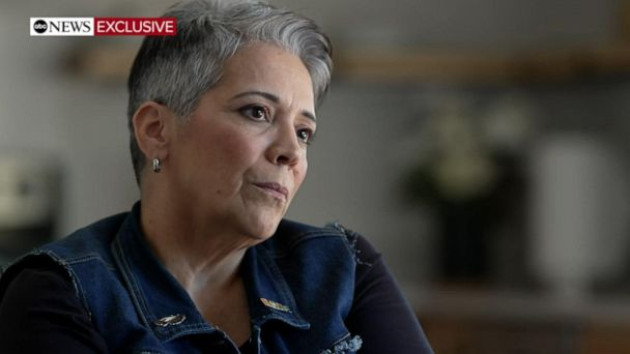
Speaking publicly for the first time to ABC News, Emilia “Amy” Marin, a school aide who worked with students after school, said she still struggles through post-traumatic stress from the shooting and its aftermath. She insists that the world know what happened — and what didn’t — on a warm sunny morning that would turn unspeakably ugly in South Texas.

“I died that day,” Marin said in an interview with ABC News correspondent John Quiñones.

“Right now, I’m lost. Sometimes I go into a dark place. And it’s hard when I’m there, but I tell myself, ‘you can’t let him win. You can’t let him win,'” she said, referring to the gunman. “I’m a fighter. I will be okay. I’m going to learn to live with this.”

By now, the casualty count from the Uvalde massacre is well known: 19 students and two of their teachers were killed when an 18-year-old shooter, a former student at the school, attacked in the final days before summer vacation. What sent him to that school on that mission remains under investigation. McCraw is due to update the progress of the probe when he testifies later this week in Austin.

In the months since the rampage, official information from authorities has been limited and much of the focus has fallen on the botched response by police who did not attempt to stop the shooting for more than an hour. For Marin, who said she still cannot work and continues to replay the minutes of May 24 in her head, the struggle now defines her life.

“I am suffering mentally, of course, emotionally,” she said. “I am suffering from post-traumatic arthritis, which is very painful. There are nights when everybody goes to bed and I just stay awake with the pain and my daughter tells me … ‘Mom, soak in the tub.’ And I tell her I can’t because I can’t get out.”

“I sit there at night, replaying that day in my mind,” Marin said as she explained the events of a day that saw one of the worst school shootings in American history.

“And I see those victims’ faces. I pray for them every night,” she said. “But what I go through, McCraw doesn’t know. Nobody knows. But it was very easy for him to point the finger at me. A few weeks ago, I told my counselor ‘It would have been better if he would have shot me, too.’ because the pain is unbearable. And when you have people who are higher up in ranks like McCraw, you would think that they know their job well. He has no idea what his words did.”

“I will never be the person that I was before,” she said. “I did die that day. I see the windows boarded up and the fence around the campus. I tell my counselor, ‘I’m in there. I’m still in there.'”

In a statement to ABC News, DPS spokesman Travis Considine explained: “At the outset of the investigation, DPS reported that an unnamed teacher at Robb Elementary School used a rock to prop open the door that the shooter used to enter the school building. It was later determined that the same teacher removed the rock from the doorway prior to the arrival of the shooter, and closed the door, unaware that the door was unlocked.”

Considine said “DPS corrected this error in public announcements and testimony and apologizes to the teacher and her family for the additional grief this has caused to an already horrific situation.”

Marin worked as a speech pathologist in the special education program at Robb Elementary and coordinated after-school programs, and said she always wanted to work with children.

“I have always loved children and I always wanted to be around them,” she said. “It doesn’t matter if you are having a bad day, they will always make it better.”

A native of San Angelo, Texas, about 200 miles north of Uvalde, Marin said she wants the country to know what she did that day, when confronted with the worst-case scenario: a man with a rifle and untold rounds of ammunition heading straight for the door of the elementary school where she worked. This was the first time she detailed those events to anyone outside of her family or law enforcement.

As she prepared for an end-of-school party that morning, Marin heard the crash of a gray Ford pickup outside and called 911, thinking someone was hurt.

“I walked out and then they yelled he had a gun, I ran back in. I ran back to the building and I closed the door,” she said. “I am telling the operator that he is shooting. I could hear the kids screaming.”

Marin said that children were outside on the playground, running for their lives.

“I could hear the kids screaming. I closed the door. I went in and knocked on the teacher’s door across from me. I was banging,” she continued. “She opened it. She said ‘What is going on?’ I said there is a shooter on campus.”

Still on the phone with emergency operators, Marin decided to hide as she heard gunshots firing off.

“There was shooting and it wouldn’t stop. He just kept shooting and shooting,” she said. “I looked around and I hid under the counter. The whole time I am asking the operator, ‘Where are the cops? Where are the cops?'”

But the almost 400 law enforcement officers who would arrive on the scene did not rush in to the classroom where the killer was still confined with his victims until over an hour later. That slow response has led to a wide chorus of criticism for the police and federal agents who responded to Robb that day. The school district’s police chief has been fired, as has one of the first Texas state troopers to arrive. A second trooper who left DPS to go to work for the Uvalde school system has since been terminated by the district. And the superintendent of schools stunned the grieving community this month when he announced his retirement.

Marin said she wonders if her own death in those first few moments could have saved children.

“Every day they tell me, ‘You were there for a reason. God put you there for a reason.’ I want to know why,” she said. “If I had gone out a few seconds later I would’ve met him outside. He would have shot me. With him shooting me, would I have saved all of them? Would I have given those teachers time to save themselves and the kids?”

She says in the days after the shooting, disbelief took hold of many of the staff who survived.

“It was like did it really happen? We always say it is not going to happen here. It is not going to happen in our town,” she said. “Like in Sandy Hook, you see this story and it happened. It can happen anywhere.”

When Marin heard McCraw blame her personally for the shooter’s ability to gain access to the school, she said she became so distraught that her daughter had to take her to the hospital.

“I was shaking from head to toe,” she said. “The nurse walked out and my boss came in and I told her I closed that door.”

After the shooting, Marin said she asked to speak with Uvalde schools Superintendent Hal Harrell. She said she was told Harrell would not come see her in the hospital and he would ultimately never speak to Marin again.

“Administration let us down. They failed us. He could have defended me. He knew who ‘the teacher’ was and chose not to,” Marin said. “It makes no sense when you have dedicated your life to working for the district.”

“I wish he would’ve handled this differently. It doesn’t cost anything to check up on your employees,” she said. “I have not heard from any administration since the incident.”

Harrell this month announced he would be stepping down next week. His spokeswoman has not responded to a request for comment.

Precisely five months since the day of the shooting, Marin said she’s prepared to fight for herself.

“Maybe a lot of people didn’t know that it was me,” she said. “But they’re going to know now and I’ve always been the type. Like, I’ll be respectful, but I’ll speak up. And people don’t like it when you speak up. But you’re defending yourself. And I know that I have to defend myself.”

Marin has filed suit against the manufacturer of the gun used in the Robb shooting and she is considering other legal options.

She said she is also dismayed at the fractures that have developed in her town.

“We are supposed to as a community to be united and work through this and help these families, help everyone involved,” she said. “They say we are ‘Uvalde Strong.’ We are not. We are divided. How can we divide over 19 lives lost? It doesn’t make sense.”

As for McCraw, who pinned the blame for the massacre on her, Marin said she has one message.

“To Mr. McCraw: it is your job to investigate when any incident like that happens. You sit there and you investigate. Your job was to sit there and watch that video to watch from beginning to end. You chose not to,” she said.

Copyright © 2022, ABC Audio. All rights reserved.

Border Patrol reports 2.7 million migrant encounters in fiscal year 2022, breaking US record

Border Patrol reports 2.7 million migrant encounters in fiscal year 2022, breaking US record
Bloomberg Creative Photos/Getty Images

(NEW YORK) — There were 2.7 million migrant encounters along the southern border of the United States in the past 12 months, the highest in the nation’s history, data released as part of U.S. Customs and Border Protection’s fiscal year end show.

The previous record was 1.9 million in fiscal year 2021.

In September, there were 227,547 migrant encounters along the southwest border. CBP says 19% of those encounters were repeat offenders and represents a 12% increase from August.

CPB says they are enforcing not only Title 8, which is standard immigration removal policy, but also Title 42 — the Trump-era policy that allowed migrants seeking asylum along the southern border to be expelled under the public health emergency authority of the Centers for Disease Control and Prevention — by a court order.

The highest month in fiscal year 2022 was May, which saw more than 235,000 migrants encountered along the southwest border, according to the data.

Cocaine (-81%) and Fentanyl (-19%) seizures decreased along the border, while meth and heroin seizures increased compared to last fiscal year.

“DHS has been executing a comprehensive and deliberate strategy to secure our borders and build a safe, orderly, and humane immigration system,” the Department of Homeland Security said in the statement.

Copyright © 2022, ABC Audio. All rights reserved.