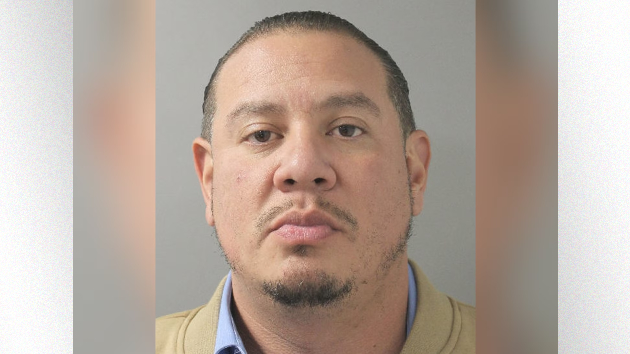
(HOUSTON) — A man has been arrested and charged with murder in an apparent case of mistaken identity that turned deadly early Christmas Day, according to police.
Jonathan Ross Mata, 39, was charged on Wednesday with the murder of 25-year-old Desmond Butler, according to the Houston Police Department.
Investigators said that Mata and his wife received a phone call from their daughter telling them she had been assaulted by her boyfriend. They then drove to a gas station parking lot in the 9900 block of Bellaire, expecting their daughter to be dropped off, according to Houston Police.
As Butler’s gray Honda Pilot drove into the parking lot around 1 a.m., police said he passed Mata’s black GMC, which was parked at one of the pumps. As Butler drove past, a woman got out of the GMC and began chasing his vehicle and attempting to open the back passenger door of the Honda, believing Mata’s daughter was inside, police said.
At the same time, Mata exited the GMC and fired his gun at the victim’s vehicle as it exited the parking lot, according to police.
Butler, police said, then attempted to drive away when he was struck by gunfire and crashed his vehicle into a pole in an adjacent parking lot. The suspects got back into their vehicle and drove northbound on the feeder road, authorities said.
Butler was taken to a local hospital by paramedics and was later pronounced dead, according to police.
Mata and Butler did not know each other, police said.
Mata turned himself into police on Wednesday and has been booked into the Harris County Jail.
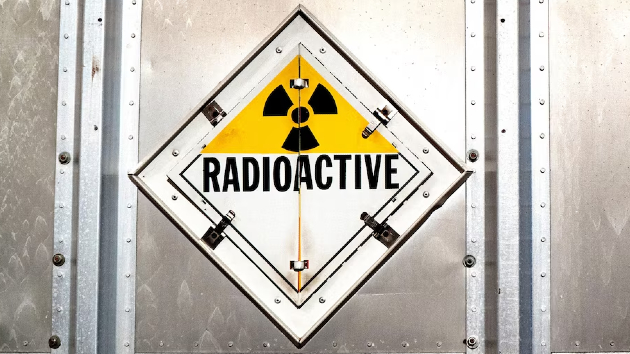
(NEW YORK) — Commodities from Indonesia beyond shrimp will almost certainly test positive for a radioactive isotope in the coming weeks and months, according to a new intelligence bulletin that follows a recall last month of 84,000 bags of frozen raw shrimp imported from Indonesia.
Federal regulators announced the recall on Dec. 19, after finding the shrimp may have been prepared, packed or held under conditions that could have exposed them to cesium-137, a radioactive isotope.
The new Homeland Security bulletin, a copy of which was obtained by ABC News, said the contamination is “very likely” to continue for the foreseeable future and spread beyond Indonesian imports that have already been interdicted — including shrimp, as well as spices and sneakers.
“Due to the high number of factories and wide variety of goods produced at facilities in the area of the contamination, additional commodities from Indonesia will almost certainly test positive for Cs-137 in the coming weeks and months,” the bulletin said. “While improbable, we cannot rule out the potential that Cs-137 contaminated goods will arrive in the United States via tourism or passenger travel.”
The bulletin noted that the U.S. is “nearly certain” the contamination was not intentional and that Customs and Border Protection is “well postured to detect and interdict all impacted bulk cargo shipments, reducing the likelihood that the public will encounter contaminated commodities shipped in bulk from Indonesia.”
The December shrimp recall followed a recall of imported shrimp that began in August and was processed by the same Indonesian company, PT. Bahari Makmur Sejati, according to the FDA.
The FDA said it has also detected the presence of cesium-137 in one sample of cloves from the Indonesian-based company PT Natural Java Spice.
Contaminated sneakers originating from Indonesia were also interdicted at several U.S. ports last summer, according to the DHS bulletin.
At this time, no product that has tested positive or alerted for cesium-137 has entered the U.S. marketplace, the FDA said.
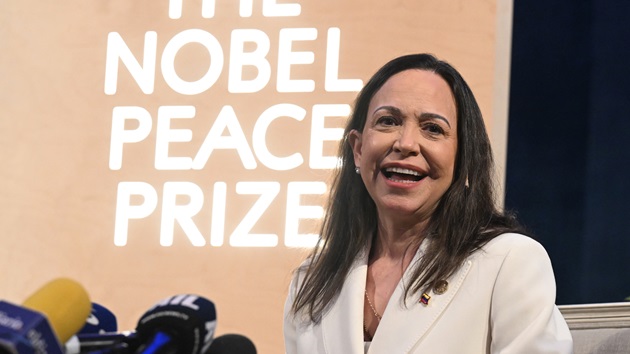
Maria Corina Machado, the Venezuelan opposition figure and 2025 Nobel Peace Prize recipient, attends a press conference on December 11, 2025 in Oslo, Norway. (Rune Hellestad/Getty Images)
(WASHINGTON) — Venezuelan opposition leader Maria Corina Machado said Friday she was “absolutely grateful” to President Donald Trump after meeting with him Thursday and presenting him with her Nobel Peace Prize medal. The president called it a “wonderful gesture of mutual respect.”
“María presented me with her Nobel Peace Prize for the work I have done,” Trump wrote on his social media platform. He also said that Machado was a “wonderful woman who has been through so much” and that it was a great honor to meet her.
Machado, in turn, said Friday it “took a lot of courage” for Trump to take action against Venezuelan dictator Nicolas Maduro.
Following the Thursday meeting, a White House official confirmed to ABC News that Trump did accept the medal.
Further details about the closed-door meeting were not immediately revealed by the White House. Asked about the meeting by ABC News’ Mary Bruce, Trump said it went “great.”
Machado told reporters as she was exiting the White House that she presented Trump with her prize and reflected on the history between the two countries.
“I told him this … Listen to this — 200 years ago, General Lafayette gave Simon Bolivar a medal with George Washington’s face on it. Bolivar, since then, kept that medal for the rest of his life,” she told reporters.
“Actually, when you see his portraits, you can see the medal there. And it was given by General Lafayette as a sign of the brotherhood between the United States, people of United States, and the people of Venezuela in their fight for freedom against tyranny. And 200 years in history, the people of Bolivar are giving back to the heir of Washington, a medal, in this case a medal of a Nobel Peace Prize, and a recognition for his unique commitment with our freedom,” she added.
Simon Bolivar liberated Venezuela and several other Latin American countries from Spanish rule in the 1800s. The Marquis de Lafayette was a French national who volunteered to fight with American colonists during the Revolutionary War and eventually rose to be one of George Washington’s most trusted generals.
Machado didn’t offer any more details about her meeting with Trump.
She won the Nobel Peace Prize last year for her work “promoting democratic rights for the people of Venezuela” and her push to move the country from dictatorship to democracy.
Machado dedicated the prize to Trump, along with the people of Venezuela, shortly after it was announced in October 2025.
She said last week that she would like to give or share the prize with Trump, who oversaw the successful U.S. operation to capture Maduro. Maduro faces drug trafficking charges in New York, to which he has pleaded not guilty.
“I certainly would love to be able to personally tell him that we believe — the Venezuelan people, because this is a prize of the Venezuelan people — certainly want to, to give it to him and share it with him,” Machado told Fox News host Sean Hannity on Monday. “What he has done is historic. It’s a huge step towards a democratic transition.”
The Norwegian Nobel Institute issued a statement last week saying that once the Nobel Peace Prize is announced, it “can neither be revoked, shared, nor transferred to others. Once the announcement has been made, the decision stands for all time.”
When asked earlier this month whether Machado could become the next leader of Venezuela, Trump said it would be “very tough for her” because she “doesn’t have the support or the respect within the country.”
Trump said Wednesday he had a “great conversation” with Venezuela’s acting President Delcy Rodríguez, their first since authoritarian Venezuelan leader Nicolas Maduro was seized by the U.S. on Jan. 3.
“We had a call, a long call. We discussed a lot of things,” Trump said during a bill signing in the Oval Office. “And I think we’re getting along very well with Venezuela.”
The president said last week on his social media platform that he had “cancelled the previously expected second Wave of Attacks” on Venezuela after the government released several political prisoners, but he added that “all ships will stay in place for safety and security purposes.”
Trump has coveted and openly campaigned for winning the Nobel Prize himself since his return to office. White House Director of Communications Steven Cheung slammed the Nobel Committee for its decision after Machado was announced as the most recent winner.
“[Trump] has the heart of a humanitarian, and there will never be anyone like him who can move mountains with the sheer force of his will,” Cheung said in an X post. “The Nobel Committee proved they place politics over peace.”
Jorgen Watne Frydens, the Nobel Committee chair, was asked about Trump’s “campaign” for the prize last year but denied it had any impact on the decision-making process.
“We receive thousands and thousands of letters every year of people wanting to say what, for them, leads to peace,” Frydens said. “This committee sits in a room filled with the portraits of all laureates and that room is filled with both courage and integrity. We base only our decision on the work and the will of Alfred Nobel.”
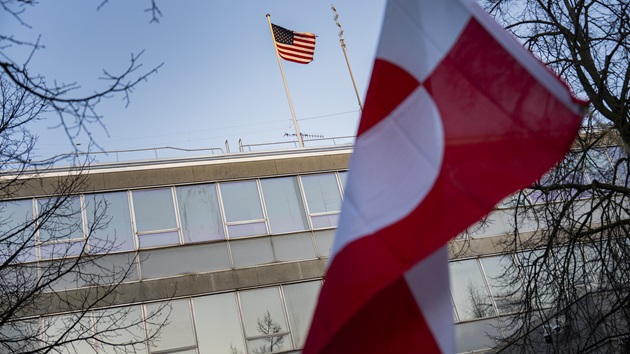
Protesters hold flags of Greenland during a protest titled Greenland Belongs to the Greenlanders on January 14, 2026 outside the United States embassy in Copenhagen, Denmark. Martin Sylvest Andersen/Getty Images
(WASHINGTON) — A set of recent polls have highlighted American voters’ opposition to taking over Greenland — and even greater opposition to taking it over by military force.
A Quinnipiac University poll found 55% of voters opposed to the United States trying to buy Greenland, with majorities of Democratic voters (85%) and independent voters (58%) opposed and a majority of Republican voters in support (67%). Greenland, though, is not for sale — with Danish and Greenlandic officials saying the island can’t be bought. Greenland is a self-governing territory of the Kingdom of Denmark.
Opposition rises to nearly 9 in 10 voters when asked if the U.S. should try to take Greenland by military force, something President Donald Trump has said “is always an option.” Just 9% of U.S. voters say they support the U.S. trying to take Greenland by military force.
In all, 86% of voters, including 95% of Democrats, 94% of independents and 68% of Republicans oppose the U.S. trying to take Greenland by military force.
Notably, few polls find this level of agreement on policy issues — and most Republicans rarely disagree with Trump.
The president is trying to take over the autonomous Danish territory, claiming earlier this week that “we need Greenland” and citing national security as a reason for the acquisition. Now, France and other NATO countries have sent troops for military exercises after representatives from Denmark and Greenland said they had “fundamental disagreements” with the U.S.
A Reuters/Ipsos poll also found low levels of support for Trump’s push to take over Greenland. Just 17% of Americans said they approved of U.S. efforts to acquire Greenland, including a 40% minority of Republicans. Support was even lower among Democrats (2%) and others (9%).
When asked about taking Greenland using military force in the Reuters/Ipsos poll, just 4% of Americans said it was a good idea, including only 8% of Republicans.
The Reuters/Ipsos poll offered a “don’t know” response to those answering their survey, and large minorities of Americans said they did not have opinions on these issues.
Two-thirds of Americans say they are concerned that the U.S. acquiring the self-governing territory that is part of Denmark could harm NATO and U.S. relations with European countries. That includes about 9 in 10 Democrats, 4 in 10 Republicans and 7 in 10 independents.
The Quinnipiac poll was conducted Jan. 8-12 among 1,133 registered voters and has a margin of error of +/- 3.7 percentage points.
The Reuters/Ipsos poll was conducted Jan. 12-13 among 1,217 U.S. adults and has a margin of error of +/- 2.9 percentage points.
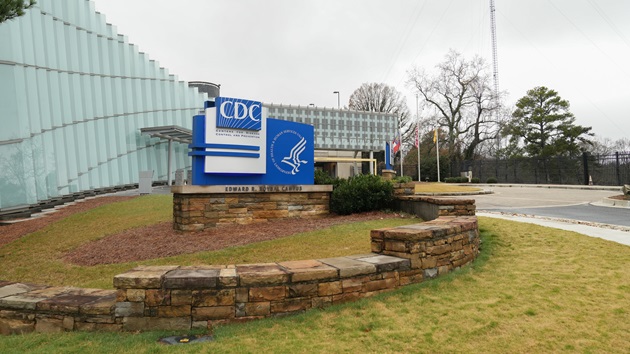
The Center for Disease Control (CDC) headquarters in Atlanta, Georgia, US, on Friday, Dec. 5, 2025. Megan Varner/Bloomberg via Getty Images
(ATLANTA) — Flu activity continues to remain elevated across the U.S., according to newly released data from the Centers for Disease Control and Prevention.
The CDC estimates there have been at least 18 million illnesses, 230,000 hospitalizations and 9,300 deaths from flu so far this season.
This is a developing story. Please check back for updates.
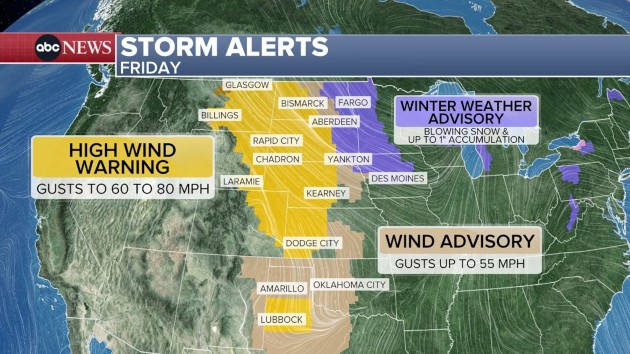
(NEW YORK) — Millions of people in the High Plains will experience widespread wind gusts between 60 and 80 mph, from Montana to Kansas.
This wind, which will last all day and into the evening, could take down large trees, cause power outages, reduce visibility with blowing dust, and make travel dangerous for high-profile vehicles, which could be turned over.
On the eastern side of the strongest winds, blowing snow is also expected — either snow that has already fallen and is picked up from the ground, or new snow from the new storm.
A winter weather advisory is in place from North Dakota to Iowa for gusts between 40 and 50 mph, with snow accumulations up to one inch.
Light snow is forecast to fall across Wisconsin and Michigan, continuing into Michigan and Ohio on Friday afternoon.
In the evening, snow is forecast to fall from West Virginia and Ohio to western Pennsylvania and western New York. On Saturday, snow is possible across much of the Northeast.
The I-95 corridor may see snow Saturday morning and early afternoon, or a rain and snow mix, from Washington, D.C., to Maine.
A dusting is possible in Washington, D.C., around an inch is expected in Philadelphia and up to 2 inches are possible around New York City and Boston.
Farther inland, parts of upstate New York, western Connecticut and western Massachusetts, and parts of areas north of I-90, may see 3 to 6 inches of snow accumulation.
Snow will be out of the region by late afternoon Saturday.
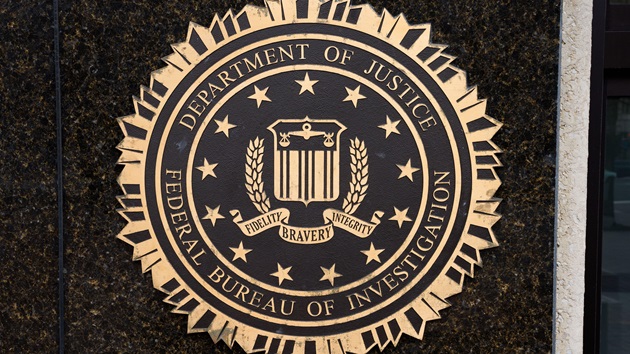
The Department of Justice (DOJ) seal on the J. Edgar Hoover Federal Bureau of Investigation (FBI) building in Washington, DC, US, on Friday, Jan. 2, 2026. Aaron Schwartz/Bloomberg via Getty Images
(WASHINGTON) — Justice Department officials said in a letter submitted to two federal judges Thursday that they are making “substantial progress” reviewing items related to the late sex offender Jeffrey Epstein — but gave no indication when additional material would be released.
The letter said “over five hundred” federal prosecutors and staff members from the Southern District of New York and the Justice Department’s criminal division are reviewing and redacting millions of pages from the investigations into Epstein and co-conspirator Ghislaine Maxwell.
The review has found “substantial” duplication in various files, so the estimated number of documents is “in flux,” the letter said.
“Due to the scope of this effort, platform operations require around-the-clock attention and technical assistance to resolve inevitable glitches due to the sheer volume of materials,” said the letter, which is signed by Jay Clayton, the United States attorney for the Southern District of New York.
Clayton said prosecutors are working with victims and attorneys for victims to redact identifying information, even if, in some cases, that information was previously public.
“Following a process of conferring with victims and victim counsel about this issue, the Department has confirmed that, to the extent any victim requests redaction of personally identifying information of a document in the DOJ Epstein Library, the Department will redact that victim identifying information even if the document is (or was) otherwise available on a public court docket,” the letter said.
The DOJ faced a Dec. 19 deadline for the release of all remaining Epstein files after Congress in November passed the Epstein Files Transparency Act following blowback the Trump administration received seeking the release of materials related to their probe of Epstein, who died by suicide in a New York jail in 2019.
Materials released to date include a trove of photographs and court records, including a complaint to the FBI about Epstein that was filed years before he was first investigated for child sex abuse, and documents containing previously unknown details about plans for Epstein’s 2019 arrest — but the files have yet to show evidence of wrongdoing on the part of famous, powerful men, against the expectations of many of those who pushed for the files’ release.
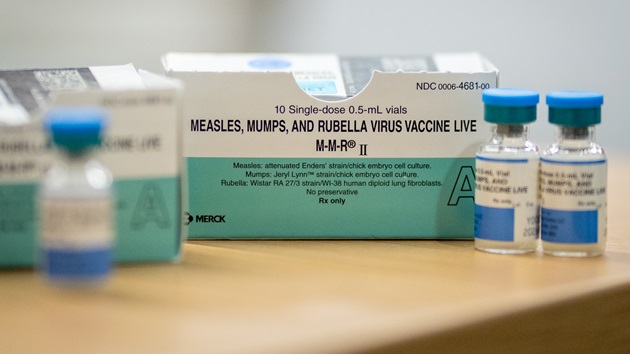
Boxes and vials of the Measles, Mumps, Rubella Virus Vaccine at a vaccine clinic put on by Lubbock Public Health Department on March 1, 2025 in Lubbock, Texas. Jan Sonnenmair/Getty Images
(NEW YORK) — As measles continues to spread across the U.S., with outbreaks popping up around the country, public health experts have been stressing the importance of getting vaccinated to stop the spread of disease.
This has involved local doctors and health department workers going into outbreak areas to offer the measles, mumps, and rubella (MMR) vaccine.
The MMR vaccine is typically a two-dose series given first at 12-15 months old and again at 4-6 years of age. An extra dose can be given as early 6 months old in high-risk circumstances, including during a measles outbreak.
Health experts working in and near measles outbreaks told ABC News that vaccine acceptance has been mixed among these communities, with some people begging to get their kids vaccinated early, while others still refuse an immunization.
“[Measles] can spread so quickly amongst that unvaccinated population,” Dr. Christopher Lombardozzi, chief medical officer at Spartanburg Regional Healthcare System, told ABC News. “And if the number of people who remain unvaccinated stays large, then we could have a real problem, not just this year, but in years to come.”
Vaccine hesitancy in outbreak areas
The upstate region of South Carolina is experiencing a surge in measles cases amid the ongoing outbreak.
The South Carolina Department of Public Health (DPH) reported 223 new cases over the last week, bringing the total number of cases in the outbreak to 434 since October, with over 400 people currently in quarantine due to exposure. Spartanburg County, which borders North Carolina, is currently the epicenter of the outbreak.
A spokesperson for Spartanburg Regional Healthcare System told ABC News that, as of Jan. 9, there have been 77 confirmed measles cases across the system since the outbreak began.
Lombardozzi said the health care system has seen some increased vaccine uptake, but not as much as they hoped for.
“We certainly have had some more uptake of vaccine in the last six months or so, since the outbreak started here in South Carolina, and I’m happy for that,” Lombardozzi said. “I would love to see a higher uptake. There is still quite a bit of vaccine hesitancy around here, and I think it’s unwarranted.”
Lombardozzi added that addressing vaccine hesitancy takes time and support.
“We try to support people, meet them where they are, and hopefully they will change their mind if they’ve been vaccine hesitant for a while,” he said.
Lombardozzi worries that without increasing immunizations, the negative effects could ripple for years.
In a press conference on Wednesday, Dr. Linda Bell, state epidemiologist and health program branch director for the South Carolina DPH, said the lack of vaccine acceptance amid the growing outbreak has been “disappointing.”
Bell said vaccines could have helped prevent a majority of cases, adding, “We have an opportunity to prevent further cases, if people can adopt these available tools and help us stop this outbreak sooner rather than later.”
As of Tuesday, another ongoing outbreak in Utah surpassed 200 measles cases since it began in June of last year. The southwest region of Utah has reported 147 of those cases, which equates to a rate of 25.8 cases per 100,000 people in that region.
David Heaton, public information officer at the Southwest Utah Department of Public Health, told ABC News that cases in southwest Utah and further north have been linked to the same measles virus that spread in Texas and New Mexico last year.
Heaton worries that measles will soon be declared endemic again, ending the decades-long elimination status in the U.S.
“That’s kind of a discouraging threshold that we’re getting closer to. I think [the loss of elimination status] could be recovered, but it could take a couple of years at least,” Heaton said.
In the Southwest region, vaccine acceptance has been highest among people who were on the fence or those who accidentally missed vaccines, but those with strong beliefs against vaccines have been “fairly immovable,” Heaton added.
“We’re just seeing the attitude of, ‘I choose not to get vaccinated. I don’t agree with vaccinations, and I’m not going to do it. I don’t feel the risk is high enough to get the vaccine,'” he said.
Some success in vaccine uptake
But there have been examples of success. Last year, during a large outbreak from February to September, the New Mexico Department of Health (NMDOH) reported that MMR doses administered were nearly 50% higher than the year prior by October.
The largest gains were due to adult vaccination that increased by about 230% in October 2025 compared to October 2024. Children receiving the MMR shot only increased by about 10% compared to that time the previous year.
Andrea Romero, immunization program section manager at NMDOH, told ABC News communication was key during the outbreak. Romero said most of the adults who got vaccinated did so because they were unsure of their vaccination status and felt a strong sense of duty to get the shot, not just to protect themselves but to protect their community.
“When they know that they’re making a difference, it matters,” Romero said. “Every time I take that opportunity [to say], ‘Thank you for being a great community and your response, caring about yourself, your family, your neighbor,’ but it means a lot because it’s their efforts. It was their response that made the difference.”
NMDOH data shared with ABC News shows that 384 children with a vaccine exemption on file received at least one MMR shot between Jan. 13, 2025 and Jan. 13, 2026. This suggests parents of these children changed their minds about the vaccine around the time of New Mexico’s measles outbreak, according to health department officials.
During that same timeframe, at least one MMR dose was the only immunization on record for 189 children in the state, the data shows.
Fears of further measles spread
Doctors near outbreak regions are also experiencing the effects of fears and questions about measles and vaccination from their community.
Dr. Deborah Greenhouse, a spokesperson for the American Academy of Pediatrics and pediatrician in South Carolina, told ABC News that her community hasn’t had a measles case yet, but parents and healthcare providers are increasingly concerned.
“As we all know, and as my patients know, measles virus does not respect county borders, so, as the numbers continue to rise, the likelihood that we start seeing cases here in the midlands of South Carolina increases dramatically,” Greenhouse said.
On Tuesday, health officials announced there was a measles exposure on Jan. 2 in the midlands region at the South Carolina State Museum in Columbia.
“If more families decline the vaccines, our vaccination rates drop and we become an open target, essentially a sitting duck for an outbreak, much like the Spartanburg area,” Greenhouse said.
In her experience, building a foundation of trust has been essential for vaccine acceptance.
“They know me, they trust me,” Greenhouse said. “They know that as a pediatrician, I have no interest here other than protecting the best interests of their children and their family.”
She went on, “Families that I’ve known for years, who I have a very strong relationship with, are coming in and asking for every vaccine that they can get, and asking to get the measles, mumps, rubella vaccine early, because they’re very concerned about their children being exposed to measles and not being protected.”
Greenhouse said trying to build trust among families has been particularly challenging amid changing guidance from federal health agencies and widespread misinformation.
“Unfortunately, some of the awful sources right now are people that you used to think you could trust and, as a new parent, I totally understand why it would be incredibly difficult to be able to figure out right now,” Greenhouse said.
Despite changing guidance and misinformation, doctors say the science hasn’t changed, and vaccines remain safe and effective.
“Amongst the medical community, you’re not going to get much disagreement that the vaccines are safe and that they’re effective,” Lombardozzi said. “The message is, go get your kids their shots if it’s time to get their shots. We certainly encourage folks to go talk to your pediatrician, go talk to your doctor.”
Jade A. Cobern, MD, MPH, is a practicing physician, board-certified in pediatrics and general preventive medicine, and is a medical fellow of the ABC News Medical Unit.
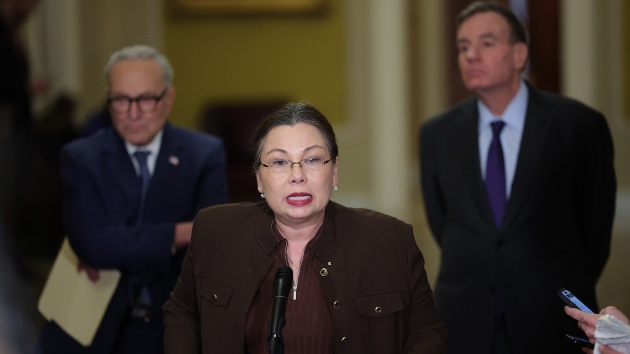
Sen. Tammy Duckworth speaks during a news conference following a weekly Democratic policy luncheon at the Capitol, Jan. 6, 2026. (Kevin Dietsch/Getty Images)
(WASHINGTON) — Sen. Tammy Duckworth is introducing legislation Friday that would put restraints on the current and former political appointees to be nominated as inspectors general.
The Inspector General’s Independence Act would bar President Donald Trump and future presidents from nominating political appointees who have served or are serving in their administration from serving as an inspector general.
“Whether this is acquisitions or our VA or DoD or Commerce or HHS, inspectors general are supposed to be calling balls and strikes and be independent and say, ‘Hey, you can’t do that,'” Duckworth told ABC News. “But if you put a political appointee in that position they are going to lean in favor of who put them there.”
The move comes nearly one year after the administration moved to unilaterally dismiss 17 inspectors general across a number of agencies at the beginning of Trump’s second term.
Lawmakers on both sides of the aisle pushed back on the administration’s move at the time, raising concerns that the firing of inspectors generals would introduce partisanship into a role that is meant to serve as an independentwatchdog. Lawsuits challenging the viability of those firings are going through the courts.
“There have been lawsuits that are in courts right now that say that those firings were illegal,” Duckworth said. “So this piece of legislation in particular will make it very clear that what he did was illegal, and not just leave it to courts to interpret existing law.”
Duckworth points to the nomination and subsequent Senate confirmation of Cheryl Mason as Veterans Affairs inspector general as one example of why the legislation is critical.
Mason was appointed to fill a vacancy left after the administration fired the previous inspector general. She was serving as a senior adviser to Trump’s Veterans Affairs Secretary Doug Collins at the time she was nominated by the president to serve as the department’s IG.
During her confirmation hearing before the Senate Veterans Affairs Committee in June, a number of Democratic lawmakers, including Duckworth, raised concerns about Mason’s ability to serve as an independent watchdog for the agency she had served in as a political adviser.
Republican Sen. Jerry Moran, the committee chairman, also raised questions about how Mason would ensure her independence, but ultimately voted with all Republicans to confirm her.
Mason at the time vowed to serve as an independent actor, citing her years of experience at VA working at the Board of Veterans’ Appeals before returning as an adviser. Her role as an adviser, she said at the time, was to gather information and convey it in a nonpartisan manner.
“I consider myself to be an impartial, independent aid to the department because that’s my role,” Mason told senators on the panel when questioned about her loyalty to the VA secretary. “I am loyal to the veterans. That’s who I am loyal to.”
“I work for the president and the secretary,” Mason said in the hearing when pressed by Democrats about her independence. “But also if confirmed will work for this committee.”
Mason was confirmed by the Senate in July by a vote of 53-45. No Democrats voted to confirm her.
Duckworth’s legislation would have barred Mason from being nominated. Her bill, if passed, would prevent similar politically aligned nominees from serving as IGs.
The legislation is being co-sponsored by Democratic Sens. Dick Durbin, Richard Blumenthal, Adam Schiff, Kirsten Gillibrand and Peter Welch. It does not currently have any Republican co-sponsors.
It’s unclear whether it would have the necessary support to advance through either chamber of Congress, and unlikely that President Trump would sign it into law.
Maria Corina Machado, the Venezuelan opposition figure and 2025 Nobel Peace Prize recipient, attends a press conference on December 11, 2025 in Oslo, Norway. (Rune Hellestad/Getty Images)
(WASHINGTON) — President Donald Trump met Thursday with Venezuelan opposition leader Maria Corina Machado, who presented him with her Nobel Peace Prize medal. The president called it a “wonderful gesture of mutual respect.”
“María presented me with her Nobel Peace Prize for the work I have done,” Trump wrote on his social media platform. He also said that Machado was a “wonderful woman who has been through so much” and that it was a great honor to meet her.
Following the meeting, a White House official confirmed to ABC News that Trump did accept the medal.
Further details about the closed-door meeting were not immediately revealed by the White House. Asked about the meeting by ABC News’ Mary Bruce, Trump said it went “great.”
Machado told reporters as she was exiting the White House that she presented Trump with her prize and reflected on the history between the two countries.
“I told him this … Listen to this — 200 years ago, General Lafayette gave Simon Bolivar a medal with George Washington’s face on it. Bolivar, since then, kept that medal for the rest of his life,” she told reporters.
“Actually, when you see his portraits, you can see the medal there. And it was given by General Lafayette as a sign of the brotherhood between the United States, people of United States, and the people of Venezuela in their fight for freedom against tyranny. And 200 years in history, the people of Bolivar are giving back to the heir of Washington, a medal, in this case a medal of a Nobel Peace Prize, and a recognition for his unique commitment with our freedom,” she added.
Simon Bolivar liberated Venezuela and several other Latin American countries from Spanish rule in the 1800s. The Marquis de Lafayette was a French national who volunteered to fight with American colonists during the Revolutionary War and eventually rose to be one of George Washington’s most trusted generals.
Machado didn’t offer any more details about her meeting with Trump.
She won the Nobel Peace Prize last year for her work “promoting democratic rights for the people of Venezuela” and her push to move the country from dictatorship to democracy.
Machado dedicated the prize to Trump, along with the people of Venezuela, shortly after it was announced in October 2025.
She said last week that she would like to give or share the prize with Trump, who oversaw the successful U.S. operation to capture Venezuelan leader Nicolás Maduro. Maduro faces drug trafficking charges in New York, to which he has pleaded not guilty.
“I certainly would love to be able to personally tell him that we believe — the Venezuelan people, because this is a prize of the Venezuelan people — certainly want to, to give it to him and share it with him,” Machado told Fox News host Sean Hannity on Monday. “What he has done is historic. It’s a huge step towards a democratic transition.”
The Norwegian Nobel Institute issued a statement last week saying that once the Nobel Peace Prize is announced, it “can neither be revoked, shared, nor transferred to others. Once the announcement has been made, the decision stands for all time.”
When asked earlier this month whether Machado could become the next leader of Venezuela, Trump said it would be “very tough for her” because she “doesn’t have the support or the respect within the country.”
Trump said Wednesday he had a “great conversation” with Venezuela’s acting President Delcy Rodríguez, their first since authoritarian Venezuelan leader Nicolas Maduro was seized by the U.S. on Jan. 3.
“We had a call, a long call. We discussed a lot of things,” Trump said during a bill signing in the Oval Office. “And I think we’re getting along very well with Venezuela.”
The president said last week on his social media platform that he had “cancelled the previously expected second Wave of Attacks” on Venezuela after the government released several political prisoners, but he added that “all ships will stay in place for safety and security purposes.”
Trump has coveted and openly campaigned for winning the Nobel Prize himself since his return to office. White House Director of Communications Steven Cheung slammed the Nobel Committee for its decision after Machado was announced as the most recent winner.
“[Trump] has the heart of a humanitarian, and there will never be anyone like him who can move mountains with the sheer force of his will,” Cheung said in an X post. “The Nobel Committee proved they place politics over peace.”
Jorgen Watne Frydens, the Nobel Committee chair, was asked about Trump’s “campaign” for the prize last year but denied it had any impact on the decision-making process.
“We receive thousands and thousands of letters every year of people wanting to say what, for them, leads to peace,” Frydens said. “This committee sits in a room filled with the portraits of all laureates and that room is filled with both courage and integrity. We base only our decision on the work and the will of Alfred Nobel.”